

There’s a reason certain sunglasses feel immediately, completely you the second you slide them on. Not just functional — right. Like the frame was engineered for your face, your mood, the version of yourself you’re walking out the door to be. That sensation isn’t random. It’s the result of frame geometry, lens curvature, temple width, bridge placement — dozens of optical and aesthetic decisions converging into something that fits not just the face, but the moment.
Sunglasses are the most identity-charged accessory a woman owns. And, honestly, the most misunderstood.
Modern eyewear design traces its aesthetic roots to the mid-century golden age of Hollywood — the oversized cat-eye silhouettes worn by Audrey Hepburn and Jackie Kennedy defined decades of aspiration. The aviator frame was developed by Bausch & Lomb in 1936 for military pilots, then entered civilian fashion in the 1970s as a symbol of effortless cool. The round wire frame was immortalised by John Lennon but adopted by fashion houses like Gucci and Prada as a recurring luxury motif. Today, sunglasses span everything from performance shield lenses to delicate rimless ovals, each carrying its own optical logic, face-framing geometry, and cultural history.
This guide categorizes 21+ types of sunglasses for women across 6 classification systems. For every single entry:
-
Frame Design
Shape & construction
-
Best Occasion
When to wear it
-
Best For
Face shape fit
Start here, explore every frame type, and discover exactly which sunglasses were built for your face — and your life. Also explore our full guide to women’s jewelry styles and earring types for complete accessory layering ideas.
All 6 Categories at a Glance
A structured breakdown of the 21+ sunglasses types documented in this guide.
- 01
By Frame Shape / Silhouette
- 02
By Lens Style & Coverage
- 03
By Frame Material & Construction
- 04
By Occasion & Purpose
- 05
By Cultural & Fashion Aesthetic
- 06
By Fit & Adjustment Design
21+ Different Types of Sunglasses for Women
Category 1: By Frame Shape / Silhouette (#1–#9)
The foundational geometry of each frame — the lens outline and frame profile that defines visual identity
Frame shape is everything — it's the first thing you see, the last thing you remember. Before a pair of sunglasses has a lens tint or a price point, it has a geometric identity. Is it a cat-eye? An aviator? A round? These nine types represent the fundamental what of the frame: the outline it cuts against your face, the proportions it borrows or inverts, and the cultural code it broadcasts to everyone who sees you wearing it.
What works beautifully about classifying sunglasses by frame silhouette is that it cuts through the noise of marketing language. "Vacation vibes" is a mood board caption. An acetate cat-eye with a swept upper frame and angular corner lift? That's construction — and construction tells you how the frame will sit on your face, balance your features, and hold its shape over years. Which is the information that actually matters when you're investing in an eyewear piece you'll reach for daily.
- 01
Cat-Eye Sunglasses

Upswept outer corners, exaggerated upper frame, dramatic lift at the temple — this is the quintessential feminine eyewear silhouette. The cat-eye's origins are in 1950s Hollywood glamour, popularized by Marilyn Monroe and Audrey Hepburn, and it has never truly left fashion. A frame that photographs beautifully in motion, adds visual lift to the outer brow, and intensifies any outfit from casual to red carpet.
- 02
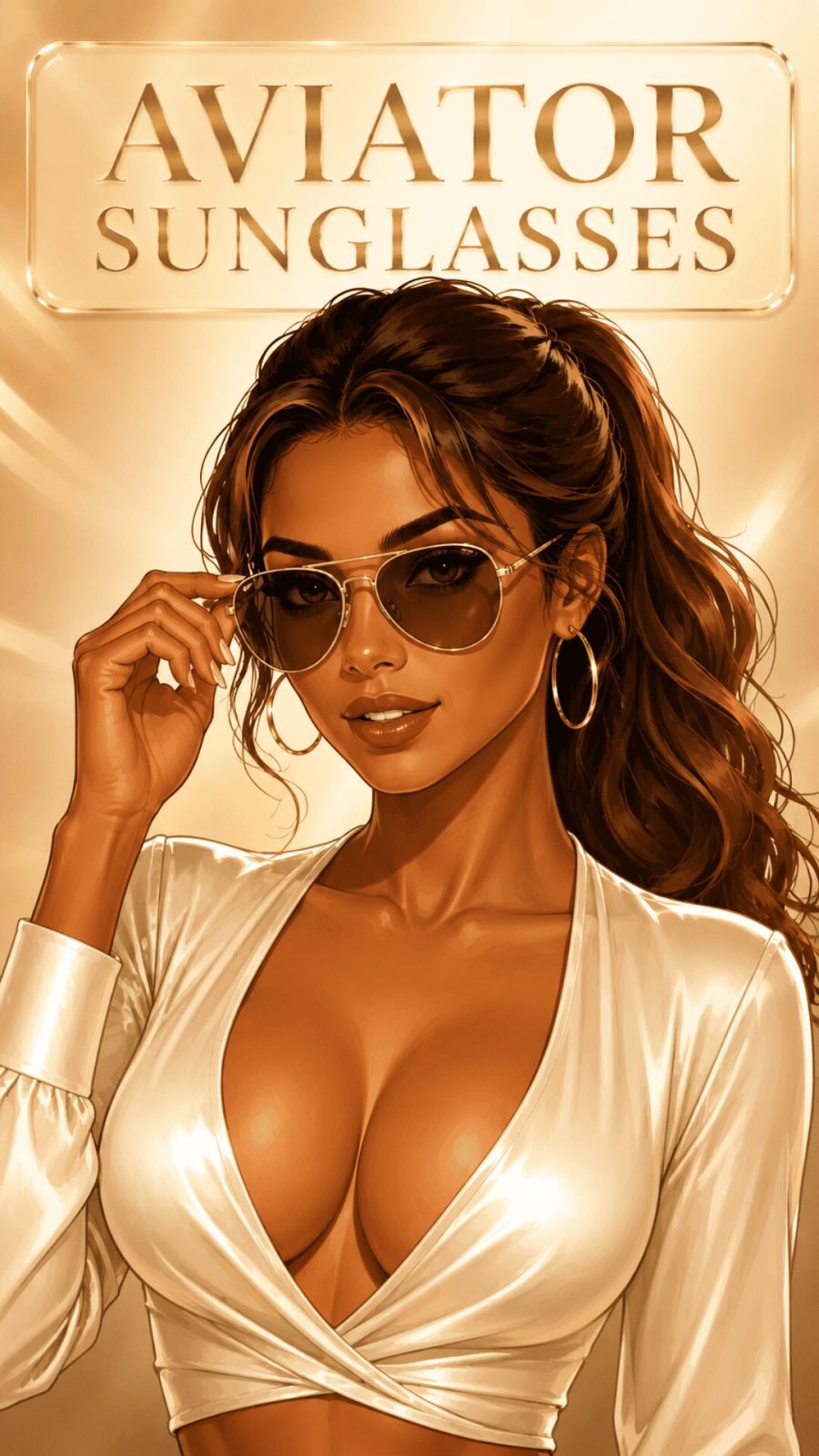
Aviator Sunglasses
![Aviator sunglasses for women]()
Teardrop-shaped lenses, metal wire frame, double or triple bridge bar, slim cable or skull temples. Engineered in 1936 by Bausch & Lomb for military pilots needing maximum field-of-vision coverage with minimal frame obstruction. The lens surface area is deliberately larger than the eye socket — creating the characteristic oversized, slightly downward-tapered silhouette. One of the few frames that works equally well on virtually every face proportion.


- 03
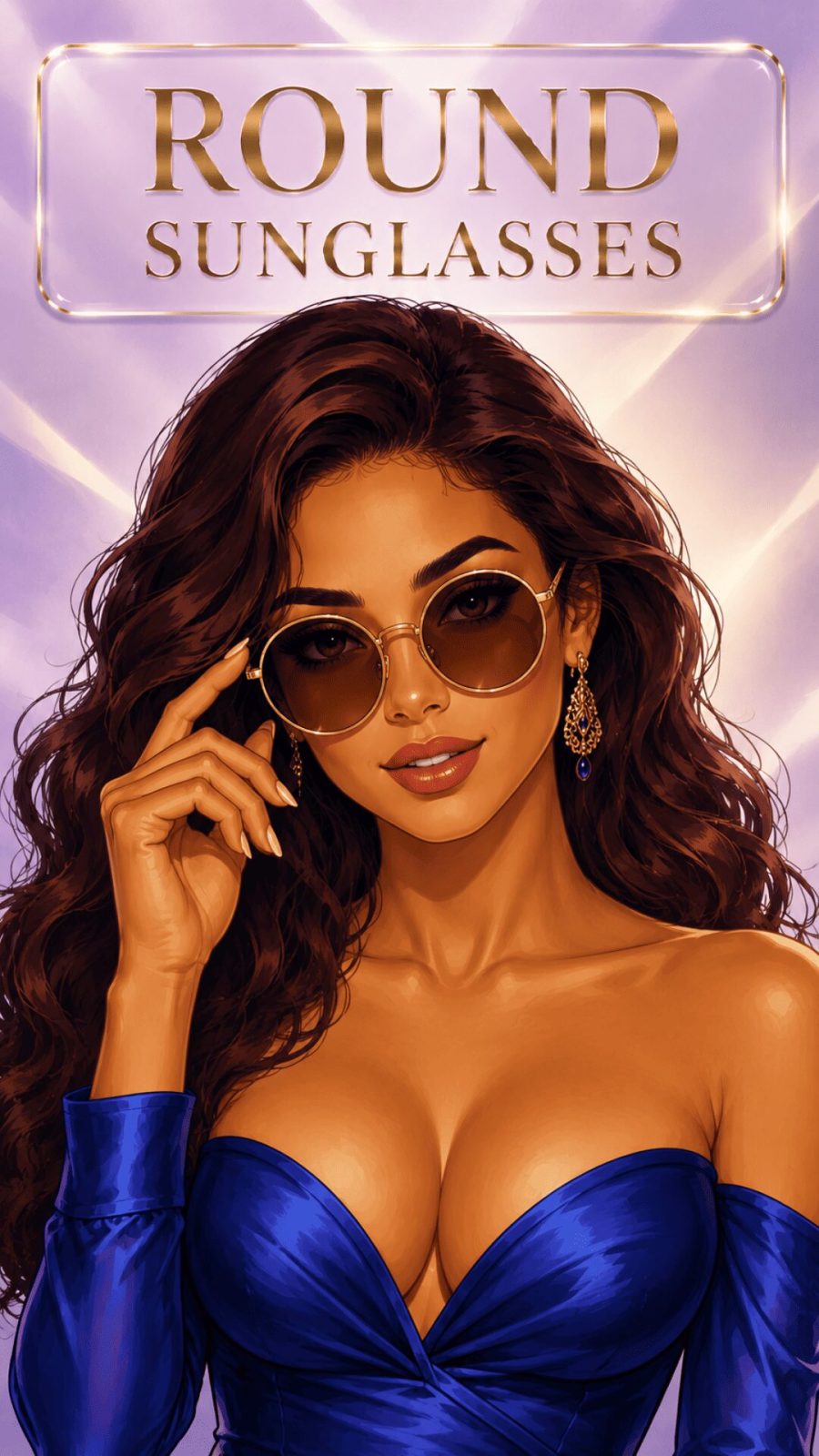
Round Sunglasses
![Round sunglasses for women]()
Perfectly or near-perfectly circular lens shape with equal vertical and horizontal diameter. The round frame carries layered cultural meanings — the intellectual bohemian, the 1960s mod icon, the John Lennon homage. In eyewear construction terms, circular lenses present complex cutting challenges that premium manufacturers handle in metal, acetate, or wire forms. What tends to work beautifully here is the visual softening effect on angular jaw and brow structures.
- 04
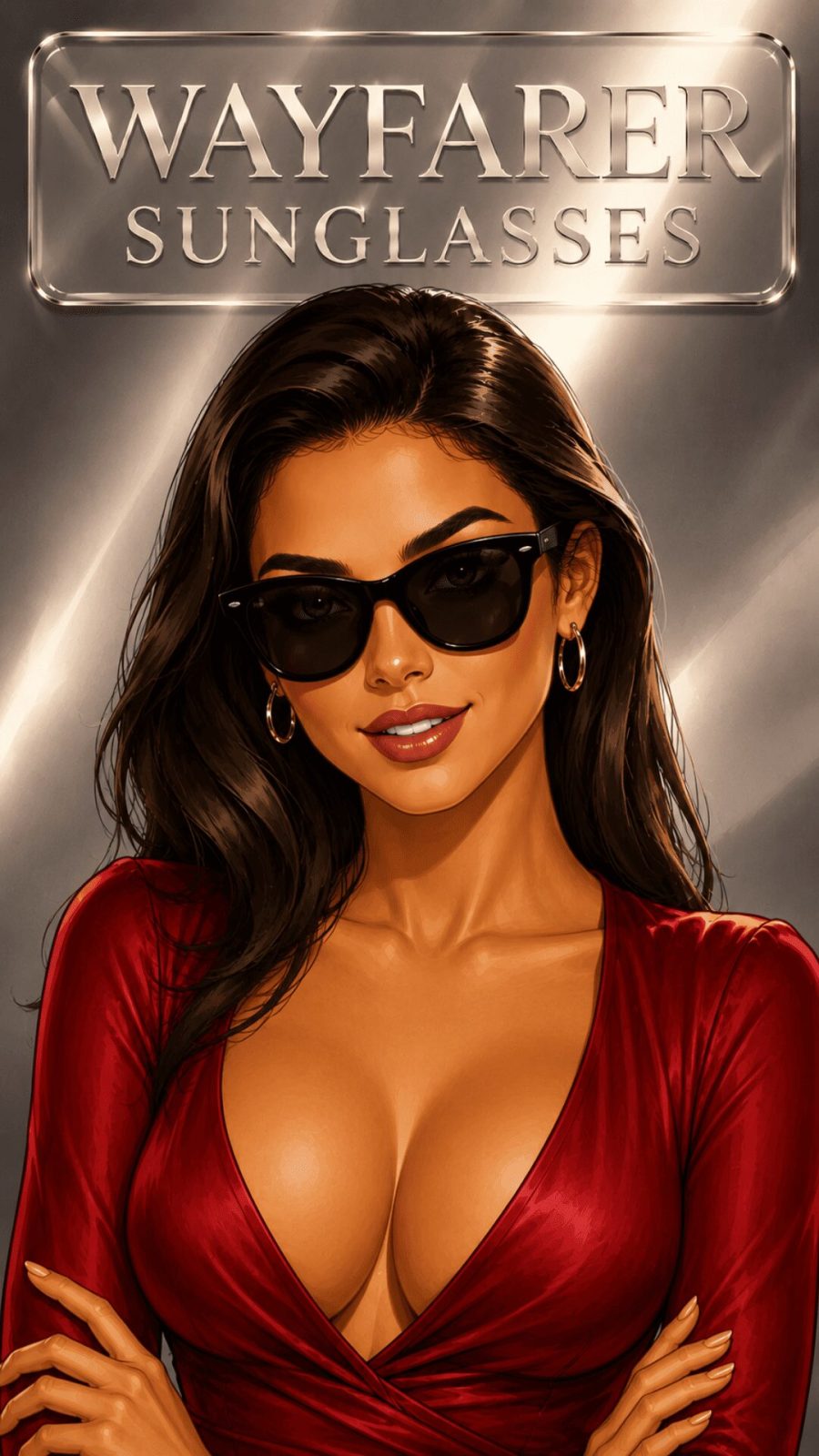
Wayfarer Sunglasses
![Wayfarer sunglasses for women]()
Trapezoidal lens with a slightly wider top edge than bottom, thick acetate frame, pronounced brow line. Introduced by Ray-Ban in 1952 — one of the most commercially successful eyewear designs in history. The Wayfarer crossed every subculture barrier: worn by James Dean, Madonna, and virtually every decade's version of "cool." The construction logic is that a wider-top frame mimics and reinforces the natural brow structure, creating a consistently flattering effect on most faces.


The most overlooked variable in sunglasses fit isn't face shape — it's temple-to-temple measurement. Two people with the same "oval face" can wear the same frame silhouette but need completely different bridge widths and temple lengths. Before committing to a shape, measure the width of your face at cheekbone level. Most premium frames list their lens width + bridge width + temple length in millimetres on the inner arm. That number tells you more than any face-shape chart.
- 05
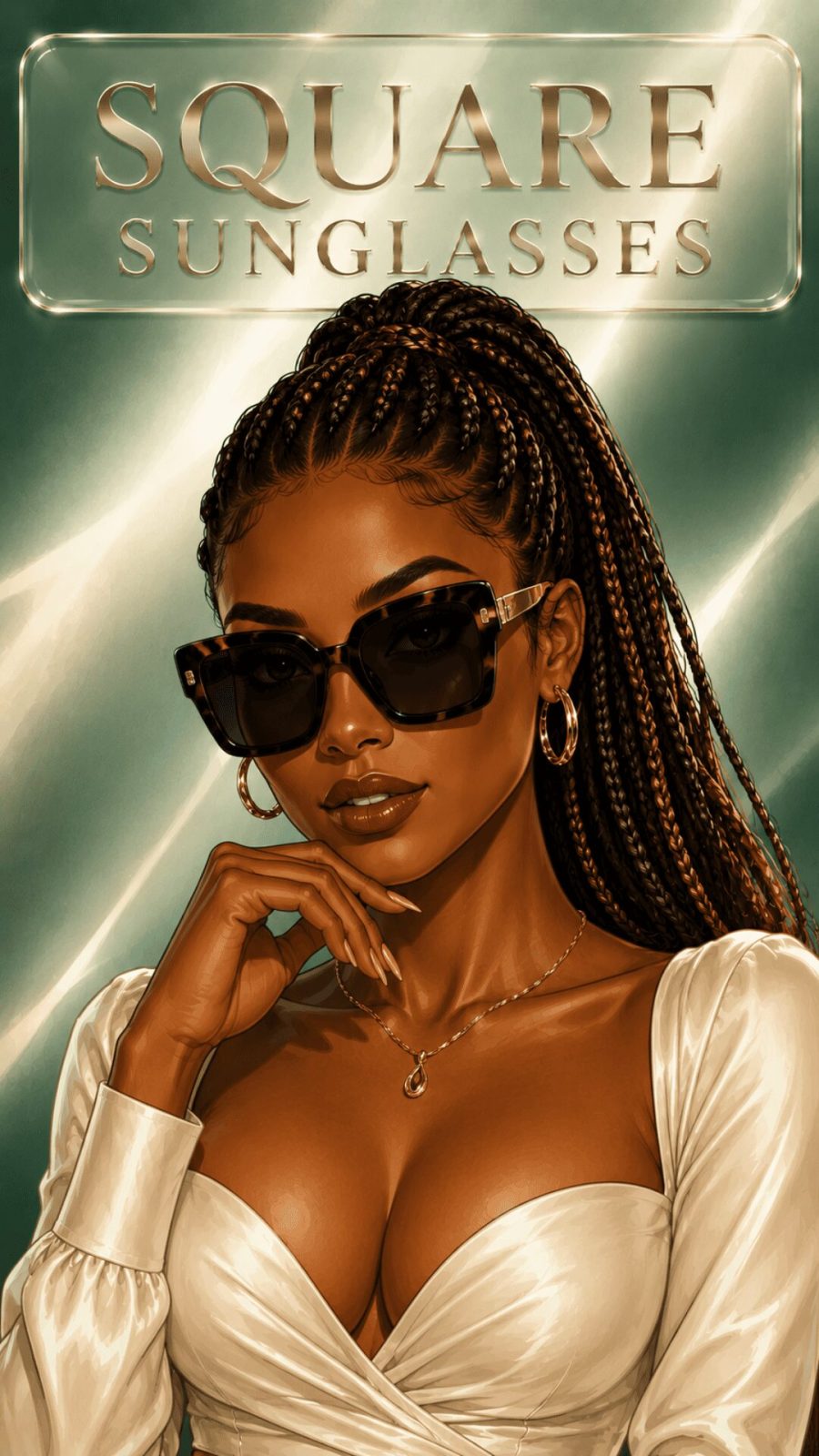
Square Sunglasses
![Square sunglasses for women]()
Equal-width-and-height lens with sharp, geometric corners and a flat top edge. Architectural rather than organic — this frame shape communicates confidence, precision, and deliberate style intent. The strong horizontal and vertical lines can balance and contrast with softer or more rounded facial features. Often available in bold acetate for fashion-forward statements, or slim metal for a more refined, editorial look.
- 06
Oversized Sunglasses
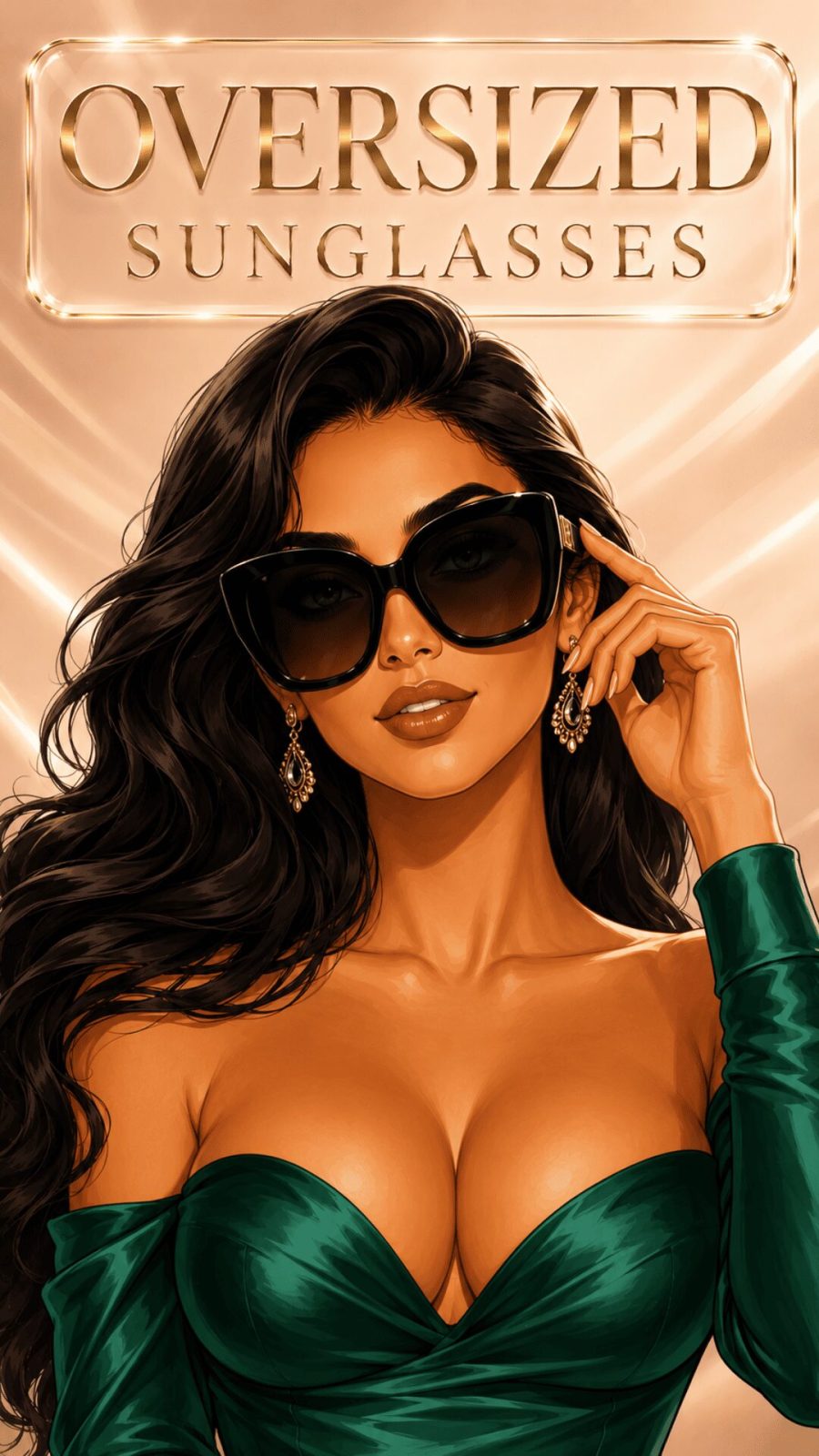
![Oversized sunglasses for women]()
Frames scaled significantly larger than standard ophthalmic proportions — lens coverage extends to or beyond the cheekbone and brow. The oversized silhouette peaked in the 1970s with the Hollywood celebrity set (think Jackie O's signature look) and resurfaces seasonally in fashion collections. Maximum UV coverage is a genuine functional benefit, not just aesthetic — larger lenses block more lateral sun exposure. Also the most effective concealment piece in any wardrobe.


- 07
Butterfly Sunglasses
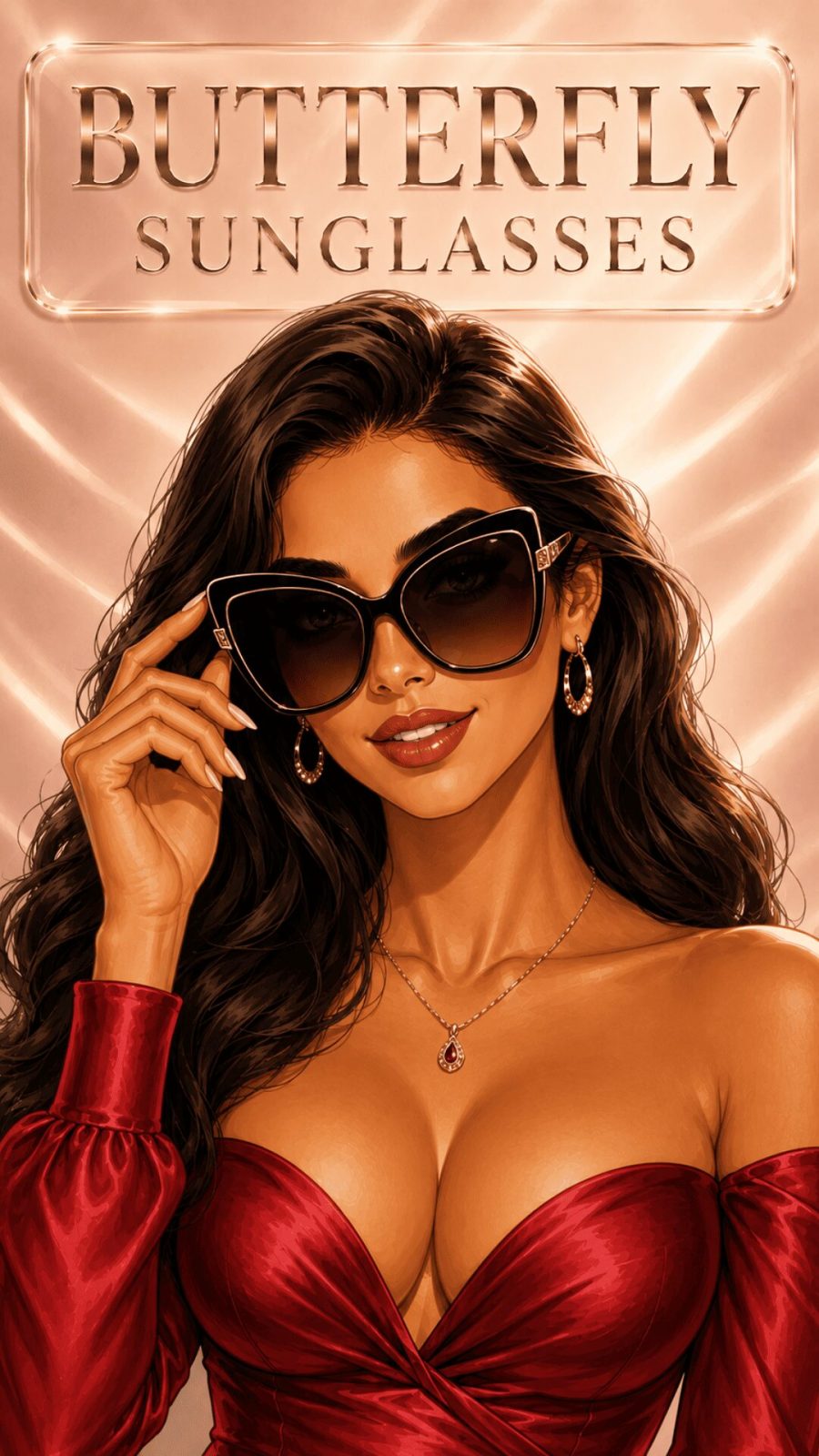
![Butterfly sunglasses for women]()
An evolution of the cat-eye with wider, more dramatically flared lenses that extend outward and slightly upward — the spread of wings. Where cat-eye frames concentrate drama at the corner lift, butterfly frames push lens mass further lateral and upward simultaneously. The result is a wider visual statement, stronger brow coverage, and a more theatrical silhouette. Often seen in luxury fashion houses' seasonal eyewear campaigns as a statement collector's piece.
- 08
Geometric / Angular Sunglasses
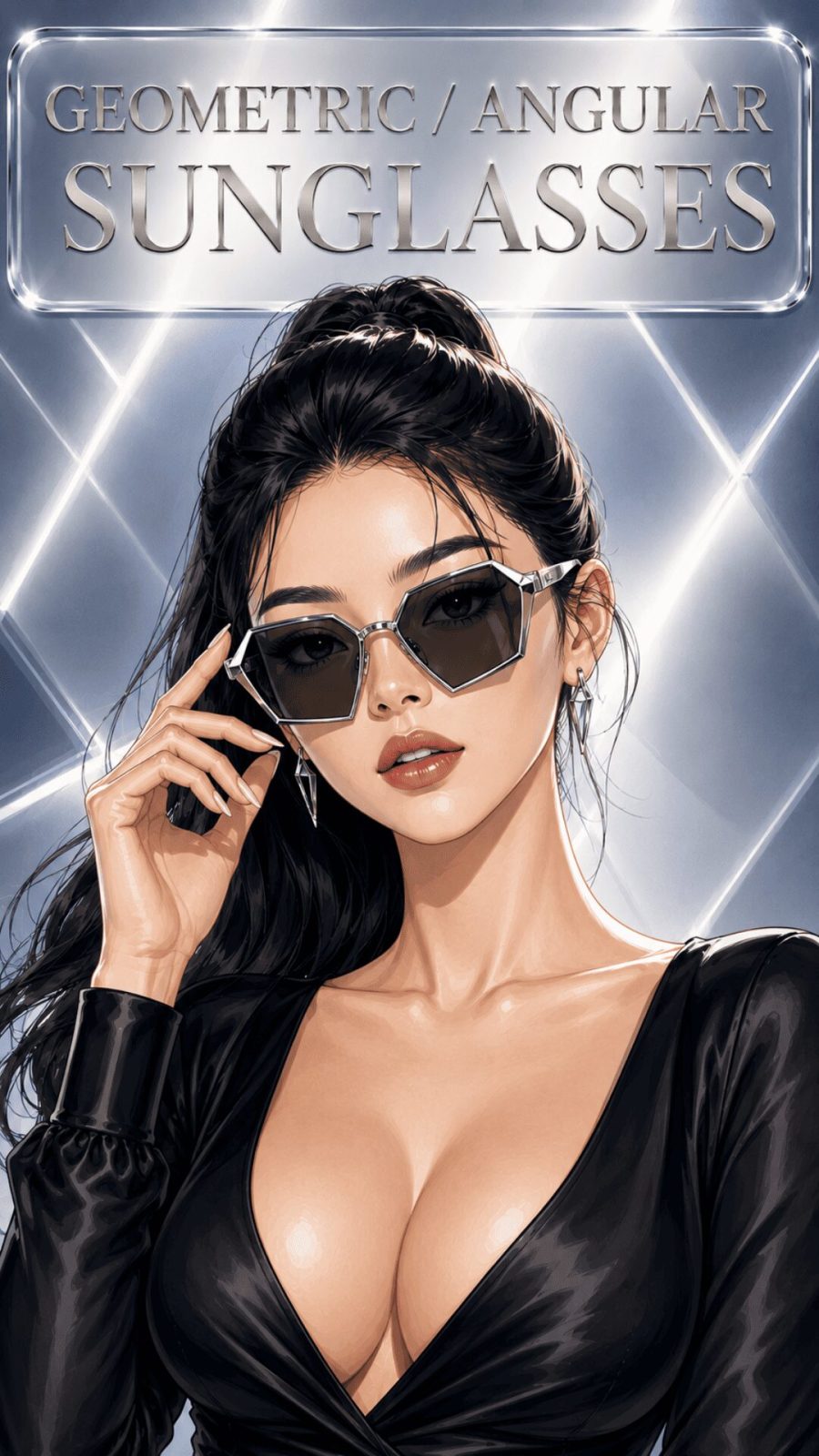
![Geometric angular sunglasses for women]()
Hexagonal, octagonal, pentagonal, or other polygon lens shapes — distinct from the classic squares and ovals by their unusual edge count and pointed or faceted corners. A strong design signal that says the wearer understands eyewear as architecture. Hexagonal frames specifically have had recurring relevance in fashion-forward editorials and street style documentation. The faceted lens perimeter creates micro-light-play effects not achievable with curved frames.


- 09
Shield / Mono Lens Sunglasses
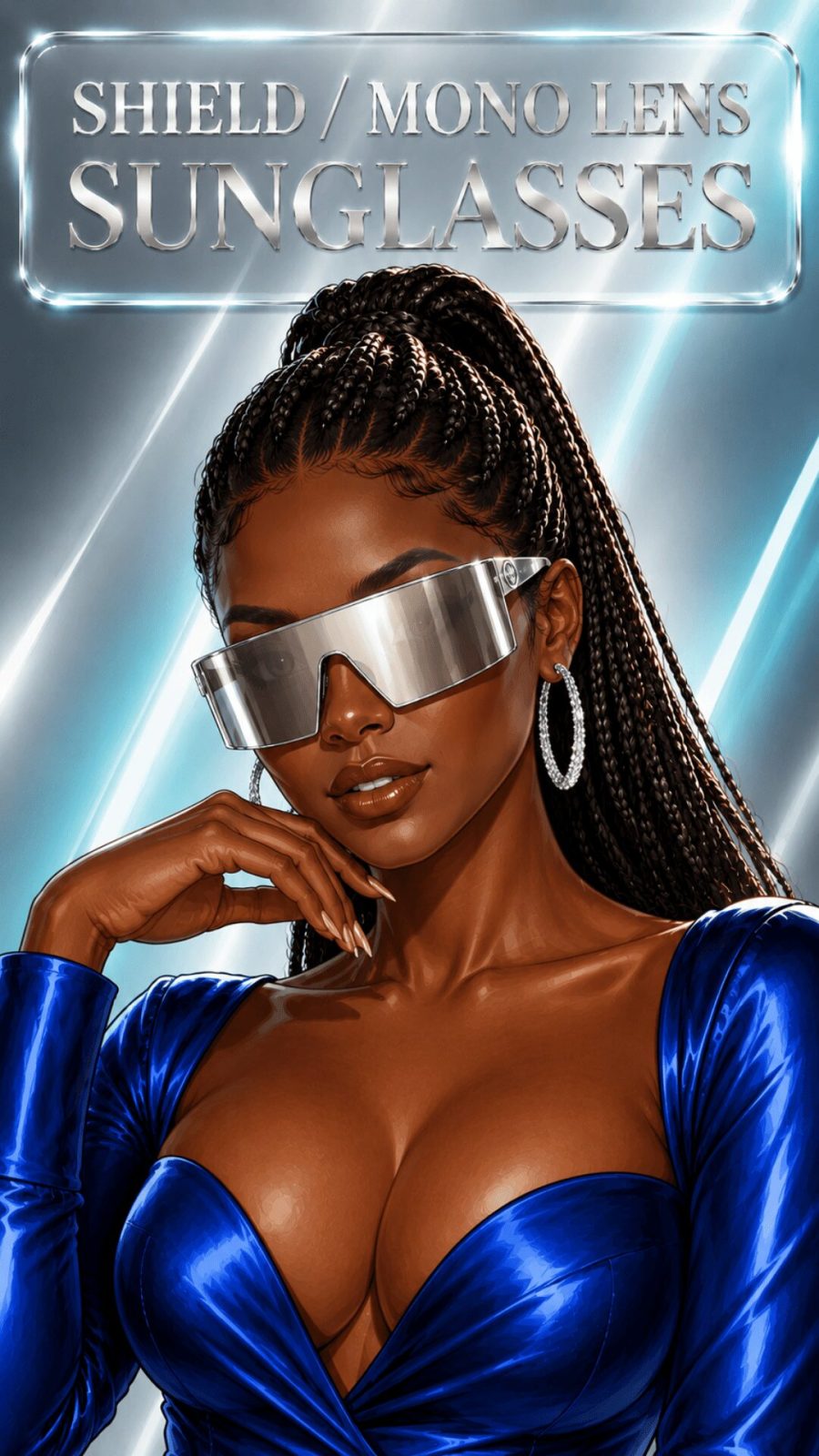
![Shield mono lens sunglasses for women]()
A single uninterrupted curved lens spanning both eyes with no bridge break. This construction eliminates the traditional two-lens/one-bridge architecture entirely — replacing it with a continuous visor-like surface. Originally engineered for sports performance (maximum peripheral coverage, no edge distortion), the shield silhouette crossed into high fashion via Versace, Fendi, and Balenciaga runway pieces. Maximum UV protection. Zero apology. Either you commit to a shield, or you don't — there's no neutral version of this frame.

- 9 frame silhouettes, each defined by lens geometry — not trend name or colour
- Frame shape determines face balance — wider-top frames (wayfarer) reinforce brow structure; rounder frames soften angular features
- Cat-eye ≠ butterfly: cat-eye lifts the corner; butterfly extends the entire wing laterally — a meaningful construction difference
- Aviator and wayfarer offer the broadest cross-face-shape versatility in the silhouette category
Category 2: By Lens Style & Coverage (#10–#13)
How the lens itself is constructed, treated, or sized — independent of frame geometry
- 10
Mirrored Sunglasses
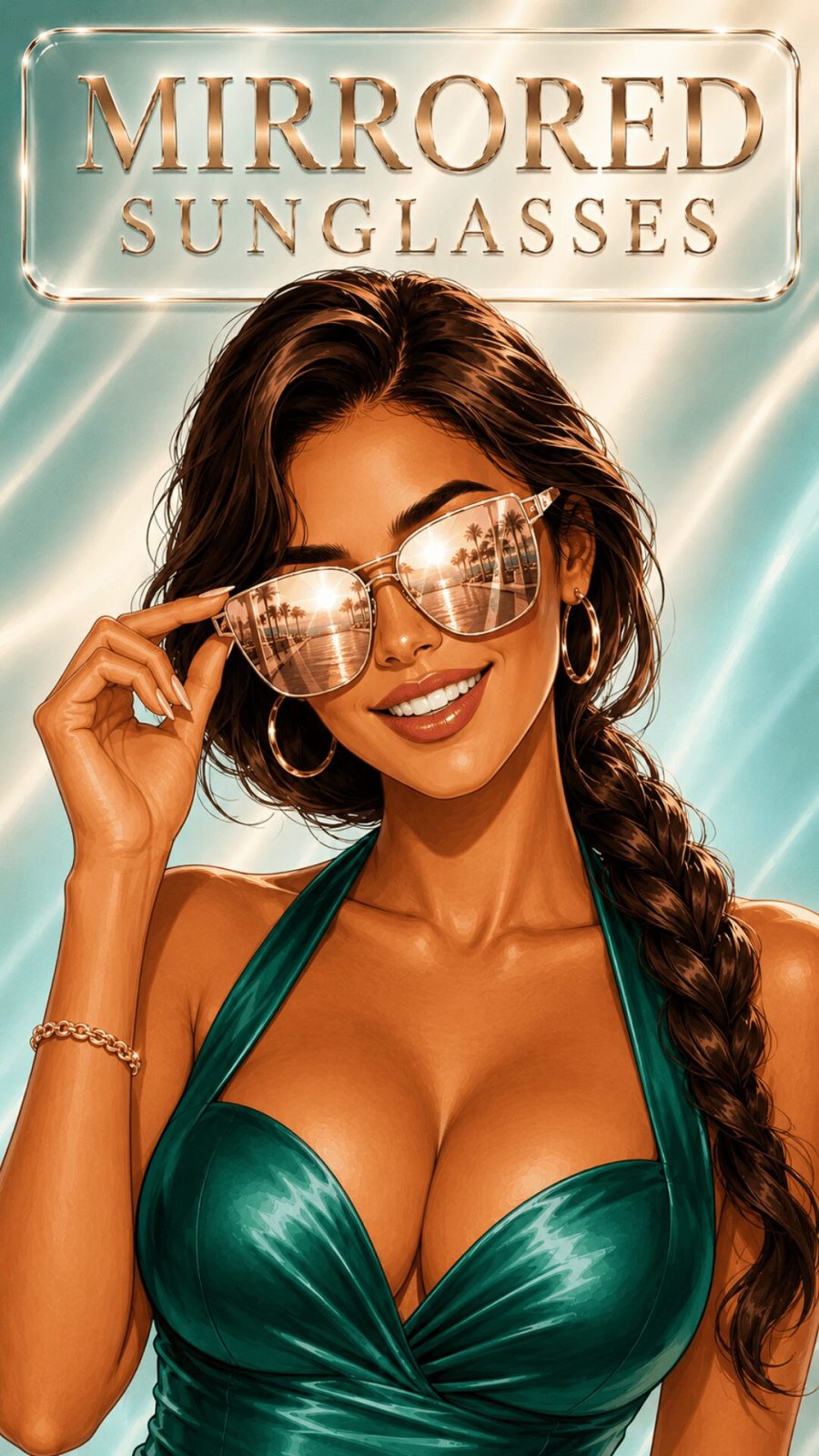
![Mirrored sunglasses for women]()
A reflective metallic coating applied to the outer lens surface — the mirror effect prevents others from seeing the eyes while dramatically reducing glare. This is a lens treatment applied to any frame shape, not a shape itself. Silver, gold, rose gold, blue, and iridescent rainbow finishes are the most common. Functionally, the reflective flash coat reduces visible light transmission by an additional 10–60%. Visually, it transforms any frame from understated to statement.
- 11
Gradient / Ombré Lens Sunglasses
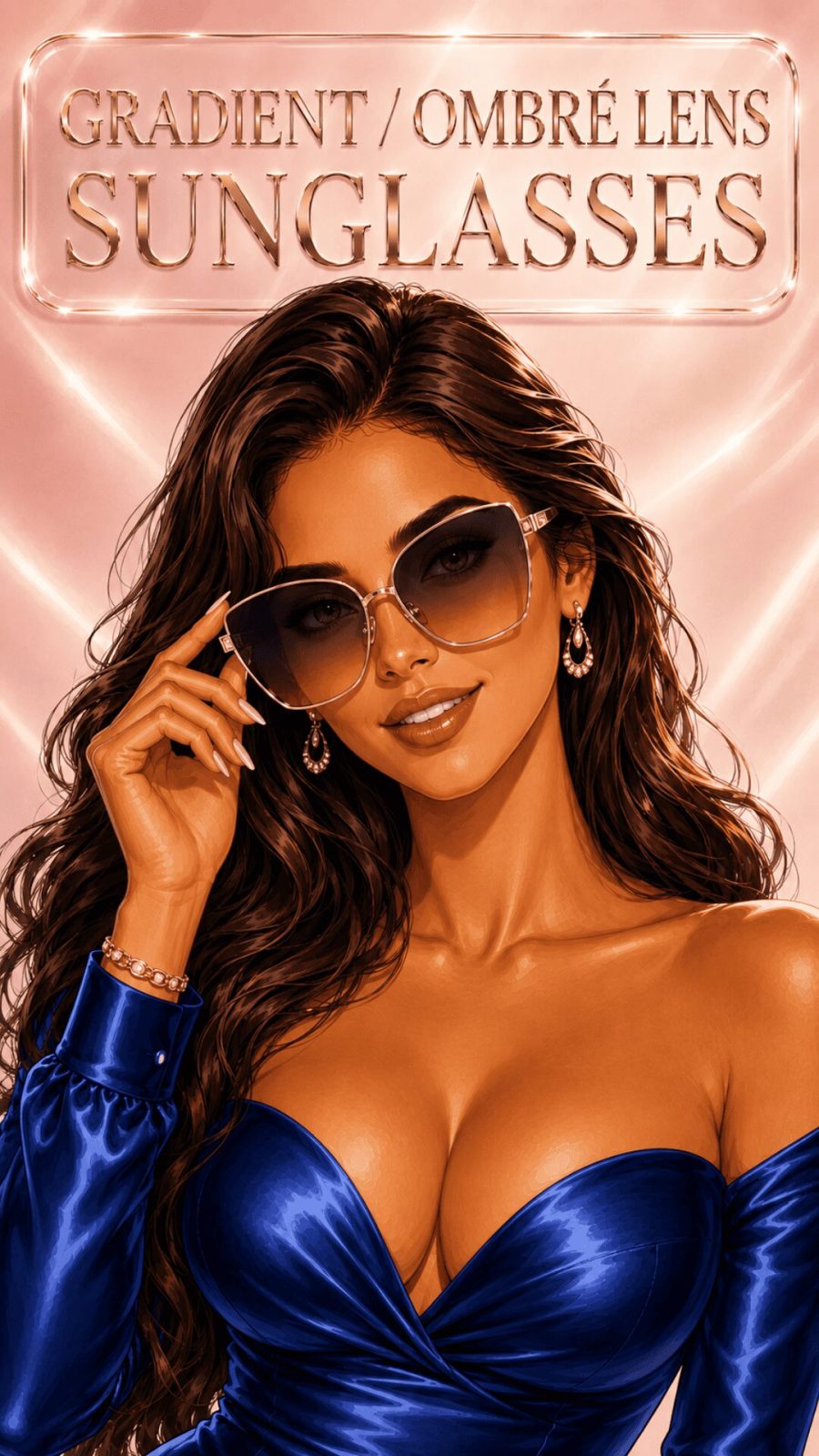
![Gradient ombre lens sunglasses for women]()
Lens tint that transitions from darker at the top to lighter or clear at the bottom — replicating the natural sky-to-ground brightness gradient your eyes already process. This is the most flattering lens construction for face-revealing wear because the lighter lower lens allows more eye visibility, creating a softer, more approachable visual effect. Fashion collections at both mass-market and luxury tiers return to gradient lenses seasonally — it's not a trend, it's a perennial design logic.


"Darker lenses mean better UV protection."
Lens tint and UV protection are entirely separate properties. A light amber lens with UV400 coating blocks 100% of UV rays. A very dark grey lens without UV treatment blocks almost none. UV protection comes from a chemical coating or lens material treatment — not from how dark the lens appears. When buying sunglasses, look for "UV400" or "100% UVA/UVB protection" on the label, not darkness level. This distinction is well established in optical health guidance.
- 12
Polarized Sunglasses
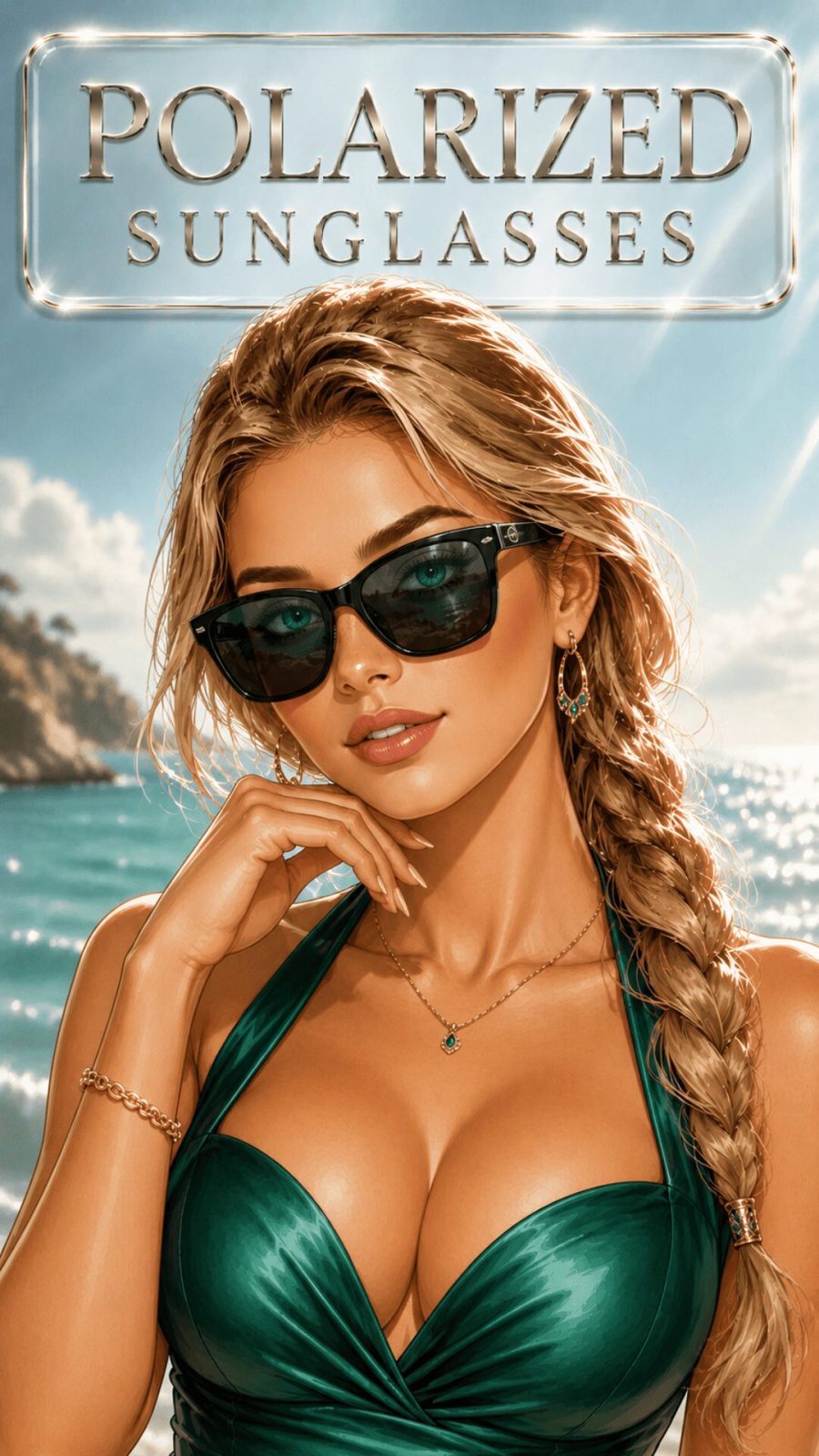
![Polarized sunglasses for women]()
A polarized filter embedded within the lens blocks horizontally polarized light — the specific type of glare that bounces off reflective surfaces like water, snow, and wet roads. This is a performance feature, not an aesthetic one — any frame shape can have polarized lenses. The visual effect is a dramatic reduction in surface glare that creates a crisp, almost cinematic visual clarity. Essential for water sports, driving, skiing, and any outdoor activity involving reflective surfaces. A genuinely useful investment, not just a premium marketing label.
- 13
Tinted / Coloured Lens Sunglasses
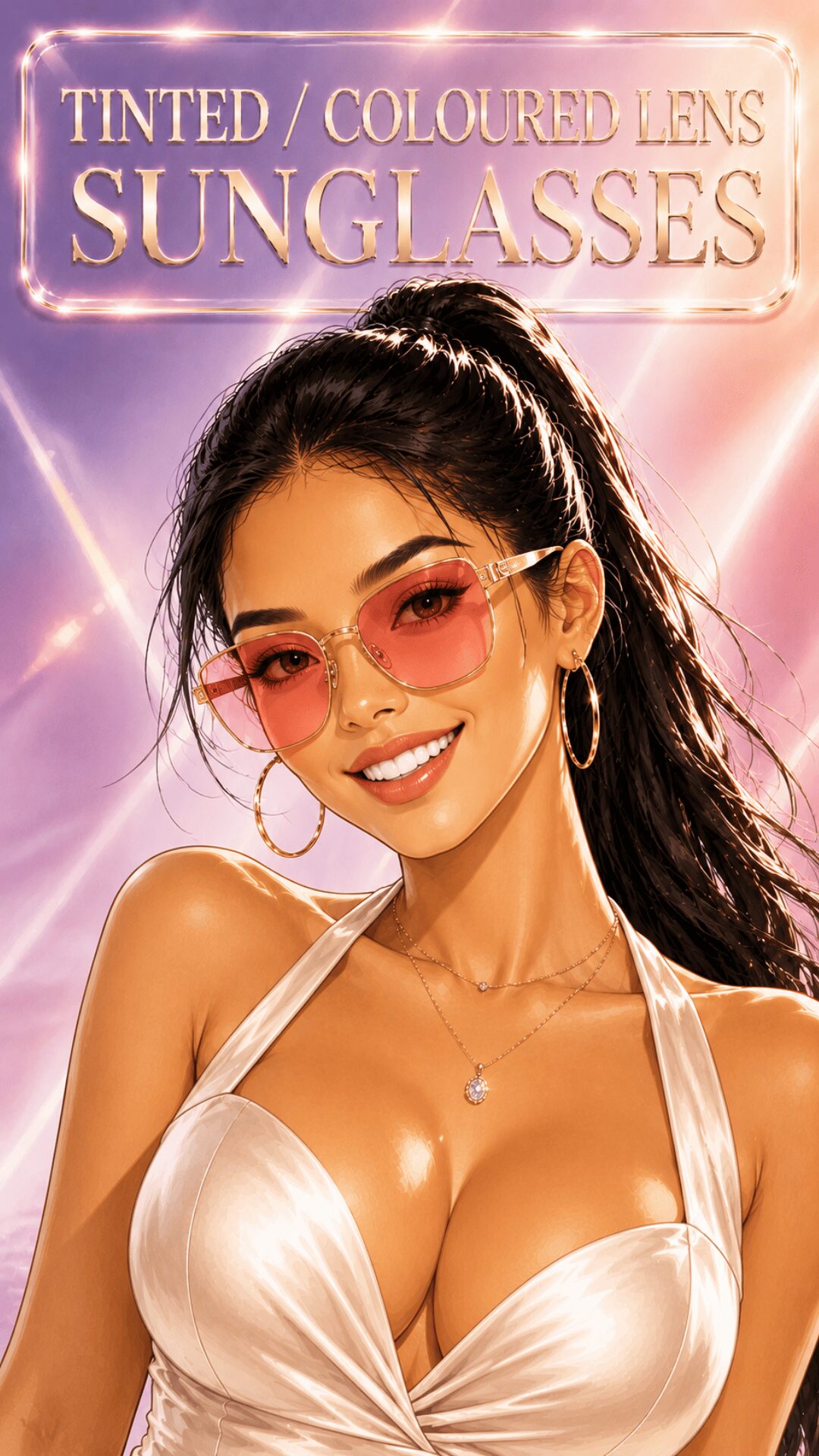

Lenses in non-standard fashion colours — amber, rose, blue, green, yellow, orange, or unconventional hues as a deliberate style statement. Beyond aesthetics, different tint colours do affect visual perception: amber and brown lenses increase contrast and depth perception; yellow enhances clarity in low-light conditions; blue and green lenses reduce eye strain in bright daylight. Pink and rose lenses have a known mood-warming optical effect. When a lens colour becomes a signature, it becomes a fashion identity.

Category 3: By Frame Material & Construction (#14–#16)
What the frame is made of — the material identity that determines weight, durability, and aesthetic register
- 14
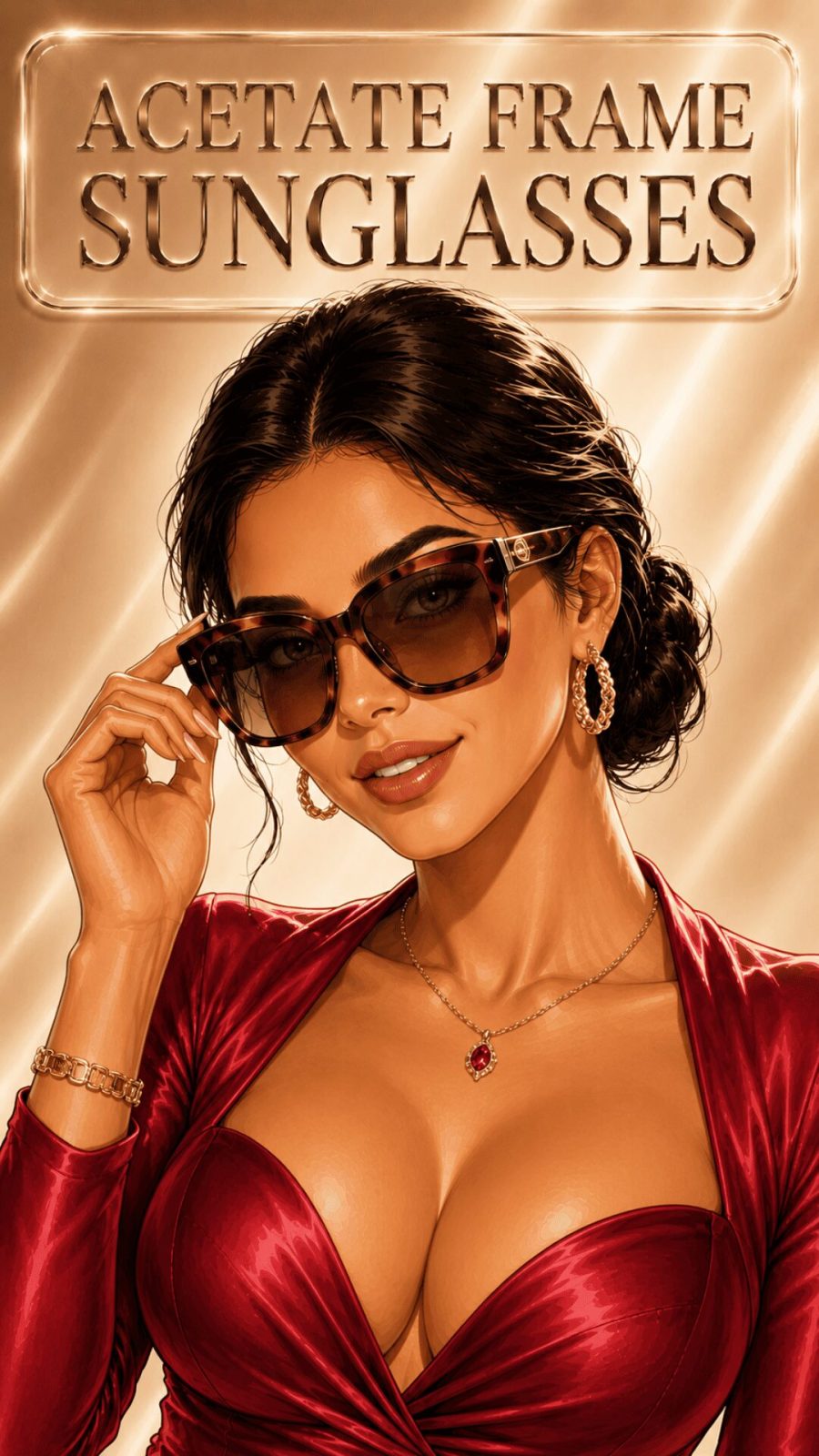
Acetate Frame Sunglasses
![Acetate frame sunglasses for women]()
Cellulose acetate is a plant-based plastic derived from wood pulp — the material standard for premium fashion eyewear frames. Denser and more lustrous than injection-moulded plastic, acetate accepts richer colours and tortoiseshell patterns, can be polished to a higher gloss, and has a characteristic satisfying weight that signals quality the moment you pick up the frame. It's temperature-sensitive — it can be slightly warmed and adjusted by an optician for a perfect fit. Most luxury designer sunglasses in fashion collections are acetate.
- 15
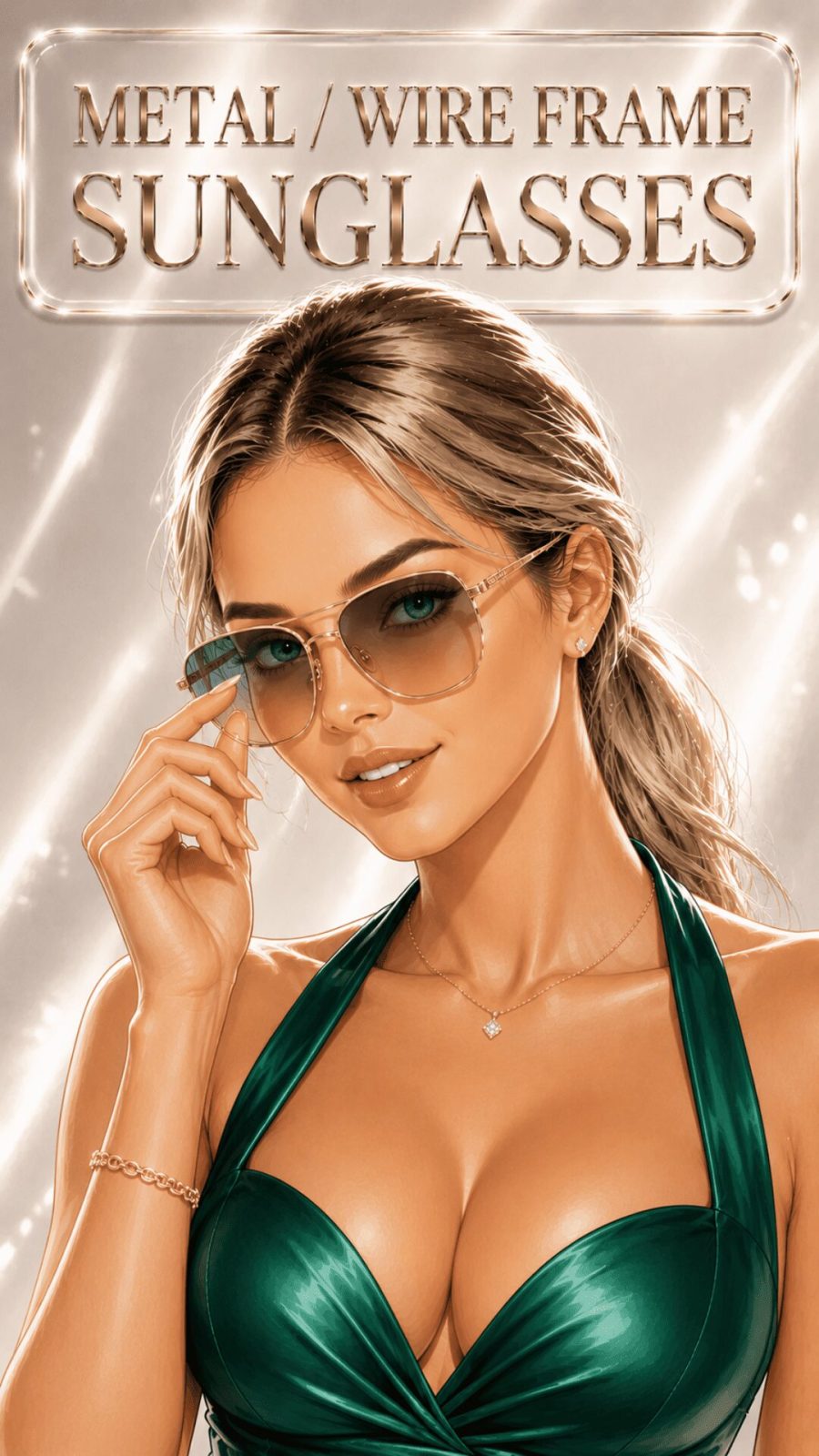
Metal / Wire Frame Sunglasses
![Metal wire frame sunglasses for women]()
Thin stainless steel, titanium, or gold/silver-tone alloy construction — the frame materials of the aviator, wire-rim round, and classic rimless designs. Metal frames are lighter than acetate, more adjustable at the nose bridge, and project a more refined, often minimalist aesthetic. Titanium is the premium tier — incredibly lightweight and hypoallergenic. Gold and silver-tone metal signals a different fashion vocabulary than acetate tortoiseshell: more editorial, more architectural, less casual.


- 16
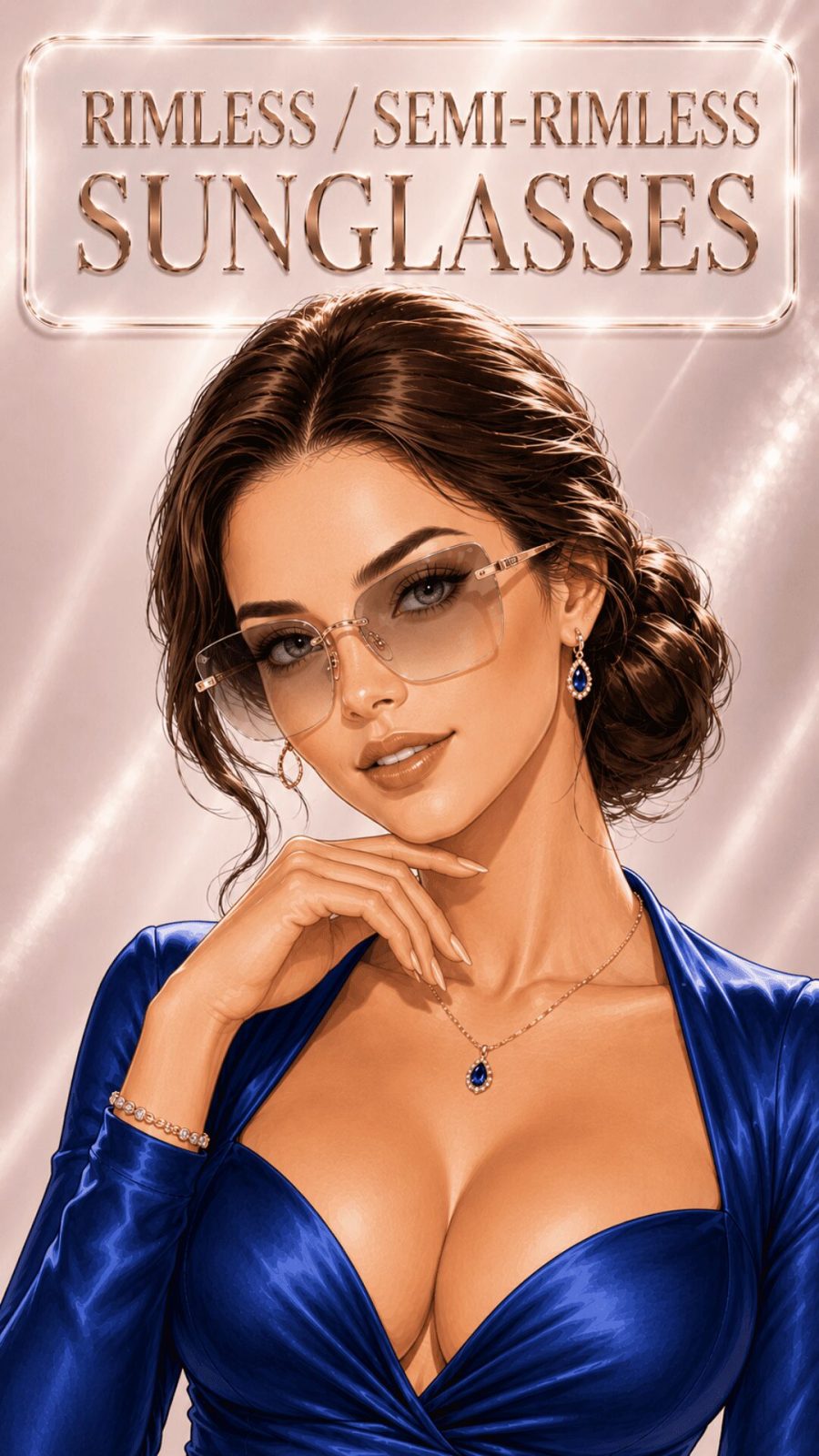
Rimless / Semi-Rimless Sunglasses
![Rimless semi-rimless sunglasses for women]()
Rimless frames have no frame around the lens perimeter — the lens is drilled and mounted directly to the bridge and temples. Semi-rimless (also called half-rim or browline) frames have a frame across the top edge only, with the lower lens edge exposed. Both constructions create a visual minimalism that lets the lens shape read without frame interruption. The rimless silhouette tends toward invisibility — letting the face dominate — while semi-rimless creates a distinctive brow-line emphasis.

Category 4: By Occasion & Purpose (#17–#19)
Sunglasses designed for specific contexts — where function shapes form as decisively as fashion
Most women own one or two pairs of sunglasses and make them do everything. That works — but it works the same way wearing trainers to a wedding works. Occasion-specific sunglasses aren't luxury excess; they're the difference between a frame fighting your outfit context and one that makes the whole look feel considered. A small sport wrap for hiking. A classic aviator for travel. An oversized cat-eye for resort. Three frames, years of versatile use. That's a more honest ROI than buying one expensive "do-everything" pair that genuinely does nothing perfectly.
- 17
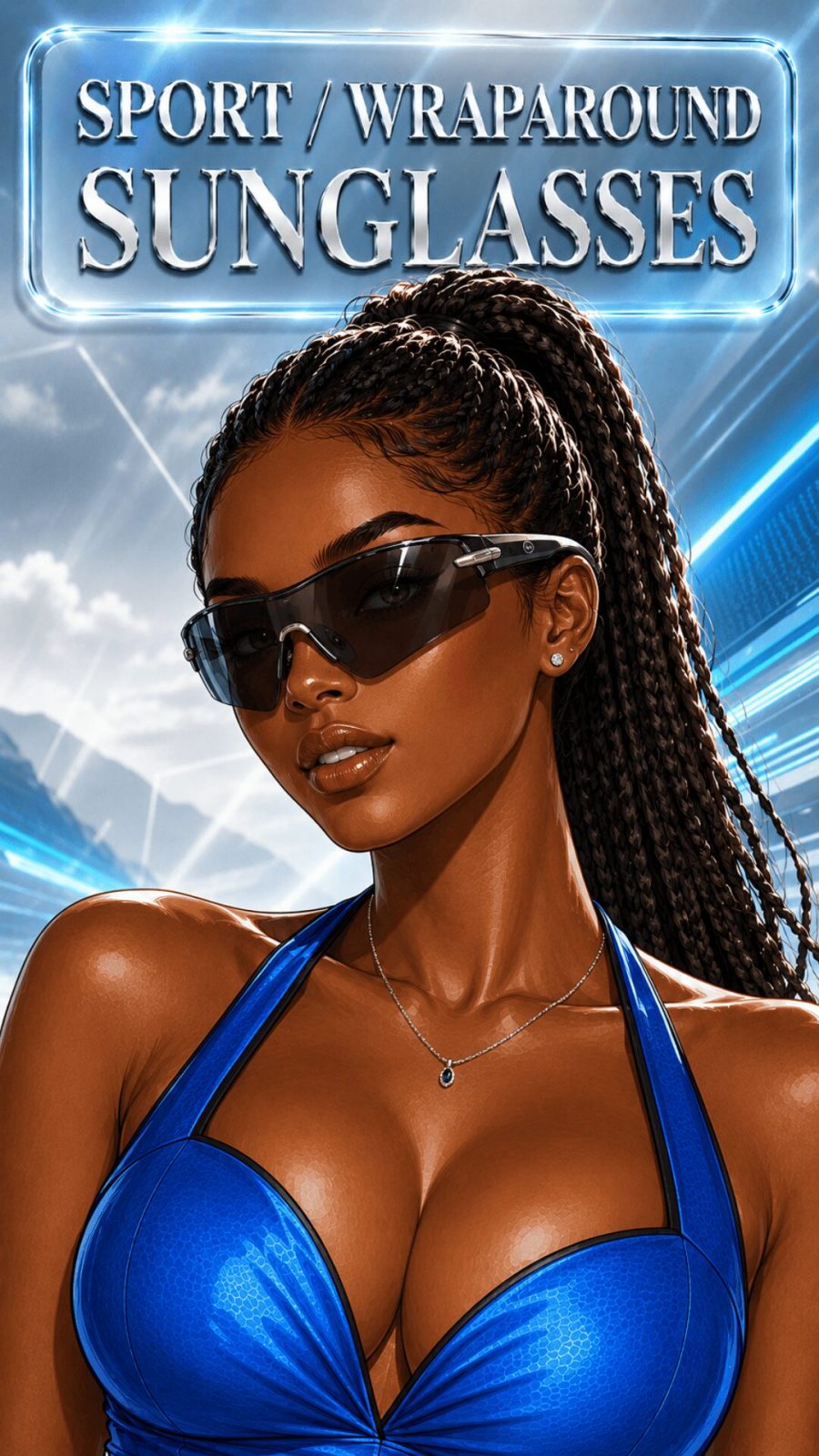
Sport / Wraparound Sunglasses
![Sport wraparound sunglasses for women]()
Curved frames that wrap around the temple providing lateral UV and wind protection; often with rubber grip nose pieces and temple tips for secure high-movement wear. Construction priorities are retention during activity, peripheral light blocking, and lens resistance to impact. The sport frame entered fashion vocabulary through running culture, cycling, and outdoor adventure aesthetics — and the athleisure movement mainstreamed it into daily streetwear. Oakley, Nike, and Adidas produce definitive versions of this category, but luxury fashion houses like Prada Sport have blurred the line between performance and runway.
- 18
Clip-On Sunglasses
![Clip-on sunglasses for women]()
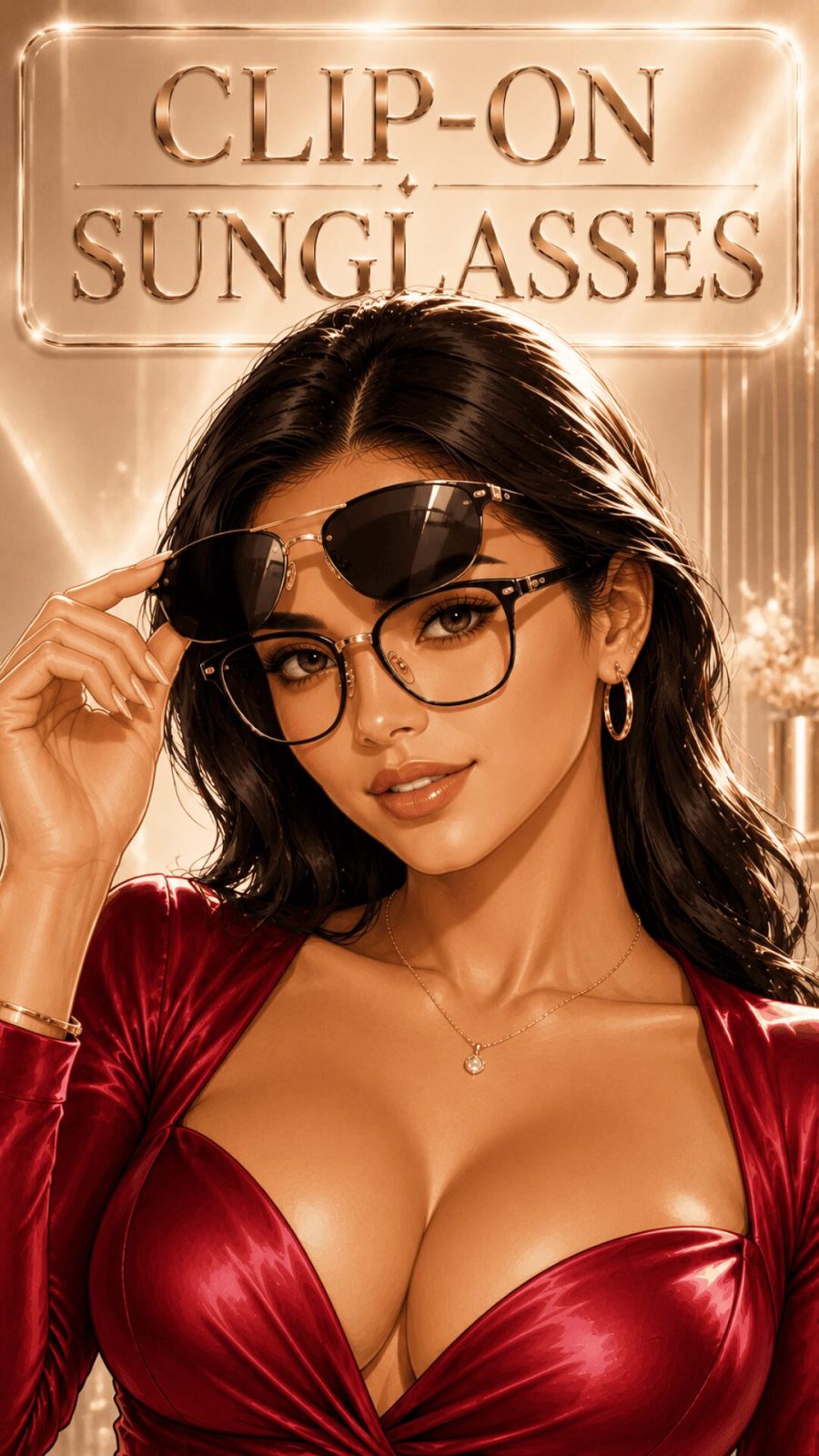
A tinted lens attachment that clips onto the front of prescription eyeglass frames — converting optical glasses into sunglasses without a frame change. The clip-on was once a purely functional solution; contemporary fashion has reclaimed it as an aesthetic object in its own right, with fashion-coloured clip-ons, oversized attachments, and magnetic clip systems becoming deliberate style choices. For optical glasses wearers, a well-matched clip is a genuinely practical investment that sidesteps the cost of prescription sunglasses.


- 19
Reading / Bifocal Sunglasses
![Reading bifocal sunglasses for women]()
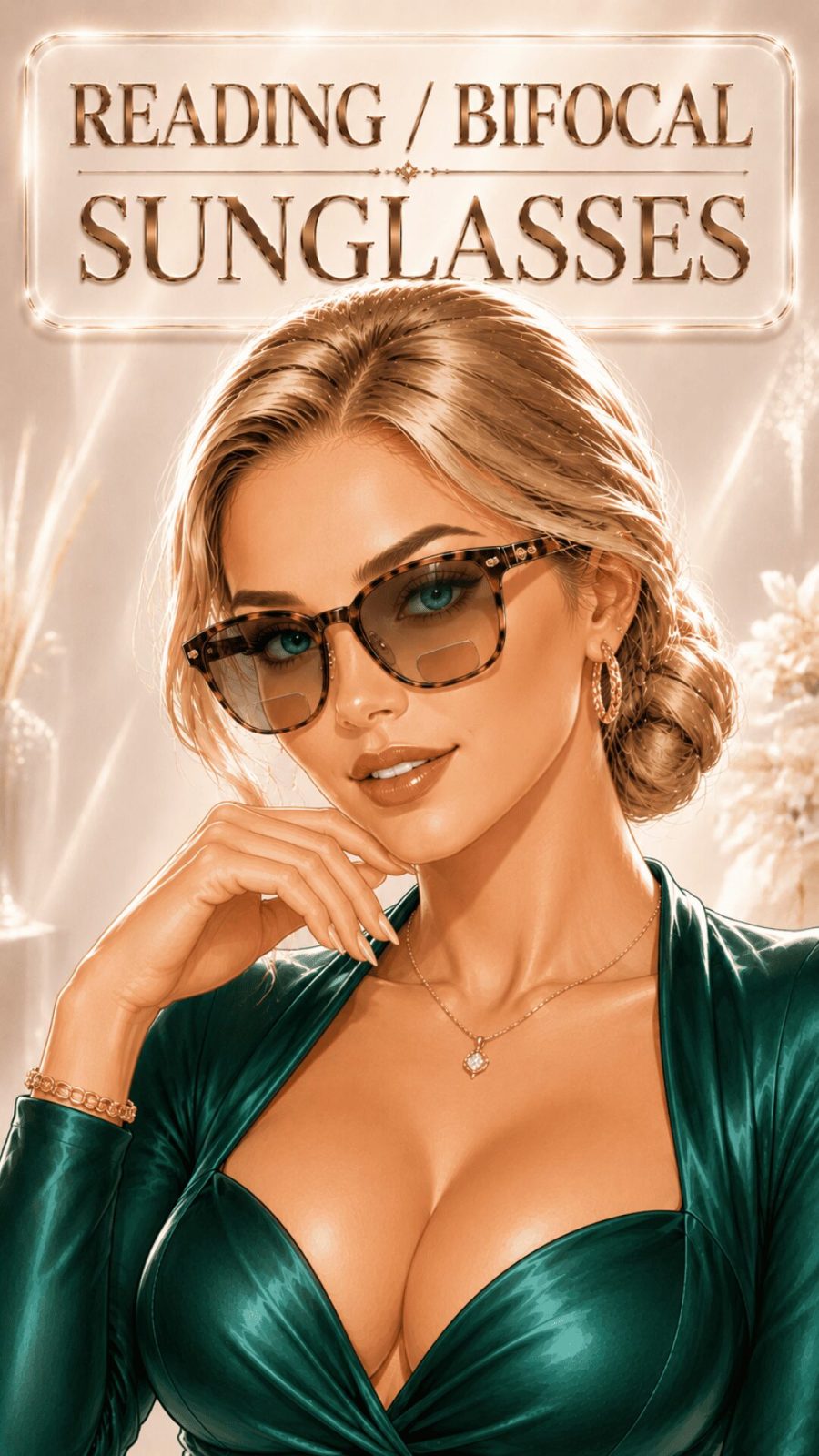
Sunglasses with a near-vision reading magnification in the lower lens portion — ideal for outdoor reading, menus in sunny restaurants, and phone use in bright conditions. Available in full bifocal (visible line) or progressive (no line) formats. A growing category as the population ages and women increasingly refuse to sacrifice style for optical need. The fashion-forward bifocal sunglass market has expanded significantly — you no longer have to choose between reading outdoors and looking polished doing it. Check with your optician about getting readers built into any fashion frame you love.

Category 5: By Cultural & Fashion Aesthetic (#20–#21)
Sunglasses defined by their cultural origin, aesthetic movement, or design philosophy — where the story behind the frame is as important as the frame itself
- 20
Retro / Vintage-Inspired Sunglasses
![Retro vintage sunglasses for women]()
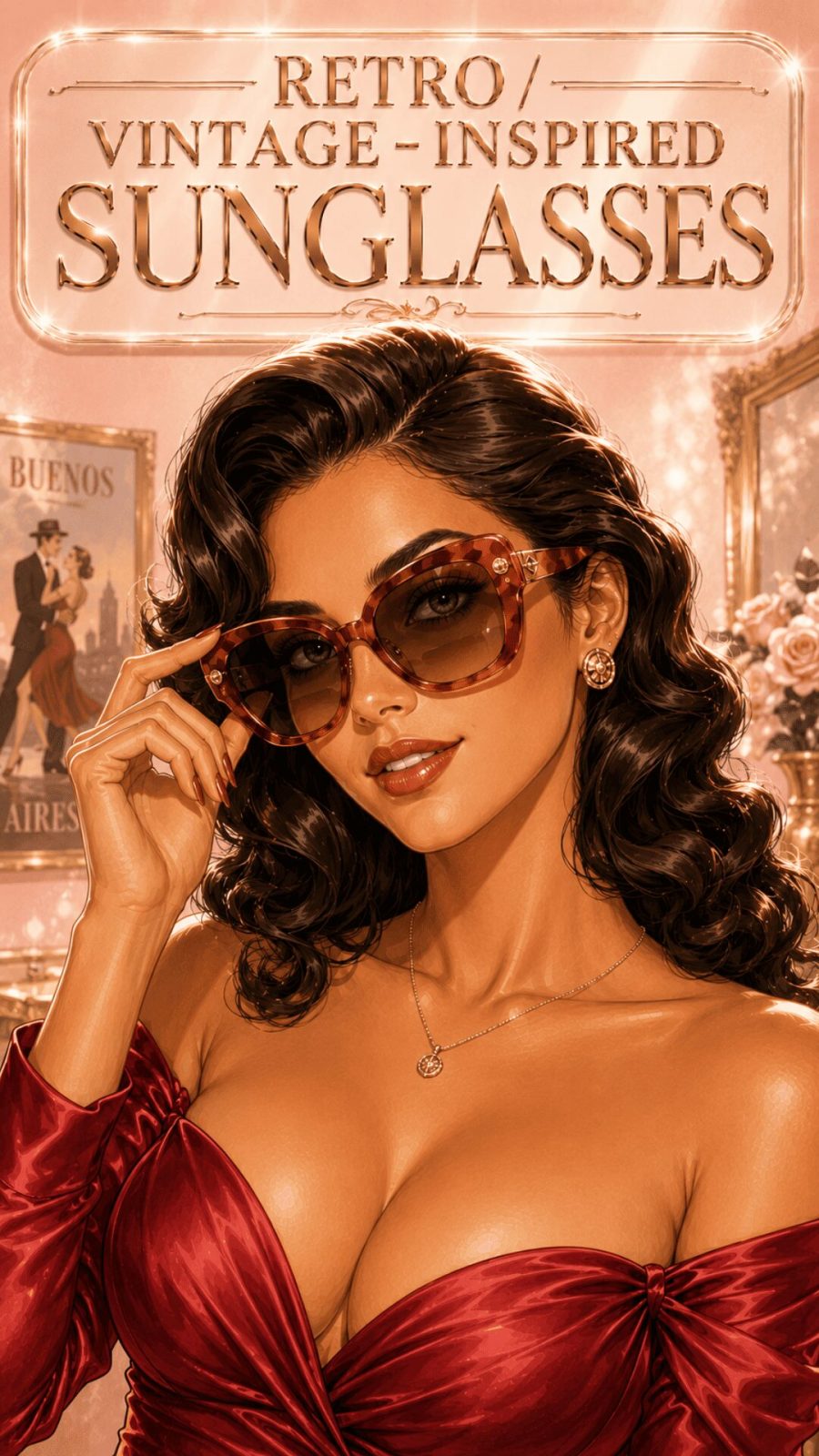
Frames that reference the design vocabulary of specific past decades — 1950s cat-eyes in pastel acetate, 1960s mod circles in white or black, 1970s oversized tinted ovals, 1980s power-shoulder-adjacent bold acetate, 1990s small rectangular wire frames. The retro frame isn't nostalgic by accident. Each decade's eyewear encoded that era's cultural values — and wearing a recognisable silhouette from a particular era is a deliberate fashion statement about identity, taste, and reference. Today's vintage-inspired collections often improve on the originals with better hinge engineering and UV coatings the originals never had.
- 21
Futuristic / Fashion-Forward Sunglasses
![Futuristic fashion sunglasses for women]()
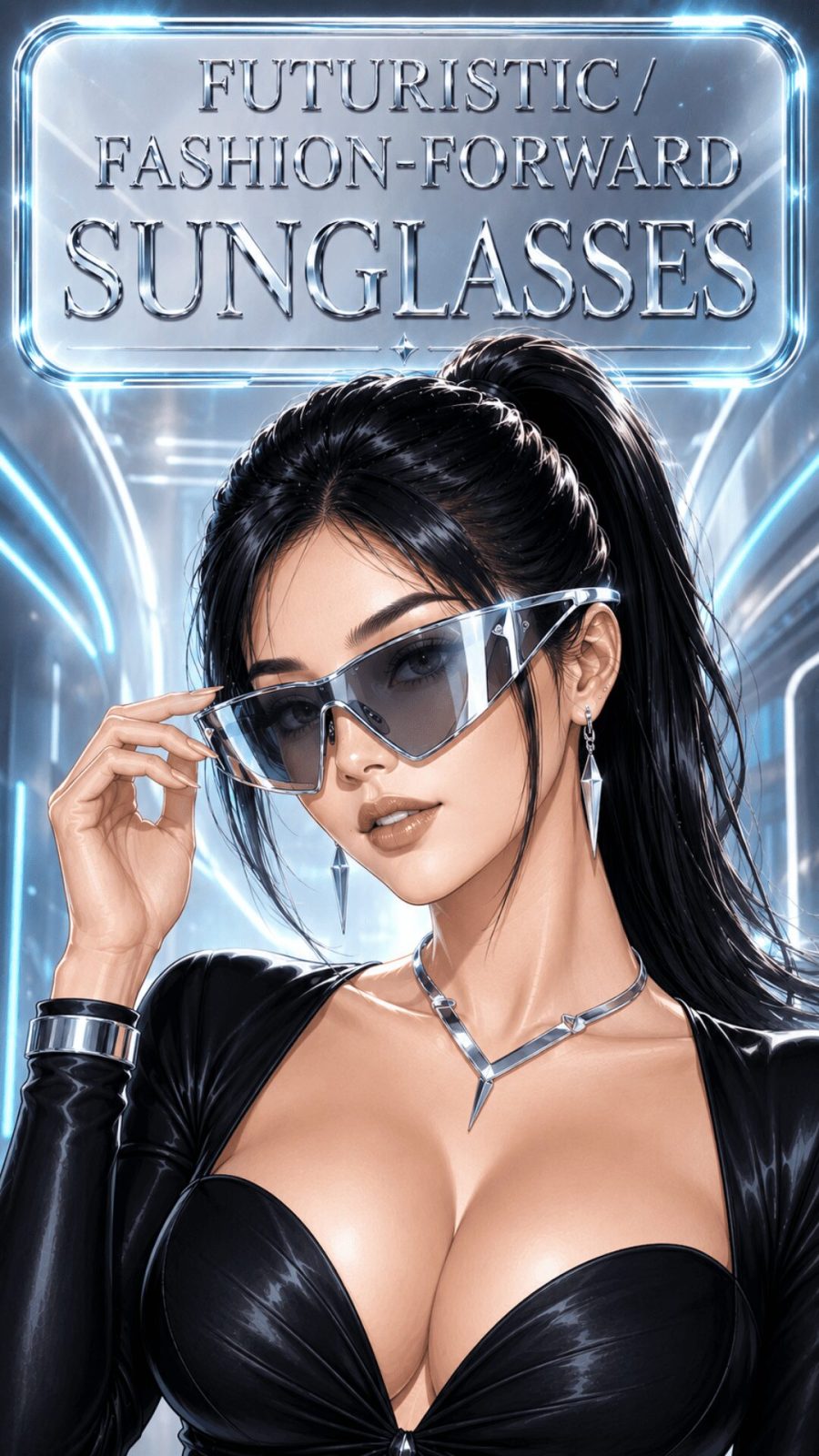
Frames that depart from conventional eyewear geometry into uncharted formal territory — unconventional bridge positions, asymmetric lenses, architectural negative space, transparent frames, sculptural temple constructions, or technology-inflected materials. These aren't sunglasses that simply "look modern" — they're frames that operate as wearable sculpture. Rick Owens, Balenciaga, and emerging independent eyewear designers consistently produce futuristic constructions that push what a sunglass frame can be. Not for the uncommitted wearer. Worn well, they're the most powerful single accessory in any outfit.


Category 6: By Fit & Adjustment Design (#22–#23)
How the frame physically interacts with the face — the fit engineering behind the wearing experience
- 22
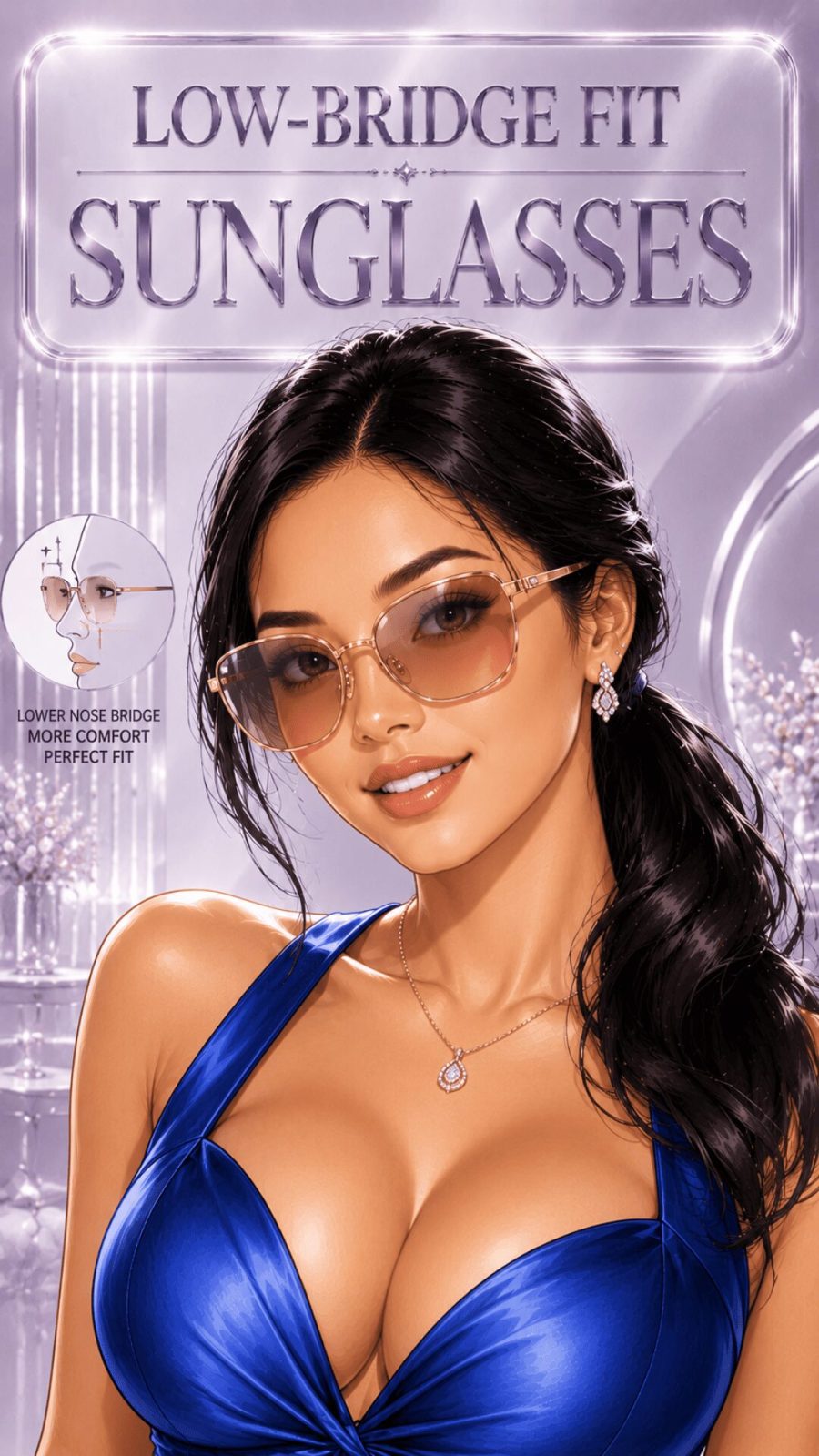
Low-Bridge Fit Sunglasses
![Low bridge fit sunglasses for women]()
Frames engineered specifically for lower nasal bridge profiles — a fit consideration that affects a significant proportion of wearers, particularly those of East Asian, South Asian, Southeast Asian, and African descent. Standard European-fit frames are designed around a higher, narrower bridge that doesn't transfer well to lower or wider bridge structures, causing the frame to sit too low, close to the face, or slide continuously. Low-bridge fit frames have higher, wider nose pads or saddle bridges, adjusted frame angles, and modified temple geometry. Ray-Ban, Oakley, and Mykita among others now produce explicit low-bridge fit lines.
- 23
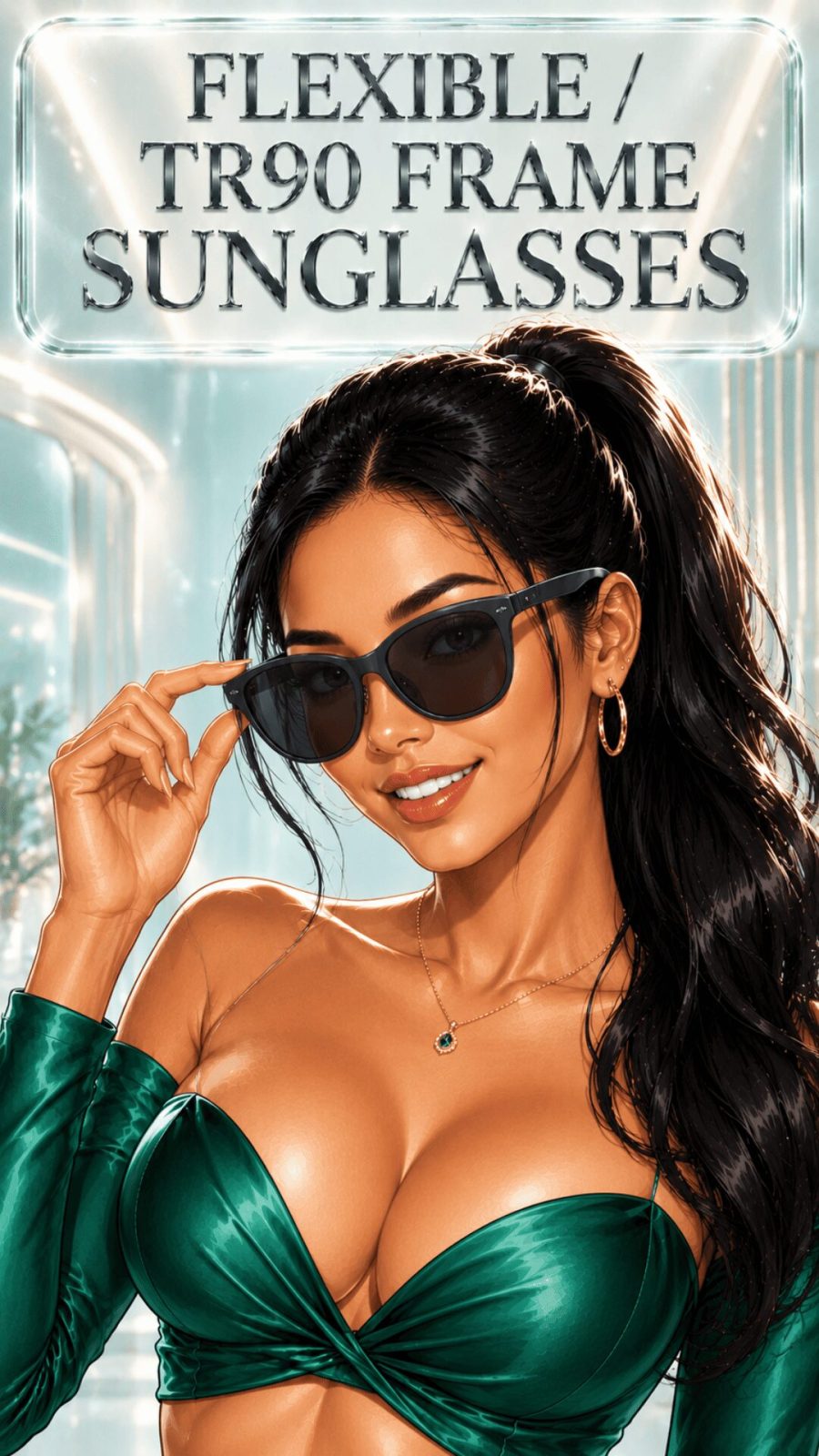
Flexible / TR90 Frame Sunglasses
![Flexible TR90 frame sunglasses for women]()
TR90 (thermoplastic rubber-90) is a memory-retention material that allows frames to flex and return to original shape rather than deforming under pressure. Lighter than standard acetate or injected plastic, TR90 frames are particularly popular in performance and children's eyewear — but fashion brands increasingly use the material for its durability and lightweight comfort. A TR90 frame can be sat on, stuffed into a bag, or bent significantly without permanent damage. For active wearers or anyone who is hard on their accessories, this is a genuinely practical material choice.


The most common sunglasses mistake isn't choosing the wrong shape — it's choosing the wrong scale. A frame that's too small for your face reads as costume; too large overwhelms it. The proportional rule that tends to work: your frame width should roughly match your cheekbone width. Test this by holding the frames up to your face before they're on — if the outer edge of each lens extends past your cheekbone line, try the next size down. If it sits well inside, size up. Scale first. Shape second. Everything else is refinement.
Frequently Asked Questions — Types of Sunglasses for Women
What type of sunglasses suit a round face?
Angular, geometric, and rectangular frames tend to complement round face shapes — the straight edges and defined corners create visual contrast with the face's curved contour. Wayfarer, square, and rectangular sunglasses are frequently recommended for this reason. Cat-eye frames also work well by directing visual attention upward rather than outward. What you're creating is geometric dialogue between frame and face — not a correction, but a contrast that can feel more dynamic.
What is the most flattering sunglasses style for women?
The aviator and wayfarer are consistently cited as the most broadly flattering frame shapes — both work across the widest range of face proportions. That said, "flattering" is a personal calibration: the frame that makes you feel most yourself will always perform better than the technically correct choice. Oval faces have the broadest freedom of choice; very narrow or very wide faces benefit from careful attention to frame width relative to cheekbone measurement.
What's the difference between UV400 and UV protection?
UV400 means the lens blocks all UV wavelengths up to 400 nanometres — encompassing both UVA (315–400nm) and UVB (280–315nm) radiation. "100% UV protection" should mean the same thing but the labelling is less standardised internationally. UV400 is the more specific and reliable designation. Dark lens tint alone tells you nothing about UV protection — the UV-blocking property comes from a lens treatment or material, entirely separate from colour.
Are polarized sunglasses worth it?
For most outdoor use — particularly driving, water, snow, or beach environments — polarized lenses are genuinely worth the premium. The glare reduction is not subtle; it creates a noticeably cleaner visual field by eliminating the horizontal light scatter that bounces off reflective surfaces. The caveat: polarized lenses can make some LCD screens (GPS units, dashboards, ATMs) difficult to read due to interference with the screen's own polarizing filter. For everyday fashion use without specific glare conditions, standard UV400 lenses are entirely adequate.
What sunglasses are best for a heart-shaped face?
Heart-shaped faces — wider at the forehead, narrowing toward the chin — tend to look balanced in frames that are wider at the bottom than the top, such as aviators and round frames. These add visual weight at the lower face, balancing the broader upper structure. Cat-eye frames that lift the outer corner can also work well by directing attention away from the wide forehead. The key concern is avoiding frames that add further visual width at the brow — so heavy browbar wayfarers may be less flattering in bold, thick acetate.
What are the most popular sunglasses styles in 2025?
According to the most recently available fashion trend data, oversized acetate frames, small-lens Y2K-referencing styles (tiny oval and rectangle frames), cat-eye revivals in bold tortoiseshell, and shield/visor frames with luxury house branding were among the dominant fashion-forward silhouettes. The swing between oversized and micro-small lens formats — cycling every few seasons — reflects ongoing appetite for visual contrast between proportion extremes. Classic silhouettes (aviator, wayfarer, round) continue to outsell trend pieces significantly at the commercial level.
How do I choose sunglasses for a square face?
Square faces have strong jaw definition and roughly equal width at forehead and cheekbone. Round, oval, and aviator frames — all with curved lower lens lines — tend to create contrast with the jaw's angularity, producing a balanced visual effect. Cat-eyes and butterfly frames also tend to work well by redirecting attention upward. Straight-edged geometric and square frames simply repeat the face's existing angular structure; whether that reads as harmonious or monotonous is personal. The nuanced version: a square lens in a slightly oversized proportion can work beautifully by creating proportional authority rather than tension.
What sunglasses are good for small faces?
Petite or small face proportions benefit from narrower frames — smaller lens widths, slim temples, and compact bridge widths. Oversized frames that extend past the cheekbone create a proportional imbalance that tends to look borrowed rather than styled. Narrow cat-eye styles, small aviators, slim rectangular frames, and most classic round frames in wire construction suit smaller face measurements well. Many brands now list frame dimensions (lens width + bridge + temple length) — for petite fits, total lens widths under 50mm and bridge widths of 14–16mm are usually the relevant range.
Conclusion: The Right Frame Changes Everything
Twenty-three types. Six classification systems. Frame shape, lens treatment, material, occasion, cultural aesthetic, and fit architecture — for every single entry.
What this guide does, ultimately, is hand you a vocabulary. And vocabulary in eyewear is surprisingly powerful — not in a connoisseur gatekeeping sense, but in the practical sense that knowing exactly what you're looking for means you stop buying frames that almost work and start building a collection that actually serves your life. The difference between "I want something that looks effortlessly chic but isn't too attention-seeking" and being able to say "I want a slim metal aviator with a gradient grey lens in gold finish" is enormous. One ends in an hour of frustration at a sunglass stand; the other ends in the frame you'll reach for every day for years.
The classification framework here — shape, lens, material, occasion, aesthetic, fit — mirrors how optical professionals and fashion buyers evaluate eyewear. It's not specialist knowledge reserved for industry insiders. It's organised thinking applied to a category that usually gets treated as pure impulse. You deserve better than impulse. Explore our complete guide to women's jewellery types to build out the full accessory picture, and see our watches guide for a companion wrist piece reference.
- 23 sunglasses types documented across 6 classification systems — shape, lens, material, occasion, aesthetic, and fit.
- Frame shape is the primary identity of any pair of sunglasses — all other variables (lens, material, tint) are modifiers layered on top of silhouette.
- UV protection is not determined by lens darkness — it comes from a UV400 coating or lens material treatment. Always verify UV400 labelling before purchasing.
- Polarized lenses are a genuine functional upgrade for outdoor, driving, and water environments — not just a premium marketing label.
- Frame scale before frame shape: a correctly proportioned frame in any silhouette outperforms a "perfectly correct" shape in the wrong size. Check your cheekbone-to-frame-edge alignment.
- Acetate vs metal is the key material bifurcation — acetate signals fashion/luxury warmth; metal signals editorial minimalism. Neither is superior; they serve different styling registers.
- Low-bridge fit is a critical consideration underserved by standard eyewear guidance — if you've struggled to find frames that sit correctly, look specifically for low-bridge fit collections.
- Classic shapes outlast trend silhouettes significantly — a well-made aviator or wayfarer will remain wearable far longer than a micro-lens moment or oversized maximalist peak, as consistently supported by resale and eyewear industry analysis.
- Sunglasses pair with the whole outfit, not just the face — consider your accessories in context. Explore earring styles, necklace types, and scarf styles to complete the look.
Sources & Further Reading
- Vogue — The History and Evolution of Sunglasses Style — Historical overview of cat-eye, aviator, and oversized frame heritage
- Business of Fashion — How Eyewear Became a Luxury Status Symbol — Eyewear market positioning and luxury category analysis
- American Optometric Association — Sun Safety and Sunglasses — UV protection standards and clinical guidance on lens specifications
- World Health Organization — Ultraviolet Radiation — UV radiation exposure data and eye protection guidelines
- Encyclopædia Britannica — Sunglasses — Historical development and optical technology overview
This guide was compiled through analysis of eyewear design history, optical industry references, and fashion trend documentation. All classification decisions are editorial. Last reviewed: March 2026.


Leave a Reply