

There’s a garment so minimal, so quietly confident, that it has anchored summer wardrobes for over a century without ever needing an explanation. The tank top doesn’t arrive with ceremony. It just works — against the skin, under a blazer, tucked into high-waisted trousers, or worn loose over a swim bottom at the beach. That effortless utility is what makes it worth understanding properly.
The tank top is the most underestimated item in any capsule wardrobe — and the most consistently relevant one.
The modern tank top’s roots trace back to the early 1900s, when athletic undershirts shed their sleeves for swimming competitions — what we’d now call the classic sleeveless top. From there, the silhouette migrated into sportswear, streetwear, and eventually into the full editorial fashion canon. Today, the ribbed tank appears on Paris runways. The racerback shows up in activewear collections from every major athletic brand. The spaghetti-strap cami never left the lingerie-as-outerwear conversation it started in the late 1990s.
This guide documents 33+ distinct tank top styles across 8 classification categories. For every single entry:
-
Design
Construction & silhouette details
-
Season
When to wear it
-
Best For
Occasion & outfit context
Whether you’re building a minimalist capsule wardrobe, refreshing your summer basics, or finally understanding why some tank tops feel like they were made for you and others don’t — start here.
All 8 Categories at a Glance
A structured breakdown of the 33+ tank top styles documented in this guide.
- 01
By Neckline
- 02
By Strap Style
- 03
By Silhouette & Fit
- 04
By Fabric
- 05
By Occasion
- 06
By Athletic Function
- 07
By Aesthetic
- 08
By Construction Detail
33+ Types of Tank Tops for Women
Category 1: By Neckline (#1–#6)
The neckline changes the entire visual balance of a tank top — and of the outfit built around it
Neckline is the first decision. Before fabric, before strap width, before hemline — the neckline determines where the eye goes and how the garment interacts with your face, collarbone, and shoulders. A square neck tank reads completely differently from a scoop neck in the same fabric, the same color, the same fit. This is where styling power actually lives, and understanding these differences is the foundation of building a wardrobe with real versatility.
What the right neckline does isn't magic — it's proportion. A V-neck draws vertical movement down the center of the body, creating a lengthened silhouette. A square neck frames the collarbone horizontally, adding a structured, editorial quality. A scoop neck creates a soft, relaxed curve that feels effortless without looking undone. The simplicity of the tank top's sleeveless construction means the neckline carries more visual weight than it would on a sleeved top. Choose with intention.
- 01
Scoop Neck Tank Top

The scoop neck is the most forgiving tank top neckline in existence. Its wide, U-shaped curve sits lower than a crew and wider than a V, creating an open neckline that frames the collarbone without exposing it aggressively. In jersey or rib-knit construction, it's the baseline silhouette for most women's basic tanks — the style that a wardrobe reaches for first. The depth of the scoop varies considerably: a shallow scoop stays modest and works layered under cardigans and knit layers, while a deeper scoop reads as more intentional and styled.
- 02
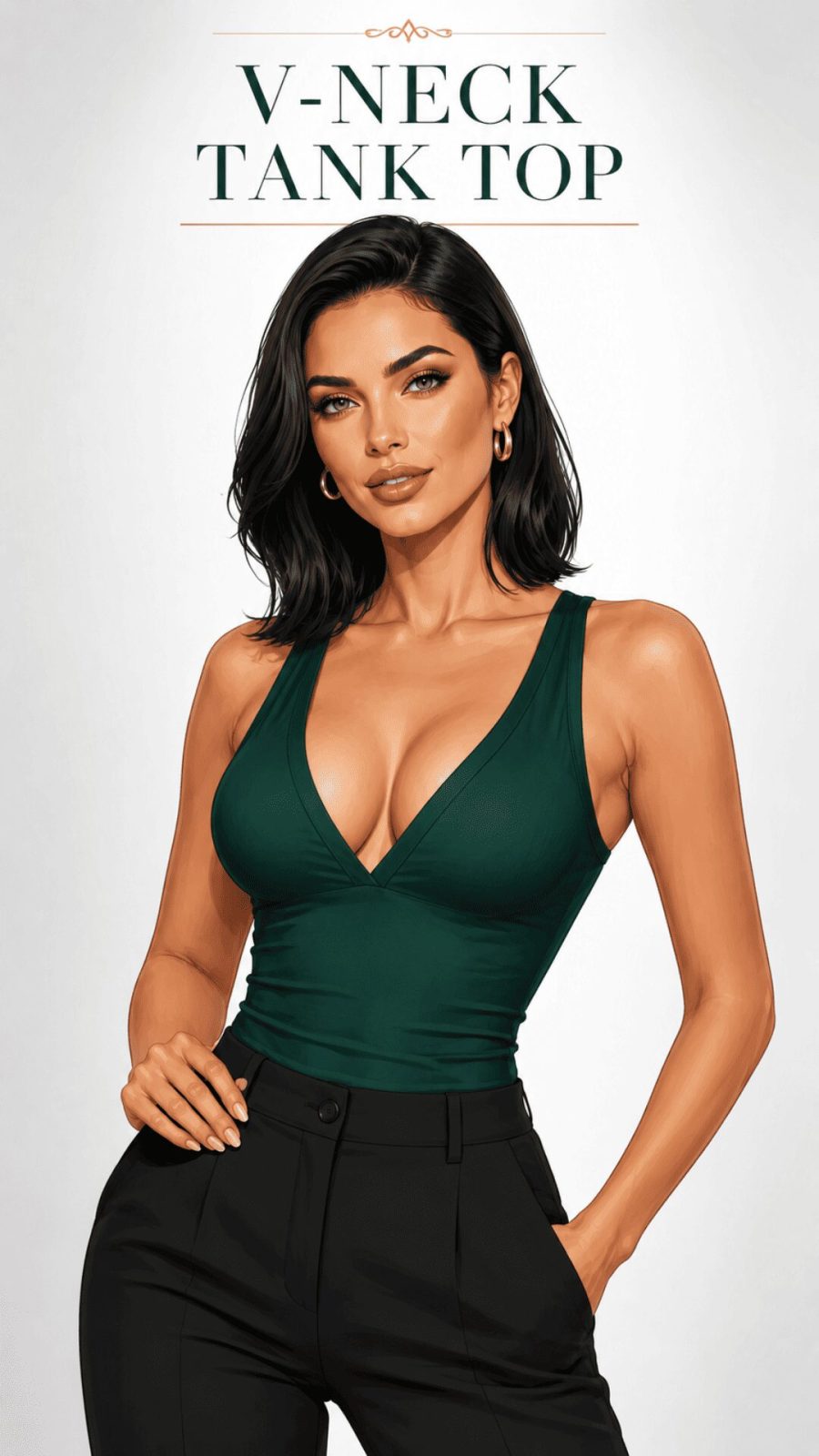
V-Neck Tank Top

![V-Neck Tank Top]()
The V-neck tank has a specific job: it creates a vertical line down the center front of the body, drawing the eye downward and adding visual length to the torso. It's the most elongating neckline in the tank top category. Shallow V-necks work for casual daywear; deeper V-necks cross into evening territory. In a fitted rib-knit construction, the V-neck tank is one of the most versatile pieces a wardrobe can hold — it reads differently under a blazer than it does standalone, but it reads well in both contexts.


- 03
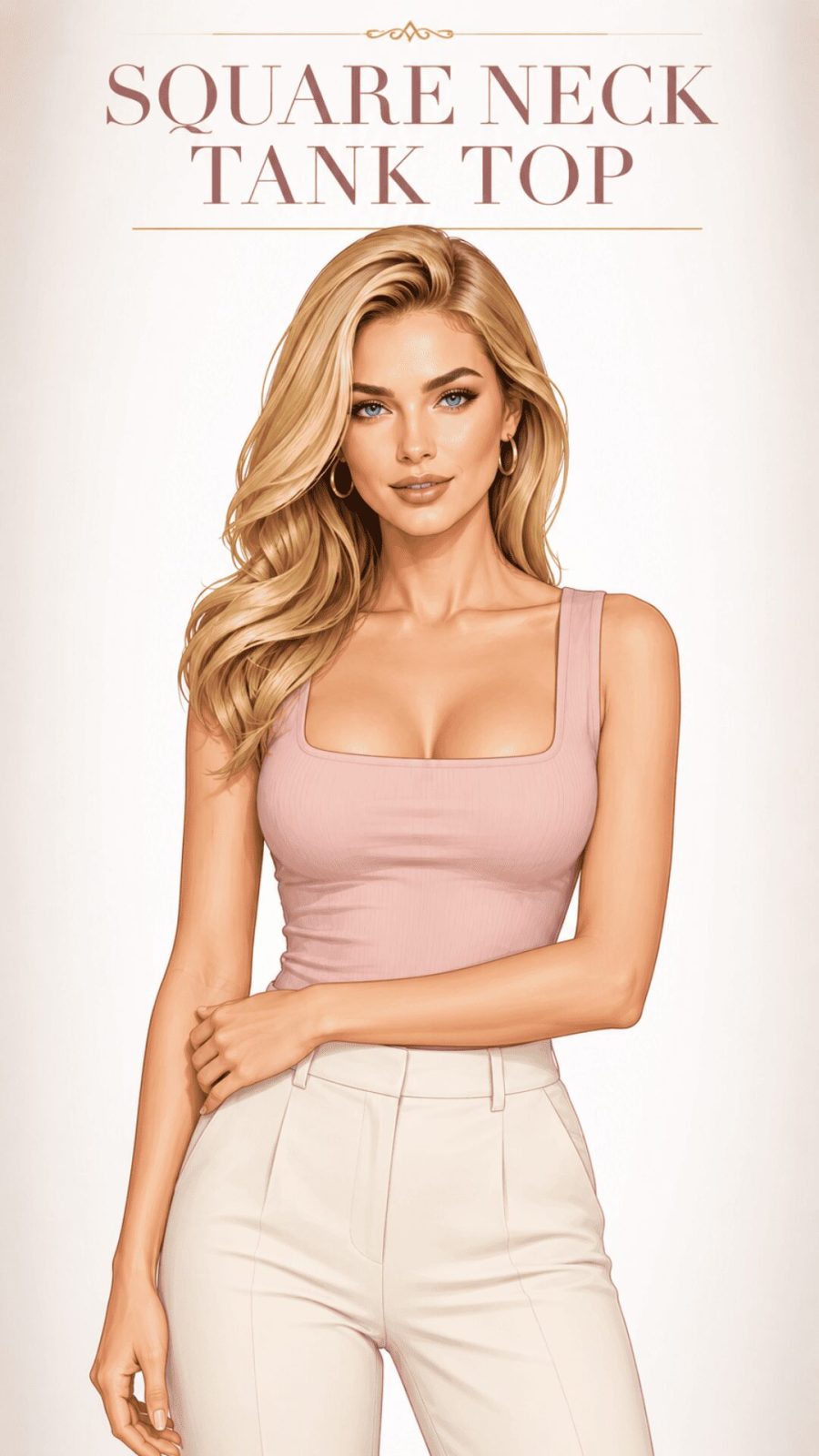
Square Neck Tank Top
![Square Neck Tank Top]()
The square neck tank is one of those shapes that photographs beautifully. Its straight horizontal top edge and two vertical side lines create a clean geometric frame across the chest — structured without being rigid. The neckline became a defining feature of the early 2020s Y2K and cottagecore revival, but its appeal predates that moment considerably. In stretch jersey or slightly structured fabric, the square neck draws attention to the collarbone in a way that reads elegant rather than casual. It pairs especially well with dainty necklaces and statement earrings.
- 04
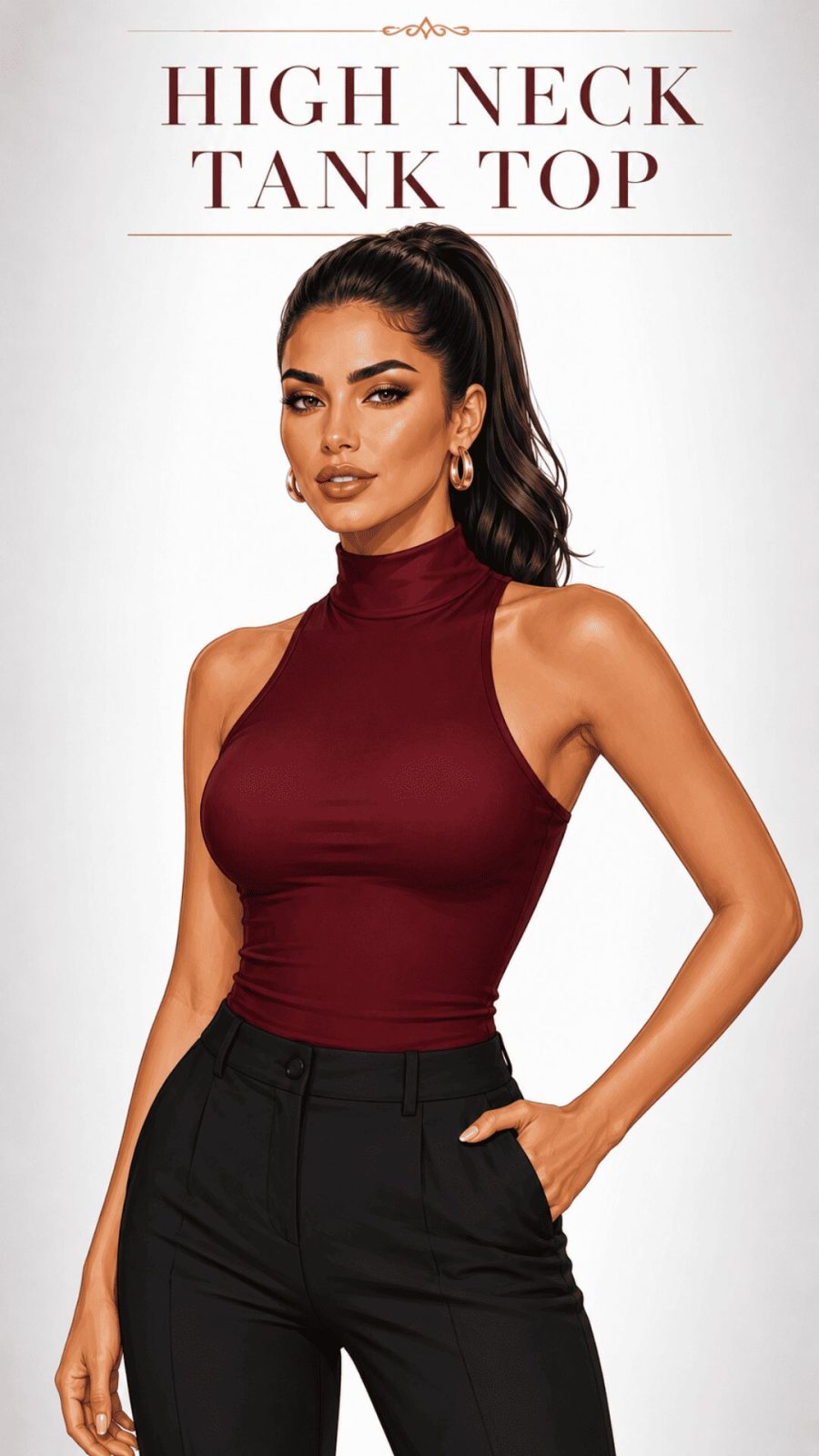
High Neck Tank Top
![High Neck Tank Top]()
The high neck tank — sometimes called a mock neck or turtleneck tank — closes the neckline entirely, creating a covered silhouette that feels modest without being boxy. In a fitted, seamless knit construction, it's one of the most elegant and versatile tank variations available. The high neck shifts the styling focus from the neckline to the silhouette as a whole — which is why it works so well under denim jackets and structured outerwear, as well as styled solo with wide-leg trousers. This is the minimalist stylist's choice.


- 05
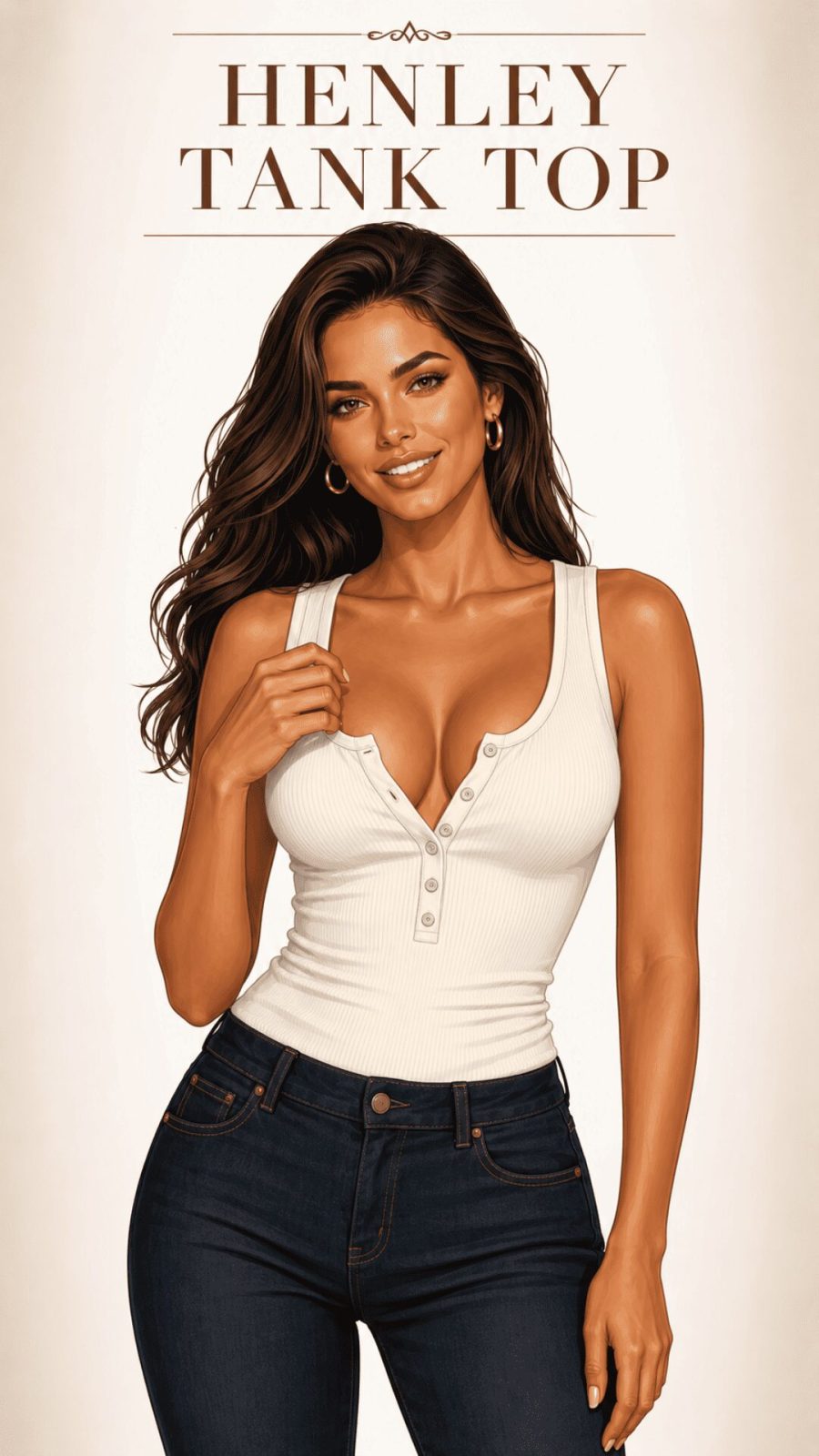
Henley Tank Top
![Henley Tank Top]()
A henley tank has a crew-style neckline with a short buttoned or snap placket at the center front — typically 2 to 4 buttons running 4 to 6 inches down from the neck. The placket adds construction interest to what would otherwise be a plain neckline, giving the tank a slightly more intentional, utilitarian quality that sits comfortably between casual and polished. In a soft cotton or modal blend, the henley tank reads as effortlessly styled — the kind of piece that doesn't need much else around it.
- 06
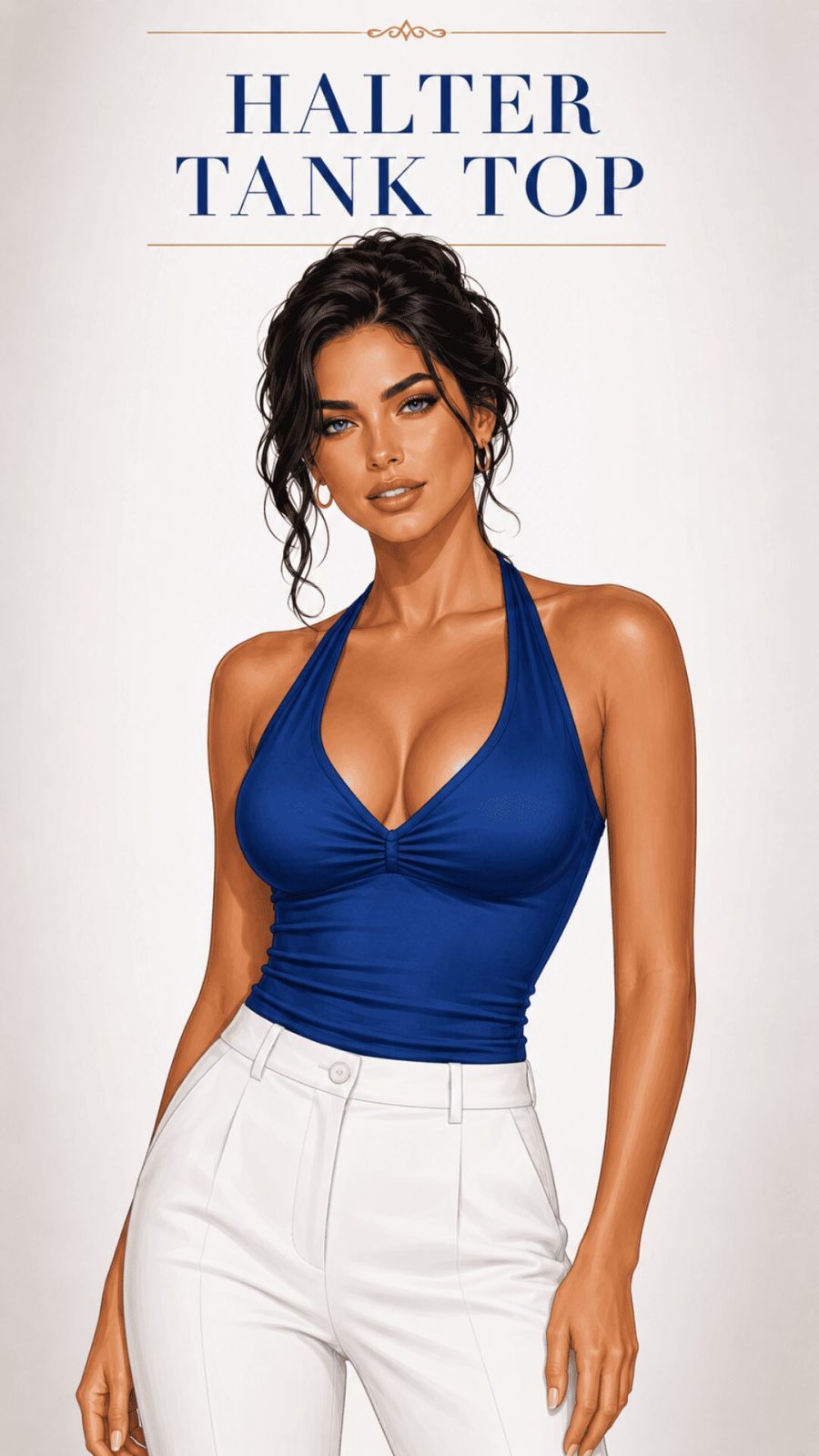
Halter Tank Top
![Halter Tank Top]()
The halter tank fastens or ties at the nape of the neck, leaving the shoulders and back largely exposed. The construction frames the shoulders as a design feature — it's deliberate exposure, not an afterthought. Halter tanks appear in summer wardrobes, festival outfits, beach looks, and going-out styling because the silhouette reads confidently without requiring much effort to wear. Fabric choice matters significantly here: a halter in satin reads more elevated than the same cut in cotton jersey.


- 07
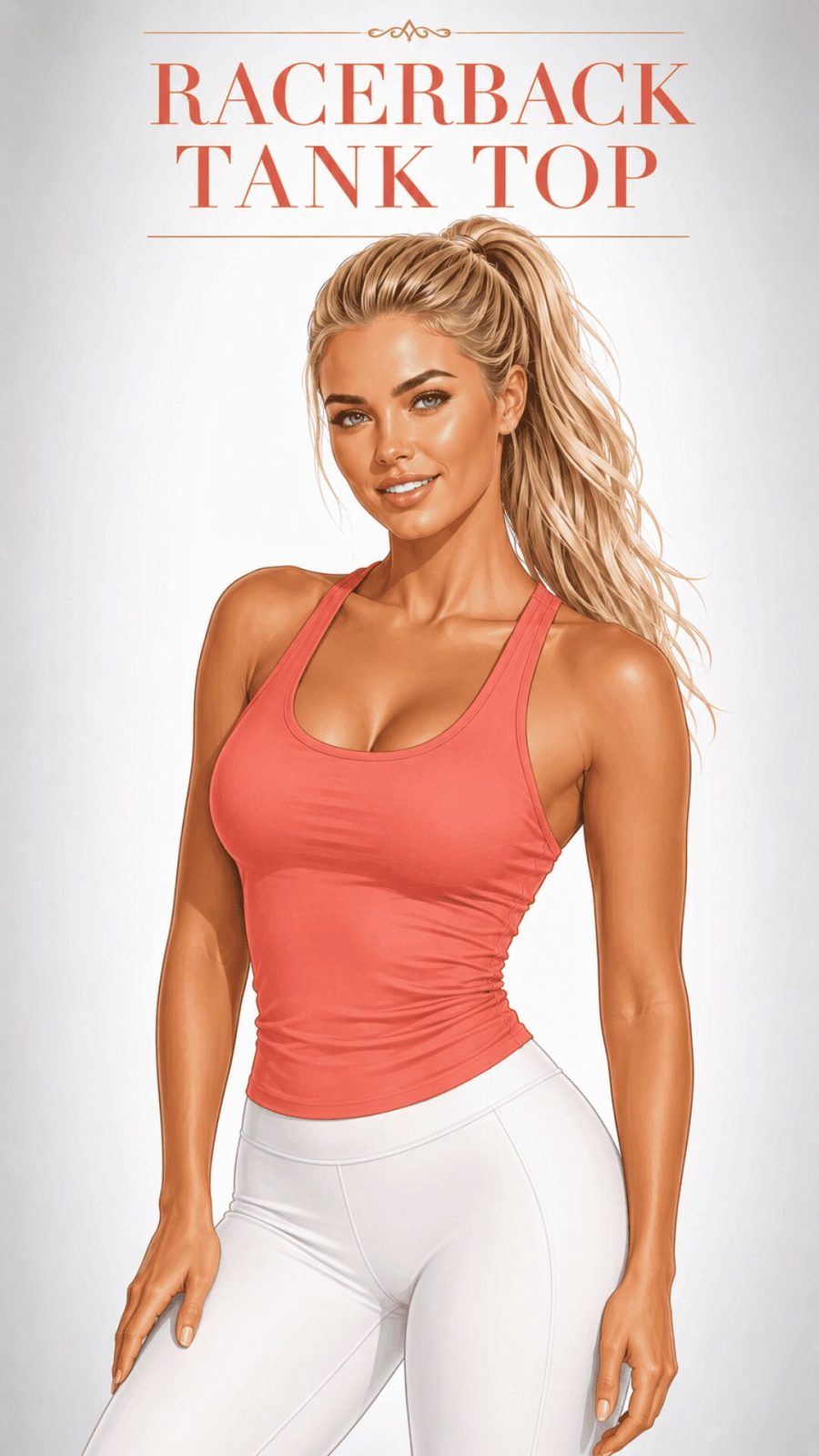
Racerback Tank Top
![Racerback Tank Top]()
The racerback construction replaces standard shoulder straps with a single T-shaped back panel that connects two narrowed front straps to a central spine running down the back. Originally designed for competitive swimmers — the reduced fabric allowed full arm rotation — the racerback has since become the dominant back construction in activewear, yoga, and gym-to-street dressing. The exposed back detail and forward-set straps frame the upper back in a way that reads athletic without being solely functional.
- 08
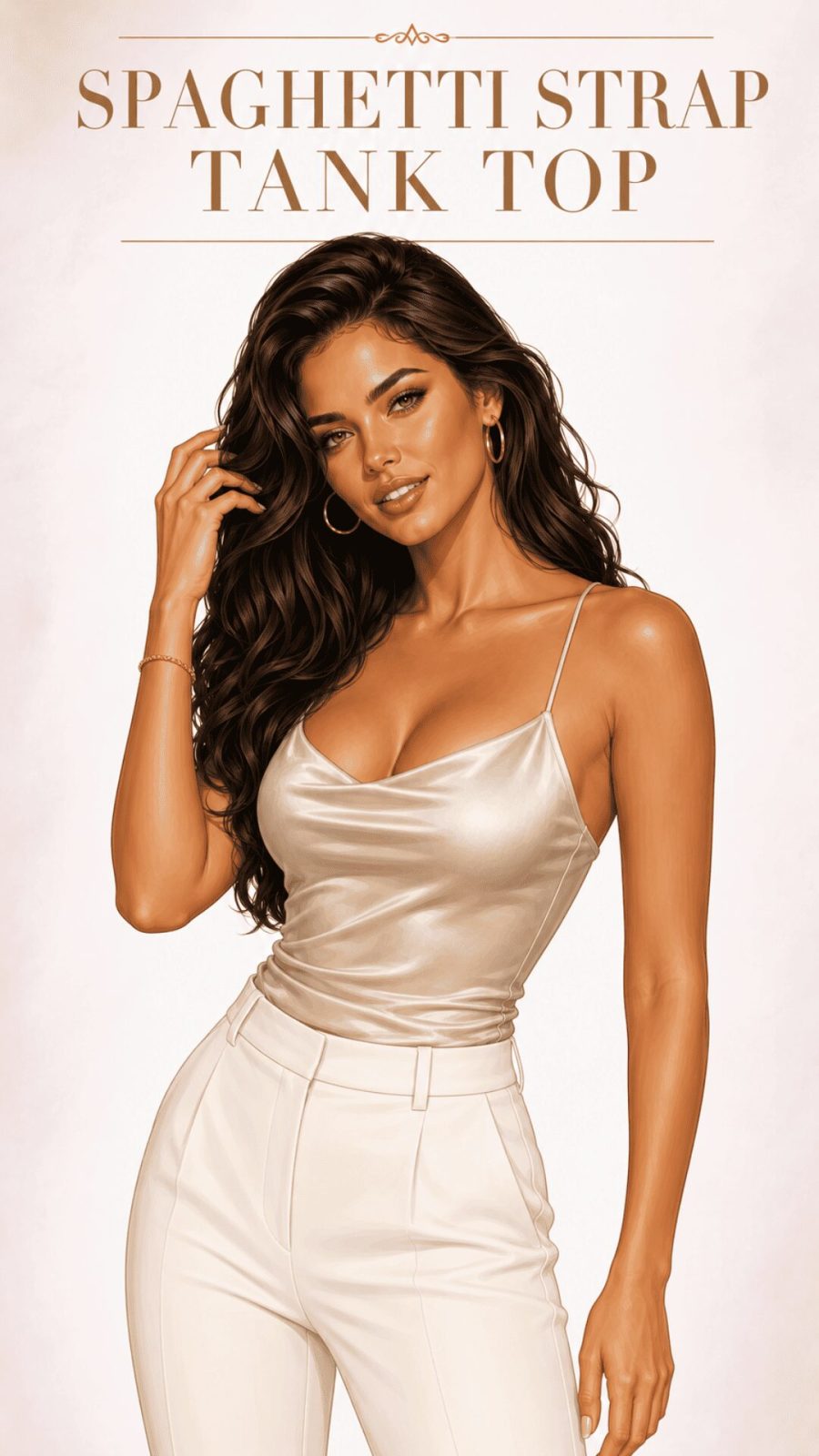
Spaghetti Strap Tank Top
![Spaghetti Strap Tank Top]()
The spaghetti strap tank is defined by its extremely narrow shoulder straps — typically 3 to 6 millimeters wide. This is the closest a tank top gets to underwear-as-outerwear territory, and the 1990s and early 2000s owned this silhouette completely. The straps are thin enough that they effectively disappear, placing all visual attention on the neckline and the drape of the body panel below. Satin spaghetti strap tanks read evening-ready; jersey versions read casual. The Y2K fashion revival brought this style back into heavy rotation from 2020 onward.


- 09
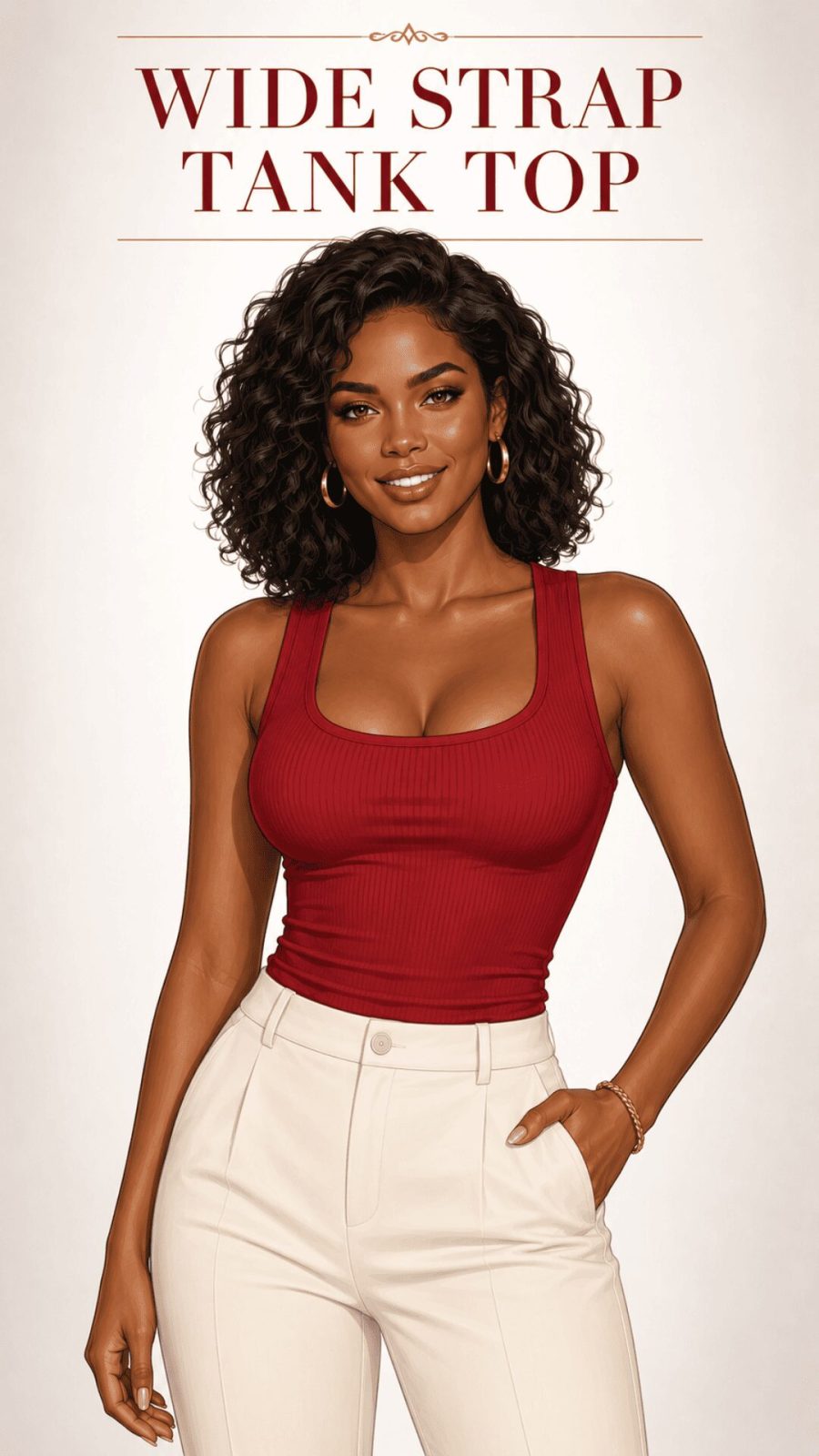
Wide Strap Tank Top
![Wide Strap Tank Top]()
The wide strap tank sits between a standard tank and a cap-sleeve top in shoulder coverage. Its straps are typically 1.5 to 3 inches across, providing more coverage than a classic tank while still being unmistakably sleeveless. The wider strap creates a more modest, polished silhouette — easier to wear in professional environments, easier to layer under structured outerwear, and easier to style with bra straps concealed. This is the workhorse tank of the capsule wardrobe: the piece that bridges athletic basics and smart-casual dressing without committing fully to either.
- 10
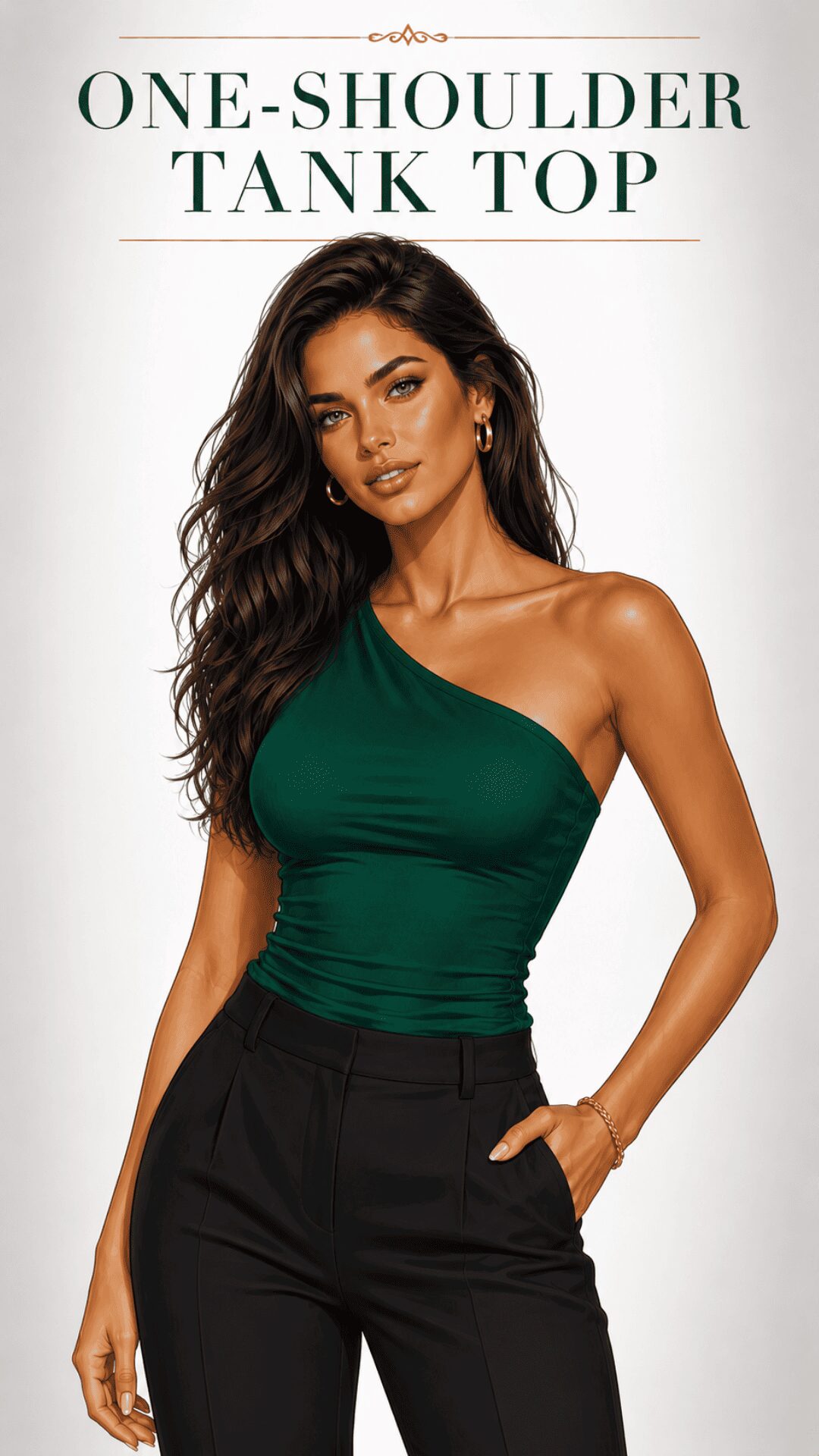
One-Shoulder Tank Top

![One-Shoulder Tank Top]()
The one-shoulder tank has a single strap on one side and a bare shoulder on the other — an asymmetric construction that reads deliberately styled. The exposed shoulder becomes the focal point of the outfit, drawing attention upward and creating a diagonal visual line across the chest and shoulders. In jersey or ribbed knit, the one-shoulder tank works for evening and summer events; in more structured fabric with clean finishing, it pushes into smart-casual territory. The asymmetry pairs best with minimal accessories that don't compete with the neckline.


- 11
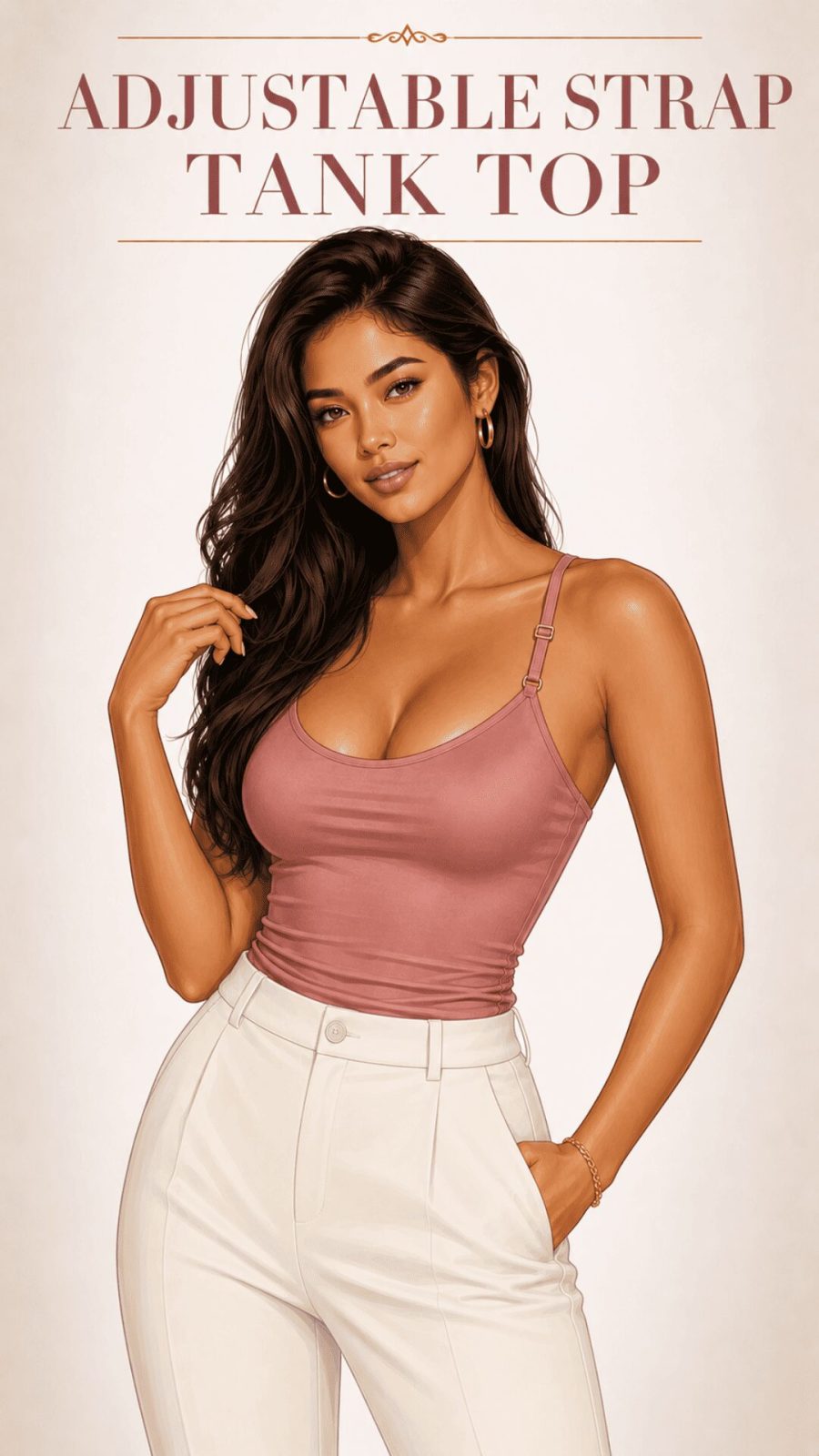
Adjustable Strap Tank Top
![Adjustable Strap Tank Top]()
The adjustable strap tank uses small metal or plastic sliders on the shoulder straps, allowing the wearer to lengthen or shorten the fit across the torso. It's a practical construction feature that significantly improves fit across a wide range of body proportions. Most commonly found in cami-style tanks and slip tops, adjustable straps let the same garment work as a full-coverage layer or a lower-sitting slip top depending on the wearer's preference. The sliders are a small detail with a significant impact on how the tank sits and drapes.
- 12
Fitted / Bodycon Tank Top


The bodycon tank is cut to sit close against the body throughout its entire length — from neckline to hem. The silhouette moves with the body rather than draping away from it. In a four-way stretch jersey or ribbed knit, the fitted tank creates a clean, body-skimming silhouette that works as a standalone piece or as the base of a layered outfit. This is not the same as a compression tank — a bodycon tank conforms without restricting movement. The silhouette works across a range of body types because it creates consistent visual alignment between the garment and the body's natural proportions.

- 13
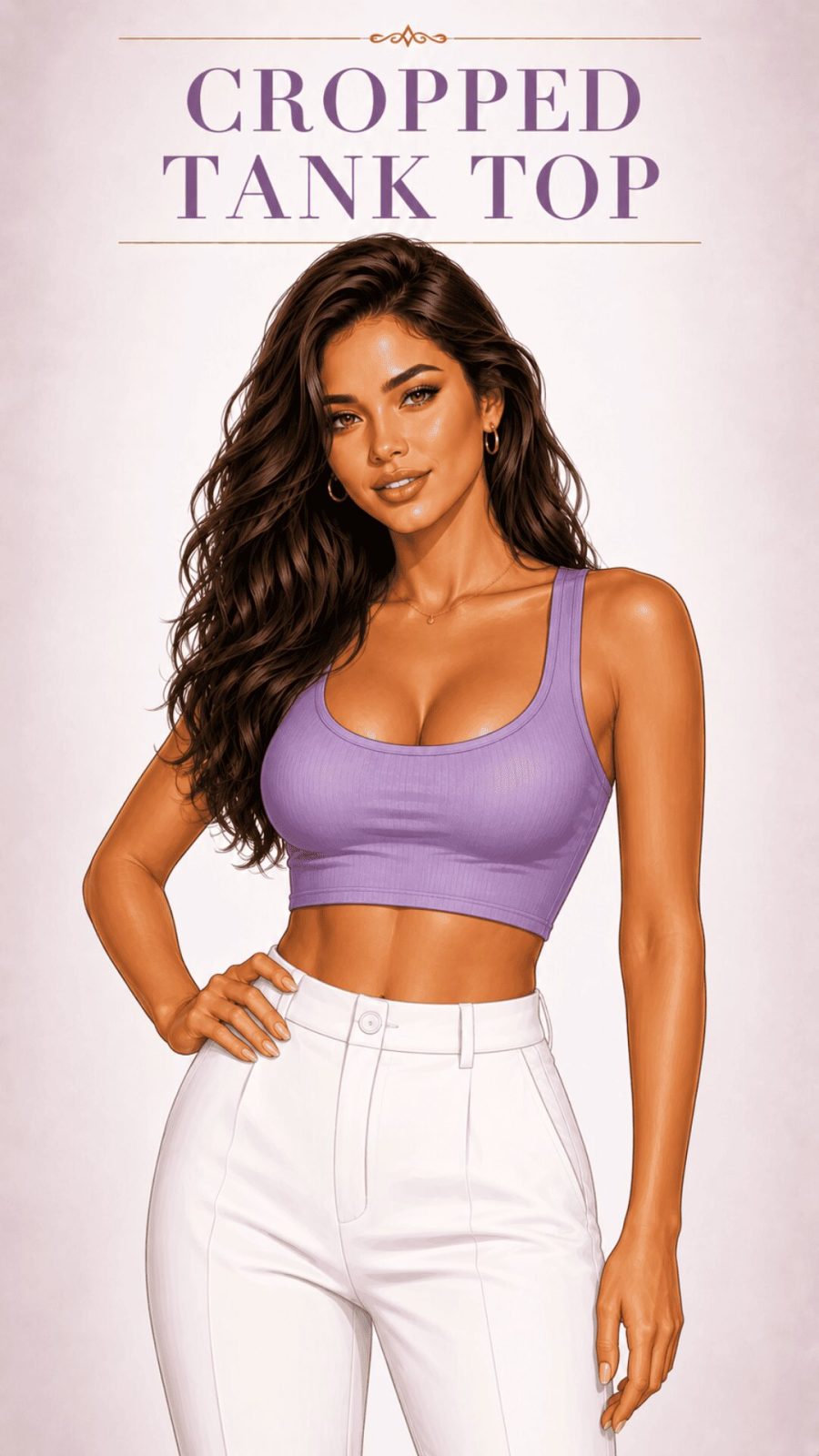
Cropped Tank Top
![Cropped Tank Top]()
The cropped tank ends above the natural waist — anywhere from just below the bust to mid-stomach, depending on the cut. The hem height determines the level of midriff exposure and the styling direction of the piece. A micro-crop sits just below the bra line; a modest crop hits at the navel. Both read differently and require different bottoms to balance. High-waisted jeans, trousers, or skirts meet the cropped hem most naturally. The cropped tank has been a streetwear and athleisure staple since the late 1980s, and its presence in the wardrobe has only grown since.
- 14
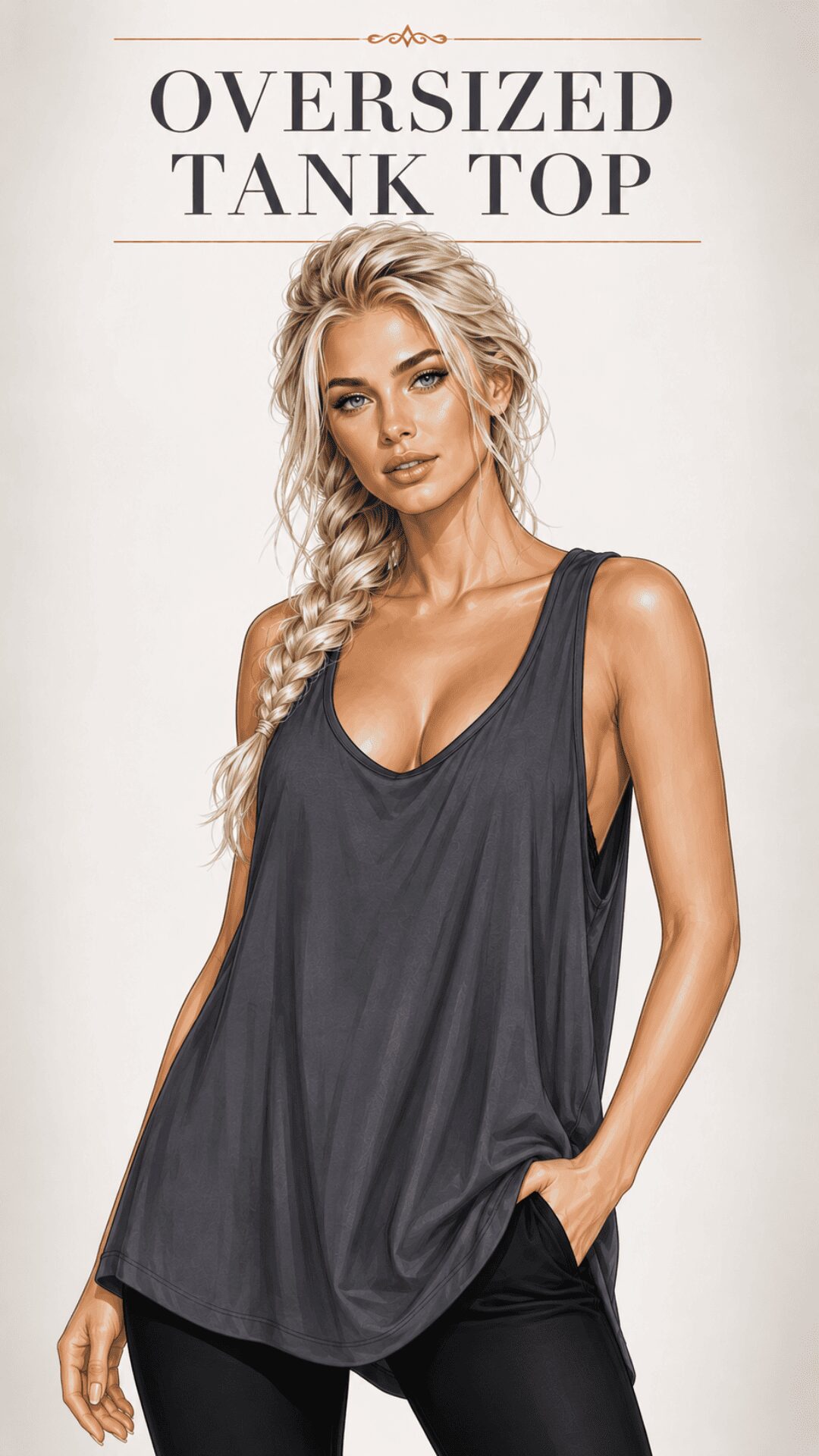
Oversized Tank Top
![Oversized Tank Top]()
The oversized tank drops wider and longer than a standard cut, with extra ease built into the body, wider armholes, and a relaxed, slightly boxy silhouette. The additional volume reads effortlessly casual — the kind of tank that works thrown over swimwear, tucked partially into wide-leg trousers, or worn loose over bike shorts. In heavyweight jersey or washed cotton, the oversized tank carries a comfortable lived-in quality that's impossible to fake with a fitted piece. Streetwear styling makes this the go-to tank for layered, relaxed summer looks.


- 15
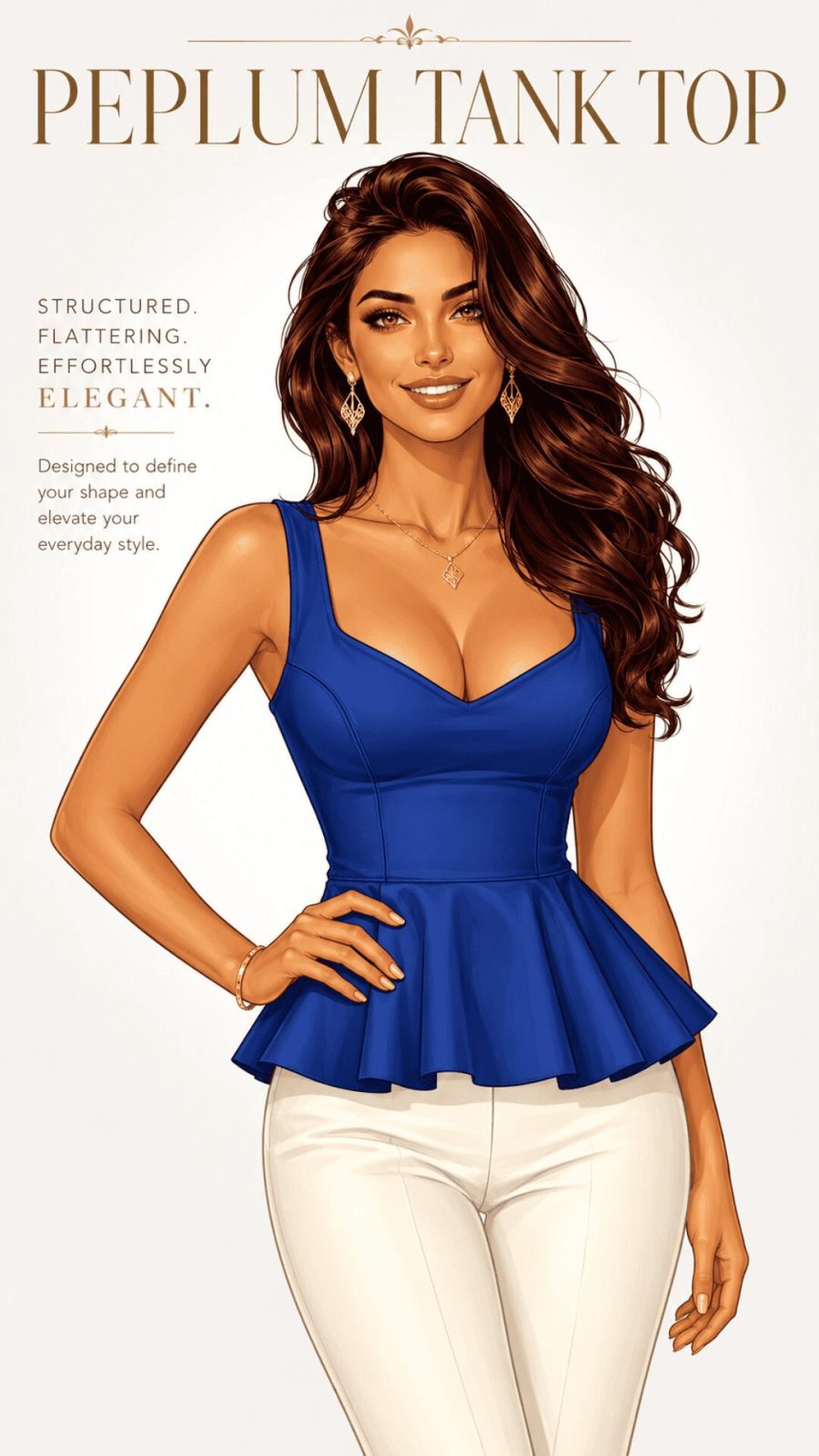
Peplum Tank Top
![Peplum Tank Top]()
The peplum tank has a fitted bodice with an attached short flounce or ruffle that flares out from the waist or hip. The peplum construction creates a waist-defining moment — the fitted upper section draws attention to the narrowest point of the torso while the flared lower section creates movement and softness below. In structured fabric like ponte or crepe, the peplum tank reads polished enough for smart-casual work environments. The silhouette creates visual balance by adding softness below the waist while maintaining a clean upper body line.
- 16
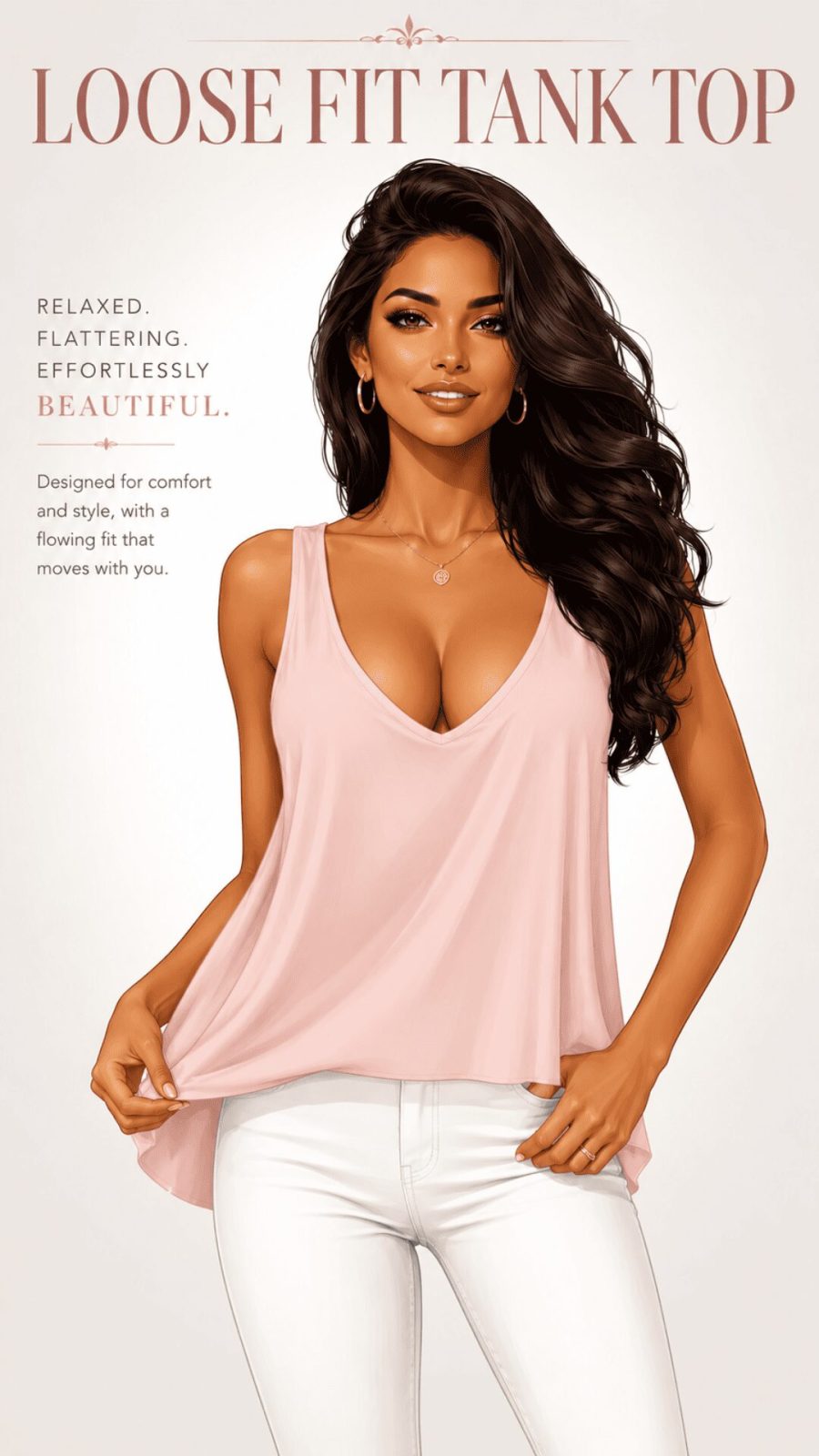
Loose Fit Tank Top
![Loose Fit Tank Top]()
The loose fit tank has enough ease in the body to drape rather than cling — it moves away from the torso slightly at the sides and back, creating airflow and a soft, relaxed silhouette. This is the most comfortable tank construction for hot weather, travel, and extended wear. In lightweight woven or jersey fabric, the loose fit tank breathes exceptionally well. The silhouette works best with narrower bottoms — slim trousers, fitted jeans, or leggings — to avoid a shapeless overall proportion. It's a piece that prioritizes ease and breathability without sacrificing clean styling.


- 17
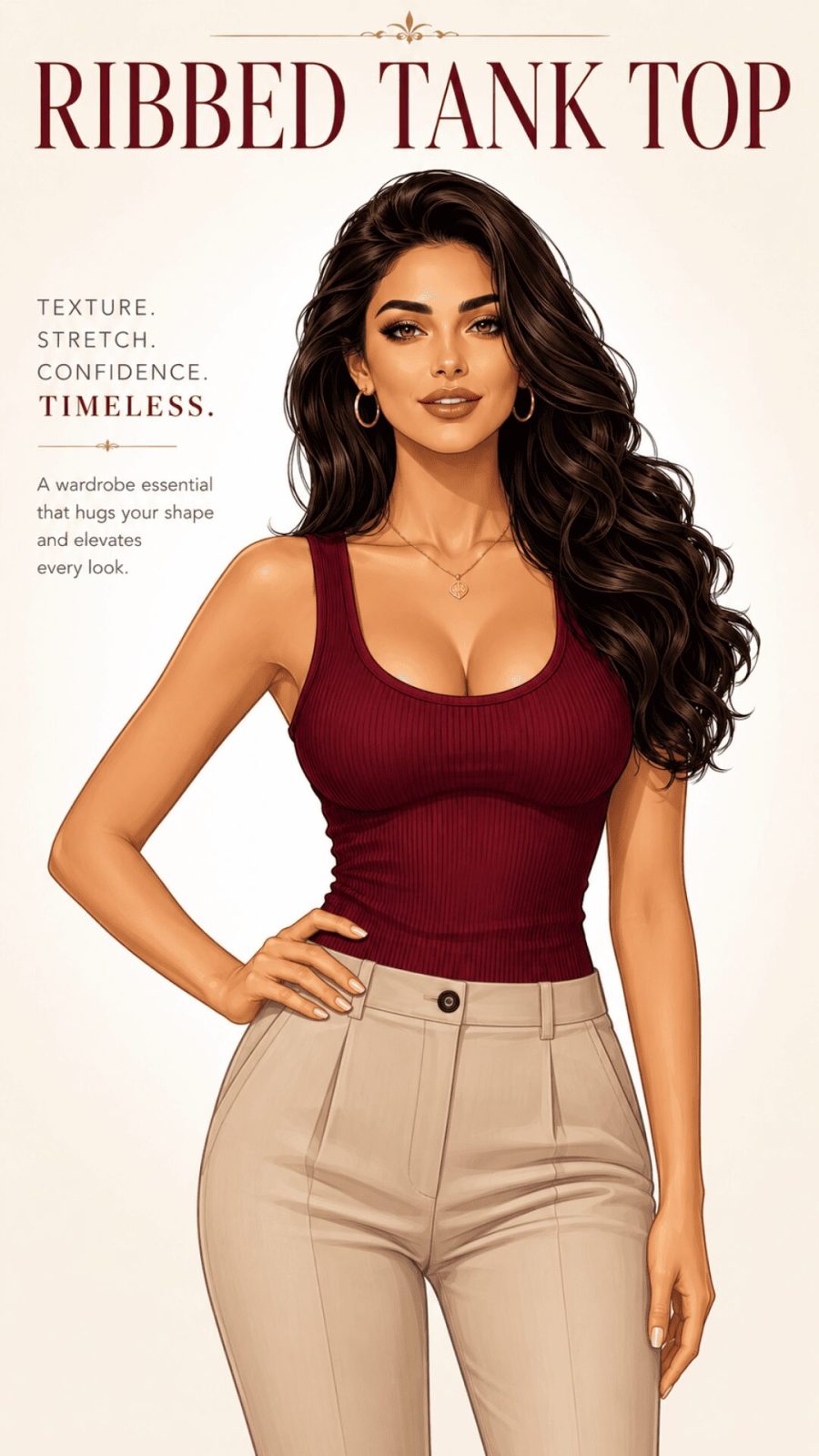
Ribbed Tank Top
![Ribbed Tank Top]()
There's a reason the ribbed tank became the wardrobe essential it is today. The rib knit structure — alternating knit and purl rows creating vertical texture — gives the fabric strong horizontal stretch recovery while maintaining shape across the body. The vertical ribbing adds subtle texture that elevates the visual quality of the tank above a standard jersey piece. In a fitted cut, the rib knit tank creates a clean, body-skimming silhouette that reads polished and intentional. The fabric compresses very slightly, adding a contour fit quality without the restriction of shapewear. This is the tank top that appears most consistently across capsule wardrobe recommendations.
- 18
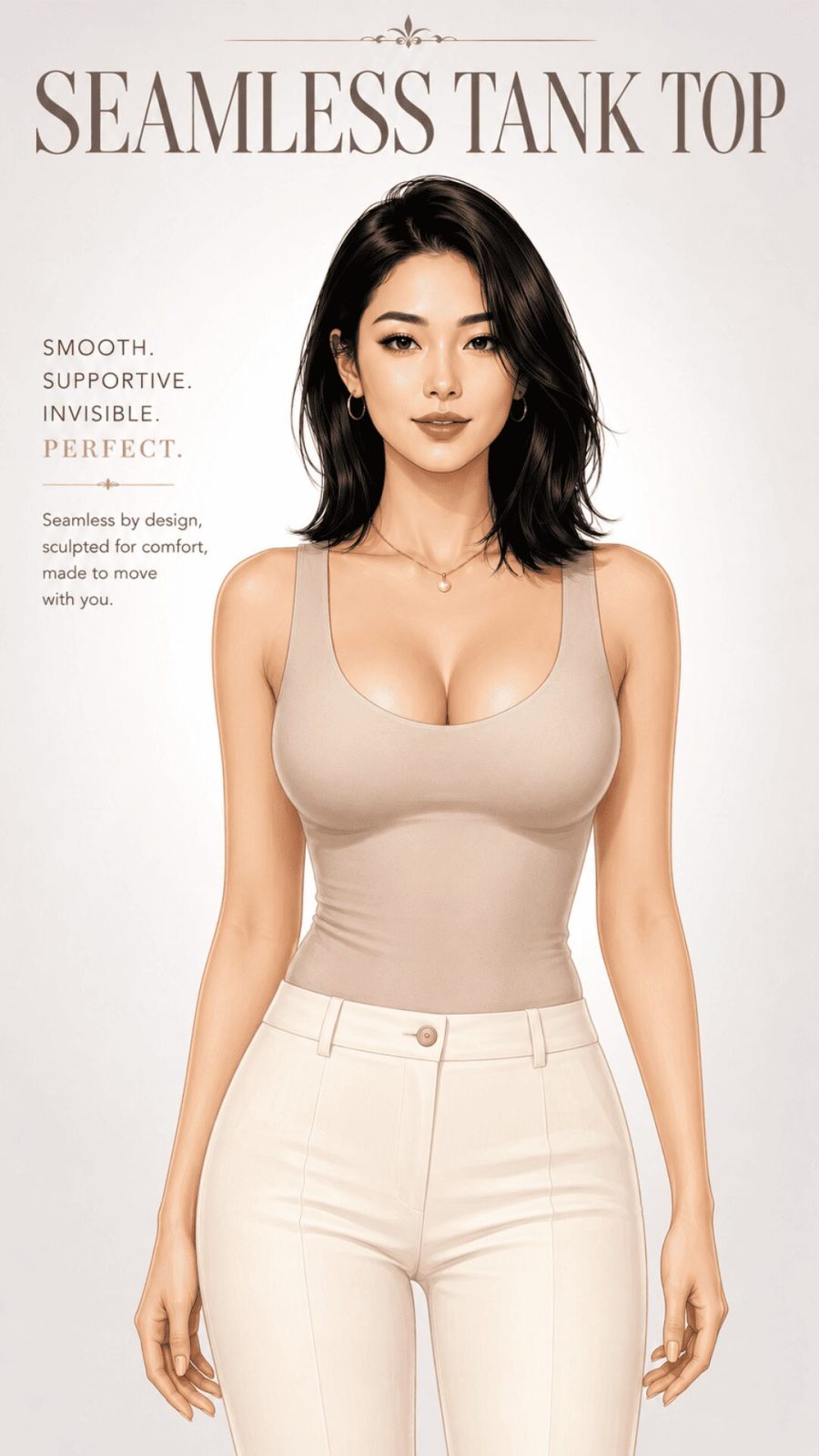
Seamless Tank Top
![Seamless Tank Top]()
The seamless tank is constructed on a circular knitting machine, producing a fabric tube without any traditional side seams. The absence of seams eliminates bulk and friction points, creating an exceptionally smooth surface against the skin. This matters most under close-fitting outer layers — fitted blazers, tight jeans, or structured dresses — where sewn seams would create visible lines. Seamless construction in a nylon-spandex blend also produces gentle compression that helps the tank maintain its shape through movement. The body-smoothing quality makes this the preferred tank for wearing under sheer or light-colored garments.


- 19
Satin Tank Top

![Satin Tank Top]()
The satin tank reads elevated. The satin weave — characterized by a high-lustre surface created by floating warp threads — reflects light in a way that immediately shifts the occasion register of any silhouette. A simple spaghetti-strap tank in satin becomes an evening piece. A wider-strap satin tank under a tailored blazer becomes a sophisticated workwear combination. The key fabric distinction: satin is a weave structure, not a fiber — it can be silk, polyester, or acetate satin, each with different price points and care requirements. Polyester satin offers the look at a significantly lower cost and with easier care.
- 20
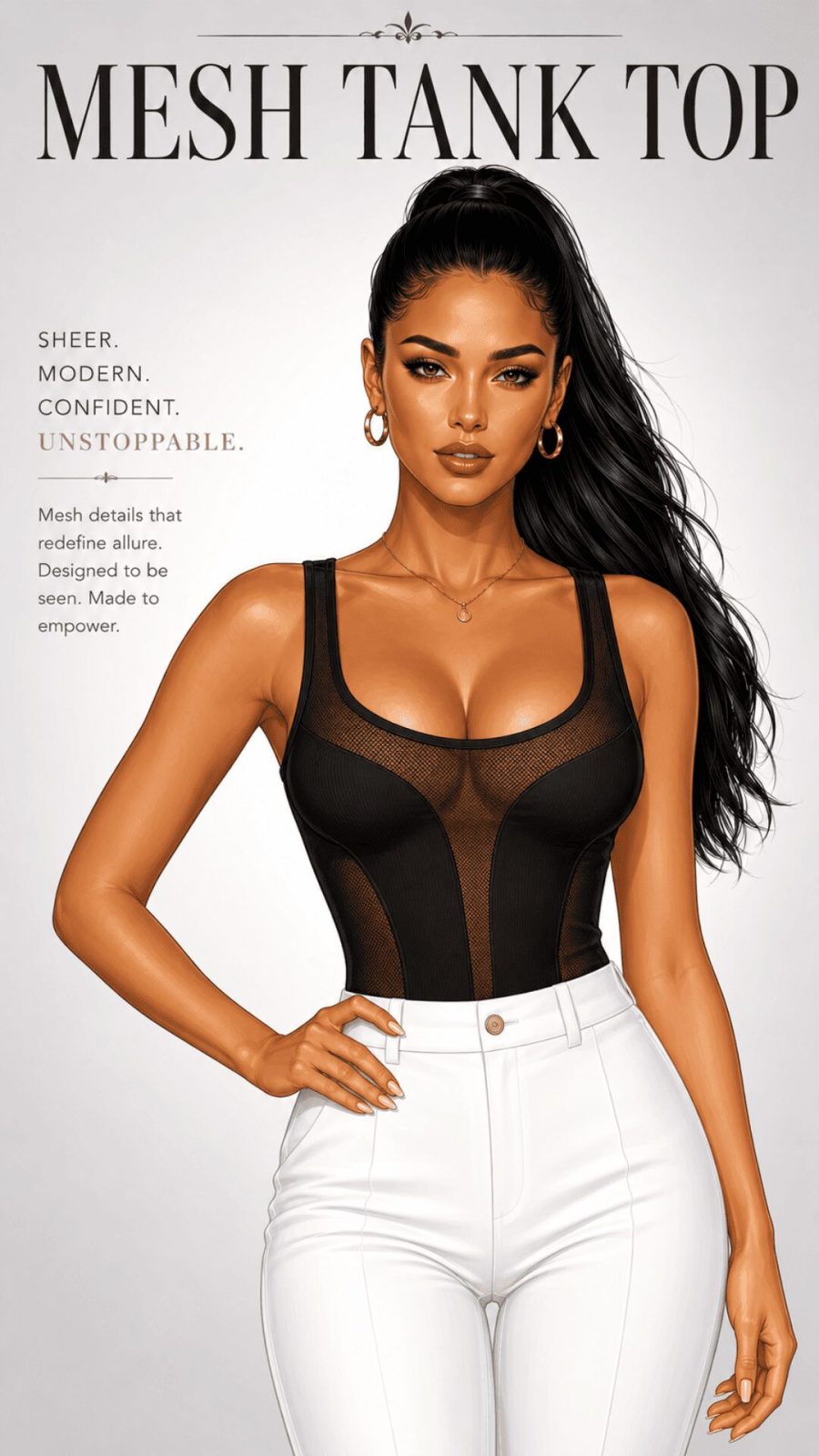
Mesh Tank Top
![Mesh Tank Top]()
Mesh tank tops are constructed from an open-weave fabric with a visible grid of holes — translucent, breathable, and inherently textural. The open weave makes it the most breathable tank fabric available, which is why mesh tanks became standard issue in activewear for high-intensity training. In fashion styling, the mesh tank works as a layering piece over a sports bra or bralette — the opacity of the layer underneath determines what's visible through the mesh. Streetwear adopted the mesh tank as a styling device: worn over a fitted base, the contrast between visible skin and fabric creates intentional visual interest.


- 21
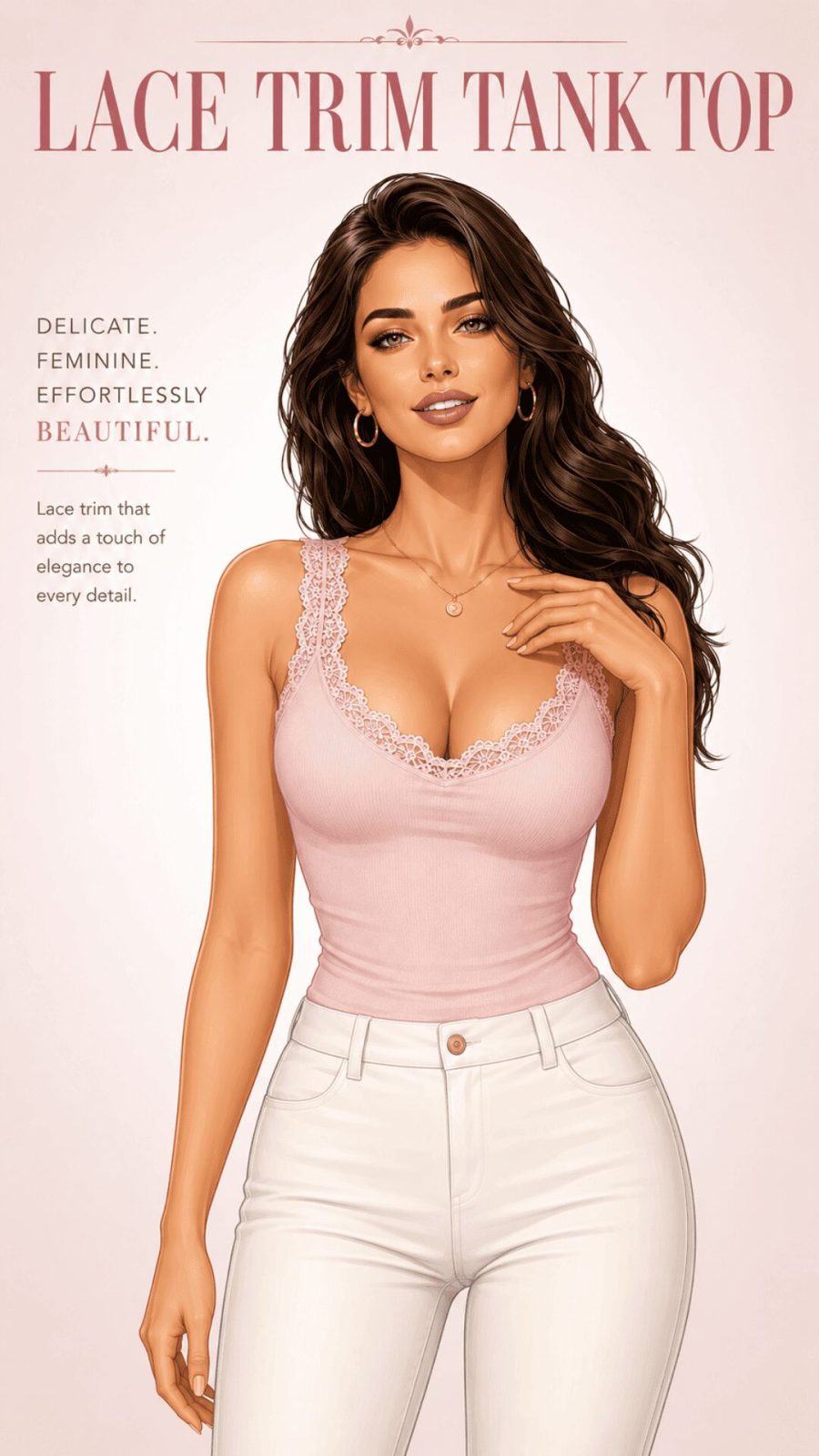
Lace Trim Tank Top
![Lace Trim Tank Top]()
The lace trim tank uses lace as a decorative border — typically at the neckline, hem, or both — applied to an otherwise simple jersey or modal base fabric. The lace detail elevates the basic tank into lingerie-adjacent territory without fully committing to a completely lace construction. A camisole with a lace hem worn under a cardigan creates a layered look with a visible feminine detail at the hem. A lace-trimmed neckline adds texture and detail at the collarbone without adding structural complexity. The combination of plain base fabric with lace trim is one of the most effective ways to add visual interest to a minimal silhouette.
- 22
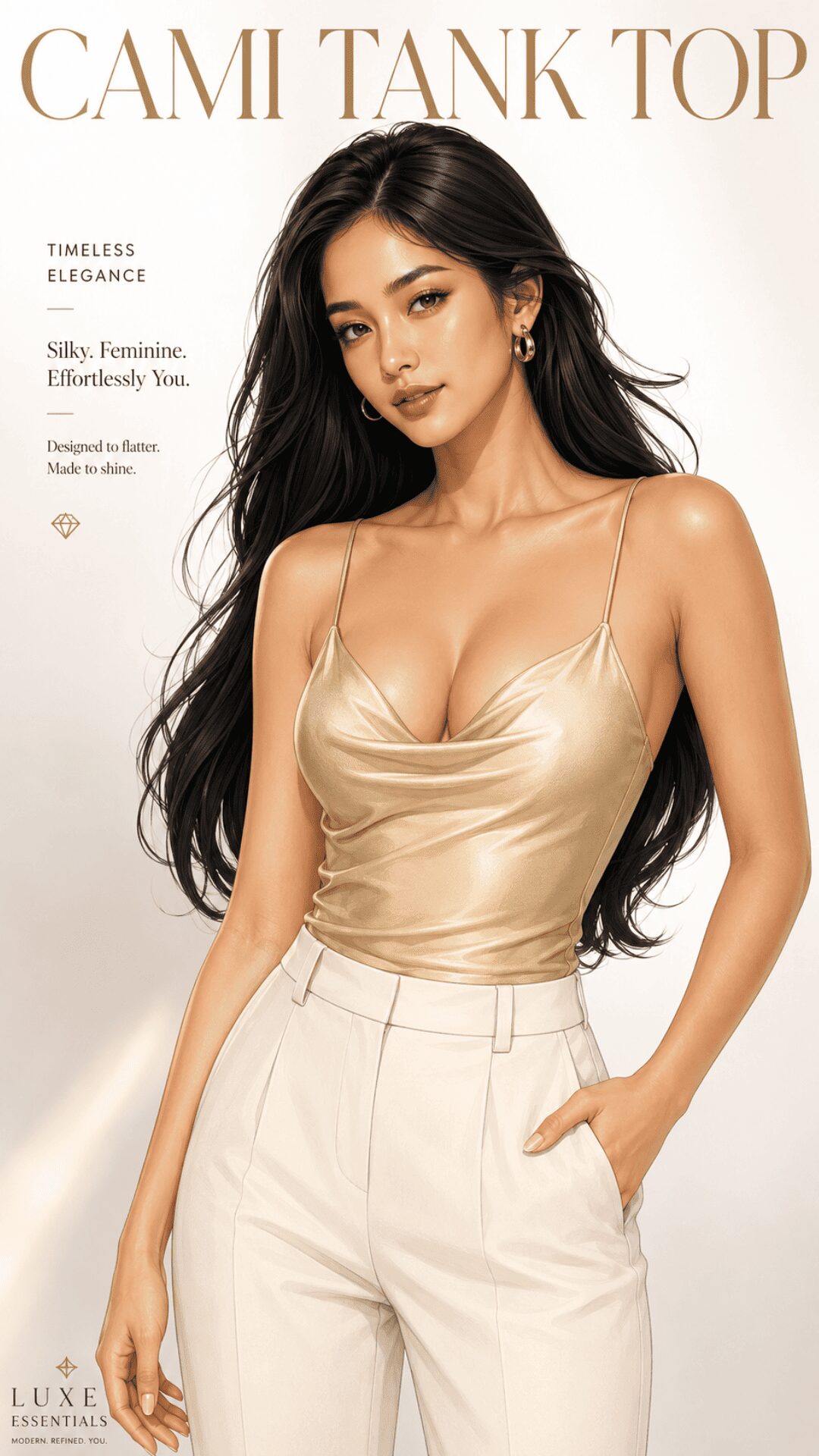
Cami Tank Top
![Cami Tank Top]()
The cami — short for camisole — is the tank top most directly descended from lingerie. It has narrow adjustable straps, a typically straight or slightly shaped neckline with minimal depth, and a soft flowing body that drapes rather than clings. The cami crossed from underwear to outerwear in the late 1990s, a transition documented in fashion editorial coverage and still ongoing today. Worn alone, it reads casual-to-smart depending on fabric. Tucked under an open blazer or worn under a lightweight cardigan as a visible layering piece, it creates one of the most consistently elegant layered looks available in women's fashion.


- 23
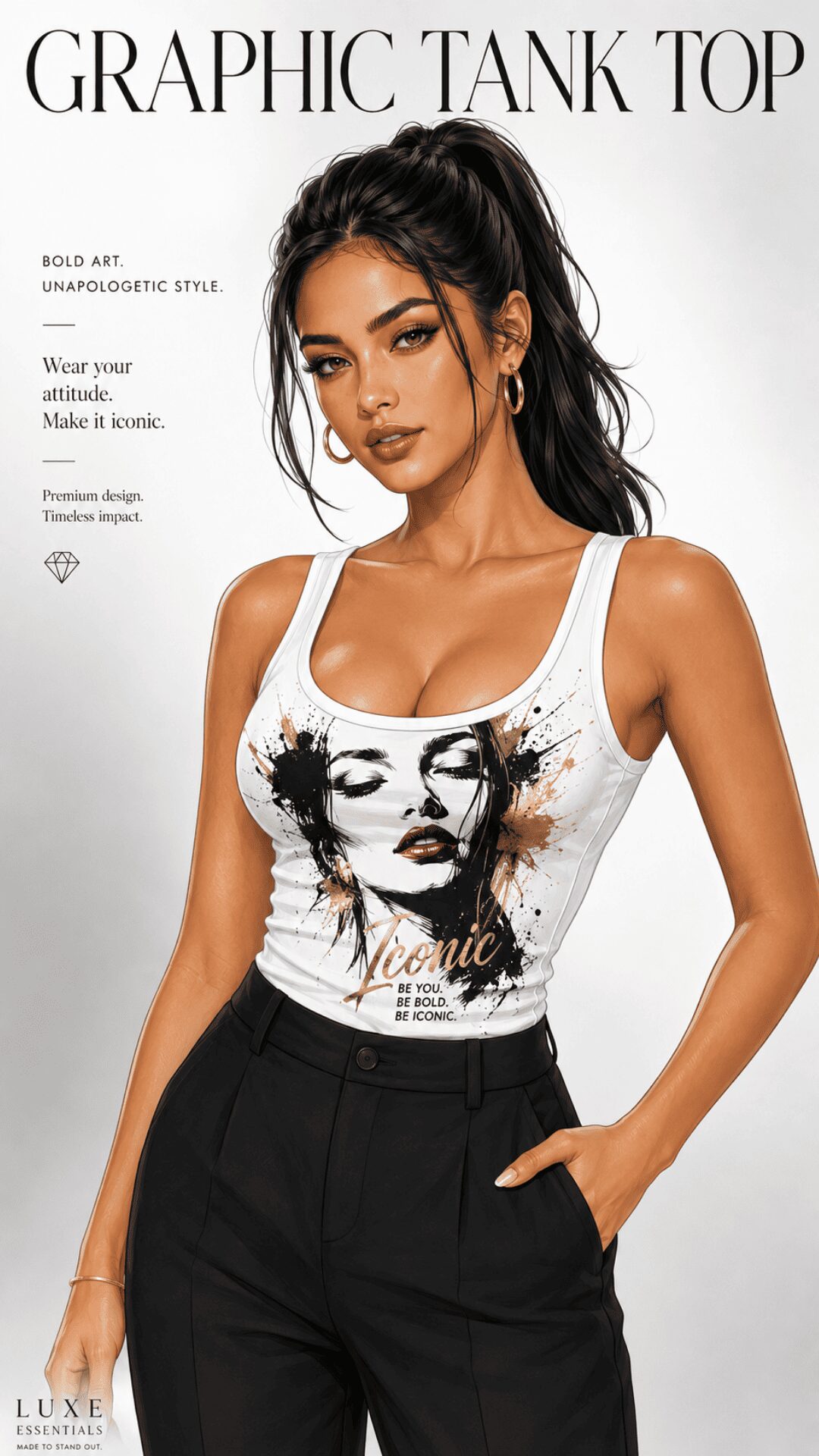
Graphic Tank Top
![Graphic Tank Top]()
The graphic tank carries its design on its surface rather than its construction — a print, illustration, text, or logo applied to an otherwise plain jersey base. What makes a graphic tank work in a styled context is the same thing that makes any printed garment work: the relationship between the graphic's visual weight and the rest of the outfit. A bold vintage band graphic in an oversized cut reads streetwear; a minimal printed crest on a fitted tank reads smart-casual. The graphic tank is the most expressive tank top in the category — it communicates something specific, which is both its strength and its limitation as a wardrobe piece.
- 24
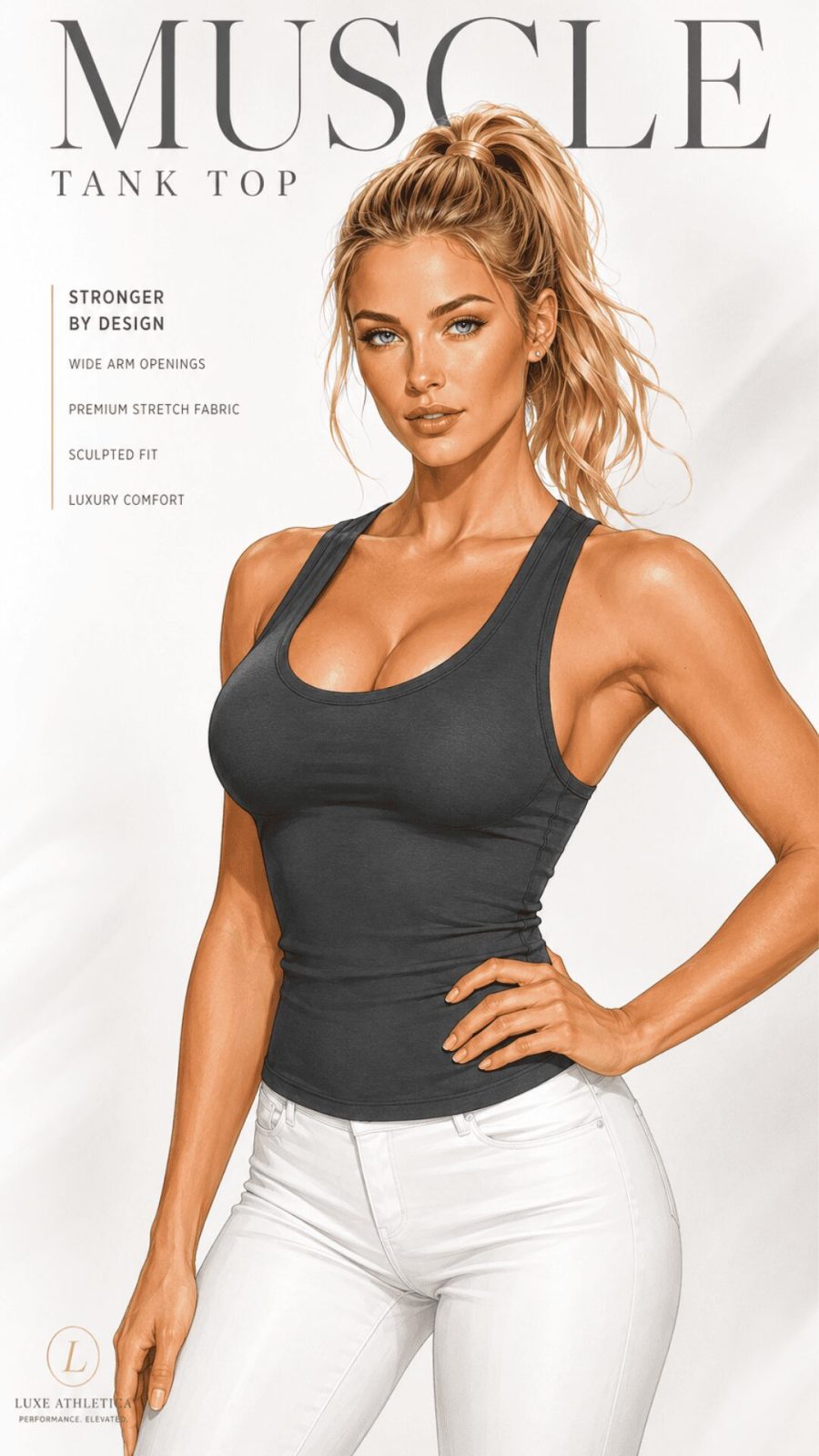
Muscle Tank Top
![Muscle Tank Top]()
The muscle tank — originally a men's sleeveless gym shirt — features dramatically cut armholes that extend deep into the side of the garment, exposing the side of the torso and any bra or sports bra worn underneath. The large armhole cut reduces the structural surface area of the tank significantly, creating a looser, more flowing fit through the body despite having shoulder straps. For women's styling, the muscle tank worn with a sports bra visible through the armhole creates one of the most consistent athleisure silhouettes available — gym-to-coffee-shop dressing at its most efficient.


- 25
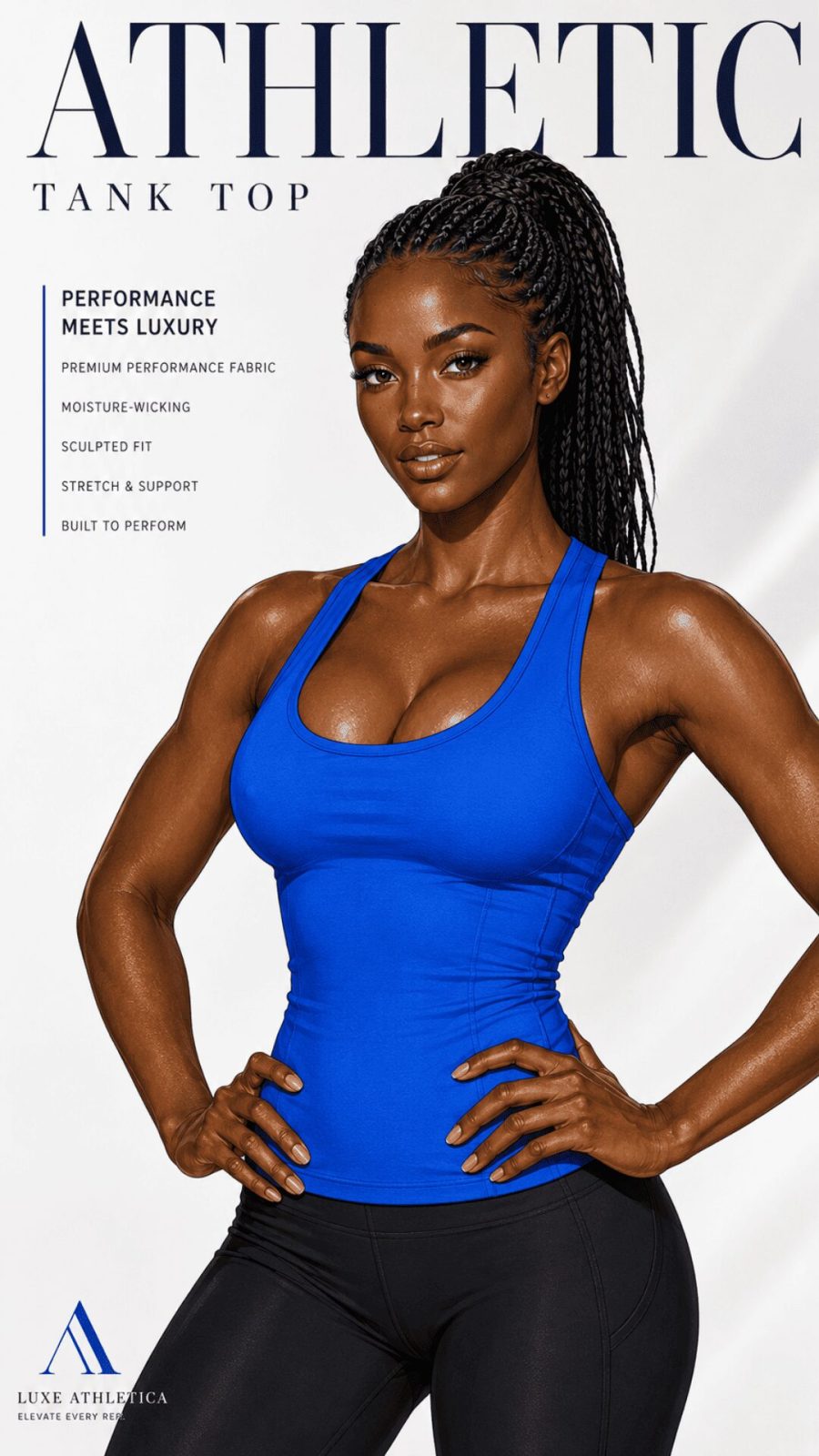
Athletic Tank Top
![Athletic Tank Top]()
The athletic tank is purpose-engineered for movement and moisture management. Its construction typically uses moisture-wicking polyester or nylon blends with four-way stretch — fabrics that pull sweat away from the skin surface and allow full range of arm and shoulder motion. The armholes are cut to allow unrestricted movement, and the body is fitted enough to stay in place during activity without restricting breathing or circulation. Many athletic tanks include mesh panels at the back or sides for additional airflow. The athletic cut works as standalone gym wear and as a gym-to-street layer under zip-up jackets or oversized shirts.
- 26
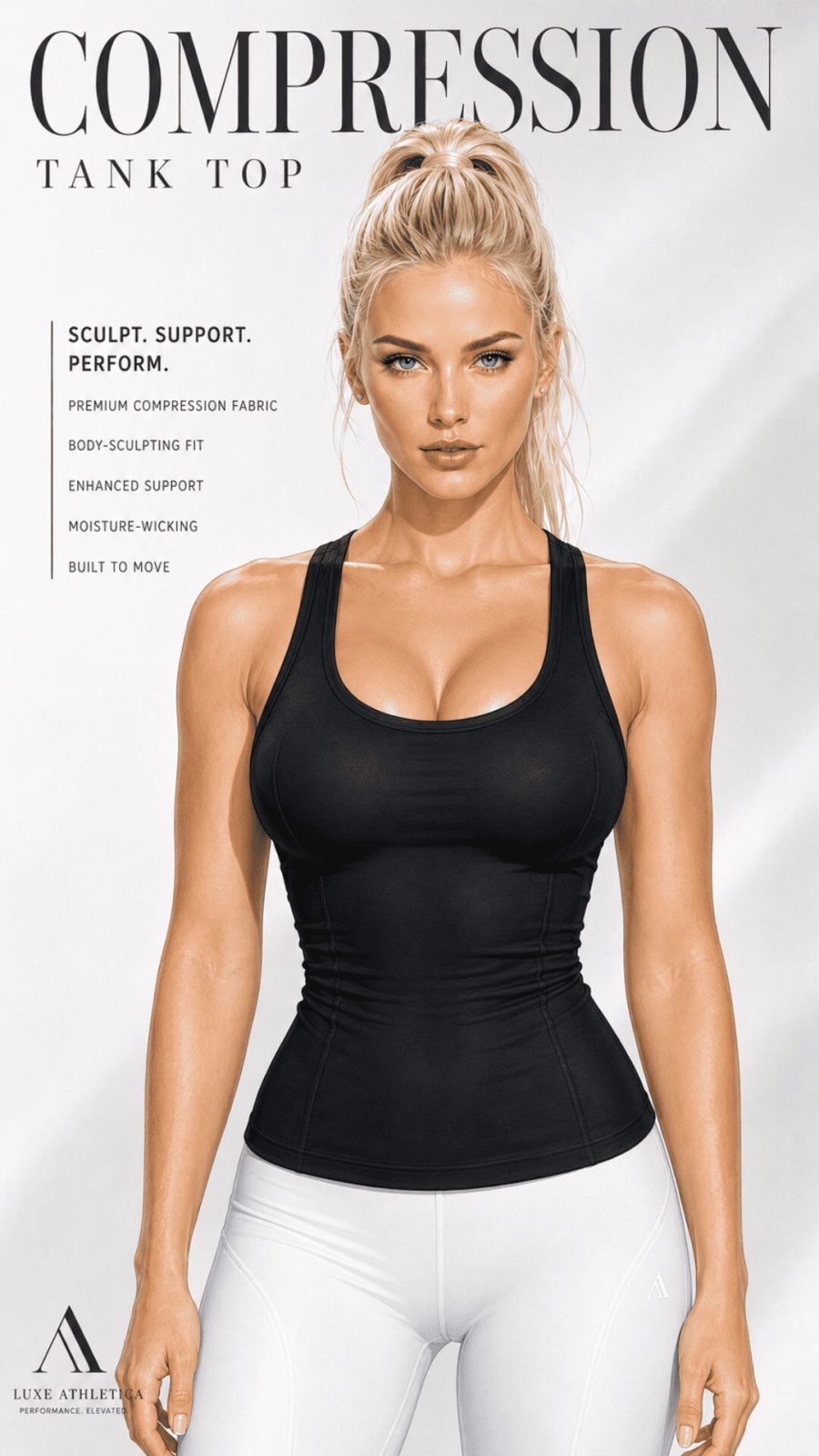
Compression Tank Top
![Compression Tank Top]()
The compression tank is constructed from a high-density stretch fabric — typically a nylon-spandex or polyester-elastane blend — that applies consistent, mild pressure to the muscles of the torso. Compression garments have documented use in athletic recovery and performance contexts, with research supporting improved proprioception and reduced muscle vibration during exercise. The compression tank sits tightly against the body throughout its entire length. Unlike a bodycon tank, which simply conforms to the body's shape, the compression tank applies intentional inward pressure. This is the functional tank top: built for performance, not aesthetics.


- 27
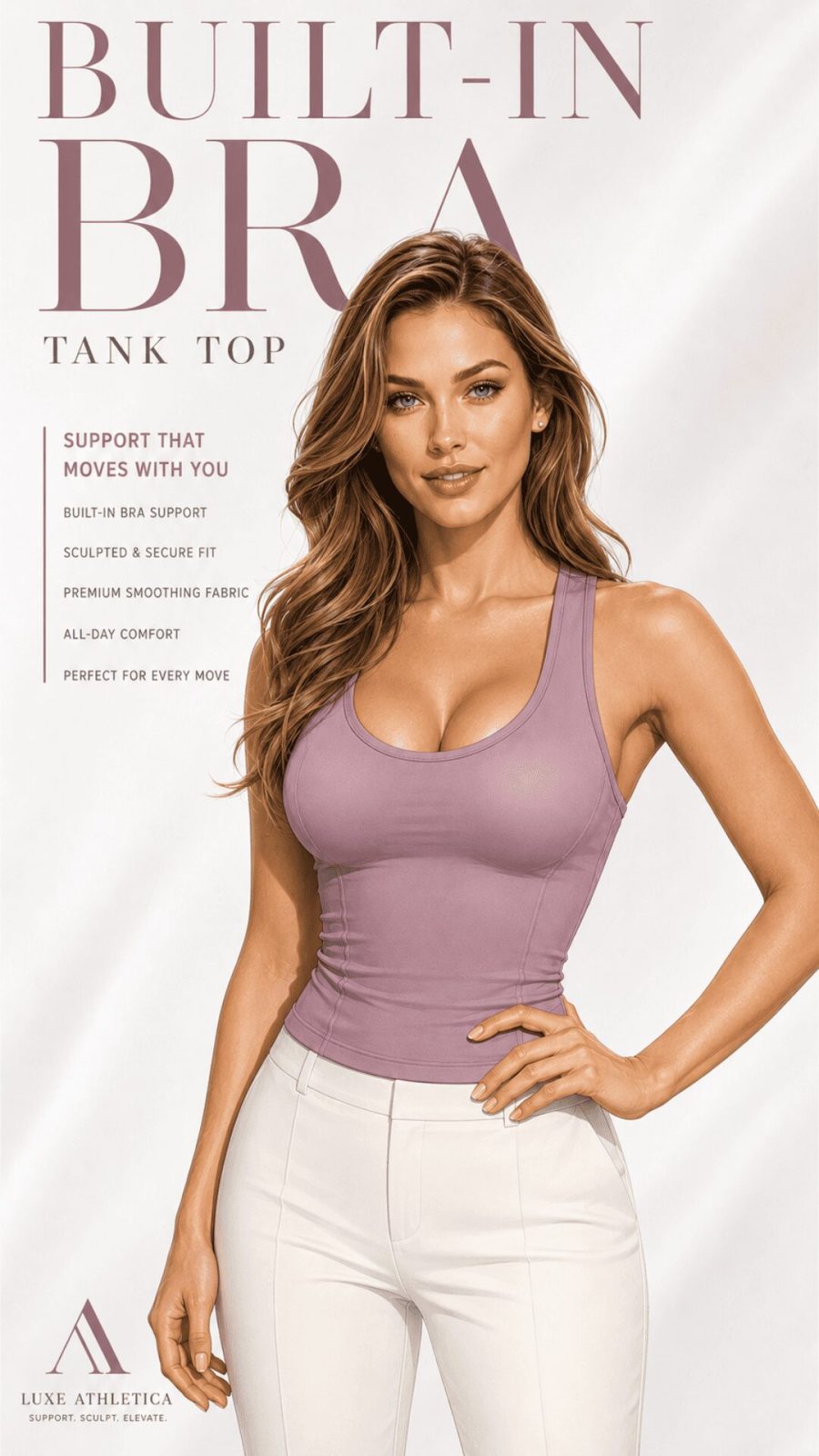
Built-In Bra Tank Top
![Built-In Bra Tank Top]()
The built-in bra tank incorporates a shelf bra, bralette, or soft-cup bra directly into the construction of the tank's lining — a double-layer design that eliminates the need for a separate bra entirely. The shelf bra version uses an elasticated band sewn into the lower portion of the interior; the soft-cup version includes molded or padded cups. This construction is particularly common in lightweight summer tanks and activewear where wearing an external bra would add bulk or create visible strap complications. The built-in bra tank is a practical wardrobe piece — fewer layers, fewer decisions, fewer straps to manage.
- 28
Corset-Inspired Tank Top

The corset-inspired tank borrows the aesthetic language of historical corsetry — boning channels, lace-up detailing, bustier shaping, and a defined waist — and applies it to a modern sleeveless top construction. It's a fashion tank rather than a functional corset: the structure is typically created with interior boning, stiffened fabric, or visual seaming rather than true steel boning. The result is a tank that creates a defined waist silhouette and an elevated, occasion-ready quality. Worn with wide-leg trousers or a midi skirt, the corset tank reads genuinely fashion-forward.

- 29
Y2K Tank Top
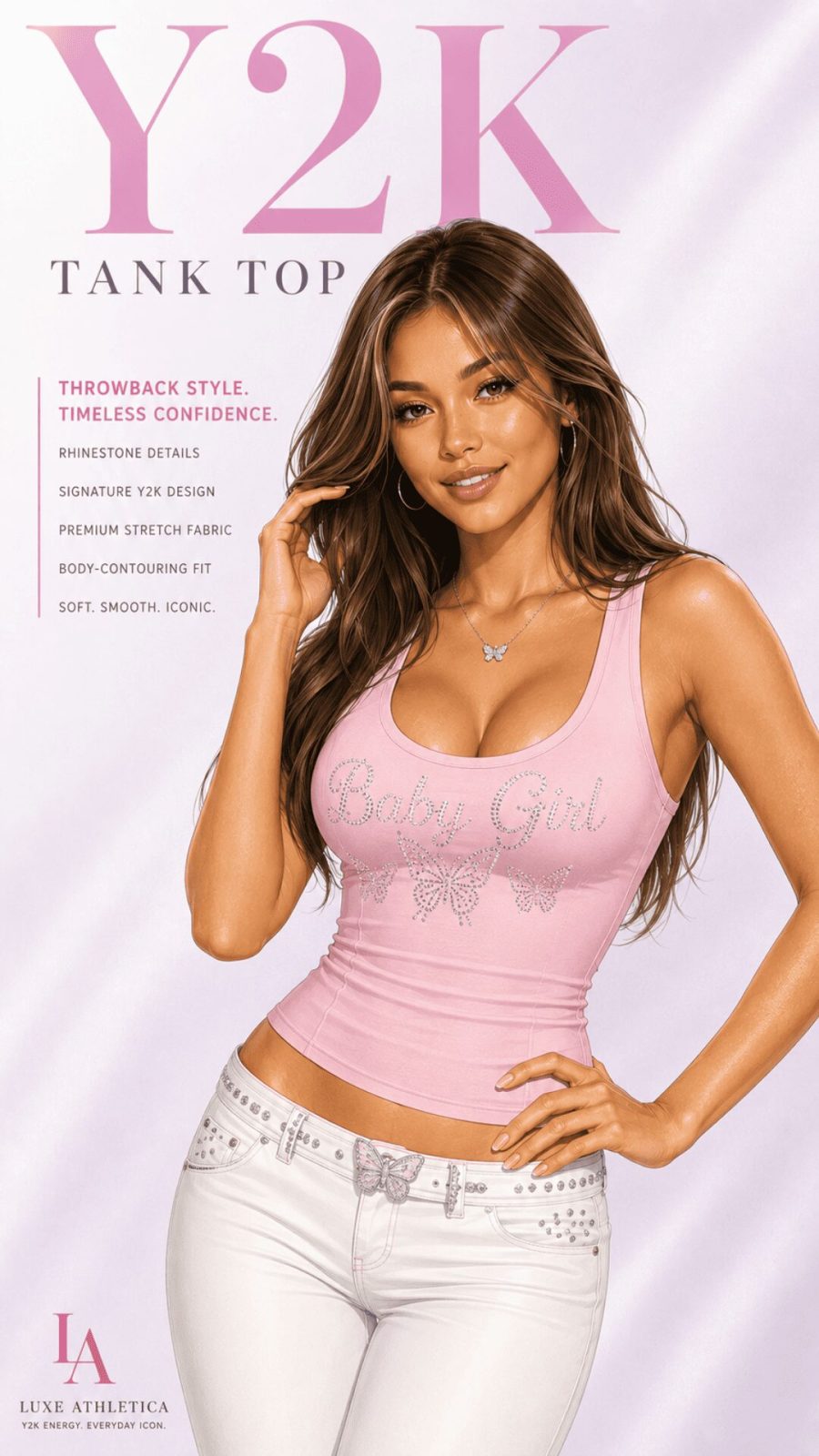
![Y2K Tank Top]()
The Y2K tank is an aesthetic category more than a single construction — it draws from the visual language of early 2000s fashion: low-rise cut, rhinestone or metallic detailing, butterfly prints, baby tees crossed with tanks, spaghetti straps in shiny fabric, and the particular brand of minimalism that defined the era before fast fashion homogenized everything. The Y2K revival, which accelerated from approximately 2020 onward, brought these silhouettes back into mainstream fashion discourse with genuine cultural momentum. A Y2K tank typically pairs with low-rise bottoms, platform shoes, and visible logos — styling that references that specific moment without being a direct reproduction of it.
- 30
Ruched Tank Top
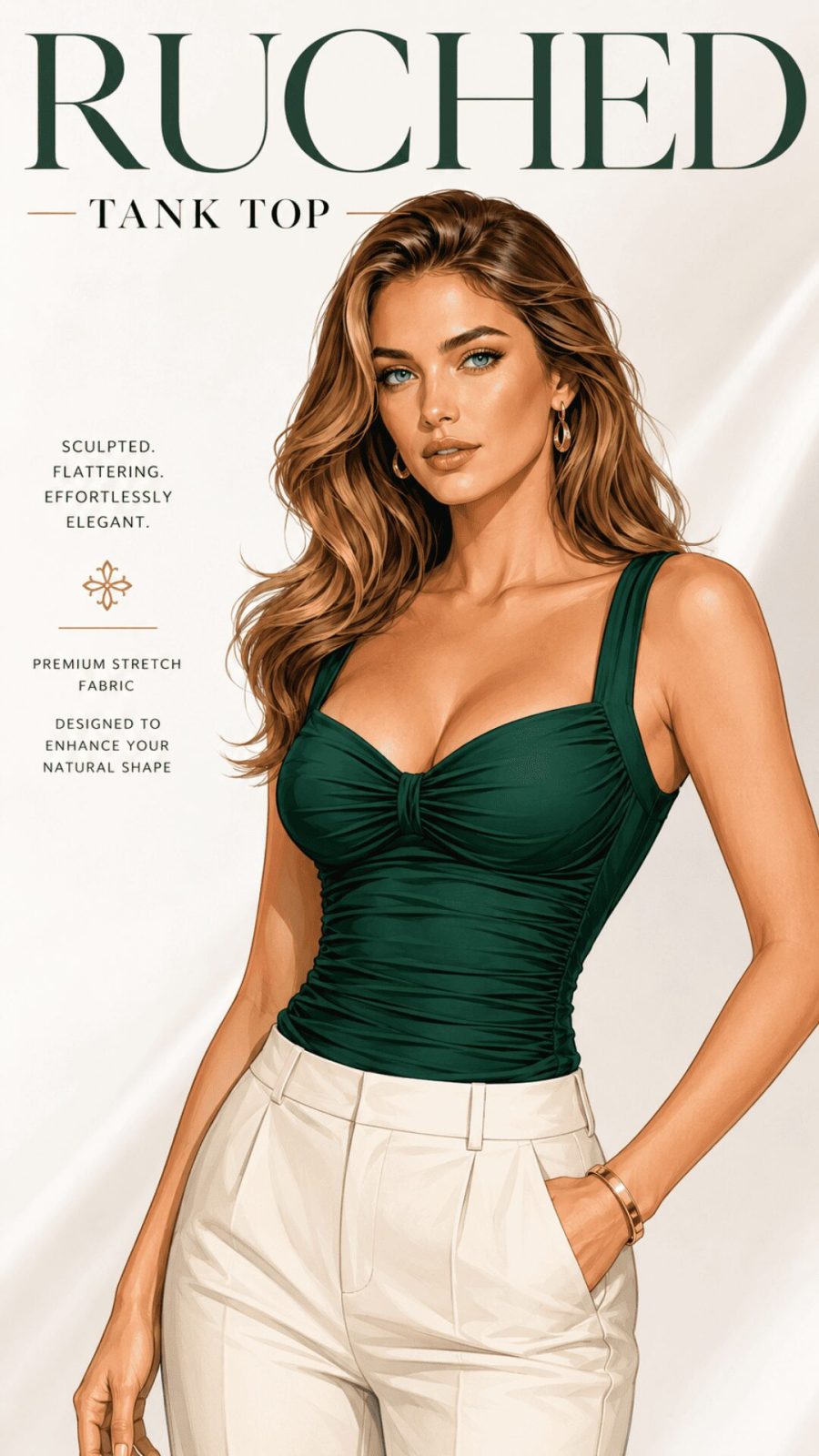
![Ruched Tank Top]()
The ruched tank uses gathered or shirred fabric — pulled into horizontal folds at the side seams, center front, or across the body — to create texture and a pulled-in waist effect. The ruching gathers excess fabric into the seams, which tightens the visual line of the garment at the gathering point while adding surface texture and visual interest. In stretch jersey, side ruching creates a contour fit that adjusts to different body proportions by distributing fabric toward the gathered point. Center-front ruching creates a focal point at the chest or waist. The ruched tank is one of the most body-responsive styles in the category.


- 31
Cut-Out Tank Top
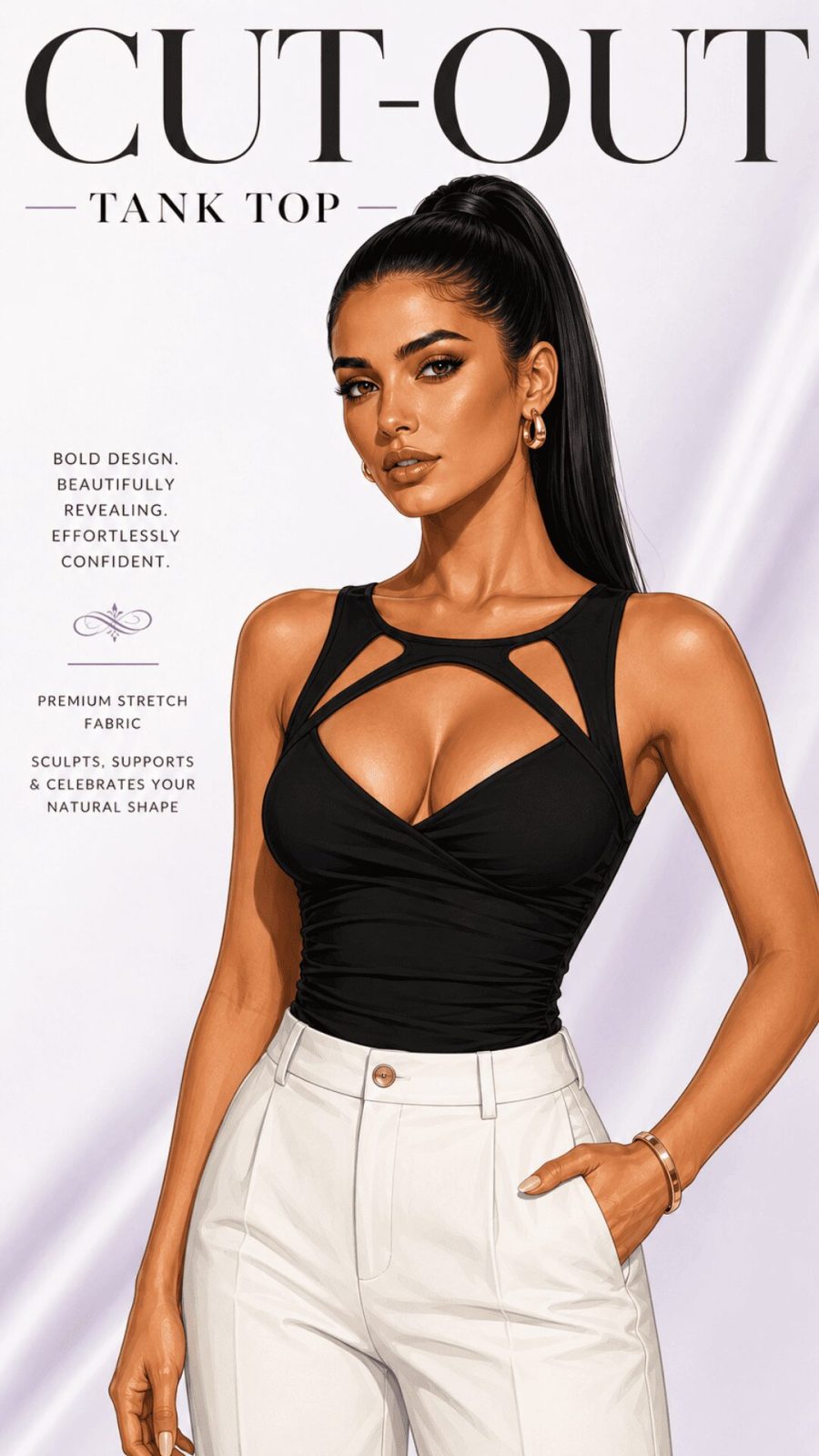
![Cut-Out Tank Top]()
Cut-out tank tops have deliberately removed sections of fabric — at the back, sides, front, or shoulders — creating geometric or organic openings as a design statement. The cut-out replaces embellishment: instead of adding decorative elements, fabric is subtracted to reveal skin at specific points. The location and shape of the cut-out determines the styling register of the piece entirely. Back cut-outs add visual interest from behind without changing the front silhouette at all. Side cut-outs reveal a sliver of the torso at the waist. Front cut-outs create a focal point at the chest or sternum. This is one of the most deliberate design statements in the tank top category.
- 32
Wrap Tank Top
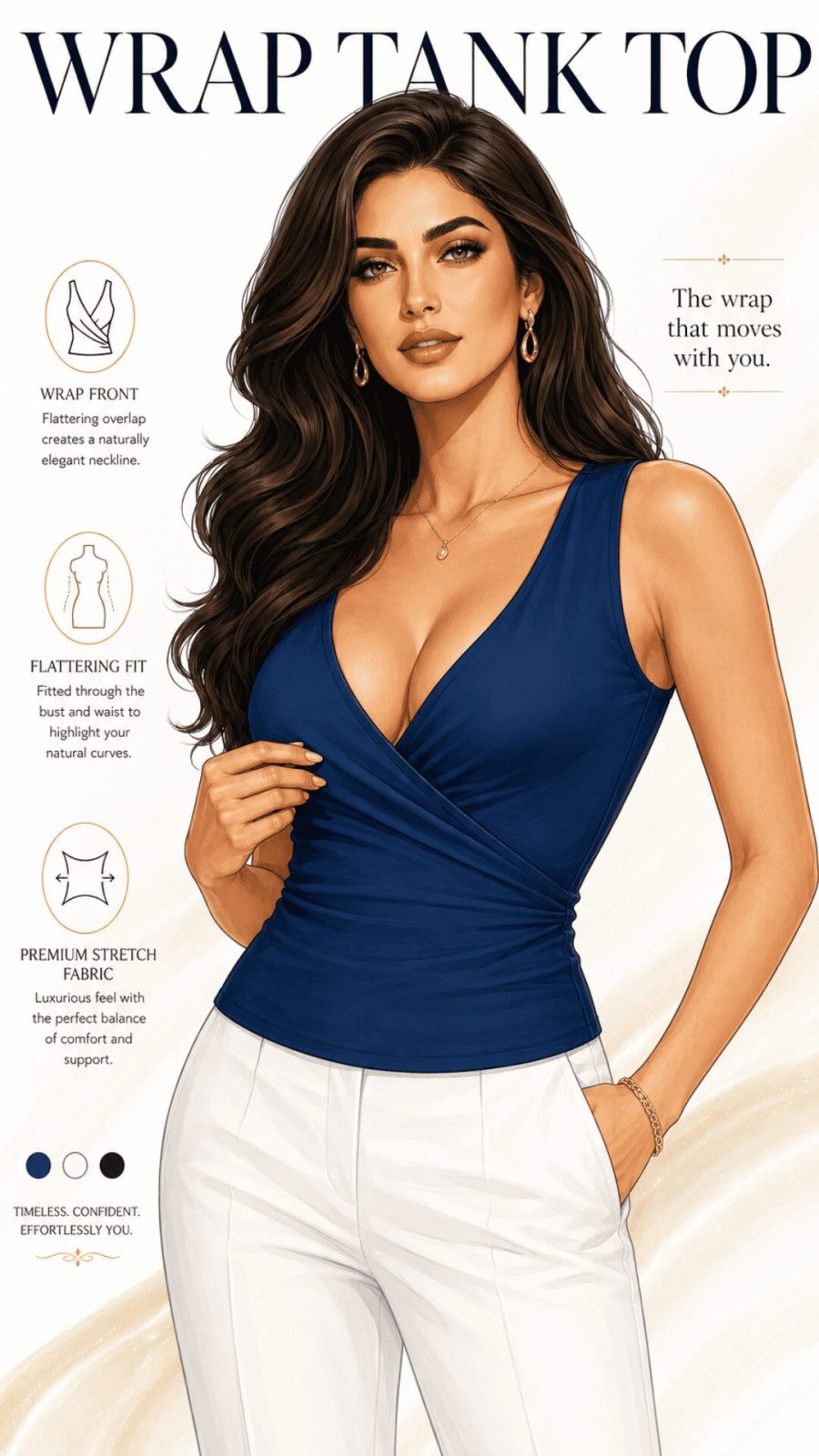
![Wrap Tank Top]()
The wrap tank applies the wrap silhouette — fabric panels crossing at the front, tied or fastened at the side or back — to a sleeveless construction. The wrap creates a V-shaped neckline by default and allows the wearer to adjust the tightness and coverage by changing where the wrap is secured. In a lightweight fabric with good drape, the wrap tank creates a diagonal line across the body that draws the eye upward and inward simultaneously. The adjustable nature of the wrap construction makes it one of the more universally fitting silhouettes in the tank category — it accommodates a range of proportions without requiring specific sizing precision.


- 33
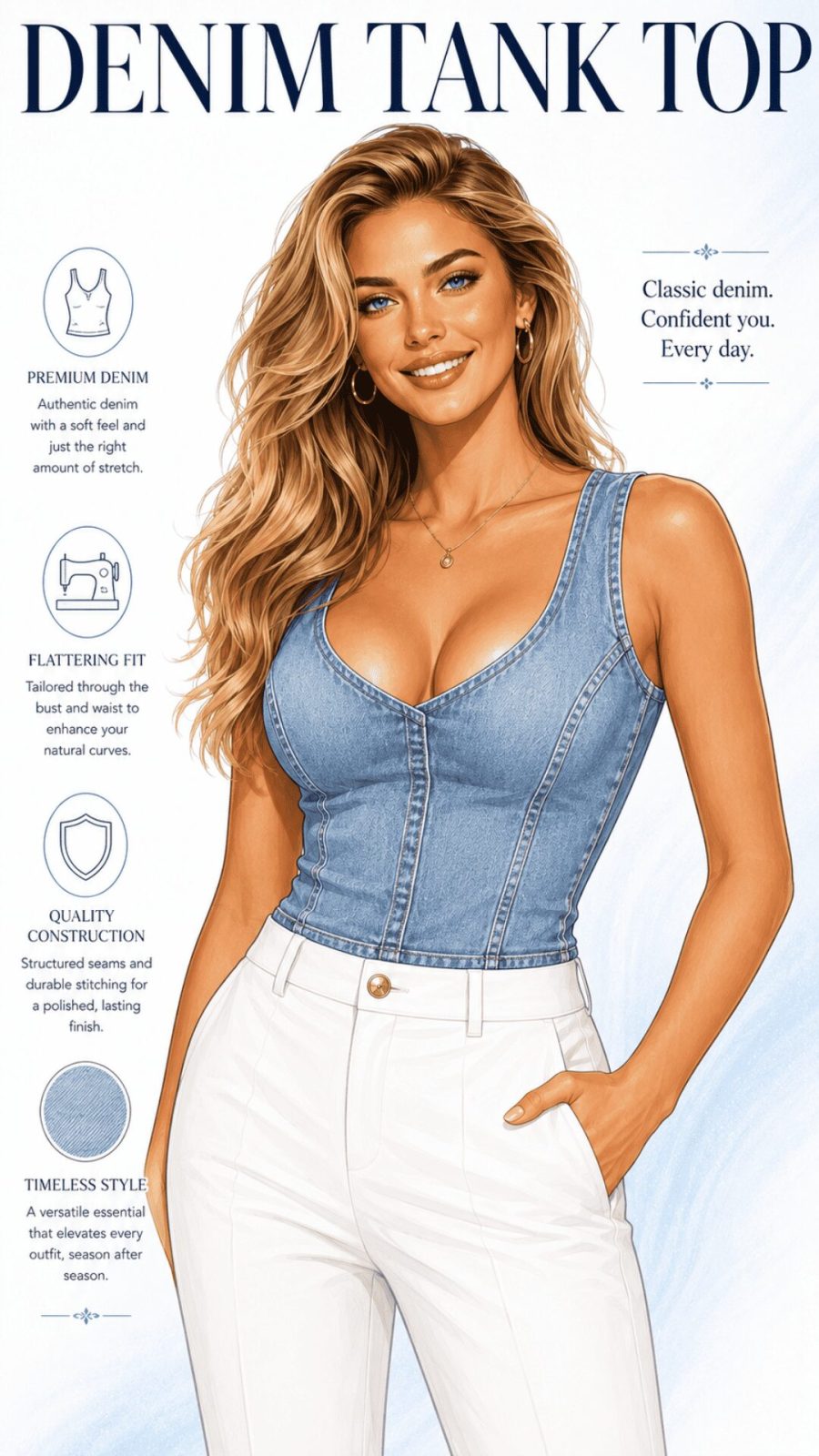
Denim Tank Top
![Denim Tank Top]()
The denim tank is cut from denim or chambray fabric — a heavier, structured material that behaves completely differently from jersey or knit. Denim adds weight, texture, and a particular casual authority to the sleeveless silhouette. The fabric's natural stiffness means the denim tank holds its shape independent of the body underneath, reading more structured and intentional than softer tank constructions. Light-wash denim tanks read casual and summer-ready; darker wash versions push into smart-casual territory. The denim tank pairs naturally with other casual textures and equally with unexpected elevated pieces — linen trousers, leather sandals, statement earrings.
- 34
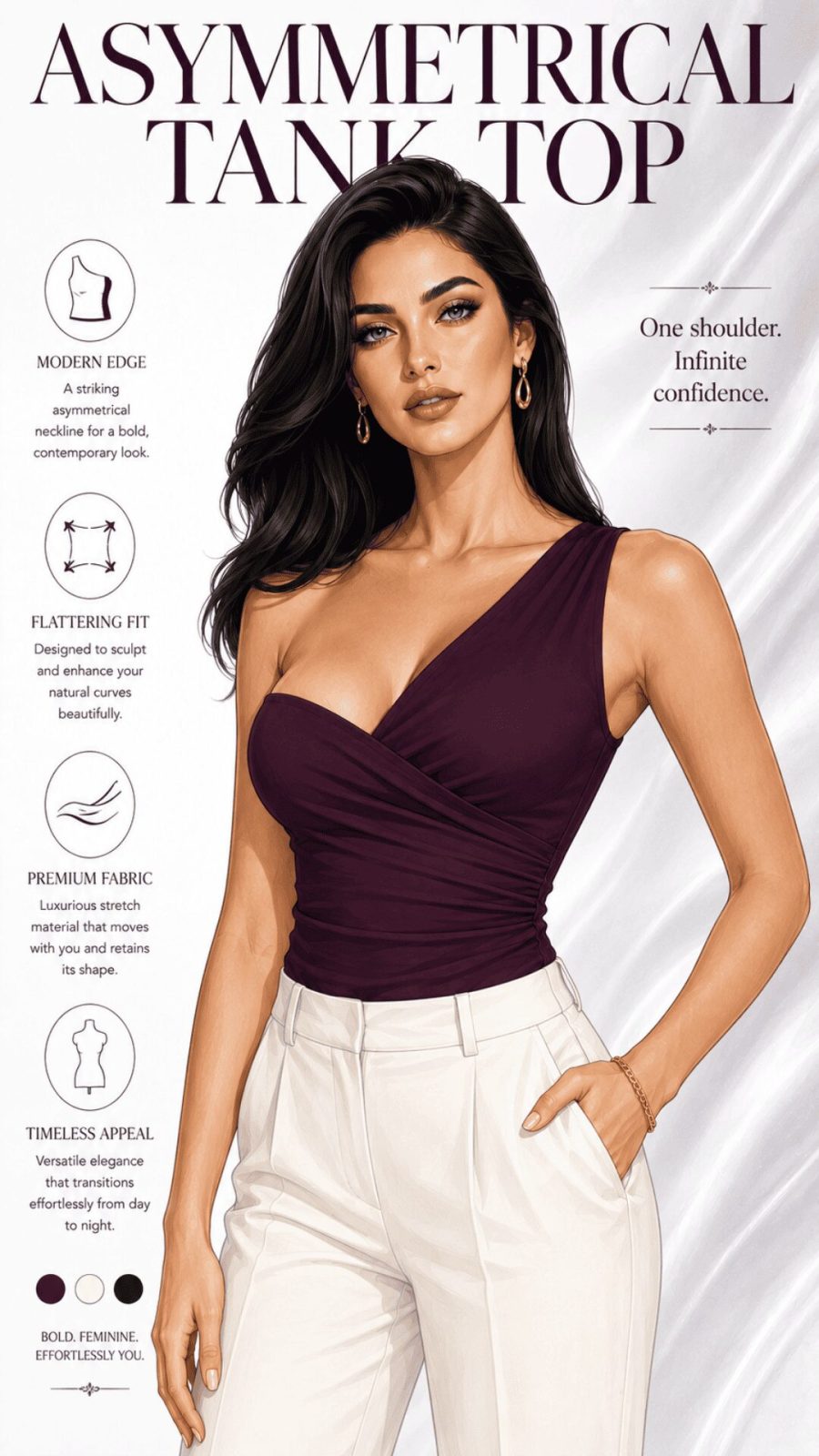
Asymmetrical Tank Top
![Asymmetrical Tank Top]()
The asymmetrical tank introduces deliberate imbalance — an uneven hemline, a diagonal neckline, or straps that differ in width or position from one side to the other. The asymmetry reads as intentional and styled rather than accidental; it's a design statement that creates movement and visual interest in a piece that might otherwise be minimal. The uneven hem is the most common asymmetric detail — one side longer than the other creates a subtle diagonal line at the bottom of the garment that adds directional movement to the silhouette. This works particularly well when partially tucked into high-waisted bottoms on one side only.
- 35
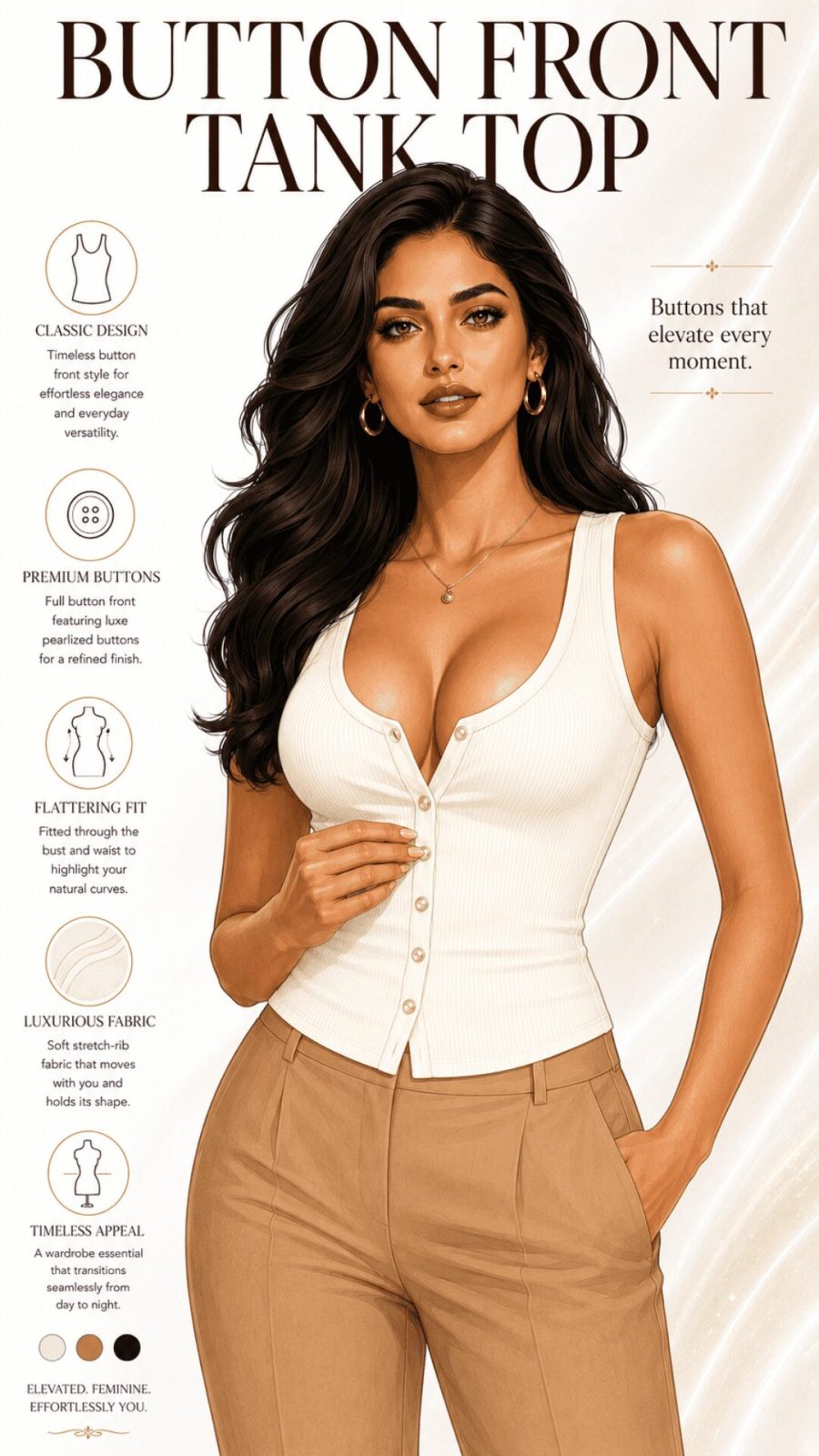
Button Front Tank Top
![Button Front Tank Top]()
The button front tank runs a full or partial button placket down the center front — a detail that borrows from shirt construction and applies it to the sleeveless silhouette. The buttons add structural interest and create the option of wearing the tank partially unbuttoned for a more relaxed, layered effect. In linen or cotton, the button front tank sits comfortably at the casual end of the spectrum while still reading intentional. In a more structured fabric with clean finishing, it edges toward smart-casual. The button detail also allows the tank to function as a lightweight open layer over a fitted base, which adds seasonal versatility across spring and summer months.


Tank Top Comparison Tables
Neckline Comparison
| Neckline | Visual Effect | Best Occasion |
|---|---|---|
| Scoop Neck | Soft, open, relaxed | Casual, everyday, layering |
| V-Neck | Elongating, clean vertical line | Smart-casual, office, evening |
| Square Neck | Structured, frames collarbone | Brunch, date, fashion-forward |
| High Neck | Minimal, covered, editorial | Layering, minimalist styling |
| Halter | Shoulders framed, back exposed | Beach, resort, festival |
Fabric Comparison
| Fabric | Properties | Occasion Register |
|---|---|---|
| Rib Knit | Strong stretch recovery, body-skimming | Everyday, smart-casual |
| Seamless Knit | No seams, smooth under clothes | Base layer, gym, layering |
| Satin | High lustre, fluid drape | Evening, smart, elevated |
| Mesh | Open weave, highly breathable | Athletic, festival, streetwear |
| Modal Blend | Ultra-soft, cool drape | Loungewear, casual, cami |
| Cotton Jersey | Breathable, washable, comfortable | Everyday, casual, streetwear |
Tank Top by Occasion
| Occasion | Best Tank Style | Recommended Fabric |
|---|---|---|
| Beach / Resort | Loose fit, halter, oversized | Cotton jersey, linen blend |
| Gym / Sport | Racerback, athletic, muscle | Moisture-wicking polyester |
| Evening / Going Out | Satin cami, corset, cut-out | Satin, silk, structured jersey |
| Office Casual | Wide strap, peplum, ribbed under blazer | Rib knit, seamless, modal |
| Festival | Mesh, graphic, Y2K spaghetti strap | Mesh, metallic, jersey print |
| Everyday Casual | Scoop neck, ribbed, cami | Cotton jersey, rib knit |
Frequently Asked Questions About Tank Tops
What is a tank top?
A tank top is a sleeveless upper-body garment with shoulder straps rather than sleeves. The name comes from the tank suits worn for competitive swimming in the early 1900s — swimwear designed to allow maximum arm freedom in the water. The modern tank top spans everything from athletic performance wear to elevated eveningwear depending on its construction, fabric, and neckline.
What's the difference between a cami and a tank top?
A cami (camisole) is a specific subcategory of tank top descended directly from lingerie. It has narrow, typically adjustable straps, a straight or slightly shaped neckline with a modest depth, and a soft fabric that drapes rather than clings. All camis are tank tops, but not all tank tops are camis. A muscle tank, racerback, or athletic tank would not typically be called a cami.
What tank top styles are trending right now?
As of 2025–2026, the most consistently visible tank top styles include the square neck ribbed tank, the satin spaghetti strap cami styled as outerwear, the corset-inspired bustier tank, and the oversized graphic muscle tank in streetwear context. The Y2K revival also continues to drive demand for low-cut spaghetti strap styles with rhinestone or metallic detailing. Ribbed tanks in neutral colorways remain the backbone of capsule wardrobe recommendations across fashion editorial coverage.
How do you style a tank top for work?
The most reliable tank top for office or smart-casual work environments is a fitted ribbed or seamless tank in a neutral color — white, black, navy, camel, or grey — worn under a structured blazer, cardigan, or tailored jacket. A wide-strap or high-neck tank works particularly well because it reduces visible bra strap complications and creates a cleaner neckline under outwear. The tank itself stays simple; the layered piece carries the formality of the outfit. See our smart-casual styling guide for outfit examples.
What fabrics are best for tank tops in summer?
The most breathable tank top fabrics for summer are breathable cotton jersey, linen blends, and modal blends. Cotton is the most forgiving and washable. Modal has a cooler, silkier feel against skin. Linen provides maximum breathability but wrinkles easily. For athletic summer use, moisture-wicking polyester or nylon blends outperform natural fibers in managing sweat. Avoid heavyweight jersey or synthetic fabrics without moisture-wicking properties in high heat — they trap warmth rather than releasing it.
What's the best tank top for layering?
The seamless tank is the best option for layering under fitted outer pieces because it eliminates the bulk of side seams. For visible layering — where the tank is intentionally seen under or beneath another garment — the cami tank or satin slip tank creates an elegant under-layer effect. A wide-strap ribbed tank layers cleanly under structured outerwear without creating strap complications. The key principle: the simpler the tank's silhouette, the more versatile it is as a layering base.
How do I choose the right tank top neckline?
Choose based on the visual effect you want and the outfit context. V-necks elongate and work well under blazers. Scoop necks are the most forgiving and versatile for everyday wear. Square necks frame the collarbone and photograph beautifully. High necks create a minimal, editorial look that layers well under coats. Halter necklines emphasize the shoulders and back. The neckline is the most visible design decision in a tank top — it directs attention more powerfully than fit or fabric in most cases.
Can tank tops be worn year-round?
Yes. Tank tops function year-round as layering pieces, even in cold climates. A fitted ribbed or seamless tank worn under a sweater, under a shirt, or under structured outerwear adds a body-close layer without visible bulk. In autumn and winter, the cami or high-neck tank under a knit or blazer creates a complete outfit. In spring and summer, the tank functions as a standalone piece. The tank top is arguably more versatile across seasons than it's given credit for — its value as a layering base rivals its value as a standalone summer piece.
Final Thoughts
The tank top is the most frequently worn and least considered piece in most women's wardrobes. It's the first layer, the warmest-day solution, the piece worn under everything else for six months of the year — and the one that, when chosen well, makes everything around it feel easier. Understanding the difference between a scoop neck and a square neck, between a ribbed tank and a seamless one, between a satin cami and a cotton muscle tank, is the kind of knowledge that pays forward in every outfit decision that follows.
The breadth of the category is genuinely remarkable. Thirty-five distinct styles documented here, spanning athletic performance and evening elegance, Y2K nostalgia and minimalist capsule building, structured corsetry and completely unstructured drape. The tank top contains multitudes. The one that feels right in the moment — body, context, occasion — is the one that matters. And now you know where to find it. For more types of tops for women, including blouses, shirts, and knitwear, see our complete reference guide.
Key Takeaways
- Neckline is the first styling decision — V-necks elongate, square necks structure, scoop necks soften, and high necks create minimal editorial lines.
- Rib knit is the capsule wardrobe's most reliable tank construction because it combines stretch recovery, subtle texture, and body-skimming structure.
- Seamless construction matters most for layering — no seams means less bulk and cleaner lines under fitted outerwear.
- Fabric changes the occasion register completely — the same silhouette shifts from casual to evening depending on whether it's jersey, satin, or performance fabric.
- The racerback's athletic origin is functional — the T-shaped back was developed for unrestricted shoulder movement in swimming and activewear.
- Crop height changes styling logic — shorter crops require higher rises while modest crops work with more bottom proportions.
- Tank tops function year-round as layering pieces — especially under blazers, sweaters, shirts, and structured outerwear.
- The Y2K revival remains commercially relevant — low-cut spaghetti straps, rhinestones, and early-2000s silhouettes continue influencing mainstream tank design.
Sources & Further Reading
- Vogue — The ribbed tank's return as a wardrobe essential, editorial coverage 2024
- Who What Wear — Tank top outfit styling guides and trend coverage
- The Business of Fashion — The 90s and Y2K revival: commercial analysis and trend longevity
- FIT New York — Historical garment construction and sportswear-to-casualwear transition documentation


Leave a Reply