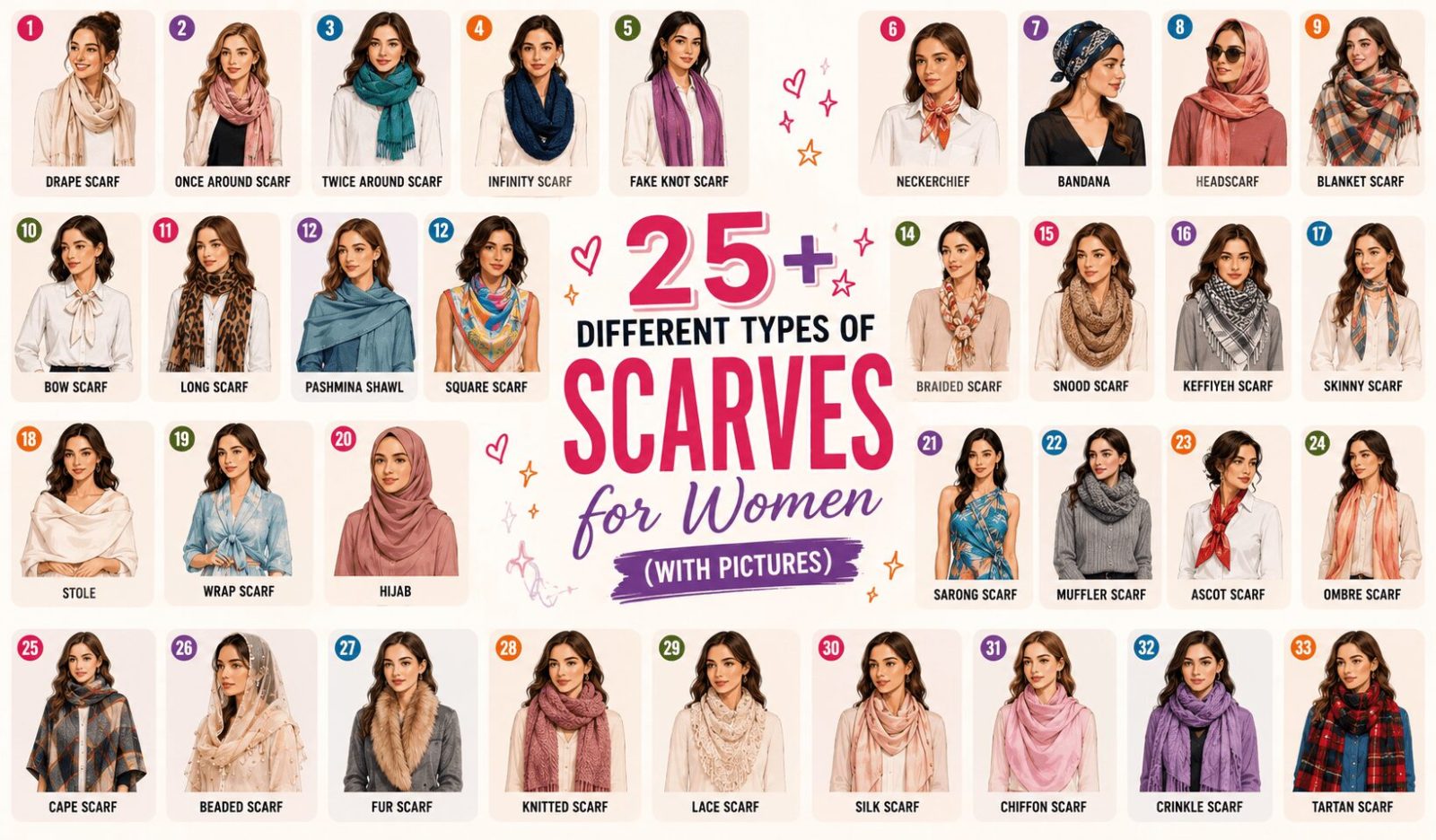
There’s something almost alchemical about a scarf. One piece of fabric — draped differently, knotted differently, worn on a completely different part of the body — and suddenly an outfit that felt unfinished becomes considered. Intentional. Yours. That transformation isn’t accidental. It’s the product of weave structure, drape weight, fibre behaviour, and centuries of construction intelligence folded into what looks, deceptively, like the simplest accessory in fashion.
Scarves are the most transformative accessory in any woman’s wardrobe. And, genuinely, the most underestimated.
The silk square scarf entered Western fashion consciousness through the luxury ateliers of mid-century Paris — most notably Hermès, whose hand-rolled silk carrés became an international symbol of refined dressing from the 1930s onward. The knitted neck warmer, by contrast, traces entirely different roots — functional Scandinavian and Alpine textile traditions where warmth was the first and only priority. Today, the category spans everything from lightweight chiffon neckerchiefs to heavyweight blanket wraps, each carrying its own construction logic, seasonal role, and styling intelligence — and each deserving far more attention than the average wardrobe gives it.
This guide documents 21+ types of scarves for women across 5 classification systems. For every single entry:
-
Design
What it looks like
-
Season
When to wear it
-
Best For
Who it works for
Start here, explore everything, and discover which scarf type your wardrobe has been quietly missing.
All 5 Categories at a Glance
A structured breakdown of the 21+ scarf types documented in this guide.
- 01
By Shape / Construction
- 02
By Fabric / Material
- 03
By Wear Position
- 04
By Warmth / Function
- 05
By Style / Occasion
21+ Different Types of Scarves for Women
Category 1: By Shape / Construction (#1–#6)
How the scarf is cut, sewn, and shaped — the foundational identity of each scarf type
Shape is everything — and in scarves, it determines more than almost any other garment category. Before a scarf has a fibre, a colour, or a knot, it has a geometry. Is it a square? A long rectangle? A triangle? A closed loop? These six foundational shapes represent the structural DNA of the entire category — and each one behaves differently the moment it leaves the shelf.
What works beautifully about thinking in shapes first is that it cuts through the noise of styling trend language. A "French girl scarf"? That's marketing. A medium-weight oblong wool scarf knotted at the collarbone? That's construction — and construction tells you exactly how it will drape, what it will do in wind, and which coats it will actually work under. Shape is information.
- 01
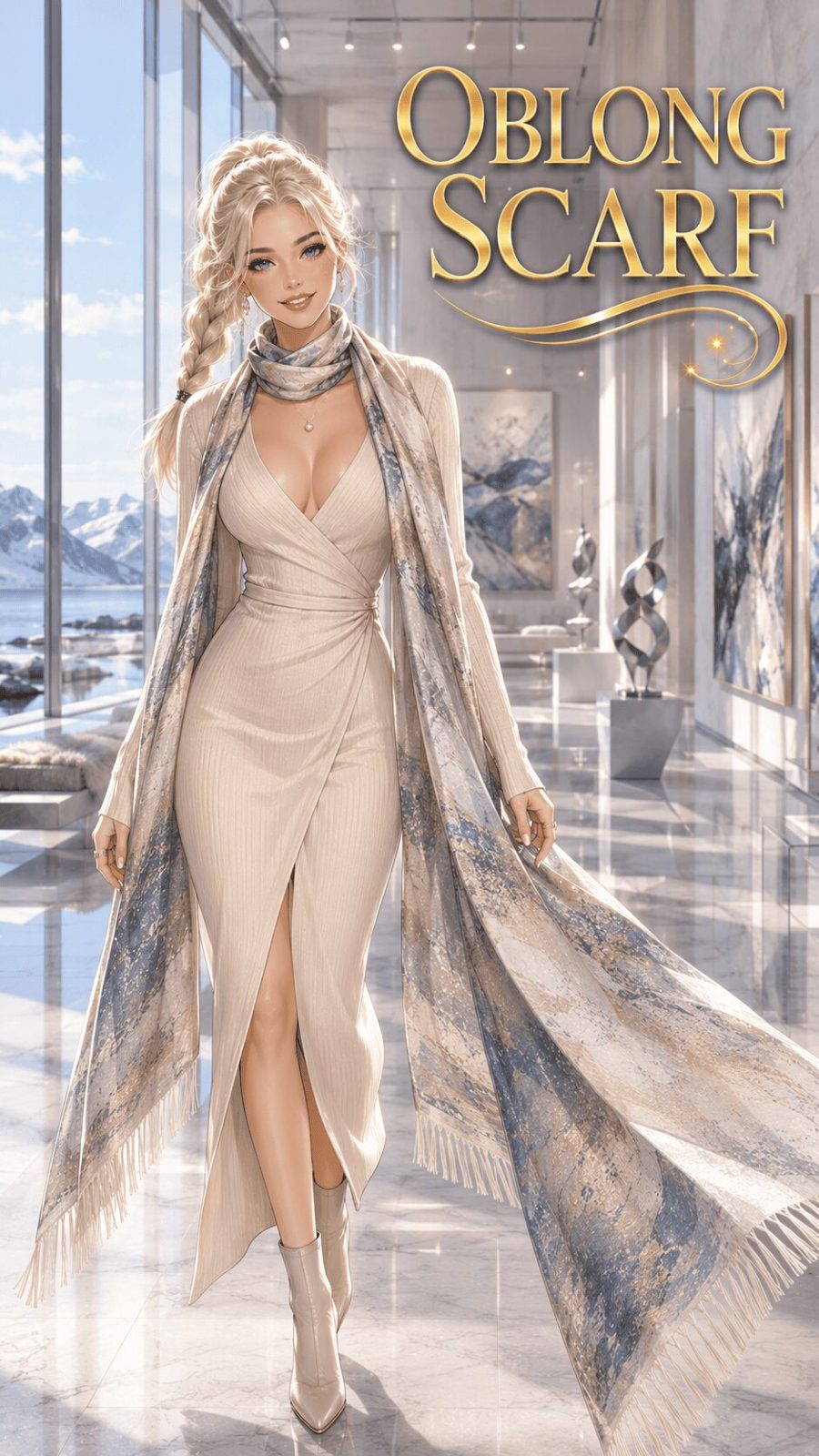
Oblong Scarf

The long, rectangular scarf — typically 55 to 72 inches in length and 10 to 14 inches wide — is the foundational shape that most people picture when they think "scarf." Its proportions are ancient: elongated fabric panels have been documented in wardrobe records stretching back to Roman legions and Egyptian royalty. The modern oblong is where construction meets maximum versatility — it can be knotted, looped, draped, folded, tied, tucked, and layered in dozens of configurations without ever looking out of place.
- 02
Square Scarf
Equal sides, infinite configurations. The square scarf — ranging from a petite 20-inch foulard to a generous 36-inch carré — is the shape that Hermès built an empire on. Folded diagonally into a triangle, it becomes a headscarf. Folded into a narrow band, it becomes a neckerchief. Tied at the handle of a bag, it transforms an accessory entirely. The square scarf's styling intelligence is genuinely architectural: the shape is always doing something, regardless of how simply it's arranged.
- 03
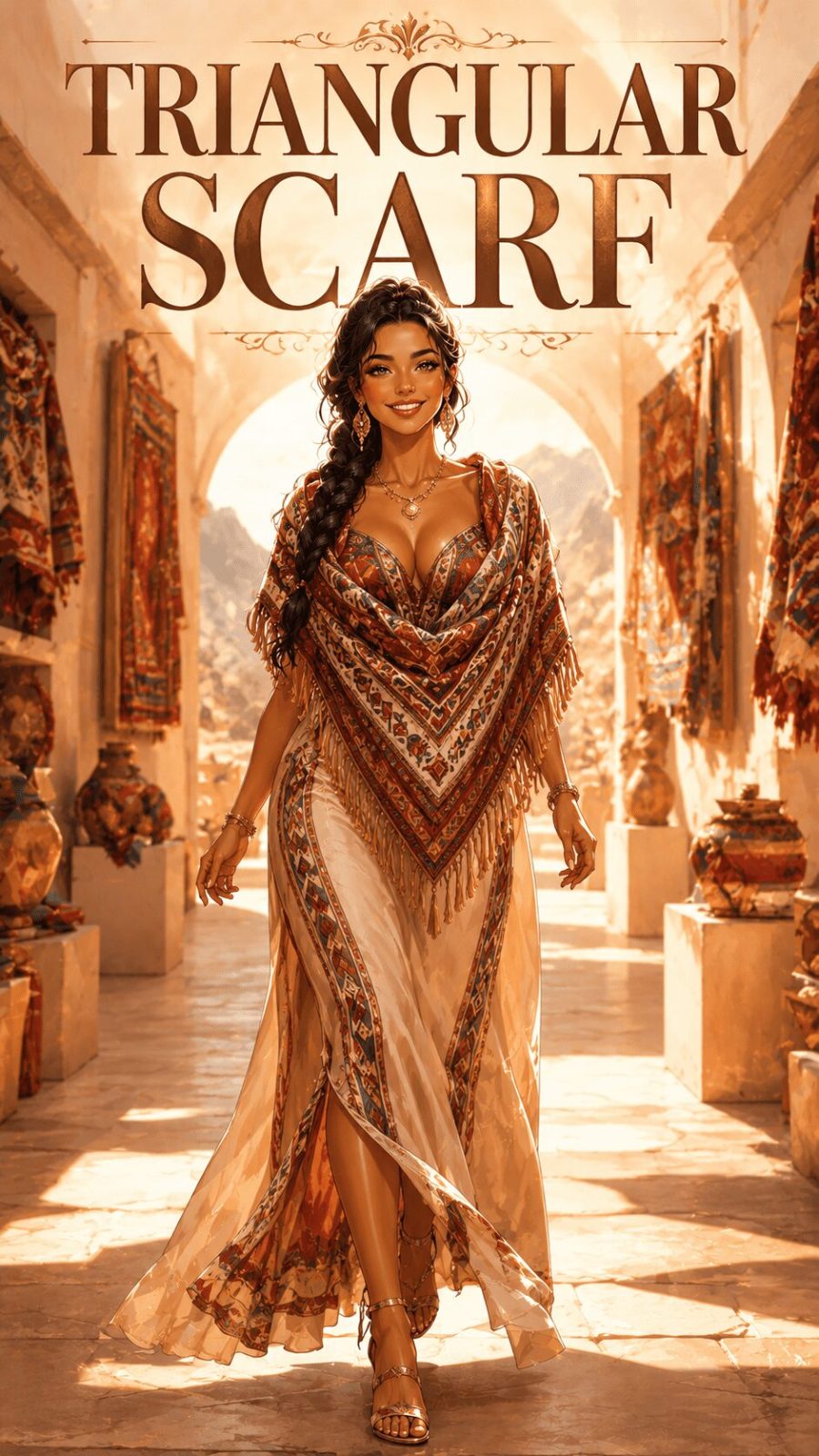
Triangular Scarf
A scarf cut or folded into a triangle — with the longest edge at the top and the point falling centre-back or centre-chest. The triangle shape drapes predictably: the wide edge lays flat along the shoulders, the point anchors downward, and the two tail ends can be tied or tucked in front. It's the scarf shape that feels most effortless as a headscarf, a shoulder wrap, or a beach cover-up — the geometry does the work, so you don't have to.
- 04
Infinity Scarf
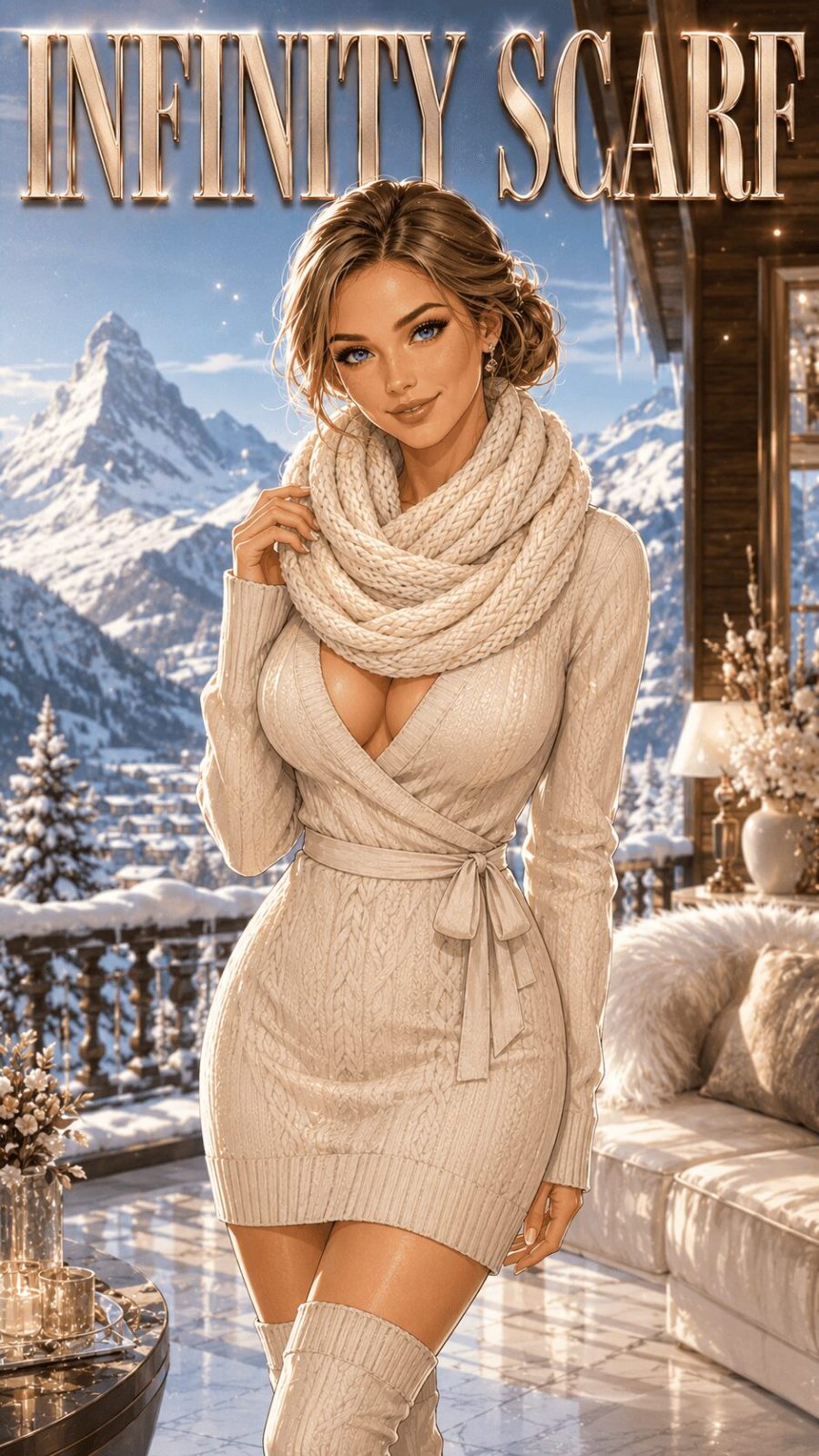
A closed loop with no beginning and no end — and no dangling tails, no fussing with knots, no asymmetry to manage. The infinity scarf (also called a loop scarf or circle scarf) is sewn into a continuous ring, typically with circumferences between 50 and 70 inches. Single-looped, it functions like a cowl. Double-looped, it sits close to the neck with a chunky, layered effect. It's the scarf shape that rewards the style-averse — there's genuinely no wrong way to wear it.
- 05
Snood
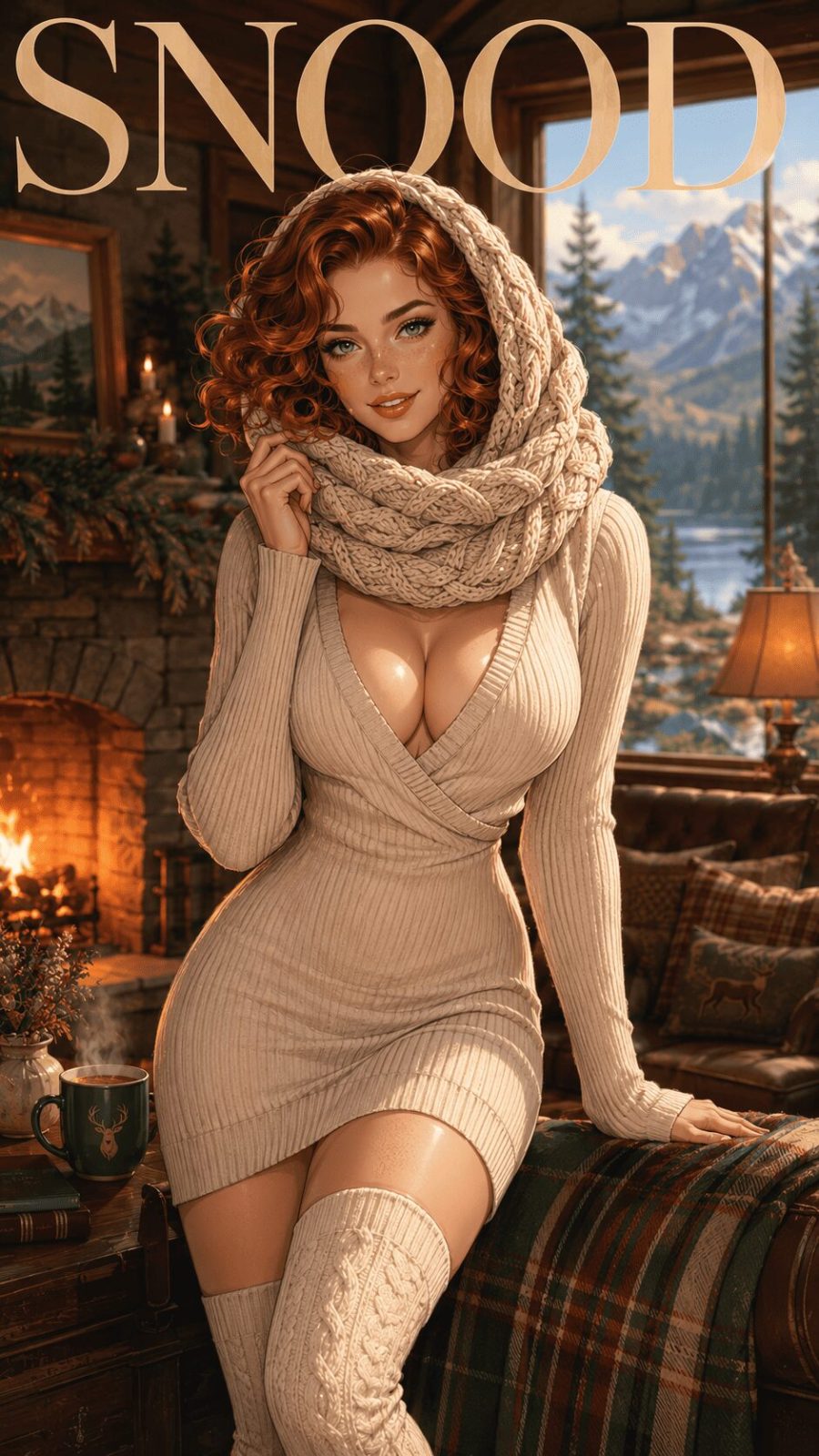
The snood sits at the intersection of scarf and hat — a wide-tube knitted piece that wraps the neck and can be pulled up to cover the lower face or pushed down to rest as a chunky collar. The word itself predates modern fashion by centuries, originally referring to a hairnet worn by women in medieval Europe. Today's snood is a winter essential: all the neck warmth of a scarf, none of the bulk of tails. It sits remarkably well under coats without creating the dreaded scarf bulk at the zipper.
- 06
Wrap Scarf
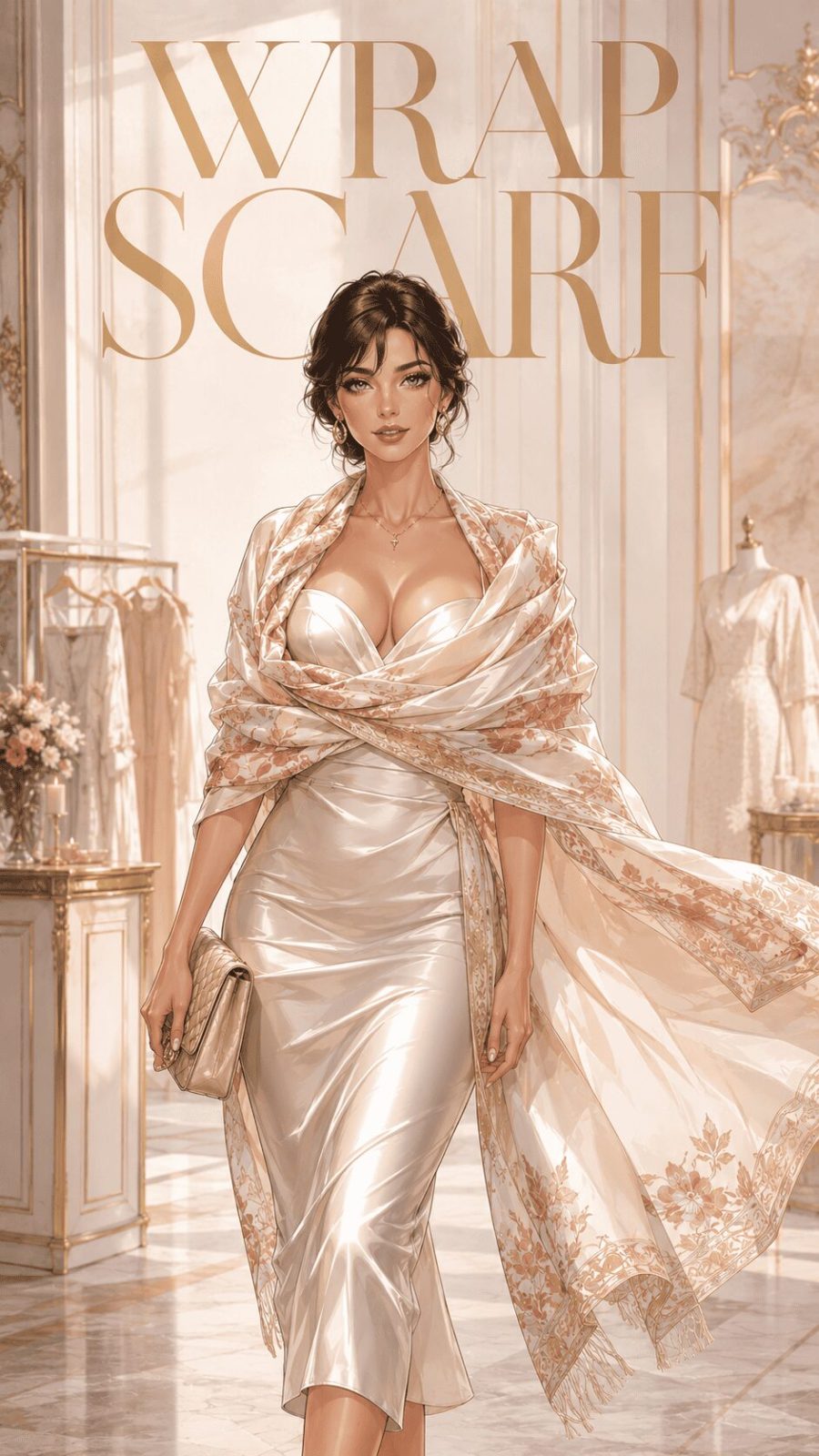
Generous in dimension — often 80 inches or longer and 28 to 36 inches wide — the wrap scarf sits in the territory between scarf and shawl. Its scale means it can function as both: worn lengthwise around the neck for conventional scarf effect, or draped crosswise over the shoulders as a light jacket substitute. In lightweight fabrics like modal or open-weave linen, it becomes the perfect transitional-season companion. In heavy wool or cashmere, it's a credible outerwear layer for mild winter days.
Category 2: By Fabric / Material (#7–#11)
The fibre determines the drape, the warmth, the occasion, and the decade it belongs to
- 07
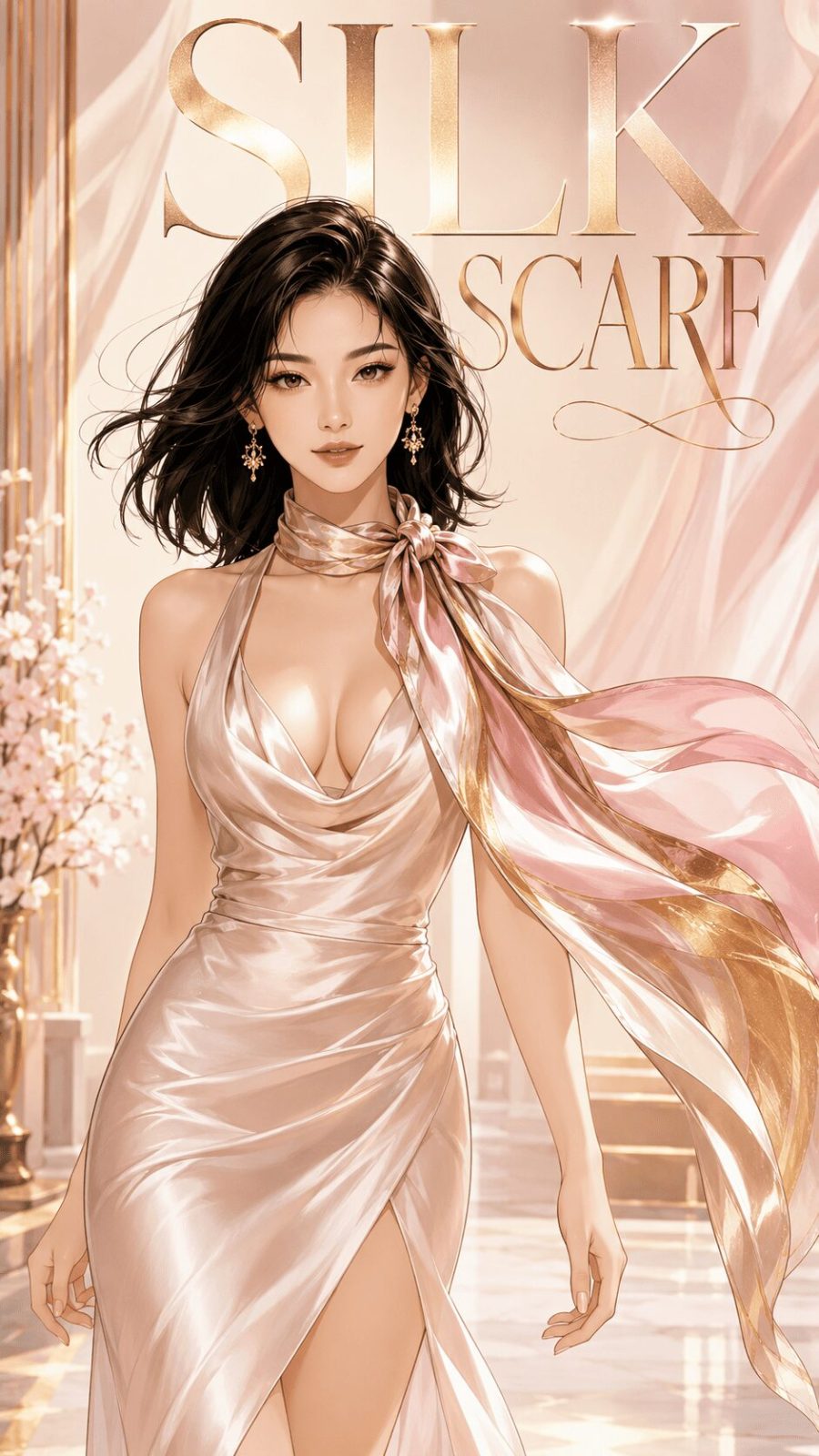
Silk Scarf
Silk's protein structure creates a surface that reflects light from multiple angles simultaneously — which is exactly why a silk scarf looks different indoors than it does in daylight. The weight is almost nothing. The drape is extraordinary. And the hand-rolled edges that characterise the finest silk scarves — still done by skilled artisans who roll and whip-stitch each millimetre by hand — add a dimensional border that machine-stitched versions simply cannot replicate. According to Business of Fashion's 2024 luxury accessories analysis, silk scarves remain among the most resilient luxury resale categories globally, maintaining strong secondary market value even across economic downturns.
- 08
Cashmere Scarf
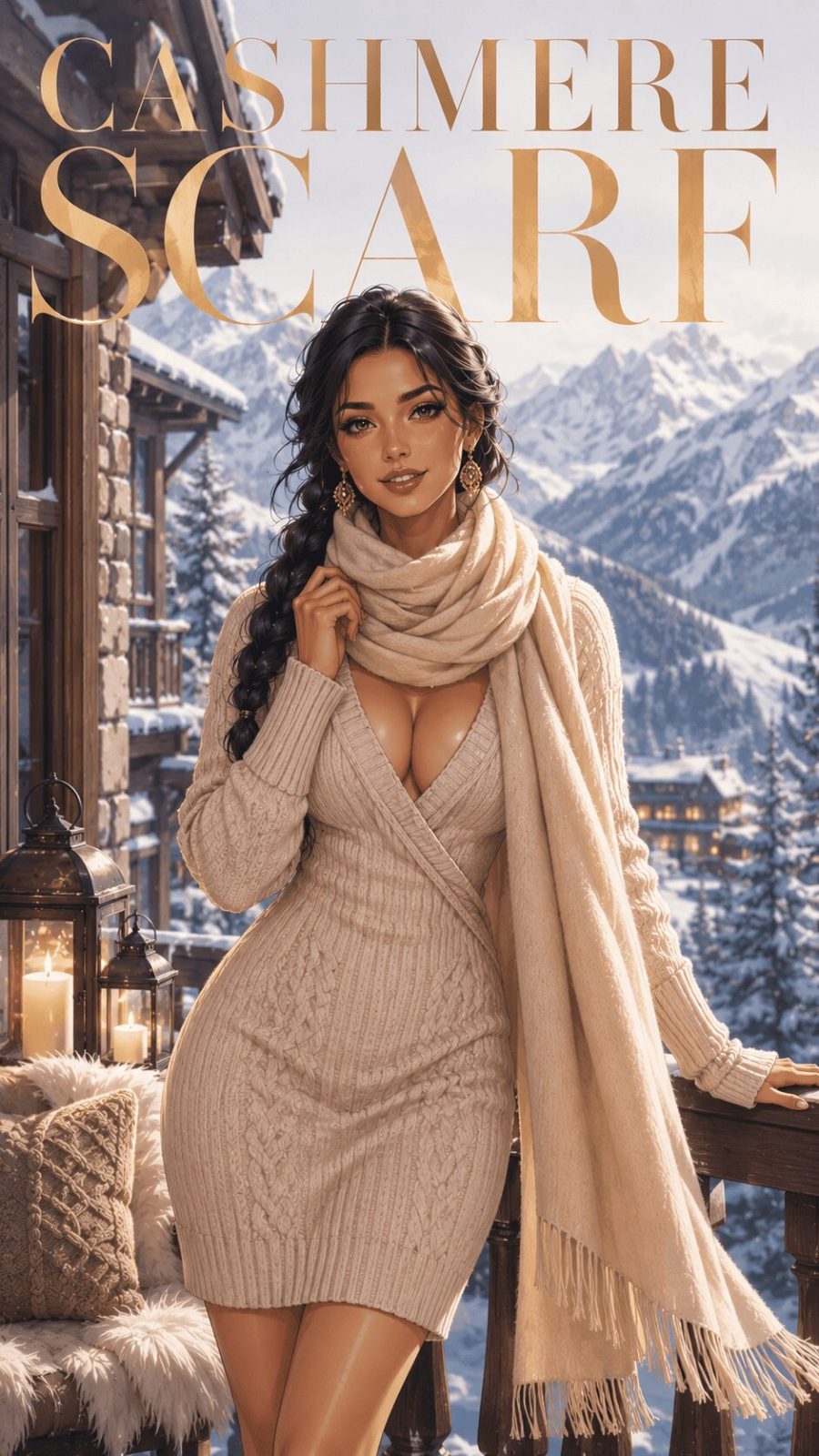

The cashmere fibre — harvested from the undercoat of Cashmere goats bred across the Himalayan plateau — is finer than human hair by a significant margin, with fibres measuring between 14 and 19 microns in the highest-quality grades. That fineness translates directly to the tactile experience: feather-light against the skin, with a warmth-to-weight ratio that no synthetic fibre has credibly matched. A well-made cashmere scarf softens with every wash rather than pilling — provided the correct grade was used in the first place. Grades 1 and 2 (two-ply and above) are the benchmark; single-ply at very low price points is where the pilling complaints originate.
- 09
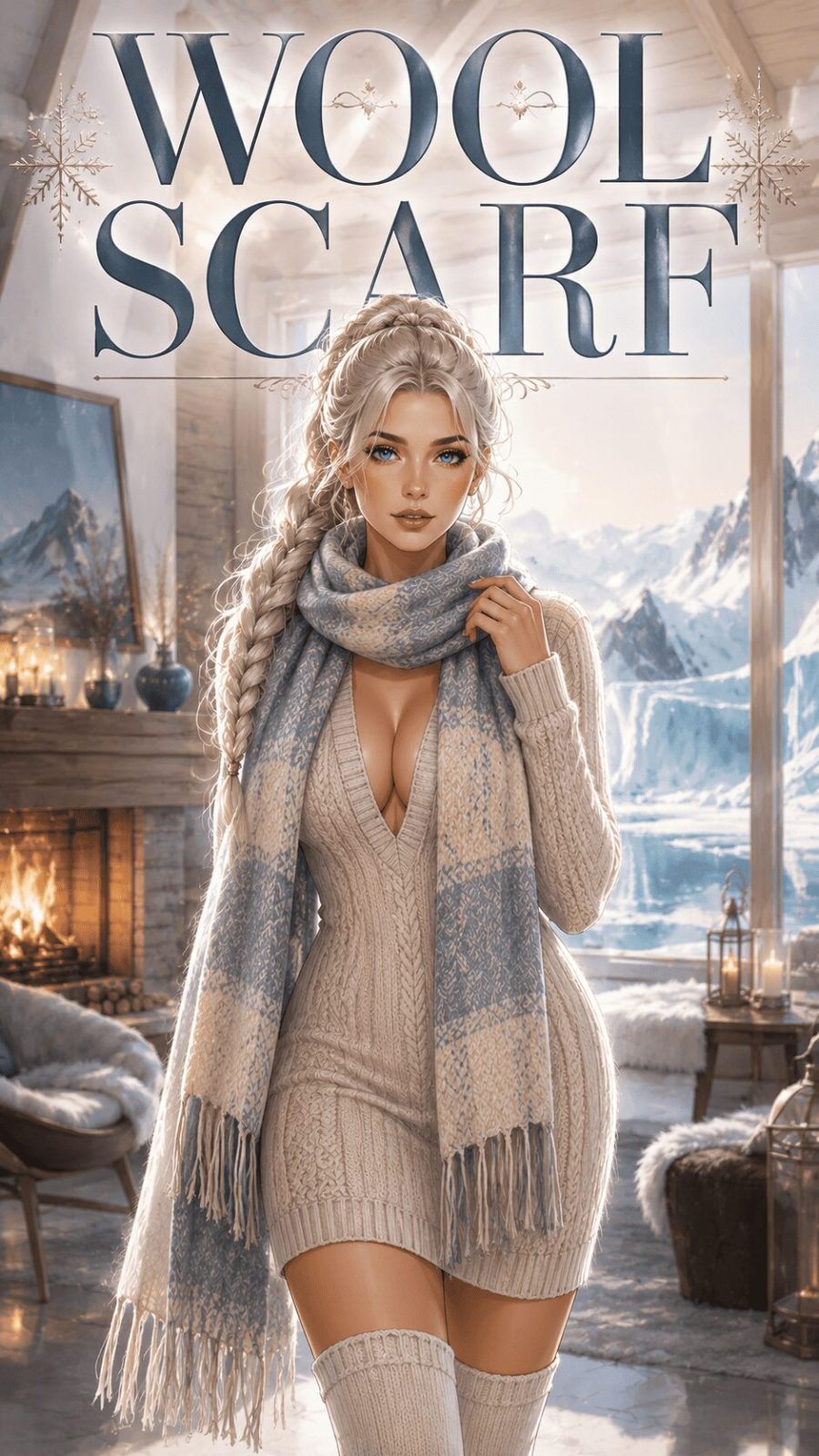
Wool Scarf
Wool's scale structure — microscopic overlapping plates along each fibre — is what makes it nature's most effective insulator. Those scales trap air in tiny pockets, creating a thermal barrier that synthetic fibres can approximate but not match. A merino wool scarf sits closest to the skin without the itch of coarser lambswool; a Shetland wool scarf has a distinctive heathered texture and stiffness that speaks of genuine craft origin; a boiled wool scarf (where the fibre has been wet-felted) has a dense, structured feel unlike any other. The type of wool genuinely matters — and it's underreported in most scarf guides.
- 10
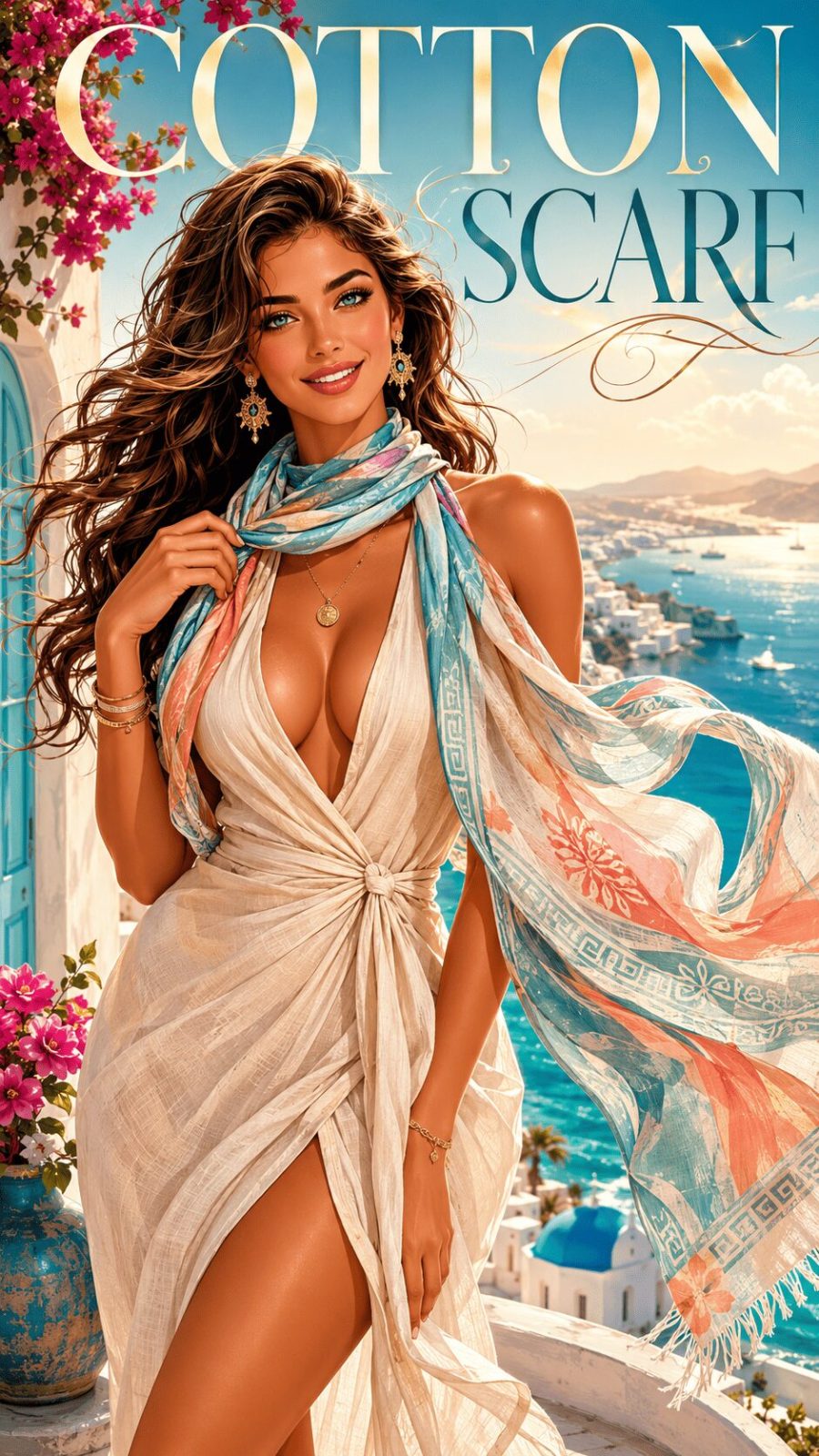
Cotton Scarf
Cotton scarves are the democratic option in every sense — breathable, washable, affordable, and available in every weight from gossamer voile to sturdy canvas. A lightweight cotton muslin scarf worn loosely in summer does something a silk scarf can't: it absorbs rather than repels, which makes it genuinely comfortable in heat. Indian block-printed cotton scarves, Palestinian keffiyehs, and the classic bandana all trace their roots to this fibre, reminding us that some of the most culturally resonant scarf traditions are built on the most accessible material in textiles.
- 11
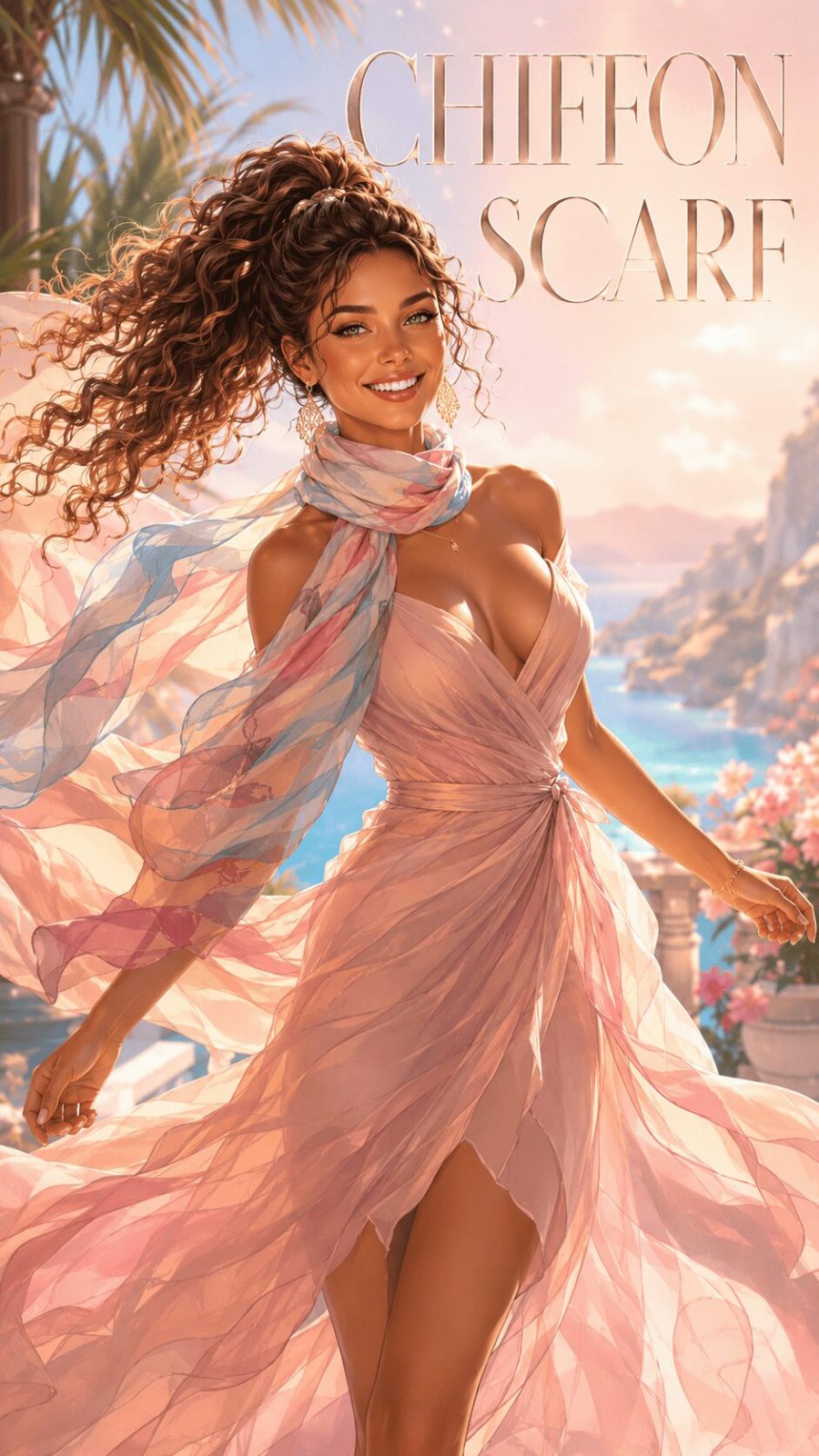
Chiffon Scarf
Chiffon is a plain-weave fabric so fine it's almost translucent — and a chiffon scarf behaves like a whisper of colour in the air. It floats. It moves independently of the body wearing it. This isn't just a poetic observation — it's a construction reality. The twist in chiffon's yarns creates a slight crinkle surface that catches light and air in ways that heavier fabrics don't. A chiffon scarf tied loosely at the neck of a blazer does something visually that no other fabric can replicate: it adds softness and motion to an otherwise structured silhouette without adding any visual weight at all.
- 12
Neck Scarf / Neckerchief
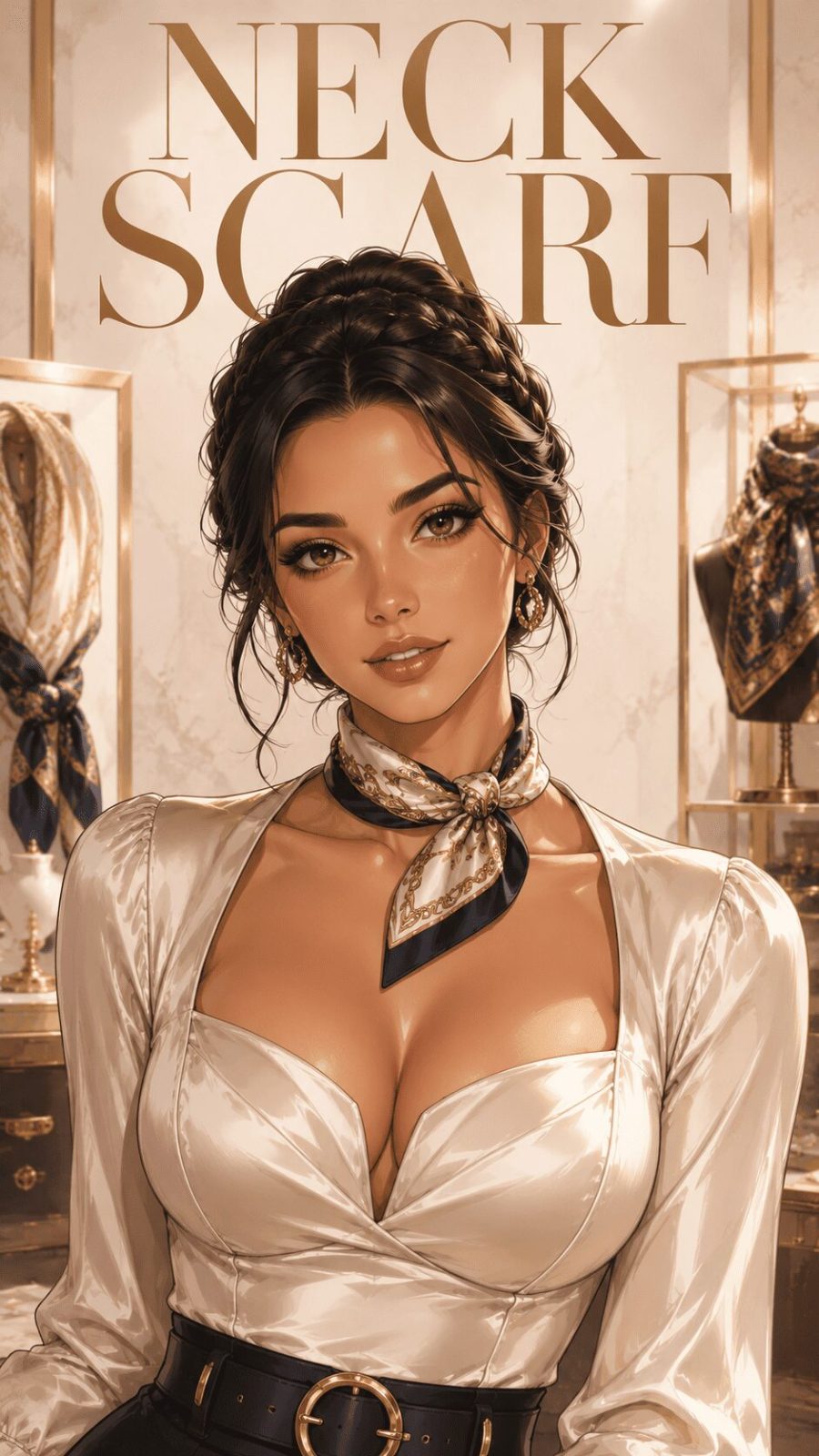
Small, typically square, worn specifically at the neck — the neckerchief is the scarf at its most economical and its most elevated simultaneously. At roughly 22 inches square, it has just enough fabric to be tied in a simple knot at the collarbone, folded into a thin band and draped loosely around the throat, or twisted into a narrow ribbon and knotted at the side. The neckerchief was a French working-class garment before it became a symbol of Parisian casual chic — and that transition happened largely through the photographs of Brigitte Bardot in the 1950s, who wore simple cotton neckerchiefs in a way that elevated the practical to the aspirational.
Category 3: By Wear Position (#12–#15)
Where you wear it changes what it is — and what it communicates
- 13
Head Scarf
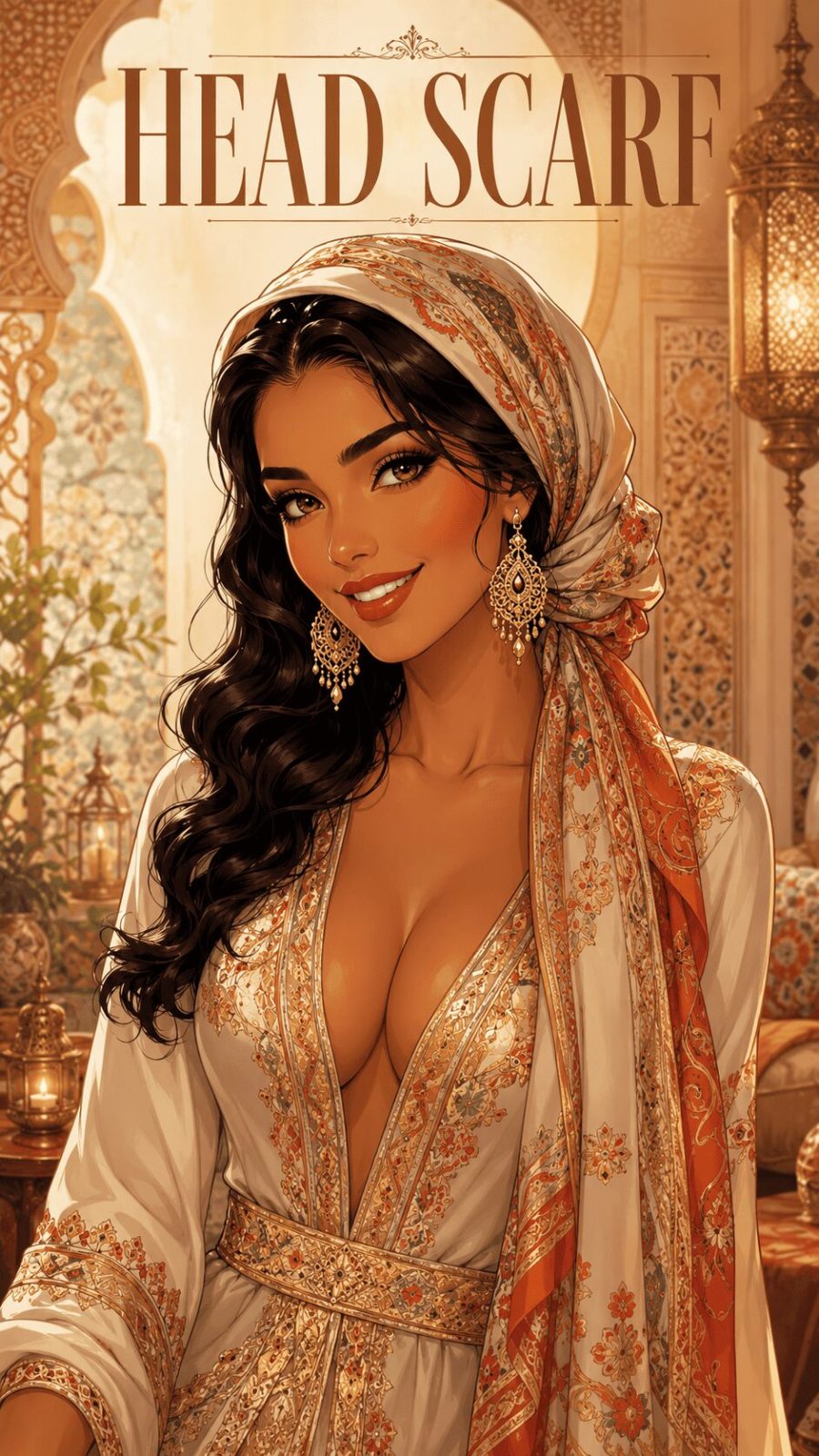
The head scarf exists across virtually every human culture with a textile tradition — from the West African gele to the Eastern European babushka to the postwar European driving scarf — and its styling diversity reflects that breadth. Worn as a triangle knotted under the chin, it protects and frames. Worn as a full turban with the ends tucked, it adds height and structure. Tied at the crown with the ends loose, it floats behind like a ribbon in motion. Draped loosely over the hair and pinned at the side, it reads as effortlessly Mediterranean. No other scarf wearing position has this range of cultural register.
- 14
Shoulder Wrap / Pashmina
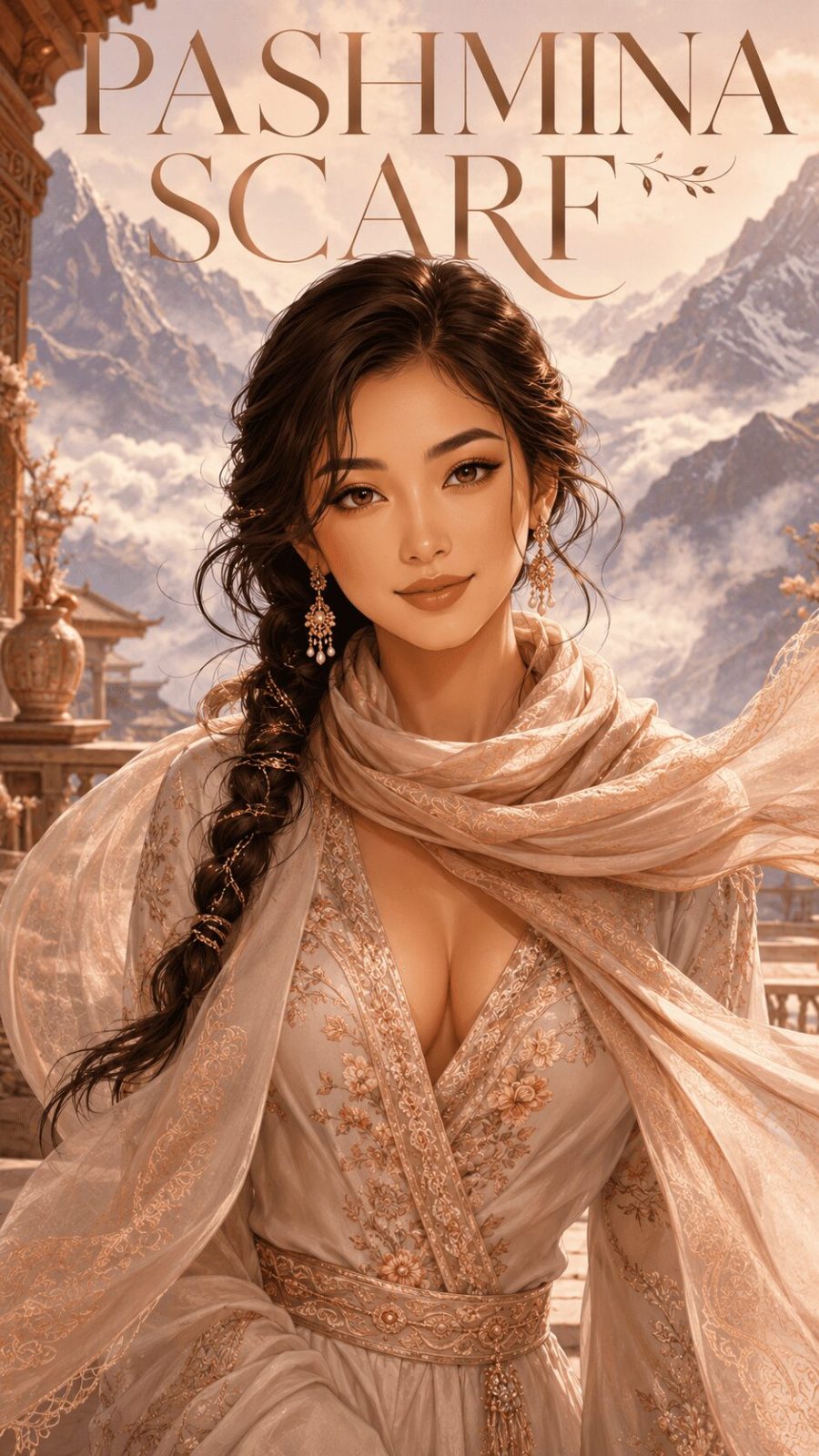
The pashmina — technically a fine-grade cashmere from the Changthangi goat of the Himalayan highlands — is the scarf world's most misused and misrepresented term. Authentic pashmina contains fibres of 12 to 16 microns; most commercial "pashminas" are viscose-wool blends. But the construction concept is sound regardless of fibre: a generous rectangular scarf (typically 80 by 36 inches) worn draped over both shoulders, falling symmetrically to cover the upper arms and chest. As an evening wrap, it replaces the jacket without the formality. Draped loosely across the collarbone and gathered at the front, it reads as effortlessly put-together over almost any outfit.
- 15
Bag Scarf
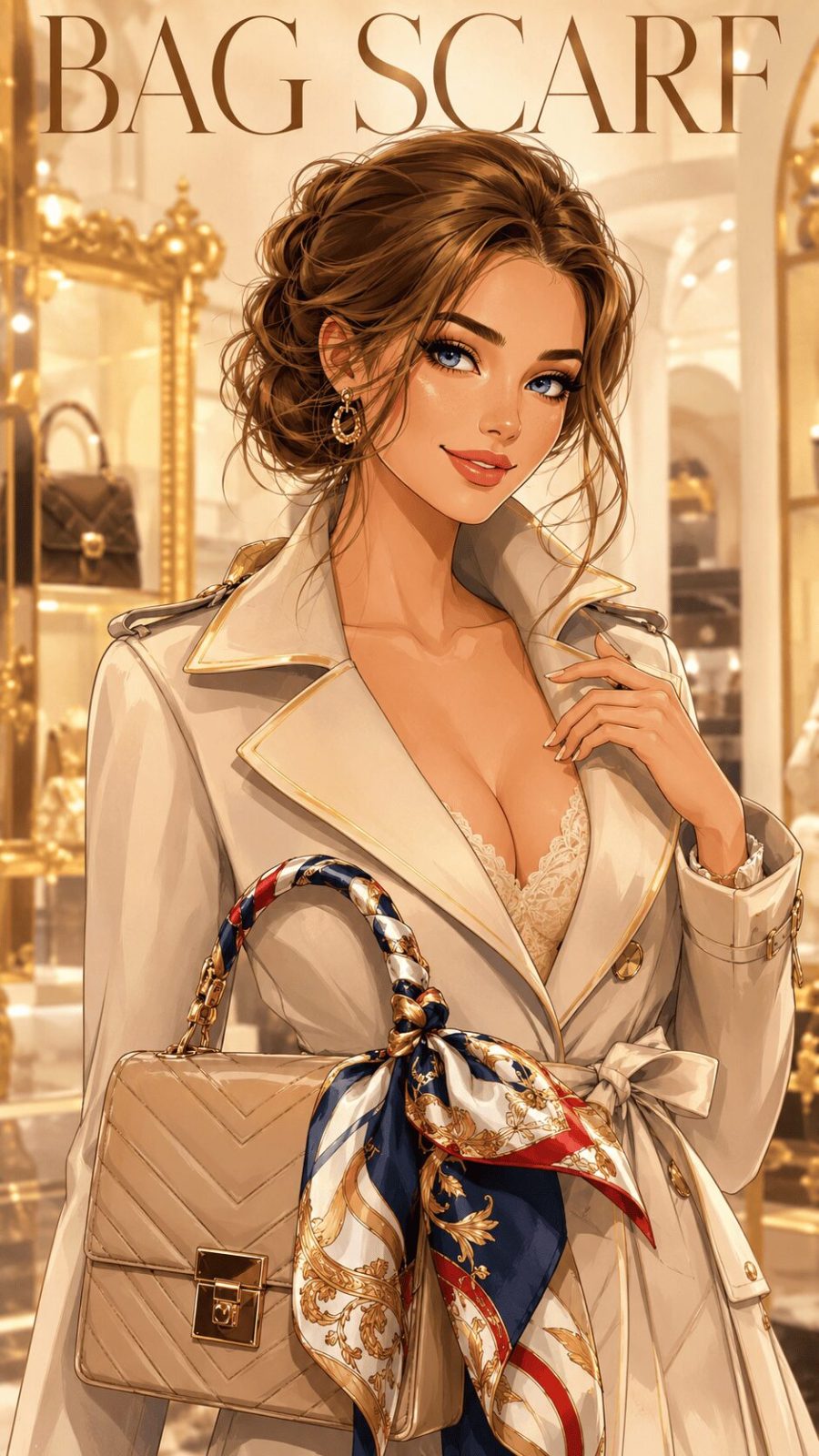
A scarf worn not on the body but on the bag — tied around the handle, looped through a ring closure, or threaded through straps — is one of the most underrated styling moves in contemporary accessories. The bag scarf extends the life of both the scarf and the bag: a dated neutral tote becomes current with a vivid printed silk tied at the handle; a simple leather bag becomes occasion-ready when draped with something delicate. The key detail most guides miss is that the bag scarf reads completely differently depending on the knot — a simple loop is casual, a bow at the side is polished, and a tucked half-knot with trailing tails is editorial.
- 16
Blanket Scarf
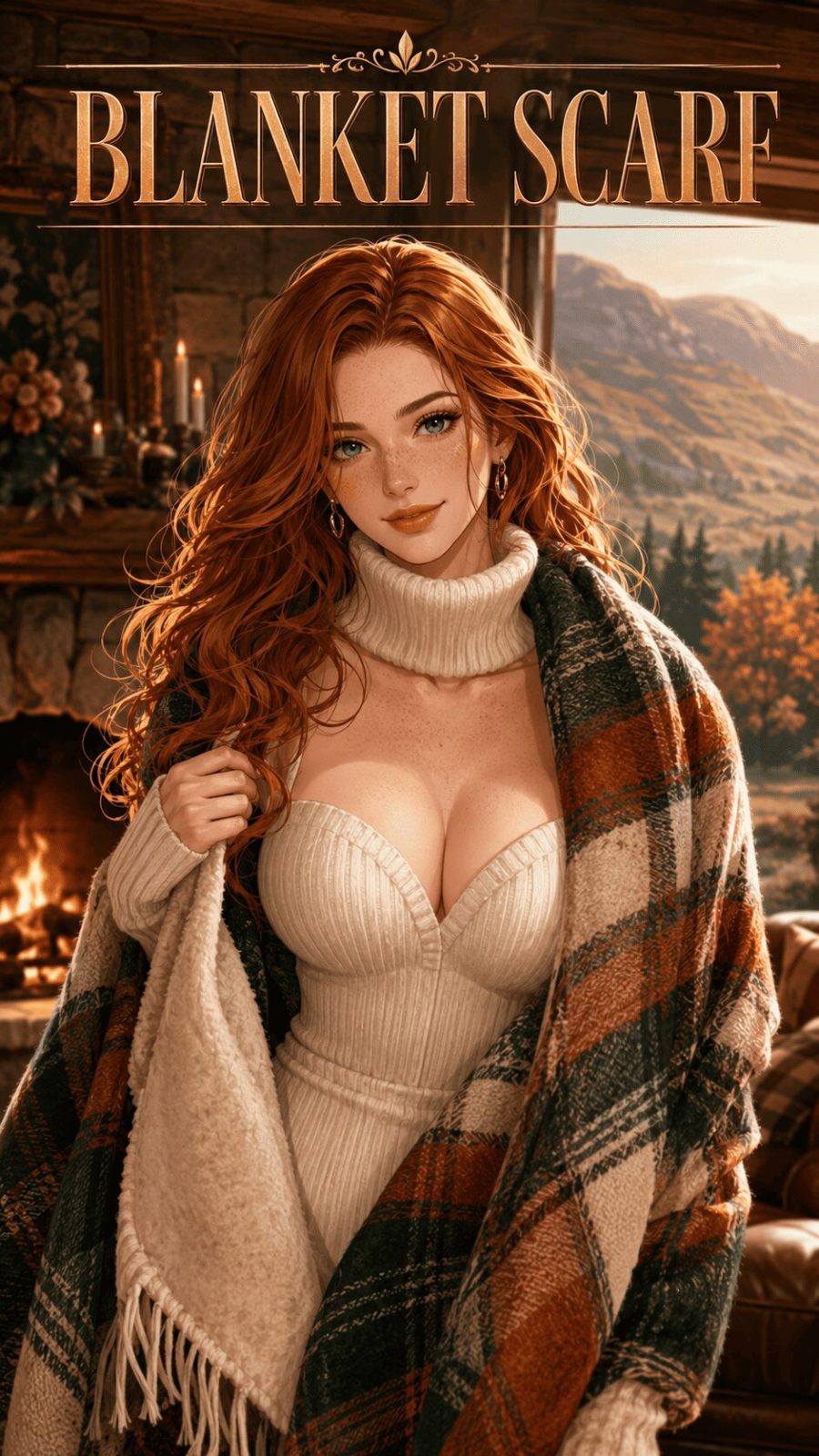
The blanket scarf is exactly what it sounds like — a scarf so generously proportioned it could credibly serve as a small throw. Typically 60 by 60 inches or larger, often in plaid, tartan, or oversized check, it's the scarf category that rewards commitment to proportion. Worn draped fully over the shoulders, it creates a cape-like silhouette. Folded in half and looped at the neck, it creates substantial neck warmth without losing the visual drama of the scale. The blanket scarf is a strong example of a piece where styling restraint — with the scarf being the statement — pays off more consistently than trying to compete with it.
Category 4: By Warmth / Function (#17–#20)
From sun protection to maximum insulation — the functional spectrum of scarf design
- 17
Chunky Knit Scarf
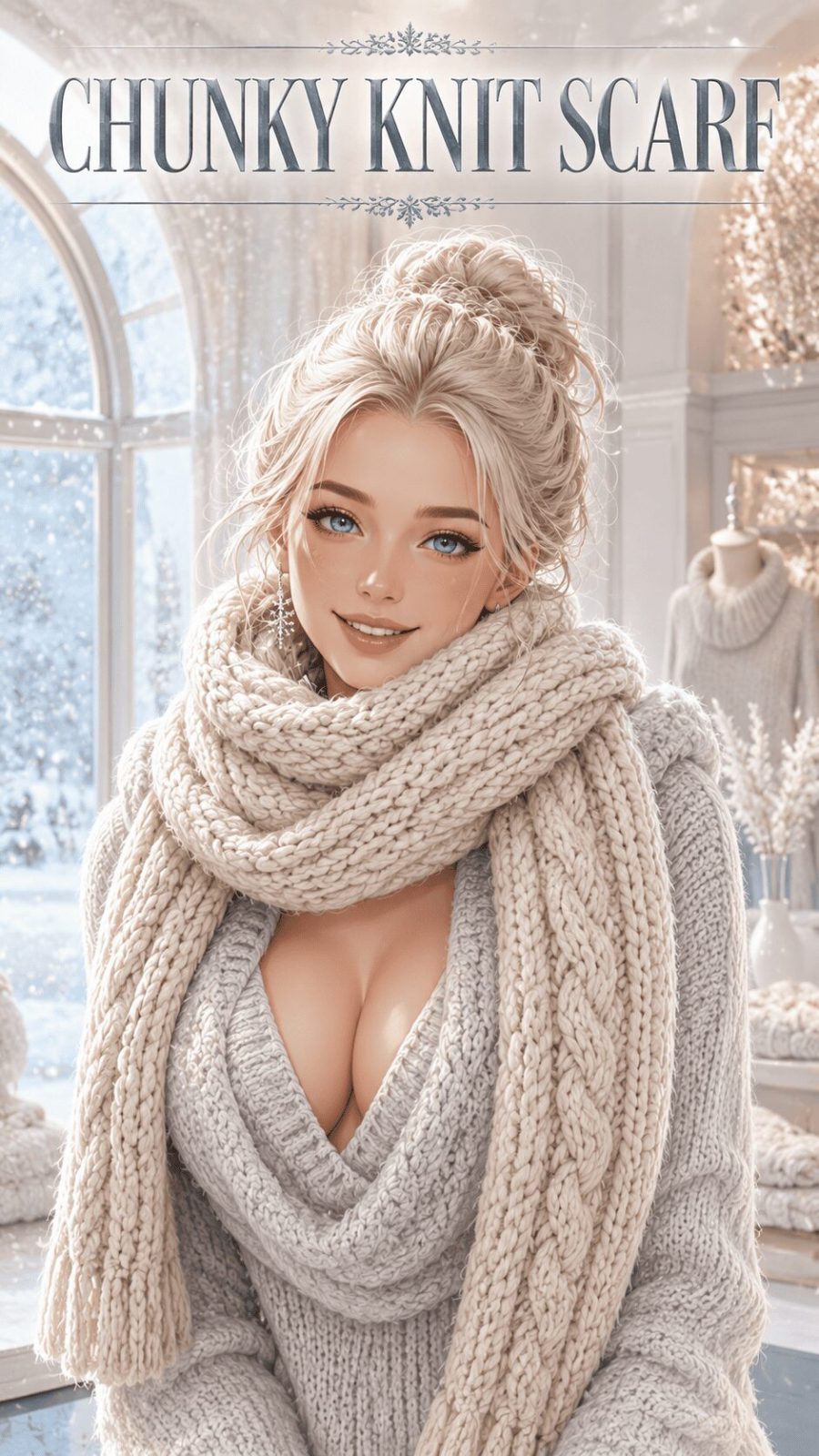
The chunky knit scarf — worked on large needles with bulky or super-bulky yarn — is winter dressing at its most unapologetic. The visible stitch structure (cable knit, ribbed, seed stitch, moss stitch) becomes the design itself; there's no print to hide behind, no fineness to admire from a distance. What you see is craft made visible. According to research published by the Refinery29 fashion team in 2024, handmade and craft-adjacent knitwear reached its highest consumer desirability index in a decade during the 2023–2024 cycle, driven partly by renewed interest in visible craft and tactile authenticity in fashion.
- 18
Lightweight / Summer Scarf
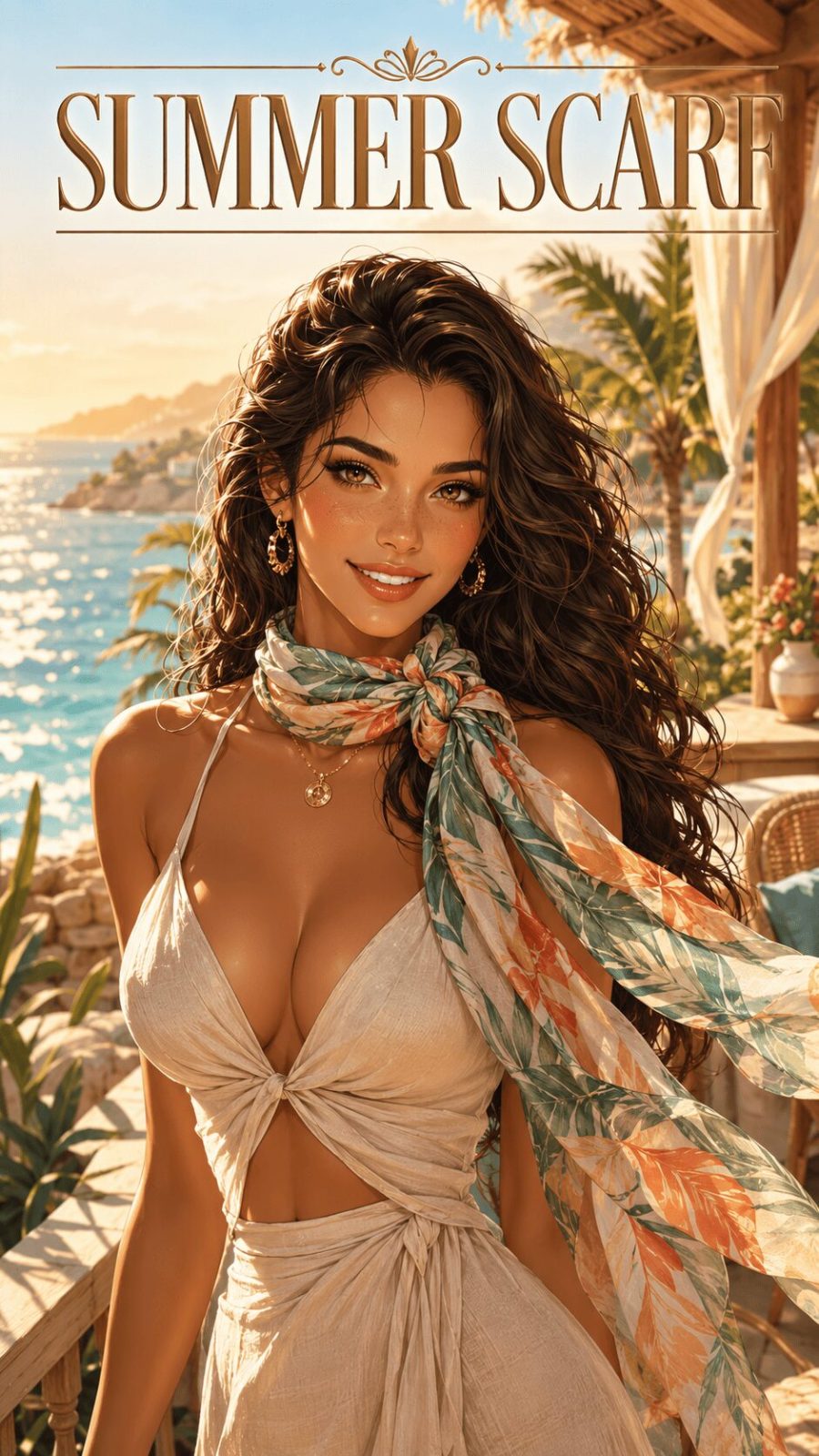
The lightweight summer scarf defies the assumption that scarves are cold-weather accessories — and it does so by serving entirely different functions than its winter counterparts. In summer, a scarf protects from sun, manages air-conditioned environments, and adds a styling layer without thermal consequence. Linen, gauze cotton, open-weave viscose, and fine silk are the appropriate fabrics: all breathable, all light enough that they don't register as warmth at all. A linen scarf worn loosely around the neck in July actually helps regulate body temperature by creating a buffer zone between skin and external air movement — a detail worth knowing.
- 19
Balaclava-Style Scarf
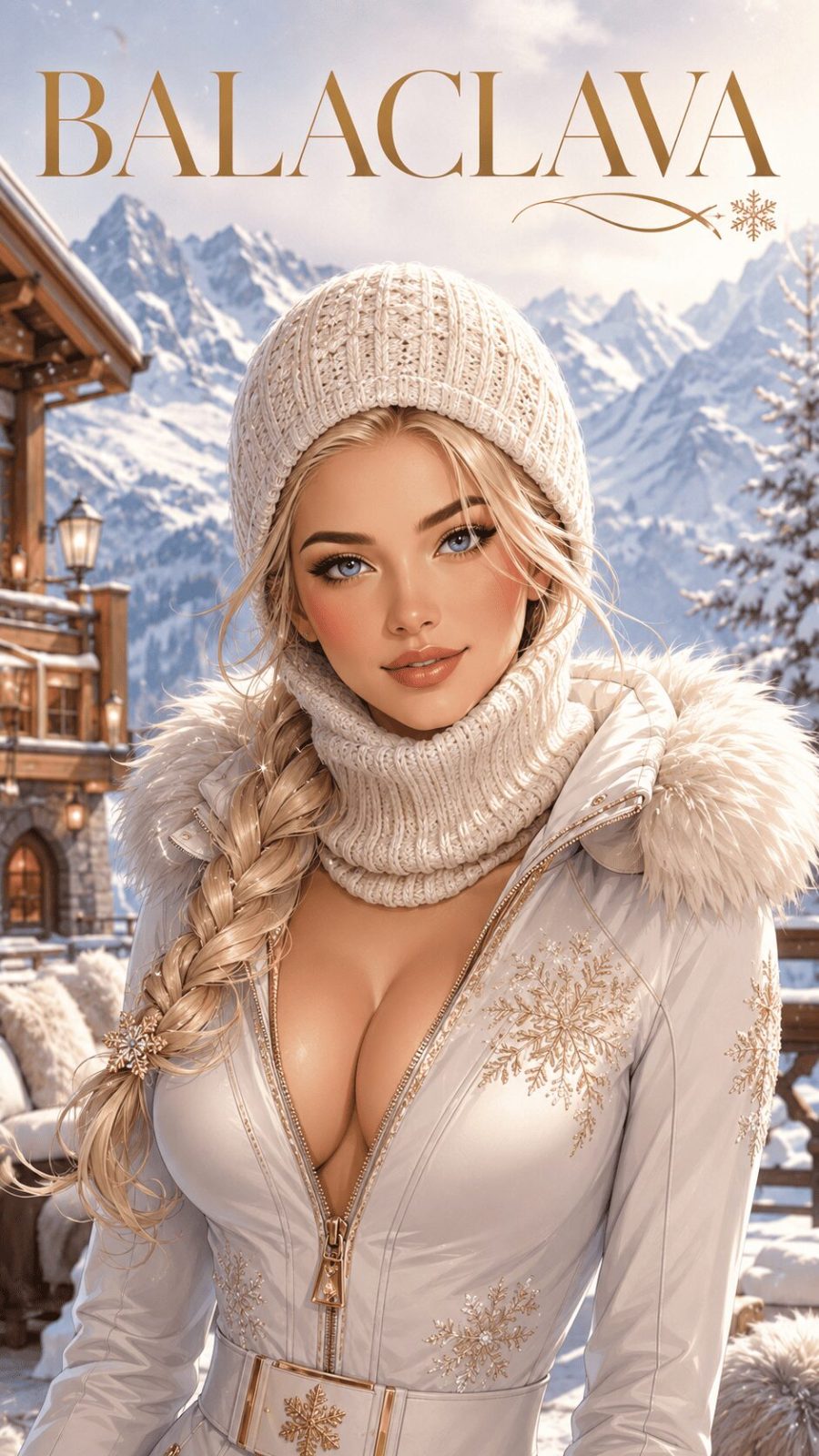
The balaclava-style scarf — which covers the neck, lower face, and sometimes the head in a single continuous piece — entered mainstream fashion vocabulary through a series of runway moments (notably Balenciaga's winter collections of the early 2020s) that borrowed from extreme sportswear and military protection. Worn lower, as a pure neck tube, it functions identically to a snood. Pulled up over the chin and nose, it provides protection in genuinely extreme cold that no conventional scarf can match. The construction is simple but the styling register is specific: it reads either athletic or editorial, rarely in between.
- 20
Printed / Designer Scarf
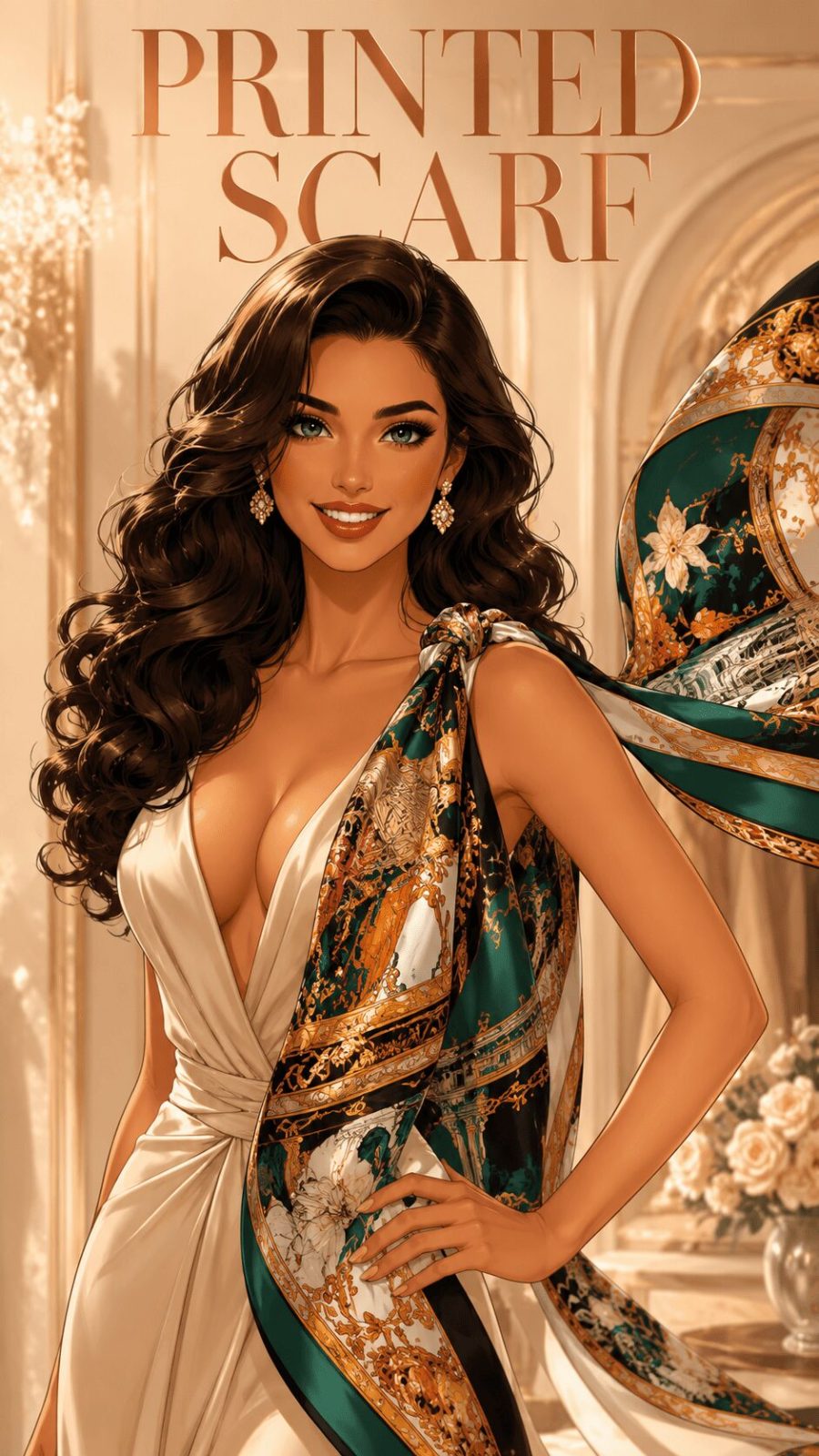
The printed scarf is not a category defined by shape or fabric so much as by surface design — and surface design is where scarf culture reaches its highest point of artistry. The Hermès carré design process, for instance, involves up to 27 separate screens to achieve the colour depth of a finished print; each carré takes up to 18 months from concept to production. Beyond the luxury tier, the printed scarf encompasses everything from vintage 1970s graphic prints to contemporary digital textile design. What makes print selection in scarves different from other garment categories is that the print is almost always seen in motion — and a print that looks static on a hanger comes alive when the fabric moves.
Category 5: By Style / Occasion (#21+)
Context is everything — the scarf types defined by where and why they're worn
- 21
Bandana Scarf
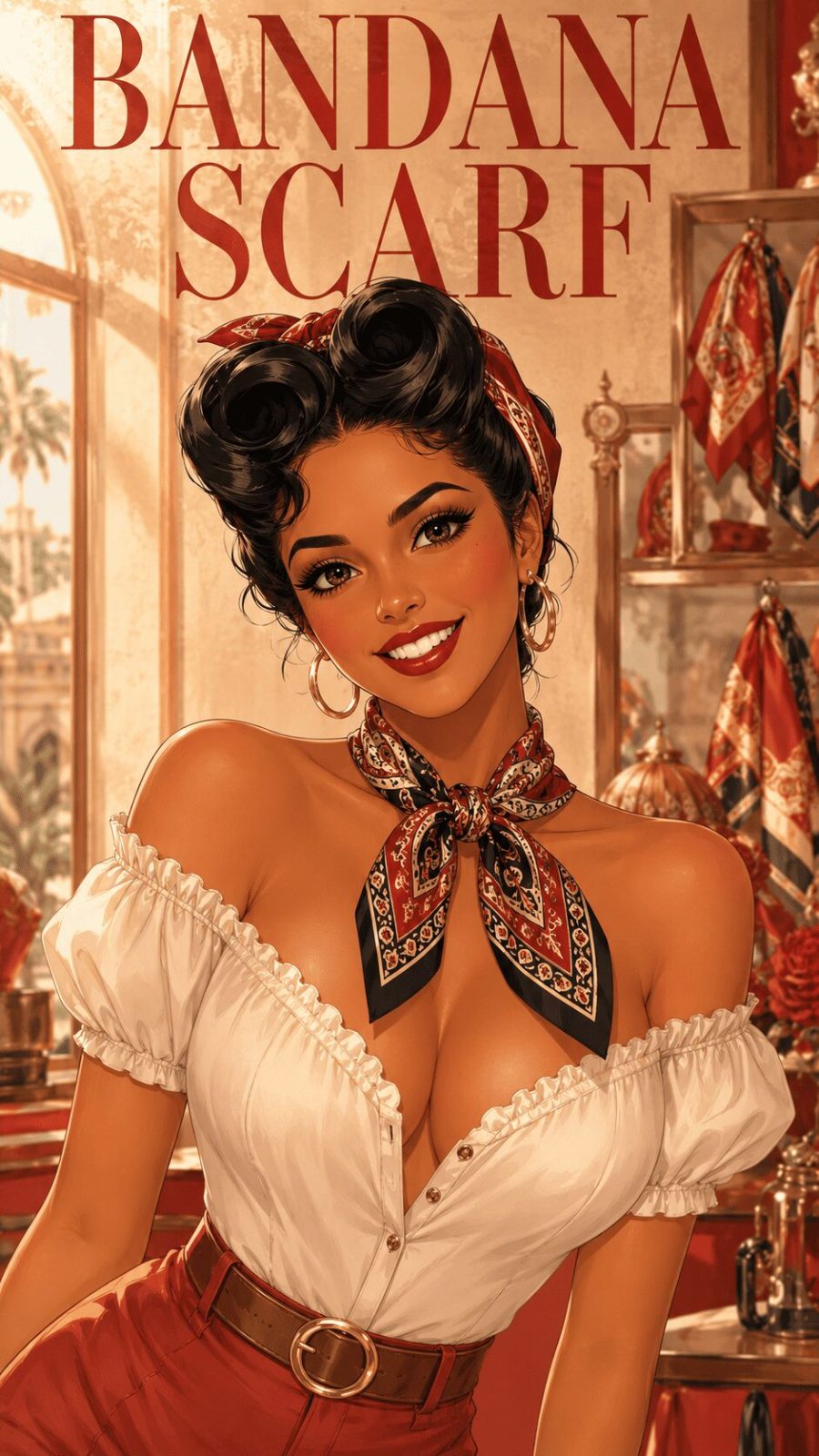
The bandana is arguably fashion's most democratic garment — a small square (typically 22 by 22 inches) of cotton or cotton-blend fabric with a printed paisley, geometric, or graphic pattern that crosses every subculture boundary. Working-class American origins (it was carried by cowboys and railroad workers as a practical dust filter in the 1800s) meet mid-century rockabilly styling meet 1990s hip-hop appropriation meet contemporary high fashion's recurring obsession with utilitarian textiles elevated into accessories. Today, the bandana scarf is worn at the neck, head, wrist, in the hair, on bags, and around belt loops — often simultaneously, in street styling contexts.
- 22
Embellished / Evening Scarf
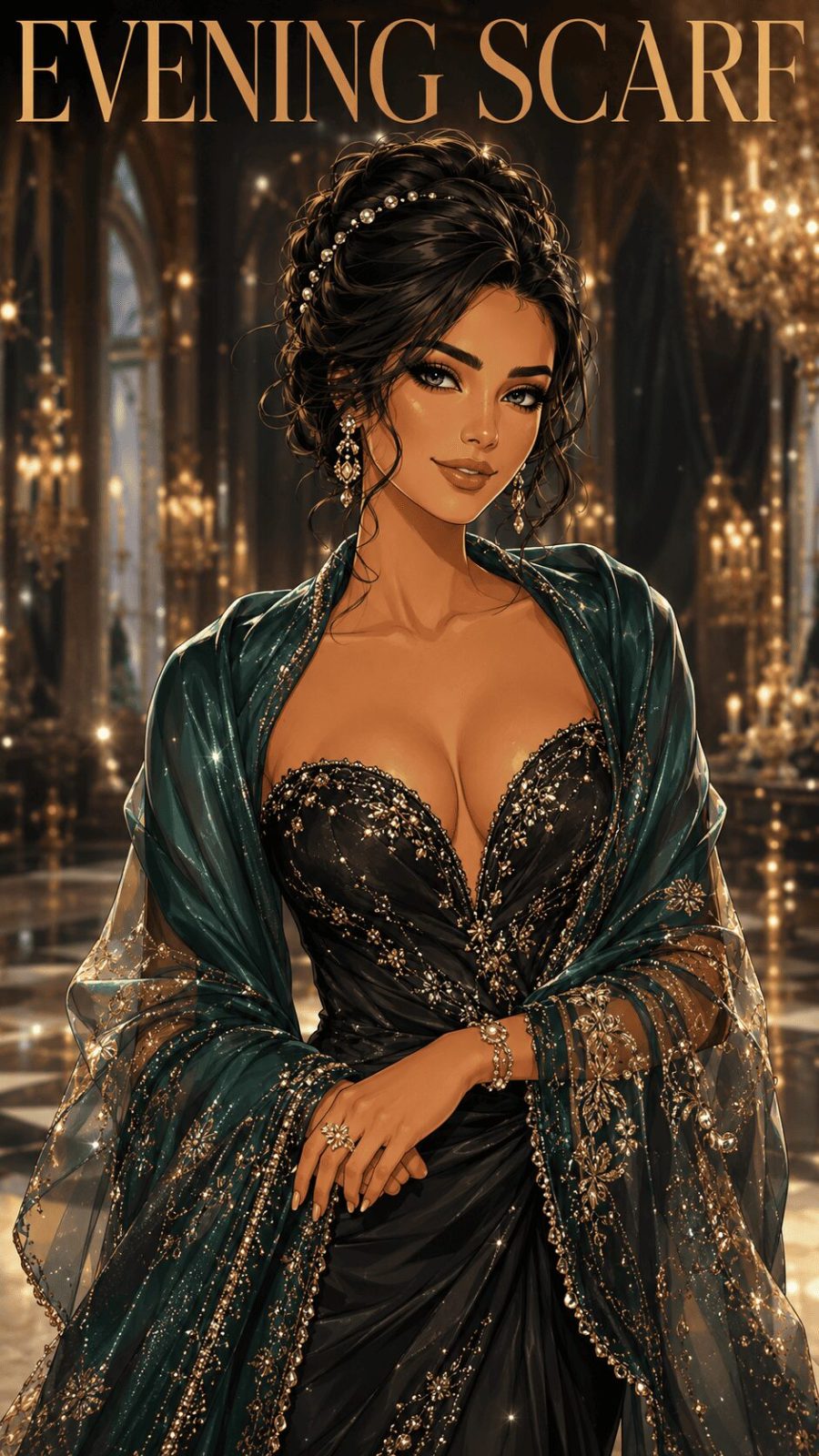
The embellished scarf sits at the most elevated end of the category — sequined, beaded, or edged with metallic thread, worn draped at formal events, black-tie dinners, or occasion evenings where a jacket would be too heavy and a bare neckline too simple. The sequined evening scarf, in particular, operates as wearable lighting — creating movement-triggered shimmer that reads as glamour without the self-consciousness of a heavily embellished dress. Draped loosely over the shoulders, it adds occasion formality to even a simple silk slip. The construction matters more here than in other categories: loose sequins that shed onto partners or furnishings are a design failure, not a minor detail.
Most scarf styling mistakes happen not from wearing the wrong type — but from ignoring weight. A heavy wool scarf knotted at the collarbone of a lightweight linen dress doesn't just look wrong; it physically distorts the neckline. The rule that actually works in practice: match the weight of your scarf to the weight of your garment. Floaty dress? Chiffon or silk scarf only. Structured coat? The chunky knit earns its place. Construction harmony is the detail that separates effortless styling from its almost-convincing imitation.
Scarf Styling: Comparison Tables & Quick References
Scarf Type vs. Best Occasion
| Scarf Type | Casual | Office | Evening | Travel |
|---|---|---|---|---|
| Silk Square | ✓ | ✓✓ | ✓✓ | ✓✓ |
| Cashmere Oblong | ✓ | ✓✓ | ✓ | ✓✓ |
| Chunky Knit | ✓✓ | — | — | ✓ |
| Chiffon | ✓ | ✓ | ✓✓ | ✓ |
| Blanket Scarf | ✓✓ | — | — | ✓ |
| Bandana | ✓✓ | — | — | ✓✓ |
| Embellished | — | — | ✓✓ | — |
| Neckerchief | ✓✓ | ✓ | ✓ | ✓✓ |
✓✓ = Ideal | ✓ = Works | — = Not recommended
Fabric Guide: Season vs. Care vs. Drape
| Fabric | Best Season | Drape Quality | Care |
|---|---|---|---|
| Silk | Spring / Summer | Excellent — liquid flow | Hand wash / dry clean |
| Cashmere | Autumn / Winter | Very good — soft drape | Hand wash cold, flat dry |
| Wool | Autumn / Winter | Good — structured drape | Hand wash / dry clean |
| Cotton | All seasons | Moderate — holds shape | Machine washable |
| Chiffon | Spring / Summer | Outstanding — floats | Hand wash / dry clean |
| Linen | Summer | Good — relaxed | Machine washable |
| Modal | Spring / Summer | Excellent — silky | Machine washable gentle |
Price Guide: What to Expect at Every Budget
| Budget Tier | Price Range | What You Get | Best Choice |
|---|---|---|---|
| Entry-level | $10–$30 | Cotton, acrylic, polyester blends | Cotton bandana, infinity scarf |
| Mid-range | $30–$120 | Wool, wool blends, quality viscose | Wool oblong, modal wrap |
| Upper mid | $120–$350 | Merino, silk, cashmere blends | Silk square, merino scarf |
| Investment | $350–$1000+ | Pure cashmere, pure silk, designer | Cashmere oblong, designer carré |
Scarf Myth vs. Reality
"Scarves are only for winter."
Summer scarves in silk, chiffon, cotton, and linen serve as sun protection, AC buffers, styling anchors, and travel companions. The scarf's seasonality is entirely determined by fabric weight — not the category itself.
"A cheap scarf looks just as good as an expensive one."
Fabric quality is directly visible in the drape. Polyester has a sheen that silk does not — and the difference is legible from six feet away. That said, a well-chosen mid-range merino or cotton scarf outperforms a poorly chosen investment piece every time.
"You need to know complicated knots to style a scarf well."
The single most elegant scarf moves are also the simplest: a loose loop at the neck, a square folded diagonally and draped across the collarbone, a long scarf tied once and left to fall. Complexity in knotting often reduces elegance rather than adding it.
Frequently Asked Questions: Types of Scarves for Women
Frequently Asked Questions About Scarves
What is the most versatile type of scarf for women?
The oblong scarf in a medium-weight fabric — wool or cashmere for cooler months, modal or fine cotton for warmer ones — is the single most versatile scarf shape. Its proportions allow it to be looped, knotted, draped, folded into a wide band, or worn as a loose neck wrap. In a neutral colour, it layers under coats, over blazers, with casual outfits, and in smart-casual contexts. The oblong's dimensional flexibility is unmatched by any other scarf shape in the category.
What is the difference between a pashmina and a regular scarf?
A genuine pashmina is made from the fine under-fibre of the Changthangi goat, producing fibres of 12–16 microns — substantially finer than standard cashmere (14–19 microns) and dramatically finer than merino wool (15–24 microns). In practical terms, a true pashmina is noticeably lighter and softer than any cashmere scarf you've previously handled. Most commercially sold "pashminas" are viscose-wool blends, which are considerably heavier and have a different drape. A genuine pashmina should feel almost weightless in the hand and should hold shape without bulk when draped.
How do I wear a square scarf around my neck?
The most reliable square scarf neck knots are: (1) Fold the square diagonally into a triangle, drape the triangle at the front of the neck with the point falling forward, and tie the two ends loosely at the nape — this creates a classic bib effect. (2) Fold the square into a narrow band by bringing opposite corners to the centre repeatedly, then loop it around the neck and tie once at the front — this creates a neckerchief effect. (3) Simply drape the folded triangle across the collarbone without tying and secure with a brooch or pin — this is the most polished and slightly unexpected option.
What type of scarf is best for winter warmth?
For maximum warmth in cold winter conditions, a chunky knit or heavy wool scarf in a wool-blend or cashmere fabric provides the best insulation. The snood and balaclava-style scarf both eliminate the gap between scarf and coat that allows heat to escape — which is where conventional scarves lose most of their warmth. A blanket scarf in heavy wool tartan draped over the shoulders and tucked into a coat acts as an additional insulating layer across the chest and shoulders. For truly extreme cold, the balaclava variant is the most effective construction available in the scarf category.
What is the difference between a scarf and a shawl?
The distinction is primarily dimensional and functional. A scarf is typically narrower (under 20 inches wide) and worn primarily at the neck, head, or as a body accent. A shawl is wider (usually 24–36 inches) and designed to drape across the shoulders, covering the upper body more substantially. The category overlap exists in the wrap scarf and pashmina format — both large enough to function as shawls but typically marketed as scarves. In general fashion usage, if it covers the full shoulder span comfortably, it's functioning as a shawl regardless of its label.
Can you wear a scarf in summer without looking overdressed?
Yes — provided the fabric weight matches the season. A lightweight silk neckerchief, cotton bandana, or chiffon square worn loosely at the neck of a summer dress or over a swimsuit reads as deliberately styled, not overdressed. The key is looseness: summer scarf styling works when the fabric has room to move. Tight or layered winter-style knotting in a summer context does read as excessive — but the solution is the knot, not the decision to wear a scarf at all.
How do I identify a genuine silk scarf?
The burn test is the most reliable method for home identification: genuine silk burns slowly when exposed to a flame, produces a smell similar to singed hair, and leaves a crushable ash. Synthetic fabrics (polyester, nylon) melt rather than burn, produce black smoke, and leave hard beads of plastic. In retail settings, hand-rolled edges — where you can feel a slight ridge from the hand-stitching — are a strong indicator of quality silk. Machine-stitched edges are flat and uniform. The price point is also a reliable signal: authentic silk at any reasonable quality level costs significantly more than polyester alternatives.
What is the best scarf type for office or professional settings?
In professional environments, the silk square scarf worn at the neck of a blazer or tucked at the collar of a shirt registers as polished without requiring any change to the main outfit. A cashmere oblong draped loosely at the collarbone also reads as considered and sophisticated. The key in office scarf styling is restraint with print scale (smaller prints are more professional than large graphic patterns) and restraint with the knot (simple over elaborate). A lightweight chiffon scarf in a muted print can work beautifully in creative professional environments where slightly more expression is appropriate.
- Shape determines versatility — before considering colour or print, the geometry of your scarf decides how many ways it can be worn. The oblong and the square are the two highest-versatility shapes for most wardrobes.
- Fabric weight is the most underused styling decision — matching scarf weight to garment weight is the difference between a polished result and a mismatched one. It's rarely discussed; it's always visible.
- Silk scarves belong in every serious wardrobe — and their resale and longevity value consistently justifies investment at the upper tier, a pattern well documented in the most recently published Business of Fashion accessory research.
- Scarves are not seasonal accessories — the assumption that scarves are cold-weather only costs wearers the full potential of the category. A lightweight cotton or silk scarf adds intentionality to summer dressing that no other accessory quite replicates.
- The simplest knots outperform the complex ones — in years of working with clients, this is the styling truth that surprises people most. A loose single loop or a simple drape almost always looks more confident than an elaborate tied arrangement.
- The printed scarf is fashion's longest-standing art object — and buying prints you genuinely love rather than what's currently trending produces results that outlast seasonality by years or decades.
Sources & Further Reading
- Hermès — The history and craftsmanship of the silk carré scarf
- Vogue — How to wear a scarf: styling methods and contemporary fashion context
- Business of Fashion — Silk accessory market resilience and luxury resale dynamics, 2024
- Refinery29 — Knitwear desirability trend analysis, 2024
Leave a Reply