
There’s something specific that happens when petite women find clothing that was actually made for their proportions — not just scaled down from a standard size, but engineered from the ground up for a shorter frame. It feels different. It moves differently. The hemlines land where they’re supposed to. The waistlines sit where they should. That sensation, when it clicks, is the whole point of petite sizing.
Petite clothing isn’t a limitation. It’s a precision category — and understanding it transforms how you shop, style, and build a wardrobe that actually works.
Petite sizing — generally defined as garments designed for women 5’4″ (163 cm) and under — has a surprisingly nuanced history. As modern ready-to-wear fashion expanded in the mid-20th century, standardized sizing created a systemic problem: proportions across garments were based on a single idealized height that left shorter women wearing pieces that never quite fit. Inseams were too long. Blouse torsos were too deep. Jacket shoulders slipped. The petite category emerged as a genuine response to this construction gap — not a fashion trend, but a structural solution.
This guide covers 45+ types of petite clothing across 7 classification systems. For every single entry:
-
Design
What it looks like
-
Season
When to wear it
-
Best For
Who it works for
Start here, explore everything, and pair this guide with our complete reference on women’s tops and our full visual dress directory.
All 7 Categories at a Glance
A structured breakdown of the 45+ petite clothing types documented in this guide.
- 01
Petite Tops & Blouses
- 02
Petite Dresses
- 03
Petite Bottoms
- 04
Petite Outerwear & Blazers
- 05
Petite Knitwear & Layering
- 06
Petite Occasionwear
- 07
Petite Co-ords, Jumpsuits & Sets
45+ Different Types of Petite Clothing for Women
Category 1: Petite Tops & Blouses (#1–#8)
Garments built for shorter torsos, adjusted hem lengths, and proportional sleeve construction
Tops are where petite fit challenges show up most visibly — and most frustratingly. A standard hip-length blouse hits mid-thigh on a 5'2" frame. A shirt designed for a 5'8" torso sits loose and overwhelming at the shoulders. What differentiates a genuine petite top from a shrunken standard is construction logic: the seam placement, the armhole depth, the sleeve length, and the hem are all adjusted — not just the overall measurement. That's what makes the difference between a garment that "works" and one that transforms.
What works beautifully about the petite tops category is that it doesn't ask you to alter every single purchase — it builds the alteration into the garment from the start. For more on how petite tops fit into a broader styling system, our guide to all blouse types and styles provides the full structural context.
- 01
Petite Fitted Blouse

A tailored blouse cut specifically for a shorter torso — reduced body length, raised side seams, and narrower armhole depth. The fitted silhouette through the bust and waist means it reads polished even when untucked, because the hem actually falls at the hip rather than sliding past it.
- 02
Petite Wrap Top
Crossover front panels that tie at the waist — the same construction used in DVF's iconic 1970s wrap dress, applied to a standalone top. In petite sizing, the wrap panels are shortened so they cross at the actual waist rather than drifting toward the hip, which is what typically happens on a standard-size wrap top worn on a shorter frame.


- 03
Petite Crop Top
A top designed to hit above the natural waist — but in petite sizing, the crop lands with intention. Standard crop tops frequently fall at the true waist on shorter women, accidentally creating a regular-length top. Petite crop tops are engineered to clear the waist entirely and create the exposed midriff or high-waist tuck effect the style intends. Our dedicated guide to crop top varieties and styling covers the full range.
- 04
Petite Tank Top
Sleeveless, wide-strap top in petite sizing — meaning the armhole is raised and the body length shortened so it sits at the hip rather than falling toward the mid-thigh. A petite tank is also the single most useful layering piece in a smaller wardrobe. See our breakdown of all tank top constructions for the full spectrum.


- 05
Petite Camisole
Spaghetti-strap, silky or ribbed lightweight top designed to skim a shorter torso correctly. In standard sizing, a camisole on a petite frame often bunches at the waist or creates excess length that disrupts layering. The petite construction tightens the spaghetti strap adjustment range and shortens the body so the hem sits cleanly at the hip. Explore all camisole types and layering strategies.
- 06
Petite Peplum Top
Fitted bodice with a short, flared extension at the waistline — and this silhouette is genuinely one of the most effective constructions for petite frames. The peplum defines the waist without volume below it, creates the impression of a longer torso, and provides the visual division between upper and lower body that styling theory associates with elongation. For the full range of peplum styling approaches, our dedicated peplum top guide covers every variation.


- 07
Petite Tunic Top
A loose, hip-covering top that reaches mid-thigh — except in petite sizing, the mid-thigh measurement is adjusted downward so it genuinely reads as tunic-length rather than a short dress. This is the piece that confounds petite shoppers most frequently: a standard tunic bought in a size XS still runs long on a 5'2" frame. The petite cut shifts the hem to sit correctly, makes the style work with slim pants or leggings as intended. Full guide on tunic types and proportioning.
- 08
Petite Bodysuit


Snap-crotch top that creates a permanently tucked-in silhouette — and arguably this is the single most useful garment construction for petite women. No untucking, no shifting, no bunching. The petite version shortens the torso length and adjusts the crotch depth so the snaps land correctly without pulling or creating excess fabric. It's not just convenient. It's deliberately engineered to eliminate one of the most common petite fit frustrations entirely.

The most common mistake petite shoppers make with tops? Buying the right size but wrong construction. A size XS blouse designed for a 5'8" standard frame still has too much torso length, too-deep an armhole, and a sleeve that runs over the wrist. The number on the label matters far less than whether the garment was actually drafted for your frame's proportions. Always check the petite size chart — not just the general one.
- 8 types defined by petite-specific construction logic, not just smaller sizing
- The petite bodysuit and wrap top are the highest cross-occasion versatility pieces in this category
- Key variables: torso length, armhole depth, sleeve length — all adjusted in true petite garments
- Peplum construction tends to work particularly well for petite frames — it creates waist definition without lower body volume
Category 2: Petite Dresses (#9–#16)
Hemlines that land correctly — the vertical proportion challenge that petite sizing solves most directly
Dresses are where petite sizing has the most dramatic visual impact. The hemline is the thing. A midi dress that falls gracefully at mid-calf on a 5'7" model hits the ankle on a 5'2" frame — turning a midi into a maxi, or a maxi into something you genuinely can't walk in without hemming. Petite dresses solve this by adjusting the total length and, crucially, adjusting where the waistline seam is placed within the garment — so the bodice fits the shorter torso and the skirt starts in the right place.
- 09
Petite Mini Dress

A dress ending well above the knee — and in petite sizing, this is often the category with the least construction intervention needed, since shorter overall length still reads as mini. The more meaningful adjustment is the bodice: the shoulder seams, waist position, and neckline depth all require recalibrating for a shorter frame. Our full guide to mini dress styles and silhouettes covers every variant.
- 10
Petite Midi Dress

Falls between the knee and ankle — ideally mid-calf. This is the petite dress category that requires the most precise construction adjustment. The mid-calf point varies enormously between a 5'8" and 5'2" frame. Petite midis are cut to land at true mid-calf on shorter leg proportions, which means the overall dress is significantly shorter than its standard-size counterpart while still reading as a midi. Our complete midi dress guide goes deeper on every silhouette.
- 11
Petite Maxi Dress

Ankle-length or floor-grazing dress designed to reach the floor correctly on a shorter frame — not pool or drag. This is the most technically demanding petite dress construction. The hem must be calibrated to a specific height range, the bodice adjusted for a shorter torso, and the waistline seam raised so the proportions of the silhouette read correctly. In real-world styling, a well-fitted petite maxi creates extraordinary elongation — a vertical line from neckline to floor with no visible break. For more, see our complete maxi dress reference.
- 12
Petite Wrap Dress

Crossover front panels fastening at the waist, then flowing into a skirt — the silhouette that DVF made iconic, adapted for petite proportions. The wrap's self-tie means fit is adjustable to some degree, but the key petite modification is the bodice depth: panels shortened so the V neckline sits correctly at the chest rather than drifting too low, and the tie fastens at the actual waist rather than below it. See our wrap dress styling guide for the full spectrum.
- 13
Petite Shirt Dress

Shirt-construction top joined to a skirt — button placket, collar, often with a belted waist. In petite form, the collar falls closer to the throat proportionally, the button spacing is adjusted, and the skirt length corrected. The shirt dress is an excellent petite option because the collar and structured bodice create vertical emphasis that draws the eye upward. See our shirt dress types and styling guide.
- 14
Petite A-Line Dress

Fitted bodice flaring gently into a wider skirt — the classic A-line construction. Among the most flattering silhouettes available in petite sizing because the flare happens gradually below a defined waist, creating the impression of length without overwhelming a shorter frame with volume. The hem sits at the knee or just above — intentionally, not by accident. Full guide on A-line dress constructions.
- 15
Petite Bodycon Dress

Stretchy, body-hugging dress that follows curves closely from shoulder to hem. In petite sizing, the key adjustment is length — standard bodycon dresses sit at the mid-thigh on a 5'7" model, which can read as vertiginously short on a 5'2" frame. Petite bodycon dresses are calibrated to land at the intended point — typically just above the knee to mid-thigh — keeping the silhouette intentional rather than accidental. Full breakdown at our bodycon dress guide.
- 16
Petite Slip Dress

Spaghetti-strap, bias-cut or straight-cut slip in silky fabric — lingerie-inspired outerwear that has been a recurring fashion staple since the 1990s. The petite slip addresses one specific challenge: on a shorter frame, the bias drape of a standard slip can gather or distort at the hip rather than flowing cleanly. Petite construction adjusts strap length, body height, and drape point. For context on all slip variations, see our slip dress style guide.
Dress hem photography is almost always shot on models 5'9" to 5'11". A midi that reads as mid-calf in a product photo may hit your ankle. Always check the specific listed garment length measurement in centimetres against your own floor-to-desired-hem measurement. A 110 cm dress length on a 5'2" frame will likely behave as a maxi. The size label tells you almost nothing about hem placement — the actual measurement does.
Category 3: Petite Bottoms (#17–#24)
Inseams, rise points, and leg openings — where petite fit differences are most measurable and most felt
Bottoms are where petite sizing is most quantifiably different from standard. Inseam length. Crotch depth. Rise height relative to the actual waist. These are measurable, specific, and — when wrong — visible from across the room. A pair of trousers with a 30" inseam on a 5'2" frame pools at the floor. A high-rise jean with a standard rise sits at mid-waist rather than the true waist. Petite bottoms address each of these variables with precision, not approximation.
Our comprehensive guides on women's trouser types and every type of women's jean provide the structural context for each style referenced below.
- 17
Petite Straight-Leg Jeans

Classic straight silhouette from hip to ankle — the petite version has a shorter inseam (typically 26"–28" versus a standard 30"–32") and a proportionally adjusted rise. The straight leg is arguably the most versatile petite jean: it doesn't add visual width at the hem, creates a clean uninterrupted line from waist to ankle, and works under almost any shoe height. More at our straight-leg pants guide.
- 18
Petite Skinny Jeans

Close-fitting through the thigh, tapering to the ankle — the petite inseam adjusted to land at the ankle correctly rather than below it. Skinny jeans remain one of the most reliably elongating silhouettes for shorter frames because the leg line remains unbroken from hip to ankle. The petite inseam (typically 26"–27") is a real, meaningful distinction from standard — not an aesthetic choice but a structural requirement. Our complete denim fit guide covers every style.
- 19
Petite Wide-Leg Trousers

Dramatic wide opening from hip to ankle — and yes, this works for petite women, despite what common style advice suggests. The catch is proportioning: petite wide-leg trousers use a shorter inseam and a slightly narrower leg opening than standard wide-leg cuts, so the volume reads as intentional rather than overwhelming. Pair with a fitted top and a heel for maximum elongation. Our wide-leg pants guide covers styling at length.
- 20
Petite Cropped Trousers

Trousers ending above the ankle — typically at the mid-calf or ankle on a standard frame. On a petite frame, a standard cropped trouser often lands at the ankle anyway. Petite cropped trousers are designed to end above the ankle on shorter legs, creating visible skin or sock exposure that reads as intentional styling. The exposed ankle makes legs appear longer. It's not magic — it's a simple visual break that works consistently. Full range at our cropped pants reference guide.
- 21
Petite Leggings

Form-fitting, ankle-length stretch leg covering. The petite version adjusts the inseam so the ankle seam lands at the ankle — not mid-calf, not folded under the foot. Sounds minor. In practice, leggings that bunch at the ankle completely change the visual line of the leg. Petite leggings also often have a slightly higher waistband to sit at the true natural waist on a shorter torso. Full guide to legging types and constructions.
- 22
Petite A-Line Skirt

Fitted at the waist and hips, gently widening to the hem. The petite A-line skirt shortens the total length while keeping the waistband height correct — so it sits at the natural waist rather than the hips. On a shorter frame, an A-line that hits the knee creates strong visual proportion. One that falls to mid-calf on a 5'2" frame reads as a midi. Petite construction makes that distinction intentional rather than accidental. See our full skirt style reference.
- 23
Petite Midi Skirt

A skirt reaching mid-calf — the petite version calibrated to land at true mid-calf on a shorter leg measurement. This is perhaps the most searched-for petite bottom because standard midi skirts routinely read as maxi-length on shorter frames. What makes the petite midi work is combining correct length with a waistband positioned at the actual waist — so the visible leg-to-skirt ratio reads proportionally balanced. More on skirt lengths and how they translate across heights.
- 24
Petite Mini Skirt

Short, ending well above the knee — and here the petite-specific construction is more about waistband than length. A standard mini skirt in a small size may still have a waistband that sits below the natural waist on a petite frame, visually shortening the torso and lowering the perceived hip. The petite version raises the waistband placement so it sits correctly, preserving the proportion intended by the silhouette.
In years of wardrobe work with petite clients, the most consistent revelation is this: wide-leg trousers and midi skirts are not off-limits for shorter frames — they just require a specific pairing strategy. A fitted top tucked in, a high heel or block heel, and monochrome or tonal dressing from waist down. Get those three variables right and the "rules" about petite women avoiding floor-length or wide-leg silhouettes simply don't apply. The garment isn't the problem. The proportioning of the full outfit is.
Category 4: Petite Outerwear & Blazers (#25–#30)
Structured layers where shoulder seam placement, sleeve length, and body length determine everything
Outerwear is where petite fit issues become most dramatically visible — and most expensive to get wrong. A blazer with a shoulder seam that falls one inch past the natural shoulder completely changes the silhouette, visual structure, and how the arms fall. A coat that reaches mid-thigh on a 5'9" frame hits below the knee on a 5'2" frame, becoming an entirely different garment. Petite outerwear addresses all of these variables with genuine precision: shoulder seam placed at the natural shoulder point, sleeves calibrated to the wrist, and body length hitting where the design intends.
- 25
Petite Blazer

Structured single- or double-breasted jacket — the petite version with shoulder seams placed at the natural shoulder, shortened sleeves ending at the correct wrist point, and a body length that falls at or just below the hip rather than covering it entirely. The blazer is the power garment of any wardrobe — and in petite form, it's one of the most transformative. Our full breakdown of blazer types and silhouettes covers every variant.
- 26
Petite Trench Coat

Belted, double-breasted classic in gabardine or similar — one of fashion's most enduring outerwear constructions, standardized by Burberry in the early 20th century. In petite sizing, the shoulder seam sits at the natural shoulder, the hem lands at mid-thigh rather than below the knee, and the belt is proportioned to tie at the actual waist. On a shorter frame, a standard-length trench becomes a coat. A petite trench stays a trench. Full guide on trench coat styles.
- 27
Petite Denim Jacket

Classic indigo or washed denim, hip-length or cropped — one of the few jacket styles where petite construction genuinely changes the visual character of the garment. The petite denim jacket sits at the hip or above it, ending before the hip rather than covering it. This creates a visual waistline even on a casual outfit. A denim jacket that extends past the hip on a shorter frame loses that waist-defining quality. More on denim jacket styles and washes.
- 28
Petite Leather Jacket

Fitted motorcycle or moto-style jacket in genuine or faux leather — cropped or hip-length. The fit variables here matter more than in almost any other jacket category because leather has no give. A standard leather jacket on a petite frame with a shoulder seam sitting 2 cm past the natural shoulder creates an entirely different silhouette. Petite leather jackets — when constructed correctly — create the structured, fitted edge the style is known for. Guide on leather jacket types and styling.
- 29
Petite Bomber Jacket

Ribbed cuffs and hem, zip front, relaxed silhouette — a casual layer that's challenging for petite frames in standard sizing because the blouson body tends to sit at mid-hip, shortening the visible leg line. The petite bomber adjusts the body length to end at the true hip point, the ribbed hem sits tighter, and the shoulders sit correctly. The result is a jacket that still reads as relaxed without visually cutting the body in half. More at our bomber jacket styles guide.
- 30
Petite Puffer Jacket

Quilted down or down-alternative fill jacket — one of the most volume-intensive outerwear options, which is exactly why petite sizing matters here more than almost anywhere. A standard-length puffer on a petite frame can add visual bulk from shoulder to mid-thigh, which is a lot of coverage for a shorter body. The petite puffer shortens the body length, proportions the channel quilting to the smaller frame, and adjusts sleeve length — so the warmth stays but the silhouette stays intentional. Guide to puffer jacket styles.
"Petite women should only wear vertical stripes and avoid bold prints."
Print scale matters — but the rule isn't "avoid prints." A large-scale print on a small garment can read as chaotic. The same print on a well-fitted petite garment reads intentional. What tends to work beautifully is keeping bold print in one zone (top or bottom) and pairing it with solid color elsewhere. That's proportioning strategy, not a restriction. Many petite women wear oversized florals, wide geometric prints, and statement patterns exceptionally well — when the garment fit is correct and the scale is considered.
Category 5: Petite Knitwear & Layering (#31–#36)
Soft-constructed pieces where torso length, sleeve calibration, and fabric weight determine whether a garment reads as layering or overwhelming
Knitwear — cardigans, sweaters, pullovers — is a category where petite proportioning has a particularly dramatic effect. A standard-size chunky knit cardigan on a 5'2" frame often hits past the hip, obscuring the waistline entirely. The ribbed hem of a pullover lands at mid-hip rather than the waist. The sleeves overshoot the wrist and need folding. In petite knitwear, all of this is pre-solved. The torso length is shortened, the sleeve is calibrated, and the hem sits where it was designed to sit.
For more on how layering works across different garment types, our guide on all cardigan styles and silhouettes and our reference to women's sweater types provide useful context.
- 31
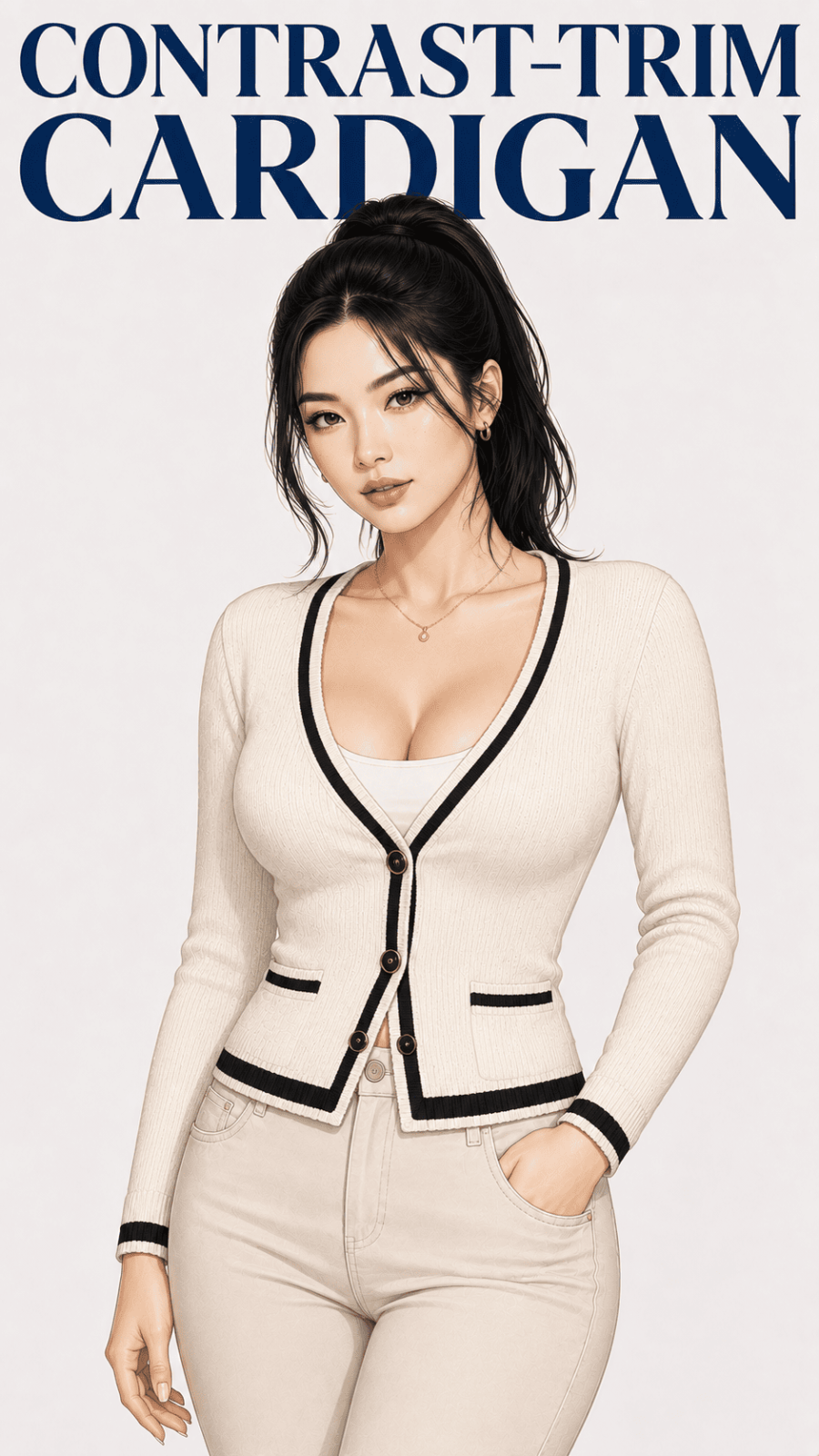
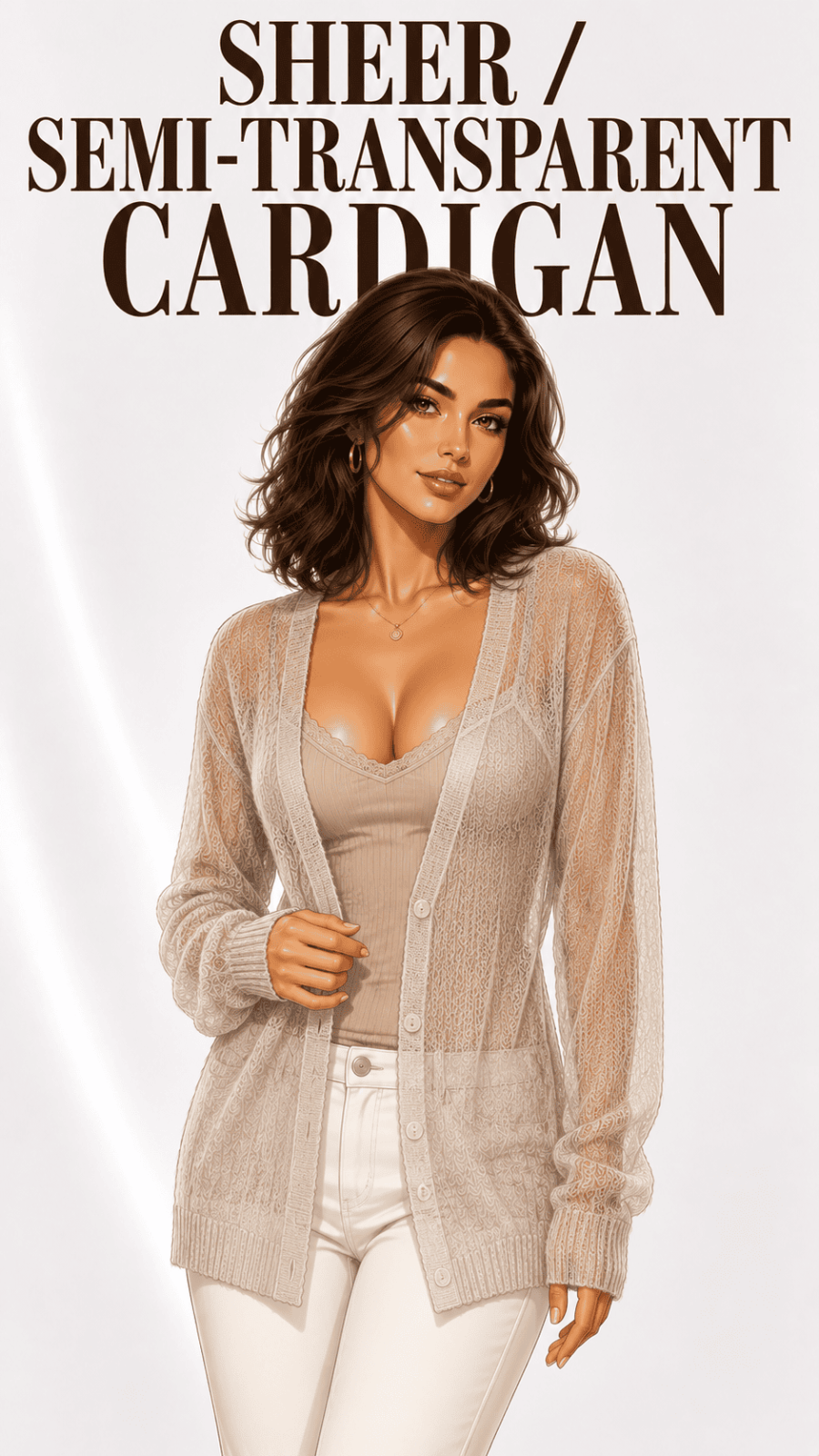
Petite Cardigan

Open-front knit layer, buttons or stays open, worn over tops or as standalone. In petite sizing, the body length is shortened so it hits at the hip or just below — not mid-thigh. The sleeve runs to the wrist, not past it. Perhaps the most critical petite knitwear adjustment: when a cardigan sits at the correct hip length, the visual line between upper and lower body reads cleanly. When it extends further, that clarity dissolves. It's not dramatic. It's deliberate.
- 32
Petite Crew-Neck Sweater

Classic round-neck pullover knit — the petite version hitting at the hip rather than below it. The crew neck construction means the neckline sits correctly at the throat, not drifting lower due to excess torso fabric. Ribbed hem, cuffs, and collar all sit in their intended position. A well-fitting petite crew-neck sweater is among the most reliable investment pieces in a shorter wardrobe — it layers, it stands alone, it photographs simply and cleanly.
- 33
Petite Turtleneck

High fold-over collar covering the neck fully — simultaneously one of the most elegant and one of the most challenging knitwear choices for petite frames. The challenge isn't the turtleneck itself; it's the standard torso length. When the body is too long, the fold-over collar pulls down, shortening visually. The petite turtleneck corrects this precisely — shorter torso means the collar maintains its height and the neckline visual effect reads as intended: elongated and polished rather than dragged down.
- 34
Petite Hoodie

Hooded fleece pullover in petite sizing — where the hood depth, body length, and kangaroo pocket placement are all adjusted. On a standard hoodie worn by a petite frame, the kangaroo pocket often sits below the natural waist, and the hood hangs low and oversized. The petite version raises the pocket to the correct torso position, shortens the body to hip length, and tightens the hood so it actually rests at the nape of the neck rather than swamping the head. For more on the full range, see our hoodie styles guide.
- 35
Petite Shrug

A very short, open-front piece covering only the shoulders and upper arms — purely decorative coverage for strapless and sleeveless styles. The petite shrug is actually one of the rare garment types where standard sizing often fits petite frames reasonably well, because the garment is designed to be short by nature. The key adjustment is sleeve length — the sleeve should end at the elbow or just above, not extend toward the forearm. More on shrug styles and how to wear them.
- 36
Petite Sweatshirt

Fleece-lined pullover with ribbed cuffs, hem, and collar — casual and cozy. The petite construction shortens the body so the ribbed hem hits at the hip rather than below it, and the ribbed cuffs land at the wrist cleanly. What changes is the overall visual: a petite sweatshirt on a shorter frame with correct proportions reads as relaxed-intentional rather than just oversized. The sleeve-to-wrist ratio in particular matters enormously here — rolled sleeves on a standard-size sweatshirt are a workaround, not a solution. For more, our sweatshirt styles reference covers every variant.
Category 6: Petite Occasionwear (#37–#42)
Formal and event-ready garments where fit precision translates directly into confidence
Occasionwear is where petite fit failures are most visible — and most emotionally costly. A formal dress that doesn't fit at the shoulder, a gown with a waistline that hits below the natural waist, a cocktail dress that reads as a mini because the midi calibration was for a taller frame. The stakes are real. Events are photographed. Memories are made. Petite occasionwear addresses all of these with the same construction logic as everyday petite pieces — but with greater fabric investment and, usually, finer execution.
For the full context on evening and event styling, our party wear guide, wedding guest outfit reference, and formal wear breakdown provide deep supplementary coverage.
- 37
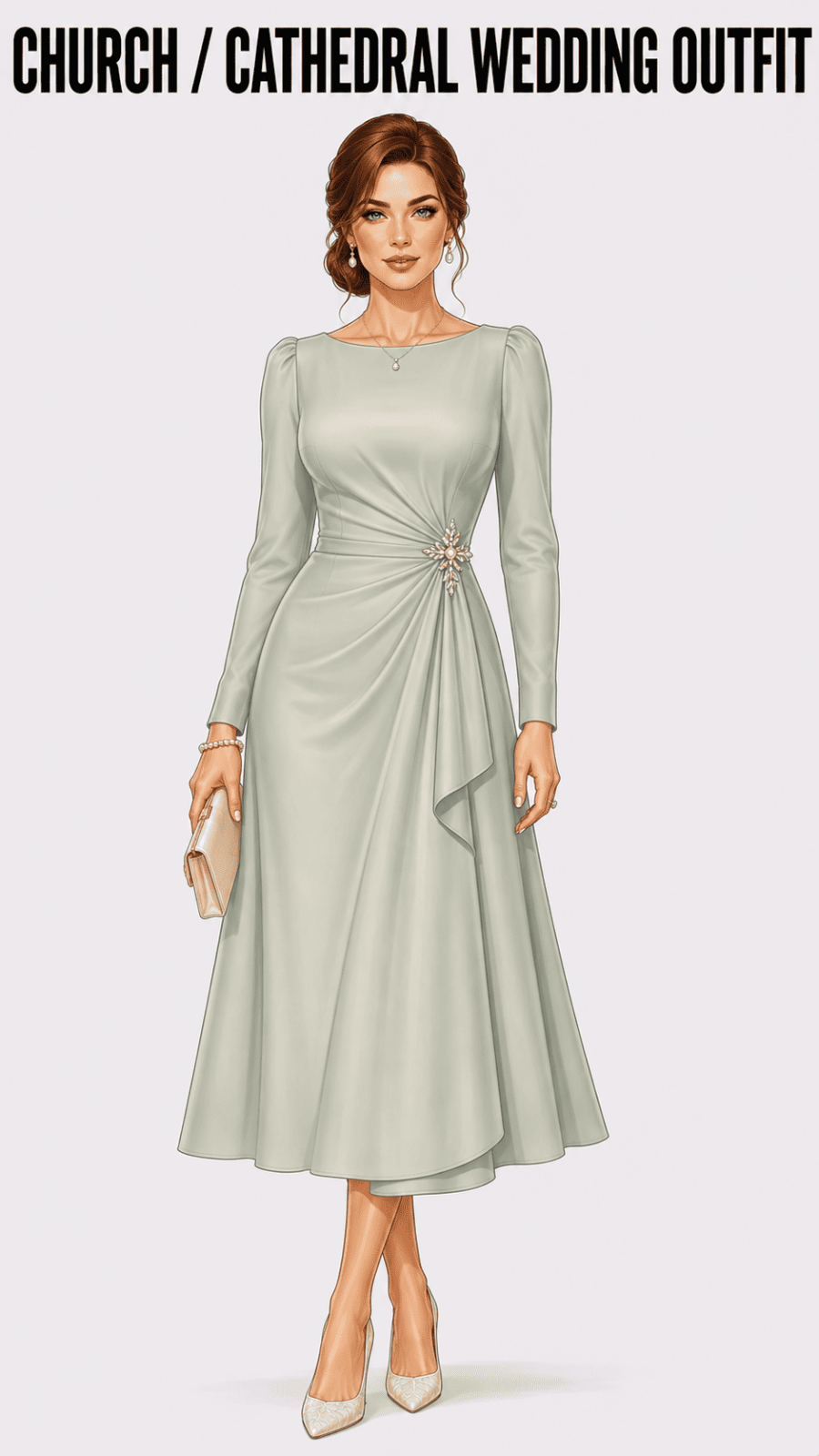
Petite Cocktail Dress

Semi-formal dress typically knee-length or just above — and in petite sizing, the knee-landing precision is the whole point. A standard cocktail dress landing at the correct knee on a 5'8" frame hits mid-shin on a 5'2" frame. That shifts the formality register, the visual proportion, and the shoe options entirely. The petite cocktail dress restores the knee hem to its intended position, keeping the garment in its correct occasion category. This is one construction where professional tailoring is worth seriously considering if true petite isn't available.
- 38
Petite Evening Gown

Full-length formal gown engineered to reach the floor precisely — not pool, not sit above the ankle. The petite evening gown is the most technically demanding construction in this category: bodice depth shortened, waistline raised to sit correctly on a shorter torso, skirt length calibrated precisely to the intended hem-floor relationship. According to the most recently published Business of Fashion analysis on fit and luxury consumption, poor garment fit is among the top three reasons formal occasion purchases are returned — petite construction directly addresses this. See our full gown styles reference.
- 39
Petite Bridesmaid Dress

Formal occasion dress designed for wedding party wear — typically floor-length or midi. In petite sizing, the challenge is matching hem length across a bridal party where some members wear standard sizes and others wear petite. The petite bridesmaid dress maintains the same visual hem impression (floor, mid-calf, knee) as the standard version — constructed specifically so the garment sits identically in photographs regardless of height variation across the party. A real, practical construction consideration, not just an aesthetic one.
- 40
Petite Wrap Occasionwear Dress

The wrap silhouette applied to formal-weight fabric — crepe, chiffon, or satin — for event-appropriate dressing. One of the most consistently reliable petite occasionwear choices because the self-tie allows for minor waist adjustment, and the V neckline creates vertical emphasis without requiring complex construction. In petite sizing, the crossover panels are shortened and the skirt length corrected — keeping the overall silhouette proportionally balanced. This works. Consistently. For most body types and most occasions.
- 41
Petite Lace Dress

Lace fabric — either all-over or as overlay — in an occasion or bridal dress format. Lace creates a specific challenge for petite alterations that most style guides overlook: matching the lace pattern at seams when hemming or adjusting is extremely difficult and expensive. A petite lace dress eliminates this entirely by constructing the garment at the correct length from the start. The pattern is designed to match at the petite seam positions. This is invisible when done well — and significant when not.
- 42
Petite Sequin / Party Dress

Sequin, beaded, or heavily embellished short party dress — and a word on petite sequin alterations: like lace, sequin-covered fabric is genuinely difficult to alter post-purchase. Removing and re-attaching sequin rows at a new hem or waist position requires specialist tailoring. A petite sequin dress constructed at the correct length avoids this entirely. The construction challenge here is also garment weight — sequined fabric is heavy, and petite construction distributes that weight more appropriately for a shorter shoulder span.
Category 7: Petite Co-ords, Jumpsuits & Sets (#43–#48)
One-piece and two-piece garment systems where all proportion variables must be resolved simultaneously
Co-ords and jumpsuits represent the peak complexity challenge in petite dressing — because they require all proportion variables to work together in a single garment or matched set. A jumpsuit with a correct torso length and correct inseam on a petite frame. A co-ord set where the top and trouser waistbands align correctly. When both pieces work in a co-ord, the result is effortless and intentional. When they don't, it shows immediately.
- 43
Petite Jumpsuit

One-piece garment combining top and trousers — and the single most frequently cited fit challenge for petite women. The problem: a jumpsuit must correctly fit the torso length, the crotch depth, and the inseam simultaneously. Getting one right without the others means the garment pulls, gaps, or bunches. The petite jumpsuit addresses all three in one construction. When it works, it's one of the most polished garments in a petite wardrobe. Full range at our jumpsuit types guide.
- 44
Petite Romper

Short-leg one-piece — the casual, summer version of the jumpsuit. The romper has the same crotch-depth and torso-length challenges as the jumpsuit, just with a shorter leg. In petite sizing, the crotch depth is the most critical adjustment: too deep and the garment pulls uncomfortably; too shallow and it restricts movement. Get it right and a petite romper is a genuinely effortless warm-weather garment. All romper styles at our romper types guide.
- 45
Petite Co-ord Set

Matching top and bottom in the same fabric, cut, and print — designed to be worn together as a pseudo-one-piece. The petite co-ord is worth investing in as a category precisely because both pieces are already calibrated to work together on a shorter frame. The top sits at the correct length, the trouser or skirt waistband meets it correctly, and the overall visual reads as intentionally coordinated rather than accidentally matched. For the full co-ord landscape, our co-ord set guide covers every style.
- 46
Petite Loungewear Set

Matching soft jersey or fleece top and trousers for relaxed home and casual wear. The petite loungewear set adjusts the trouser inseam and the top body length so both pieces hit correctly on a shorter frame. It matters more than you might expect — a loungewear trouser that pools at the ankle isn't just aesthetically ungainly, it's a genuine tripping hazard. And a top that sits mid-thigh rather than at the hip reads as mismatched with the set. Full range at our loungewear sets guide.
- 47
Petite Activewear Set

Matching sports bra or crop top and leggings or shorts in technical stretch fabric. The petite activewear set adjusts the legging inseam so it hits at the ankle rather than pooling, and shortens the crop top so the waistband gap between top and legging reads as intentional rather than accidental. In active wear specifically, fabric that doesn't sit correctly actually affects movement efficiency — petite athletic construction is functional, not just aesthetic. Guide on activewear types and performance fabrics.
- 48
Petite Maternity Wear

Clothing designed to accommodate pregnancy — and in petite sizing, this is a genuinely underserved but critically important category. Maternity wear requires a shorter torso plus accommodation for a growing bump, which are two competing demands. The belly panel on petite maternity trousers sits at a lower absolute position. The torso of petite maternity tops is shortened while maintaining stretch room. Hemlines are calibrated so bump-accommodating drape still reads at hip length rather than mid-thigh. Our guide to maternity wear types and styling covers this in depth.
Monochromatic dressing — one colour from head to toe — is the single most reliable elongation strategy for petite frames, and it costs nothing to implement beyond a deliberate wardrobe choice. It's not about vertical stripes or heel height. When the eye can't find a colour break between torso and leg, the visual line reads as continuous. That continuity is what creates the impression of length. It works regardless of silhouette, regardless of fabric weight, regardless of occasion. Quieter than a hack. More reliable than a rule.
- Knitwear adjustments are primarily about sleeve length and body length — both must land correctly on a shorter frame
- Lace and sequin formal wear benefits most from petite construction — post-purchase alteration of embellished fabric is specialist-level expensive
- The jumpsuit has three simultaneous petite variables: torso, crotch depth, and inseam — all must be calibrated together
- Monochromatic dressing is the most consistently effective elongation strategy — and it's entirely free
Petite sizing is generally designed for women 5'4" (163 cm) and under. Most major retailers define petite as below this threshold. However, some brands extend petite sizing to 5'6" for certain garments — particularly those where torso length is the primary concern, such as jumpsuits or dresses. The definition is about proportion, not just total height: a taller woman with a short torso may find petite tops work better than standard ones.
Genuinely different construction — not just a scaled-down standard. True petite garments have shorter torso lengths, raised armholes, adjusted inseams, repositioned waistbands, and shorter sleeves. They're drafted from a different pattern block. A size XS in a standard line is not the same as a size XS petite; the proportions across the garment are fundamentally different from the pattern stage.
Yes — when the hem length is correctly calibrated for a shorter frame. A standard midi purchased off the rack will likely land below the calf on a 5'2" frame, which changes the aesthetic entirely. A petite midi is cut shorter in overall length but still lands at true mid-calf on a shorter leg. The style works; the sizing must match the frame. Pairing a petite midi with a heel tends to create additional visual elongation from the ankle downward.
Several retailers offer dedicated petite lines with genuine construction differences rather than simple hemming adjustments. ASOS Petite, Topshop Petite, Banana Republic Petite, Ann Taylor Petite, and J.Crew Petite consistently receive positive feedback for proportion accuracy. For premium and occasionwear, Ted Baker and L.K.Bennett offer petite ranges with well-calibrated formal pieces. Always verify using the listed garment measurements — not just the size label — since petite standards vary between brands.
No — this is one of the most persistent and least accurate petite "rules." Wide-leg trousers worn in petite sizing with a high-waist and a cropped, tucked, or fitted top can create outstanding proportion. The key variables are hem length (must not pool), rise (high-rise maintains visual waist definition), and top length (fitted and tucked or cropped to preserve the visual waistline). The garment itself is not the limiting factor — the proportioning strategy around it is.
Check the listed garment length measurement against your own measurements, not the size label. Measure from your natural waist to where you want the hem to sit, and compare to the listed total garment length. For tops, measure your torso from shoulder to natural waist and compare to the listed body length. If the discrepancy is 5 cm or more, consider petite sizing or professional tailoring before purchasing.
V-necks, scoop necks, and sweetheart necklines all tend to create vertical or upward-directed visual lines that work well with shorter frames. Boat necklines can widen the horizontal visual, which some petite women find appealing for broadening narrow shoulders. Turtlenecks work well when the torso length is correctly shortened — a petite turtleneck maintains collar height and neck elongation that a standard-size turtleneck on a short torso can lose. The most useful rule: keep the neckline in the same vertical zone as your face, and avoid anything that creates a visual break across the broadest part of your frame.
No. Heels add height, but they are not a prerequisite for petite styling that works. Flat shoes — particularly pointed-toe flats — maintain the visual leg line as effectively as a heel by extending the toe point. Ankle-strap shoes on shorter legs can visually break the leg line, which is worth being aware of. Nude or skin-tone shoe choices in flats tend to extend the leg line most visually. Heels are a choice, not a requirement — and a well-fitted petite wardrobe looks intentional with either.
The Full Picture on Petite Clothing
Key takeaways, styling principles, and how to build a petite wardrobe that actually works
Petite clothing isn't a workaround for a sizing problem. It's a precision category — engineered, when done well, to create a garment that does exactly what it was designed to do on a shorter frame. The hem lands where it should. The waist sits correctly. The shoulders hold their position. The sleeve reaches the wrist without being rolled. None of that is trivial. All of it, cumulatively, is what separates a wardrobe that fights you every morning from one that simply works.
What the 48 types in this guide have in common — across tops and dresses, bottoms and outerwear, knitwear and jumpsuits — is construction intention. Each one solves a specific proportion challenge. Understanding which challenges each garment type carries gives you the knowledge to shop with precision rather than hope.
For deeper exploration across adjacent categories, our comprehensive references on petite clothing, silhouette types and how they work, and clothing fit classifications continue this conversation in full.
- Petite sizing is genuine construction — different pattern blocks, not just smaller versions of standard garments
- The four key petite adjustment variables are: torso length, sleeve length, inseam, and waistband/hem position
- Always verify using the listed garment measurement in cm — not the size label — before purchasing online
- Lace, sequin, and embellished formalwear benefits most from petite construction — post-purchase alteration of these fabrics is specialist work
- The jumpsuit requires all three calibrations simultaneously: torso, crotch depth, and inseam — get all three right and it becomes a wardrobe anchor
- Wide-leg trousers, midis, and maxis are not off-limits — they require petite sizing and tonal or monochromatic pairing to work at their best
- Monochromatic dressing from waist to floor is the most reliable and universally applicable elongation strategy — no rules about prints or stripes required
- Most conventional petite style rules ("avoid oversized," "always wear heels") are styling preferences, not construction principles — understanding the actual fit variables gives you more freedom, not less
Even the best petite sizing isn't perfect for every body — because bodies vary within the petite height range as much as they do anywhere else. A 5'1" woman with a long torso and short legs has different proportion needs than a 5'3" woman with a short torso and average-length legs. Both are petite. Both need different adjustments. When true petite sizing still doesn't solve the problem, a skilled tailor is the next resource — particularly for high-investment pieces like blazers, formal gowns, and lace occasion wear. Professional tailoring for a petite frame is not a luxury. It's a practical solution that extends the usable life of every garment it touches.
Clothing should work for the body wearing it — not the other way around. Understanding petite construction is what makes that possible.