
There’s a particular kind of confidence that arrives with formal dressing — not the performative kind, but something quieter. More grounded. The moment a well-cut column gown settles against the body, or a structured power blazer snaps into place at the shoulder, something shifts. Formal wear isn’t just clothing for occasions. It’s clothing that changes how you inhabit a room.
Formal wear is, at its core, construction with intention. Every seam, every silhouette, every fabric choice is deliberate — and that deliberateness is exactly why it commands attention.
The architecture of formal dressing for women has roots that stretch back centuries. The structured bodice was refined in 16th-century European court dress, where silhouette carried political meaning alongside aesthetic weight. The modern power suit — a fixture of women’s formal wardrobes since the 1970s — owes its authority to designers like Yves Saint Laurent, whose 1966 Le Smoking tuxedo translated masculine tailoring authority into a radical new feminine language. Evening gowns evolved from Victorian tea gowns and Edwardian hostess wear into the minimalist column silhouettes of mid-century modernism. Today, the category spans black-tie ballgowns to sleek formal co-ord sets, each piece carrying its own construction logic, occasion hierarchy, and styling potential.
This guide documents 75+ types of formal wear across 8 classification systems. For every single entry:
-
Design
What it looks like
-
Occasion
When to wear it
-
Best For
Dress code & context
Start here, explore every category, and browse our full visual reference for formal wear ideas alongside it.
All 8 Categories at a Glance
A structured breakdown of 75+ formal wear types documented in this guide.
- 01
By Dress & Gown Silhouette
- 02
By Suit & Tailored Separates
- 03
By Jumpsuit & Pantsuit
- 04
By Fabric & Embellishment
- 05
By Neckline & Back Detail
- 06
By Dress Code Level
- 07
By Cultural & Heritage Formal Wear
- 08
By Occasion & Context
75+ Different Types of Formal Wear for Women
Category 1: By Dress & Gown Silhouette (#1–#16)
The foundational silhouette of formal dressing — how the garment is cut, structured, and shaped from neckline to hem
Silhouette is the first — and most powerful — signal a formal gown sends. Before color, before fabric, before embellishment. The A-line reads as effortlessly elegant. The mermaid signals drama and curve-confidence. The column is power in its most streamlined form. These 16 dress and gown silhouette types represent the full vocabulary of formal dress construction — each with a distinct occasion hierarchy, body relationship, and visual effect.
What works beautifully about classifying formal wear by silhouette is that it cuts through the noise of occasion labels. "Black tie" tells you a dress code. An A-line floor gown in duchess satin? That tells you how the fabric will move, how the garment will photograph, and exactly how much structure your undergarments need. Construction is the information that actually matters when you're dressing for something important. Explore the full spectrum of dress silhouettes for women for a broader reference alongside this guide.
- 01
Ball Gown

Fitted bodice, dramatically full skirt — typically floor-length — often supported by crinoline, tulle layers, or structured petticoats. The ball gown is the most architecturally ambitious silhouette in formal wear. Its construction logic is theatrical by design: the volume of the skirt creates physical presence in a room. Classic ball gown fabrics include duchess satin, taffeta, organza, and tulle. The silhouette has Cinderella-in-the-ballroom connotations for a reason — it was genuinely designed for ballroom floors, where its sweeping skirt and fitted waist were equally functional and spectacular.
- 02
Column / Sheath Gown
Straight, narrow silhouette that follows the body line from shoulder to hem without significant flare or volume. The column gown is formal dressing at its most architecturally disciplined — it creates a continuous vertical line that reads as sleek, confident, and modern. Favored by minimalist designers and the foundation of the red-carpet power look for decades. Works best in heavy, structured fabrics — crepe, matte jersey, ponte — that hold the line cleanly rather than draping or softening the silhouette.


- 03
A-Line Evening Gown
Fitted at the bodice, gradually flaring to a full hem — tracing the shape of a capital A from waist to floor. The A-line evening gown is the most reliably flattering formal silhouette across different body proportions because the flare originates at the natural waist rather than at the knee (mermaid) or from volume-adding structure (ball gown). It creates gentle movement without theatricality — which is why it appears consistently at formal events from diplomatic functions to garden parties. Explore the full range of A-line dress constructions for reference.
- 04
Mermaid / Trumpet Gown
Closely fitted through the bodice, waist, hips, and upper thighs before dramatically flaring at the knee or below. The distinction between mermaid and trumpet: a mermaid gown flares from the knee; a trumpet flares slightly higher — from mid-thigh. Both are high-impact, confidence-forward silhouettes. The construction demands precision — every seam must align with the body's natural curves, which means fit and fabric quality matter more in this silhouette than in any other.


- 05
Empire Waist Gown
Seam placed directly under the bust; skirt flows freely from that high gathering point. Named for the Napoleonic Empire period when this silhouette dominated European court fashion — the elevated waistline elongates the torso and creates the illusion of height. In formal wear, the empire waist works beautifully in chiffon, silk charmeuse, and fine georgette, where the fabric's natural drape flows elegantly from the high seam. The construction has an inherent elegance that doesn't require a fitted lower body — which makes it one of the most comfortable formal silhouettes to wear for extended periods.
- 06
Wrap Evening Dress
Crossover front panels tied at the waist in formal-appropriate fabric — silk, satin, chiffon, crepe — creating a fluid V-neckline and adjustable waist definition. The wrap silhouette brought into high-fashion context sits between the casual DVF-era wrap dress and full formal wear. In luxury fabrics with floor-length skirts, the wrap evening dress occupies a sophisticated middle ground that works for cocktail dinners, formal receptions, and semi-formal events. Our detailed guide to wrap dress constructions and variations is a useful companion reference.


- 07
Formal Slip Dress
Minimalist bias-cut or straight-cut dress in silk, satin, or satin-look fabrics — designed to skim the body with minimal structural intervention. The formal slip dress emerged as high fashion in the mid-1990s, when designers like John Galliano and Calvin Klein reinterpreted the garment as a complex statement of restraint rather than casual simplicity. In silk charmeuse or heavy satin, the slip dress moves with the body in a way that structured gowns can't replicate — creating a fluid, skin-close silhouette that photographs with remarkable luminosity. Reference our complete guide to slip dress styles for variations.
- 08
Fit-and-Flare Formal Dress


Fitted through the bodice and waist with a pronounced flare beginning at the hip. Similar to A-line but more defined at the waist — the transition from fitted to full is more dramatic and intentional. In formal fabrics, the fit-and-flare silhouette creates a retro-influenced elegance that references 1950s New Look couture without being costume. The construction reads as decidedly feminine and festive — appropriate for cocktail galas, dinner dances, and evening receptions where the dress code calls for dressy but not maximum formality.

- 09
Bodycon Formal Dress

Form-fitting through every section — bodice, waist, hips, thighs — in stretch or structured formal fabric. The bodycon formal dress is a high-confidence, high-visibility choice: it leaves nothing to the imagination in terms of silhouette. In formal contexts, the fabric and length elevate it beyond casual — midi or maxi versions in scuba crepe, structured jersey, or metallic fabric read as genuinely occasion-appropriate. Widely seen on red carpets and at entertainment-industry events. Read our in-depth reference on bodycon dress constructions for further detail.
- 10
Maxi Formal Dress

Floor-length or near-ankle formal dress that isn't specifically a gown — simpler in construction than a gown, more relaxed in volume, but equally appropriate for formal occasions. The maxi formal dress occupies a sophisticated middle ground between occasion dressing and everyday formal wear. In chiffon, silk, or linen-blend with clean tailoring, it reads as considered and intentional without the theatrical commitment of a gown. Particularly relevant for daytime formal events, outdoor weddings, and occasions that call for formal appropriate but not maximum formality. See our reference on maxi dress silhouettes.
- 11
Off-Shoulder Formal Gown

Neckline rests below both shoulders, exposing the collarbone and upper arm — a horizontal line that broadens the shoulder frame visually. In gown form, the off-shoulder construction creates immediate presence and a classic evening-wear aesthetic. Bardot necklines in formal wear trace their contemporary lineage to Brigitte Bardot's 1950s styling, but the construction itself is far older — it appeared in 17th-century court dress where the bare shoulder signified aristocratic status. In structured satin or velvet, an off-shoulder floor gown is among the most consistently glamorous formal choices available.
- 12
High-Low Formal Dress

Shorter at the front hem, longer at the back — the hemline differential creating a dramatic visual sweep. High-low formal dresses gained significant presence on the red carpet and at debutante events through the 2010s. The construction does specific visual work: the shorter front hem displays footwear (making shoe choice particularly consequential), while the long rear sweep creates movement and presence from behind. In chiffon or organza, the back panel trails gracefully; in structured satin, it creates a more theatrical effect.
- 13
One-Shoulder Formal Gown

One shoulder fully covered, the other completely bare — the asymmetric neckline creating visual tension and directional movement through the entire silhouette. The one-shoulder gown is inherently dynamic because it violates the bilateral symmetry we expect from formalwear — and that violation is precisely its power. It draws the eye diagonally across the body. In Greco-Roman draped references, this construction was a marker of classical elegance; in contemporary red-carpet dressing, it remains one of the most photographically striking formal silhouettes available.
- 14
Halter Neck Formal Gown

Straps or fabric panels tie or fasten at the nape of the neck, leaving shoulders, upper back, and arms exposed. The halter neck gown is a classic of warm-weather and summer formal dressing — it creates maximum upper body exposure with a clean, deliberate neckline that reads as elegant rather than casual. The exposed back is often this gown's defining design feature: many halter gowns are designed with as much attention to the rear silhouette as the front, with deep open backs creating a dramatic secondary view that's particularly effective on dance floors and at moving-about events.
- 15
Cape Gown

A gown with an attached cape panel — fabric falling from the shoulders or neckline in a sweeping secondary layer over the main dress. The cape gown is the formal world's most theatrical silhouette after the ball gown, and for a specific reason: the cape creates presence from across a room before the wearer has even moved. It adds volume and dramatic authority to the upper body without requiring sleeves or complex construction. On the red carpet, cape gowns have been worn with exceptional effect by A-list figures specifically because they generate visual impact with every movement. The draped cape references heroic and ecclesiastical dressing traditions reaching back to antiquity.
- 16
Midi Cocktail Dress

Knee-to-ankle length formal dress designed for cocktail and semi-formal occasions — the standard dress code range between business formal and black tie. The midi cocktail dress is arguably the most practically useful formal piece in a contemporary wardrobe: it covers the widest range of occasion types, travels easily, and adapts through accessories. In structured crepe, lace, or textured satin, a midi cocktail dress works for corporate awards evenings, wedding receptions, charity dinners, and formal celebrations without the logistics of a floor-length gown. Our detailed reference on midi dress silhouettes and constructions provides a thorough companion guide.
The single most common mistake I see with formal gown shopping is women choosing by photo rather than by construction. A mermaid gown looks spectacular on a runway — but it requires specific hip-to-waist proportions, significant structural undergarments, and the ability to walk in a constrained lower silhouette. None of that shows in a photo. Before committing to any gown silhouette, understand how it's constructed and whether that construction genuinely works with how you move and what you're wearing it for. The A-line exists as a default precisely because it solves most construction-movement conflicts before they arise.
- 16 gown and formal dress silhouettes, each with distinct construction logic, occasion hierarchy, and visual effect
- Ball gown = maximum formality and architectural drama; column gown = modern power and restraint
- A-line is consistently the most versatile formal silhouette across body types and occasion types
- Midi cocktail dress = broadest occasion range; the most practically useful formal piece in the category
Category 2: By Suit & Tailored Separates (#17–#28)
The formal power of tailoring — blazers, trouser suits, skirt suits, and structured separates
The women's suit is probably the most politically significant garment in formal dressing history. When Yves Saint Laurent introduced Le Smoking in 1966 — a tuxedo suit designed for women — it wasn't just a fashion moment. It was a confrontation with the entire established hierarchy of formal wear. That confrontation has since been absorbed into the mainstream, and the result is a formal category that now offers some of the most authoritative, cross-occasion power dressing available. Understanding how different suit constructions work — what differentiates a power blazer from an oversized suit jacket, what makes a skirt suit read more formally than a trouser suit — is genuinely useful information for building a formal wardrobe that actually functions. For a thorough reference on blazer construction specifically, our complete blazer guide covers the full range.
- 17
Classic Trouser Suit

Matching tailored blazer and straight-leg or wide-leg trousers in the same fabric — the foundational women's formal suit. The classic trouser suit signals authority without requiring justification; it occupies a specific visual frequency that reads as competent and serious across almost every professional and formal context. Construction matters significantly here: a suit built with proper canvas interlining in the blazer holds its shape over long days and repeated wears. The trouser cut — straight, wide-leg, or tapered — shifts the silhouette register from corporate-classic to contemporary without changing the formal reading. For a deeper look at formal trouser constructions, our guide to formal trousers is a useful companion.
- 18
Tuxedo Suit

A formal suit with satin or grosgrain lapel facing and side-stripe trouser detail — the women's version of black tie dressing in suit form. The tuxedo suit for women directly references Saint Laurent's 1966 Le Smoking. In construction terms, the distinguishing feature is the facing: the satin lapel and the stripe on the trouser leg are the markers of tuxedo construction rather than standard suit construction. In white, ivory, cream, or classic black, the tuxedo suit functions as a black-tie alternative that carries equal or greater authority than a gown in certain environments — particularly in creative, media, and entertainment industries where the suit reads as a more sophisticated formal choice than conventional evening wear.
- 19
Skirt Suit

Matching blazer and skirt in the same fabric — typically pencil, A-line, or pleated skirt paired with a structured jacket. The skirt suit occupies a specific position in formal dressing history: it was the standard formal business ensemble for women from the 1950s through the 1980s, and it carries a certain classical authority that the trouser suit lacks in some contexts. In terms of construction, the skirt choice dramatically affects the overall silhouette: a pencil skirt creates a sleek, linear effect; an A-line opens the silhouette; a pleated skirt adds structured volume. The Chanel-style boucle skirt suit remains one of the most recognizable formal separates in fashion history.
- 20
Oversized Power Blazer + Tailored Trousers

A deliberately oversized or longline blazer worn with slim or tailored trousers — the volume of the jacket contrasted against the lean trouser line. This is where formal wear intersects with contemporary fashion rather than traditional tailoring convention. The oversized blazer creates what stylists call the "borrowed from menswear" effect — a studied, confident informality within a formal register. The key construction distinction is that the oversized proportions must be intentional: a blazer that fits properly reads as professional; a blazer that's comically too large reads as sloppy. The proportions between a generous jacket and a clean trouser line must be precisely calibrated.
- 21
Structured Blazer Dress

A blazer extended to dress length — the tailored jacket silhouette applied to a standalone dress without requiring separates. The blazer dress occupies a uniquely efficient formal position: it delivers the authority of a suit and the simplicity of a dress in a single garment. Typically structured at the shoulders and chest with tailoring details (lapels, pocket details, button placket) then extending to a fitted or A-line skirt length below. Works particularly well for high-intensity professional days when a dress is logistically simpler but a suit-level authority is required.
- 22
Pinstripe Power Suit

Tailored suit in a pinstripe fabric — narrow, evenly spaced vertical stripes on a dark ground. The pinstripe suit is one of the most culturally loaded patterns in formal wear: it originated in 19th-century British banking and financial industry dress, where it signified serious professional standing. When women adopted it from the 1970s onward, the pattern carried that entire professional heritage with it — which is precisely why it reads as powerful. The vertical stripe also creates a lengthening visual line through the silhouette, making it one of the more flattering suiting patterns.
- 23
Collarless Suit

Suit jacket or blazer without a traditional lapel or collar — a clean, straight neckline edge that reads as modern and European-influenced. The collarless suit jacket has roots in both Chanel's influential cardigan suit of the 1920s and in Asian menswear traditions (Nehru collar influence). Without the lapel's structural and visual weight, the collarless suit creates a lighter, more contemporary reading that works particularly well in pastel, neutral, and jewel-tone fabrics. The neckline simplicity often benefits from a statement necklace or earring. This is a formal choice that reads as fashion-literate rather than conventionally authoritative.
- 24
Double-Breasted Suit

Jacket with two parallel rows of buttons, typically with wide peaked lapels — a construction that produces a more structured, powerful visual effect than a single-breasted jacket. The double-breasted suit carries significant heritage weight: it was a marker of formal authority in mid-20th century menswear, adopted by women's fashion as an explicit power statement. The wide lapels and overlapping front panels add visual breadth to the chest and shoulder frame. In formal suiting fabrics, it reads as commanding and deliberately formal without requiring explanation.
- 25
Formal Co-Ord Set

Matching top and bottom in formal fabric — not a structured suit jacket, but coordinated separate pieces designed to be worn together as a deliberate formal ensemble. The formal co-ord differs from a suit in its construction: it typically features a more relaxed top (structured blouse, camisole, crop jacket) paired with a wide-leg trouser or skirt in the same fabric. In jacquard, brocade, satin, or lace, a well-chosen co-ord set reads as genuinely formal and highly intentional. Explore the full range of co-ord set styles and fabric variations for reference.
- 26
Tailored Wide-Leg Trousers + Statement Blouse

Tailored wide-leg trousers in a formal fabric paired with a constructed or embellished blouse — the separates route to formal impact without requiring a matching suit. This combination works because the wide-leg trouser provides the visual weight and floor-presence of a gown's lower half while the statement blouse elevates the top. In silk wide-leg trousers with a structured satin blouse, or crepe trousers with an embellished top, the combination reads as genuinely formal and highly composed. For reference on wide-leg trouser constructions, see our wide-leg pant guide.
- 27
Pencil Skirt + Structured Blouse

A fitted pencil skirt paired with a structured, tailored blouse — the classic corporate formal separates combination. The pencil skirt creates a clean, linear lower silhouette while the structured blouse provides upper body authority. Together, they read as professional, composed, and deliberately formal without the full visual commitment of a suit. The key is fit precision: both pieces must fit impeccably to achieve the intended effect. A poorly fitted pencil skirt loses the clean line that is its entire design logic. For deeper context on blouse construction, our comprehensive blouse guide covers every style.
- 28
Velvet Blazer + Formal Trousers

A velvet blazer — in jewel tones, black, or deep burgundy — worn with formal tailored trousers as a dressy evening formal ensemble. Velvet elevates a standard blazer into formal evening wear: the fabric's light-absorbing quality and rich texture create a visual weight appropriate for dinner dances, theatre evenings, formal receptions, and autumn-winter galas. The pairing works across dress codes from smart-casual formal to semi-formal black tie because velvet carries inherent luxury without requiring a gown silhouette. A particular favorite for holiday and winter formal events where the fabric's warmth is both practical and aesthetically appropriate.
In years of professional wardrobe editing, the most consistent observation I can offer about formal suits is this: the trouser cut matters more than the blazer style. A standard blazer with wide-leg trousers reads as contemporary and fashion-aware. The same blazer with slim-cut trousers reads as corporate-classic. And the same blazer with cropped trousers reads as creative-industry. The blazer stays constant; the trouser silhouette shifts the entire professional register of the outfit. Choose your trouser cut as deliberately as you choose the blazer itself.
Category 3: By Jumpsuit & Pantsuit (#29–#36)
Single-piece formal solutions — the jumpsuit and pantsuit as formal wear statements
The formal jumpsuit is one of modern fashion's most interesting constructions: it delivers complete outfit coherence in a single garment, with none of the coordination anxiety of separates and none of the specific-occasion commitment of a gown. When it works — when the fabric, cut, and fit align correctly — a formal jumpsuit creates a visual impact that suits and dresses rarely match for sheer contemporary authority. Understanding the different construction types within the formal jumpsuit category is genuinely useful, because the difference between a palazzo-leg formal jumpsuit and a straight-leg version is the difference between event dressing and office dressing.
For a comprehensive visual reference across all jumpsuit constructions, our complete jumpsuit style guide documents every variation in detail.
- 29
Formal Wide-Leg Jumpsuit

Floor-length or near-floor wide-leg jumpsuit in a formal fabric — satin, crepe, velvet, or structured jersey — creating a single-piece silhouette with the visual impact of a floor-length gown and the ease of a single garment. The wide-leg formal jumpsuit has become a genuine red-carpet staple since the 2010s: its combined ease, authority, and visual presence represent exactly the kind of practical luxury that contemporary formal dressing gravitates toward. The wide legs create a fluid, gown-like lower silhouette while the upper body can be tailored or structured for a more formal reading.
- 30
Strapless Formal Jumpsuit

A strapless or bandeau-neckline formal jumpsuit — baring the shoulders and décolletage while the garment continues in one piece to the leg. The strapless jumpsuit creates an interesting visual hybrid: the shoulder-bare drama of a strapless gown with the clean trouser line of a suit. This combination is inherently statement-making. Construction demands significant bodice engineering to maintain its position without straps — boning, internal structure, or precise fit are essential. In formal silk, velvet, or heavy crepe, this is a high-impact choice for evening galas and cocktail-formal events.
- 31
Tailored Blazer Jumpsuit

A jumpsuit with a structured blazer-style upper body — lapels, button placket, and shoulder structure — extending into formal trousers in one continuous piece. The blazer jumpsuit is the most overtly corporate-formal jumpsuit construction: it delivers full suit-level authority without requiring separates or coordination. The structural integrity of the blazer top makes it appropriate for high-stakes professional contexts where a standard jumpsuit might read as too casual. It photographs with architectural precision and is a growing choice for professional women in creative leadership roles.
- 32
Halter Neck Formal Jumpsuit

A halter-neck formal jumpsuit — neck-fastened straps, shoulders and back exposed, continuing into formal trousers. Combines the open-shoulder glamour of evening wear with the practicality and contemporary authority of trouser dressing. Particularly effective for warm-weather formal events and summer galas where a fully covered formal outfit would be genuinely impractical. In silk or satin with a clean trouser leg and minimal accessories, the halter jumpsuit creates a streamlined formal presence that feels effortless rather than effortful — which is arguably the ideal quality in contemporary formal dressing.
- 33
Off-Shoulder Formal Jumpsuit

An off-shoulder or Bardot neckline formal jumpsuit — the horizontal collarbone-exposing neckline combined with the single-piece trouser silhouette. This jumpsuit creates visual balance through contrast: the widening horizontal neckline at the top is balanced by the vertical trouser lines at the bottom. In velvet or structured satin, this construction reads as highly formal and quite fashion-forward — it's a choice that signals aesthetic confidence and a deliberate departure from conventional gown dressing. Works especially well in darker jewel tones where the neckline's exposure provides visual interest without requiring additional accessories.
- 34
V-Neck Satin Formal Jumpsuit

A deep or moderate V-neck formal jumpsuit in satin or satin-look fabric — one of the most consistently wearable formal jumpsuit formulas. The V-neckline creates a clean vertical focal point that elongates the torso, while the satin fabric delivers the luster and weight that elevates the garment into formal-wear territory. Belted or unbelted versions both work: a belt defines the waist; an unbelted version creates a more fluid, relaxed formal silhouette. In midnight blue, deep burgundy, ivory, or champagne, this construction covers an exceptionally wide range of formal occasions.
- 35
Embellished Formal Jumpsuit

A formal jumpsuit featuring beading, sequins, embroidery, or other surface embellishment — elevating the silhouette's formality through detail work rather than fabric alone. The embellished jumpsuit occupies a specific formal niche: it achieves gown-level occasion-appropriateness without requiring a skirt or dress construction. The embellishment does the heavy lifting: sequin or beaded fabric transforms a relatively simple jumpsuit cut into something genuinely spectacular in event lighting. Works particularly well for cocktail galas and entertainment-industry formal events where maximum visual impact is appropriate.
- 36
Cropped Blazer + High-Waist Formal Trousers

A cropped blazer — ending at the waist or just above — paired with high-waisted tailored formal trousers. The high-waist trouser waistband sits above the natural waist, and when the blazer ends at exactly that point, the two pieces create a seamless vertical line with the appearance of elevated proportion. This combination creates what stylists call a "lengthened visual leg line" — the high waistband effectively raises the visual starting point of the leg. In matching fabrics, this reads as a suit; in contrasting formal fabrics, it reads as a considered separates choice.
"Jumpsuits aren't appropriate for black-tie events."
This was largely true until the early 2010s — and it's simply no longer the case. A wide-leg floor-length jumpsuit in formal fabric (velvet, heavy satin, structured silk) now routinely appears at black-tie events, red-carpet occasions, and high-profile galas. The determining factor is fabric and construction, not garment category. A satin palazzo-leg jumpsuit read alongside a ball gown at a formal event — and in many creative industries, it reads as more sophisticated. What remains true is that not all jumpsuits are appropriate: a casual linen jumpsuit is not black-tie appropriate regardless of the occasion. The fabric and construction carry the formal weight, not the category name.
Category 4: By Fabric & Embellishment (#37–#46)
The materials and surface details that define formal wear's visual weight, occasion hierarchy, and lasting impression
Fabric is the single variable that most determines whether a garment reads as genuinely formal or merely dressed-up. The same A-line silhouette in cotton jersey is a casual dress. In duchess satin, it's a wedding gown. In crepe, it's a corporate formal dress. In sequined silk chiffon, it's black-tie. The construction hasn't changed — the fabric has. Understanding which fabrics carry which formality registers, and what embellishment types are appropriate at which dress code levels, is as important as understanding silhouette. These 10 fabric and embellishment types map the material vocabulary of formal women's dressing.
- 37
Sequin / Beaded Formal Dress

Any formal dress or gown featuring sewn-on sequins, beading, paillettes, or crystal embellishment across the fabric surface. Sequin dressing has deep roots in early 20th-century theatre and jazz-age fashion, where reflective fabric was used to amplify presence in low-light, high-drama environments. The physics are deliberate: sequins and beads scatter and redirect light, creating movement and luminosity that no static fabric can match. In event lighting — particularly at galas, ballrooms, and evening receptions — a sequined garment actively generates visual interest through every movement. The sequin dress doesn't require accessories to achieve presence; the fabric does the work.
- 38
Lace Formal Dress

A formal dress made primarily from lace fabric — Chantilly, Alençon, guipure, or other lace constructions — either as the full garment or as a significant overlay. Lace has been the defining luxury fabric in women's formal wear since the 16th century, when the ability to wear needle lace signified aristocratic standing across European courts. In contemporary formal dressing, lace carries inherent occasion-appropriate authority: it reads as romantic, elevated, and deliberately dressed without requiring architectural construction or embellishment. The lace texture does what structure does in other formal garments — it adds visual richness and weight appropriate to ceremonial and high-status occasions.
- 39
Duchess Satin Gown

A gown constructed in duchess satin — a heavy, structured satin with a matte reverse and a high-lustre face, stiff enough to hold sculptural shapes without internal boning. Duchess satin is the fabric that most clearly signals maximum formal intent: its structural weight creates volume and shape that lighter fabrics can't achieve, making it the preferred choice for ball gown skirts, structured bodices, and any construction requiring the fabric itself to contribute to the silhouette. The fabric's characteristic drape — heavy enough to be sculptural, smooth enough to read as deeply luxurious — is why it's the standard for couture bridal and black-tie gowns.
- 40
Chiffon Formal Gown

A formal gown constructed in chiffon — a sheer, lightweight woven fabric with a floaty, translucent quality that creates an ethereal visual effect through layered panels. Chiffon formal gowns are the opposite of duchess satin in every construction sense: where satin holds shape through its own weight and structure, chiffon achieves presence through volume and movement — layers of sheer fabric catching light and air simultaneously. Multi-layer chiffon creates a look of weightless luxury that photographs extraordinarily well in natural and event lighting. The fabric's sheer quality is typically managed through multiple layers or lining, depending on designer intent.
- 41
Velvet Formal Gown

A floor-length formal gown in velvet — the fabric's pile surface absorbing light rather than reflecting it, creating a depth and richness that appears visually dimensional. Velvet has been a marker of status and formal occasion in European dress since at least the 14th century; sumptuary laws in several periods restricted its use to specific social classes. In contemporary formal wear, velvet remains the most visually assertive fabric available: its deep colour saturation in jewel tones — emerald, sapphire, burgundy, midnight navy — photographs with extraordinary richness and carries a weight of occasion-awareness that lighter fabrics don't replicate. The ideal choice for autumn and winter formal occasions.
- 42
Jacquard / Brocade Formal Dress

A formal dress or suit in jacquard or brocade — textured woven fabrics with patterns constructed directly into the weave structure rather than printed on the surface. Jacquard refers to the loom technique; brocade refers to a raised, often metallic-threaded pattern. Both fabrics carry inherent formality because of their complexity: the weave patterns — florals, geometric motifs, abstract designs — are visible as texture as well as colour, creating a multi-dimensional surface richness that flat fabrics can't replicate. Particularly suited to structured formal suits and tailored midi dresses where the fabric's body complements structured construction.
- 43
Tulle / Organza Ball Skirt Gown

A gown featuring a tulle or organza skirt — the stiff mesh or crisp woven fabric creating and maintaining extreme volume without heavy understructure. Tulle is the engineering material of the ball gown world: its stiffness creates and sustains volume through the skirt's own structure, with petticoat layers multiplying that effect. Organza provides a similar stiffness with a slightly more refined, silk-like texture. Together or separately, these fabrics are how couture ball gowns achieve their dramatic volume without requiring crinoline or hooped frames. The romance of the tulle ball skirt has a direct lineage to Christian Dior's 1947 New Look, which positioned the full skirt as the definitive formal silhouette of post-war luxury.
- 44
Metallic / Lamé Formal Dress

A formal dress in metallic or lamé fabric — gold, silver, bronze, copper, or bi-metal — the reflective surface creating maximum luminosity in event lighting. Metallic formal dressing has deep roots in gold cloth traditions across cultures from Byzantine court dress to Japanese imperial ceremonial wear to the gold lamé evening gowns of 1930s Hollywood glamour. In contemporary formal wear, metallic remains one of the strongest signals of occasion-awareness: it's a fabric choice that says, unambiguously, "this is an event." The key styling consideration is restraint in accessories — a metallic dress is its own statement and requires minimal additional visual input.
- 45
Embroidered Formal Dress

A formal dress featuring hand or machine embroidery — thread-based decorative stitching, often with floral, geometric, or figurative motifs — as a primary or significant decorative element. Embroidery as formal embellishment has the longest pedigree of any decorative technique: it predates written European fashion history, appearing in excavated textile fragments from ancient civilisations across the globe. In contemporary high-end formal dressing, hand embroidery — particularly goldwork, Lunéville beading, and Cannetille — remains the most labour-intensive and expensive embellishment type, signalling genuine craft investment. A heavily embroidered gown from an atelier like Valentino or Dior Haute Couture represents hundreds of hours of hand work.
- 46
Feather-Trim Formal Dress

A formal dress featuring feather trim — ostrich, marabou, or synthetic feather fringing — typically at the hem, neckline, cuffs, or as a full feather skirt. Feather trim formal dressing has peaks of popularity at roughly 30-year intervals, tracing through 1920s Jazz Age dressing, 1950s Hollywood glamour, 1980s excess, and its recent significant revival in contemporary red-carpet fashion. The feather's movement creates immediate theatrical presence — it responds to air currents and movement in a way that no other trim material replicates. In contemporary ethical fashion contexts, sustainable or responsibly sourced feathers are increasingly specified.
Category 5: By Neckline & Back Detail (#47–#54)
The neckline and back construction — the formal gown's most defining detail beyond silhouette
In formal wear, the neckline does more visual work per centimetre of fabric than any other construction detail. It frames the face, defines the decolletage, and sets the tone for the entire garment. A sweetheart neckline signals romantic femininity. A high-neck formal dress signals architectural restraint. A deep V signals confident sensuality. These are not accidental associations — they're the product of decades of fashion communication through neckline construction. Understanding what each neckline signals, and choosing accordingly, is one of the most powerful tools in formal dressing. For a thorough neckline-by-neckline reference, our complete neckline guide documents every variation.
- 47
Sweetheart Neckline Gown

A curved, heart-shaped neckline that dips to a central point — mimicking the upper curve of a heart — sitting strapless or with minimal shoulder support. The sweetheart neckline is one of the most flattering formal necklines across a broad range of body proportions because its curved line echoes and flatters the natural décolletage. It's a non-symmetrical neckline that nonetheless reads as balanced, which is why it consistently appears on bridal gowns, prom dresses, and cocktail formal wear across decades of fashion history. In structured formal fabric, the sweetheart creates a sophisticated formality; in soft chiffon or lace, it reads as romantically elegant.
- 48
Cowl Neck Formal Gown

Loose, draped fabric falling from the neckline in soft folds — a construction derived from classical Greek draped dress and revived in 1930s Hollywood bias-cut gowns. The cowl neck is inherently fluid and body-adjacent: the draped fabric sits close to the décolletage without tension, creating a soft, organic neckline effect that reads as both intimate and sophisticated. In bias-cut silk or satin — the fabrics that honour the construction's 1930s golden-age origins — a cowl neck gown creates one of the most continuously photographed and referenced formal aesthetics in fashion history. Madeleine Vionnet, who pioneered bias cutting, created definitive cowl-neck gown constructions that are still referenced in contemporary design.
- 49
High Neck / Mock-Neck Formal Dress

A formal gown or dress with a high, close-to-throat neckline — mock-neck, turtleneck, or mandarin collar construction. The high-neck formal dress is a statement of architectural restraint: it covers rather than reveals, creating a clean, column-like visual from throat to hem. In formal contexts, the high neckline often signals maximum sophistication — it asks for no jewellery at the neck, redirecting the eye to face, posture, and overall silhouette. Particularly prevalent in contemporary minimalist formal dressing and in Asian-influenced formal fashion. The construction has strong historical precedents in Victorian formal dress and in Chinese qipao construction.
- 50
Deep V-Back Gown

A formal gown with a dramatic deep V or plunge cut at the back — the reveal architectural and deliberate, often extending to the lumbar or beyond. The low V-back gown is one of fashion's most consistently powerful constructions because it operates on the principle of deferred revelation: from the front, the gown may appear completely conservative; from behind, it creates an entirely different aesthetic impression. This dynamic is inherently theatrical and highly effective at events where the wearer moves through a room, turns away, and creates sequential visual impressions. The back in this construction is designed to be seen — it functions as the gown's primary statement.
- 51
Illusion Neckline Gown

A neckline created in sheer tulle or mesh, giving the appearance of an open décolletage while providing actual coverage through the sheer fabric panel. The illusion neckline is formal dressing at its most technically sophisticated: it achieves simultaneous modesty and revelation, allowing for embellishment (beading, embroidery) on the sheer panel that appears to float against the skin. Widely used in bridal wear, it has migrated into formal gowns for occasions requiring greater coverage than conventional strapless or low-cut styles while maintaining a romantic, decorative neckline aesthetic.
- 52
Boat Neck / Bateau Formal Dress

A wide, horizontal neckline that runs from shoulder point to shoulder point, following the curve of the collarbone — the French term "bateau" (boat) references the shape's resemblance to a boat's hull. The boat neck is one of the most classically French formal necklines, associated with Balenciaga, Givenchy, and Audrey Hepburn's 1950s wardrobe. It creates a horizontal emphasis across the shoulder line that reads as aristocratic and architecturally precise. It provides full coverage of the décolletage while exposing the collarbone and upper chest in a way that reads as elegant rather than revealing.
- 53
Square Neck Formal Dress

A straight-edged, right-angle neckline that creates a precise rectangular opening across the décolletage. The square neckline is a Renaissance-era construction that gained its strongest formal fashion association through Tudor court dress — portraits of Queen Elizabeth I frequently feature the square-neck bodice. Its geometric precision reads as structured and aristocratic; unlike the soft curves of a sweetheart neckline, the square neck asserts architectural deliberateness. In contemporary formal wear, it appears most frequently in silk and satin midi dresses and structured formal tops, where the geometric line complements the fabric's clean drape.
- 54
Plunge V-Neck Formal Gown

A dramatically deep V-neckline extending well below the sternum — a neckline construction that prioritises confident décolletage exposure as a design statement. The deep plunge V creates a vertical focal line through the centre of the body that elongates the torso significantly. In formal context, the neckline must be supported with appropriate undergarment solutions and tailored construction to maintain position. In silk crepe or heavy satin, the plunge V is one of the most consistently powerful red-carpet constructions: it creates immediate visual impact and a clear statement of aesthetic confidence. Associated particularly with contemporary red-carpet dressing from the 2000s onward.
Neckline choice should be your first decision in formal gown selection, not your last. Before you choose a silhouette, a fabric, or a colour — decide on the neckline that most consistently flatters your face and décolletage. This is the detail that most directly frames your face in photographs and in person. A gown in the wrong silhouette but the right neckline will photograph better than a gown in the right silhouette and the wrong neckline. Once your neckline preference is established, let the rest of the gown decisions follow from it.
Category 6: By Dress Code Level (#55–#62)
The formal wear hierarchy — what to wear at every dress code level from smart-casual to white tie
Dress codes are communication systems. They're the host's way of signalling the event's social register and telling guests what level of dress is expected. Dressing above or below that register is a social error in both directions: overdressing can read as attention-seeking; underdressing signals a failure to take the occasion seriously. Understanding what each dress code actually requires — and what the most common misinterpretations are — is among the most practically useful formal dressing knowledge a woman can have. These eight entries map the full formal dress code hierarchy with concrete outfit guidance at each level.
- 55
White Tie Formal Wear

The highest dress code level — traditionally floor-length ball gown, formal gloves optional, fine jewellery, and formal updo or structured hair. White tie events include state dinners, royal occasions, certain embassy functions, and the most formal classical music and opera gala performances. The floor-length requirement is not negotiable at true white tie. Fabric should be of the highest quality — duchess satin, silk taffeta, heavy silk charmeuse, or couture fabrics. Accessories should be formal and fine: diamond or pearl jewellery, structured evening bag, formal heels. This is the dress code that leaves the least room for personal interpretation.
- 56
Black Tie Formal Wear

Full-length evening gown, formal floor-length jumpsuit, or — in certain contexts — a sophisticated tailored tuxedo suit. Black tie is the most commonly misunderstood dress code because it allows more interpretation than white tie while still requiring genuine formal commitment. The key principle: black tie means evening-appropriate, floor-length or near-floor-length, in formal fabric. A midi dress, however beautiful, is technically below the required length for traditional black tie. A floor-length gown in formal fabric, a velvet tuxedo suit, or a formal floor-length jumpsuit in satin — all correct. The tuxedo suit option has become more broadly accepted over the past decade, particularly in creative-industry black-tie contexts.
- 57
Cocktail Attire

Knee to midi-length dress in formal fabric — the standard dress code for the broadest range of evening events below black tie. Cocktail attire is the most versatile of the formal dress codes: it requires formal intent without floor-length commitment. The Little Black Dress at this length is the cocktail dress's most famous expression, but the category extends to structured midi dresses, formal co-ords, and tailored separates in appropriate fabrics. The critical element is fabric: a knee-length dress in jersey is casual; the same length in structured crepe, silk satin, or lace reads as genuine cocktail attire.
- 58
Business Formal / Corporate Formal

Professional formal attire for high-stakes corporate environments — tailored suit (trouser or skirt), structured dress or blazer dress, in professional fabrics (wool, crepe, fine cotton, ponte). Business formal is the office counterpart to evening formal: equally strict in its construction requirements, different in its visual register. Where evening formal prioritises luxury fabric and visual impact, business formal prioritises professional authority and construction quality. The signalling is different but equally precise: a well-cut business formal suit communicates competence, investment in professionalism, and self-awareness of the professional context you're operating in.
- 59
Semi-Formal / Smart Formal

A dress code level between business formal and full cocktail attire — requiring more than everyday polished dressing but not demanding the construction formality of true cocktail or evening wear. In practice: a tailored midi dress in a quality fabric, a structured blouse with formal trousers, or a sophisticated co-ord set in textured fabric. Semi-formal allows more personal expression than strict business or cocktail codes while maintaining obvious intentional dressing. It's the dress code for corporate dinners, certain wedding receptions, theatre openings, and fundraisers where full cocktail attire might feel excessive but casual is clearly insufficient.
- 60
Garden Party / Outdoor Formal

Formal attire adapted for outdoor settings — typically a floral or solid-colour midi dress in lightweight formal fabric, with consideration for terrain, weather, and practical movement requirements. Garden party formal is where construction logic must account for environmental conditions: high heels on grass, lightweight fabrics in wind, colour saturation in natural light. The most practical formal choices for outdoor settings include block-heel or platform shoes (for stability on lawn), midi lengths (to avoid hem damage), and lighter fabrics like chiffon, silk, and cotton-silk blends that move beautifully in natural light without becoming inappropriate in a breeze.
- 61
Festive / Holiday Formal

Formal attire for holiday and festive contexts — incorporating seasonally appropriate colour (deep reds, greens, midnight blues, champagne gold), texture (velvet, brocade, sequin), and an elevated level of decorative intent appropriate to celebratory occasions. Festive formal is the dress code where maximum embellishment and richest fabrics are not only appropriate but actively expected. Holiday formal is one of the few contexts where a sequined gown, a heavily beaded dress, or a richly velvet-trimmed suit reads as perfectly calibrated rather than excessive. The seasonality of the fabric and colour choices matters as much as the construction formality.
- 62
Creative Black Tie

A dress code that explicitly invites formal dress with personal creative expression — floor-length gowns remain appropriate but non-traditional choices (dramatic colours, unexpected silhouettes, fashion-forward interpretations) are equally valid. Creative black tie is most common in entertainment, arts, and fashion-industry events where the audience is itself fashion-aware and unusual choices are not only tolerated but actively enjoyed. The key is maintaining genuine formality in construction and fabric quality while exercising creative freedom in silhouette, colour, or embellishment choice. It's not an invitation to underdress — it's an invitation to overdress with imagination.
Category 7: By Cultural & Heritage Formal Wear (#63–#70)
Global traditions of formal dressing — the world's most significant cultural formal wear garments
The Western formal wear tradition — gowns, suits, tailoring — represents one strand of a vastly richer global formal dressing heritage. Across cultures, formal wear traditions reflect centuries of craft knowledge, social hierarchy, ceremonial function, and aesthetic philosophy that the Western fashion industry has only recently begun to engage with seriously. These eight cultural formal wear types represent significant traditions in their own right — garments with deep roots in cultural identity, ceremony, and craft — each with a specific construction logic, occasion function, and contemporary relevance.
- 63
Saree / Sari

An unstitched length of fabric — typically five to nine metres — draped in one of multiple regional styles around the body, tucked at the waist and pleated or draped over the shoulder. The saree is one of the world's oldest formal garments and one of its most sophisticated: its draping technique is a learned skill, and its fabric choices — silk Kanchipuram, Banarasi brocade, Chanderi, Dhaka muslin — represent some of the world's finest textile traditions. For formal occasions, the saree is worn in silk or silk-blend fabric with gold zari work, heavy embroidery, or rich handloom construction. The formality level is communicated through fabric weight, embellishment density, and regional convention.
- 64
Qipao / Cheongsam

A form-fitting, high-neck Chinese dress with a characteristic side slit and frog (Chinese knot) button closure — typically in silk, brocade, or embroidered fabric. The qipao evolved from Manchu dress in the early 20th century and became Shanghai's definitive urban formal garment of the 1920s to 1940s. Its construction is architecturally precise: the high mandarin collar, the fitted body following natural curves, the diagonal closure, and the side slit allowing movement are all specific design features with cultural and practical logic. In fine silk with intricate embroidery or brocade weave, the qipao is one of formal fashion's most refined garments — its complexity is in the construction restraint rather than in embellishment excess.
- 65
Hanbok

Traditional Korean formal wear consisting of a jeogori (short jacket or blouse) and chima (full skirt) in silk or silk-blend fabrics — characterised by simple lines, a high waist position, a flowing silhouette, and vivid colour combinations. The hanbok's construction philosophy is intentionally opposed to Western tailoring: it creates negative space around the body rather than following its contours, producing a silhouette defined by the fabric's own drape rather than body-fitting construction. In formal contexts, hanbok fabrics are silk or silk-brocade in harmonious colour combinations with subtle embellishment. Contemporary Korean designers have created contemporary hanbok-influenced formal wear that incorporates the aesthetic vocabulary in modern silhouettes.
- 66
Kaftan Formal Dress

A long, wide-sleeved or T-shaped robe-dress in luxury fabric — silk, brocade, embroidered cotton or velvet — with roots in Middle Eastern, North African, and Central Asian court dress traditions. The kaftan's construction is based on flowing, non-fitted volume: like the hanbok, it defines its shape through fabric drape rather than body-fitting construction. In formal Moroccan, Gulf, or Ottoman-influenced kaftans, the garment's embellishment — hand embroidery, metallic thread, decorative trim — is extraordinarily elaborate, communicating status and ceremonial seriousness through decorative intensity rather than silhouette complexity. Contemporary luxury fashion has adopted kaftan silhouettes as resort-formal and occasion-wear.
- 67
Lehenga Choli

A three-piece South Asian formal ensemble comprising a choli (fitted short blouse), a lehenga (flared floor-length skirt), and a dupatta (long scarf or veil). The lehenga choli is among the most elaborate formal ensembles in the world: the lehenga skirt is typically heavily embellished with zardozi (goldwork), dabka, sequins, or resham (silk thread) embroidery across every panel, with a separate choli bodice equally detailed and a dupatta completing the look. The weight of a heavily embellished formal lehenga — sometimes exceeding several kilograms — is evidence of the craft investment involved. It is the standard bridal and formal ceremonial wear across many North and West Indian celebrations.
- 68
Formal Kimono / Furisode

A formal Japanese robe-garment in silk with long, flowing sleeves — the furisode being the most formal kimono type for unmarried women, with sleeves extending to near floor-length. The kimono's construction is orthogonal to Western tailoring in every respect: it is cut in straight pieces, not curved to fit the body, with the draping and obi (sash) managing fit. In formal contexts, the kimono fabric is hand-painted or embroidered silk with nature motifs — cranes, peonies, pine, seasonal imagery — communicating formality through fabric quality and motif refinement. The process of dressing in a formal kimono is itself a formal art, with specific wrapping, tucking, and obi-tying techniques that take years to master.
- 69
Àbàdá / Aso-Oke West African Formal Wear

West African formal ceremonial attire — particularly Nigerian Yoruba aso-oke (hand-woven cloth in silk or lurex-threaded cotton) or àbàdá (matching fabric outfits) worn for significant celebrations. West African formal wear is characterised by richly coloured, often hand-woven fabrics in structured or wrapped silhouettes — blouse and wrapper combinations, flowing buba and iro, or contemporary styles using traditional fabrics in modern cuts. The gele (elaborate head wrap) is integral to formal West African dressing and represents a distinct art form in its own right. Aso-ebi (coordinated group fabric) traditions make the fabric choice itself a social and ceremonial statement.
- 70
Áo Dài

Vietnam's national formal garment — a close-fitting tunic with high Mandarin collar and front or side slits worn over wide-leg trousers. The áo dài is Vietnamese formal culture's most immediately recognisable visual identity: its combination of high-necked modesty with the form-fitting tunic and the flowing fabric panels over trousers creates a silhouette unlike any other formal tradition. In formal contexts, silk áo dài with embroidery or painted silk panels in deep jewel tones or ivory are standard. The garment has been continuously evolved and refined since its standardisation in the 1930s and remains the choice for formal occasions, diplomatic functions, and Vietnamese national celebrations.
Category 8: By Occasion & Context (#71–#78)
Specific formal occasions and the precise garment requirements they create
- 71
Wedding Guest Formal Outfit
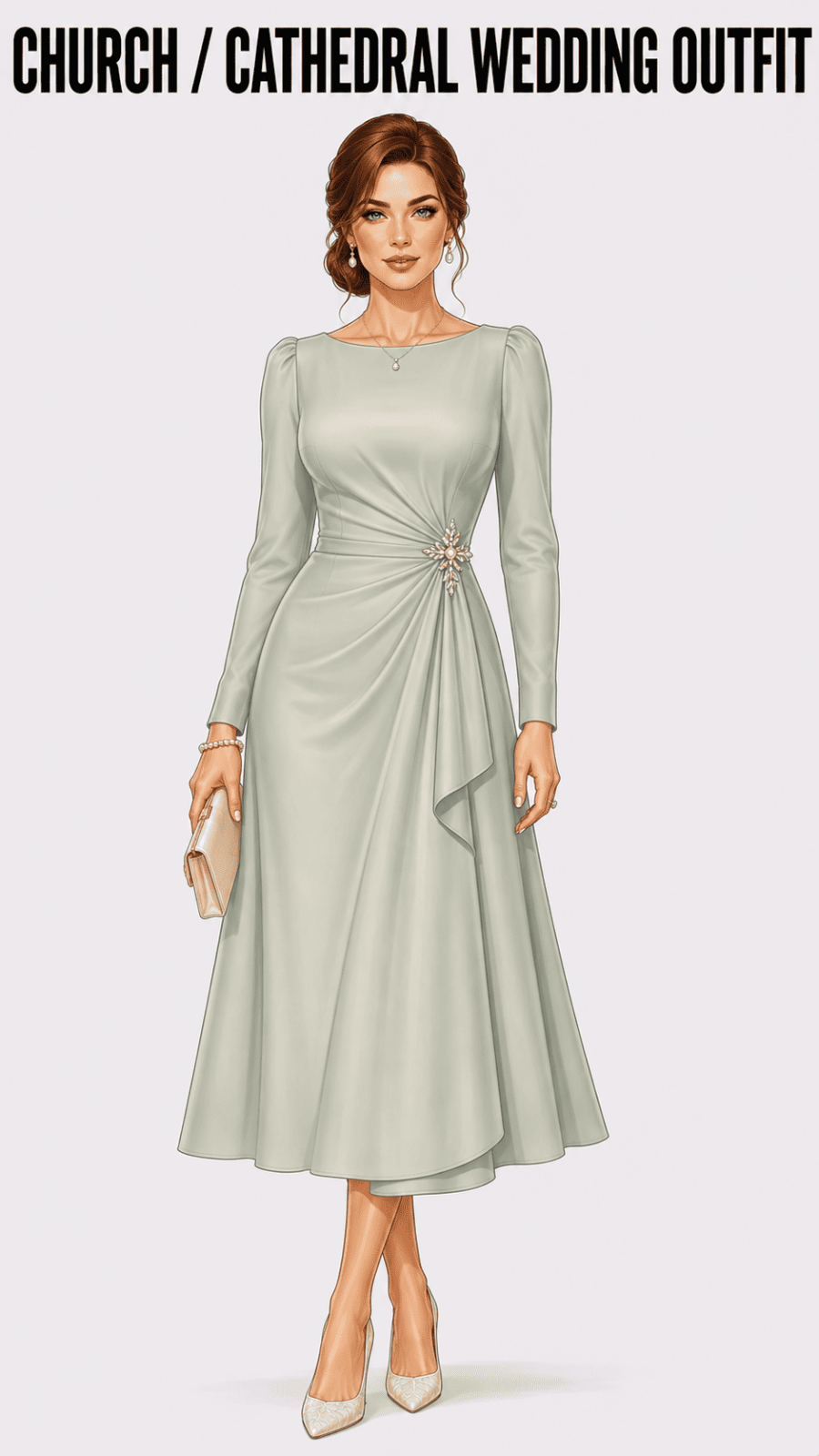
Formal attire appropriate for attending a wedding as a guest — requiring genuine occasion-appropriate dressing while carefully avoiding white or ivory (reserved for the bride in most Western traditions) and not competing with the bridal party. Wedding guest formal covers a wide range of dress codes depending on venue and invitation guidance: outdoor garden wedding (floral midi dress, garden formal); country house wedding (formal midi or maxi dress in nature colours); black-tie wedding (floor-length gown or formal tuxedo). The key principle: dress to honour the occasion without overshadowing the couple. Read the invitation dress code carefully; when in doubt, err formal rather than casual.
- 72
Award Ceremony / Red Carpet Formal

Formal dressing specifically designed for the demands of award ceremony and red carpet contexts — high photographic scrutiny, repeated full-length and close-up documentation, extended standing on a step-and-repeat backdrop, and seated camera coverage. Red carpet formal requires construction that holds its shape under sustained pressure, necklines that read clearly in photographs, and silhouettes that photograph with proportional accuracy. The red carpet is fashion's most demanding single context: the garment will be photographed from every angle by professional photographers with high-quality equipment. Construction precision is consequently more important here than at any other formal context.
- 73
Corporate Presentation / Panel Formal

Formal attire designed specifically for presenting, speaking, or appearing on panels in high-stakes professional environments — requiring camera-friendly colours and patterns, construction that allows movement and gesturing, and silhouettes that read as authoritative from a standing or seated position. Presenting formal has specific technical requirements that distinguish it from general corporate formal: avoid small repetitive patterns (stripes, fine checks) that create moiré on camera; prioritise solid colours or large-scale patterns; choose construction that doesn't shift or require adjustment while moving; consider how the garment reads from every seated angle. A well-chosen presentation suit in a bold solid colour creates consistent on-camera visual authority.
- 74
Funeral / Memorial Service Formal

Formal attire appropriate for funeral and memorial services — typically in dark or muted tones (black, navy, charcoal, dark grey) with restrained construction and conservative coverage. The dress code conventions for mourning formal wear vary significantly by culture: Western traditions generally favour black or dark tones; many South and East Asian traditions use white as the colour of mourning; some cultures use specific colours unique to their mourning conventions. In contemporary Western contexts, the expectation is for coverage, restraint, and respectful understatement — avoiding embellishment, sheer fabrics, dramatic silhouettes, or anything that creates personal visual attention in a context where the occasion belongs to the deceased and the bereaved family.
- 75
Graduation Ceremony Formal

Formal attire worn beneath graduation robes or as standalone formal dressing for graduation ceremonies. Under-robe considerations are specific: the garment should be formal without being excessive (it will largely be covered), should not add significant heat under academic robes, and should be comfortable for an extended standing and seated ceremony. Standalone graduation formal — worn to ceremonies where robes are not required or for post-ceremony celebrations — follows standard semi-formal to formal dress code depending on institution and level of ceremony. A structured midi dress or tailored separates in celebration colours (bright, memorable, personally meaningful) are the most photographically effective choices.
- 76
Opera / Ballet / Theatre Formal

Formal attire for attending major performance arts events — opera, ballet, symphony, or theatre — where the audience itself is part of the occasion's formality. Performance arts formal dressing has specific practical requirements: garments must be comfortable for extended seated wearing (typically 2–4 hours), must not create noise (rustling fabrics are a courtesy issue), and should be appropriate for the venue's physical environment (temperature, seating width). For opening night galas, the standard rises to near-black-tie; for regular performances at major institutions, cocktail to semi-formal is typically appropriate. The performance arts context remains one of the few where deliberate elegant dressing is consistently expected and visually appreciated.
- 77
Diplomatic / State Function Formal

Formal attire for diplomatic and state occasions — receptions, state dinners, embassy functions, official ceremonies. Diplomatic formal dressing operates under a specific set of considerations that distinguish it from commercial formal wear: garment choices often carry national or cultural signalling (first ladies and diplomatic representatives frequently wear pieces that reference their own nation's textiles or design heritage); colour choices may be strategically chosen; and the most conservative formal standards apply as a baseline. The universal diplomatic formal principle is that the garment should honour the occasion, not compete with it — polished, restrained, and impeccably constructed.
- 78
Charity Gala / Fundraiser Formal

Formal attire for charity galas and fundraising events — requiring genuine formal commitment while allowing the most personal expressive freedom of any black-tie-adjacent context. Charity gala dressing is unique because the audience wants to see you dressed with imagination and investment: it signals commitment to the occasion's social importance. More colour, more embellishment, and more personal aesthetic expression are all appropriate here compared to, say, a state dinner. The practical consideration is that charity galas often involve extended standing, networking, and dancing — which means construction that allows movement while maintaining formal presence is more important than at seated dinner events.
Frequently Asked Questions About Formal Wear for Women
Black tie requires floor-length or near-floor-length evening wear in formal fabric — gowns, formal jumpsuits, or tuxedo suits. Cocktail attire covers knee-to-midi length formal dressing without the floor-length requirement. The key distinction is length and fabric formality. A beautifully constructed midi dress in silk crepe is correct for cocktail; for black tie, it falls below the required register. When in doubt between the two dress codes, a floor-length option always works for both.
Yes — a women's tuxedo suit in formal fabric (satin-lapelled, high quality construction) is now broadly accepted at black-tie events, particularly in creative, entertainment, and media industry contexts. The suit must meet the same construction and fabric quality standards as a gown: a cheap or poorly constructed suit will read as underdressed regardless of the dress code. A well-made velvet or satin-faced tuxedo suit in black, white, or a deep jewel tone reads as genuinely black-tie appropriate. In more traditional or conservative black-tie contexts (state functions, royal occasions), the floor-length gown remains the expected choice.
The most reliably formal fabrics are duchess satin, heavy silk charmeuse, silk crepe, silk chiffon, velvet, lace, structured ponte, and fine wool for suiting. These fabrics carry formality through their inherent weight, drape, and visual richness. The fabrics to avoid in formal contexts are polyester jersey, casual cotton, denim, linen (except in very specific semi-formal contexts), and any fabric that reads as casual in construction or texture. Sequined or beaded fabric on any base material typically elevates to formal status regardless of the underlying construction.
Rather than prescribing silhouettes by body type — an increasingly outdated framework — the more useful approach is understanding what each construction does visually and choosing accordingly. The A-line elongates and balances proportions across most body shapes. The empire waist lengthens the torso. The column creates a streamlined vertical line. The fit-and-flare defines the waist clearly. The mermaid celebrates and emphasises curves. The ball gown creates drama through volume. Choose the visual effect you want to create rather than following prescriptive rules — fashion's evolution away from body-type prescriptivism reflects the reality that the "flattering" label is entirely subjective and personal.
The most cost-efficient approach is to anchor around three high-quality foundational pieces rather than buying multiple average garments. A well-made midi cocktail dress in a solid dark colour (navy, black, or deep burgundy) covers the widest range of formal occasions. A classic tailored suit — trouser or skirt — covers professional formal across all levels. A single floor-length option (gown or formal jumpsuit) covers black-tie and the highest dress code occasions. These three pieces, in quality fabric with impeccable fit, will outperform a wardrobe ten times larger in inferior construction. Second-hand and vintage sourcing at quality end-of-season sales is also highly effective: formal garments in luxury fabrics retain their appearance and formality regardless of when they were made.
The Complete Formal Wear Guide — Key Takeaways
Seventy-eight formal wear types. Eight classification systems. One consistent principle running through all of them: formal dressing is construction dressing. The silhouette, the fabric, the embellishment, the neckline — these are not decoration. They are information. They communicate occasion-awareness, investment in the event, understanding of dress code hierarchy, and confidence in how you choose to present yourself.
The most important things this guide can leave you with are these: understand your dress code before choosing your garment; choose fabric before silhouette; know what each construction communicates before committing to it. The rest — colour, embellishment, accessories — follows naturally once the construction decisions are right.
Formal wear at its best is not about following rules. It's about understanding them well enough to make genuinely informed choices. That understanding, applied to whatever occasion you're dressing for, is what creates formal wear that works — not just visually, but in how it makes you feel in the room.
- Silhouette is the first formal signal — the A-line remains the most broadly versatile construction across body types and occasions
- Fabric determines formality register — duchess satin, silk, velvet, and lace carry inherent formal weight that construction alone cannot create
- The women's suit is legitimate black-tie formal wear — tuxedo suits, velvet blazers, and formal jumpsuits cover the full formal occasion range
- Dress codes are communication systems — understanding each level prevents both overdressing and underdressing errors
- Global formal wear traditions represent equally sophisticated dress cultures — the Western formal tradition is one strand of a vastly richer heritage
- Three quality foundational pieces — cocktail midi, classic suit, floor-length option — cover the full formal occasion range more effectively than a larger collection of inferior garments
Leave a Reply