

There’s a specific moment — you’ll know it when it happens — when you slip on a dress and something clicks. Not just that it fits, but that it fits the version of yourself you’re trying to inhabit. A sundress on a cobblestoned street. A column gown in a candlelit room. A wrap dress on a Tuesday that somehow feels like a choice, not an afterthought. Dresses carry this particular power because they are, fundamentally, the most complete expression of dressing. One garment. One decision. An entire silhouette.
A dress is not just clothing. It’s a silhouette decision, a fabric conversation, and a moment of self-definition — all at once.
The history of dress silhouettes is, in many ways, a history of social change. The empire waist emerged from post-Revolution France, rejecting the constricted formality of the corset era. The sheath dress arrived mid-century as women claimed professional space. The wrap dress — famously democratized by Diane von Furstenberg in the 1970s — offered a silhouette built around adaptability rather than restriction. Each dress type carries its own design logic, its own construction philosophy, its own quiet argument about what dressing can mean. Understanding those arguments is what separates a wardrobe from a collection.
This guide documents 65+ types of dresses for women across 10 classification systems. For every single entry:
-
Silhouette
How it’s shaped & constructed
-
Season
When to wear it
-
Occasion
Where it works best
Start here, explore every silhouette, and build a dress vocabulary that actually serves your wardrobe — and your life.
All 10 Categories at a Glance
A structured breakdown of the 65+ dress types documented in this guide.
- 01
By Silhouette
- 02
By Length / Hemline
- 03
By Sleeve Type
- 04
By Neckline
- 05
By Waistline
- 06
By Occasion
- 07
By Fabric & Construction
- 08
By Aesthetic
- 09
By Season
- 10
By Construction Style
65+ Different Types of Dresses for Women
Category 1: By Silhouette (#1–#10)
The foundational shape of the garment — how fabric moves from shoulder to hem and what architectural line it creates on the body
Silhouette is the first decision — and arguably the most important. Before you choose a color, a fabric, or a neckline, you're choosing a shape. And that shape communicates something before you've said a word. The column dress says precision and restraint. The ball gown says intention and occasion. The wrap dress says ease with elegance. Here are the ten silhouette archetypes that every other dress style builds from, references, or reacts to.
- 01
A-Line Dress

Named for the shape of the capital letter A, this silhouette fits through the bodice and flares gradually from the waist or hips, creating a skirt that widens continuously toward the hem. The A-line was perfected by Christian Dior in his 1955 collection and has remained one of fashion's most consistently worn silhouettes ever since. There's a reason this shape keeps resurfacing every decade — it creates visual balance by drawing the eye upward while adding soft volume below the hips.
- 02
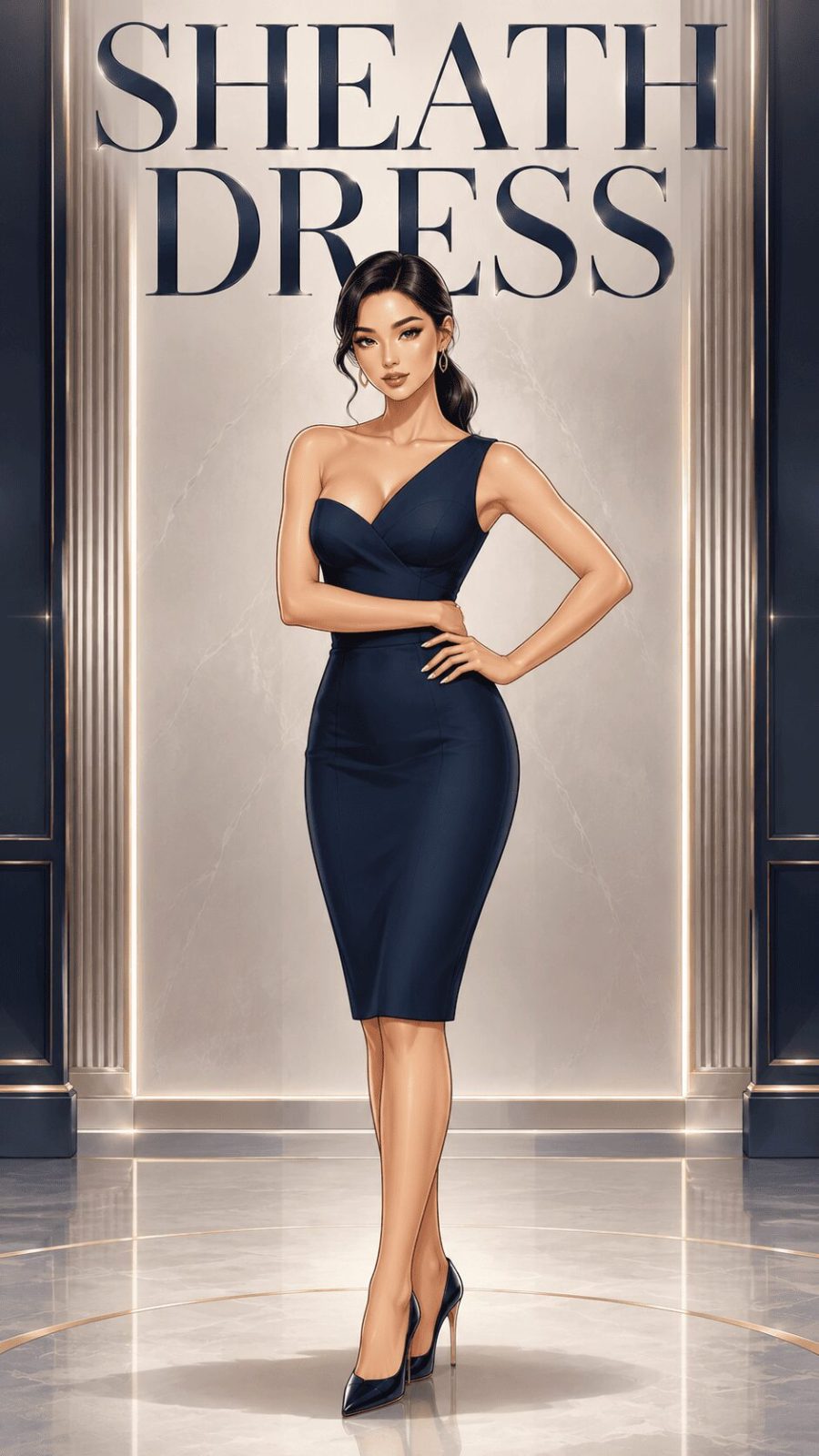
Sheath Dress
![Sheath Dress Example]()
A sheath is constructed to follow the body's natural line from shoulder to hem with minimal ease — no flare, no volume, no structure that doesn't serve fit. It relies on princess seams and careful darting to achieve its precisely tailored form without adding bulk. The sheath became a signifier of professional female authority through the 1960s and continues to anchor boardroom dressing today. It doesn't move dramatically — it moves with you, which is a different and more refined quality entirely.


- 03
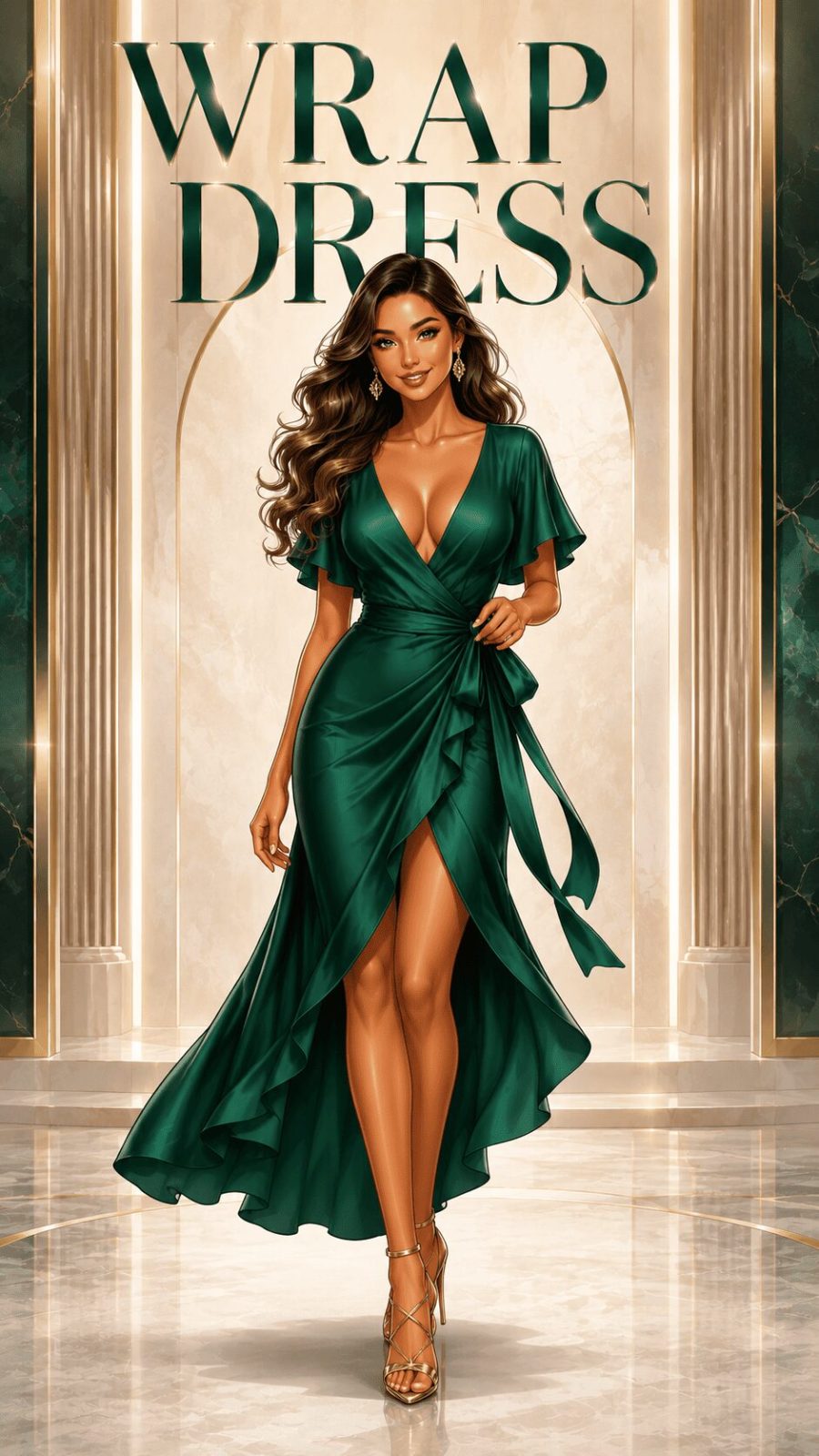
Wrap Dress
![Wrap Dress Example]()
The wrap silhouette crosses two panels of fabric over the front of the body, secured at the waist by a self-tie sash — creating a V-neckline and a defined waist without a single button, zip, or hook. Its genius is in the adjustability: the tie can be positioned to suit any waist placement, making it one of the most accommodating constructions in dress design. Diane von Furstenberg's 1974 jersey wrap dress became a cultural shorthand for a specific kind of confidence — dressed, capable, and entirely at ease.
- 04
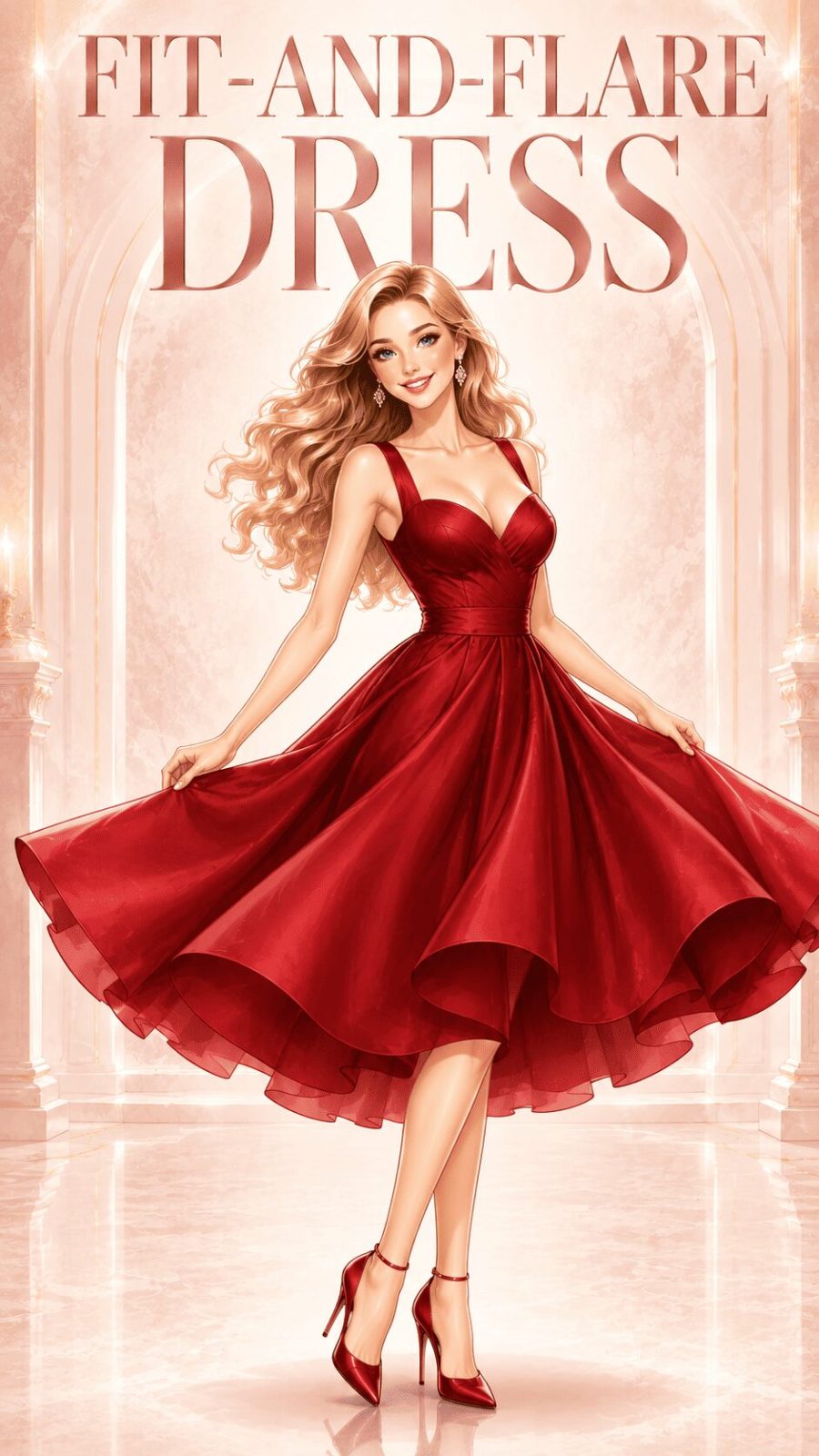
Fit-and-Flare Dress
![Fit-and-Flare Dress Example]()
Similar in concept to the A-line but with a more pronounced architectural contrast — the fit-and-flare is closely tailored through the bodice and upper hip before releasing into a dramatically full skirt, often with a seam at the waist or high hip that marks the transition point. The seam is structural, not decorative: it allows a gathered or pleated skirt to be attached in a way that maximizes volume. The movement of this fabric changes the entire personality of the dress — walk forward and the skirt lifts; turn quickly and it swings.


- 05
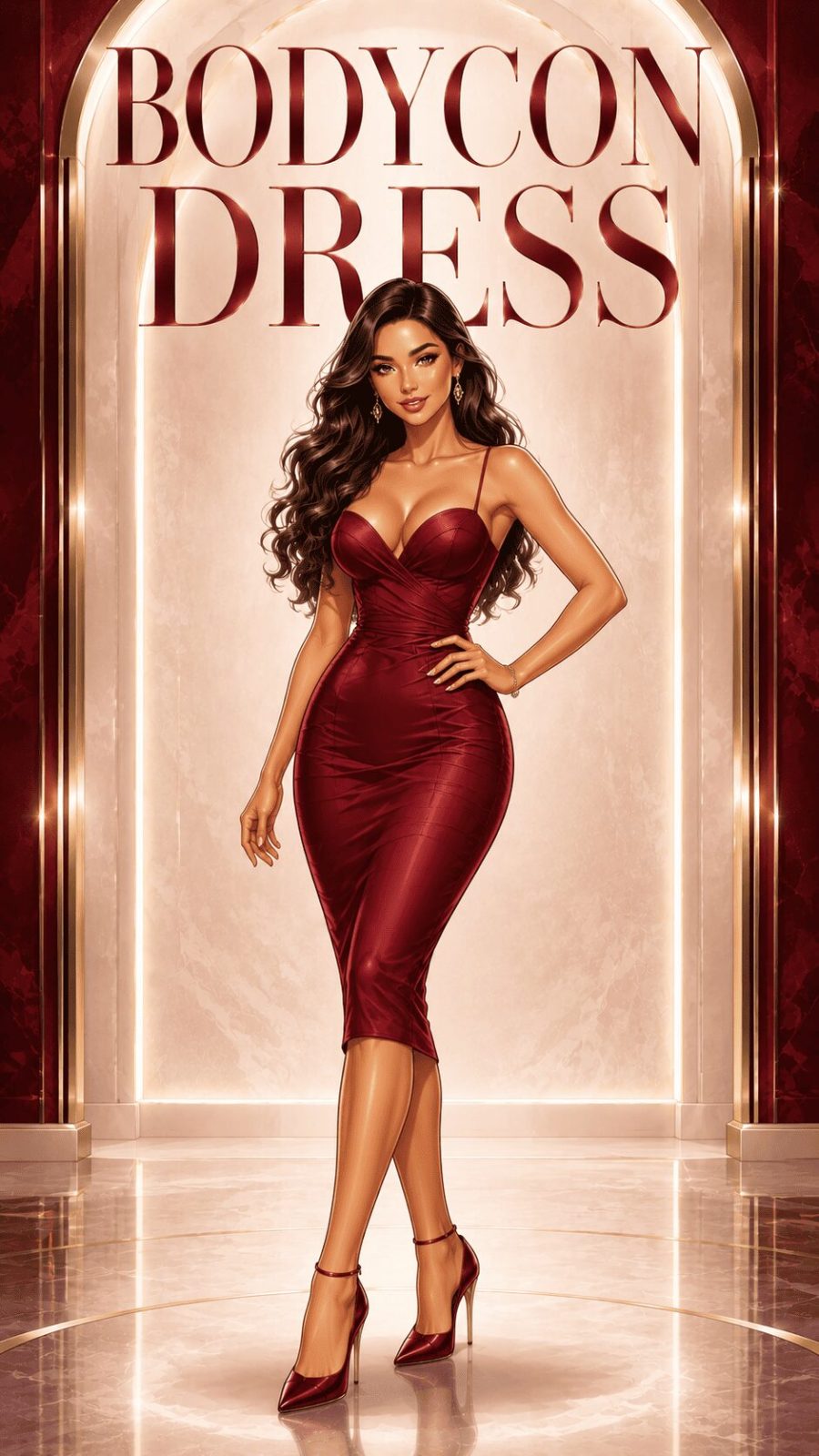
Bodycon Dress
![Bodycon Dress Example]()
Short for "body-conscious," the bodycon is constructed from stretch fabric — typically ribbed jersey, spandex blend, or bandage knit — with minimal ease, meaning the garment conforms tightly to the body's contours throughout. Unlike the sheath, which creates shape through tailored seaming in woven fabric, the bodycon relies on fabric elasticity for its silhouette. The bandage dress variant, made famous by Hervé Léger in the 1980s, uses strategically placed horizontal fabric strips that act almost like sculpting tape.
- 06
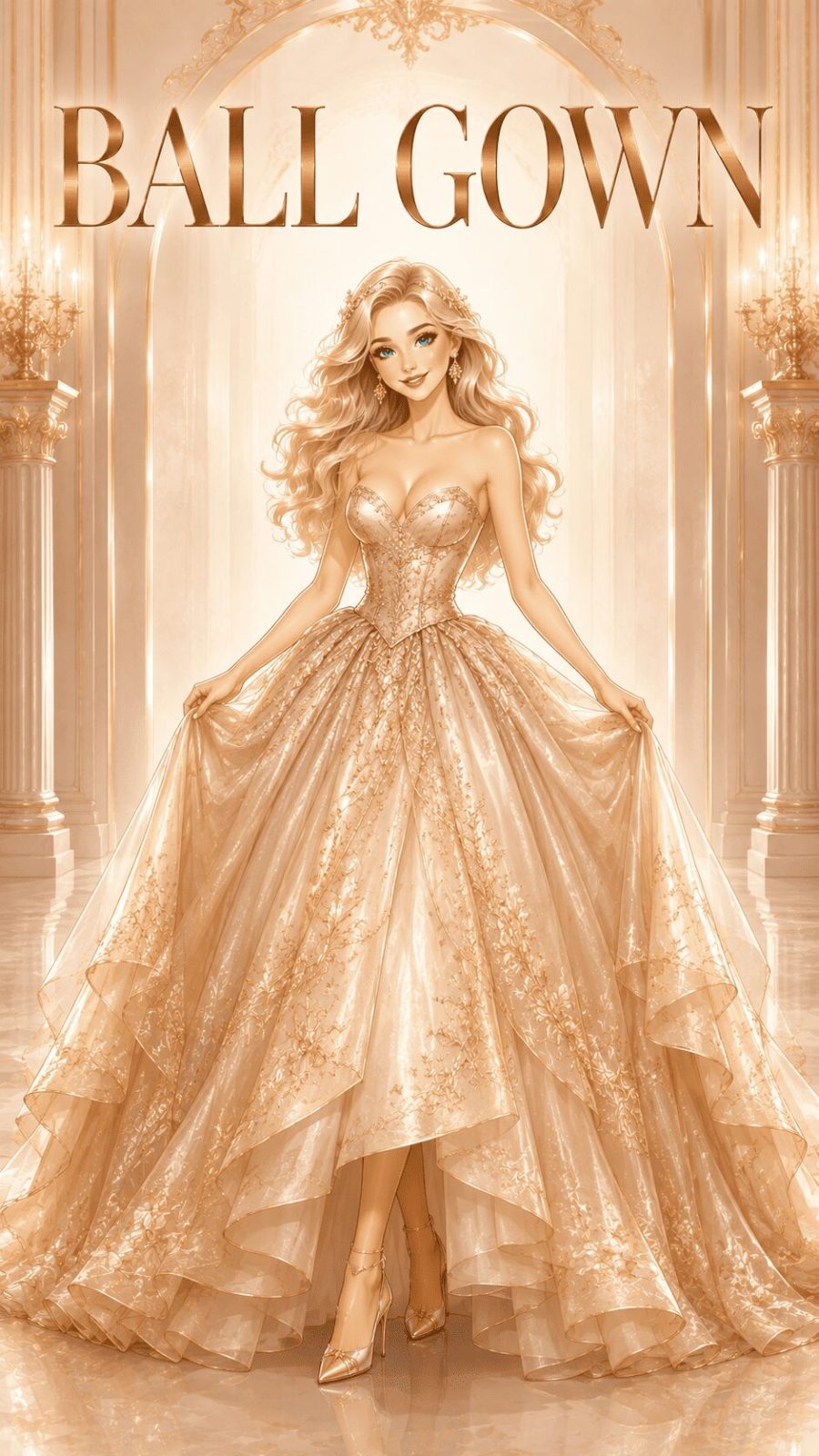
Ball Gown
![Ball Gown Example]()
The ball gown is defined by its full, floor-length skirt that dramatically expands from a closely fitted, often structured bodice — typically supported by layers of tulle, crinoline, or petticoat. The construction is the most technically demanding in dress design: boning in the bodice, a built-in corsetry structure, yards of skirt fabric gathered and distributed at the waist seam. This shape became iconic not because of practicality, but because of theatrical intention. A ball gown communicates arrival.


- 07
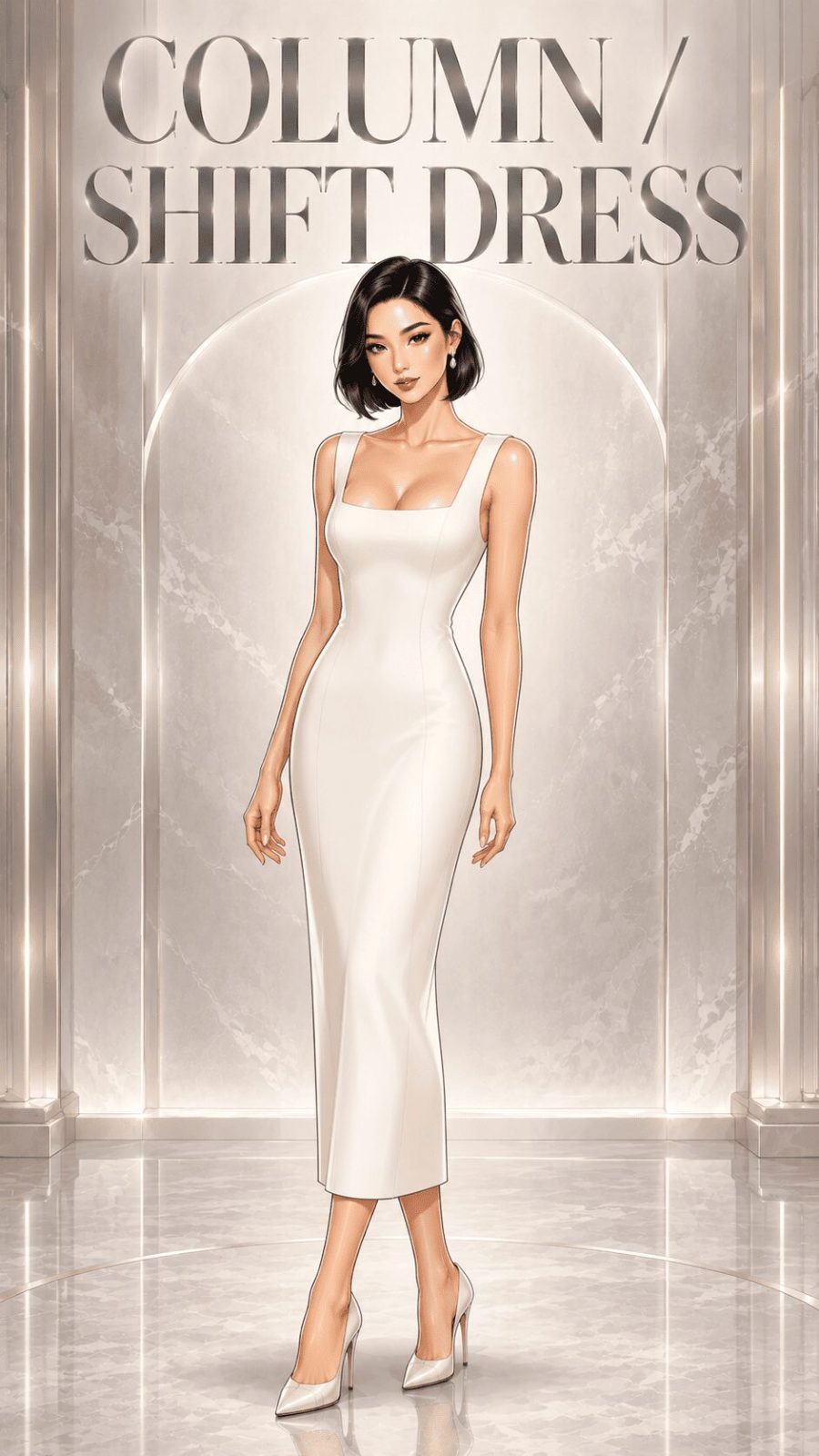
Column / Shift Dress
![Column Shift Dress Example]()
The column dress — also called a shift when it falls above the knee — maintains a straight, nearly uninterrupted vertical line from shoulder to hem with little to no waist definition. It differs from the sheath in that it doesn't follow the body's curve; instead, it floats away from it slightly, creating space rather than contact. This architectural restraint is precisely the point. The shift dress became a symbol of modernist fashion philosophy in the 1960s, particularly in the work of designers like Mary Quant and Balenciaga.
- 08
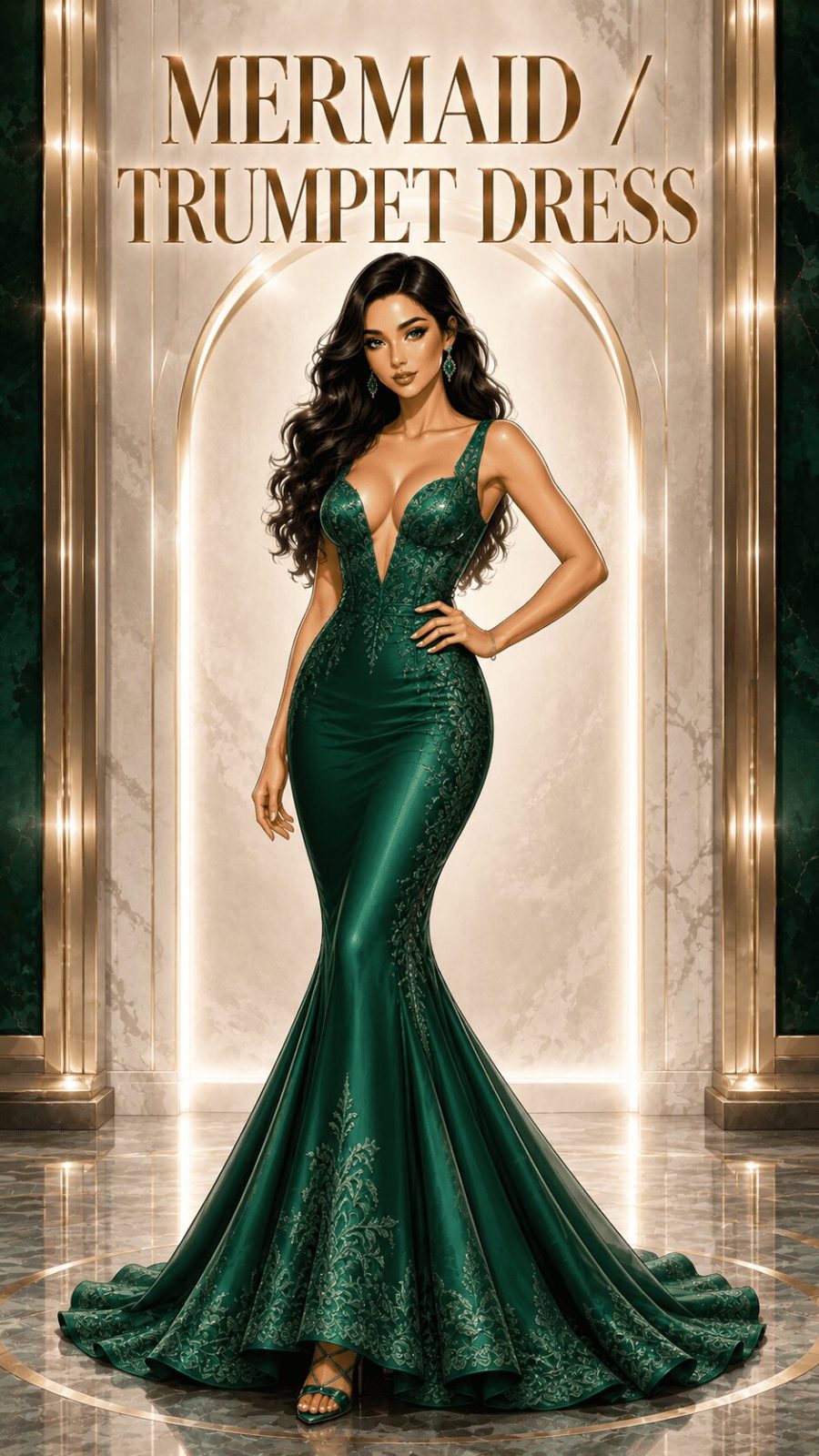
Mermaid / Trumpet Dress
![Mermaid Trumpet Dress Example]()
The mermaid and trumpet silhouettes are closely related — both fitted through the bodice, waist, hips, and upper thigh before flaring dramatically outward at the knee or below. The distinction lies in where the flare begins: a mermaid flares from below the knee, while a trumpet opens up from mid-thigh. The construction demands precise seaming through the most complex area of the body for fit: the hip-to-thigh curve. The result, when executed well, is one of the most dramatic and movement-rich silhouettes in dress design.


- 09
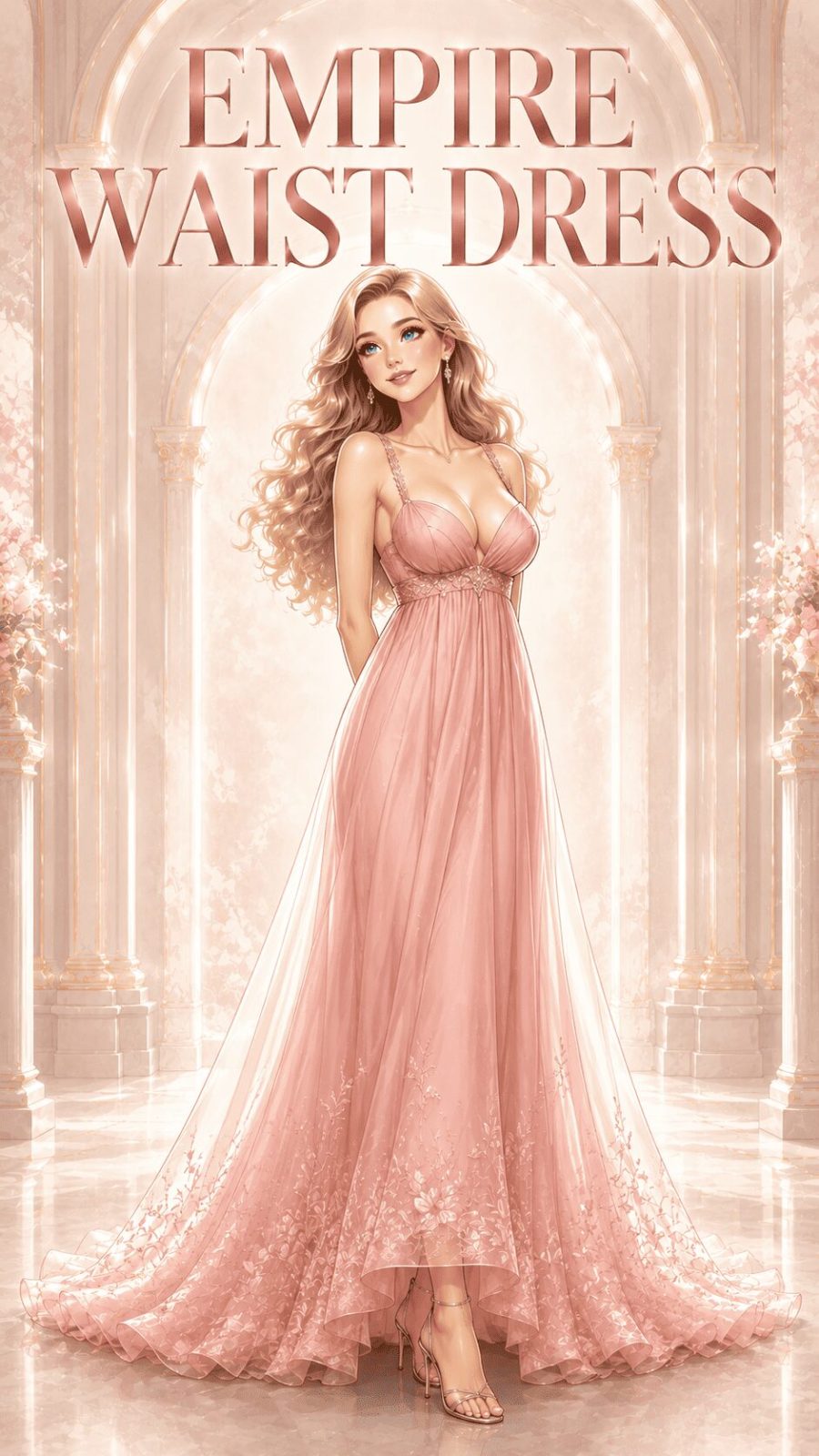
Empire Waist Dress
![Empire Waist Dress Example]()
The empire waist is positioned just below the bust — at the natural fullest point of the ribcage — and from there, the skirt falls away in a long, gentle line. The name derives from the Napoleonic Empire period in early 19th century France, when high-waisted column dresses in muslin became fashionable. What makes this construction work so beautifully is the elongation effect: by anchoring the waist seam immediately below the bustline, it draws the eye upward and creates a continuous vertical line through the lower body. It adds fluid movement through the skirt while offering soft structure at the bust.
- 10
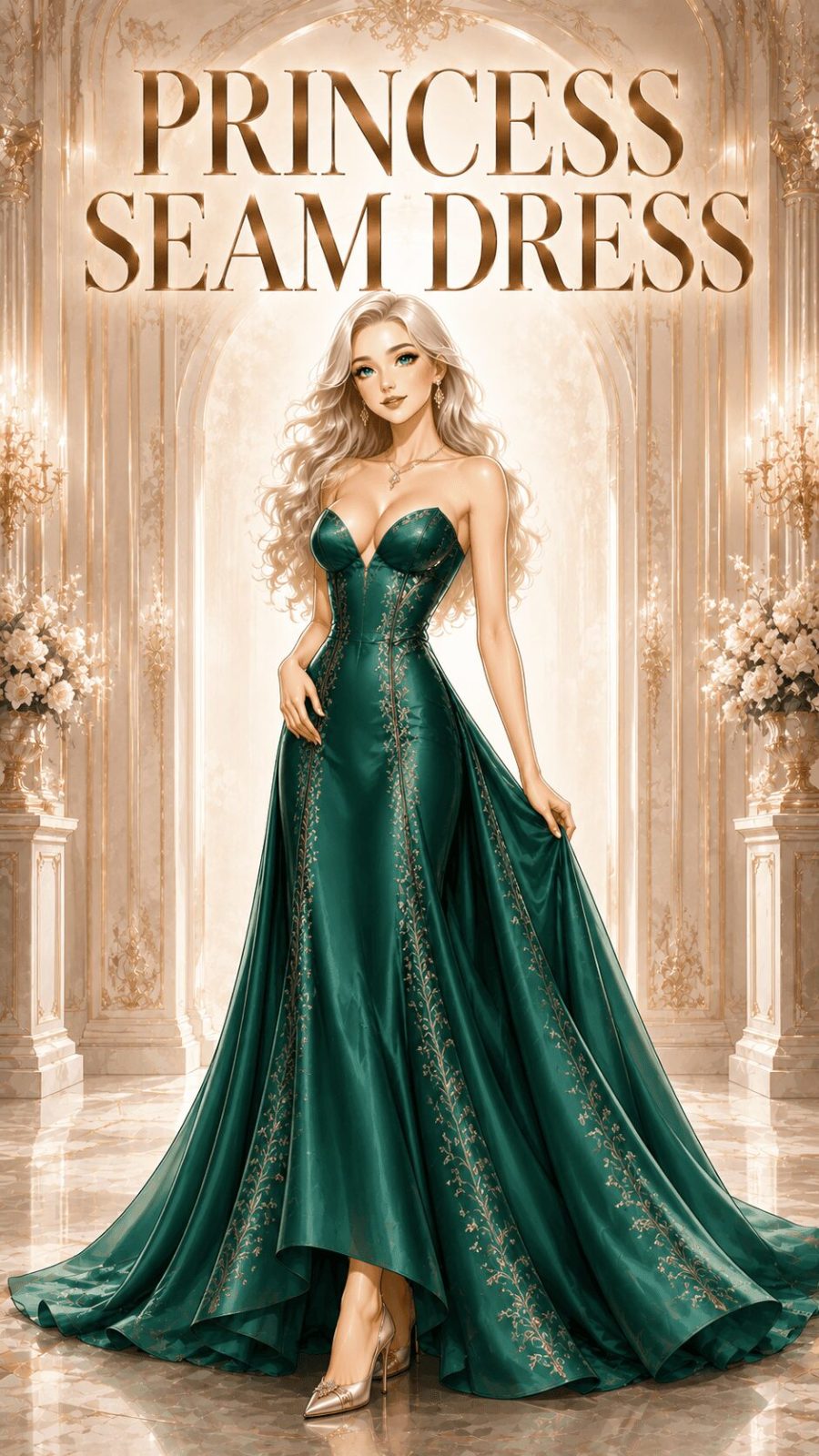
Princess Seam Dress
![Princess Seam Dress Example]()
Princess seaming is not a silhouette category in the same way as a ball gown or sheath — it's a construction technique that creates silhouette through vertical seam lines rather than horizontal waist seams. Vertical panels are shaped individually and sewn together along curved seams that pass through the bust point, creating a fitted bodice and a smooth, uninterrupted line through the body without darts. The princess seam dress achieves a beautifully sculptural quality: architectural definition without visible structure.


Category 2: By Length / Hemline (#11–#17)
Where the hemline falls changes everything — the formality register, the styling options, the visual proportion
Hemline length is one of the most powerful — and most underappreciated — decisions in dressing. A mini dress and a maxi dress can share identical silhouettes, fabrics, and necklines, and yet communicate entirely different things. Hemline dictates formality register, exposes or conceals the leg line, and determines what shoes become possible. Understanding length as a distinct design choice — separate from silhouette — is what separates intuitive dressers from genuinely skilled ones. Explore our full breakdown of skirt silhouettes and lengths for a deeper dive into hemline theory.
- 11
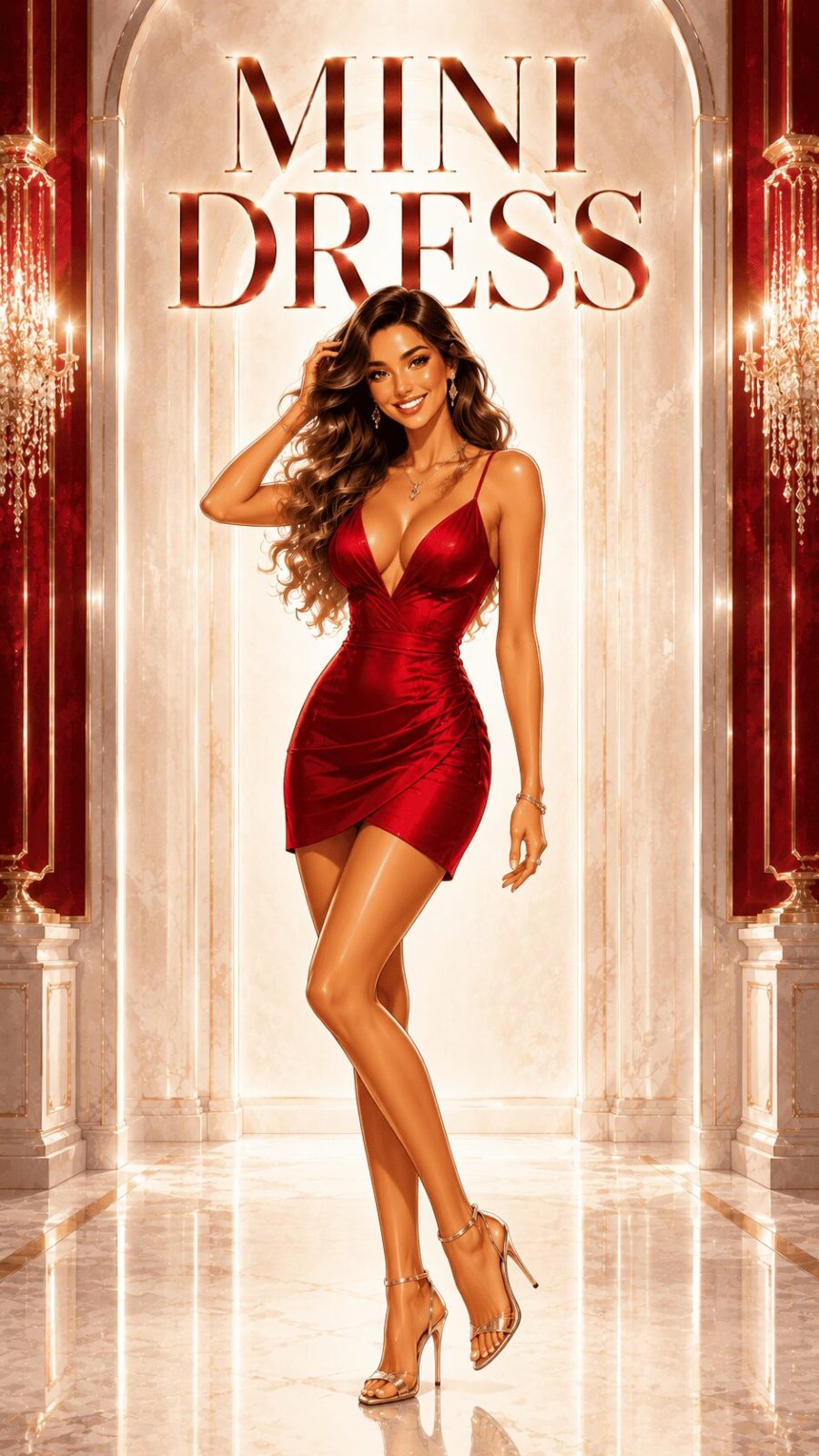
Mini Dress
![Mini Dress Example]()
A hemline that falls well above the knee — typically anywhere from mid-thigh upward. The mini emerged as a cultural statement through the 1960s British youth movement, associated with Mary Quant's Carnaby Street designs and the pop-cultural mood of liberation that accompanied them. Today the mini registers across formality levels: a structured mini in ponte knit reads office-appropriate; a sequined micro-mini reads evening. What it consistently communicates is confidence in the leg line.
- 12
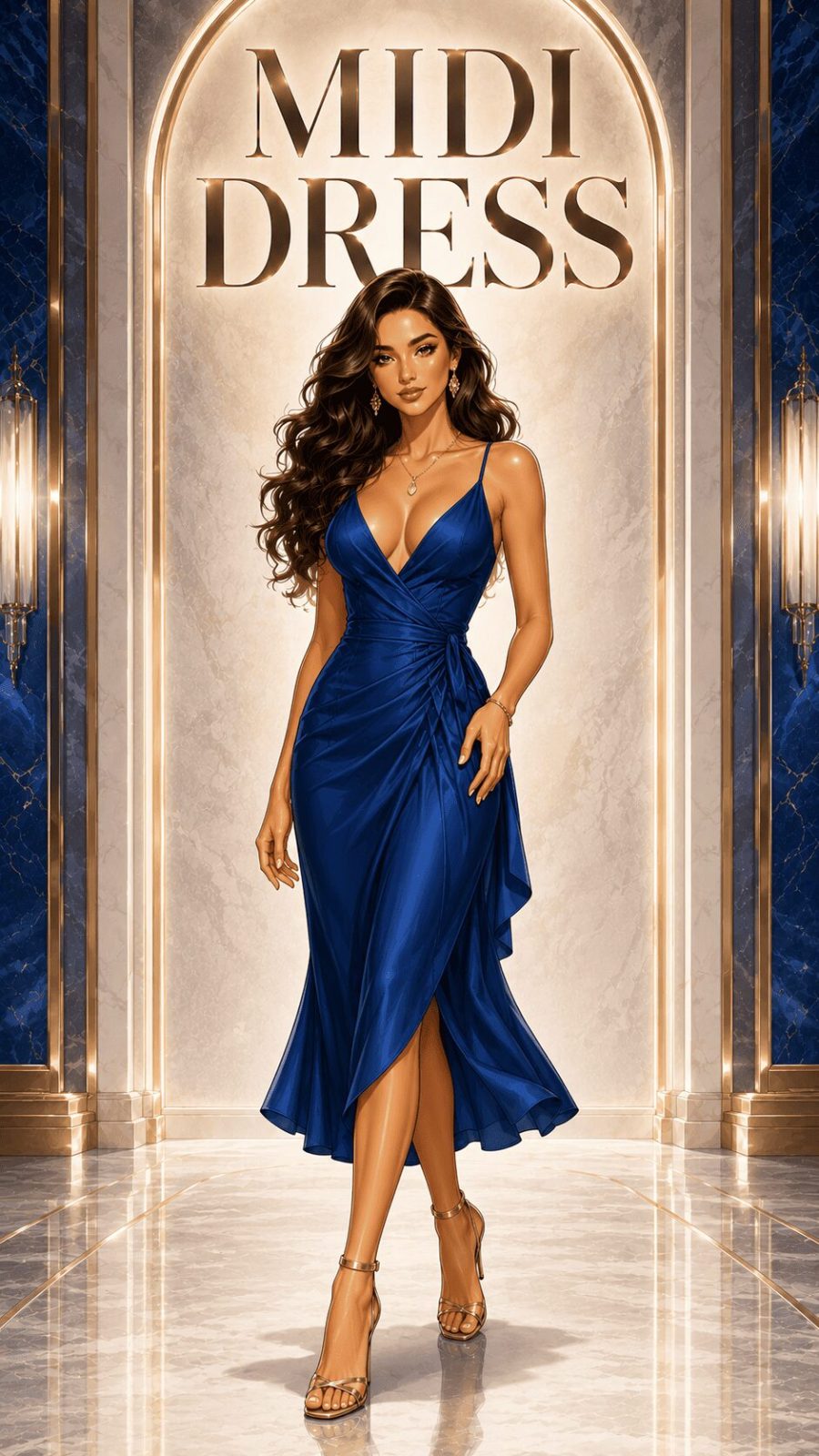
Midi Dress
![Midi Dress Example]()
The midi falls between the knee and the ankle — approximately mid-calf — and is, for many stylists, the single most versatile dress length in contemporary dressing. It transitions across formality levels with ease: a midi floral wrap dress works for Saturday brunch; the same length in silk charmeuse works for a wedding. The midi became the dominant dress length through the late 2010s and has maintained its authority, in part because it photographs beautifully and accommodates virtually every shoe category.
- 13
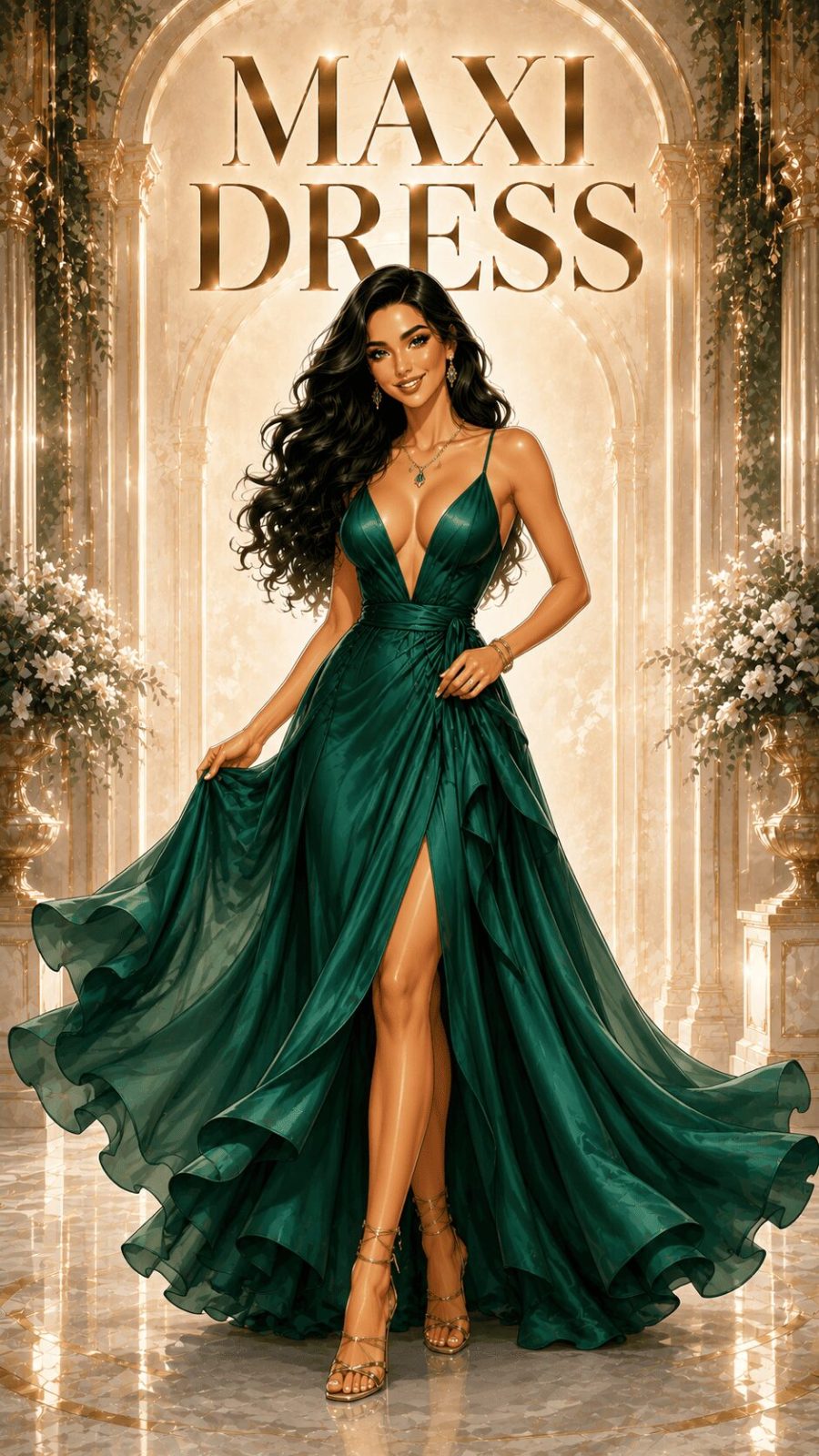
Maxi Dress
![Maxi Dress Example]()
A maxi reaches the ankle or floor, creating a long, unbroken vertical line that can feel either ceremoniously formal or effortlessly bohemian depending on the fabric and silhouette chosen. Linen maxi dresses belong to resort and summer dressing; silk charmeuse maxis belong to black-tie. The maxi is the original length of pre-20th century formal dressing, which gives it a historical gravitas that shorter hemlines simply can't replicate. It moves beautifully while walking — that trailing fabric is part of its entire personality.


- 14
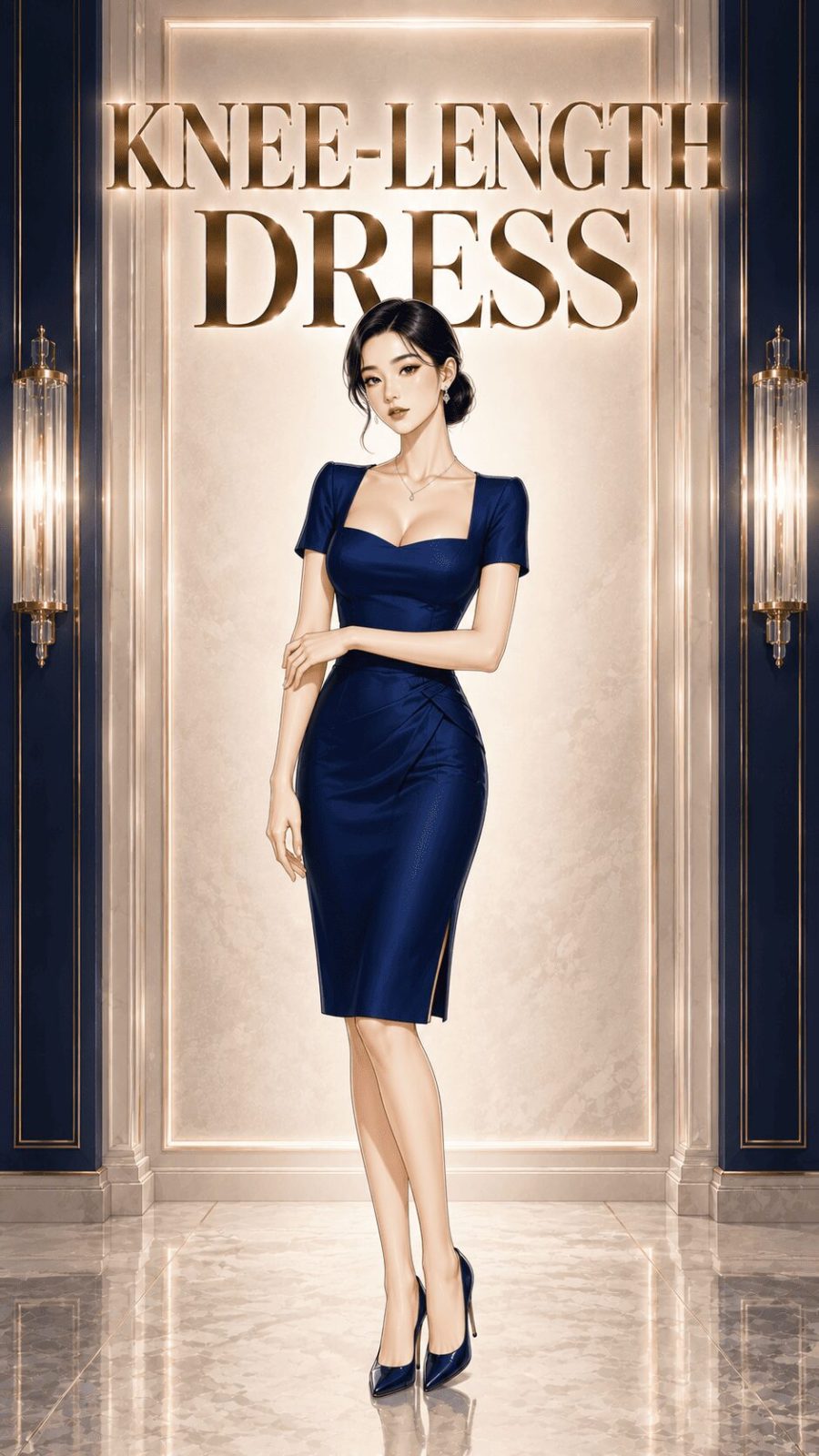
Knee-Length Dress
![Knee-Length Dress Example]()
Falling precisely at the knee or within an inch above or below, this length has been considered the benchmark of "appropriate" dressing for professional contexts since the mid-20th century. It's the sweet spot of conservative yet modern: it shows enough of the leg to feel current, while maintaining a polished formality. The knee-length sheath dress is the unofficial uniform of professional women's dressing — it transitions from boardroom to business dinner without a single style recalibration required.
- 15
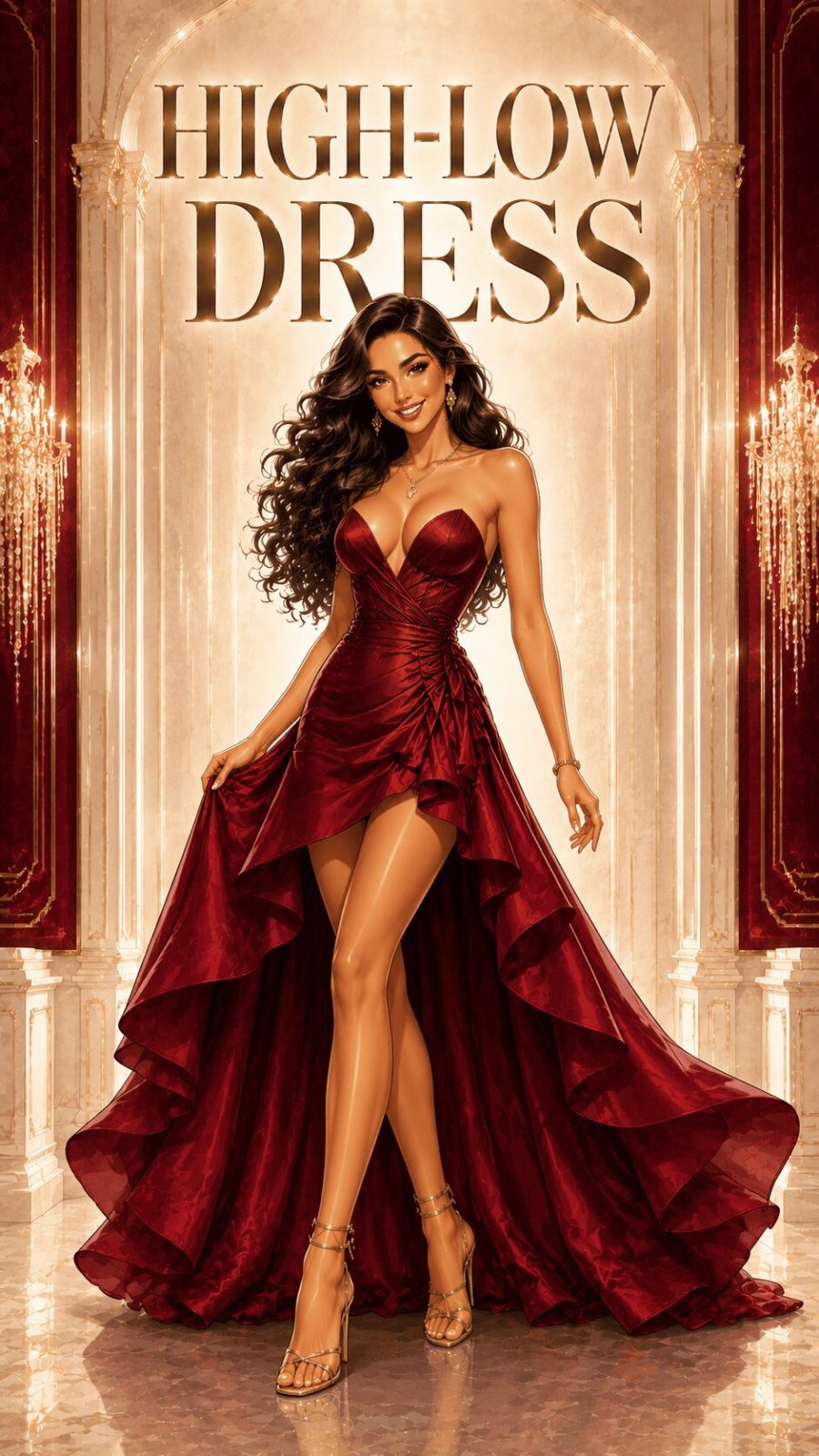
High-Low Dress
![High-Low Dress Example]()
A high-low hemline — also called a mullet dress — is shorter at the front and longer at the back, creating a dramatic diagonal sweep that reveals the leg at the front while maintaining fullness and length behind. The construction typically involves a curved hemline rather than a structured seam, and the contrast between front and back lengths can range from subtle (a few inches) to theatrical (knee in front, floor-grazing at back). It's a silhouette that rewards movement — each step reveals the design logic.
- 16
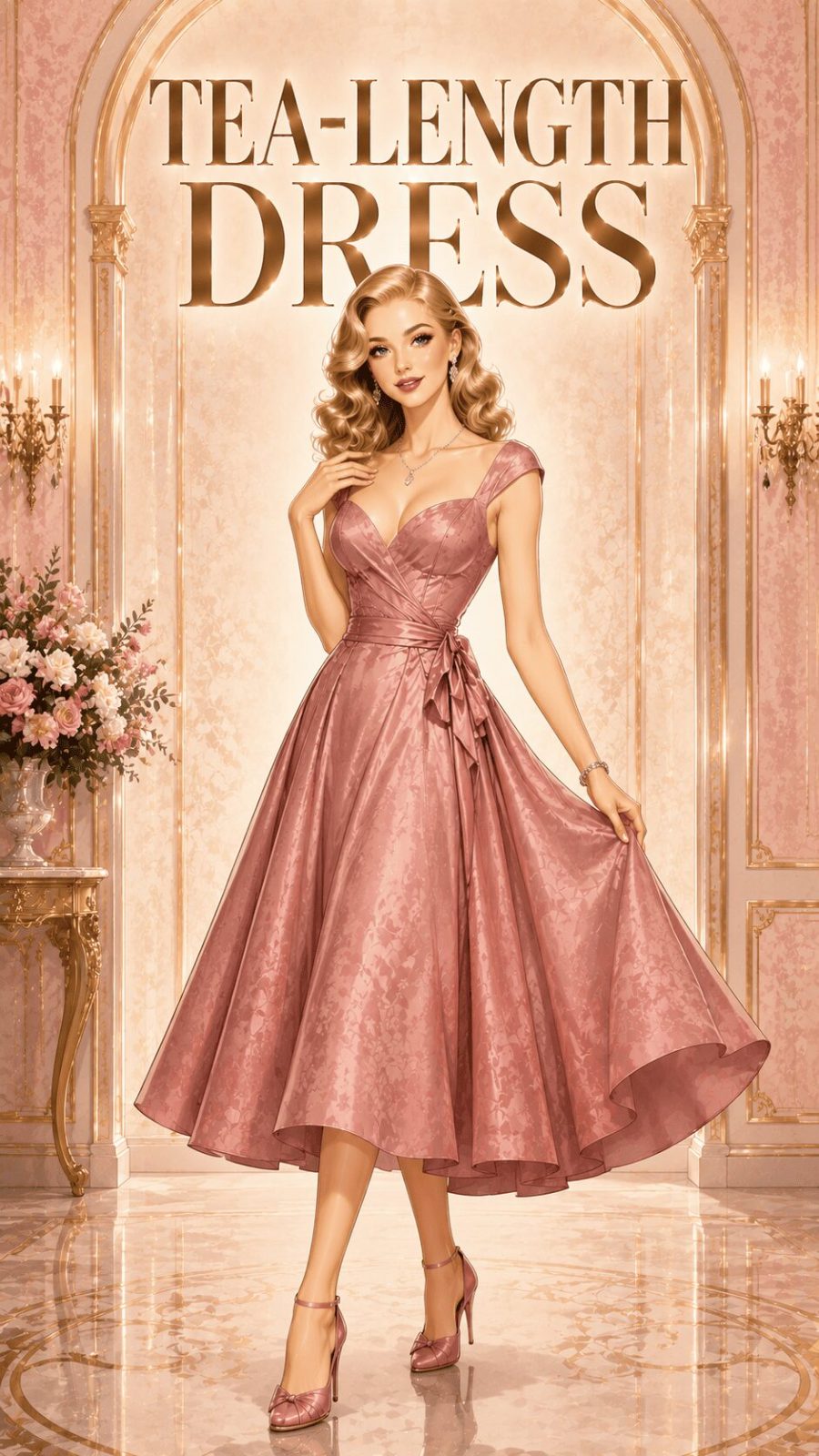
Tea-Length Dress
![Tea-Length Dress Example]()
Named for its association with afternoon tea occasions in mid-20th century social culture, the tea-length hemline falls between the mid-calf and ankle — longer than a midi, shorter than a true maxi. It carries a vintage quality that feels deliberately retro, which is part of its contemporary appeal. The silhouette most commonly paired with tea length is a full, gathered skirt — a construction that was widespread in 1950s fashion and has seen consistent revival in bridal and occasion dressing.
- 17
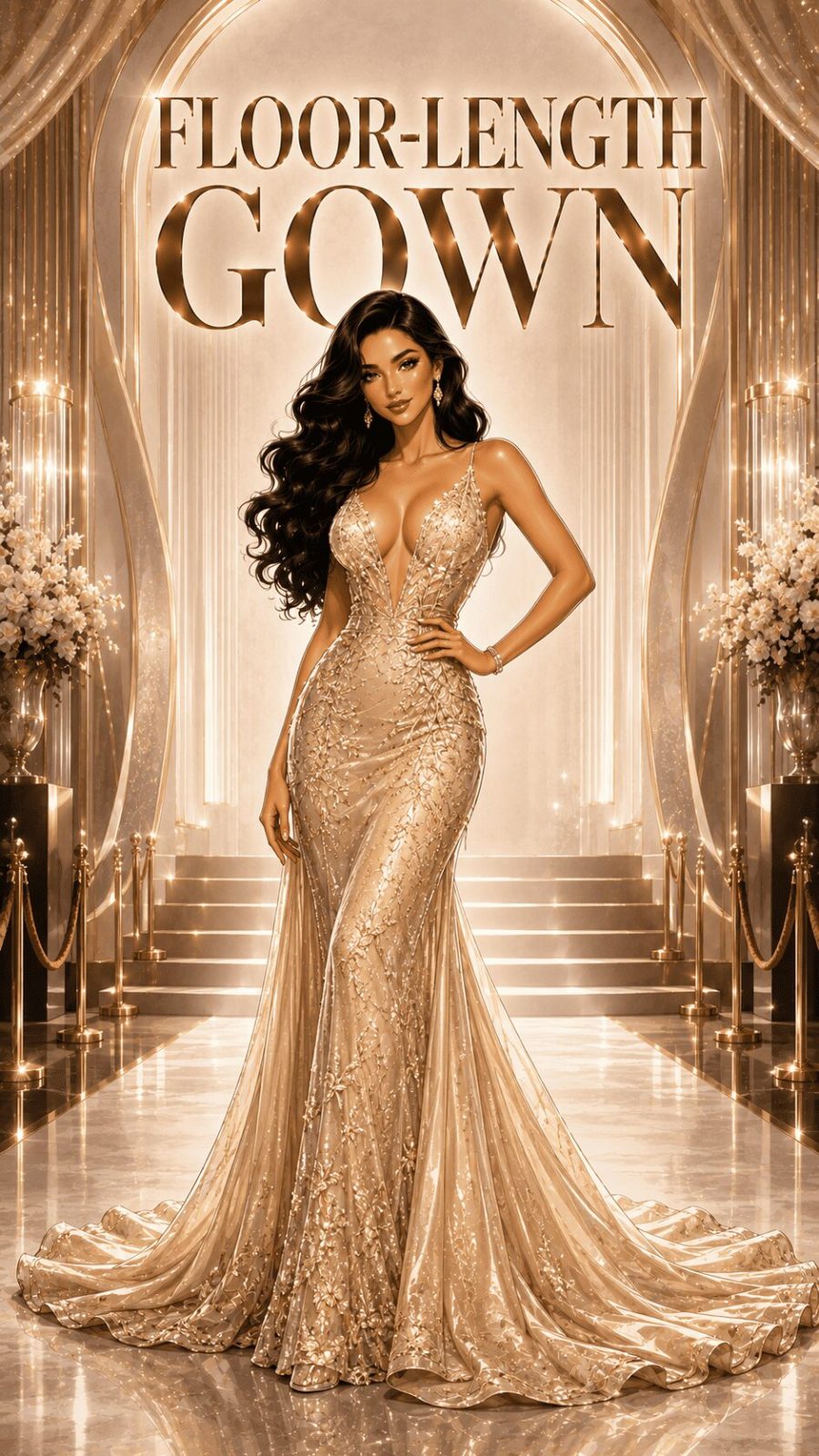
Floor-Length Gown
![Floor-Length Gown Example]()
Distinct from the maxi in intention: a floor-length gown is specifically designed for formal occasions, with hemlines that graze or pool on the floor and construction — often including inner boning, structured bodice panels, or concealed zip closures — designed to support the garment's architectural ambitions. This is the category that includes red-carpet gowns, couture evening wear, and formal bridal. Its hemline is not just a length decision; it's a complete formality statement.


Category 3: By Sleeve Type (#18–#24)
Sleeve construction fundamentally changes a dress's season, formality, and styling potential
- 18
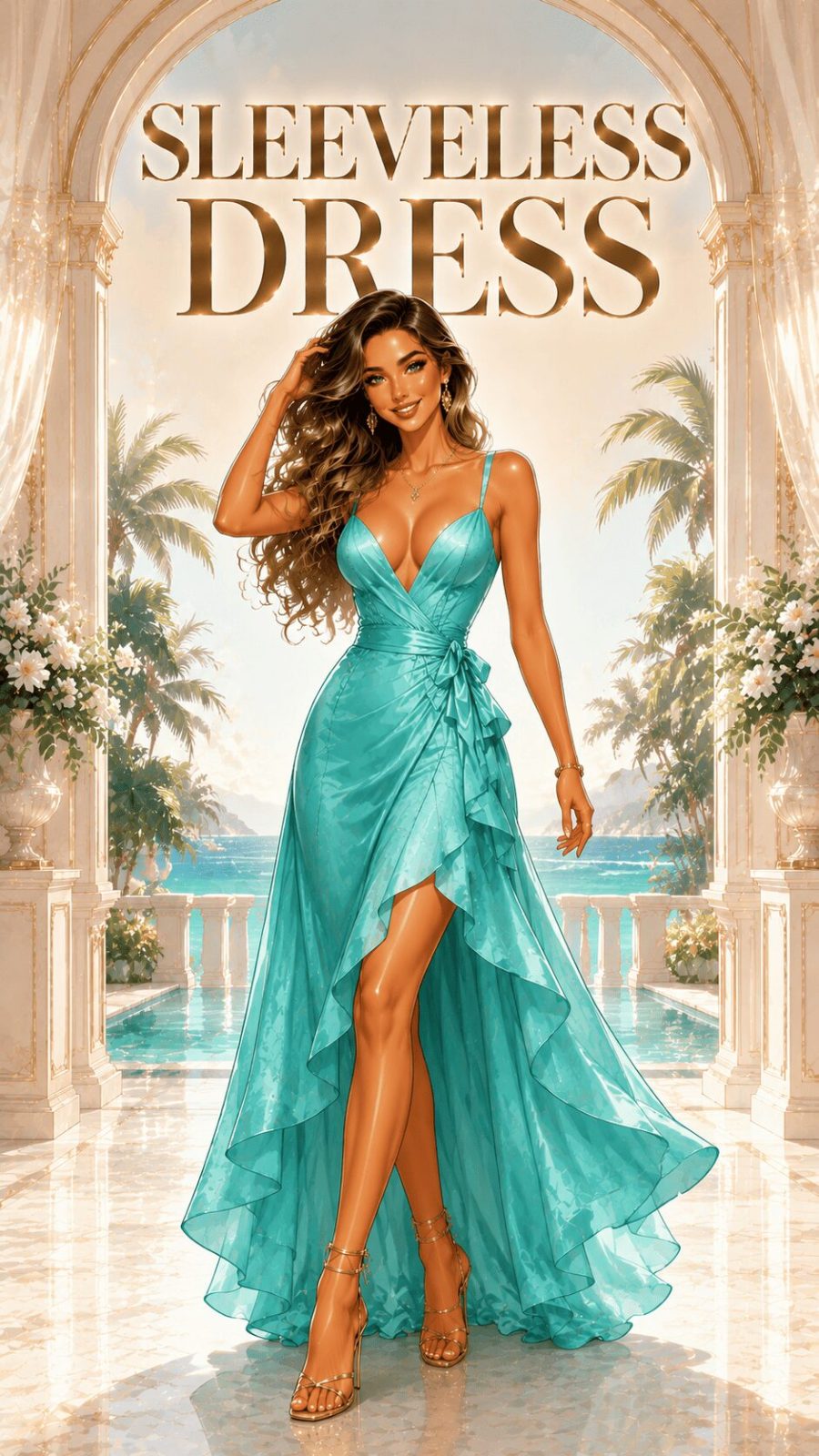
Sleeveless Dress
![Sleeveless Dress Example]()
A dress with no sleeve at all — armholes cut and finished at the shoulder. The sleeveless construction can take many neckline forms: tank-style, scoop, V-neck, or structured strapless. It's the most season-flexible construction in warm climates and the most layer-friendly in cooler ones. The sleeveless sheath dress is arguably the single most recurrent piece in professional women's dressing — it functions as a canvas for jackets, blazers, and cardigans across every workplace context. Learn more about neckline pairings in our guide to neckline styles.
- 19
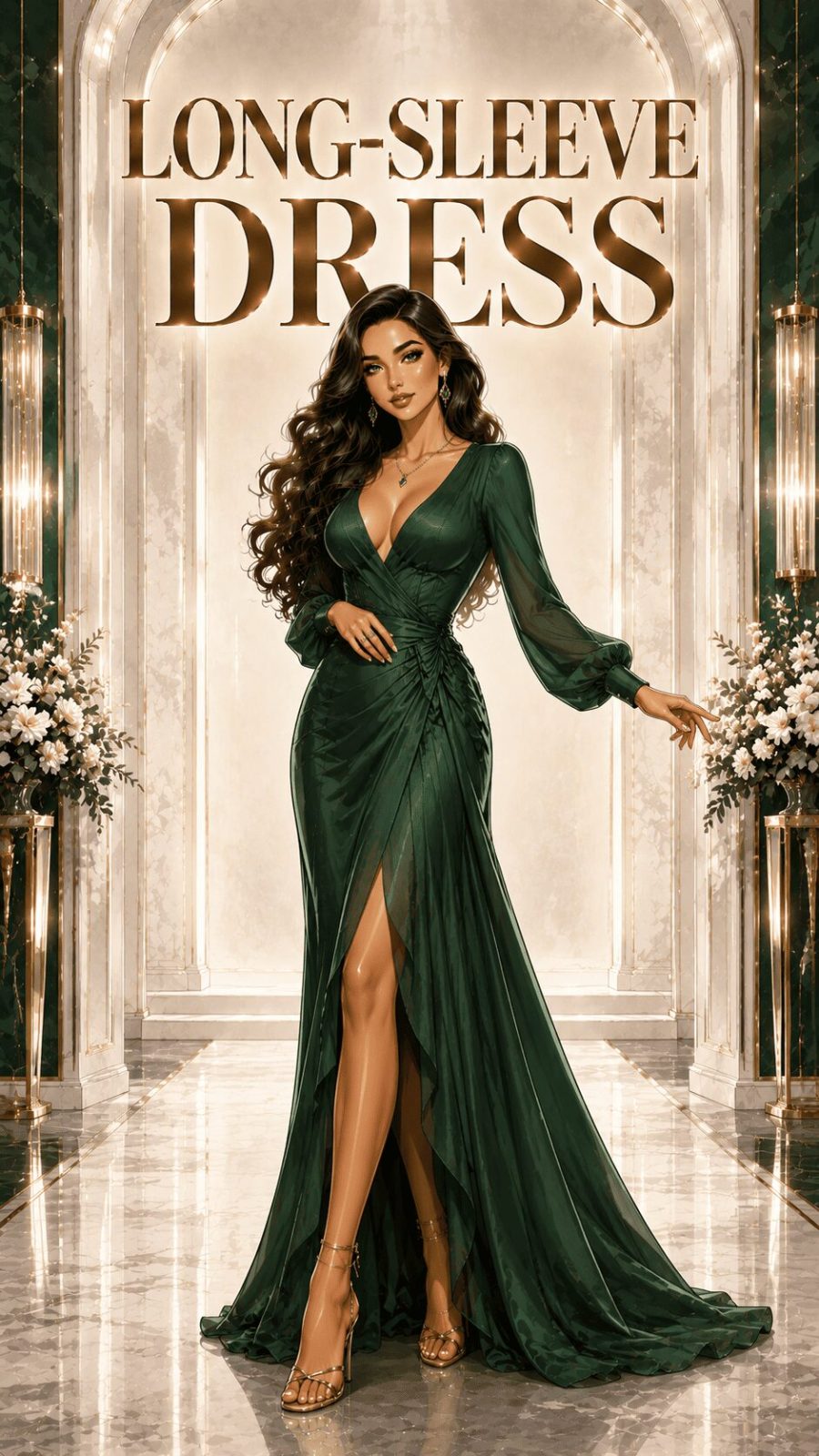
Long-Sleeve Dress
![Long-Sleeve Dress Example]()
A set-in or constructed sleeve that extends to the wrist — and what the sleeve is made of, how it's cut, and how it sits at the wrist completely changes the register of the dress. A long-sleeve jersey dress with a simple rib cuff is a casual winter staple. A long-sleeve silk dress with a gathered, cuffed wrist is elevated evening dressing. A long-sleeve lace dress is bridal or occasion wear. The sleeve length alone says nothing — the construction details say everything. For modest fashion and transitional dressing, long-sleeve options are also among the most versatile choices available.
- 20
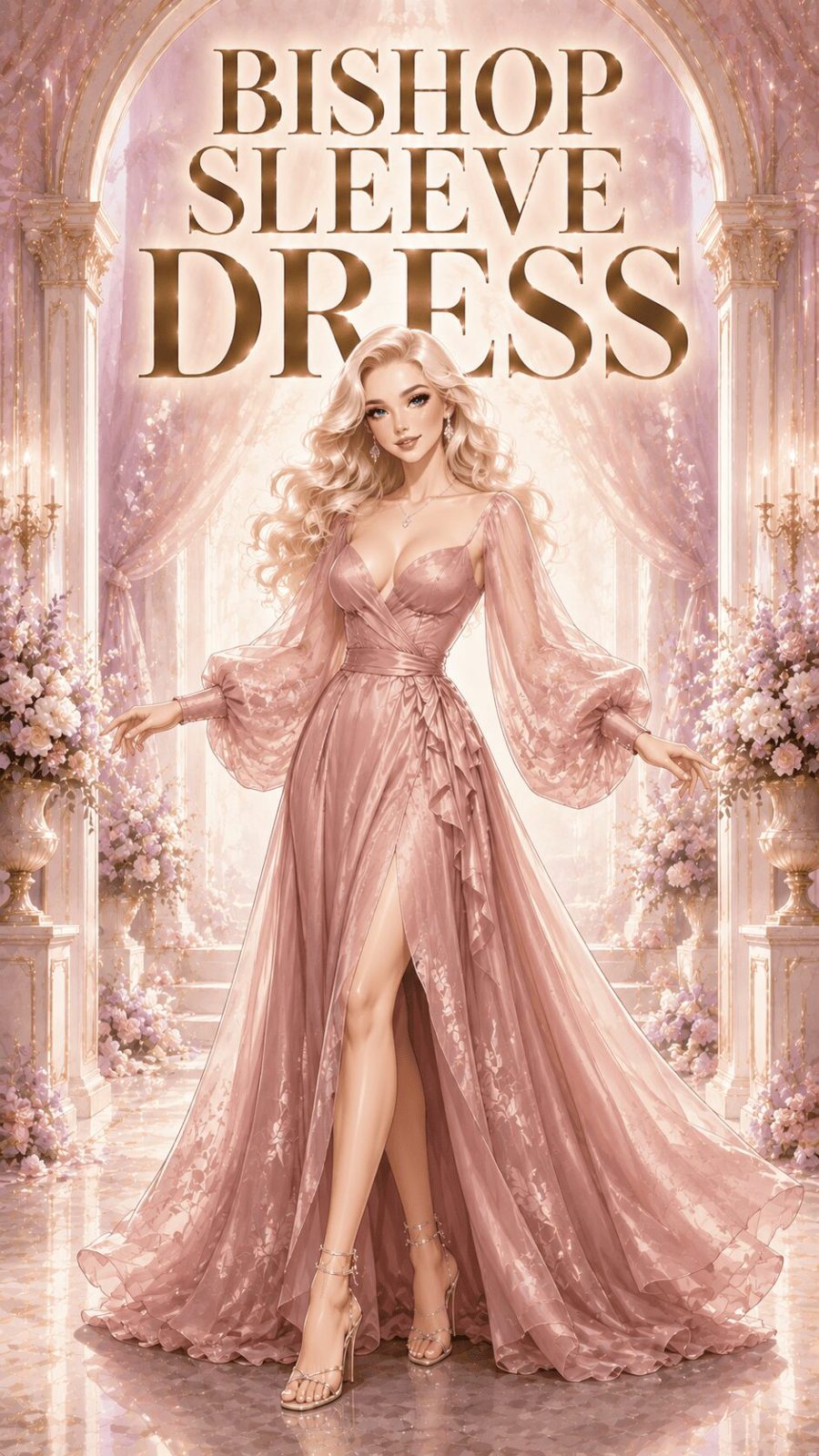
Bishop Sleeve Dress
![Bishop Sleeve Dress Example]()
The bishop sleeve is full and voluminous from the shoulder downward, gathered into a fitted, sometimes banded cuff at the wrist. Its defining visual quality is the dramatic balloon of fabric between shoulder and wrist — which can be modest and rounded, or theatrical and sculptural depending on construction and fabric choice. This sleeve structure has appeared across fashion history from Renaissance garments to Romantic-era gowns to contemporary prairie and cottagecore aesthetics. The visual drama is concentrated in the sleeve, which means the dress's bodice and skirt can remain relatively simple.
- 21
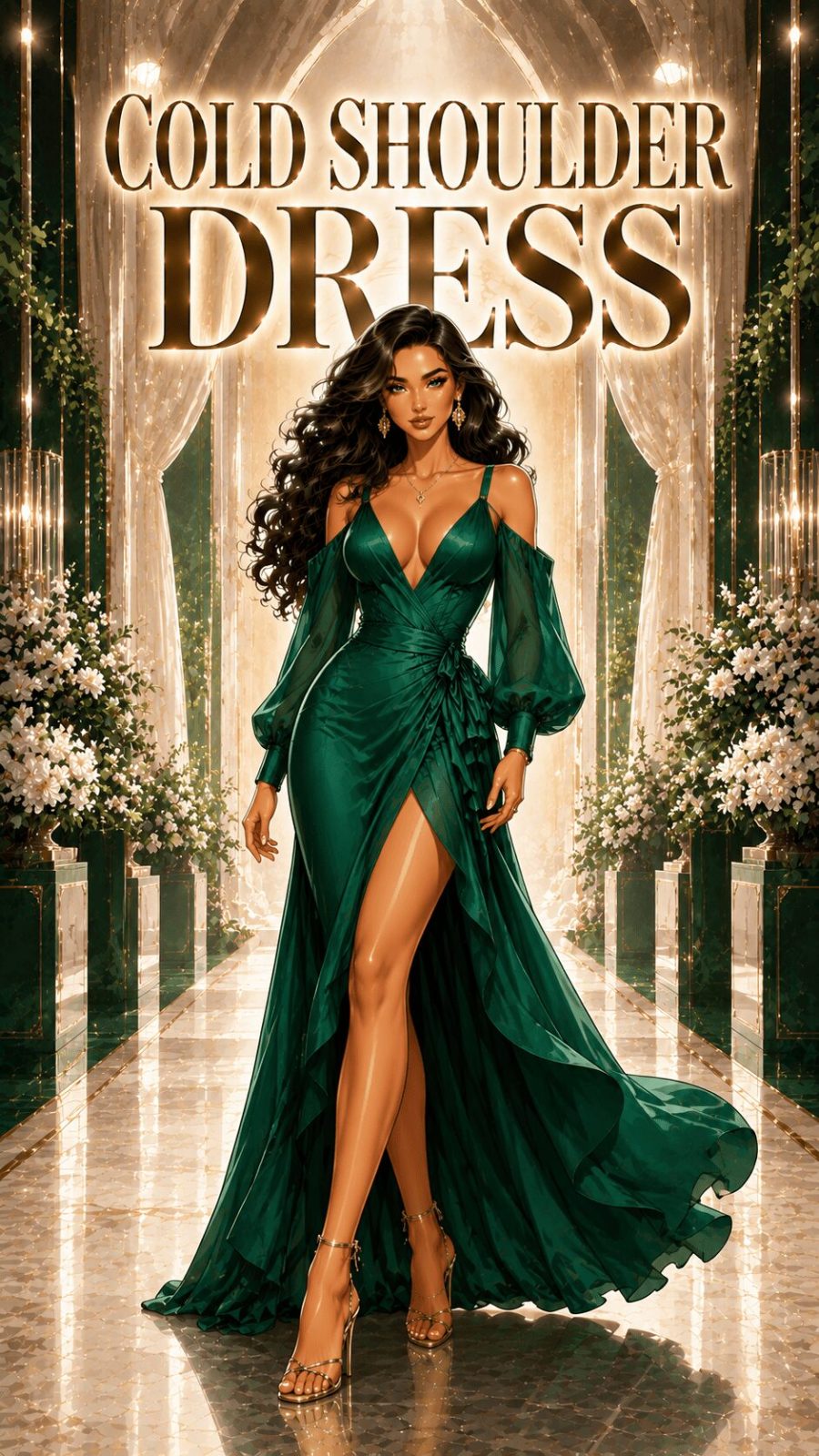
Off-Shoulder Dress
![Off-Shoulder Dress Example]()
The neckline and sleeve construction of an off-shoulder dress work together — the bodice is cut to sit below the shoulders, held in place by an internal elastic or boning structure, while the sleeve or neckline edge falls across the upper arm. The construction deliberately exposes the collarbone, shoulder, and décolletage as design features. An elasticated off-shoulder neckline creates soft horizontal movement across the top of the body; a structured off-shoulder bodice in a stiffer fabric creates architectural definition instead.


- 22
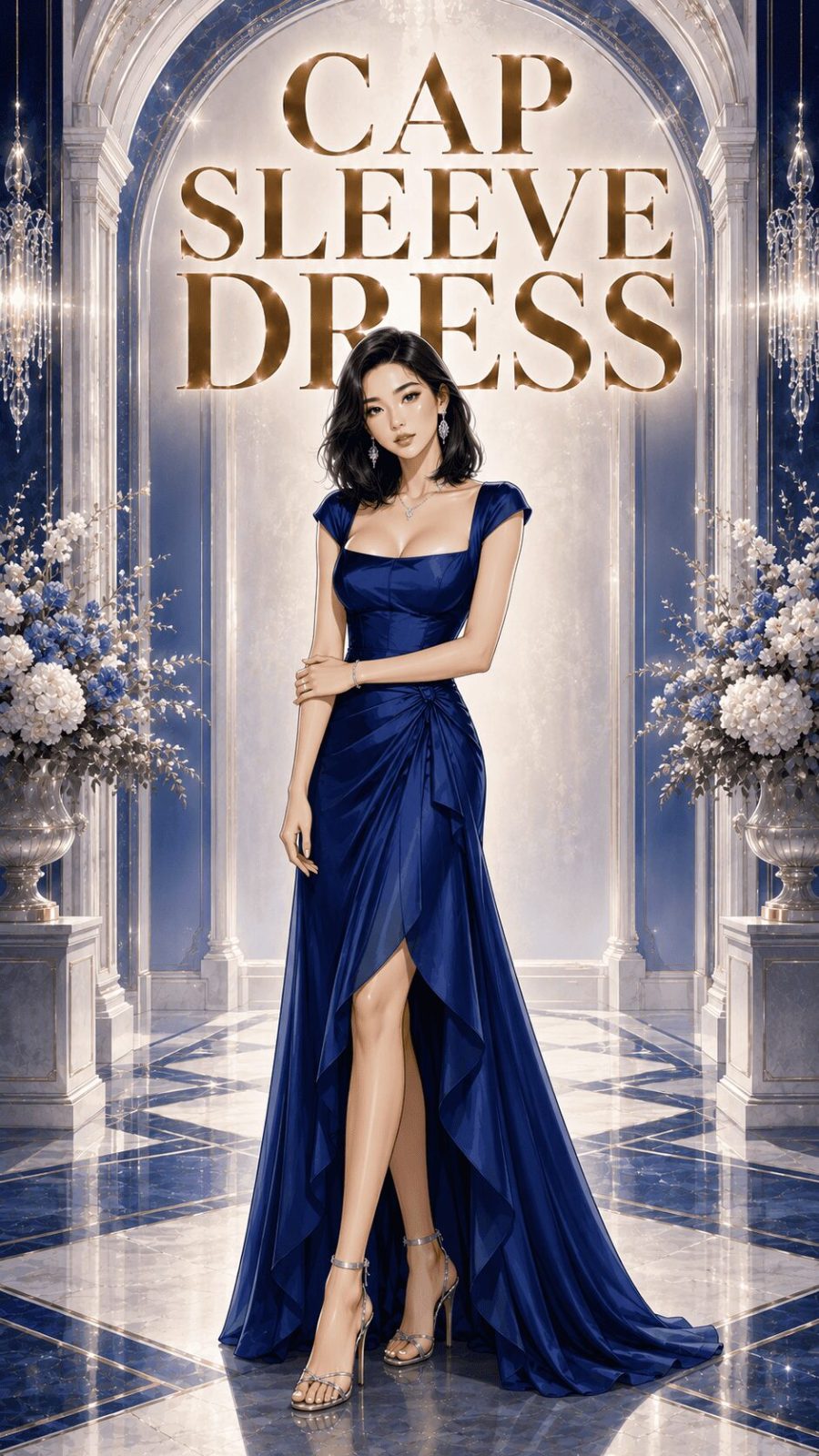
Cap Sleeve Dress
![Cap Sleeve Dress Example]()
A cap sleeve is a very short sleeve — barely extending past the shoulder seam, often cut as part of the same bodice piece rather than as a separate constructed sleeve. It covers the shoulder without actually covering any of the arm, making it a middle ground between sleeveless and short-sleeved. The cap sleeve has a slightly vintage quality — associated with 1950s housedress aesthetics and mid-century shift dresses — but returns consistently in contemporary dressing for its neat, polished shoulder line.
- 23
Cold Shoulder Dress

A sleeved dress with strategic openings or cut-outs positioned specifically at the shoulder point — typically a circular or oval aperture over each shoulder — while the sleeve continues below it. The construction adds visual interest to an otherwise conventional long-sleeve silhouette by introducing deliberate negative space exactly where the eye naturally rests. This detail became widely popular in the mid-2010s and remains a casual-to-smart-casual option for warmer seasons.
- 24
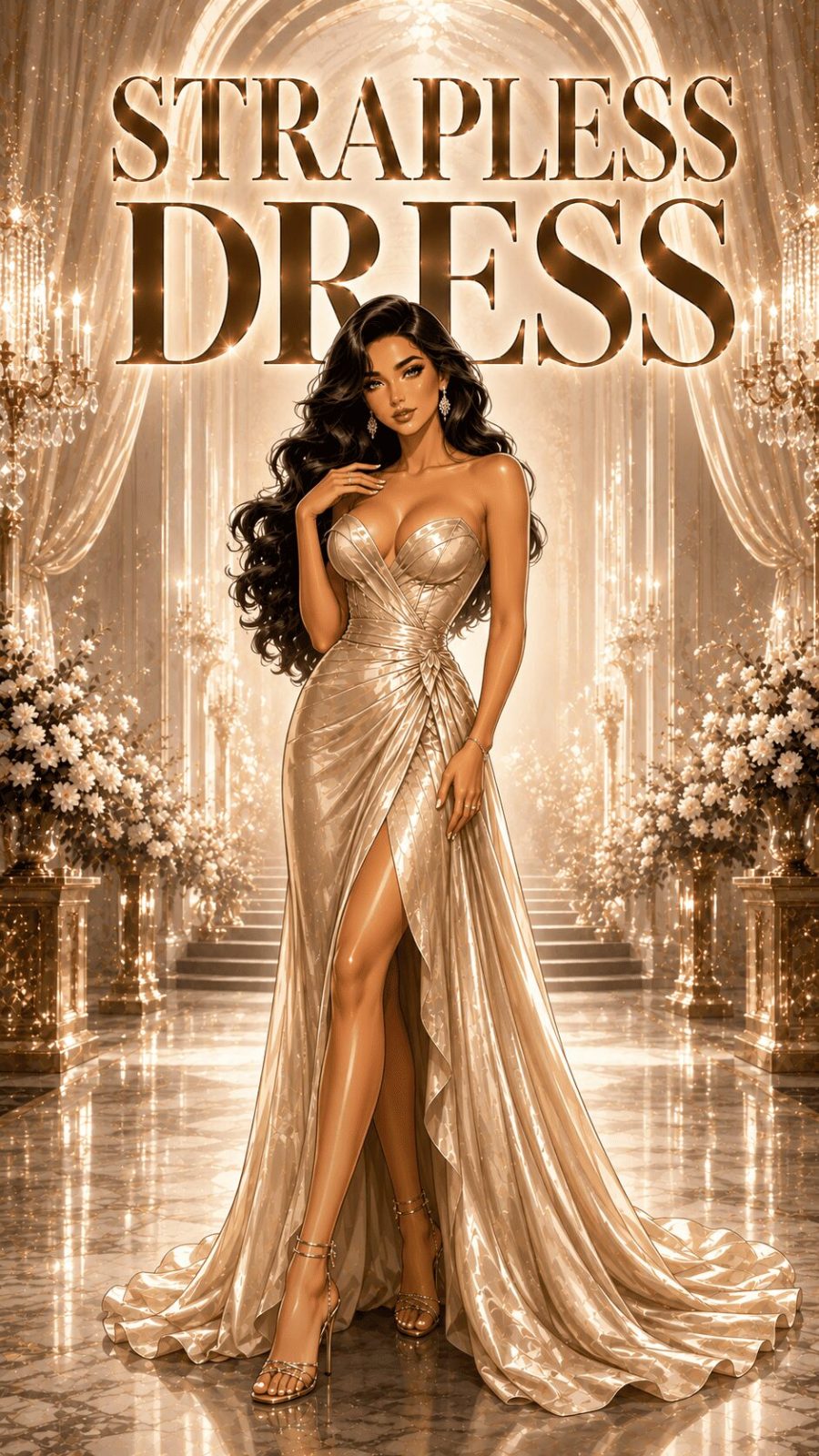
Strapless Dress
![Strapless Dress Example]()
No straps, no sleeves — the strapless bodice is held in place entirely by structure within the garment itself: boning, inner corset, grip elastic, or very precise fitting. The technical challenge of a strapless dress is significant: without any shoulder anchor, the bodice must be shaped precisely enough to stay in position through movement. When this construction works — and in quality garments, it does — the result is one of the most elegant, clean-lined silhouettes in formal dressing. The exposed shoulder and neckline become the entire visual focus.


Category 4: By Neckline (#25–#30)
Neckline shape directs visual focus and frames the face, collarbone, and décolletage — a design decision with profound styling implications
- 25
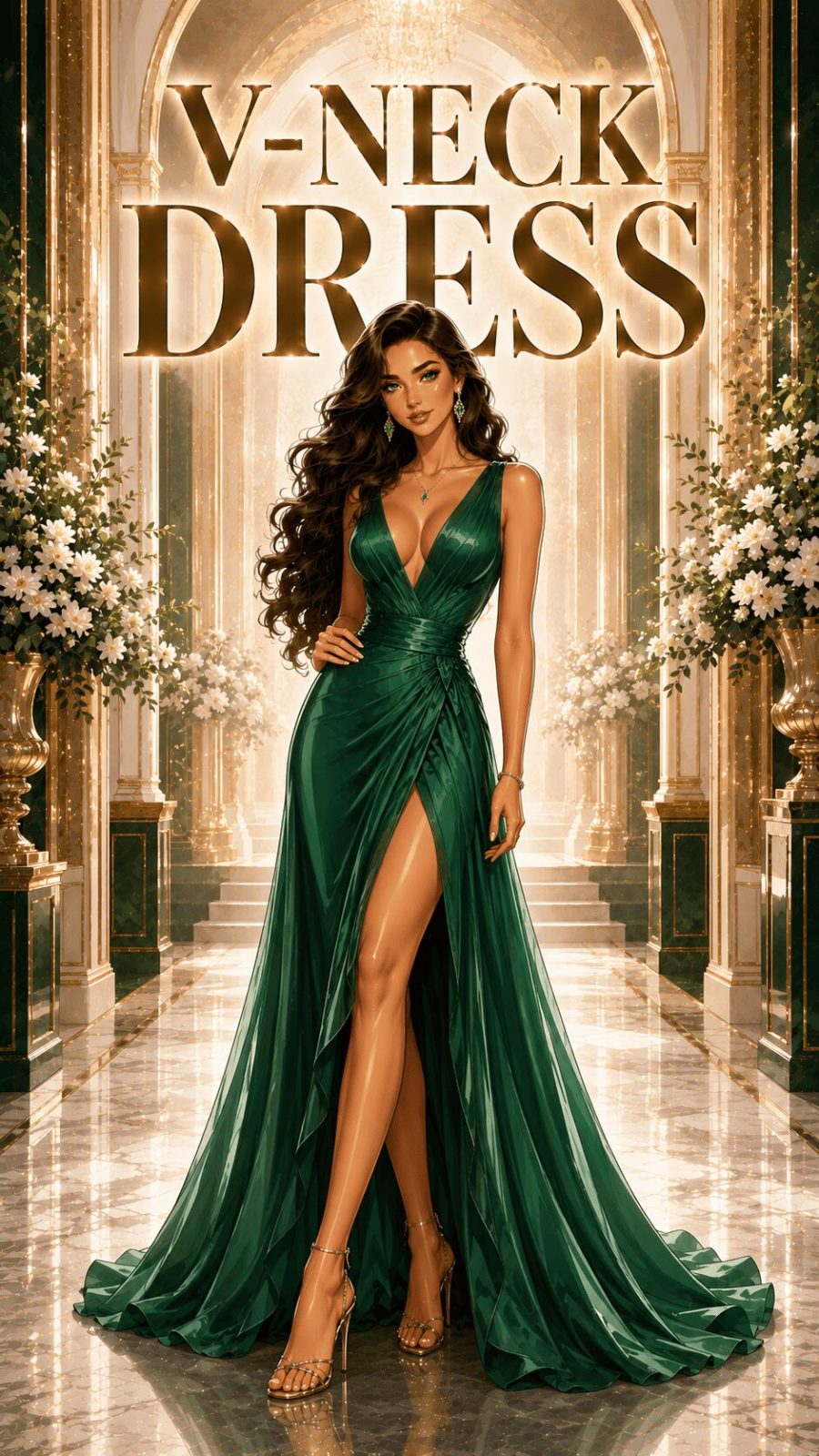
V-Neck Dress
![V-Neck Dress Example]()
A neckline that descends in a V shape from the shoulders to a point at the center front. The V can be subtle — just a few inches deep — or dramatic, plunging to the sternum or below. The depth of the V fundamentally changes the formality of the garment. A shallow V in ponte fabric is office-appropriate; a deep V in silk charmeuse is cocktail territory. What the V neckline consistently does is draw focus upward toward the face and create a lengthened line through the neck and décolletage.
- 26
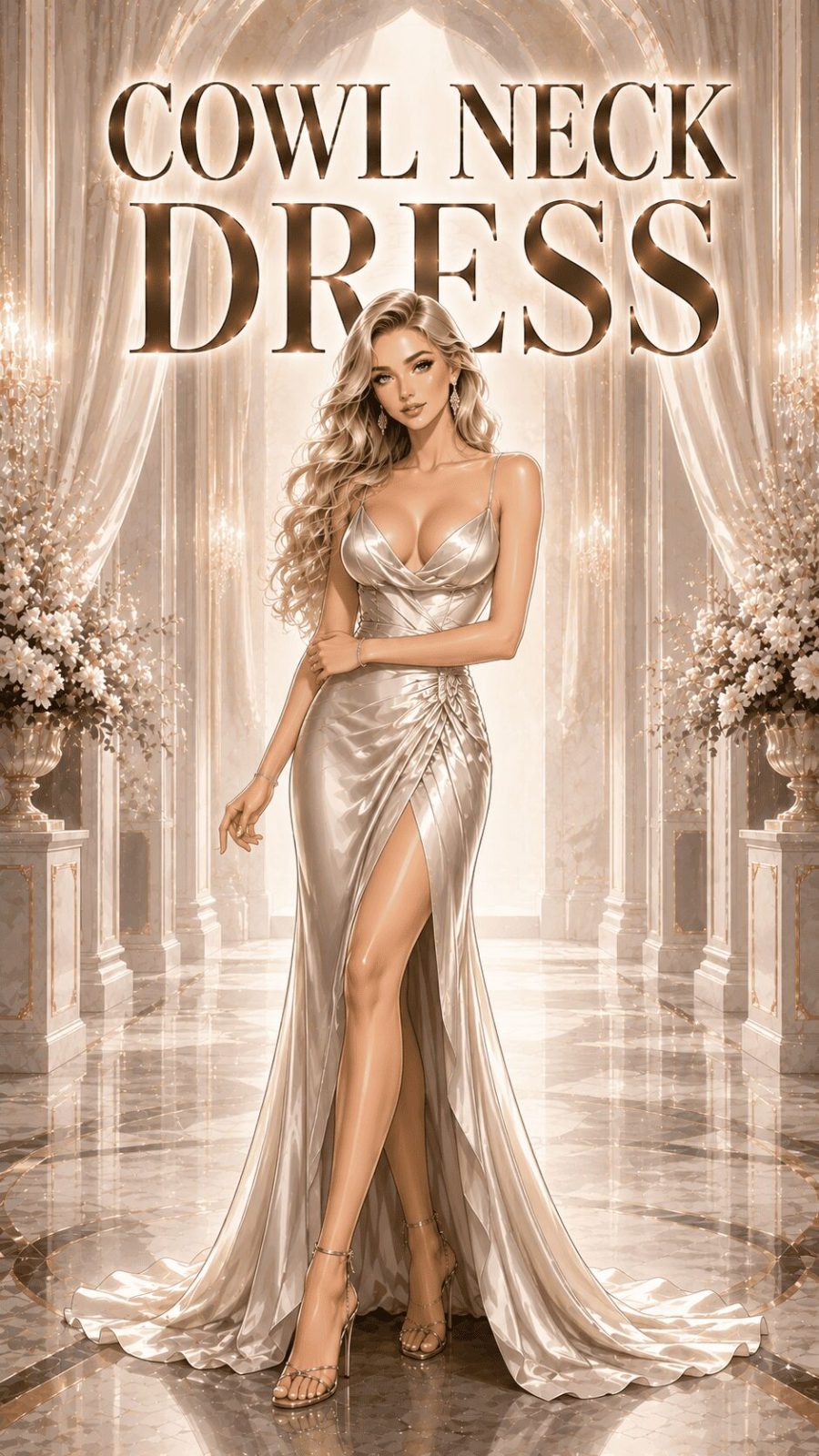
Cowl Neck Dress
![Cowl Neck Dress Example]()
A cowl neckline is created when fabric is draped and gathered at the neckline, forming soft, loose folds that hang below the natural collar level. The construction requires a bias cut at the neckline area to allow the fabric to drape rather than stand — which means cowl necklines work best in fabrics with natural drape like silk, jersey, or crepe. The effect is a liquid quality at the neckline that makes the dress feel effortlessly luxurious. This detail appears throughout history in Madeleine Vionnet's 1930s bias-cut designs — the originator of bias construction as a fashion technique.
- 27
Halterneck Dress
![Halterneck Dress Example]()
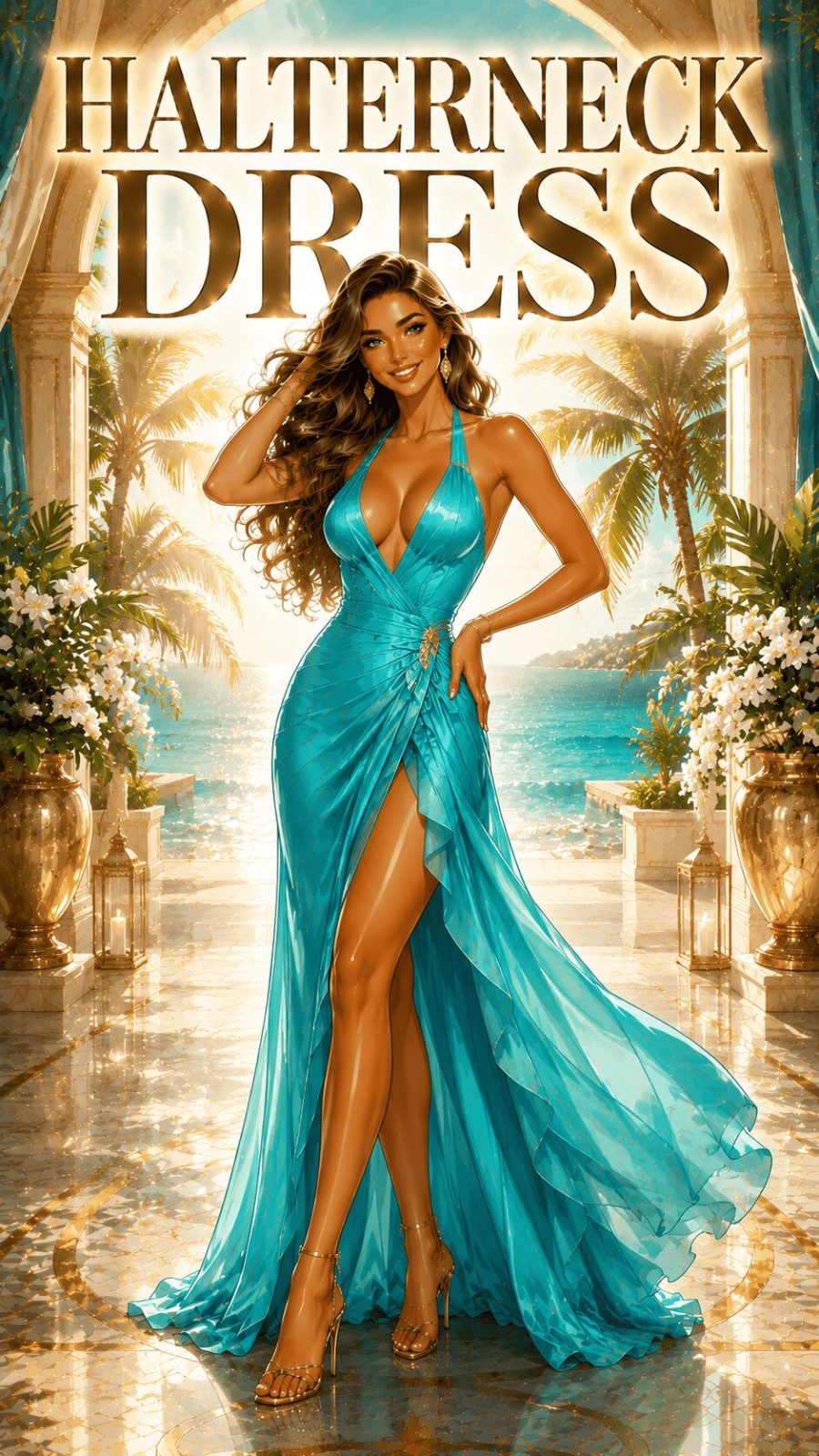
A neckline where the fabric or straps run from the front bodice up and around the back of the neck, leaving the shoulders, upper arms, and upper back entirely exposed. The halter construction naturally exposes the back — which means it functions simultaneously as a neckline decision and a back-exposure decision. The visual effect is a frame around the face and décolletage, with the shoulder width drawn into the narrow neck tie, creating a triangular focal point at the top of the garment.
- 28
Square Neck Dress
![Square Neck Dress Example]()
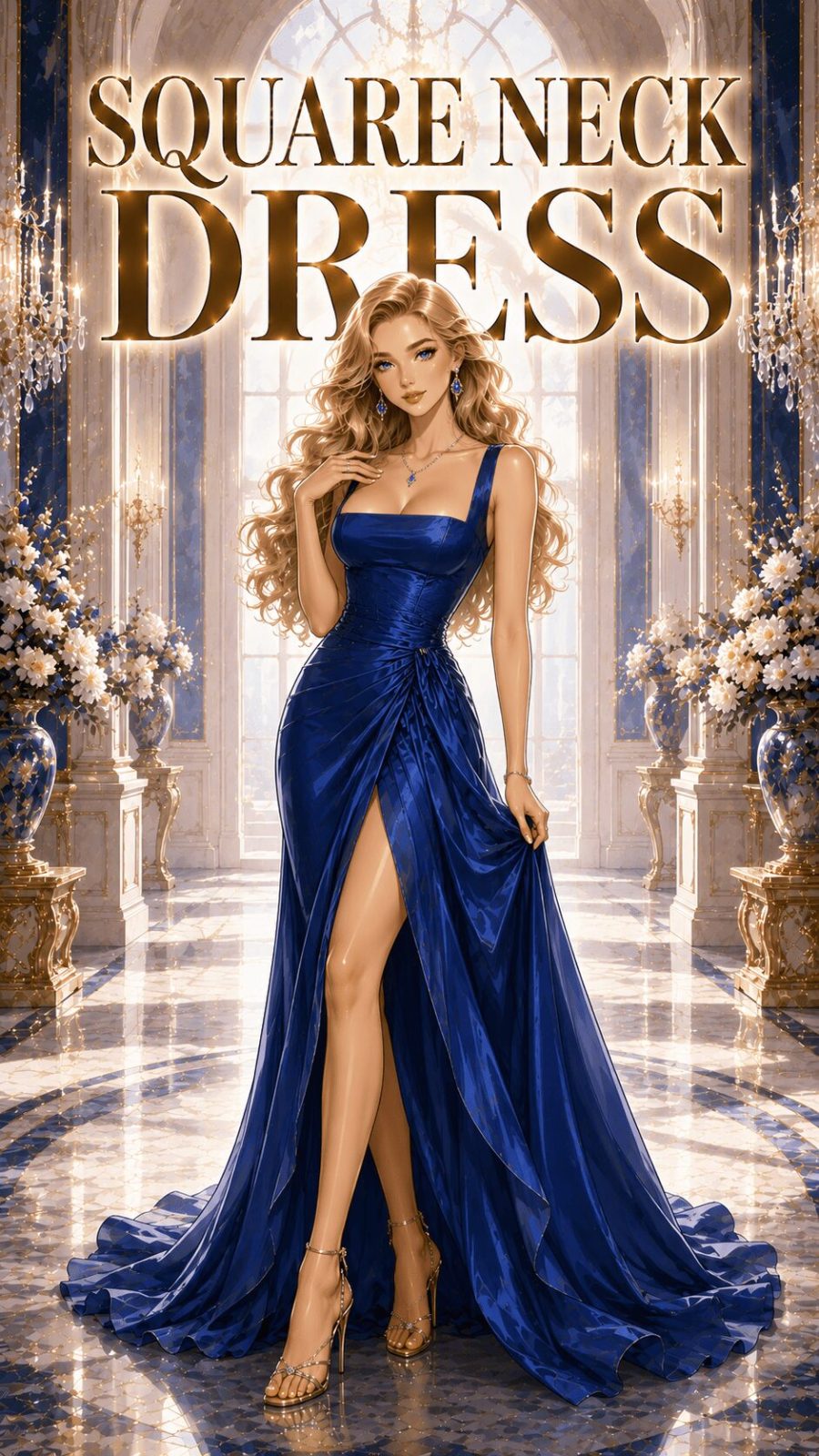
The square neckline is cut with a horizontal base and straight sides, creating a geometric frame across the décolletage and upper chest. It has a distinctly feminine-yet-structured quality — the corners draw the eye horizontally, adding visual width at the shoulder and collarbone while framing the face in an unusual, portrait-like way. The square neck has strong historical associations with Renaissance portraiture and Baroque court dress, and its contemporary popularity is driven by exactly that richly historical resonance.


- 29
Boat Neck / Bateau Dress
![Boat Neck Bateau Dress Example]()
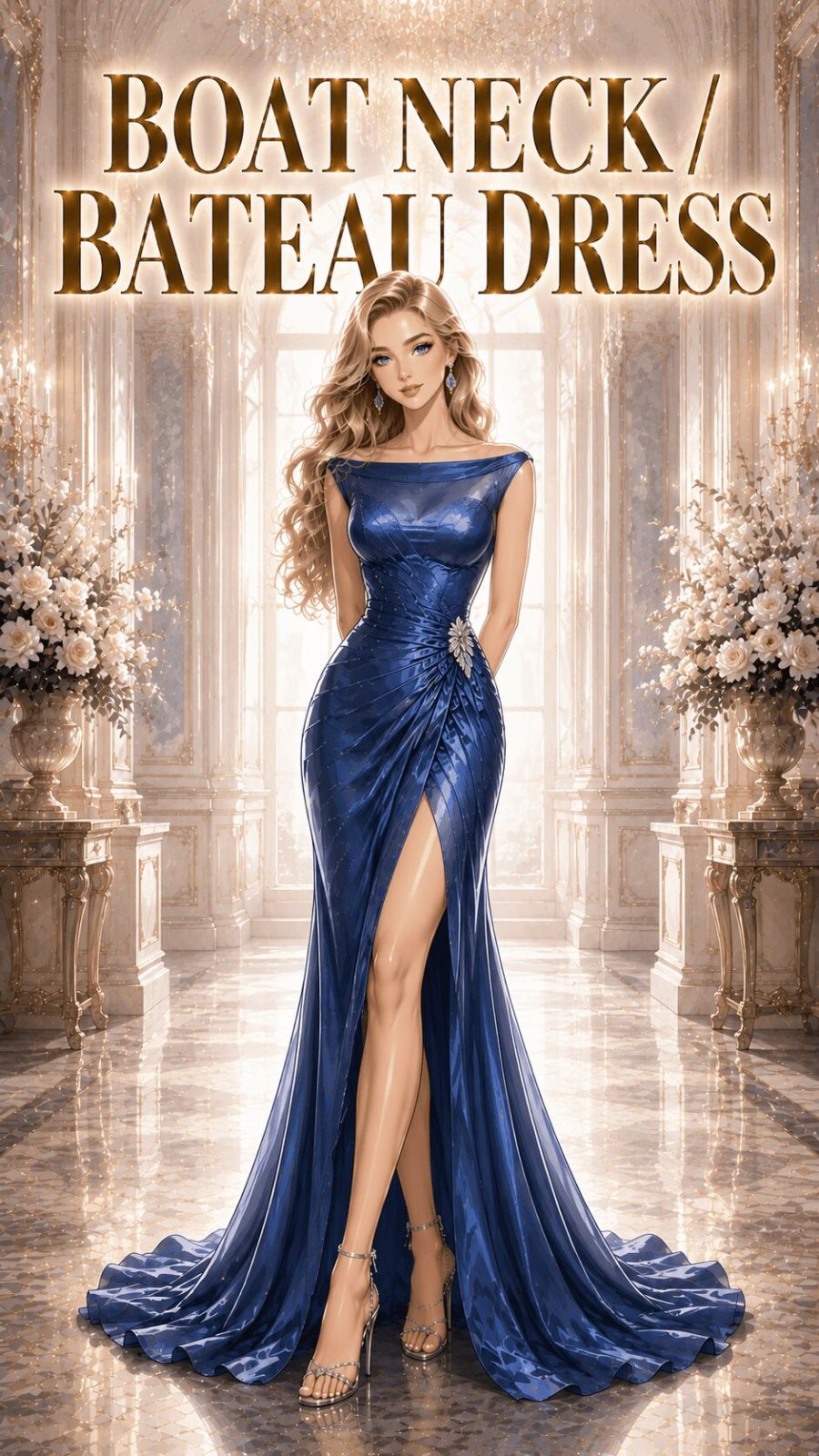
A high, wide neckline that runs almost horizontally from shoulder to shoulder, following the natural curve of the collarbone. The bateau neckline (French for "boat") was popularized in modern fashion by Coco Chanel, who used it extensively in her 1920s jersey collections. It's one of the most structurally clean necklines in fashion: no dip, no point, just a wide horizontal opening that draws the eye straight across the shoulder line — adding apparent width at the shoulders.
- 30
Sweetheart Neckline Dress
![Sweetheart Neckline Dress Example]()
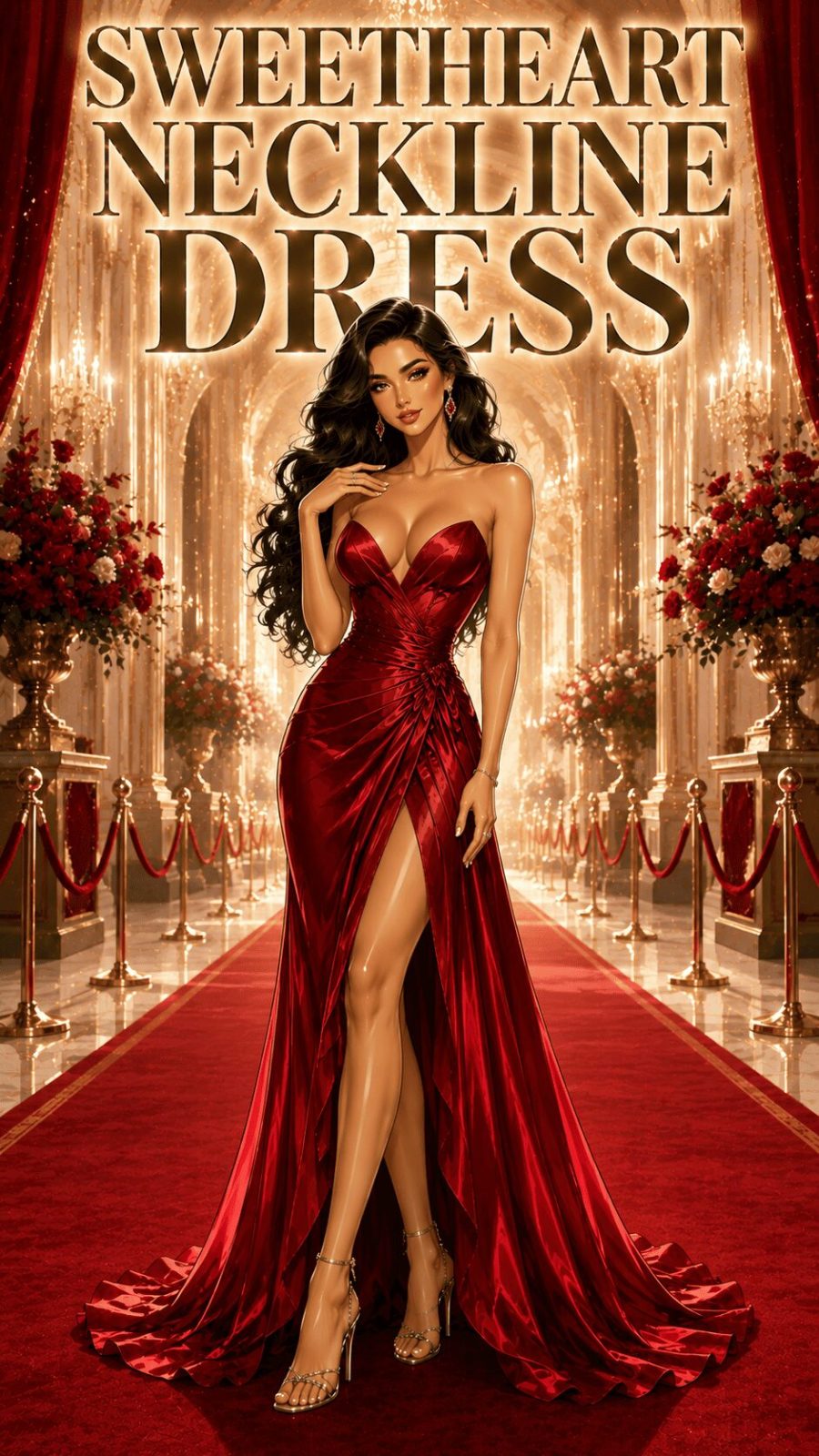
The sweetheart neckline follows the curve of the bustline in a heart shape — two rounded curves that meet at a center dip. The construction requires precise cutting and careful understructure to support the front edge of the neckline without straps. The visual effect is romantic and feminine: the curved neckline mirrors the body's natural curves and frames the décolletage in a soft, elegant arc. This neckline is one of the most enduring in bridal and formal dressing, appearing across styles from strapless ball gowns to fitted cocktail dresses.


Category 5: By Waistline (#31–#35)
Where the waist seam sits — or doesn't sit — is the single most architecturally significant structural decision in dress design
- 31
Natural Waist Dress
The seam or waist definition falls at the body's narrowest natural point — typically 2–4 inches above the hip bone. A natural waist dress creates the classic hourglass effect when paired with a fitted bodice and a full or A-line skirt. This is the waist placement of traditional tailoring and the majority of occasion dresses across the 20th century. When a dress has a natural waist seam, the bodice and skirt are constructed and often lined separately before being joined — which is why this construction has a more luxurious, structured feel than dresses cut without a waist seam.
- 32
Dropped Waist Dress
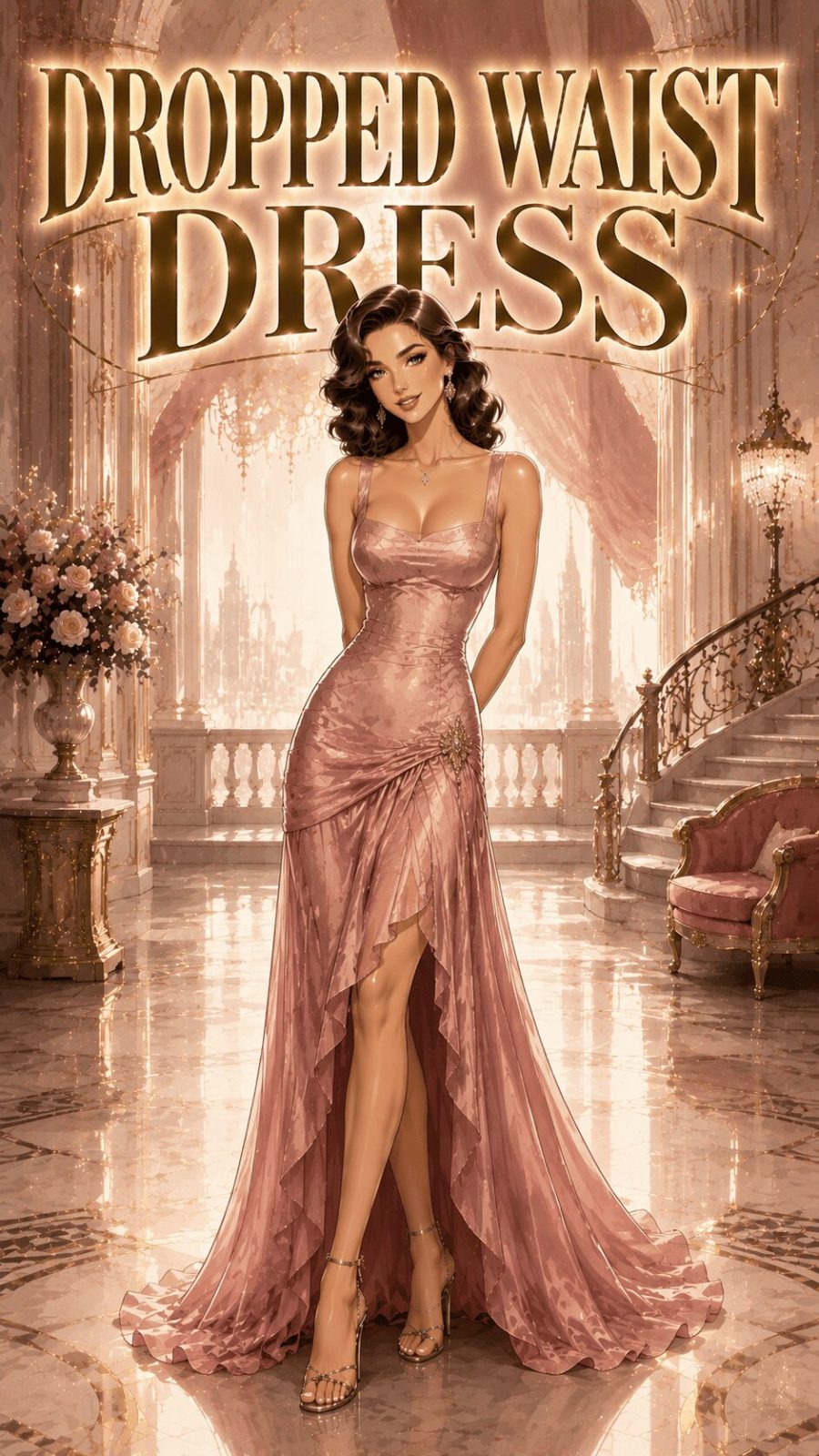
![Dropped Waist Dress Example]()
The dropped waist places the waist seam at or below the hip — lower than the body's natural waistline. This placement eliminates the hourglass effect entirely, instead creating a long, tubular torso silhouette with a skirt beginning at the hip. The dropped waist dress is synonymous with 1920s Art Deco fashion — the flapper dress — and has returned periodically in fashion history as a reference to that particular elegant, elongated aesthetic. It creates a visual lengthening of the torso.
- 33
Tie-Waist Dress
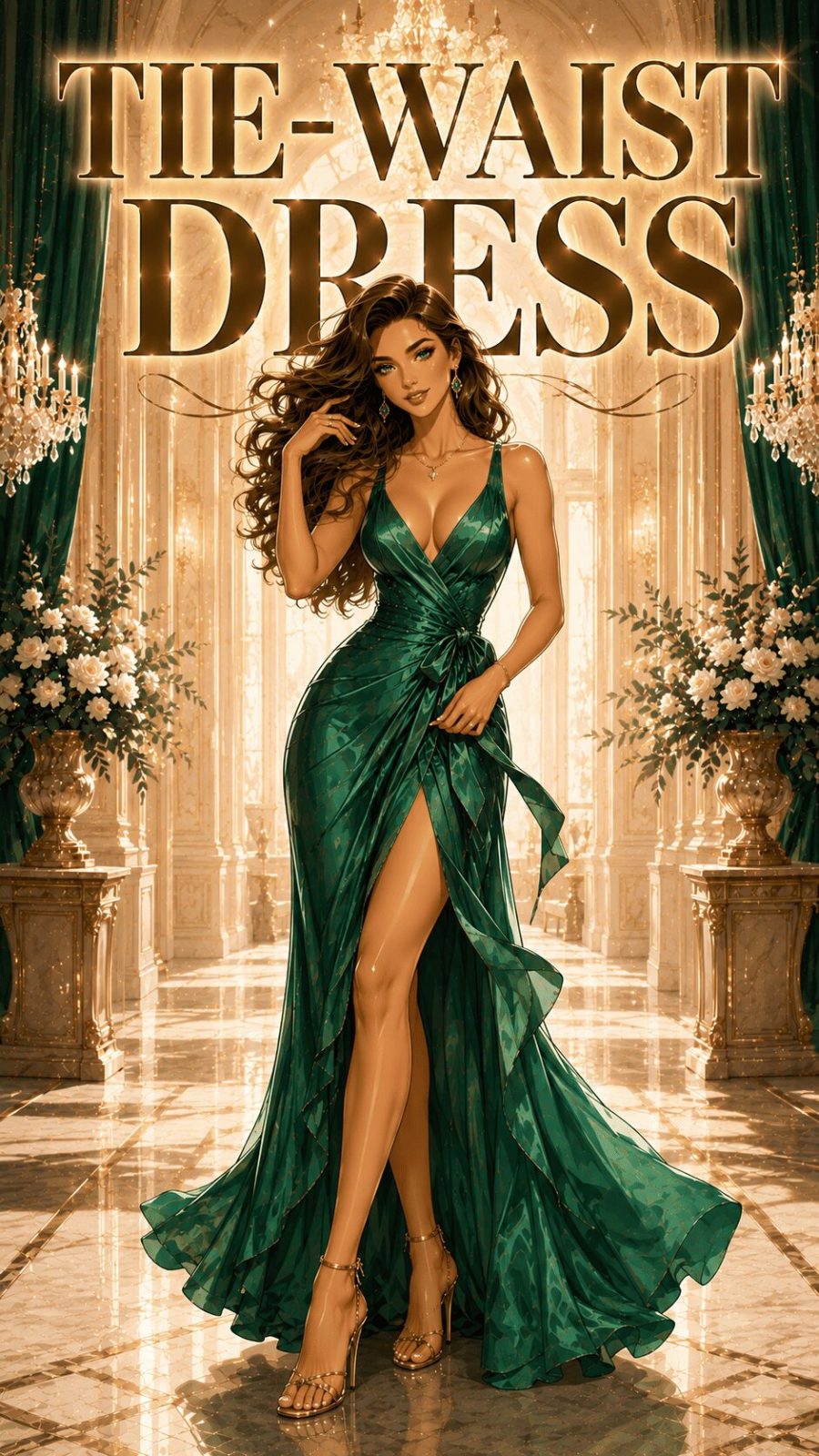
![Tie-Waist Dress Example]()
Rather than relying on a fixed seam for waist definition, the tie-waist dress achieves its shape through a separate fabric sash or built-in fabric ties that cinch the silhouette wherever the wearer positions them. The beauty of this construction is adaptability — the tie can be worn at the true waist, slightly above, or loosely at the hip, creating a completely different visual each time. Tie-waist dresses are almost universally easier to size, since the tie rather than the seam does the fitting work.
- 34
Belted Dress
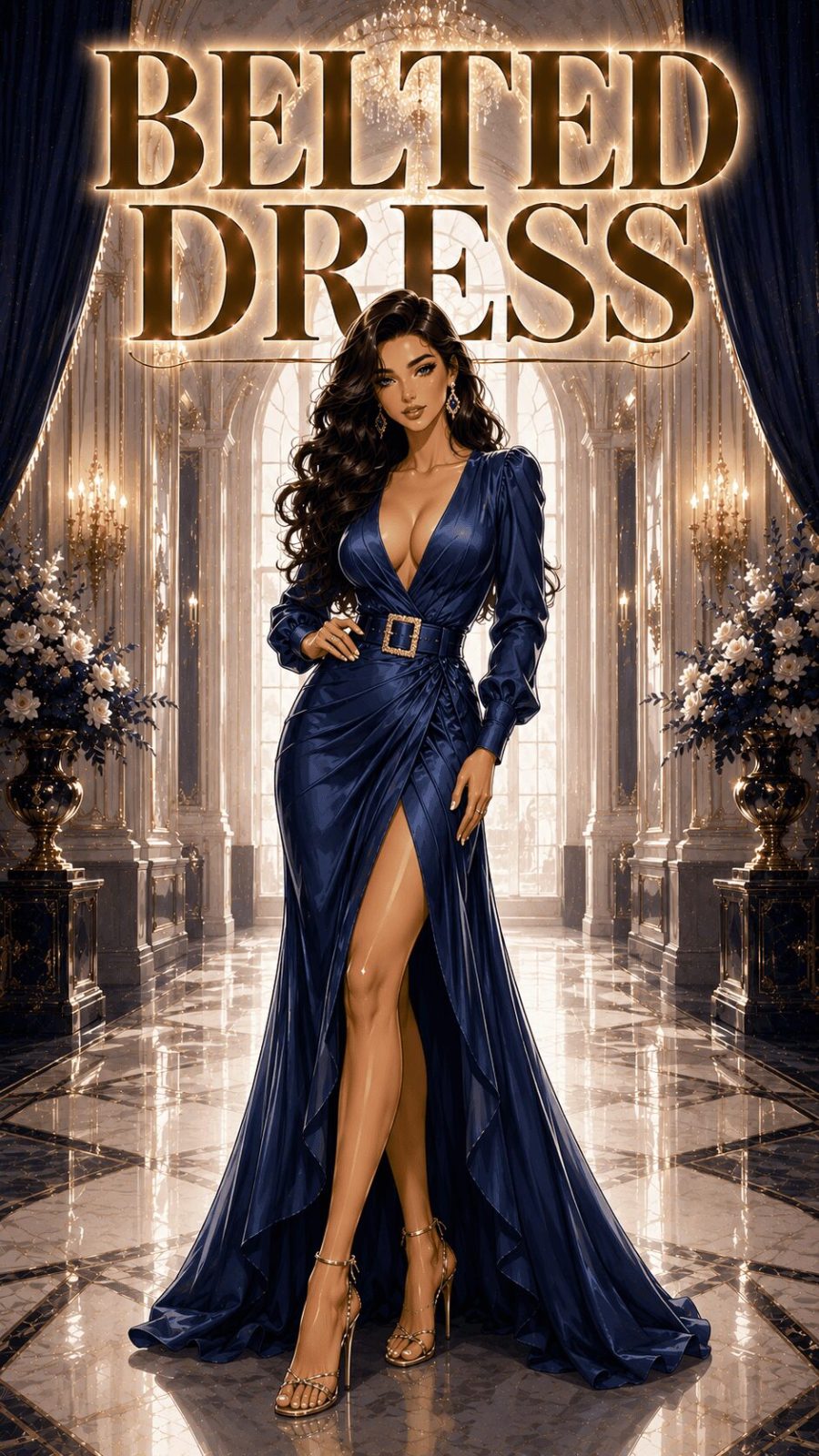
![Belted Dress Example]()
A dress designed with a distinct belt — either integrated into the garment or offered as a removable accessory — that creates visible waist definition where the dress's own construction might not. Shirt dresses and blazer dresses particularly benefit from belt styling, since their straight cuts borrow structured definition from the belt rather than the seam. Belt dresses are highly versatile: wear the belt and you have a defined waist silhouette; remove it and the same garment reads differently, more relaxed, oversized, or transitional.
- 35
Elasticated / Smocked Waist Dress

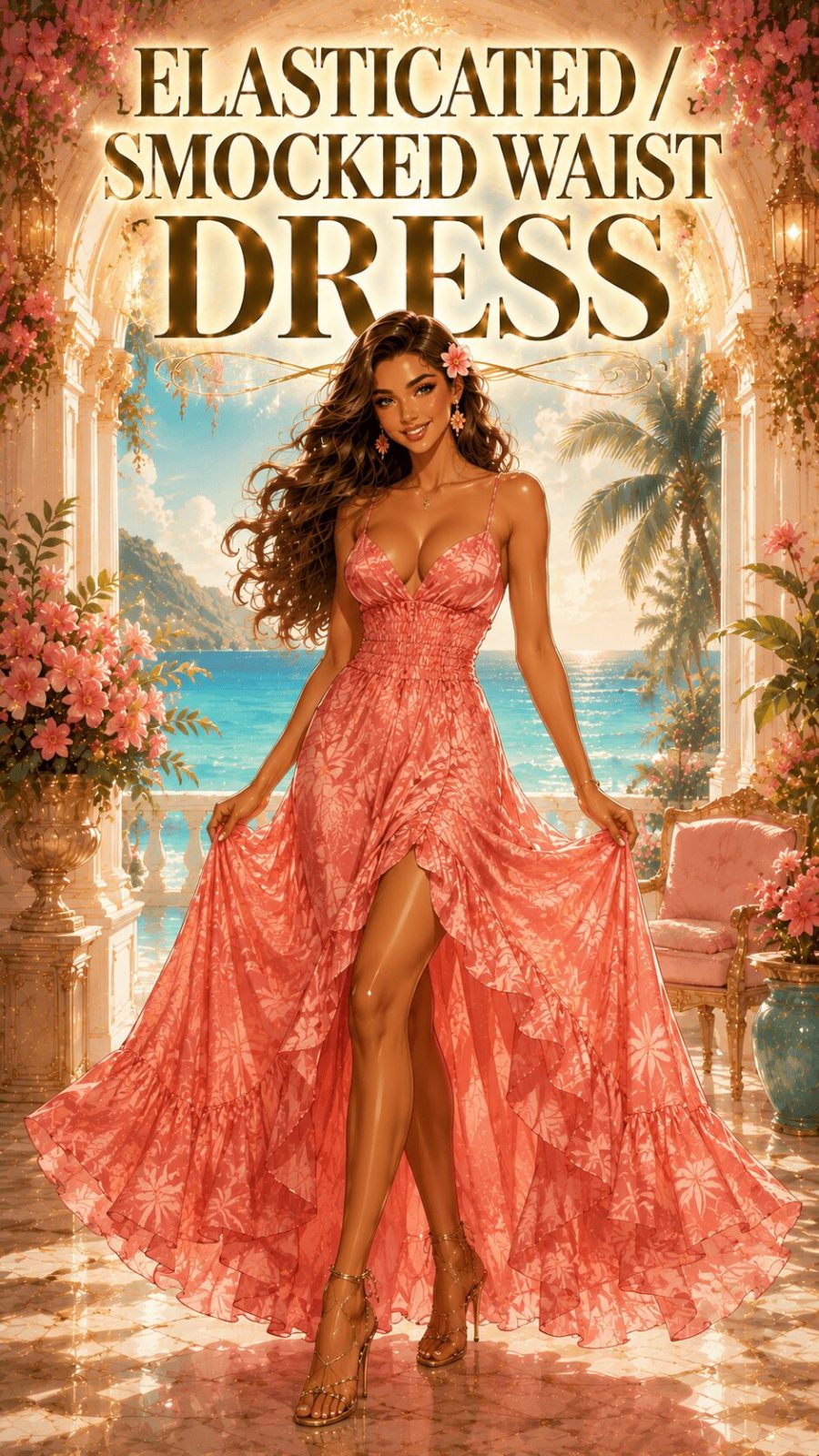
![Smocked Waist Dress Example]()
A waistline defined not by a fixed seam or a belt, but by smocking — a decorative gathering technique where rows of elastic thread are stitched through fabric in a regular pattern, causing the fabric to gather and cinch while remaining stretchable and accommodating. Smocked waists add a textural quality to the garment, often with visible embroidery-like lines running horizontally through the gathered area. This construction is common in bohemian and cottagecore styles, tiered summer dresses, and peasant-inspired designs. It offers architectural definition with generous stretch and ease of movement.


Category 6: By Occasion (#36–#43)
Occasion-specific dress types — built around the social context they were designed to inhabit
Some dresses are classified most accurately not by their silhouette or construction, but by the precise social context they were designed for. A cocktail dress and a wedding guest dress may share a similar silhouette — but they carry entirely different cultural contracts about formality, coverage, colour, and styling. Understanding occasion dressing as a distinct classification system is how you stop buying beautiful dresses that have nowhere to go — and start building a wardrobe where every piece has clear purpose. For deeper context on occasion dressing, our complete guide to wedding guest dressing covers exactly how to navigate these codes.
- 36
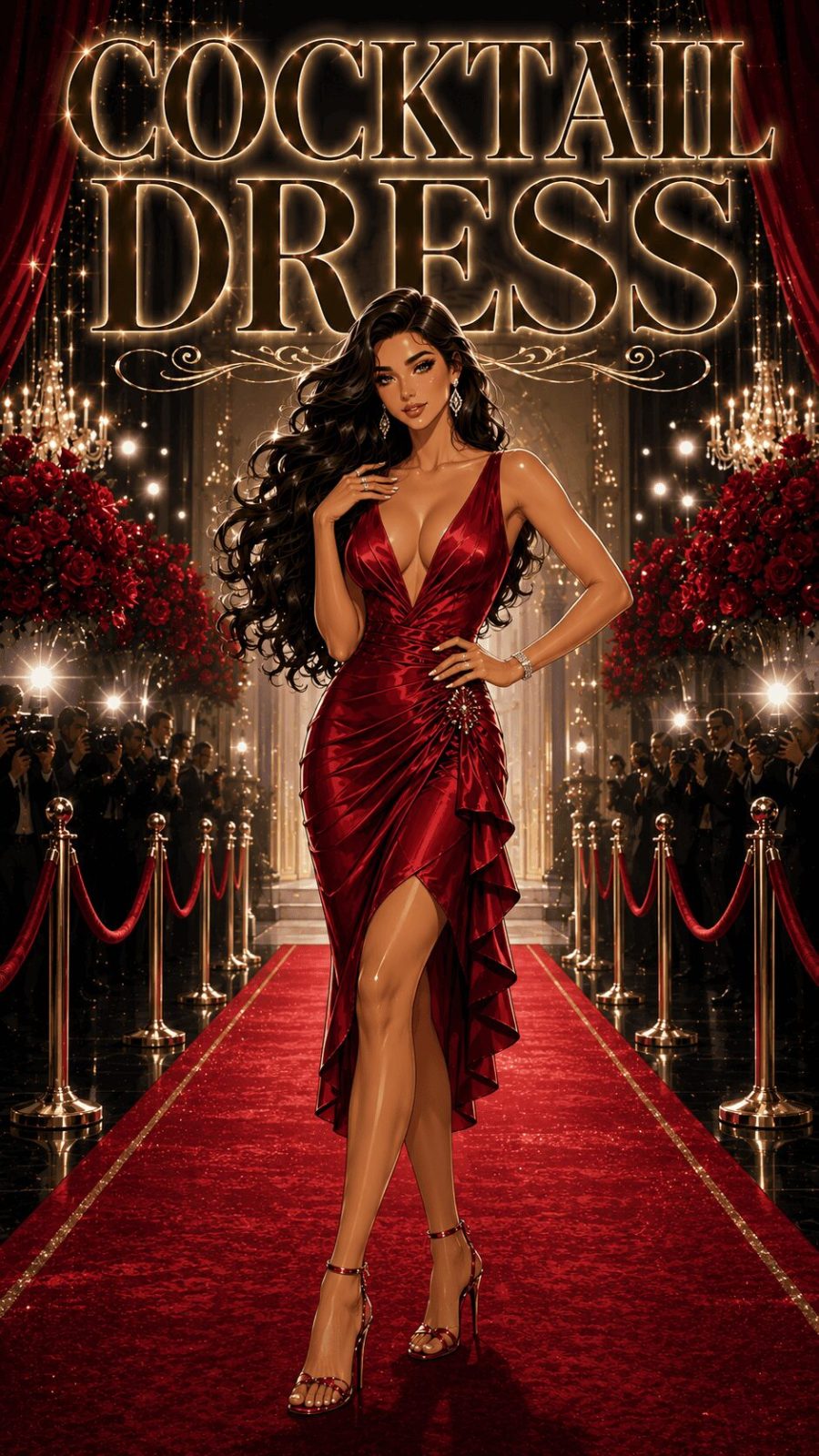
Cocktail Dress
![Cocktail Dress Example]()
The cocktail dress occupies the formality tier between business and black-tie — polished, often embellished, and typically falling at or just above the knee. It emerged as a distinct dress category in the 1940s and 50s, when the cocktail hour became an established social ritual in American and European professional circles. The construction tends toward structured bodices, quality fabrics like duchess satin, silk taffeta, or structured lace, and refined details: pleating, ruching, or minimal embellishment that communicates elegance without extravagance. A cocktail dress that works effortlessly telegraphs real style intelligence.
- 37
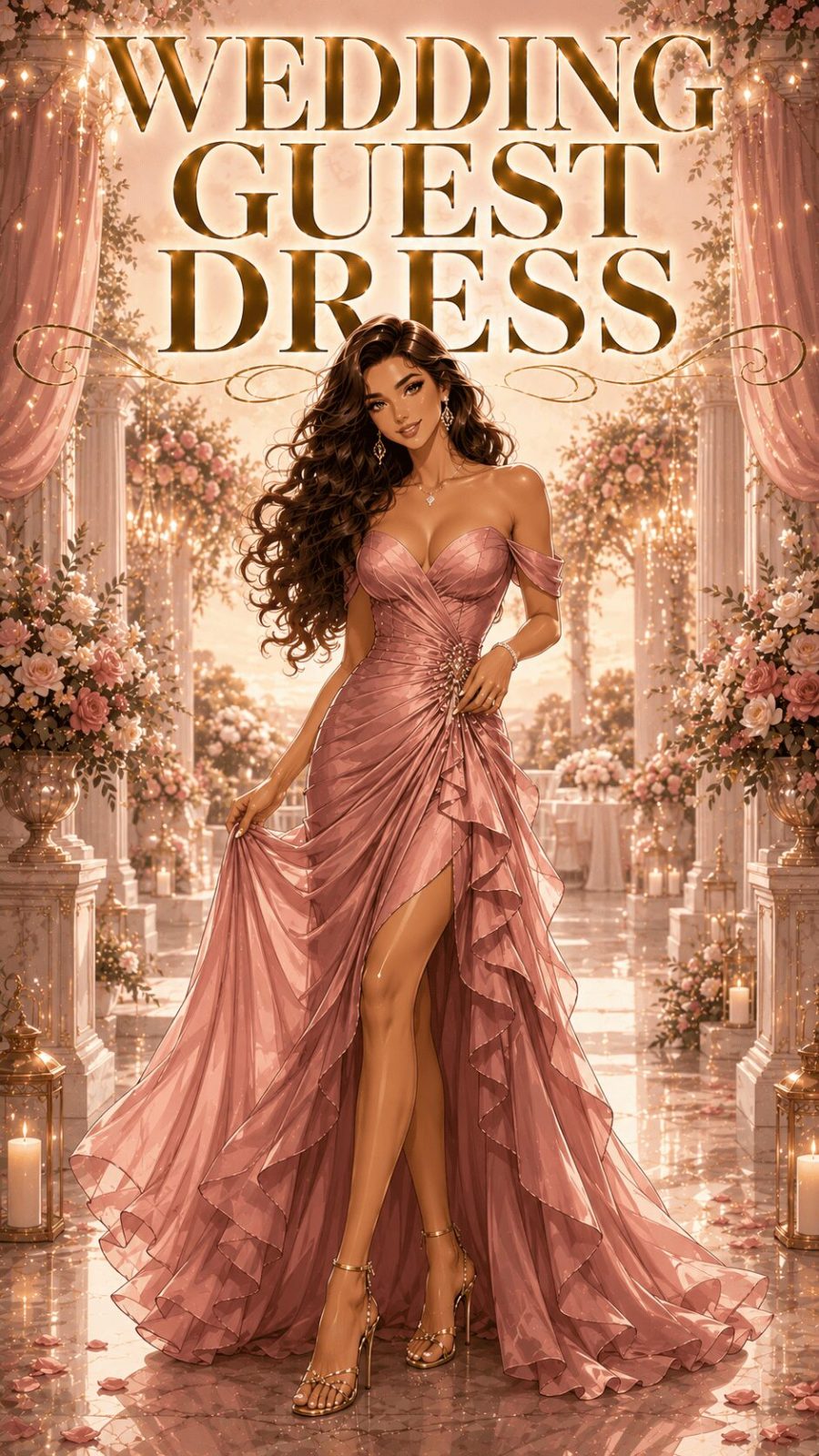
Wedding Guest Dress
![Wedding Guest Dress Example]()
Not a silhouette category — a context category. A wedding guest dress is defined by the social contract it fulfills: it must read as appropriately dressed for a formal celebration without competing with the bridal party. In practice this means avoiding white, ivory, and very pale blush, and choosing something that sits comfortably between cocktail and semi-formal. The most consistently successful wedding guest dresses tend toward floral midi dresses, structured fit-and-flare styles in deep jewel tones, or elegant wrap dresses in silk or crepe — all of which photograph well and feel celebratory rather than subdued.
- 38
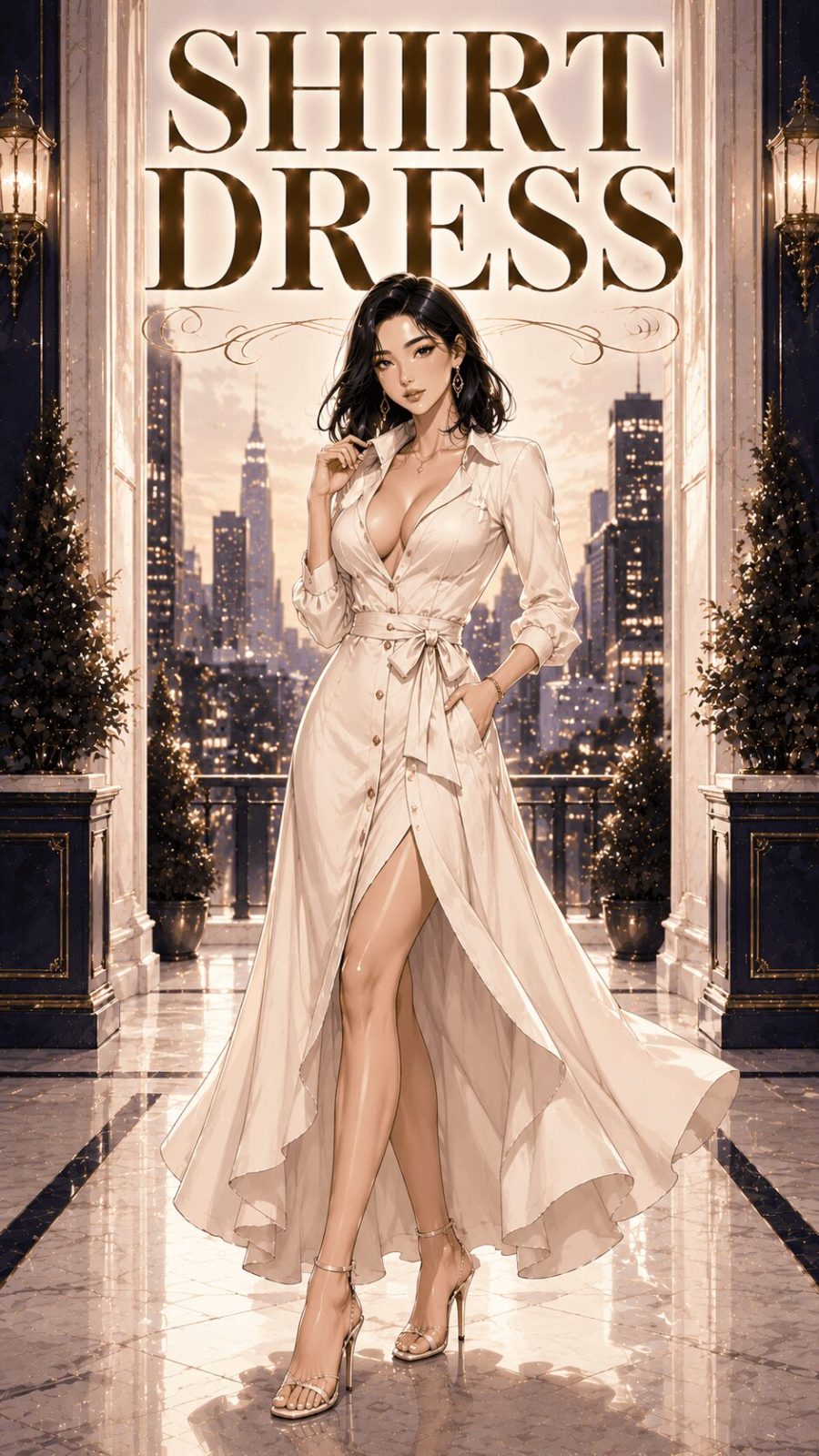
Shirt Dress
![Shirt Dress Example]()
A dress that borrows its construction directly from the tailored shirt: a structured collar, button-down placket, and often a cuffed sleeve. It typically has a relaxed, slightly oversized torso with a shirt-tail or straight hem that falls anywhere from the thigh to the ankle. The shirt dress belongs distinctly to daytime dressing — it's the dress you wear when you want to look like you put real thought in without the ceremony of something more formal. Worn with a belt and ankle boots, it becomes a precision-edited weekend outfit. Worn loose over a turtleneck, it becomes autumn layering done right. Explore our guide to shirt dress styling techniques for seasonal variations.
- 39
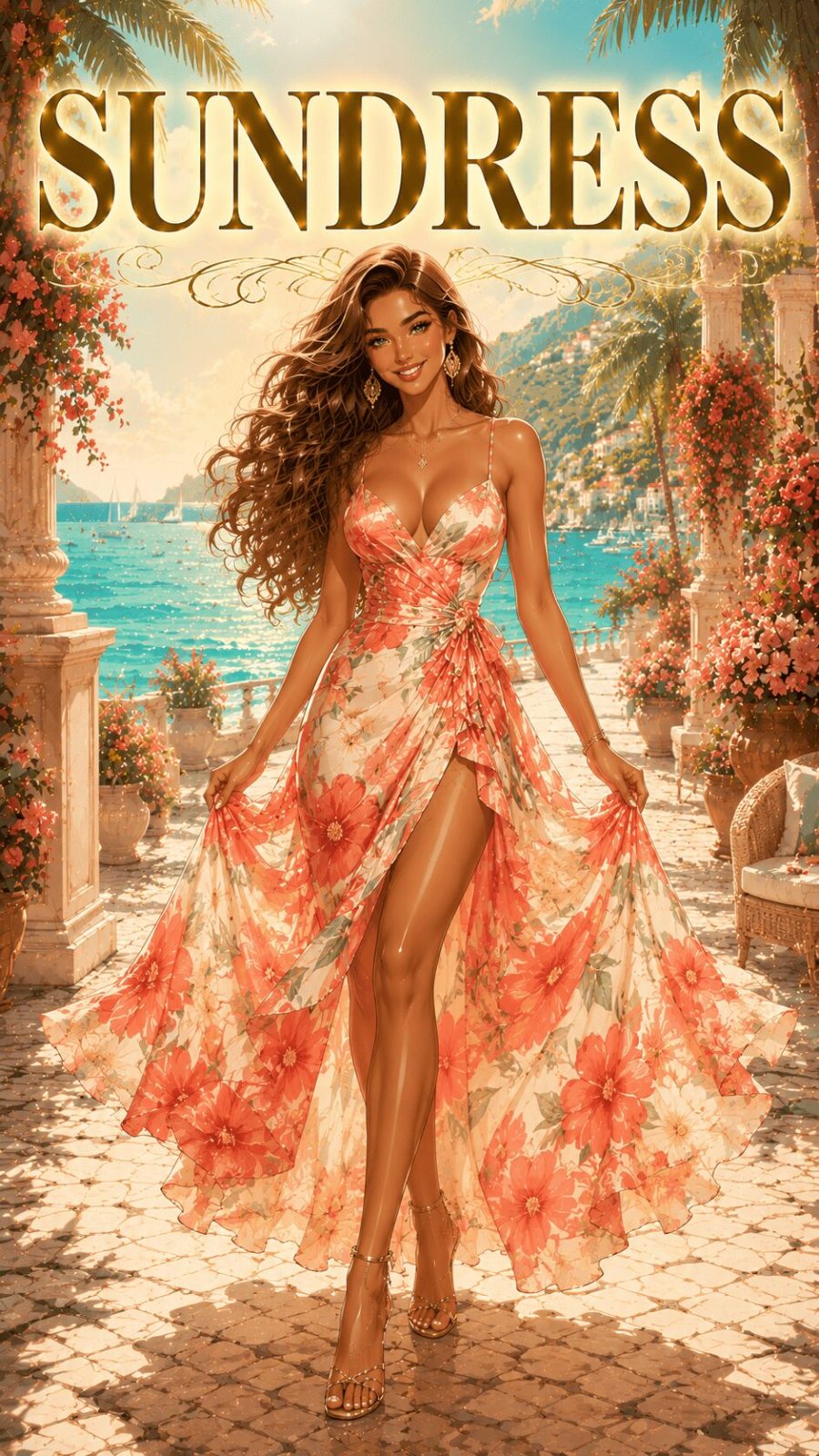
Sundress
![Sundress Example]()
The sundress is defined first by its fabric philosophy: lightweight, breathable, often cotton or linen, designed specifically to be comfortable in warm weather. The construction is typically uncomplicated — a simple bodice (often smocked, tie-shoulder, or spaghetti-strapped), a gathered or tiered skirt, minimal lining. The sundress doesn't try to be anything other than what it is: a dress for sun, warmth, movement, and ease. There's a relaxed joy to sundress dressing that more structured styles simply cannot replicate — and in summer, that ease is precisely the point.


- 40
Bridal Gown
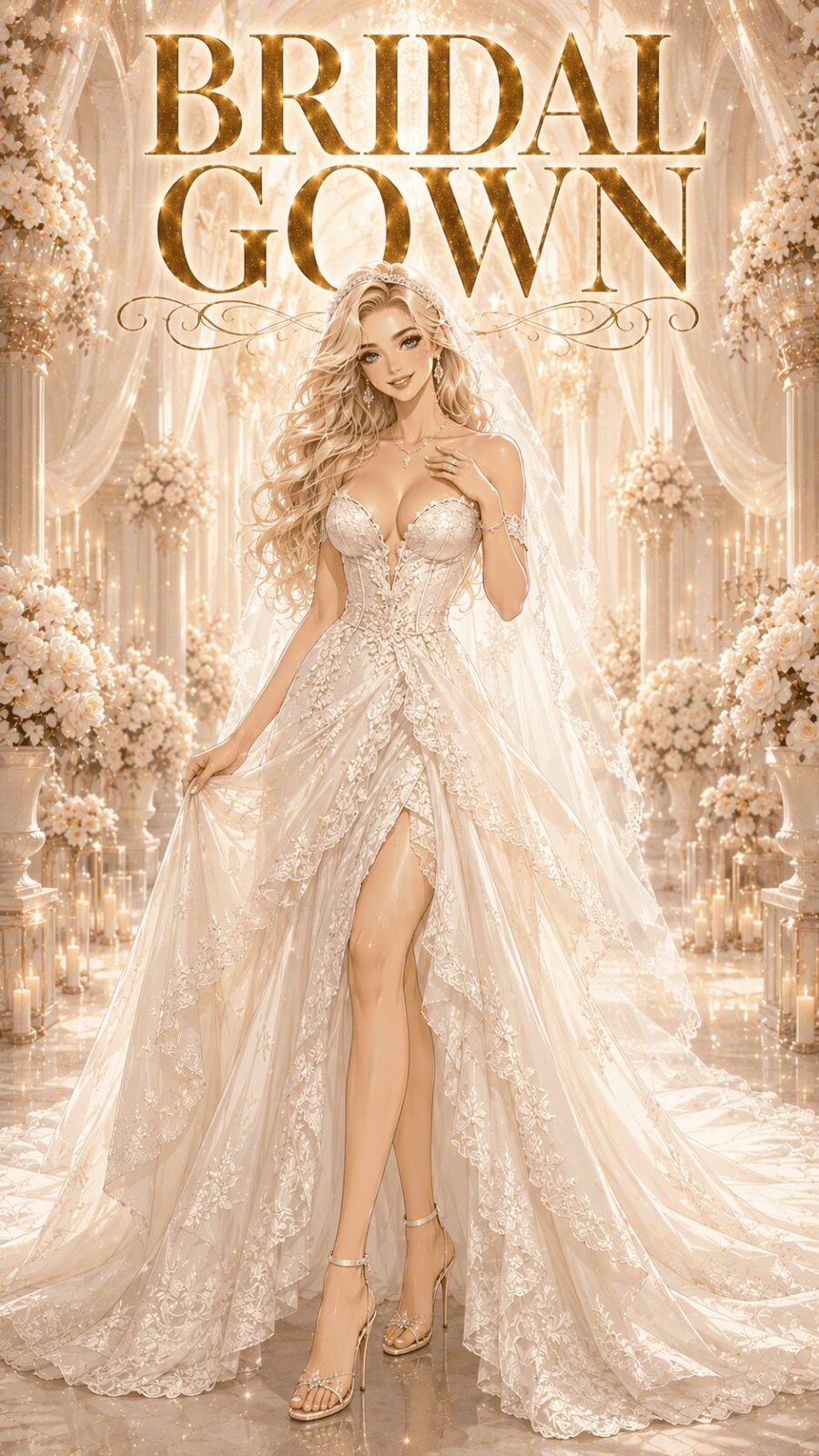
![Bridal Gown Example]()
Bridal gowns exist in their own construction category entirely. The technical requirements are extraordinary: an inner corset or boned bodice that functions independently of the outer fabric; a precisely fitted structure designed to hold its shape through hours of movement, sitting, dancing, and ceremony; heritage fabrics including duchess satin, silk mikado, crepe-back satin, and French lace — all chosen for their behaviour in movement and photography. According to reporting by The Business of Fashion, bridal remains one of the most technically demanding categories in fashion construction, with fit alterations often requiring up to four to six separate fittings.
- 41
Party Dress
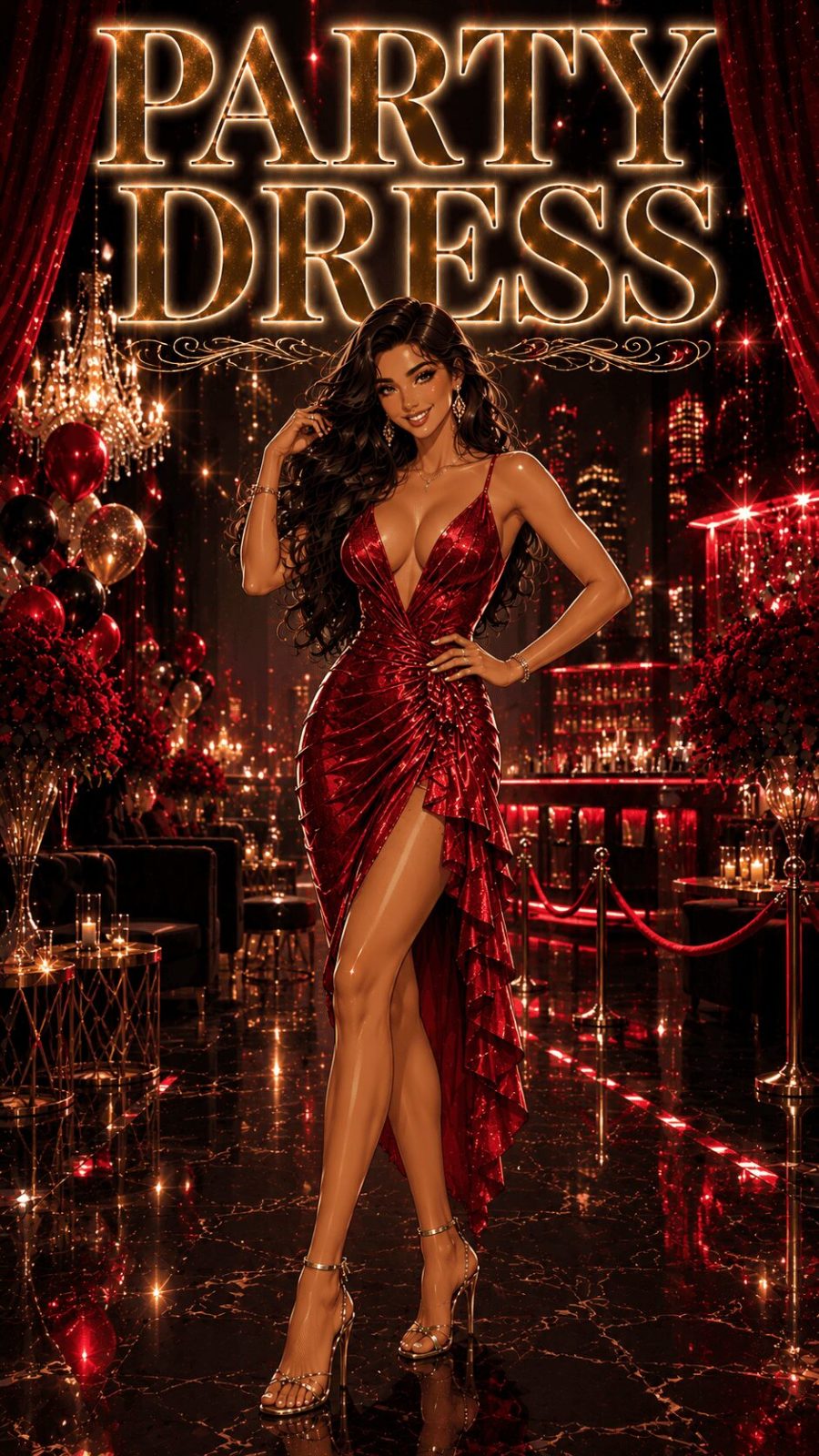
![Party Dress Example]()
A broad category defined by intent rather than silhouette: a party dress is designed to create visual impact in a social setting. It typically incorporates at least one elevated design element — sequins, metallic fabric, bold cutout, statement neckline, dramatic sleeve, or embellished hem. The construction can range from minimal bodycon to full A-line; what matters is that it communicates celebration and effort. A great party dress feels effortlessly dramatic — like the decision was easy and the result is entirely the point.
- 42
Workwear Dress
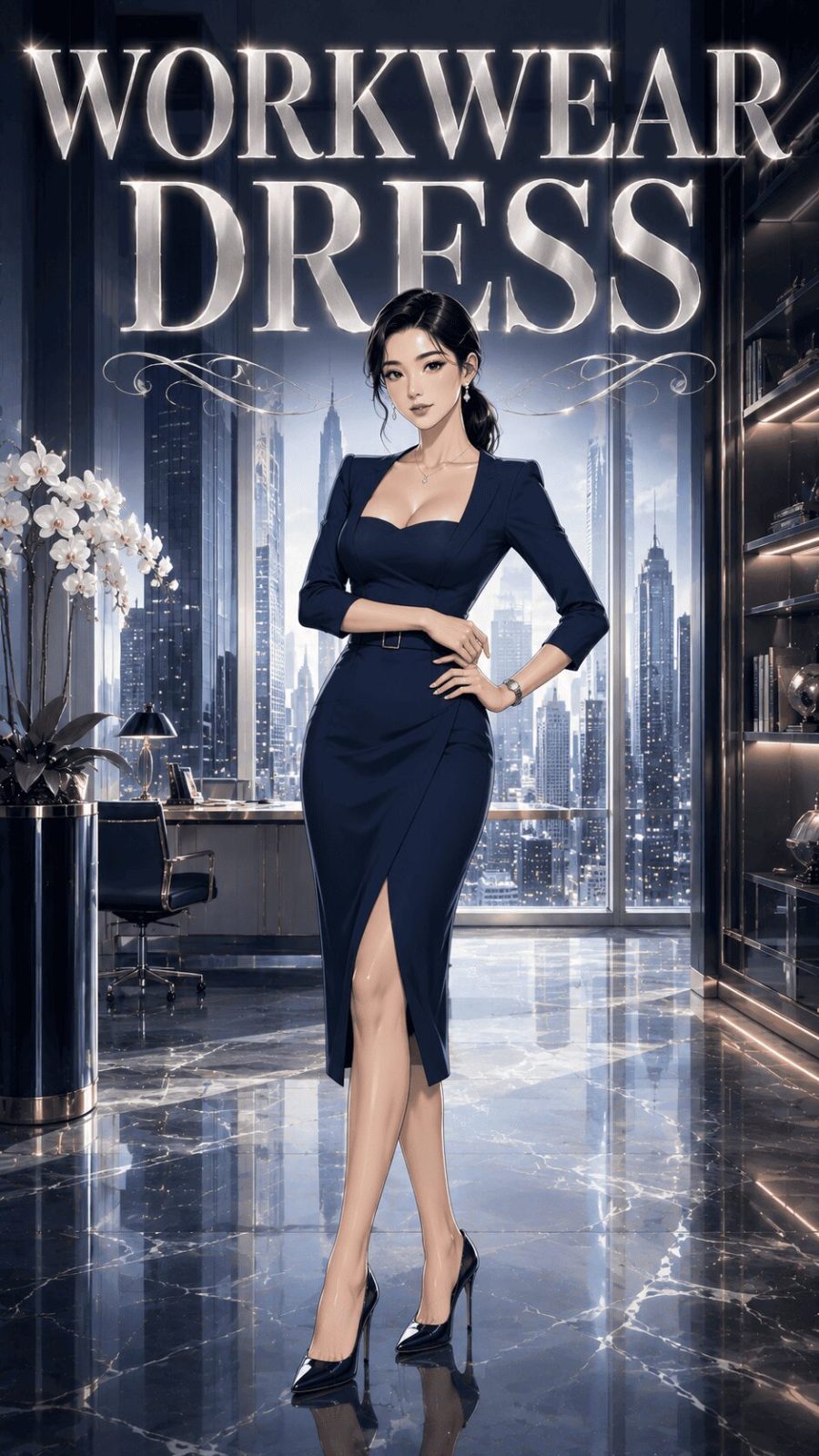
![Workwear Dress Example]()
A workwear dress is defined by professional appropriateness: structured enough to convey authority, versatile enough to function across the full professional day, and constructed in fabric that maintains its appearance over long wear. Ponte knit, wool crepe, and structured jacquard are the workwear fabrics with the longest professional track record — they hold their shape, resist creasing, and read polished without being precious. The best workwear dresses are those that transition from morning meeting to evening dinner without any styling intervention at all. Read our full guide to office outfit formulas for complete dressing context.
- 43
Resort / Vacation Dress
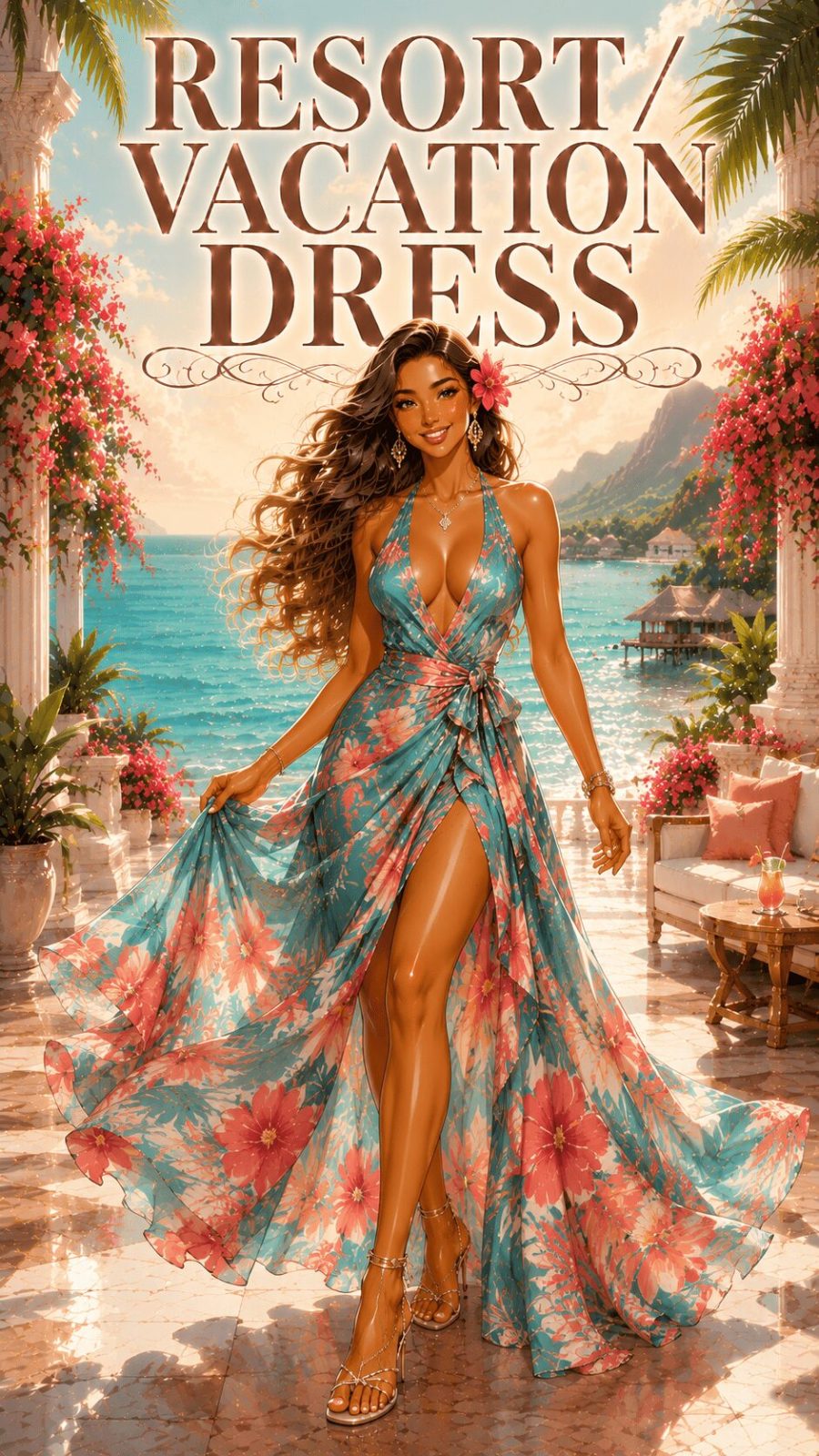
![Resort Vacation Dress Example]()
Resort dressing is its own vocabulary — and the resort dress is its centrepiece. It's typically lightweight, often in a bold print or vivid solid, designed to move beautifully in warm coastal air, photograph well in natural light, and require zero specialist care. Linen, cotton voile, and seersucker are the classic resort fabrics. The silhouette is relaxed but intentional — a kaftan, a tiered maxi, a floaty midi — something that communicates travel, warmth, and ease simultaneously. Resort dressing is where fashion and leisure genuinely merge.


Category 7: By Fabric & Construction (#44–#50)
When the fabric itself defines the dress — these types are inseparable from the textile that makes them work
- 44
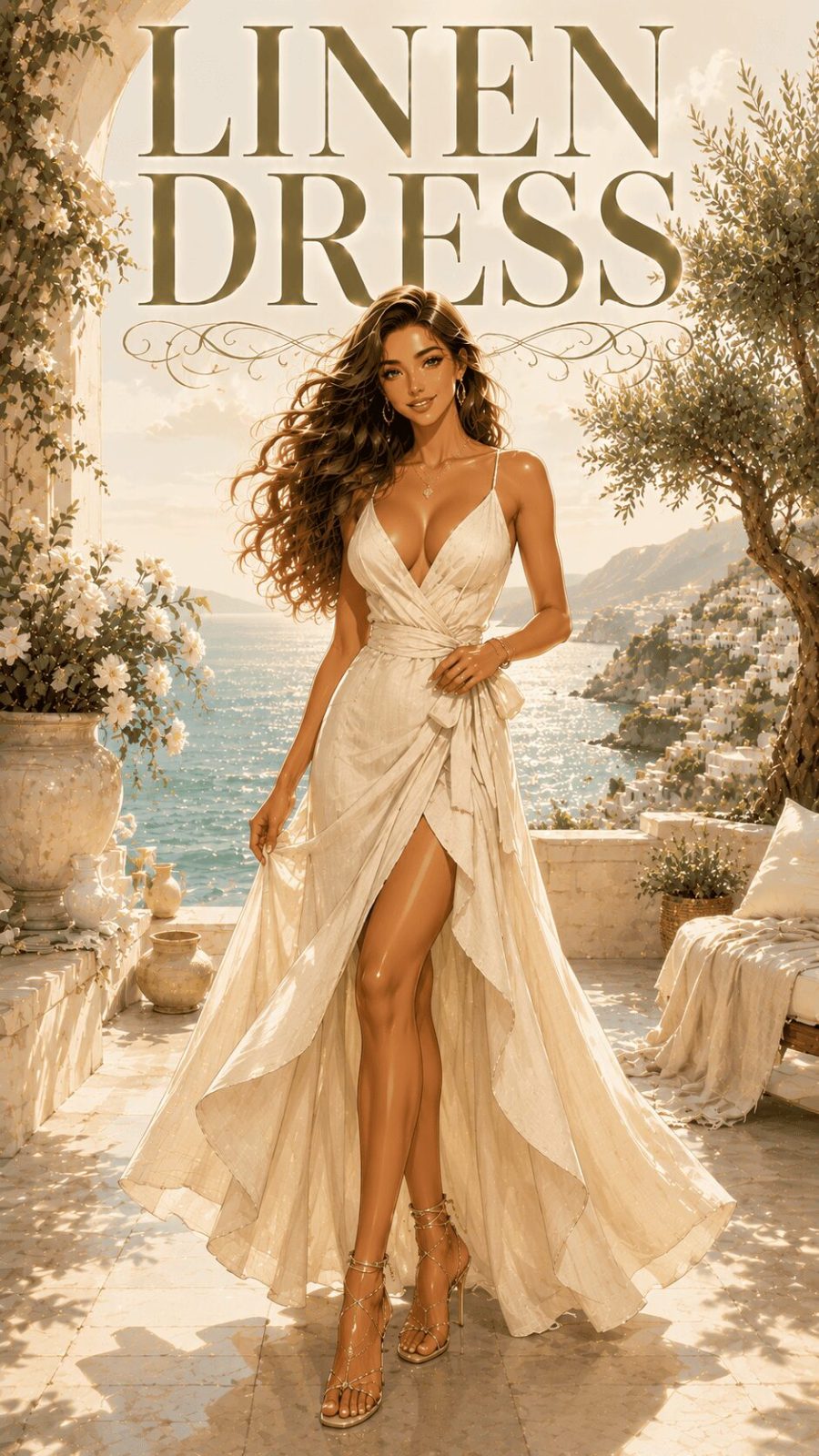
Linen Dress
![Linen Dress Example]()
Linen is the most breathable of all natural fibres — a fact that makes it the undisputed fabric of summer dressing. The linen dress has a particular relaxed elegance: it creases naturally with wear, which is not a flaw but a character quality. Pure linen dresses in simple silhouettes — shirt dresses, shift dresses, sleeveless column styles — have an understated refinement that more complicated constructions often struggle to match. The fabric's texture and its subtle lustre read sophisticated in natural and off-white tones, and playful in the deeper, saturated linens of summer's brightest palette.
- 45
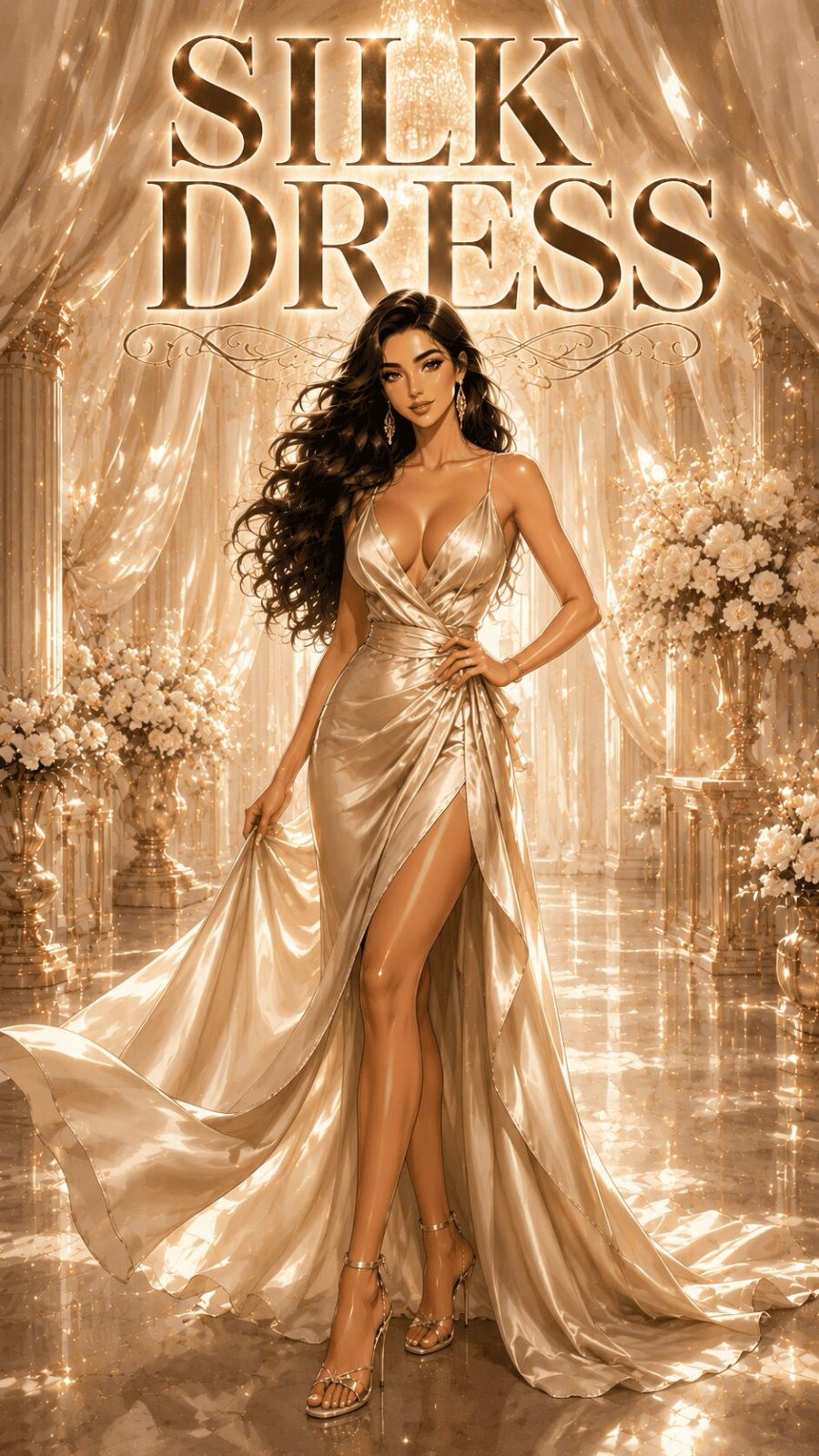
Silk Dress
![Silk Dress Example]()
Silk is the most elevated dress fabric, full stop. It has a weight and movement quality that no synthetic can replicate — a liquid drape that clings softly to the body in motion and catches light with a subtle, deep lustre that photographs exquisitely. The slip dress, the bias-cut gown, the cowl-neck evening dress — all of these styles reach their highest expression in silk. The difficulty of silk is proportional to its reward: it requires hand washing or dry cleaning, careful storage, and precise tailoring, since it drapes truthfully and forgives nothing in construction. But worn well, a silk dress is unmatched in its elegance.
- 46
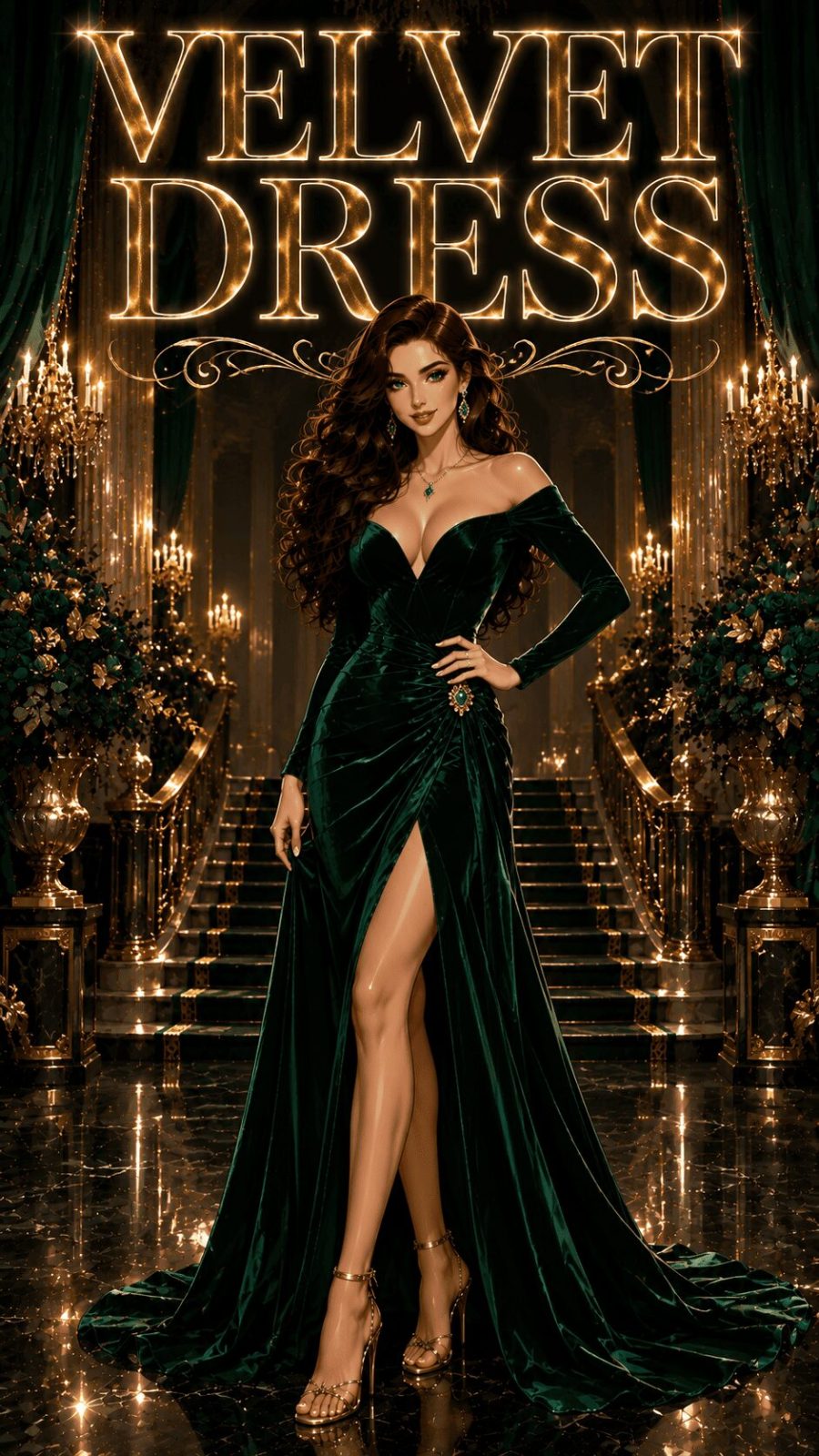
Velvet Dress
![Velvet Dress Example]()
Velvet's defining characteristic is its directional nap — a dense cut pile that changes depth of colour depending on which direction light strikes it. Crushed velvet in particular has a dimensional quality that catches light differently across the surface of the garment, creating depth that flat-woven fabrics simply cannot achieve. Velvet dresses are the most unambiguously autumnal dress choice: they read luxurious and festive, and they carry a historical association with Renaissance court dress and Victorian formal wear that gives them an almost architectural historical weight. A velvet dress in a deep jewel tone — forest green, midnight blue, burgundy — is one of the most reliably elegant choices for winter occasions.
- 47
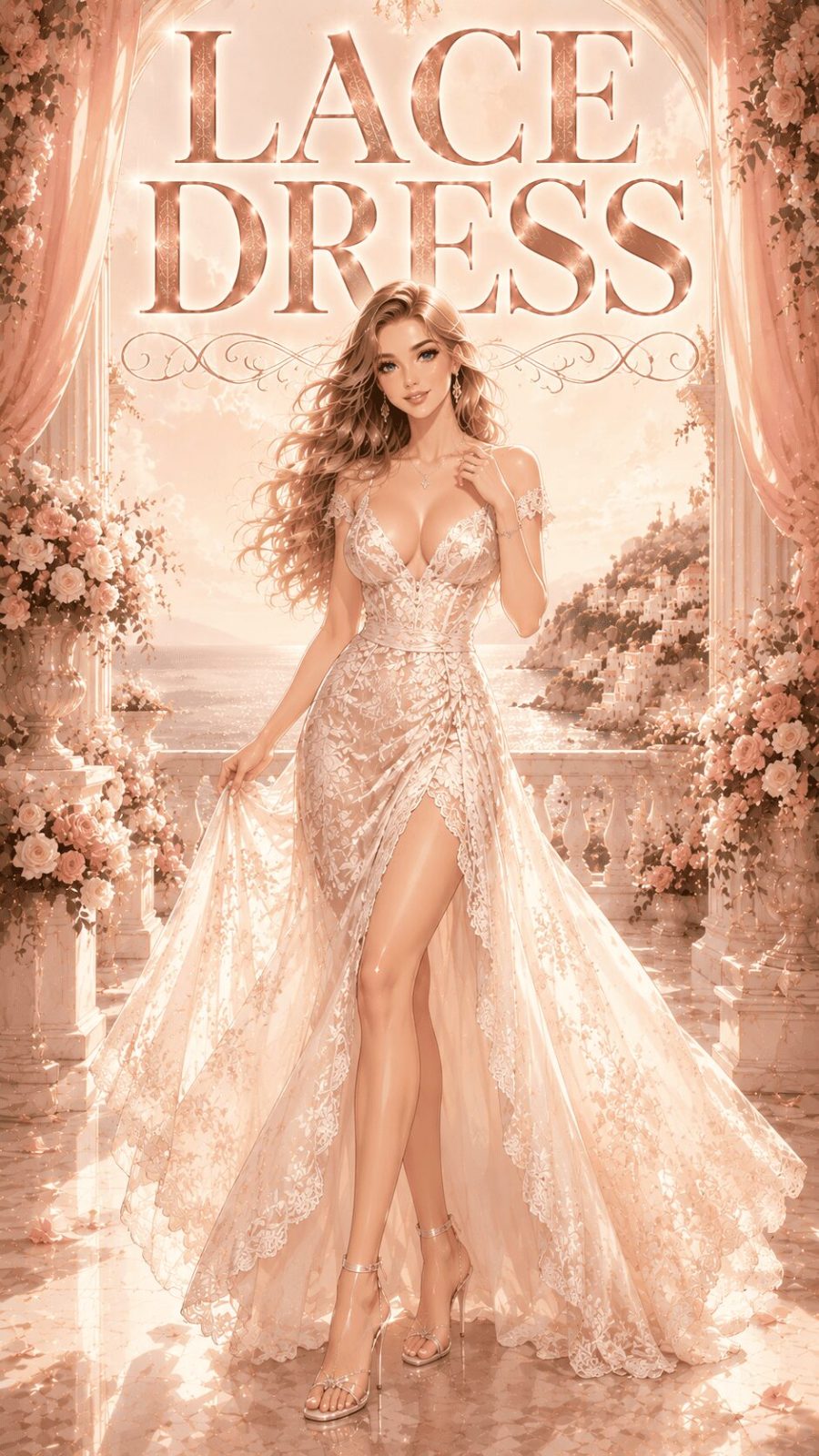
Lace Dress
![Lace Dress Example]()
Lace is one of fashion's most technically complex textiles — an open, patterned fabric created by the looping and twisting of threads to form decorative motifs. As a dress fabric, it operates on two registers: when used for the entire garment (often over a lining), it creates a romantic, feminine aesthetic with an inherently formal quality. When used as an overlay on a different fabric base, it adds a delicate transparency and dimension that feels layered and intentional. Chantilly lace, Guipure lace, and Alençon lace each have distinct characteristics that a skilled tailor works with rather than against.


- 48
Jersey Knit Dress
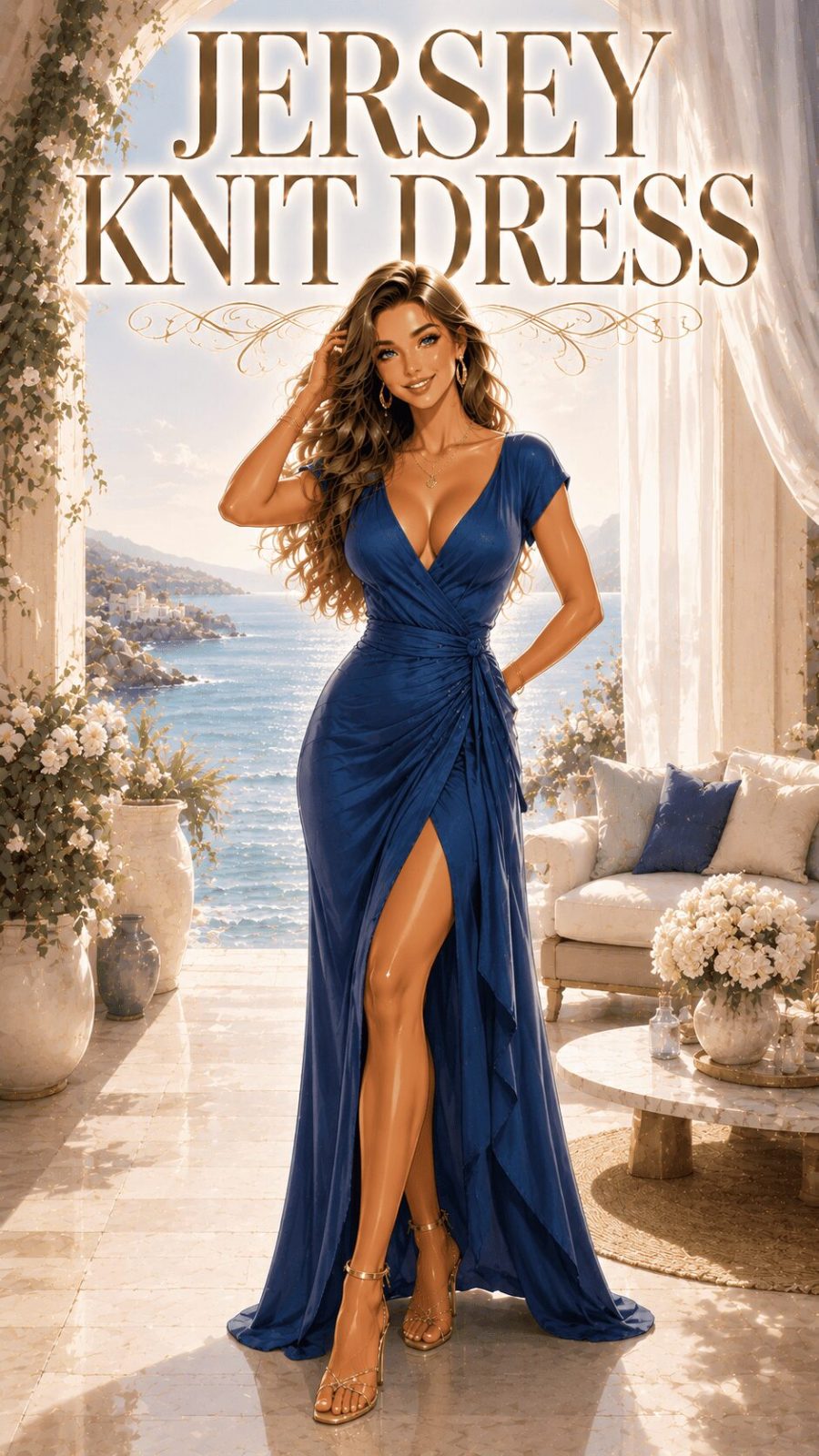
![Jersey Knit Dress Example]()
Jersey is a single-knit stretch fabric with four-way stretch recovery — meaning it moves with the body, resists creasing, and returns to its original shape after wear. It's the fabric responsible for making the wrap dress and the bodycon dress commercially successful, since it allows a garment to fit a far wider range of body measurements than equivalent woven fabric. The jersey dress is the backbone of modern casual dressing: it's wash-and-wear, packs without damage, and looks polished with minimal effort. Viscose jersey in particular has a silk-like quality that elevates it above the purely utilitarian.
- 49
Chiffon Dress
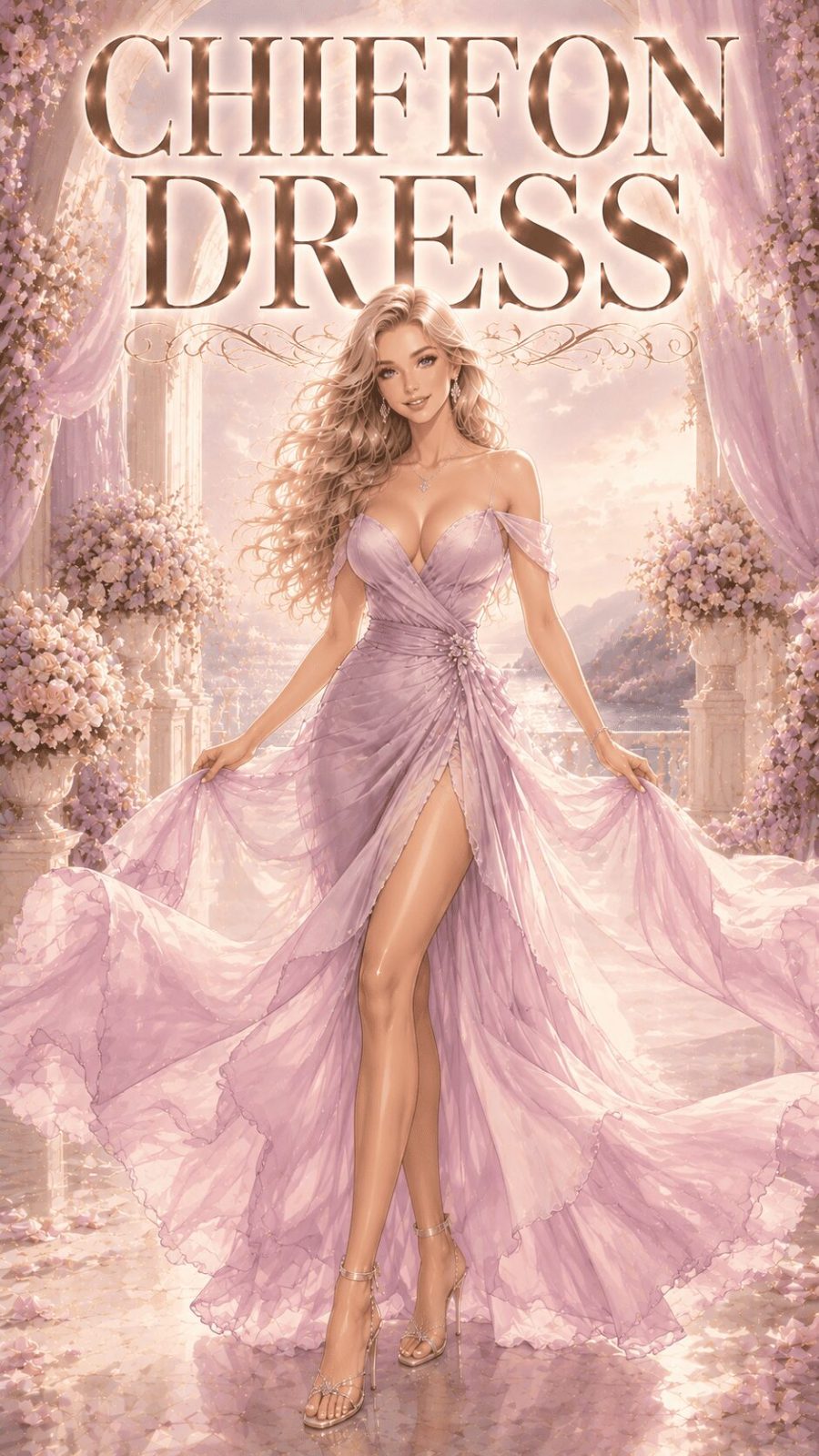
![Chiffon Dress Example]()
Chiffon is an almost weightless, plain-woven sheer fabric with a subtle puckered texture and an extraordinarily light drape. The movement of chiffon changes the entire personality of any dress it's used in — layers of it float and shift with the slightest movement, creating soft dramatic volume that reads ethereal rather than structured. Chiffon dresses are almost always tiered, layered, or used in overlay construction precisely because of this floating quality. The fabric catches light gently, which is why chiffon dominates bridesmaids dressing and occasion gowns. It's unforgiving to the inexperienced home sewist but utterly exquisite in skilled hands.
- 50
Sequin Dress
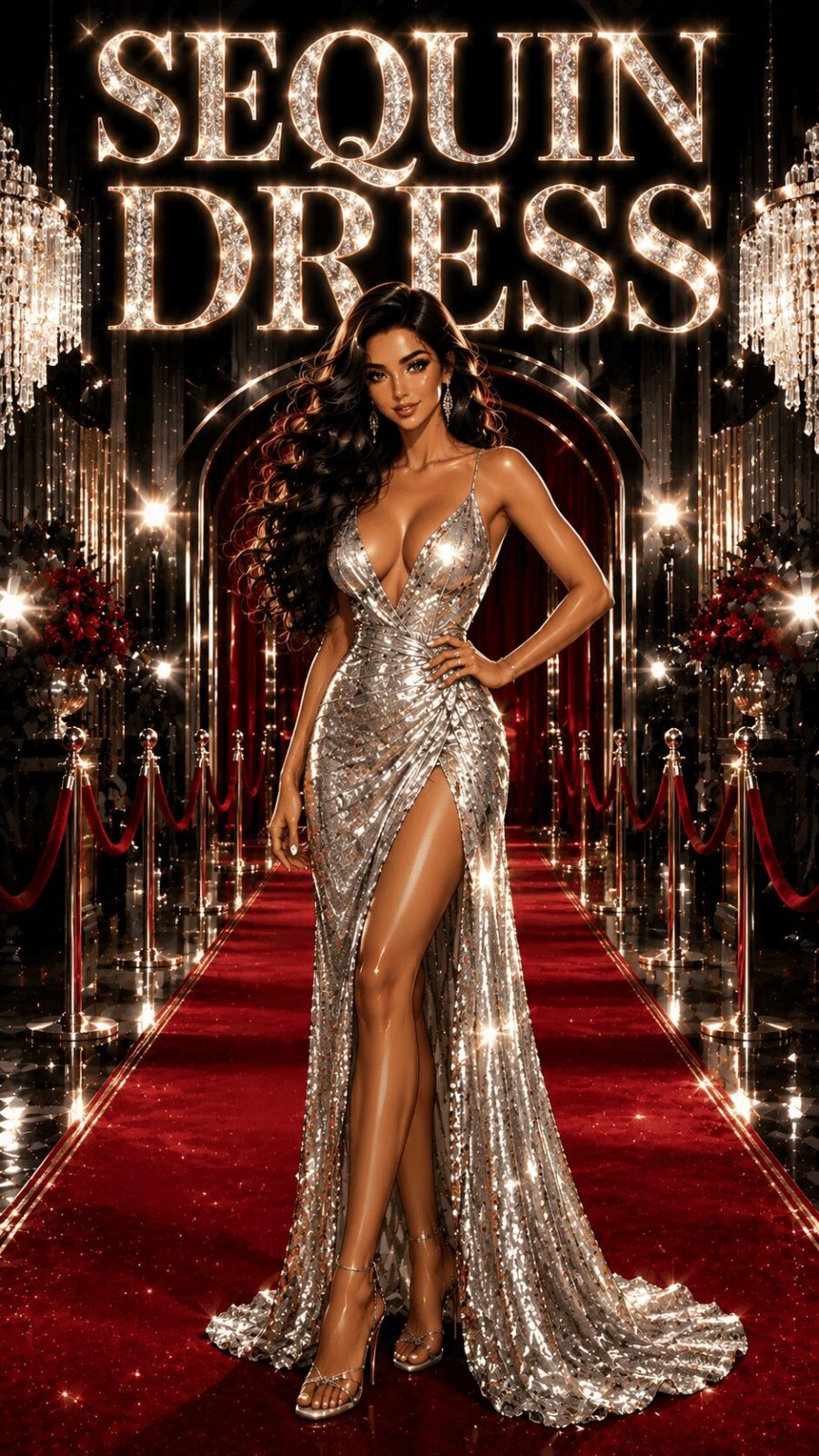
![Sequin Dress Example]()
Sequins are small, flat, reflective discs stitched onto fabric in overlapping rows, creating a surface that fractures and reflects light from every angle of movement. The effect is undeniably festive — which is why sequin dresses have anchored New Year's Eve, holiday parties, and awards-season dressing for decades. The construction challenge with sequins is weight distribution: the disc-laden fabric is heavier than it appears, and quality construction requires careful lining and invisible seaming that remains intact under the embellishment. A sequin dress that's well-made moves beautifully; a poorly made one stiffens and pulls.


Category 8: By Aesthetic (#51–#57)
Dress styles defined by visual and cultural aesthetics — each carrying its own coherent design language and styling world
- 51
Bohemian / Boho Dress
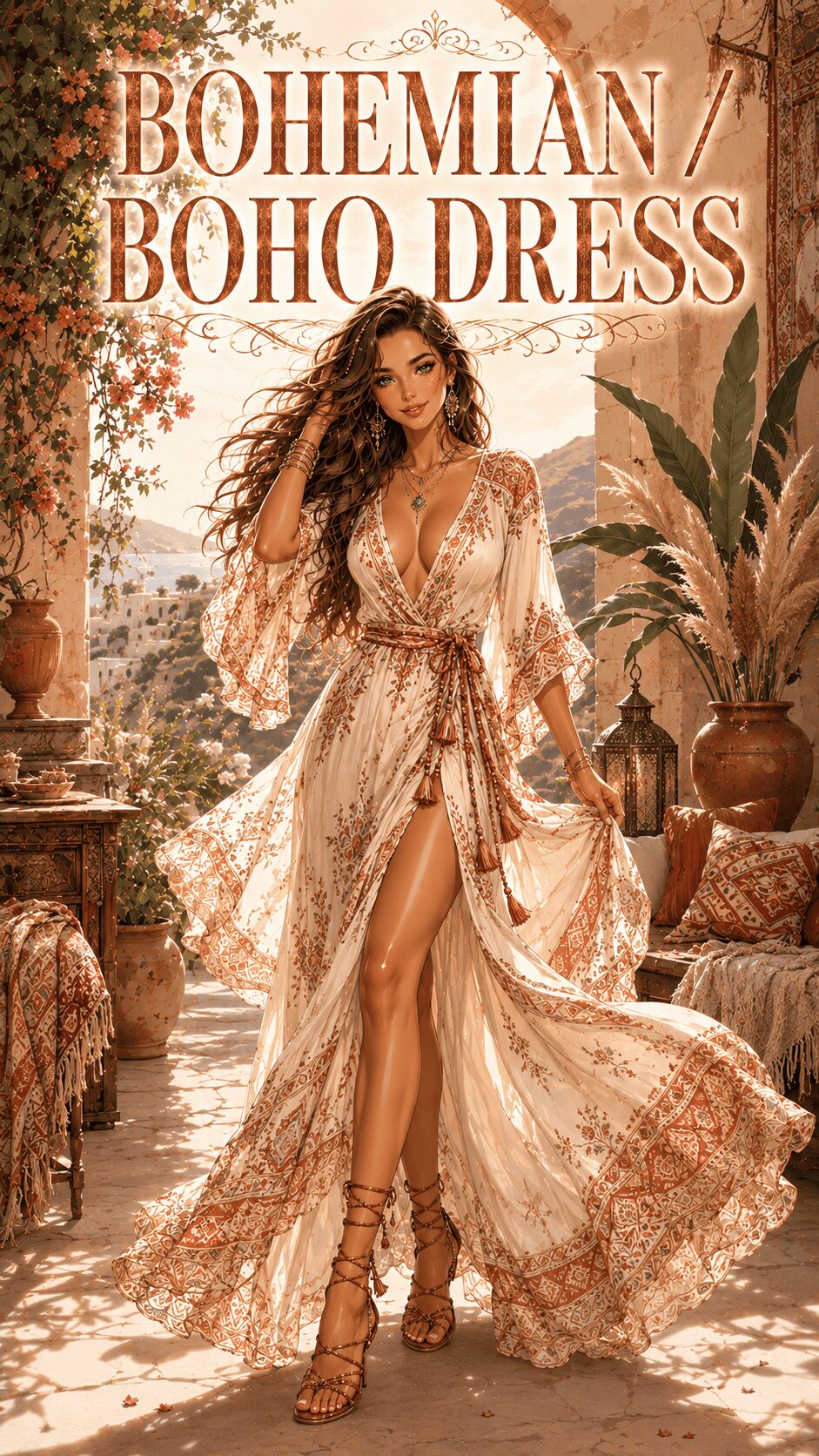
![Bohemian Boho Dress Example]()
The bohemian aesthetic in dresses is defined by a particular visual vocabulary: flowing silhouettes, often tiered or layered, in natural fabrics with handcrafted details — embroidery, crochet panels, tassel trim, or artisan-style prints. The boho dress is anti-structure by design. Its hemlines are often irregular or asymmetric; its necklines tend toward smocking or drawstring; its construction favours artisan technique over precision tailoring. This aesthetic draws from 1960s and 70s counterculture dressing, as well as folk textile traditions from across the globe, and has maintained a consistent presence in mainstream fashion since the early 2000s bohemian revival. For styling ideas, see our complete bohemian outfit guide.
- 52
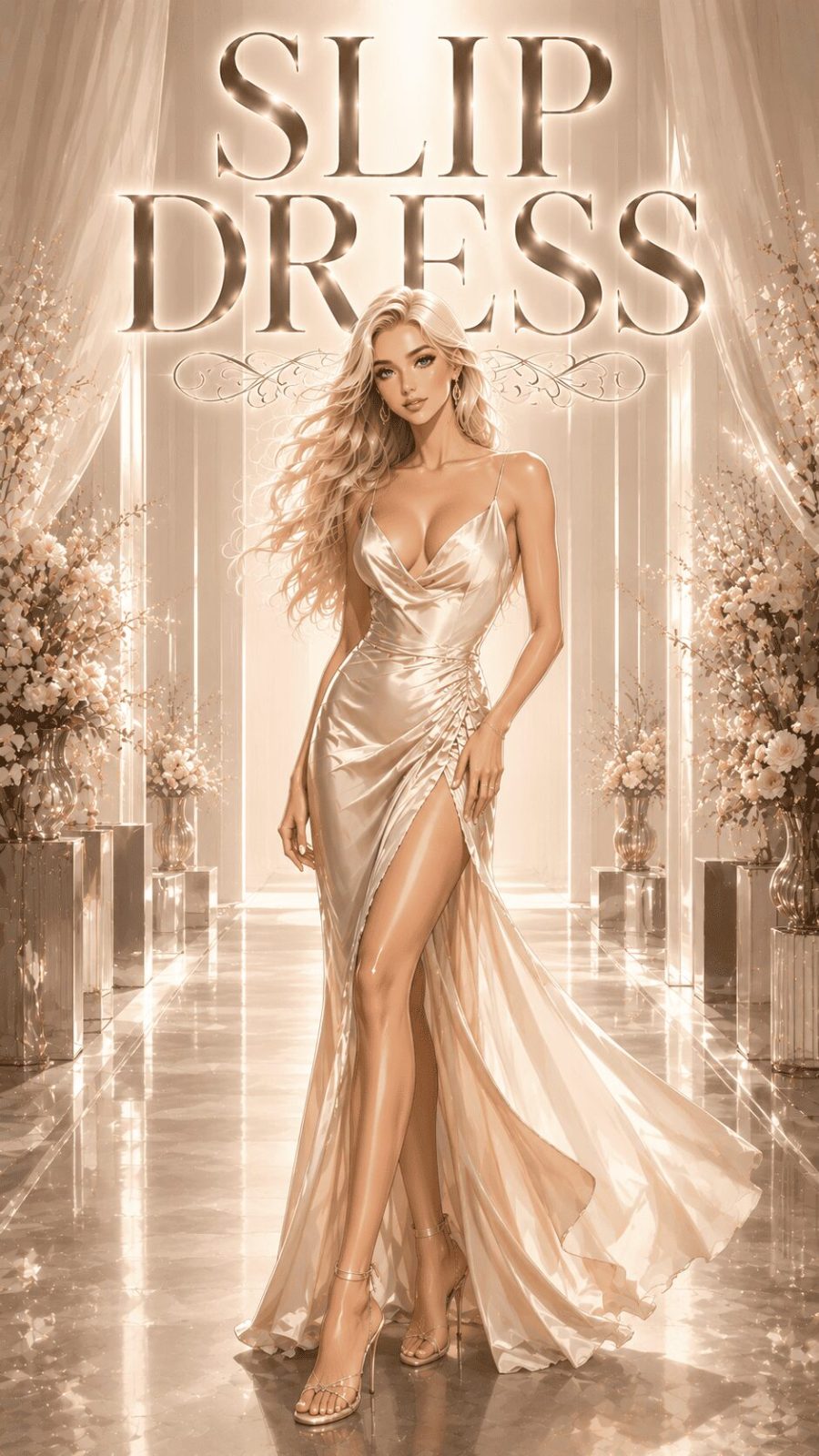
Slip Dress
![Slip Dress Example]()
Originally lingerie — the slip was the undergarment worn beneath a dress to prevent the outer fabric from clinging and to smooth the silhouette — the slip dress crossed into outerwear definitively in the early 1990s through the work of designers like Marc Jacobs and John Galliano. Its construction is deliberately minimal: bias-cut or straight-cut in satin, silk, or satin-finish fabric, with narrow spaghetti straps and a straight or slightly A-line silhouette that moves with the body rather than shaping it. The slip dress is the purest expression of the less-is-more philosophy in contemporary dressing — and when worn correctly, with deliberate layering or confident alone, it's one of the most sophisticated choices available. According to Vogue's style guide on slip dressing, it remains one of the defining archival pieces of 90s minimalism.
- 53
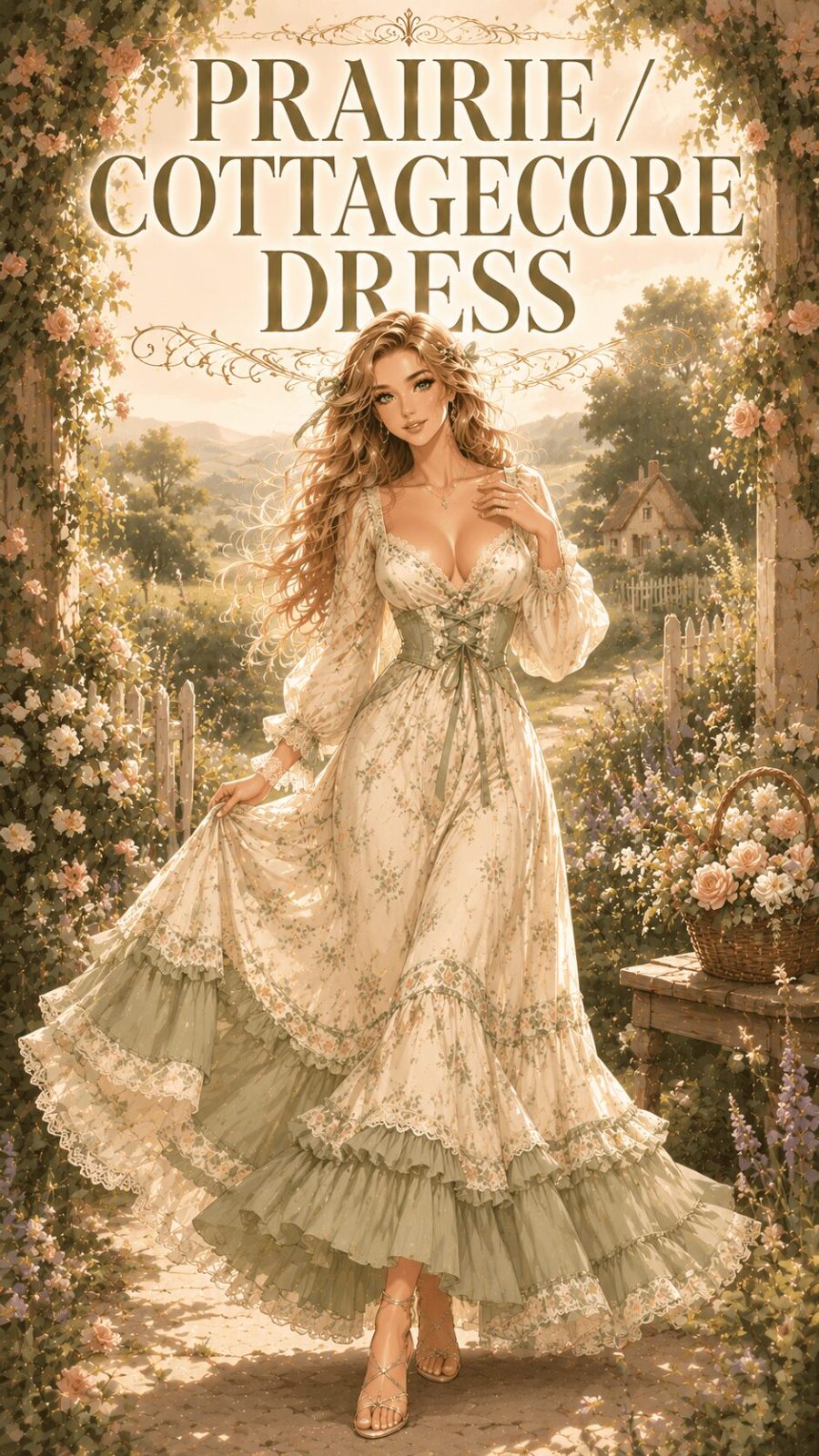
Prairie / Cottagecore Dress
![Prairie Cottagecore Dress Example]()
The prairie dress draws from 19th century rural dressing — high necks with lace or ruffle trim, long full skirts in printed cotton or lightweight wool, puffed or bishop sleeves, and an overall silhouette that communicates modest, handmade, natural-world connection. The cottagecore aesthetic (which emerged as a cultural movement on social media around 2020) elevated this aesthetic into a full styling philosophy: floral prints, natural fabrics, artisan embroidery, and the visual language of a romanticised countryside existence. These dresses are often constructed with smocked bodices, tiered skirts, and gathered sleeves — construction details that reward careful observation.
- 54
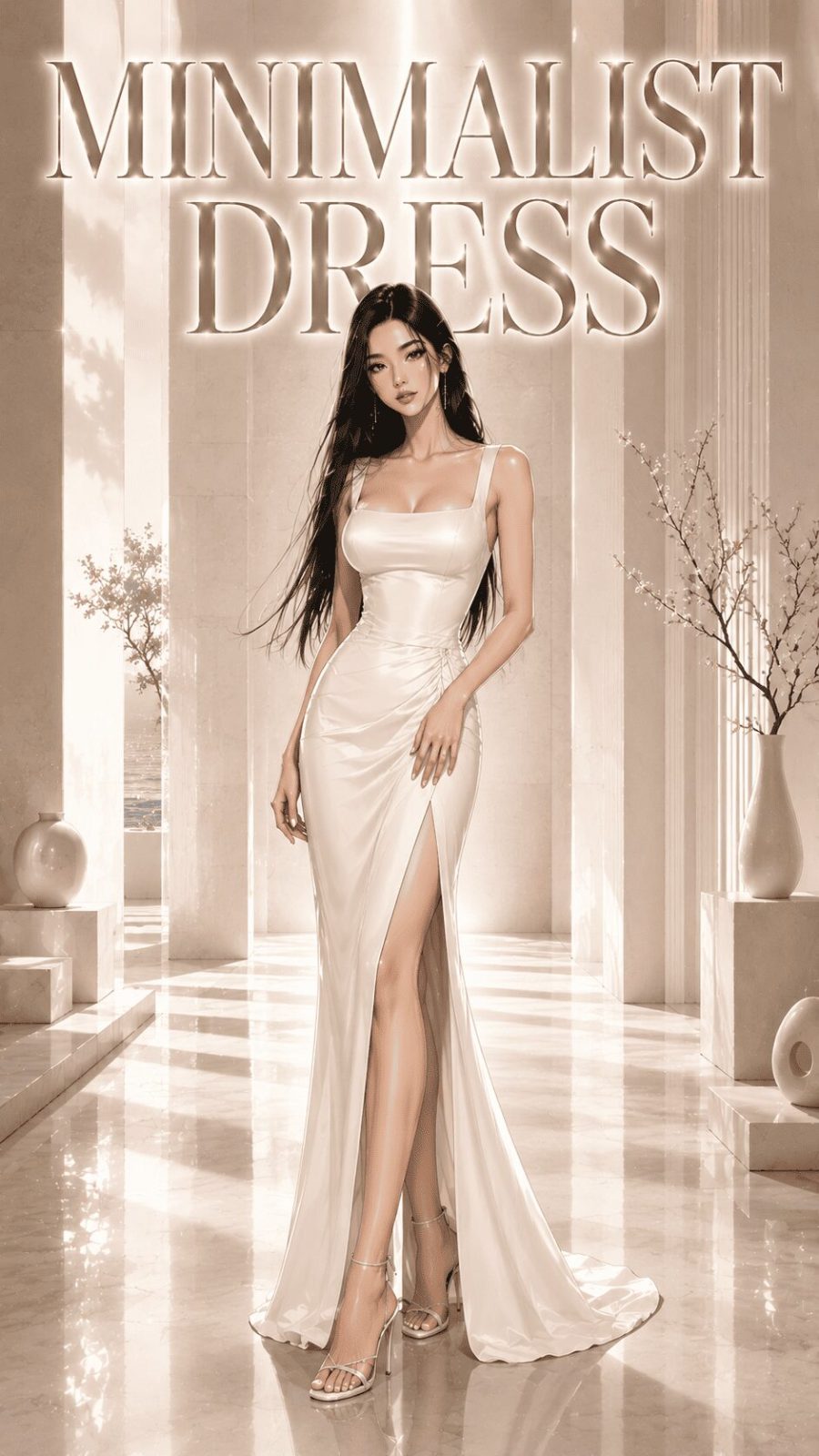
Minimalist Dress
![Minimalist Dress Example]()
The minimalist dress is defined by deliberate reduction: no pattern, no embellishment, no unnecessary detail — only the silhouette, the fabric, and the cut. Its visual power comes entirely from construction quality, fabric precision, and proportion. A minimalist dress in a neutral — bone, ivory, sand, black, deep navy — relies on its seaming, its drape, and its silhouette to carry all the aesthetic weight. This is the most technically demanding aesthetic to dress well because there is nowhere to hide: a poorly finished seam, a sagging neckline, or an imprecise hemline becomes immediately visible. But done well, it's among the most enduring and versatile styles in a wardrobe.


- 55
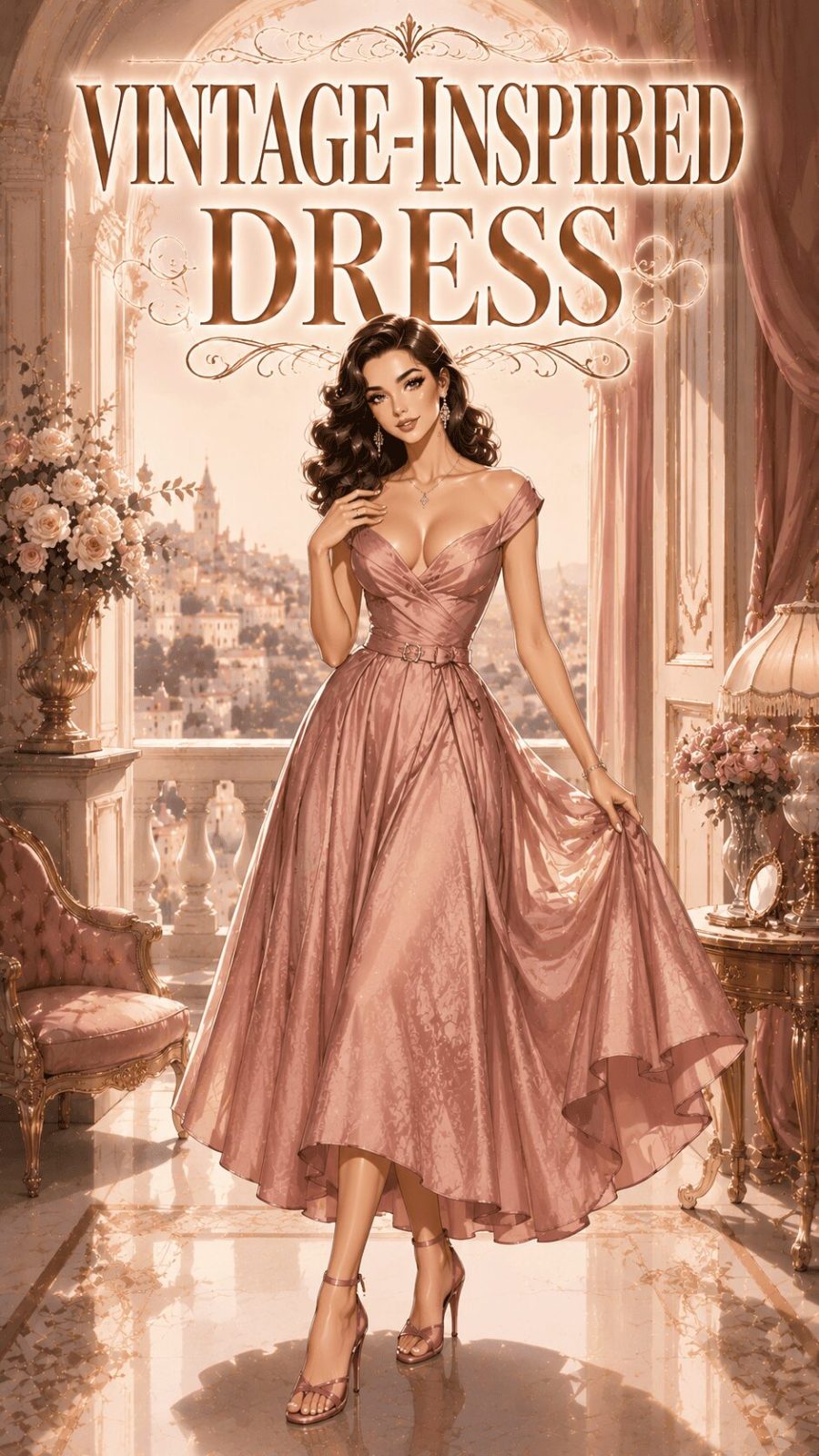
Vintage-Inspired Dress
![Vintage Inspired Dress Example]()
A dress constructed in the silhouette language of a past decade — typically the 1950s full-skirted fit-and-flare, the 1960s mod shift, the 1970s prairie, or the 1940s tea-length gown. Vintage-inspired differs from authentic vintage in that it's a contemporary garment using period-accurate construction references rather than an original archival piece. The appeal is the combination of historical silhouette with modern fabric technology and sizing standards. A 1950s-inspired tea-length dress in a contemporary floral print is the most enduring expression of this category — and consistently one of the most photographed dress styles at weddings and garden events.
- 56
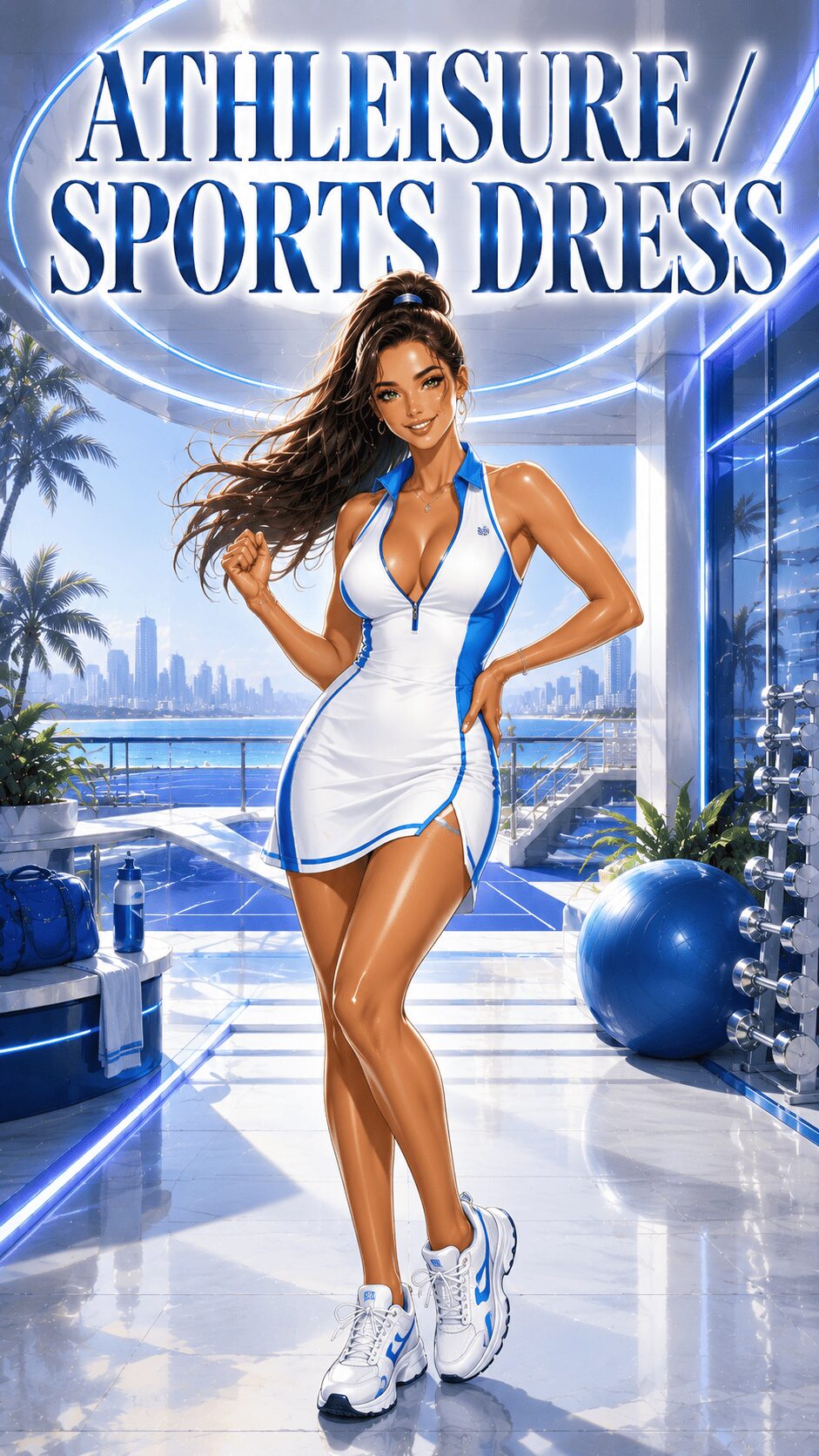
Athleisure / Sports Dress
![Athleisure Sports Dress Example]()
The athleisure dress applies performance fabric technology — moisture-wicking four-way stretch, compression panels, seamless knit construction — to a dress silhouette. The category spans tennis dresses (with built-in shorts), golf dresses, yoga dresses, and the broader market of activewear-as-outerwear dresses that function in the gym and then transition directly to daily life. This is one of the fastest-growing dress categories commercially, driven by the dissolution of the boundary between fitness wear and everyday dressing — a trend that accelerated significantly through the early 2020s and shows no sign of reversing.
- 57
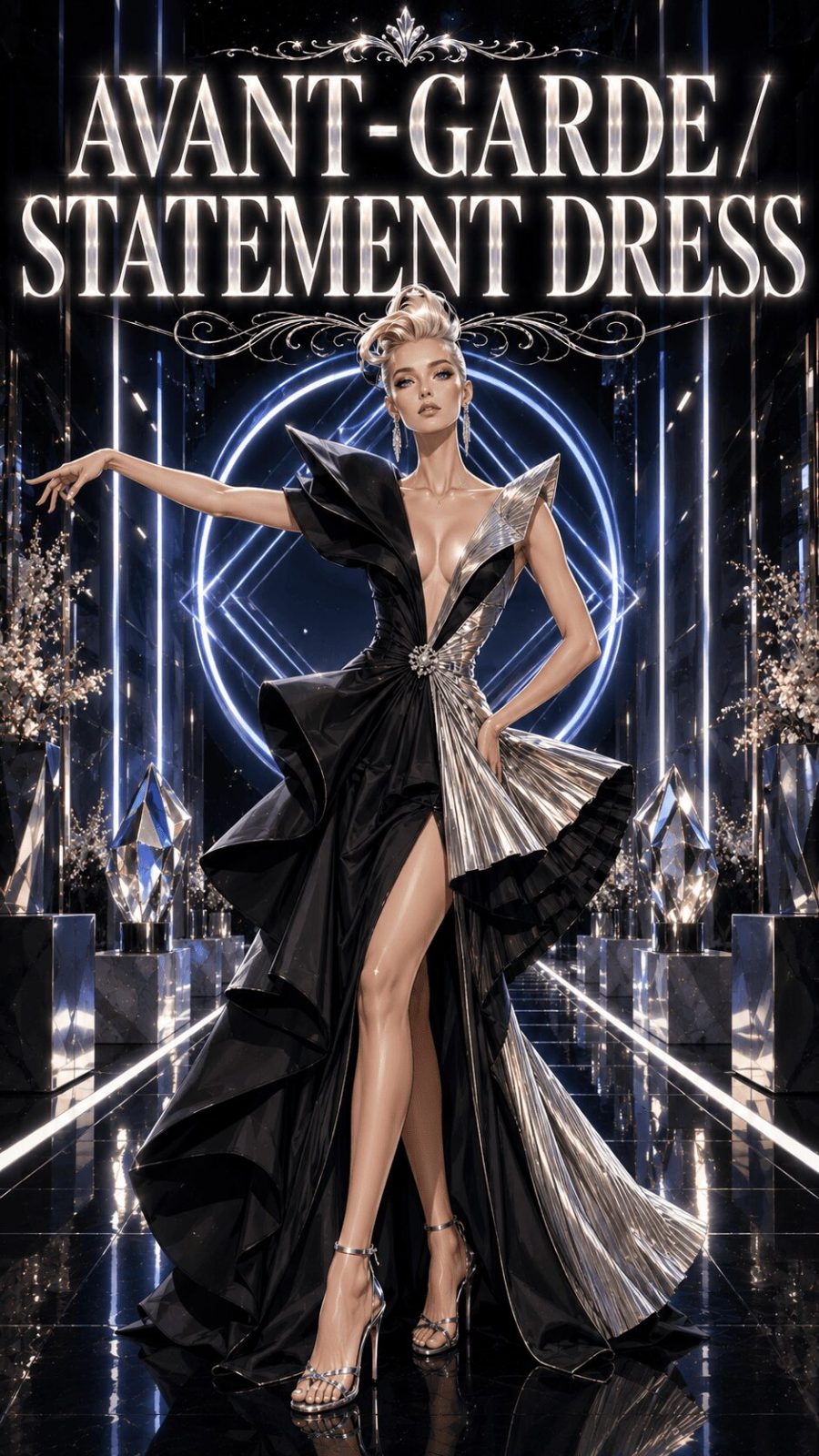
Avant-Garde / Statement Dress
![Avant-Garde Statement Dress Example]()
A dress designed primarily as a visual statement — where the silhouette, construction, or material exists to challenge conventional dressing rather than to serve utilitarian purpose. Avant-garde dresses might incorporate architectural volume that extends beyond the body, unconventional materials, deconstructed panels, or structural elements borrowed from sculpture rather than garment making. This is fashion as art — and while these dresses exist at the most extreme end of wearability, they consistently define the visual language that more commercial dressing eventually absorbs. The most distinctive silhouettes of any decade begin in this category.


Category 9: By Seasonal Styling (#58–#61)
Dress categories where the season is the primary design consideration — built around climate, fabric, and how the garment behaves in specific weather
- 58
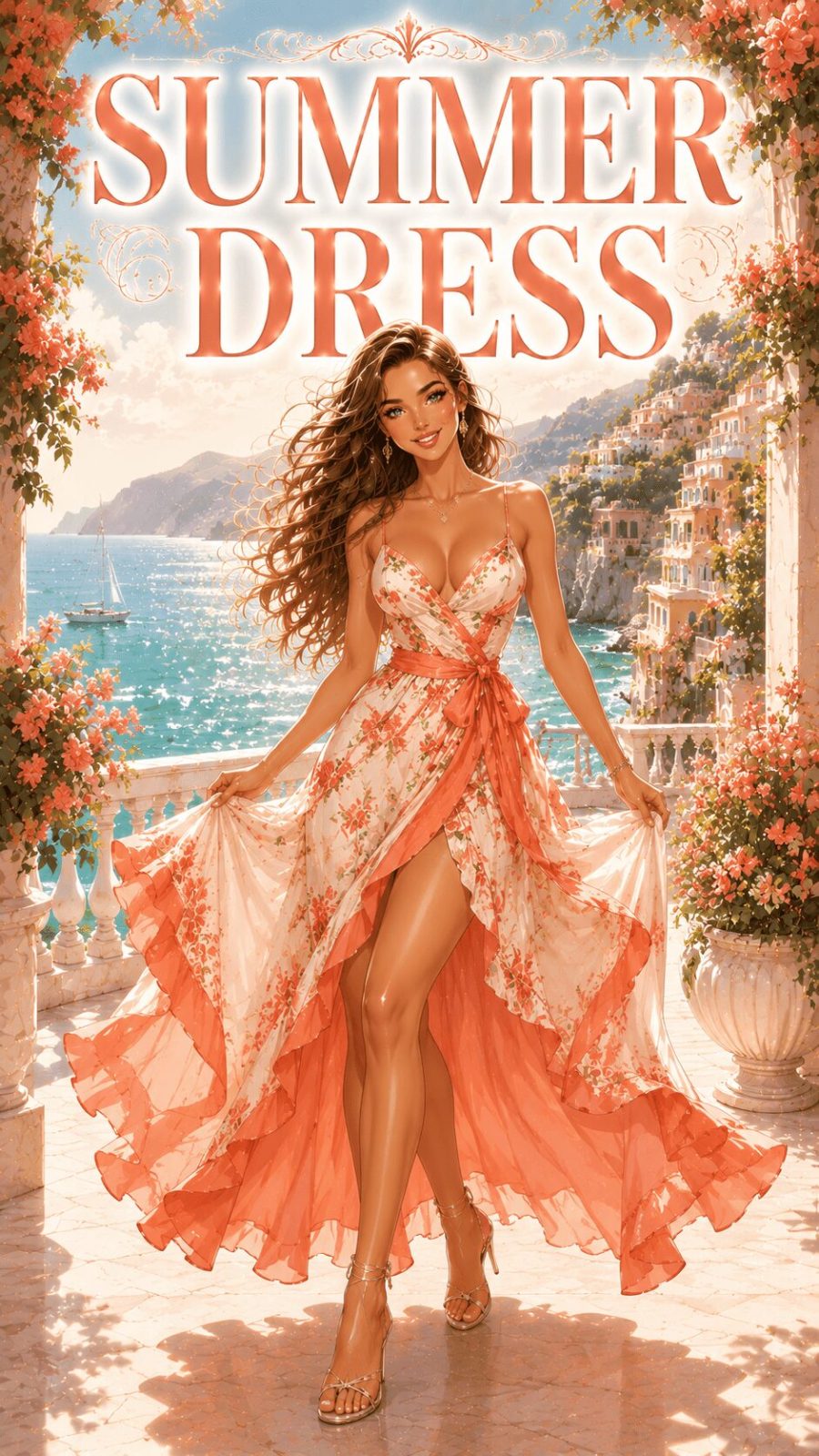
Summer Dress
![Summer Dress Example]()
More a construction philosophy than a specific silhouette: a summer dress prioritises breathability, lightness, and ease above all other considerations. Natural fibres — cotton, linen, cotton-linen blends — dominate this category, and the construction details that keep a garment cool are prioritised: minimal lining, wide silhouettes that allow air circulation, sleeveless or very lightweight sleeve options. Summer dresses span casual beach cover-ups to elegant garden party midis; what unites them is that they feel comfortable in heat and look intentional at the same time. This is harder to achieve than it sounds. See our full guide to summer dress outfit ideas for complete seasonal styling.
- 59
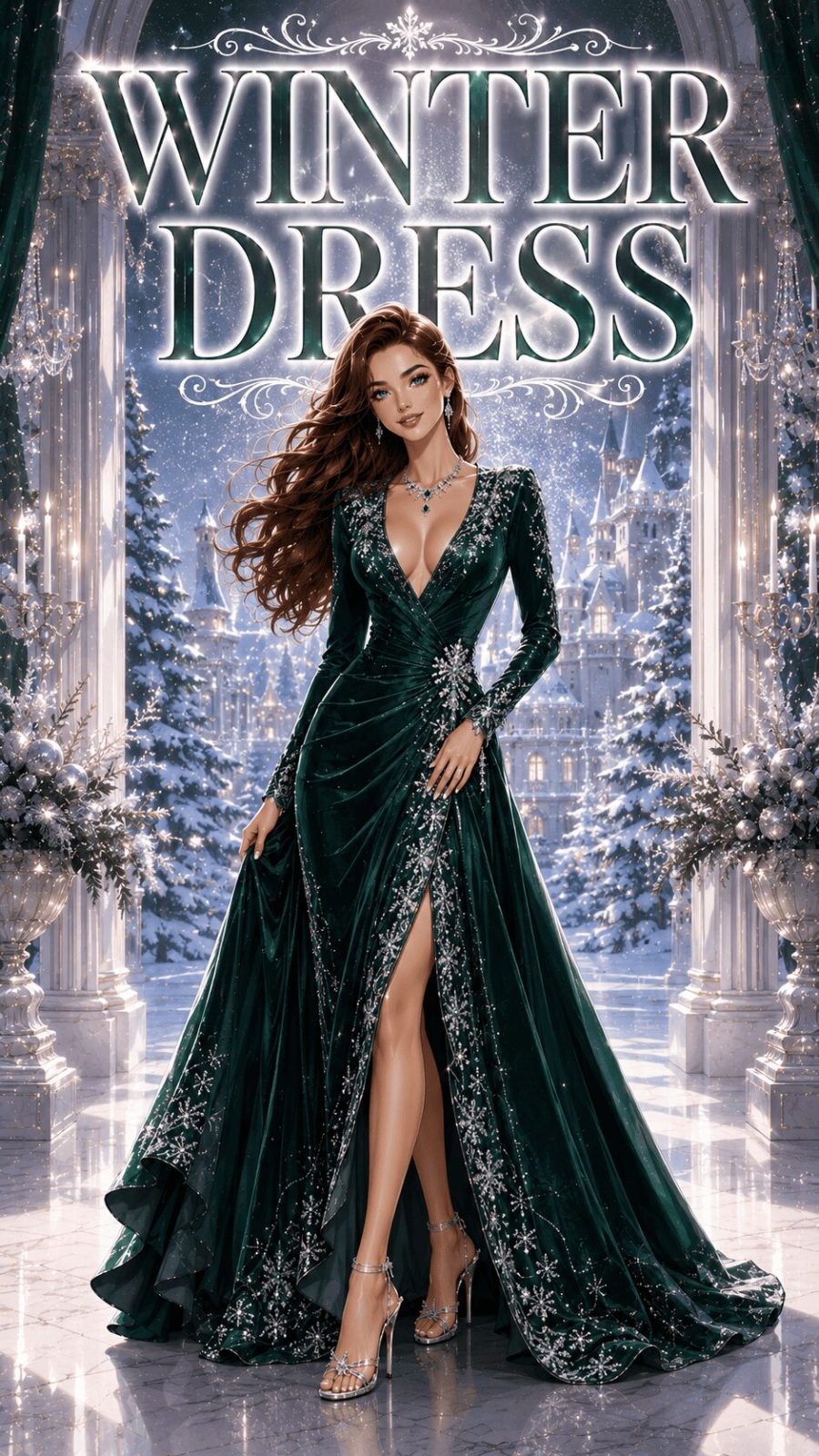
Winter Dress
![Winter Dress Example]()
A winter dress is constructed in fabric with thermal weight — wool jersey, ponte knit, cashmere blend, velvet, or heavy crepe — and often features longer sleeves and fuller coverage that manages cold without requiring a jacket over it. The long-sleeve sweater dress and the turtleneck dress are the two most consistent winter dress categories: they function as single-garment outfits that feel substantial and warm without bulk. Winter dresses in darker tones — charcoal, forest, burgundy, midnight — carry the seasonal colour story that defines autumn/winter dressing across a decade of consistently recurring fashion cycles. Our guide to winter outfit formulas covers the complete layering picture.
- 60
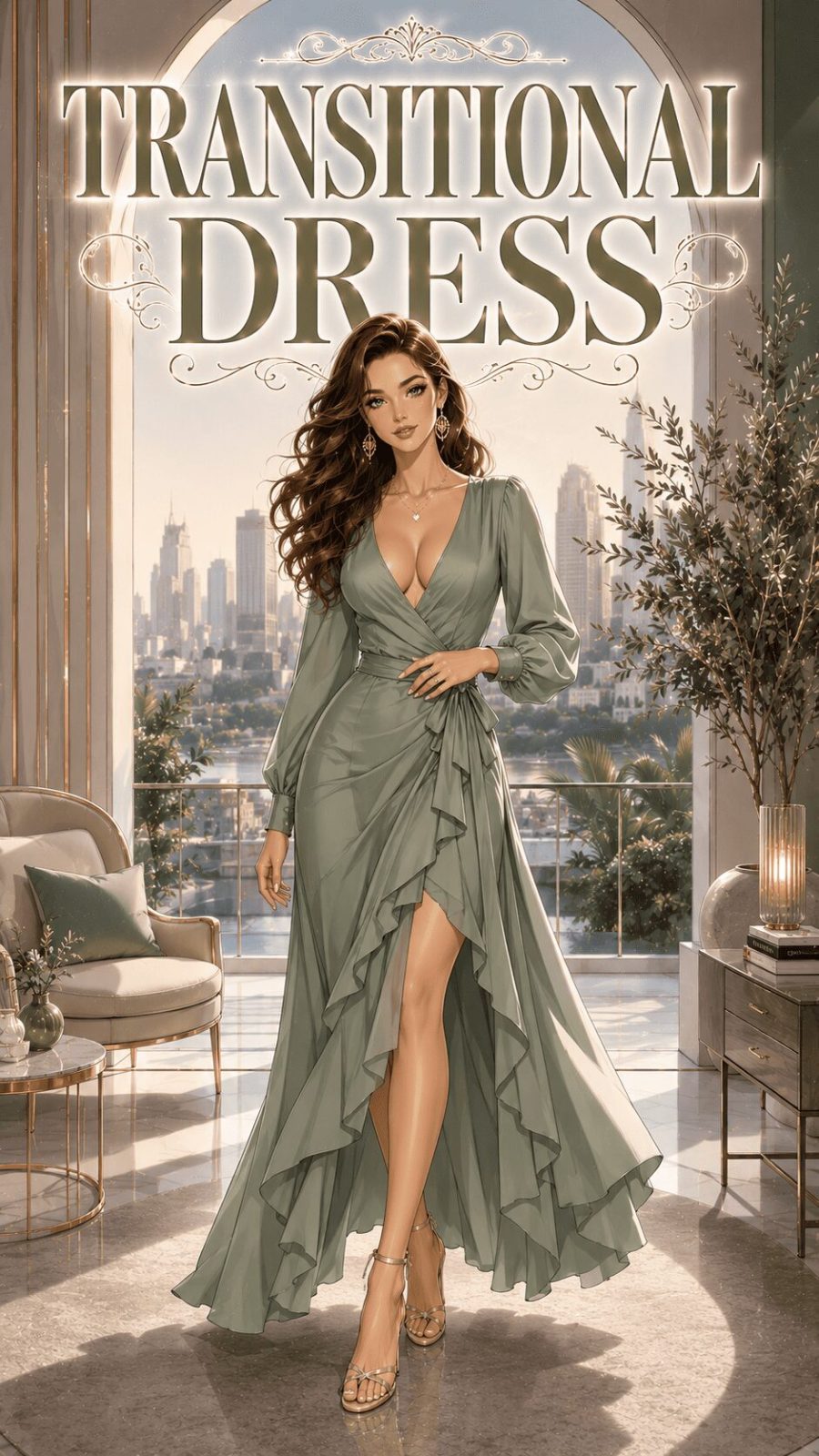
Transitional Dress
![Transitional Dress Example]()
Transitional dressing is the art of navigating the weeks between seasons — when it's too warm for full winter fabric and too cool for summer choices. The transitional dress is constructed in medium-weight fabric — crepe, chambray, a mid-weight jersey — with sleeve options that work layered under a jacket or coat. Floral prints in slightly deeper tones read spring-to-summer transition; the same silhouette in a rust or ochre print reads summer-to-autumn. The best transitional dresses earn their keep across three to four months of variable weather, which makes them among the highest cost-per-wear pieces in a wardrobe.
- 61
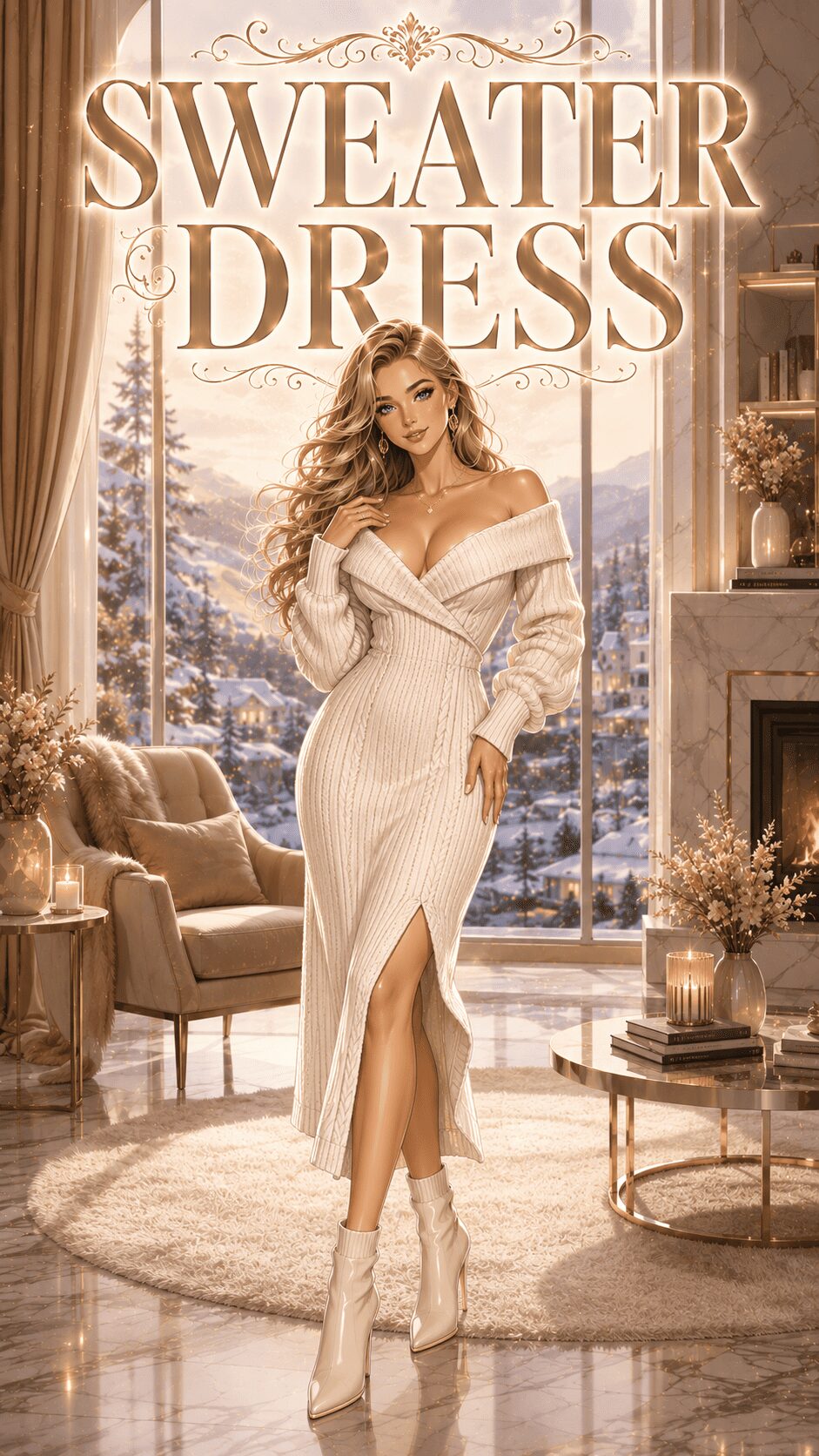
Sweater Dress
![Sweater Dress Example]()
A dress constructed in knit fabric with the visual and tactile quality of a jumper or sweater — ribbed knit, cable knit, chunky wool, or fine merino — extended to full dress length. The sweater dress is autumn/winter's most reliable casual-to-smart dress option, offering genuine warmth without sacrificing the visual polish of a dress silhouette. A fine-gauge ribbed knit in camel or charcoal, worn with knee-high boots, represents the apex of effortless autumn dressing. The construction ranges from minimal (a ribbed tube dress) to elaborate (a cable-knit midi with shawl collar), but the fabric is always the primary design statement.


Category 10: By Construction Style (#62–#66)
Construction-first classification — dress types where a specific technical method defines the garment's identity
- 62
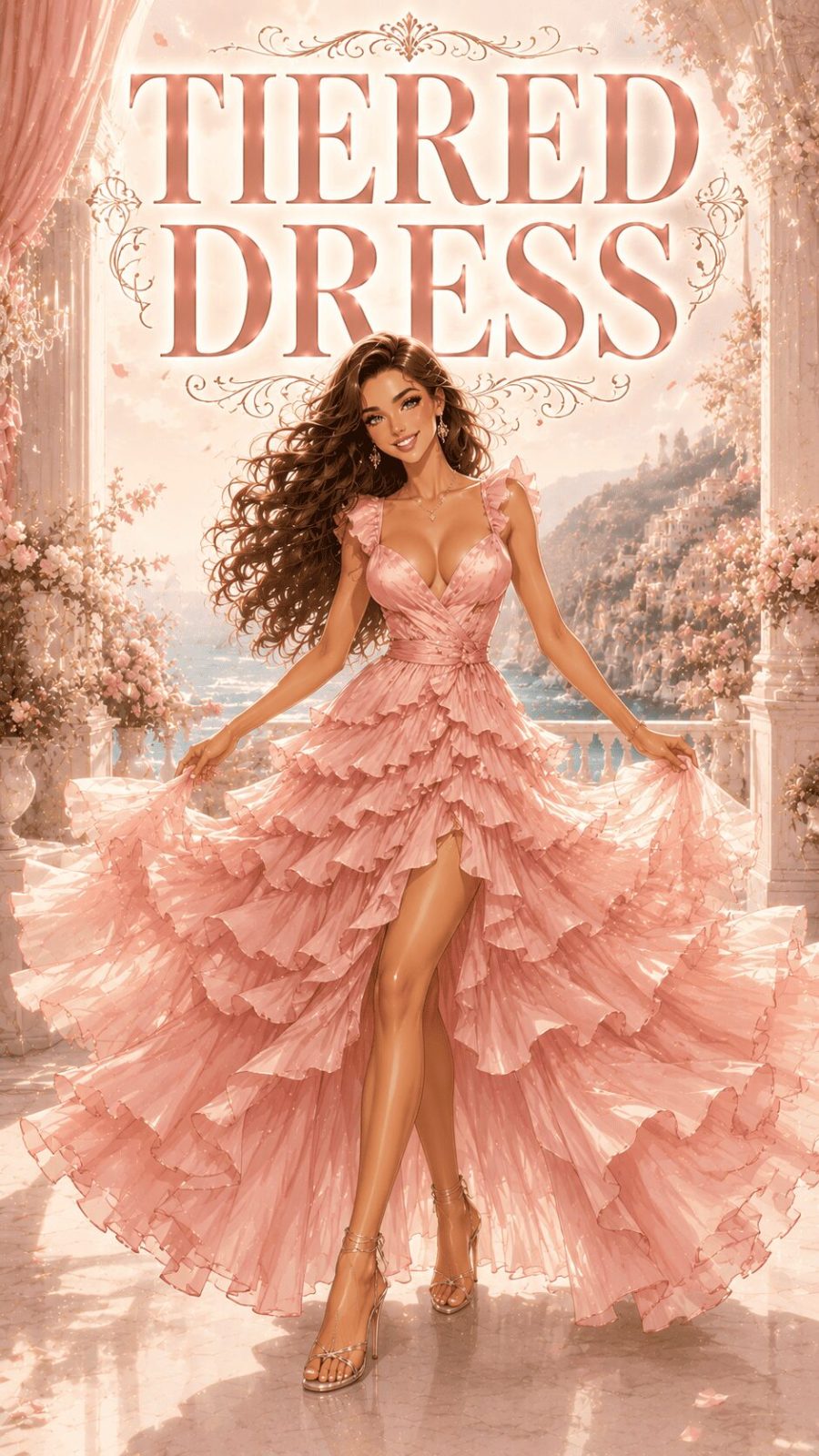
Tiered Dress
![Tiered Dress Example]()
A tiered dress is constructed from multiple horizontal bands of fabric, each one gathered onto the one below it — creating a progressively widening skirt with a layered, textured quality. The construction is deceptively simple in concept but requires precise gathering ratios and consistent seaming to execute cleanly. Each tier typically has 1.5 to 2 times the fabric of the tier above it to create even, balanced fullness. The visual effect is volume through structure — each layer adds mass, creating a silhouette that adds soft dramatic movement and a sense of considered construction. Tiered dresses in lightweight cotton or chiffon are among the most popular summer dress styles globally.
- 63
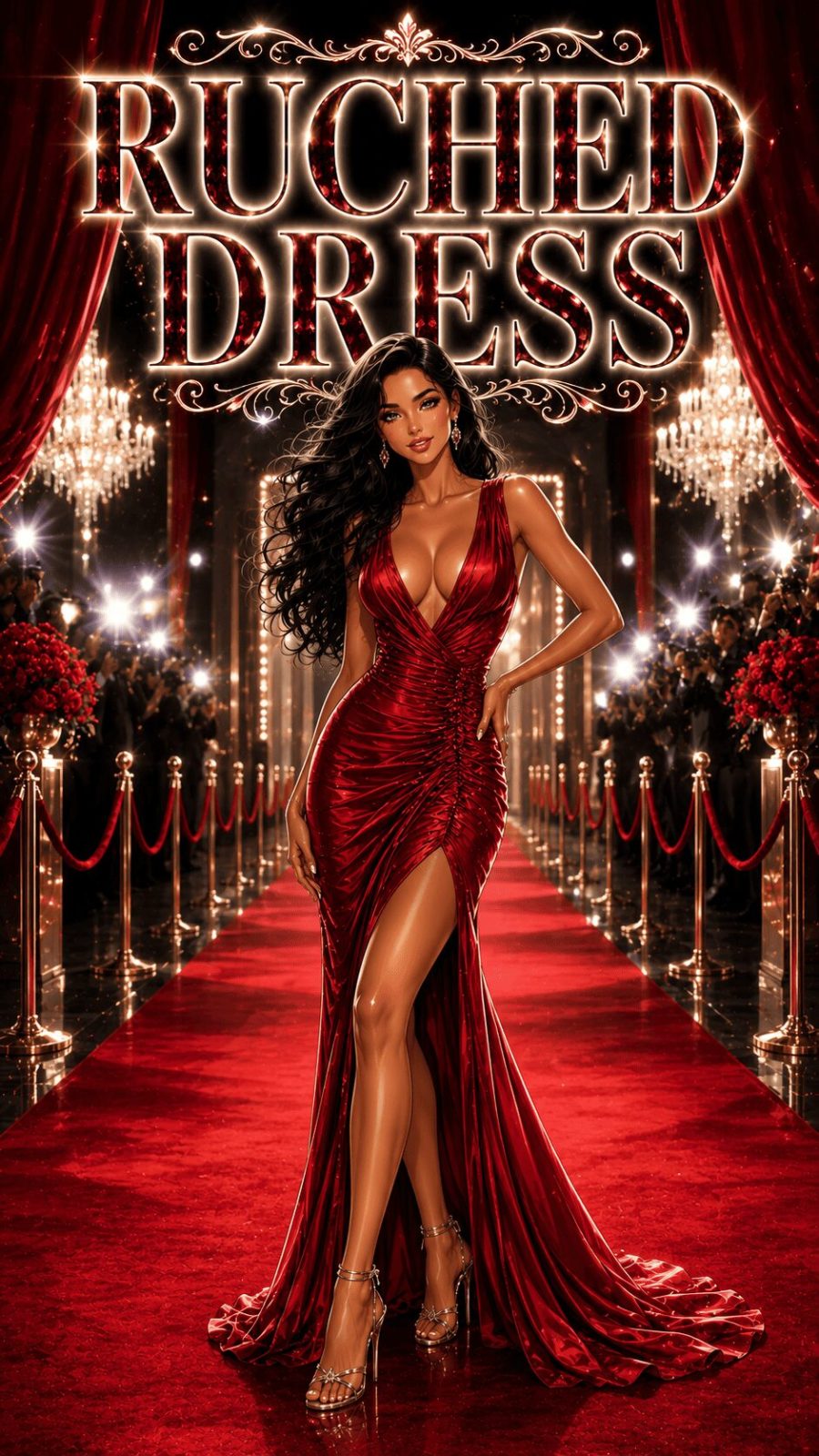
Ruched Dress
![Ruched Dress Example]()
Ruching is a construction technique where fabric is gathered, pleated, or shirred along a seam line to create deliberate texture and fullness in a specific area of the garment. The visual effect of ruching is a controlled, decorative gathering that adds dimensional detail — most typically at the bodice, waist, or hip. On a stretch dress in jersey or satin, side ruching creates a gathered effect that draws the fabric toward a central gather point, adding movement and visual interest. Ruching is one of the most technically expressive details available in commercial fashion — a single ruched seam changes the entire character of a dress.
- 64
Bias-Cut Dress
Bias cutting means the pattern pieces are cut at a 45-degree angle to the fabric's grain — which fundamentally changes how the fabric drapes, moves, and conforms to the body. Fabric cut on the bias has significantly more stretch than the same fabric cut on the straight grain, and drapes in soft, curved waves rather than falling straight. The bias-cut technique was pioneered by Madeleine Vionnet in Paris in the 1920s and 30s, and remains the most technically demanding cutting method in fashion. A bias-cut dress moves beautifully while walking — the fabric shifts and curves with every step in a way that no other construction can replicate.
- 65
Pleated Dress
Pleating is a controlled folding and stitching of fabric — typically at the waistband, bodice seam, or hemline — that creates structured fullness while maintaining a pressed, tailored quality that gathering doesn't have. Knife pleats (all folding in the same direction), box pleats (folded to face away from each other), and accordion pleats (uniformly narrow folds throughout) each produce a distinct visual. The pleated midi skirt on a fitted bodice is one of the most consistently returning dress silhouettes in fashion — its structural quality and movement under walking make it simultaneously polished and dynamic. Pleating adds architectural definition without rigid stiffness.
- 66
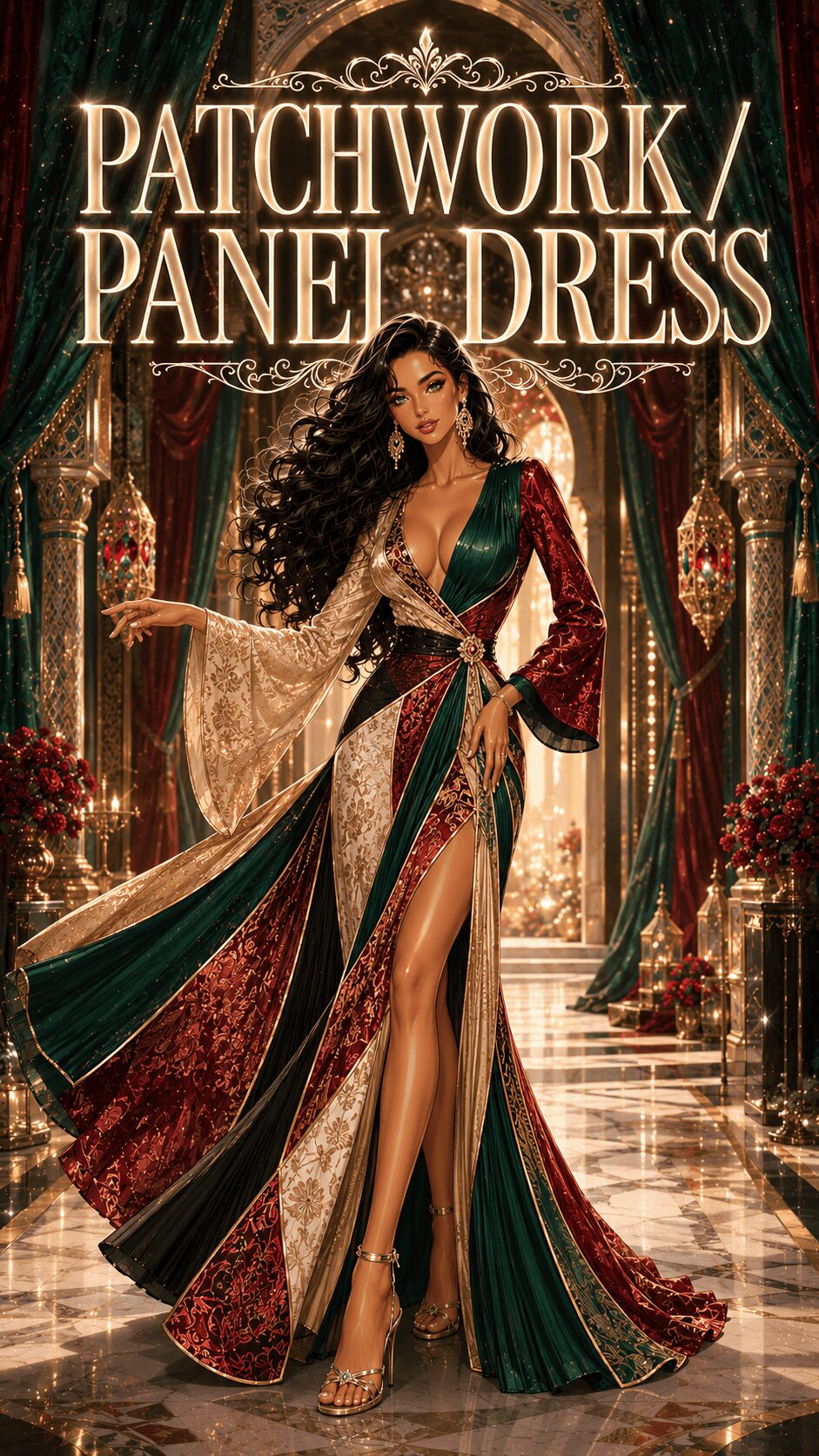
Patchwork / Panel Dress
![Patchwork Panel Dress Example]()
Panel construction uses multiple pieces of different fabric, colour, or texture stitched together to create the dress surface — each panel contributing to the overall visual composition. At the artisan end, patchwork dresses use remnant fabrics assembled in irregular geometric patterns with handcrafted seaming; at the design-led end, colour-blocked panel dresses use precisely engineered panels in contrasting solids to create optical effects and architectural visual rhythm. The construction is technically complex — each panel must be cut and joined with precision or the seaming distorts — but the visual reward is a garment that reads entirely distinct from any single-fabric alternative.


Dress Style Reference Tables
Quick-reference comparisons for silhouette, occasion, season, and fabric
Silhouette Comparison Table
| Silhouette | Waist Definition | Movement | Best Occasion |
|---|---|---|---|
| A-Line | Fitted through bodice | Flared swing | All occasions |
| Sheath | Princess seams throughout | Minimal, body-following | Professional / formal |
| Wrap | Adjustable self-tie | Fluid V drape | Smart-casual / work |
| Fit-and-Flare | Defined seam at waist/hip | Dramatic skirt swing | Parties / occasions |
| Mermaid | Very close through hips/thigh | Dramatic flare at knee | Formal / bridal |
| Empire | Under bust, high seam | Flowing from high waist | Bohemian / maternity |
| Ball Gown | Boned fitted bodice | Maximum full-skirt volume | Gala / black-tie |
Dress Length Guide
| Length Name | Hemline Position | Formality Level | Key Occasions |
|---|---|---|---|
| Micro | Upper thigh | Casual / nightlife | Club, beach, festival |
| Mini | Mid-thigh | Casual to smart-casual | Date, party, weekend |
| Knee | At knee | Professional / smart | Office, cocktail, formal |
| Midi | Mid-calf | Most versatile | All occasions |
| Tea | Between midi and maxi | Vintage / occasion | Garden parties, bridal |
| Maxi | Ankle | Casual to formal | Resort, weddings, evening |
| Floor / Gown | Floor-grazing | Formal / black-tie | Galas, bridal, red carpet |
Dress Occasion Matrix
| Occasion | Best Silhouettes | Fabric Direction | Length Guide |
|---|---|---|---|
| Office | Sheath, shift, wrap | Ponte, crepe, wool jersey | Knee to midi |
| Wedding Guest | A-line, fit-and-flare, wrap | Silk, chiffon, crepe | Midi to floor |
| Black-Tie | Ball gown, mermaid, column | Satin, velvet, lace, tulle | Floor length |
| Casual Weekend | Shirt dress, sundress, tiered | Cotton, linen, jersey | Mini to midi |
| Cocktail | Sheath, A-line, bodycon | Duchess satin, silk, lace | Knee to midi |
| Resort / Beach | Maxi, tiered, sundress | Linen, voile, cotton | Mini to maxi |
Seasonal Fabric Guide for Dresses
| Season | First-Choice Fabrics | Avoid |
|---|---|---|
| Summer | Linen, cotton, voile, chambray | Velvet, heavy wool, ponte |
| Spring | Crepe, light silk, jersey, chiffon | Heavy velvet, thick wool knit |
| Autumn | Ponte, crepe, lightweight knit, velvet | Voile, very lightweight cotton |
| Winter | Wool jersey, cashmere, velvet, thick knit | Linen, lightweight cotton, voile |
Frequently Asked Questions: Types of Dresses
What is an A-line dress?
An A-line dress is fitted through the bodice and flares continuously from the waist or hips to the hemline, creating a shape that resembles the capital letter A. Named by Christian Dior in 1955, it remains one of fashion's most consistently worn silhouettes. The continuous flare creates visual balance and adds movement through the skirt with every step.
What is the difference between a sheath dress and a bodycon dress?
A sheath dress achieves its body-skimming fit through structured tailoring in woven fabric — princess seams and careful darting — so it follows the body without relying on elasticity. A bodycon dress achieves its fit through stretch fabric (jersey, spandex blend) with minimal construction. The sheath reads professional and structured; the bodycon reads fashion-forward and casual-to-evening. For more on construction differences, see our guide to dress cut variations.
What dress silhouette is the most timeless?
The A-line and the wrap dress are the two most consistently recurring silhouettes in fashion history — both return across every decade because they balance proportion, accommodate a range of body measurements, and transition across multiple occasions and formality levels. Both have remained in mainstream fashion continuously since their peak popularity in the 1950s and 1970s respectively.
What fabrics work best for summer dresses?
The best summer dress fabrics prioritise breathability and moisture management: 100% linen, pure cotton, cotton voile, and cotton-linen blends are the most reliable choices. They allow air circulation, absorb perspiration, and feel comfortable in high temperatures. For formal summer occasions, silk charmeuse and lightweight crepe offer elevated options. Avoid synthetic fabrics with low breathability like polyester in warm weather.
What is a fit-and-flare dress?
A fit-and-flare dress is closely tailored through the bodice and hips before releasing into a dramatically full skirt at or above the natural waist. Unlike the A-line — which flares continuously — the fit-and-flare has a distinct waist seam that marks the point of transition between the fitted and the flared. The construction typically involves a gathered or pleated skirt attached at this seam, creating maximum volume below the waist.
What is the most versatile dress length for everyday wear?
The midi dress — falling between the knee and ankle — is the most universally versatile dress length for everyday and occasion dressing. It transitions across formality levels more effectively than any other length, photographs well in both natural and artificial light, accommodates virtually every shoe category, and works across all seasons with appropriate fabric weight changes. For most wardrobes, a midi dress is the highest cost-per-wear dress investment available. See our complete midi dress styling guide for outfit formulas.
What is a bias-cut dress and why does it matter?
A bias-cut dress is constructed with fabric pattern pieces cut at a 45-degree angle to the grain line — which gives the fabric significantly more stretch and creates a distinctive curved, flowing drape that follows the body. The technique was pioneered by Madeleine Vionnet in 1920s Paris and produces a silhouette that moves beautifully while walking and drapes in soft, elegant waves. Quality bias-cut dresses in silk or satin are among the most luxurious garments in dressmaking.
How many dress types should be in a well-edited wardrobe?
A well-edited dress wardrobe typically functions best with five to eight carefully chosen pieces that span multiple formality levels: one structured workwear dress (sheath or shift), one versatile midi in a print or neutral, one occasion dress for formal events, one casual summer dress, and one transitional-weight dress for between-season wear. Quality over quantity consistently outperforms a large collection of lower-investment pieces — a single excellent wrap dress in silk jersey serves more occasions than a dozen poorly made alternatives.
The Last Word on Dress Types
Knowing the name of a dress type is, frankly, the least important part of understanding it. What matters is understanding why it was constructed the way it was — what problem it solves, what aesthetic it serves, what occasion it was built for. An A-line dress isn't just a silhouette; it's a design decision about how to distribute volume while maintaining a fitted waist. A wrap dress isn't just a style; it's a construction philosophy built around adaptability and ease. A bias-cut slip dress isn't just beautiful; it represents a technical approach to fabric behaviour that changed the course of fashion history.
The 66 dress types documented in this guide represent the full range of what dress design has produced — from the most utilitarian construction choices to the most theatrical silhouettes on fashion's formal end. Every single type has a purpose; every single type has an occasion. The most stylish dressers aren't those who own the most dresses — they're those who understand which dress to reach for and exactly why that choice works. That knowledge is what separates a wardrobe from a collection, and a stylist from someone who simply buys clothes.
When you next stand in front of your wardrobe, or browse a rail, you'll now see not just fabric and colour — but construction logic, silhouette intention, occasion suitability, fabric behaviour, and historical context. That's the difference between dressing and understanding dressing. It's a meaningful distinction. And it makes every choice you make more considered, more deliberate, and ultimately more satisfying. For further reading, our complete capsule wardrobe guide walks through exactly how to build a dress-led wardrobe with maximum versatility and minimum excess.
Key Takeaways
- Silhouette is the foundational dress decision — every other choice (fabric, neckline, sleeve) builds on the silhouette architecture.
- The midi dress is the single most versatile length in a woman's wardrobe — it works across all seasons, occasions, and formality levels.
- Fabric choice defines the season and formality of a dress just as much as its silhouette — the same cut in linen reads summer casual; in silk it reads formal evening.
- Construction details communicate quality and design intention far more than surface embellishment does — bias cut, ruching, pleating, and smocking all affect how a dress behaves and moves.
- A-line and wrap remain the most timeless silhouettes in modern fashion, consistently returning across every decade since their introductions.
- Occasion-specific dress selection is learnable, not instinctive — understanding formality codes reduces wardrobe anxiety and improves every dressing decision.
- Natural fabrics consistently outperform synthetics in wearability, longevity, and comfort across all seasons.
- Five to eight excellent dresses outperform twenty average ones — quality of choice always matters more than quantity of options.
Sources & Further Reading
- Looped In Looks — Dress cut variations and silhouette construction reference
- Midi Dress Styling Guide — Outfit formulas and styling combinations for midi dresses
- Business of Fashion — Fashion trend lifecycle and wardrobe investment analysis
- FIT New York — Garment construction and fashion history archives


Leave a Reply