

There’s something almost gravitational about wide leg pants. The moment you pull them on — the sweep of fabric, that unhurried drape from hip to floor — something shifts. Not just in how you look. In how you walk. Wide leg pants are one of those rare categories that actually changes your posture, your pace, your presence. That’s not accidental. It’s construction.
Wide leg pants are the most architecturally expressive bottom in a woman’s wardrobe — and the most historically enduring.
The wide leg silhouette traces its modern form through several pivotal moments in fashion history. Palazzo pants surged in the 1960s–70s, championed by designers like Yves Saint Laurent and Halston, who understood that volume at the leg could be as powerful as structure at the shoulder. The sailor-inspired wide leg trouser had already appeared in women’s fashion decades earlier, borrowed from naval uniform traditions. Today the category spans everything from fluid silk palazzo pants to structured wool culottes to cropped linen trousers — each with its own construction logic, drape behaviour, and occasion intelligence.
This guide categorizes all 27+ types of wide leg pants across 6 classification systems. For every single entry:
-
Design
What it looks like
-
Season
When to wear it
-
Best For
Who it works for
Start here — and explore our complete visual reference to all women’s pants styles alongside it.
All 6 Categories at a Glance
A structured breakdown of the 27+ wide leg pant types documented in this guide.
- 01
By Silhouette / Construction
- 02
By Length / Hemline
- 03
By Waistline Style
- 04
By Fabric / Material
- 05
By Occasion / Purpose
- 06
By Design Details
27+ Different Types of Wide Leg Pants for Women
Category 1: By Silhouette / Construction (#1–#8)
How the leg opening is cut, how the volume is distributed — the foundational identity of each wide leg pant type
Silhouette is everything — and nowhere is that more evident than in wide leg pants. Before a pair has a waistline treatment or a seasonal fabric, it has a leg shape. That shape determines how fabric falls, how the garment moves when you walk, and what visual line it draws from the hip downward. These 8 types represent the fundamental construction logic of the wide leg category.
What works beautifully about silhouette classification is it cuts through trend language entirely. A "boho trouser" is a marketing phrase. Wide-leg pants with a high rise and clean-cut leg panel construction? That's architecture. And architecture tells you how a garment will behave on the body — which is the information that actually matters when you're shopping, styling, and building a wardrobe that works. You can explore related styles like palazzo pants and flared pants alongside this guide for a fuller picture of volume-forward bottoms.
- 01
Palazzo Pants

The widest, most sweeping entry in the wide leg family — palazzo pants are characterized by an ultra-broad leg opening that creates a fluid, almost skirt-like silhouette in motion. Named after the grand Italian palaces their dramatic drape evokes, they peaked in mainstream fashion in the 1960s–70s under designers including Yves Saint Laurent and Halston. Construction-wise, the leg panel is cut in a generous trapeze shape, allowing fabric to pool and move rather than cling or taper.
- 02
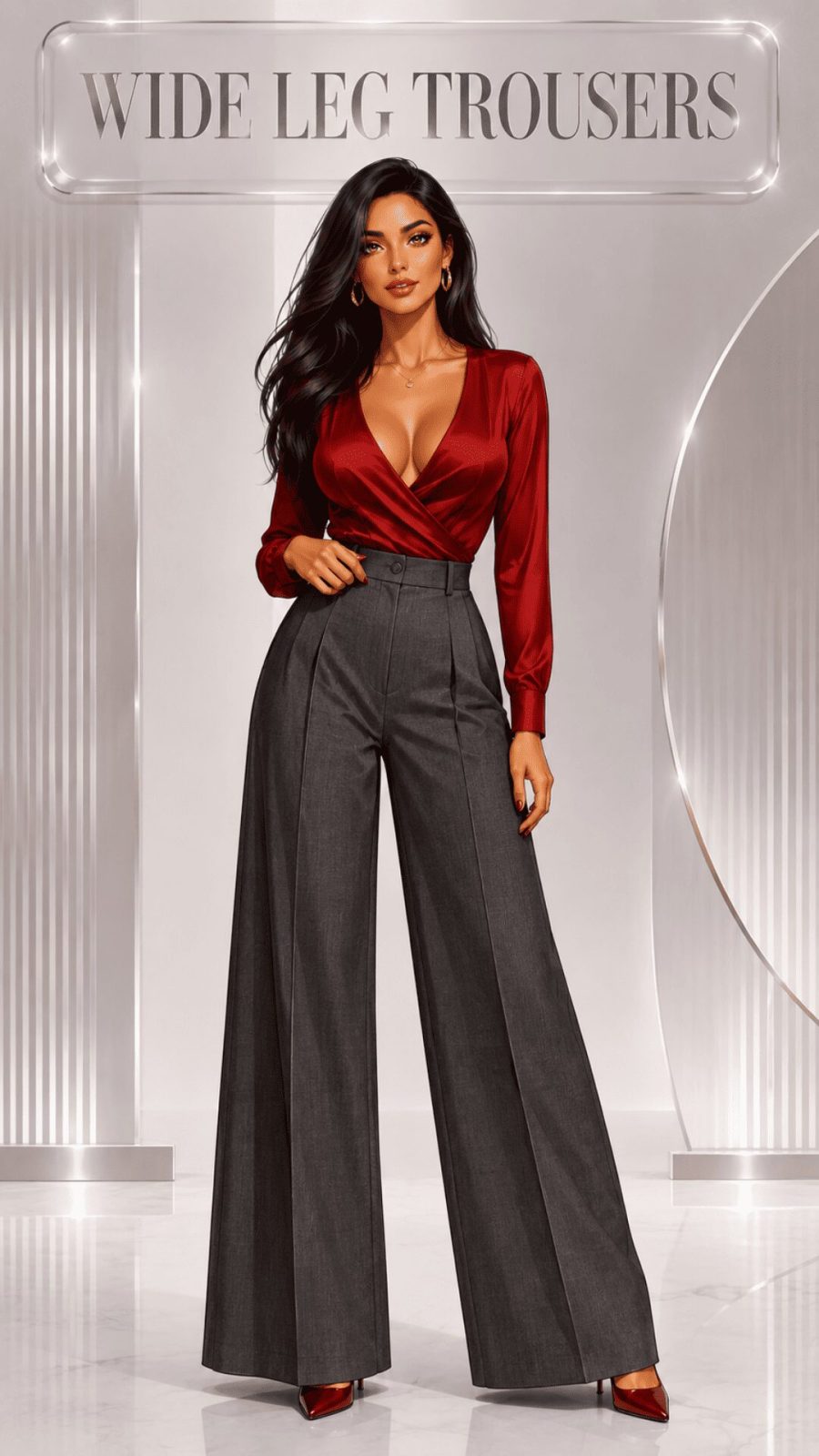
Wide Leg Trousers
![Wide Leg Trousers Example]()
The structured, tailored interpretation of the wide leg silhouette — wide leg trousers maintain a clean, pressed line from hip to hem. Unlike palazzo pants, these are constructed with precision: side seams are straight, the leg panels are cut for architectural clarity, and the overall result is one you'd confidently wear to a boardroom. Think of them as the grown-up counterpart to the palazzo; same volume, entirely different energy. They sit comfortably alongside formal trousers in any professional wardrobe.


- 03
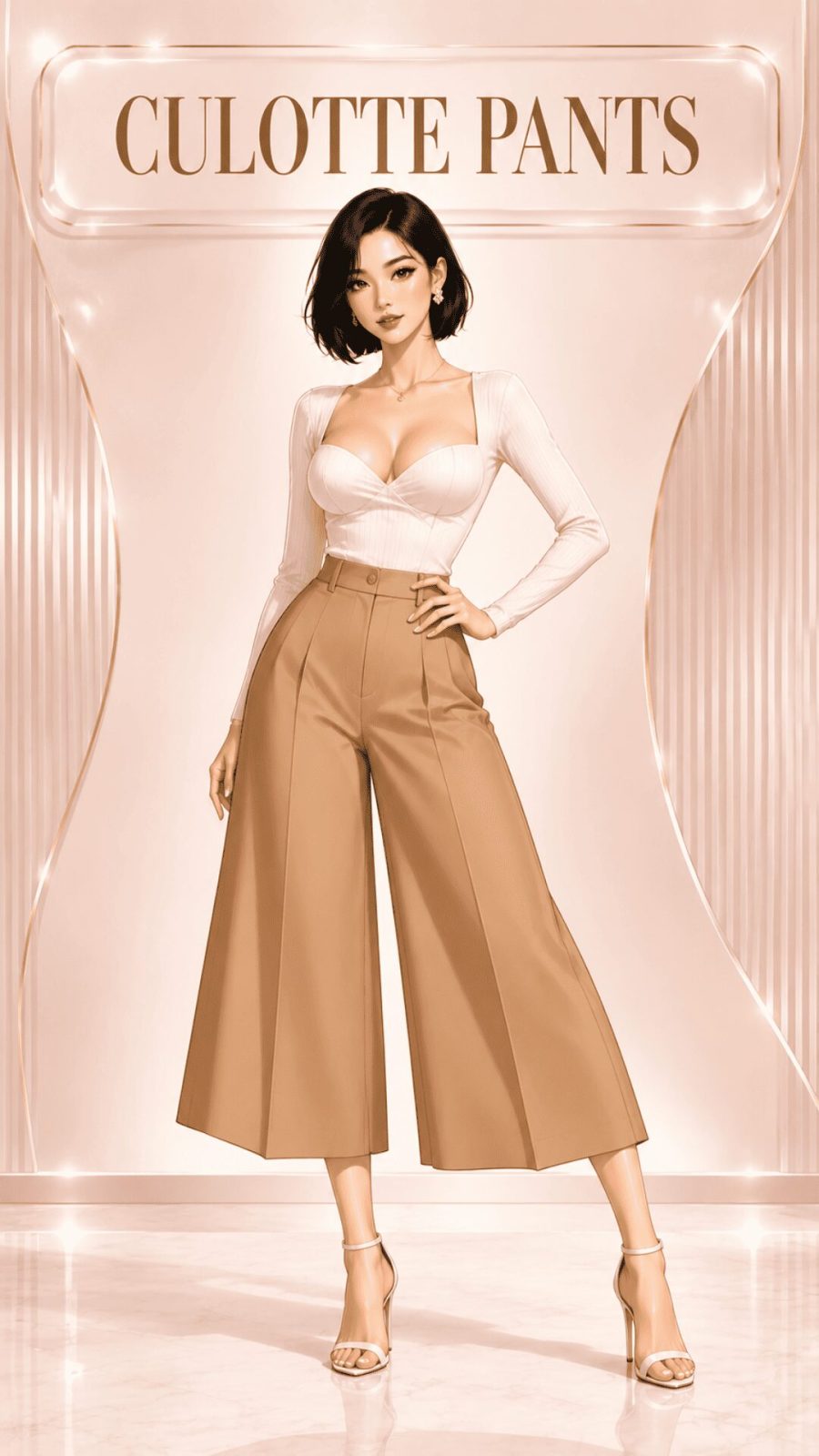
Culotte Pants
![Culotte Pants Wide Leg Example]()
Cropped to below-the-knee or mid-calf with a wide, flared leg that creates a convincingly skirt-like silhouette from the front. The word itself is French, meaning "short breeches" — and culottes have appeared repeatedly across fashion history precisely because they negotiate the gap between skirt ease and trouser practicality. Modern iterations are often cut with enough leg width that the trousers-versus-skirt question is genuinely ambiguous. You can see how they relate to the broader culottes category in our dedicated guide.
- 04
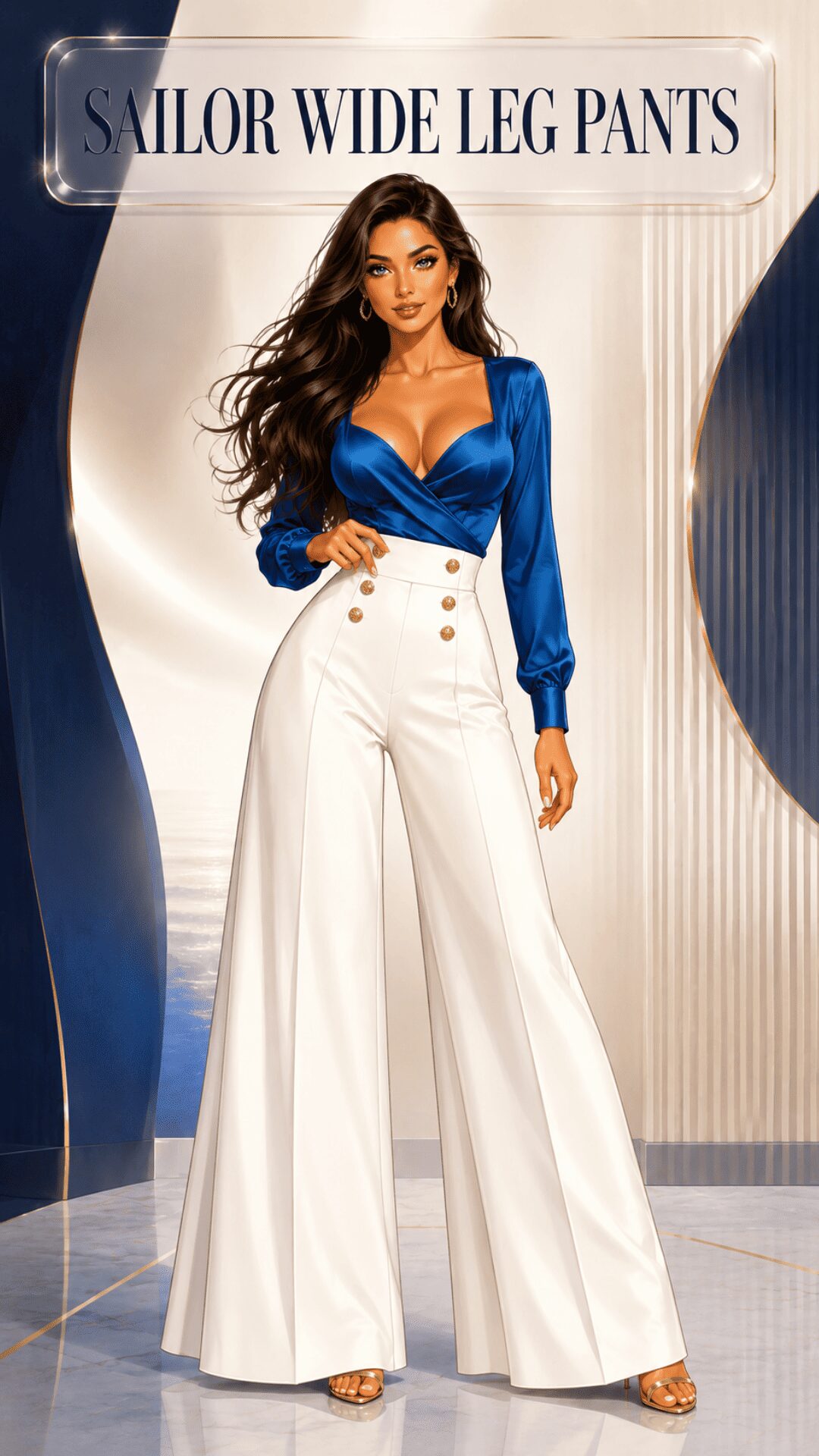
Sailor Wide Leg Pants
![Sailor Wide Leg Pants Example]()
Distinguished by their flat-front panel construction — a wide horizontal waistband with side button closures rather than a center zip, borrowing directly from naval uniform design. Sailor pants typically feature a wide leg that begins from just below the hip, with relatively little taper. That flat-front silhouette is architecturally clean and particularly effective when the pants are in a structured fabric like gabardine or cotton canvas. The nautical detail of the button panels adds visual interest without embellishment.


- 05
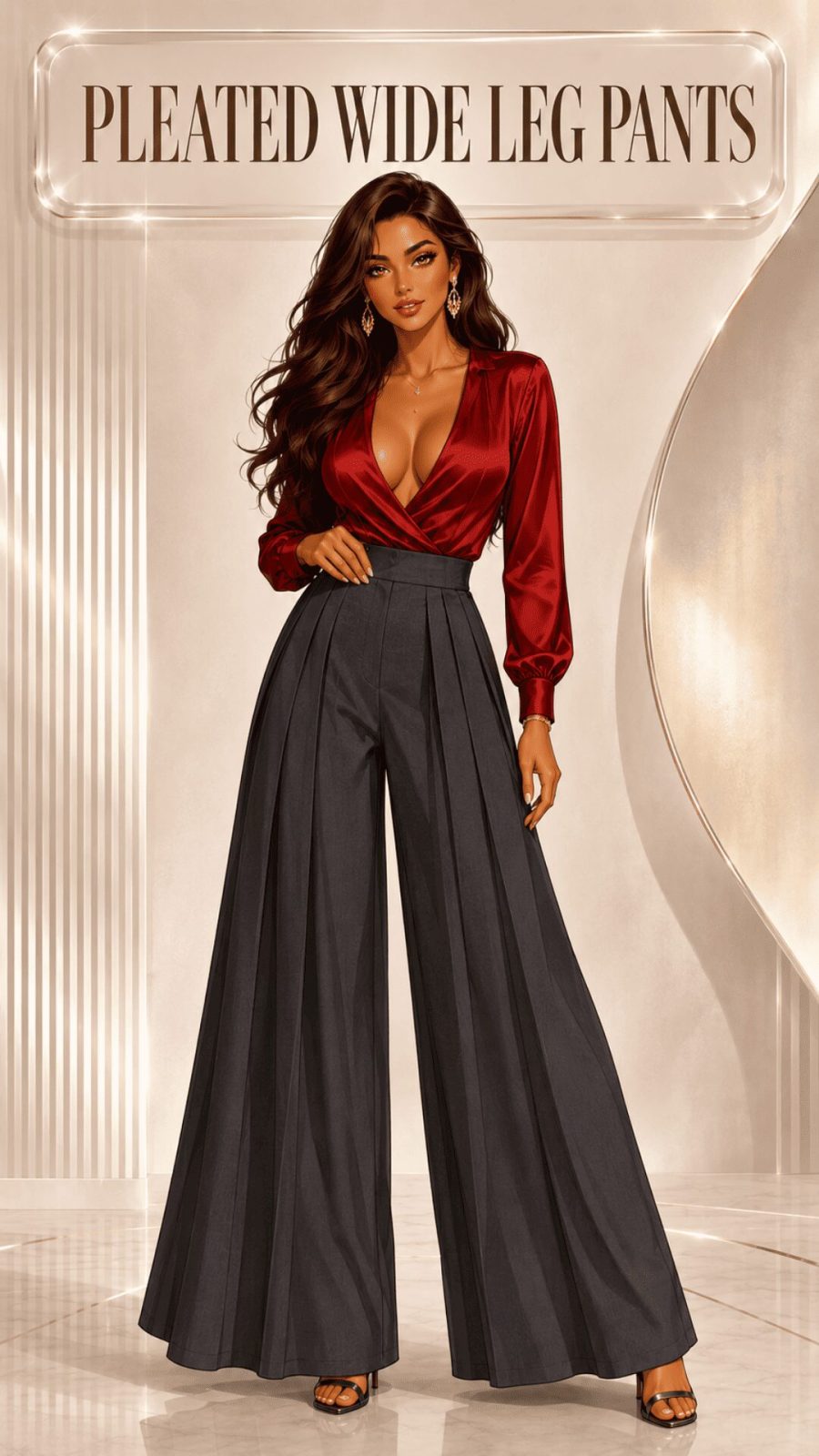
Pleated Wide Leg Pants
![Pleated Wide Leg Pants Example]()
Front pleats — one or two on each side — create controlled volume that releases downward from the waist, giving the leg its width through structured ease rather than simple width cutting. The pleat is a construction technique borrowed from menswear tailoring, where it historically allowed for ease of movement in high-quality trousers. In women's fashion, pleated wide legs are the most technically sophisticated member of the family: the fabric volume is intentional and directional, not simply generous. Explore related pleat types for deeper construction understanding.
- 06
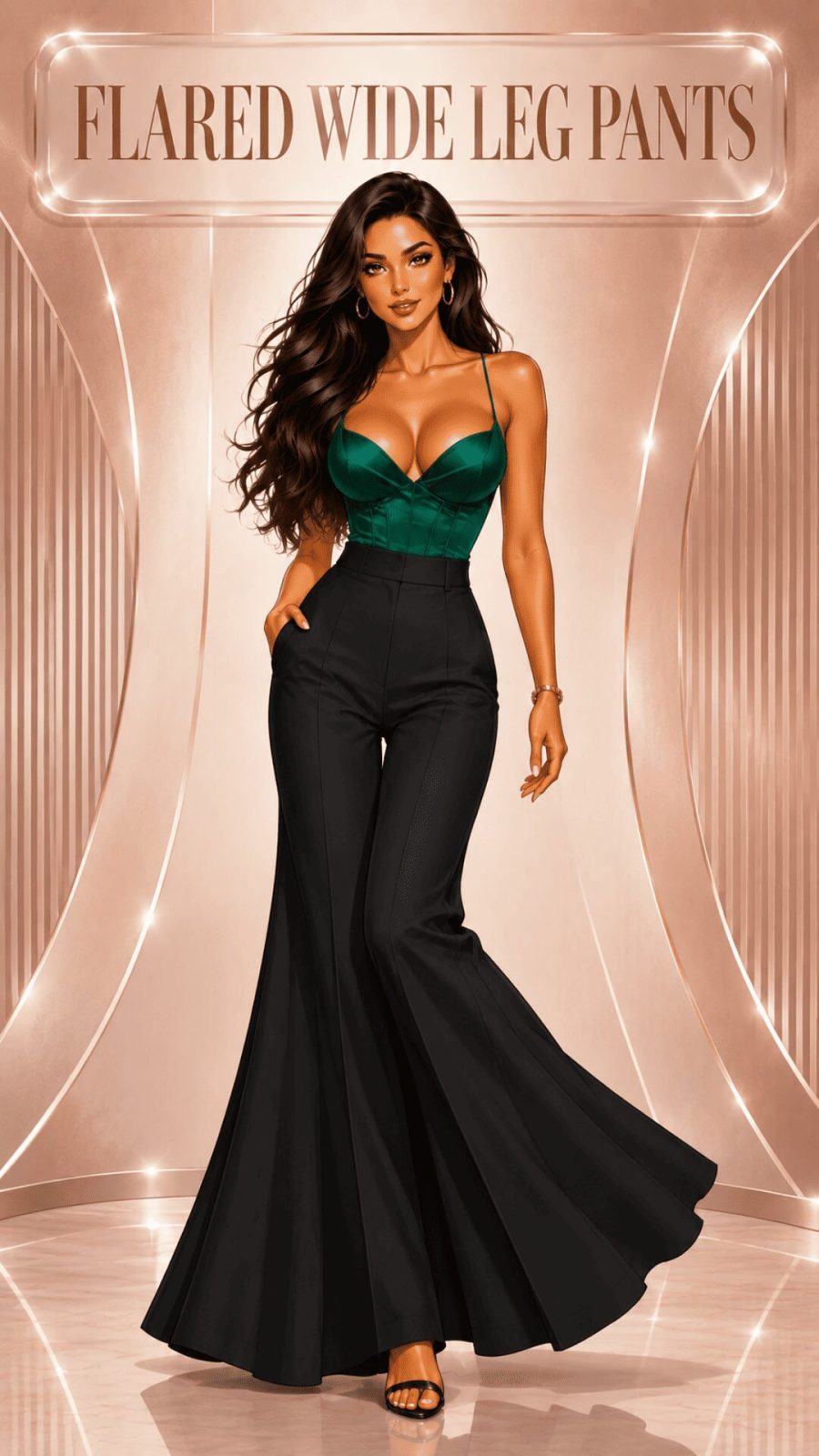
Flared Wide Leg Pants
![Flared Wide Leg Pants Example]()
Where wide leg trousers maintain a consistent width from hip to hem, flared pants actively widen from the knee downward — making the hem the widest point of the garment. This A-line quality creates a different kind of visual line: the upper leg reads relatively slim, and the width explodes at the hem. Deeply associated with 1970s fashion and its various revivals, flared pants tend to create a lengthened vertical line through the body when worn with a heel. Our full flared pants guide expands on this silhouette in greater detail.


- 07
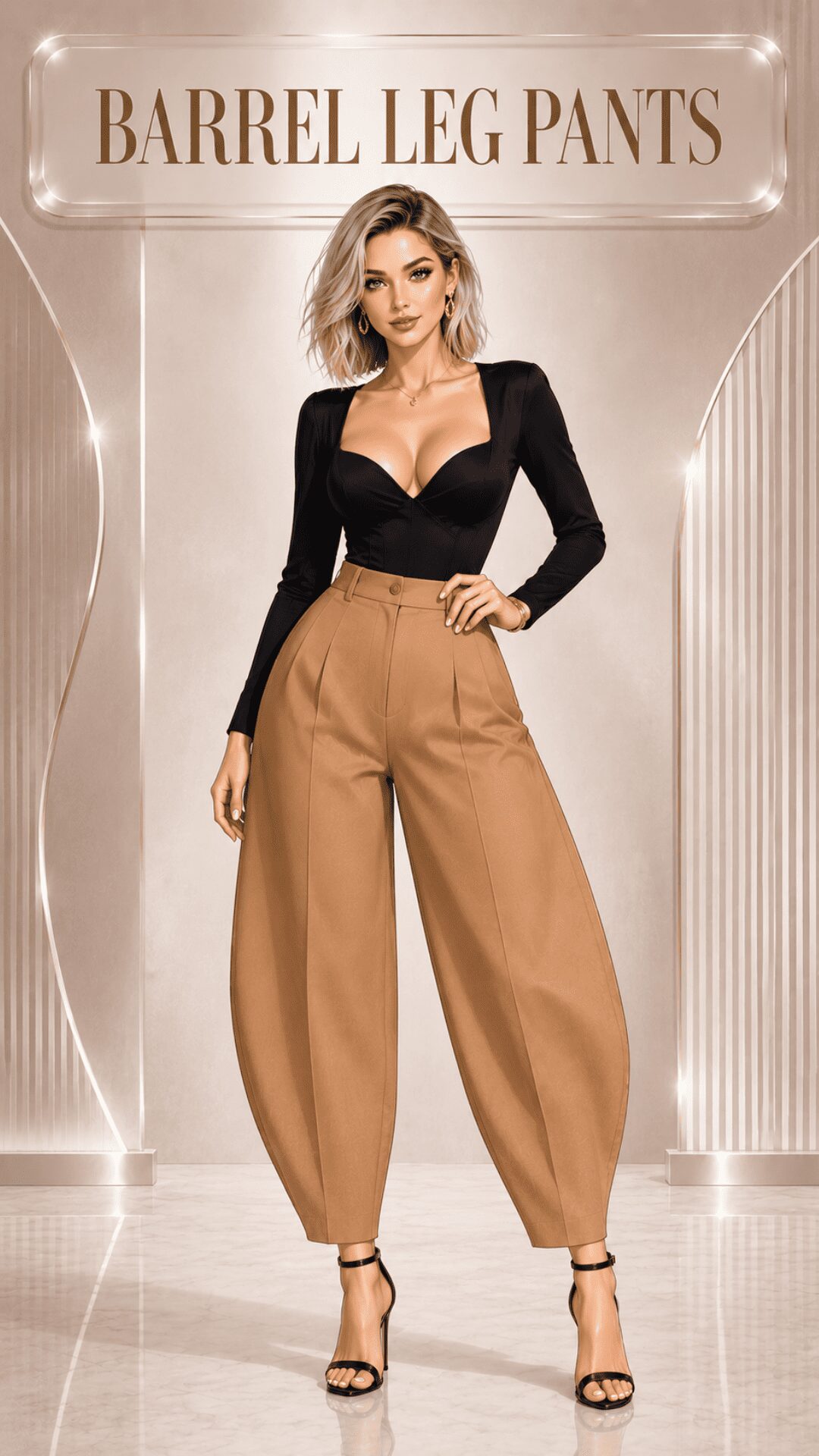
Barrel Leg Pants
![Barrel Leg Pants Example]()
One of the more architecturally unusual entries in the wide leg category — barrel leg pants are widest at the thigh, narrowing gradually toward the cropped hem, creating a rounded, barrel-like leg shape. They're neither tapered like a slim trouser nor consistently wide like a palazzo. The silhouette reads as deliberately voluminous and fashion-forward. When worn with a fitted top, the visual contrast between slim torso and rounded leg is — frankly — striking. This is the kind of shape that separates trend-aware dressers from those just following a basic formula.
- 08
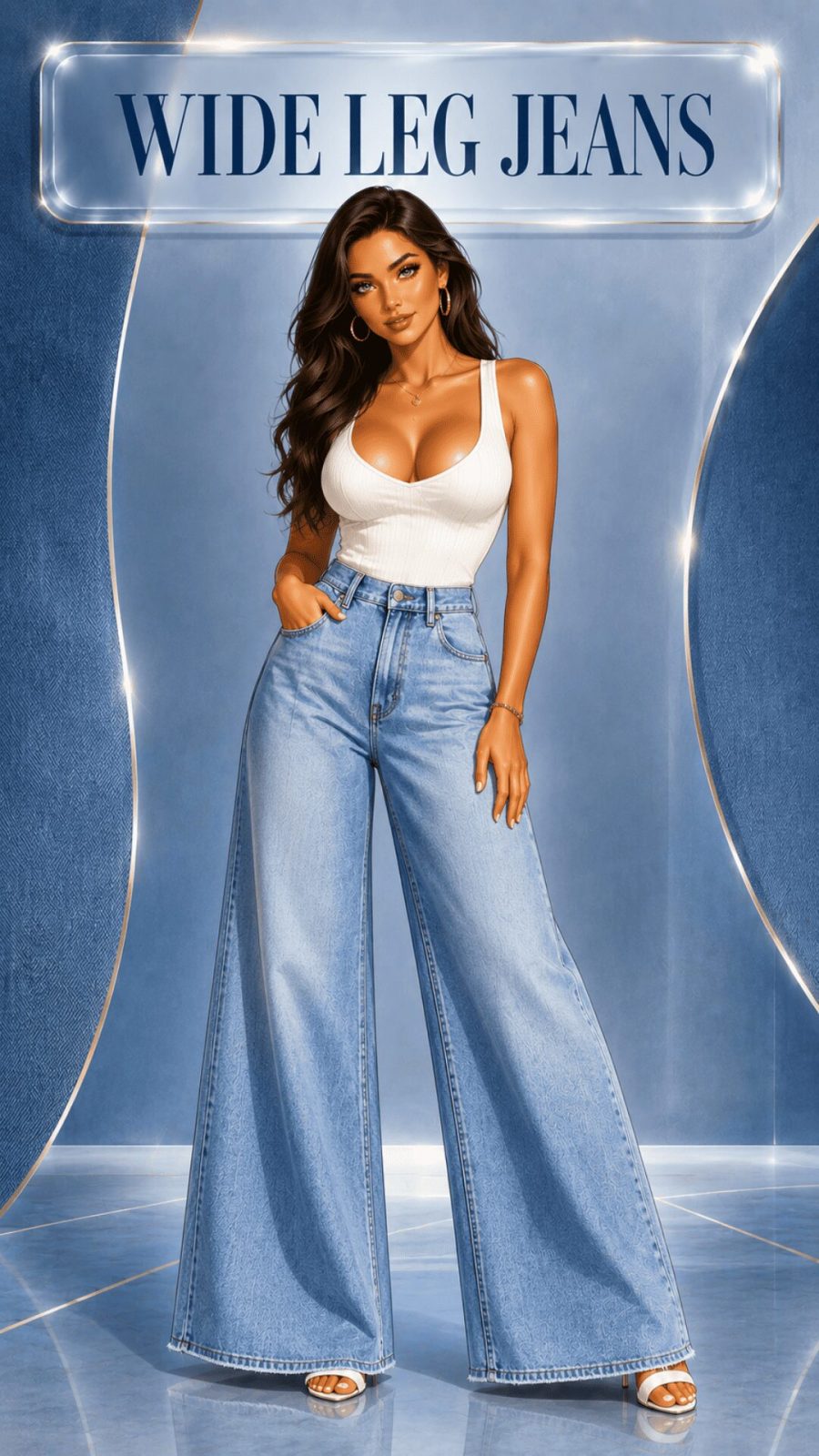
Wide Leg Jeans
![Wide Leg Jeans Example]()
Denim construction in a wide leg cut — usually with a straight or slightly flared leg that begins immediately at the hip rather than tapering through the thigh. Wide leg jeans sit at the intersection of the casualwear denim tradition and the tailored-volume wide leg aesthetic. They come in high-rise and mid-rise variations, in raw indigo, acid wash, and distressed finishes. For a complete look at the denim universe, our breakdown of denim fits covers every cut in detail.


Category 2: By Length / Hemline (#9–#13)
Where the wide leg ends — and how that hemline changes the styling equation
- 09
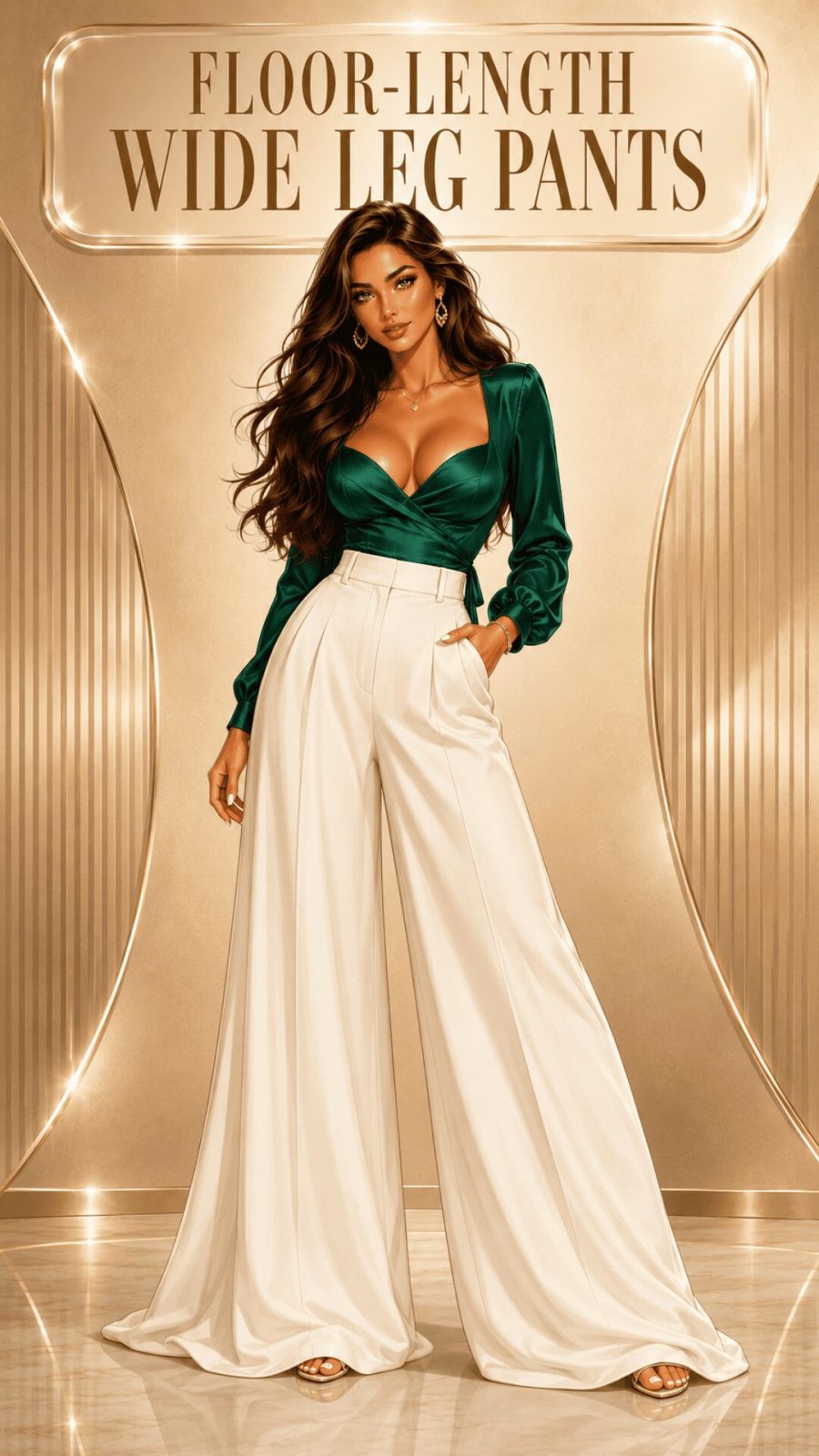
Floor-Length Wide Leg Pants
![Floor-Length Wide Leg Pants Example]()
Hemmed at the floor — or grazing it by a centimetre or two — floor-length wide leg pants create one of the most sweeping, architectural silhouettes in all of women's fashion. The length obscures the shoe entirely, creating a continuous vertical line from waist to floor. Fabric choice is critical here: lightweight chiffon creates billowing drama; structured wool or viscose creates a more column-like, polished effect. Pair with footwear you actually want to think about, because nothing will be visible when you're standing still.
- 10
Ankle-Length Wide Leg Pants
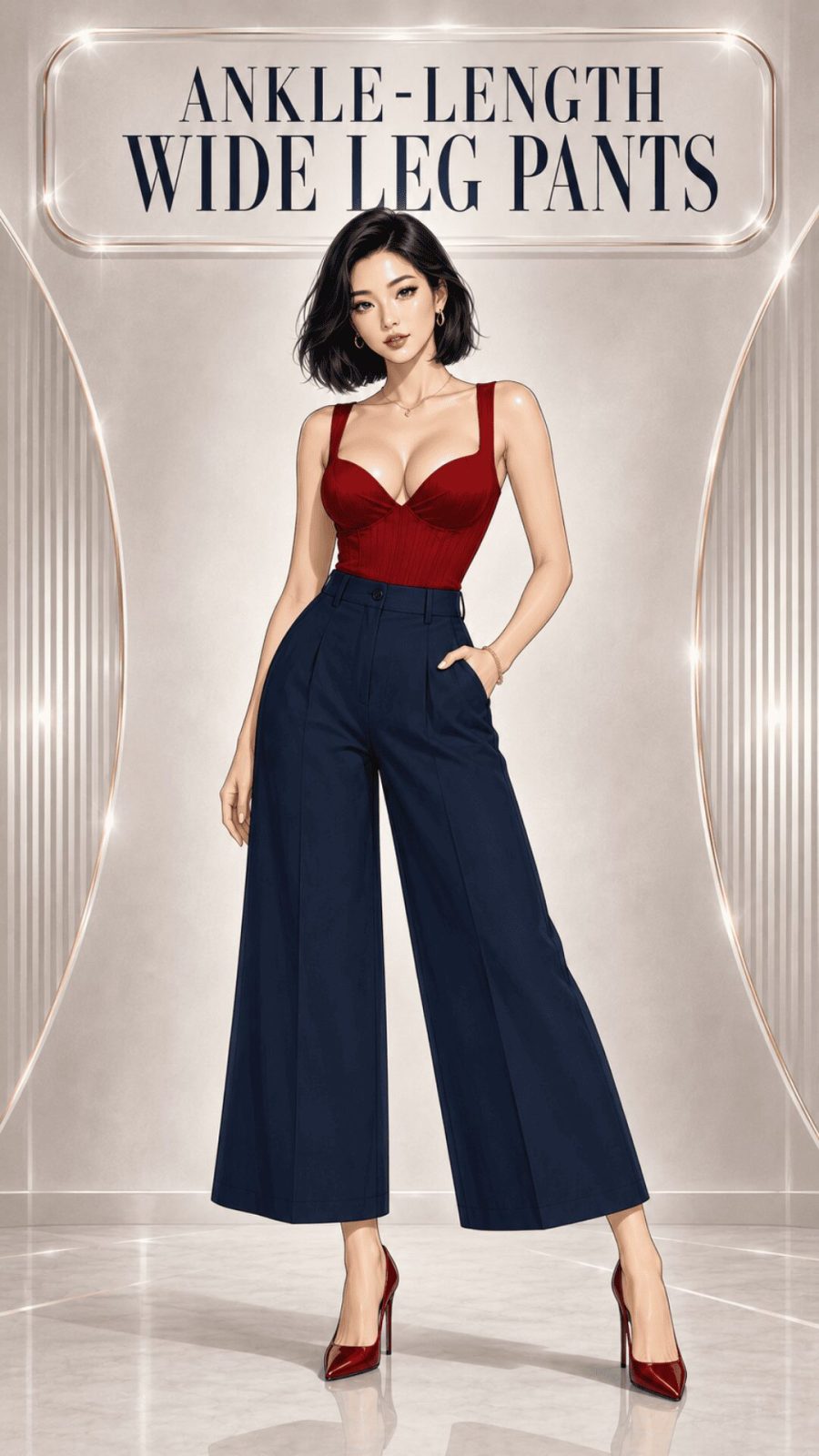
![Ankle-Length Wide Leg Pants Example]()
Hemmed precisely at or just above the ankle bone — the most universally wearable wide leg length. Ankle-length hits the sweet spot: long enough to retain the visual sweep of the wide leg silhouette, short enough to reveal shoes and allow footwear to become part of the styling equation. This is the length that works across seasons, body proportions, and occasion registers. Explore how ankle-length fits within the broader context of ankle-length pants styles.


- 11
Cropped Wide Leg Pants
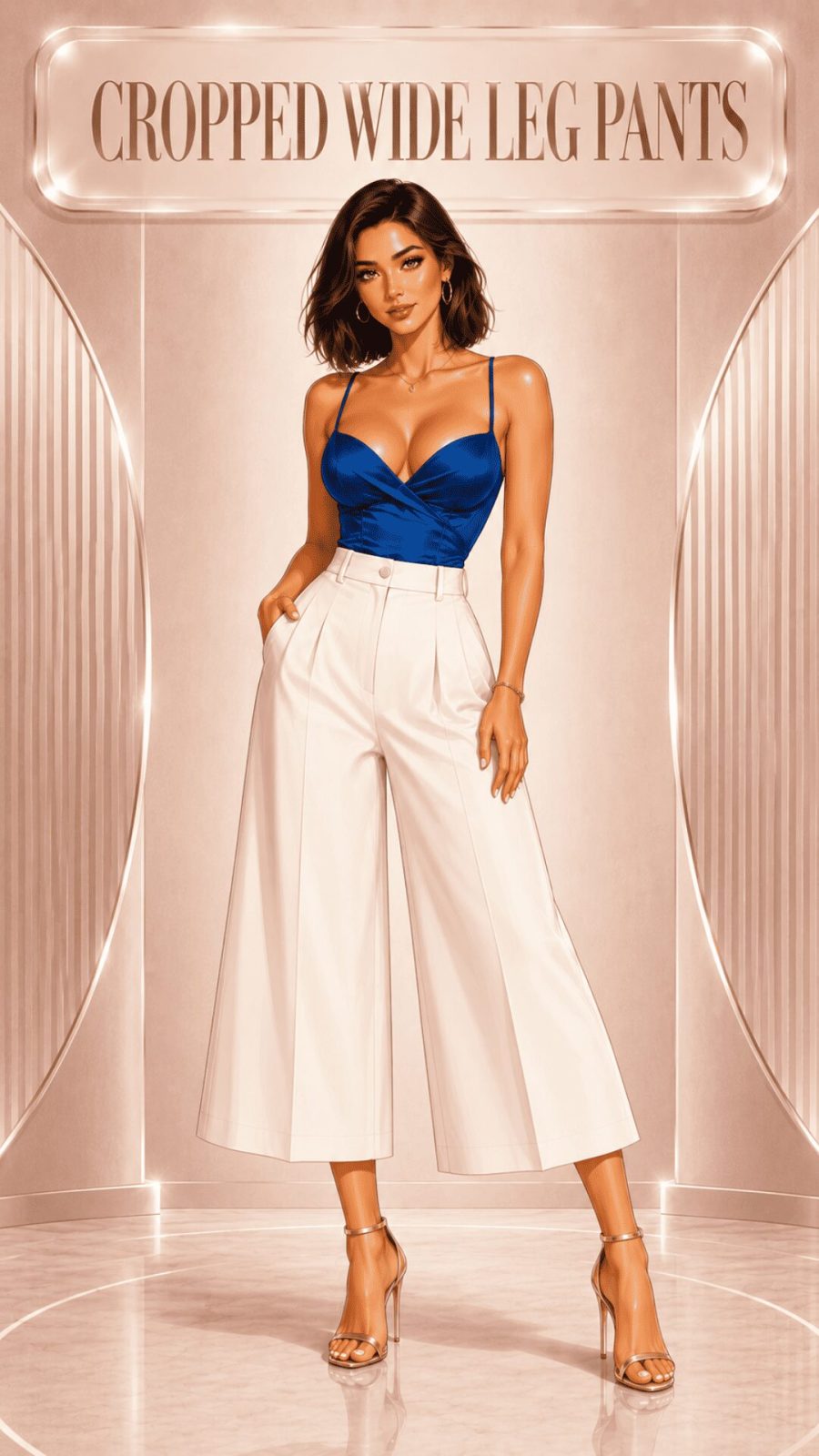
![Cropped Wide Leg Pants Example]()
Hemmed above the ankle — anywhere from mid-calf to just below the knee — the cropped wide leg is the most casual and approachable interpretation of the silhouette. The exposed ankle and lower leg create lightness and visual break, which balances the volume of the leg panel. In summer, this length breathes beautifully; in transitional weather, the exposed ankle with loafers or mules becomes part of the styling intention. Our cropped pants reference covers this length across all silhouettes.
- 12
Mid-Length Wide Leg Pants
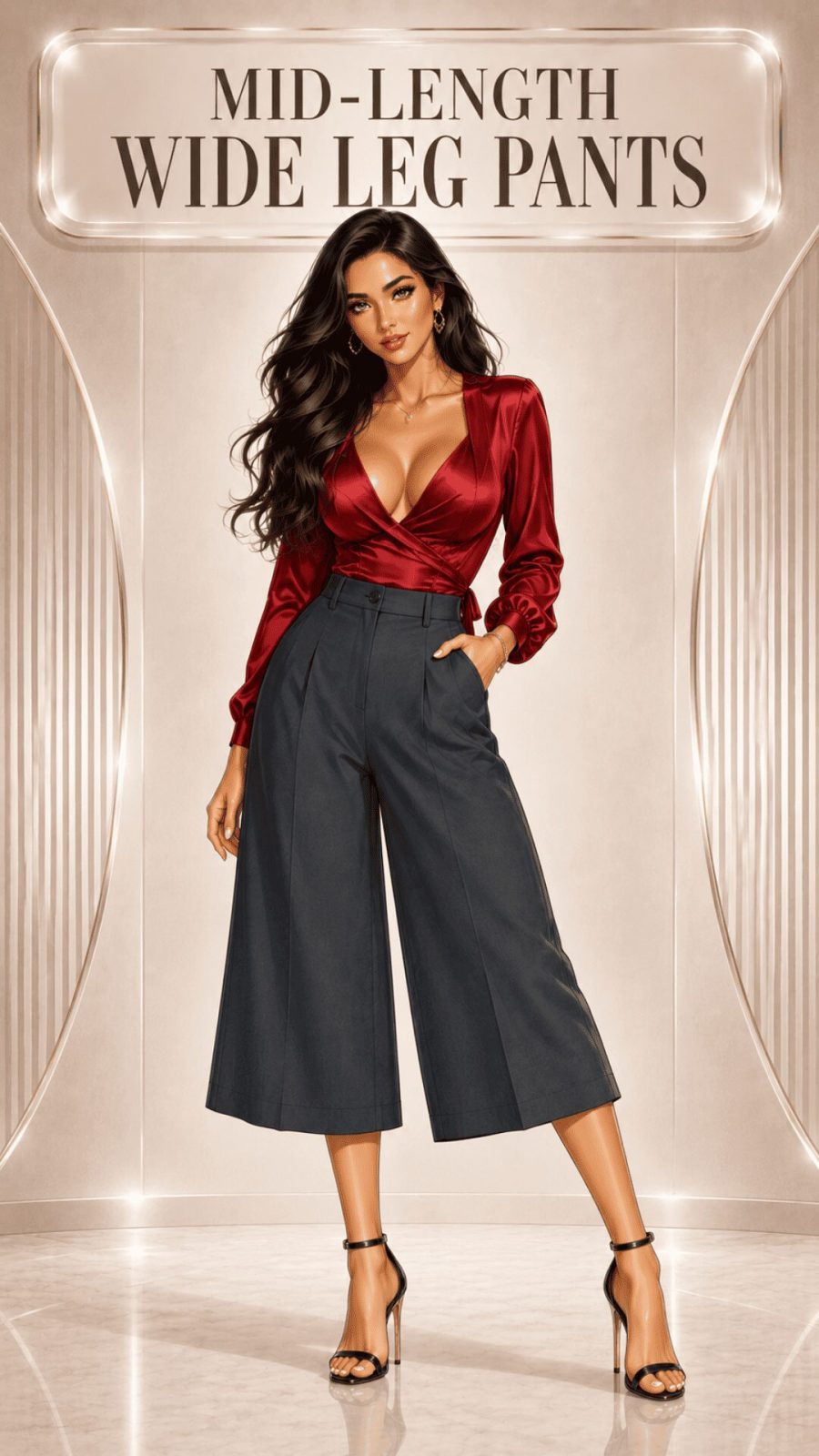
![Mid-Length Wide Leg Pants Example]()
Landing at mid-calf — the same territory as the culotte but without the culotte's extremely wide, skirt-like leg — mid-length wide leg pants are the practical traveler's choice. Not so long they drag; not so cropped they feel like shorts in formal contexts. They work particularly well in linen or cotton for warm climates, where the mid-calf hem allows airflow while remaining polished enough for restaurants and sightseeing both. Think of them as the wide leg version of the midi dress principle: maximum versatility through thoughtful length placement.


- 13
Wide Leg Shorts
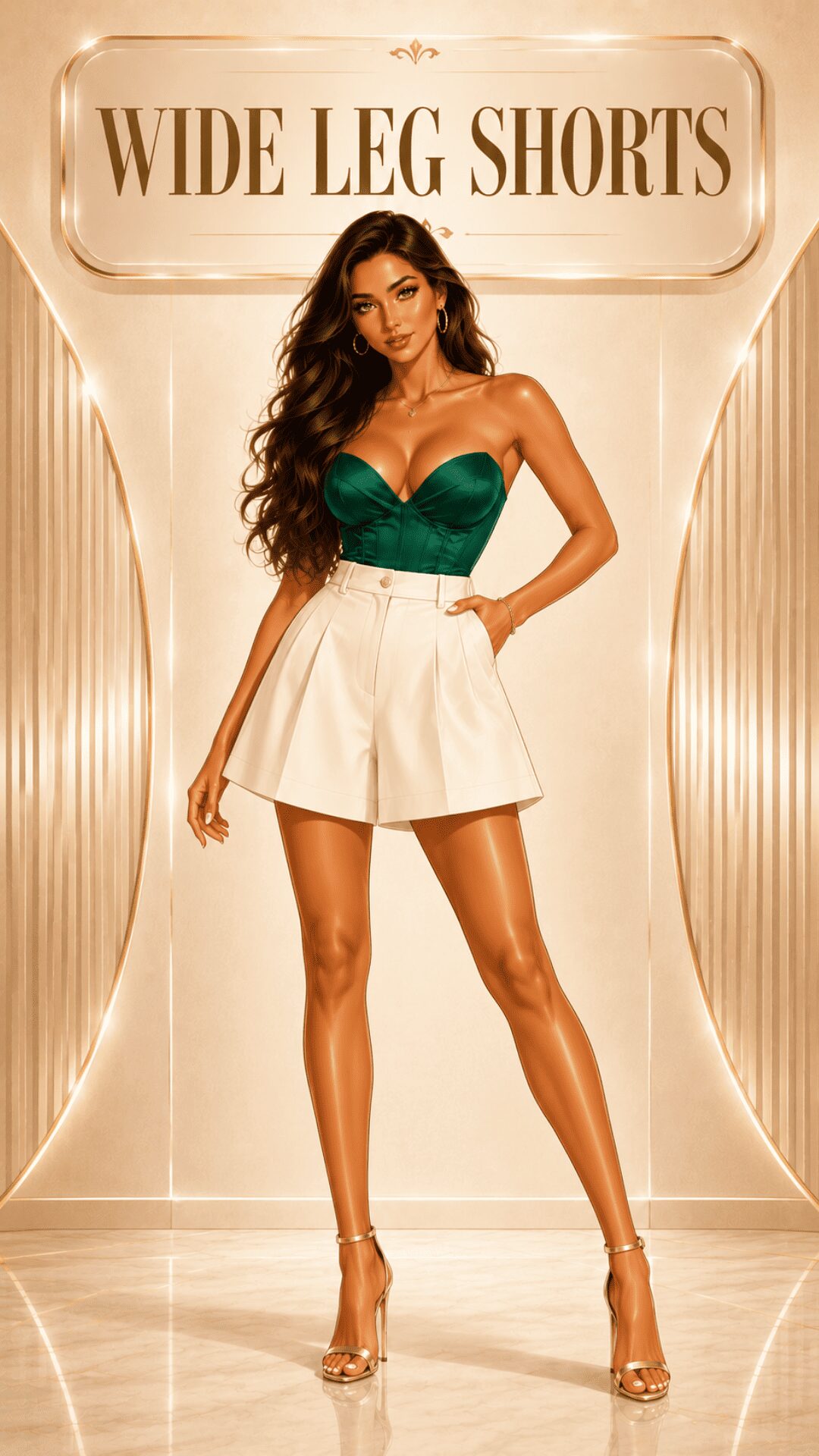
![Wide Leg Shorts Example]()
Technically a short — hem lands above the knee — but with enough leg width to feel architecturally related to the wide leg trouser family rather than the standard shorts category. Wide leg shorts often read as the summer mini-version of palazzo or culotte pants. They photograph beautifully, feel cool in heat, and work for beach-to-street styling in a way that narrow shorts simply don't. The wide hem has enough visual weight to anchor an outfit rather than leaving the leg looking undefined.
- 14
High-Rise Wide Leg Pants
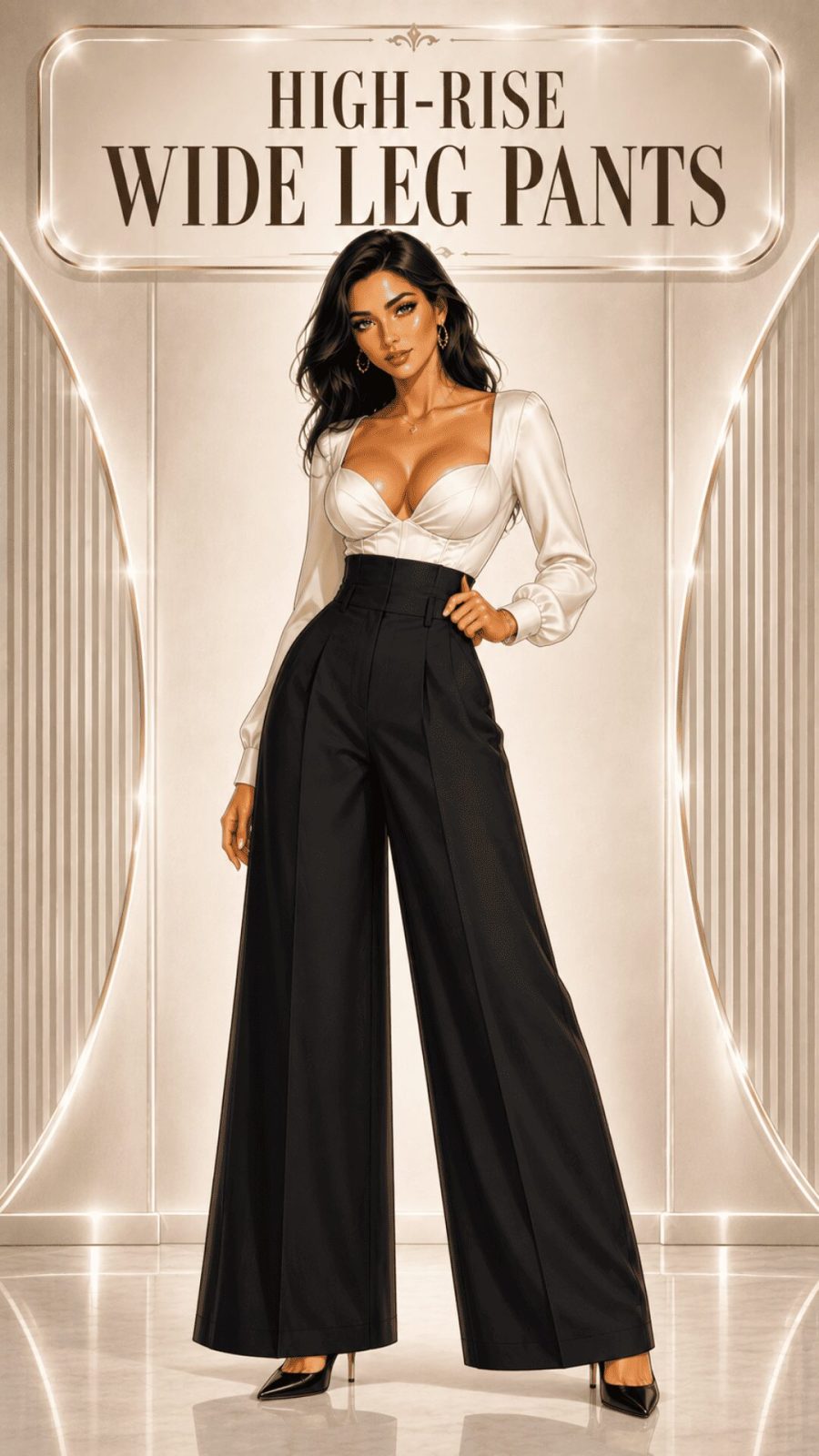
![High-Rise Wide Leg Pants Example]()
The rise — where the waistband sits relative to the natural waist — is one of the most impactful variables in wide leg pant construction, and the high-rise version is the most popular. Sitting at or above the natural waist, a high-rise waistband visually elongates the leg and creates definition between the torso and hip line. Paired with a tucked-in blouse or crop top, the high-rise wide leg creates one of the most proportionally balanced silhouettes in contemporary women's fashion. Our high-waist bottoms guide covers this design principle across all bottom styles.


"Wide leg pants only work if you're tall."
Height interacts with wide leg proportions — but it's not the decisive factor. What actually matters is the rise placement, the hem length, and what's on top. A high-rise wide leg worn with a fitted, tucked-in top creates a lengthened vertical line through the body regardless of height. Cropped wide legs with a slight heel can create the same effect. The challenge for petite proportions isn't that wide legs don't work — it's that they need more precise proportion management than for taller frames. That's not a barrier; it's a styling brief.
Category 3: By Waistline Style (#15–#17)
How the waistband is constructed — and why that changes the entire garment's behaviour
Waistline construction is the hinge point of any wide leg pant. It determines how the garment is put on, how it stays in place, how it looks tucked versus untucked — and how much it can accommodate variation in fit. Get this wrong and even the most beautifully cut wide leg panel won't save the garment.
Our broader guide to waistline styles in women's clothing explores how this construction decision plays out across all garment types.
- 15
Elastic Waist Wide Leg Pants
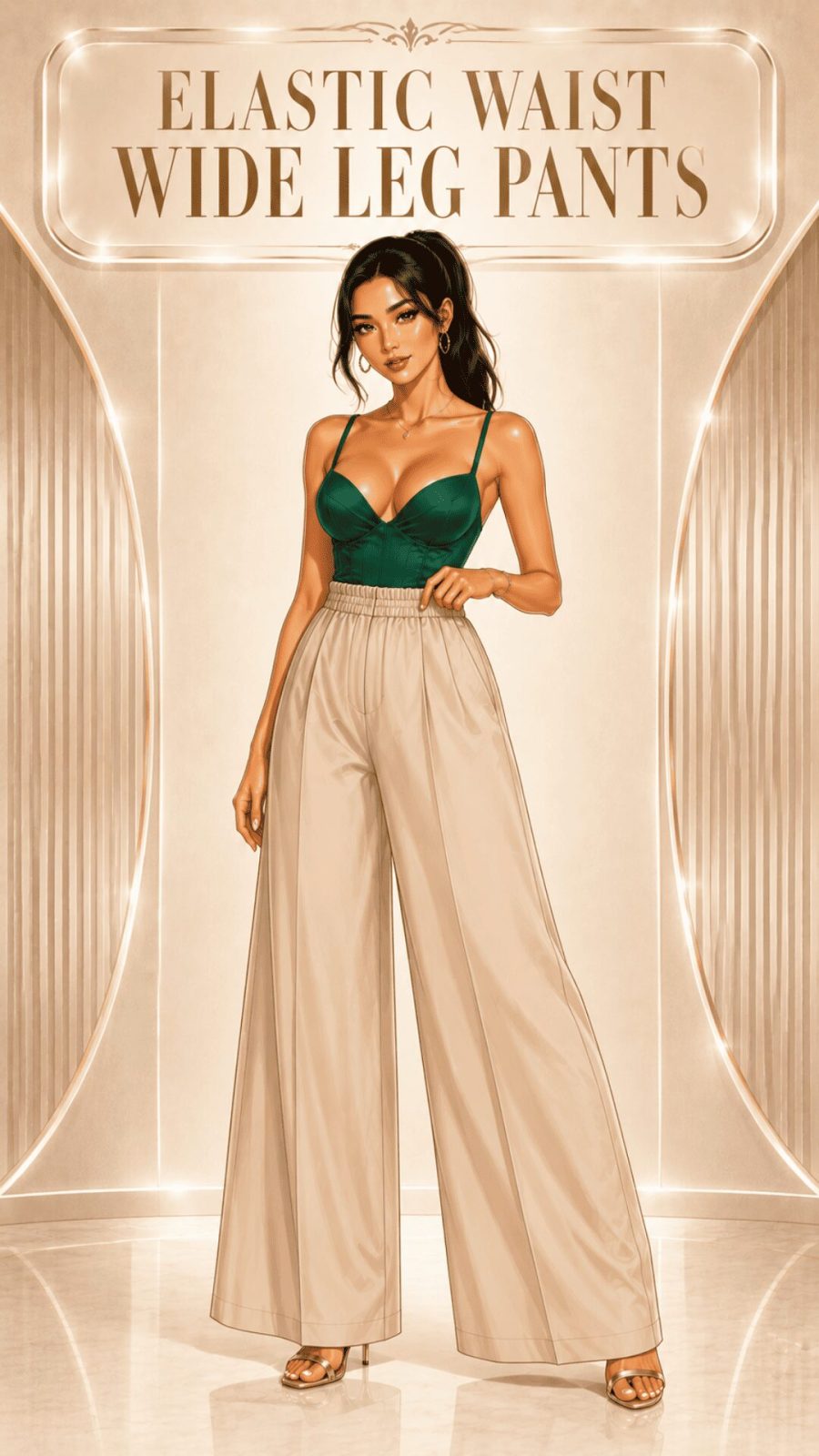
![Elastic Waist Wide Leg Pants Example]()
An elasticated waistband — full-width or partially elasticated at the back — that allows the pants to be pulled on without fasteners. The elastic waist is often dismissed as "less polished," but that's an outdated read. In the right fabric and cut, elastic waist wide legs are architecturally as clean as any structured trouser. They also accommodate body variation throughout the day — which is a genuine functional advantage, not just a concession to comfort. See how elastic waist compares across the lounge bottoms category for context.
- 16
Drawstring Wide Leg Pants
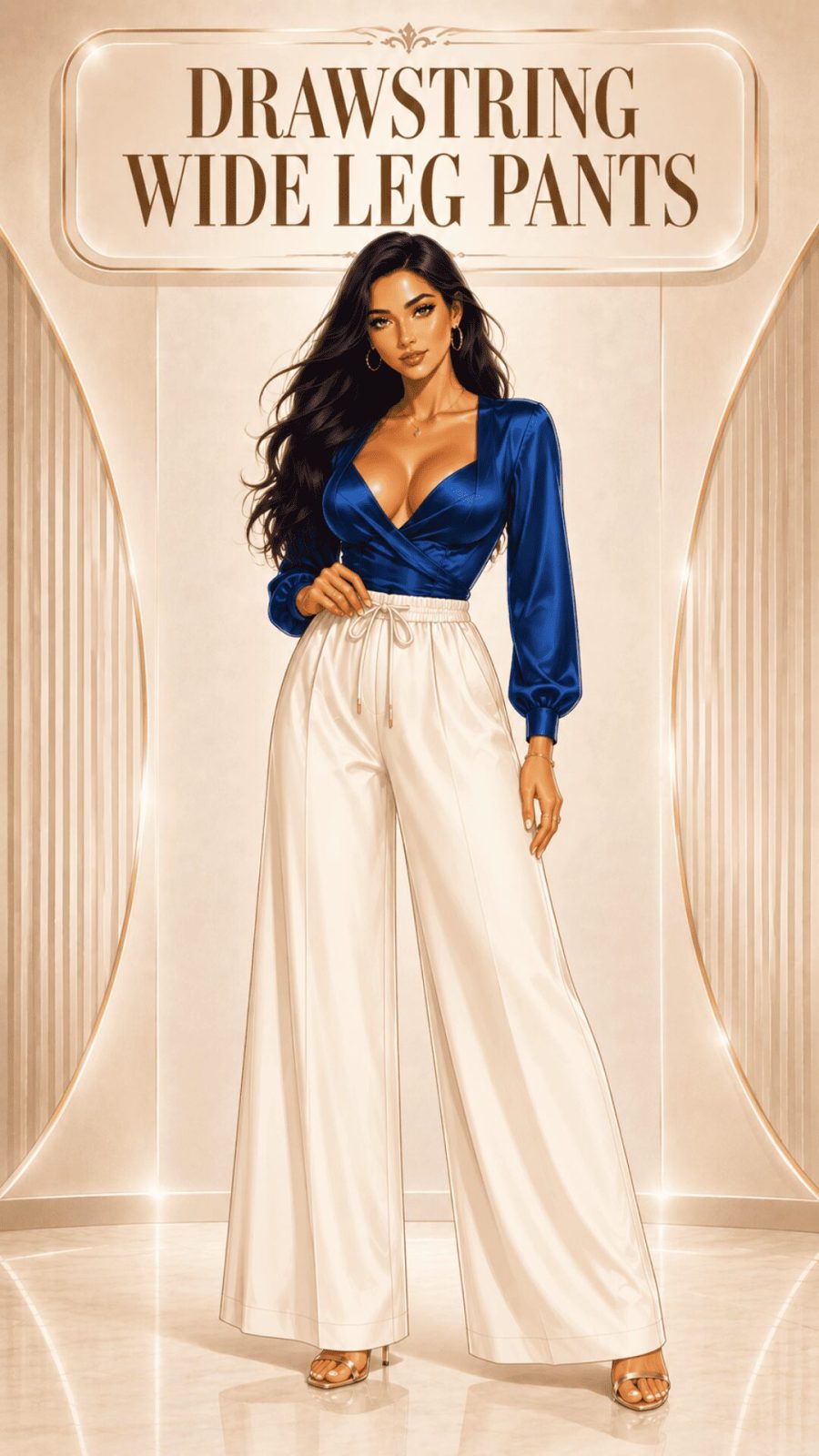
![Drawstring Wide Leg Pants Example]()
A waistband with a drawcord threaded through it — tied at the front or tucked in — allowing the wearer to adjust fit at the waist. The drawstring waist has its origins in utilitarian garments: cargo trousers, athletic wear, resort cover-ups. Translated into wide leg pants in linen or cotton, the drawstring waist creates an intentionally relaxed aesthetic that pairs well with simple tops and sandals. Explore how this waist treatment fits into the broader drawstring pants category.


- 17
Paper Bag Wide Leg Pants
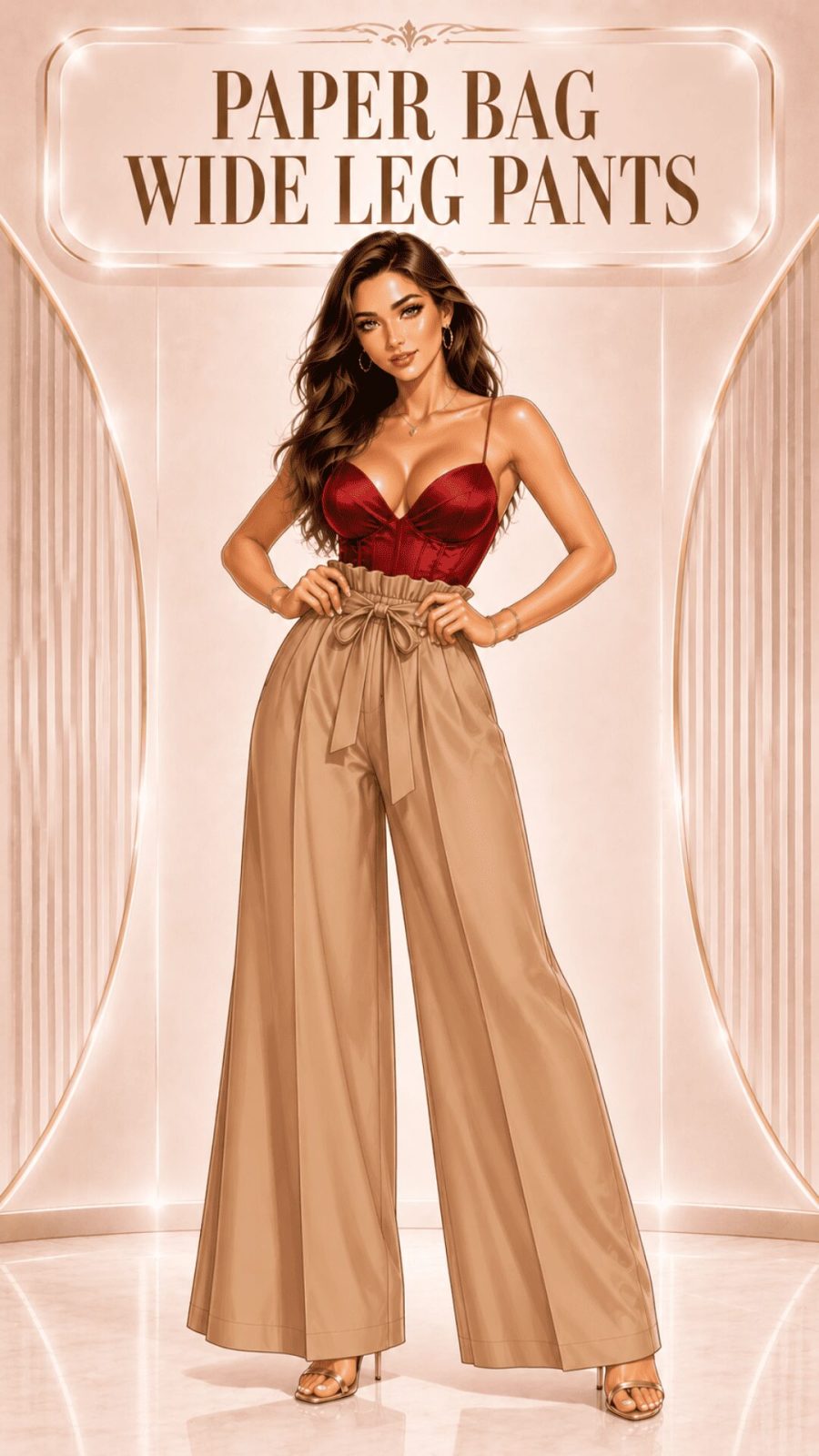
![Paper Bag Wide Leg Pants Example]()
Named for the gathered, scrunched-waist effect that mimics the cinched top of a paper bag — this waist treatment creates a deliberately casual, bunched-fabric look at the waistband that contrasts with the wide, flowing leg. It's one of those design decisions that reads as effortlessly undone. Often tied with a self-sash or belt that passes through loops, the paper bag waist is best in softly textured fabrics like crepe, cotton blend, or linen. The result is structured softness — architectural in the leg, relaxed at the waist. See our complete paper bag pants guide for more detail.
- 18
Linen Wide Leg Pants
![Linen Wide Leg Pants Example]()
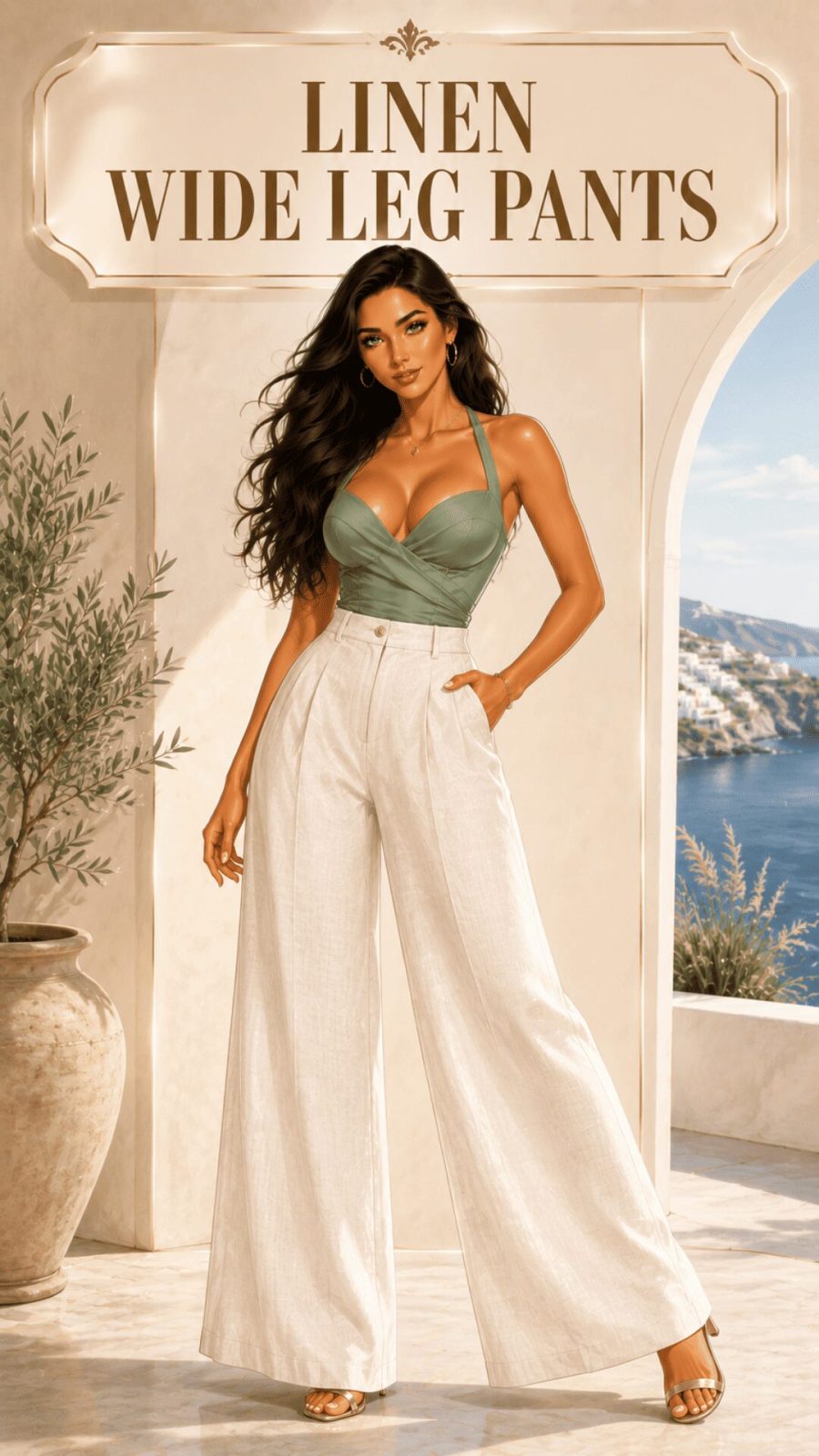
Linen — derived from the flax plant — is one of the oldest textile fibres in human clothing history, and it's arguably the ideal fabric for wide leg pants. It breathes exceptionally well, has a natural crumple texture that actually improves with wear, and drapes with a slightly structured relaxedness that suits the wide leg silhouette perfectly. Linen wide leg pants in summer are — not an exaggeration — a styling solution for virtually every warm-weather occasion from beach to boardroom in the right weight. The key trade-off is wrinkle visibility, which many find adds character rather than looking untidy. Explore the full summer fabric guide for fabric comparisons.


Category 4: By Fabric / Material (#19–#21)
How fabric choice changes drape, occasion register, and care — the variable most shoppers underestimate
Fabric is the variable that most shoppers treat as secondary — and that professional stylists treat as primary. The same wide leg trouser silhouette in silk crepe versus cotton drill reads as two entirely different garments. One is evening; one is office casual. The construction is identical. The fabric is everything.
- 19
Silk Wide Leg Pants
![Silk Wide Leg Pants Example]()
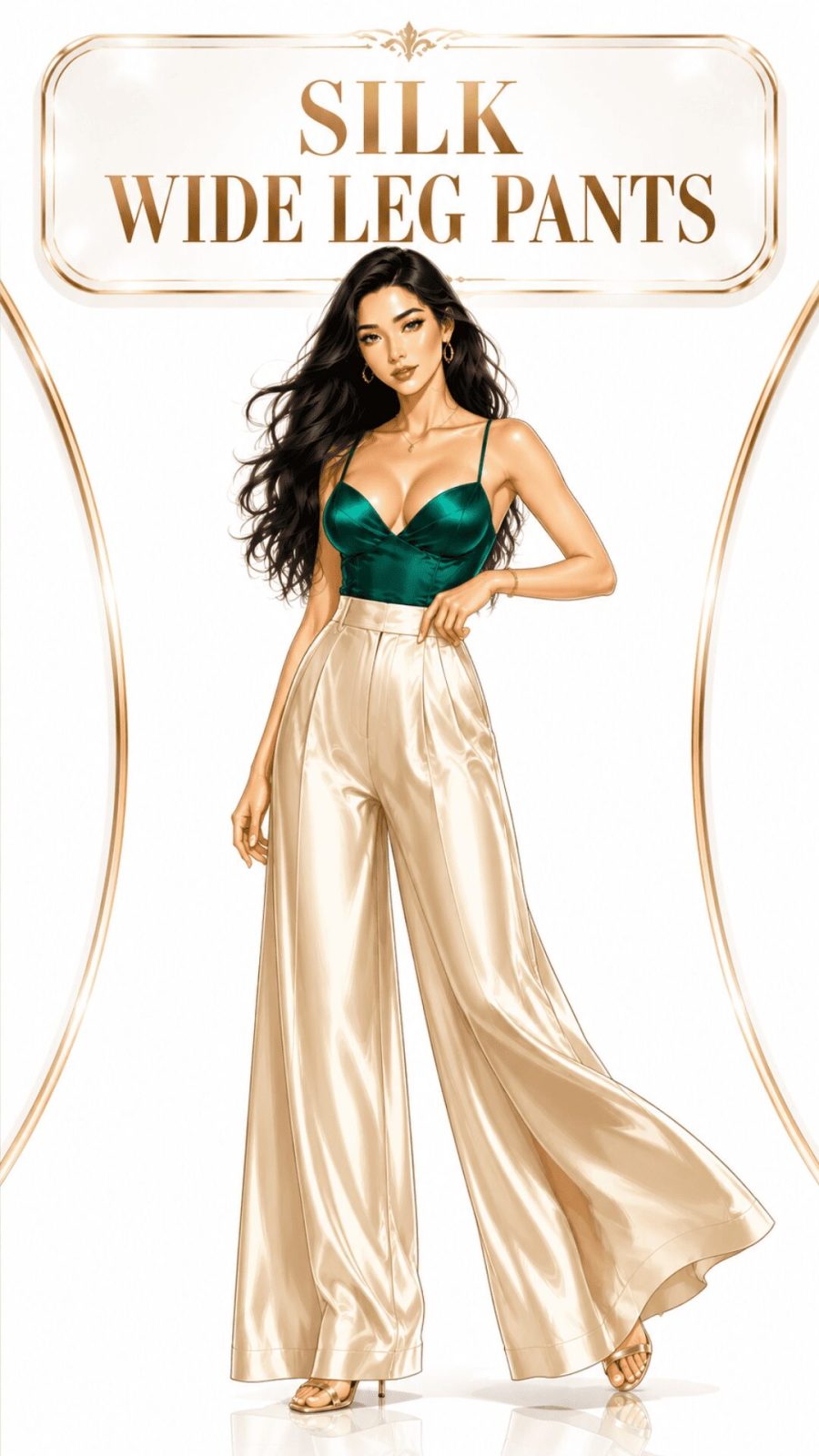
Silk — whether charmeuse, crepe de chine, or habotai — drapes with a liquidity that no other natural fabric matches. In a wide leg cut, silk creates a silhouette that moves in response to the body and catches light with every step. These are evening-register pants when made in pure silk satin; they become more daywear-appropriate in silk crepe or silk-blend versions that have slightly more body. The care requirements of silk (hand wash or dry clean; avoid heat and sunlight storage) are the primary reason many opt for high-quality silk-look synthetics. Our silk fabrics guide breaks down the key silk types for garment construction.
- 20
Wool Wide Leg Pants
![Wool Wide Leg Pants Example]()
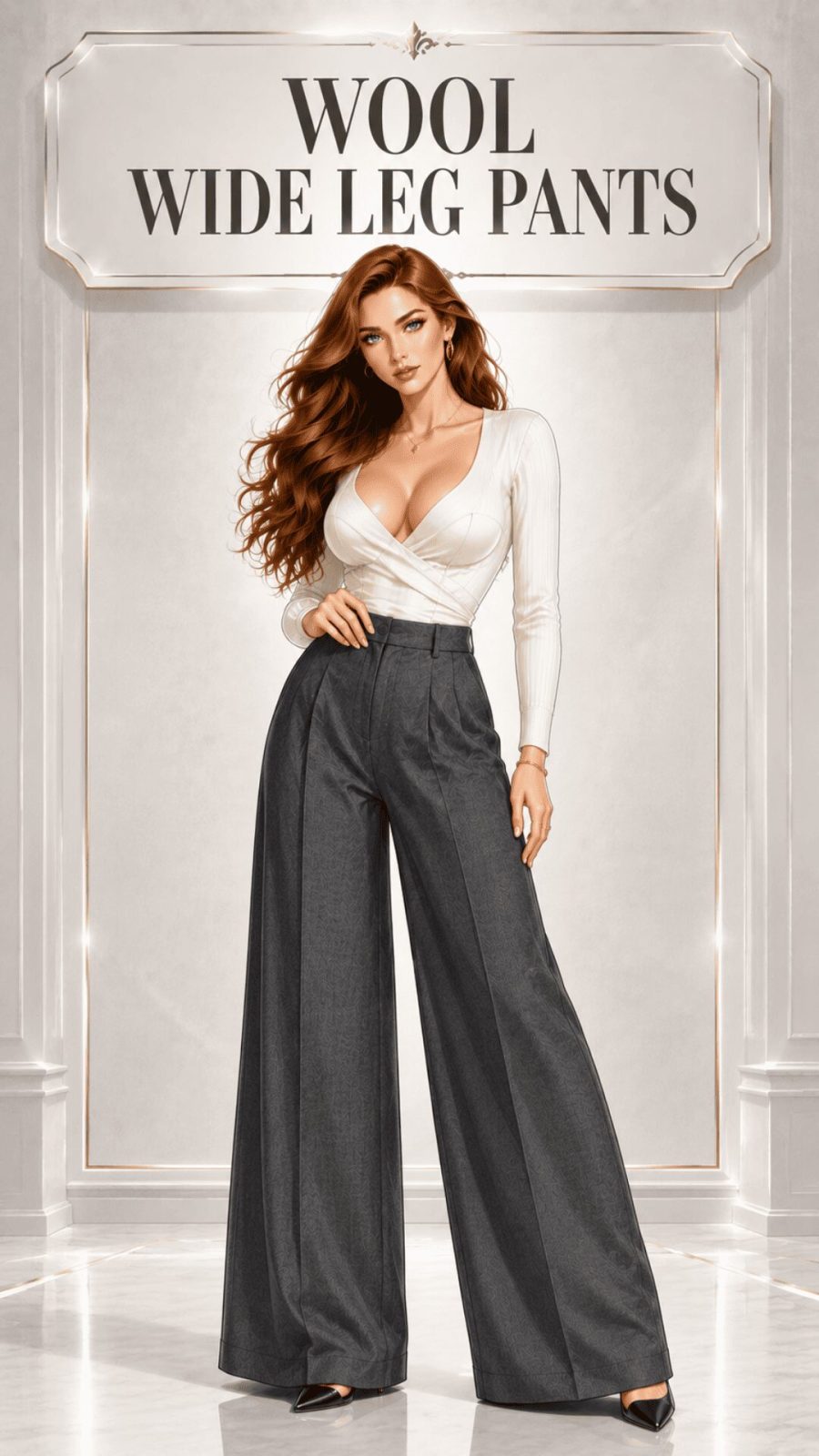
Wool — in its wide leg pants incarnation — is typically either fine wool suiting (which holds a clean, pressed crease) or bouclé (which adds textural interest with a slightly nubby surface). Both read as high quality. Wool wide legs in suiting weight are among the most professional, polished iterations of the silhouette — they hang beautifully, resist creasing through long wear, and communicate the kind of considered dressing that reads well in formal environments. The natural temperature-regulation properties of wool make these a year-round proposition in the right weights. Our wool fabrics guide covers the key variants relevant to garment construction.


- 21
Velvet Wide Leg Pants
![Velvet Wide Leg Pants Example]()
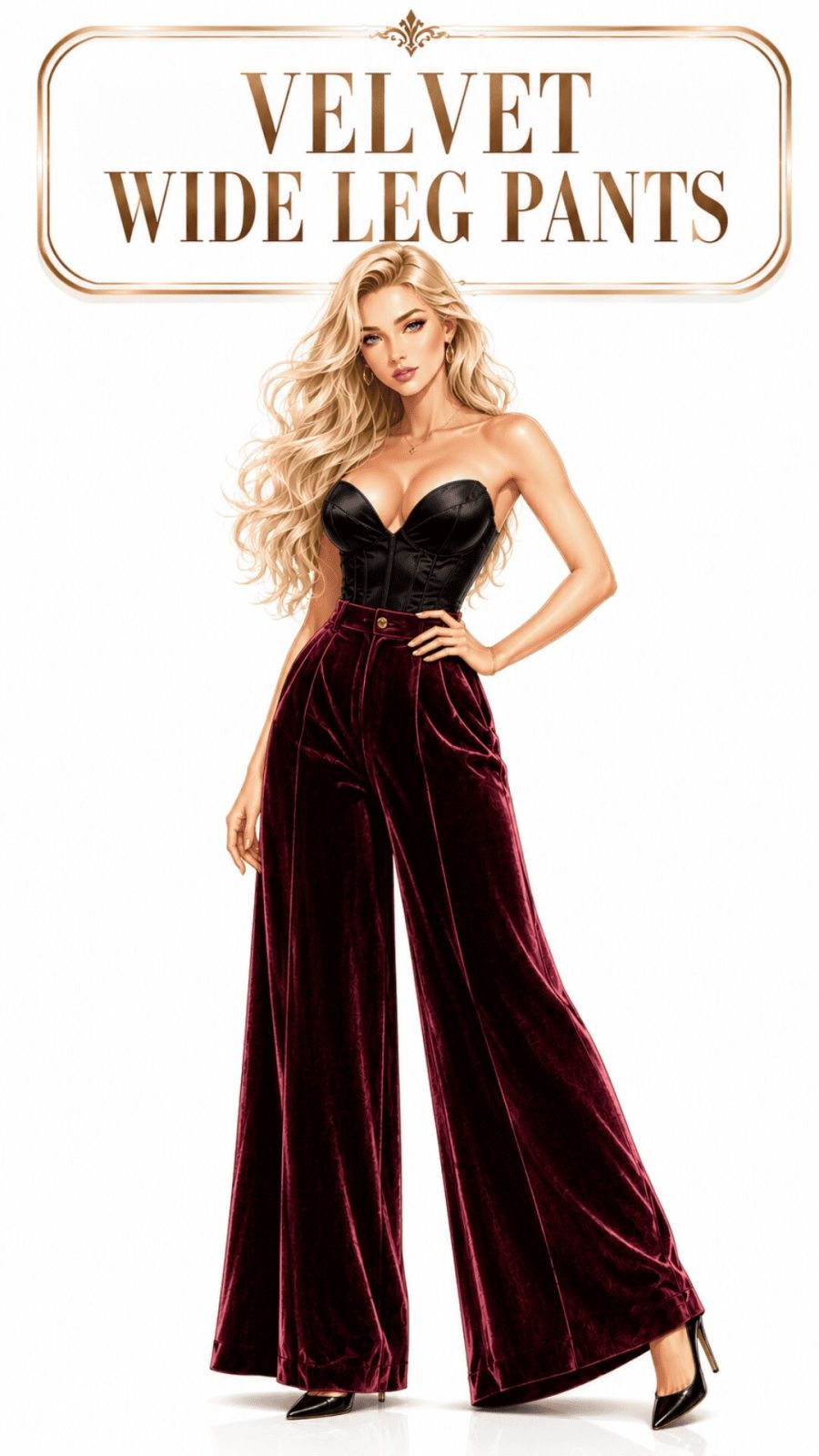
Velvet in a wide leg pant cut is one of the most visually dramatic options in the entire category — the pile fabric catches and shifts light with movement, creating a depth and luminosity that photographs exceptionally well. It's a firmly autumn/winter fabric with a strongly evening or occasion register. Crushed velvet adds tactile irregularity; smooth velvet reads more formally. The key styling consideration with velvet wide legs: keep everything else minimal. The fabric does the work entirely on its own — it doesn't need competition from embellished tops or statement accessories.
- 22
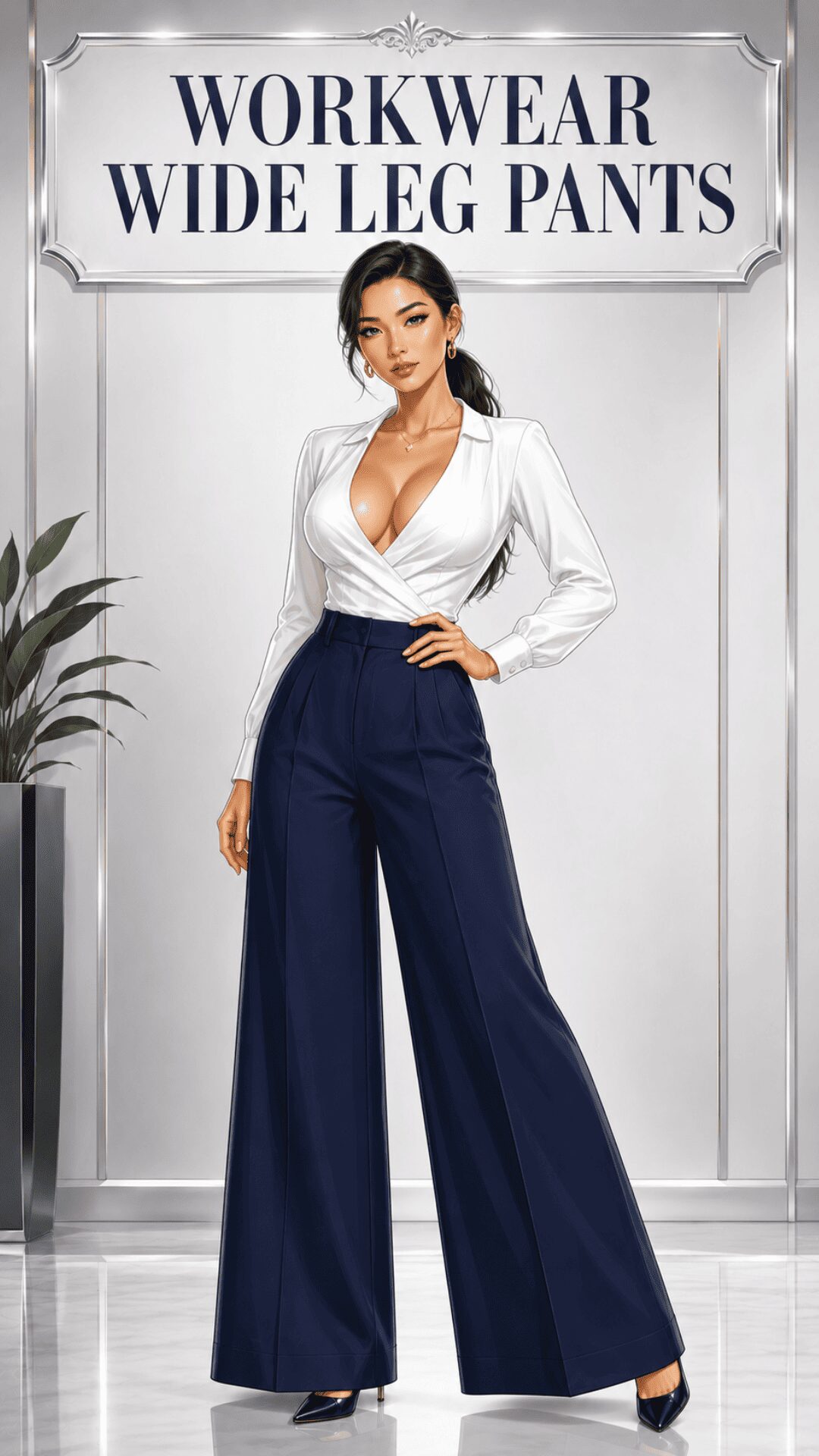
Workwear Wide Leg Pants
![Workwear Wide Leg Pants Example]()
Wide leg pants designed specifically for professional environments — typically in structured fabrics (gabardine, ponte, wool crepe), with clean seam lines and neutral colorways. The defining characteristic isn't construction so much as context: these are pants built to survive a long workday without losing their shape, to pair naturally with blazers and smart tops, and to communicate considered, polished dressing rather than casual ease. They're among the strongest arguments that wide leg pants can be fully professional — no qualifiers needed. Browse how these fit into the broader universe of office outfit options.


In years of working with clients on wardrobe edits, the single most consistent confusion around wide leg pants is this: women assume they need to "balance" the volume with something fitted on top. And that's partially true — but the "balance" principle is often applied too rigidly. A billowy blouse tucked loosely into high-rise wide legs can create a beautifully relaxed volume-on-volume look if the fabrics relate to each other. The rule isn't "always wear fitted on top." The rule is "manage visual weight consciously." That's a different brief — and a far more interesting one.
Category 5: By Occasion / Purpose (#23–#25)
How wide leg pants shift in construction and fabric when designed for specific contexts
Occasion shapes construction choices in surprisingly specific ways. Resort wide legs are cut for movement in heat. Athletic wide legs incorporate stretch and moisture management. Evening wide legs prioritize drape and light response. The silhouette is consistent; the engineering underneath it varies enormously. Understanding what the garment was built for tells you when it will perform at its best — and when it will disappoint.
- 23
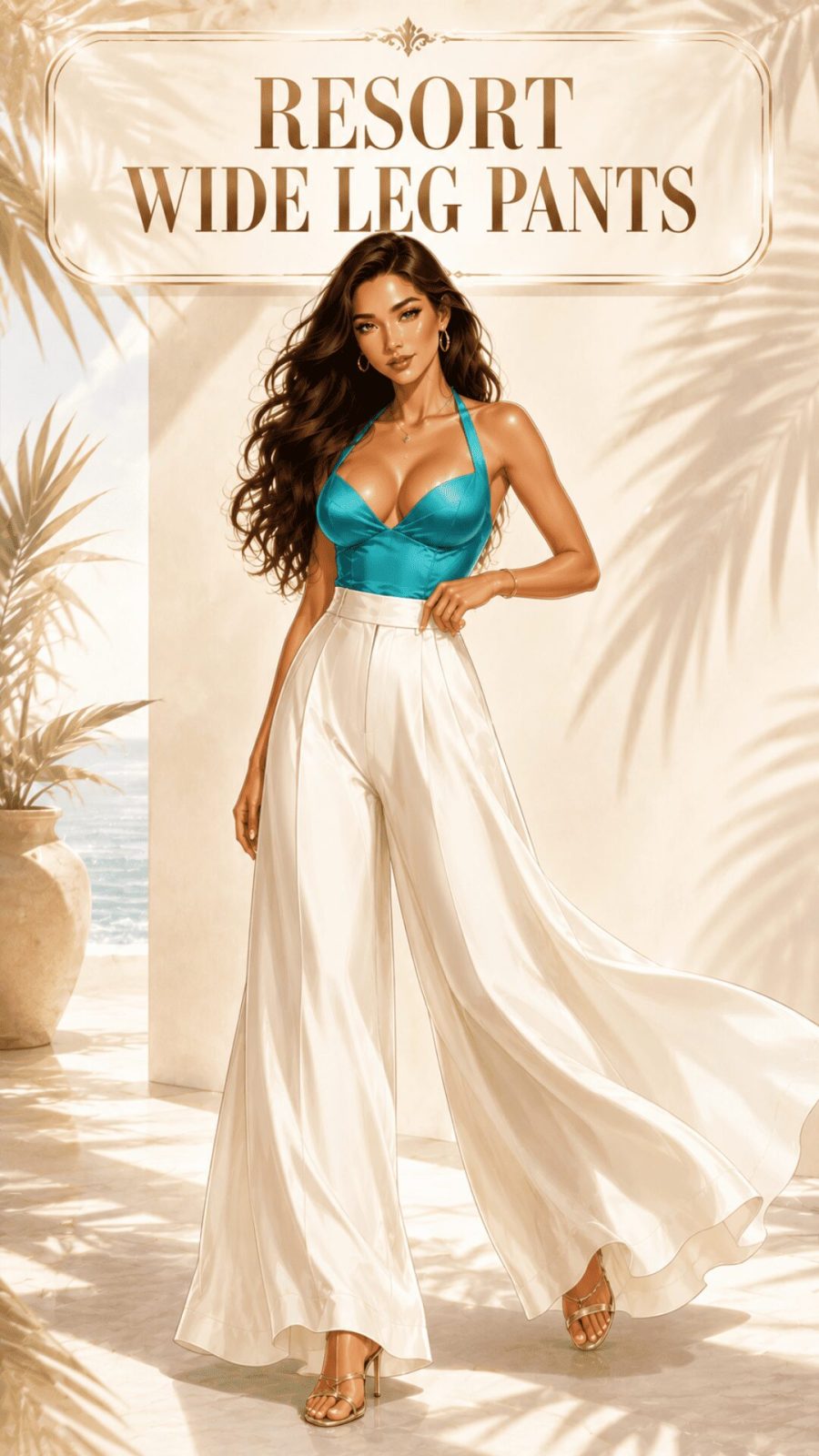
Resort Wide Leg Pants
![Resort Wide Leg Pants Example]()
Engineered for warm climates and the particular lifestyle demands of resort travel — poolside to restaurant to shopping without a wardrobe change. Resort wide leg pants tend to be in lightweight fabrics (linen, cotton voile, rayon) with relaxed construction, often featuring bold prints, tropical patterns, or rich colors. The silhouette is deliberately unbothered: ease of movement is built in. You'll find the most interesting iterations of this style in our broader resort wear guide — where wide leg pants are genuinely central to the category.
- 24
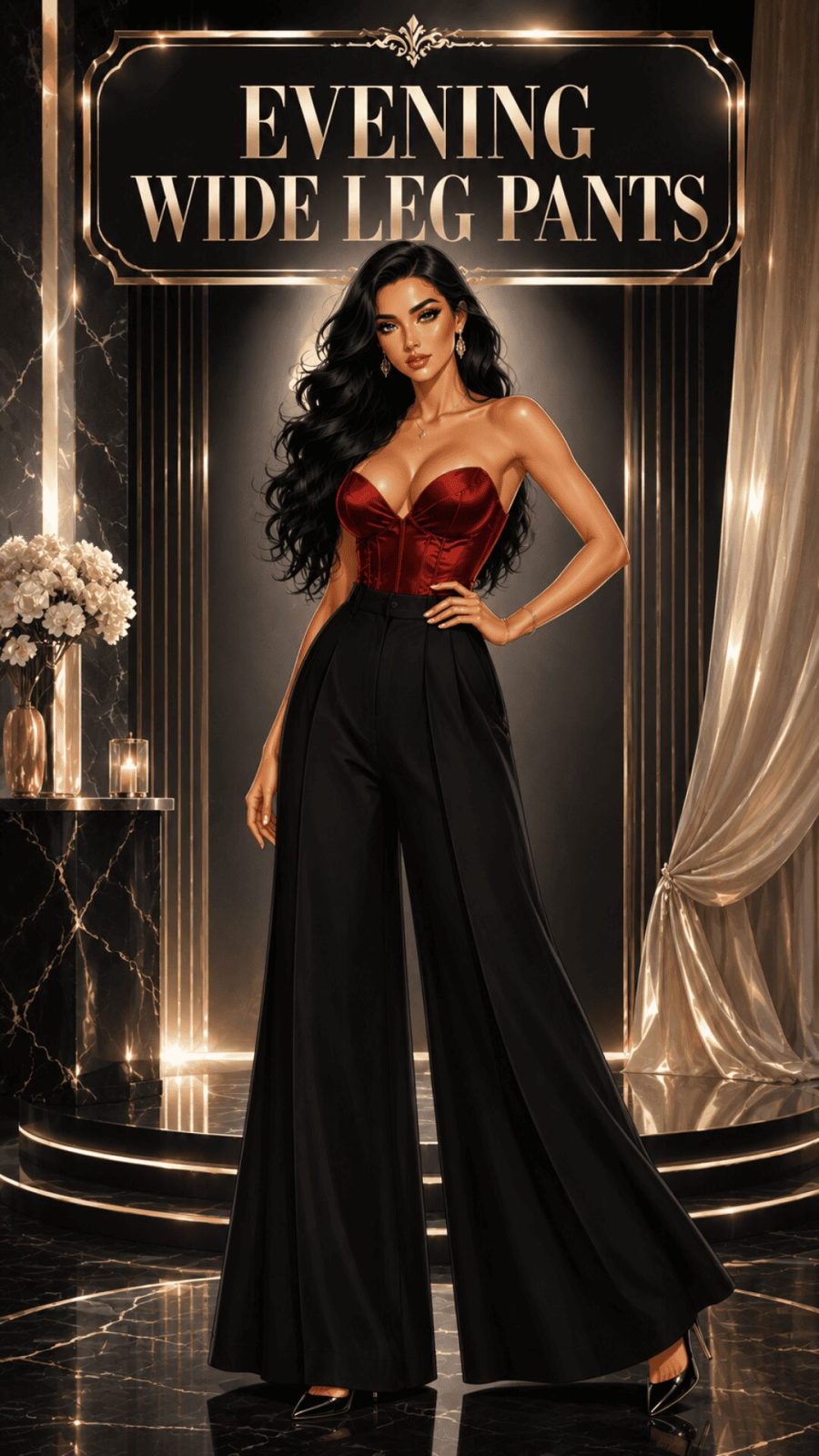
Evening Wide Leg Pants
![Evening Wide Leg Pants Example]()
Wide leg pants designed for evening occasions — typically in silk, satin, velvet, or heavily draped crepe, often in midnight tones (black, navy, emerald, burgundy) or in metallic fabrics. The visual drama of a floor-length wide leg in an evening fabric is genuinely equivalent to a formal gown in impact — and significantly more comfortable, particularly for dancing or long events. These pants have done significant work in reshaping the idea that "formal dressing" must mean a dress. A beautifully cut evening wide leg with a simple silk camisole is an unimpeachable formal look.


- 25
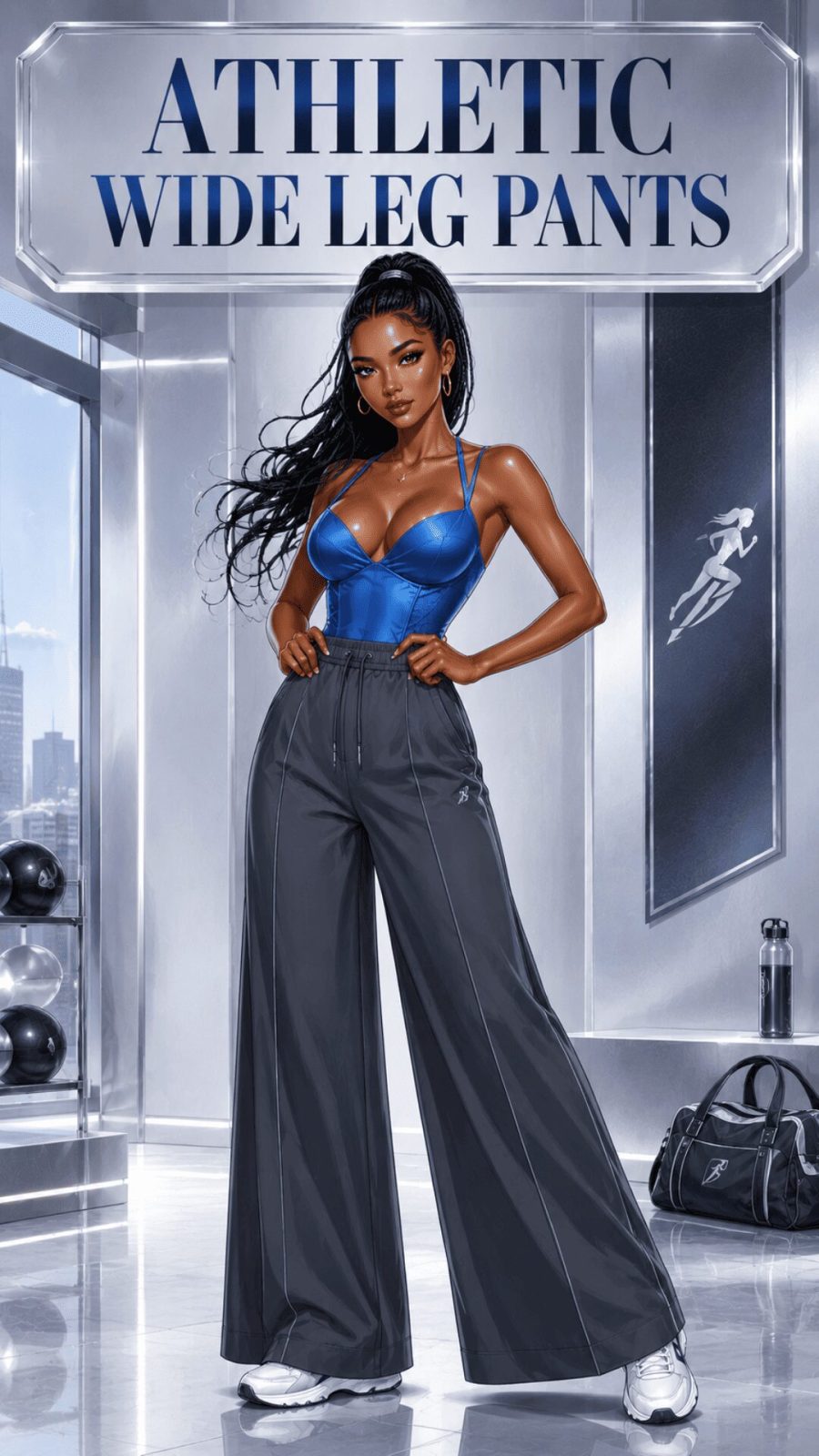
Athletic Wide Leg Pants
![Athletic Wide Leg Pants Example]()
The athletic or athleisure interpretation of the wide leg — in performance fabrics with stretch content, moisture-wicking finishes, or technical construction. These are genuinely wide-leg in silhouette (not just relaxed-fit joggers) but incorporate the functional engineering of activewear. The wide leg in a performance fabric is particularly popular for yoga, pilates, and low-impact movement where freedom of hip and leg movement matters but aesthetic still counts. See our complete activewear guide and the adjacent athleisure styles overview.
- 26
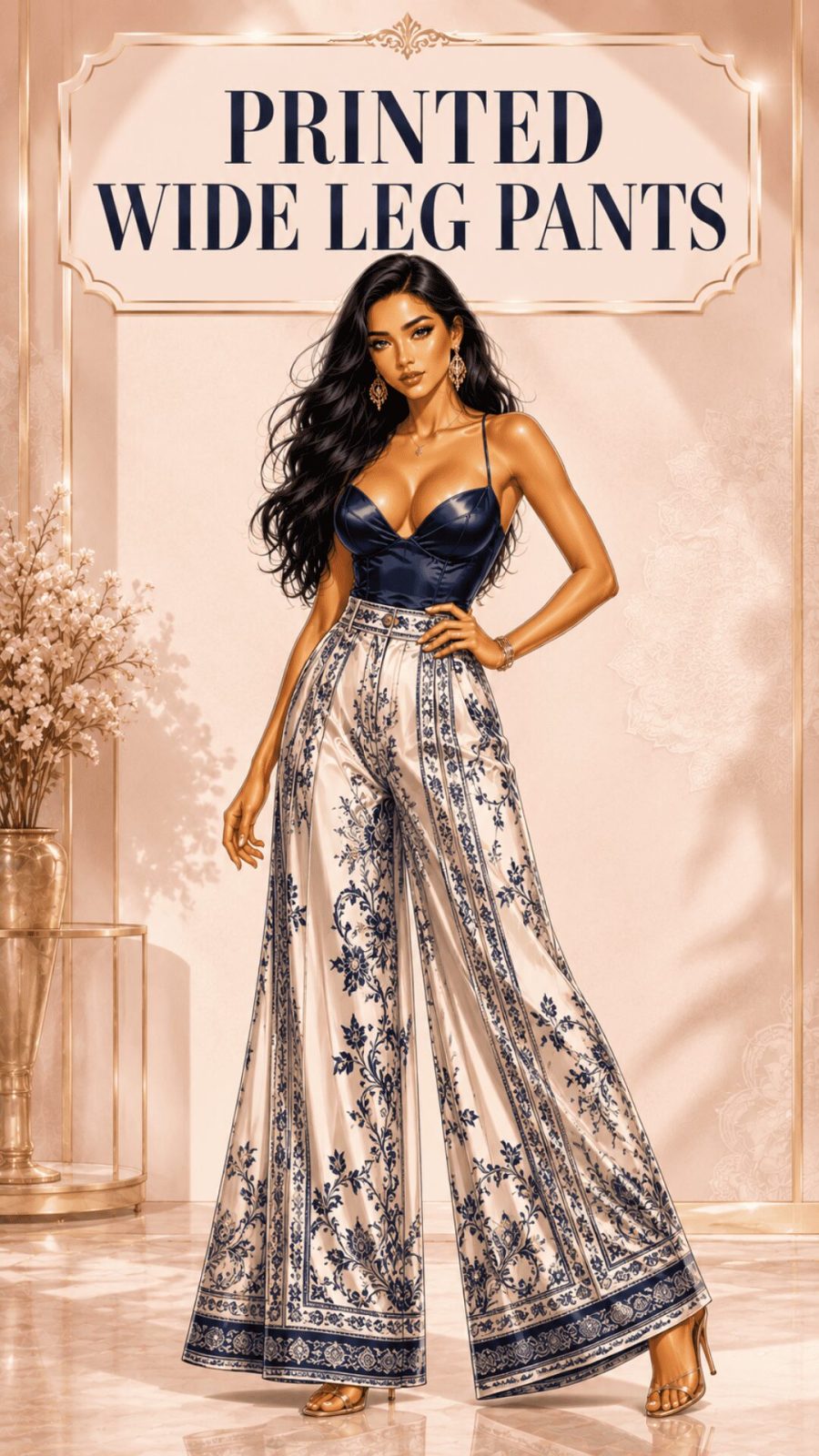
Printed Wide Leg Pants
![Printed Wide Leg Pants Example]()
Prints — florals, geometrics, abstract, botanical, graphic — interact with the wide leg silhouette in ways they don't on narrower cuts. The greater surface area amplifies a print's scale and visual impact; a large floral that might be overpowering on a straight leg reads as dramatic and intentional on a palazzo. Conversely, a fine stripe or small geometric becomes a subtle, sophisticated texture rather than a pattern statement. The scale relationship between print size and leg volume is a real variable worth thinking through. Explore the full range of prints and patterns in women's fashion for reference.


Category 6: By Design Details (#27–#29)
Specific construction details that define these wide leg variants — beyond silhouette alone
Details matter — in ways that are easy to miss at first glance but impossible to ignore once you're wearing the garment. A seam placement, a pocket depth, a hem treatment: these design decisions accumulate into a garment that either functions as a wardrobe workhorse or gets pushed to the back of the closet after two wears. In wide leg pants specifically, details interact with the silhouette in ways that are architecturally interesting.
- 27
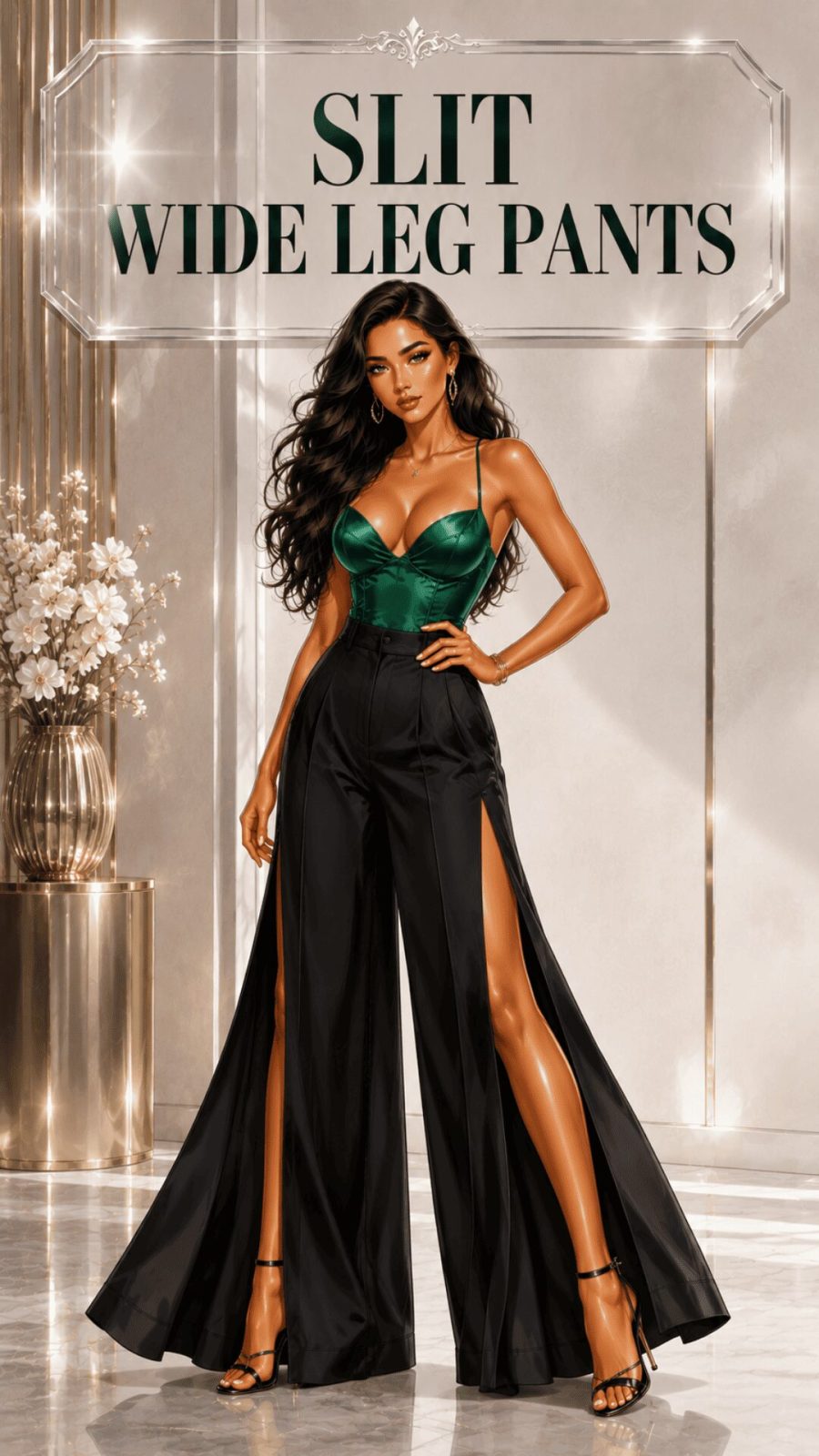
Slit Wide Leg Pants
![Slit Wide Leg Pants Example]()
A side or front slit cut into the hem of an otherwise wide leg pant — creating a glimpse of leg that adds movement, drama, and a degree of visual unpredictability. The slit in a wide leg pant behaves differently than a slit in a narrow trouser: because the leg panel already moves, the slit amplifies that movement rather than simply revealing leg. Floor-length wide legs with a side slit are among the most impactful evening dressing choices available — as explored more fully in our guide to slit placements in women's clothing.
- 28
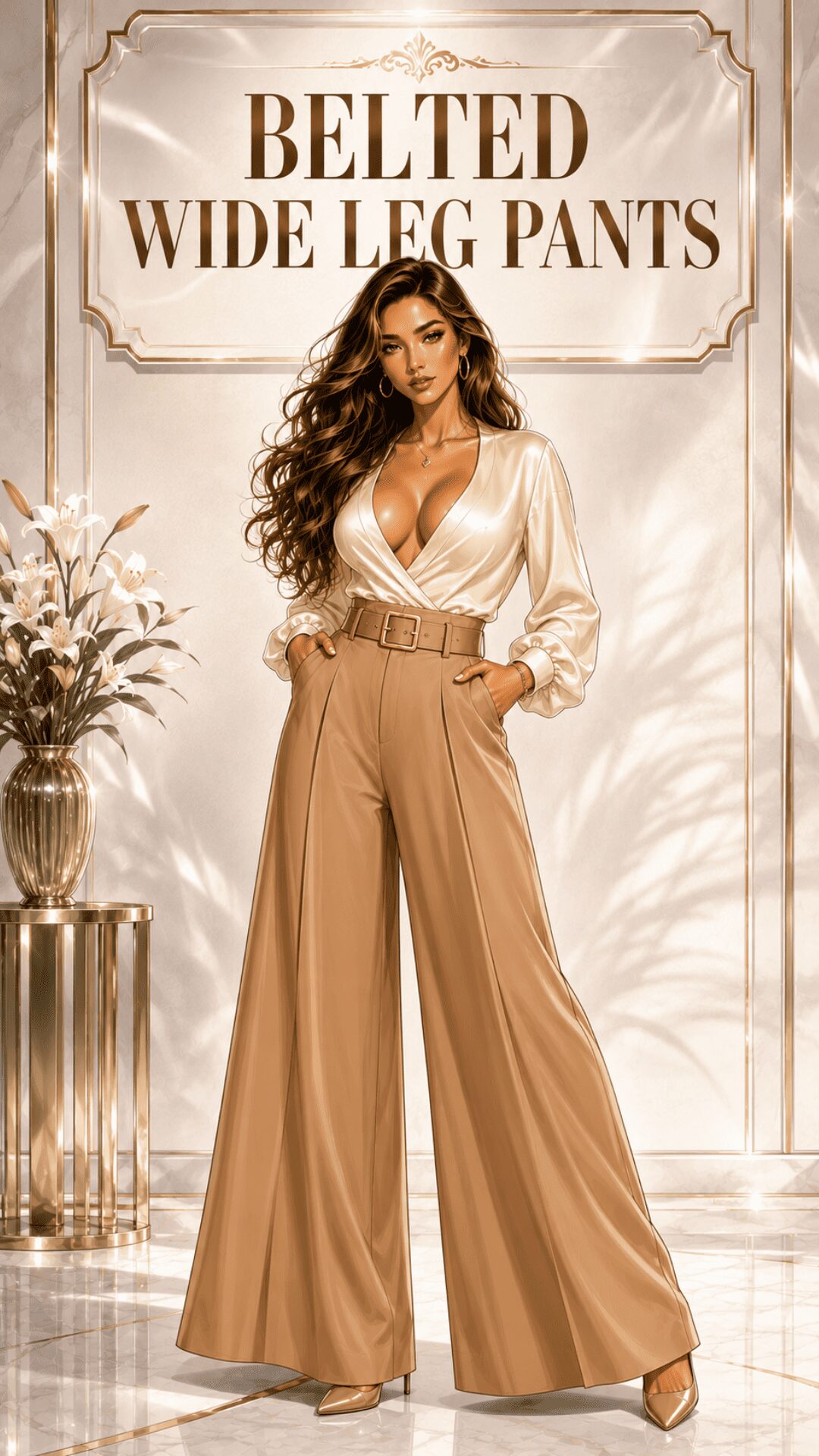
Belted Wide Leg Pants
![Belted Wide Leg Pants Example]()
Wide leg pants constructed with an attached or detachable belt — a sash, a self-fabric tie, or a structured leather or fabric belt that passes through integrated loops. The belt performs two functions: it defines the waistline clearly (useful when the pants themselves have a relaxed waist), and it creates a visual anchor that organizes the proportion of the outfit. Without the belt, the waist may be vague; with it, the whole garment reads as intentionally designed. See our full guide to belt styles in women's fashion for pairing ideas.


- 29
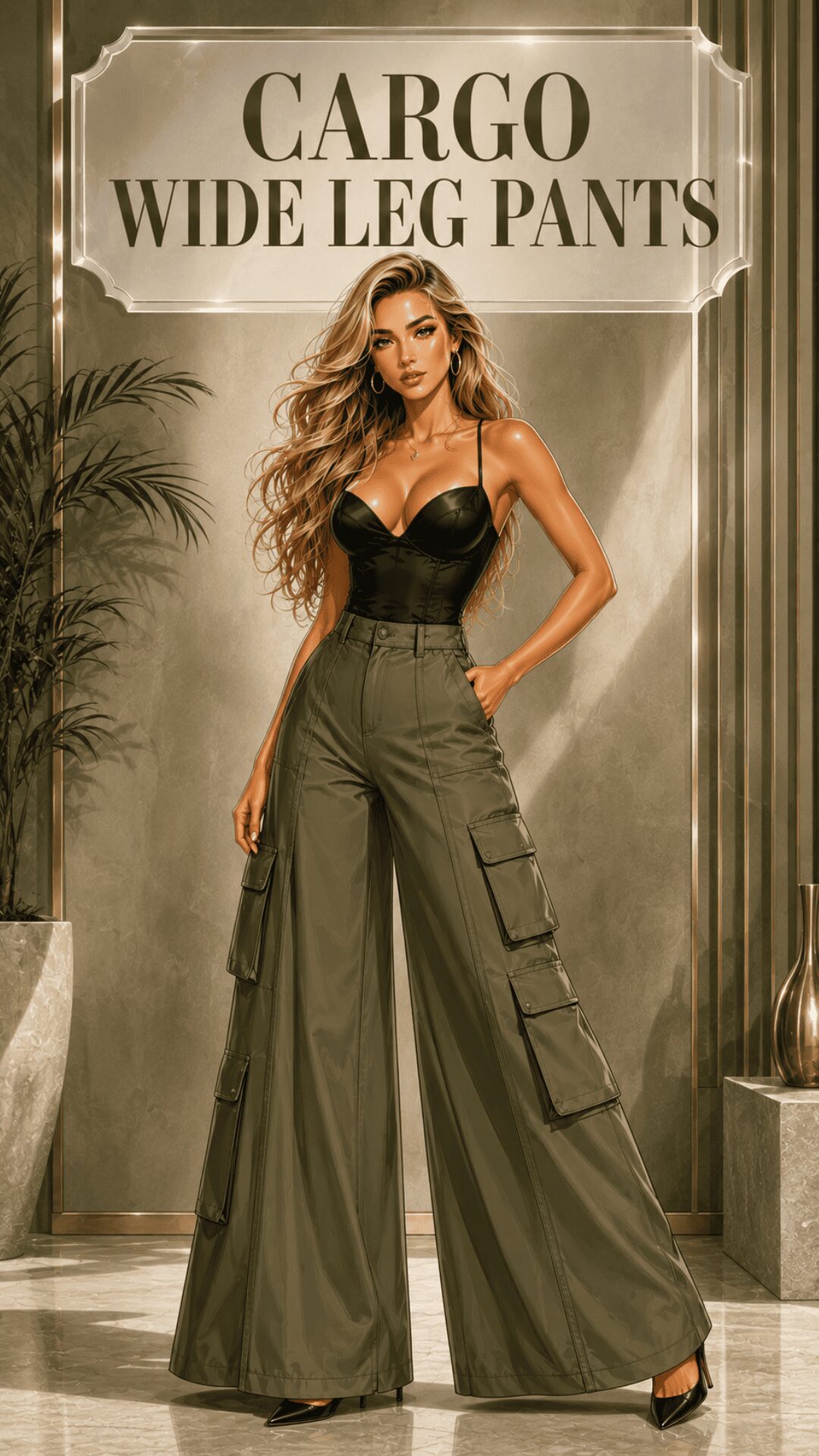
Cargo Wide Leg Pants
![Cargo Wide Leg Pants Example]()
The utility-meets-volume combination — wide leg construction with the addition of cargo-style patch pockets on the thighs or legs. Cargo wide legs are a genuinely interesting design problem: the patch pockets add visual weight and structure to the leg panel, which can either add to the architectural quality of the silhouette or overwhelm it, depending on pocket size and placement. Done well (pockets flat and tailored, not bulging), cargo wide legs are among the most practical and street-smart iterations of the silhouette. See how they compare within the full cargo pants category.

Wide leg pants photograph very differently from how they look on the hanger — and that gap surprises a lot of shoppers. On a flat surface or a standard hanger, a palazzo looks like an enormous amount of fabric. On a moving body, that same volume creates a fluid, lengthening silhouette that can look genuinely elegant. The lesson: always try wide leg pants in front of a mirror with movement. Walk a few steps. The garment needs to be experienced in motion to be properly assessed. A pant that looks enormous hanging still can transform the moment you take three steps forward.
Frequently Asked Questions — Types of Wide Leg Pants for Women
What is the difference between palazzo pants and wide leg trousers?
Palazzo pants are distinguished by an extremely wide, ultra-fluid leg that creates an almost skirt-like silhouette — typically in lightweight fabrics with significant drape. Wide leg trousers are a more structured, tailored interpretation of the same general silhouette: the leg is wide, but the construction is architectural and pressed rather than flowing. The key distinction is structural intention. Palazzos are built for movement and drape; wide leg trousers are built for precision and polish. The same leg-width measurement could produce entirely different garments depending on which construction approach is used.
Do wide leg pants work for petite women?
Wide leg pants can work effectively for petite proportions — but they require more deliberate proportion management than for taller frames. The most reliable approach for petite styling: opt for a high-rise waistband (which visually raises the leg line), choose ankle-length or just-above-ankle hems (which reveal the foot and create a lengthening break), and wear with a slight heel or mule. Avoid extremely voluminous palazzo constructions in heavy fabrics, which may overwhelm a smaller frame — instead, look for wide-but-not-ultra-wide legs in medium-weight fabrics. The result, when properly proportioned, creates a genuinely elongated visual line.
What tops work best with wide leg pants?
The most reliably effective approach is a tucked-in fitted top — whether a classic tee, silk camisole, or structured blouse — which creates a clear visual distinction between the upper and lower body and allows the wide leg silhouette to read without competition. A cropped top (just above the waistband) achieves a similar effect with a slightly more casual register. Volume-on-volume looks — loose tops with wide legs — can work beautifully when the fabrics relate and the proportions are intentional, but they require more styling confidence. Oversized tops that cover the waistband tend to create an ambiguous, shapeless middle — which is usually the least flattering outcome.
What shoes work best with wide leg pants?
Footwear pairing with wide leg pants depends heavily on hem length. For floor-length wide legs, the shoe is largely invisible — so comfort and personal preference take priority. For ankle-length wide legs, loafers, block heels, mules, and strappy sandals all work beautifully; the visible shoe becomes part of the styling intention. For cropped wide legs, any shoe works — trainers, sandals, ankle boots — because the leg break provides a natural stopping point. Generally, chunkier footwear (platform sandals, chunky loafers) tends to balance the volume of a wide leg better than very delicate, slim footwear, which can feel visually mismatched.
Are wide leg pants appropriate for the office?
Wide leg pants are entirely office-appropriate when constructed in the right fabrics and proportions. The key variables: fabric (structured wool crepe, ponte, gabardine, or viscose blends in solid or tonal colors read as professional), construction (pleated front or clean-cut leg panels rather than ultra-relaxed palazzo drape), and styling (tucked-in blouse, fitted knit, or blazer on top). The most effective office-wide-leg is a high-rise, pleated or flat-front trouser in a suiting-weight fabric — essentially a tailored wide leg that borrows from the menswear tradition. Pair with a structured blazer and you have one of the strongest office silhouettes available.
What is the difference between wide leg pants and bootcut pants?
Bootcut pants are narrower through the thigh and knee, then flare slightly from the calf downward — the opening is modest, designed historically to accommodate a boot over the hem. Wide leg pants are consistently wide from hip to hem (or flare from the knee in the flared variant), with a significantly larger leg opening. Bootcut creates a subtle silhouette with limited volume; wide leg creates a notably architectural one with considerable volume. The bootcut is a minor-key silhouette; the wide leg is a major-key one. Our dedicated bootcut pants guide explores that silhouette in detail.
What fabrics are best for wide leg pants in summer?
Linen is arguably the ideal summer fabric for wide leg pants — it breathes exceptionally well, drapes with relaxed structure, and develops a characteristic texture with wear. Cotton (particularly in lighter weights like cotton voile or lawn) is another excellent summer choice: cooler and crisper than linen, less prone to visible wrinkles. Rayon and viscose blends offer a more fluid drape with reasonable breathability. Avoid synthetic blends heavy in polyester for hot weather — they trap heat and moisture rather than releasing it. For evenings or more polished summer occasions, silk crepe provides beautiful drape with reasonable temperature management.
How do I style wide leg pants for a casual everyday look?
The most versatile everyday wide leg combination: high-rise wide leg jeans or linen pants in a neutral tone, with a simple fitted tee tucked in at the front (or fully tucked), finished with loafers or mules. This is a genuinely low-effort combination that looks considerably more considered than it takes to assemble. Alternatively, a wide leg pant with an oversized knit half-tucked (the French tuck) creates a deliberately relaxed but styled look. For colour: start with tonal dressing — pants and top in the same colour family — which is the most forgiving approach to wide leg proportions and creates an unbroken vertical line through the outfit.
Conclusion: The Architecture of Volume
Twenty-nine types. Six classification systems. Silhouette, length, waist, fabric, occasion, and detail — mapped and explained.
What this guide ultimately offers is a framework for thinking about wide leg pants as a category, not just a trend. Wide leg pants have appeared — and disappeared and returned — repeatedly throughout fashion history because the silhouette solves real problems: it's comfortable, it moves beautifully, and in the right fabric it can register across a remarkable range of occasions. That's rare. Most silhouettes specialize. The wide leg generalizes — when you understand its construction logic well enough to steer it in the right direction.
The categorization here — silhouette, length, waistline, fabric, occasion, detail — is the same framework professional buyers and stylists use to navigate collections and build wardrobe systems. It cuts through trend language and gets to what actually matters: how a garment is built, and how that building serves the body and the context it's worn in. Pair this guide with our comprehensive overview of all women's pants styles for the complete bottom-half picture.
- 29 types of wide leg pants exist across 6 classification systems — each with a Design identity, Season context, and Best For purpose.
- Silhouette is the foundational identity — palazzo, trouser, culotte, flared, barrel: all wide leg, entirely different construction logic and styling potential.
- Rise placement changes everything. A high-rise waistband visually elongates the leg and is generally the most versatile choice; mid-rise offers a relaxed alternative for casual contexts.
- Fabric is not secondary. The same wide leg silhouette in silk versus linen versus wool reads as three different garments in three different occasion registers. Fabric literacy matters here more than in almost any other trouser category.
- Length determines shoe visibility — and therefore how footwear integrates into the overall look. Choose hem length deliberately based on what shoes you plan to wear.
- Wide leg pants are not trend-dependent. They have appeared consistently across fashion history since at least the 1930s; investing in a well-made version is likely to be a long-term wardrobe decision, not a seasonal one. This aligns with Business of Fashion's analysis of classic silhouette longevity versus trend pieces.
- The "balance with fitted on top" rule is real but overapplied. Managing visual weight is the actual principle — and there are multiple ways to do it, including intentional volume-on-volume looks in related fabrics.
- Wide leg pants are office-appropriate when built in structured fabrics with clean construction — no qualifiers needed.
Sources & Further Reading
- The Metropolitan Museum of Art — Heilbrunn Timeline of Art History: 20th-century women's dress and trouser history
- Vogue UK — Palazzo Pants History — Origins and modern evolution of the palazzo pant silhouette
- University of Fashion — Garment construction documentation and trouser silhouette history
- Business of Fashion — Trend lifecycle analysis and wardrobe investment data
- Encyclopædia Britannica — History of Western Dress — Reference for garment construction evolution in women's trousers
This guide was compiled through analysis of fashion history records, industry glossaries, garment construction references, and editorial research. All classification decisions are editorial. Last reviewed: May 2026.


Leave a Reply