

Few silhouettes in fashion history have held on as stubbornly — and as elegantly — as the peplum. It surfaces on couture runways, reappears in high-street collections, disappears briefly, then returns with fresh tailoring and a new sense of occasion. A peplum top is not simply a ruffle at the waist. It is a deliberate architectural decision: a flared extension sewn at or just below the natural waist that alters proportion, creates visual structure, and frames the body with a kind of considered femininity that few other silhouettes can replicate.
The peplum is fashion’s most architectural waist detail — structured enough to tailor, soft enough to float.
The silhouette has deep roots. Victorian tailoring used peplum-like jacket extensions throughout the 1870s and 1880s, when basque bodices — fitted through the torso with a short flared skirt attached below the waist seam — were standard formal dress. The construction created an hourglass impression long before stretch fabric existed to do it naturally. Then, in 1947, Christian Dior’s New Look collection reshaped postwar fashion by returning to precisely this kind of waist emphasis: nipped bodices, full skirts, structured hips. The peplum silhouette was part of that same aesthetic logic. It has never fully left.
This guide documents 27 types of peplum tops across 8 classification systems. For every entry:
-
Construction
How the flare is built
-
Season
When to wear it
-
Best For
Occasions and contexts
Whether you’re building an office wardrobe, styling a cocktail look, or simply trying to understand why a certain top makes a waist feel more defined — this is where to start.
All 8 Peplum Categories at a Glance
A structured breakdown of the 27 peplum top types documented in this guide.
- 01
By Construction Style
- 02
By Neckline
- 03
By Sleeve Style
- 04
By Fabric
- 05
By Occasion
- 06
By Silhouette Shape
- 07
By Fashion Influence
- 08
By Tailoring Style
27 Types of Peplum Tops for Women
Category 1: By Construction Style (#1–#5)
How the peplum flare is cut, sewn, and attached — the foundational identity of the silhouette
Construction is where every peplum top begins. The same basic concept — a fitted bodice with a flared extension at the waist — produces completely different garments depending on whether the flare is a separate sewn panel, a gathered extension cut in one piece, or a structured underlining. These distinctions determine how the peplum sits, how much volume it carries, and whether it reads as tailored or fluid. Understanding construction is what separates a peplum that flatters from one that simply adds bulk.
- 01
Classic Peplum Top

The foundational form: a fitted bodice with a separate, circular-cut peplum panel attached at the natural waist seam. The flare radiates outward in a 360-degree sweep, creating a structured hip line with minimal fabric above. This is the silhouette Dior's New Look influenced most directly — a fitted top that creates the impression of a defined waist without any cinching mechanism beyond good tailoring. The waist seam is the hinge; everything above it fits close, everything below it moves.
- 02
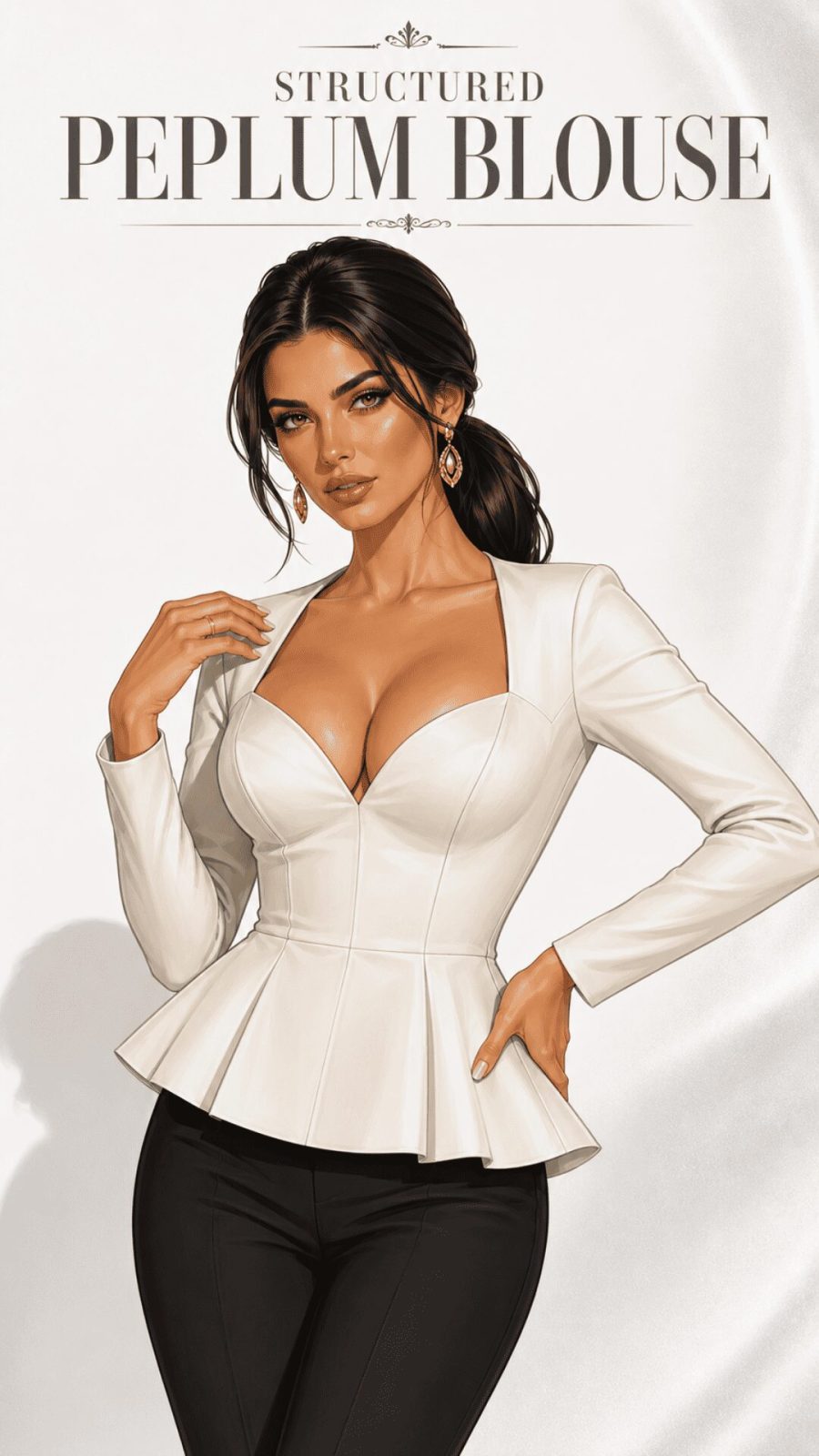
Structured Peplum Blouse
![Structured Peplum Blouse]()
Woven-fabric construction with interior boning, interfacing, or structured underlining that holds the bodice rigid before the flare begins. The peplum is cut as a separate piece and pressed flat at the attachment seam, which gives the hem a crisp, architectural angle rather than a soft float. Crepe, ponte, or cotton-blend fabric makes the structure visible. This reads as professional dressing — a blouse with formal tailoring logic. Pair with straight-leg trousers for a sharp officewear silhouette.


- 03
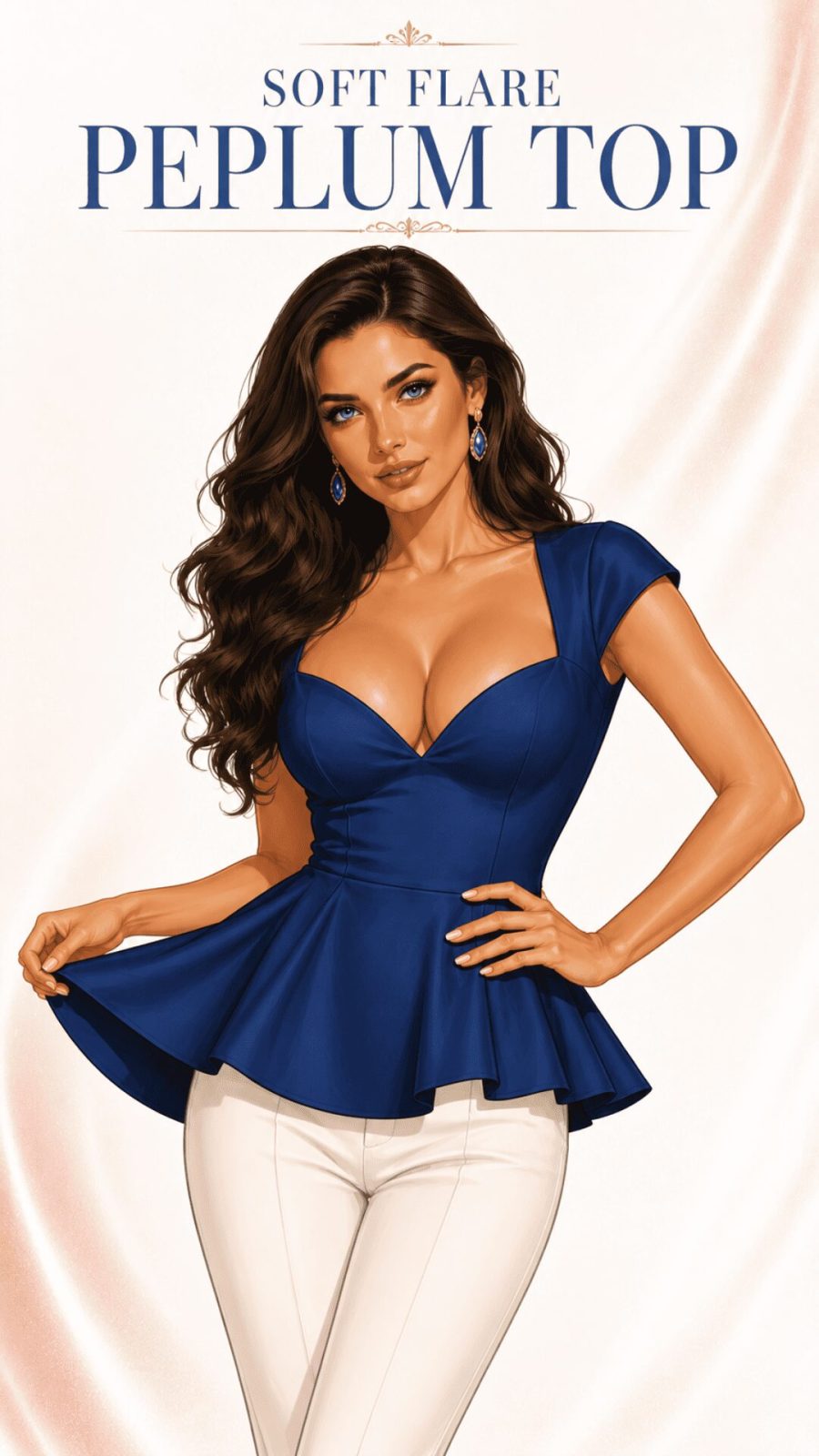
Soft Flare Peplum Top
![Soft Flare Peplum Top]()
The opposite of the structured version: the peplum here is cut from a fluid fabric — chiffon, georgette, or washed silk — that falls from the waist seam in a gentle, unlined sweep. There is no interfacing. The flare moves rather than stands. Silhouette-wise, the effect is softer and more romantic than a crisp structured peplum, with the waist definition still present but gentler. The construction works by adding just enough flare volume to create shape without weight. Good for feminine blouse styling in warmer months.
- 04
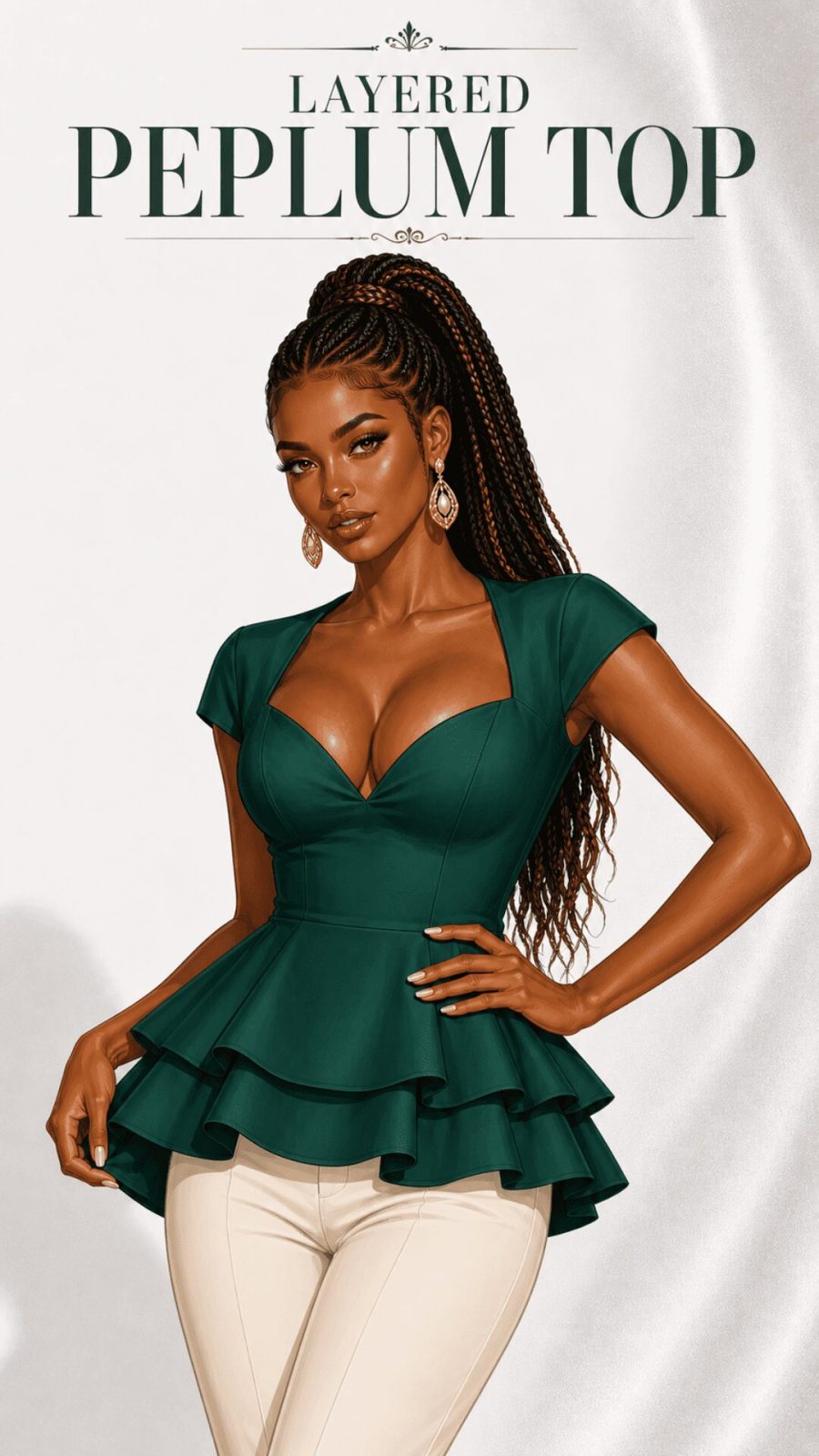
Layered Peplum Top
![Layered Peplum Top]()
Two or more tiered peplum panels, each progressively longer than the one above it, sewn at the same waist seam or staggered slightly downward. The construction adds depth and visual movement that a single-layer peplum cannot. In lightweight chiffon, multiple layers create a floating, almost ethereal hem effect — popular in eveningwear. In structured fabric, the layers stack with defined separation. The key construction detail is that each layer is hemmed separately, so the edges carry individual weight and fall independently.


- 05
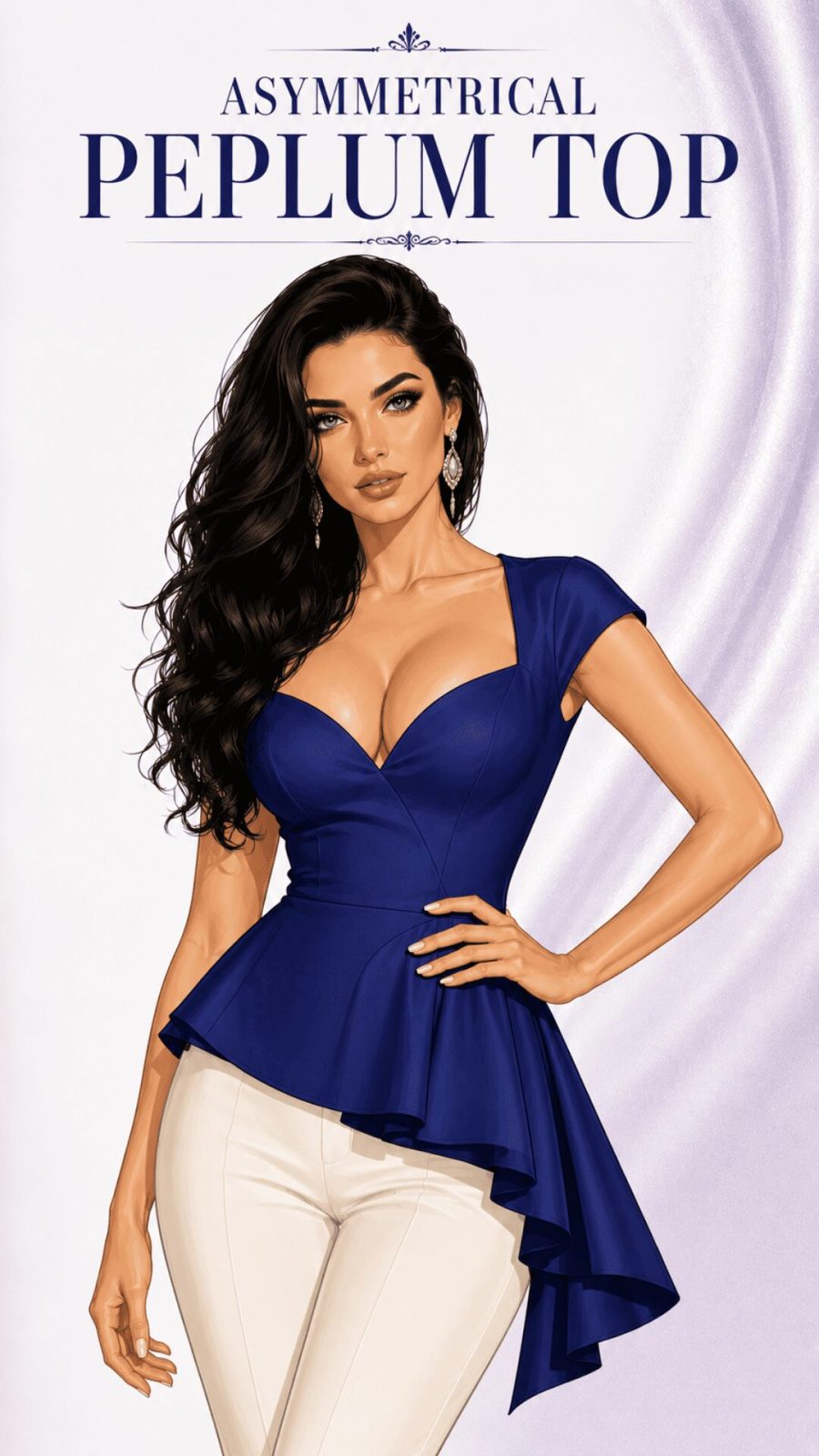
Asymmetrical Peplum Top
![Asymmetrical Peplum Top]()
The peplum panel is cut longer on one side than the other — often dramatically so, dipping from hip height on one side to mid-thigh on the other. This construction deliberately disrupts the visual symmetry of the waist line, creating a design-forward silhouette that reads as contemporary and fashion-led. Structurally, the asymmetry requires careful dart placement on the fitted bodice to ensure the garment sits level even as the flare extends unevenly. Seen extensively on runways from Mugler to Roland Mouret.

Category 2: By Neckline (#6–#9)
How the neckline changes the mood and register of a peplum silhouette
The neckline on a peplum top does more than frame the face. It shifts the entire register of the garment. The same waist-flare construction reads as boardroom-ready with a square neck, romantic with a sweetheart curve, modern with a V, and luxuriously minimal with a simple crew. Neckline choice also affects how much visual weight sits above the peplum versus below — a low neckline draws attention upward and away from the flare, while a high neck concentrates attention on the garment's structure.
- 06
Sweetheart Neckline Peplum
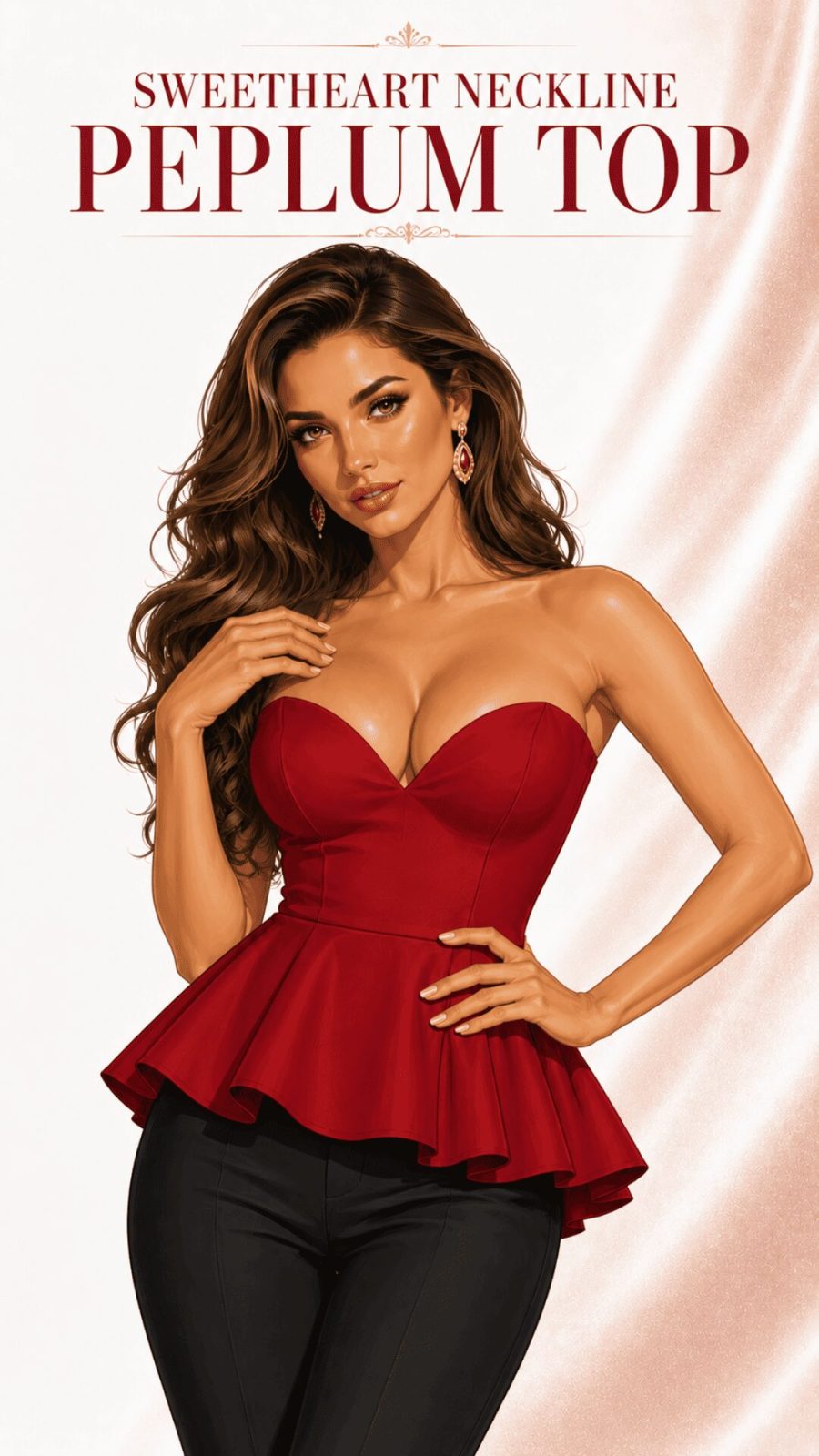
![Sweetheart Neckline Peplum Top]()
The sweetheart neckline — a curved, heart-shaped décolletage that dips to a point or soft V at the center front — pairs with the peplum silhouette to create maximum femininity. The construction requires careful bodice shaping: the sweetheart curve must sit flat against the chest without gaping, which typically means boning or strong interfacing through the bust seam. Below the waist, the peplum flare completes the hourglass reference. This combination reads as overtly romantic — the go-to choice for formal occasions and evening dressing.
- 07
Square Neck Peplum Top
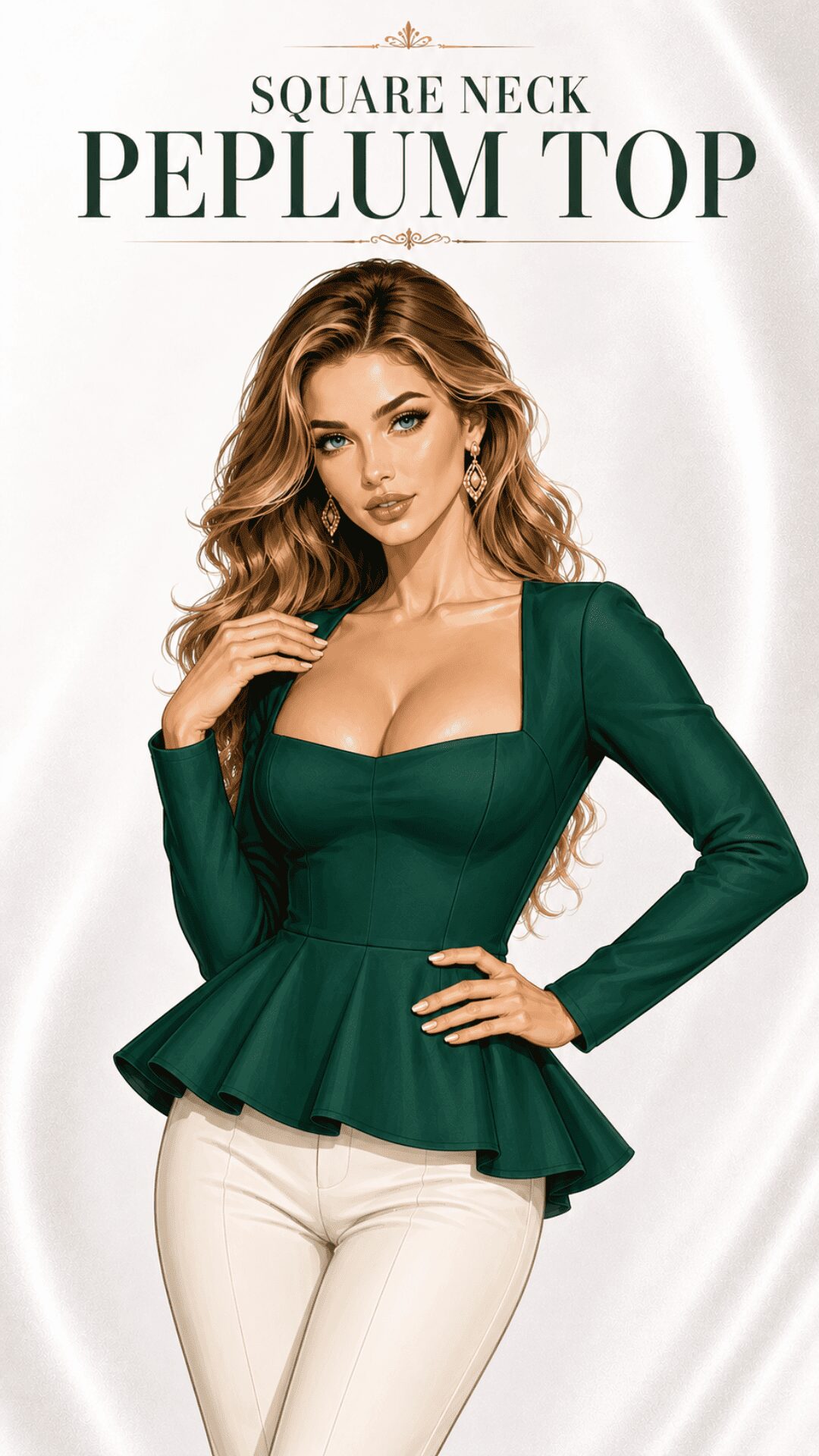
![Square Neck Peplum Top]()
A straight horizontal neckline with sharp corners — the square neck — positioned at mid-chest or lower. This neckline has a historical reference in Renaissance and Baroque fashion, where square-fronted bodices were standard court dress. In the peplum context, it creates a bold geometric contrast against the curved flare below: straight horizontal across the top, flowing arc at the waist. The square neck also sits well without boning because the straight edge has no tendency to gap at a center point. It works particularly well in structured ponte or satin-finish fabrics.


- 08
V-Neck Peplum Blouse
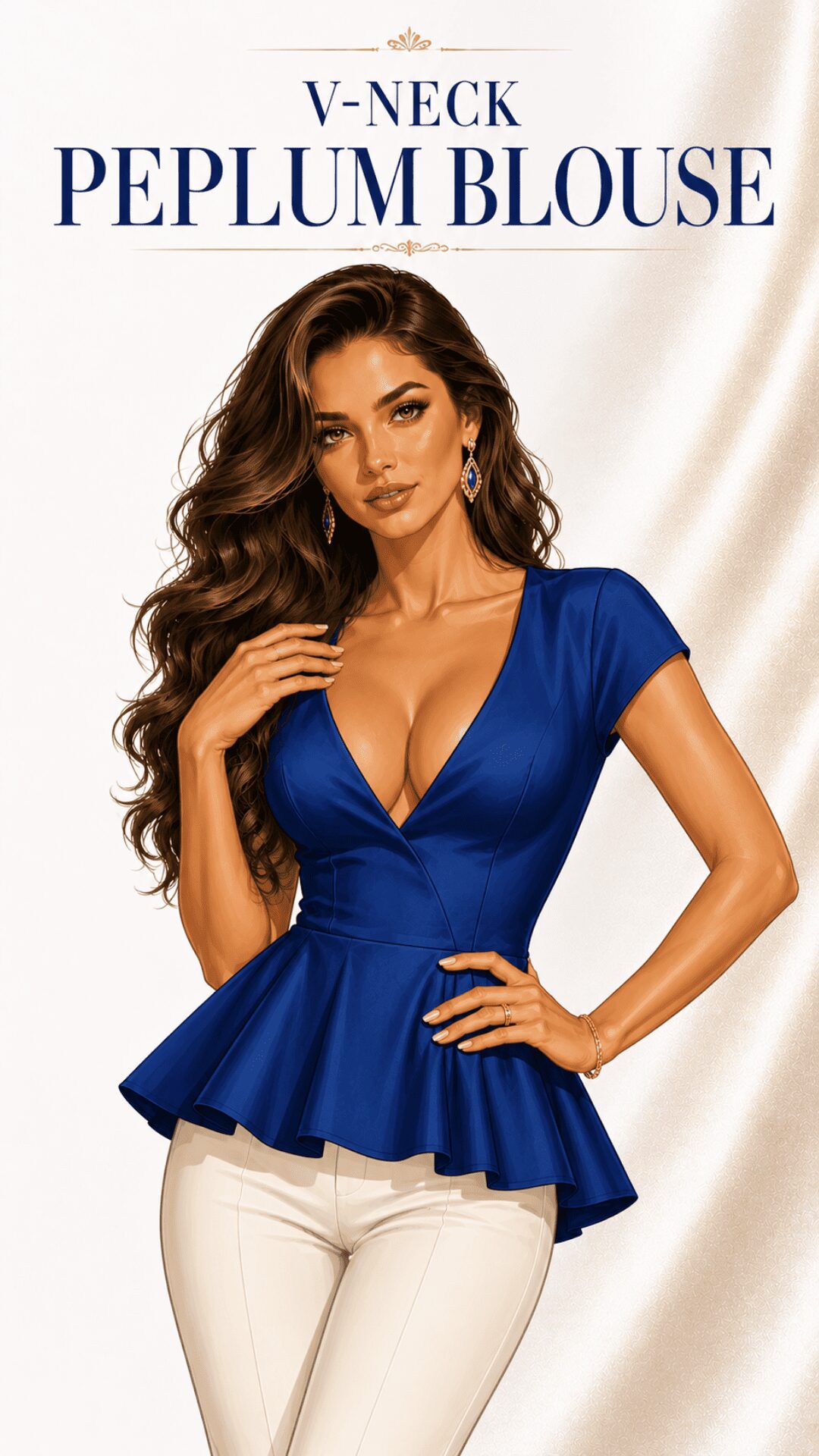
![V-Neck Peplum Blouse]()
A V-neckline on a peplum blouse creates a continuous diagonal line from shoulder to chest that draws attention upward and elongates the neck. The V is one of the most versatile necklines precisely because it suits a wide range of collar depths — from a modest 2-inch dip to a deep plunge — and each depth changes the formality of the garment significantly. On a peplum silhouette, the V interrupts the vertical axis in a way that makes the waist flare feel less prominent and more proportionally integrated. A good choice for any occasion that requires polish without rigidity.
- 09
Off-Shoulder Peplum Top
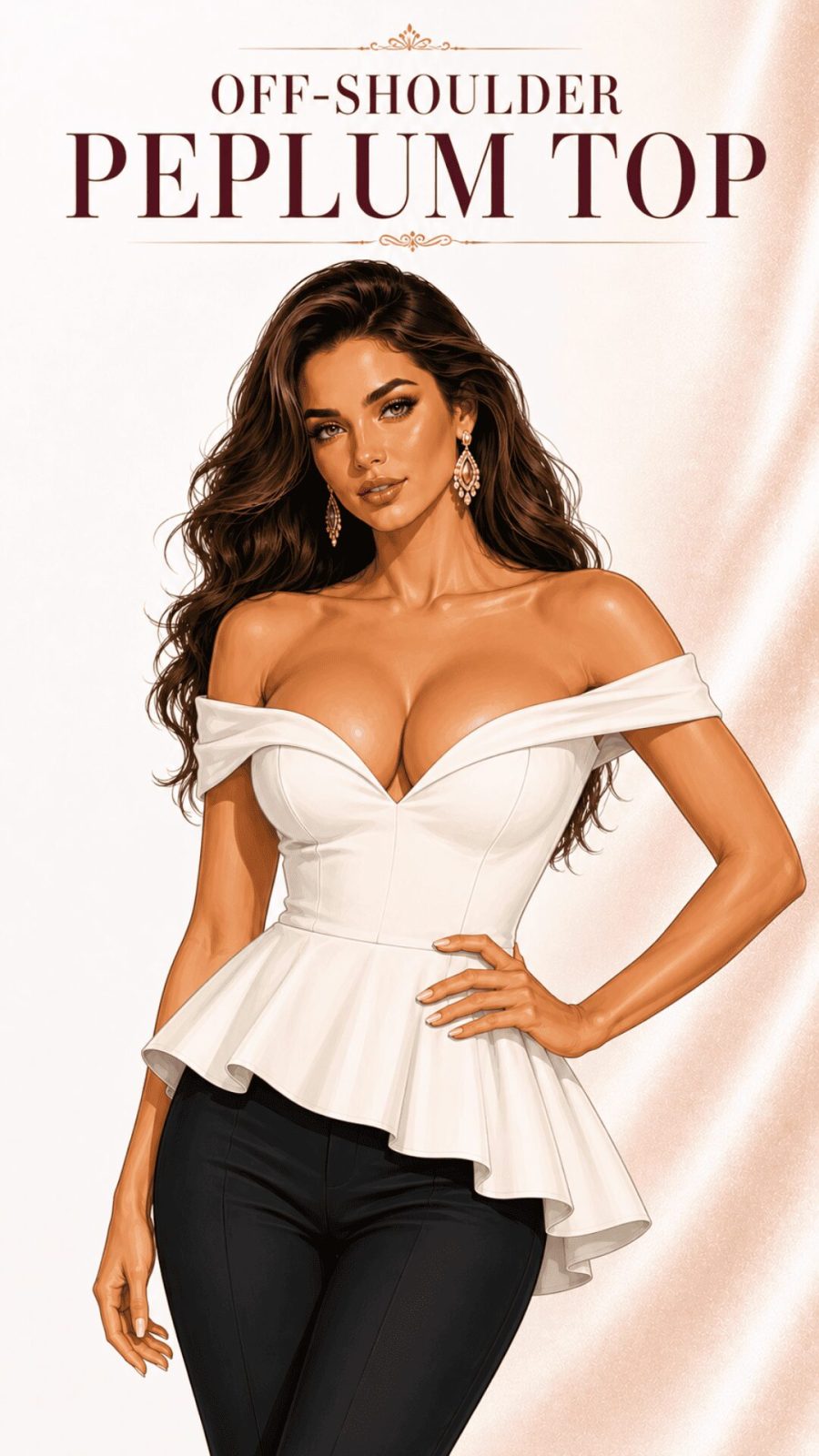
![Off-Shoulder Peplum Top]()
The neckline sits below the shoulders entirely, exposing the collarbone and upper arm while the bodice remains fitted from chest to waist. The construction requires an elasticized or boned neckline edge to hold the fabric in place across the bust without slipping. Combined with the peplum, this creates a silhouette with visual interest at both the neckline and the waist simultaneously — two focal points separated by a clean, fitted column. An off-shoulder peplum reads as festive and romantic, suited to wedding guest dressing and summer evening events.


Category 3: By Sleeve Style (#10–#13)
How the sleeve choice changes the silhouette balance and seasonal register of a peplum top
- 10
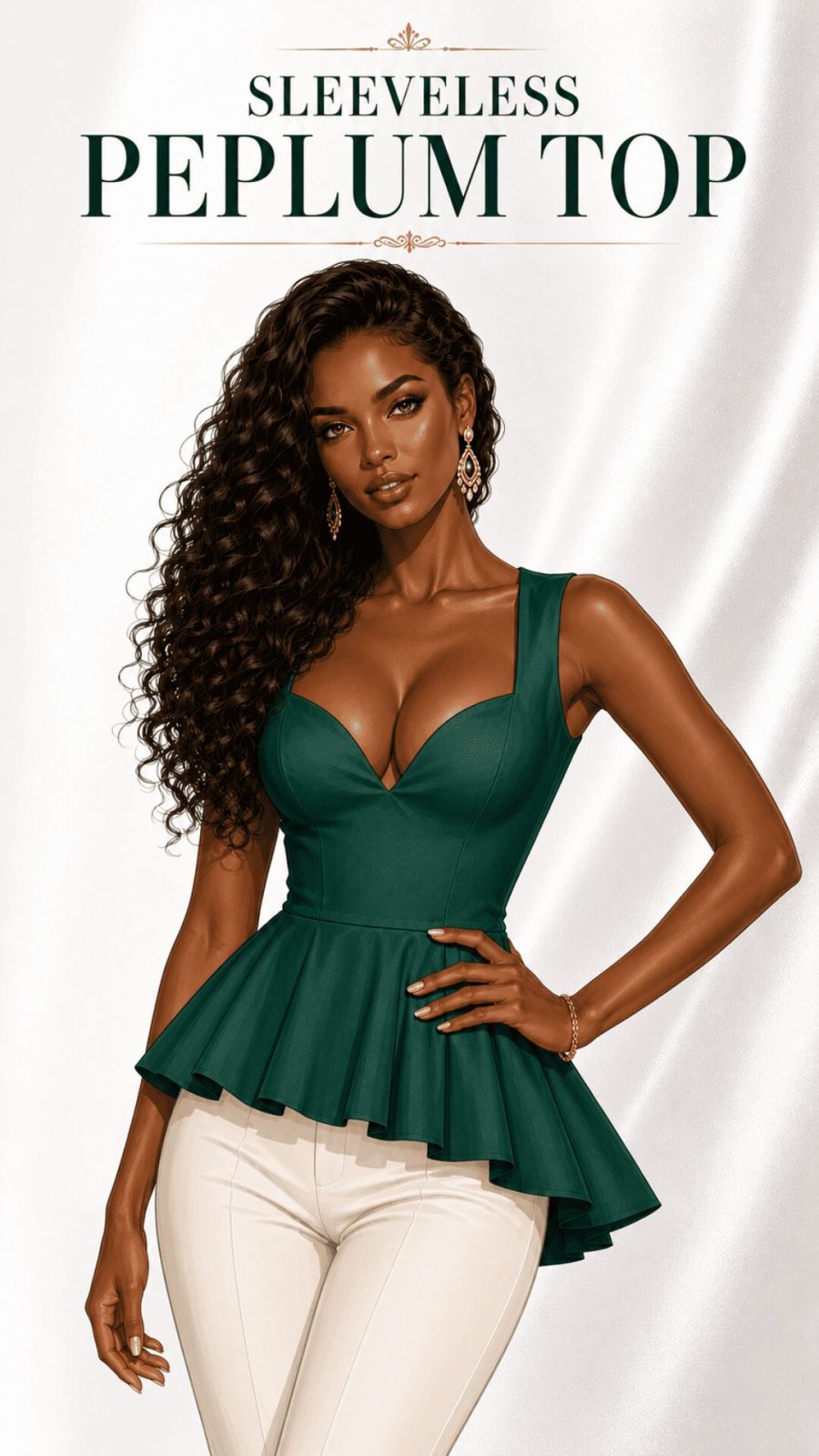
Sleeveless Peplum Top
![Sleeveless Peplum Top]()
No sleeves at all — a clean, finished armhole with no additional coverage above the shoulder. The sleeveless peplum is the most direct expression of the silhouette because nothing between the shoulder and the waist distracts from the bodice-to-flare transition. The armhole finish determines the garment's quality register: a bias-cut bound edge reads as couture; a simple hemmed edge reads as casual. Sleeveless peplum tops layer easily under blazers or suit jackets without fabric bunching at the sleeve. The most versatile entry point into peplum dressing.
- 11
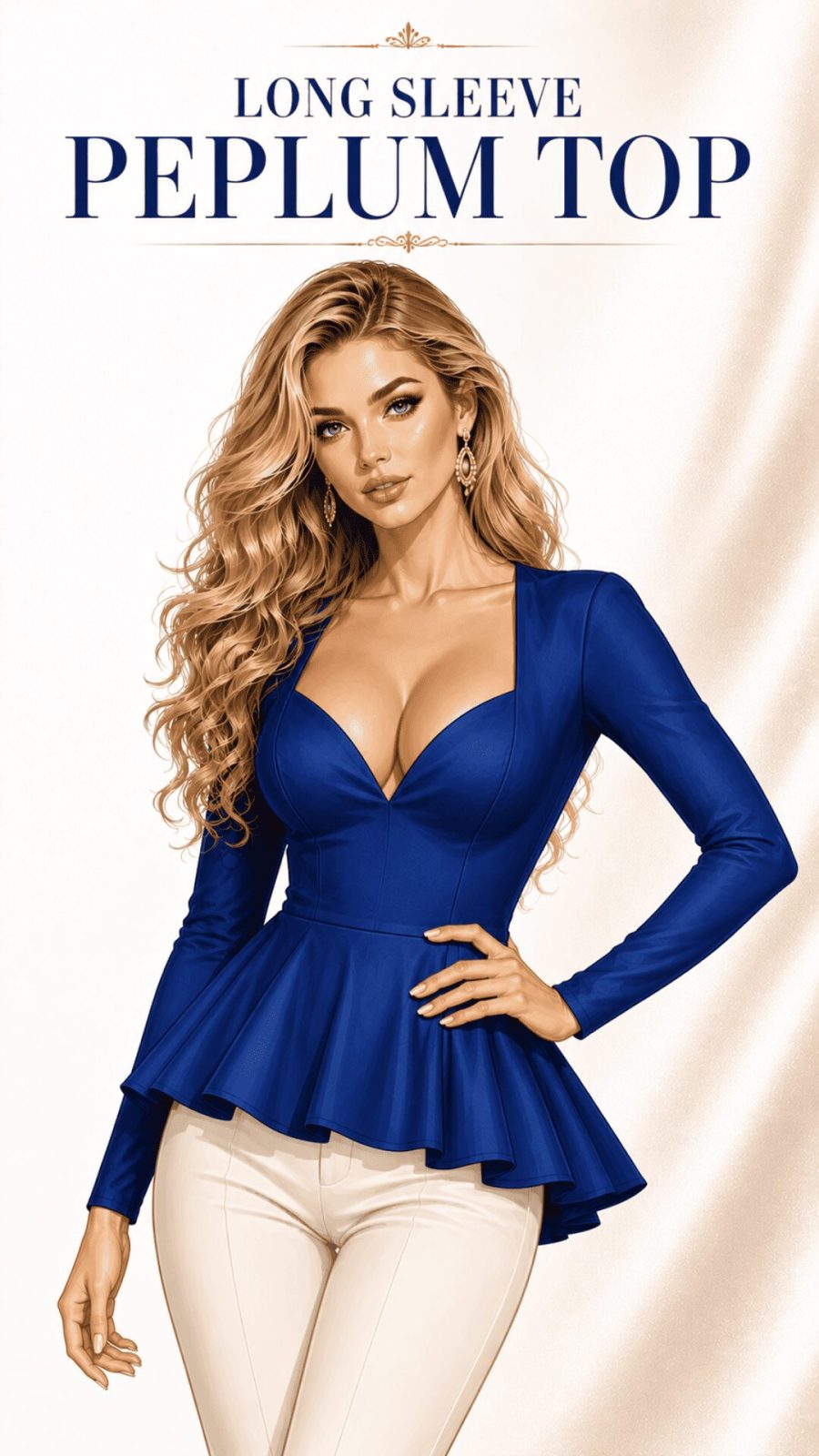
Long Sleeve Peplum Top
![Long Sleeve Peplum Top]()
Full-length sleeves extending to the wrist, set into the peplum's fitted bodice. In autumn and winter dressing, this is the most practical peplum format — the sleeve adds warmth while the fitted construction through the torso preserves the waist-defining effect. In crepe or knitted fabric, long-sleeve peplum tops stand alone as complete outerwear pieces. The sleeve finish matters: a plain hem reads as minimal, while a button cuff or slight flare at the wrist adds a tailoring detail that complements the waist flare below. Pairs naturally with tailored trousers in a full autumn look.


- 12
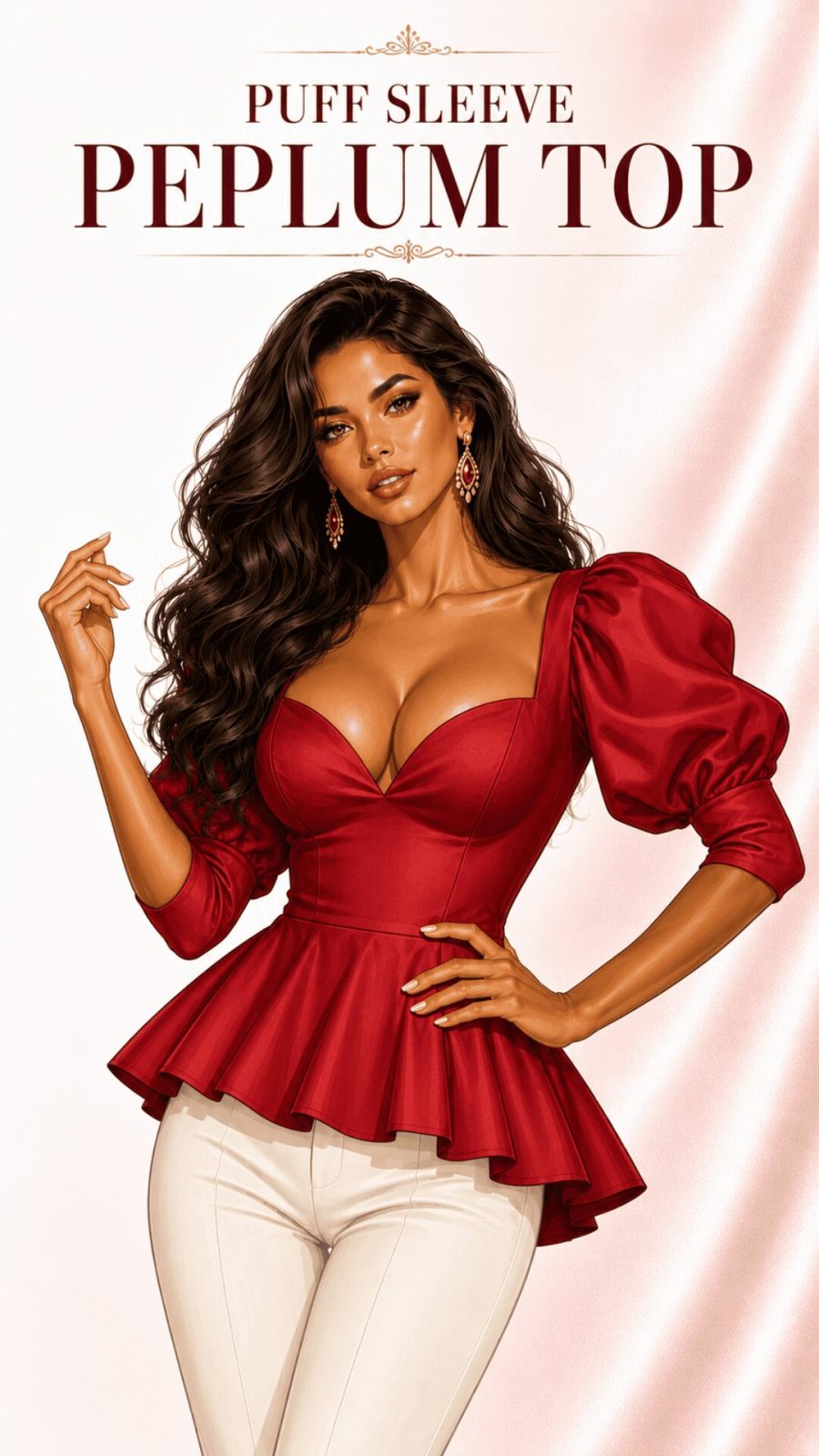
Puff Sleeve Peplum Top
![Puff Sleeve Peplum Top]()
A gathered or pleated sleeve head that creates volume at the shoulder before tapering back to a fitted or banded lower sleeve. The puff sleeve on a peplum top creates a specific proportion conversation: volume at the shoulder echoes the volume at the waist, with a neat fitted section connecting the two. This is deliberate tailoring psychology — two volume points with a fitted column between them. The proportion only works if the sleeve volume and the peplum flare are roughly equivalent in scale. Oversized puffs with a tiny peplum, or massive flare with a modest puff, creates visual imbalance.
- 13
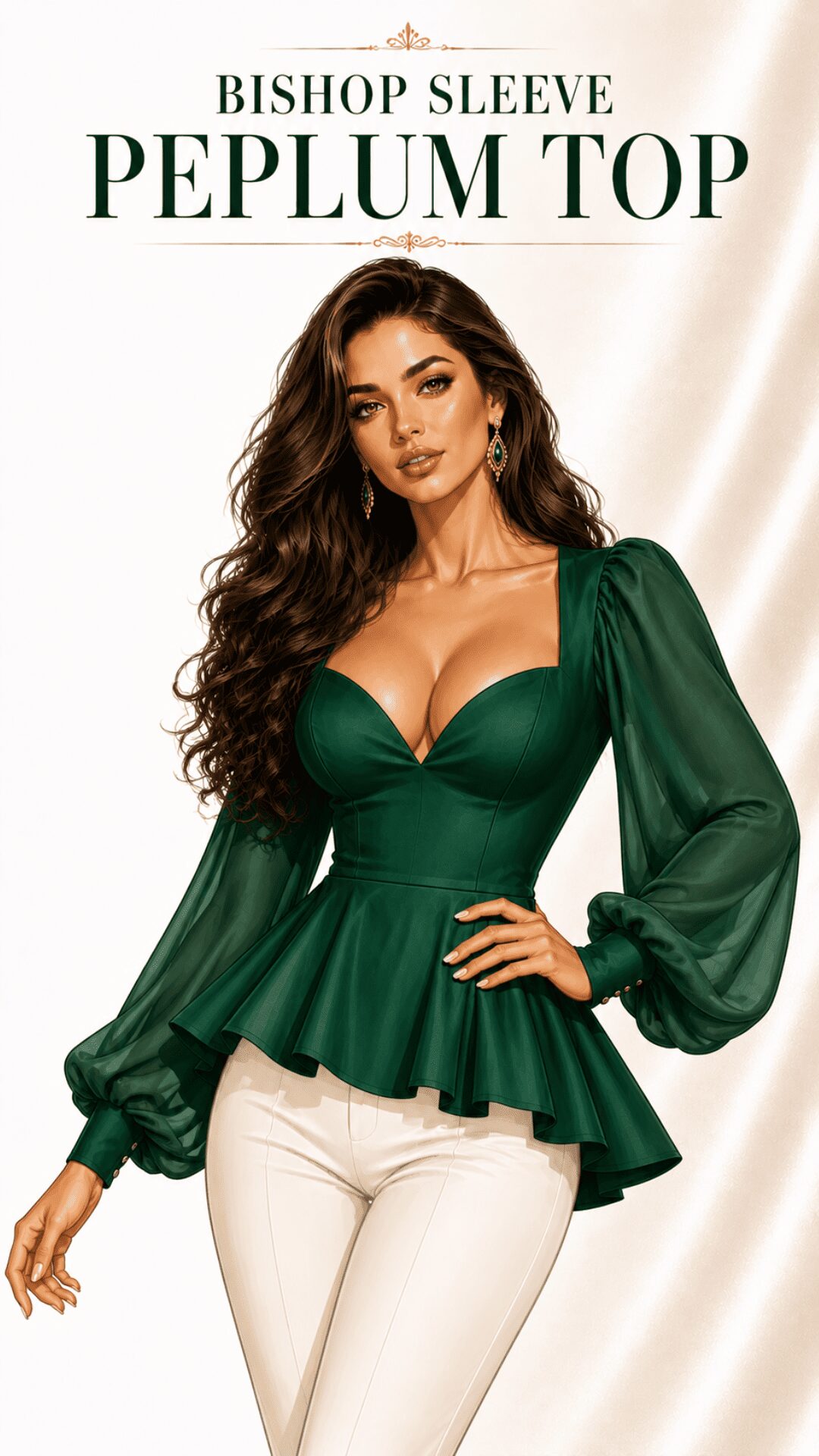
Bishop Sleeve Peplum Top
![Bishop Sleeve Peplum Top]()
A sleeve that is fitted at the shoulder, gradually widens into generous fullness through the lower arm, then is gathered back into a tight band or buttoned cuff at the wrist. The bishop sleeve has been used in high fashion since the mid-19th century. On a peplum top, it creates a very specific silhouette logic: volume high on the arm draws the eye upward; volume at the waist flare draws the eye outward. The result has a distinctive Edwardian formality — a sense of deliberate, studied construction. In chiffon or silk, the bishop sleeve peplum top is among the most refined versions of the silhouette.


Category 4: By Fabric (#14–#17)
How material choice determines whether a peplum floats, stands, sculpts, or drapes
- 14
Satin Peplum Blouse
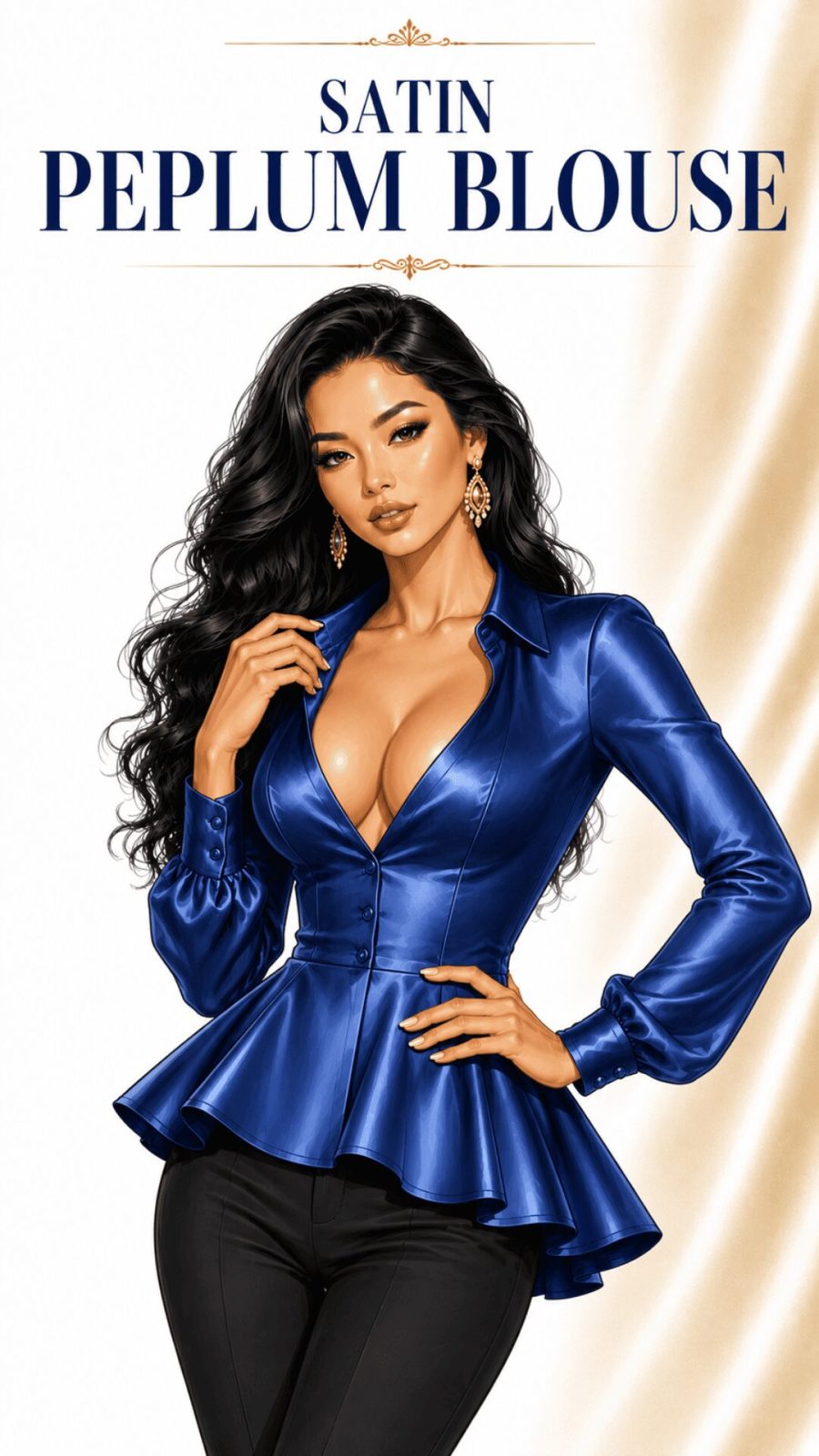
![Satin Peplum Blouse]()
Satin-weave fabric — either true silk satin or polyester-backed satin — used for the entire garment. The satin weave creates a surface with high light reflection: the bodice catches light on its flat panels, and the peplum flare creates moving shadow as it swings. This interplay of reflected light and shadow is what makes satin peplum tops so visually distinctive in eveningwear. Structurally, satin requires careful handling — it does not ease well into curved seams, so the peplum attachment typically uses a flat waist seam with a lining to cover the raw edge. The result reads as formal and luxurious.
- 15
Lace Peplum Top
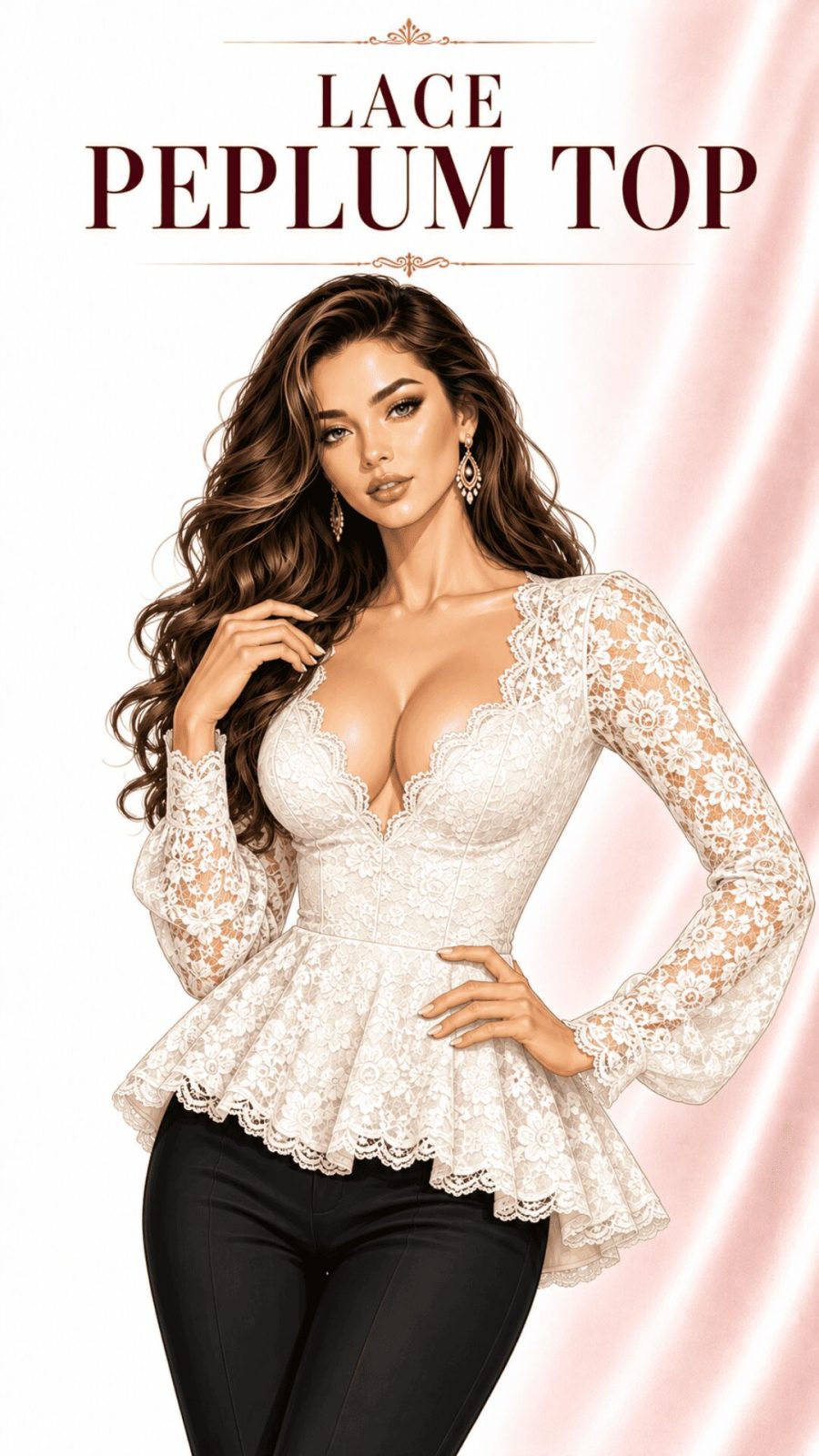
![Lace Peplum Top]()
Lace fabric — whether all-over, as a bodice overlay, or as a peplum-only detail — applied to the silhouette. Lace peplum tops occupy the most overtly romantic register of the category. The open, patterned textile adds visual texture that plain fabrics cannot — the flare of a lace peplum reads differently from every angle as light passes through the fabric's pattern gaps. Construction typically uses a solid-colour lining beneath the lace bodice for opacity control. A scalloped lace hem on the peplum edge, rather than a straight cut, is a construction detail that reads as especially refined. Works for bridal and occasion dressing of all kinds.


- 16
Knit Peplum Top
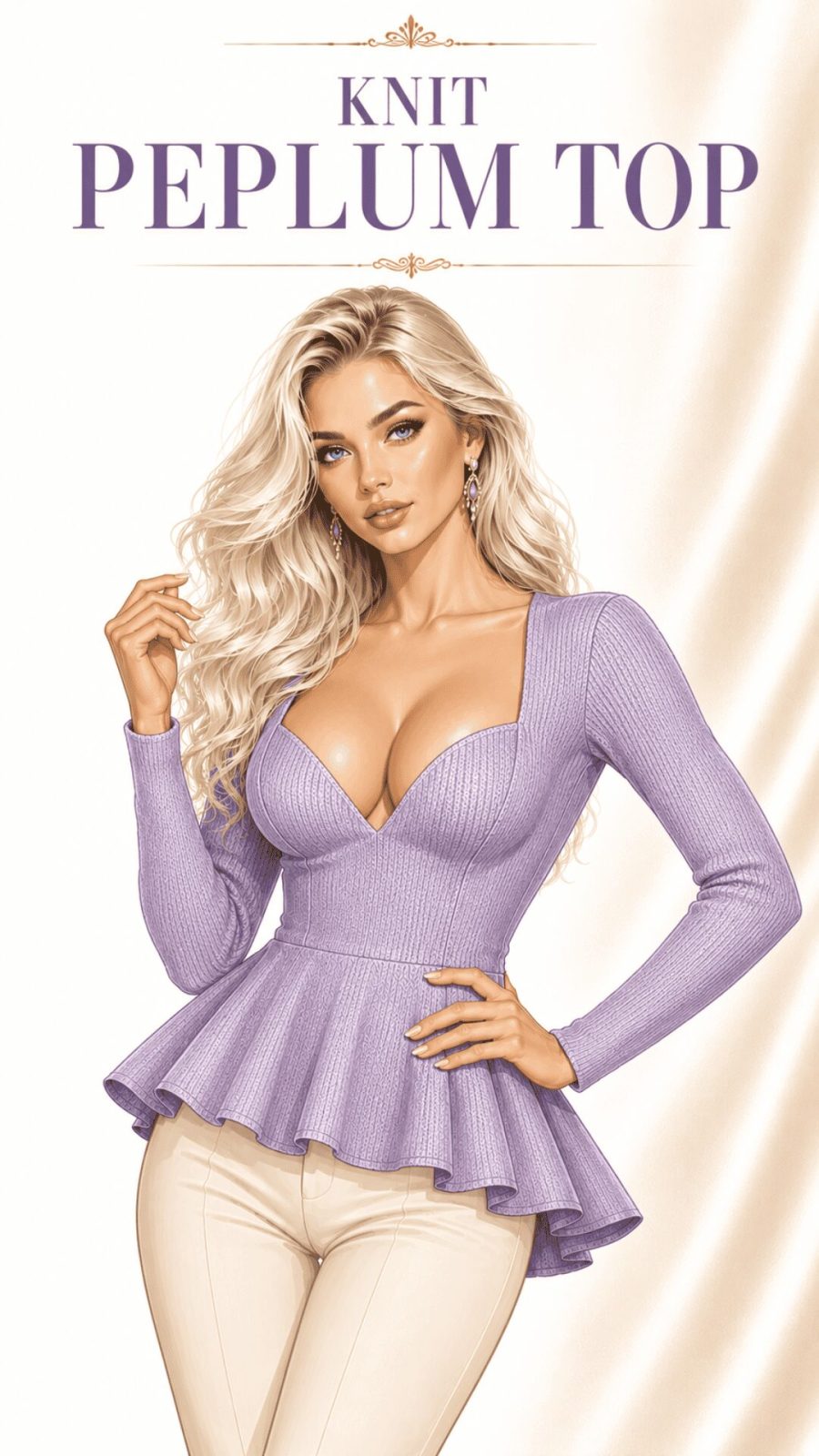
![Knit Peplum Top]()
A peplum constructed from jersey, ribbed, or fine-gauge knit fabric throughout. Unlike woven-fabric peplum tops, the knit version has inherent stretch, which changes how the flare behaves: it does not stand away from the body as crisply as a woven peplum, but instead hugs slightly as it flares, creating a more body-conscious silhouette. Ribbed knit in particular creates visible vertical texture that emphasizes the waist seam and makes the flare-to-bodice transition very clear. A knit peplum top is genuinely wearable for everyday occasions — it does not demand the same dressing-up commitment as a woven or satin version.
- 17
Denim Peplum Shirt
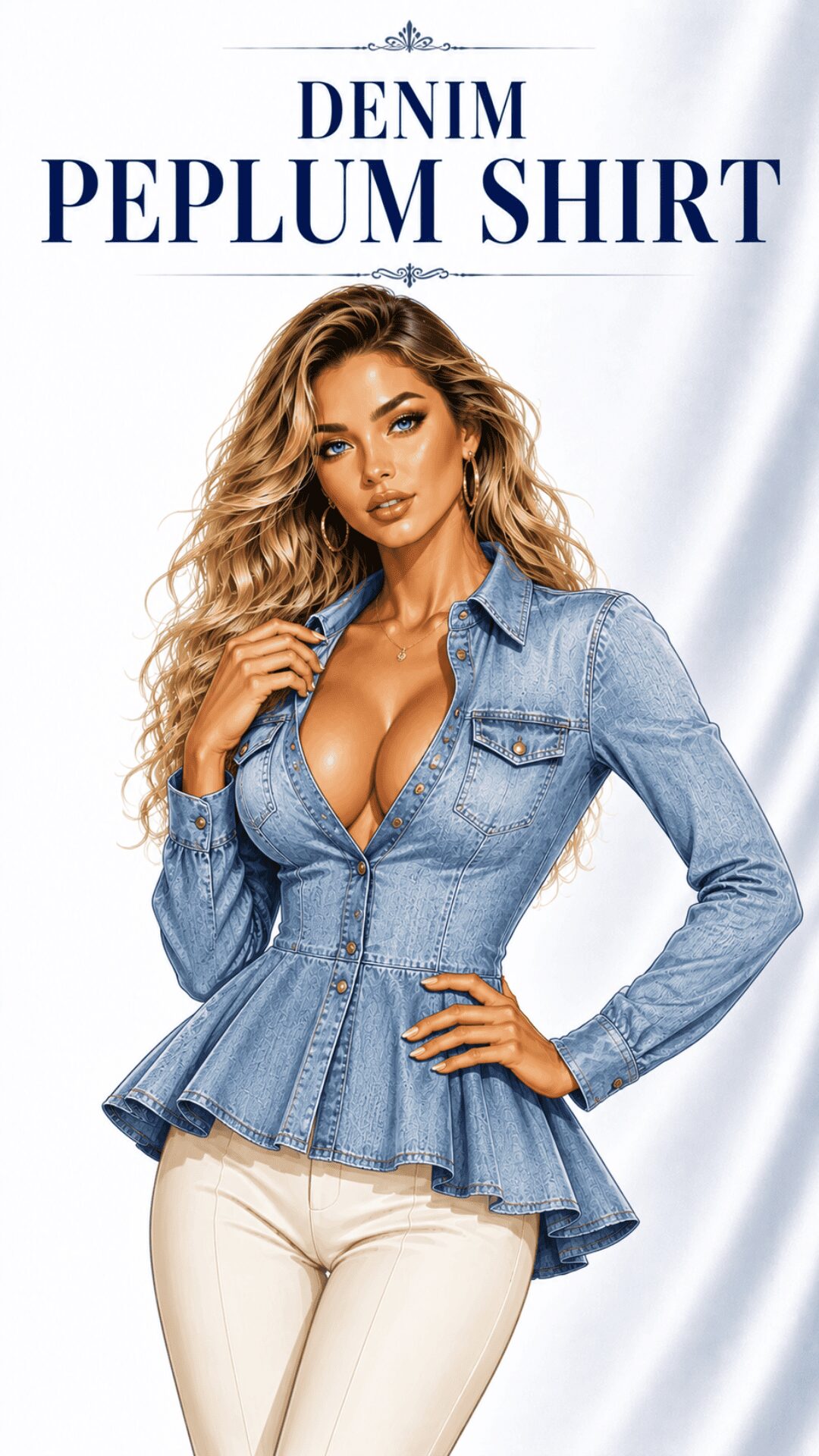
![Denim Peplum Shirt]()
A denim chambray or rigid denim shirt with a peplum cut at the waist rather than a standard straight hem. This is an unusual material for the silhouette precisely because denim's inherent stiffness produces a flare that stands rather than floats — giving even a casual garment a notable architectural quality. Denim peplum shirts typically feature a button placket, chest pockets, and a collar, making the peplum the defining design detail in an otherwise conventional shirt format. The result sits between casual and elevated: too structured for truly casual wear, too relaxed for a formal setting. A strong choice for smart-casual dressing.


Category 5: By Occasion (#18–#20)
Peplum tops designed and styled specifically around context — from the boardroom to the evening event
Occasion is not simply a style preference — it shapes every construction decision. An officewear peplum has a different dart placement, fabric weight, sleeve length, and neckline than an evening version of the same silhouette. Understanding which version you're actually looking at helps with both shopping decisions and styling. These three types represent the three main registers peplum tops occupy in a woman's wardrobe.
- 18
Officewear Peplum Blouse
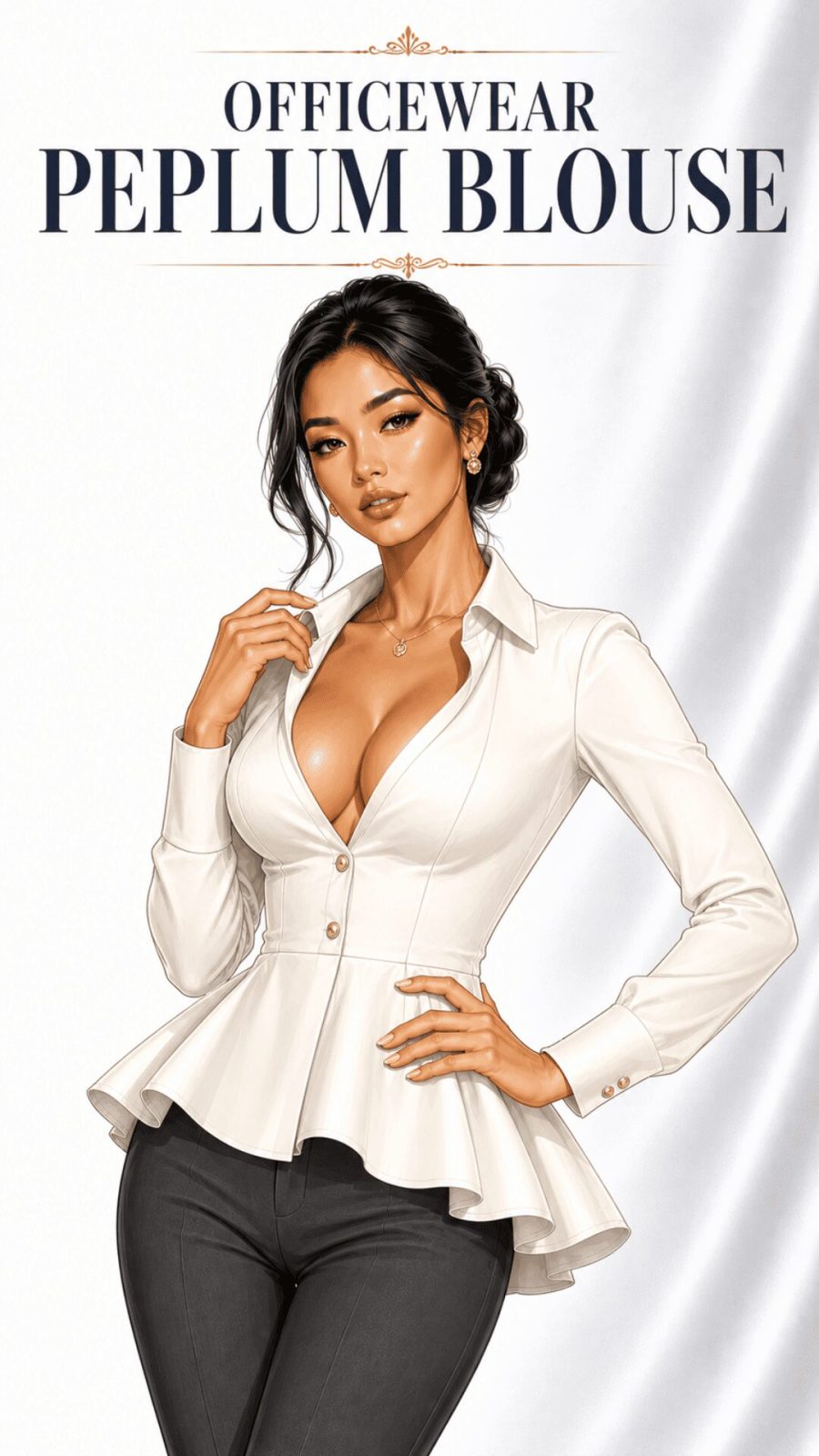
![Officewear Peplum Blouse]()
Designed from the first dart for professional environments. The officewear peplum blouse sits at the intersection of structured tailoring and feminine detail — it carries the peplum silhouette's waist definition but channels it through fabrics and construction that read as polished rather than decorative. Ponte, crepe, or matte woven fabric is standard. The neckline is typically conservative: a V, a modest square, or a crew. Sleeves are usually either short and fitted or long with a plain cuff. The peplum flare is measured — enough to create visual interest below the waist without disrupting the authority of a professional silhouette. Sits well over tailored work trousers or a fitted pencil skirt.
- 19
Evening Peplum Top
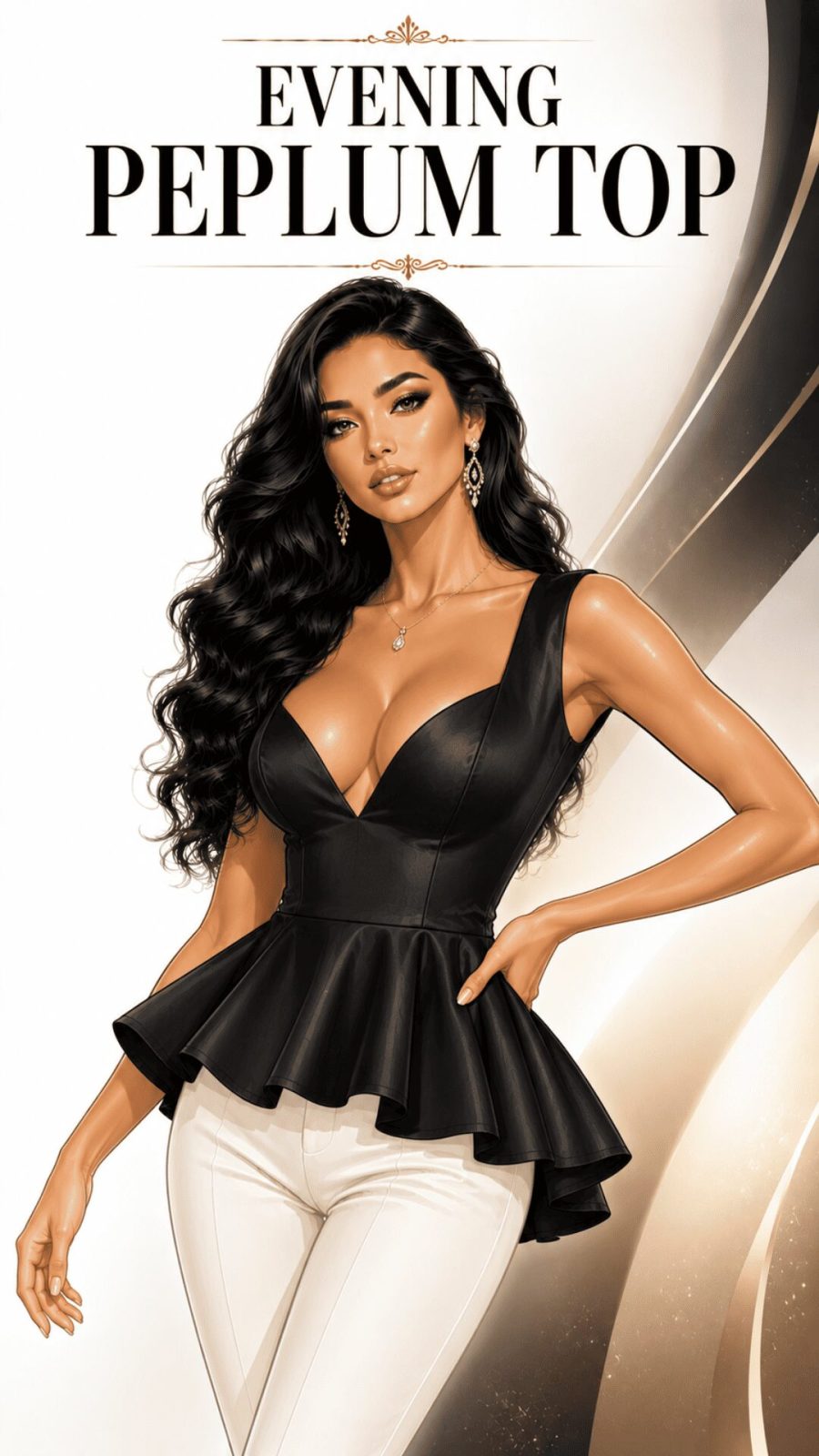
![Evening Peplum Top]()
Built for formal evening wear: fabric is typically satin, velvet, sequined chiffon, or heavily embellished. The construction prioritises visual impact — the peplum flare is often more dramatic than daywear versions, the neckline deeper or more elaborate, and the bodice more fitted through darting or boning. Evening peplum tops are frequently worn as a top half paired with a wide-leg trouser, sequined midi skirt, or tailored evening shorts rather than as part of a dress — giving the wearer more proportion control. According to Vogue's trend coverage, peplum tops paired with high-waisted eveningwear bottoms remain a recurring red carpet and fashion week solution.


- 20
Smocked Peplum Top
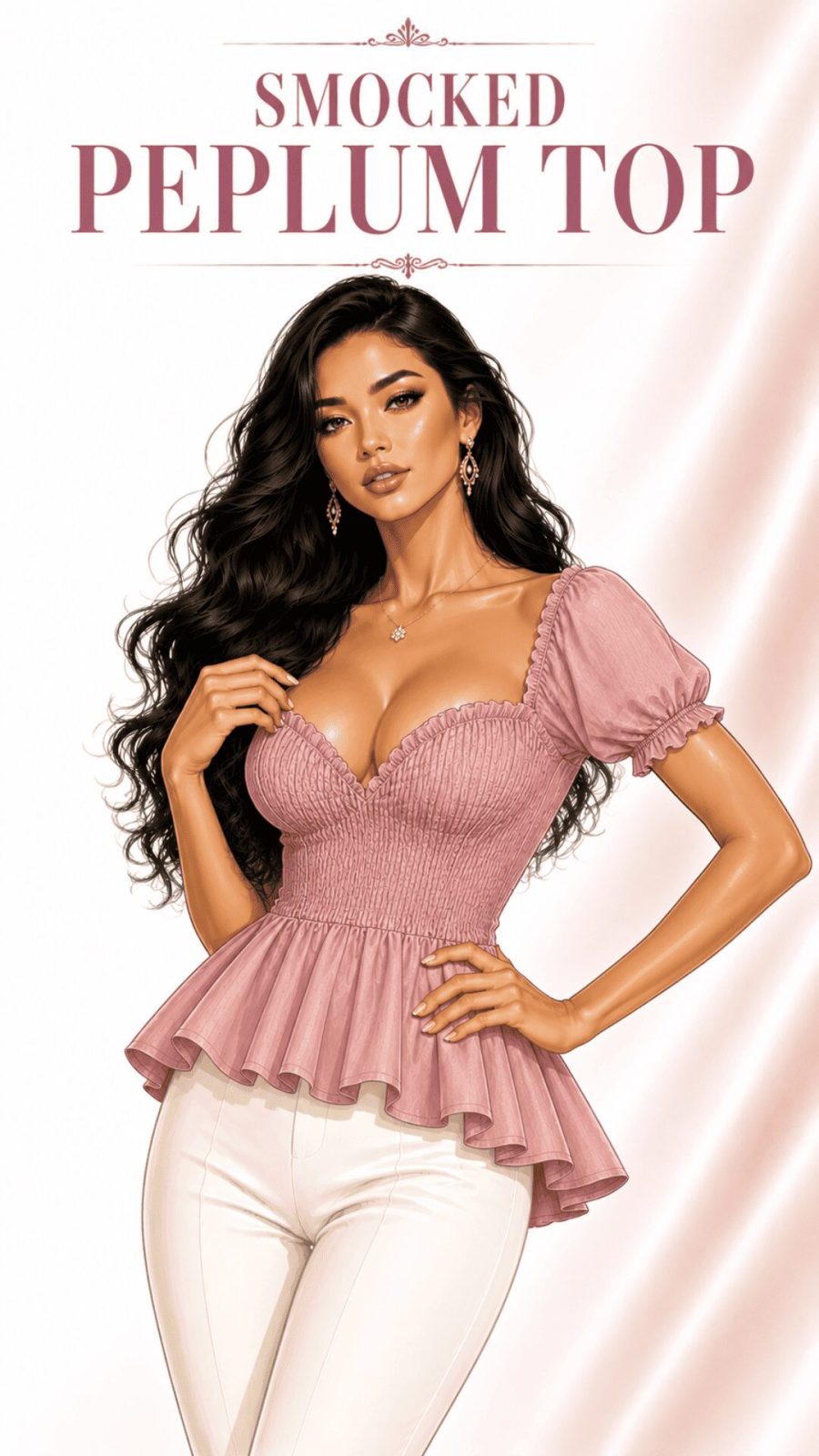
![Smocked Peplum Top]()
Smocking — rows of gathered fabric stitched into a decorative elastic pattern — applied at the bodice, the waist seam, or occasionally across the peplum itself. The smocking serves both a functional and aesthetic purpose: it creates a self-cinching fit that eliminates the need for darts or fitted seaming in the bodice, while the gathered texture adds a handcrafted visual detail. When the smocking is at the waist seam, it acts as a natural division between bodice and peplum flare — the gathered rows narrow the waist and the flare below reads as a direct counterpoint. A casual-to-smart silhouette popular in resort and warm-weather dressing.

Category 6: By Silhouette Shape (#21–#23)
The overall visual shape created by the combination of bodice fit and peplum flare volume
- 21
Wrap Peplum Top
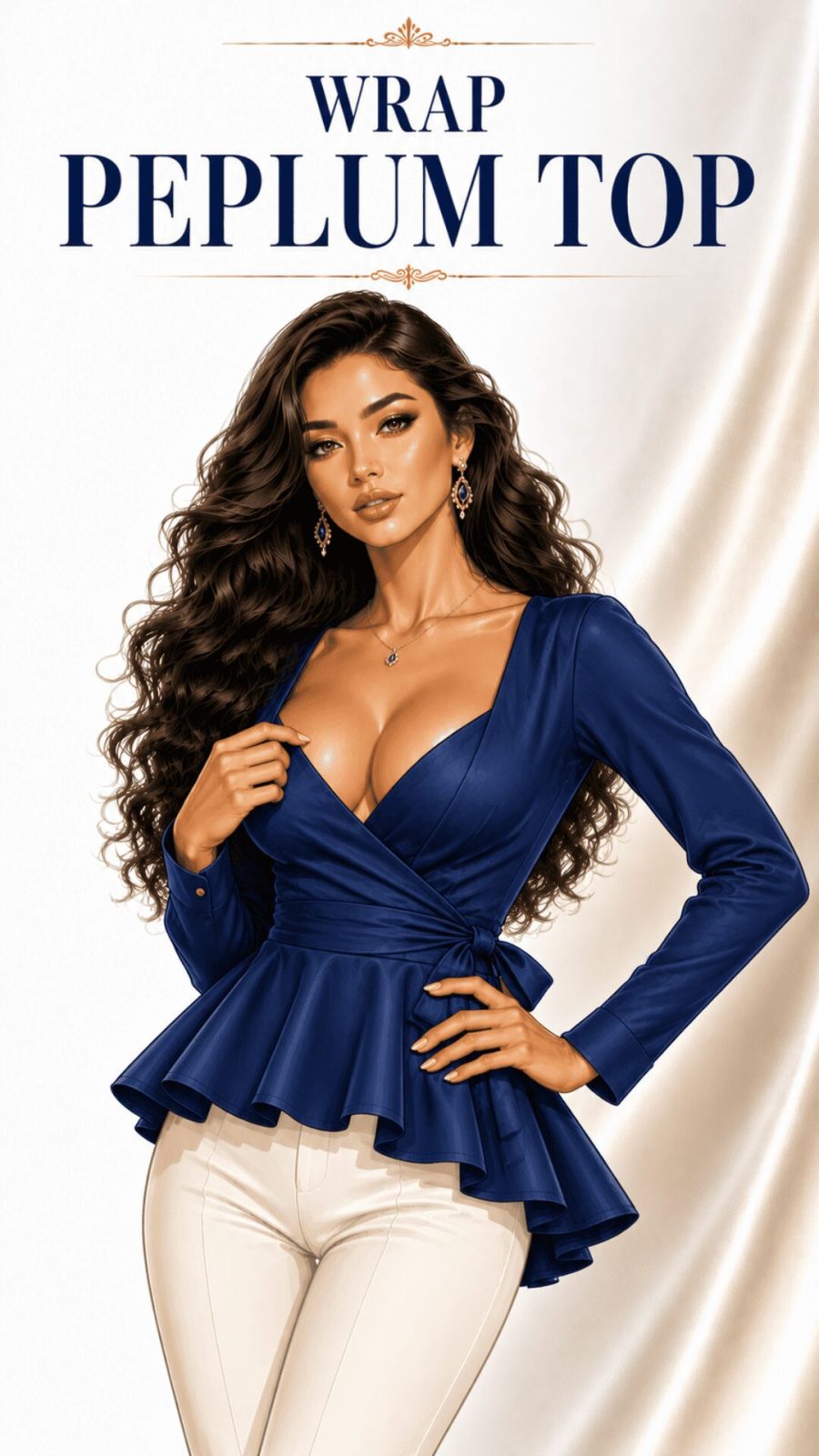
![Wrap Peplum Top]()
The bodice wraps across the front — one side crossing over the other and fastening at the side or back — with the peplum cut from the wrap's natural waist point. Diane von Furstenberg's influence on the wrap silhouette is direct: the adjustable, self-tying construction that she made iconic in the 1970s translated seamlessly into standalone tops. The wrap peplum allows waist adjustment independent of the peplum placement, which means the flare begins at exactly where the fabric cinches rather than at a sewn seam. It creates a continuous diagonal visual line from neckline to waist that is particularly graceful. See our full guide to wrap tops for related silhouettes.
- 22
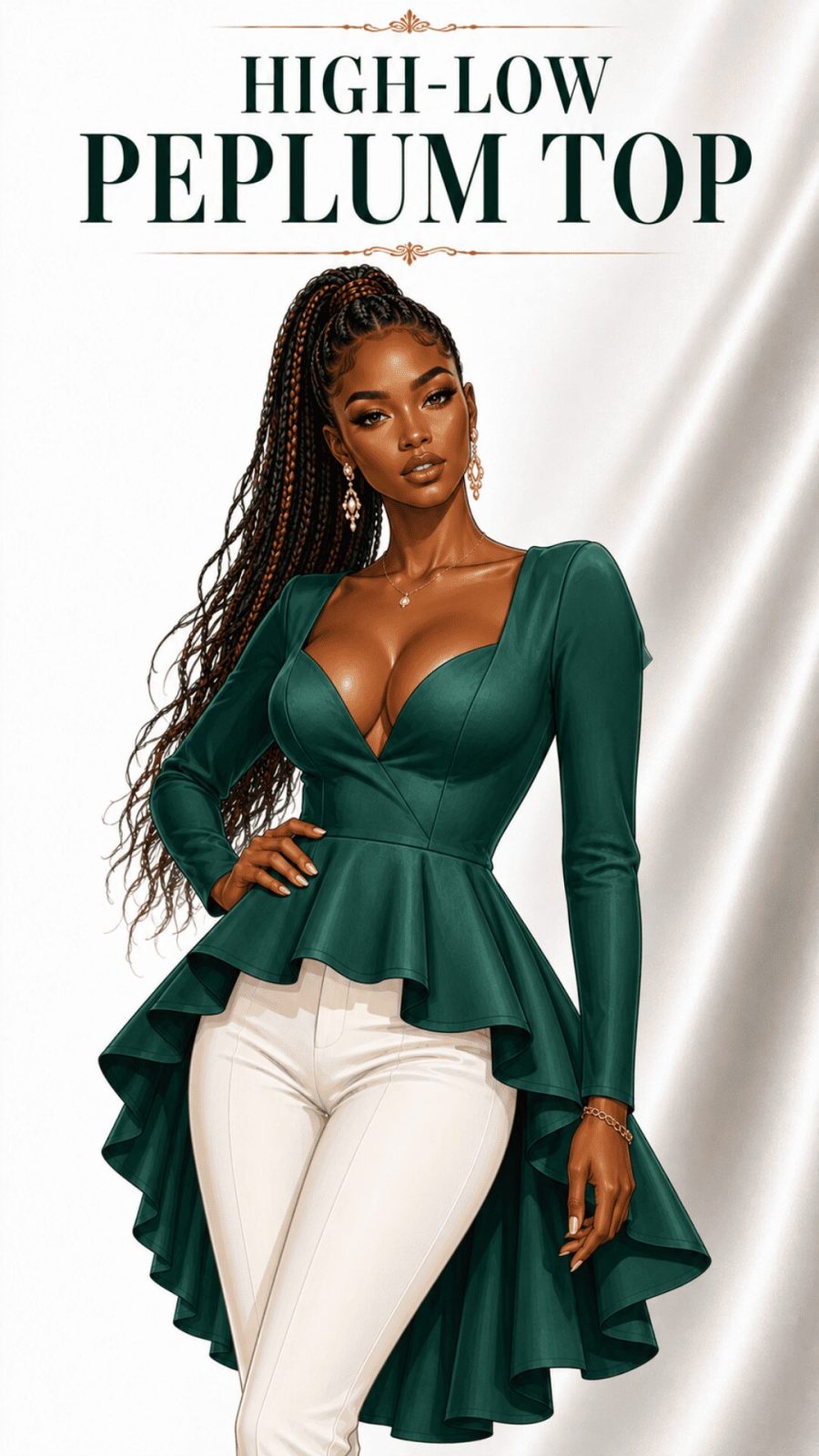
High-Low Peplum Top
![High-Low Peplum Top]()
A peplum hemline that is noticeably shorter at the front than at the back — the front hem may sit just below the waist, while the back hem extends to the hip or below. The high-low construction creates movement from the back: as the wearer walks, the longer rear hemline swings. It also adds a layered visual quality that a standard 360-degree peplum does not have. The silhouette was particularly prevalent in contemporary fashion between 2010 and 2016 and has returned in more refined, editorial versions since. A dramatic choice for occasions where movement and visual interest from behind matter as much as the front silhouette.


- 23
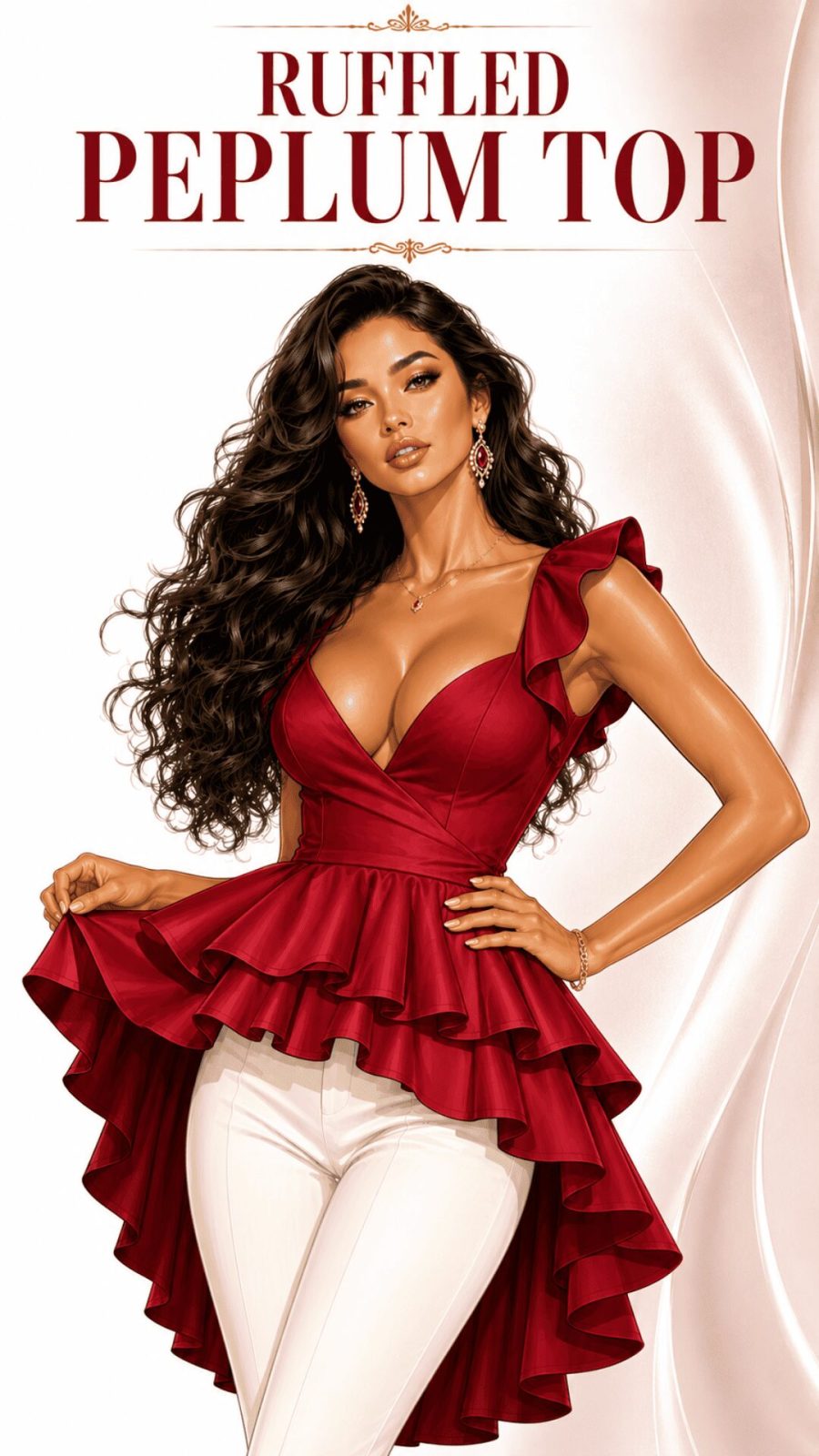
Ruffled Peplum Top
![Ruffled Peplum Top]()
The peplum flare is constructed with gathered or pleated fabric at the attachment seam, creating a ruffled edge rather than a smooth, flat-sewn one. The ruffle adds vertical surface texture along the waist line and produces more volume from less fabric than a plain circular peplum would. In lightweight chiffon, the ruffled peplum creates a delicate, almost cloud-like effect at the waist. In satin, the gathered seam catches light differently on each fold. The key construction distinction is that a ruffled peplum is attached with controlled gather, not with a smooth flat seam — this changes how the flare behaves under movement and how it photographs.

Category 7: By Fashion Influence (#24–#25)
Peplum tops shaped by a specific historical or cultural fashion lineage
- 24
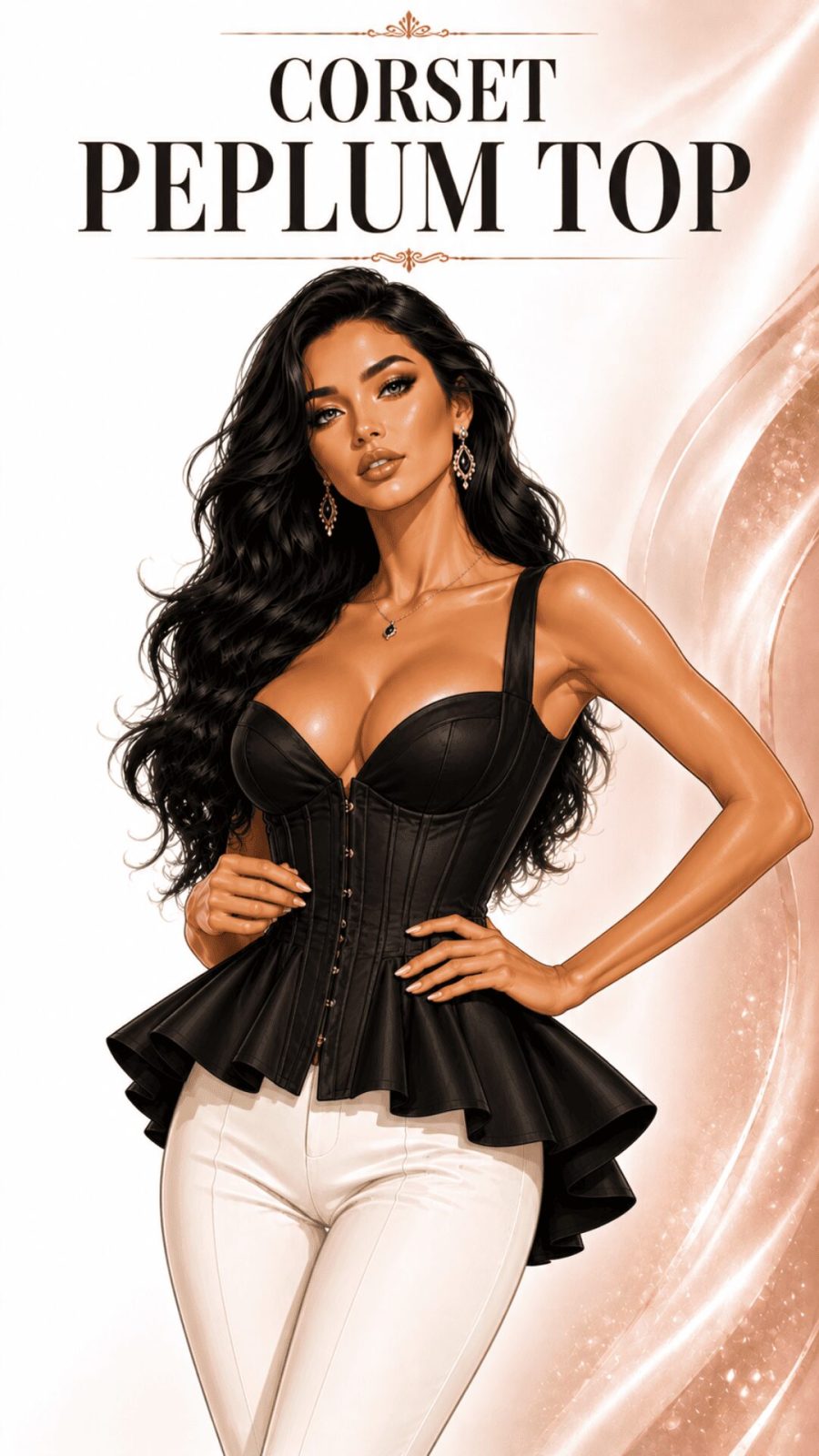
Corset Peplum Top
![Corset Peplum Top]()
A bodice constructed with boning channels — usually 6 to 12 bones — that give the bodice structural rigidity from bust to waist, with the peplum flare attached below the boning line. The corset reference is direct: this is the Victorian basque bodice logic updated for contemporary dressing. The boning creates a defined waist seam that holds its shape independently of the wearer's posture, and the peplum below reads as the flared skirt section of the original basque. Modern corset peplum tops for fashion wear typically use flexible plastic or spiral steel boning rather than traditional whalebone — same structural principle, lighter execution. Seen on runways from Vivienne Westwood to Balmain.
- 25
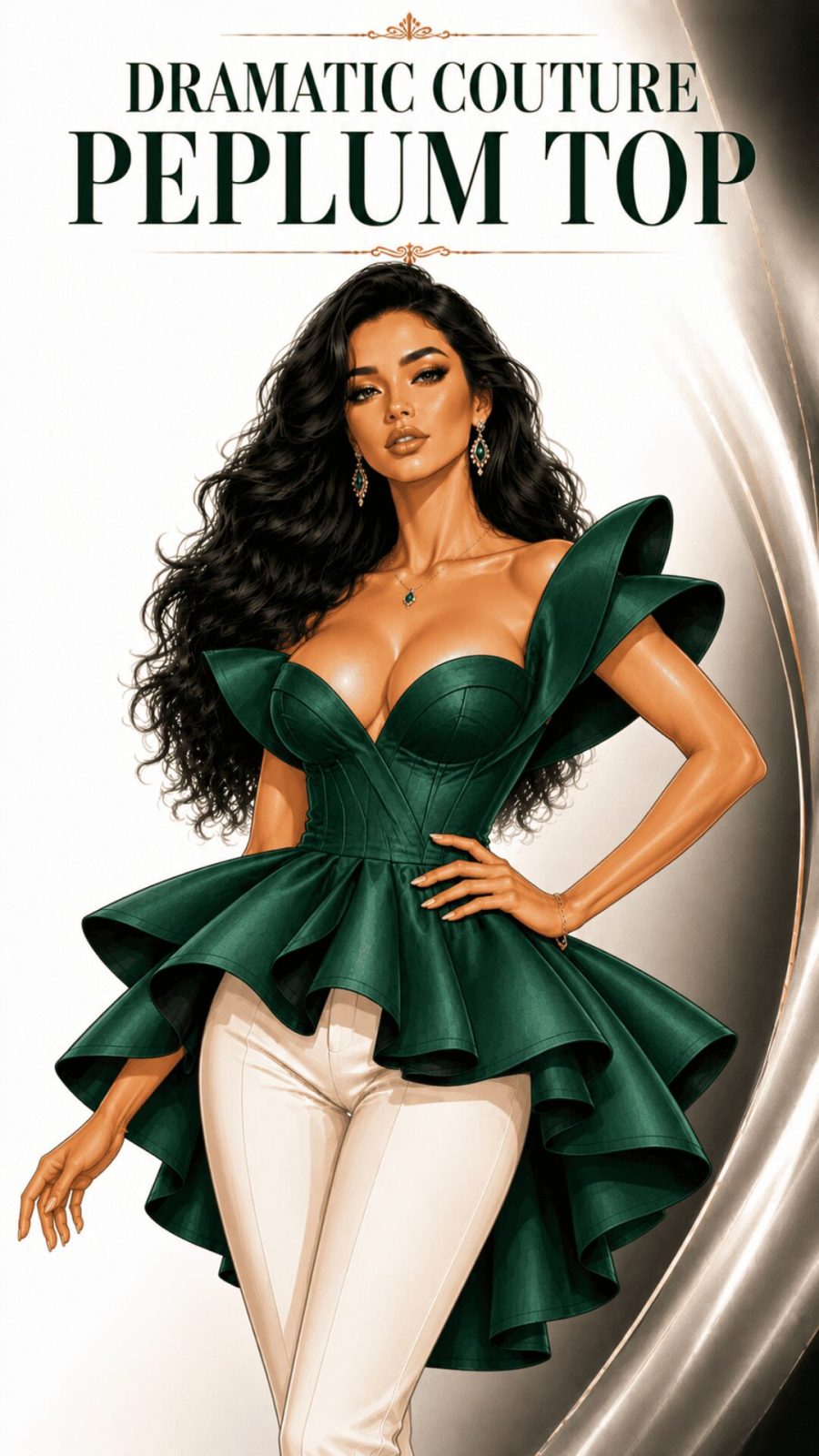
Dramatic Couture Peplum Top
![Dramatic Couture Peplum Top]()
A runway-scale interpretation: the peplum flare is extreme in volume — sometimes extending 10 to 15 centimetres or more from the waist seam — and often constructed using internal structure (horsehair braid, stiff interfacing, or a petticoat-style layer) to maintain its volume without fabric weight. Couture peplum tops are where the silhouette becomes truly sculptural. Balenciaga's mid-century work with exaggerated peplum jackets and Dior's 1950s hourglass constructions are the direct design lineage. Contemporary couture houses including Alexander McQueen and Valentino have revisited the extreme peplum in recent collections, typically pairing ultra-fitted bodices with flares wide enough to read as structural garment architecture rather than simple fashion detail.


Category 8: By Tailoring Style (#26–#27)
How the level of tailoring detail and finish defines the garment's register and wearing context
- 26
Minimalist Modern Peplum
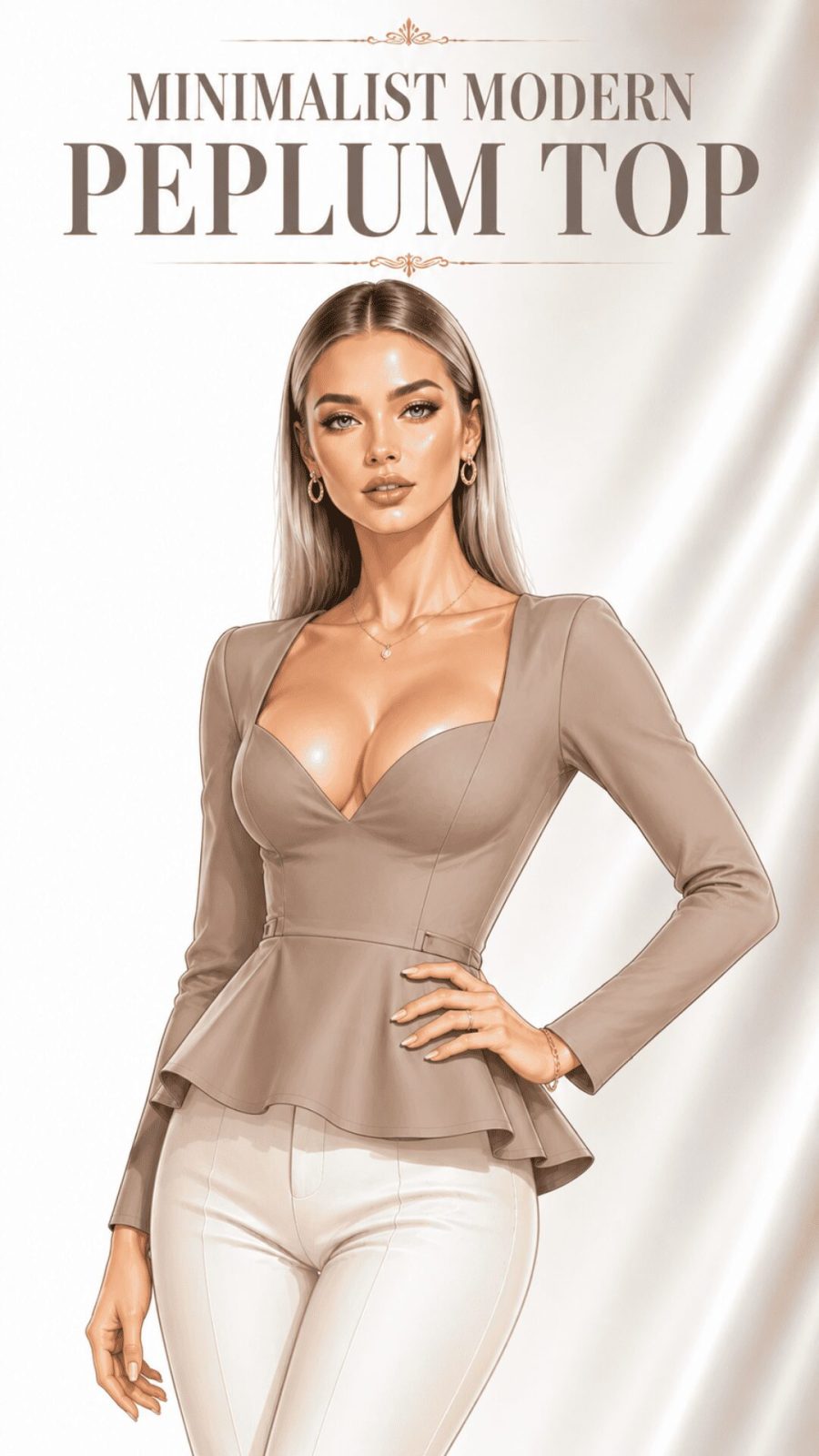
![Minimalist Modern Peplum Top]()
No decoration, no embellishment, no structural drama — just the peplum silhouette reduced to its cleanest possible version. A plain crew neck, no visible seam detailing, a measured flare that adds shape without announcement, and fabric in a single solid neutral. The minimalist modern peplum is the version that works best in capsule wardrobes because it reads as architectural rather than decorative. The tailoring craft here is in the precision of the invisible dart work that creates fit without visible structure. This version has been particularly influential in Korean-inspired fashion, where clean silhouette construction and careful proportion work characterise contemporary Korean womenswear.
- 27
Belted Peplum Blouse
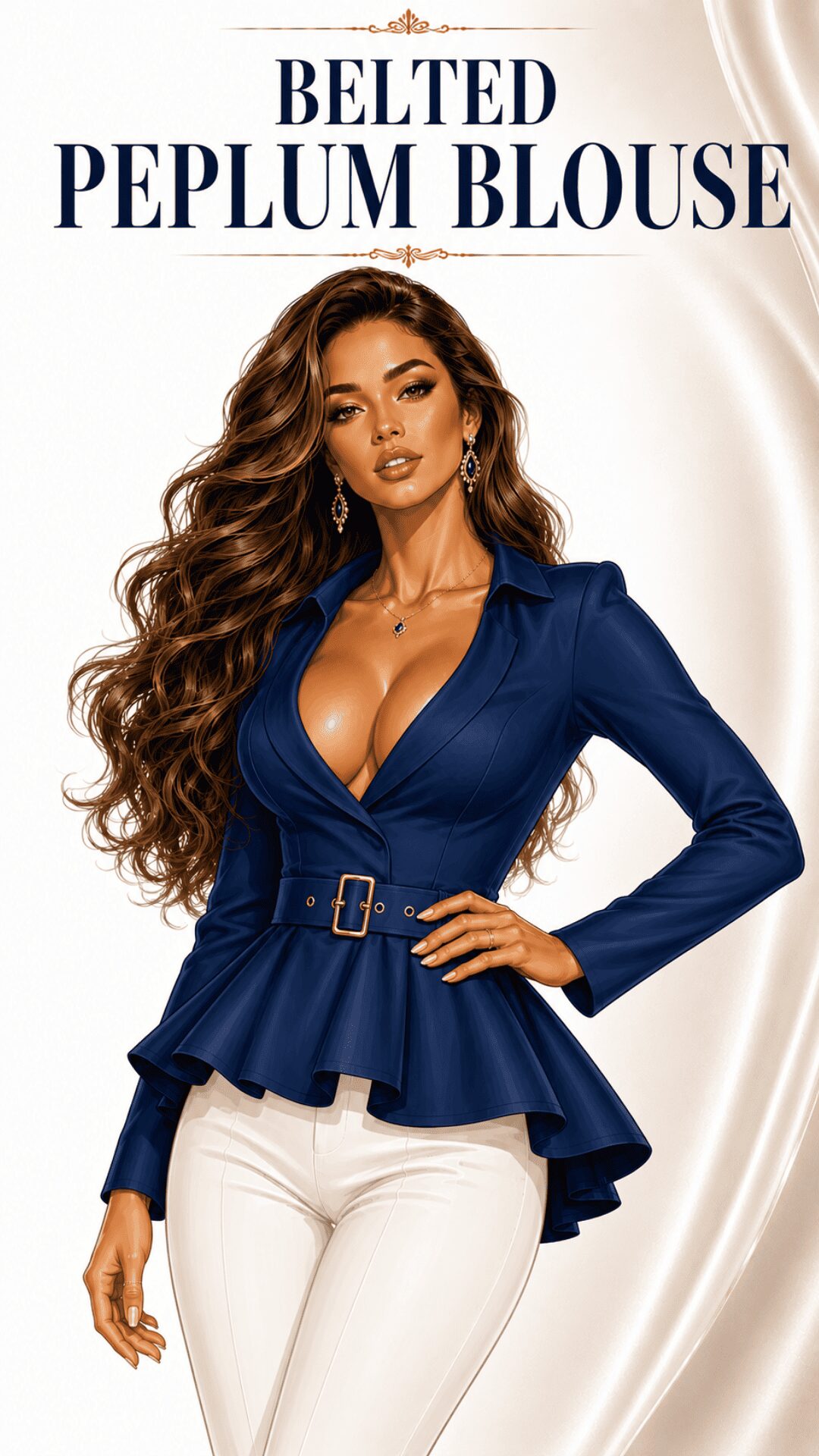
![Belted Peplum Blouse]()
A peplum blouse with a built-in or detachable belt that sits at or just above the natural waist, creating a defined waist point distinct from the peplum's seam placement. The belt adds a secondary waist marker — one from construction (the peplum seam), one from hardware or fabric (the belt). This doubling of waist definition creates a very precise silhouette signal. The belt also allows the wearer to adjust the visual waist point slightly, which changes how the peplum reads below. When the belt sits just above the seam, the peplum flare appears to spring from a higher point, creating the impression of a longer torso. A staple in contemporary office blouse dressing.


Peplum Top Comparison Tables
Structured vs Soft Peplum
| Feature | Structured Peplum | Soft Flare Peplum |
|---|---|---|
| Fabric | Ponte, crepe, brocade | Chiffon, georgette, silk |
| Interior | Interfacing or boning | Unlined or lightly lined |
| Flare behaviour | Stands away from body | Falls and floats with movement |
| Best occasion | Office, formal, professional | Brunch, casual, warm-weather |
| Season | Autumn / Winter | Spring / Summer |
Peplum Tops by Occasion
| Occasion | Best Peplum Type | Fabric Recommendation |
|---|---|---|
| Office / Boardroom | Structured Blouse, Belted Peplum | Ponte, crepe, matte woven |
| Cocktail / Evening | Satin Peplum, Corset Peplum | Satin, velvet, embellished |
| Wedding Guest | Lace Peplum, Sweetheart Peplum | Lace, silk, chiffon |
| Brunch / Casual | Knit Peplum, Smocked Peplum | Jersey, cotton, linen |
| Fashion-Led / Party | Asymmetrical, Couture, High-Low | Structured or embellished |
Seasonal Peplum Styling Guide
| Season | Peplum Type | Styling Tip |
|---|---|---|
| Spring | Soft Flare, Smocked, Wrap | Pair with wide-leg linen trousers |
| Summer | Sleeveless, Off-Shoulder, Denim | Wear with tailored shorts or mini skirt |
| Autumn | Long Sleeve, Knit, Structured Blouse | Layer over fitted turtleneck |
| Winter | Satin Evening, Corset, Bishop Sleeve | Wear to formal events with wide-leg trousers |
What is a peplum top?
A peplum top is a garment with a fitted bodice and a flared extension — the peplum — sewn at or just below the natural waist. The flare creates visual waist definition and adds structure below the waist seam. Peplum tops come in woven and knit constructions, across every neckline and sleeve style.
Are peplum tops still in style?
Yes. The peplum silhouette has appeared on recent runways from Valentino, Zimmermann, and Balmain. The minimalist version in particular has become a capsule wardrobe staple. Fashion cycles have refined the silhouette — contemporary peplum tops tend to have a more measured flare than the overtly dramatic versions of the early 2010s.
Why do peplum tops create waist definition?
The fitted bodice contracts toward the waist seam, and the flare expands below it. This contrast — narrow above the seam, wider below — draws the eye to the waist transition point. The construction creates visual waist definition through proportion contrast, not physical compression. A well-placed waist seam with good dart work does the same work as cinching, without any pressure on the body.
What bottoms pair best with peplum tops?
High-waisted bottoms in particular — tailored trousers, wide-leg trousers, pencil skirts, or midi skirts — work well because they meet the peplum flare cleanly at the hip rather than bunching under it. Straight-leg jeans at the natural waist also pair well with casual peplum styles. Avoid low-rise bottoms, which create a gap between the peplum hem and the trouser waistband.
What is the difference between a peplum top and a peplum blouse?
The terms are often used interchangeably. Technically, a blouse implies a looser, more fluid bodice construction in a woven fabric — often with feminine detailing. A peplum top can refer to any garment with the silhouette, including knit, structured, or casual versions. In practice, "peplum blouse" tends to signal a dressier, office-oriented garment.
How do you style a peplum top for the office?
Choose a structured peplum in ponte or crepe, in a neutral colour. Pair with straight-leg or wide-leg tailored trousers at the natural waist, or with a fitted pencil skirt. Keep the neckline modest — V-neck or crew — and the sleeve either short-fitted or long. Avoid embellishment, deep necklines, and fabrics with significant sheen for daytime office dressing.
Where does the word "peplum" come from?
The word derives from the Latin "peplum" and the Ancient Greek "peplos" — a type of draped outer garment worn in ancient Greece, typically fastened at the shoulder and falling loose from the waist. The term entered English fashion vocabulary in the 19th century to describe the short, flared extension on a jacket or bodice, which remains its primary meaning today.
Can you tuck a peplum top in?
No — tucking a peplum top removes the defining design feature entirely. The peplum flare is meant to sit outside the waistband of whatever bottom you're wearing. Wear the peplum over high-waisted bottoms so the flare rests against the hip line cleanly, rather than bunching or floating above a dropped waistband.
Final Thoughts on Peplum Tops
The peplum top endures because its underlying logic is sound. A fitted bodice. A waist seam. A flared extension that creates visual structure below. That construction has held for more than 170 years of fashion — from Victorian basque bodices to Dior's New Look to contemporary runway tailoring — because the proportion it creates is genuinely flattering in a way that requires no tricks and asks nothing from the wearer except the willingness to wear it well.
Twenty-seven types — from a minimalist knit with barely-there flare to a couture-scale structured panel with architectural volume — all trace back to that same seam. The sophistication of the category is in how much variation a single construction principle can carry. A satin peplum for a gala and a smocked cotton peplum for a Sunday brunch share the same silhouette logic and nothing else. That range is what keeps the peplum relevant across decades. It does not belong to one occasion, one season, or one aesthetic. It belongs to proportion — and proportion does not date.
Key Takeaways
- A peplum top is defined by one construction principle — a fitted bodice attached to a flared extension at the natural waist seam.
- The flare can be circular-cut, gathered, ruffled, asymmetrical, layered, or structured — each produces a different silhouette quality.
- Fabric weight determines behaviour — structured fabrics hold shape while chiffon, georgette, and knits create softer movement.
- Neckline choice changes the visual register — sweetheart reads romantic, V-neck elongates, square necklines feel more modern.
- Sleeve choice changes proportion and occasion — puff sleeves balance the flare while long sleeves add seasonality and formality.
- High-waisted bottoms pair best because they meet the peplum hem cleanly at the hip.
- Never tuck a peplum top — the flare is the defining feature of the silhouette.
- The minimalist neutral peplum is the most versatile version for capsule wardrobes and repeated styling.
- The corset and couture peplum reference Victorian basque construction directly — the historical lineage is visible in the garment architecture.
- The peplum works across occasions because it is a silhouette, not a fixed style — fabric, sleeve, and neckline determine the final mood.


Leave a Reply