

There’s a reason certain mini dresses feel like a declaration the moment you put them on. Not just short — confident. The kind of garment that changes your posture before you even leave the room. That feeling isn’t coincidental. It’s the result of cut, silhouette, hemline, neckline, and construction logic converging into something that fits not just the body, but the mood you’re walking into.
The mini dress is the most intentional garment in a woman’s wardrobe. Every inch of hemline placement is a decision.
The mini dress as a category was first codified in the mid-1960s when Mary Quant established the hemline as a deliberate act of liberation, cutting skirts to the mid-thigh at a moment when fashion was rewriting its entire relationship to the female body. André Courrèges approached the same idea from a space-age architecture angle — geometric, structural, precise. Two entirely different philosophies, same hemline. That duality has defined the mini dress ever since: it can be playful or architectural, flirtatious or severe, bodycon or floaty, depending entirely on cut and construction. Today, mini dresses span every dress silhouette category — from the body-sculpting bodycon to the breezy smocked sundress — unified only by one shared measurement: hem ending above the mid-thigh.
This guide documents 55+ types of mini dresses across 7 classification systems. For every single entry:
-
Design
What it looks like
-
Season
When to wear it
-
Best For
Who it works for
Start here, explore everything, and browse our full visual dress reference alongside it.
All 7 Categories at a Glance
A structured breakdown of the 55+ types documented in this guide.
- 01
By Structure / Construction
- 02
By Neckline
- 03
By Sleeve Style
- 04
By Fabric / Material
- 05
By Occasion / Purpose
- 06
By Design Details & Embellishments
- 07
By Fit / Silhouette
55+ Different Types of Mini Dresses for Women
Category 1: By Structure / Construction (#1–#14)
How the garment is cut, built, and held together — the foundational identity of each mini dress type
Construction is everything in a mini dress. The hemline is fixed — above the mid-thigh — but what happens above it is where the real decisions live. Is it bodycon or A-line? Structured or draped? Zip-back or wrap-tie? These aren't just aesthetic preferences. Construction determines how a mini dress fits at the shoulder, moves at the hip, and behaves in motion — which matters enormously when the garment is this short. A poorly cut mini dress is impossible to wear comfortably. A well-constructed one? It goes on and you stop thinking about it entirely.
What works beautifully about classifying mini dresses by construction is that it strips away the marketing language. A "going-out dress" is a vibe. A bodycon mini with a centre-back zip and boning at the bust? That's construction — and construction tells you exactly how it will fit, what undergarments it needs, and whether it's worth the price tag. You can also explore related silhouettes in our complete breakdown of bodycon dress styles.
- 01
Bodycon Mini Dress

Skin-skimming, form-fitting construction in stretch fabric — jersey, spandex blend, or bandage-style ribbed knit. Every seam is engineered to follow the body's contours precisely. The bodycon mini emerged as a club-culture statement in the late 1980s and never quite left — because the construction is structurally honest. It shows what it is. No drape, no camouflage, no ambiguity.
- 02
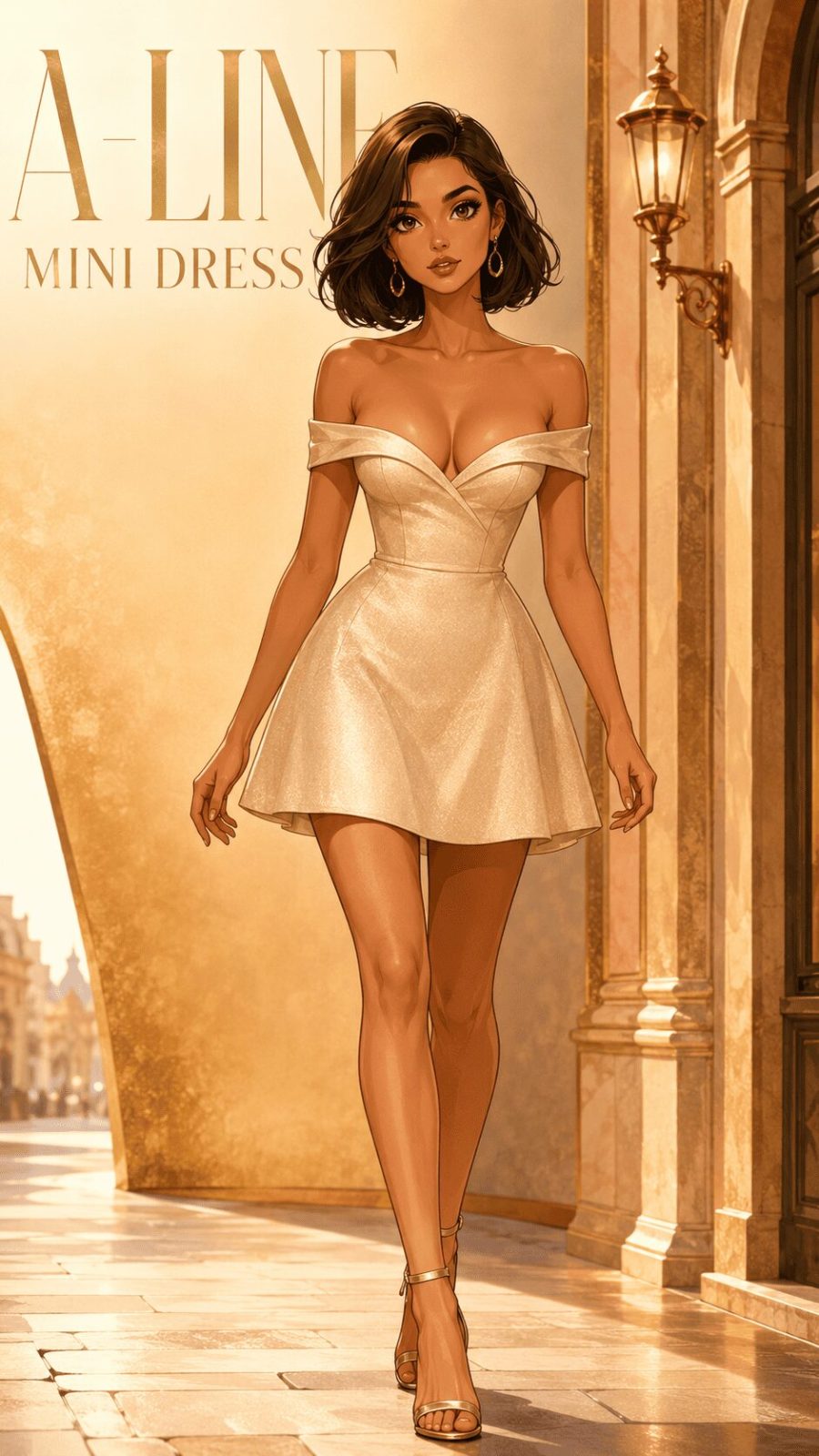
A-Line Mini Dress

Fitted through the bodice, gently flaring from the hip to the mini hem in a clean A-shape. The silhouette has roots in Dior's 1955 A-line collection — brought to the mini length during the 1960s mod revolution. What works beautifully about this cut is its mechanical generosity: the flare provides movement and ease without adding visual bulk. It's the most forgiving mini construction by a wide margin.

- 03
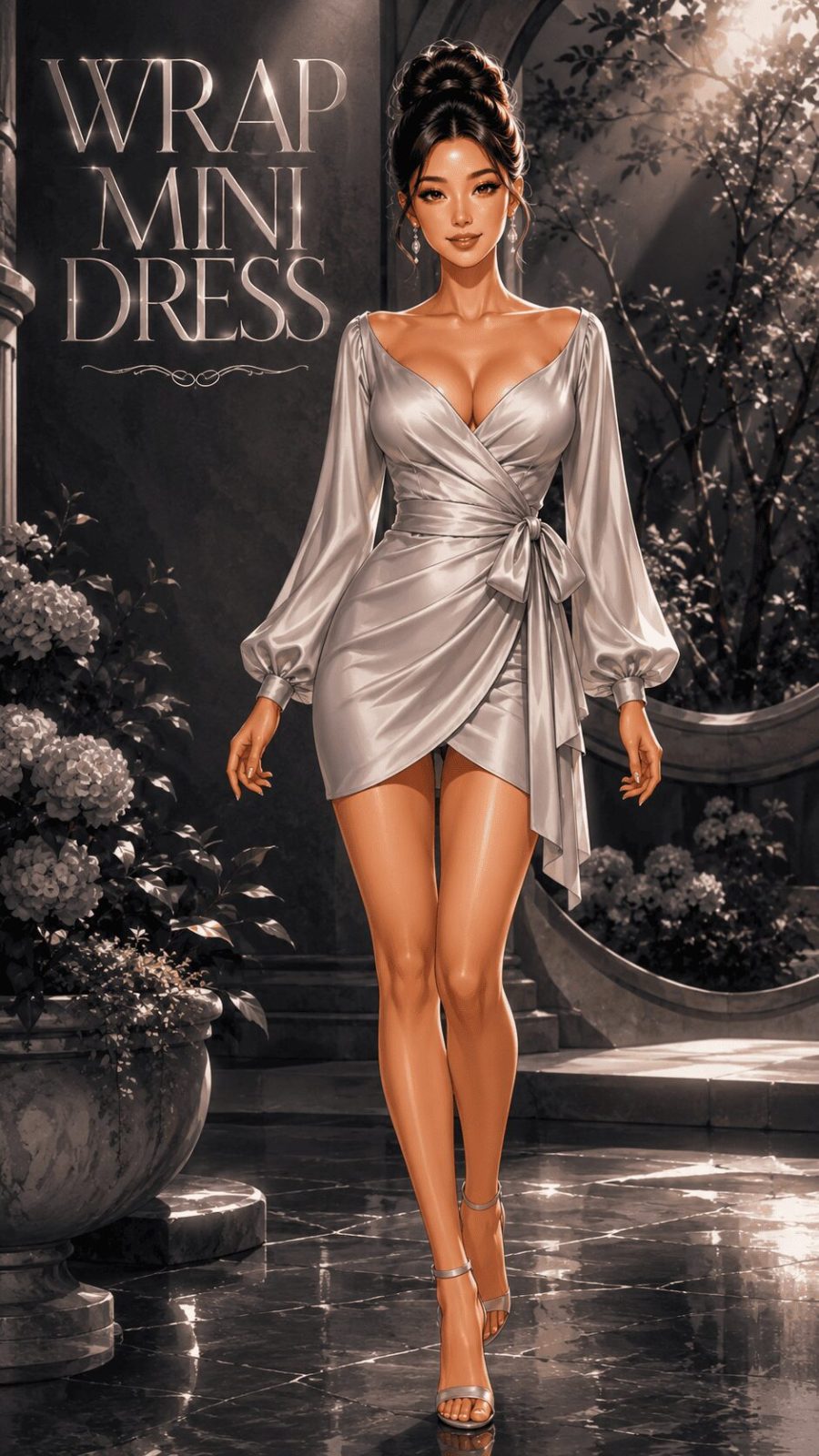
Wrap Mini Dress
Front panels cross and tie at the waist, creating a V-neckline and a self-adjusting fit. The wrap construction applied to a mini length is one of the most functionally intelligent dress silhouettes — the tie allows daily fit variation, the V-neck creates visual length, and the flared panel below the waist adds movement. Diane von Furstenberg's 1974 wrap dress established the template; the mini version applies the same logic to a shorter hemline. Explore the full range in our guide to wrap dress styles.
- 04
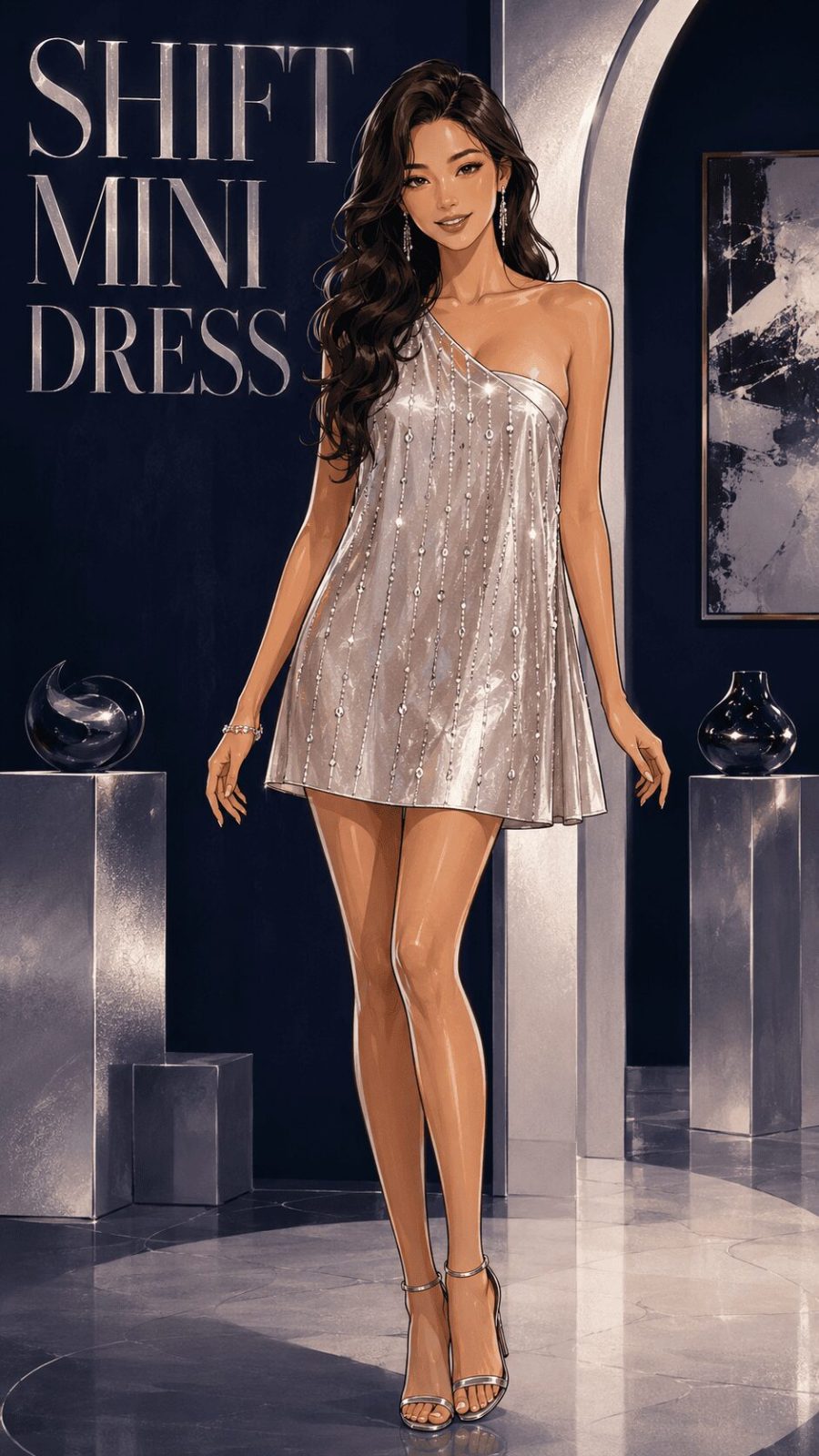
Shift Mini Dress
Straight, loose construction with no defined waist seam — falls in a clean vertical line from the shoulder to the mini hem. This is the dress that defined the mod aesthetic of the 1960s. Space was intentional: Quant and Courrèges wanted the silhouette to stand apart from the body, creating a modern, almost architectural shape. The shift doesn't cling; it frames. Minimal seaming, nothing extraneous.
- 05
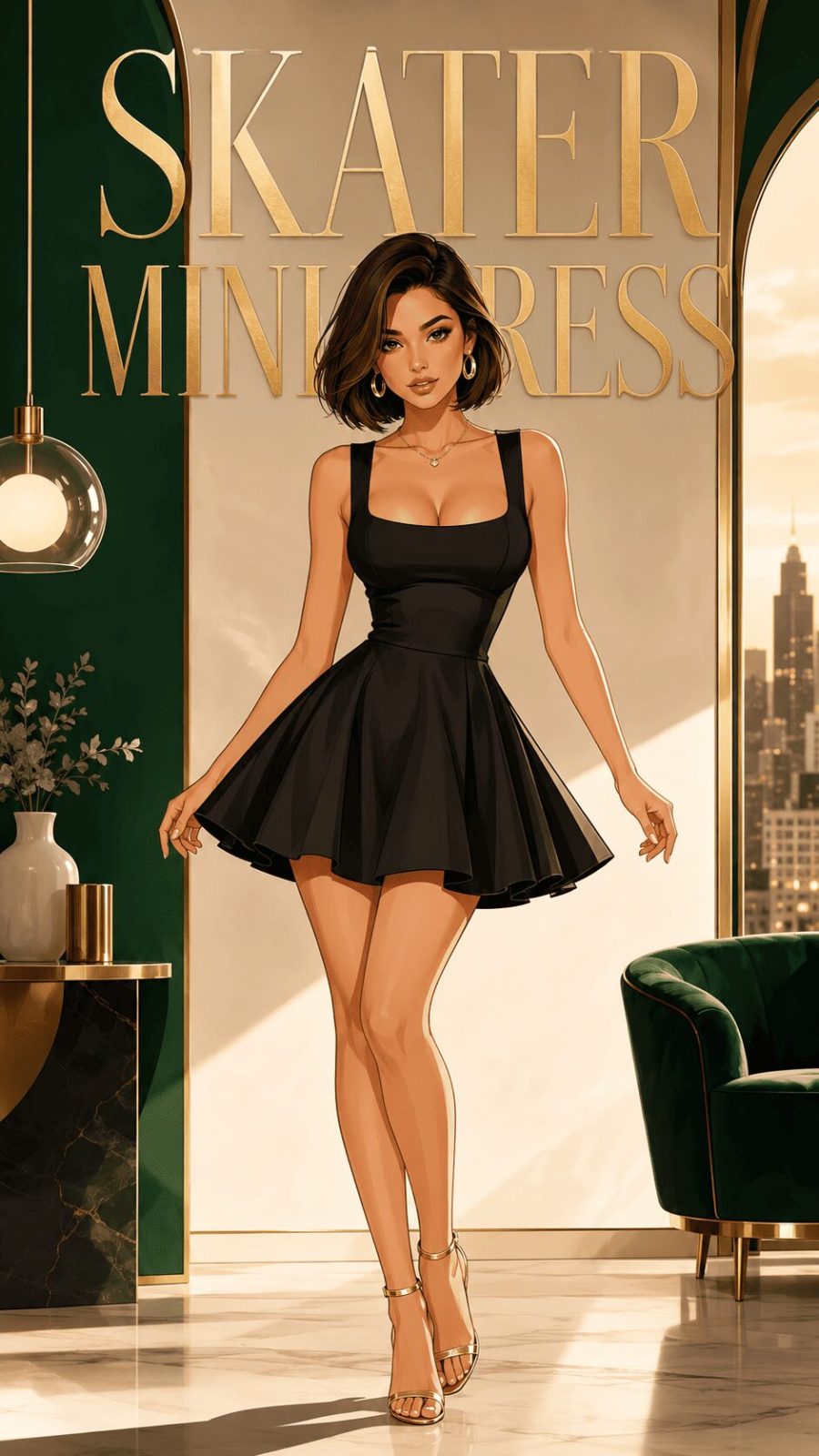
Skater Mini Dress
Fitted bodice with a dramatically flared, full-circle skirt that fans out from the natural waist. The fullness is achieved through circular cutting — fabric panels radiating from the waistline seam to create maximum swing. Borrowed from figure skating costume construction; the hem moves independently of the body. Pair it right and the effect is cinematic.
- 06
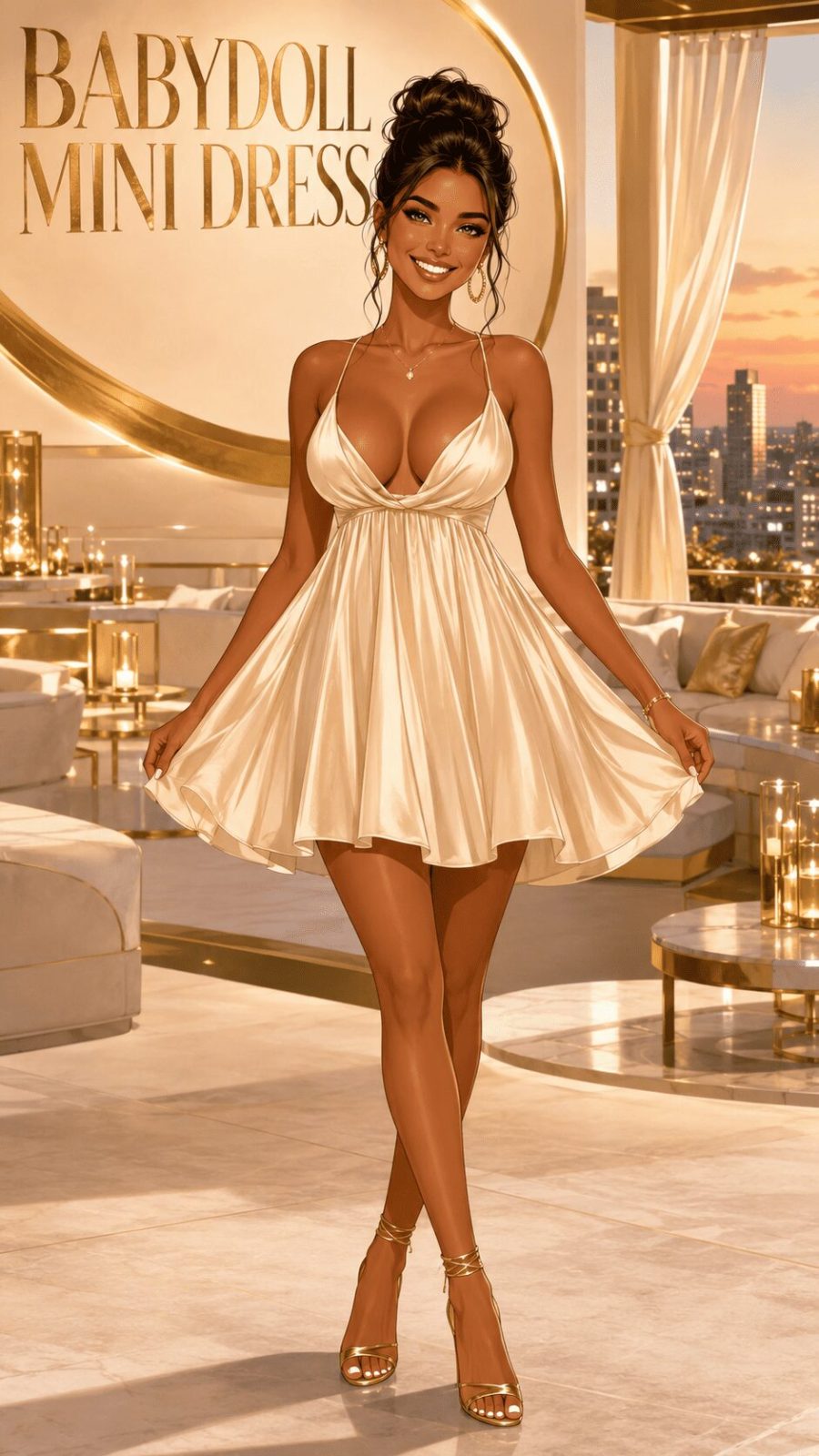
Babydoll Mini Dress
Empire waist seam placed high — just below the bust — with a loose, flared or gathered skirt falling freely from that seam to a mini hem. The silhouette originated in 1950s nightwear construction before migrating to fashion in the 1960s. The empire seam creates the visual impression of a defined torso without any waist compression whatsoever. Light, often in soft chiffon or cotton voile.
- 07
Slip Mini Dress
Spaghetti straps, bias-cut or straight satin or silk construction — lingerie-inspired outerwear at its most deliberate. The slip dress crossed from underwear to outerwear in the mid-1990s, defined by Kate Moss in Calvin Klein and Courtney Love in lace versions. The mini length makes it the most undeniably night-out version of the silhouette. Worn with a tee underneath, it becomes something different entirely. See more about this in our full slip dress style guide.
- 08
Shirt Mini Dress
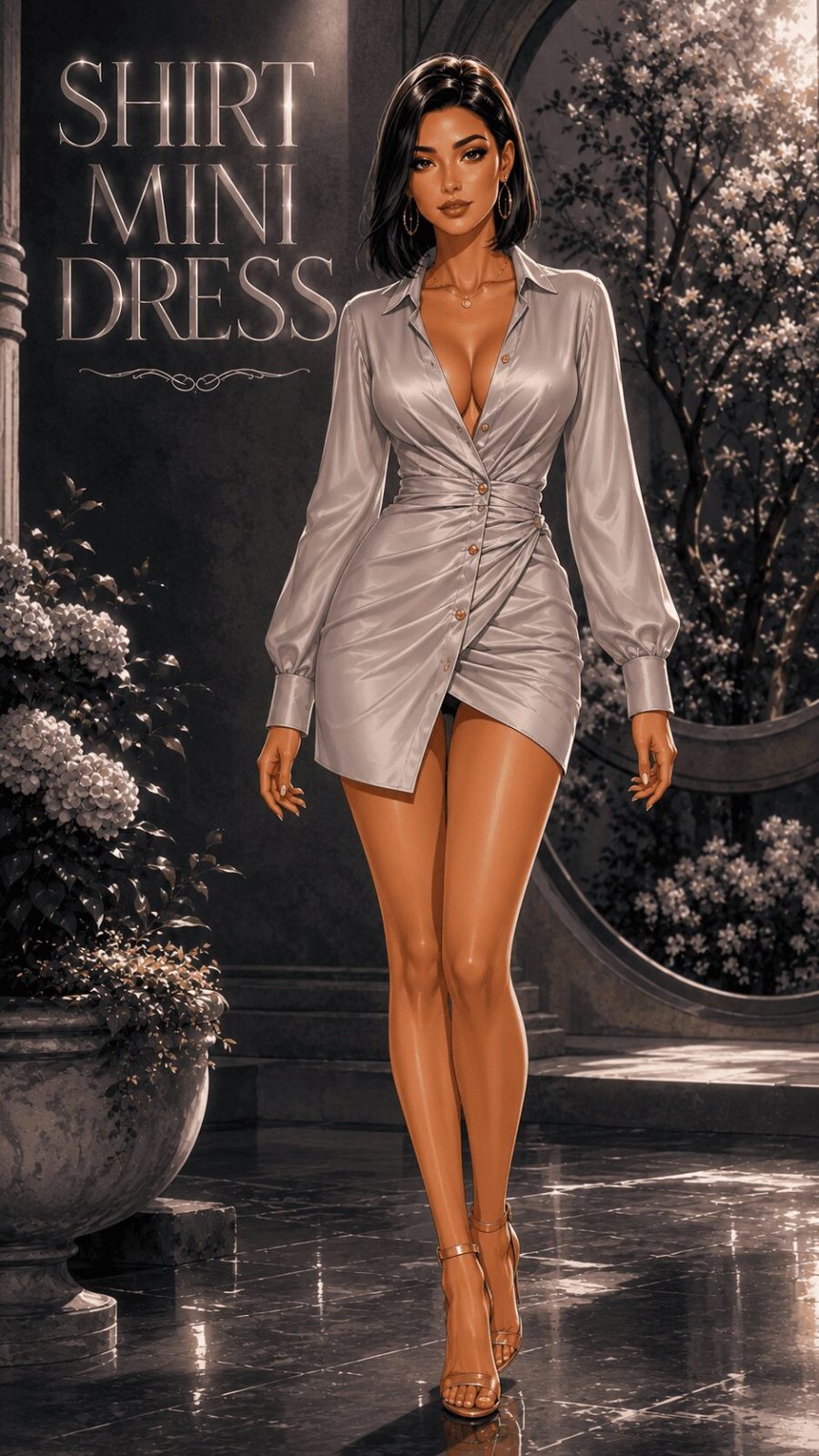

Shirt construction — collar, button placket, sometimes breast pockets — extended to dress length ending at mini. It's a men's shirt silhouette taken all the way to a dress. The proportional shift is surprisingly powerful: the same details that read as functional on a shirt become fashion-forward in a dress format at this length. Perfect belted. Interesting completely unbuttoned over a bodysuit. For the full range, see our dedicated shirt dress guide.

- 09
Smocked Mini Dress
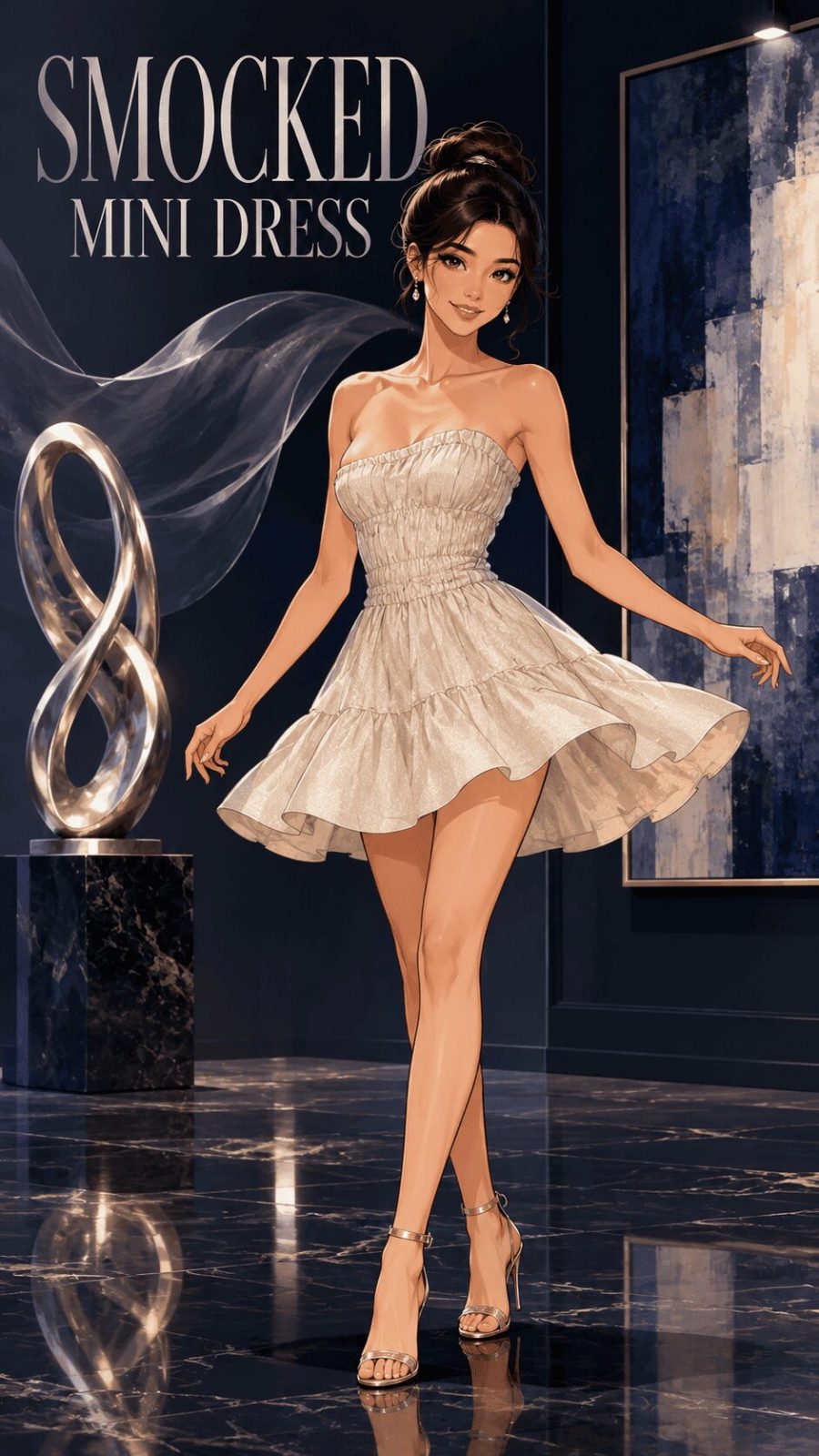
Multiple rows of honeycomb or cable-stitch smocking at the bodice — chest, neckline, or waist — creating an elasticated panel that adapts to the body without darts or zips. Technically, smocking is one of the most labor-intensive garment finishes in existence, requiring individual stitches through gathered fabric at measured intervals. The result is a textured, stretchy panel that provides fit without structure — which explains why it works at every size without adjustment.
- 10
Corset Mini Dress
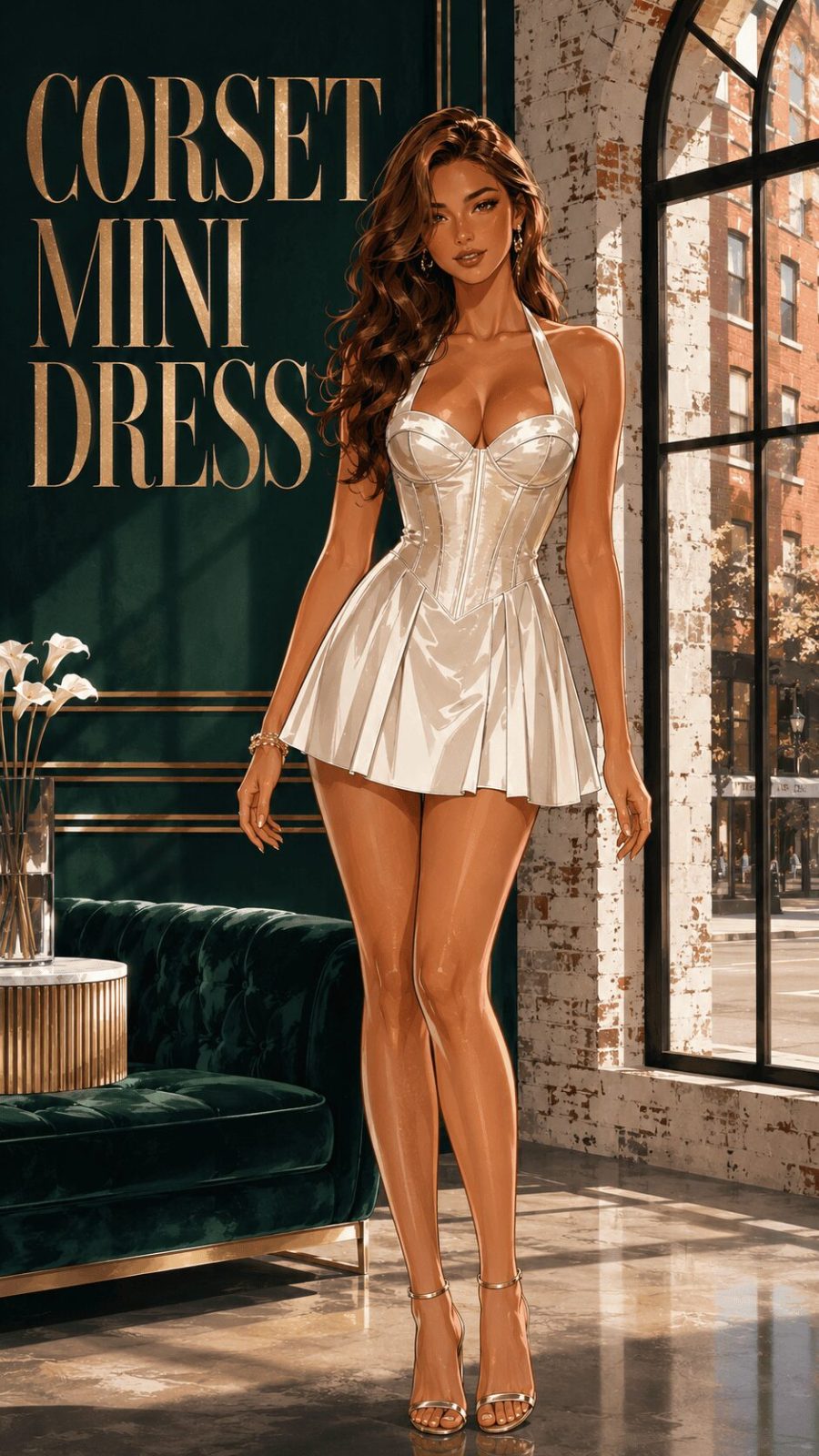
Structured boned bodice with lacing or hook-and-eye closure at the back, attached to a skirt at mini length. The corset construction is the entire design statement — the boning creates a defined waist through mechanical compression, the lacing is decorative and structural simultaneously. Contemporary corset mini dresses wear their engineering openly. The boning isn't hidden; it's the point.
- 11
Ruched Mini Dress

Gathered or shirred fabric creating horizontal texture across the torso — often from side seams pulling the fabric inward. The ruching technique creates the visual impression of a sculpted waist without boning or darts. It's optical engineering: strategic gathering creates contour from flat fabric. In stretch fabrics, ruching also accommodates body variation seamlessly.
- 12
Tiered Mini Dress
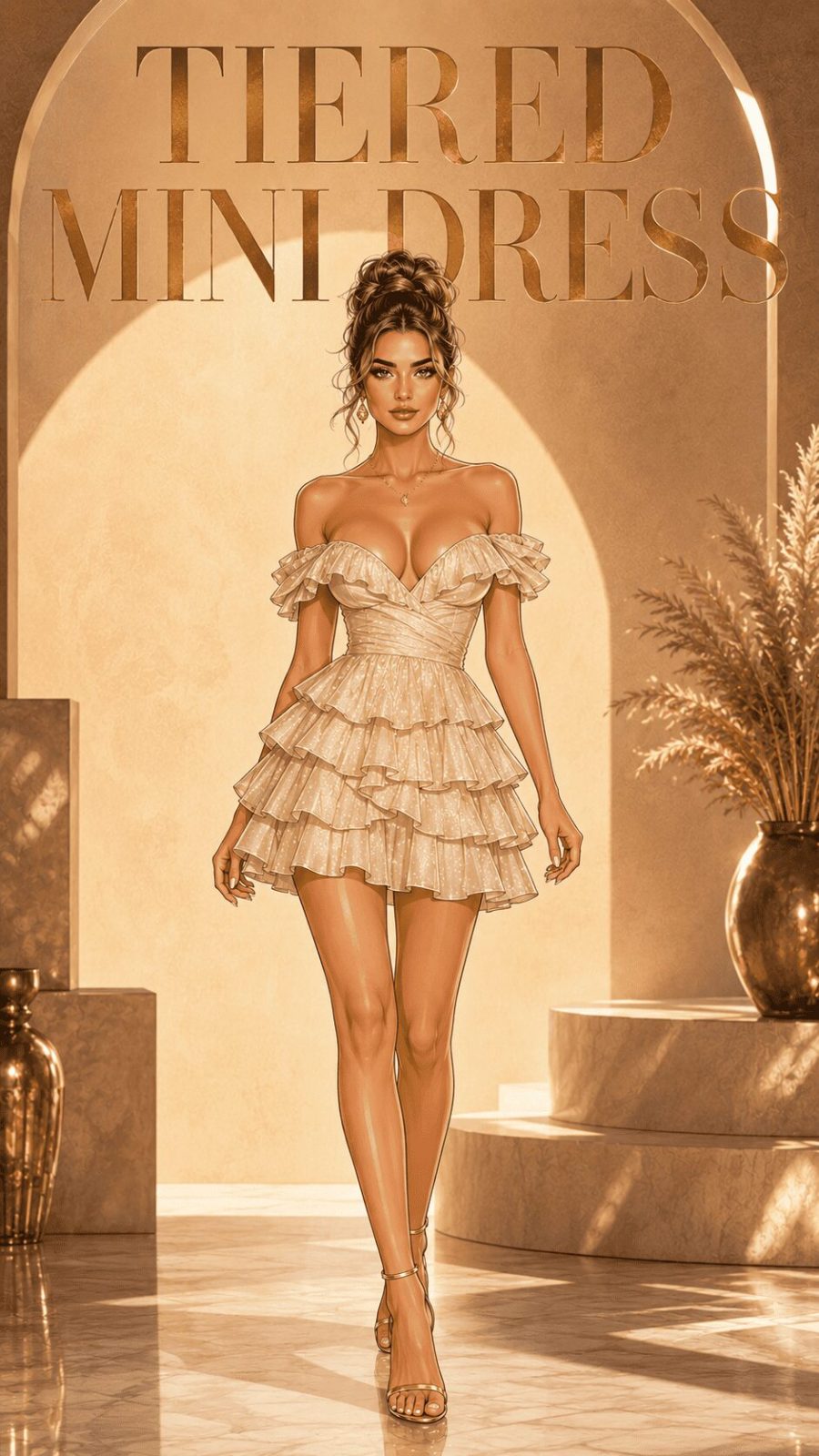
Multiple horizontal tiers of fabric stacked from bodice to mini hem, each gathered onto the tier below. The cascading effect creates volume and movement without structured petticoats. Tiering is an ancient construction technique — found in traditional dress across South Asia, Latin America, and sub-Saharan Africa — now thoroughly absorbed into contemporary resort and boho fashion. Each tier functions independently; the movement is layered, not uniform.
- 13
Strapless Mini Dress
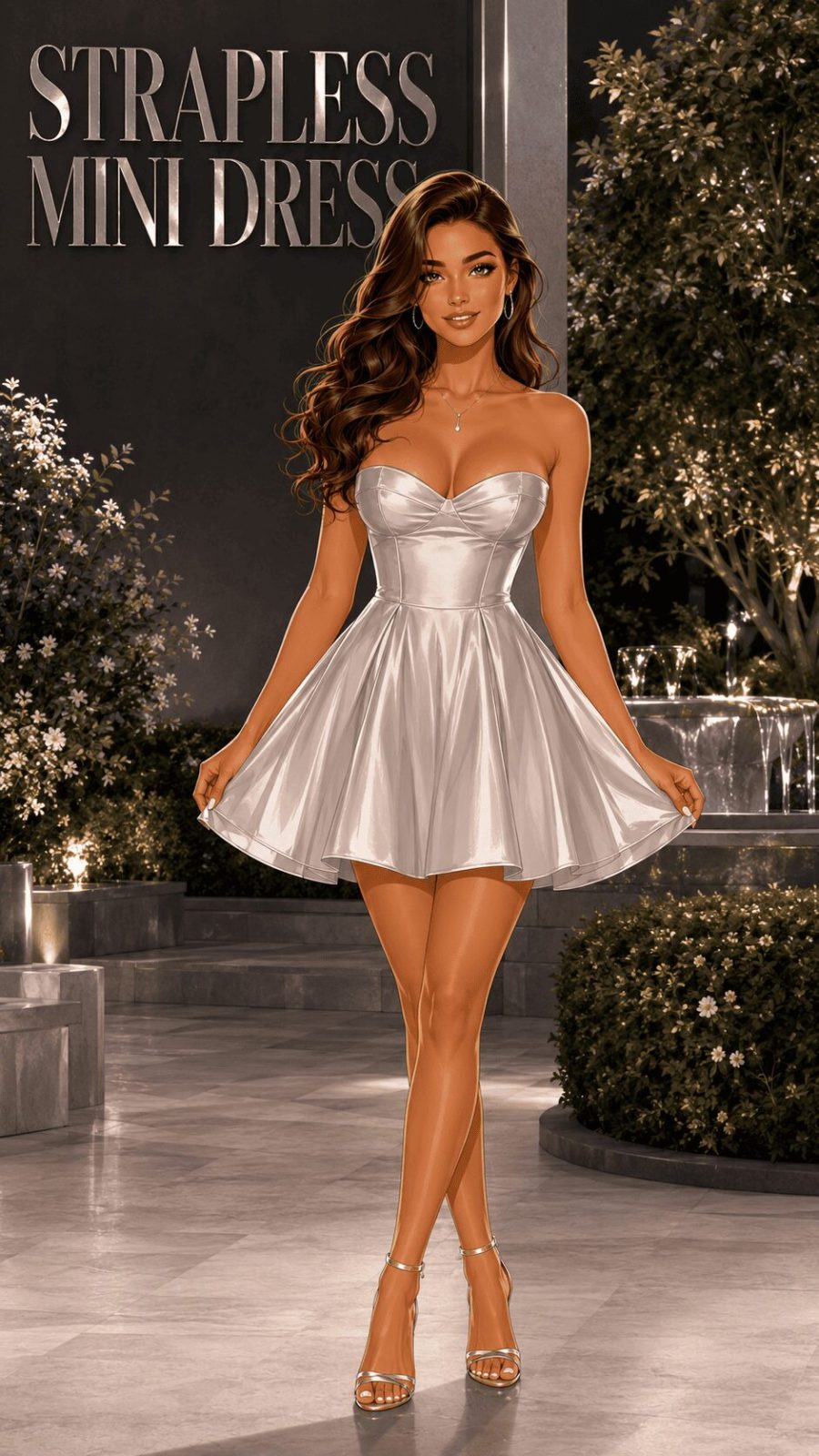
No shoulder straps whatsoever — the bodice holds through internal boning, elastic, or a structured bodice panel alone. The engineering challenge is significant: the garment must stay up through friction and internal structure rather than shoulder support. Better versions include boning, rubber grip tape at the inner bodice, and a structured interlining. Cheaper versions rely on hope. The difference is visible immediately upon wearing.
- 14
Peplum Mini Dress
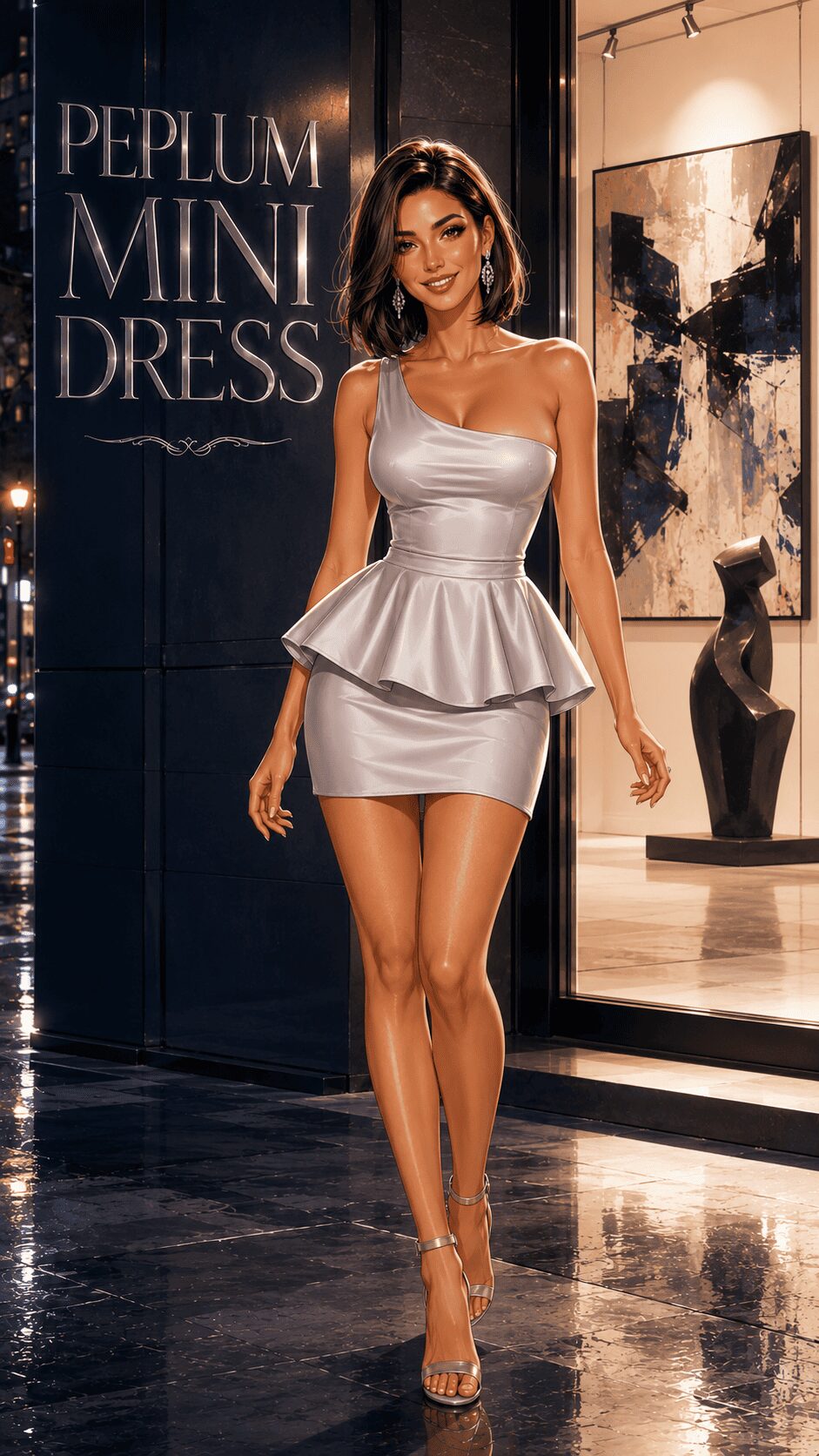
Fitted bodice with a flared, ruffled extension from the waistline seam — followed by a mini-length skirt below. The peplum doubles the visual break at the waist: the fitted upper and the flared peplum extension create contrast above, the separate mini skirt below. It's architecturally busy in the best way. The word "peplum" traces to ancient Greek tunic construction — a continuous thread from antiquity to contemporary fashion.
The biggest mistake when shopping for a mini dress isn't choosing the wrong length — it's ignoring the construction. A bodycon in the wrong fabric will gap and roll. A smocked dress in a thick fabric will add bulk exactly where you don't want it. Fabric and structure are inseparable in a mini. The hem is fixed; everything above it needs to work harder than it does in a longer garment. Fit issues have nowhere to hide at this length — which is actually a useful filter when shopping. If something feels slightly wrong in the fitting room, it will feel very wrong after three hours in it.
- 14 types defined by construction logic, not trend name or print
- Construction determines fit behavior — a bodycon hugs; a shift stands away; a wrap adjusts
- The A-line and wrap are the most forgiving and versatile mini constructions in this category
- Smocked and tiered constructions offer the widest size accommodation without adjustment
Category 2: By Neckline (#15–#24)
How the neckline shapes visual attention, occasion register, and overall aesthetic direction
In a mini dress, the neckline does double duty. At this hemline, the eye moves between two visual anchors — the leg and the face. The neckline determines which anchor wins. A plunge neck pulls attention upward dramatically. A square neck distributes it horizontally. A halter neck frames the face while the shoulder line does the work. Understanding neckline mechanics in a mini isn't about rules — it's about intentionality. You can explore all the technical neckline variations in our complete neckline reference guide.
- 15
V-Neck Mini Dress
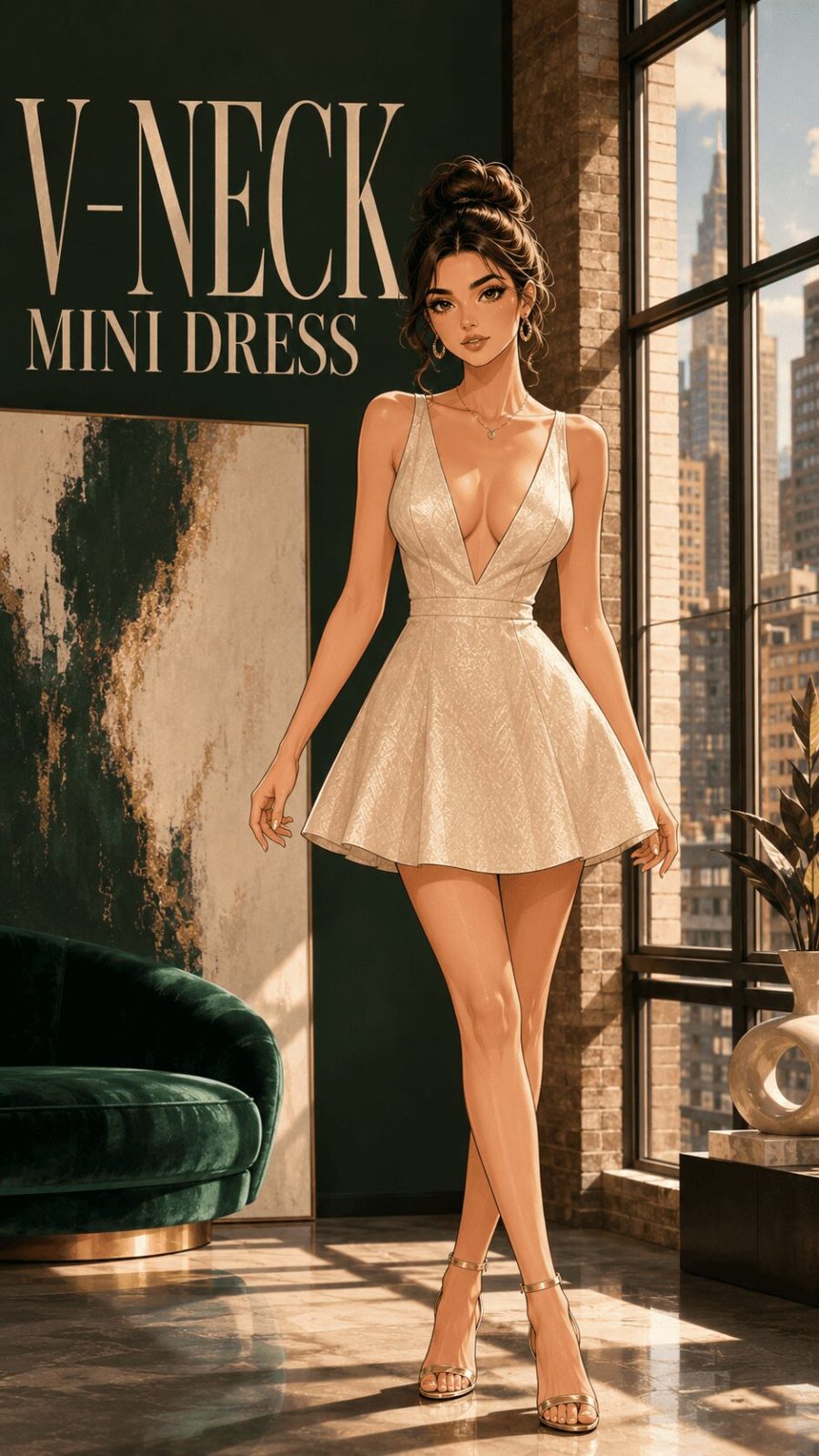
V-shaped neckline — the most elongating neckline construction. Directs the eye downward along a vertical line, creating a lengthened visual impression from the face to the bust. Works in almost every fabric and construction. The depth of the V changes the register entirely: a subtle V is work-appropriate; a deep plunge V is unambiguously evening. Depth is the variable that determines everything.
- 16
Square Neck Mini Dress
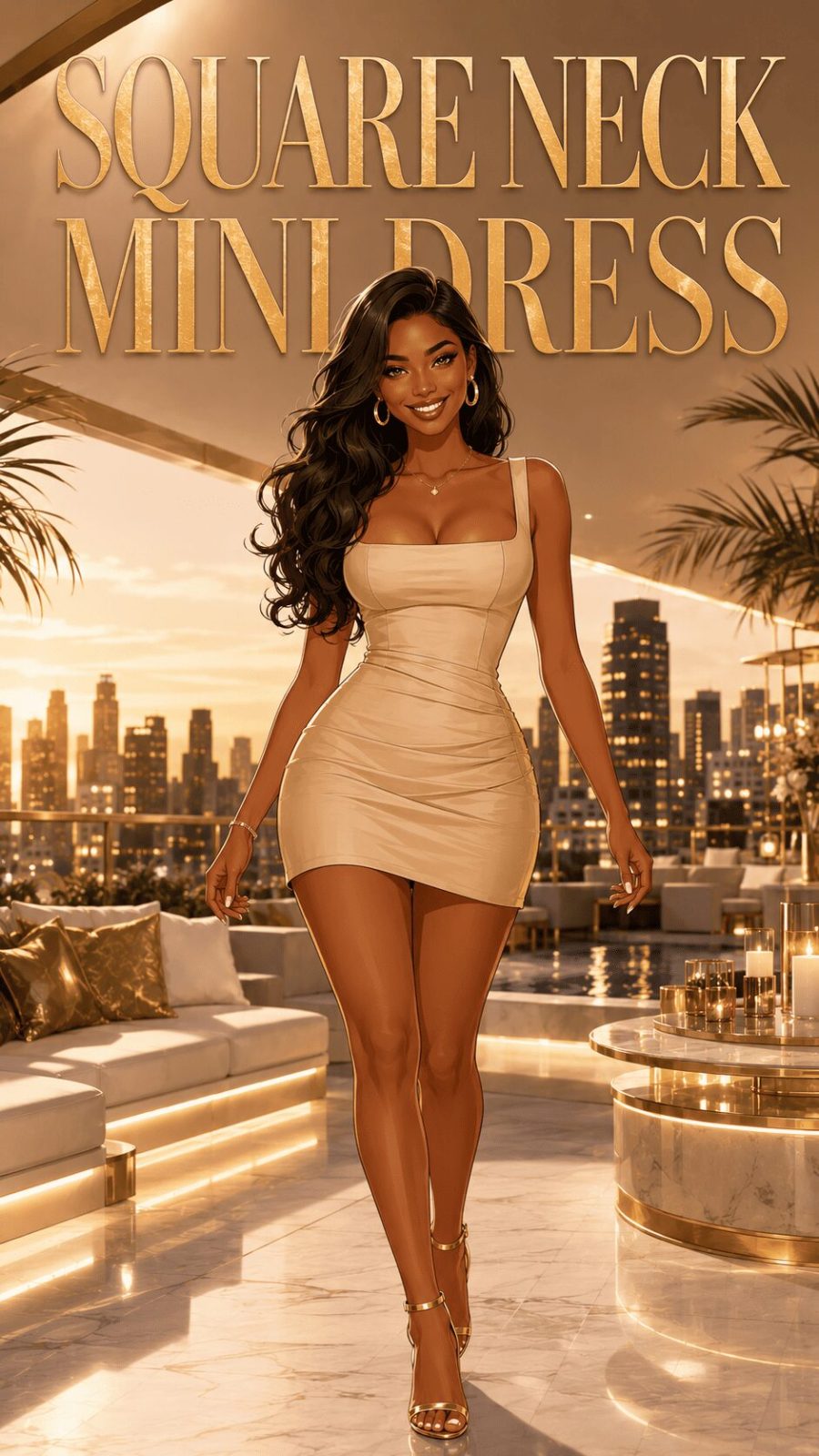
Geometric, straight-edged neckline forming a square or rectangular shape across the chest. Creates a distinctly horizontal frame — it broadens the visual impression of the décolletage and tends to emphasize the collarbone and shoulder line. The square neck has enjoyed significant momentum from approximately 2019 onward, driven partly by the intersection of vintage-influenced fashion and the Renaissance aesthetic trend documented by Refinery29.
- 17
Halter Neck Mini Dress
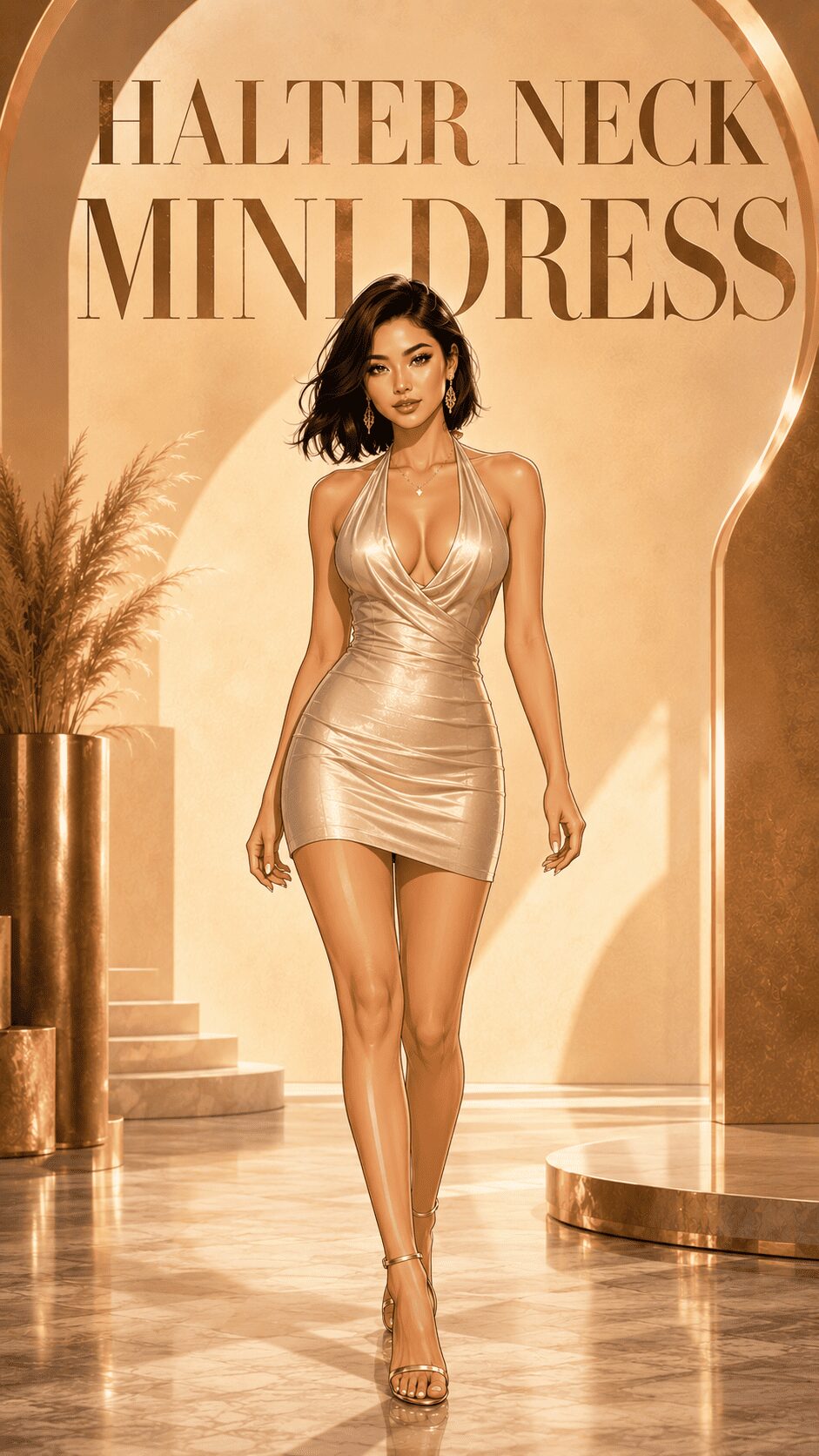
Straps tie or fasten behind the neck; the back is largely exposed. In a mini dress, the halter construction distributes visual interest across three planes simultaneously — the shoulder line at front, the exposed upper back, and the abbreviated hem. It's deliberate in its exposure distribution. The halter also eliminates bra-strap complications by requiring no conventional bra support.
- 18
Off-Shoulder Mini Dress
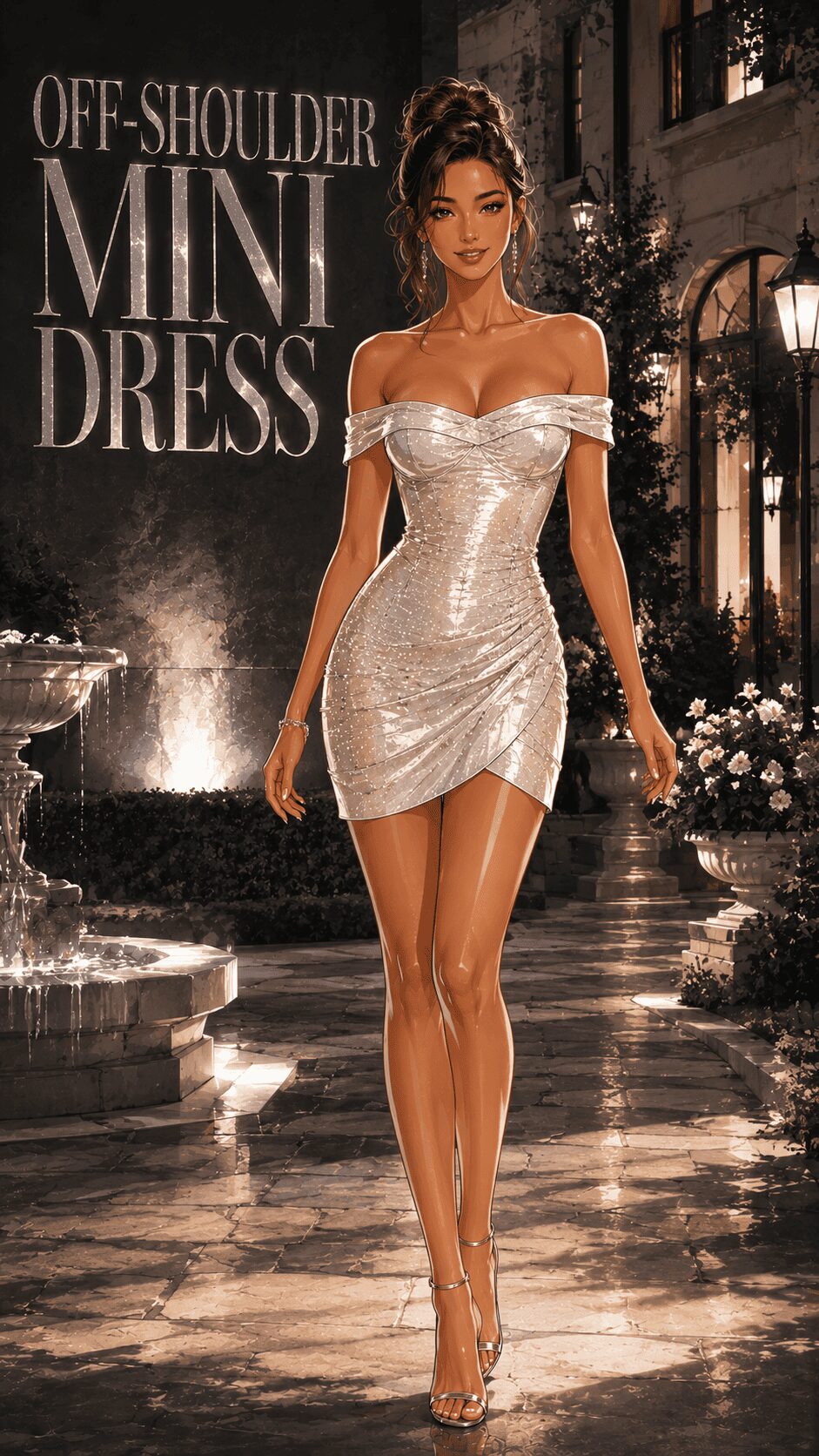
Neckline sits below both shoulders, exposing the entire shoulder line and collarbone. The bodice is held by an elasticated or smocked neckline that grips below the shoulder points. One of the most flattering neckline constructions across a wide range of body types — because it broadens the visible shoulder line, creating a horizontal emphasis at the top. At mini length, this horizontal-meets-abbreviated contrast tends to photograph beautifully.
- 19
Sweetheart Neckline Mini Dress
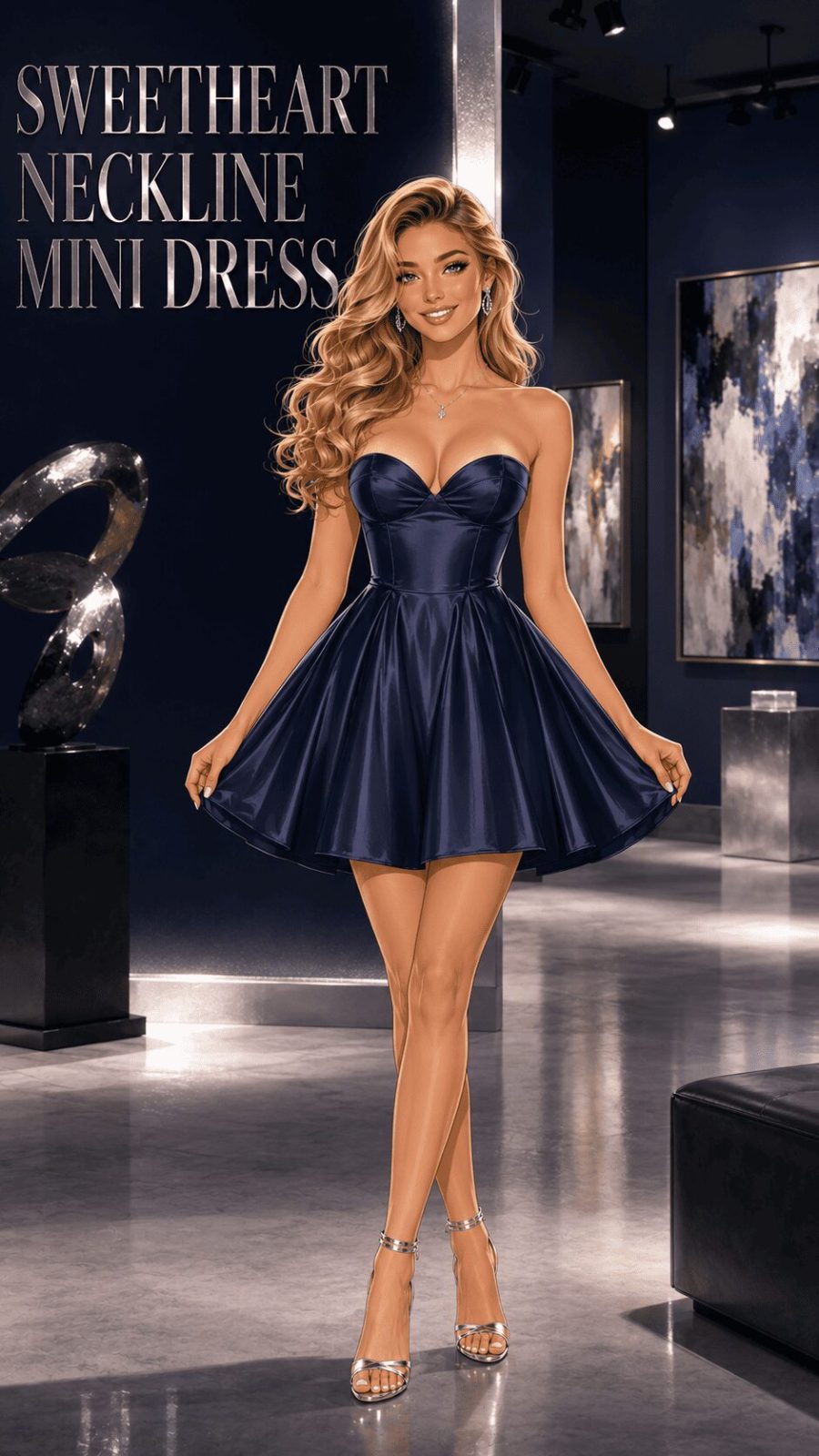
Two curved arches meeting at a central dip, forming a shape that mirrors the top of a heart. A neckline with strongly romantic aesthetic associations — it's intrinsically feminine in the way a square neck is geometric or a crew neck is neutral. In a mini dress, the sweetheart neckline tends to appear in structured fabrics: ponte, scuba, taffeta. The construction usually includes inner boning or a rigid facing to maintain the curve.
- 20
One-Shoulder Mini Dress
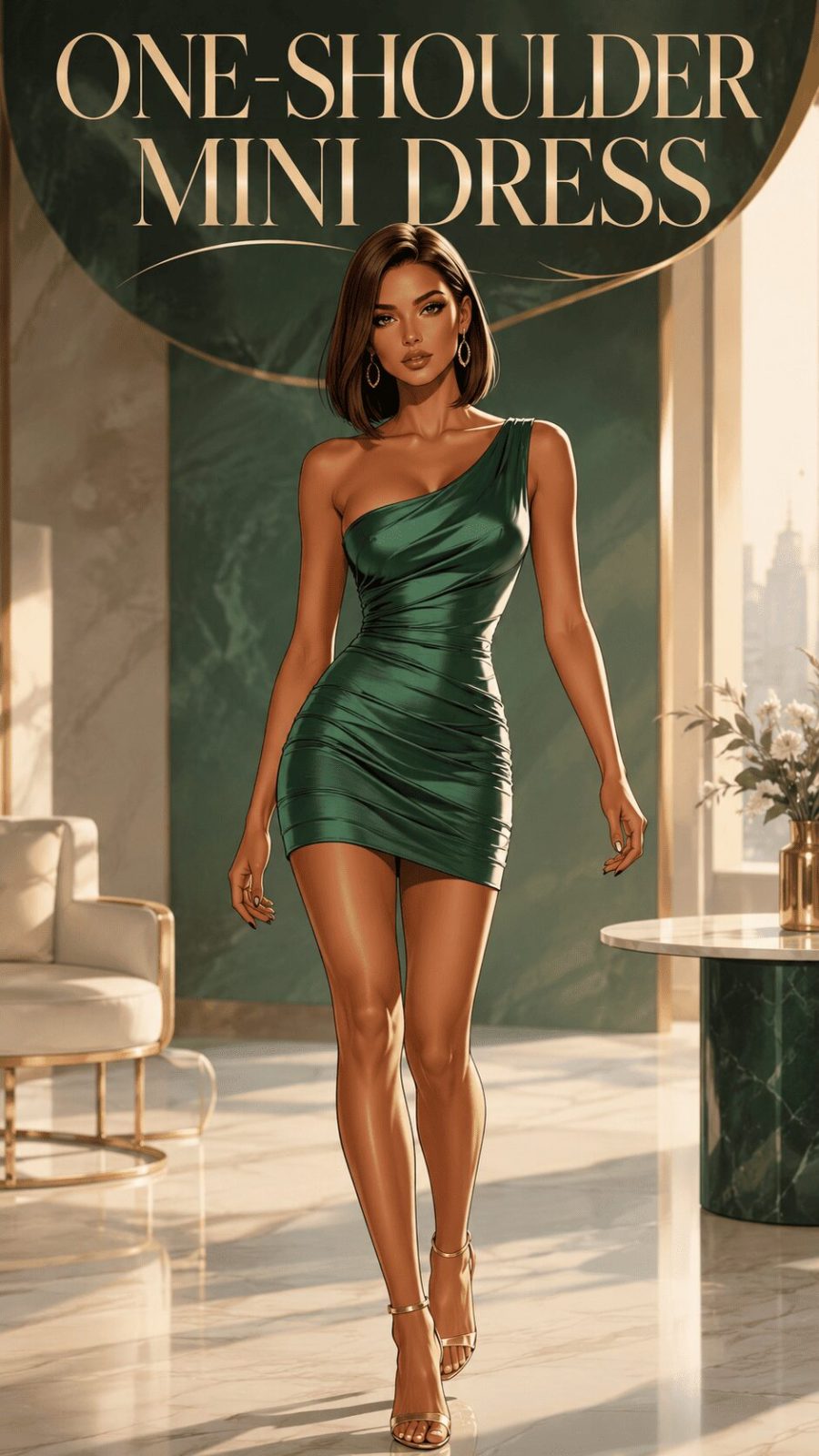
Single shoulder strap on one side; the other shoulder is entirely bare. The asymmetry is the design statement — it creates a diagonal line across the torso that draws the eye in a different direction from any symmetrical neckline. One-shoulder construction inherently creates an asymmetric silhouette, and asymmetry reads as sophisticated on almost every body proportion. The bare shoulder creates visual interest without requiring additional detailing.
- 21
Cowl Neck Mini Dress
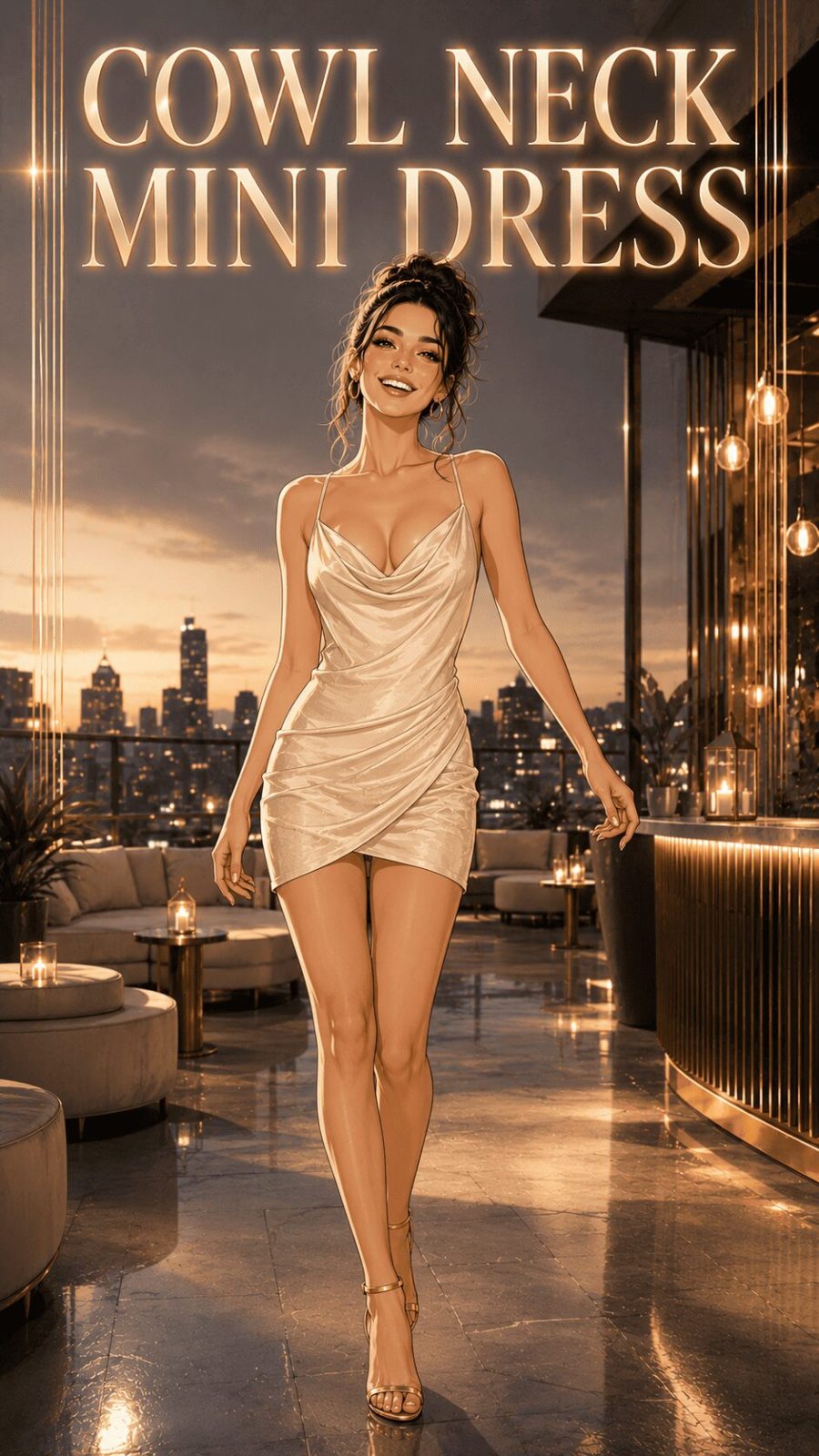
Draped, loose neckline that folds in soft cascading folds at the front. The fabric pool is the effect — excess fabric gathered at the bust creating a soft, pooled visual. Cowl necklines require bias-cut or extremely fluid fabric to drape correctly; they don't work in structured wovens. Satin, silk, or matte jersey are the natural habitats for this neckline. In a mini, it creates a deliberate tension: structured short hem, fluid draped neckline.
- 22
Plunge Neck Mini Dress
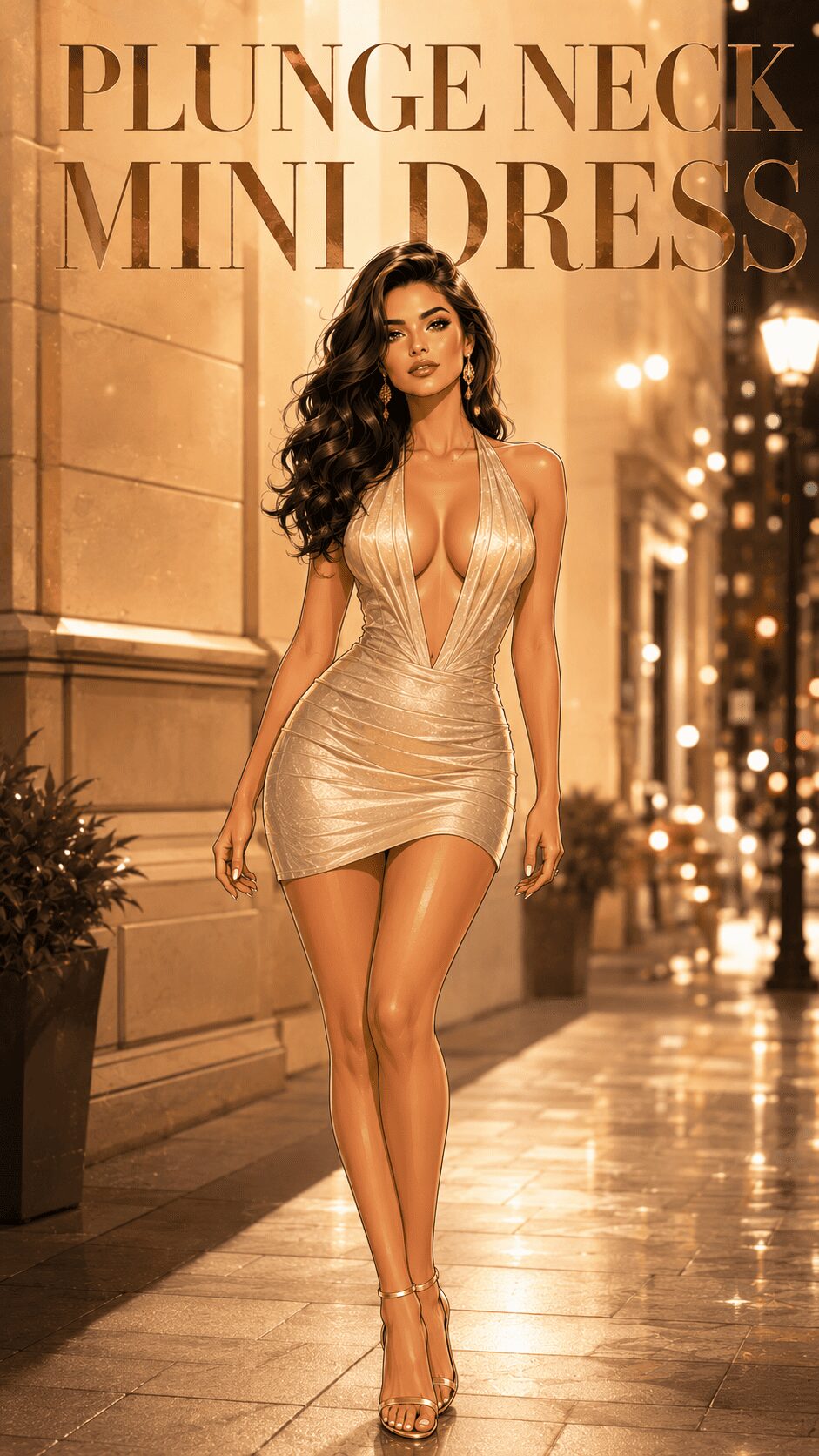
Deeply cut V or U neckline extending well below the standard bust level — the most dramatically elongating neckline construction in existence. In a mini dress, the plunge neck creates a visual vertical axis from chin to deep neckline to abbreviated hem. It's unambiguously bold. Construction typically includes modesty tape, an internal clip, or strategic boning to prevent the neckline from shifting. Not a dress you wear without thought — but the effect, done right, is undeniable.
- 23
Boat Neck Mini Dress
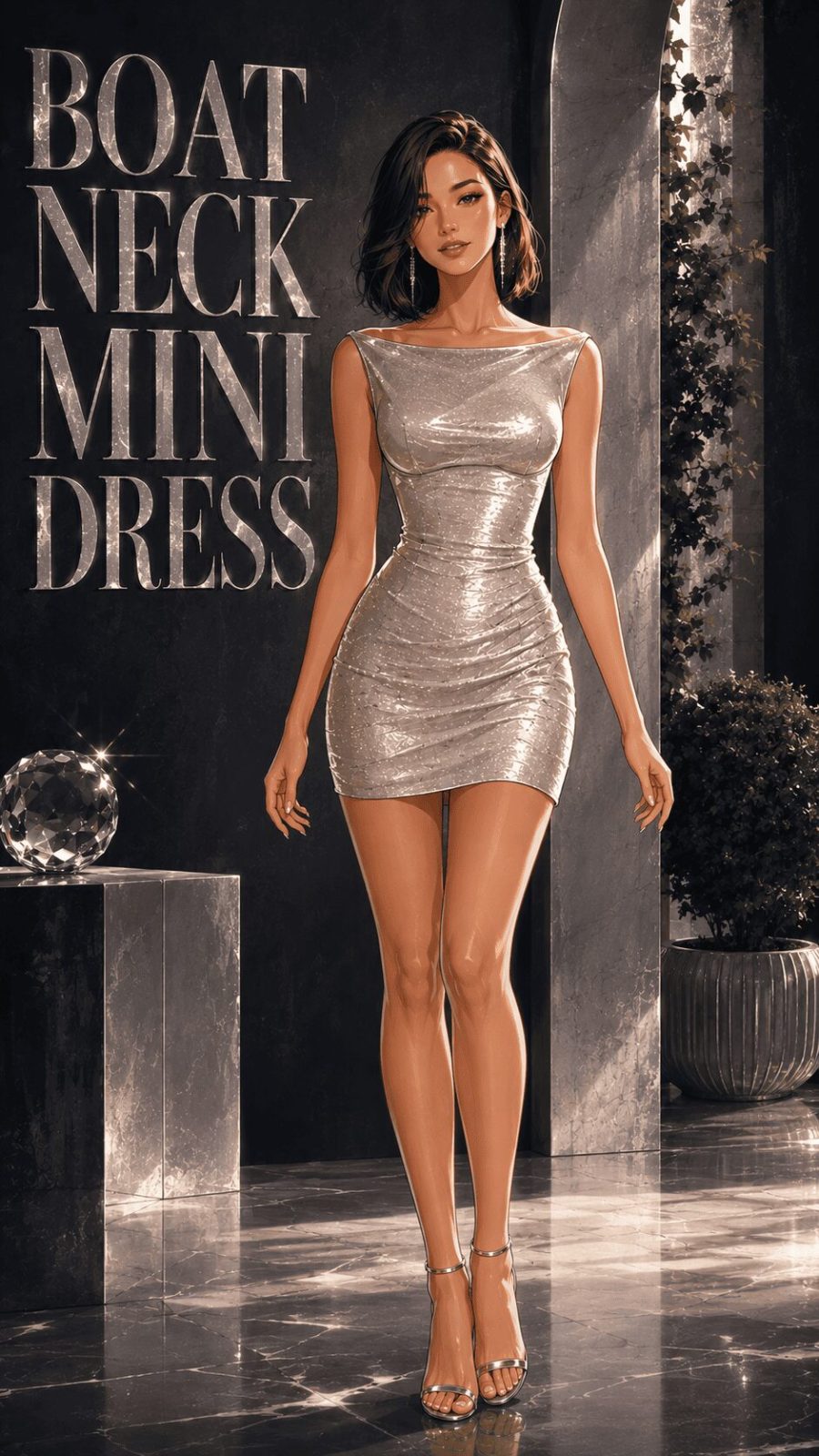
Wide horizontal neckline running from shoulder to shoulder — the bateau neckline. The construction is almost defiantly restrained: it covers the décolletage entirely while exposing the shoulder line from above. Coco Chanel favored the boat neck for this quality — it is simultaneously modest and shoulder-defining. In a mini dress, the boat neck shifts the occasion register: it can make a short hemline feel considered and polished rather than purely going-out.
- 24
Scoop Neck Mini Dress
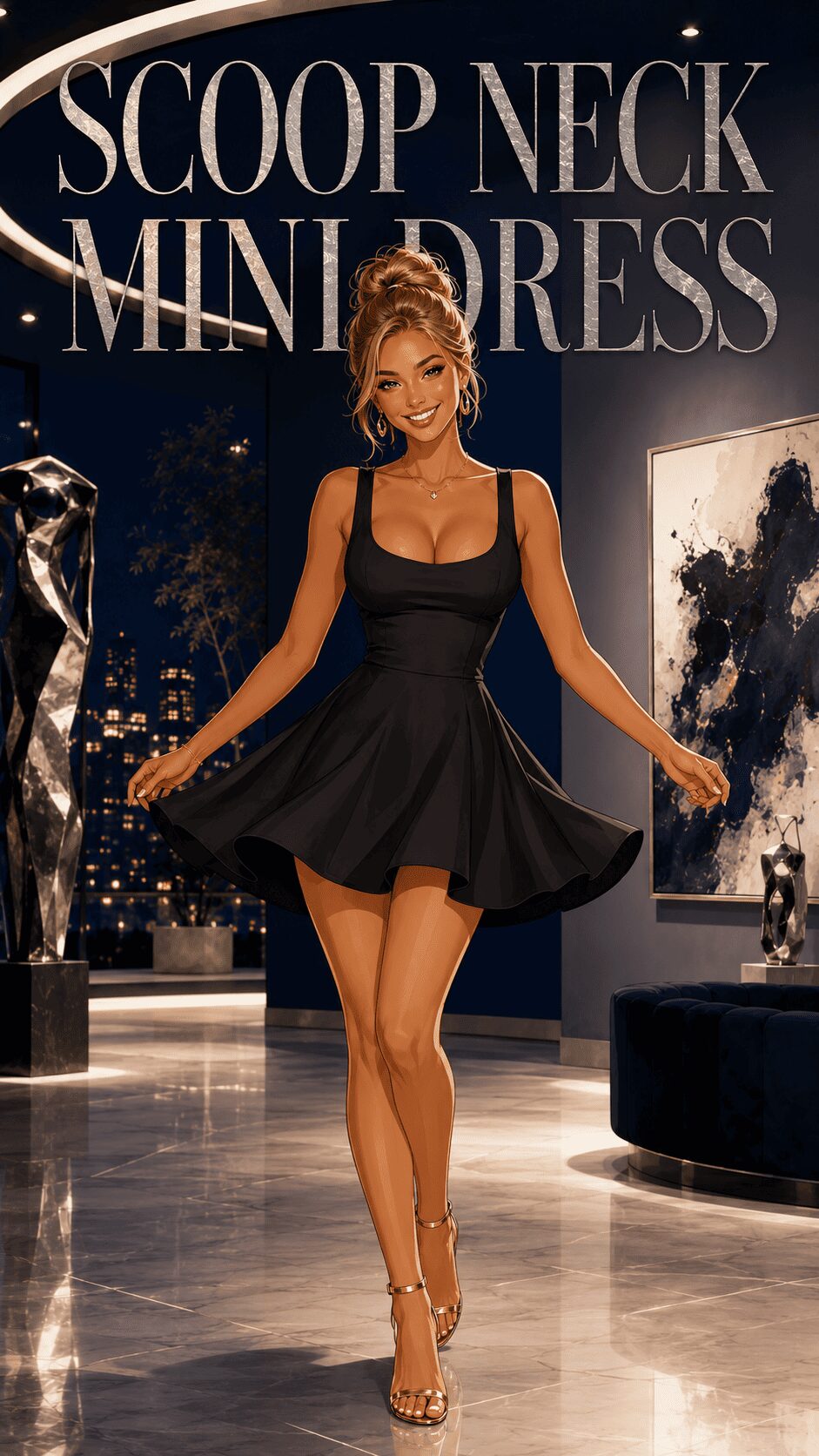
Wide, U-shaped neckline that scoops lower than a crew neck and wider than a V-neck — hitting somewhere between the two. The scoop is the most democratic neckline: it has no strong directional pull, works in jersey, cotton, or satin equally well, and reads neither formal nor casual by default. In a mini dress, it's the neckline that stays out of the way — the construction simply opens the chest gracefully without making demands of its own.
"A high neckline makes a mini dress more appropriate."
Occasion register in a mini dress is determined by fabric, construction quality, and styling — not neckline height. A low-cut shift in structured ponte can read more polished than a high-neck version in flimsy chiffon. The neckline is one variable; it doesn't override the others. A turtleneck bodycon mini worn to a board meeting is still not appropriate. Context and overall construction determine the register.
Category 3: By Sleeve Style (#25–#32)
How sleeve construction shapes the season, the occasion, and the visual balance of the silhouette
A sleeve in a mini dress does more work than it does in any other garment length — because it functions as a visual counterbalance. A long sleeve on a mini creates the most effective coverage contrast in fashion: everything below the wrist covered, everything above the knee exposed. That tension is, frankly, one of the most striking outfit formulas available. Conversely, a sleeveless mini maximizes the leg-to-shoulder ratio. The sleeve choice doesn't just affect warmth — it determines the entire visual grammar of the outfit. You can explore more variations in our guide to women's sleeve styles.
- 25
Long-Sleeve Mini Dress
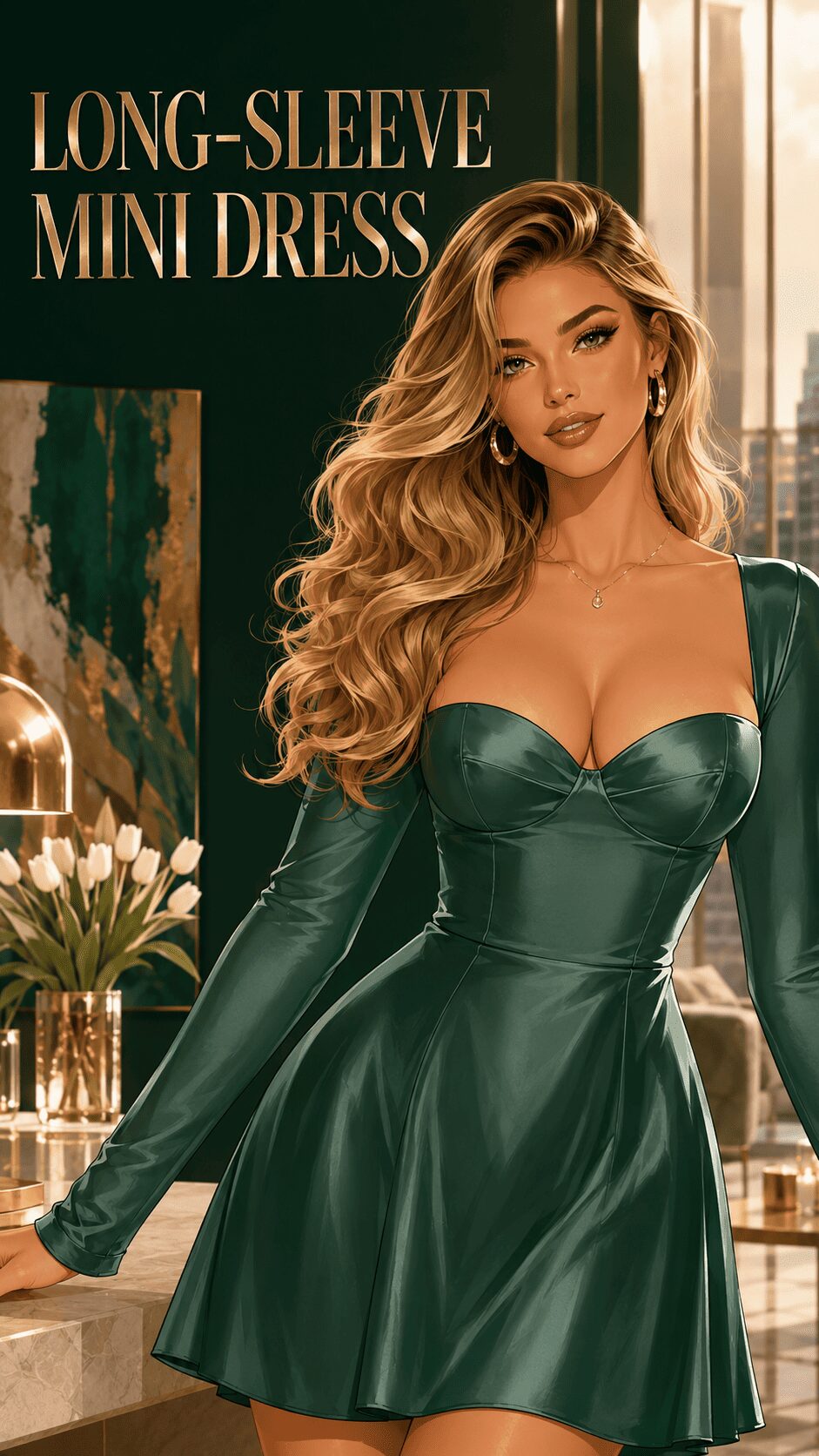
Full-length sleeves extending to the wrist — the coverage contrast with the mini hemline is deliberate and powerful. The long-sleeve mini is arguably the most photographically striking of all mini dress configurations. It solves the warmth problem while preserving the leg exposure. In heavier fabrics — wool crepe, ribbed knit, velvet — it transitions the mini dress into autumn and winter territory entirely on its own.
- 26
Puff Sleeve Mini Dress
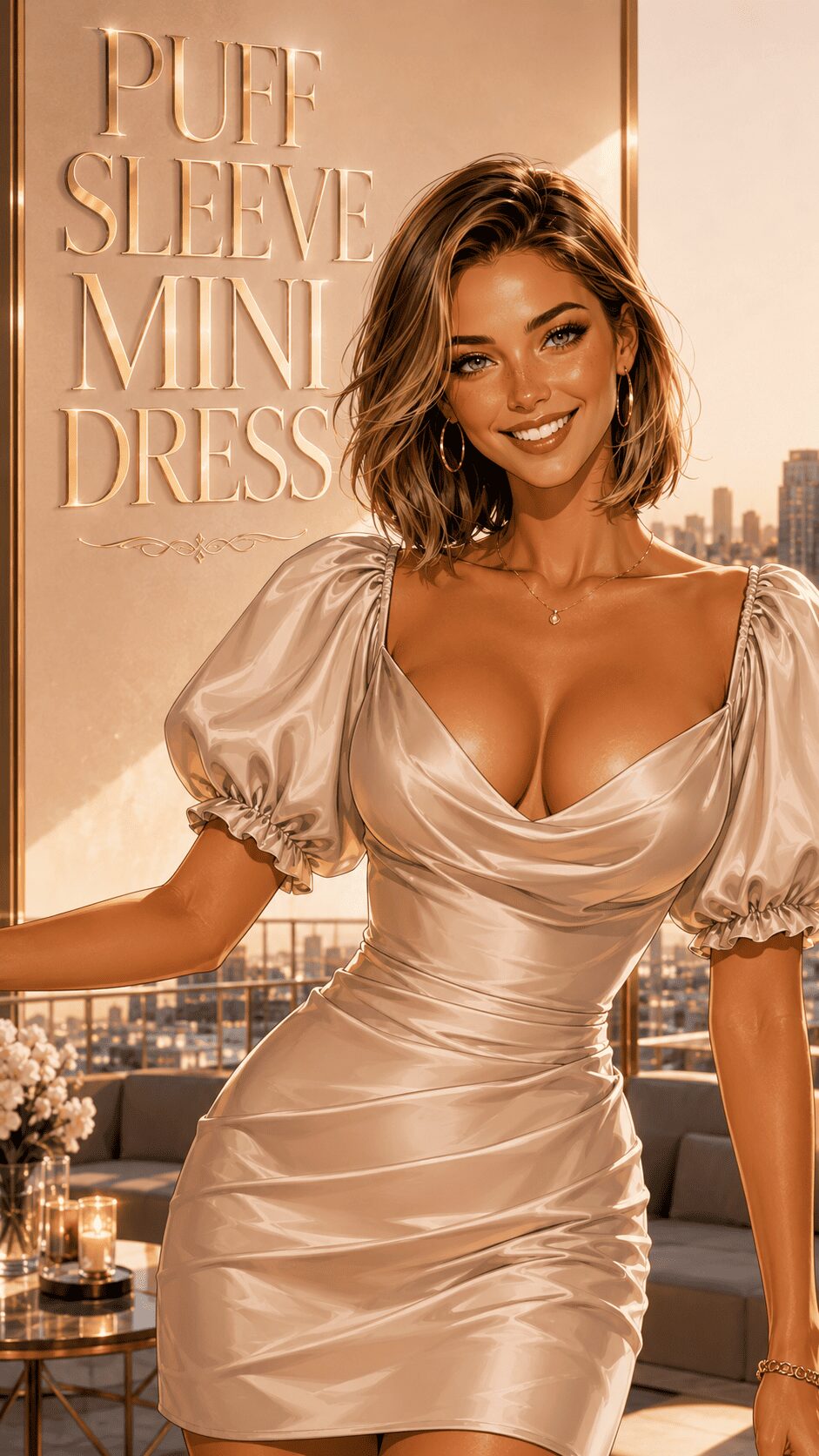
Gathered or pleated fabric at the sleeve head creating a voluminous, ballooned sleeve. In a mini dress, puff sleeves create the most interesting proportional contrast — volume at the top, exposed leg at the bottom. The silhouette tends to photograph with a romantic, editorial quality that has made it a consistent Pinterest and fashion-search favorite. Originally a Victorian sleeve construction reference; reinterpreted continuously through fashion history. See more about puff sleeve variations in our puff sleeve style reference.
- 27
Flutter Sleeve Mini Dress
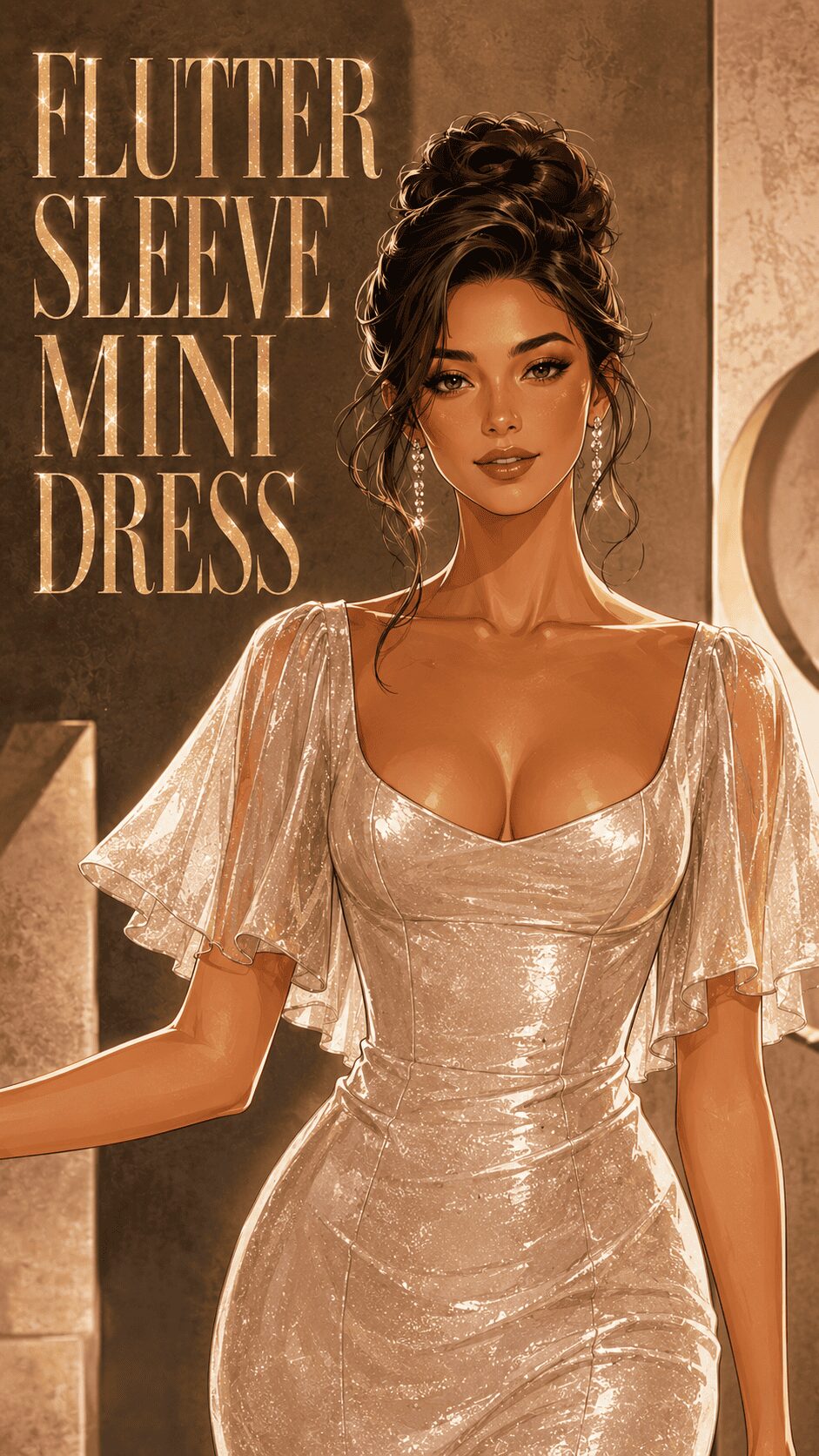
Short, loose, softly draped sleeve panels that flutter with movement — not structured, not set-in, just free-hanging fabric attached at the shoulder seam. Works best in lightweight chiffon or georgette; the flutter is entirely fabric-dependent. A heavier fabric and the flutter becomes a flop. These sleeves provide a hint of arm coverage without restricting movement, which makes them a summer staple in beach and resort contexts.
- 28
Cap Sleeve Mini Dress
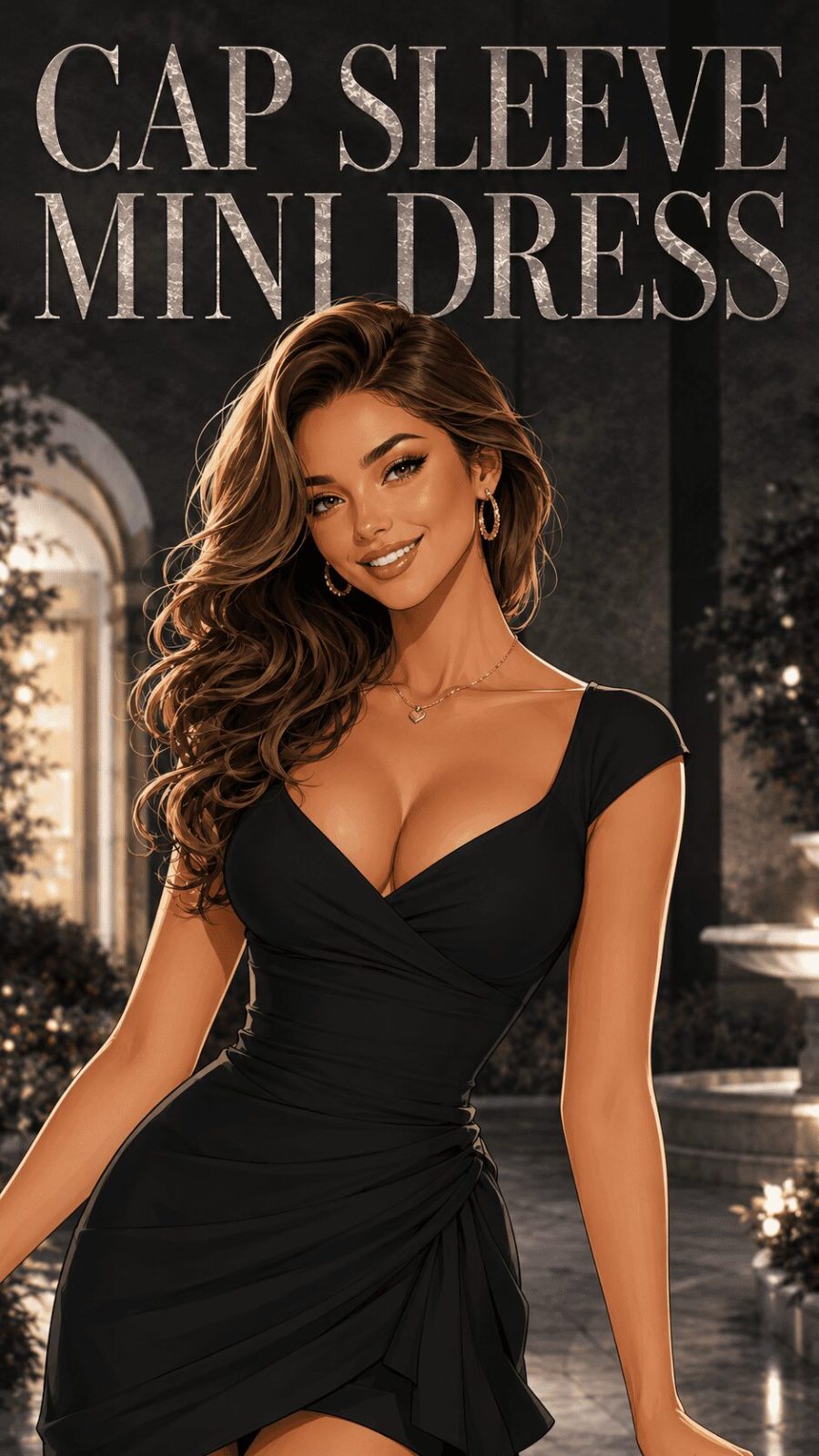
Minimal sleeve coverage extending slightly over the arm at the shoulder — less than a short sleeve, more than nothing. The cap sleeve caps the shoulder seam without hanging below the armpit. A subtle solution to shoulder coverage that doesn't interrupt the silhouette. It's the sleeve for women who want the suggestion of a sleeve without the fabric weight of one. In structured fabrics, cap sleeves add a tailored quality. In soft fabrics, they're almost invisible.
- 29
Bell Sleeve Mini Dress
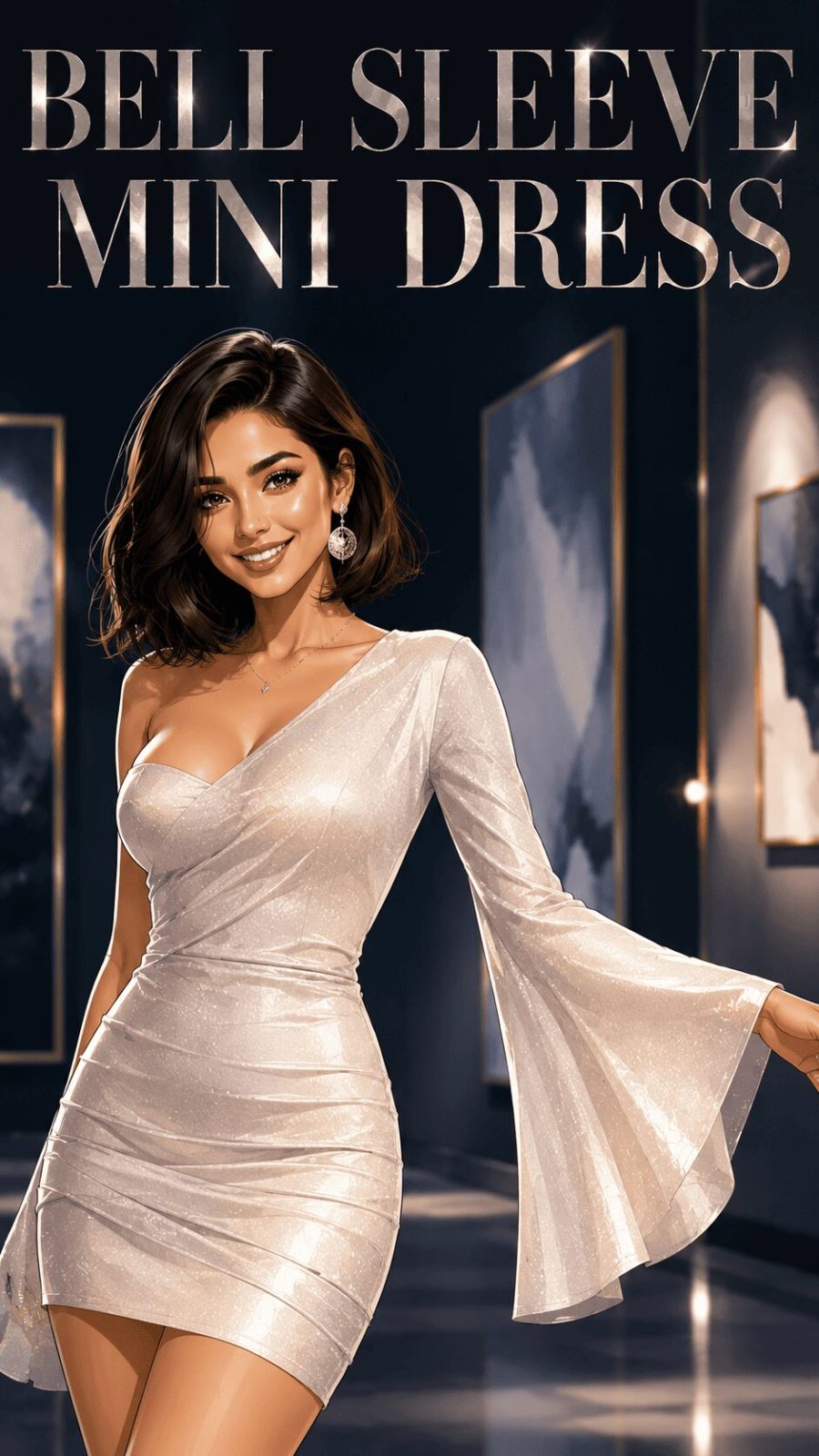
Fitted through the upper arm, flaring dramatically from the elbow to the hem in a bell shape. The flare at the bottom of the sleeve echoes the mini hem visually — both open outward, both are about expansion and movement. In lightweight fabrics, bell sleeves move continuously; in structured fabrics, they hold the bell shape statically. This is the detail reference for the 1960s and 1970s simultaneously — it works in both bohemian and mod aesthetics equally. See more in our bell sleeve reference guide.
- 30
Sleeveless Mini Dress
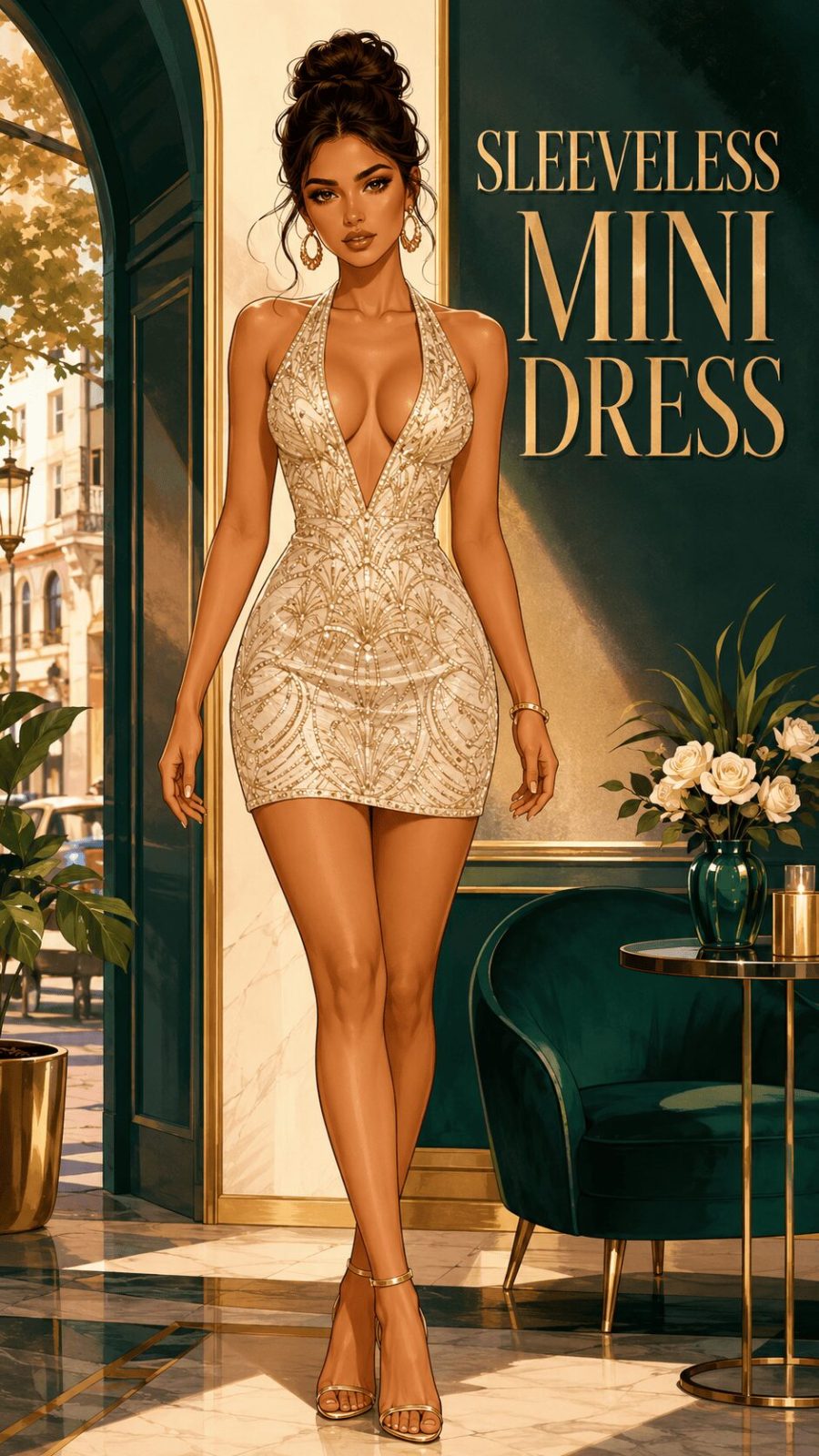
No sleeve whatsoever — armhole only. The most thermally efficient and structurally neutral sleeve option. The sleeveless mini is the base case: the dress stands entirely on its own neckline, fabric, and construction. Without a sleeve to add visual interest, every other design detail works harder. It's the most versatile sleeve configuration for layering — throw anything over it and it becomes something new entirely. A leather jacket. A denim one. A blazer. All create entirely different outfits from the same dress.
- 31
Balloon Sleeve Mini Dress
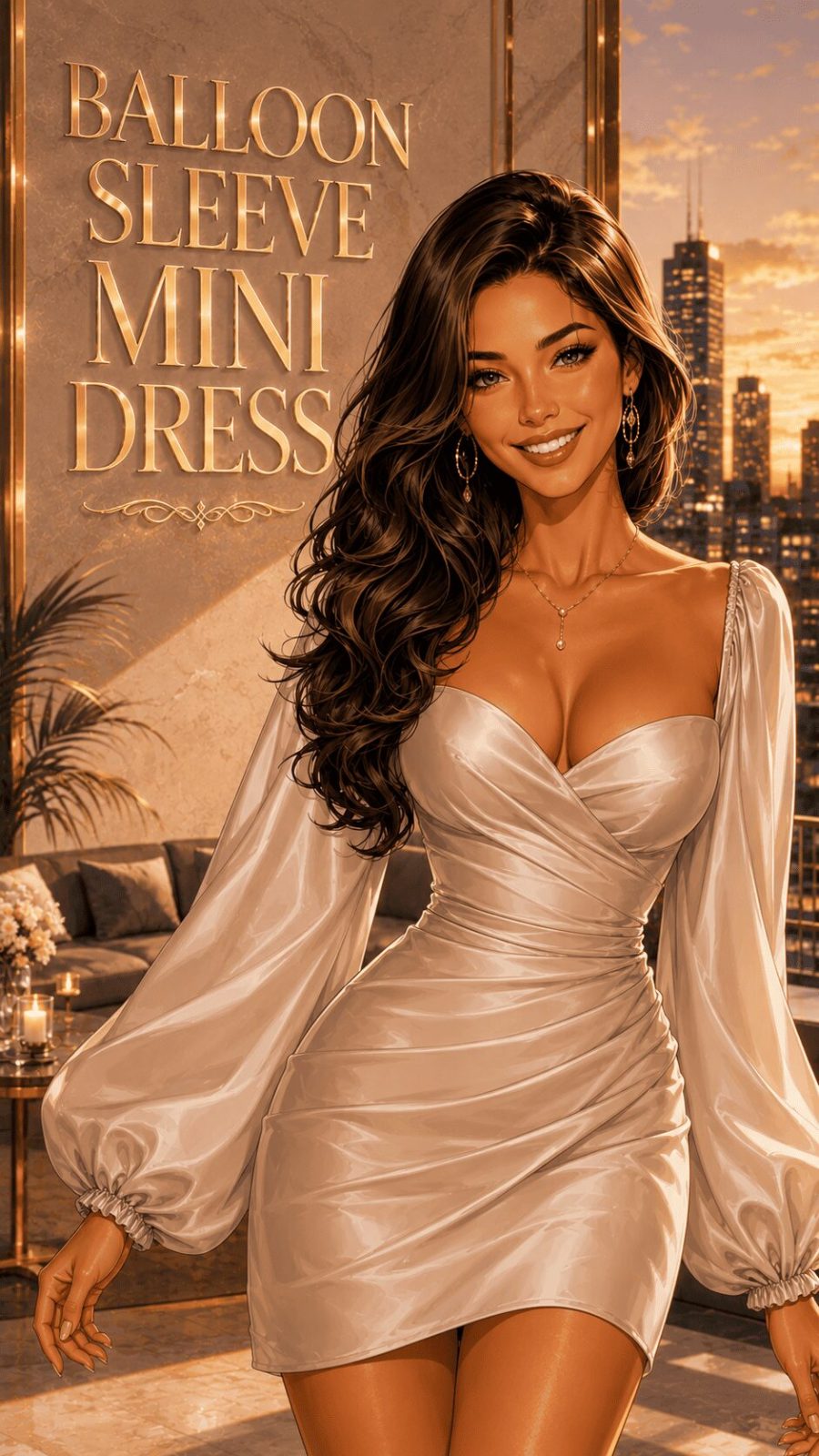
Gathered at both the shoulder and the cuff, creating a rounded, pouched balloon shape through the entire sleeve length. Maximum volume. Maximum presence. In a mini dress this is — without question — a statement silhouette. The balloon sleeve and the abbreviated hem create a top-heavy visual effect that is fashion-intentional rather than accidental. Best in structured fabrics that hold the rounded sleeve shape independently.
- 32
3/4 Sleeve Mini Dress
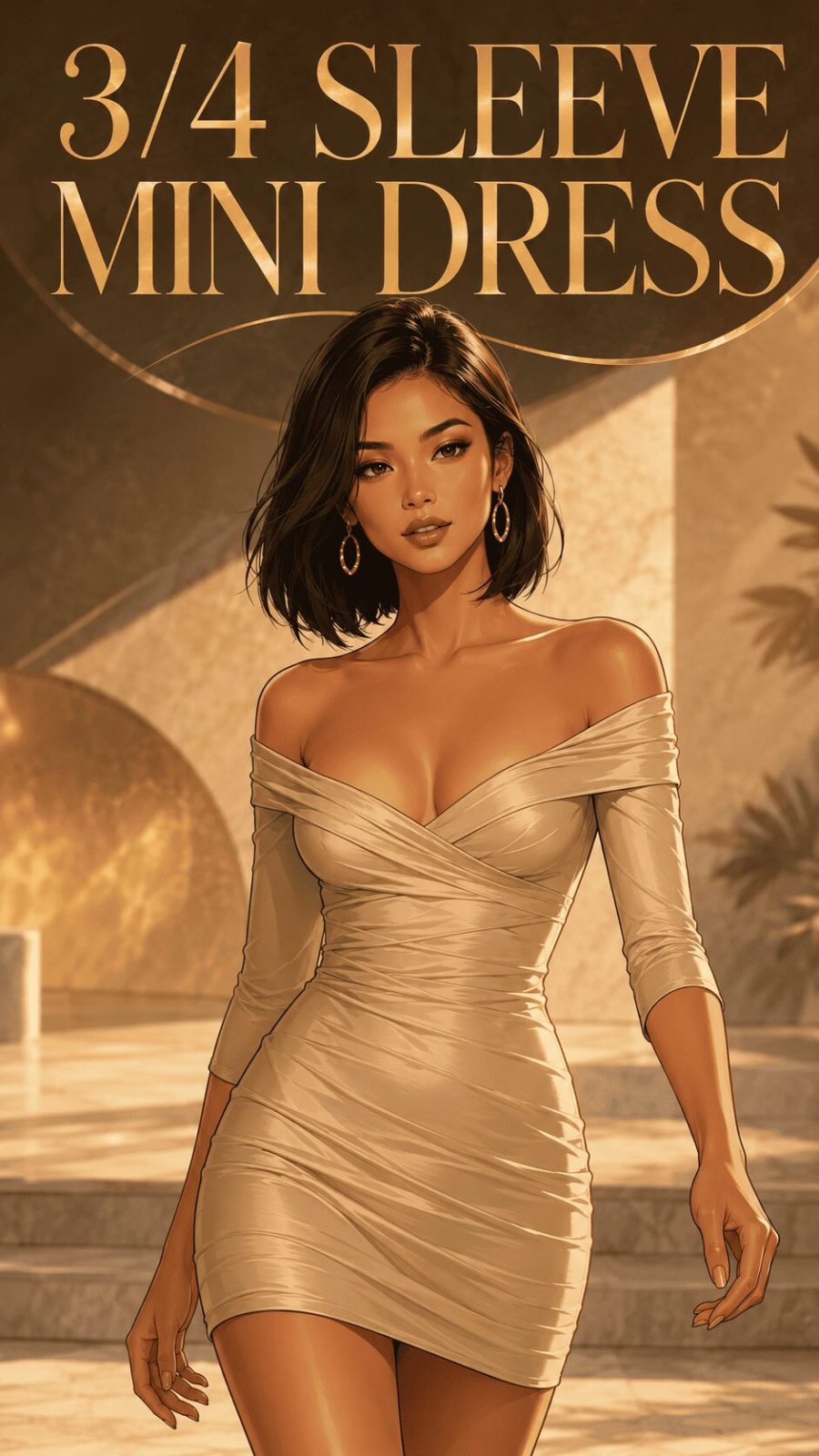
Sleeves ending between the elbow and the wrist — three-quarter length. The most practical sleeve length in transitional weather: longer than short sleeves for warmth, shorter than long sleeves for ventilation. In a mini dress, 3/4 sleeves extend the seasonal range into autumn and spring without requiring a jacket. The forearm exposure adds a proportional balance between the sleeve length and the mini hem.
The long-sleeve mini is one of the most underutilised combinations in most wardrobes — and that's genuinely puzzling. The coverage contrast between wrist and mid-thigh is one of the most effective visual strategies in cold-weather dressing. It keeps you warm. It looks deliberate. It photographs incredibly well. Yet most women default to reaching for a jacket when temperatures drop instead of simply choosing a mini with sleeves. The jacket adds a layer; the long sleeve integrates the warmth into the garment itself. Less bulk, more intention.
Category 4: By Fabric / Material (#33–#40)
How fabric determines drape, occasion register, season, and the way a mini dress moves and ages
Fabric is the most underappreciated variable in a mini dress purchase. The same shift silhouette in cotton versus satin versus velvet is three entirely different garments — different occasion registers, different seasonal ranges, different care requirements. At mini length, fabric choices are amplified: light fabrics that whisper in a maxi become theatrical in a mini because there's less of them. Heavy fabrics that add elegance to a long gown can feel oppressive at this hemline. Fabric literacy is genuinely the difference between a mini that works and one that doesn't. For deeper reading, see our complete fabric guide for women's fashion.
- 33
Satin Mini Dress
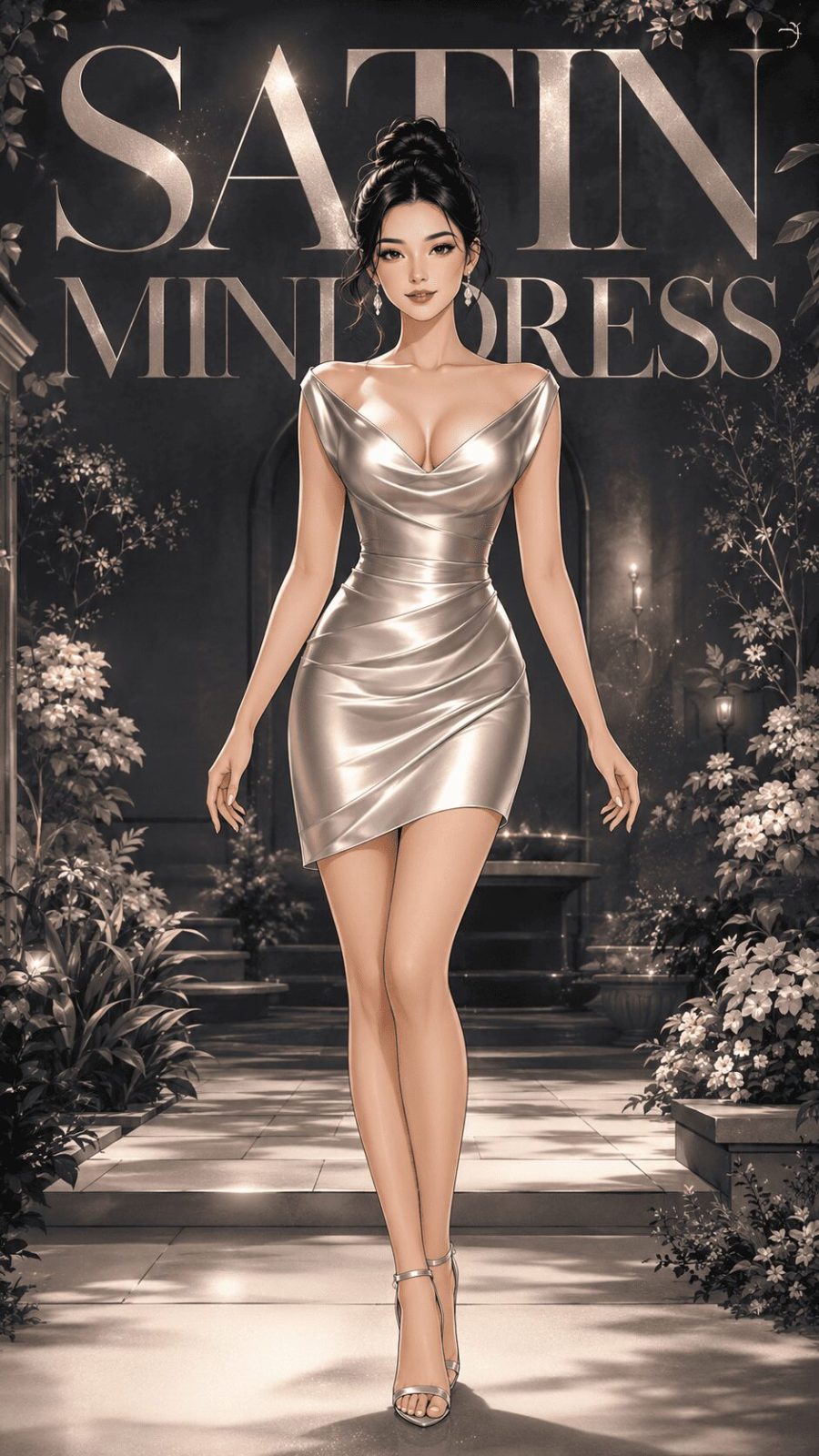
Satin-weave fabric with a high-lustre surface — light-reflecting, smooth, with a cool, weighted drape. Satin at mini length is one of fashion's most effective impact-per-yard ratios. A relatively small amount of fabric creates enormous visual presence. Slip minis are most frequently found in satin or satin-finish fabric. The sheen elevates occasion register immediately; a satin mini reads as evening almost regardless of construction.
- 34
Linen Mini Dress
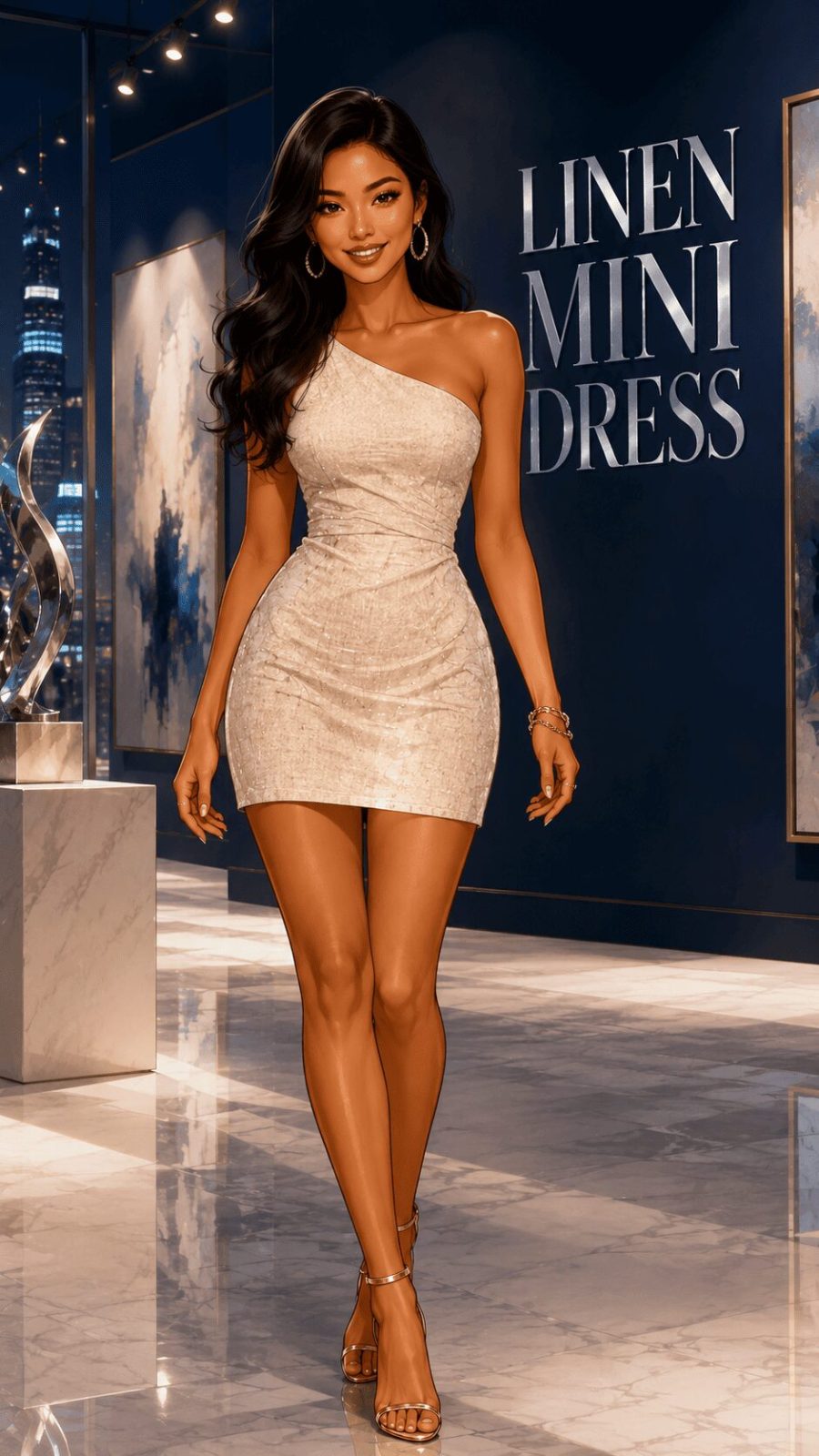
Linen — the most breathable natural fibre — at mini dress length. Slightly rough-textured, with a characteristic drape that softens distinctly with washing and wear. Linen wrinkles; that's not a defect, it's part of the character. A linen mini dress carries a relaxed, sun-baked European summer quality that no synthetic fabric can replicate. Best in shirt and shift constructions. The weight and texture read as decidedly daytime and casual, making it perfect for vacation and beach-adjacent styling.
- 35
Velvet Mini Dress
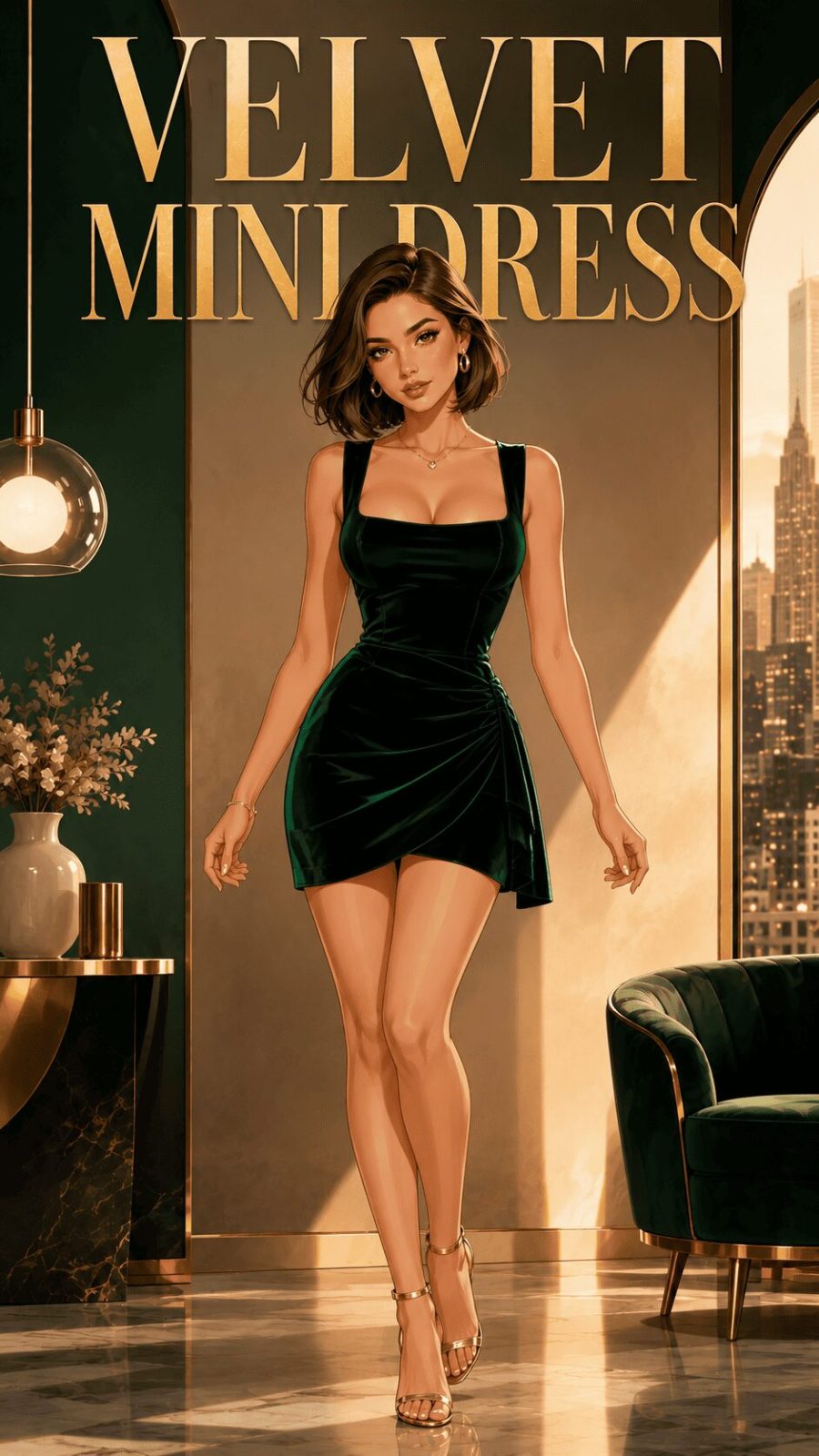
Cut-pile woven fabric with a directional nap that creates colour depth and a distinctly tactile quality. Velvet absorbs light rather than reflecting it, producing a depth of colour unmatched by any other fabric. At mini length, velvet is the evening winter mini — the fabric transforms the abbreviated hemline from casual to unambiguously formal. Rich, substantial, and photographically gorgeous in low light. Bodycon and shift constructions work best; excess fabric volume diminishes velvet's characteristic drape quality.
- 36
Knit Mini Dress
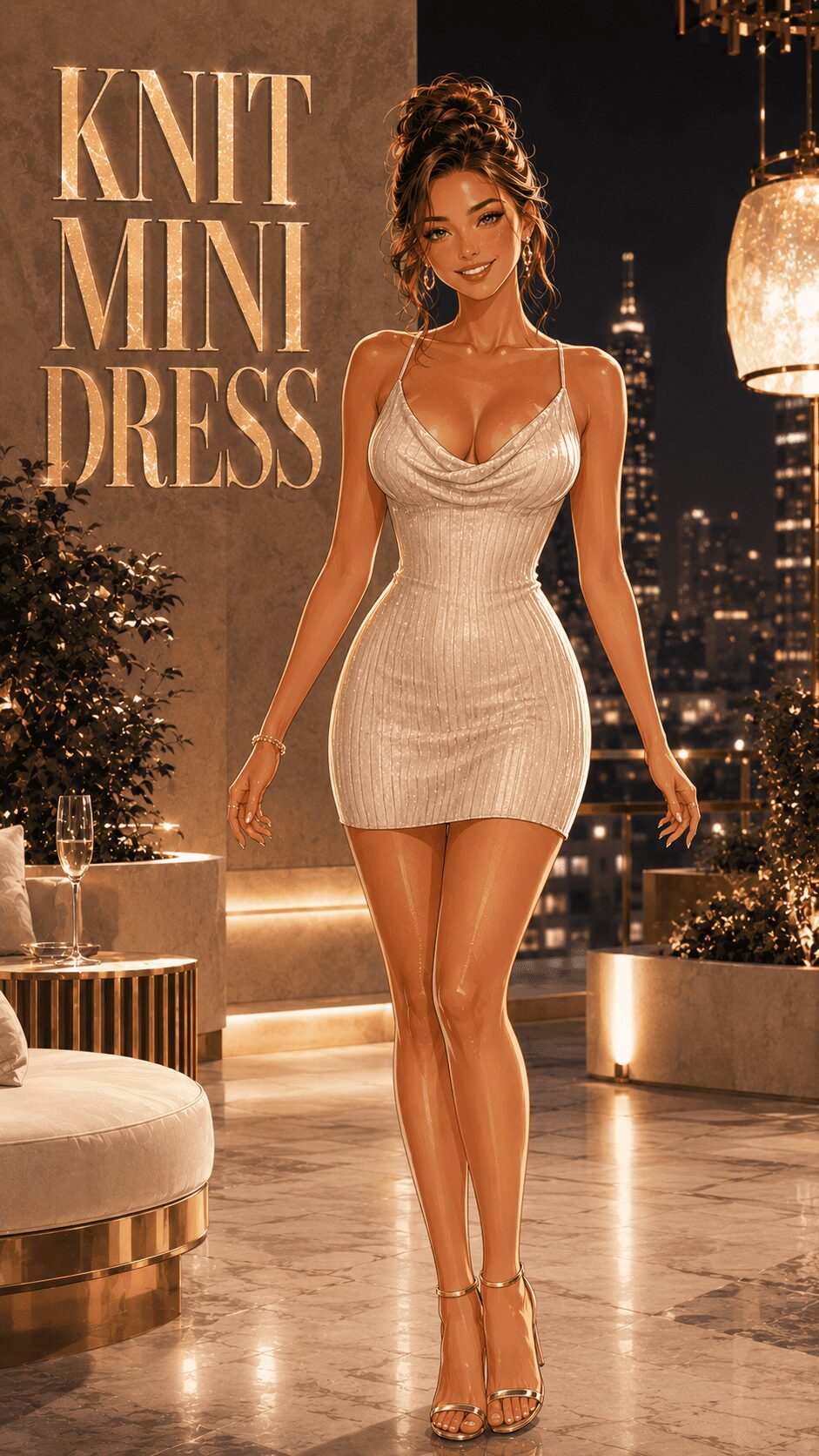
Constructed from knitted fabric — ranging from fine-gauge jersey to chunky rib knit — with inherent stretch and recovery. Knit mini dresses democratize the mini silhouette for colder months more effectively than almost anything else. The stretch accommodates movement; the knit construction retains warmth without requiring lining. A ribbed knit mini in a neutral tone paired with knee-high boots is one of the most consistently worn autumn combinations across multiple seasons of street style data.
- 37
Chiffon Mini Dress
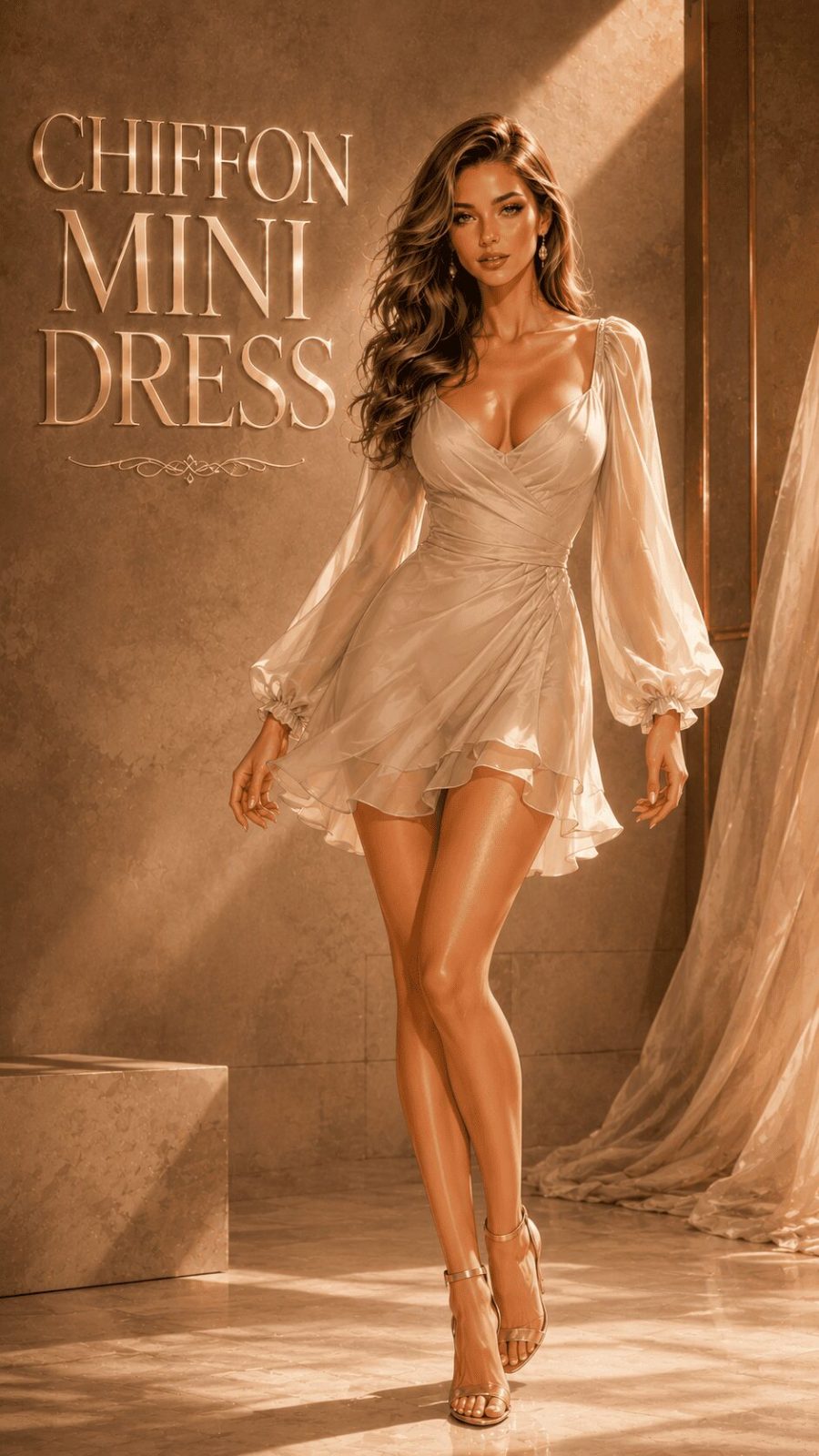
An almost weightless, sheer woven fabric with a delicate floating drape and a barely-there quality. Chiffon at mini length is almost always layered over an inner lining — the sheerness requires it. The layering creates depth: the chiffon floats over the lining, catching light differently at each angle. Movement is the defining quality of a chiffon mini: it responds to air and motion in ways that heavier fabrics can't approach. Summer evening and resort are its natural registers.
- 38
Denim Mini Dress
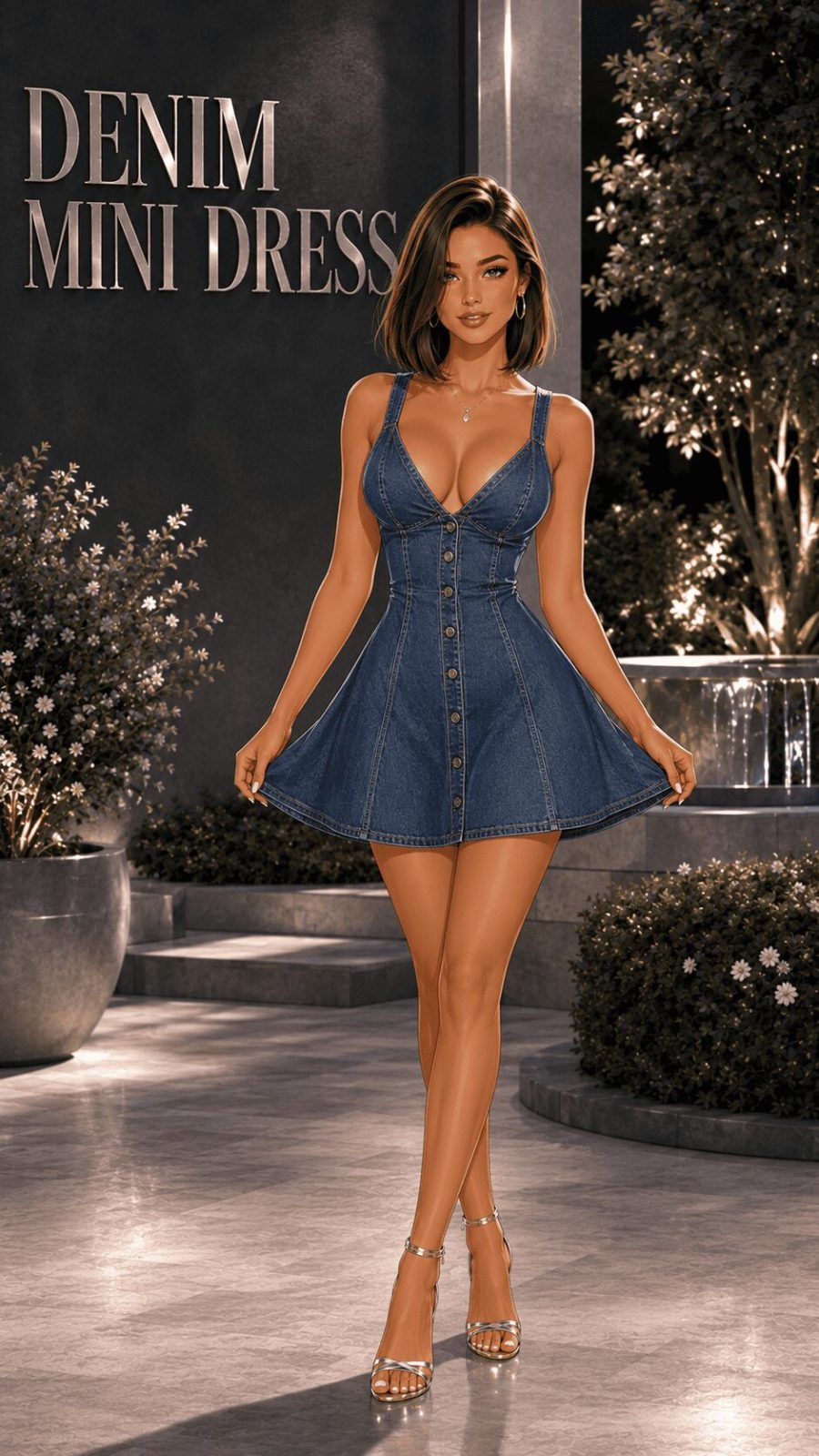
Twill-weave cotton denim at mini dress length — the most reliably casual mini construction available. Denim mini dresses appeared prominently in the late 1960s alongside the denim jean wave, hit a cultural peak in the 1990s with acid-wash variations, and have never fully left fashion since. The fabric provides structure without formality. Shirt construction is the most common pairing. Distressed or raw-hem finishes lean younger; dark-wash clean finishes can border on smart-casual. See related styles in our guide to denim fits and finishes.
- 39
Lace Mini Dress
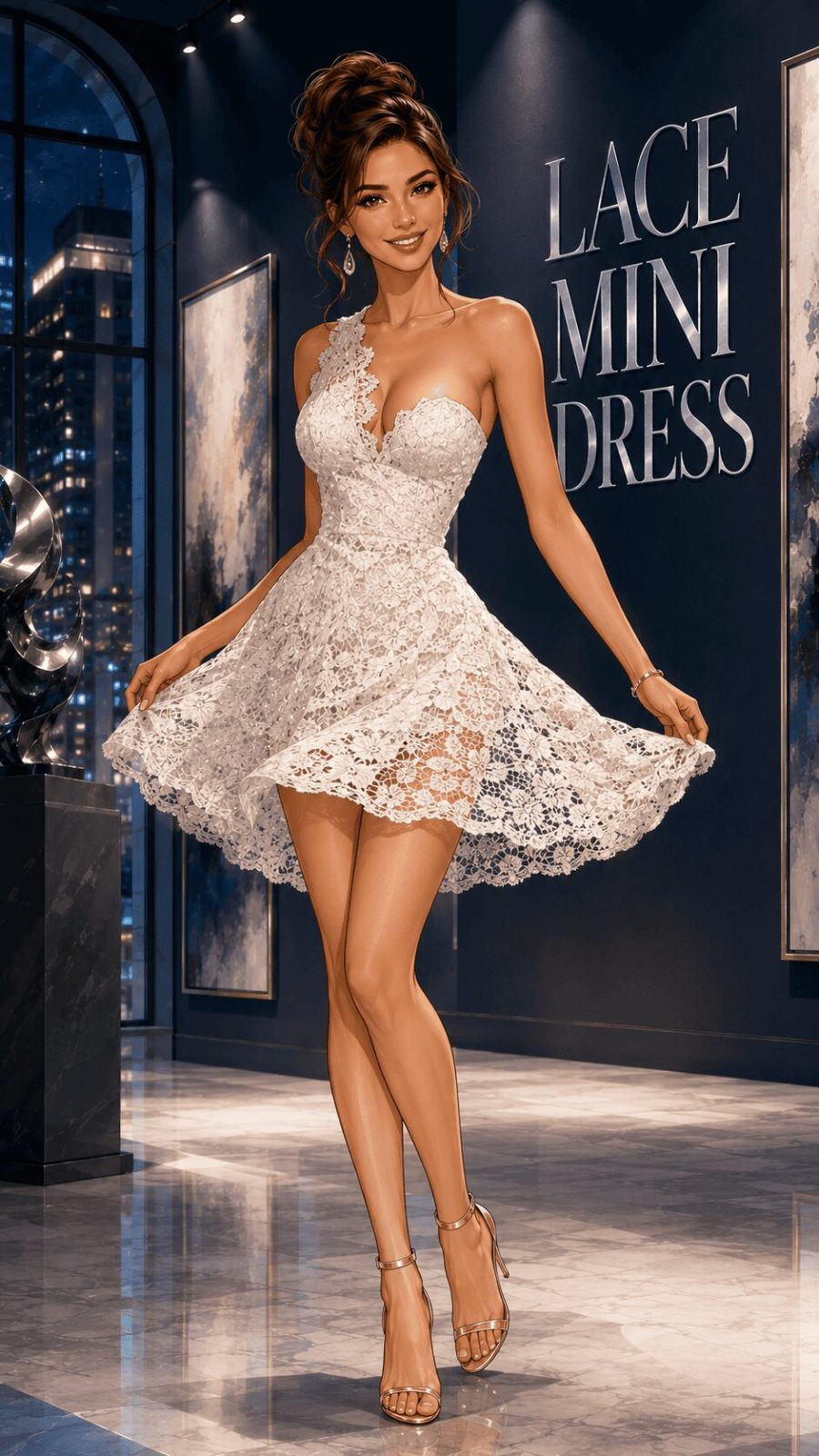
Constructed substantially or entirely from lace fabric — an open-weave textile with decorative patterning. Lace mini dresses most commonly include a slip lining beneath the lace layer; the combination of the patterned overlay and the solid underlayer creates visual depth. White lace reads bridal; black lace reads gothic or evening; nude lace reads barely-there. The pattern of the lace itself functions as a second layer of ornamentation on top of the dress silhouette. One of the highest-density decoration-per-yard constructions available. You can read more about lace detail types in our lace details reference.
- 40
Sequin Mini Dress
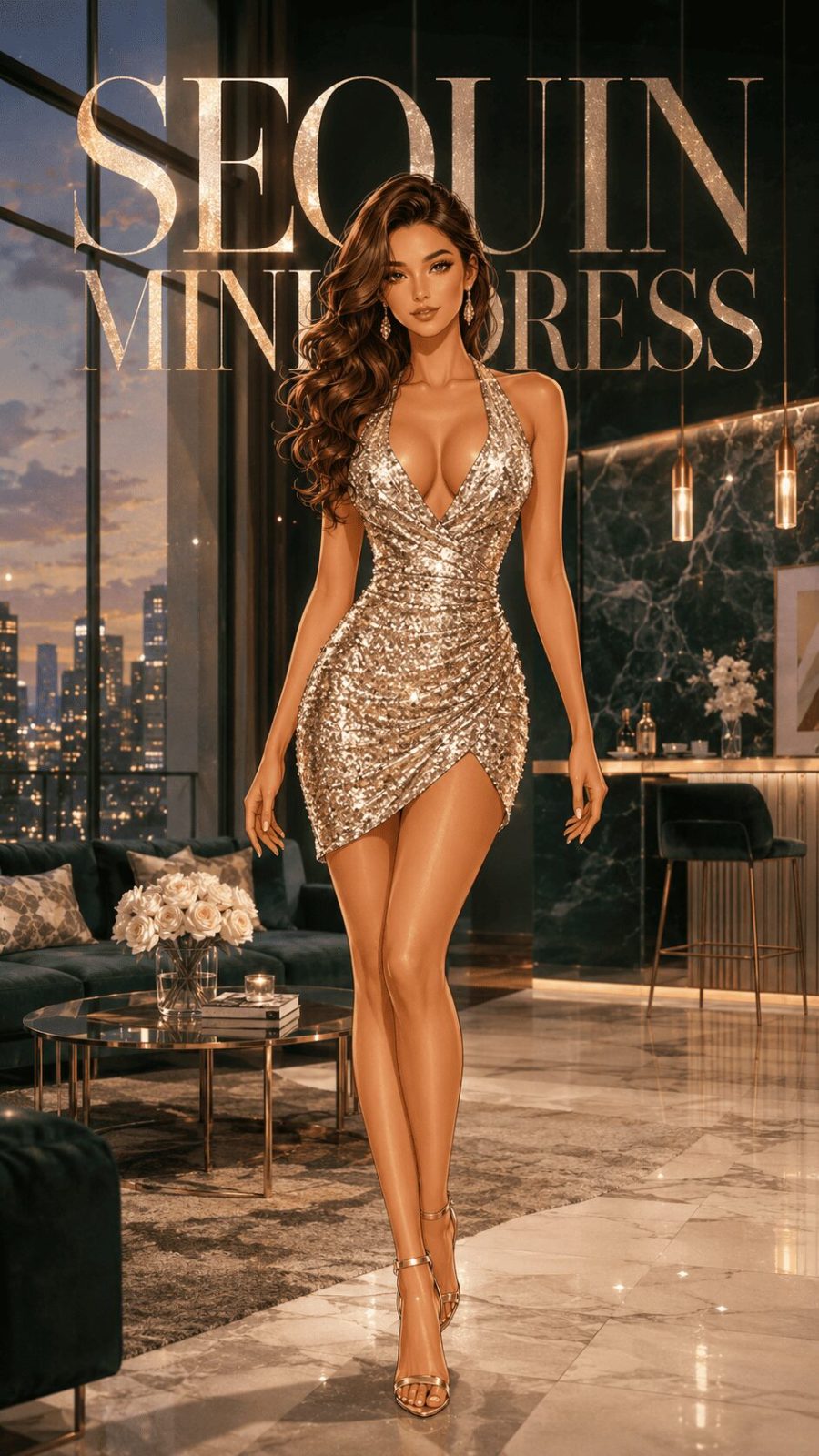
Embellished with overlapping disc-shaped sequins sewn onto a base fabric — creating a light-reflective, high-impact surface that moves and shimmers with every step. The sequin mini is the end-of-spectrum statement: maximum impact, minimum fabric. No construction is more efficient at commanding attention in a room. Sequin weight affects movement significantly — lighter sequins on mesh create fluid shimmer; heavier sequins on structured bases create a rigid, armoured quality. Both are valid; they just communicate differently.
Category 5: By Occasion / Purpose (#41–#47)
When occasion drives the design brief — how context shapes construction, fabric, and styling decisions
Occasion-led classification is the most intuitive way most women actually shop for mini dresses — "I need something for a rooftop party" or "I want a summer wedding guest dress that's not boring." But it's worth understanding that occasion is not a construction category. It's a design brief. The same occasion can accommodate multiple constructions, fabrics, and silhouettes. What changes is the calibration: a vacation mini can be a smocked babydoll or a shirt dress, but not a sequin bodycon. Understanding why those calibrations exist makes you a better editor of your own wardrobe.
- 41
Party / Going-Out Mini Dress
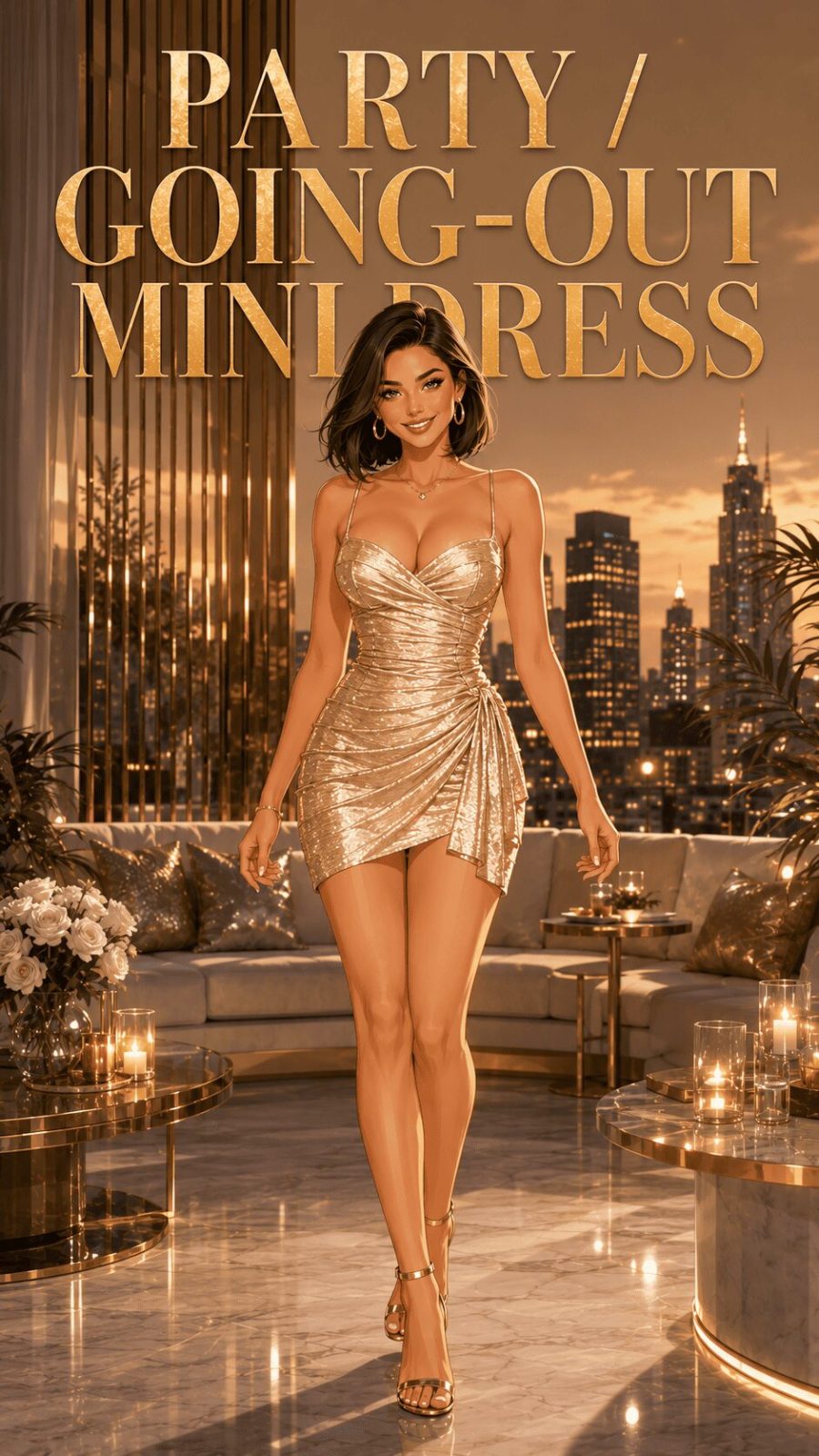
Designed explicitly to command attention in a low-lit, high-energy, high-density social environment. The party mini brief prioritises impact over practicality: it can be bodycon, sequinned, cut-out, backless, or some combination of all of the above. The unifying principle is deliberateness — nothing about the design is accidental, and everything is calibrated for maximum visual presence. Wear it with confidence or not at all; this is a dress that requires commitment.
- 42
Vacation / Resort Mini Dress

Lightweight, breathable, packable — designed for warm-weather travel contexts. Typically in linen, cotton voile, chiffon, or lightweight rayon. Prints dominate: tropical florals, abstract brush-stroke patterns, bold colour-blocking. The vacation mini has an easy relationship with wrinkles because resort fabrics are expected to wrinkle. The brief is sun, movement, and looking effortless on a cobblestone street or a boat deck simultaneously. Compresses into a carry-on without thinking.
- 43
Date Night Mini Dress
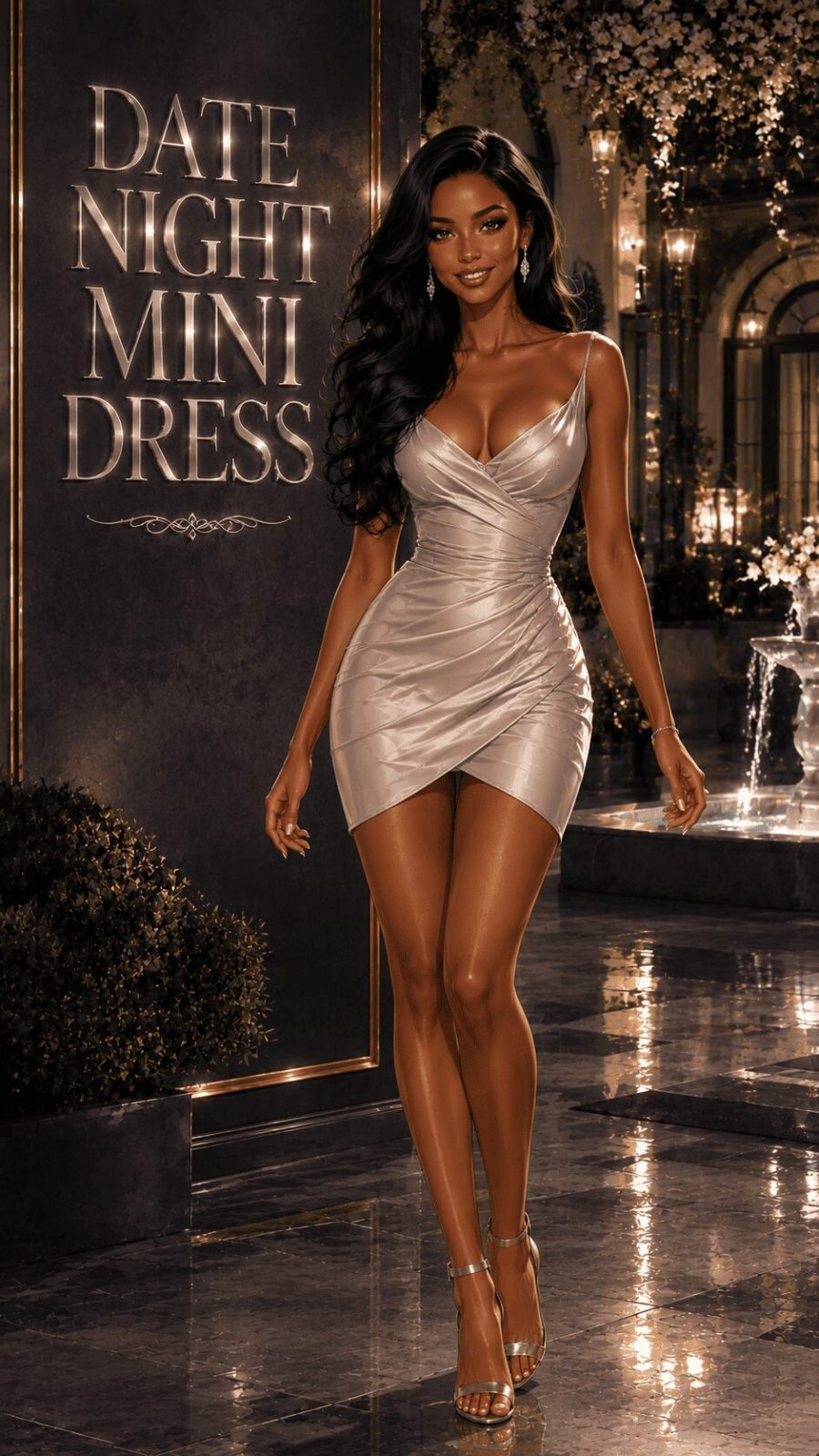
Calibrated for intentional attractiveness without crossing into party-dress territory. The date night mini occupies the middle register: considered, polished, deliberately chosen, but wearable across restaurant, cinema, and bar settings interchangeably. Wrap minis, satin slips, and bodycon styles in solid colors or restrained prints are the natural habitats for this brief. The key word is effort that looks effortless — visible care without visible trying.
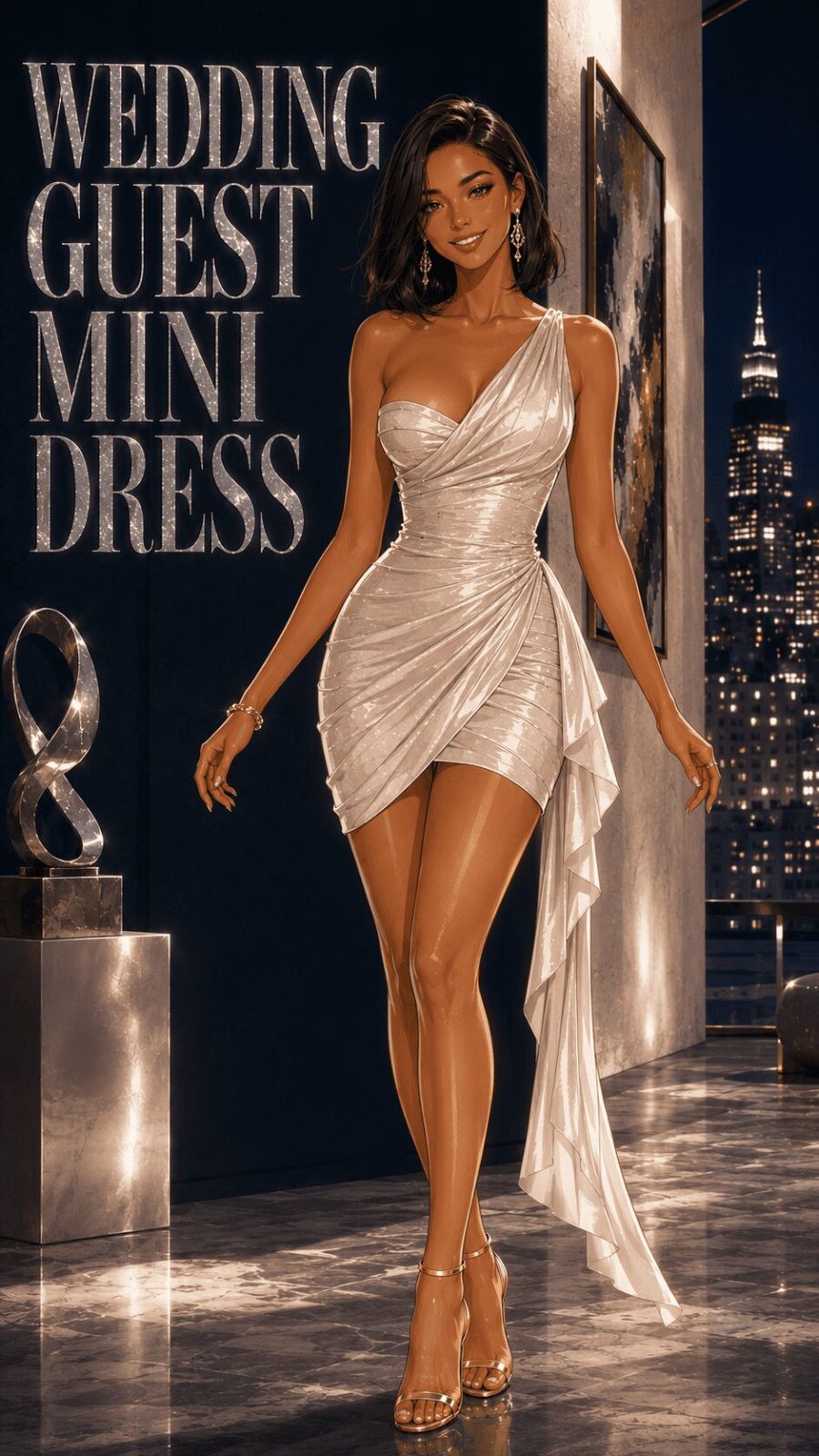
- 44
Wedding Guest Mini Dress
The wedding guest brief in a mini length requires navigating a specific tension: dress code compliance (often "smart casual," "cocktail," or "garden party") alongside the constraint of not upstaging the couple. A mini is absolutely acceptable at most contemporary weddings — particularly outdoor, garden party, or destination weddings — if the fabric and construction register as considered rather than going-out. Florals in chiffon, structured solids in scuba, or embroidered midis in cotton all work. Avoid white, ivory, and anything that reads as club wear.
- 45
Office / Business Casual Mini Dress

The mini dress in a professional context is a workable concept with caveats. Construction and fabric do the heavy lifting: a structured ponte shift or a woven shirt dress in a neutral or pattern-restrained print can register as work-appropriate at modern offices with contemporary dress codes. The construction needs to be tight and formal enough — no sequins, no plunge necklines, no bodycon — and the hemline benefits from landing closer to the mid-thigh than the upper thigh. Paired with opaque tights and low-heeled boots, a winter knit mini can cross most business casual thresholds.
- 46
Festival Mini Dress
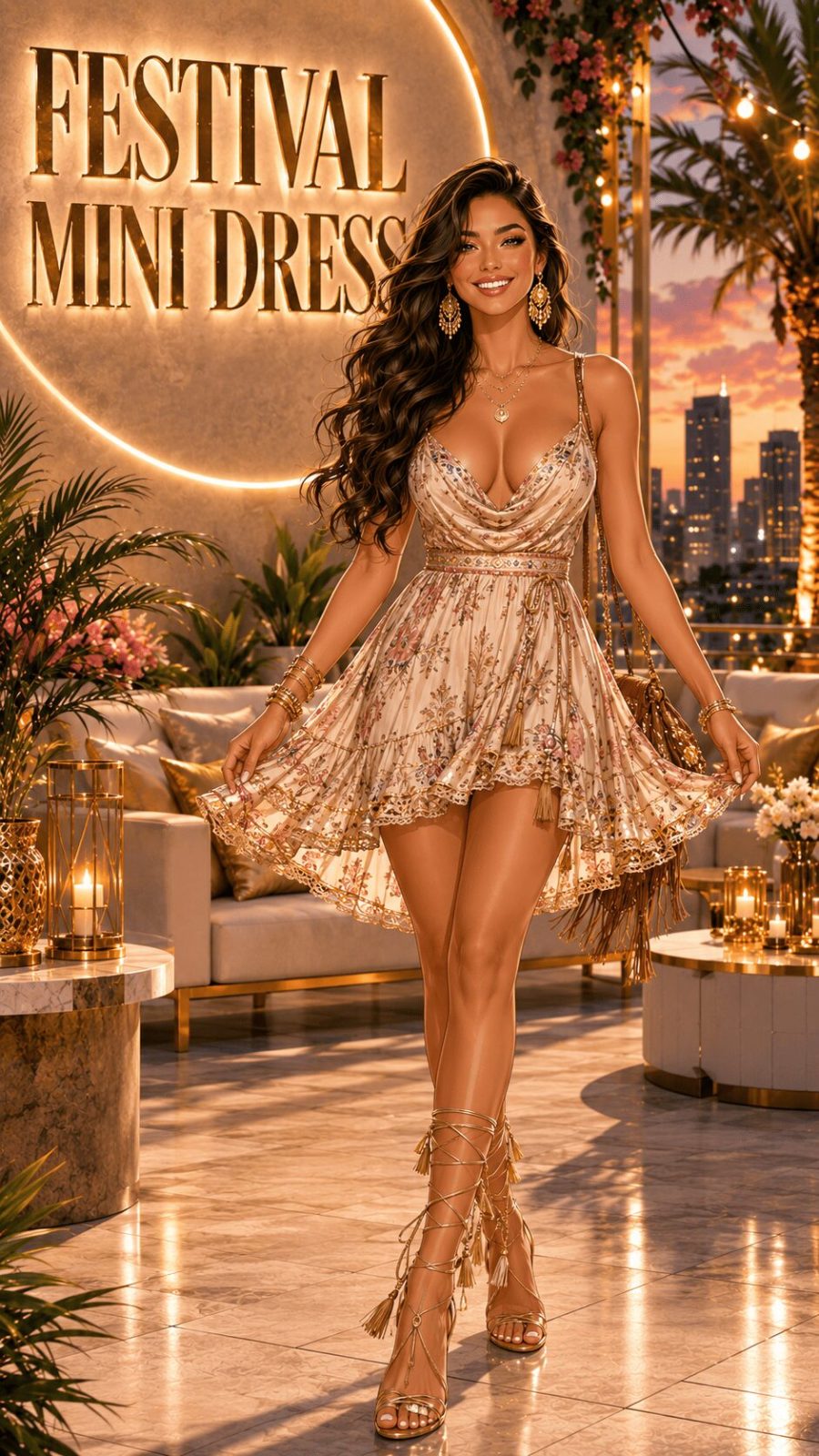
Designed for outdoor music festivals — where the brief is durability, freedom of movement, heat management, and visual interest simultaneously. Festival minis lean heavily into crochet, embroidered denim, tiered cotton, and printed rayon constructions. The garment needs to survive 12-hour days on grass, endure sun and occasional rain, and still look good in photographs taken at any angle at any time of day. Bohemian details — fringe, mirror work, tie-dye, embroidery — are the natural decorative language of this brief.
- 47
Brunch / Casual Mini Dress
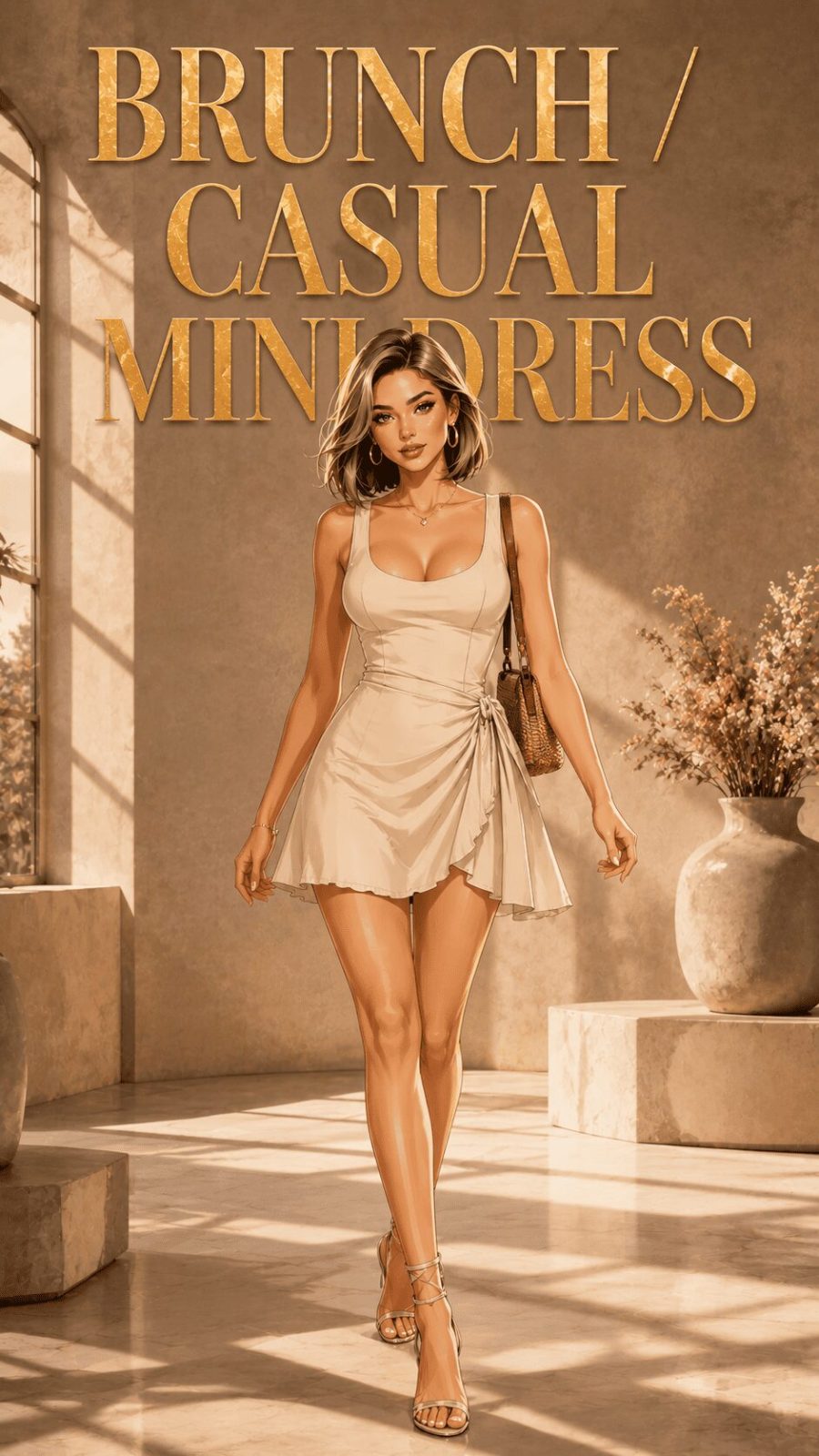
The daytime casual register — cheerful, easy, unpretentious, but still intentional. Cotton, jersey, printed rayon, or smocked fabrics at mini length. The brunch mini is the most searched and Pinterest-referenced mini dress category by a wide margin, which reflects its actual utility in modern women's wardrobes: it covers the Saturday morning farmer's market, the afternoon café, and the spontaneous evening stroll all from a single garment choice. Square necklines, tiered constructions, and floral prints dominate this category because they read as friendly and approachable rather than formal or going-out.
- 48
Cut-Out Mini Dress
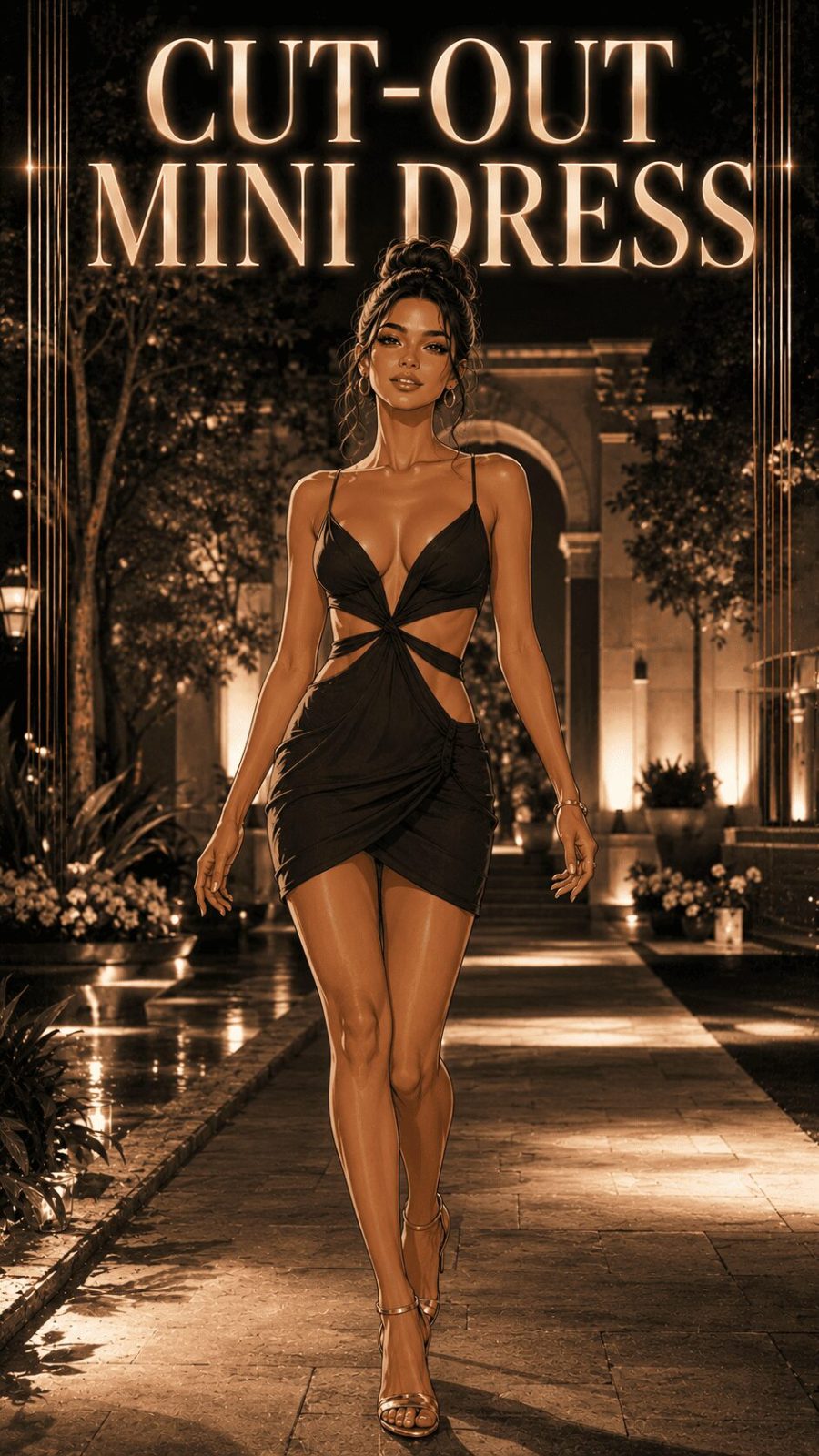
Strategic apertures cut into the fabric — at the waist, side panels, back, or décolletage — creating deliberate skin exposure within an otherwise covered construction. Cut-outs are a design detail that functions architecturally: the negative space is part of the garment's design language just as much as the fabric. At mini length, cut-outs at the waist create a visual hourglass effect even when the underlying construction is relatively straight. The strategic reveal is more visually interesting than simply removing more fabric.
The wedding guest mini question comes up repeatedly — and the answer is almost always yes, if you approach it correctly. The variables that determine acceptability are not the hemline. They are: Is the fabric considered? Is the construction polished rather than club-going? Is the neckline appropriate for the ceremony setting? A linen shirt mini in dusty rose with kitten heels and a structured clutch is more appropriate at most outdoor weddings than a floor-length jersey dress with spaghetti straps in white. Occasion register is constructed from the complete set of garment signals — not any single one of them in isolation.
Category 6: By Design Details & Embellishments (#49–#54)
Surface decoration and structural details that define the garment's visual character beyond silhouette
Design details and embellishments are the layer on top — they don't define the fundamental silhouette or construction, but they determine the garment's personality. A plain A-line mini in black crepe and the same silhouette with intricate embroidery at the hem are structurally identical but communicate completely differently. Understanding which details elevate and which simply add noise is a critical skill in building a wardrobe that works. The best embellishments feel integral — as though removing them would diminish the garment. The worst feel applied, like stickers on a surface. You can read more about embellishment types in our complete sewing embellishments guide.
- 49
Floral Print Mini Dress
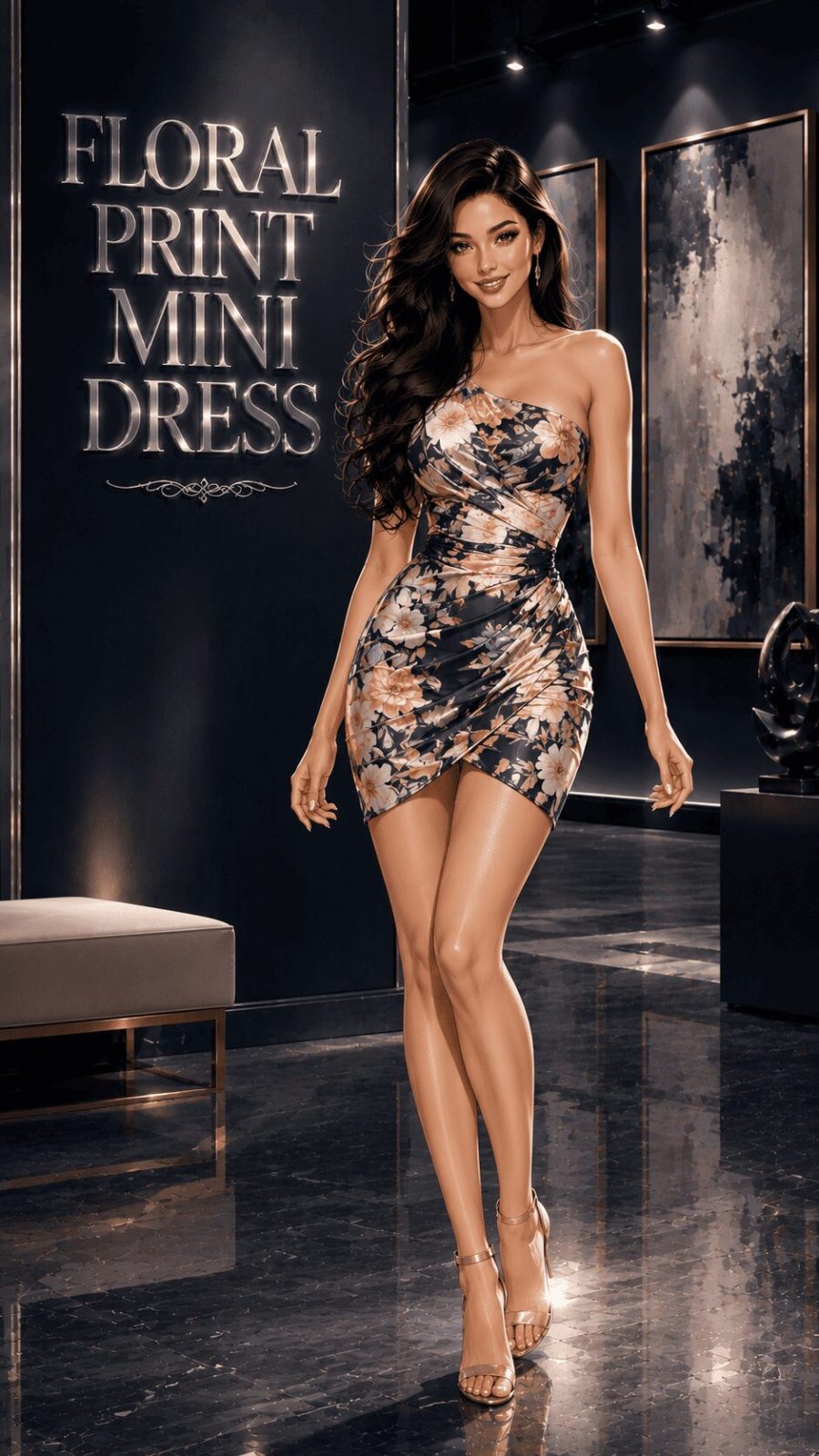
Floral motifs printed or woven into the fabric — the most consistently searched, purchased, and worn print category in women's fashion globally. At mini length, florals communicate seasonal warmth and approachability in a way no other print replicates. Print scale matters enormously: small-scale ditsy florals read sweet and retro; large-scale bold florals read maximalist and fashion-forward; watercolour blurred florals read romantic and resort. The scale and colour palette of the print determine the occasion register far more than the hemline does.
- 50
Embroidered Mini Dress
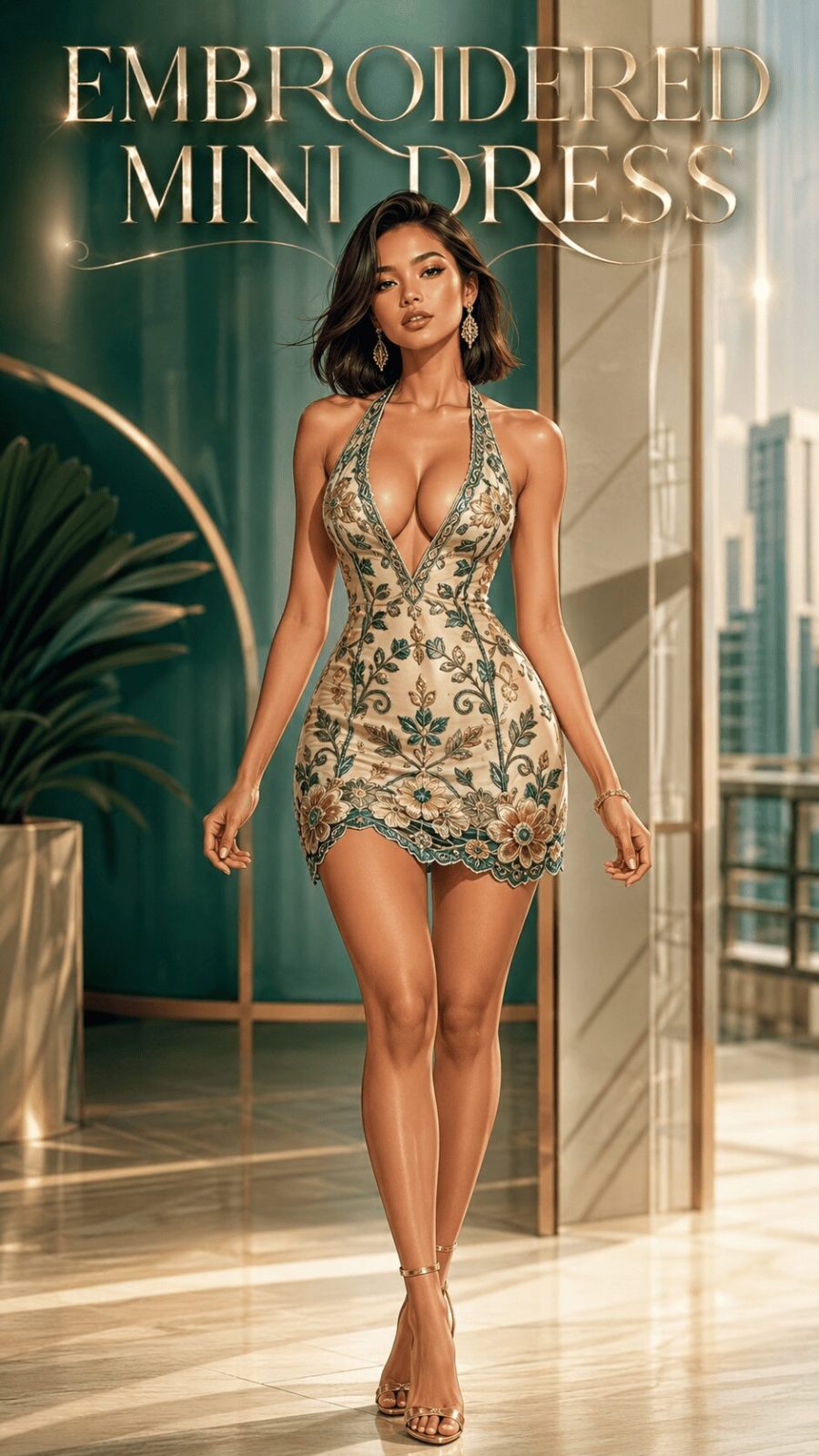
Decorative threadwork stitched directly onto the garment fabric — at the neckline, hem, sleeves, or as an all-over pattern. Embroidery elevates the perceived quality of a garment immediately and universally; handwork signals craft in a way that printing never does. Mexican broderie anglaise mini dresses, Indian chikankari cotton minis, and European folk-embroidered styles all draw from distinct embroidery traditions that are now fully absorbed into global fashion. The thread density and placement determine whether embroidery reads as rustic or opulent.
- 51
Polka Dot Mini Dress
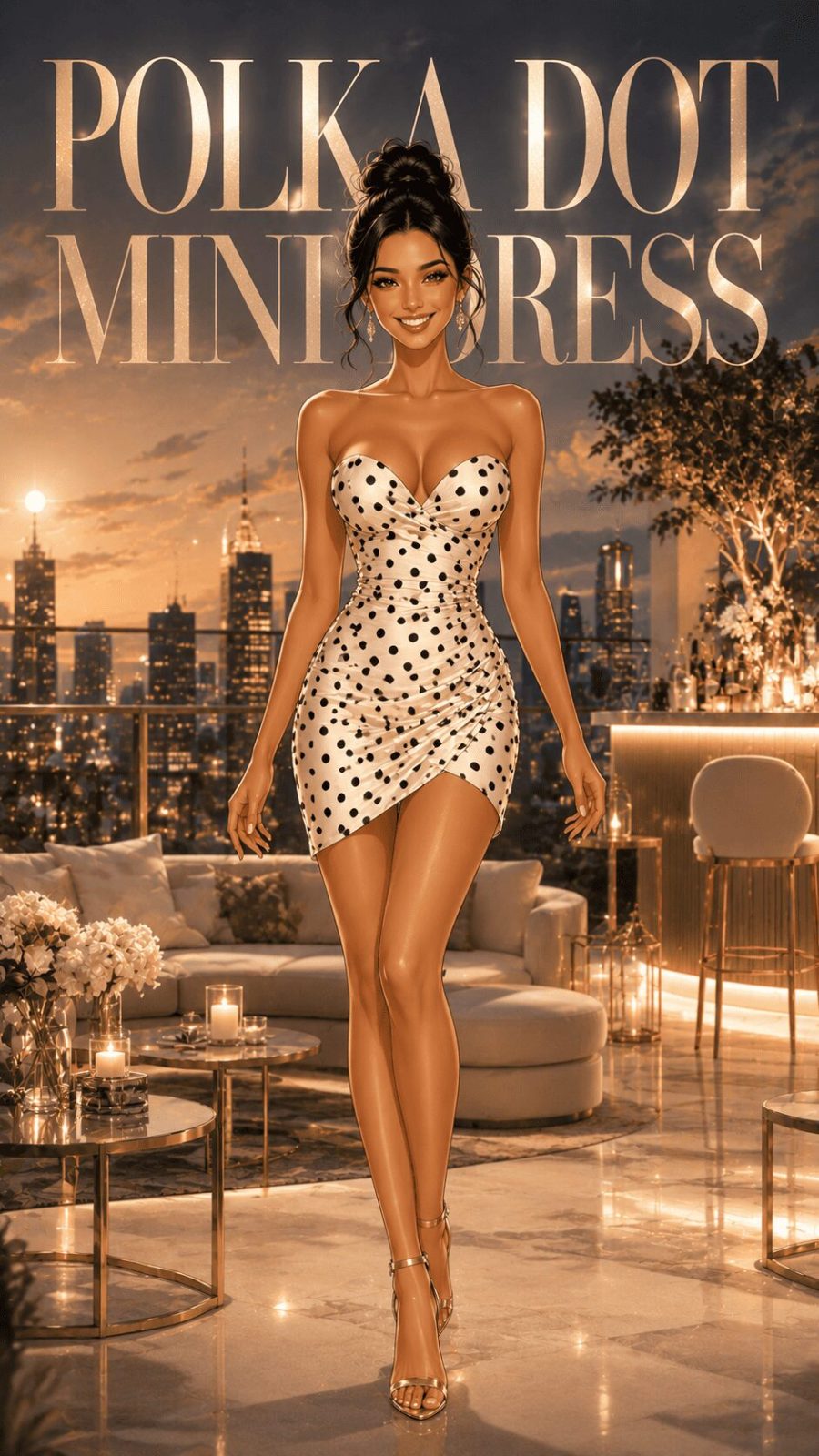
Evenly spaced circular dots on a contrasting ground — one of the most enduring and widely recognised fashion print patterns in history. Polka dots at mini length carry a specific aesthetic inheritance: mid-century American summer dressing, 1950s Brigitte Bardot, and 1990s grunge-revived vintage simultaneously. The dot size and ground colour control the register entirely: black on white reads modern and graphic; red on white reads retro pin-up; tiny ivory dots on navy reads sophisticated and French. One print, multiple personalities.
- 52
Striped Mini Dress
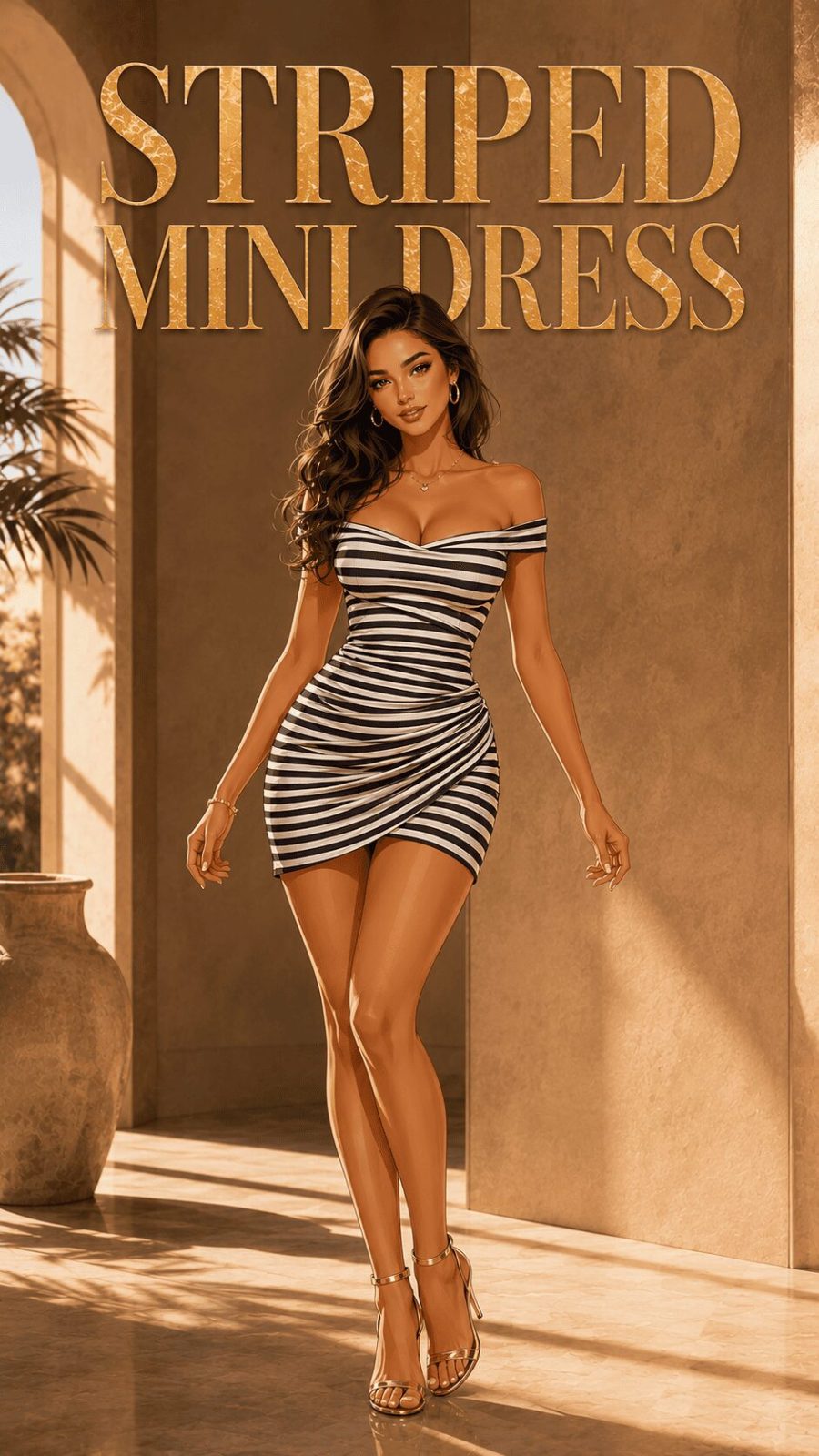
Linear stripe patterns — horizontal, vertical, diagonal, or multicolour. Stripe direction creates distinctly different visual effects: vertical stripes elongate; horizontal stripes widen; diagonal stripes create dynamic movement. In a mini dress, stripe direction is more impactful than in longer garments because less fabric means each stripe is more visible proportionally. Nautical navy-and-white stripes are the most recognisable variant, with deep roots in French Breton fisherman's shirt construction — the marinière.
- 53
Backless Mini Dress
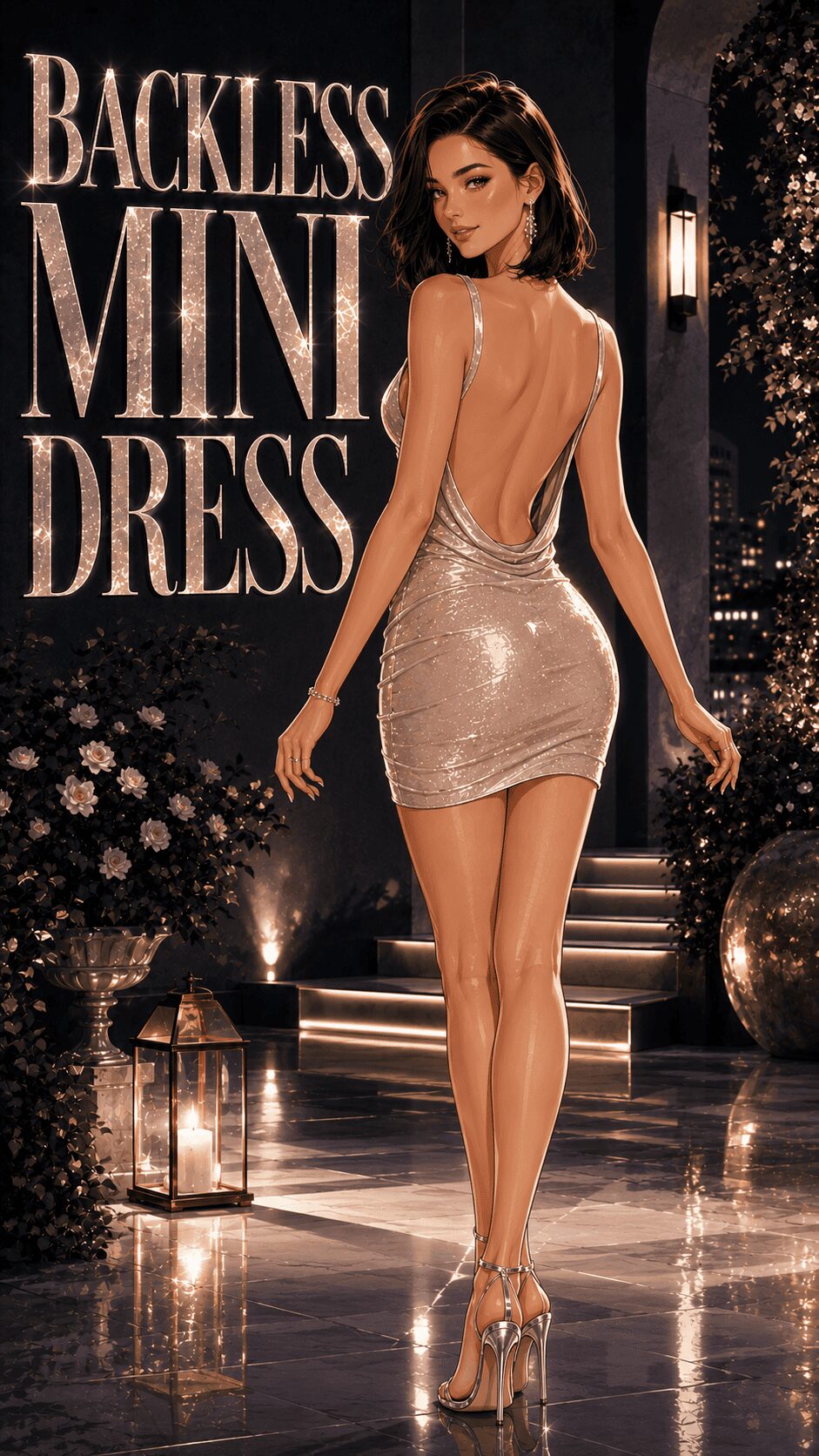
The back is the primary design event — significantly open, with coverage at the front. This is one of the most effective strategies in mini dress design: shift the revelation from the conventional front-body plane to the back. The approach creates visual drama that is only fully appreciated when the wearer turns or moves away. At mini length, a backless construction distributes exposure across three planes — the back, the shoulder, and the leg — in a way that feels considered rather than simply revealing.
- 54
Crochet Mini Dress
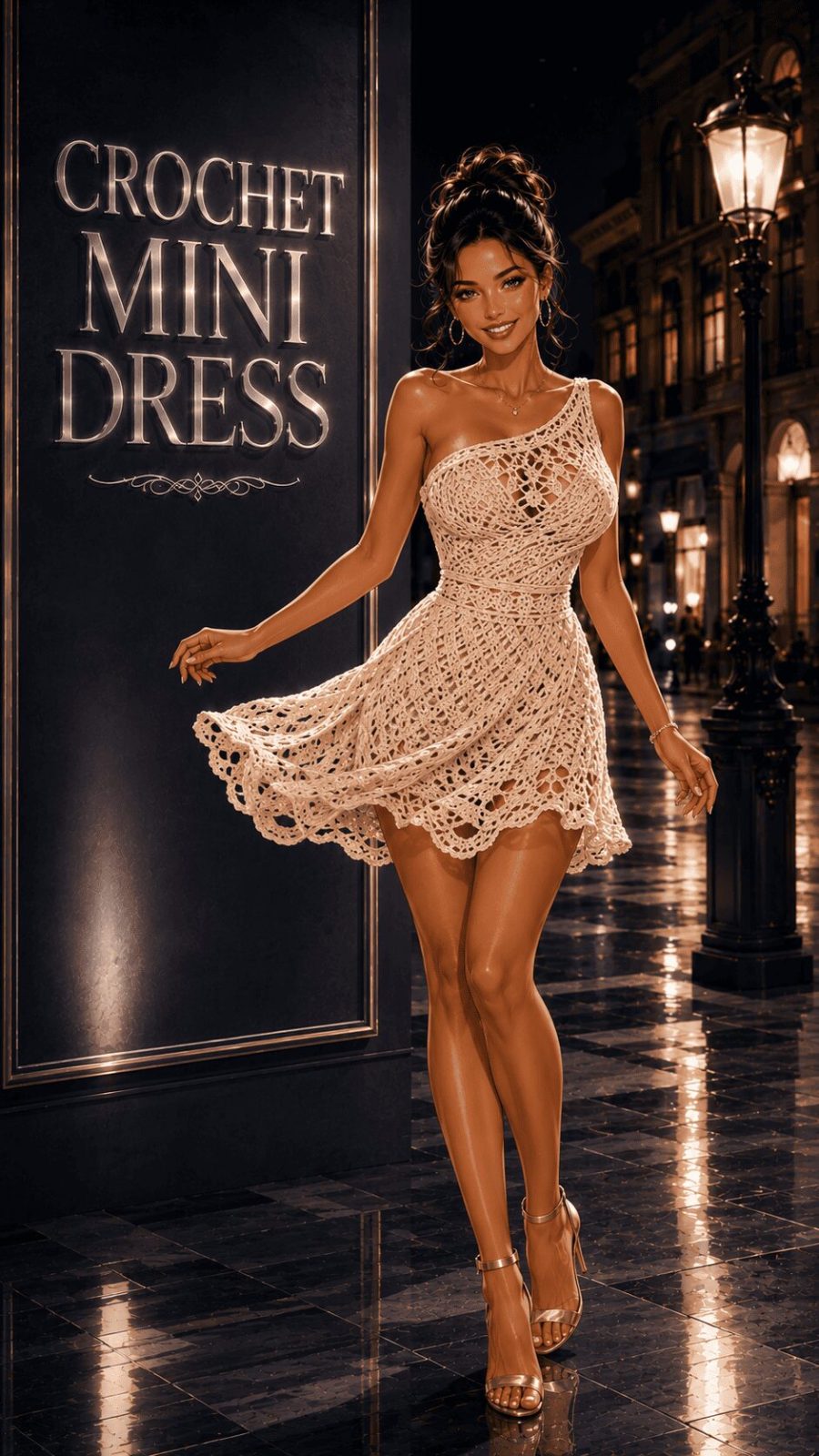
Constructed from crocheted fabric — either entirely hand-crocheted or machine-produced crochet-effect fabric. The characteristic open-weave pattern requires lining underneath for modesty and structure. Crochet's handcraft heritage gives it a timeless quality that sits equally comfortably in 1970s retro-revival and 2020s artisanal fashion simultaneously. The texture is three-dimensional and tactile in a way flat-woven fabrics aren't. At mini length, a cream or neutral crochet dress is one of the most versatile summer wardrobe pieces available — equally at home on a beach path, in a market, or at a rooftop dinner.
Category 7: By Fit / Silhouette (#55–#57+)
The final classification system — how the garment relates to the body's natural lines
Fit is the intersection of construction and the individual body — it's where the garment as designed meets the person wearing it. At mini length, fit is less forgiving than at any other hemline because there's less fabric to absorb discrepancies. A bodice that's slightly too big reads very differently in a maxi than it does in a mini — in the mini, it simply looks wrong. This section addresses the four dominant fit philosophies as applied to mini dress construction: fitted, relaxed, oversized, and asymmetric. Each creates a distinct relationship between the garment and the wearer's body — and each suits a different styling intention. For complete dress fit guidance, see our comprehensive dress types and fits reference.
- 55
Fitted Mini Dress
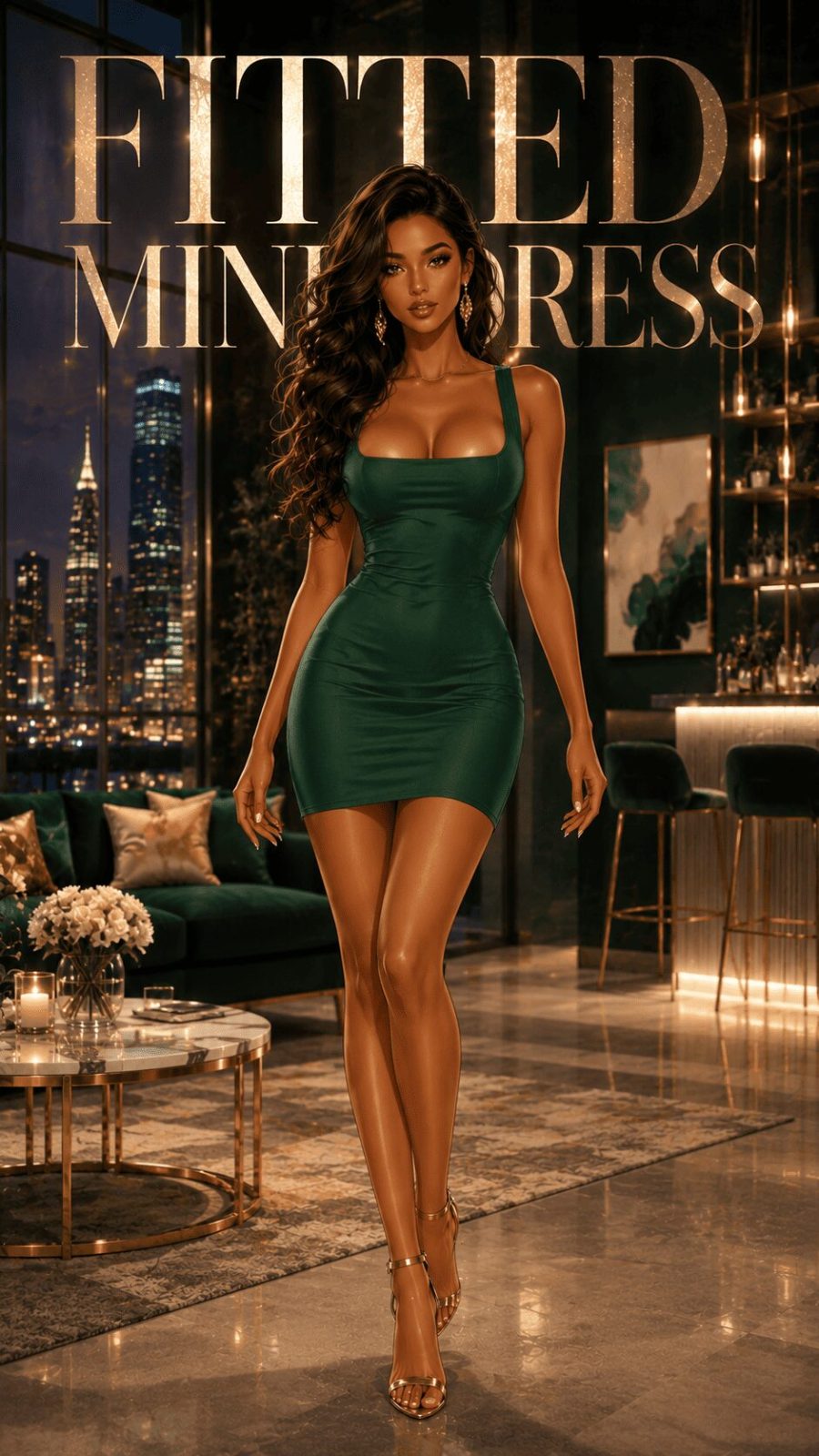
Designed to follow the body's natural contours closely — close through the shoulder, waist, and hip — without the compression of bodycon. The fitted mini has ease allowance (space for comfortable movement) but not excess fabric (no bunching, no looseness). This is the tailored approach to the mini: precision without constriction. It requires accurate sizing and good construction quality to land correctly. When it does, it is the most consistently flattering mini dress fit across body types because it communicates intentionality without effort.
- 56
Relaxed / Oversized Mini Dress
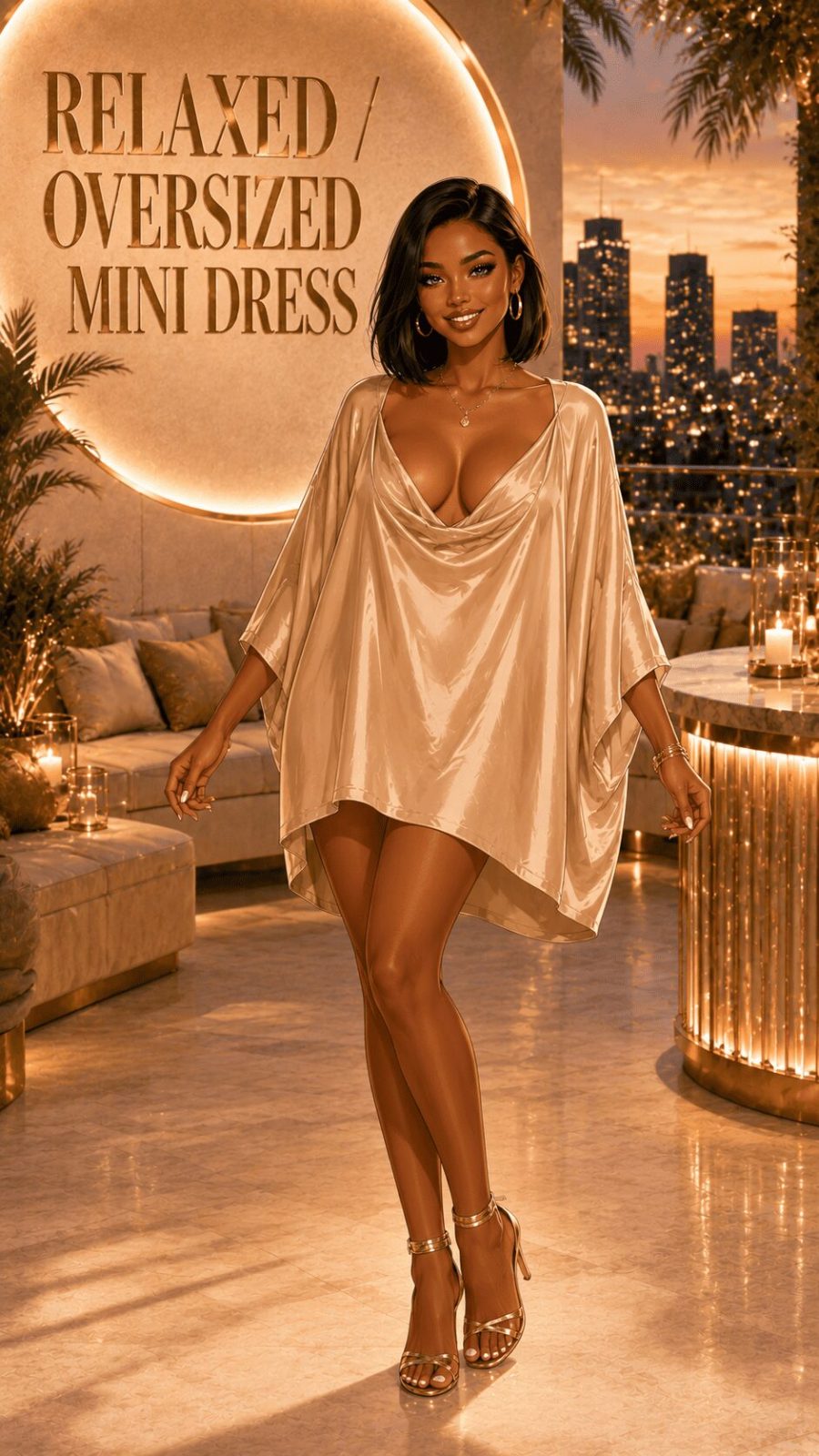
Deliberately loose and oversized through the body — boxy, slouchy, or otherwise intentionally larger than the wearer's frame. The oversized mini creates a specific tension: the garment reads as casual and low-effort while the abbreviated hemline contradicts that entirely. This is a studied nonchalance — it takes thought to execute. Shirt minis with unbuttoned top buttons, boxy shift minis in heavyweight cotton, and straight-dropped linen minis all belong to this category. Often worn with chunky footwear to anchor the loose silhouette.
- 57
Asymmetric Hem Mini Dress
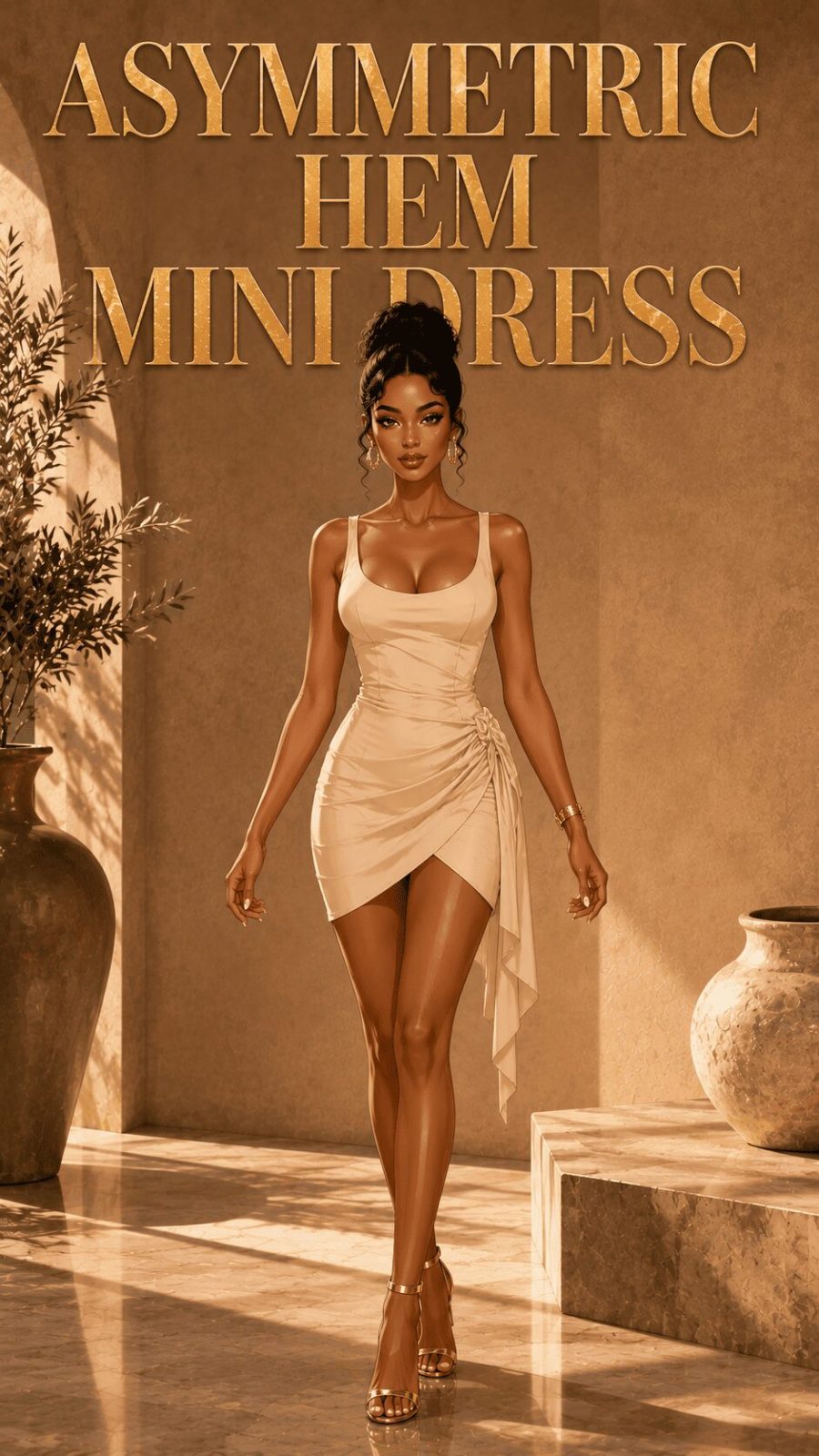
The hemline is intentionally uneven — shorter on one side, longer on the other, angled diagonally, or in handkerchief points. The asymmetric hem is a design device that breaks the visual expectation of a level hemline and replaces it with movement and direction. In a mini dress, the asymmetry is most commonly a hi-low configuration — shorter at the front thigh level, longer at the back knee or calf — which creates the visual impression of both a mini and a longer garment simultaneously. One dress, two hemline reads.
- 58
Draped Mini Dress
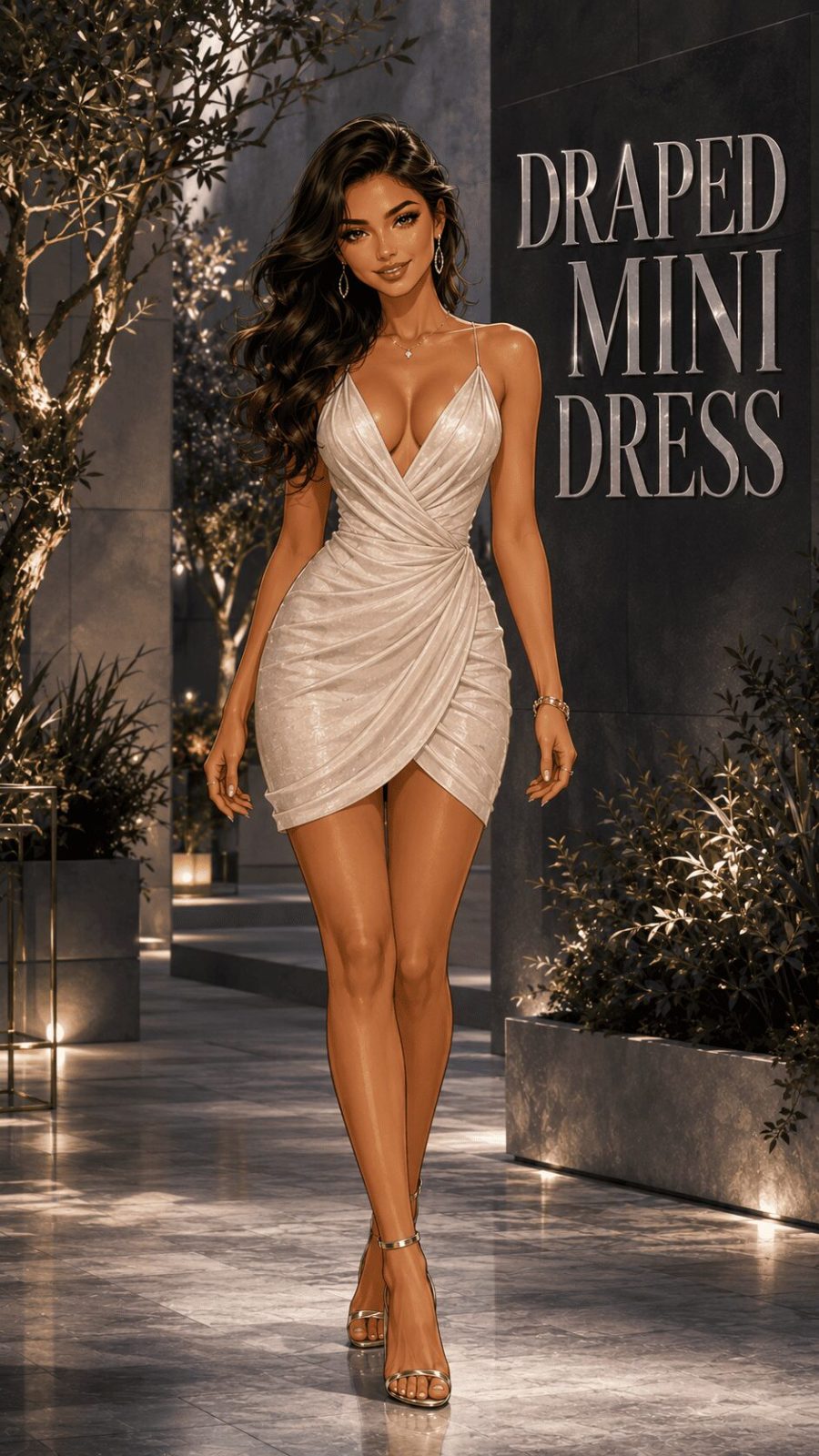
Constructed through fabric manipulation — pinning, pleating, or gathering fabric at specific points to create flowing, sculptural folds across the body. Draping as a construction technique has ancient Greek origins (the chiton, the himation) and was elevated to a modern couture technique by Madame Grès, Halston, and later Versace. A draped mini works entirely against gravity — the fabric falls in engineered directions, not accidental ones. The artistry is in making the deliberate look effortless.
"Mini dresses only work on certain body types."
Mini dresses work across every body type — but not every mini dress construction works for every occasion preference. An A-line or wrap mini in a well-chosen fabric is genuinely flattering across all proportions because the constructions are architecturally generous. The persistent belief that minis only work on slim legs is a marketing fabrication from an era when fashion only photographed one body type. The garment has no body-type requirements. The wearer's comfort level with the hemline is the only real variable.
"Mini dresses aren't appropriate after a certain age."
The age-appropriateness argument applied to hemlines has no coherent fashion logic underpinning it. Comfort, context, and personal preference determine what someone wears — not a calendar. The question to ask isn't "is this too young?" but "does this construction, fabric, and styling suit the occasion I'm wearing it to?" Those are entirely separate criteria.
How to Style a Mini Dress — A Practical Framework
The variables that actually matter when putting together a mini dress outfit
Styling a mini dress well comes down to understanding four variables: proportion, occasion register, footwear logic, and coverage distribution. These aren't rigid rules — they're a framework for making intentional choices.
Proportion: The mini dress exposes significant leg. Everything else in the outfit can either play into that exposure or counterbalance it. Tall boots cover the leg from the shoe upward and create a different visual rhythm than strappy sandals that leave the entire leg visible. An oversized blazer counterbalances the short hem with volume at the top. A fitted leather jacket maintains the sleek lines. None of these is more correct than another — they create different outputs from the same dress.
Footwear logic: The footwear in a mini dress outfit does more work than in any other garment format because it closes the visual gap between the hem and the floor. Knee-high boots in autumn create a boot-then-dress-then-face visual flow with no interruption. Chunky platform shoes ground a floaty chiffon mini. Kitten heels add a vintage quality. White trainers read nonchalant and urban. The hem height and the footwear height together determine the amount of visible leg — which is a styling variable, not a fixed quantity.
Coverage distribution: The most effective mini dress outfits manage coverage across the total outfit rather than trying to add coverage back to the dress itself. A plunge-neck mini worn with a long trench coat is more covered overall than a high-neck mini worn with nothing else. Think about the full picture, not the individual garments.
Occasion register: Every element of the outfit signals an occasion register — the fabric of the dress, the neckline, the footwear, the bag, the jewellery. The signals either align (all reading casual, or all reading evening) or they deliberately contrast (edgy juxtaposition is a valid and interesting choice). The mistake is misaligned signals without intention — a going-out dress worn with practical flat sandals and a canvas tote reads like an outfit assembled in a hurry rather than a stylistic statement.
- Category 1 (By Construction, #1–#14): Bodycon, A-line, wrap, shift, skater, babydoll, slip, shirt, smocked, corset, ruched, tiered, strapless, peplum
- Category 2 (By Neckline, #15–#24): V-neck, square neck, halter, off-shoulder, sweetheart, one-shoulder, cowl, plunge, boat neck, scoop
- Category 3 (By Sleeve, #25–#32): Long sleeve, puff sleeve, flutter, cap, bell sleeve, sleeveless, balloon sleeve, 3/4 sleeve
- Category 4 (By Fabric, #33–#40): Satin, linen, velvet, knit, chiffon, denim, lace, sequin
- Category 5 (By Occasion, #41–#48): Party/going-out, vacation/resort, date night, wedding guest, office/business casual, festival, brunch/casual, cut-out
- Category 6 (By Embellishment/Details, #49–#54): Floral print, embroidered, polka dot, striped, backless, crochet
- Category 7 (By Fit/Silhouette, #55–#58): Fitted, relaxed/oversized, asymmetric hem, draped
Frequently Asked Questions — Mini Dresses
The most commonly searched questions about mini dress types, styling, and fit — answered directly.
What is the difference between a mini dress and a bodycon dress?
"Mini dress" describes a hemline measurement — a dress ending above the mid-thigh. "Bodycon" describes a construction method — skin-skimming stretch fabric engineered to follow the body's contours. These are two separate classification systems. A bodycon dress can be mini-length, mid-length, or maxi-length. A mini dress can be bodycon, A-line, shift, wrap, or any other construction. The terms describe different things. Many mini dresses are not bodycon, and not all bodycon dresses are minis.
How short is a mini dress exactly?
A mini dress hemline falls between approximately 5–10 cm (2–4 inches) above the knee at its most modest end, up to the upper thigh at its shortest. There's no fixed industry measurement — but the consistent definition is: above the mid-thigh. A dress ending at the knee is a knee-length dress; a dress ending slightly above the knee is a short dress; a dress ending at the mid-thigh or higher is a mini. The micro-mini refers specifically to hemlines at the very upper thigh.
What mini dress is most flattering for pear body shapes?
A-line and wrap mini constructions work exceptionally well for pear-shaped proportions. The A-line provides a gentle flare from the hip that accommodates wider hips without compression, while the fitted bodice creates a defined waist. The wrap's self-adjusting tie achieves the same effect with more flexibility. Both constructions direct visual attention upward through V-necklines and fitted shoulders. Avoid tight bodycon constructions if the goal is to minimise hip emphasis — or embrace them if not. Body type compatibility is really about personal preference, not prescription.
Can you wear a mini dress to a formal event?
Yes — with significant caveats. A mini dress at a formal event works when the construction, fabric, and styling all signal formal register. A velvet or sequin mini dress with a structured bodice, paired with heels and elegant accessories, reads as formal despite the hemline. The hemline is one signal among many. A floor-length jersey dress in a casual fabric reads less formal than a well-constructed structured mini. However, for traditional black-tie or white-tie events, the hemline expectation is genuinely floor-length. Read the specific dress code and err on the side of formality when in doubt.
What undergarments do you wear under a mini dress?
Undergarment choice depends on the specific construction. For bodycon minis, seamless underwear and a smooth bra or bralette work best. For shift or A-line minis in light fabrics, a slip or smooth shorts underneath prevents static cling and provides coverage during movement. For strapless minis, a strapless bra or built-in bra panel is essential. For backless minis, adhesive bras or nipple covers are the practical solution. The consistent rule: whatever you wear should be invisible and should not compromise your ability to move comfortably, sit down, or lean forward without concern.
What shoes work best with a mini dress?
Almost anything works — the choice determines the outfit's register and silhouette rather than correctness. Knee-high boots extend the leg line and create a sleek autumn-winter aesthetic. Strappy heeled sandals maximise the leg exposure and dress the outfit up. Platform shoes add height with a grounded, editorial feel. White trainers create a casual, nonchalant effect that's been a consistent street-style favourite. Kitten heels add a vintage quality. The only footwear that consistently creates awkward proportions with mini dresses are calf-length boots — which cut the leg at an unflattering point. Over-the-knee or above-the-knee boots are more effective with minis than calf-high ones.
How do you wear a mini dress in winter?
Several strategies work well. The most effective is choosing a mini dress with long sleeves in a heavyweight knit, velvet, or thick ponte — the fabric and sleeve manage warmth without requiring external layering. Alternatively, layer a mini dress over opaque tights or thermal tights, with knee-high boots covering the remainder of the leg. A longline blazer, wool coat, or oversized knitwear layered on top extends the warmth further. The key is treating the mini dress as the starting point and building warmth around it rather than trying to warm it up after the fact.
What is the most versatile type of mini dress to own?
If pressed to a single answer: a sleeveless A-line or wrap mini dress in a solid mid-tone colour (navy, terracotta, forest green, burgundy) in a medium-weight fabric. This covers the widest possible range of occasions through layering and styling variation. Add a blazer and heels: smart-casual to office-adjacent. Add a leather jacket and boots: going-out. Add a denim jacket and sandals: casual weekend. The base dress stays the same; the outfit changes completely with each layer. A floral print version covers most summer and resort occasions by itself. Start with the solid; add the print second.
The mini dress is one of fashion's most enduring and consistently relevant garment formats because it operates simultaneously across multiple classification systems — construction, neckline, sleeve, fabric, occasion, embellishment, and fit. No other hemline length generates this much variation from a single silhouette measurement. The hem stays fixed above the mid-thigh. Everything else is a variable.
Understanding what type of mini dress you're looking for — not just what it looks like, but how it's built and what it's built for — makes every purchase decision faster, more intentional, and more satisfying.
This guide has documented 55+ types across 7 classification systems — from the structural fundamentals of bodycon versus A-line versus shift, through neckline mechanics, sleeve construction, fabric behaviour, occasion calibration, surface embellishment, and fit philosophy. Each classification layer adds precision. The more precisely you can describe what you're looking for, the better equipped you are to find it — and to recognise it when you do.
If this guide has been useful, explore the rest of the dress and fashion reference library at loopedinlooks.com. Related reading includes our complete dress types guide, our bodycon dress reference, our wrap dress guide, and the full neckline classification system.

Leave a Reply