

There’s a reason a backless dress stops a room. Not just because of what it reveals — but because of what that decision signals. Confidence. Intention. A particular kind of effortless authority that very few other garment constructions can manufacture. The backless dress is not simply a dress with fabric removed. It’s a garment built around deliberate exposure — engineered from the front to hold its shape, from the back to create presence.
The back is the most expressive canvas in fashion. Designers have always known this. The rest of us are just catching up.
Backless design has a long and genuinely interesting history. Madeleine Vionnet — whose bias-cut innovations in the 1920s and 30s are documented extensively by the Metropolitan Museum of Art — understood that the back of a dress could carry as much visual weight as the front, sometimes more. Later, Halston’s 1970s halter gowns brought backless dressing into mainstream consciousness as a statement of liberation. Today, the category spans everything from deeply plunging cowl-back slip dresses to structured open-back blazer gowns — each carrying its own construction logic, occasion language, and styling potential.
This guide documents all 63+ types across 6 classification systems. For every single entry:
-
Design
Back construction & cut
-
Occasion
When & where to wear it
-
Best For
Who it works for
Start here, explore everything — and discover which backless silhouette was made for your next occasion.
All 6 Categories at a Glance
A structured breakdown of the 63+ backless dress types documented in this guide.
- 01
By Back Construction
- 02
By Silhouette / Length
- 03
By Front Neckline Style
- 04
By Fabric & Material
- 05
By Occasion / Purpose
- 06
By Design Detail & Embellishment
63+ Types of Backless Dresses for Women
Category 1: By Back Construction (#1–#14)
How the back of the garment is cut, supported, and styled — the defining identity of each backless dress type
Back construction is everything. Before a backless dress has a hemline or an occasion or a fabric — it has an architectural identity. Is it a deep plunge? A crisscross? A keyhole? These 14 types represent the fundamental what of the garment's back: how fabric is cut away, how the dress is held in place, and what structural logic keeps the whole thing together through an entire evening.
What works beautifully about classifying backless dresses by construction is that it cuts through the noise of trend marketing entirely. A "going-out dress" is Pinterest language. A cowl-back bias-cut slip in charmeuse with a waist tie? That's construction — and construction tells you exactly how the dress will behave, how it needs to be supported, and whether you can actually wear a bra with it. Which, if we're being practical, is the information that actually matters.
- 01
Deep Plunge Back Dress

The back neckline drops dramatically — often to the waist or beyond — in a clean V or U shape. The defining feature is depth. Construction requires internal boning, a waistband anchor, or invisible adhesive support at the front to compensate for the absence of back structure. This is the most architecturally demanding backless construction to execute well.
- 02
Open-Back Halter Dress


Straps extend from the front bodice and fasten at the nape of the neck, leaving the entire back and sides fully open. The halter neck carries all the structural load — support comes from a neck tie or clasp rather than shoulder seams. Popularized by Halston in the 1970s and permanently woven into warm-weather occasion dressing since.

- 03
Cowl Back Dress

Fabric gathers and drapes in soft, cascading folds across the open back — creating a draped, scooped cowl effect instead of a clean cutaway. The visual impression is fluid and deeply sensual without being overtly exposed. Requires a bias cut or highly draping fabric such as charmeuse, crepe, or matte jersey to work properly. This is a construction where fabric choice is everything.
- 04
Crisscross Back Dress

Straps cross over each other at the back, creating an X or multiple-cross pattern across the open back. The crisscross provides both visual interest and practical support — the tension of the crossed straps distributes weight across the back more evenly than a single central strap. Widely used in both formal evening dresses and summer casual styles.
- 05
Keyhole Back Dress

A small, precise cutout — circular, teardrop, or oval — at the back of an otherwise covered dress. The keyhole is the most restrained form of backless design. It functions more as a deliberate detail than a full exposure — a punctuation mark rather than a full statement. Often used in workwear-adjacent styles where a hint of skin reads as intentional rather than informal.
- 06
Ladder-Back Dress

Horizontal straps or fabric rungs span the open back space, creating a ladder-like grid pattern. The rungs may be the same fabric as the dress or a contrasting material — leather, ribbon, or chain for high-fashion versions. It photographs beautifully in motion and adds architectural interest to otherwise simple silhouettes. Not just decorative — the horizontal tension provides real support.
- 07
Tie-Back Dress

Two fabric ties — usually self-fabric, ribbon, or cord — extend from the sides or back panels and are fastened in a bow or knot at the center of the back. The tie-back is inherently adjustable, which gives this construction a forgiving, relaxed quality. The bow itself becomes the focal point of the back — and in satin or silk, it photographs exceptionally well in motion.
- 08
Lace-Up Back Dress

Eyelets or rings line the open back edges, threaded with a cord, ribbon, or lace that criss-crosses to close — similar to a corset lacing system. The exposed lacing is both functional and decorative. It's one of the most adjustable back constructions in existence: tighten for a fitted silhouette, loosen for a relaxed drape. A detail borrowed directly from historical corsetry, now re-contextualized for modern occasion dressing.
- 09
Strappy Back Dress

Multiple thin straps — three or more — span the open back in a structured arrangement. Unlike the crisscross which creates an X, strappy back designs may feature parallel, asymmetric, or geometric multi-strap patterns. The cumulative effect is maximalist exposure with deliberate structure. Hugely popular in festival and going-out dressing precisely because it photographs so dynamically.
- 10
Open-Back Bodycon Dress

A form-fitting, stretch-fabric dress with a cutout or fully open back section. The bodycon silhouette relies on fabric tension rather than traditional seaming for fit — which means the open back actually creates a deliberate release of tension, a contrast of fitted and open. The interplay between the tight front and the exposed back is the entire point of this design.
- 11
Low Scoop Back Dress

A wide, rounded U-shaped scoop that sweeps low across the back — not quite to waist level, but significantly below the shoulder blades. Less dramatic than a full plunge, more expressive than a keyhole. The scoop back is the entry point for many women into backless dressing — it reads as deliberately elegant rather than overtly dramatic, which is exactly why it translates so well from beach weddings to cocktail parties.
- 12
One-Shoulder Backless Dress

Asymmetric front with one shoulder fully covered and the other bare — the back follows with a low or open cut that connects the asymmetry. The construction creates an intentional diagonal visual line from front to back. One-shoulder silhouettes have appeared consistently in Greek-influenced fashion since the late 1960s and remain reliably modern across decades.
- 13
Racerback Cutout Dress

The back straps meet between the shoulder blades in a Y or T-shape — the same construction as a racerback sports bra, adapted for occasion dressing. The racerback creates an unusual visual focus on the upper back and spine. In athletic-luxury fabrics like technical knit or bonded neoprene, this silhouette crosses the line between activewear and evening wear in a way that feels genuinely current.
- 14
Backless Wrap Dress

The classic wrap construction — crossover front panels tied at the waist — is adapted to include a significantly open or low back. The wrap provides the front support (the tie anchors to the waist, distributing load), while the back is cut away in a scoop, V, or fully open panel. The result combines the forgiving adjustability of the wrap silhouette with the visual drama of an open back — a genuinely clever piece of construction.
💬 Stylist Insight: Most women assume a backless dress requires no bra at all. In reality, the construction determines your options — not the depth of the opening. A deep plunge to the waist requires adhesive cups or built-in boning. A keyhole back? A regular convertible bra works perfectly. A crisscross or lace-up? A backless adhesive works well, but a low-back converter on a regular bra also does the job. Know your construction before you panic about the lingerie situation.
Category 2: By Silhouette / Length (#15–#26)
How the overall dress silhouette interacts with the open back — from mini to floor-length, fitted to flowing
- 15
Backless Maxi Dress

Floor-length hem with an open, low, or deeply cut back — the tension between the full-length coverage of the silhouette and the exposure of the back creates an extraordinary visual effect. The maxi length grounds the drama of the open back, making it feel formal rather than revealing. This is the construction that dominates red carpet appearances precisely because of that contrast.
- 16
Backless Midi Dress

Hemline falls between the knee and ankle — that deliberately in-between length that is exactly what makes it so versatile. Paired with an open back, the midi silhouette creates a genuinely balanced garment: coverage below, drama above. It photographs beautifully in motion and translates from cocktail party to beach wedding to summer evening dinner without effort.
- 17
Backless Mini Dress

Hemline above mid-thigh, combined with an open back — the effect is maximum exposure at both ends of the garment. The design logic is bold and intentional: the mini length keeps the silhouette youthful and energetic, while the open back adds a layer of sophistication that prevents it from reading as purely casual. Best executed in solid colors or minimal prints to avoid visual overload.
- 18
Backless A-Line Dress

Fitted bodice with a skirt that flares from the waist in the classic A-line silhouette — combined with a low, open, or cut-away back. The A-line flare softens the impact of the open back, creating a garment that feels elegant and movement-friendly rather than purely revealing. The visual line created by the A-line skirt against the vertical exposure of the back is genuinely sophisticated.
- 19
Backless Slip Dress

Bias-cut or straight-cut fabric that skims the body loosely, with spaghetti straps at the front and a low or open back. The slip dress's lingerie origins — it derives directly from the undergarment of the same name — make the open back feel entirely coherent. In charmeuse, satin, or silk, the low back catches light beautifully and the drape of the fabric in motion is genuinely arresting.
- 20
Backless Shift Dress

The shift silhouette — straight, boxy, hitting at or just above the knee — with a keyhole, scoop, or open back detail. The shift's inherent architectural restraint makes any back detail read as an intentional design choice rather than a revealing one. In structured fabrics like jacquard, ponte, or brocade, a backless shift achieves a formality that most other backless silhouettes can't reach.
- 21
Backless Ball Gown

Full-volume skirt — often with tulle, organza, or structured layers — paired with a fitted bodice and dramatically open back. The architectural tension between the volume of the skirt and the exposure of the back creates an operatic visual effect. Requires internal boning, structured cups, or a heavily constructed bodice to support the skirt weight without a covered back providing additional structure.
- 22
Backless Fit-and-Flare Dress

Fitted through the bodice and hips, then flaring at or just below the knee into a skirt with movement. The open back sits within the fitted section, meaning the structural integrity of the flared skirt isn't compromised. The fit-and-flare is one of the most forgiving silhouettes in existence — the flare creates visual proportion balance regardless of body shape — and the backless element adds drama without disrupting that balance.
- 23
Backless Column Gown

The column gown — a long, narrow, straight silhouette with minimal flare — combined with an open or deeply plunged back. Also called a sheath gown in some fashion contexts. The column silhouette relies on the continuous vertical line from shoulder to hem for its effect, and a backless column creates a visual corridor from neck to lower back that is genuinely striking. Popularized on the red carpet by countless designers who understood that a simple silhouette could carry a dramatic back detail without distraction.
- 24
Backless Ruched Dress

Gathered or pleated fabric pulled into a ruched effect across the front or sides, with an open or low back. The ruching creates texture and volume distribution that both slims and softens the silhouette — while the open back adds a contrasting clean exposure. Ruching is genuinely one of the most figure-friendly construction techniques in dressmaking, and the backless element prevents the gathered front from reading as overly heavy.
- 25
Backless Mermaid Dress

Fitted through the torso and hips all the way to mid-thigh, then flaring dramatically into a fishtail hem — combined with an open or deeply cut back. The mermaid construction is the most structurally complex silhouette in bridal and formalwear, requiring extensive boning and interior construction. The open back in a mermaid gown is a double design commitment: both the back and the hem are dramatic statements that must balance each other.
- 26
Backless Tiered Dress

Multiple horizontal tiers of fabric cascade from the waist or bodice downward — each tier wider than the one above — combined with a halter, strappy, or open back. The tiered construction creates extraordinary movement: each layer of fabric responds independently to motion. In chiffon, georgette, or cotton voile, a backless tiered dress is one of the most photographically dynamic garments in existence — which explains its dominance in resort and boho bridal styling.
Category 3: By Front Neckline Style (#27–#36)
How the front of the dress frames the body while the back remains open — two design decisions that must work together
- 27
Strapless Open-Back Dress

No straps or sleeves at the front — the bodice is held by its own construction (boning, interior structure, or elastic) — and the back is open or low-cut as well. The strapless open-back is the most structurally demanding construction in this entire category. With both the front and back stripped of conventional support systems, the dress relies entirely on internal architecture. Boning is not optional here; it's the entire structural reason the dress stays in place.
- 28
Square-Neck Open-Back Dress

A geometric, straight-edged square or rectangular neckline at the front — paired with an open, low, or crisscross back. The square neckline is architecturally interesting: it creates a horizontal visual line across the chest while the open back creates a vertical visual corridor down the spine. The result is a garment with two very different kinds of visual energy that somehow create a coherent whole. Popular in Renaissance-inspired fashion and contemporary evening dressing alike.
- 29
V-Neck Open-Back Dress

A V-neckline at the front — deep or shallow — paired with a low or open back. The V creates a front elongating line, while the open back provides the visual drama from behind. The pairing is naturally harmonious: both the V and the open back work on a vertical axis, creating visual continuity as the wearer moves. This is one of the most widely produced backless dress constructions precisely because the proportional logic is so intuitive.
- 30
Sweetheart-Neck Open-Back Dress

The sweetheart neckline — shaped like the upper arcs of a heart with a central dip — is an inherently romantic front design. Combined with an open back, the effect is doubled romanticism: the heart-shaped front references intimacy while the open back provides allure. This combination dominates bridal, prom, and formal occasion dressing globally because it successfully walks the line between romantic and dramatic.
- 31
Off-Shoulder Open-Back Dress

The neckline falls below both shoulders, exposing the shoulder and collarbone, with the back simultaneously open or low. The off-shoulder front creates a wide horizontal visual line across the upper body while the open back creates a vertical corridor — contrasting geometries that work together to create visual fullness. The off-shoulder is one of the most consistently trending neckline-silhouette combinations of the past decade, appearing in Vogue's trend reporting as a perennial seasonal resurgence.
- 32
Cowl-Neck Open-Back Dress

A draped, falling front neckline — the cowl — paired with an open back. The cowl neck and the cowl back are natural design partners: both rely on the drape logic of bias-cut or loosely constructed fabric. When both the front and back drape, the dress becomes an exercise in fluid construction — the kind Madeleine Vionnet pioneered in the 1930s and which modern designers return to repeatedly because it achieves maximum elegance with minimum seaming.
- 33
Scoop-Neck Open-Back Dress

A wide U-shaped front neckline — lower and wider than a crew neck — paired with a low or open back. The scoop neck is the most wearable, everyday-friendly neckline in the backless category: low enough to be elegant without creating lingerie logistics at the front, which means the open back becomes the sole styling challenge. In jersey, cotton, or stretch fabric, a scoop-neck open-back dress is the most practical entry point into everyday backless dressing.
- 34
Plunge-Front Open-Back Dress

A deeply cut V or U front neckline — extending well below the bust — paired with an open back. Both front and back commit to dramatic exposure simultaneously. This is the highest-impact backless dress construction in terms of visual statement, and also the most technically demanding to wear comfortably. Adhesive bra cups or internal construction are essential; the alternative is simply confidence in the garment's own structural logic, which requires the dress to be correctly sized and made to a high standard of internal finishing.
- 35
Bandeau Open-Back Dress

A straight-cut, tube-style front bodice — the bandeau — typically sitting across the chest with no straps and minimal fabric, paired with a low or open back. The bandeau top is the ultimate in minimal construction: it holds by compression alone at the front. Add an open back, and the dress becomes a study in how little fabric is actually needed to create a complete garment. Works best in structured, compressive fabrics — the construction falls apart in anything too soft or too stiff.
- 36
Boat-Neck Open-Back Dress

A wide, horizontal front neckline running from shoulder to shoulder — the bateau or boat neck — paired with a low or open back. The contrast here is unusually sophisticated: the wide, covered front creates a composed, almost architectural restraint, while the open back delivers the drama entirely from behind. You walk into the room looking covered and polished; you leave looking like you've made a statement. That's genuinely clever design.
Category 4: By Fabric & Material (#37–#46)
How fabric choice determines the drape, behavior, occasion register, and visual effect of the open back
- 37
Silk Charmeuse Open-Back Dress

Charmeuse is a lightweight, satin-weave fabric with a liquid drape and luminous surface. In a backless dress, charmeuse behaves like poured metal — the exposed back catches light with an almost reflective quality, and the fabric drapes across the open space in soft, unstructured folds that create movement even when standing still. This is the fabric that makes low-back dresses look genuinely expensive. It is also the most unforgiving of the construction-quality in any dress it's used for.
- 38
Chiffon Backless Dress

An almost weightless, sheer woven fabric — chiffon — in a backless construction. Chiffon at the back of a dress creates a floating, cloud-like effect: it doesn't drape heavily like charmeuse, it hovers. The translucency of chiffon means that even when fabric does cross the back area (as in a chiffon overlay), the skin shows through — creating a semi-sheer backless effect that is simultaneously modest and exposing. A genuinely unique fabric effect.
- 39
Lace Open-Back Dress

Lace — an open, patterned textile — used as the primary fabric of the backless dress, often over a lining that stops at the waist while the lace continues to cover (but simultaneously expose through its pattern) the back. The lace back creates what is arguably the most sophisticated form of the backless effect: the skin is visible through the pattern of the lace rather than through a clean cut. It's exposing and concealing simultaneously. This is why lace dominates bridal backless designs globally.
- 40
Velvet Open-Back Dress

Velvet — a cut-pile woven fabric with a directional nap and extraordinary depth of color — in a backless construction. The contrast of velvet's richly textured front against the clean exposure of a bare back creates a remarkably luxurious effect. In deep jewel tones — midnight, emerald, burgundy — a velvet open-back dress is one of the most visually dramatic garments in occasion dressing. An autumn and winter staple that never gets dated.
- 41
Sequin Open-Back Dress

Sequined fabric — small reflective discs sewn onto a base fabric — in a backless construction. The sequin open-back is the party dress in its most distilled form. Light bounces off the front while the bare back creates an unexpected moment of skin against the reflective surface. The contrast is what makes it interesting rather than overwhelming. Best executed in a single-color sequin — multi-color can overwhelm the back opening as a design element.
- 42
Satin Open-Back Dress

Satin-weave fabric — with its characteristic high-lustre front surface — in a backless dress construction. Satin is heavier and more structured than charmeuse, which makes it hold shape more reliably in an open-back construction. The lustre of satin creates a light-catching effect at the back opening edges — the fabric glows around the exposed skin in a way that makes even a simple cut look finished and intentional. A standard fabric for bridesmaid and formal occasion dresses globally.
- 43
Jersey Knit Open-Back Dress

Stretchy, single-knit jersey fabric — the base of most T-shirts and knit dresses — in a backless construction. Jersey is the most accessible fabric in the backless category: it's washable, forgiving, and available at every price point. In a backless jersey dress, the stretch of the fabric actually assists the construction — the knit can mold around the back opening without fraying or losing shape. The casual register of jersey makes backless dressing approachable for everyday and casual-occasion contexts.
- 44
Crepe Open-Back Dress

Crepe — a fabric with a distinctive crinkled or granular texture from a twisted yarn construction — in a backless dress. Crepe has a matte, non-reflective surface that reads as sophisticated without effort. In a backless construction, crepe holds clean edges and structured seaming better than most other fabrics, making it the preferred choice for minimalist open-back designs where the cut itself is the design feature. No embellishment needed; the construction carries the look entirely.
- 45
Cotton Voile Open-Back Dress

Cotton voile — a lightweight, semi-sheer woven cotton — in a backless or open-back construction. Voile is the daytime, warm-weather counterpart to evening fabrics in the backless category. Its natural breathability makes it the obvious choice for resort and holiday backless dresses. The slight sheerness adds interest without the formality of chiffon — it's casual elegance at its most comfortable. In white or natural tones, a backless cotton voile dress is the defining image of effortless summer dressing.
- 46
Mesh Open-Back Dress

Open-weave mesh fabric — translucent, structured, and with a distinctly contemporary aesthetic — in a backless construction. Mesh is the most fashion-forward fabric in this category: it sits at the intersection of activewear and couture, used by designers like Alexander Wang and Mugler to blur the line between sportswear construction and evening wear luxury. In a backless mesh dress, the fabric's open weave means the back is exposed through the material itself, not just through a cut — creating a layered, textured transparency.
Category 5: By Occasion / Purpose (#47–#56)
The social context, dress code, and functional environment each backless dress type is designed to serve
- 47
Bridal Backless Gown

The most technically demanding backless construction in existence — a bridal gown requires an open back that is fully supportive, structurally stable for an entire ceremony and reception, and consistent with the formality of the occasion. According to bridal industry data reviewed in Brides magazine's wedding dress trend coverage, open-back styles have remained among the top three most requested silhouettes in bridal for over a decade. The open back in bridal carries specific design codes: lace, illusion tulle, or buttons running the length of the back all communicate intention rather than exposure.
- 48
Cocktail Open-Back Dress

The cocktail dress occupies the most interesting dress code territory: formally aspirational but not black-tie. An open back at cocktail length — typically knee to midi — signals that the wearer understands the dress code's latitude. Not as dramatic as a gown, more deliberate than a casual dress. The cocktail backless design operates in that exact productive zone between effort and ease. Crepe, structured chiffon, and satin all perform well in this category at different formality registers.
- 49
Resort / Beach Backless Dress

Lightweight, casual fabrics — cotton, linen, rayon, voile — in relaxed backless silhouettes designed for warm-weather resort or beach environments. The resort backless dress is the most functionally practical in this category: the open back is as much about temperature management as it is about design. It transitions from daytime beach to evening dinner with minimal styling intervention — just change the footwear. This silhouette dominates holiday packing lists globally for exactly that reason.
- 50
Black-Tie Backless Gown

Floor-length, constructed for the highest formality occasion code. The black-tie backless gown distinguishes itself from other formal backless dresses through fabric weight (typically satin, heavy crepe, duchess silk, or structured taffeta), construction quality (fully lined, boned or internally framed), and the expectation of complete compositional polish — the back design should appear as finished and intentional as the front. No raw edges, no makeshift support. The entire garment must be architecturally complete.
- 51
Date Night Backless Dress

The date night category sits comfortably between cocktail and casual — polished enough to signal effort, relaxed enough to feel natural. An open-back dress in this context should be memorable from a single, specific angle: the moment you turn away from the table. The back detail is, quite literally, the last thing your date sees as you walk across the room — and designers have understood this staging for decades. Midi length in matte jersey or satin, with a subtle back detail, is consistently the most requested combination for this occasion context.
- 52
Festival Backless Dress

Outdoor festival environments demand durability and photographic impact in equal measure. A festival backless dress tends toward maximalist back constructions — strappy, lace-up, crisscross — in fabric that can survive a full day of movement, heat, and probable dust. The back detail matters even more at festivals because of the volume of photography happening from all angles at once. Crochet, macramé, cut-out, and embroidered fabrics all dominate this category for exactly that reason — they create visual interest in every direction.
- 53
Club / Going-Out Backless Dress

The going-out backless dress maximizes visual impact for high-energy social environments — clubs, bars, bachelorette events. Short hem, dramatic back cut, stretch or metallic fabric. The construction prioritizes visual drama over structural complexity: easy to put on, comfortable to move in, immediately recognizable as the deliberate choice of someone who knows exactly what they're doing. Bodycon open-back, strappy mini, and cut-out designs all dominate this context.
- 54
Prom / Formal Backless Dress

The prom backless dress operates in a uniquely high-stakes occasion context — typically the first formal occasion in which the wearer makes fully independent dress decisions. The open back at prom carries a cultural weight beyond fashion: it's often the first deliberate statement. Silhouettes tend toward ball gown, fit-and-flare, or mermaid — constructions that feel ceremonially significant. The back construction needs to hold for hours of continuous wear, photography, and dancing, which means boning or internal support is non-negotiable in quality versions.
- 55
Destination Wedding Guest Backless Dress

The destination wedding dress code asks for elegant but travel-friendly — which is a specific and genuinely difficult brief. A backless dress for this context must pack well (bias-cut and jersey handle travel better than structured fabrics), feel appropriate for an outdoor or semi-formal ceremony abroad, and survive humidity and movement for an extended evening. Lightweight midi silhouettes in chiffon, crepe, or matte jersey with a halter or tie-back construction are the most consistently reliable choices for this occasion type.
- 56
Editorial / Fashion-Week Backless Dress

Fashion week and editorial contexts demand backless constructions that photograph from every angle, hold up under studio lighting, and communicate a clear design point of view. In this category, the back is rarely just "open" — it's architecturally specific: a geometric cut-out in a precise shape, an asymmetric drape that resolves at the back spine, or a structural frame that creates visible construction at the back. These are garments designed to be observed rather than just worn. The construction is the content.
Category 6: By Design Detail & Embellishment (#57–#65)
Decorative, structural, and artistic details applied to the back — transforming the open space into a design statement
- 57
Beaded-Back Dress

Beadwork — hand-sewn or machine-applied beads, crystals, or bugle beads — decorates the back panel, straps, or edges of an open-back dress. The beading draws deliberate attention to the back construction, framing the exposed skin with jewelry-like embellishment. In movement, beads catch and reflect light continuously — creating a living, kinetic effect that makes the back the most visually active part of the garment. This is the principle behind the most celebrated couture back embellishment documented by Business of Fashion.
- 58
Embroidered Open-Back Dress

Embroidery — stitched thread patterns — applied to the visible areas of the back construction: straps, back border edges, or surrounding fabric panels. Unlike beading, embroidery creates a matte, textile-based detail that reads as artisanal rather than glittery. In ethnic and traditional fashion contexts, embroidered back details carry cultural significance as well as decorative function — a connection to garment-making traditions that mass production has largely erased. Hand-embroidered open-back dresses sit firmly in the artisan fashion category.
- 59
Cut-Out Geometric Back Dress

Precise geometric cut-outs — triangles, circles, diamonds, rectangles — in the back panel of an otherwise covered dress. Unlike a general open-back, geometric cut-outs frame the exposure in a deliberate shape that draws attention to the negative space as a design element. The contrast between the covered fabric and the precisely cut opening is a form of negative-space design — the same design principle used in architecture and graphic design. It requires exceptional fabric cutting and finishing to execute cleanly.
- 60
Crochet / Macramé Open-Back Dress

Crochet or macramé fabric — handcrafted or handcraft-inspired textile constructions with open knotted or looped patterns — forming the back panel or back detailing of a dress. The handcraft aesthetic is the design message: it signals a slow-fashion, artisanal sensibility. In the context of an open back, crochet creates an effect similar to lace — skin visible through the pattern — but with a distinctly boho, beach-adjacent register that makes it the dominant fabric in resort and festival backless dressing.
- 61
Bow-Back Dress

A structured or soft bow at the center back — either as the closing mechanism (the ties form the bow) or as a purely decorative element applied over a hidden zipper or closure. The bow transforms the back into something genuinely gift-like: the dress becomes a presentation, the bow its ribbon. In satin, taffeta, or silk organza, a structural bow at the back of a dress creates an unmistakably editorial moment. It's romantic, it photographs beautifully in motion, and it requires virtually no other styling decision to land.
- 62
Chain-Detail Open-Back Dress

Metal chain links — gold, silver, or oxidized — incorporated as the back strap, crossing element, or decorative detail across the open back. The chain back is arguably the most luxury-coded backless construction in contemporary fashion: it borrows directly from fine jewelry, transforming functional structure into adornment. It reads as intentional, high-investment, and edgy simultaneously. Most associated with contemporary designer ready-to-wear, where the hardware detail signals quality regardless of the fabric used elsewhere in the garment.
- 63
Ruffle-Back Dress

Cascading ruffles — gathered or pleated fabric frills — applied along the back edge, down the back seam, or framing the open back space. Ruffles at the back of a dress create movement that is specifically visible to people watching the wearer walk away. It's a detail designed for that precise angle — which is why it reads as simultaneously playful and theatrical. In chiffon or georgette, back ruffles move independently with every step, creating a trailing, wave-like effect that is genuinely arresting in motion.
- 64
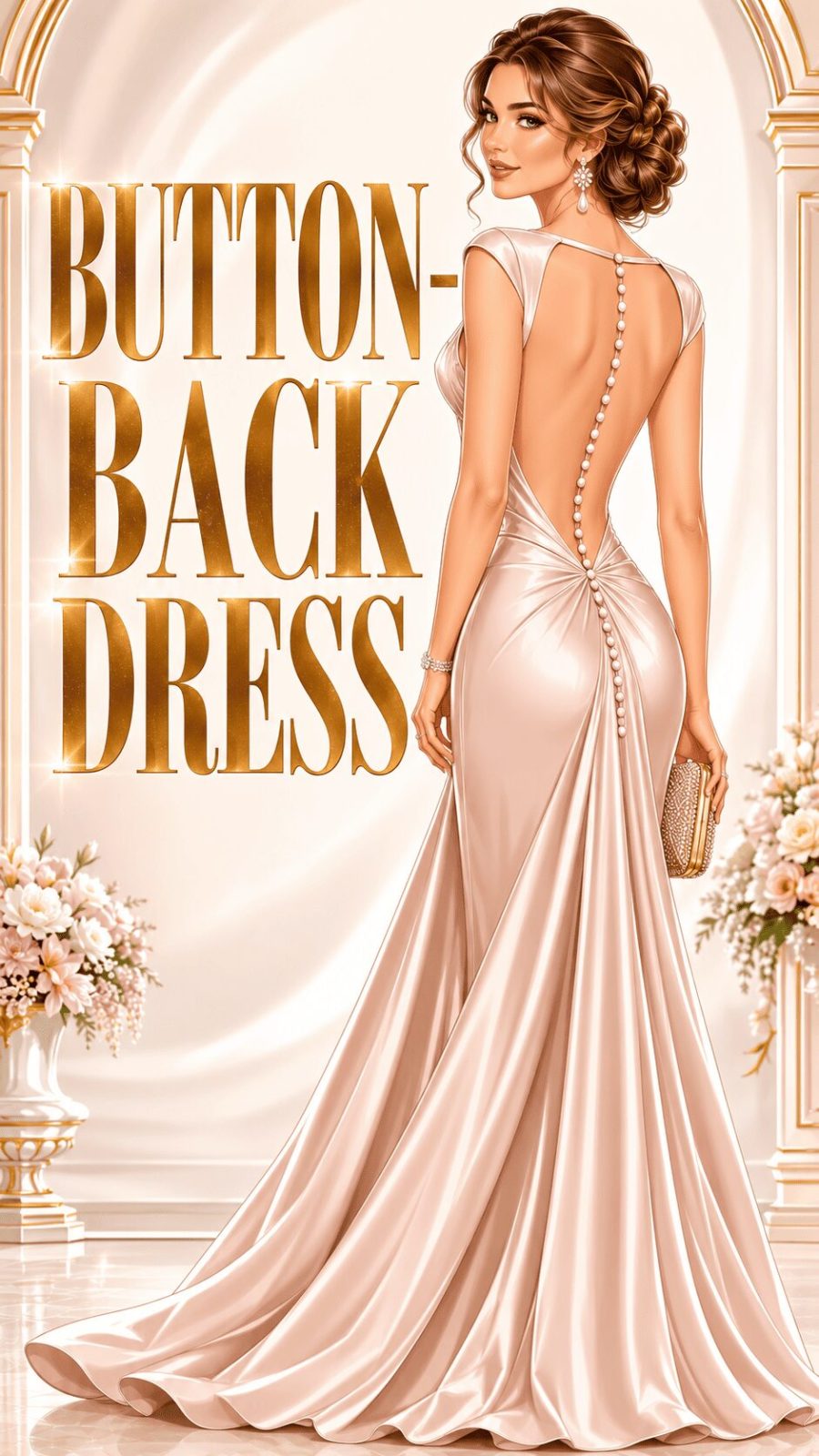
Button-Back Dress

![Button-Back Dress]()
A row of buttons — fabric-covered, pearl, or decorative — runs the length of the back center seam, closing a low or open back. The button back is the most enduringly elegant back closure in occasion dressing. It communicates that the garment required assistance to put on — which carries its own romantic implication. In bridal, button backs are the most requested single back detail globally, precisely because of the ceremony they create around the moment of getting dressed. Even in ready-to-wear, the button back elevates any construction.

- 65
Illusion-Tulle Back Dress

Sheer, skin-tone tulle fills the back opening — creating the visual appearance of an open back while technically covering the skin. The illusion tulle back is the sophisticated technical solution for occasions where full exposure isn't appropriate but the visual drama of an open back is desired anyway. Most commonly used in bridal wear for religious ceremonies where coverage is required, the technique allows the dress to appear backless in photographs while meeting formality or modesty requirements in person. The fabric must be matched precisely to skin tone to achieve the illusion.
Back details perform completely differently in photographs than in real life — and it matters which one you're dressing for. A deep plunge to the waist, a chain back, or a geometric cut-out: these read as architectural statements in photographs. A button-back dress, an illusion tulle back, an embroidered strap: these communicate quality and intentionality in person, to the people actually standing behind you. Know your audience. Dress for the room you'll actually be in — not only for the image that gets posted afterward.
Frequently Asked Questions — Types of Backless Dresses for Women
What is a backless dress called?
There is no single universal term — "backless dress" is the most widely used descriptor, but specific constructions have their own names: a halter dress (straps fastening at the neck), a cowl-back dress (draped fabric at the back), a plunge-back dress (deeply cut V at the back), and a lace-up back dress (corset-style eyelet closure). The name typically references the back construction type rather than the overall garment category.
How do you wear a bra with a backless dress?
Bra options depend entirely on the depth of the back opening. For low-scoop or mid-back openings: a low-back converter clip attached to a regular bra works well. For deep-plunge backs reaching the waist: stick-on adhesive bra cups or silicone breast petals are the standard solution. For halter and strappy constructions: backless adhesive bras designed specifically for this purpose are widely available. Many higher-quality backless dresses include built-in cups or boning that eliminates the need for a bra entirely — always check the internal construction first.
What is the most flattering backless dress style?
Construction matters more than any single silhouette rule. In general terms: A-line and fit-and-flare backless dresses create visual proportion balance because the flared skirt draws attention to the waist and hem. A low scoop or moderate back opening reads as elegant without being overtly dramatic — and works across the widest range of body proportions. The most important principle is that the back construction should feel natural and secure, not precarious — confidence is the most flattering thing any dress can give you.
Can you wear a backless dress to a wedding as a guest?
Yes — with appropriate consideration of the dress code and venue. A midi-length backless dress in a refined fabric (crepe, chiffon, satin) is an entirely appropriate wedding guest choice for cocktail-attire and garden-party dress codes. For black-tie, a backless gown or floor-length backless dress is fully within the dress code. The consideration is practical rather than formal: ensure the back construction is fully finished and secure for extended wear, and check the venue's requirements if the ceremony is in a religious setting.
What shoes go with a backless dress?
The shoe choice for a backless dress is determined by the silhouette length and occasion register, not specifically by the open back. For floor-length or midi backless gowns: strappy heeled sandals, mule heels, or pointed-toe pumps. For mini backless dresses: block-heeled sandals, stiletto mules, or ankle-strap heels. For resort and casual backless dresses: flat sandals, espadrilles, or heeled wedges. The general principle is that the shoe should not compete with the back construction — let the back be the statement.
What jewellery should I wear with a backless dress?
The back of the dress is already the focal point — which means jewellery should either complement it or leave it alone entirely. Back necklaces (necklaces designed to drape down the back) are the obvious choice: they frame the open back as a deliberate design decision. At the front, keep necklines clean — a choker or collarbone-length necklace works, but a long statement necklace competes with the back. Earrings can be as bold as you like. Arm and wrist jewellery is entirely neutral to the back detail.
Are backless dresses still in style?
Yes — backless designs have appeared consistently in both high-fashion and contemporary ready-to-wear across every significant season for decades. The open back isn't a trend in the way that a specific silhouette or color is a trend; it's a design feature with permanent fashion relevance because the construction logic — achieving visual impact with deliberate exposure — is timeless. What changes seasonally is which specific back construction type is most prominent: cowl backs, cut-outs, and crisscross constructions cycle in and out of peak focus, but the category as a whole remains constant.
How do I keep a backless dress in place?
Dress tape (double-sided fabric tape) applied along the inner edge of the back opening prevents slippage and keeps the fabric positioned correctly against the body. For halter-neck constructions, ensure the neck tie or clasp is at the correct tension — too loose and the garment shifts; too tight and it strains the back. For strappy back dresses, the straps can be adjusted or cinched with a small safety pin if needed. For slip dresses and bias-cut designs, ensure the dress is correctly sized at the back — these constructions rely on fit rather than structure to stay in place.
Conclusion: The Back Is the Story
Sixty-five types. Six classification systems. Back construction, silhouette, neckline, fabric, occasion, and embellishment — documented across every major backless dress category in fashion.
What this guide gives you, ultimately, is a vocabulary for the back of a dress — which turns out to be the most overlooked dimension in garment selection. Most women choose a dress by what they see in the front: the neckline, the color, the hem. Then they turn around in the fitting room and discover the back is a separate design decision entirely. The back of a backless dress is not an afterthought. In the best designs — the cowl-back charmeuse slip, the beaded halter gown, the button-back bridal column — the back is the whole point.
The framework here — construction, length, neckline pairing, fabric, occasion, and embellishment — is how professional stylists and dressmakers actually think about this category. It's organized thinking applied to a garment type that is usually discussed in terms of "how much skin" rather than how the construction works. Construction tells you everything: whether the dress will stay in place, what undergarment solutions you'll need, how the fabric will behave across an evening, and why the designer made the specific choices they made. That knowledge makes you a more confident wearer.
- 65+ types of backless dresses exist across 6 distinct classification systems — each type has a construction identity, an occasion context, and a fabric logic that determines how it performs.
- Back construction is the foundational decision. Before length, fabric, or neckline, the back construction tells you how the dress is held in place, what lingerie solutions you need, and how the garment will behave across an evening.
- Fabric determines the visual register of the back exposure — charmeuse creates a liquid, luminous effect; velvet creates richness; jersey creates accessibility; lace creates the most sophisticated balance of exposure and concealment.
- The neckline pairing matters. A V-neck front and V-back share a vertical design axis and feel compositionally harmonious. A boat-neck front with a deep-plunge back creates deliberate contrast — covered composure at the front, drama at the back. Both are valid; both are intentional.
- Construction determines lingerie logistics — not depth of exposure alone. Know your back opening before deciding on undergarment solutions; the right choice depends on the specific construction, not a general rule about "backless dresses."
- Backless design has enduring fashion relevance — it has appeared consistently across high fashion and contemporary dressing for over a century, from Vionnet's 1930s bias-cut innovations to contemporary ready-to-wear. It is not a trend. It is a permanent category with seasonally cycling constructions.
- The back is a design canvas, not just an absence of fabric. The most compelling backless designs use the exposed space as actively as the covered front — through draping, embellishment, structural framework, or the deliberate contrast of coverage and exposure.
- Occasion determines the appropriate construction. A festival backless dress is not the same garment as a bridal backless gown — even if both are technically "backless." Context defines appropriateness, not the category name.
Sources & Further Reading
- The Metropolitan Museum of Art — Madeleine Vionnet bias-cut construction and the origins of modern backless dressing
- Vogue — Off-shoulder and open-back trend history and seasonal resurgence documentation
- Business of Fashion — Couture back embellishment craft documentation and beadwork construction
- Brides Magazine — Open-back wedding dress trend data and bridal construction documentation
- Vogue UK — Halston's halter gown legacy and the history of backless dressing in 1970s fashion


Leave a Reply