Fitted tops occupy a particular kind of authority in a wardrobe. Worn right, they do something no other garment does quite as cleanly: they create structure through proximity. The fabric follows the body’s natural silhouette, and the result is an outfit that reads as deliberate — considered, not constructed. That effect doesn’t happen by accident. It’s the product of seam placement, fabric stretch recovery, compression grade, neckline geometry, and a dozen other engineering decisions converging into something that sits against the skin precisely where it’s supposed to.
A fitted top doesn’t just cover the body — it defines it. The silhouette becomes the statement.
The history of close-fit construction in womenswear runs through centuries of tailoring evolution. Corsetry shaped the earliest versions of what we now call fitted tops — boning, lacing, and rigid panels engineered to sculpt the torso into a specific silhouette. That history is still visible in modern corset-inspired tops and structured bustiers. But stretch fabric technology, developed commercially from the 1960s onward, changed the logic entirely: instead of external structure shaping the body, the fabric itself could move with it. Jersey knit, rib knit, spandex blends, and compression textiles made fitted construction possible without rigidity — and the modern fitted top was born. Today, fitted silhouettes range from the barely-there second-skin compression of athletic base layers to the precise tailoring of structured fitted blouses with princess seams and darted bodices. The category spans every construction type documented in our complete tops guide, from knit basics to woven tops to hybrid fabrications. What they share is one defining property: the garment follows the body rather than hanging away from it.
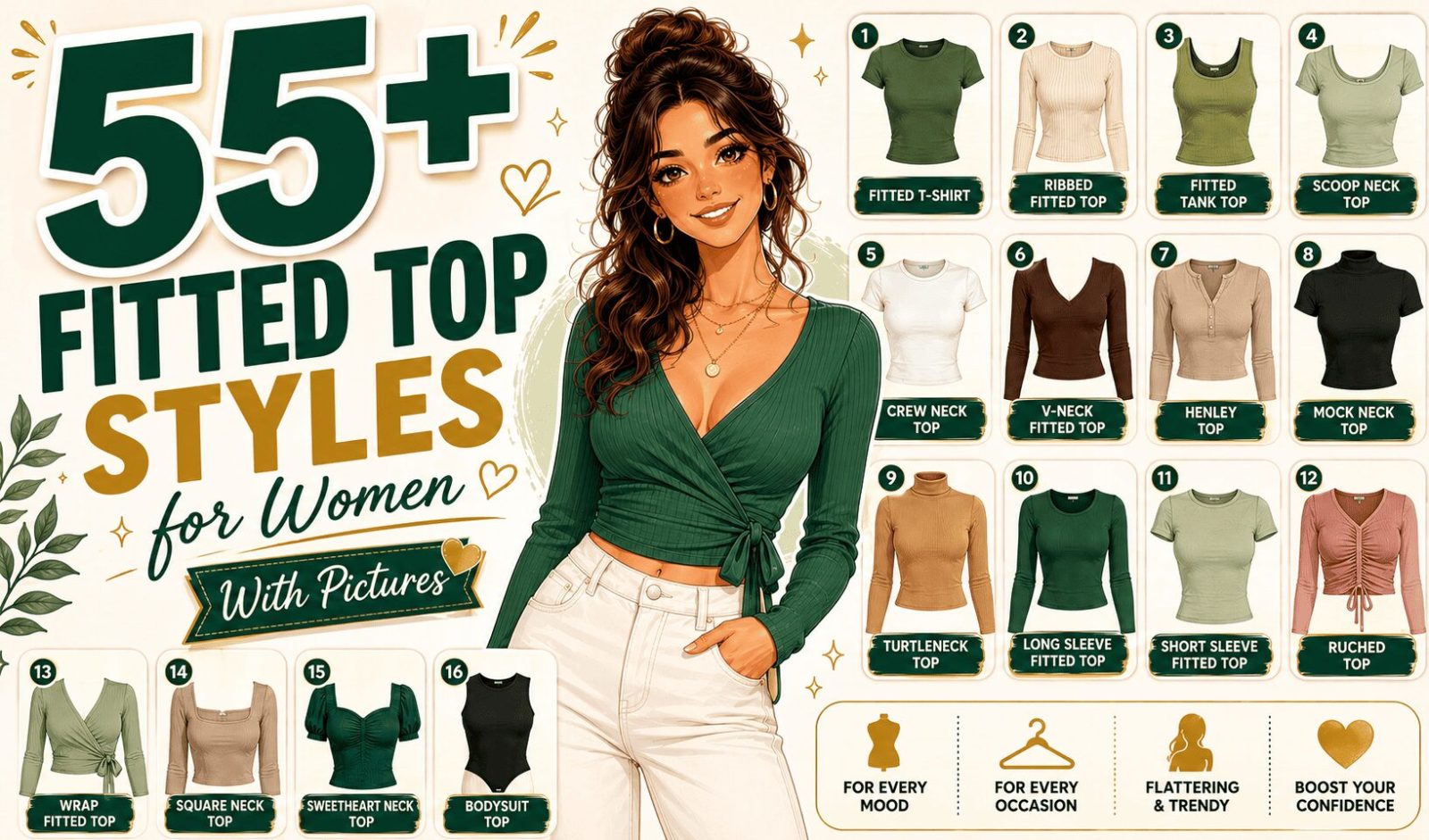
This guide categorizes 55+ types of fitted tops across 8 classification systems. For every entry:
-
Design
Construction, fabric, silhouette detail
-
Season
When to wear it
-
Best For
Occasions, aesthetics, layering
Explore the full reference alongside our complete visual tops library and our breakdown of neckline types for pairing guidance.
All 8 Categories at a Glance
A structured breakdown of the 55+ fitted top types documented in this guide.
- 01
By Construction Type
- 02
By Neckline
- 03
By Sleeve Style
- 04
By Fabric / Material
- 05
By Occasion
- 06
By Silhouette / Fit
- 07
By Trend / Aesthetic
- 08
By Layering Function
55+ Types of Fitted Tops for Women
Category 1: By Construction Type (#1–#10)
The structural identity of the garment — how it's built, how it fits, and what holds it against the body
Construction is the first variable. Before a fitted top has a neckline, a sleeve, or a fabric story — it has a structural identity. That structure determines the level of fit precision, the degree of compression, the way the garment responds to movement, and whether it needs internal structure (boning, stays, wires) or relies entirely on the stretch properties of its fabric. These 10 types represent the foundational construction categories within fitted tops.
What the history of fitted silhouettes shows — from 16th-century corseted bodices to 1990s compression jerseys — is that close-fit construction has always been central to women's fashion. The engineering has changed. The appetite hasn't. For the full spectrum of women's tops, our complete tops reference documents every structural category in detail.
- 01
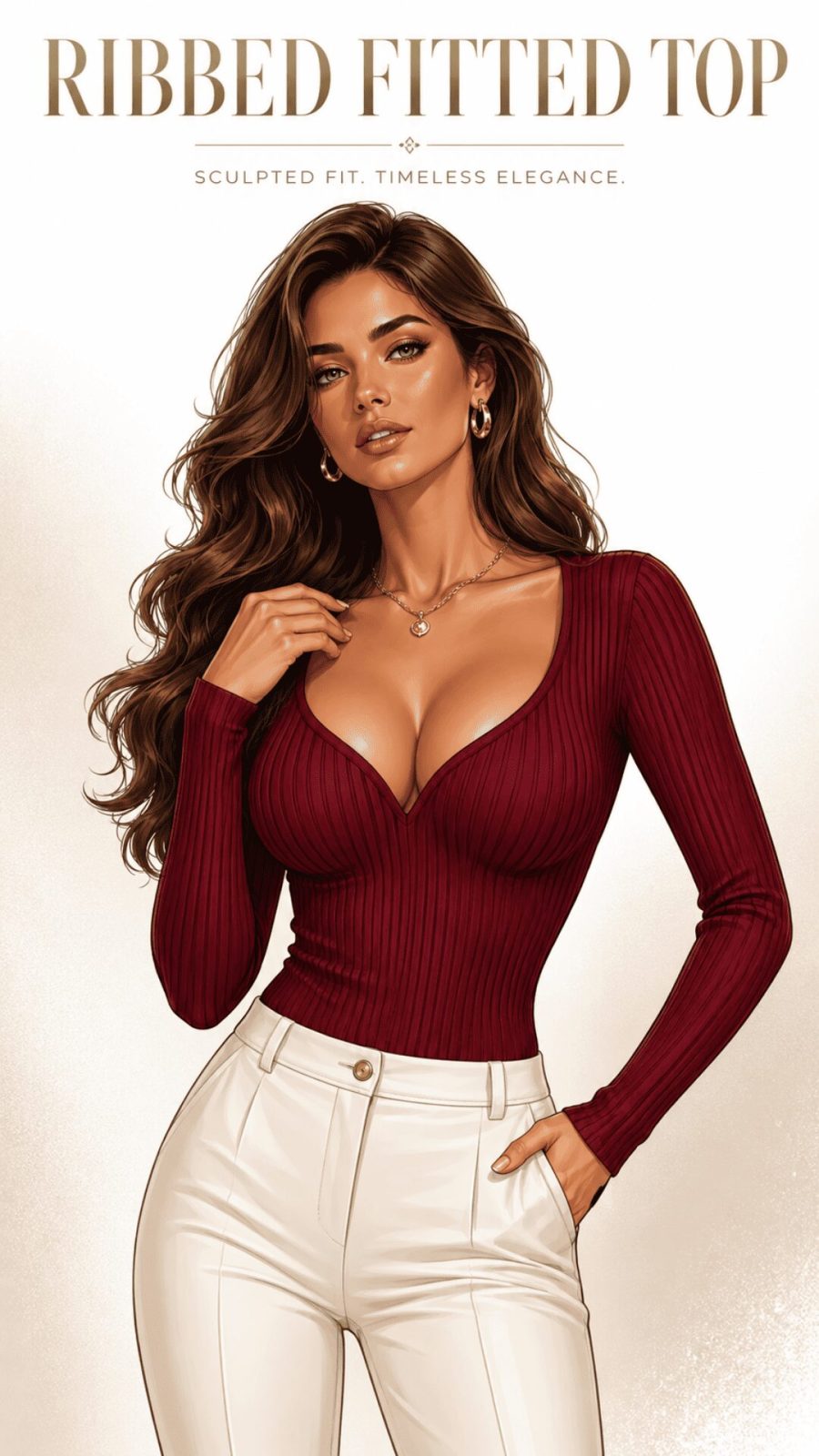
Ribbed Fitted Top

A top knitted in alternating knit-and-purl rows, producing vertical ridges that run the length of the garment. The rib structure gives the fabric strong horizontal stretch recovery — meaning it pulls back firmly against the body after stretching. That self-correcting tension is what makes ribbed fabric ideal for fitted construction. Unlike smooth jersey, the ribbing also creates visible texture across the silhouette, adding dimension to the body-skimming fit. Classic rib-knit tops come in fine-gauge cotton or cotton-spandex blends; thicker gauge versions lean toward knitwear territory. A wardrobe essential tracked by fashion institutions like Vogue as a perennial closet foundation.
- 02
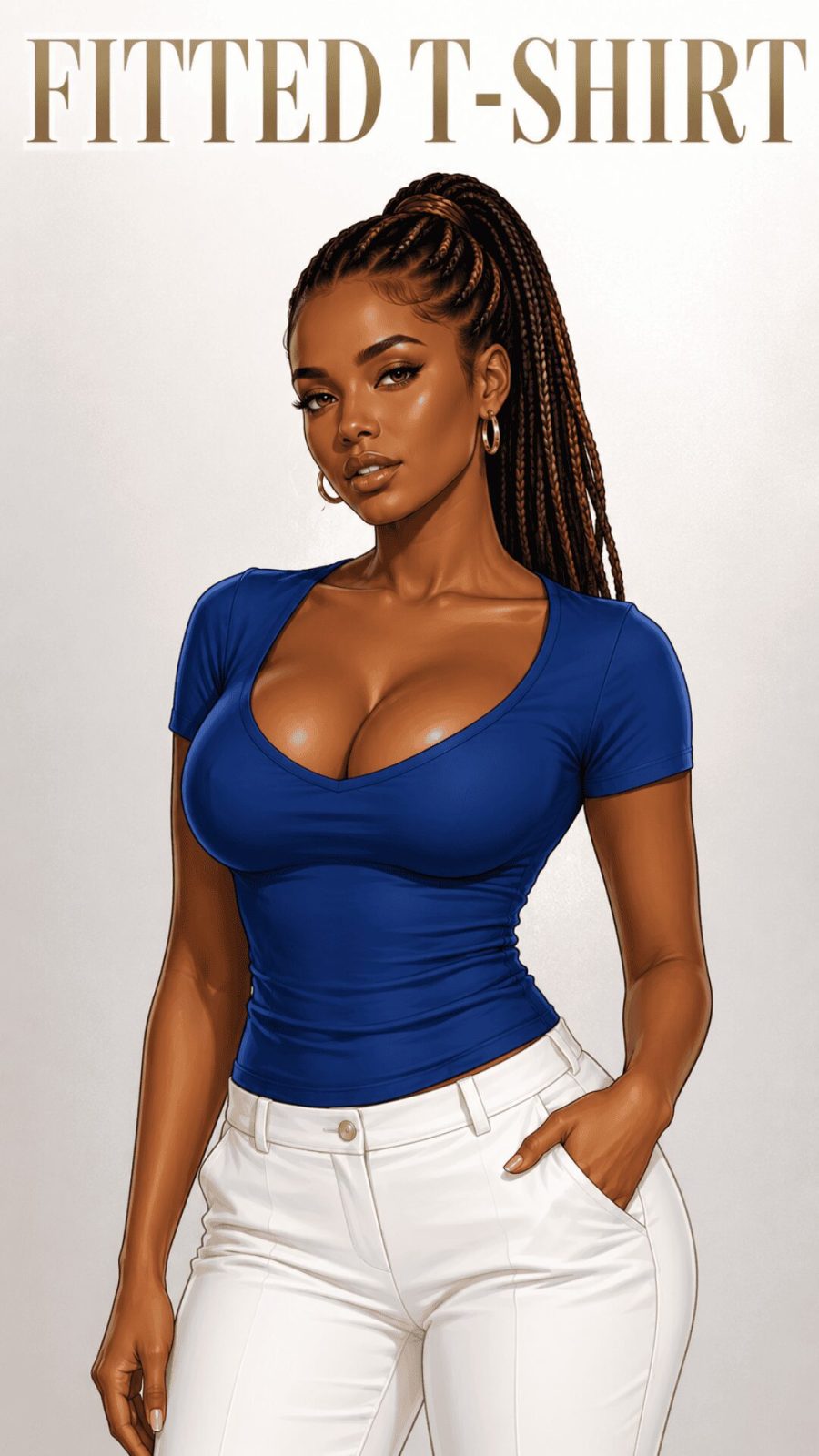
Fitted T-Shirt
The fitted version of the classic jersey T-shirt — cut with reduced ease allowance so the fabric follows the torso rather than hanging away from it. Standard T-shirt construction uses single-jersey knit, typically a cotton or cotton-elastane blend; the fitted version simply uses a narrower cut with side seams that follow the body's contour more closely. Sleeve insets sit higher and tighter, the side seam follows the waist more precisely, and the hemline sits cleanly at the hip. The difference between a fitted T-shirt and a regular one is entirely in the pattern grading — the same jersey fabric, a different silhouette output. See our guide to T-shirt fits for detailed comparison across cuts.
- 03
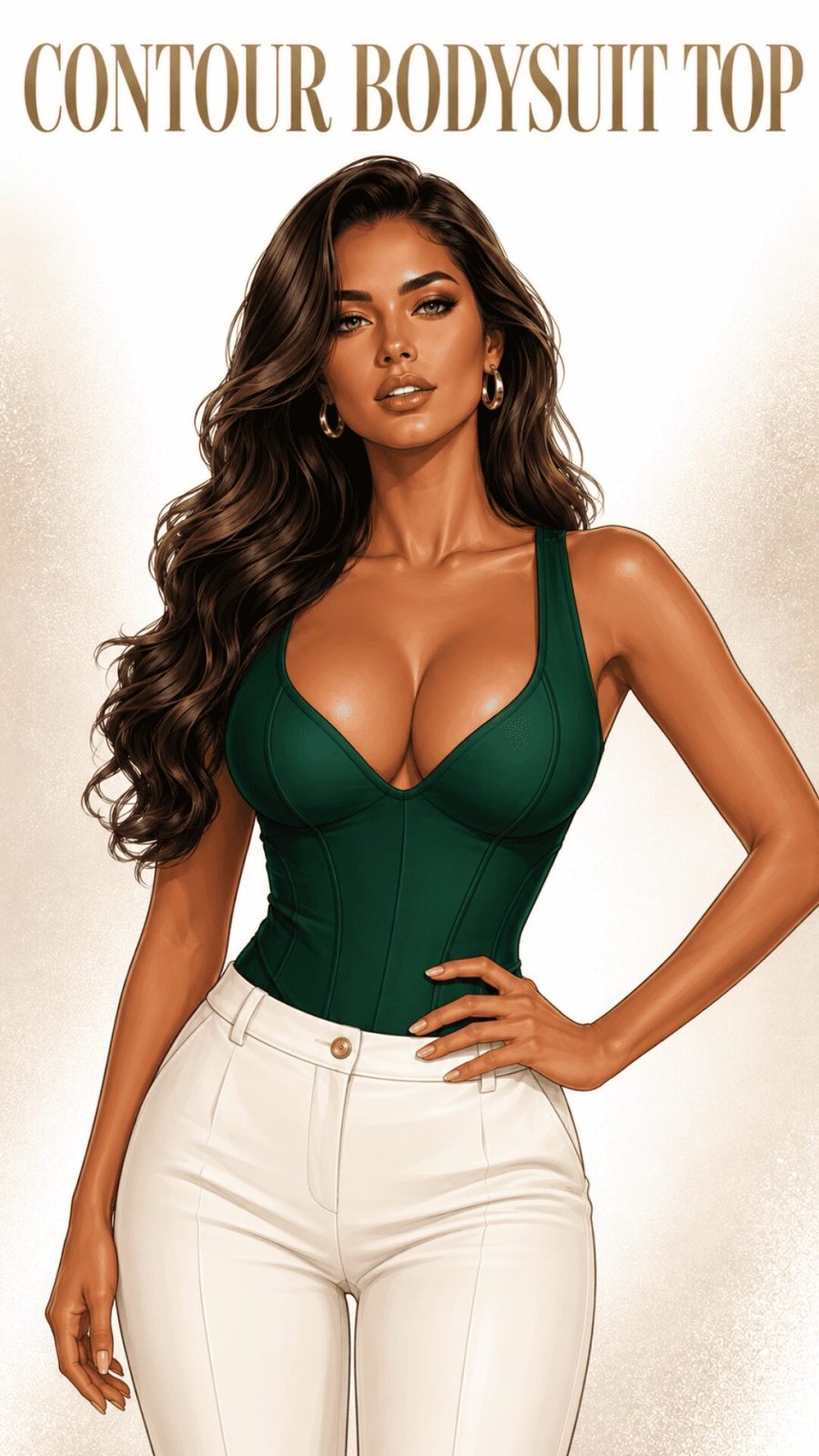
Contour Bodysuit Top
A fitted top that extends below the waistband and snaps or clasps at the crotch — creating a single continuous garment from shoulder to hip. The bodysuit's defining advantage over a regular fitted top is that it can't come untucked, which makes it exceptional for clean-line styling with high-waisted trousers or skirts. The contour bodysuit specifically uses closer-cut panels (often with seaming at the waist) to emphasize the hourglass silhouette. Common in stretch jersey, ribbed knit, and technical fabric. The bodysuit format has roots in 1970s dance and gymnastics wear, brought into mainstream fashion by designers including Donna Karan. Our fitted top vs bodysuit comparison breaks down the key differences.
- 04
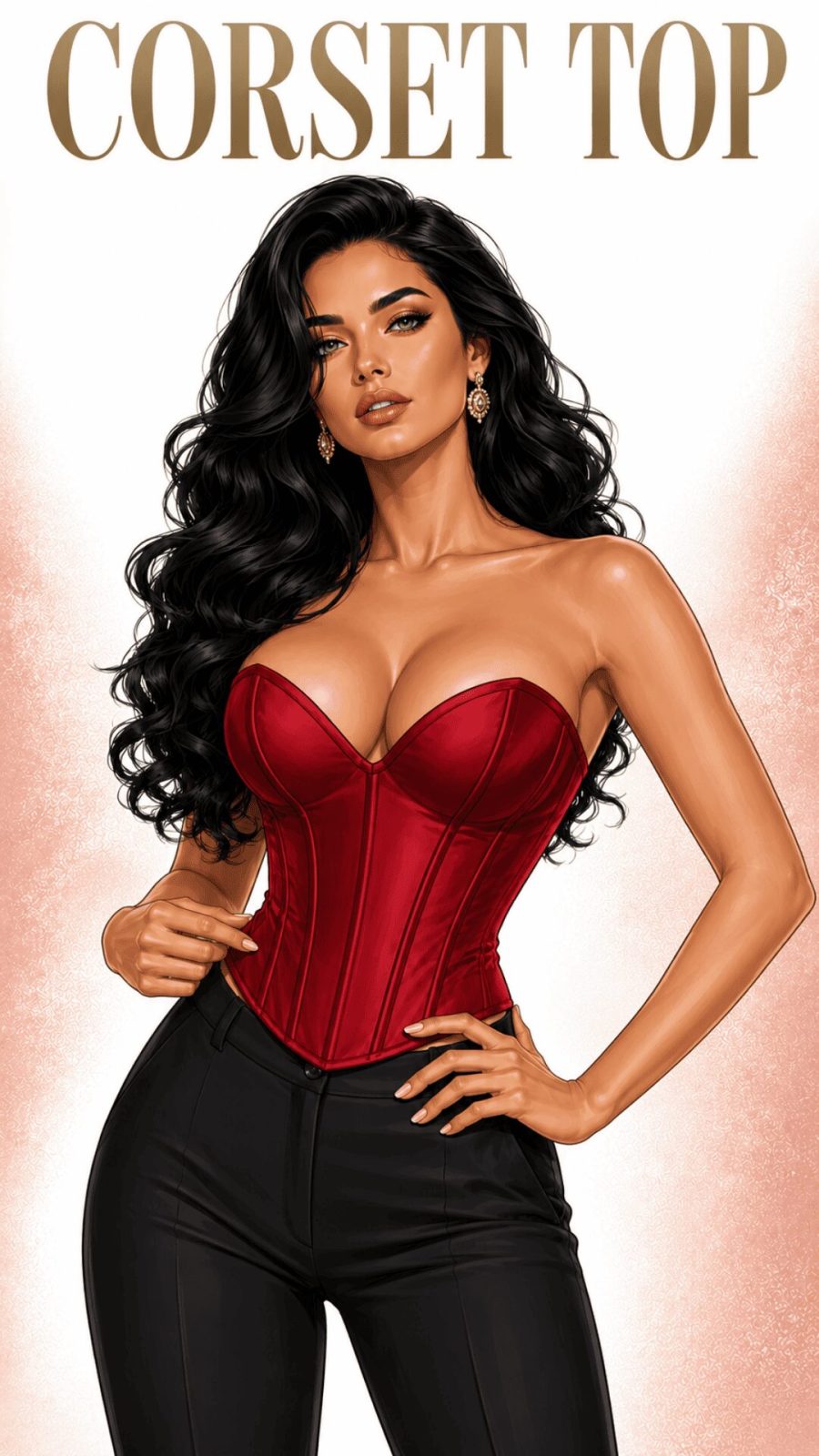
Corset Top
A structured top with boning (or boning channels), a laced or hooked back closure, and a fitted bodice that creates defined waist shaping through external support rather than stretch. The modern corset top differs from its historical ancestor in one key way: it functions as outerwear rather than underwear, and it's designed to be styled with other garments rather than worn beneath them. Boning is typically spiral steel or plastic; the outer fabric is usually satin, denim, leather, or structured cotton. The corset top's current dominance is documented in recent trend analysis from fashion institutions — its revival from the mid-2010s accelerated significantly through 2020–2025 as part of the broader cottagecore and Y2K aesthetic waves. Explore our full guide to corset tops for construction and styling detail.
- 05
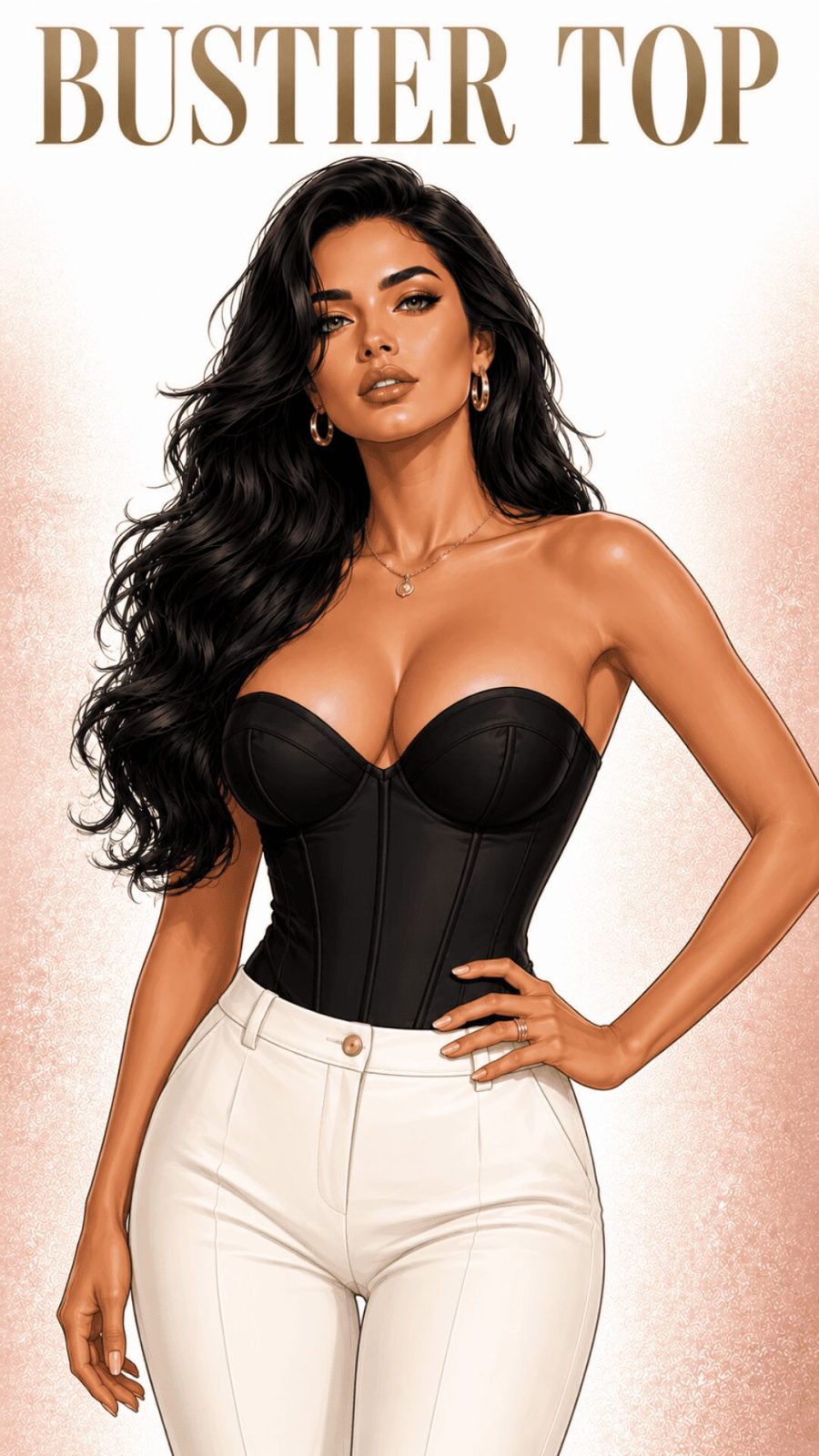
Bustier Top
A strapless or lightly structured fitted top with built-in cups or lining that provides support through its construction rather than bra straps. The bustier differs from the corset in scope: it covers the bust without necessarily boning the entire torso. Underwire is common; the exterior fabric is typically satin, silk, velvet, or structured cotton. The bustier's construction places it at the upper end of the fitted top formality scale — it reads as evening, editorial, or occasion wear. Pairs equally well with wide-leg trousers for a high-fashion casual look as it does with a tailored skirt for a formal event.
- 06
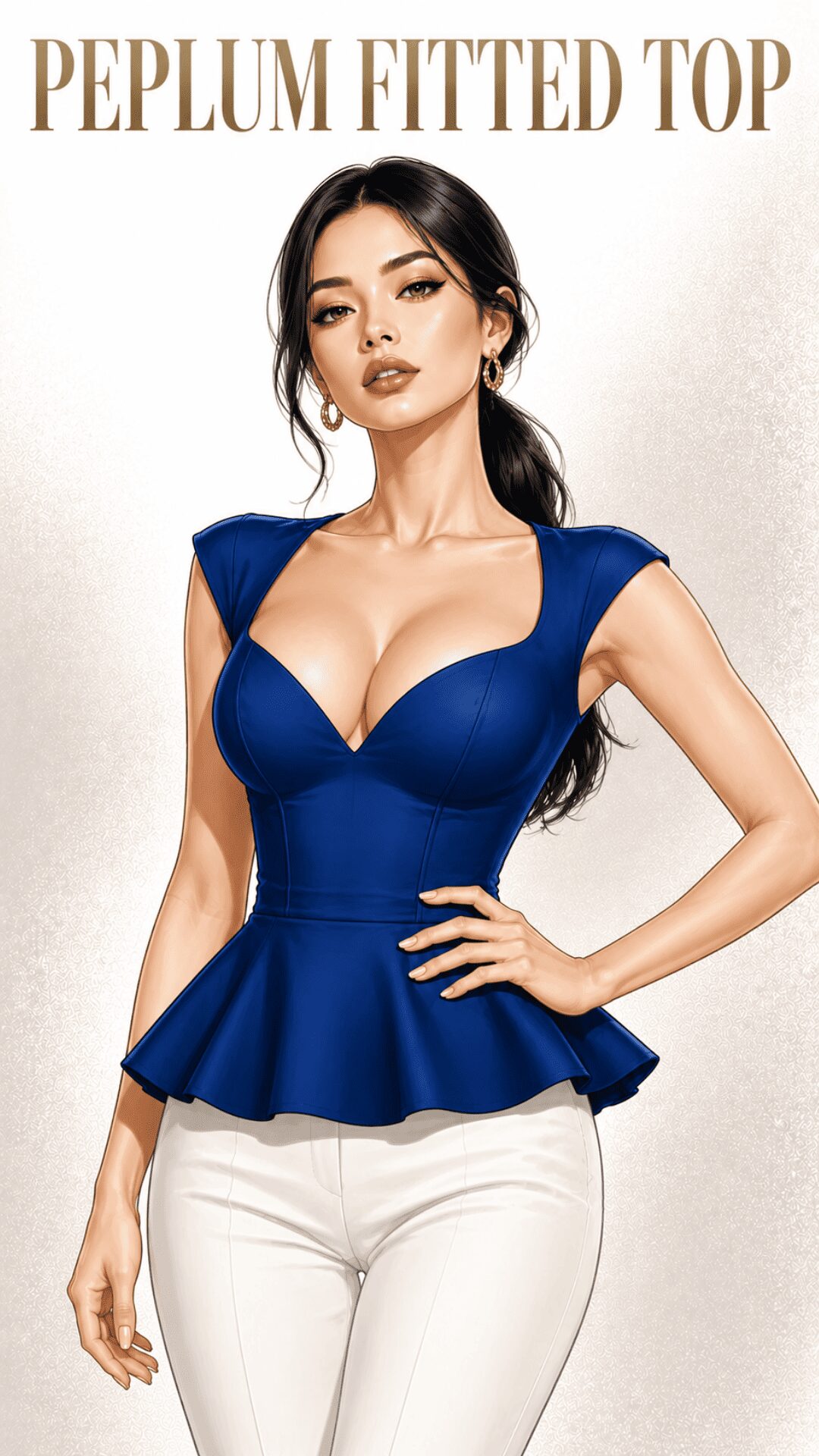
Peplum Fitted Top
A fitted bodice with a short flared skirt-like extension at the waist — the peplum. The upper half fits closely against the torso; the peplum flares outward from the hip, adding volume below the waist without changing the fitted read of the top. This construction creates visual balance: a closely defined torso paired with subtle flare. The peplum has roots in Balenciaga's 1940s designs and returns regularly in fashion cycles. In fitted top terms, the peplum is the most architectural construction — it adds structural interest without adding fabric to the body.
- 07
Ruched Fitted Top
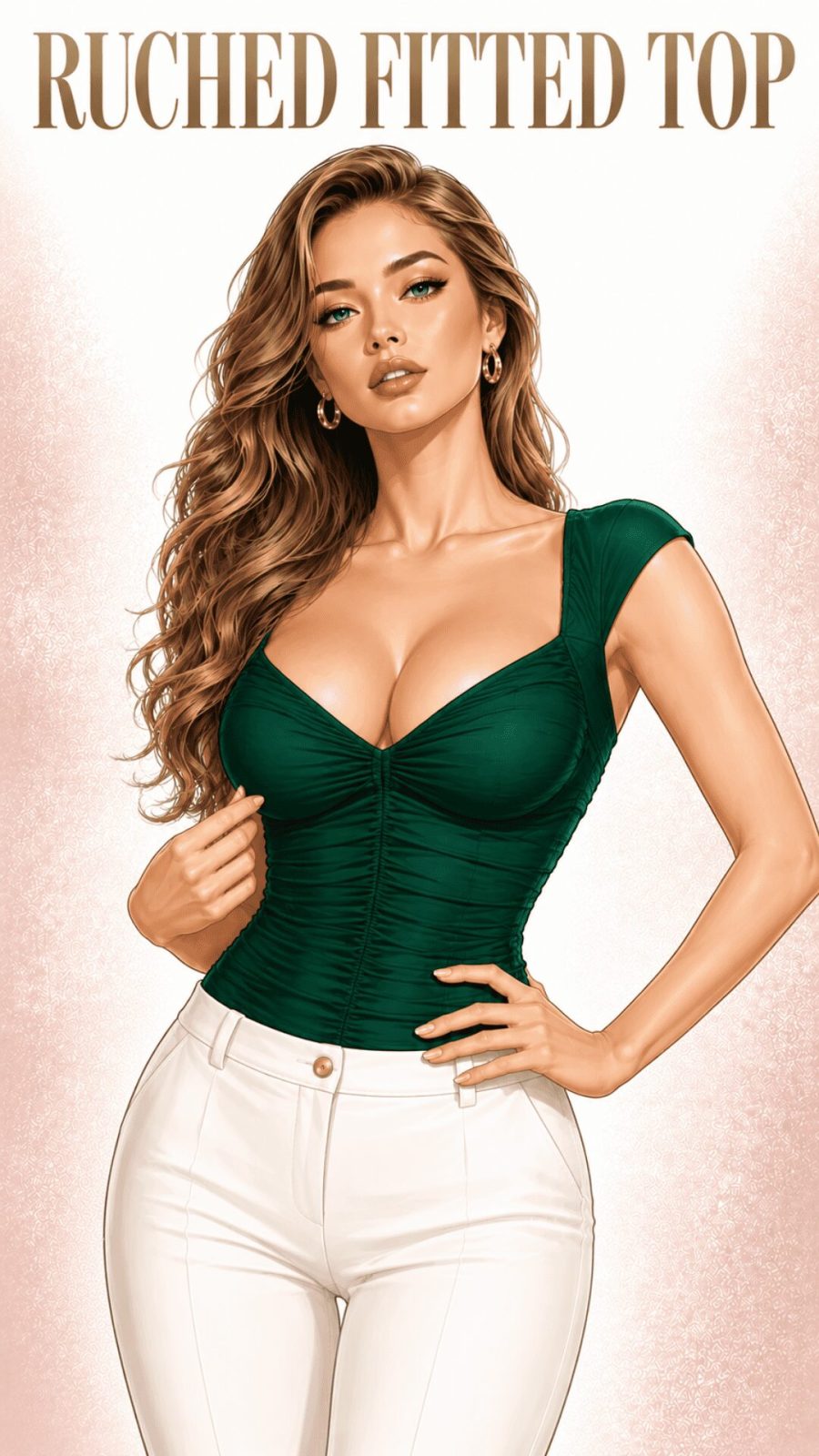
Fabric gathered and compressed in sections — typically along the side seams, centre front, or bust — to create rippled texture while keeping the overall silhouette fitted. Ruching serves two purposes simultaneously: it creates visual texture and it allows a single size to accommodate slight body variation, since gathered fabric adjusts more forgivingly than flat panels. The technique also adds vertical or diagonal lines that create visual definition across the torso. Common in stretch jersey and slinky fabrics where the gathering reads as fluid rather than stiff.
- 08
Wrap Fitted Top
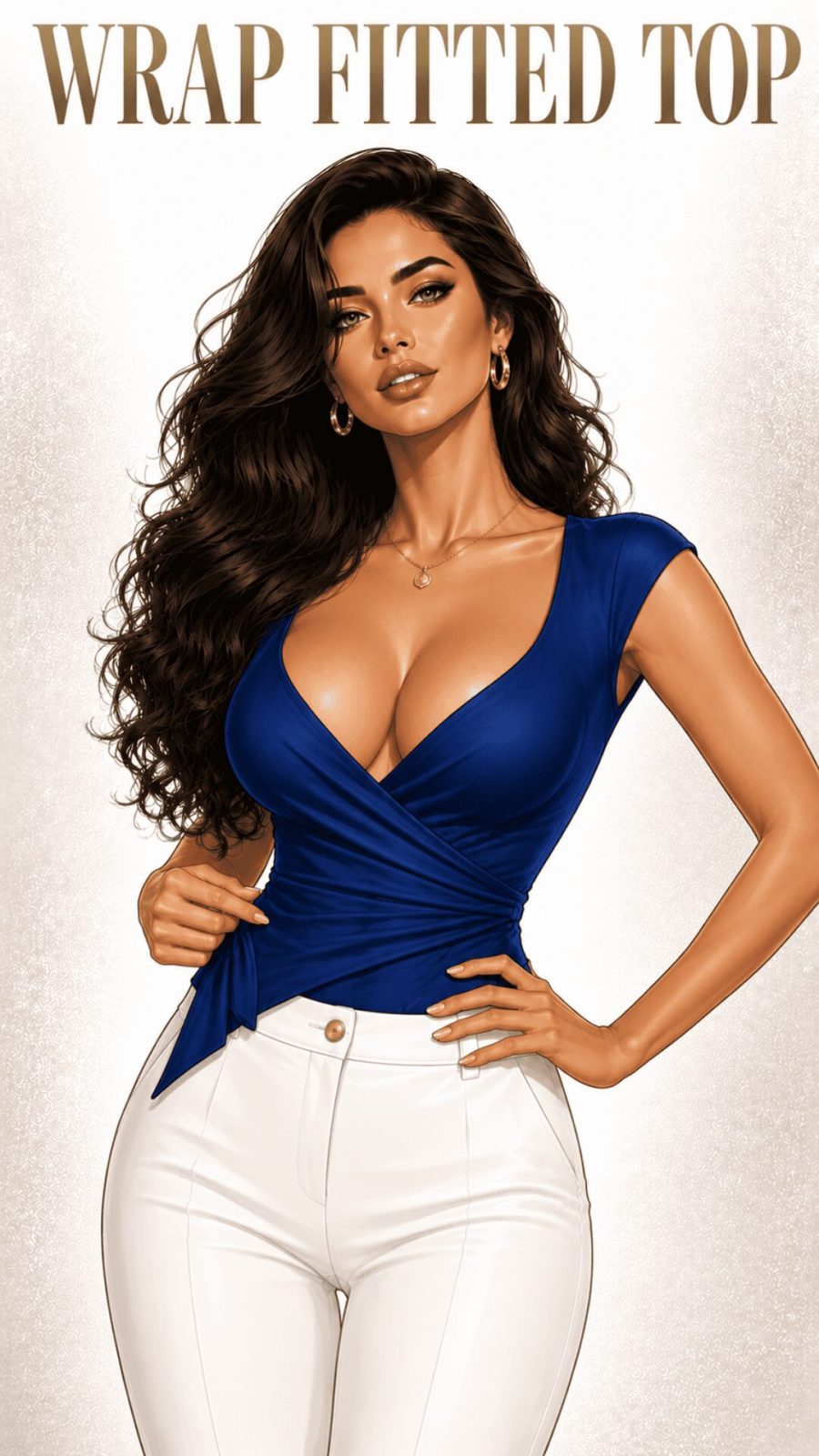

A top where one side of fabric wraps across the front and ties at the waist or side — creating a V-shaped neckline and a close-body fit through the tie tension rather than cutting. The wrap construction is inherently adjustable: the tie determines how fitted the top feels, making it one of the most size-inclusive fitted constructions. The V-neckline produced by the crossover is elongating and proportionally versatile. In woven fabrics (crepe, georgette, satin), the wrap top reads as polished and occasion-appropriate; in jersey or ribbed knit, it's casual enough for everyday wear. See the full wrap top construction guide for fabric pairings.
- 09
Seamless Fitted Top
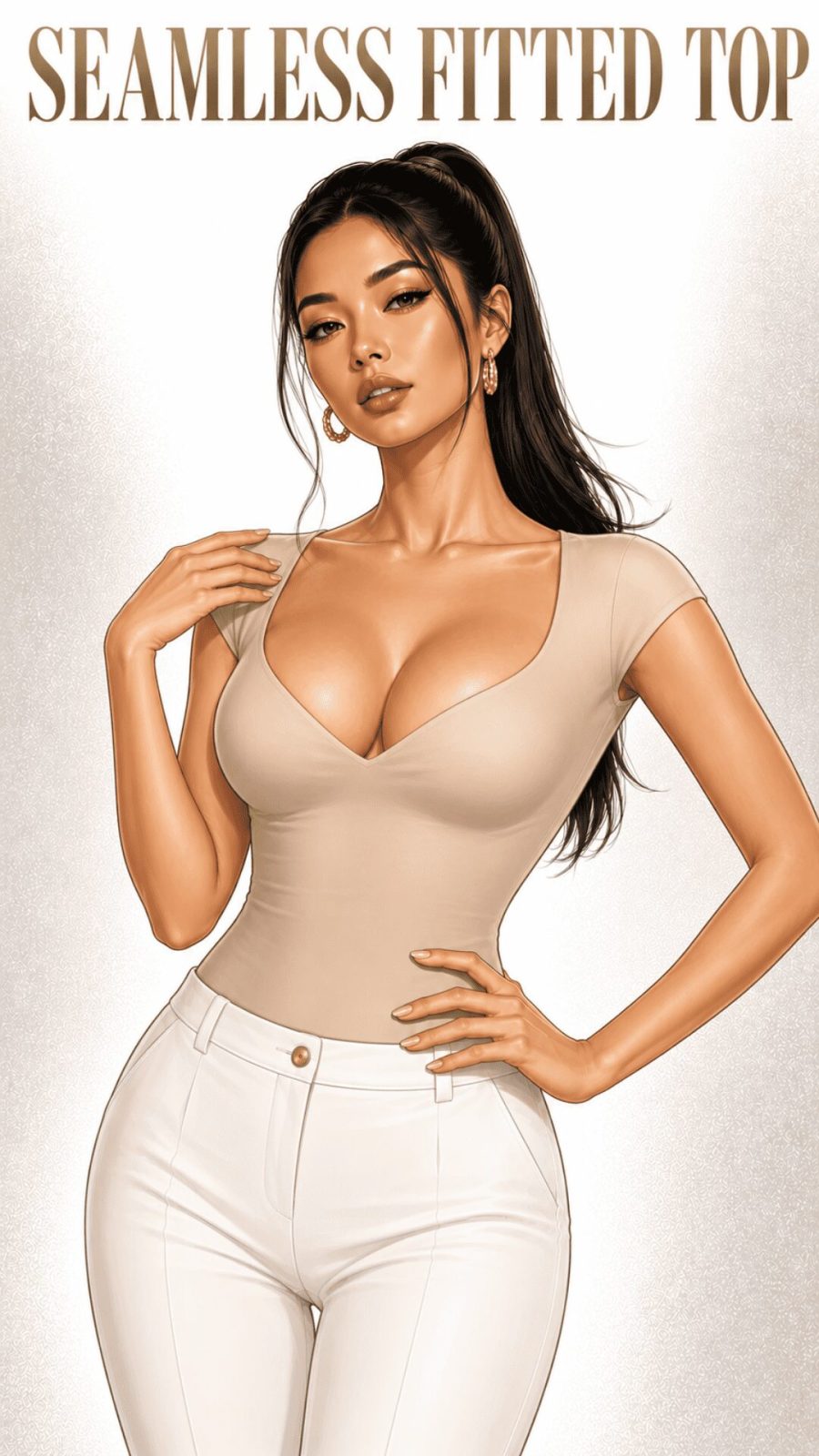
Constructed on circular-knit machines that produce the fabric and the garment shape simultaneously — eliminating side seams entirely. The seamless construction creates a perfectly smooth exterior with no seam ridges visible under fitted outer layers, and it reduces pressure points at the hip and underarm. Modern seamless technology allows the fabric density, stretch level, and even mesh panels to be varied at different points in the same garment without any visible joins. This makes seamless tops particularly effective for layering under structured pieces where seam lines would otherwise show through. The technology originated in the performance-wear industry and migrated to everyday fashion in the 2010s.
- 10
Sculpted Jersey Top
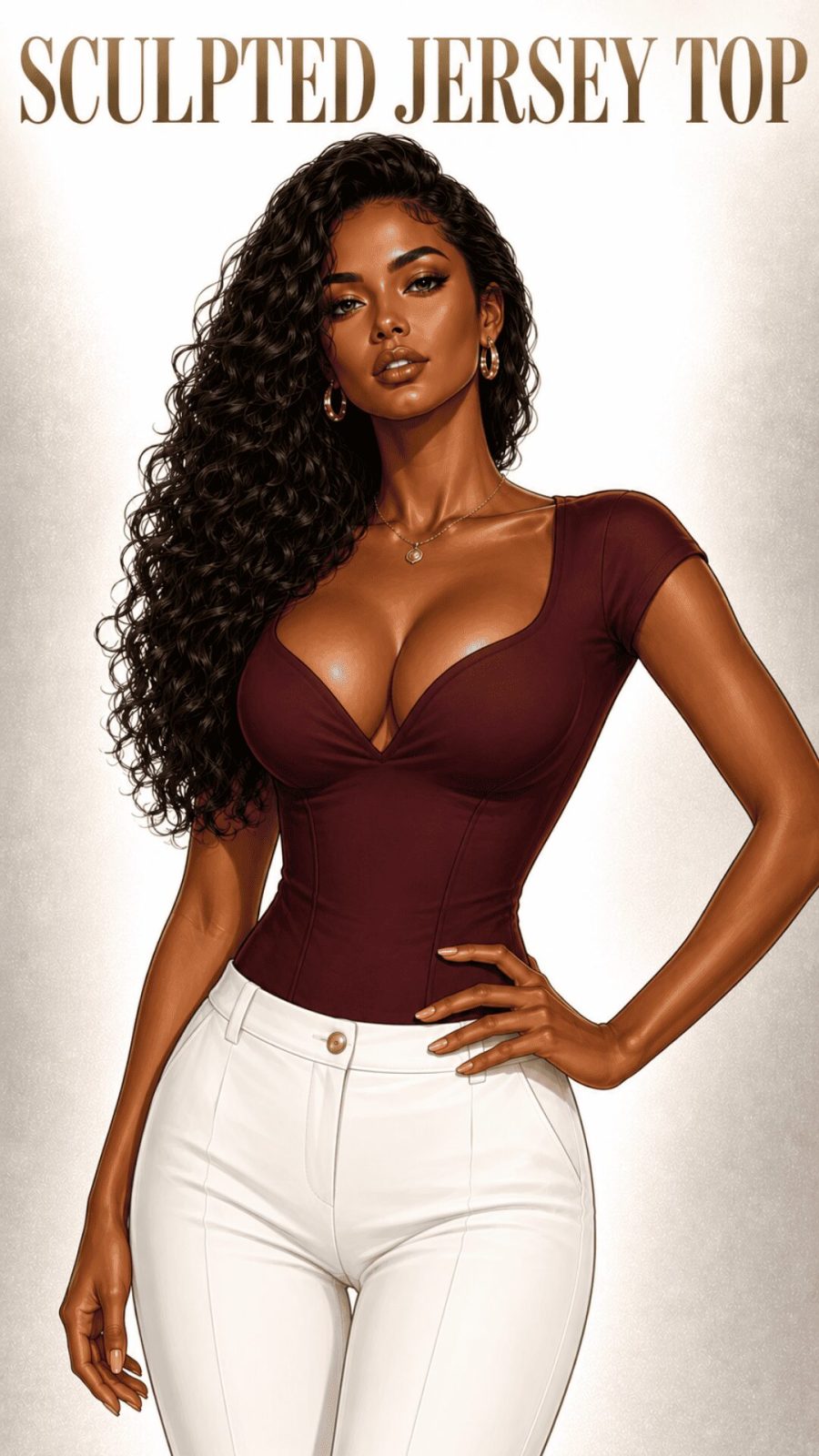
A close-fit top in heavy-weight stretch jersey — typically double-knit or ponte — with internal structure that holds its shape even while conforming to the body. The distinction from a standard fitted jersey top is weight and recovery: sculpted jersey has enough body weight to resist wrinkling, enough stretch to fit closely, and enough recovery to return to shape after wearing. The result is a fitted silhouette with structure — the jersey equivalent of a tailored garment. Designers like Azzedine Alaïa built entire collections on this fabric logic, demonstrating that jersey could be as precisely architectural as woven tailoring.
The success of a fitted top depends on fabric behavior more than any other variable. A cotton-elastane blend in a 95/5 ratio gives close fit with minimal recovery — it will stretch but slowly spring back. A 90/10 ratio has noticeably stronger recovery and holds the silhouette more firmly against the body through a full day of wear. Rib knit adds stretch-recovery through structure rather than fibre content. The right fabric choice depends on how you need the top to behave: static (sit at a desk) vs. dynamic (move, commute, gesture).
Category 2: By Neckline (#11–#18)
How neckline geometry shapes the visual impact of a fitted silhouette
Neckline selection is one of the most consequential decisions in a fitted top — because in a body-skimming silhouette, the neckline is where the eye lands first. It determines how much skin is visible, where visual attention rests, and how the garment interacts with the neck and collarbone. In a fitted top, the neckline also affects perceived body proportions: a V-neck creates a vertical line that adds visual length, a square neck frames the collarbone and shoulders, a mock neck adds height and polish. For a complete comparison of neckline types across all tops, see our neckline guide.
- 11
V-Neck Fitted Top
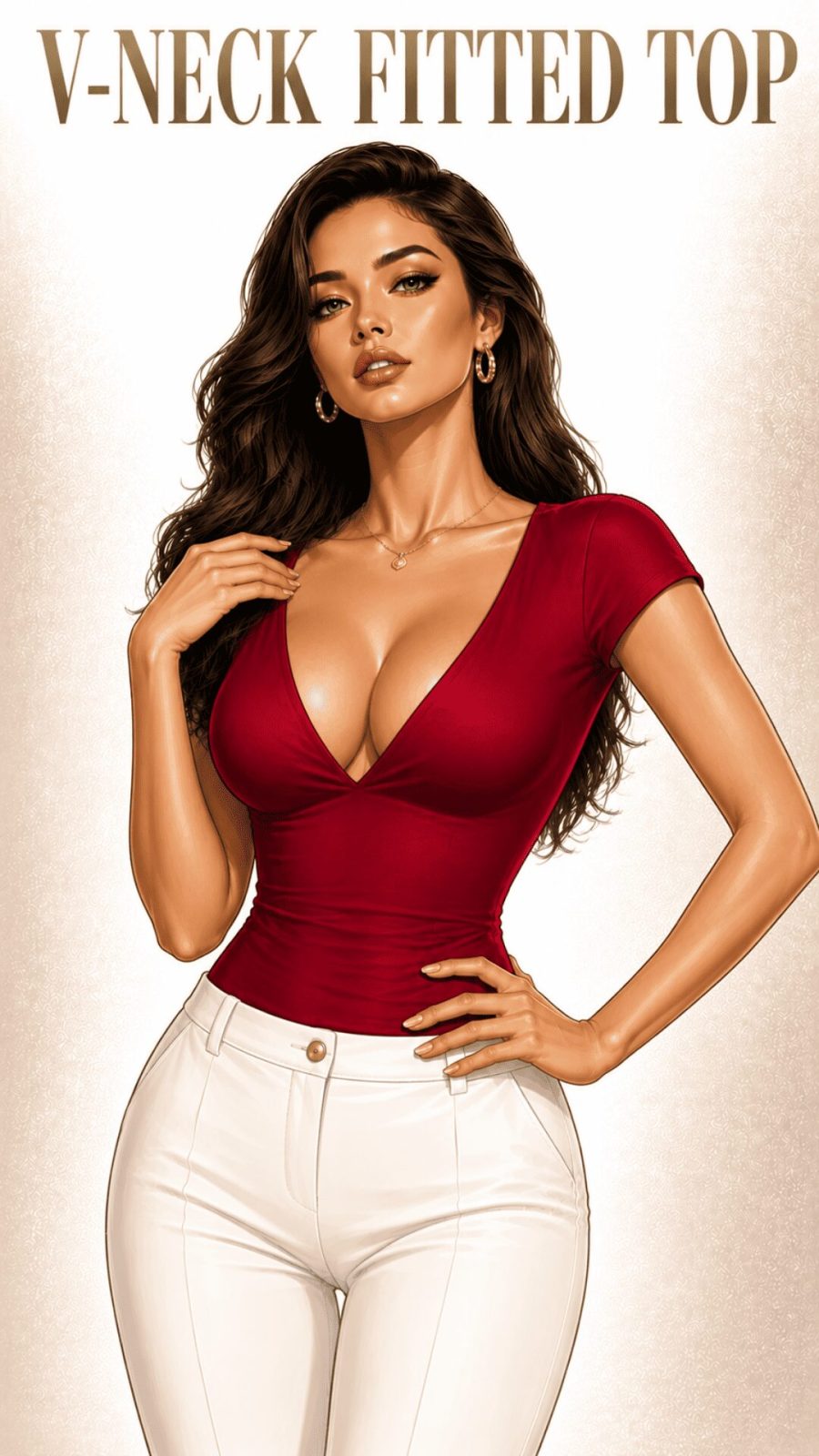
A fitted top with a V-shaped neckline that dips to a point at the centre front. The V creates a downward-pointing line that visually adds length to the neck and torso — one of the most proportionally effective necklines for a fitted silhouette. The depth of the V determines the register: a shallow V (ending 3–4 cm below the collarbone) reads as casual to professional; a deeper V shifts toward going-out and evening territory. V-neck fitted tops in ribbed cotton are among the most-worn fitted top types globally — appearing in every capsule wardrobe context from minimalist to bold.
- 12
Square Neck Fitted Top
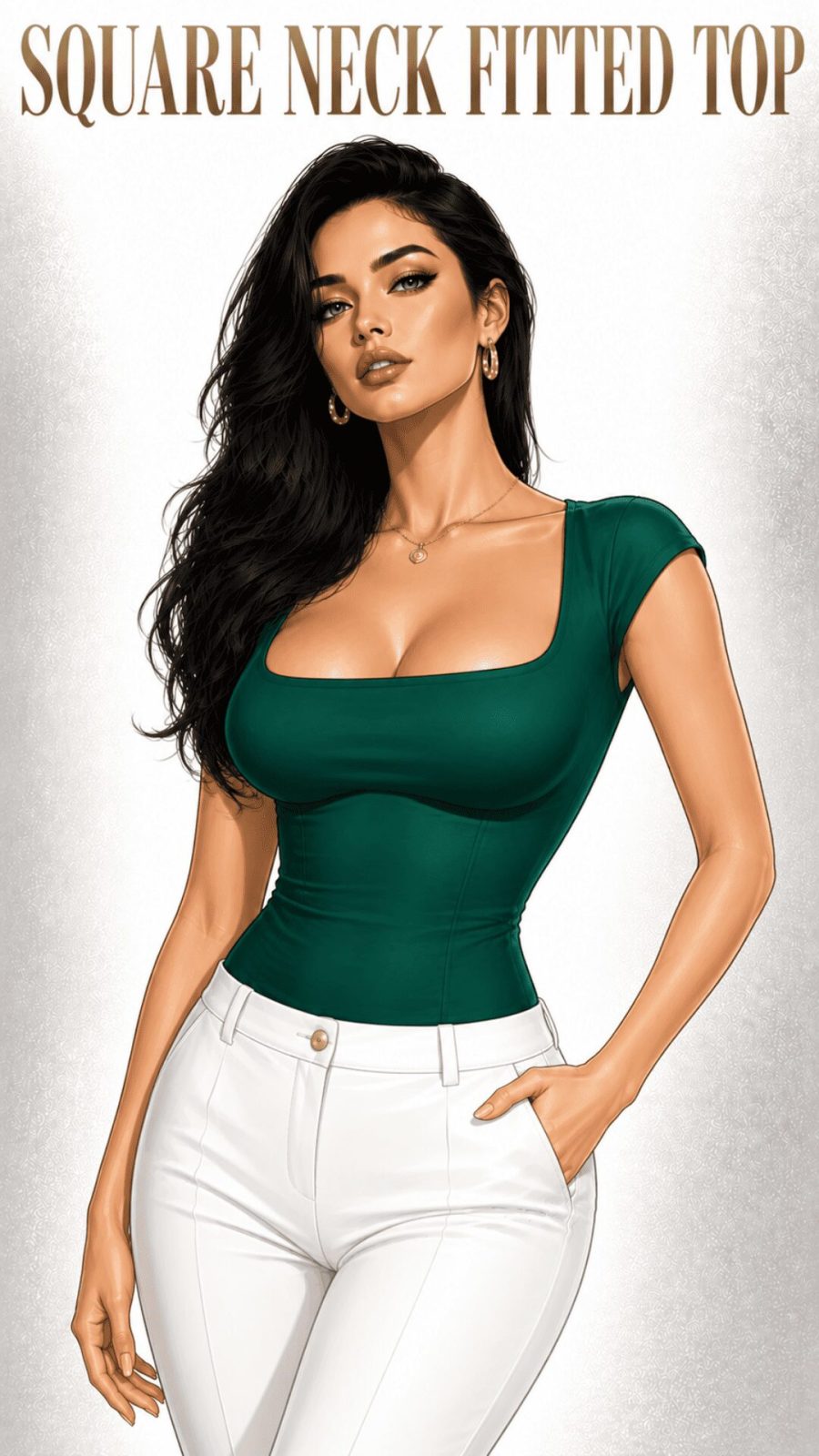
A fitted top with a straight-edged neckline forming a geometric rectangle across the chest. The square neck's flat horizontal line draws attention to the collarbone and shoulders — it works by presenting a deliberately framed, geometric opening against the fitted fabric below. Unlike the V-neck's directional depth, the square neck creates width at the top of the silhouette. This makes it particularly effective in proportional balancing: it adds horizontal emphasis at the shoulders and decolletage, which creates visual contrast with a narrowed waist. A dominant neckline across spring/summer collections throughout 2020–2025 and beyond.
- 13
Scoop Neck Fitted Top
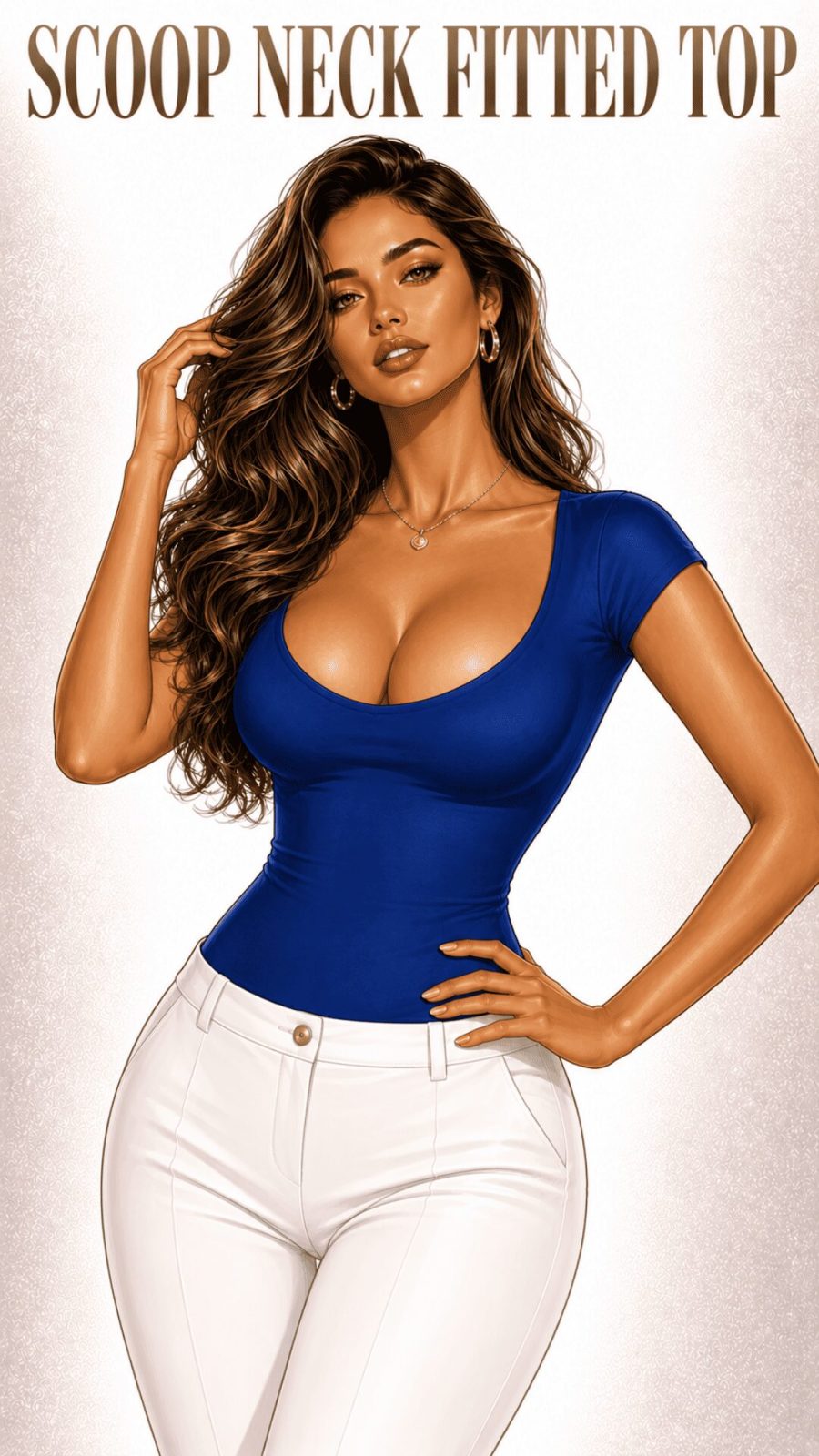
A fitted top with a wide, U-shaped neckline that opens lower and wider than a crew neck. The scoop neckline's curved shape makes it more relaxed than the precise geometry of a square neck, and more casually approachable than a V-neck. In a fitted silhouette, the scoop neck keeps the focus on the decolletage while maintaining a rounded, softer visual line. Cotton and jersey scoop necks are common in casual wear; satin and silk scoop necks cross into elevated and evening territory. One of the most comfortable necklines for everyday fitted tops because the curve distributes fabric tension evenly across the chest.
- 14
Sweetheart Neckline Fitted Top
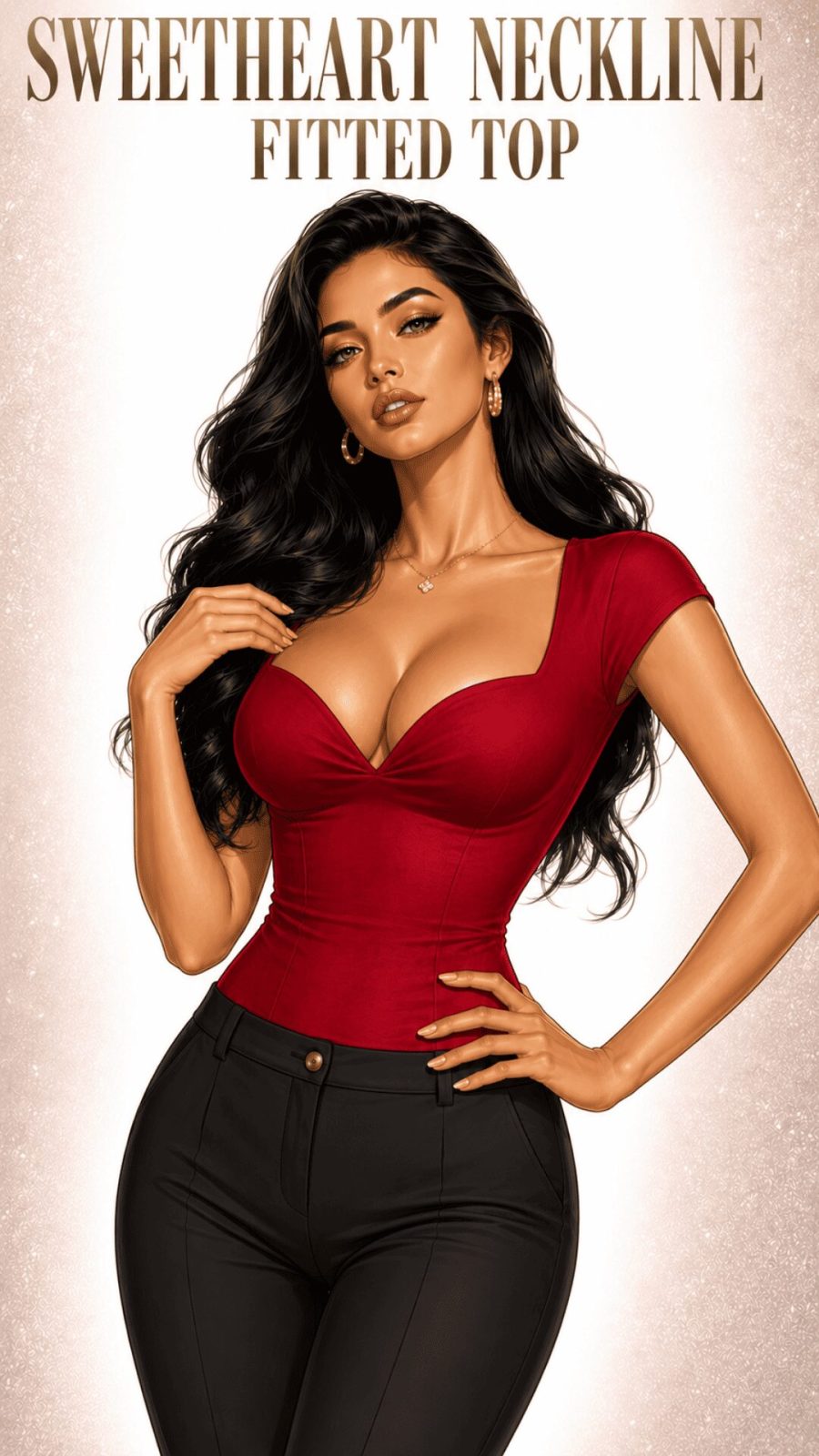
A fitted top with a neckline shaped like the top half of a heart — two symmetrical curved arches that meet at a central dip. The sweetheart neckline reads as romantic and feminine: the dual curves frame the chest softly, and the central dip adds a subtle focal point. In a fitted top context, the sweetheart's structure requires either a boned or structured bodice (to hold the curves in position) or a tight enough fit that the fabric stays in place through tension. Most effective in strapless or thin-strap tops; becomes less visually legible when covered by wide straps or sleeves.
- 15
Mock Neck Fitted Top
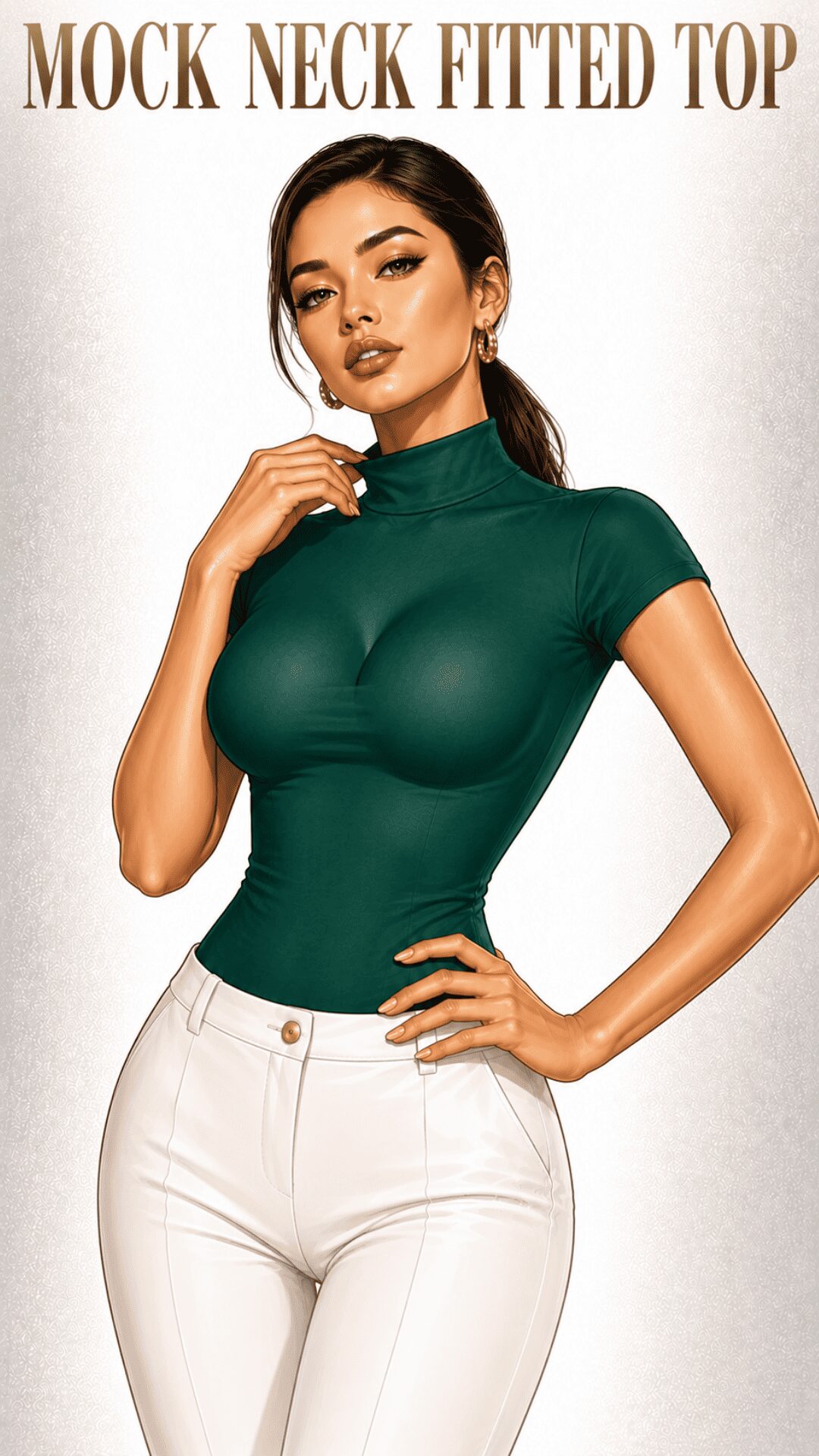
A fitted top with a high, close-fitting collar that rises above the neckline without folding over — the distinction from a turtleneck being that the mock neck stands upright without the excess fabric length required to fold back. The mock neck adds visual height at the neck and a polished, minimal aesthetic that has made it a favourite in Korean fashion and minimalist styling. It works particularly well in the fitted format because the clean collar line contrasts sharply with the body-skimming fabric below — the top becomes architectural without any decorative detail. The mock neck in ribbed cotton or merino is a capsule wardrobe staple.
- 16
Off-Shoulder Fitted Top
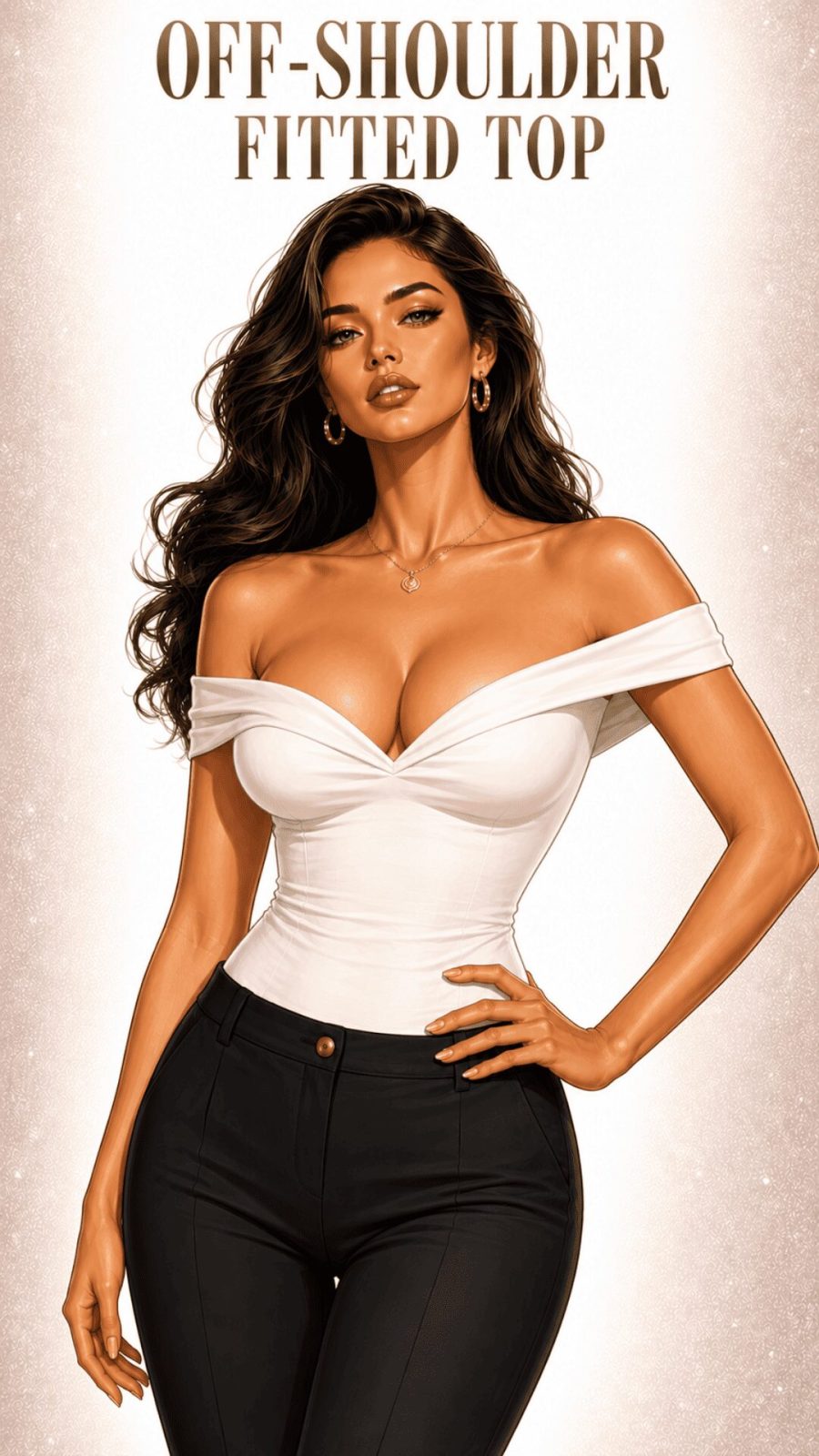
A fitted top where the neckline sits below both shoulders — typically held in place by elastic, boning, or a tight fit — exposing the entire shoulder and collarbone in a single continuous horizontal sweep. The off-shoulder neckline creates maximum shoulder and collarbone visibility, and in a fitted silhouette the contrast between the exposed skin above and the close-fit fabric below is the defining visual statement. Requires elastic at the top edge (to stay in position without straps) or a tight enough bodice fit that the fabric holds through tension. Common in jersey, cotton, and satin. One of the most popular styles for summer going-out tops.
- 17
One-Shoulder Fitted Top
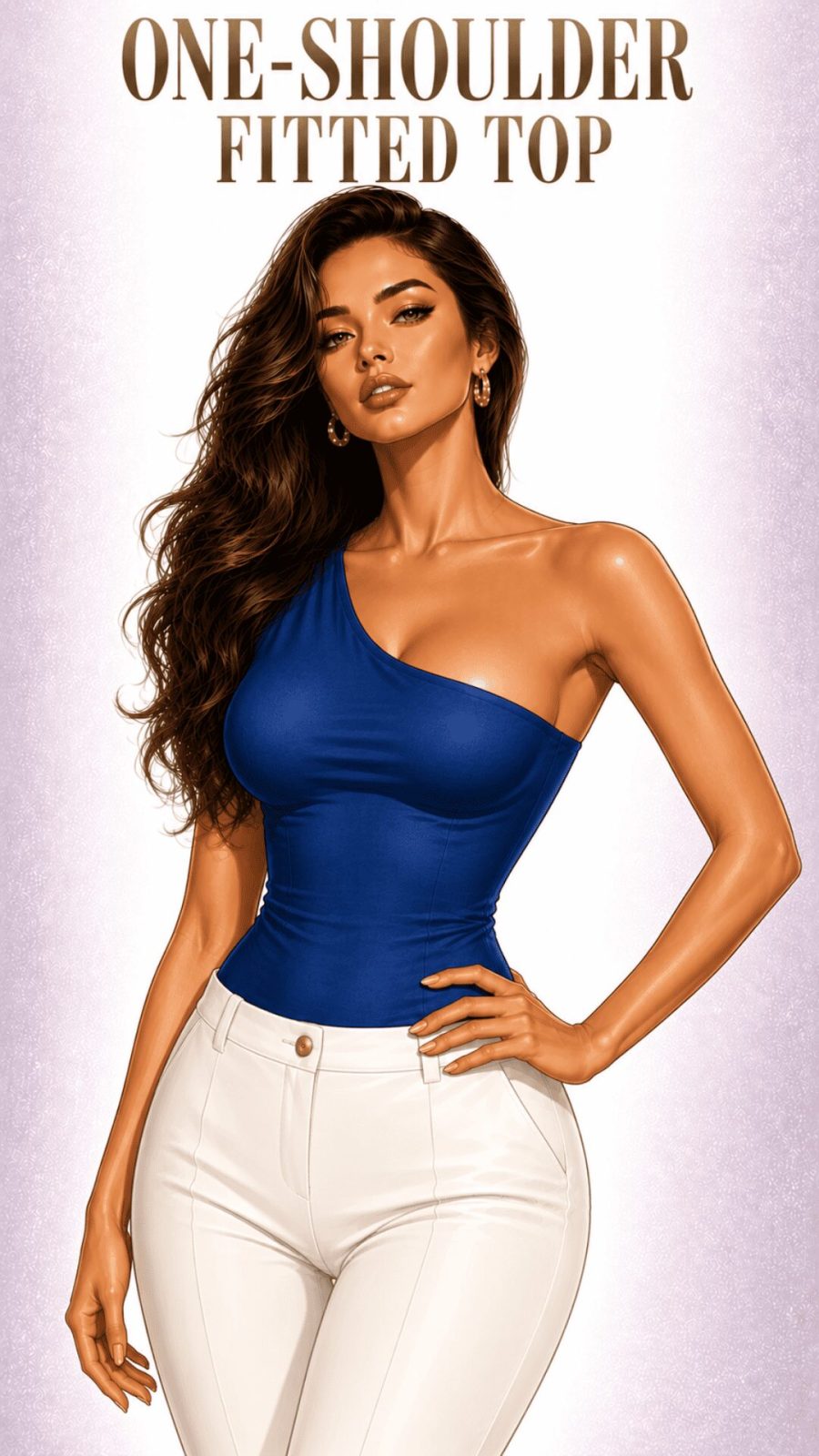
An asymmetric fitted top with fabric covering one shoulder while the other remains exposed. The asymmetry creates visual dynamism in a fitted silhouette — the off-center drape or strap draws the eye across the body diagonally, which is different from any symmetrical neckline construction. One-shoulder tops require either structured internal support or a fabric weight that holds the asymmetric drape in position. In stretch jersey or slinky fabric, the single-shoulder drapes fluidly; in structured satin or crepe, the single shoulder holds a more architectural shape. Consistently popular for going-out and occasion wear.
- 18
Cowl Neck Fitted Top
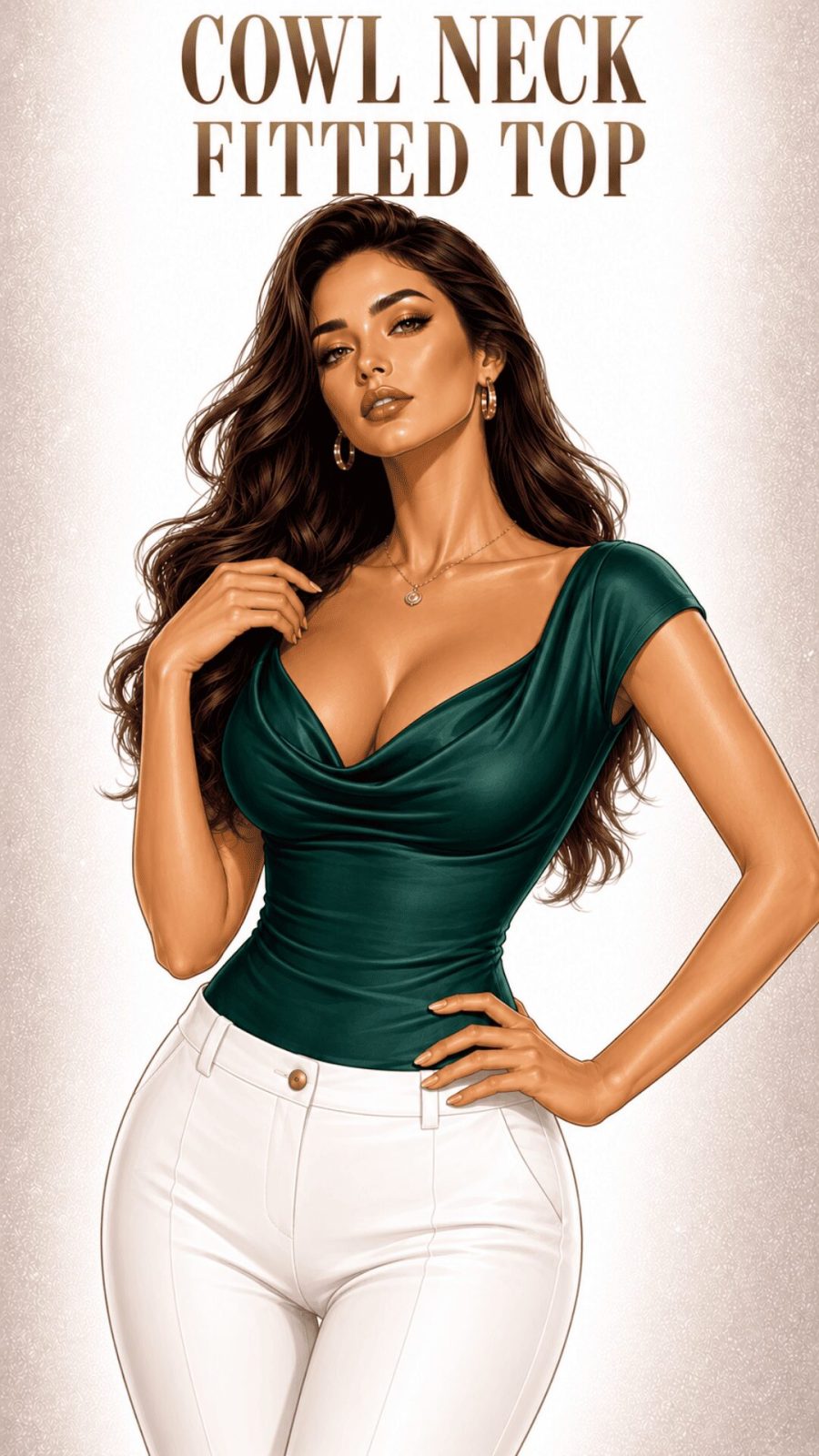
A fitted top with a draped, loose neckline that hangs in soft folds at the front — the cowl drape. The cowl's construction requires fabric with enough weight and drape to hold the folds without rigidity (common in satin, silk, viscose, or matte crepe). In a fitted silhouette, the cowl creates an interesting contrast: close-fitting fabric from the bust down, loose flowing fabric at the neck and chest. This counterpoint makes the cowl neck top one of the most visually interesting constructions in the fitted category — structured below, fluid above. The bias-cut versions in satin are particularly effective for evening wear because the drape moves with the body.
Category 3: By Sleeve Style (#19–#25)
Sleeve construction and how it modifies the fitted top's silhouette, proportion, and occasion register
- 19
Fitted Tank Top
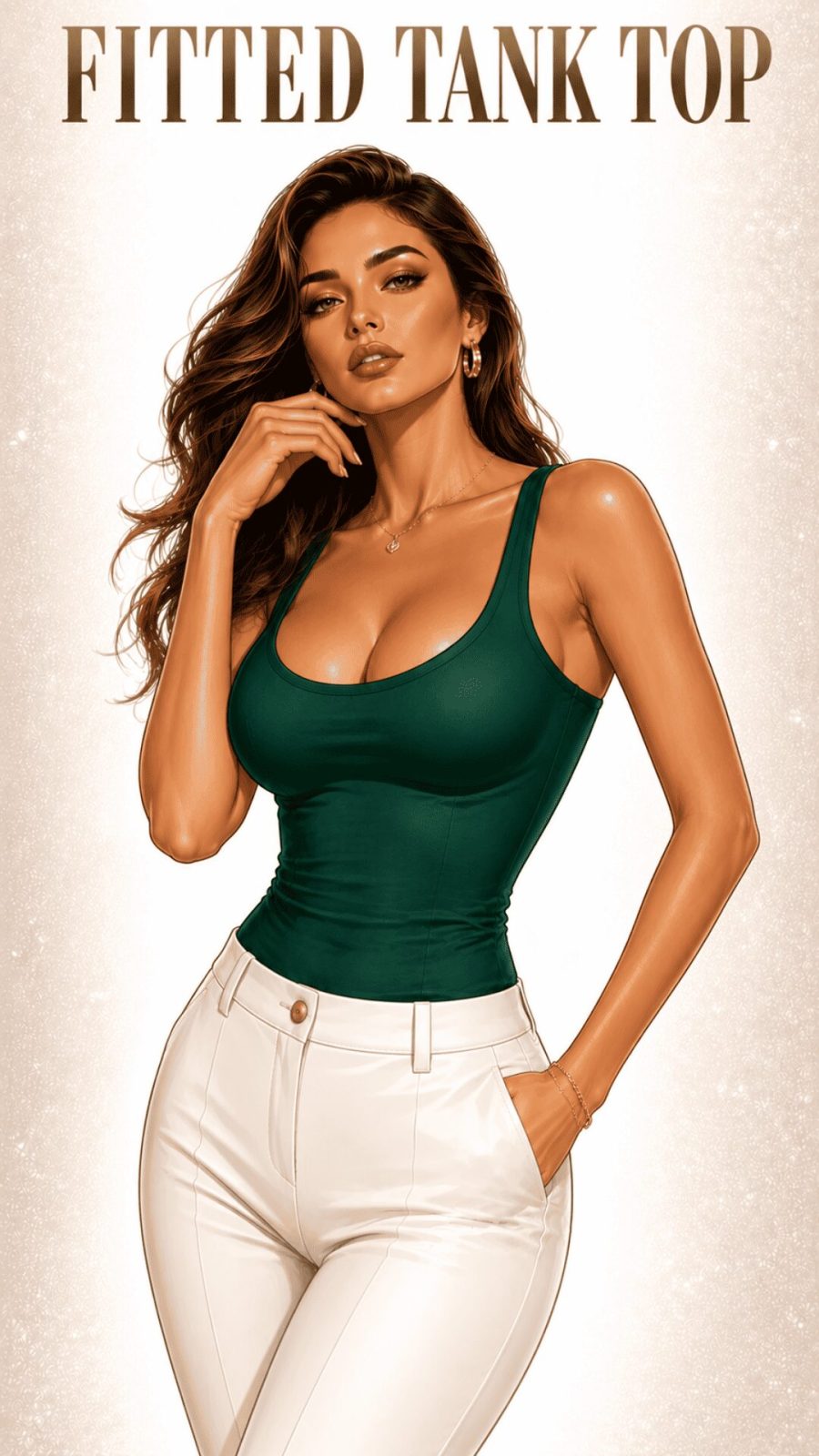
A sleeveless fitted top with wider shoulder straps than a camisole — the straps cover the bra strap entirely, making the tank top a practical and clean-looking fitted option for active and casual wear. Tank tops in fitted construction are typically in jersey or ribbed cotton; the sleeveless design maximises freedom of movement. The shoulder straps determine the read: close-set straps are more athletic; wider-set straps are more relaxed and street-casual. Fitted tanks are among the most versatile layering pieces in the fitted category — they work under blazers, under sheer tops, or as standalone summer pieces. See our fitted tank top guide for styling options.
- 20
Cap Sleeve Fitted Top
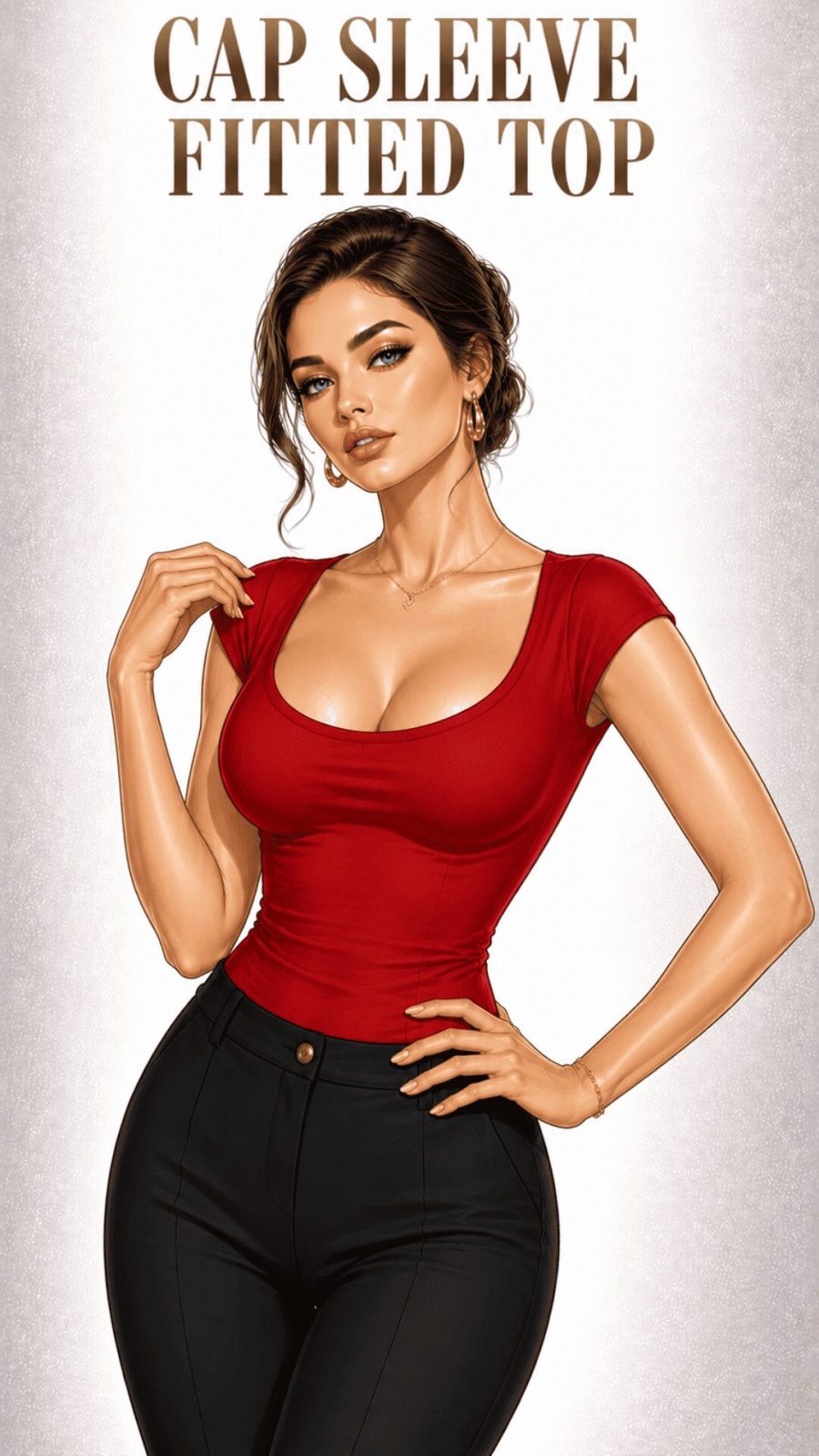
A fitted top with a very short, minimal sleeve that sits on the shoulder cap but does not extend down the arm. The cap sleeve covers the shoulder point and the very top of the upper arm — providing minimal coverage beyond what a wide shoulder strap offers, but doing so in a more structured, deliberate way. The cap sleeve reads as feminine and classic; it's more polished than a tank and less covered than a short sleeve. In structured woven fabrics (cotton poplin, satin, crepe), the cap sleeve holds a defined shape; in jersey, it drapes softly against the shoulder.
- 21
Long Sleeve Fitted Top
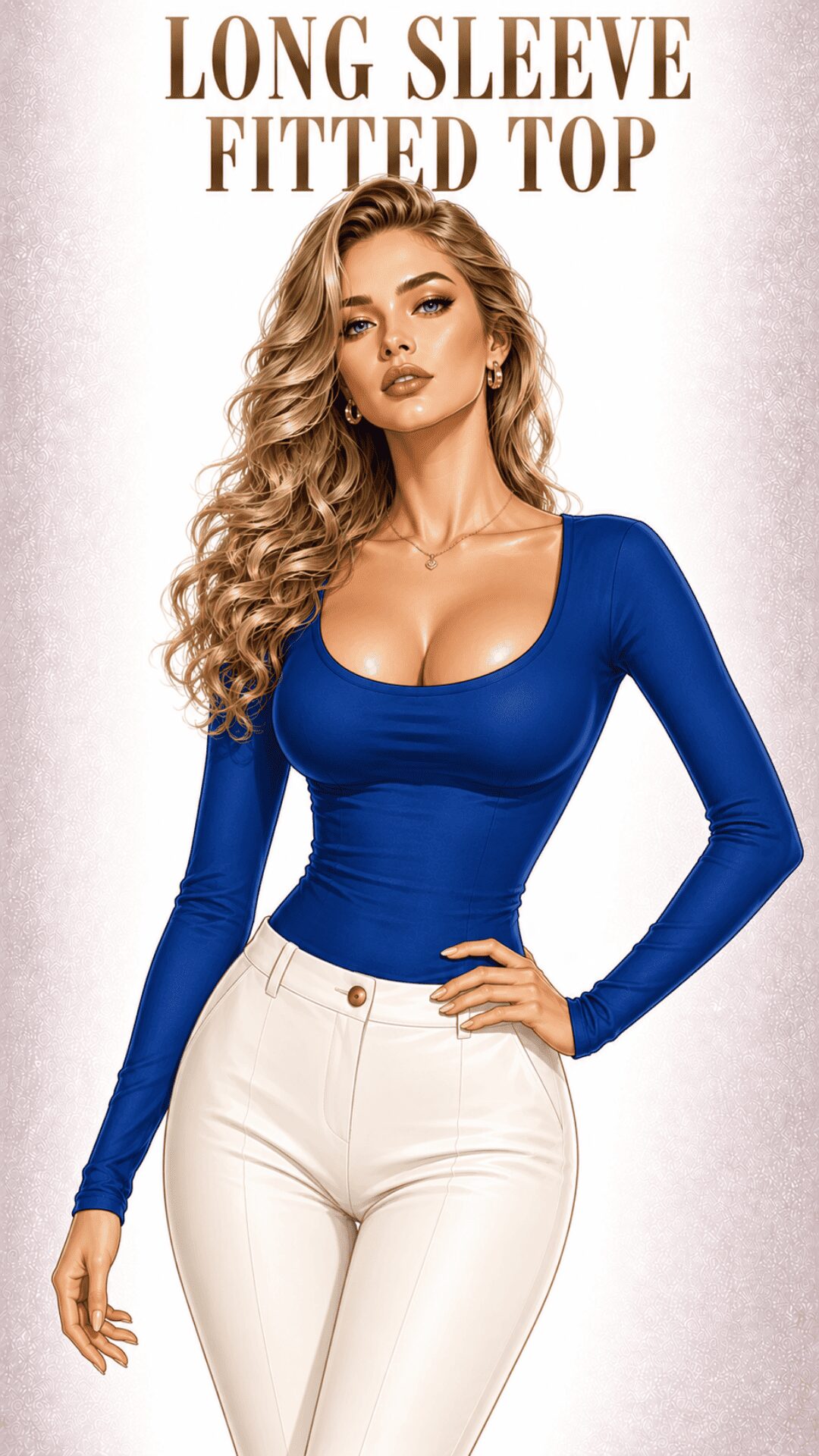
A fitted top where the sleeve extends the close-fit construction all the way to the wrist. The key distinction from a regular long-sleeve top is that the sleeve itself is fitted — cut closely against the arm, with minimal ease. The result is a continuous body-skimming line from shoulder through wrist, which makes this one of the cleanest fitted layering pieces for autumn and winter. The long-sleeve fitted top in merino, cotton-elastane, or ribbed knit is a capsule wardrobe essential. It functions as a standalone piece or as a base layer under jackets, blazers, and coats.
- 22
Fitted Halter Top
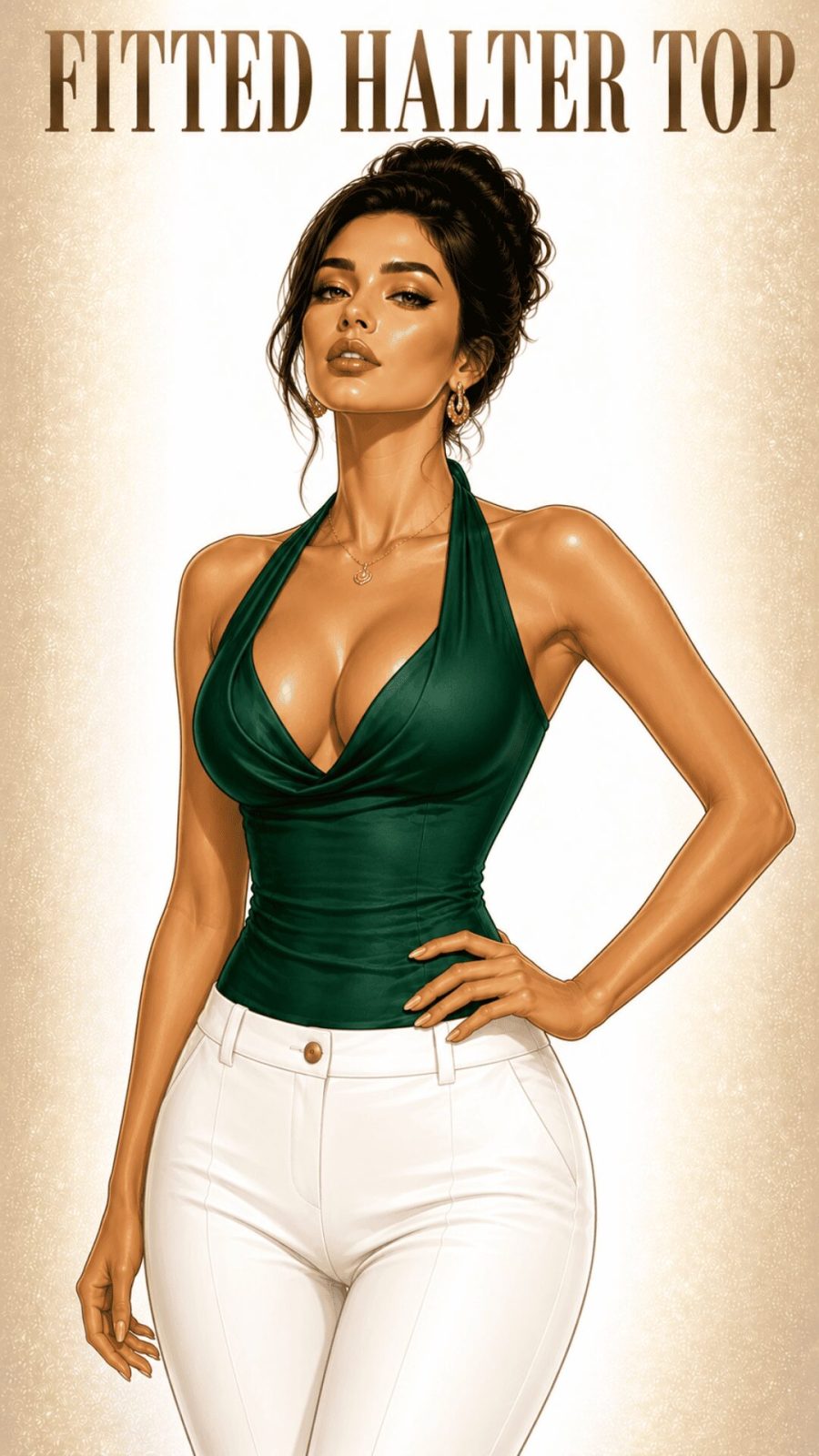
A fitted top where the fabric attaches at the nape of the neck via ties or a fastening — exposing the shoulders, upper arms, and most of the back. The halter construction is sleeveless by definition; the neck tie creates the only structural support at the top of the garment. In a fitted silhouette, the halter's back exposure creates contrast: tight to the front, completely open at the back. This makes the fitted halter top one of the most interesting constructions in the category for summer occasion and going-out styling — it adds visual complexity through what it removes rather than what it adds.
- 23
Fitted Crop Top
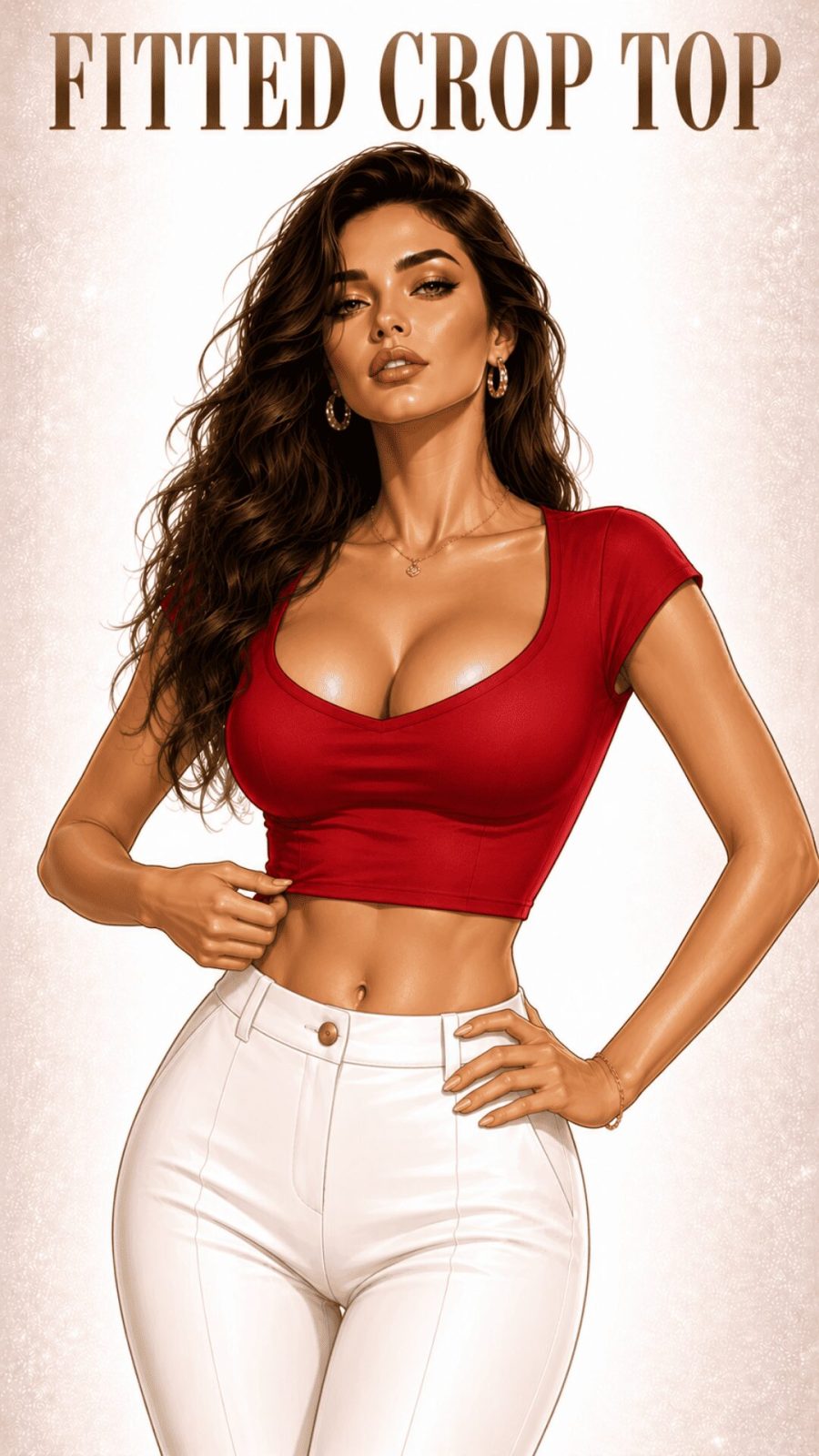
A fitted top cut to end above the natural waist — typically ending at or above the navel. The crop length is a modifier that can apply to any construction type (jersey, ribbed, woven, structured). In fitted form, the cropped hemline adds a second visual point of interest below the neckline: the exposed midriff. This makes the crop top inherently more complex to proportion than a full-length fitted top, because the cropped hemline must align with the waist of the bottom garment. High-waisted trousers or skirts allow a fitted crop top to expose a small band of skin above the waistband — the primary styling logic for this silhouette.
- 24
Fitted Turtleneck
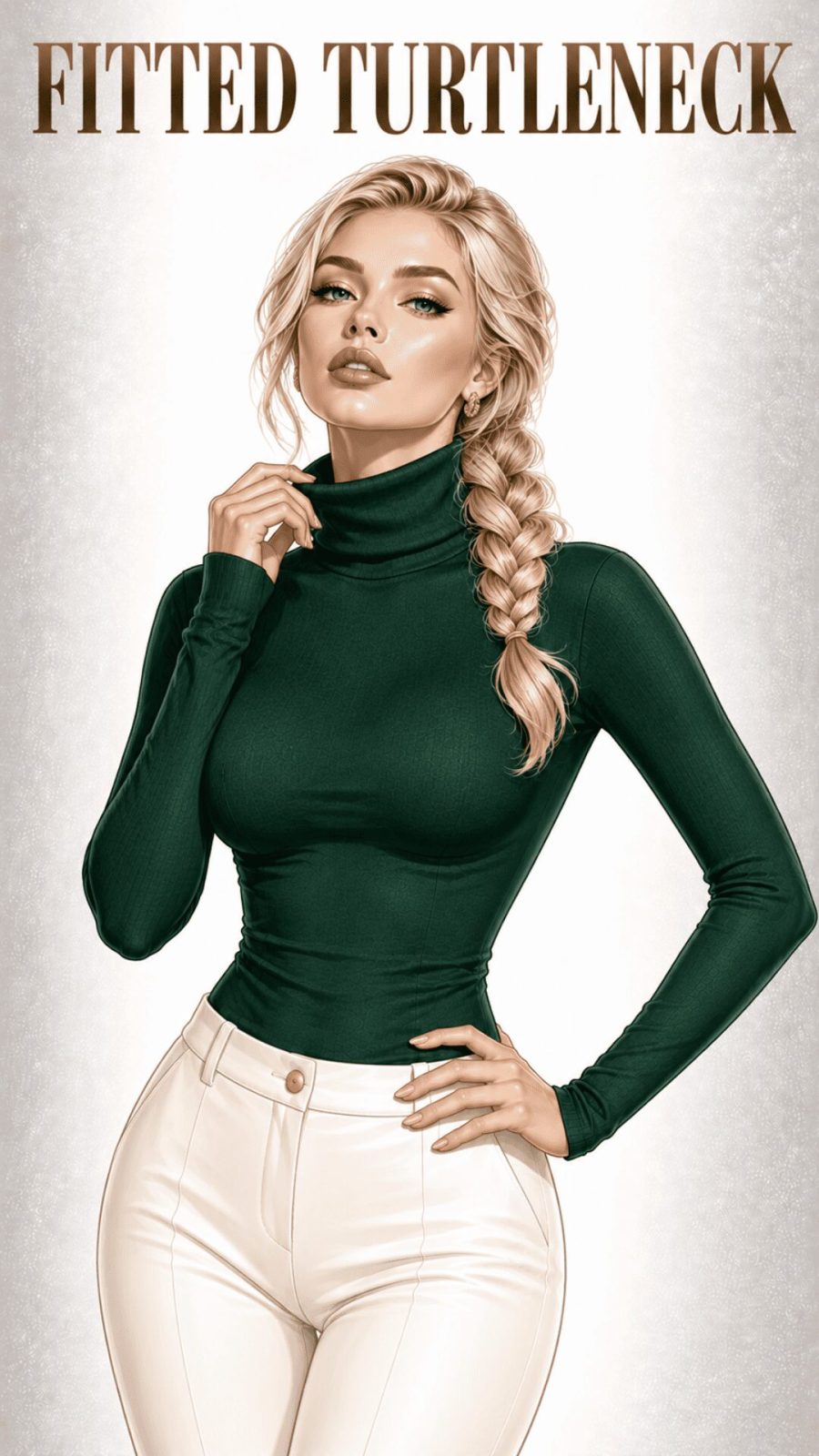
A fitted top with a high, folded collar that covers the neck — the turtleneck or polo neck. In fitted form, the turtleneck extends the close-fit silhouette from wrist to jaw, creating the most completely body-covering fitted construction in the category. The turtleneck's fashion authority comes from its complete absence of visible skin — all the visual interest comes from the fabric itself, the fit, and the silhouette. In fine-gauge merino or cashmere, it reads as luxurious minimalism; in ribbed cotton, as casual-smart. The fitted turtleneck with wide-leg trousers is one of the most reliable minimalist outfits in women's fashion.
- 25
Fitted Henley Top
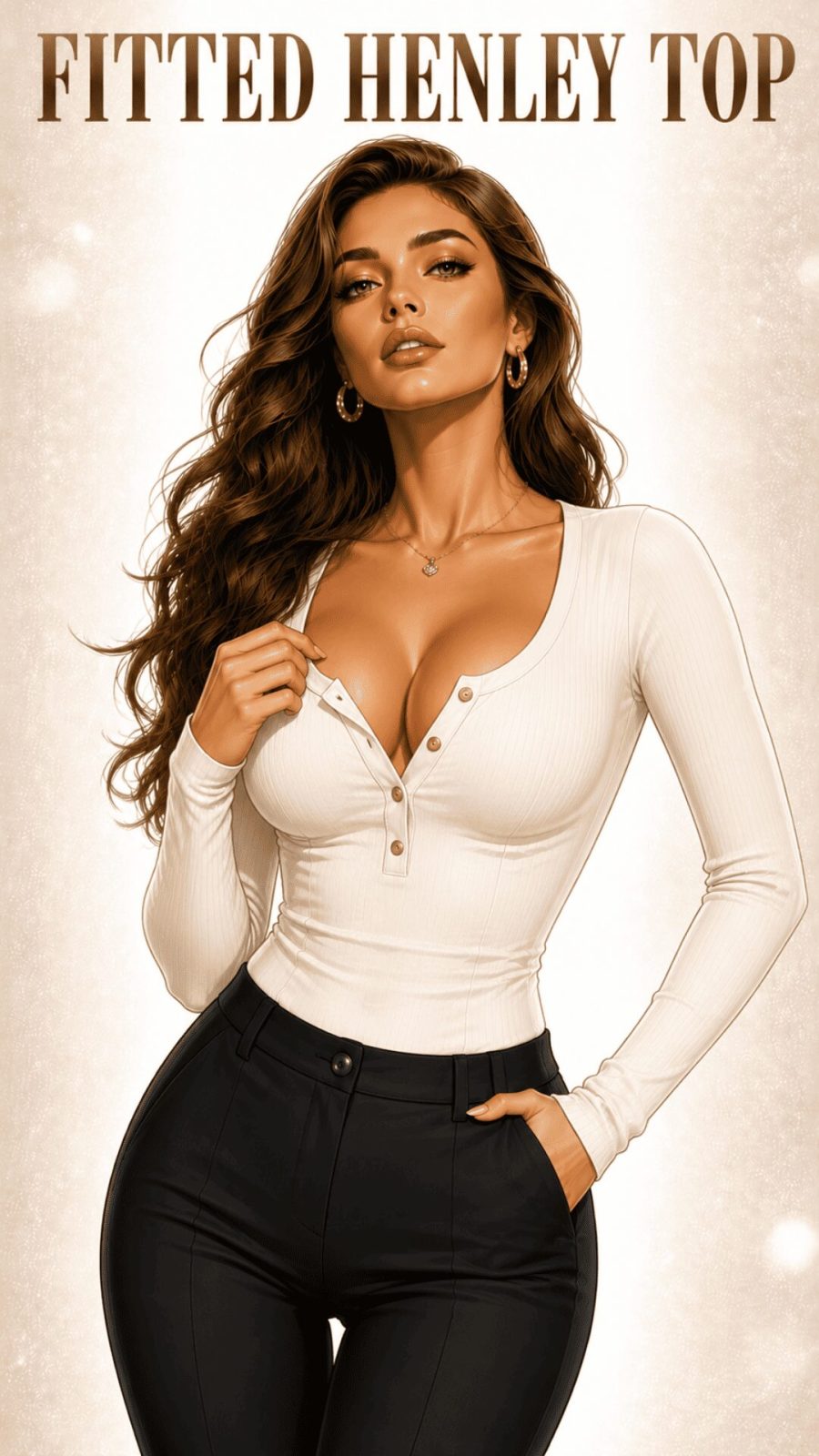
A fitted collarless top with a short button placket at the front neckline — the Henley neck opening. The Henley's defining feature is that button placket: it's not a full button-down shirt (the buttons only go partway down), and it's not a plain crew neck (the placket adds a structural detail). In fitted form, the Henley is one of the most casually polished constructions available — it reads as effortless without being plain. In long sleeve fitted form, the Henley is a key piece in minimalist and smart-casual wardrobes. Works equally well in jersey, waffle knit, or ribbed fabric.
Category 4: By Fabric / Material (#26–#32)
How different fabrics change the compression level, drape, and occasion register of fitted tops
Fabric choice determines more about how a fitted top functions than almost any other variable. The same close-cut pattern produces a very different silhouette in ribbed cotton versus satin versus compression jersey. Each fabric brings its own stretch grade, compression level, drape quality, and surface texture — and each of those properties changes the silhouette, the occasion range, and the styling logic of the top. The table below maps the primary fabric types against their key properties for fitted construction:
| Fabric | Stretch Grade | Recovery | Best Occasion |
|---|---|---|---|
| Ribbed cotton | Medium | High | Casual, everyday |
| Jersey knit | Medium | Medium | Casual to smart-casual |
| Compression fabric | High | Very high | Active, gym, athletic |
| Satin | Low–none | None | Evening, occasion |
| Lace | Low | Low | Evening, layering |
| Mesh | Medium | Medium | Layering, active, editorial |
| Merino / fine wool | Low–medium | High | Office, smart-casual |
- 26
Satin Fitted Top
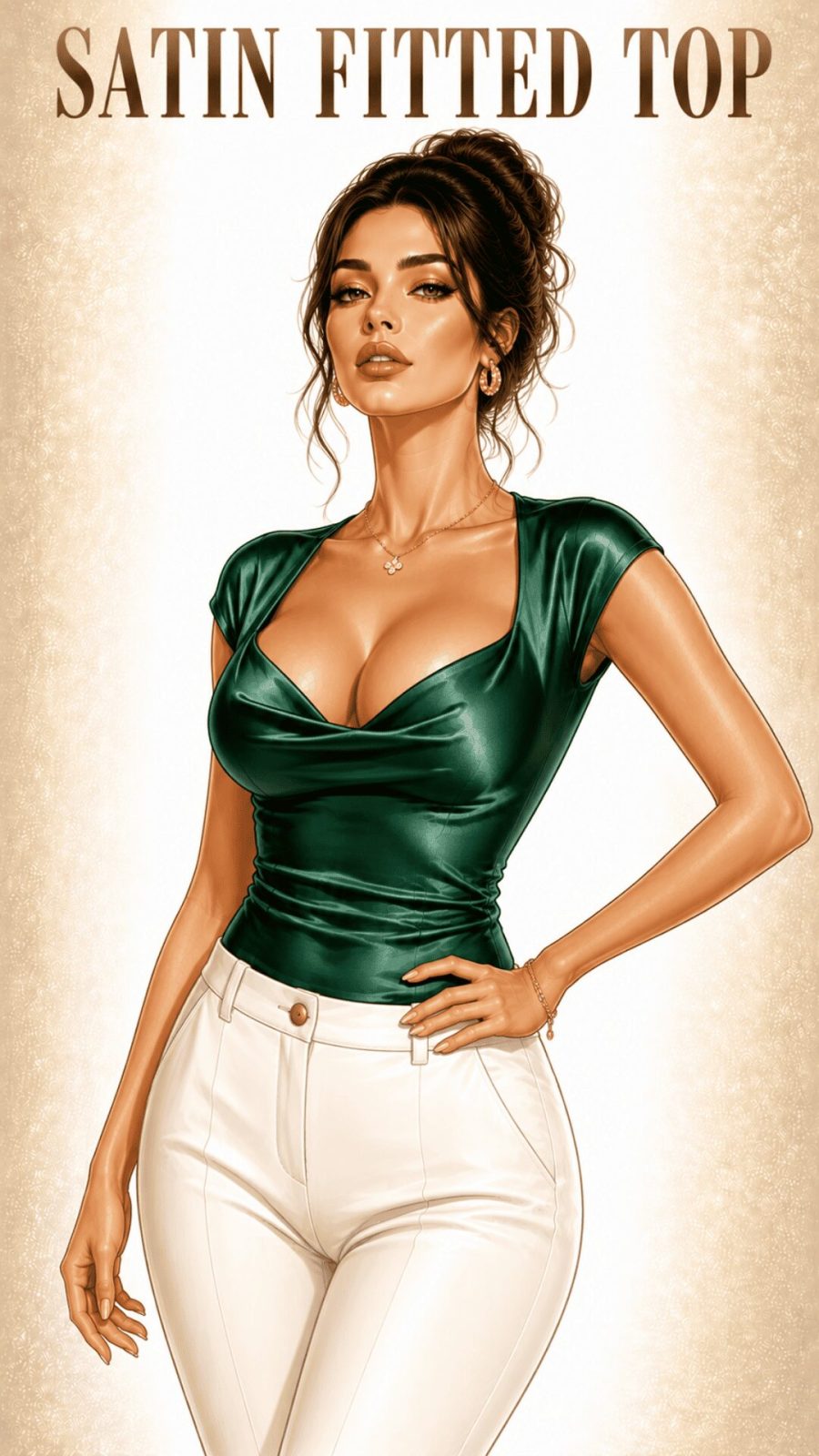
A fitted top in satin-weave fabric — typically polyester satin, silk satin, or charmeuse. Satin has no stretch, so a fitted satin top achieves its close fit through precise pattern cutting rather than fabric tension. The fit is achieved through careful dart work, princess seams, or a very close-cut pattern in bias-cut construction (where the 45° diagonal cut gives the woven fabric more flexibility). The high-lustre surface of satin means that every seam and silhouette line is visually amplified — the top's construction must be precise. Satin fitted tops are primarily an evening and occasion garment, and they photograph beautifully.
- 27
Lace Fitted Top
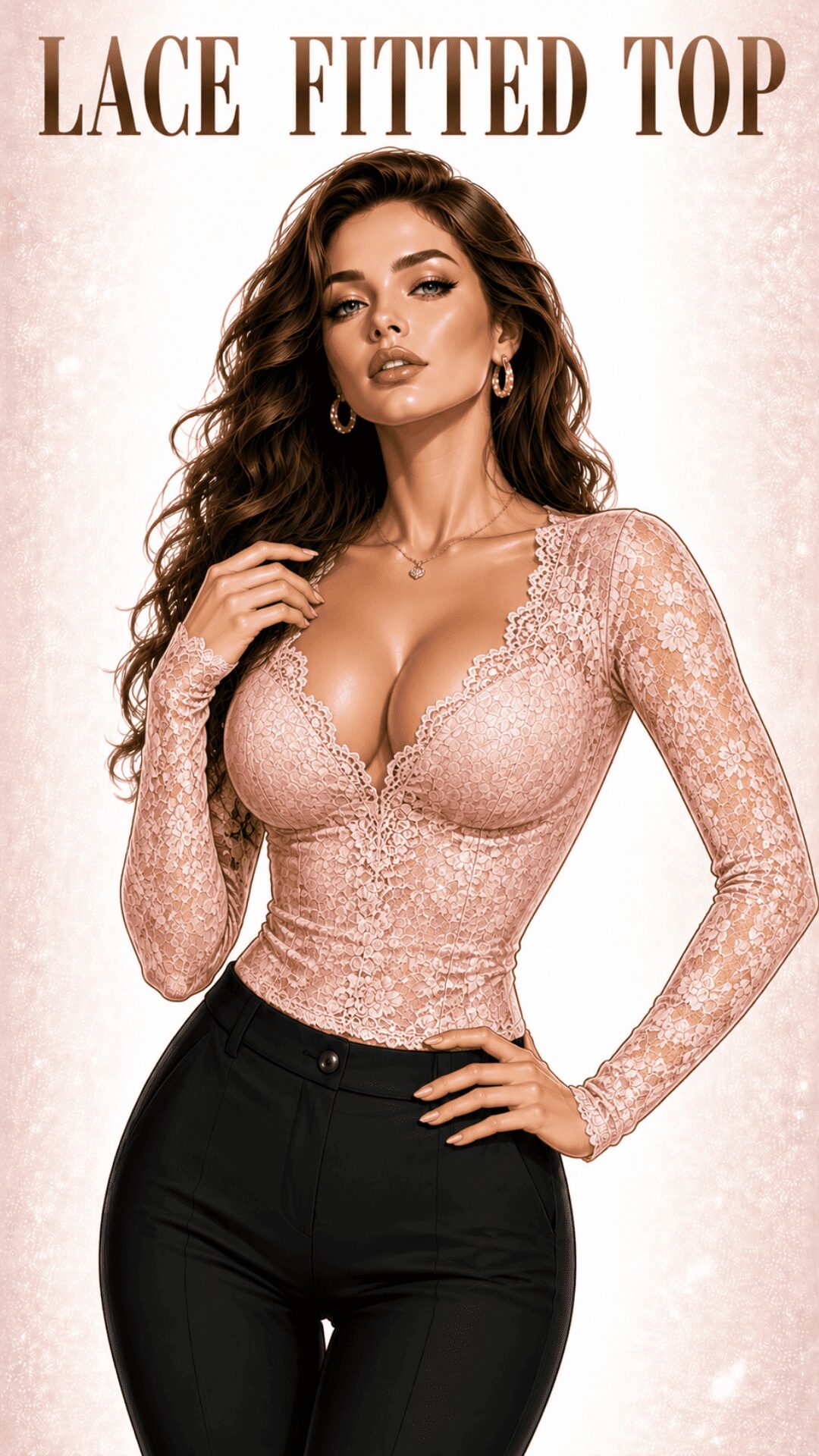
A fitted top constructed from or trimmed with lace — an open, patterned textile that creates partial transparency and visible surface texture simultaneously. In lace fitted tops, the openwork structure of the fabric adds visual complexity to the silhouette: the pattern of the lace itself becomes the primary design feature. Lace fitted tops typically require a liner beneath them (a slip or a fitted base layer) to manage transparency levels. The occasion register for lace is elevated — lace reads as romantic, feminine, and occasion-appropriate. In black lace over a nude liner, the top moves into evening territory; in white, it's bridal-adjacent.
- 28
Mesh Fitted Top
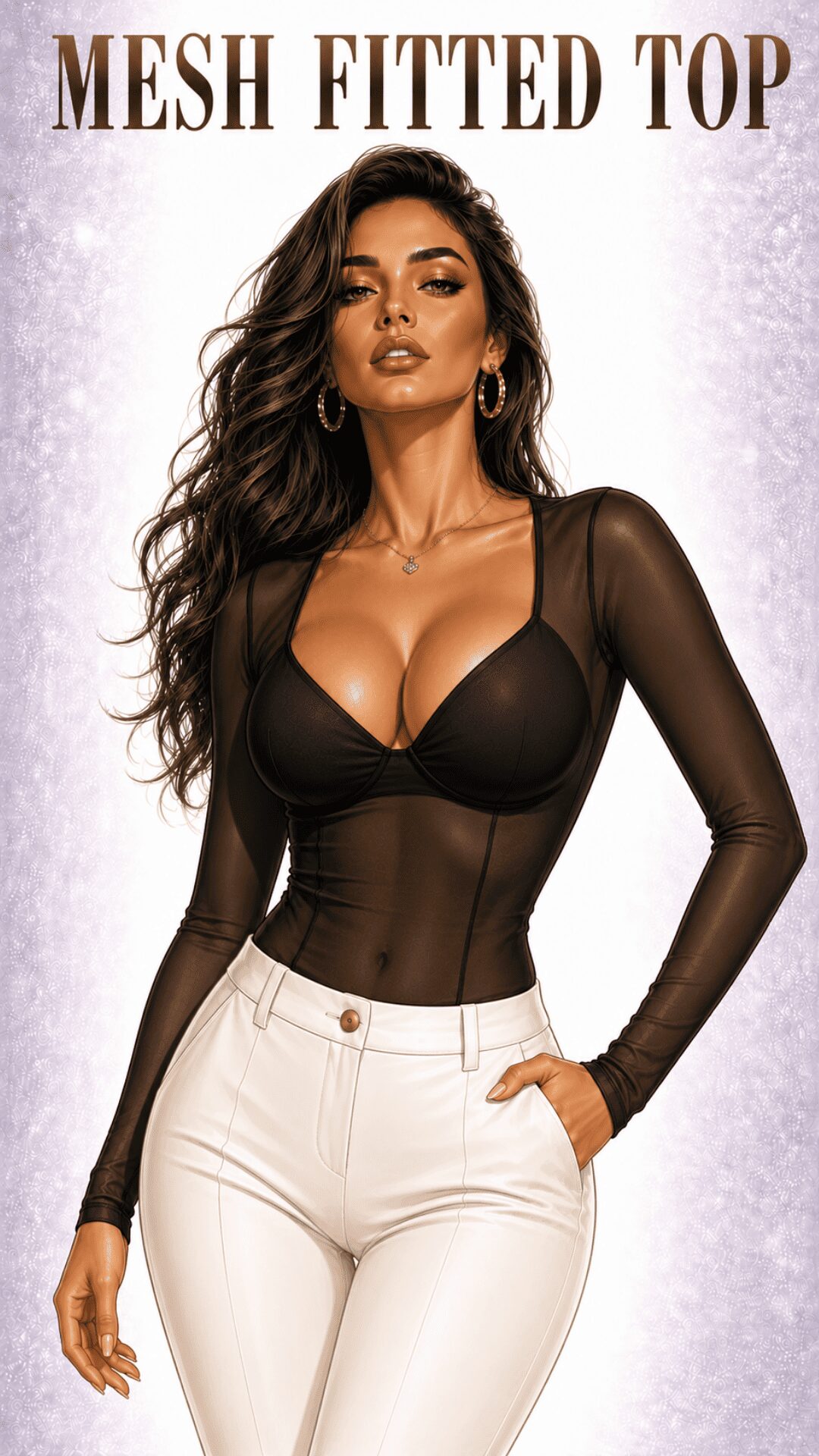
An open-weave fitted top where the fabric structure is deliberately perforated — creating a sheer, semi-transparent surface. Mesh fitted tops are used in three distinct contexts: athletic (for ventilation and moisture management in activewear), fashion-forward (as a visible layer over a fitted inner piece), and editorial (in structured mesh that holds a precise silhouette). The styling logic for a fashion mesh fitted top almost always involves a visible inner layer — a sports bra, a fitted cami, or a bra — since the mesh itself is sheer. The inner piece becomes a deliberate styling element. See our guide to layering sheer tops for technique.
- 29
Stretch Cotton Fitted Top
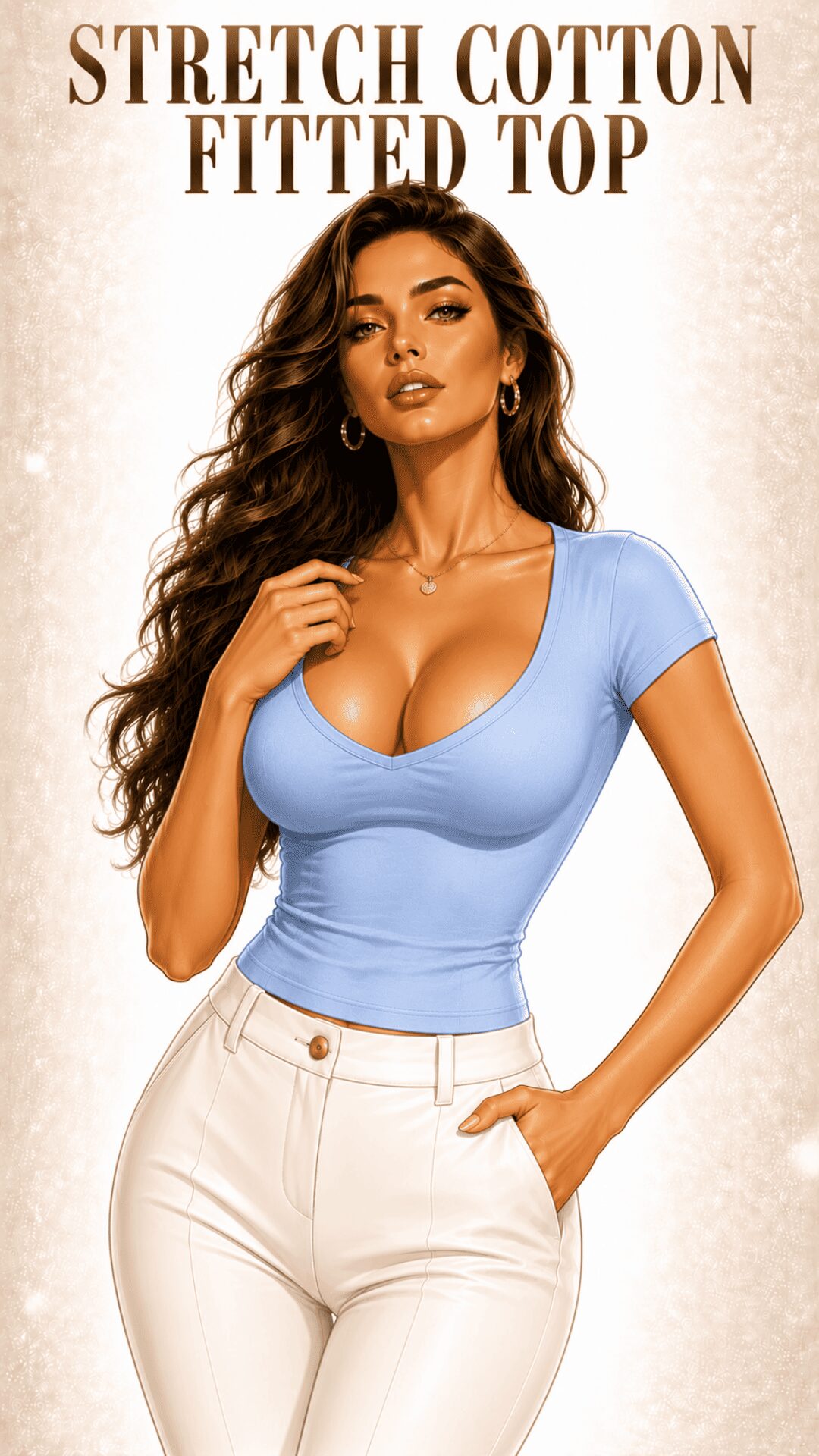
The most common fitted top category globally — cotton jersey or cotton-elastane blends cut in close-fit silhouettes. Stretch cotton behaves very differently from pure woven cotton: the elastane content (typically 5–8%) gives the fabric two-way or four-way stretch and decent recovery. It breathes like cotton, washes like cotton, and feels familiar against skin — while also conforming closely to the body's shape. The stretch cotton fitted top is the foundation of most everyday close-fit wardrobes: it's the ribbed scoop neck tee, the fitted long-sleeve, the bodycon jersey top.
- 30
Compression Athletic Top
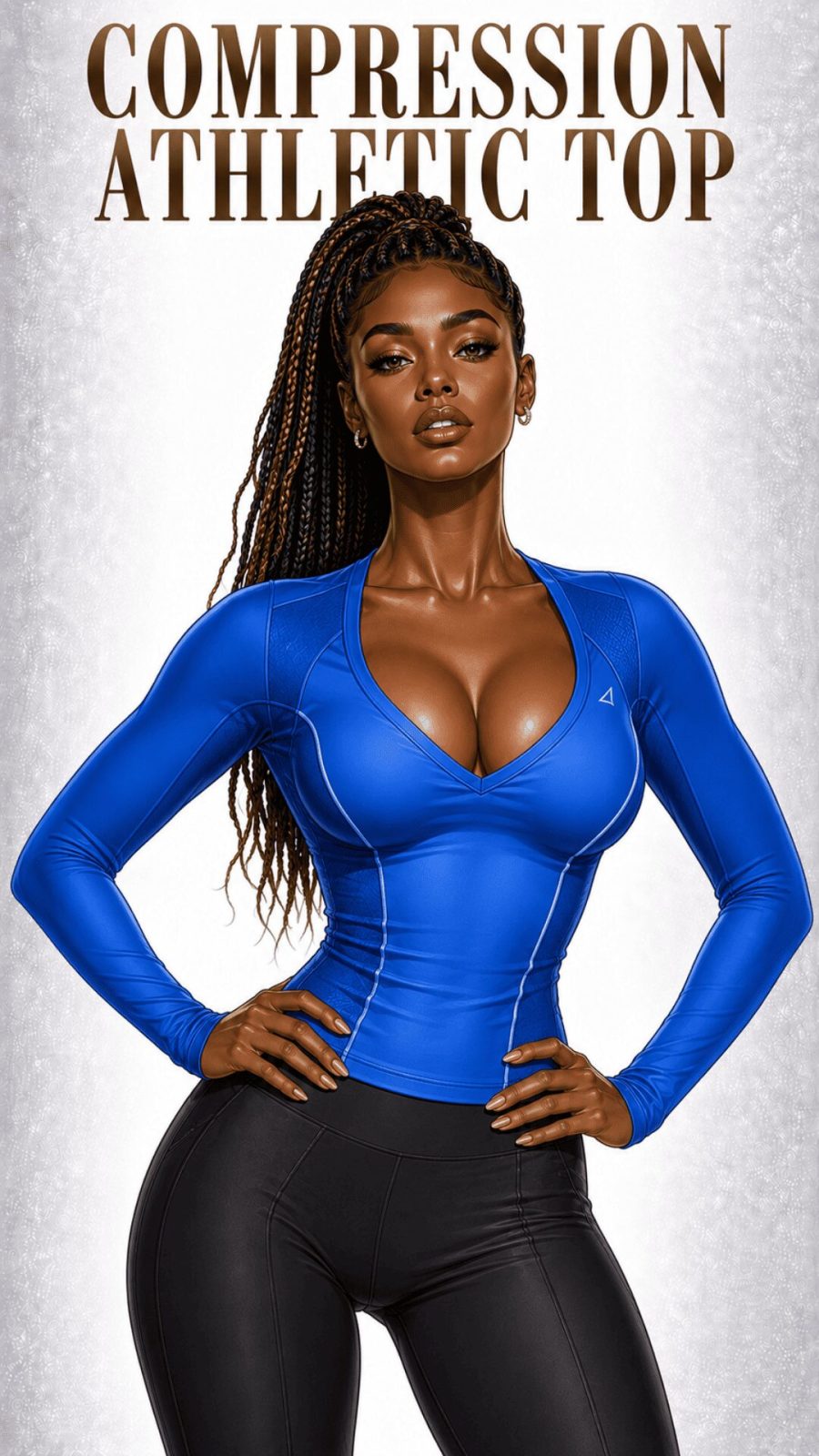
A technically engineered fitted top in high-elastane fabric (typically 20–35% spandex) designed for physical activity. The compression level is intentional: these tops apply mild uniform pressure to the torso muscles, which reduces vibration during exercise and may support recovery. The fabric is moisture-wicking and quick-drying; flatlock seaming reduces chafing at points of friction. The compression athletic top sits at the highest technical end of the fitted top spectrum. Its aesthetic has influenced fashion significantly — the gym-to-street movement of the 2010s and 2020s made compression tops acceptable outside athletic contexts. In fashion, they're worn as standalone tops with cargo pants, bike shorts, or tailored trousers.
- 31
Fitted Thermal Top
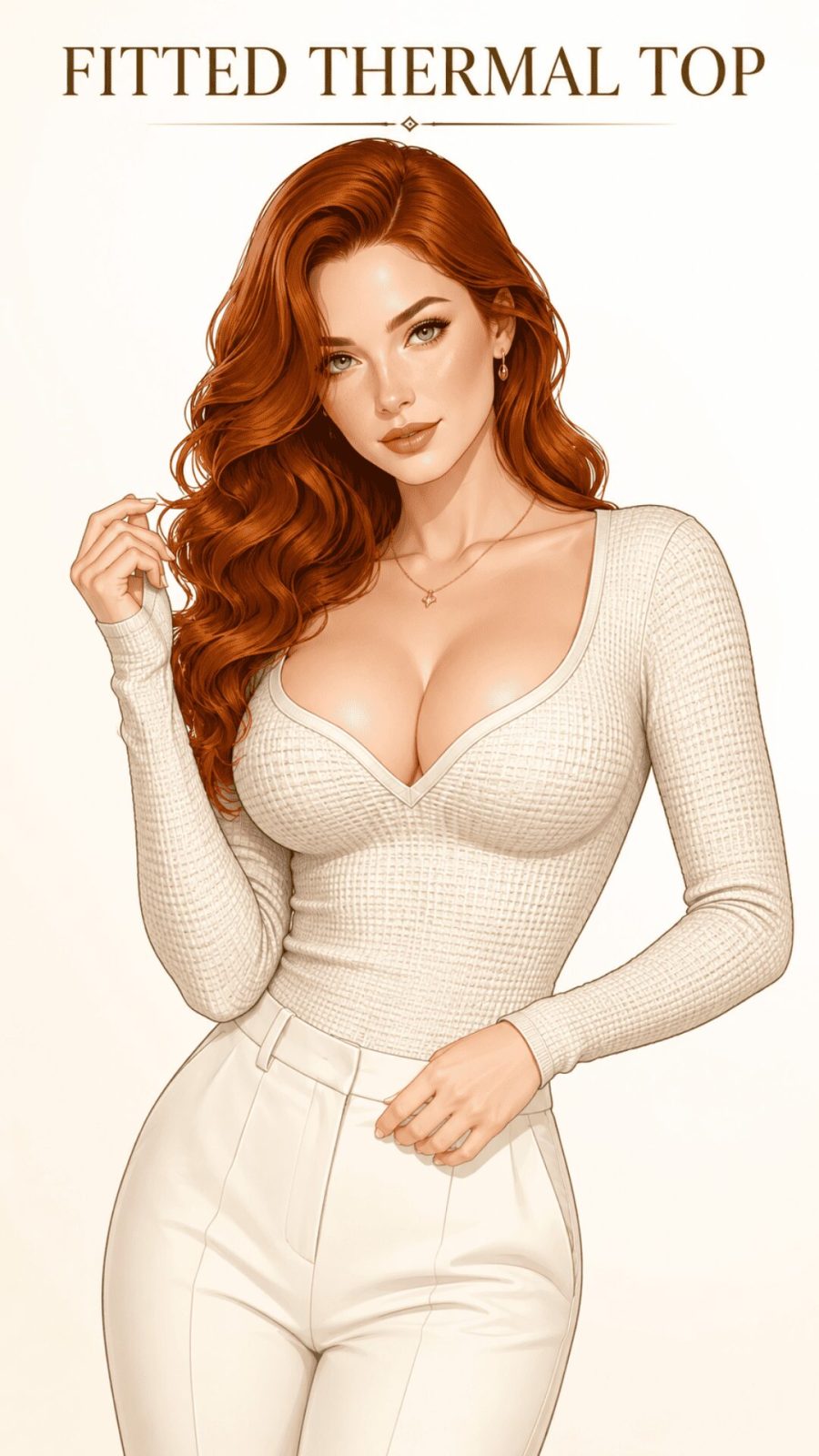
A fitted top in waffle-knit or thermal-weave fabric — a textured knit with a grid pattern of raised squares that traps air between the body and the fabric. The air pockets are what create warmth; the waffle structure adds visible texture to the surface. Thermal tops in fitted construction are among the most practical cold-weather layering pieces: slim enough to sit cleanly under a sweater or blazer, warm enough to matter. The waffle texture also gives thermal tops a tactile quality absent from smooth jersey, making them interesting as standalone pieces in casual and smart-casual contexts.
- 32
Structured Fitted Blouse
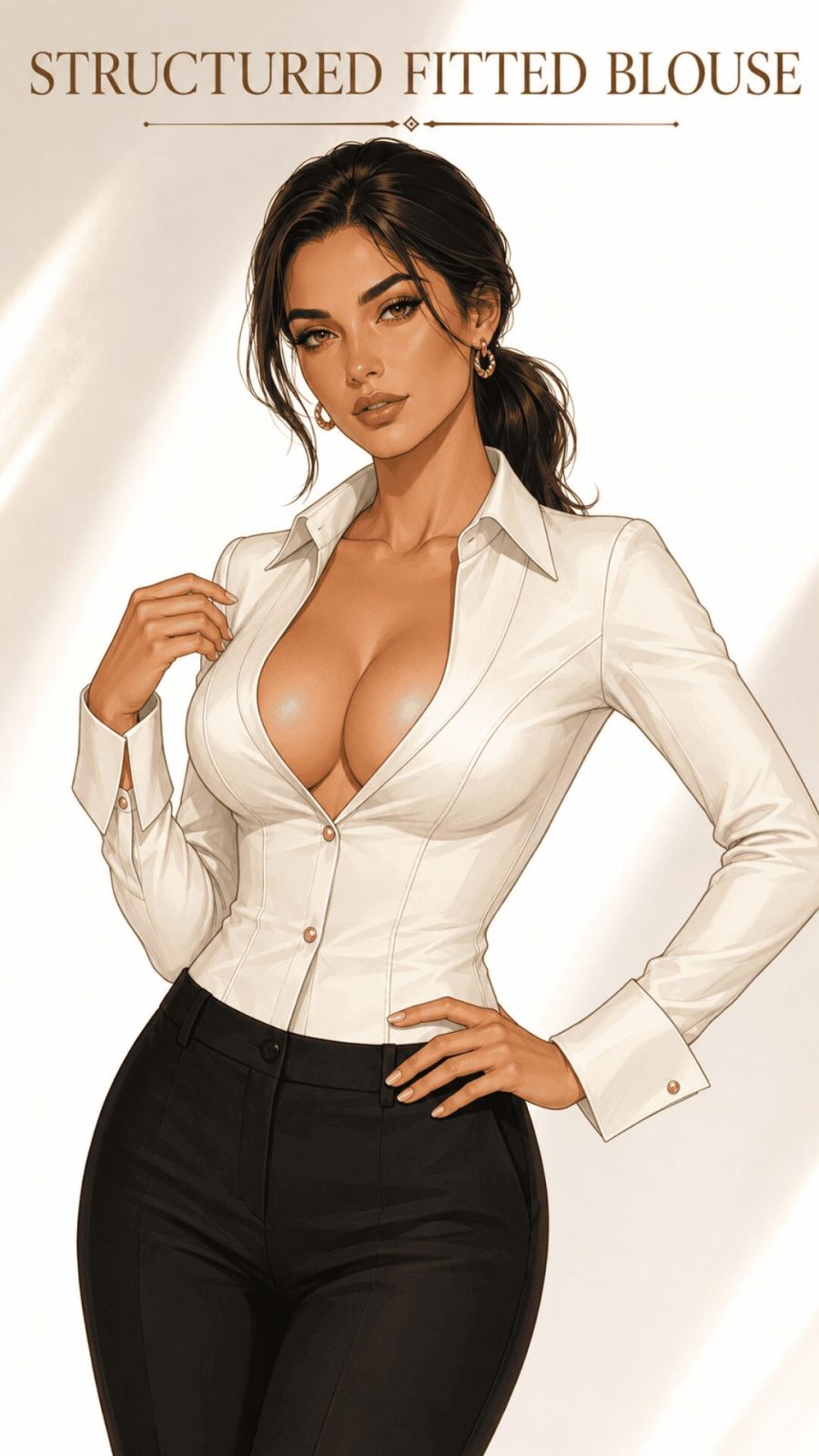
A fitted blouse in woven fabric — typically crepe, poplin, or silk — with fitted tailoring achieved through princess seams, side seams, and darts rather than stretch. This is the most formal fitted top construction: it reads as professional, polished, and complete on its own. The structured blouse holds its shape independently of the body inside it — a quality that distinguishes it from all knit and stretch fitted tops. Princess seams (curved vertical seams running from shoulder to hem) are the primary shaping technique; they create a sculpted torso line without darts or gathers. The most office-appropriate fitted top category. Our guide to work blouses covers styling in detail.
Category 5: By Occasion (#33–#38)
The right fitted top for each context — office, evening, active, casual, and occasion dressing
A fitted top reads differently depending on where you wear it. The same silhouette in ribbed cotton is casual; in structured crepe, it's office-ready; in silk satin, it's an evening piece. The table below maps the primary occasion contexts for fitted tops against the constructions and fabrics best suited to each.
| Occasion | Best Construction | Ideal Fabric | Key Detail |
|---|---|---|---|
| Office | Structured blouse, mock neck | Crepe, poplin, merino | Princess seams, clean neckline |
| Evening / Date | Corset, bustier, satin cami | Satin, lace, velvet | Neckline drama, fabric sheen |
| Casual | Ribbed tee, fitted tank, crop top | Cotton-elastane, jersey | Ease of movement, comfort |
| Athletic | Compression top, seamless | High-elastane, moisture-wick | Four-way stretch, flatlock seams |
| Smart-casual | Wrap top, peplum, bodysuit | Ponte, viscose, ribbed knit | Waist definition, polished finish |
| Resort / Beach | Halter, off-shoulder, one-shoulder | Jersey, linen-blend, cotton | Skin exposure, relaxed tension |
- 33
Fitted Button-Up Shirt
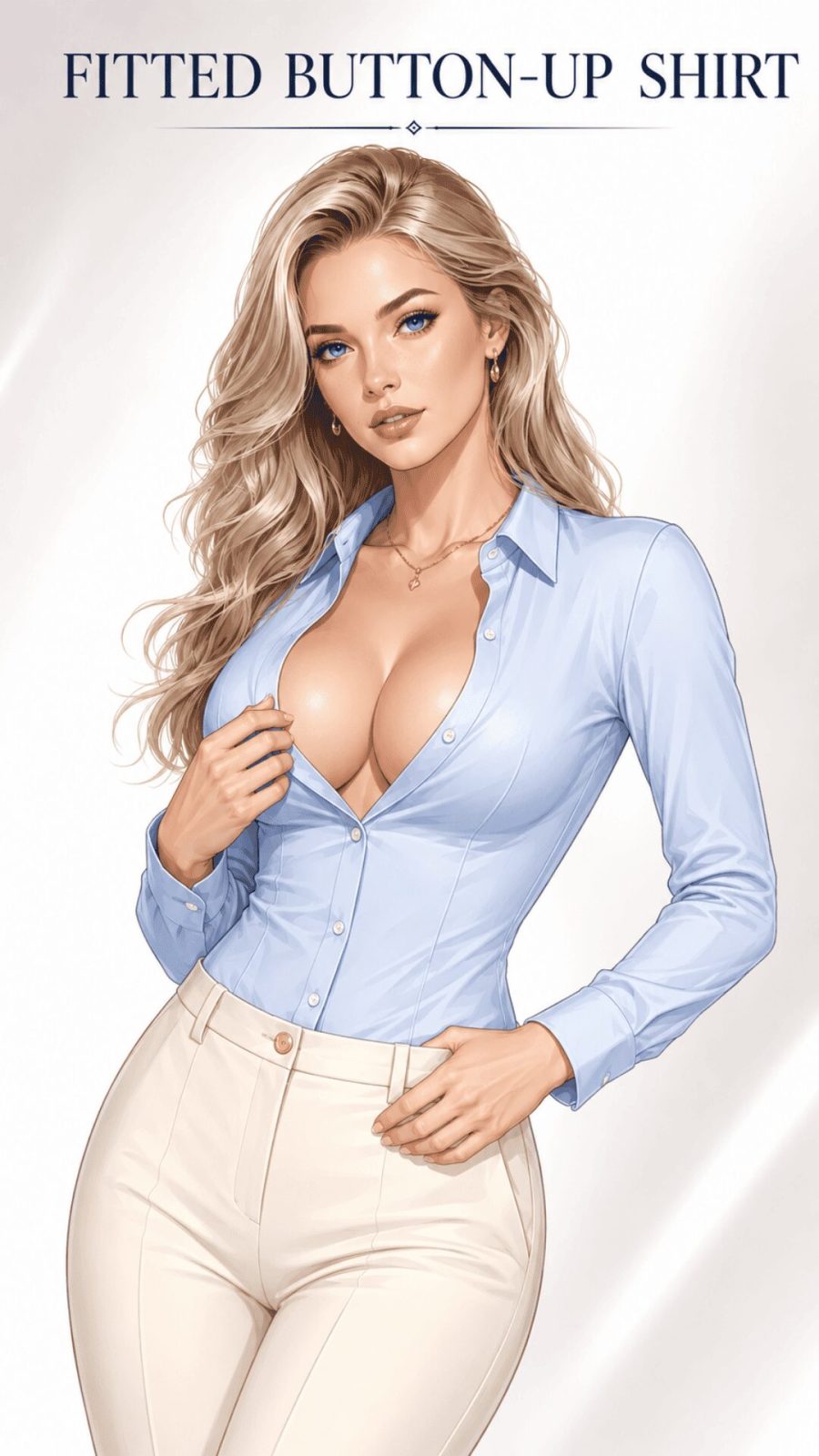
A woven shirt with a full button placket, collar, and fitted cut — the classic shirt construction narrowed through side seams and darts to follow the torso closely. The fitted button-up is distinguished from an oversized or relaxed shirt by its side seam placement: in a fitted version, the side seam curves inward at the waist, creating a defined silhouette without any additional fastening. Fitted button-ups in poplin, chambray, or Oxford cloth are office and smart-casual workhorses; in silk or satin, they cross into evening territory. The tucked fitted button-up with tailored trousers is one of the most reliable polished casual outfits in women's fashion. See our fitted shirt guide for sizing and fabric advice.
- 34
Fitted Polo Top
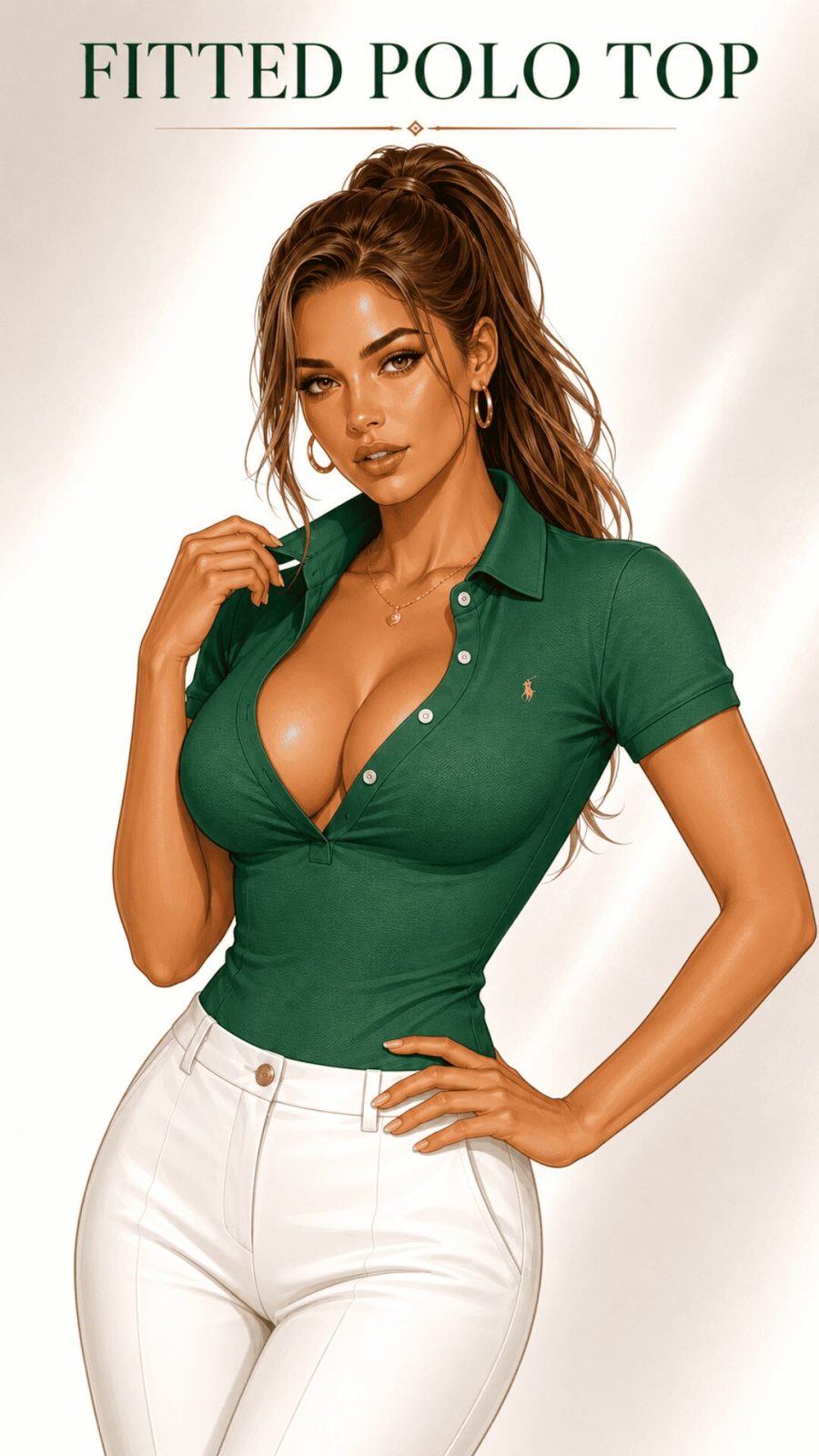
A knit top with a ribbed collar, a short 2–3 button placket, and short sleeves — cut in a fitted silhouette. The polo collar adds a structural detail that elevates the top above a plain T-shirt without reaching the formality of a shirt collar. In fitted form, the polo top has become a fashion-forward piece thanks to its preppy aesthetic, which translates well into smart-casual and Korean fashion-influenced minimalist outfits. Fitted polos in fine piqué or ribbed cotton worn with wide-leg trousers or midi skirts create a clean proportion contrast. The polo top's history in sportswear (originally tennis and golf) gives it a sporty-chic read that works across multiple aesthetics.
- 35
Fitted Satin Cami
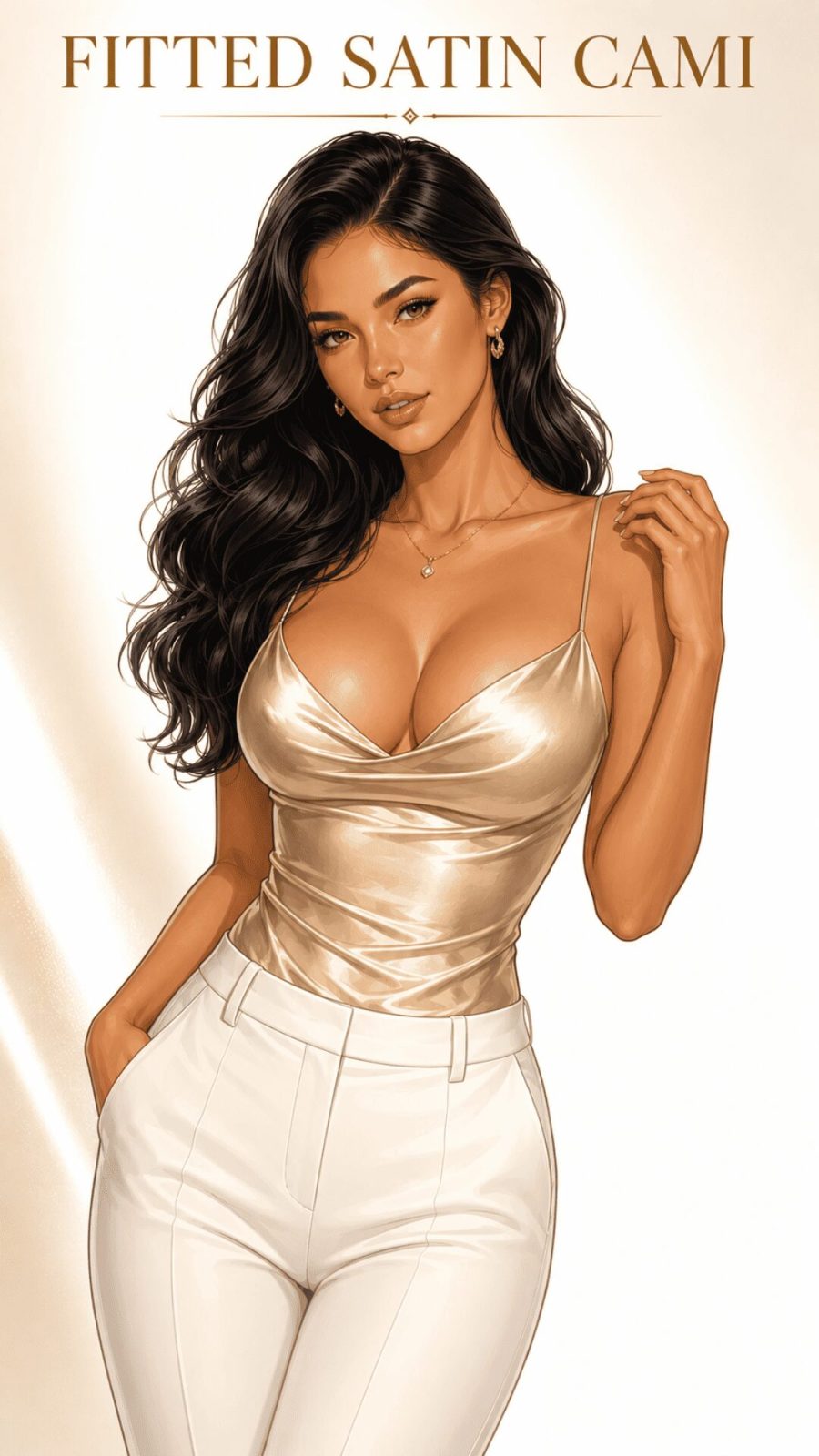
A sleeveless fitted top in satin fabric with narrow spaghetti straps — the most overtly lingerie-influenced fitted top in the category. The satin cami's slip-dress-adjacent aesthetic crossed from underwear to outerwear in the late 1990s and never looked back. Its current position in women's fashion is firmly as outerwear: worn alone for evening and going-out contexts, worn under blazers or cardigans for a dressed-down version of that evening energy. The bias-cut satin cami moves with the body in a way that no other fitted top does. In blush, black, or ivory, it's one of the most photographed fitted top types across social media.
- 36
Knit Fitted Sweater
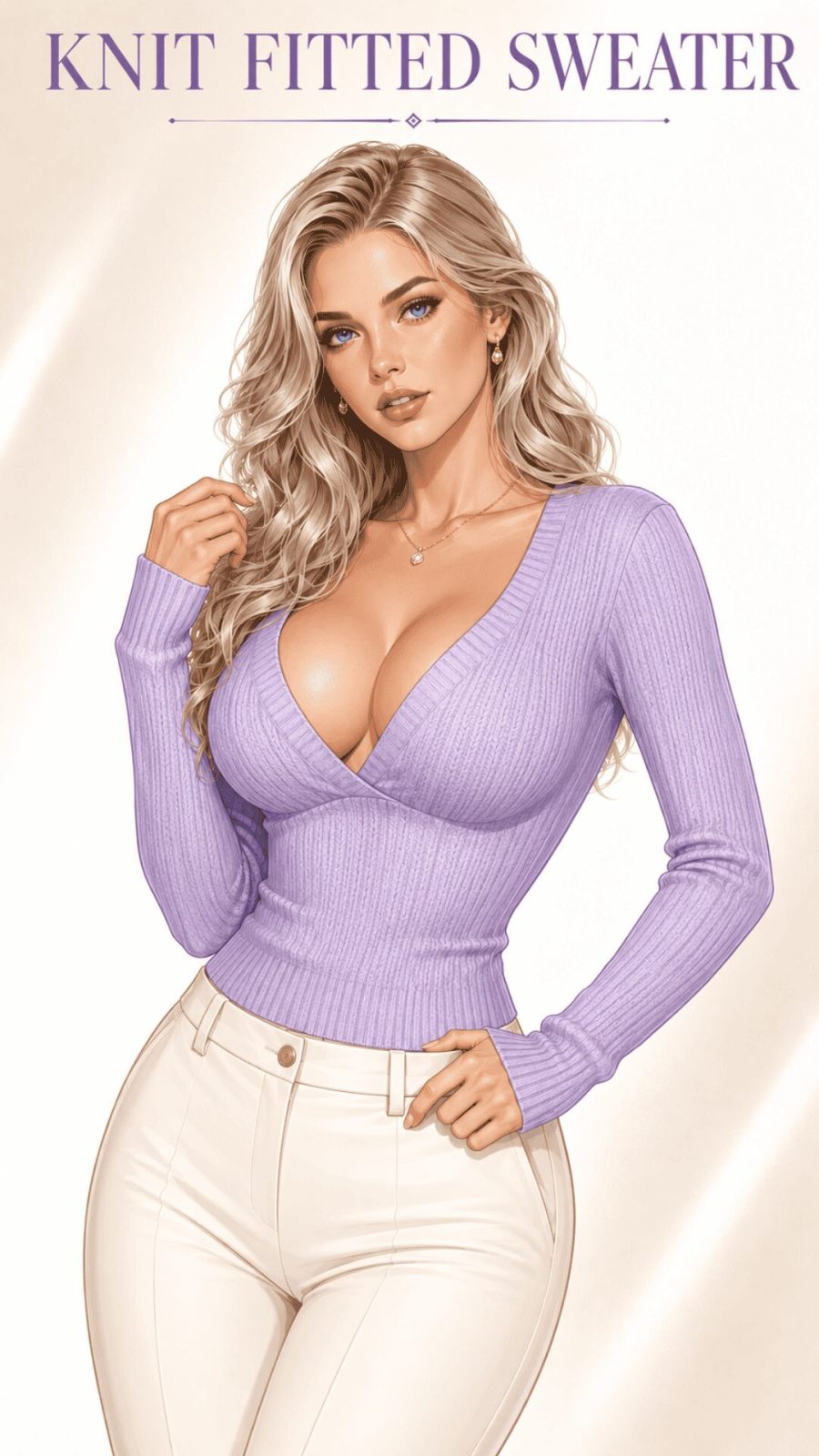
A sweater knitted to a close-fitting silhouette — in fine-gauge merino, cashmere, or cotton knit. The distinction from an oversized or regular sweater is entirely in the knitting gauge and pattern: a fine-gauge knit in a close-fitting shape produces a polished, body-aware silhouette without the bulk of heavier knitwear. Fine-gauge knit fitted sweaters in merino or cashmere are among the most quietly luxurious garments in a winter wardrobe — expensive fabrics reward close fit because the quality is visible against the body. The fitted knit sweater tucked into a midi skirt or wide-leg trouser is a consistent styling formula in minimalist wardrobes.
- 37
Fitted Graphic Tee
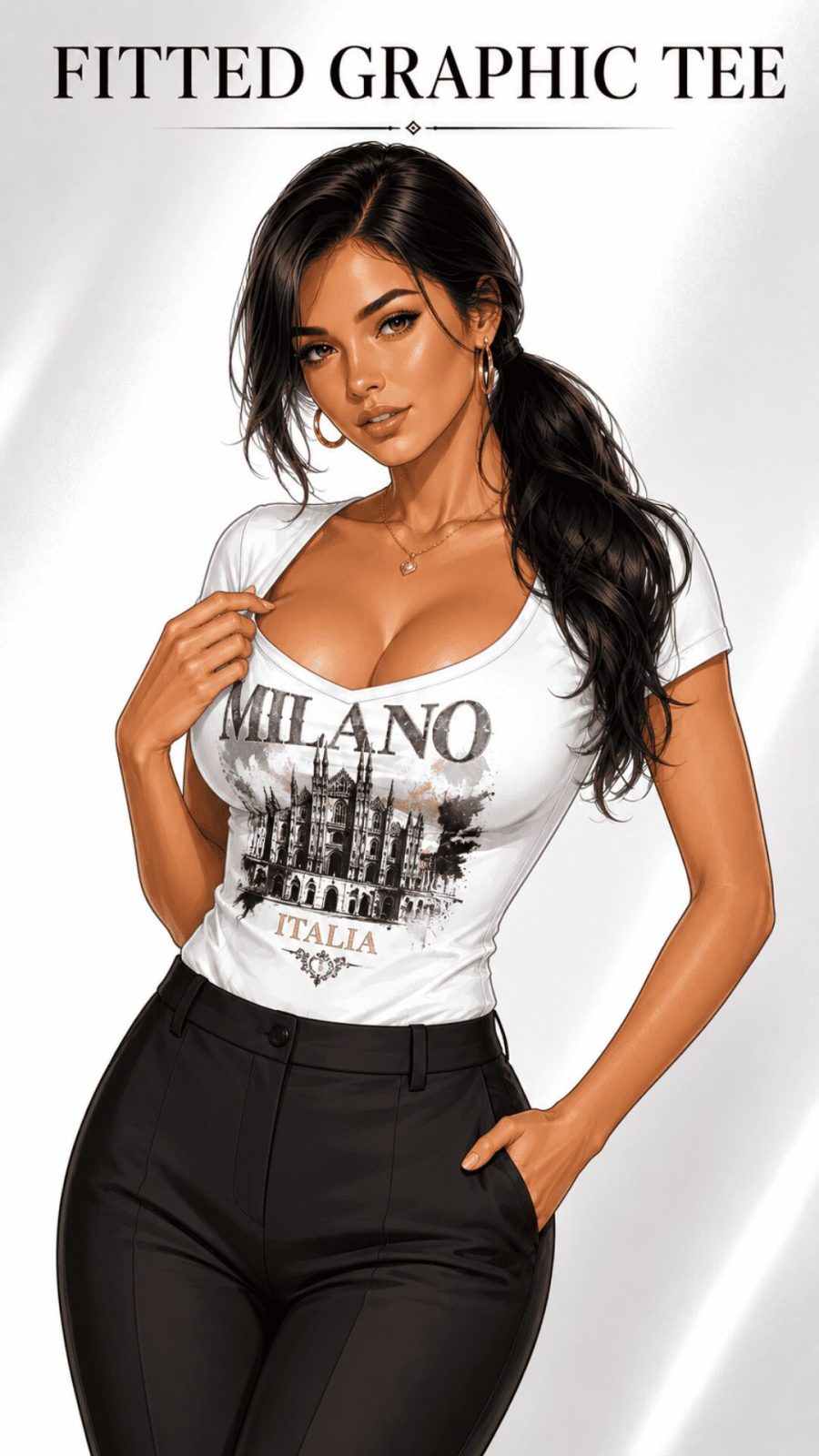
A fitted jersey T-shirt with a screen-printed or embroidered graphic — band tees, slogan tees, art prints, or photographic prints. The fitted cut matters enormously here: the same graphic on a boxy tee reads as casual streetwear; on a fitted tee, it reads as intentional and styled. Fitted graphic tees tucked into tailored trousers or paired with a sharp blazer create the contemporary high-low dressing that dominates street style globally. The graphic becomes a deliberate personality signal in a fitted format — the construction amplifies the statement. Our guide to styling graphic tees covers the pairing logic.
- 38
Fitted Zip-Up Top
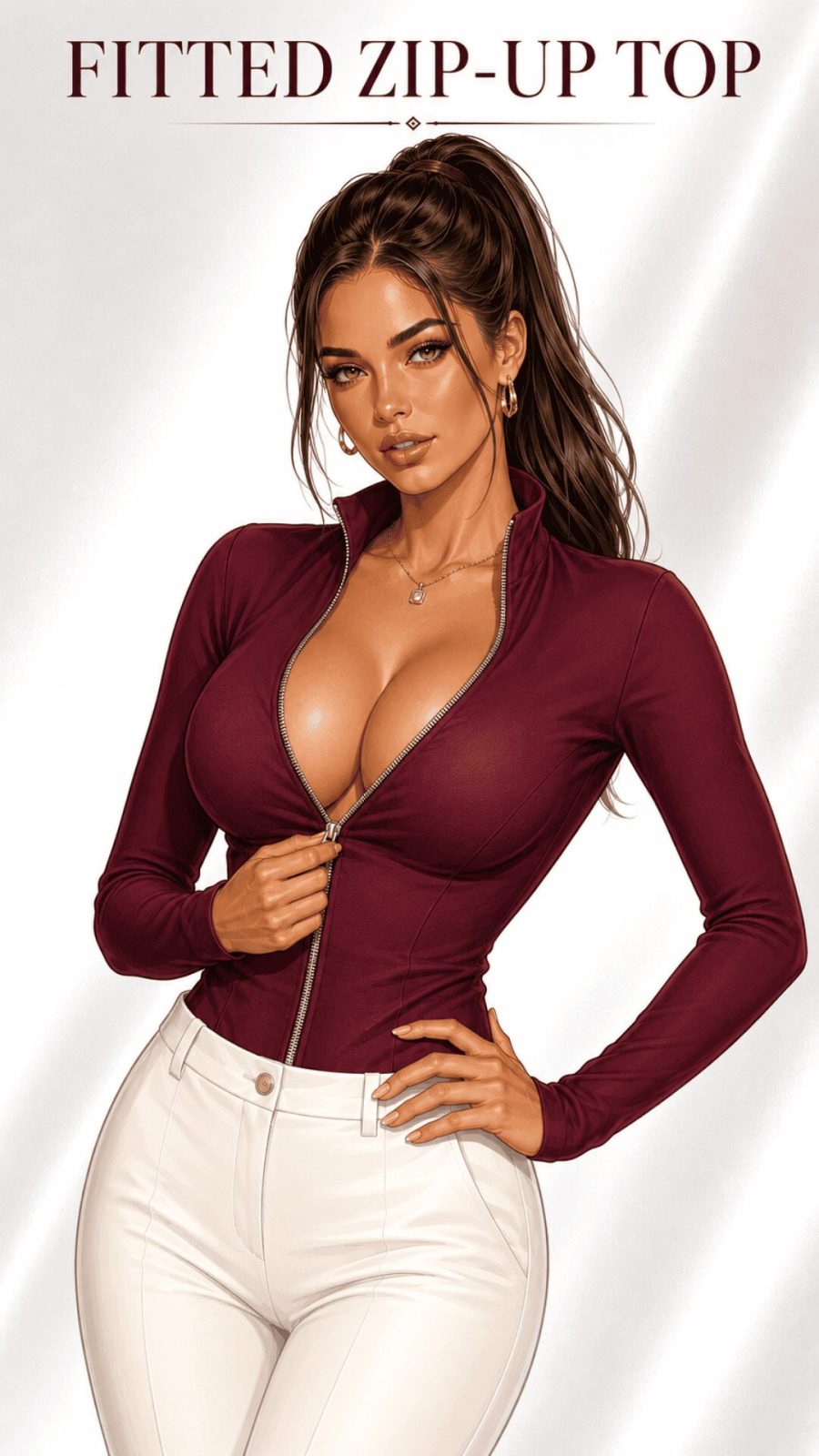
A fitted top with a zip closure at the front neckline — opening to a V or entirely strapless depending on how far the zip travels. The zip gives the top adjustable coverage and a hardware detail that adds a slightly utilitarian or sportswear-influenced edge. In the half-zip format (a zip stopping mid-chest), the fitted top reads as sporty-chic and is particularly popular in merino or performance fleece. The full-zip fitted top in athletic fabric is a direct gym-to-street piece. In fashion contexts, the zip detail adds a subtle masculine-industrial element to an otherwise close-fit feminine silhouette.
Fitted tops layer most cleanly under structured outerwear — blazers, tailored coats, and bomber jackets — because the slim profile leaves room for the outer layer to hang correctly. The key failure point in layering fitted tops is fabric weight: a heavy fitted knit under a structured blazer adds too much bulk at the shoulder. Lightweight fitted bases (cotton-elastane jersey, fine-gauge rib, seamless knit) under structured outers create the cleanest silhouette. Conversely, layering an oversized piece over a fitted top creates intentional proportion contrast — the close-fit base reads as a visible design element beneath the looser outer.
Category 6: By Silhouette / Fit (#39–#43)
Fitted vs bodycon, contour vs structured — the spectrum of close-fit silhouettes explained
The terms "fitted" and "bodycon" are often used interchangeably, but they describe different points on the close-fit spectrum. Understanding the distinction matters for shopping and styling.
| Term | Ease Allowance | Movement | Occasion Register |
|---|---|---|---|
| Fitted | Minimal (2–5 cm) | Full range | Casual through formal |
| Bodycon | None (negative ease) | Restricted | Going-out, evening |
| Contour | Minimal, seam-shaped | Full range | Smart-casual through occasion |
| Second-skin | None (4-way stretch) | Full range | Active, athletic |
| Structured fitted | Minimal, woven | Moderate | Office, formal |
- 39
Bodycon Knit Top
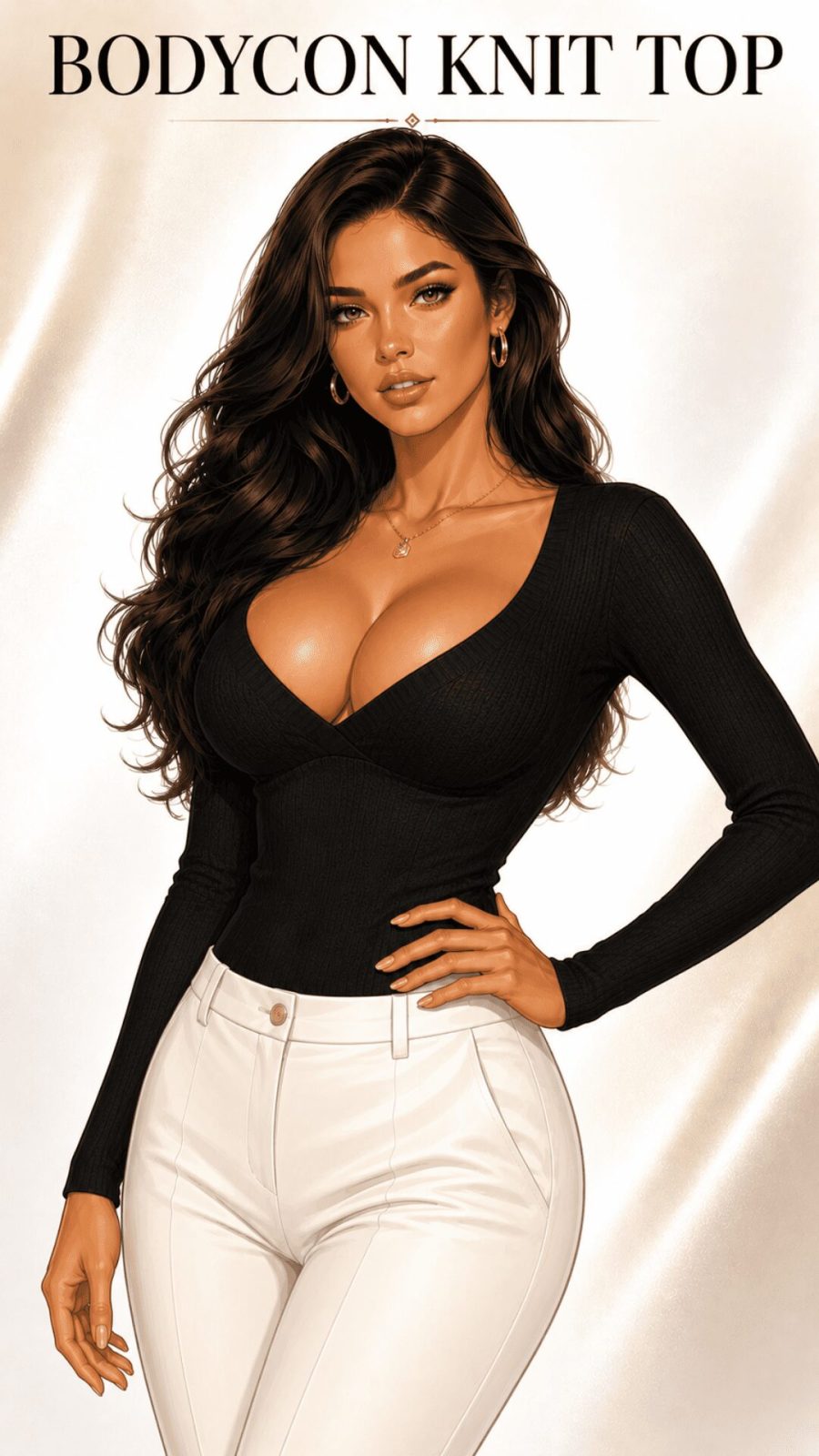
A high-stretch knit top cut with negative ease — meaning the garment's flat measurements are smaller than the body measurements it fits. The fabric stretches to accommodate the body, creating a second-skin compression against the torso. Bodycon knit tops are typically in high-stretch ponte, viscose-elastane, or ribbed jersey. The bodycon silhouette shows every contour of the body: it's the maximum expression of the close-fit aesthetic. In fashion history, the bodycon silhouette is associated with Hervé Léger's bandage dress construction from the late 1980s and early 1990s, which set the visual language for high-compression fitted fashion.
- 40
Contour Longline Top
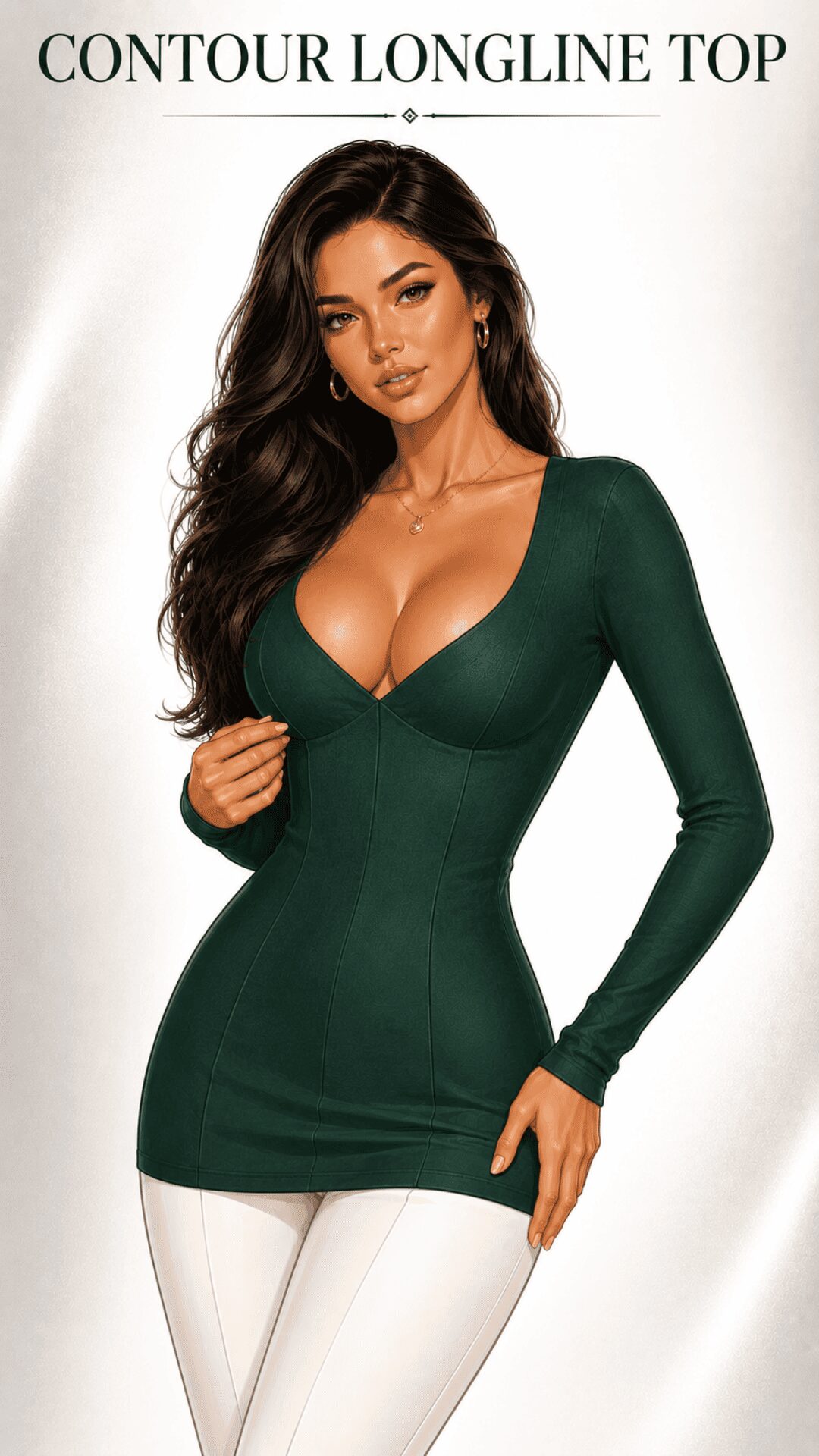
A fitted top that extends below the hip — the longline cut combined with close-fit construction. The extended hemline adds vertical length to the torso and creates a different proportional relationship with the bottoms worn beneath it. Longline fitted tops work particularly well over leggings, fitted trousers, or bike shorts — the extra length covers the hip entirely while maintaining the fitted silhouette throughout. In ponte or structured jersey, the longline top has enough body weight to hang cleanly without clinging at the hem. A key piece in minimalist and capsule wardrobe styling.
- 41
Asymmetrical Fitted Top
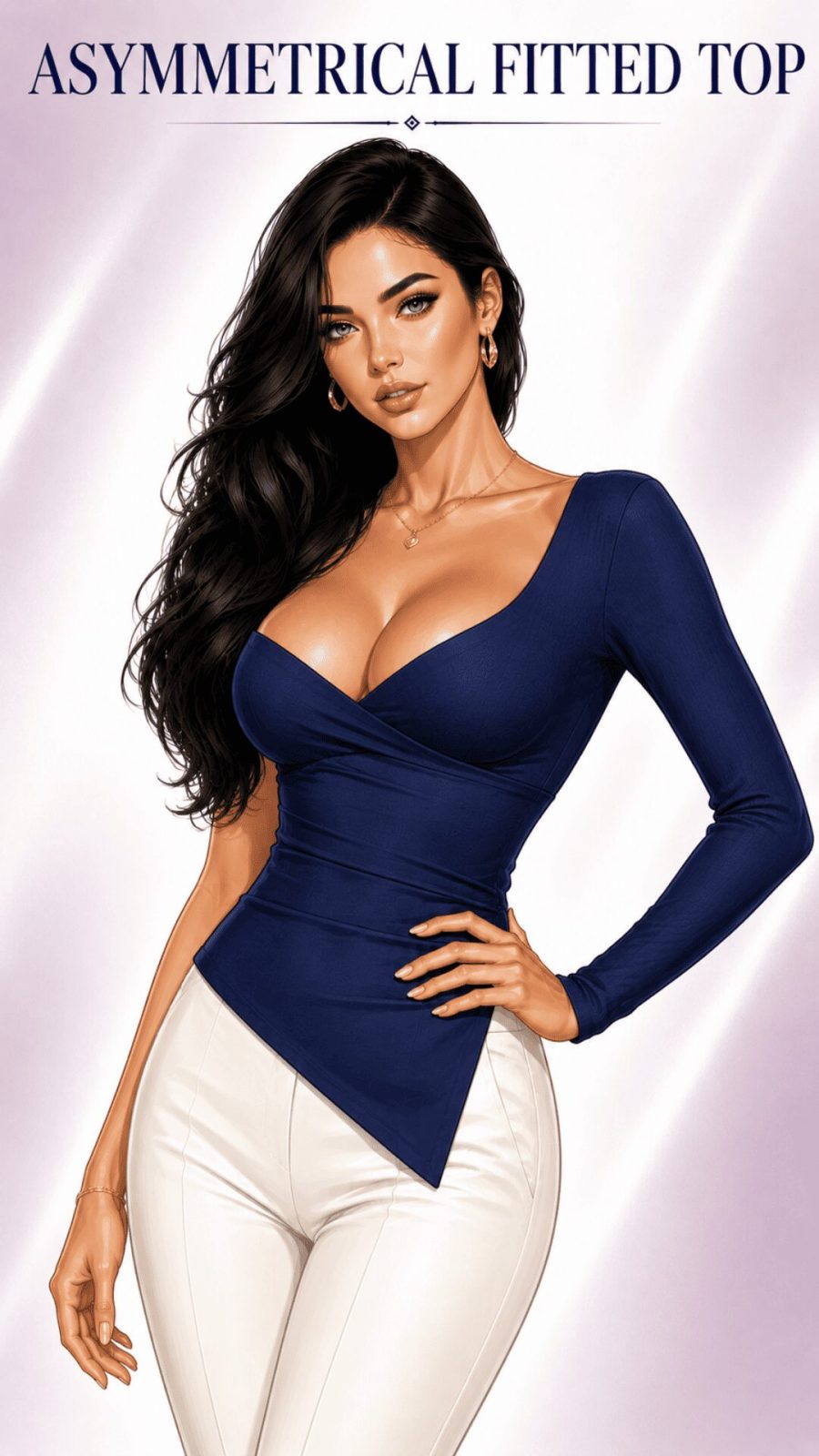
A fitted top where the hem, neckline, or sleeve is deliberately cut at different lengths on each side — creating a diagonal or stepped asymmetric line. The fitted base silhouette keeps the asymmetry readable: the close fit against the body makes the asymmetric cut the clear and primary design statement. Common asymmetric variations include a diagonal hem (higher on one side), a one-shoulder neckline, or a single long sleeve paired with a sleeveless side. The asymmetry adds visual movement without adding volume — making it one of the more architecturally interesting fitted top constructions.
- 42
Smocked Fitted Top
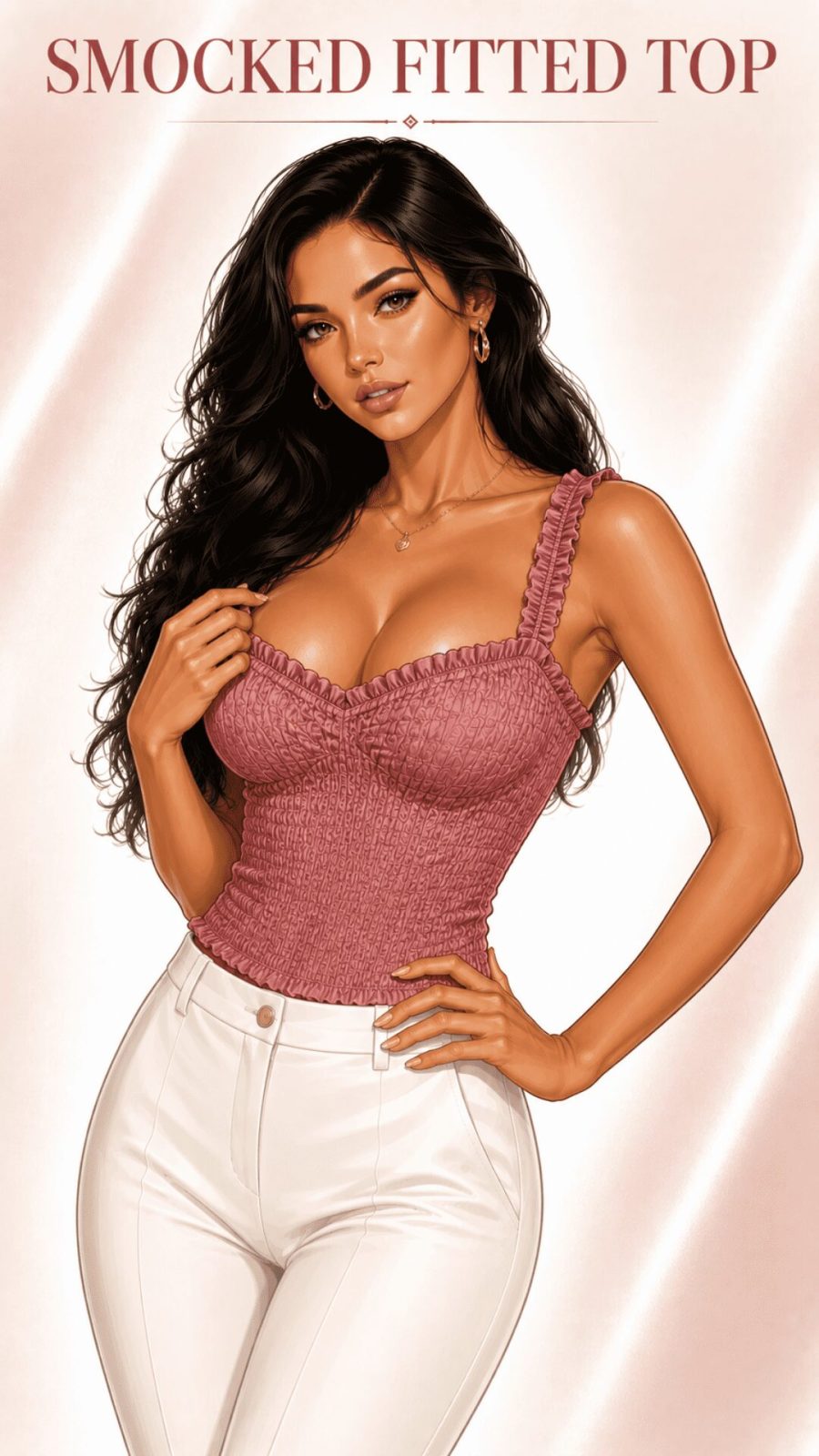
A fitted top where elastic thread is sewn through the fabric in a grid or honeycomb pattern, gathering it into a textured, stretchy section — typically across the chest or waist. Smocking creates both a decorative surface pattern and a practical stretch zone: the gathered section has significant horizontal give, making the top highly adaptable in fit. Smocked tops typically have a fitted smocked bodice and looser fabric above or below the smocked section. Common in cotton, voile, and woven fabrics. The smocked bodice with gathered fabric below is a distinct silhouette that combines fitted and relaxed elements in a single garment.
- 43
Fitted Denim Shirt
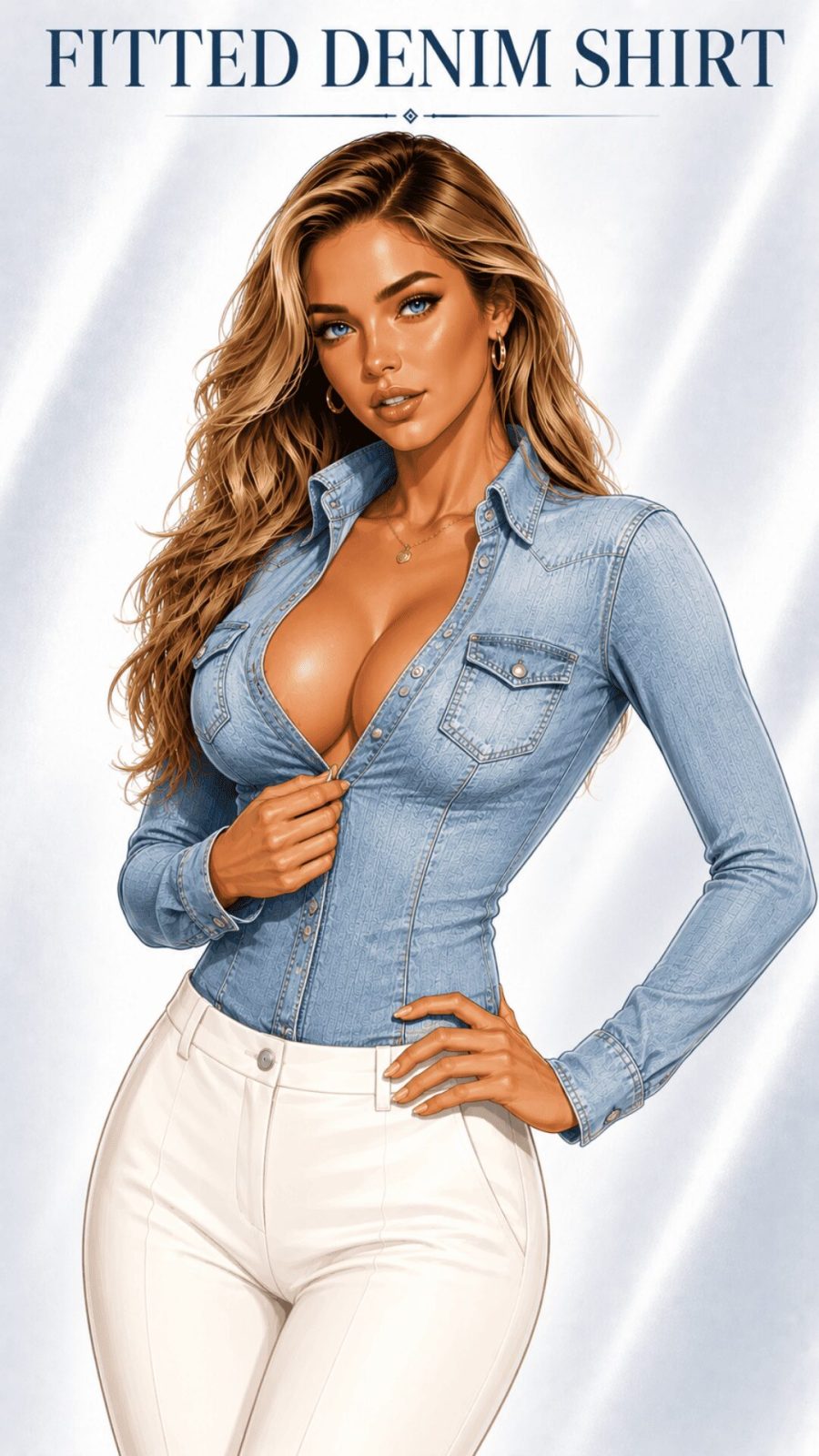
A button-front shirt in denim fabric — cut in a close-fit silhouette through the torso. Denim shirts are traditionally a relaxed garment; the fitted cut removes excess volume from the body and back of the shirt, creating a leaner, more intentional silhouette. In stretch denim (denim with 2–4% elastane), the fitted cut gains some give, making it more comfortable for full-day wear. The fitted denim shirt works across a wide range of styling contexts: tucked into a midi skirt for smart-casual, worn open over a fitted tee for layered casual, or worn as a jacket alternative. Our denim top guide covers the full styling range.
Category 7: By Trend / Aesthetic (#44–#50)
Y2K, minimalist, Korean fashion, cottagecore — how distinct aesthetics shape fitted top design
Fitted tops carry aesthetic codes that communicate more than just silhouette preference. A baby tee signals Y2K nostalgia. A mock neck in merino signals minimalism. A corset top signals fashion awareness. These codes shift across trend cycles, but the fitted construction itself stays constant — only the styling language around it changes. The following types are categorized by their primary aesthetic identity as much as their construction.
- 44
Y2K Baby Tee
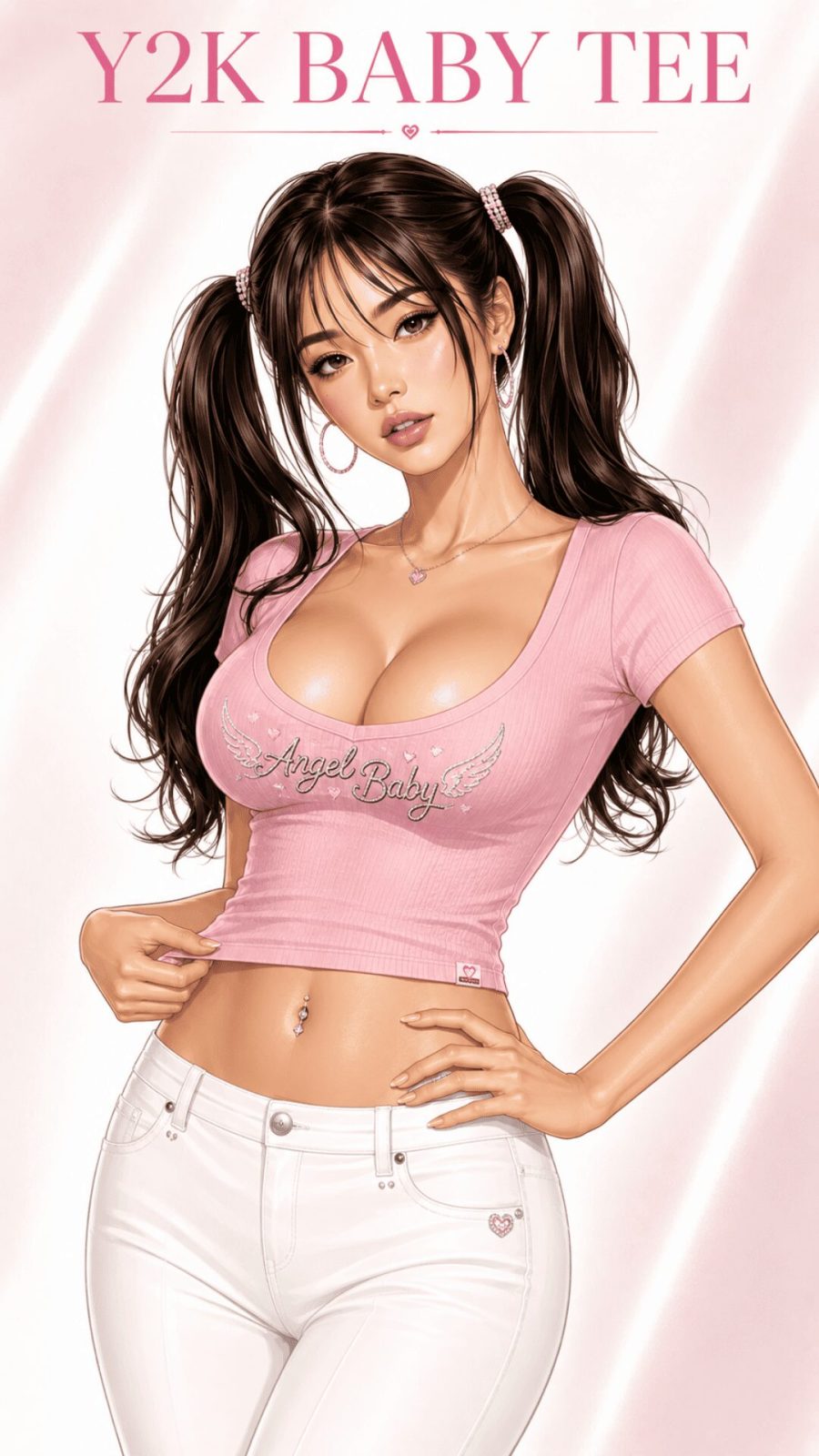
The baby tee is a shrunken, extremely cropped fitted T-shirt — cut significantly shorter and narrower than a standard fitted tee, with a deliberately small fit relative to the body. Its origins are firmly in the late 1990s and early 2000s: the baby tee was a defining garment of early-millennium street style, worn tight and short to show the midriff. Its 2020s revival was documented across fashion media as a clear Y2K aesthetic trend, with brands from streetwear to luxury producing updated versions. The key difference between a fitted tee and a baby tee is intentionality of undersizing: the baby tee is meant to read small.
- 45
Minimalist Fitted Tee
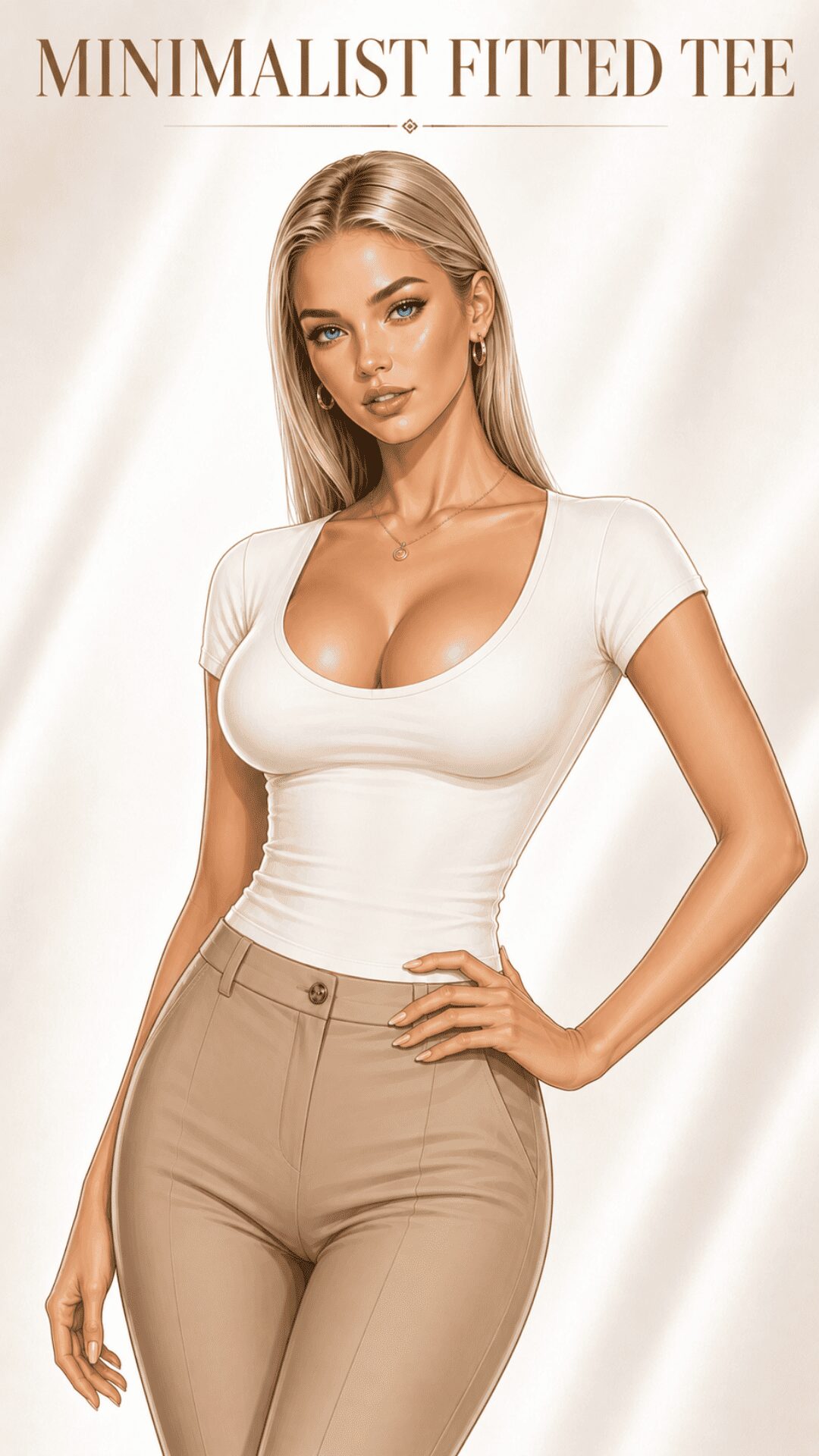
A plain, fitted short-sleeve or long-sleeve tee in a neutral color — white, black, grey, cream, or slate — with no graphics, prints, or embellishments. The minimalist fitted tee is the cornerstone of capsule wardrobe philosophy: a high-quality basic that earns its place through fabric quality, precise fit, and clean color rather than visual noise. In premium pima cotton, modal, or merino, the minimalist fitted tee is one of the most versatile garments in any wardrobe. Its aesthetic identity is entirely expressed through fit and material rather than surface design. See our guide to building a minimalist wardrobe with fitted basics.
- 46
Corset-Inspired Tee
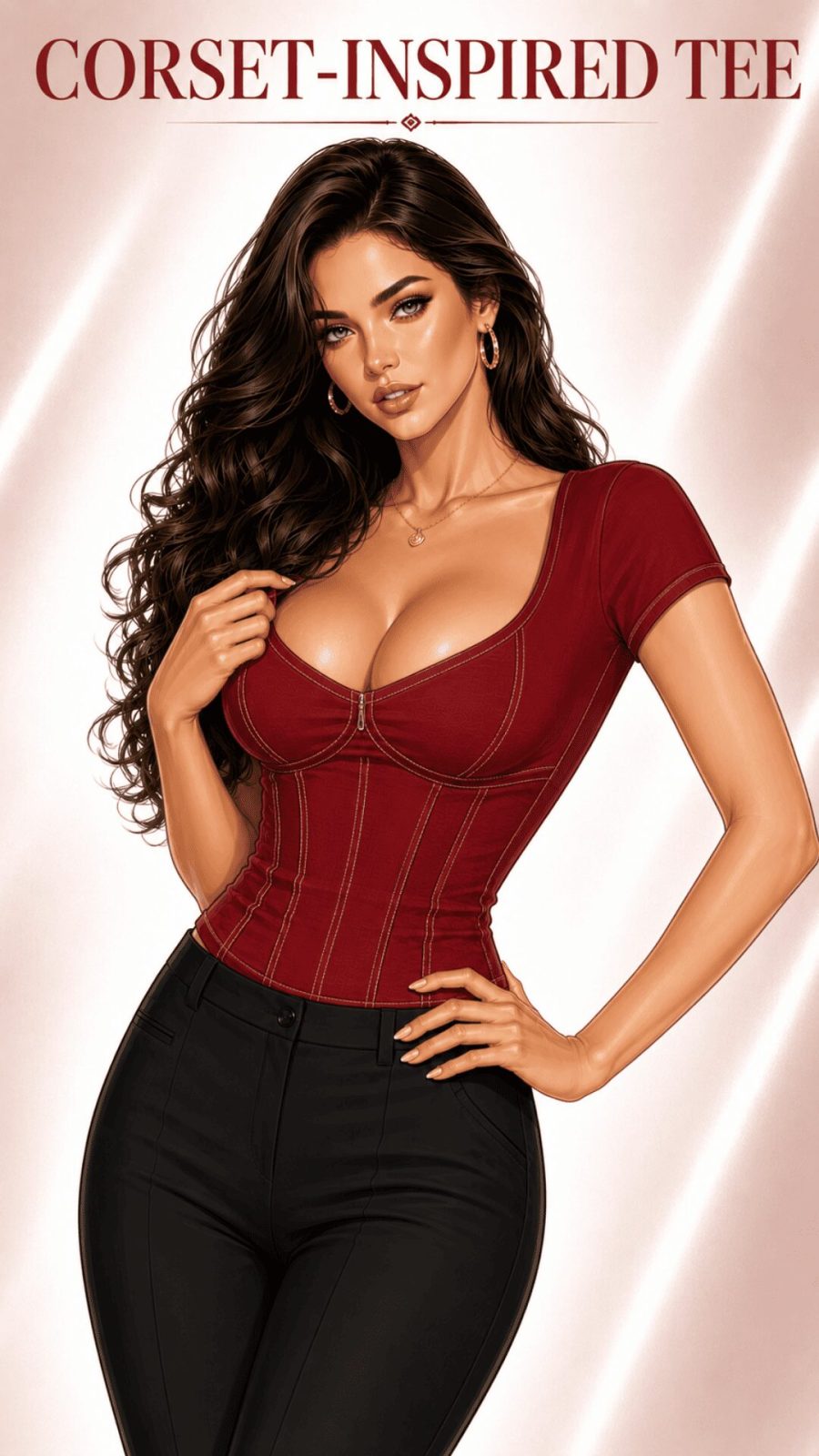
A fitted jersey or stretch top that borrows visual elements from corset construction without the boning or rigid structure: decorative seaming that mimics boning channels, lace-up or eyelet details at the front, gathered or shirred sections that echo corset shaping. The corset-inspired tee occupies an interesting middle ground — it has the comfort of a knit top but the aesthetic signals of corseted fashion. This category emerged strongly through the 2020s as the corset aesthetic became mainstream but consumers wanted the look in more wearable formats. It reads as fashion-forward and trend-aware without the formality of a true corset.
- 47
Sculpted Corset Blouse
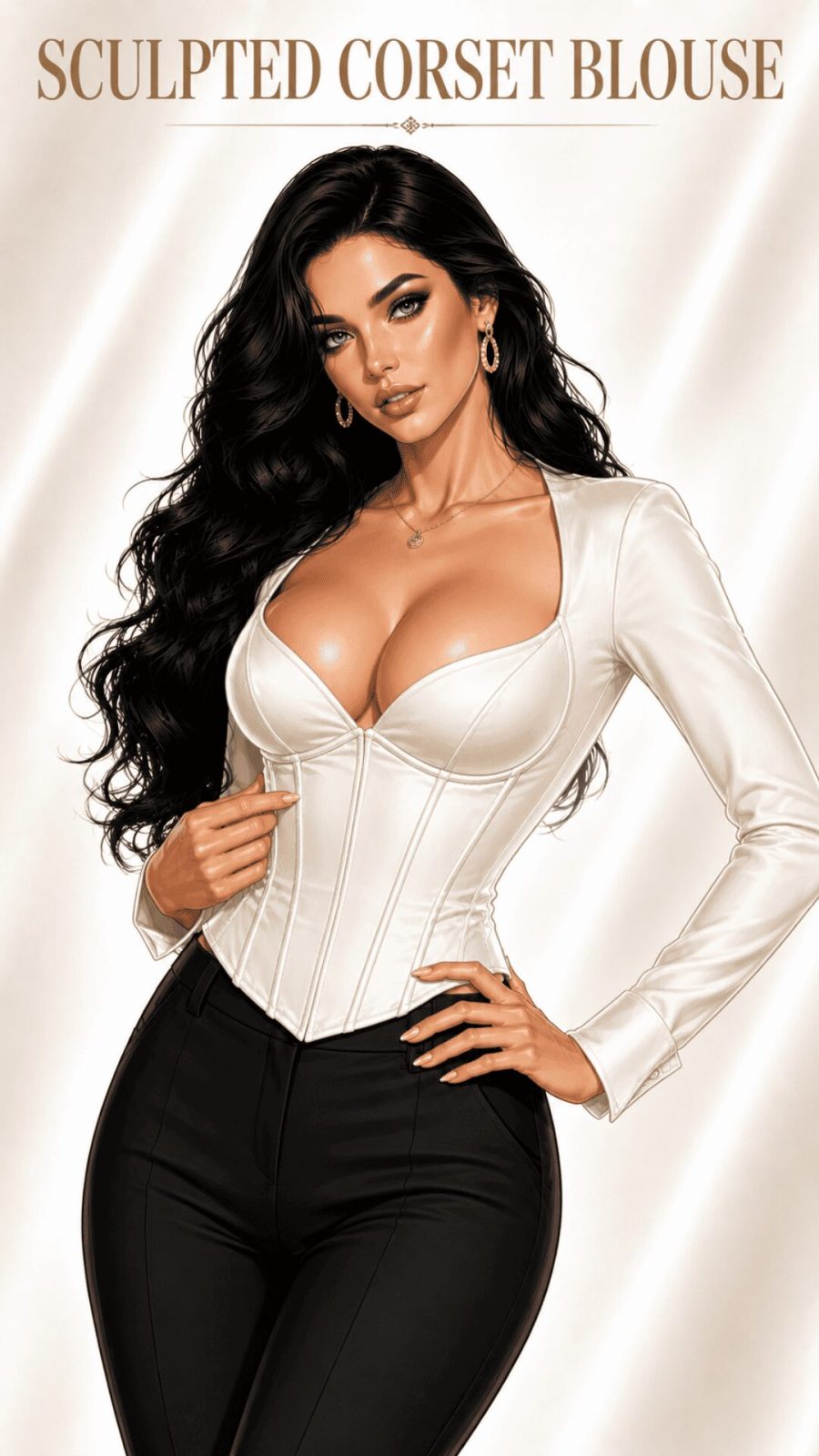
A structured blouse with corset-influenced panel construction and boning, designed to create waist definition through the garment rather than through body compression alone. The sculpted corset blouse is a step above the regular corset top in formality and construction complexity: it has a blouse collar or neckline finish, typically a full front or back closure, and woven-fabric panels that hold a precise shape independently of the wearer's body. This is the most formal fitted top in the guide — appropriate for occasion events, formal dinners, and fashion-forward professional contexts. Pairs with wide-leg trousers or full skirts.
- 48
Minimalist Stretch Top
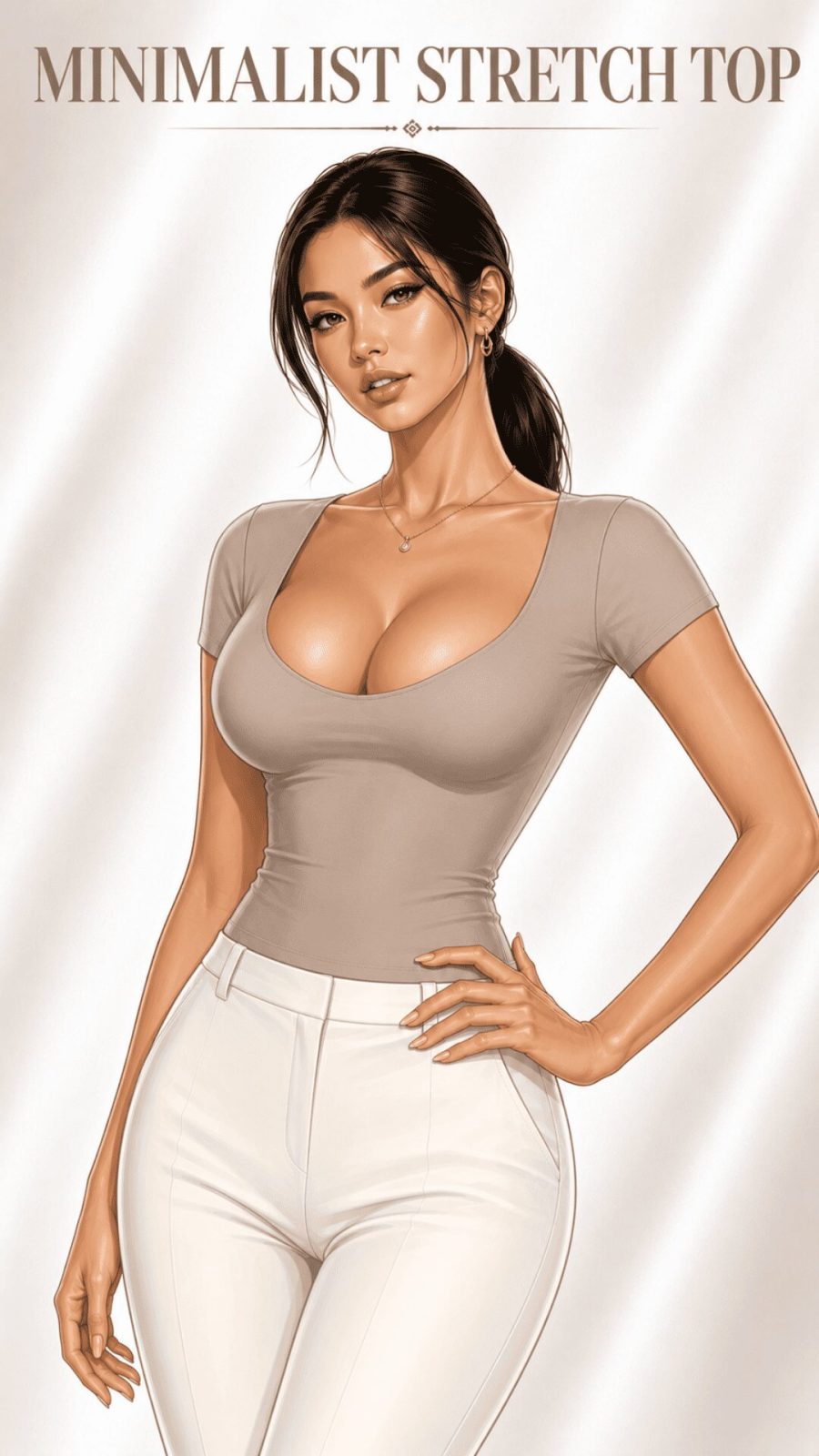
A fitted top in plain stretch fabric — modal, viscose-elastane, or matte jersey — with minimal design features. No graphics, no hardware, no decorative details. The minimalist stretch top's identity is entirely in its color, fit, and fabric quality. In deep jewel tones or clean neutrals, these tops read as elevated basics. The minimalist stretch top is a core piece in Korean fashion-influenced wardrobes, where the focus is on precise fit and quality materials rather than surface design. It layers cleanly under blazers, sheer shirts, and structured outerwear. The minimal detail level makes it a genuinely versatile piece for everyday fitted top outfits.
- 49
Structured Knit Fitted Top
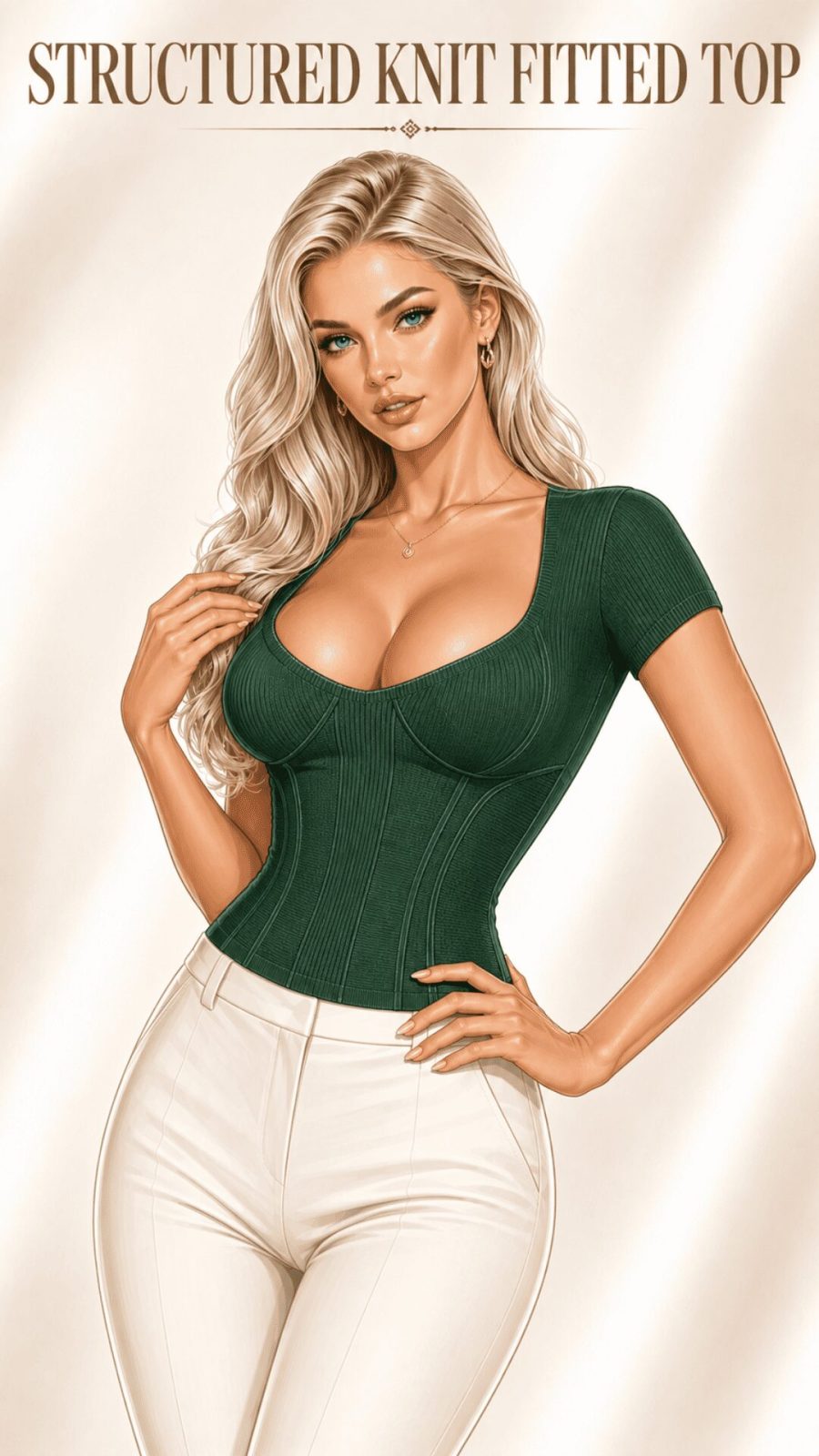
A knit top where the fabric structure itself creates rigidity and shape-holding — through heavily textured knit patterns (cable, jacquard, double-knit) that have body weight and dimensional stability. The structured knit fitted top sits between a regular fitted knit and a woven structured blouse: it has stretch, but the fabric is firm enough to hold a defined shape rather than draping against the body. Cable-knit fitted tops in merino or cotton read as premium casual; jacquard knit fitted tops edge into occasion territory. The structured knit is one of the most interesting fitted top constructions because it combines the comfort of knitwear with the visual presence of structured tailoring.
- 50
Fitted Balloon Sleeve Top
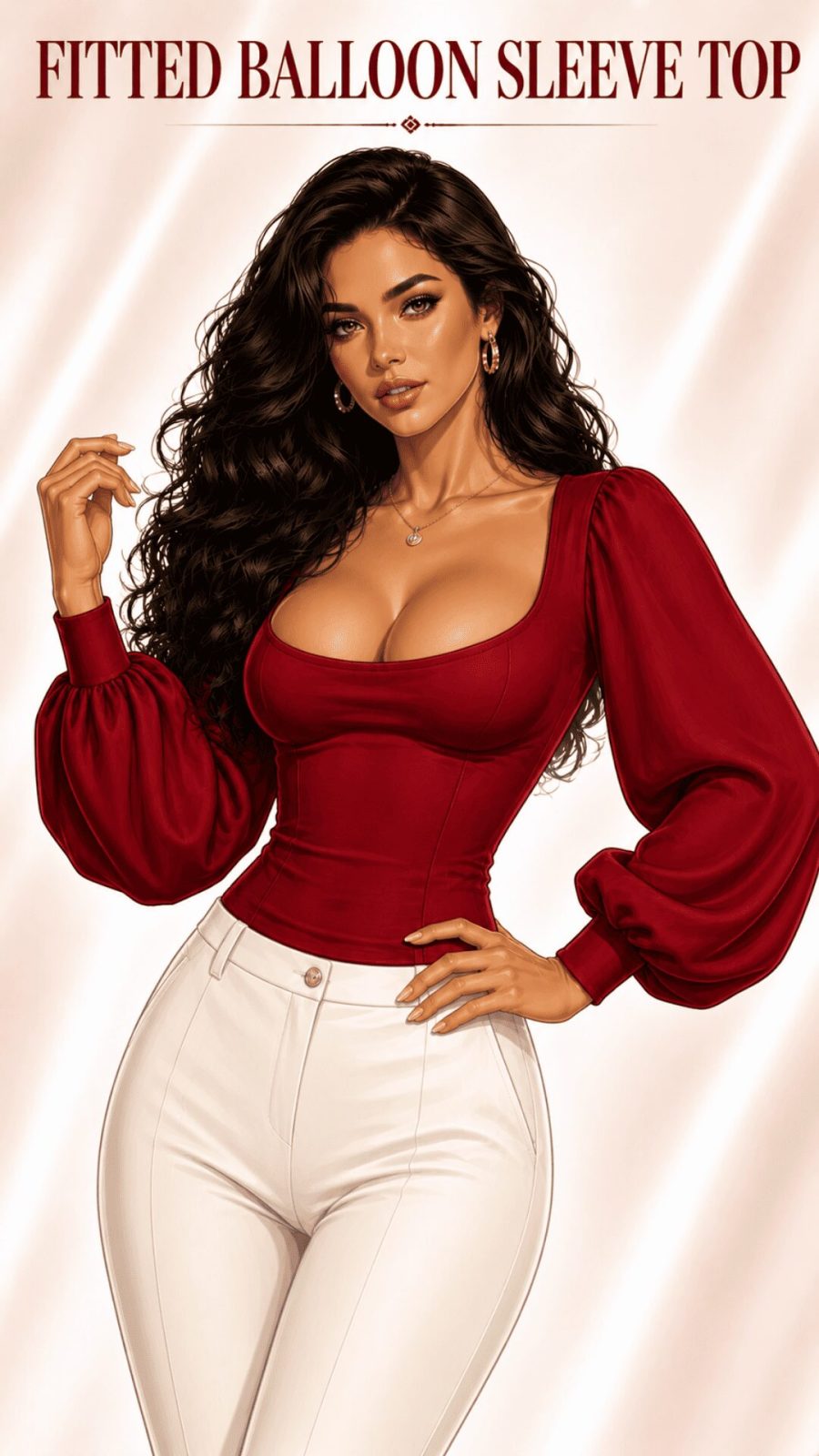
A fitted top where the body is close to the torso, but the sleeves are voluminous — gathered or pleated at both the shoulder and the cuff to create a rounded, balloon-like shape. The proportion contrast between the fitted body and the dramatic sleeve is the core design statement. Balloon sleeves add visual width at the shoulders and create a strong top-of-silhouette statement, which makes them particularly effective for proportion balancing. In structured fabric (crepe, poplin, satin), the balloon holds its shape; in chiffon or georgette, it drapes more softly. This is the fitted top that proves silhouette can be dramatic without being tight from collar to hem. Our sleeve type guide covers all volume sleeve options.
Category 8: By Layering Function (#51–#56)
Fitted tops designed specifically to work within a layered outfit system
- 51
Layering Fitted Base Top
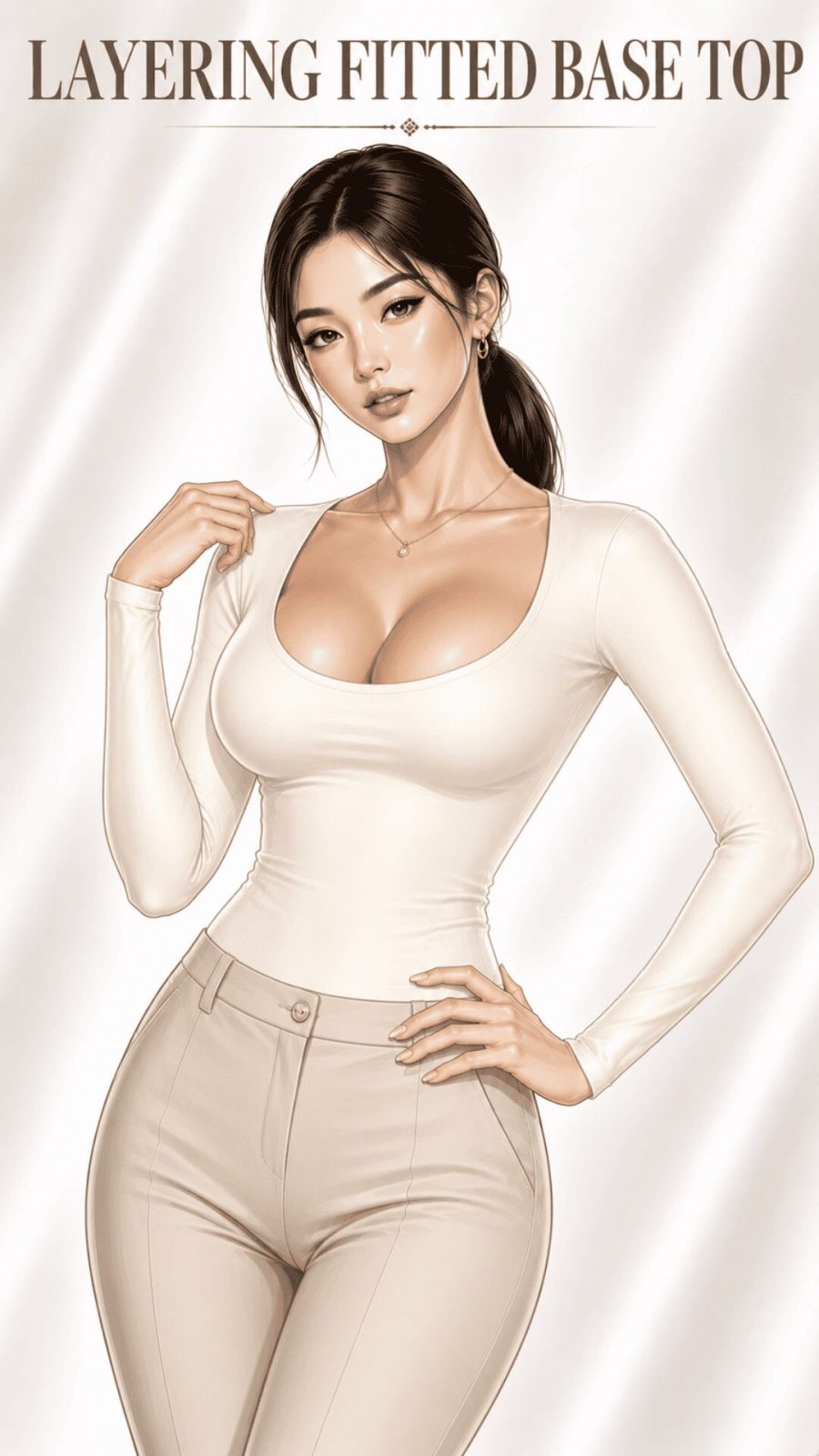
A fitted top engineered to sit beneath other garments — light enough not to add bulk, slim enough to show nothing through outer layers, and long enough to stay tucked. The base layer fitted top is typically in modal, fine cotton-elastane, or thin merino. Its key performance requirement is flatness: no visible seams, no fabric bulk at the waist, no rolling at the hem. A well-chosen fitted base layer changes the winter wardrobe entirely — it adds warmth without adding visual mass, and it means heavier outer layers can be removed without exposing a disheveled inner garment. The foundation piece of winter capsule wardrobe layering.
- 52
Fitted Wrap Blouse
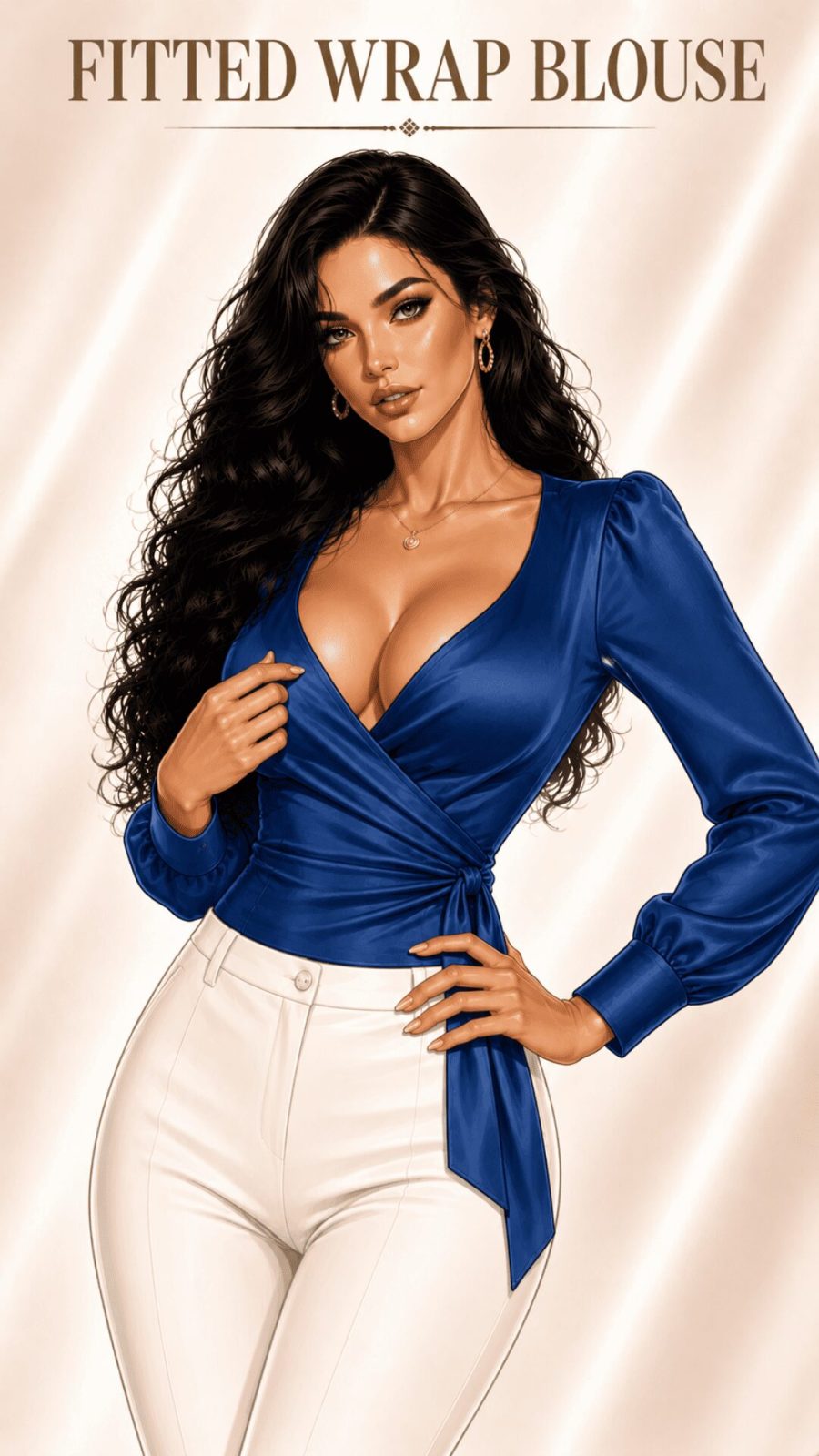
A wrap-front blouse in woven fabric — crepe, chiffon, or silk — where the crossover creates a fitted silhouette through the tie tension. Unlike the jersey wrap top, the wrap blouse uses woven fabric and typically has a more polished, formal finish with sleeve options (short sleeve, 3/4 sleeve, or long sleeve). The wrap blouse is one of the most office-appropriate fitted top constructions because the V-neckline and fitted waist read as professional without being restrictive. It transitions from office to evening with only an accessory change. First popularized in its modern form in the 1970s, it remains an active wardrobe staple across professional and smart-casual contexts today.
- 53
Ribbed Mock Neck Top
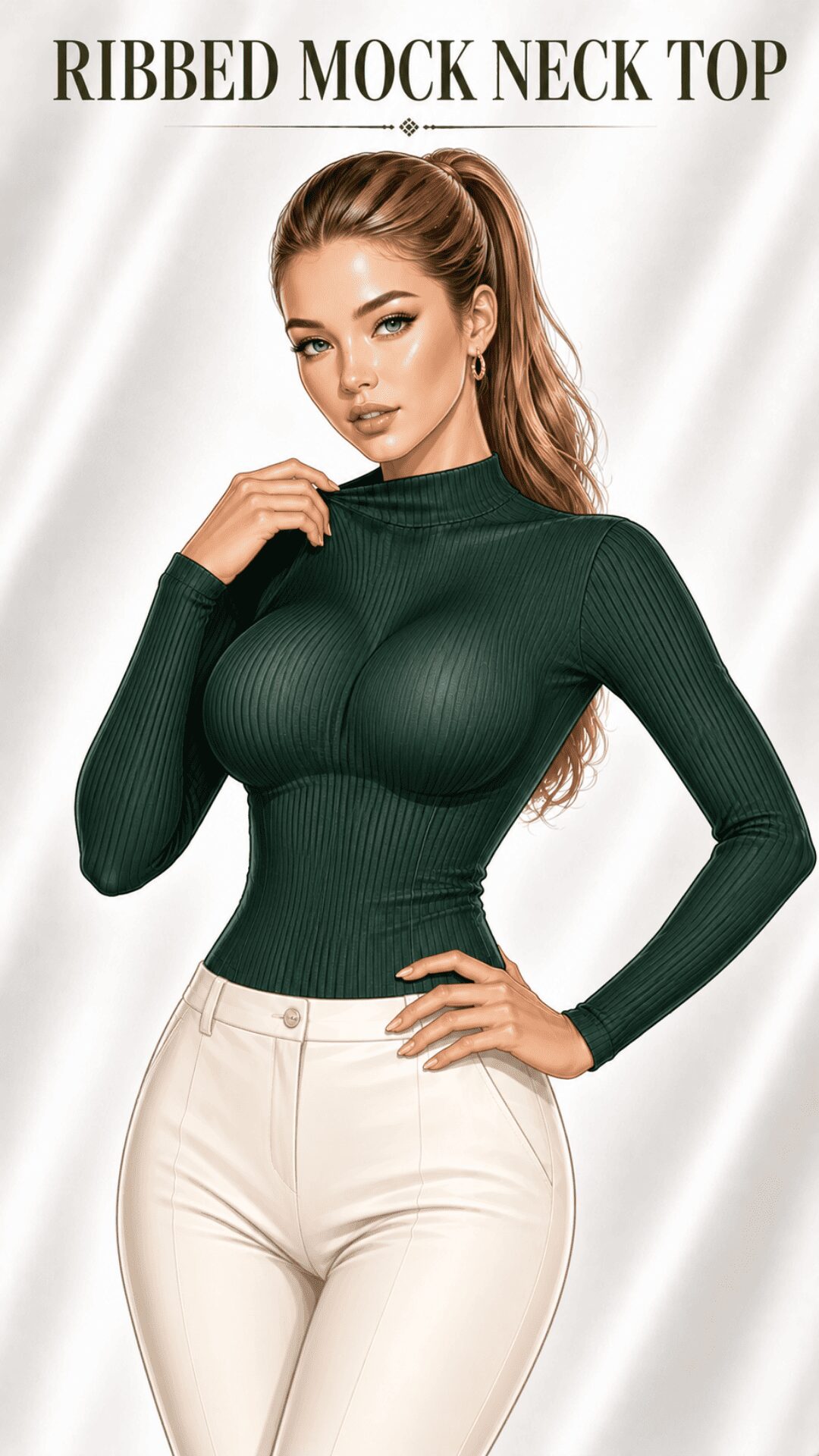
The combination of two distinct fitted top categories — ribbed construction and mock neck architecture — in a single garment. The rib knit creates strong horizontal stretch recovery that keeps the top closely fitted; the mock neck adds an upright collar that creates clean neck architecture. This combination appears across minimalist, Korean fashion, and capsule wardrobe contexts consistently. In a long-sleeve version with fitted ribbed body, the ribbed mock neck top is one of the most polished everyday fitted tops available: it looks structured without being formal. Works particularly well in fine cotton rib or merino blend. A consistent seller across every fashion-forward basics brand.
- 54
Fitted Peasant Top
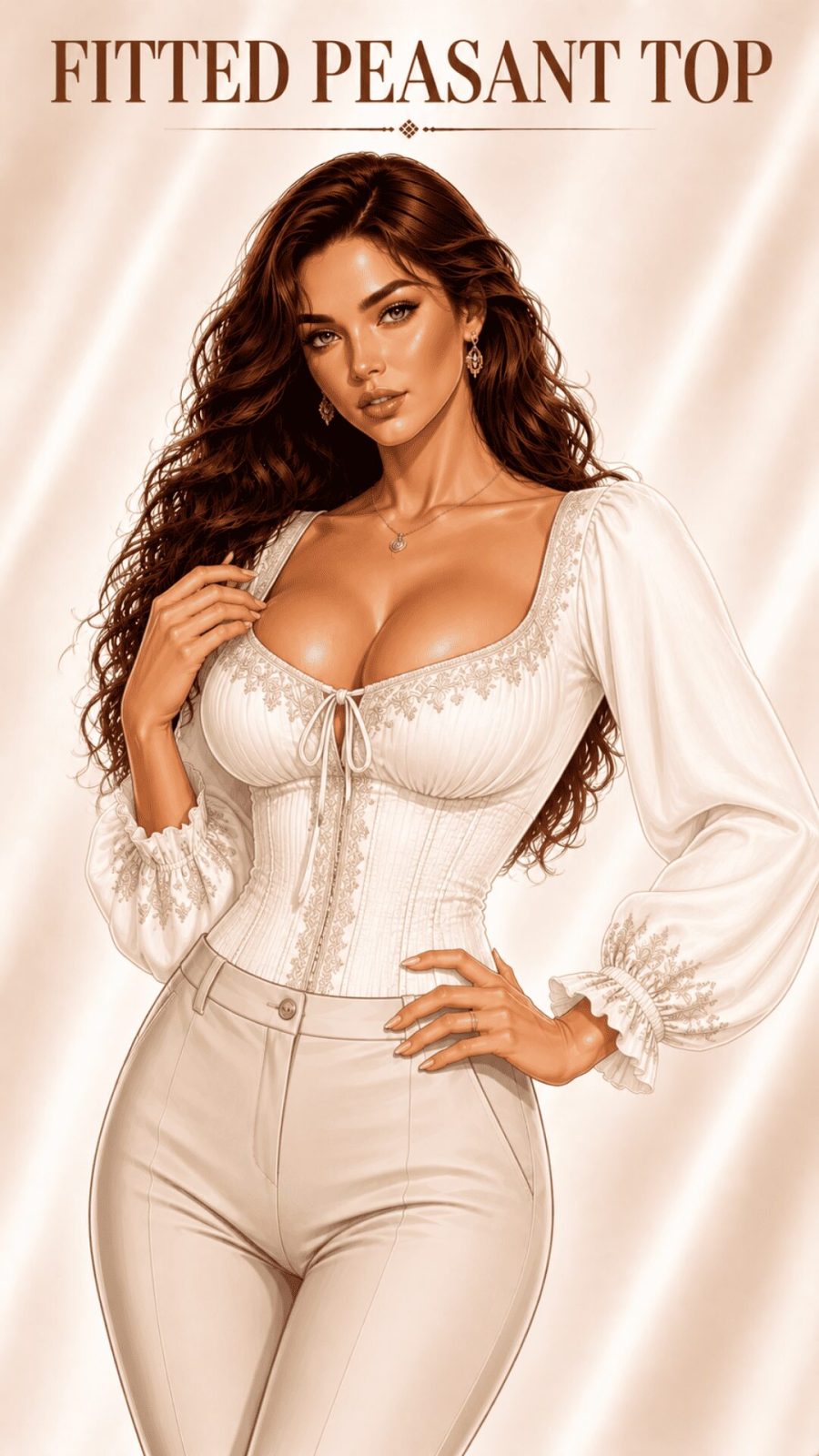
The peasant top traditionally has a loose, gathered construction — but in its fitted adaptation, the smocked or elasticated bodice creates a close fit through the chest and waist while the sleeves or hem retain some volume. The fitted peasant sits at the intersection of the boho and fitted aesthetic categories: it has the visual language of peasant styling (gathered neckline, wide sleeve hem, embroidered details, lightweight woven fabric) but with a fitted bodice that grounds the silhouette. Common in cotton, linen, and cotton-voile. Works well for summer casual and bohemian styling.
- 55
Fitted Satin Blouse
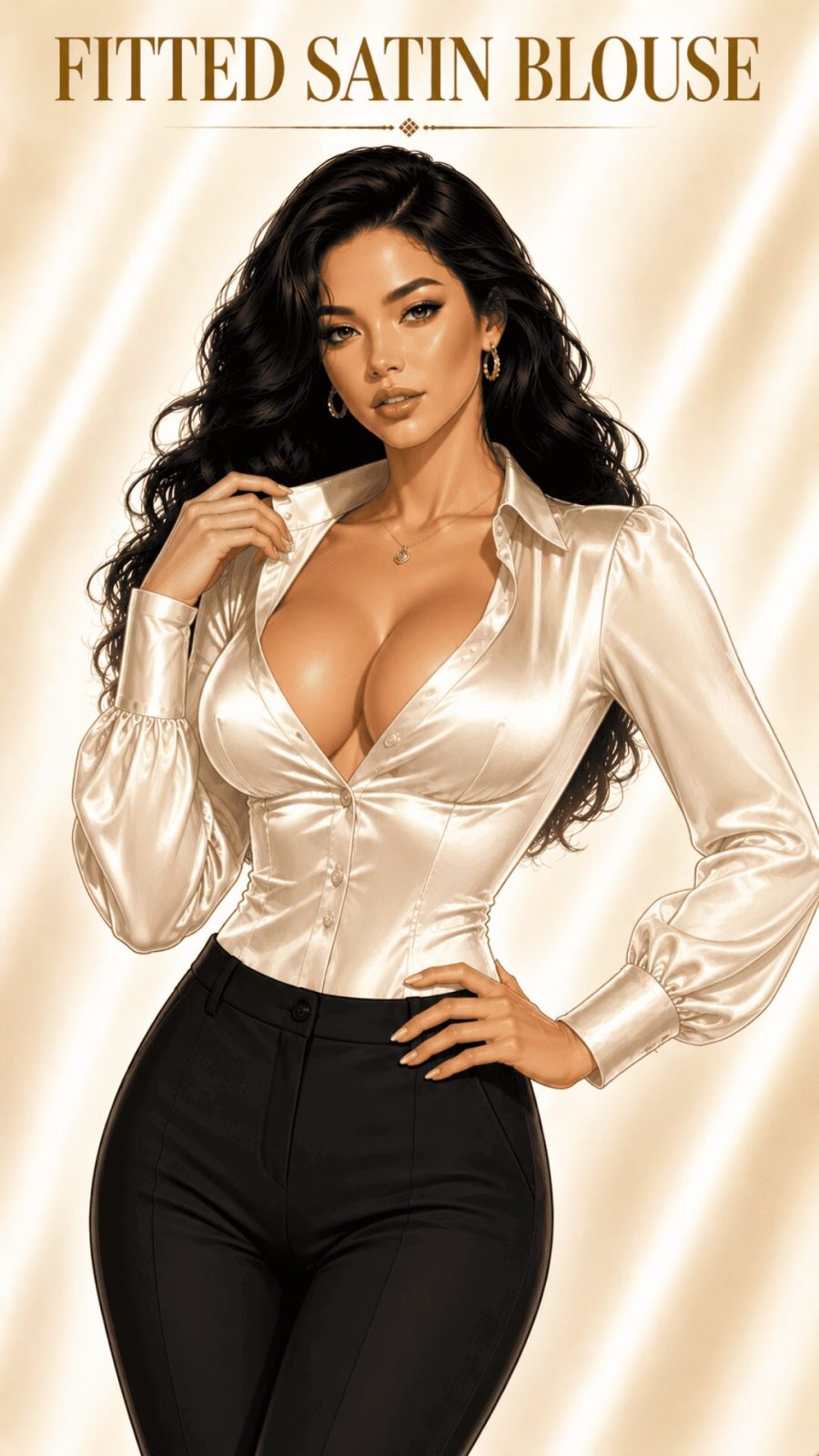
A blouse in satin fabric — polyester satin, charmeuse, or silk satin — cut to a fitted silhouette through precise darting and seaming. The satin blouse's fitted version is distinct from the satin cami in one key way: it has sleeves, a collar or neckline finish, and a more structured construction that places it clearly in blouse territory rather than camisole territory. The lustrous satin surface picks up light and creates visual richness without any embellishment. A fitted satin blouse tucked into tailored wide-leg trousers is one of the most reliable smart-casual evening-to-office outfits in contemporary women's fashion. See our full satin top styling guide.
- 56
Fitted Longline Turtleneck
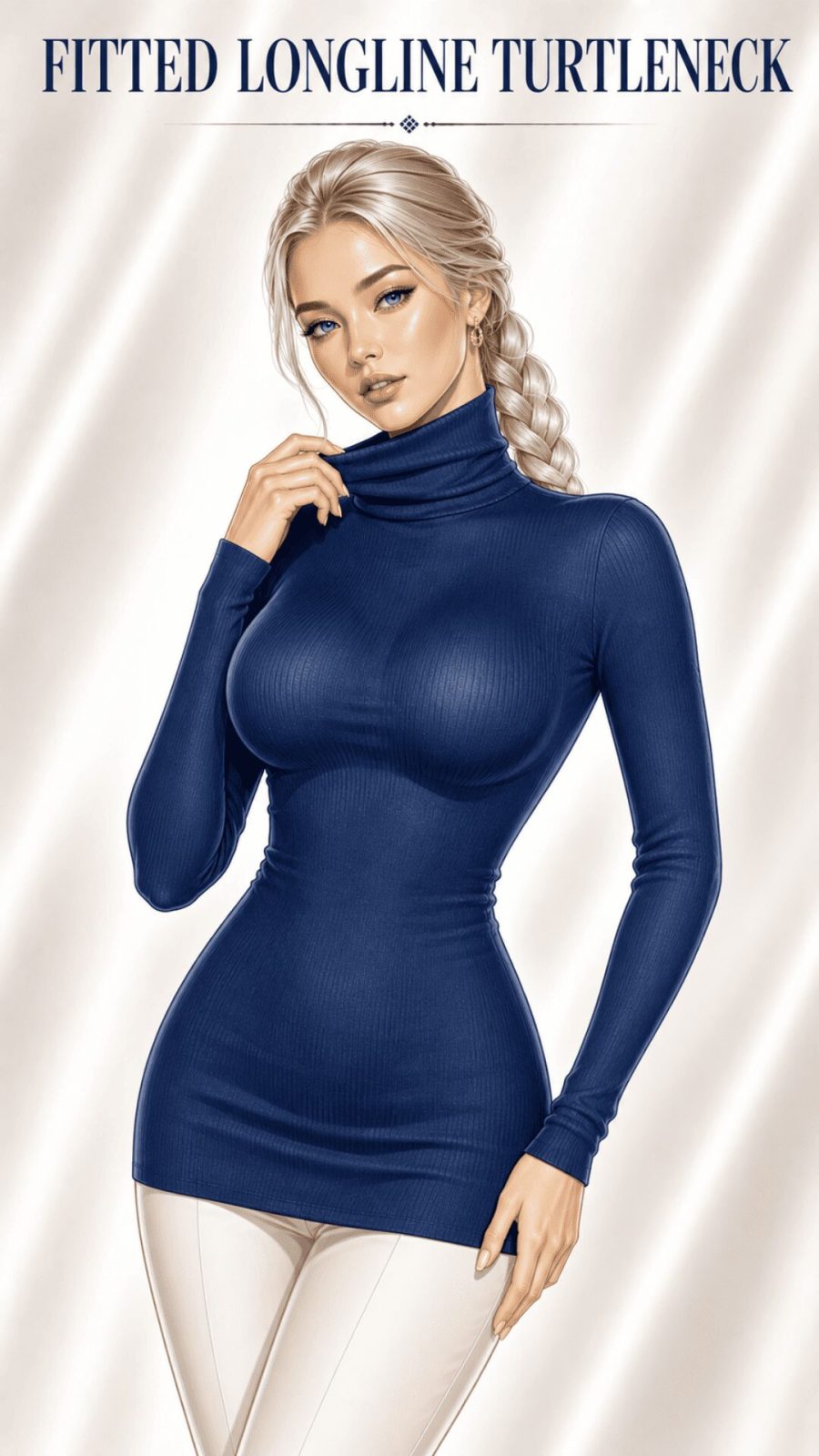
A fitted turtleneck that extends below the hip — combining the neck-to-jaw coverage of the turtleneck with the extended length of the longline cut. The result is one of the most complete close-fit silhouettes in the category: neck to below hip in a continuous body-skimming line, with no skin visible. The fitted longline turtleneck is a minimalist styling anchor — worn with slim-leg trousers or fitted jeans, it creates a monochromatic clean-line outfit with no exposed skin and no visual breaks across the torso. In fine-gauge merino or cashmere, it's the most refined casual garment in a winter wardrobe. Our guide to winter fitted top outfits shows the full styling range.
Fitted tops create a specific kind of visual confidence. The body-skimming silhouette reads as deliberate — it signals that the wearer knows their proportions and has dressed with intention. What makes fitted tops psychologically effective is proportion specificity: the close fit creates a defined boundary between the body and the garment, which makes the overall silhouette easier to read and style. The fitted top paired with volume elsewhere — a full skirt, wide-leg trousers, a voluminous sleeve — creates a proportion contrast that is the basis of most modern fashion styling logic. That contrast is what prevents a fitted top from reading as too simple: it only needs one strong counterpart.
Frequently Asked Questions — Types of Fitted Tops
What are fitted tops?
Fitted tops are garments cut with minimal ease allowance so the fabric follows the body's natural silhouette closely. They achieve their close fit through stretch fabric, precise seam placement, darts, or a combination of these techniques. The category spans construction types from ribbed knit basics to structured woven blouses, with the defining quality being proximity to the body rather than any single construction method.
What is the difference between a fitted top and a bodycon top?
A fitted top has minimal ease allowance — it follows the body closely but allows full range of movement. A bodycon top has negative ease — the garment's flat measurements are smaller than the body wearing it, so the fabric is under constant tension against the body. Fitted tops work across all occasions; bodycon tops are primarily for going-out and evening contexts due to their more restrictive, high-visibility silhouette.
What fabrics work best for fitted tops?
Ribbed cotton, jersey knit, and cotton-elastane blends are the most practical everyday fitted top fabrics — they stretch with the body and recover well. For formal occasions, structured crepe and woven poplin achieve fitted construction through seaming rather than stretch. Compression fabrics (high-elastane) work for athletic contexts. Satin and silk fitted tops are the most elevated option, requiring precise pattern cutting since they have no stretch.
How do you style fitted tops for the office?
The most office-appropriate fitted top constructions are the structured blouse with princess seams, the mock neck in merino or crepe, the wrap blouse in woven fabric, and the fitted button-up. Key styling factors: keep the neckline conservative (crew, mock neck, modest V), use quality fabrics (crepe, ponte, merino), and ensure the fit is precise without being tight. Tucked into tailored high-waisted trousers, most fitted tops read as professional.
Are fitted tops still in fashion in 2025?
Fitted tops are a permanent fashion category rather than a trend — they appear in every season's collections because they're structurally necessary for proportion balancing in contemporary dressing. Specific fitted top styles trend cyclically: corset tops, ribbed basics, and mock neck fitted tops have all dominated in recent years. The body-skimming silhouette is consistently present in minimalist, Y2K, Korean fashion, and capsule wardrobe aesthetics, all of which remained dominant through 2024 and 2025.
How do I choose the right fitted top for my body type?
The most useful approach is proportion-based rather than body-type prescriptive. A fitted top creates a defined torso line; you then choose bottoms that balance that line. Fitted tops with wide-leg or full-skirt bottoms add volume below; fitted tops with slim bottoms create a streamlined overall silhouette. Neckline choice matters: V-necks add visual length, square necks add horizontal width at the shoulder, mock necks add height. Choose based on the visual balance you want, not a body-type category.
What is a corset top and how is it different from a regular fitted top?
A corset top has boning — rigid or semi-rigid channels sewn into the fabric — that holds a defined shape independently of stretch. Regular fitted tops achieve their close fit through stretch fabric or seam shaping without any internal structural support. The corset top's shape comes from external structure; the fitted top's shape comes from the fabric and cut. For a complete breakdown, see our guide to corset tops and their construction.
What is the best fitted top for layering?
The best fitted tops for layering are seamless or thin-ribbed tops in modal, fine cotton-elastane, or merino — fabrics that add warmth without adding bulk. A fitted tank or a lightweight long-sleeve fitted base layer sits cleanly under blazers, structured jackets, and knitwear without creating shoulder bulk or visible seam lines. For layering a fitted top over other garments — placing it visibly over a fitted turtleneck, for example — the outer fitted top needs enough fabric weight to hang over the inner layer without clinging.
What's the difference between a fitted top and a slim-fit top?
Slim-fit and fitted describe the same general silhouette approach in different terminology contexts — both indicate reduced ease allowance relative to a regular or relaxed cut. Some brands use "slim fit" to indicate moderate reduction in ease (fitting closely but not tightly), while "fitted" can indicate a more precise close-cut construction. In garment construction terms, they occupy the same point on the ease spectrum: more than a bodycon, less than a regular or relaxed fit.
Conclusion: The Fitted Top Is a Decision, Not a Default
Fifty-six types. Eight classification systems. Every entry with construction detail, fabric logic, seasonal context, and occasion range.
What this guide demonstrates — and what fashion sometimes obscures with trend language — is that the fitted top is a structurally specific category with genuine construction variety. A ribbed mock neck and a satin corset blouse both count as fitted tops; they share a proximity-to-the-body silhouette logic and nothing else. Understanding those distinctions is what separates confident dressing from guesswork shopping.
The proportion logic that makes fitted tops work is the same across all 56 types: a close-fitting top creates a defined torso line, and that line needs a counterpoint. Provide volume below (full skirts, wide-leg trousers), volume above (balloon sleeves, oversized outerwear), or a strong vertical line (slim trousers, straight-leg jeans) — and the fitted top does exactly what it's supposed to do. It defines the silhouette rather than adding to it. For more outfit ideas, explore our complete fitted top styling reference and our guide to proportion balancing in fashion.
- 56 fitted top types across 8 classification systems — construction, neckline, sleeve, fabric, occasion, silhouette, trend, and layering function.
- Fitted tops achieve close fit through 3 distinct methods: stretch fabric tension, precise seam and dart construction, or external structural support (boning). Each method produces a different silhouette behavior and occasion range.
- Fitted and bodycon are not the same: fitted tops have minimal ease allowance; bodycon tops have negative ease. The distinction changes movement range, comfort, and occasion context significantly.
- Fabric choice determines occasion register more than construction does. The same fitted cut in ribbed cotton is casual; in structured crepe, it's office-appropriate; in satin, it's evening wear.
- Neckline selection is the most powerful visual tool in fitted top styling — it directs where the eye goes and shapes the proportional relationship between the top and the body above it.
- The Y2K revival established baby tees and corset tops as mainstream fashion staples, not just nostalgic references — both construction types remain active in current collections well into the 2020s.
- Seamless and compression technology, developed for athletic wear, migrated into fashion and produced a category of everyday fitted tops with no visible seams and superior stretch recovery.
- Proportion contrast is the key styling rule: a fitted top needs counterbalancing volume or structure somewhere in the outfit to read as intentional rather than underdressed.
- Layering fitted tops under structured outerwear requires lightweight fabric — modal, fine jersey, or thin merino — to avoid shoulder bulk and maintain the outer garment's intended silhouette.
- For the complete visual reference to all top types, see our full women's tops guide.
Sources & Further Reading
- Vogue — Best ribbed tops and body-skimming fitted styles
- Who What Wear — Corset top styling and fitted silhouette evolution
- Business of Fashion — The rise of contour dressing and body-skimming silhouettes
- FIT NYC — History of stretch fabric innovation in women's fashion

Leave a Reply