
There’s a reason the wrap dress has outlasted every trend cycle since the 1970s. It’s not just comfortable — it’s intelligent design. The construction does something almost no other dress does: it adjusts to you, not the other way around. An adjustable tie at the waist, a crossover bodice that drapes rather than constrains, a hemline that moves with every step. That adaptability isn’t coincidence. It’s the result of deliberate garment engineering that happens to look effortless.
Wrap dresses are the most architecturally forgiving silhouette in women’s fashion. And yet, somehow, the most consistently underexplored.
The silhouette was famously brought into mainstream fashion by Diane von Furstenberg in 1974 — a construction deliberately built on adjustable, forgiving proportions that translated directly from her jersey knit original into dozens of modern interpretations. Today, the category spans everything from floor-length maxi wraps to tailored faux-wrap office silhouettes, each carrying its own construction logic, seasonal purpose, and styling depth. Understanding the differences — really understanding them — changes how you shop, how you dress, and how confidently you reach for the garment you actually need.
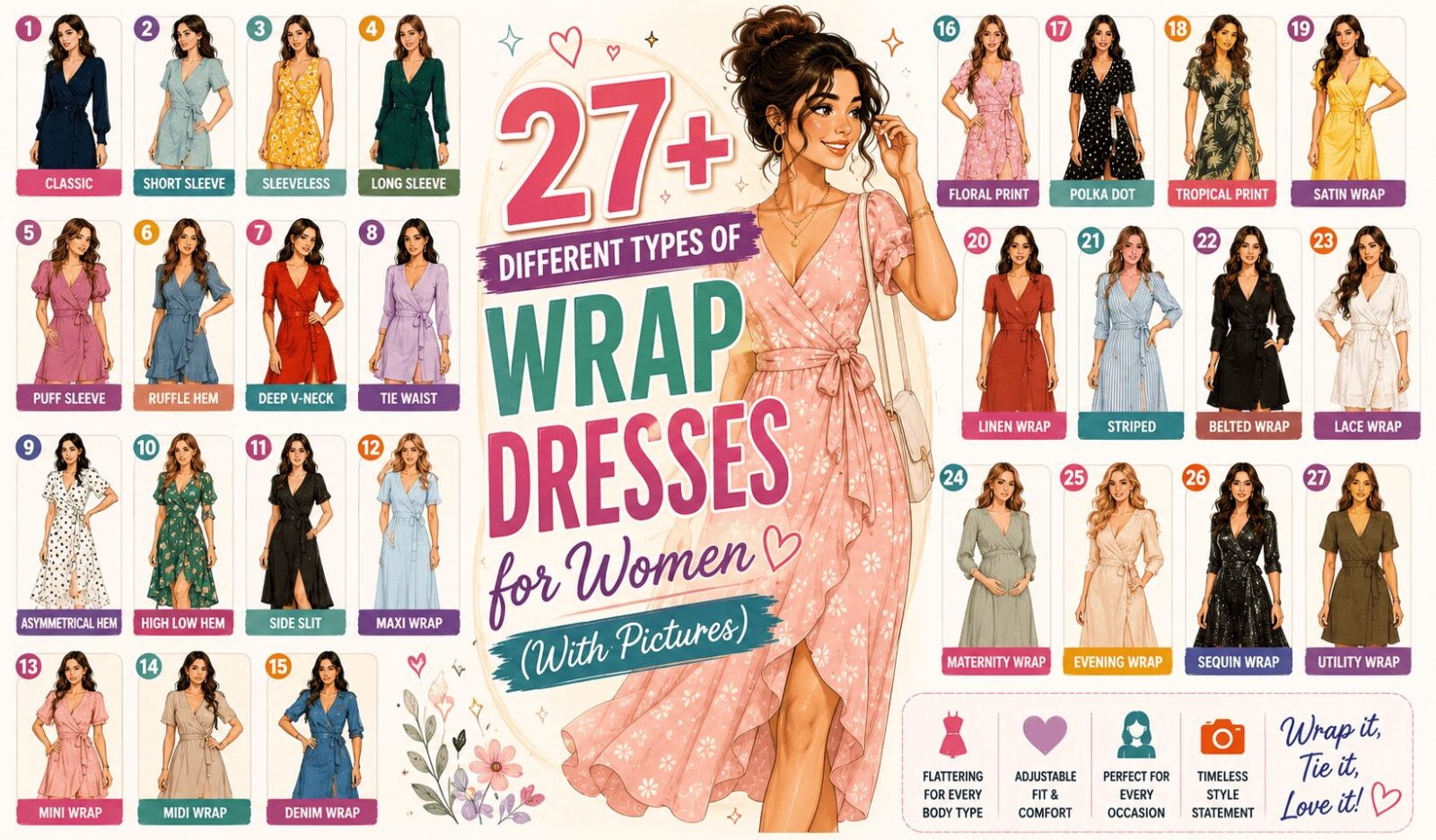
This guide categorizes all 27+ types across 5 classification systems. For every single entry:
-
Design
What it looks like
-
Season
When to wear it
-
Best For
Who it works for
Start here, explore everything, and discover our full visual wrap dress reference alongside it.
All 5 Categories at a Glance
A structured breakdown of the 27+ wrap dress types documented in this guide.
- 01
By Construction / Wrap Style
- 02
By Length / Hemline
- 03
By Sleeve Style
- 04
By Fabric / Material
- 05
By Occasion / Purpose
27+ Different Types of Wrap Dresses for Women
Category 1: By Construction / Wrap Style (#1–#8)
How the wrap is constructed — the foundational identity of each dress type
Construction is everything. Before a wrap dress has a hemline or a season or a print — it has a structural identity. Is it a true wrap? A faux wrap? A surplice? These 8 types represent the foundational what of the garment: how fabric panels are cut, how the crossover is achieved, and what structural logic holds the silhouette together across movement.
What works beautifully about this classification is that it cuts through the noise of marketing language. A "boho wrap dress" is a mood board. A true wrap in rayon jersey with a deep V and flutter sleeves? That's construction — and construction tells you precisely how the garment will fit, adjust, and behave when you actually put it on. Which is the information that matters. Browse our complete overview of dress silhouettes for broader context on how wraps fit within the wider dress universe.
- 01
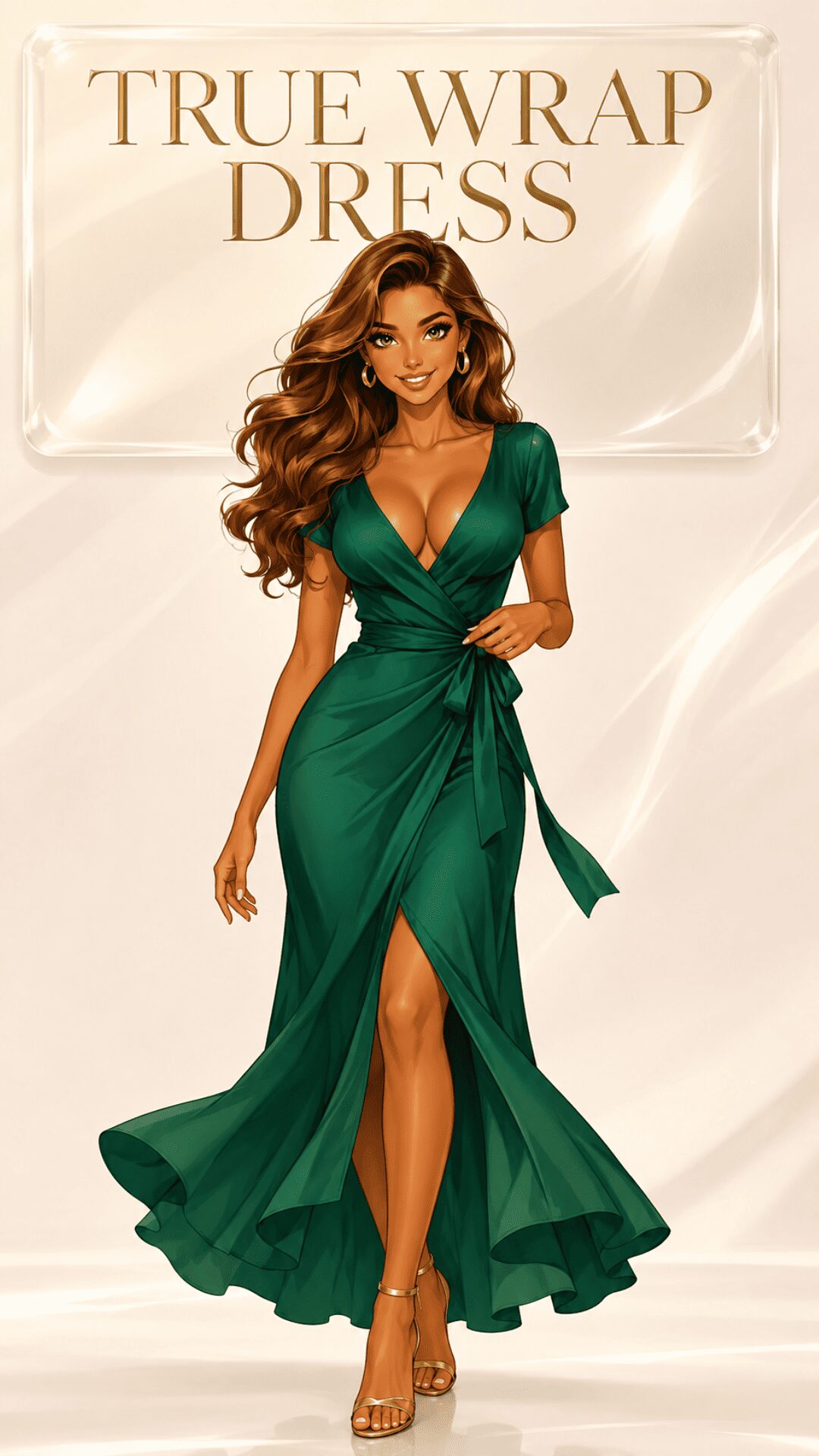
True Wrap Dress

The original. Two fabric panels cross at the front and tie at the natural waist — one panel wrapping completely around the body, the other securing it with an interior tie and exterior sash. DVF's 1974 jersey knit version established this as the definitive silhouette. The genius is in the tie: it self-adjusts to the wearer's actual waist, making sizing far more forgiving than any fixed-closure dress.
- 02
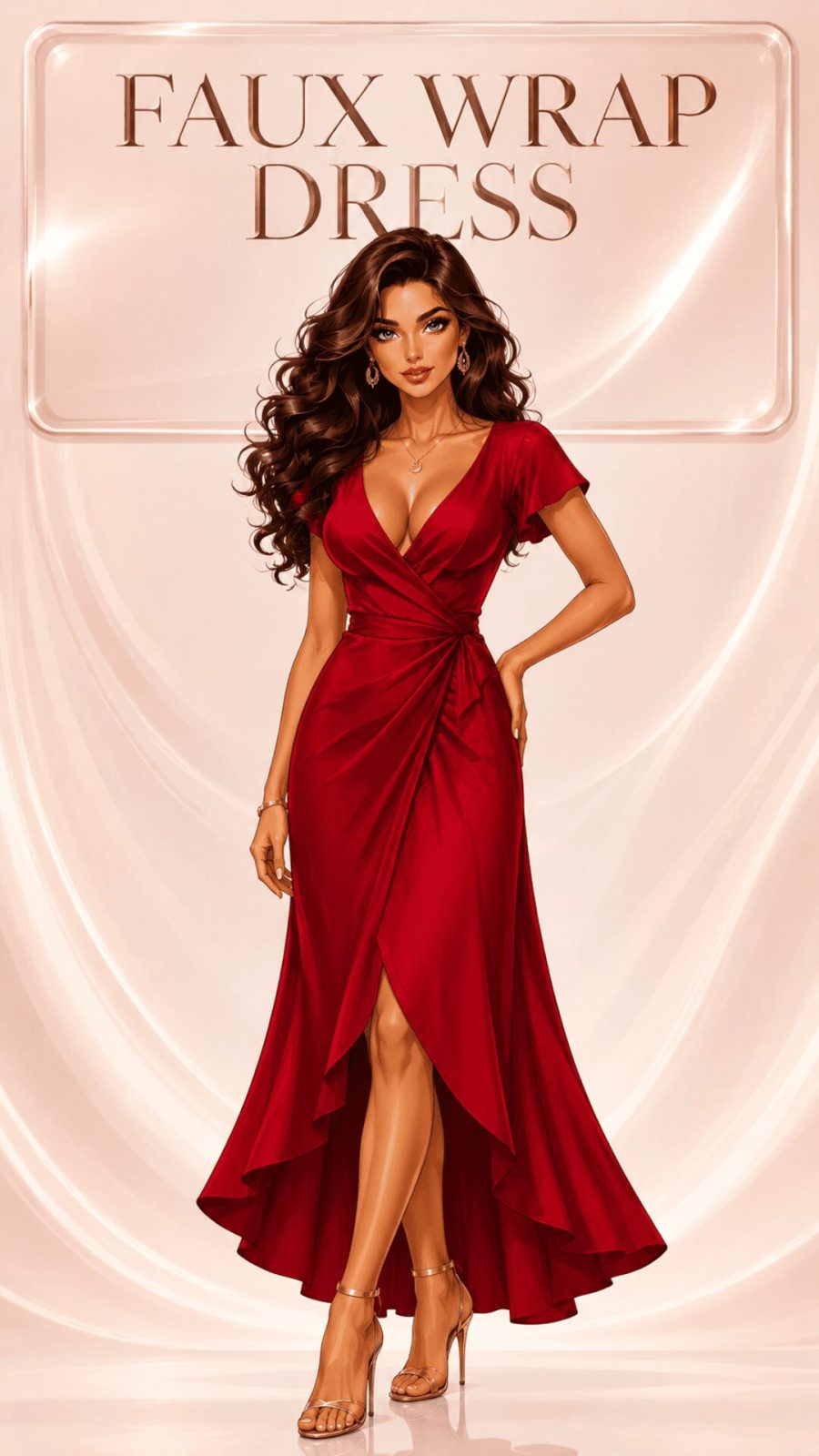
Faux Wrap Dress
Looks exactly like a true wrap but is fully sewn in place — the "tie" is decorative, not functional. The bodice is stitched closed at the crossover point, making it a pull-on garment with all the aesthetic appeal of a real wrap and none of the fiddle. What you lose is adjustability; what you gain is confidence that nothing is going to shift mid-meeting.
- 03
Surplice Wrap Dress
A surplice uses a deep diagonal crossover at the bodice — similar to a wrap, but the overlap is typically more angular, often more V-neck-forward, and the closure is usually at the side seam rather than the front. The construction creates a particularly clean, elongated neckline. Distinct from a true wrap in that there's no panel that goes all the way around — just a crossover and a side fastening.
- 04
Half Wrap Dress
The wrap detail appears in only one zone — typically just the skirt, or just the bodice — rather than as a unified top-to-hem silhouette. A half wrap skirt creates that iconic front panel overlap and draped asymmetry from the waist down, while the bodice functions as a standard fitted or relaxed top. Elegant shorthand for the full wrap effect, but with more structural security at the closure points.


- 05
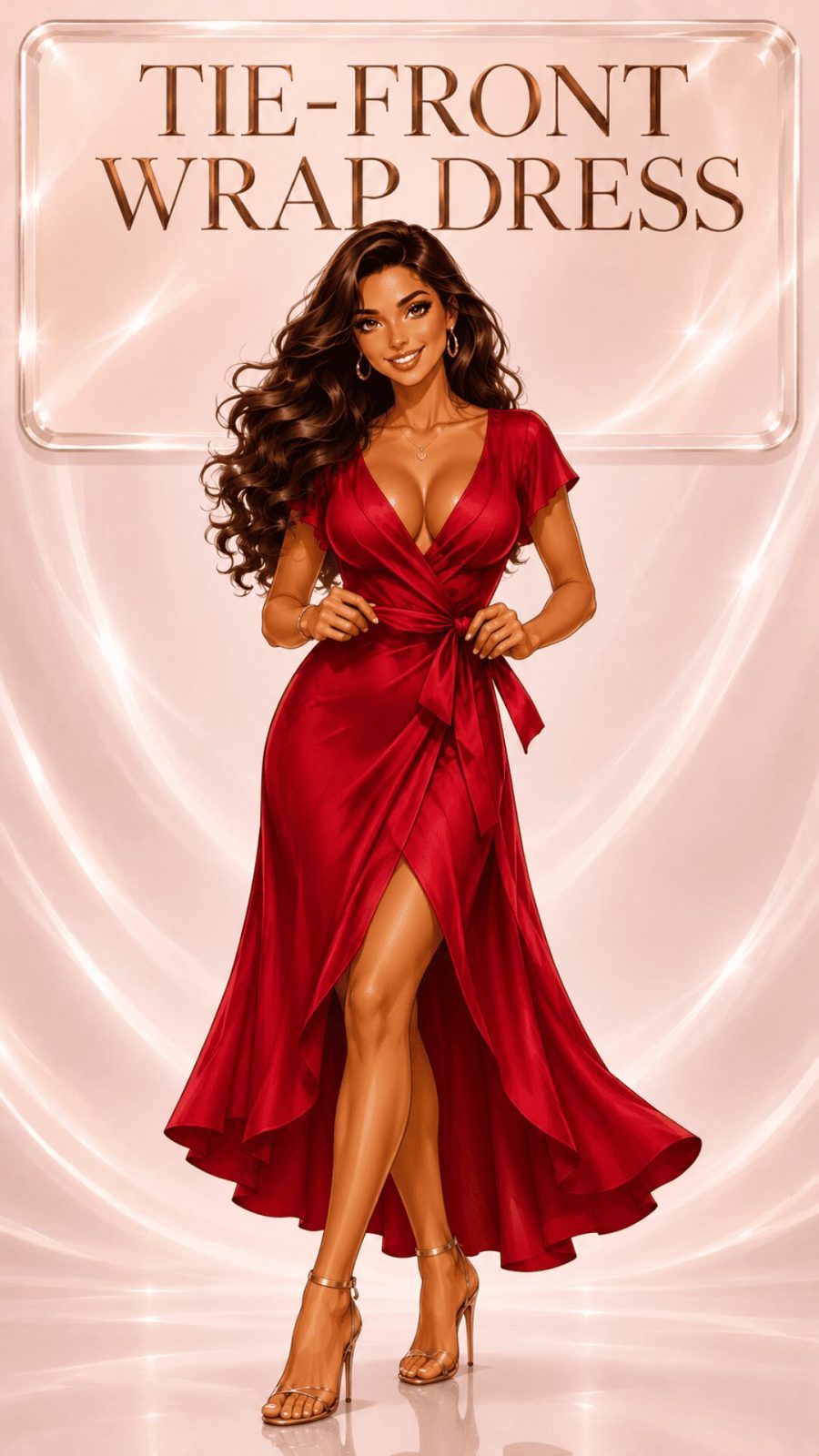
Tie-Front Wrap Dress
The ties are worn at the front — not wrapped around to the back — creating a visible bow or knot that sits at the waist as a deliberate style feature. This is subtly different from a standard true wrap, where the sash often ties at the side or back. The front knot draws the eye to the waist, functioning as both a closure mechanism and an accessory. Quite a brilliant double act, honestly.
- 06
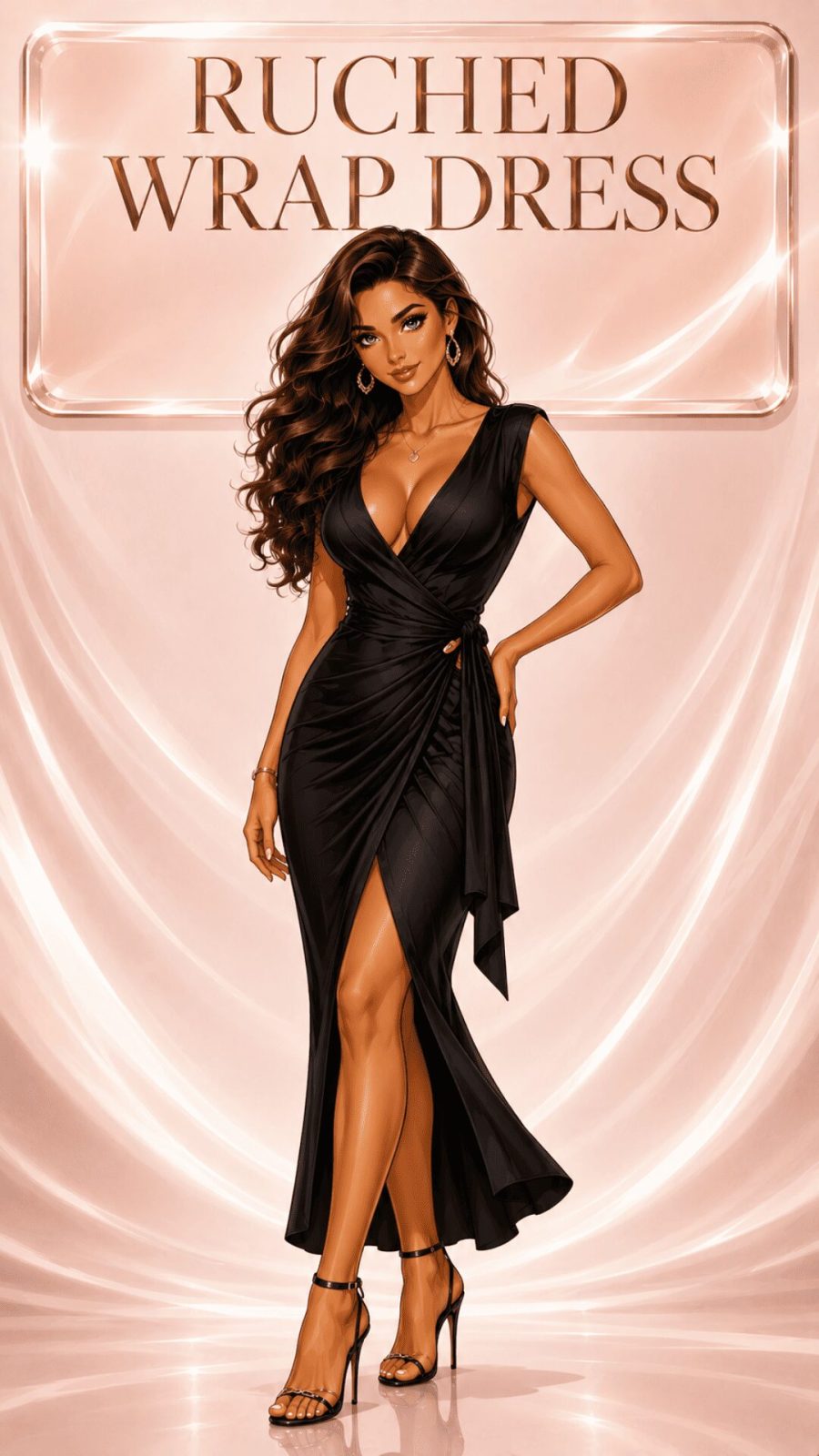
Ruched Wrap Dress
Gathered or ruched fabric at the waist or along the side seams adds textural dimension and a subtle draped effect without extra bulk. The ruching serves a practical purpose too — it accommodates fit variation and creates a gentle cinching at the waist that happens structurally, not just through the tie. Common in jersey and stretch fabrics where the gathering sits naturally without stiffening.
- 07
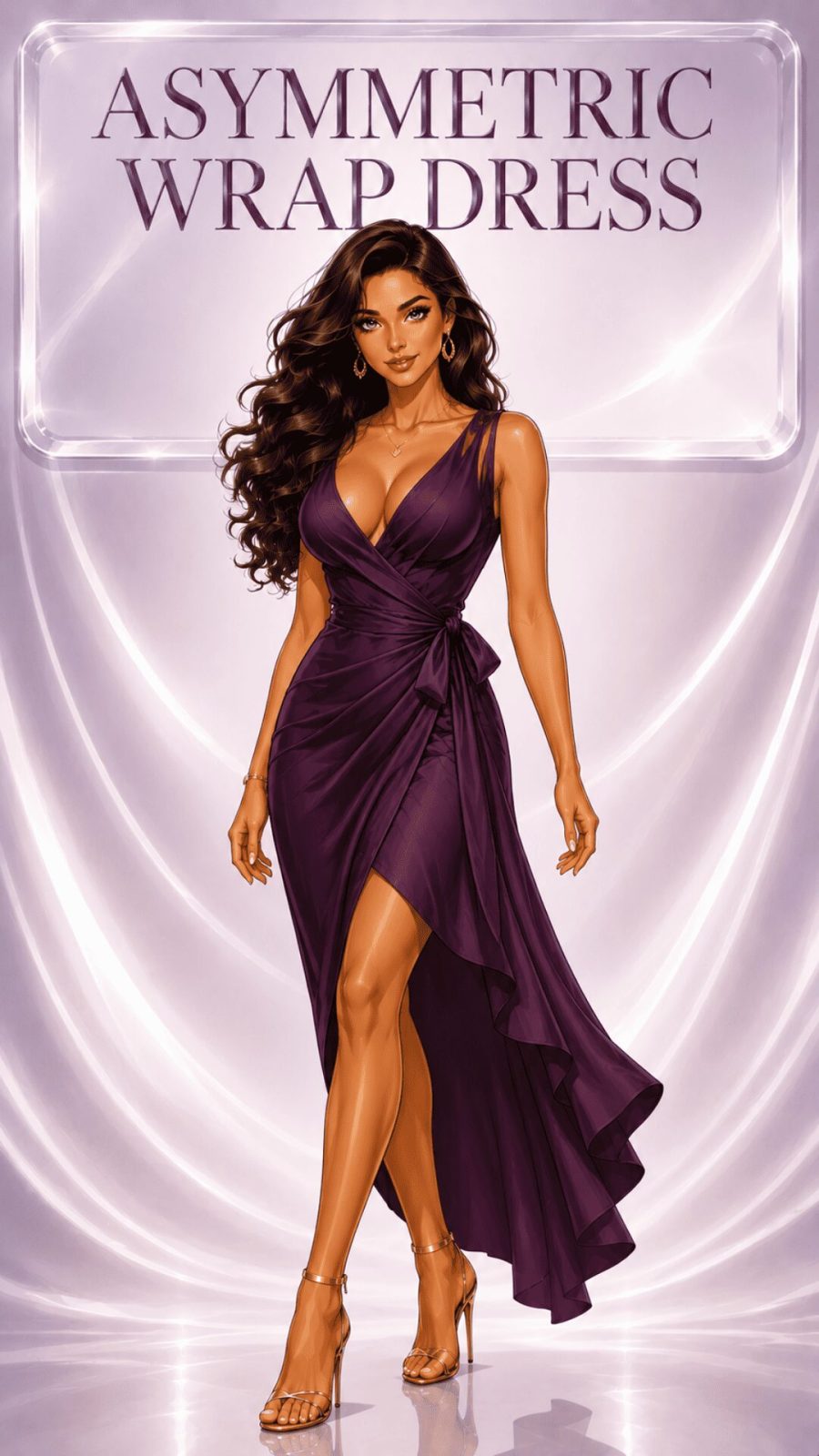
Asymmetric Wrap Dress
One front panel is deliberately longer, lower, or wider than the other — creating visual asymmetry as an intentional design choice rather than a fit accident. The hemline may also be uneven as a result. The asymmetric wrap creates dynamic visual energy; the eye follows the diagonal lines across the silhouette rather than reading it as static. Particularly effective in solid colours, where the construction logic reads clearly.
- 08
Belted Wrap Dress


A detachable or attached belt replaces or supplements the traditional sash — typically a wider, more structured waistband in leather, fabric, or statement material. What this does is add architectural weight to the waist point. A thin sash drapes; a belted closure cinches. The construction consequence: the dress reads stiffer, more structured, and closer to tailored territory than a standard fluid wrap.
The most common wrap dress confusion I see? People treat "true wrap" and "faux wrap" as equivalent. They're not — and it matters at the dressing room stage. A true wrap can be retied tighter or looser to hit your natural waist precisely. A faux wrap is cut at a fixed size relationship between bodice and waist. If you're between sizes, the true wrap often works; the faux wrap may not. Always check the tie before assuming.
Category 2: By Length / Hemline (#9–#13)
Where the hemline falls — the variable that most determines occasion and styling context
Hemline is perhaps the most powerful occasion signal a wrap dress sends before you've said a word. A mini wrap reads entirely differently from a floor-grazing maxi in the same fabric — despite sharing identical construction logic at the bodice. The length question intersects with everything: where you're going, how you're getting there, what shoes make sense, whether a slit is necessary for movement. For a deeper look at how hemline length interacts with styling decisions across all dress types, our guide to skirt and dress lengths covers the full spectrum.
- 09
Mini Wrap Dress

Hemline falls at the upper thigh — typically 4 to 8 inches above the knee. The mini wrap retains the crossover bodice and fluid movement of the silhouette while operating in a shorter register. Very much a summer and resort piece; the leg exposure and the airy construction make it a natural for warm-weather occasions. Pair with ankle boots in autumn for a seasonal pivot that actually works.
- 10
Knee-Length Wrap Dress
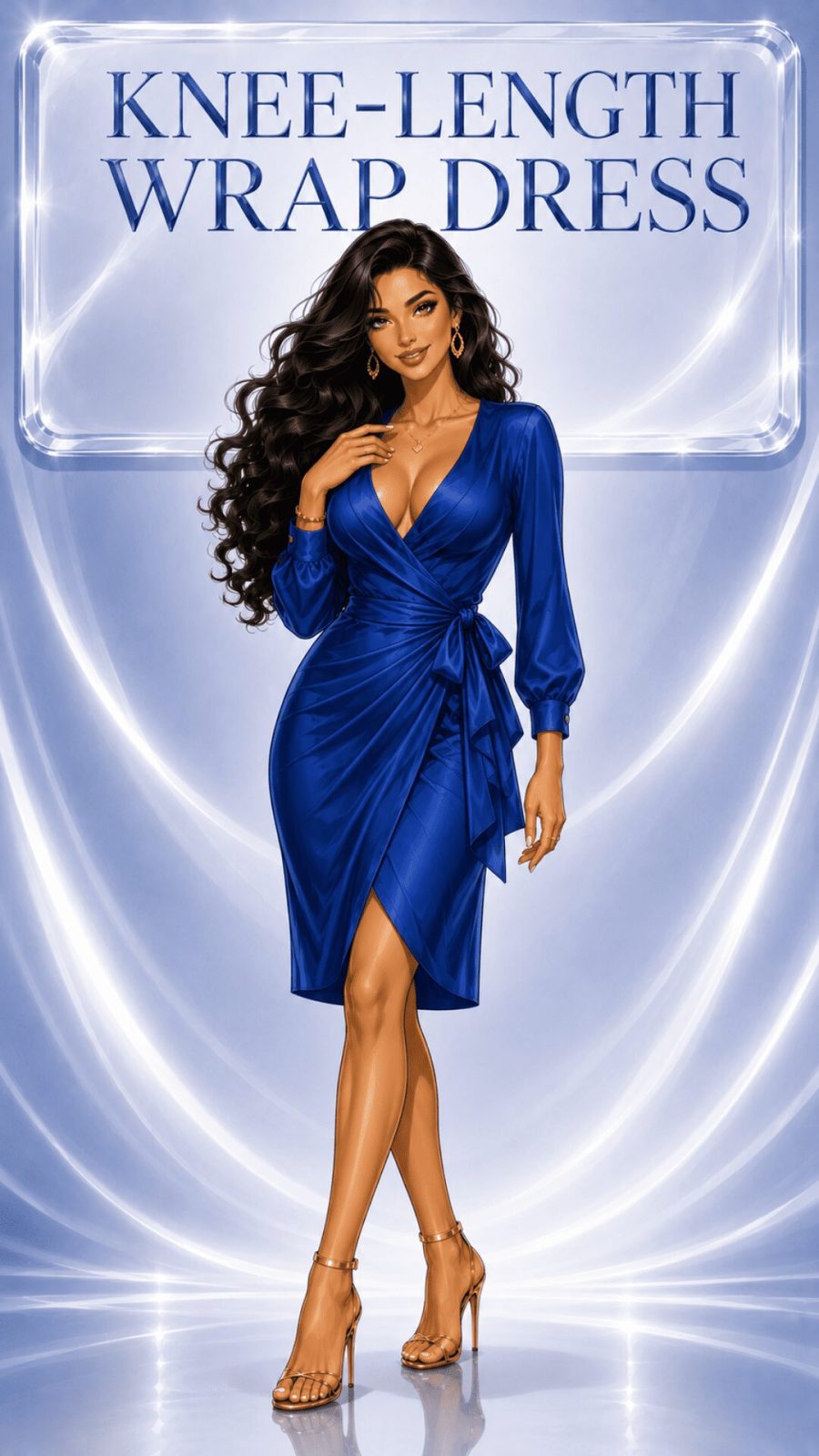
Falls at or just above or below the knee — the most universally appropriate hemline length across occasions. The knee-length wrap is, arguably, the default format for the silhouette and for good reason. It reads polished without tipping into formal territory, it works with heels or flats with equal ease, and it translates seamlessly from office to evening with only a shoe change. The original DVF jersey wrap operated at roughly this length.
- 11
Midi Wrap Dress

Falls between the knee and the ankle — typically mid-calf, though "midi" technically covers a range. The midi wrap has been one of the dominant dress lengths in fashion consistently since around 2016, according to ongoing trend analysis from sources including Business of Fashion. The construction note: the additional fabric weight at this length causes more movement in the skirt panels, which amplifies the wrap's characteristic fluidity. It moves — beautifully — when you walk.
- 12
Maxi Wrap Dress

Floor-grazing or ankle-length. The maxi wrap is — unambiguously — the most dramatic version of the silhouette. Enormous amounts of fabric move with the body, creating a visual impression that is somewhere between resort and formal, depending entirely on the fabric chosen. A maxi wrap in cotton voile reads like a beach coverup that got wildly elevated. The same silhouette in crepe satin is a fully valid evening option. Fabric choice determines everything here. See our dedicated guide to maxi dress styles for the full picture.
- 13
High-Low Wrap Dress
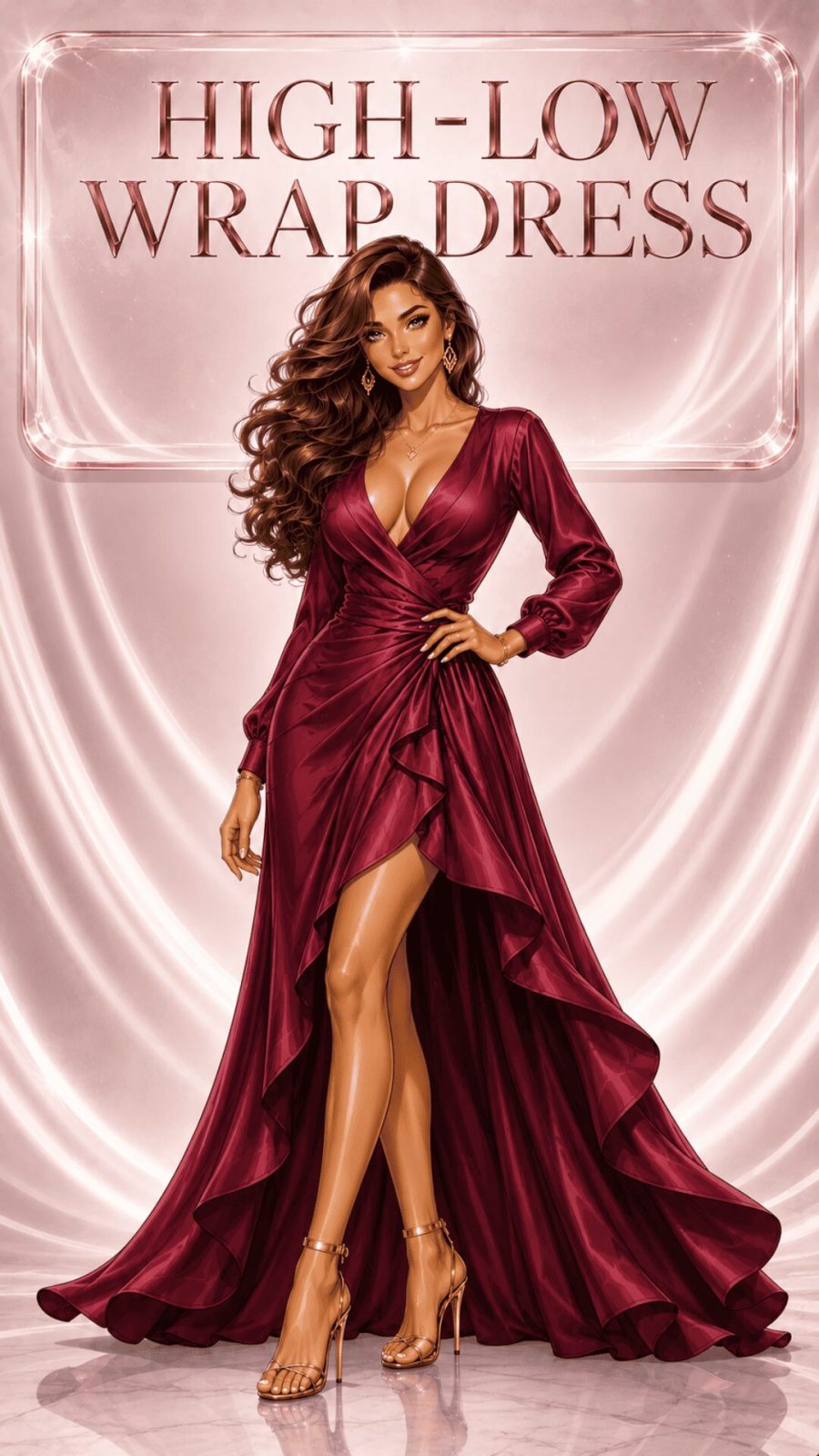
A deliberately uneven hemline — shorter at the front, longer at the back. The high-low hem creates visual drama through contrast and movement. When you walk, the back panel sweeps; the front stays relatively static. This construction is particularly effective in lightweight fabrics where the rear length adds train-like elegance without requiring a true floor-length dress. Practical note: sitting down is considerably easier in a high-low than a true maxi.
- 14
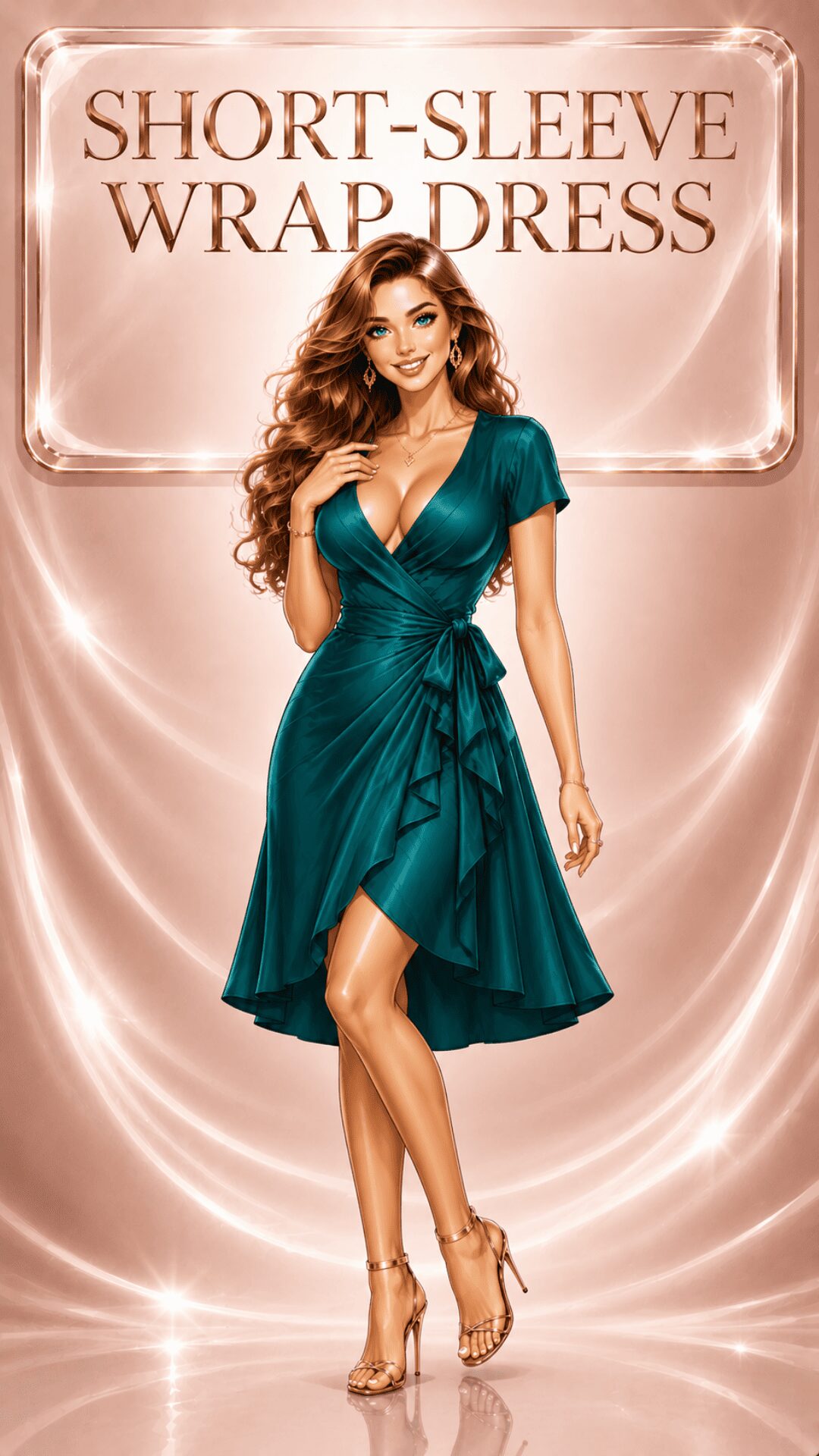
Short-Sleeve Wrap Dress
The wrap silhouette with short sleeves — typically set-in sleeves at the elbow or slightly above. This is the construction sweet spot for office and smart-casual contexts: the sleeve adds coverage that makes the dress appropriate in professional environments without adding bulk or weight. Short sleeves in a cotton blend make this the most practical summer office option in the wrap category.
Category 3: By Sleeve Style (#14–#18)
How the sleeve shapes occasion register, coverage, and seasonal range
Sleeve choice — more than hemline — determines what a wrap dress can do year-round. Sleeveless in July; long-sleeve in October. That transition alone transforms what is effectively the same garment into two completely different seasonal pieces. In years of wardrobe editing, this is the variable most women underutilize when they say they "don't know how to make wrap dresses work in winter." The answer is almost always: longer sleeve, heavier fabric, and a knee-high boot. For more on sleeve construction logic, our complete guide to sleeve styles is the companion resource here.
- 15
Sleeveless Wrap Dress

No sleeves — just the crossover bodice and an exposed shoulder. The sleeveless wrap is the purest, most summery expression of the silhouette. Nothing interrupts the shoulder-to-waist line. It layers seamlessly under a blazer, denim jacket, or cardigan when the temperature drops — making it effectively a year-round option despite its warm-weather primary register.
- 16
Flutter Sleeve Wrap Dress
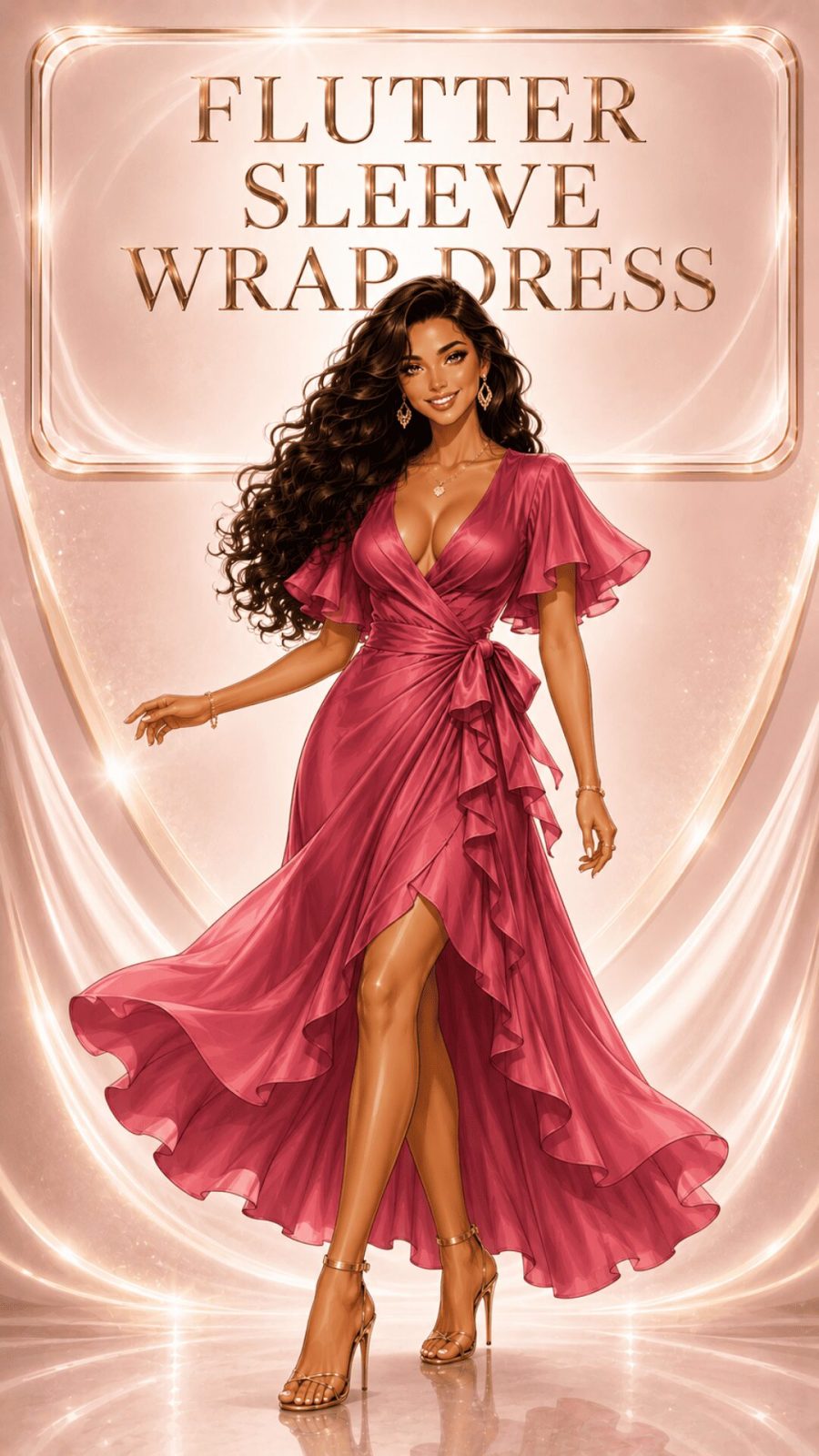
Short, softly draped sleeve panels that move freely with the arm rather than being set into a full sleeve construction. Flutter sleeves on a wrap dress create an effect that is — genuinely — greater than the sum of its parts: the flutter at the shoulder combined with the fluid skirt and crossover bodice means the entire garment moves when you do. Best executed in chiffon, georgette, or lightweight crepe where the flutter actually flutters rather than drooping.
- 17
Long-Sleeve Wrap Dress
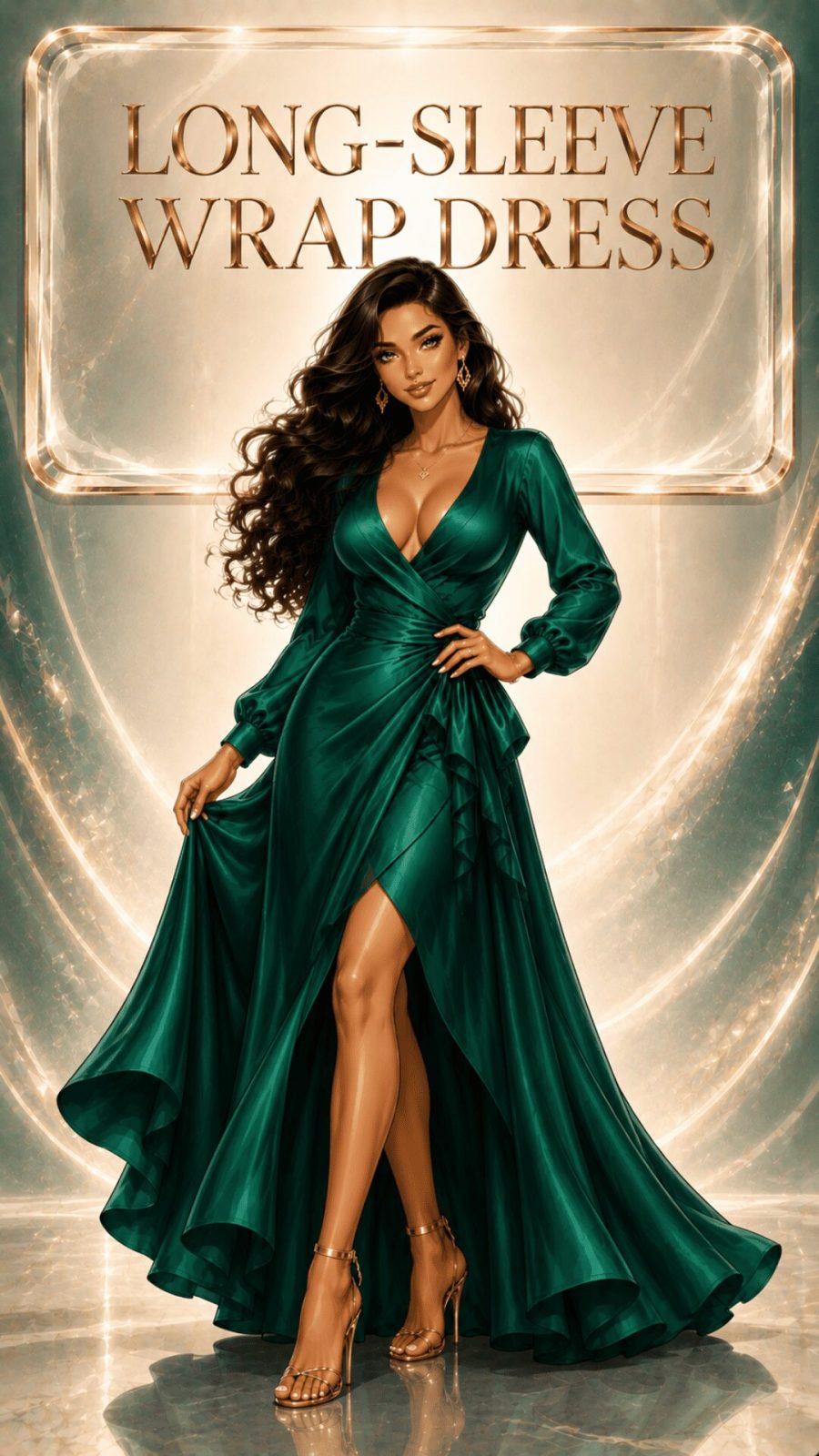
Full sleeves to the wrist. The long-sleeve wrap dress unlocks the silhouette for autumn and winter in a way no other modification can quite replicate — the coverage and the warmth extend the construct far beyond its summery origins. In heavier woven crepes or ponte fabrics, a long-sleeve wrap dress becomes a serious competitor to the tailored suit for office authority. It's the version of the wrap that most people forget exists — and that's a wardrobe gap worth closing.
- 18
Bell Sleeve Wrap Dress
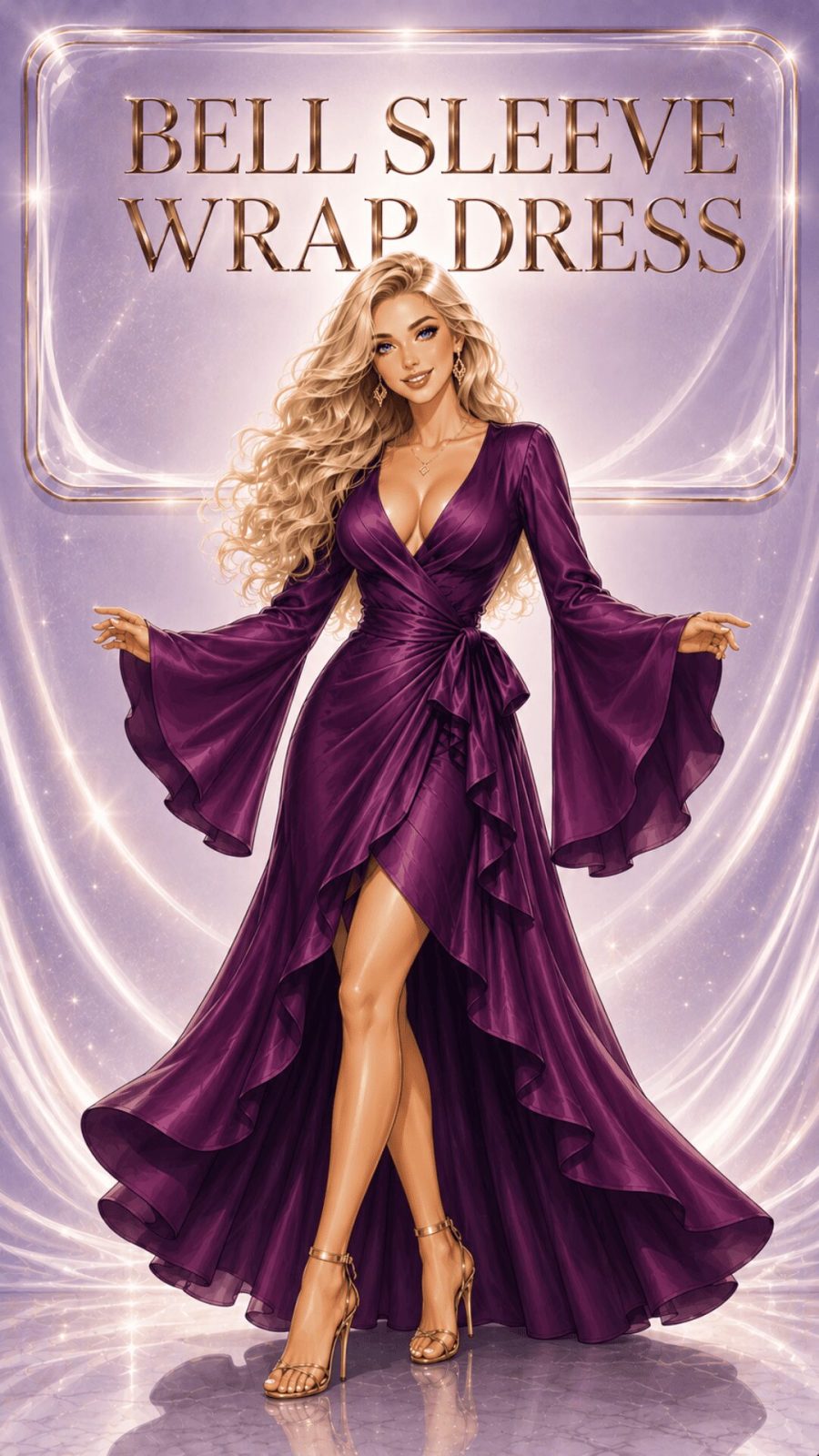
Fitted at the upper arm, flaring dramatically toward the wrist in a bell shape. The bell sleeve wrap dress sits at the intersection of bohemian and romantic — simultaneously vintage-inspired and thoroughly contemporary when done in modern fabrics. The flare at the wrist echoes the movement of the skirt, creating a visual harmony throughout the silhouette that is quite difficult to achieve with any other sleeve construction.
"Wrap dresses flatter every body type."
Wrap dresses are among the most adjustable constructions in women's fashion — which does make them work across a wide range of proportions. But "flatters every body" is an overclaim. The deep V neckline creates a lengthened visual line that many find useful, and the adjustable tie accommodates waist variation. However, the front panel overlap and diagonal lines read differently depending on proportions, and some find the gap between panels a fit challenge at the bust. The wrap silhouette is genuinely versatile — but thoughtful fabric and fit choices matter.
Category 4: By Fabric / Material (#19–#23)
How fabric choice determines drape, occasion register, and care requirements
Fabric — in a wrap dress specifically — is not a secondary consideration. It's arguably the primary design decision. The exact same wrap construction in chiffon versus ponte creates two completely different garments: one that flows and moves, one that holds structure and reads as tailored. This is the variable that determines season, occasion register, care requirements, and how the garment will age. Understanding fabric types in depth is the most underrated styling skill there is, and our comprehensive fabric guide covers the full spectrum.
- 19
Jersey Wrap Dress

The original fabric for the silhouette — matte, stretchy, clingy but forgiving, machine washable. DVF's first wrap dress was jersey. It remains the most practical version of the construction for daily wear: it packs without creasing, returns to shape after sitting, and handles with zero fuss. The stretch accommodates the torso adjustment at the wrap point naturally, without pulling or gaping. What works beautifully here is that the jersey does the work the construction asks of it — quietly and reliably.
- 20
Chiffon Wrap Dress

Sheer, lightweight woven fabric with a slightly grainy texture and exceptional drape. Chiffon wrap dresses move with the body in a way no other fabric replicates — the panels float, the skirt billows, the whole silhouette becomes something closer to sculpture than clothing. Typically lined underneath for modesty and body. The combination of wrap construction and chiffon is one of fashion's genuinely reliable formulas for a dress that photographs beautifully.
- 21
Satin / Silk Wrap Dress
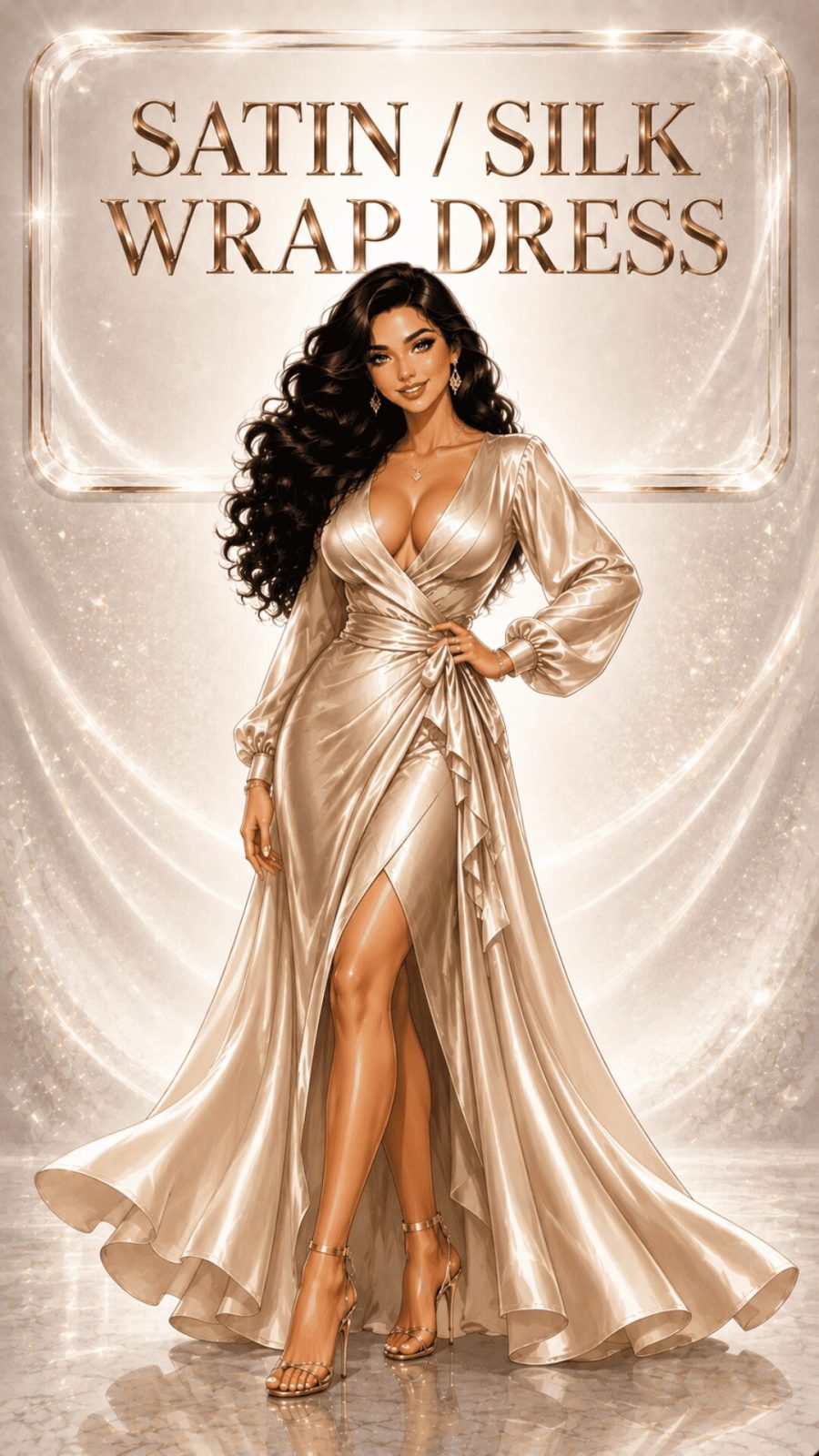
Lustrous, smooth-faced fabric with a liquid drape and a subtle sheen. Silk wrap dresses are the elevated version of the silhouette — the construction that transitions the wrap entirely from daywear into evening and occasion territory. The weight of silk or satin hangs cleanly, the crossover lies flat, and the fabric responds to light in ways that synthetic weaves cannot replicate. Dry clean only in most cases; handle accordingly. For context on silk fabric varieties, that resource covers the full spectrum.
- 22
Printed Cotton Wrap Dress
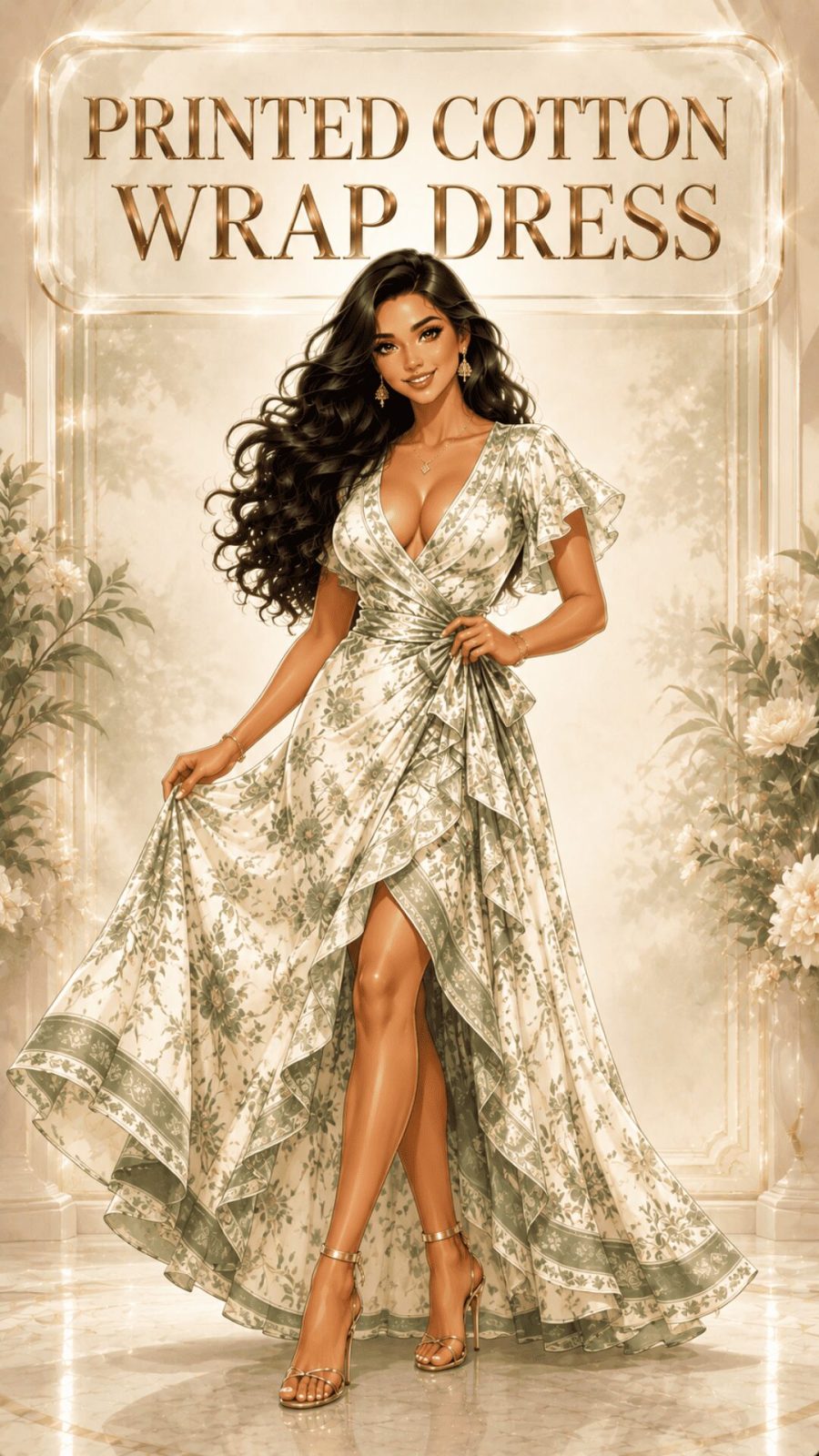
Woven cotton — often voile, lawn, or poplin — with printed pattern. The printed cotton wrap is the summery, accessible, everyday version of the silhouette. It washes easily, breathes well in heat, and the print does the styling work so the wearer doesn't have to. Floral cotton wraps, in particular, have been a staple of summer dressing across multiple decades precisely because the combination of construction and fabric delivers maximum ease with minimal effort. Explore more ideas in our cotton fabric guide.
- 23
Ponte Wrap Dress

Ponte — a double-knit fabric with moderate stretch and excellent structure — is the fabric that makes a wrap dress work for winter. Heavy enough to hold shape without lining, warm enough for office environments, and stretchy enough to still function with the wrap's adjustable tie construction. Ponte wrap dresses read as tailored. Not flowy, not feminine-in-the-dreamy-sense — more structured, authoritative, and seasonally capable. This is a cold-month essential that most wardrobes simply don't have enough of.
- 24
Casual Day Wrap Dress
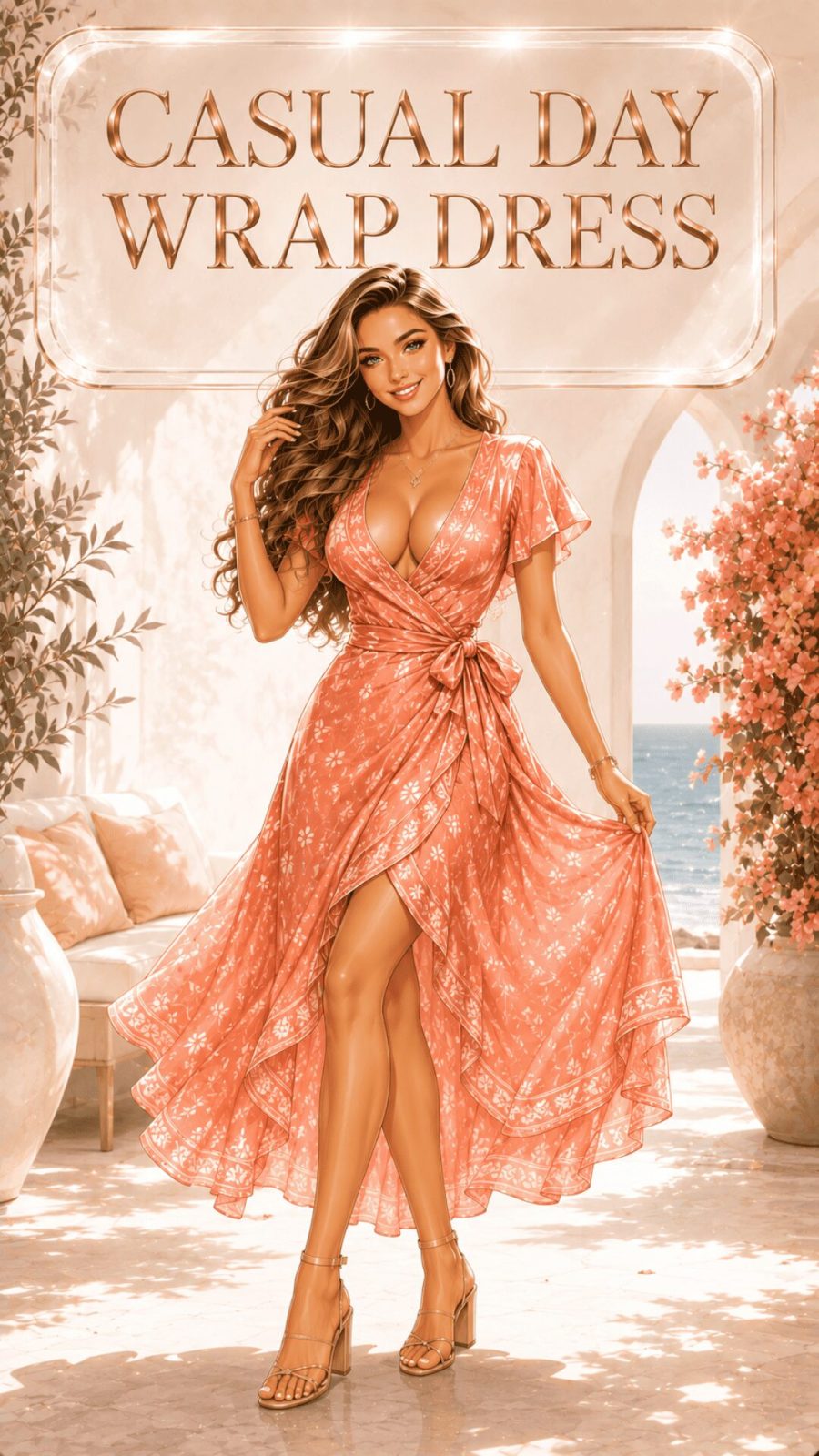
Designed for everyday ease — typically in jersey, cotton, or a soft printed fabric, at knee or midi length, and styled with flat sandals or trainers. The casual wrap dress is the zero-effort version of the silhouette: you put it on and it looks assembled without any effort having been applied. It's the dress you reach for when you don't want to think — and that makes it one of the hardest-working pieces in the wardrobe. Pair with flat sandals or clean-sole trainers for the effortless register this style deserves.
Category 5: By Occasion / Purpose (#24–#29)
How the wrap dress performs across different contexts — from the boardroom to the beach
Perhaps more than any other dress silhouette, the wrap dress proves itself across the widest range of occasions — but not automatically. The same construction logic applies differently depending on fabric, length, and sleeve choice. A casual day wrap in printed cotton at knee length is not a wedding guest option; a maxi wrap in chiffon with flutter sleeves absolutely is. The occasion determines which version of the silhouette you reach for — and understanding that distinction is what separates a well-dressed woman from an overdressed or underdressed one. Our wedding guest outfit guide and office outfit guide are useful companion resources for specific occasion styling.
- 25
Office / Work Wrap Dress

Constructed for professional environments: typically in ponte, structured crepe, or matte jersey; knee-length or midi; with short or three-quarter sleeves. The office wrap navigates the fine line between feminine and formal without tipping either way into inappropriateness or stiffness. What makes it office-appropriate isn't a single design feature — it's the combination of structured fabric, moderate neckline depth, and appropriate hemline working together. Add a structured bag and closed-toe heels; you're ready for the boardroom.
- 26
Wedding Guest Wrap Dress
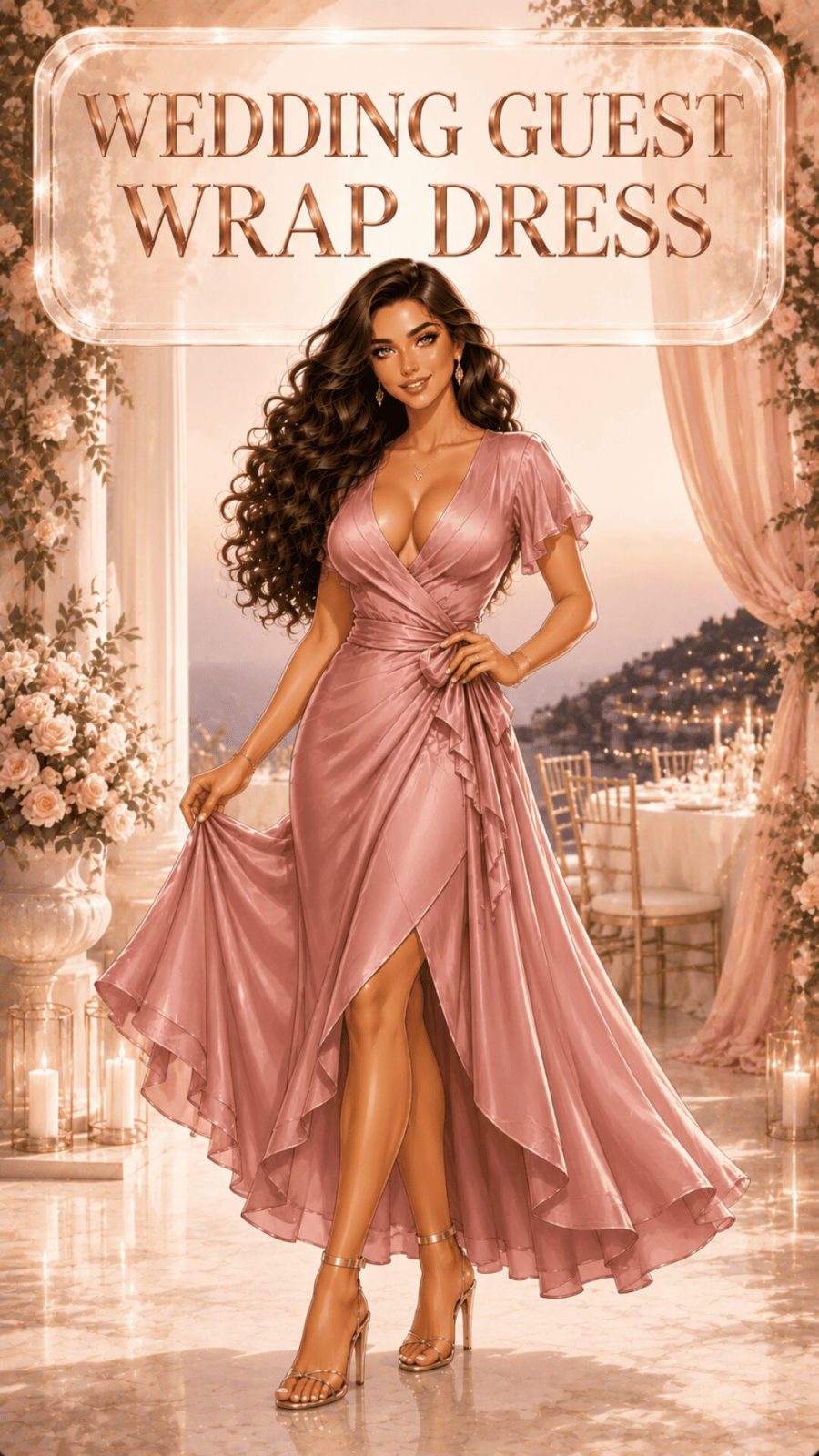
The wedding guest context demands a specific calibration: polished enough for a formal occasion, not so formal you upstage formal guests, and comfortable enough for a long day of sitting, standing, dancing, and eating. The wrap dress handles this brilliantly — especially in midi length, with flutter sleeves or a three-quarter sleeve, in a printed floral or a solid jewel tone. The adjustable tie means it remains comfortable through dinner. A chiffon or crepe version in a non-white, non-ivory colour is effectively a guaranteed safe choice for most wedding dress codes.
- 27
Beach / Resort Wrap Dress
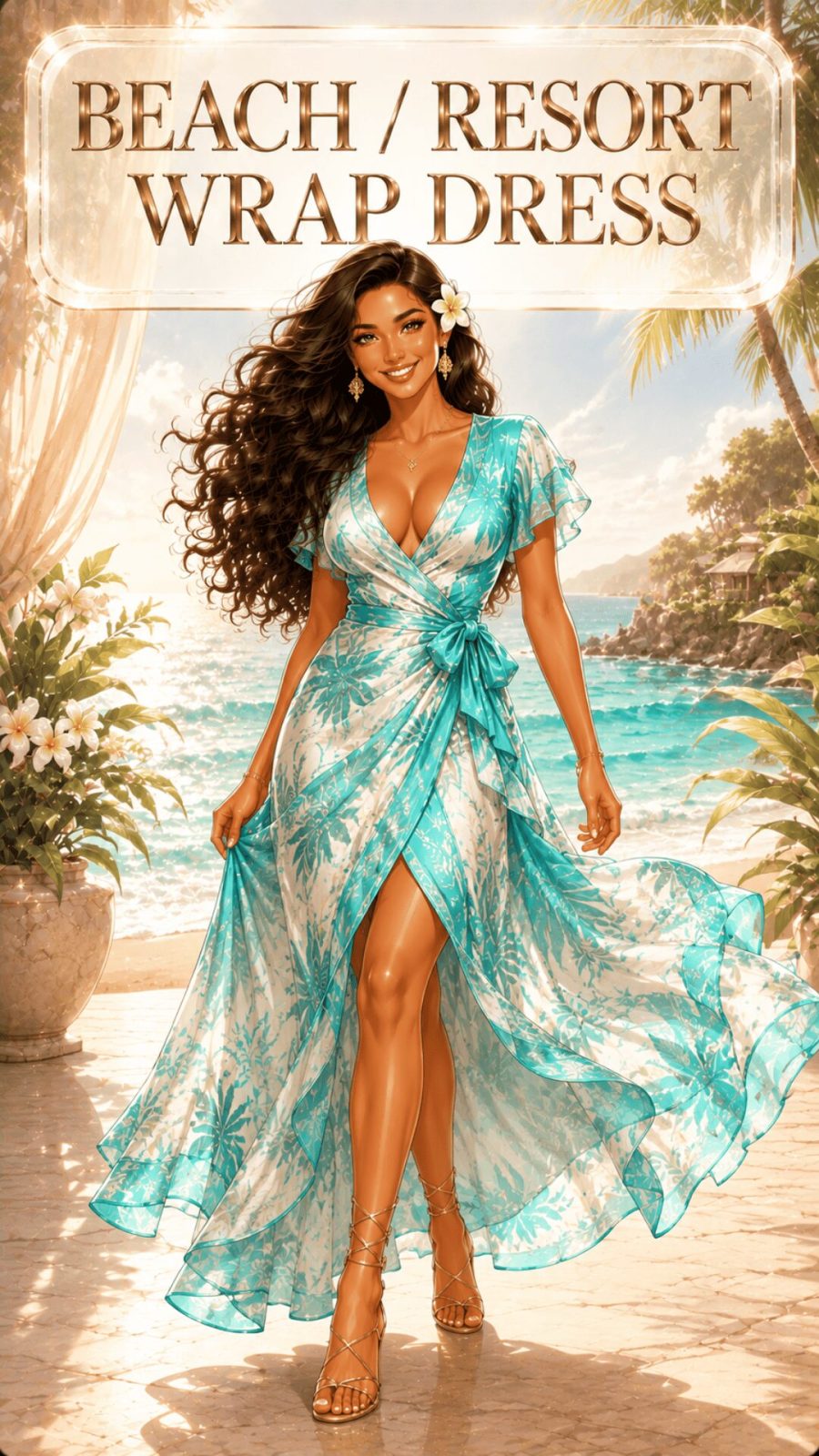
Lightweight cotton, linen, or voile in bright prints or tropical patterns; typically at maxi or midi length; worn over a swimsuit or as a standalone beach-to-dinner option. The beach wrap occupies a specific territory between coverup and actual dress — it reads like an outfit but transitions seamlessly into a poolside situation. The construction's open panels make it naturally breezy, which is not a small consideration when you're trying to survive a July afternoon at an Italian resort. For more ideas in this territory, our resort wear guide covers the full range.
- 28
Evening / Cocktail Wrap Dress

Elevated fabric choices — satin, velvet, or luxe crepe — at a midi or maxi length, often with embellished details, a draped or structured silhouette, and accessories that push the look toward evening territory. The cocktail wrap trades the silhouette's characteristic ease for a degree of occasion-readiness. It photographs beautifully — the wrap's diagonal lines and fluid skirt create visual interest that flatters in images as much as in person. Style with a structured heel and minimal jewellery; let the fabric carry the moment.
- 29
Travel Wrap Dress

The travel wrap dress is engineered for transit: jersey or crepe fabric that packs without creasing, returns to shape after a long haul, adjusts to fit across a day of varying activity levels (airport, tour, dinner), and functions across a range of temperatures. It's the single dress you pack that does multiple jobs. The wrap's adjustable tie accommodates the inevitable post-flight bloating without requiring a size change. Not dramatic. Just practical, in the most reliable way. Browse our vacation outfit guide and airport outfit ideas for how to build around this piece.
In real-world styling work, the travel wrap dress is the single most undervalued wardrobe asset I come across. Most women will pack three separate outfits to cover what one jersey wrap dress in the right colour handles entirely. Airport. Dinner. A museum day. The construction adjusts to the occasion through accessory shifts alone — a tote and sandals versus a clutch and heels. That flexibility is worth more than three separate dresses you'll never wear again.
Frequently Asked Questions — Types of Wrap Dresses for Women
What is the difference between a true wrap dress and a faux wrap dress?
A true wrap dress has fabric panels that actually wrap around the body and tie to secure — one panel goes all the way around while an interior and exterior tie hold everything in place. The fit is genuinely adjustable. A faux wrap dress mimics this appearance but is fully stitched in place at the crossover point, functioning as a pull-on garment with a decorative sash or bow. The key difference is functional: a true wrap adjusts to fit; a faux wrap is cut at a fixed size. If you're between sizes, the true wrap often accommodates better.
What is the most versatile type of wrap dress?
The knee-length or midi true wrap dress in jersey is arguably the most versatile construction — it packs without creasing, adjusts to fit variation through the tie, transitions from office to evening through shoe and accessory changes, and works across most seasons in the right weight. The adjustable waist also means it functions well during periods of body change, including post-travel or post-meal situations. Close second: a sleeveless faux wrap midi in a neutral crepe, which layers seamlessly under blazers for winter office wear.
Can you wear a wrap dress to a formal event?
Absolutely — with the right fabric and length choices. A maxi wrap dress in satin, silk crepe, or chiffon at floor or ankle length in a jewel tone or elegant print is entirely appropriate for black-tie-adjacent occasions, evening galas, and formal weddings as a guest. What makes the wrap "formal" isn't the construction type — it's the fabric quality, the length, and the accompanying accessories. A jersey wrap at midi length in a casual print, by contrast, is not a formal option regardless of how you style it.
What shoes work best with a wrap dress?
Wrap dresses pair with a wider range of footwear than almost any other dress silhouette — which is part of their appeal. For casual and beach contexts: flat sandals, espadrilles, or clean white trainers. For office and smart-casual: block-heeled pumps, strappy kitten heels, or loafers. For evening: strappy heeled sandals or pointed-toe stilettos. For autumn and winter: ankle boots or knee-high boots under a midi or maxi length. The key is matching the footwear formality register to the fabric and occasion register of the dress itself.
How do you prevent a wrap dress from gaping at the chest?
Gaping at the bust is the most common fit issue with true wrap dresses, particularly for those with a larger bust. Several solutions address this directly: attaching a small snap or hook at the interior crossover point secures the panels without altering the exterior appearance; safety pinning is a temporary alternative. For faux wraps, the construction is already stitched so gaping is less likely, but the fixed sizing may mean the bodice pulls or sits differently. Choosing a true wrap with an interior tie that adjusts independently from the exterior sash also helps — it allows the bodice tension to be set separately from the waist tie.
Are wrap dresses suitable for petite frames?
Wrap dresses tend to work well for petite proportions — the V-neckline creates a lengthened vertical line, the waist tie emphasises the natural waist without overwhelming a smaller frame, and the fluid skirt doesn't add the kind of volume that can overpower shorter heights. Petite-specific considerations: hemline matters significantly at this height. A standard midi on a petite frame may land awkwardly. Look for petite-cut versions that sit at knee length or slightly below, or hem to preference. Mini wraps and knee-length versions often work most proportionately for petite frames. Our guide to petite clothing covers this topic in depth.
What fabrics are best for a wrap dress in summer?
Linen, cotton voile, chiffon, georgette, and lightweight jersey are the strongest summer wrap dress fabrics. Linen breathes exceptionally well in high heat but creases significantly; jersey wraps without creasing and remains comfortable in heat. Chiffon and georgette create the most movement and are the most photographically pleasing options, though they require lining underneath for opacity. Avoid ponte and thick crepe in summer — these fabrics are engineered for cold-weather wear and will be uncomfortable in sustained heat.
How should I accessorise a printed wrap dress?
A printed wrap dress already has a strong visual identity, so the principle is to support rather than compete. For floral or botanical prints: pick up one colour from the print in your accessory choice — a belt, bag, or shoe in that tone ties the look together without adding visual complexity. For geometric or abstract prints: minimalist gold or silver jewellery and a neutral bag let the print lead. One deliberate accessory choice is sufficient for most printed wraps; stacking multiple statement pieces creates confusion rather than intentionality. The wrap construction itself is an accessory — the tie, when tied neatly, functions as a focal point.
Conclusion: Why the Wrap Dress Endures
Twenty-nine types. Five classification systems. Construction identity, hemline context, sleeve variable, fabric personality, and occasion register for every single entry.
What this guide does, ultimately, is hand you a vocabulary. And vocabulary in fashion is surprisingly practical — not elitist. Knowing the difference between a surplice and a true wrap, between a jersey and a ponte construction, between a midi and a maxi occasion register: these distinctions let you shop more precisely, dress more intentionally, and get more genuine use out of the pieces you invest in. The difference between "I want a wrap dress for a garden wedding" and being able to search for "chiffon flutter sleeve midi wrap in a jewel tone" is enormous. One ends in vague browsing; the other ends in the right dress.
The wrap dress has survived every trend cycle since 1974 not because it's fashionable — though it often is — but because the construction itself is intelligent. Adjustable. Forgiving. Comfortable. Versatile across occasions in ways that require only accessory shifts, not outfit overhauls. That's a design achievement worth understanding, not just wearing. Explore more of our dress guides in the complete dresses overview, and discover how the wrap silhouette relates to midi dress styles and mini dress styles across the broader category.
- 29 wrap dress types documented across 5 classification systems — construction, length, sleeve, fabric, and occasion — each with design identity, seasonal context, and best-use purpose.
- True wrap vs. faux wrap is the most important distinction to understand when buying — the true wrap adjusts; the faux wrap is fixed-size. Between-size shoppers should generally seek the true construction.
- Fabric choice determines everything in this silhouette — the same wrap construction in jersey reads as casual daywear; in satin it reads as evening occasion. Fabric is the variable that changes the dress's register, not the silhouette itself.
- The midi wrap has been one of fashion's most consistently cited dress lengths since at least 2016, according to industry trend reporting — making a quality midi wrap dress a relatively safe investment piece.
- Sleeve length is the winter activation switch for the wrap silhouette — a long-sleeve ponte wrap dress extends the construction fully into cold-season territory. Most women overlook this version entirely.
- The adjustable tie is the construction feature that makes wrap dresses genuinely versatile for varying body shapes — it accommodates waist variation where fixed-closure dresses cannot.
- Body-neutral approach: the wrap's diagonal lines and V-neckline create visual effects that many find useful — but "flatters every body" is an overclaim. Construction, fabric, and fit work together; no single garment type is universally flattering in all contexts.
- The travel wrap in jersey is the single most functionally underutilised wardrobe asset in this category — it replaces multiple outfits through accessory variation, packs without creasing, and adjusts through a long day of varying activity levels.
- Wrap dresses connect to the broader dress vocabulary — understanding them in context with A-line silhouettes, slip dress styles, and shirt dress constructions gives you a complete fashion vocabulary for the category.
Sources & Further Reading
- Vogue UK — Diane von Furstenberg Wrap Dress — Historical reference and visual archive of the original 1974 wrap dress construction
- Business of Fashion — The Rise of the Midi Dress — Trend analysis and market reporting on the midi dress's sustained dominance since 2016
- The Metropolitan Museum of Art — Heilbrunn Timeline — Historical garment construction context and fashion evolution documentation
- University of Fashion — Garment construction terminology and sleeve typology documentation
- Vogue Fashion Glossary — Standard industry definitions for garment types, silhouettes, and fabric terminology
This guide was compiled through analysis of fashion history records, industry glossaries, garment construction references, and trend reporting. All classification decisions are editorial. Last reviewed: May 2026.

Leave a Reply