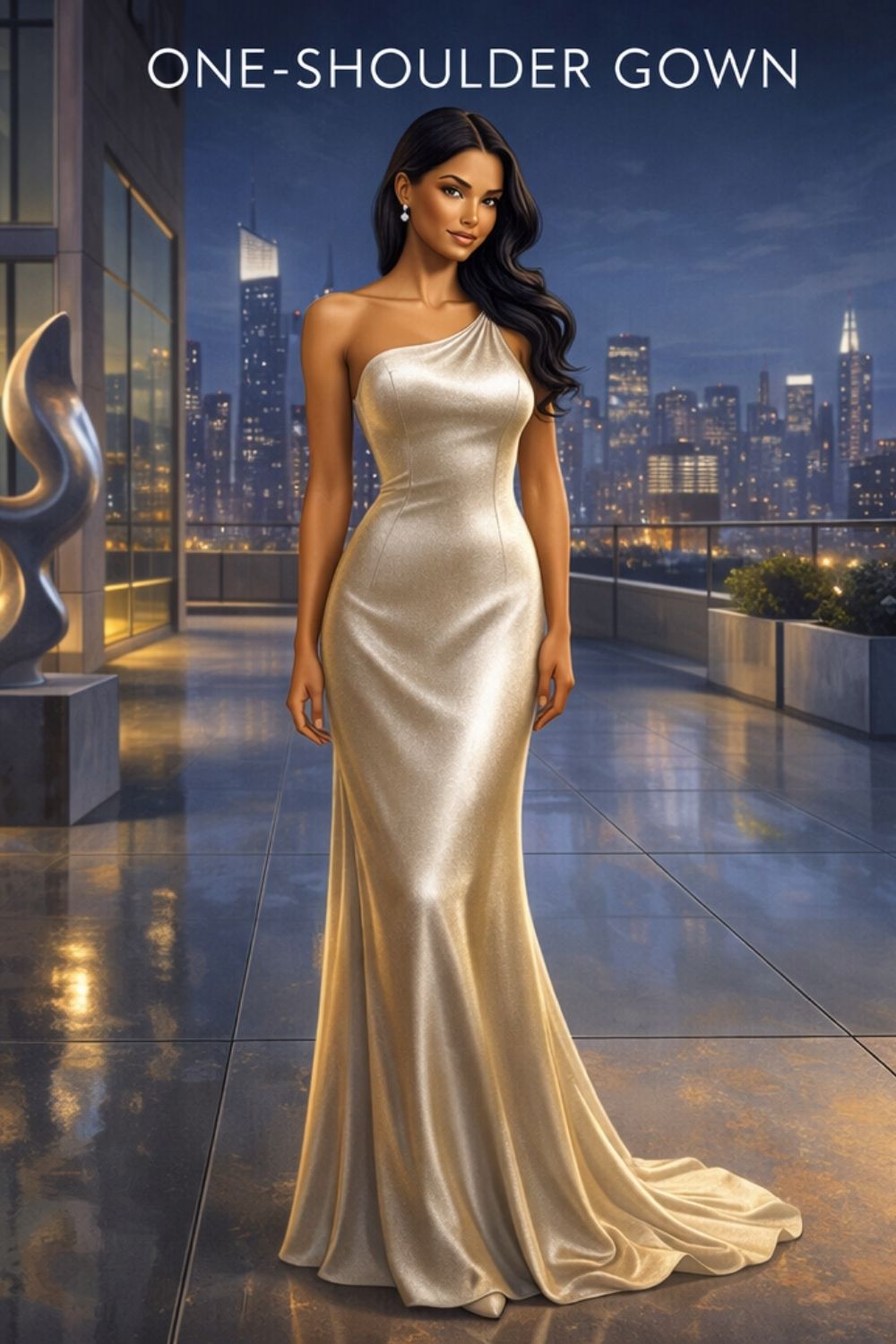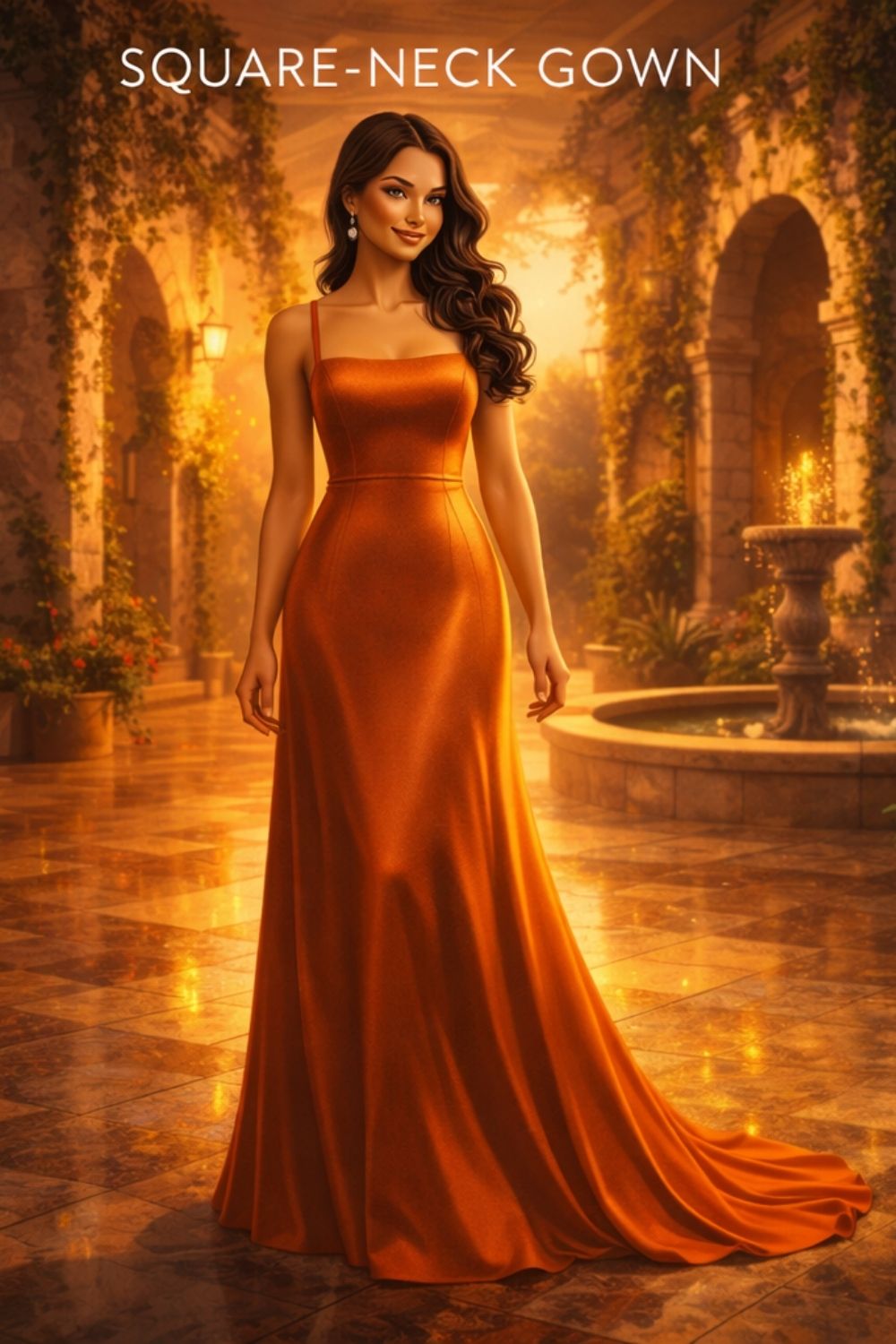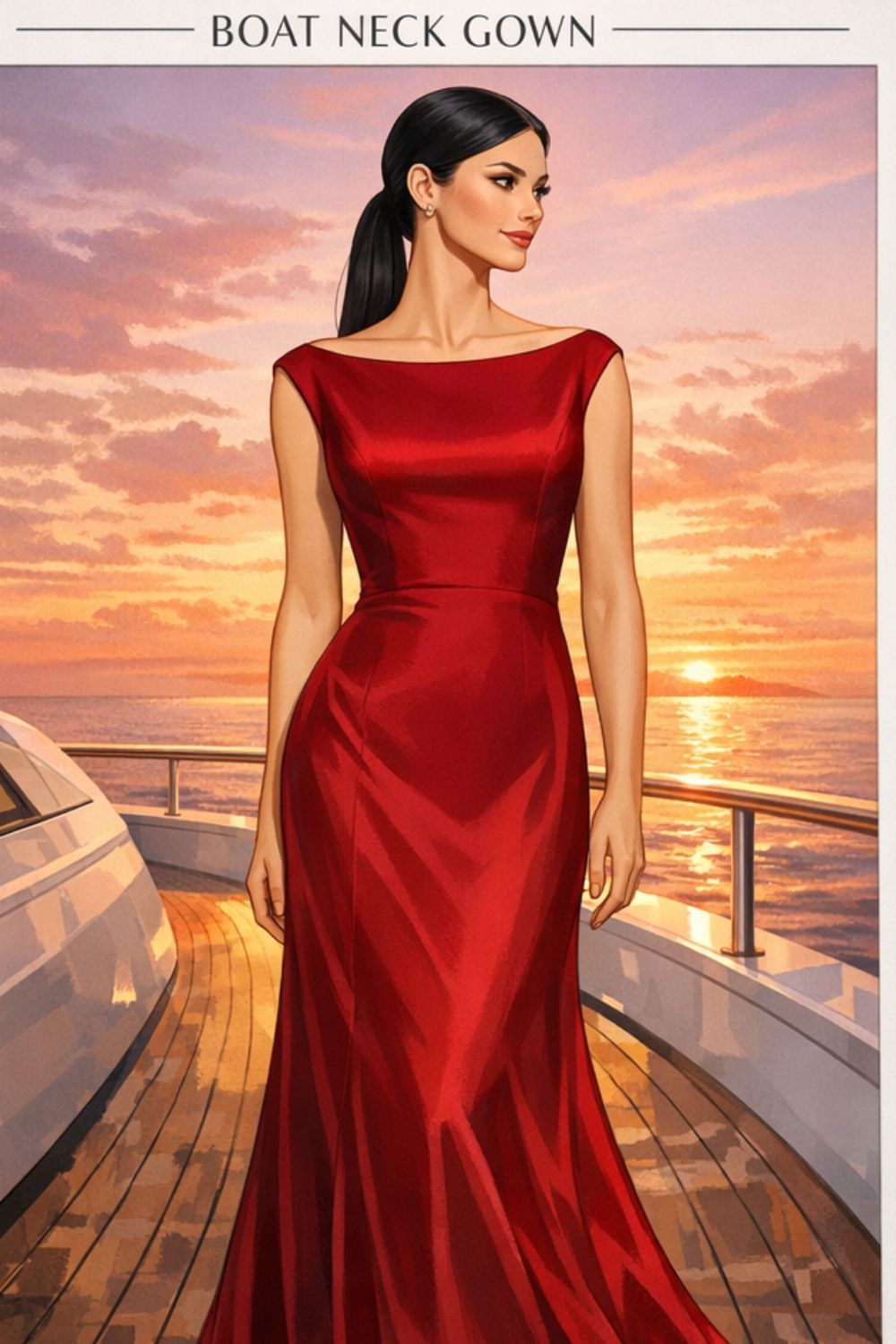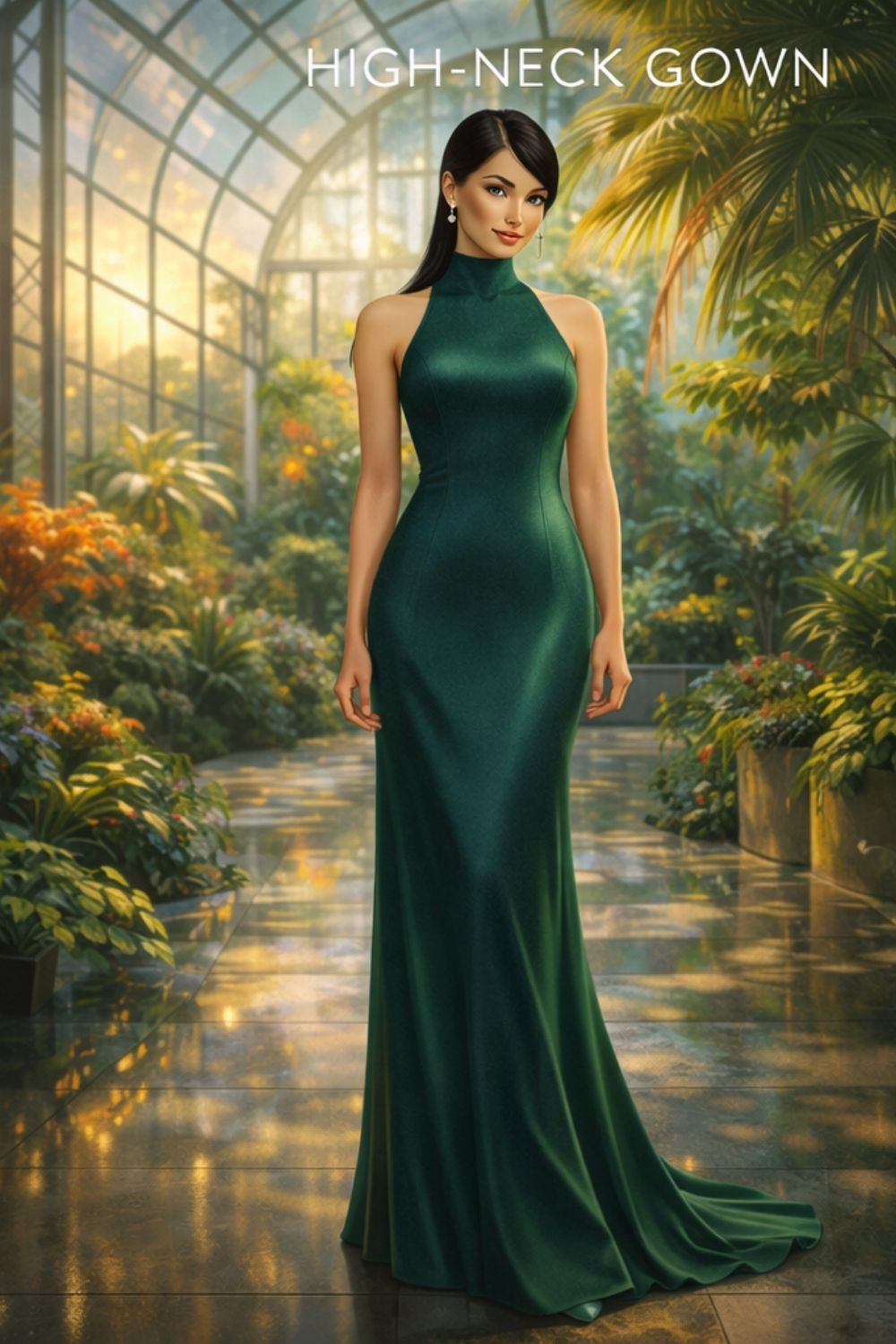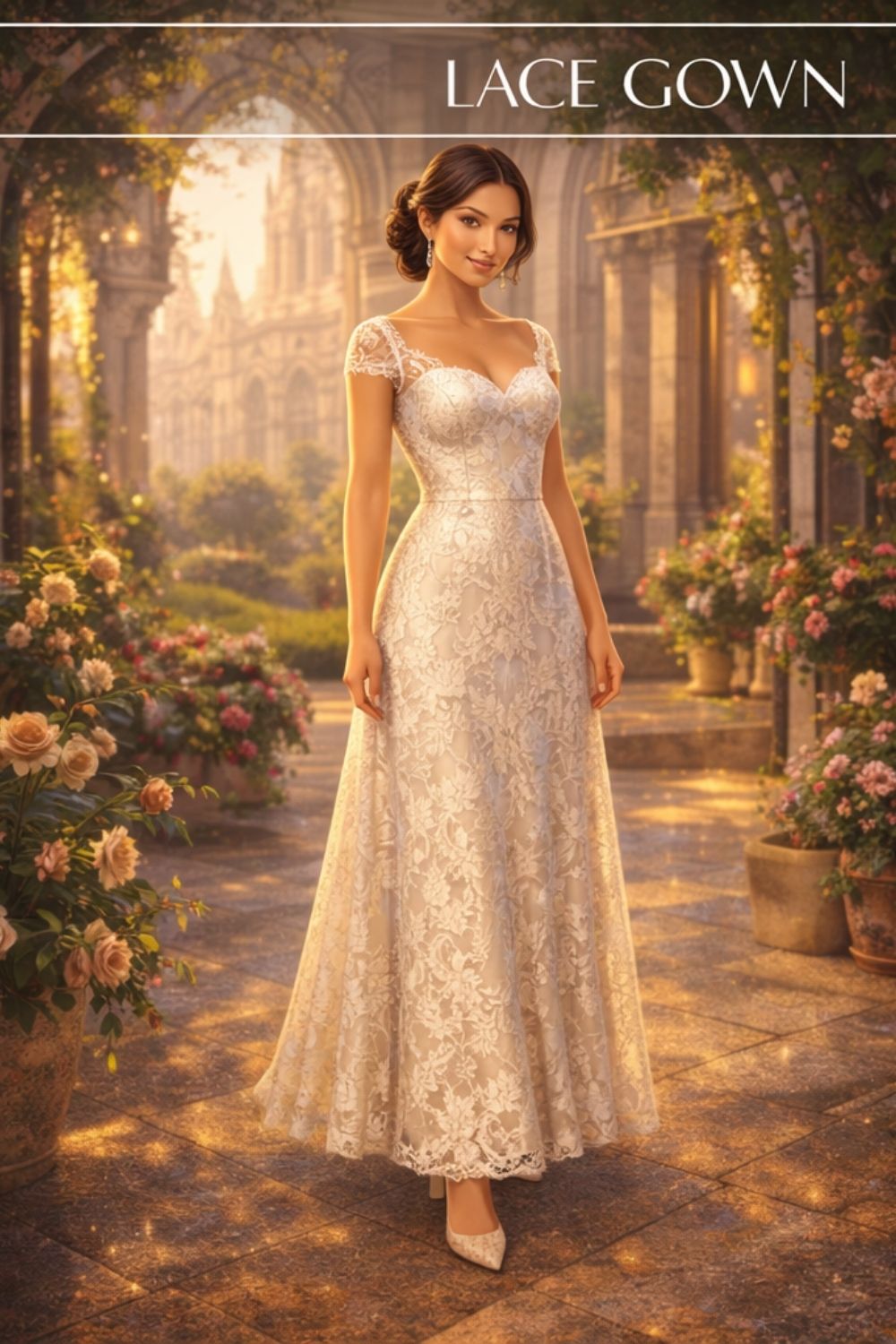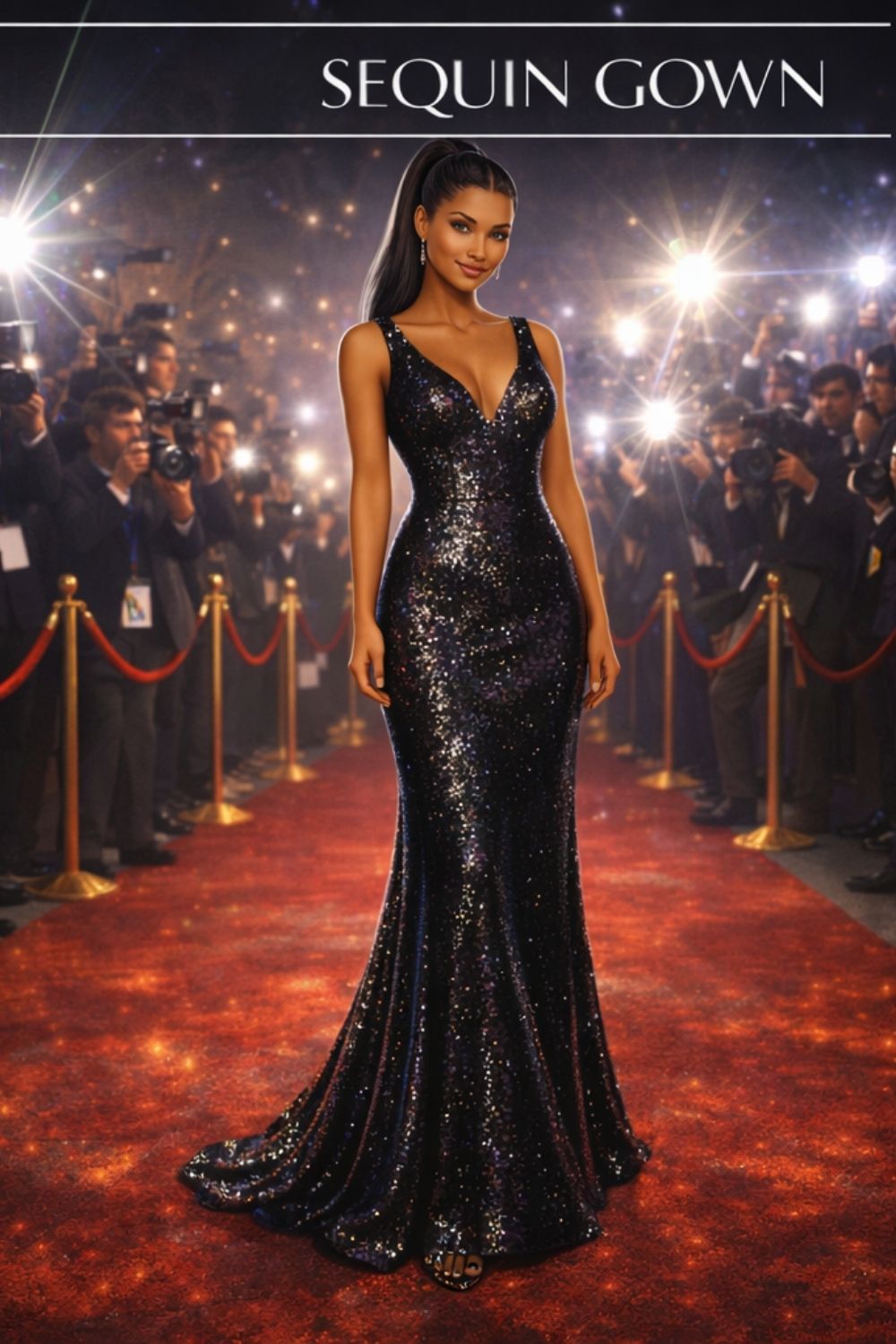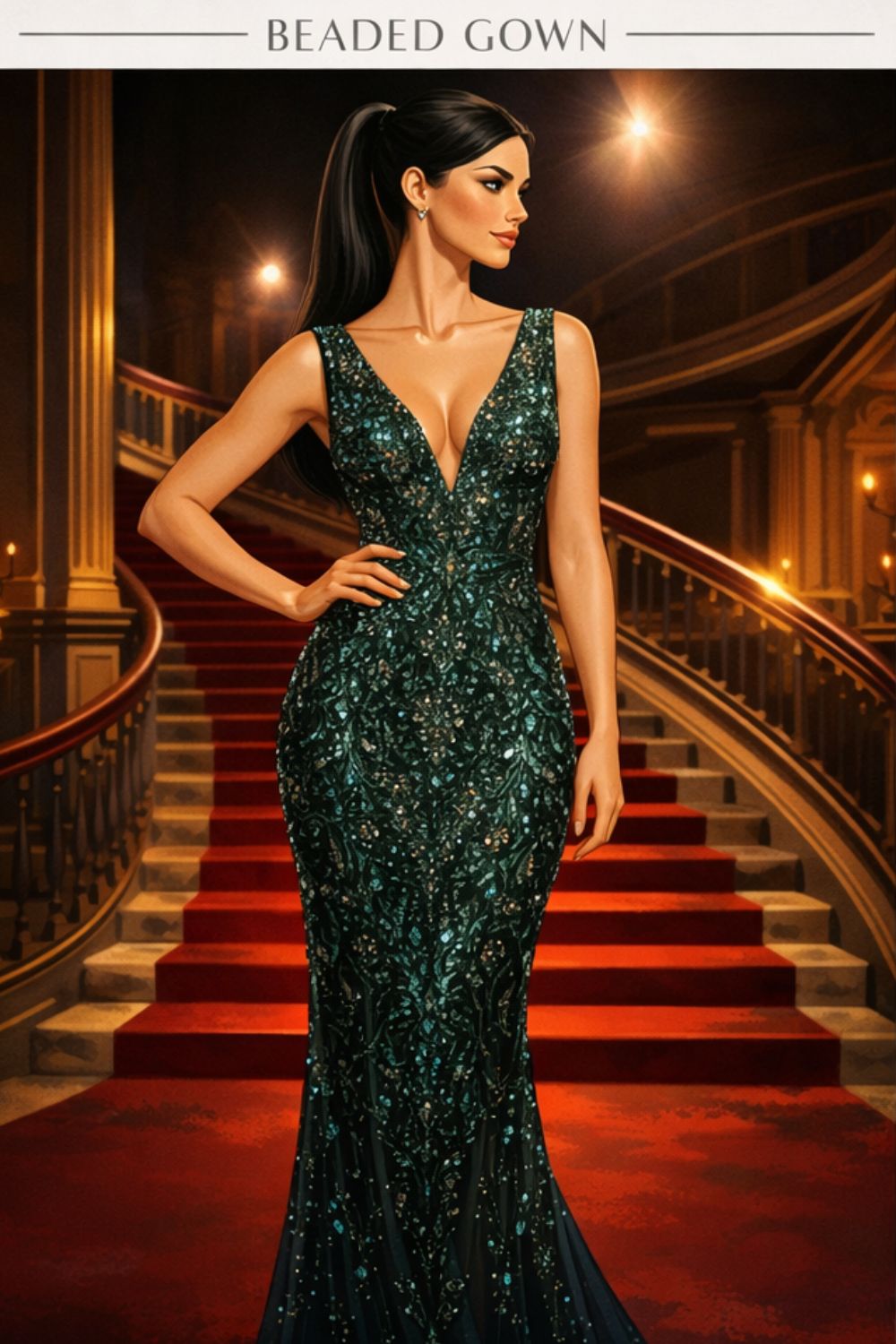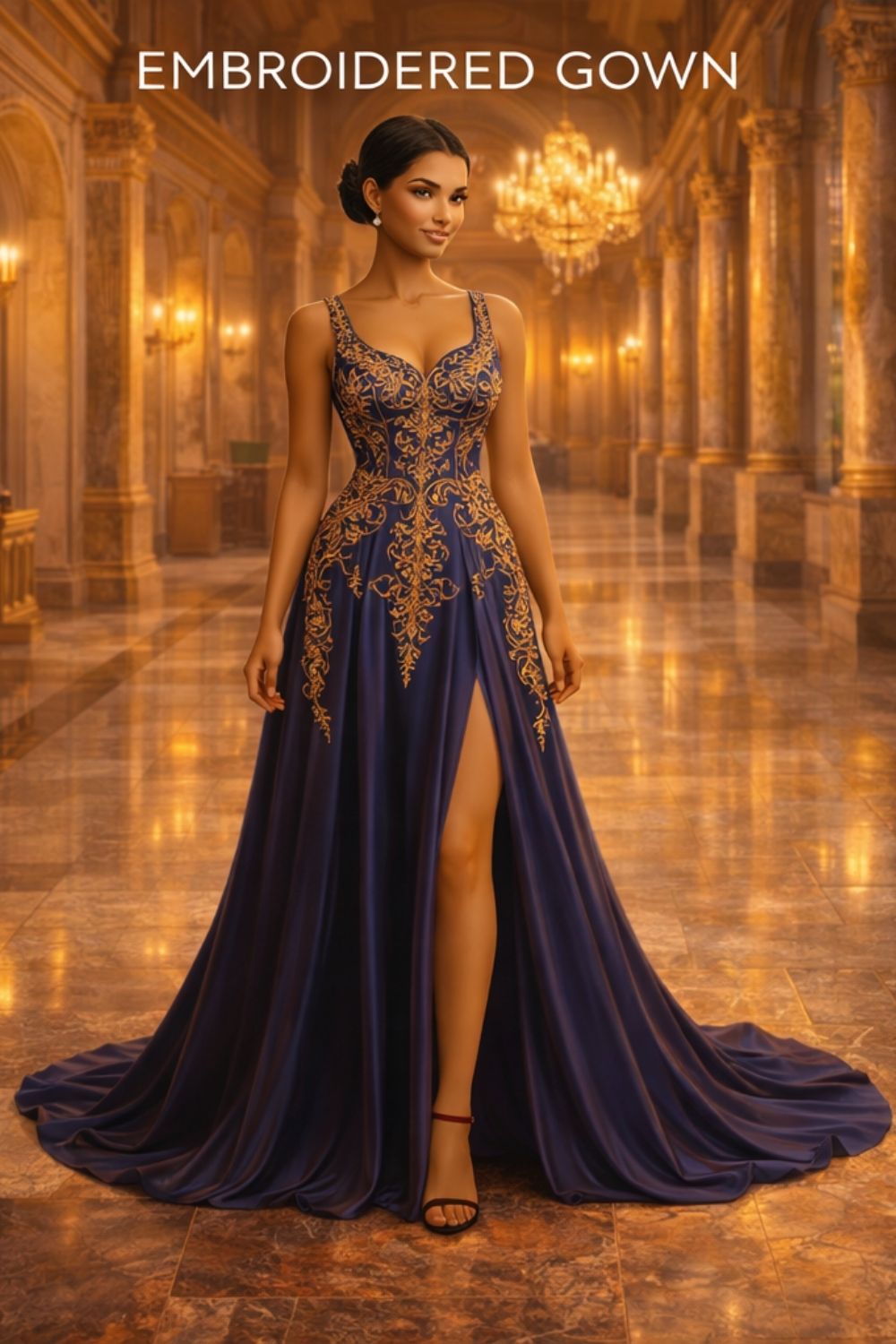
Author: Tanu Jaizz

  • 155 Different Types of Tops for Women (With Pictures)

    155 Different Types of Tops for Women (With Pictures)

    There’s a reason certain tops feel instantly, completely right the moment you pull them on. Not just comfortable β€” right. Like the garment was built specifically for who you’re trying to be that day. That sensation isn’t accidental. It’s the product of construction, cut, fabric, neckline, sleeve β€” dozens of design decisions converging into something that fits not just the body, but the context.

    Tops are the most versatile category in any woman’s wardrobe. And, honestly, the most underestimated.

    Modern structured blouses were popularized by houses like Chanel, whose mid-century designs defined how a tailored top could function as both workwear and occasion dressing. The wrap silhouette was brought into mainstream fashion by Diane von Furstenberg in the 1970s β€” a construction built on adjustable, forgiving proportions that translated directly from her iconic wrap dress into standalone top form. Today, the category spans everything from bralette tops to corsets to bishop-sleeve blouses, each carrying its own construction logic, seasonal purpose, and styling potential.

    The Guide

    This guide categorizes all 155 types across 8 classification systems. For every single entry:

    • Design

      What it looks like

    • Season

      When to wear it

    • Best For

      Who it works for

    Start here, explore everything, and explore our full visual tops reference alongside it.

    All 8 Categories at a Glance

    A structured breakdown of the 155 types documented in this guide.

    1. 01

      By Structure / Construction

      32 types #1–#32
    2. 02

      By Length / Hemline

      10 types #33–#42
    3. 03

      By Sleeve Type

      22 types #43–#64
    4. 04

      By Neckline

      26 types #65–#90
    5. 05

      By Fit / Silhouette

      12 types #91–#102
    6. 06

      By Fabric / Material

      20 types #103–#122
    7. 07

      By Occasion / Purpose

      12 types #123–#134
    8. 08

      By Design Details & Embellishments

      21 types #135–#155
    Total Coverage
    155 Types Documented

    155+ Different Types of Tops for Women

    Category 1: By Structure / Construction (#1–#32)

    How the garment is built, cut, and constructed β€” the foundational identity of each top type

    Structure is everything. Before a top has a neckline or a season or a print β€” it has a construction identity. Is it a blouse? A bodysuit? A corset? These 32 types represent the fundamental what of the garment: how fabric is cut, how pieces are sewn, and what structural logic holds it all together.

    What works beautifully about this classification is that it cuts through the noise of trend language. A β€œcottagecore top” is marketing. A peasant blouse with smocked neckline and flutter sleeves? That’s construction. And construction tells you how a garment will fit, age, and behave β€” which is the information that actually matters when you’re shopping.

    1. 01

      Blouse

      Blouse Example

      Soft, feminine, dressy top β€” looser than a shirt, often with decorative detailing like ruffles, embroidery, or tucks. The blouse traces its modern form to the late 19th century, when women’s social life demanded polished separates without a full tailored suit.

      Design Soft drape, ruffles, tucks, embroidery; feminine finishes
      Season Spring / Summer; year-round in layers
      Best For Office, dates, smart-casual, evening
    2. 02

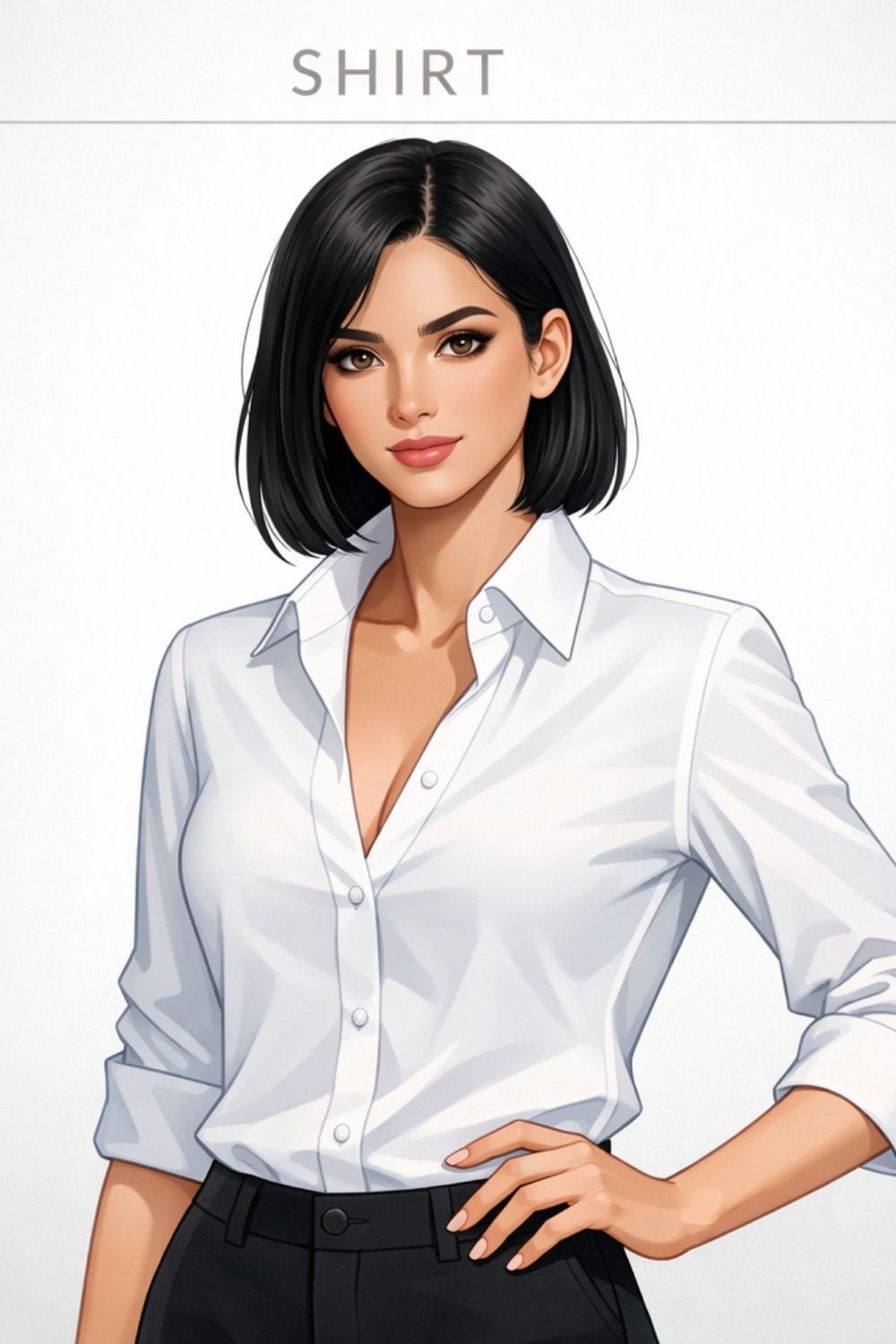
      Shirt

      Shirt Example

      Structured top with collar and button placket; tailored construction. Includes dress shirts, Oxford shirts, and chambray styles. Unlike a blouse, a shirt holds its shape even laid flat on a surface.

      Design Structured collar, full placket, tailored seams
      Season All seasons
      Best For Office, casual-smart, travel, weekend
    1. 03

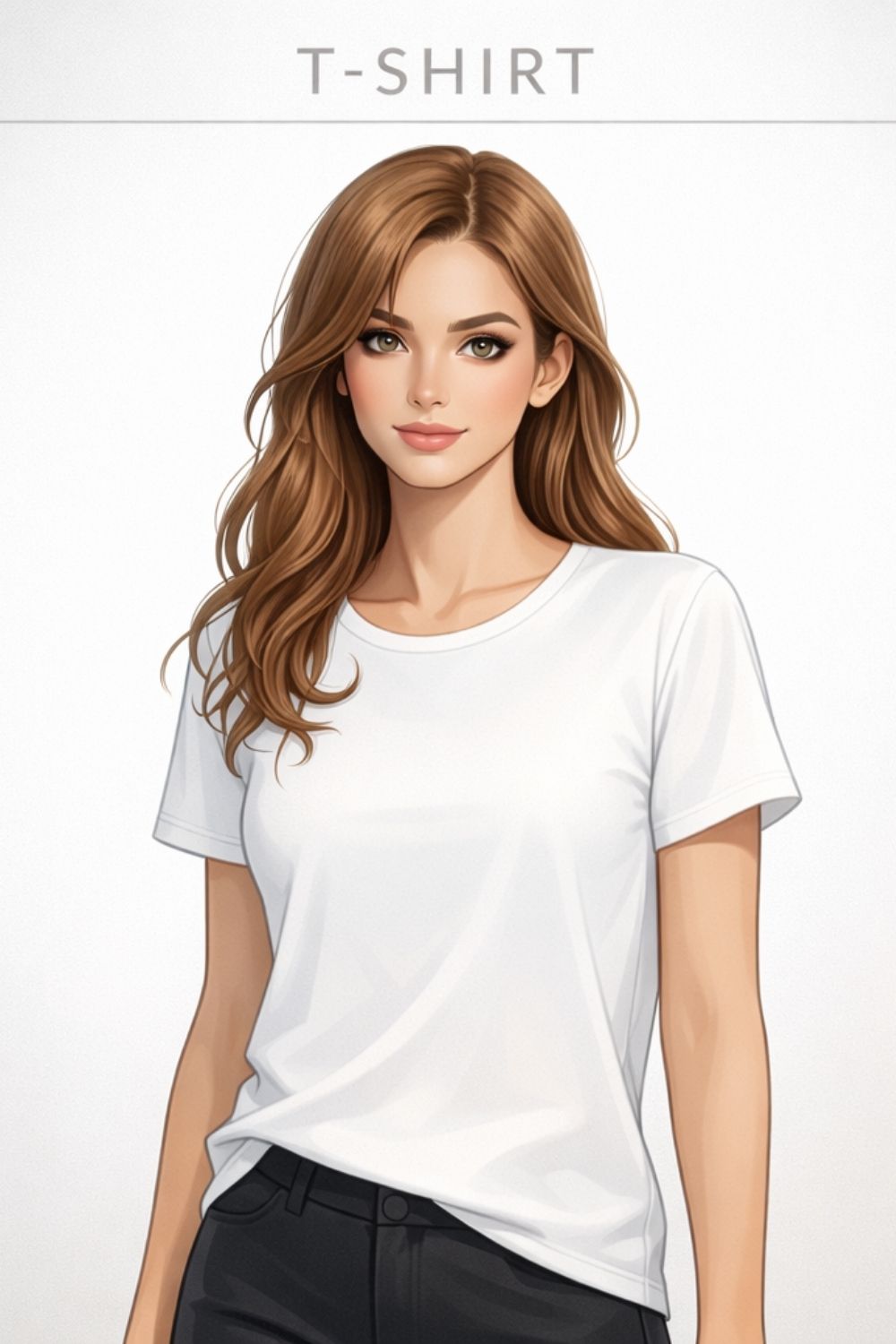
      T-Shirt

      T-Shirt Example

      Jersey-knit, crew or V-neck, short sleeves. The most democratic garment in fashion history β€” first adopted from military undershirts in the early 20th century, now a global wardrobe anchor for every age and context.

      Design Simple neckline, minimal seaming, jersey knit construction
      Season All seasons
      Best For Everyday casual, layering base, travel
    2. 04

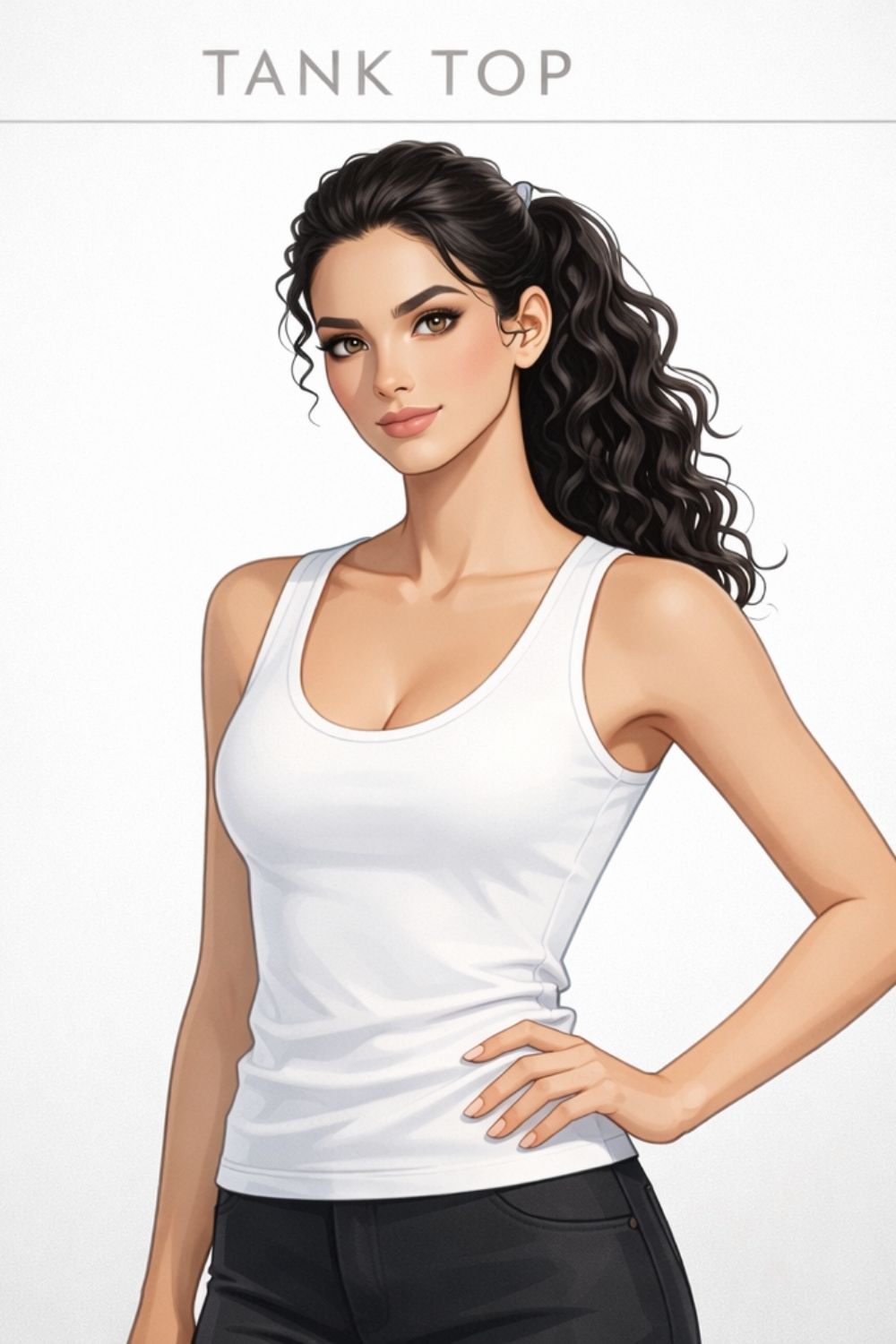
      Tank Top

      Tank Top Example

      Sleeveless with wide shoulder straps; scoop or round neckline. A heat-friendly staple that works equally as a standalone summer piece or a layer beneath jackets and cardigans.

      Design Wide straps, scoop neckline, minimal construction
      Season Spring / Summer
      Best For Casual wear, layering, beach, gym base
    1. 05

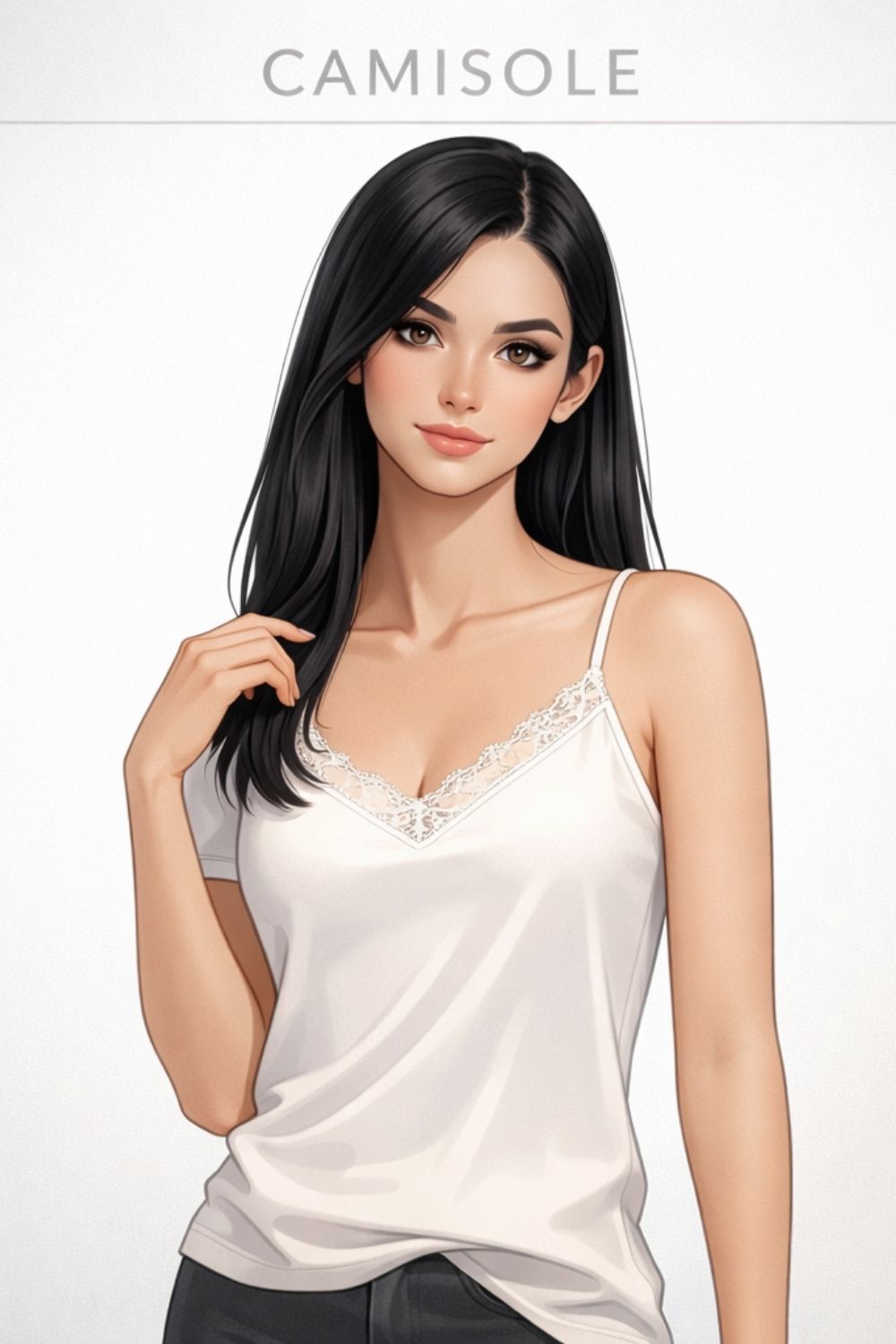
      Camisole

      Camisole Example

      Sleeveless with narrow spaghetti straps; lingerie-inspired outerwear. Often has lace trim at the hem or neckline. The modern camisole crossed from underwear to outerwear in the late 1990s β€” and it hasn’t looked back since.

      DesignSpaghetti straps, lace or smooth trim, fluid front
      SeasonSpring/Summer; inner layer in winter
      Best ForLayering, casual, evening under a blazer
    2. 06

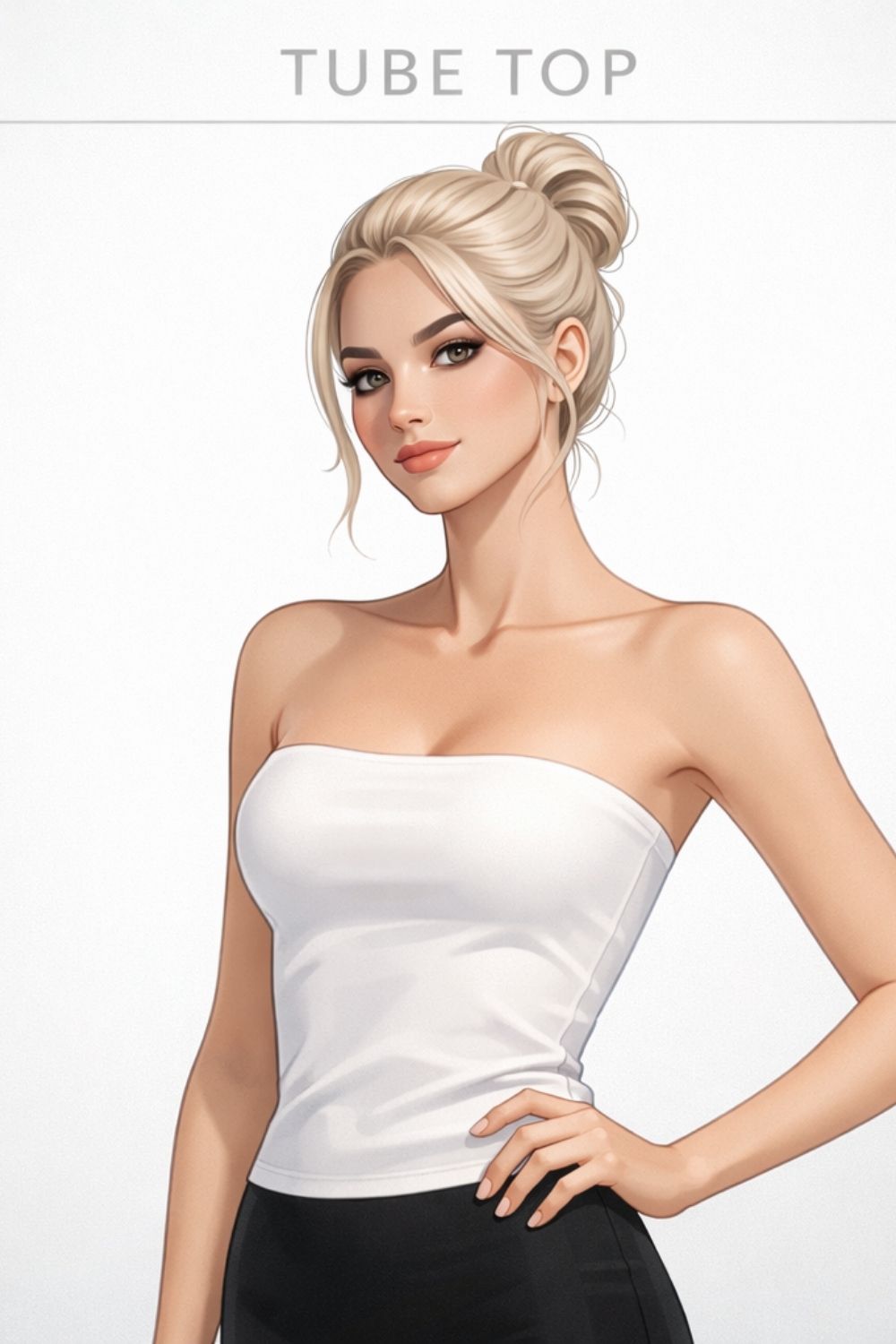
      Tube Top

      Tube Top Example

      Completely strapless; an elasticized band holds the fabric against the torso. Zero structural support beyond band tension and fit alone.

      DesignStrapless, elasticized band, minimal fabric
      SeasonSummer / Festival
      Best ForFestival, beach, resort, layering under sheer
    1. 07

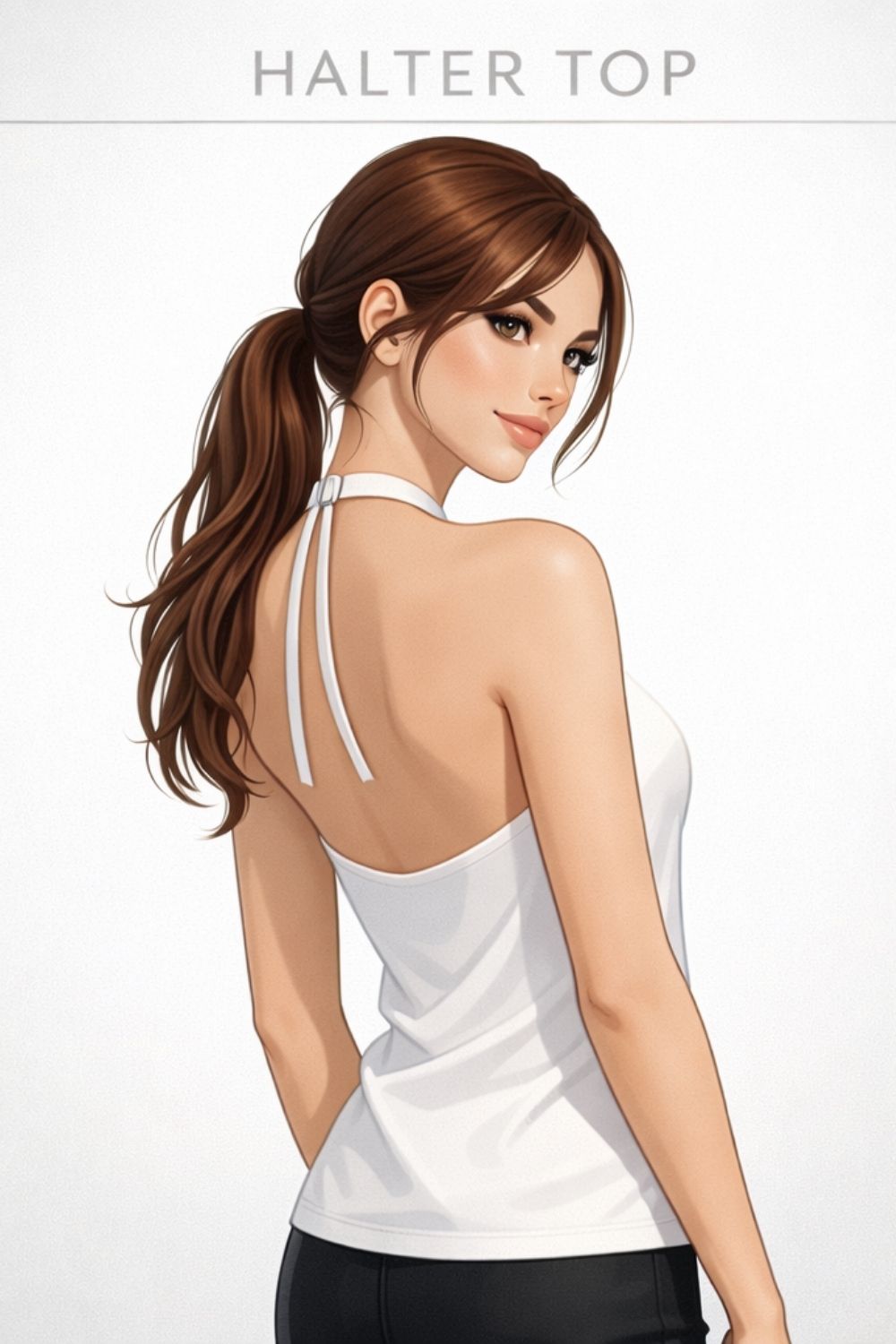
      Halter Top

      Halter Top Example

      Straps tie or fasten at the nape of the neck; the back is largely exposed. The construction deliberately frames the shoulders and upper back as design features, not afterthoughts.

      DesignNeck-tied or neck-fastened straps, exposed back and shoulders
      SeasonSpring / Summer
      Best ForResort, casual, beach, going out
    2. 08

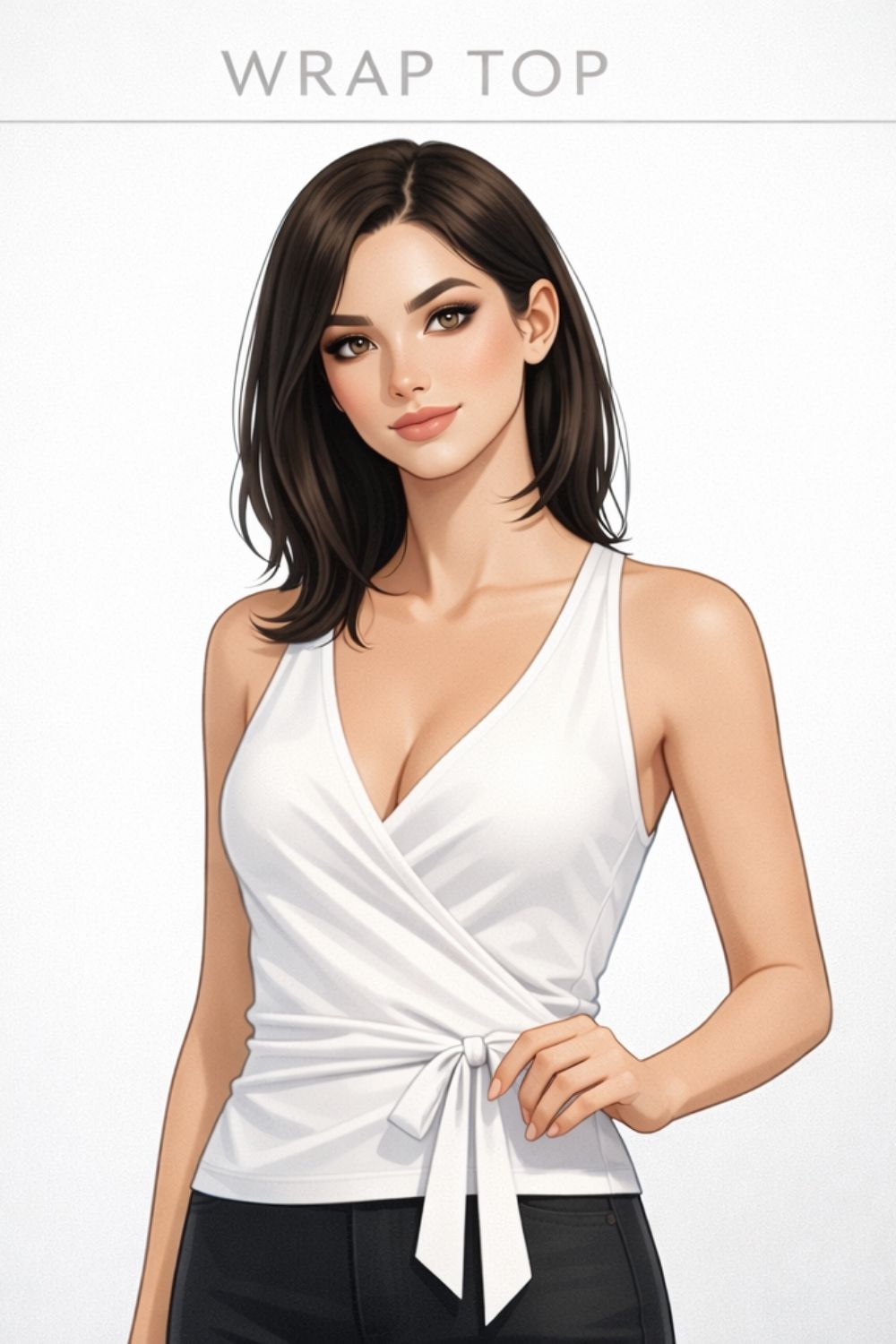
      Wrap Top

      Wrap Top Example

      Front panels cross over and tie at the waist. Universally adaptable because the tie allows for adjusted fit β€” looser one day, cinched the next. DVF’s 1974 wrap dress applied this same construction to a full garment.

      DesignCrossover panels, self-tie, V-neckline created by overlap
      SeasonAll seasons
      Best ForOffice, dates, casual, smart-casual, travel
    1. 09

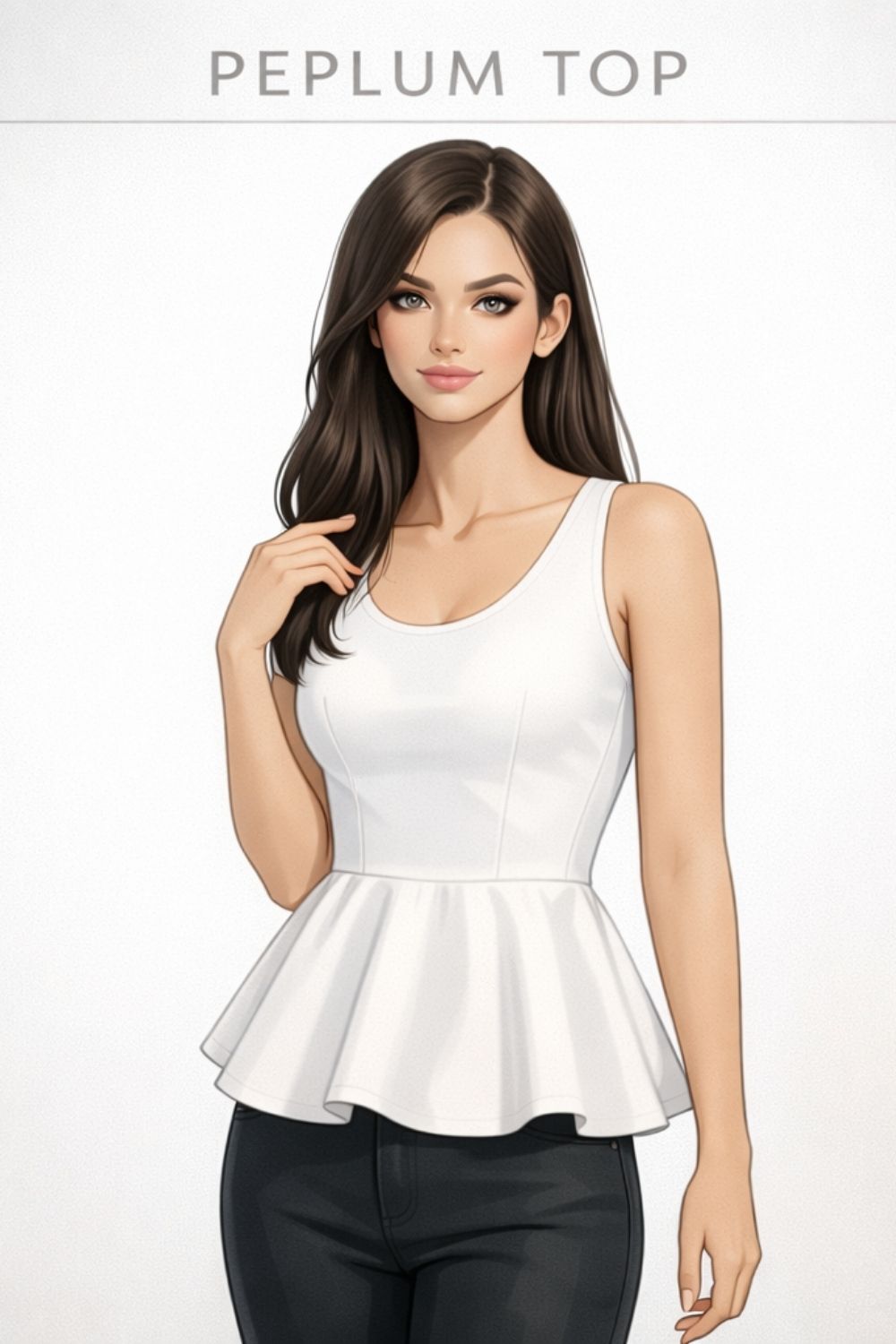
      Peplum Top

      Peplum Top Example

      Fitted bodice with a flared, ruffle-like extension from the waistline. The peplum defines the waist by contrast β€” fitted upper meets flared hem.

      DesignFitted bodice, flared hem extension at waistline seam
      SeasonSpring/Summer; all seasons by fabric
      Best ForOffice, parties, smart-casual events
    2. 10

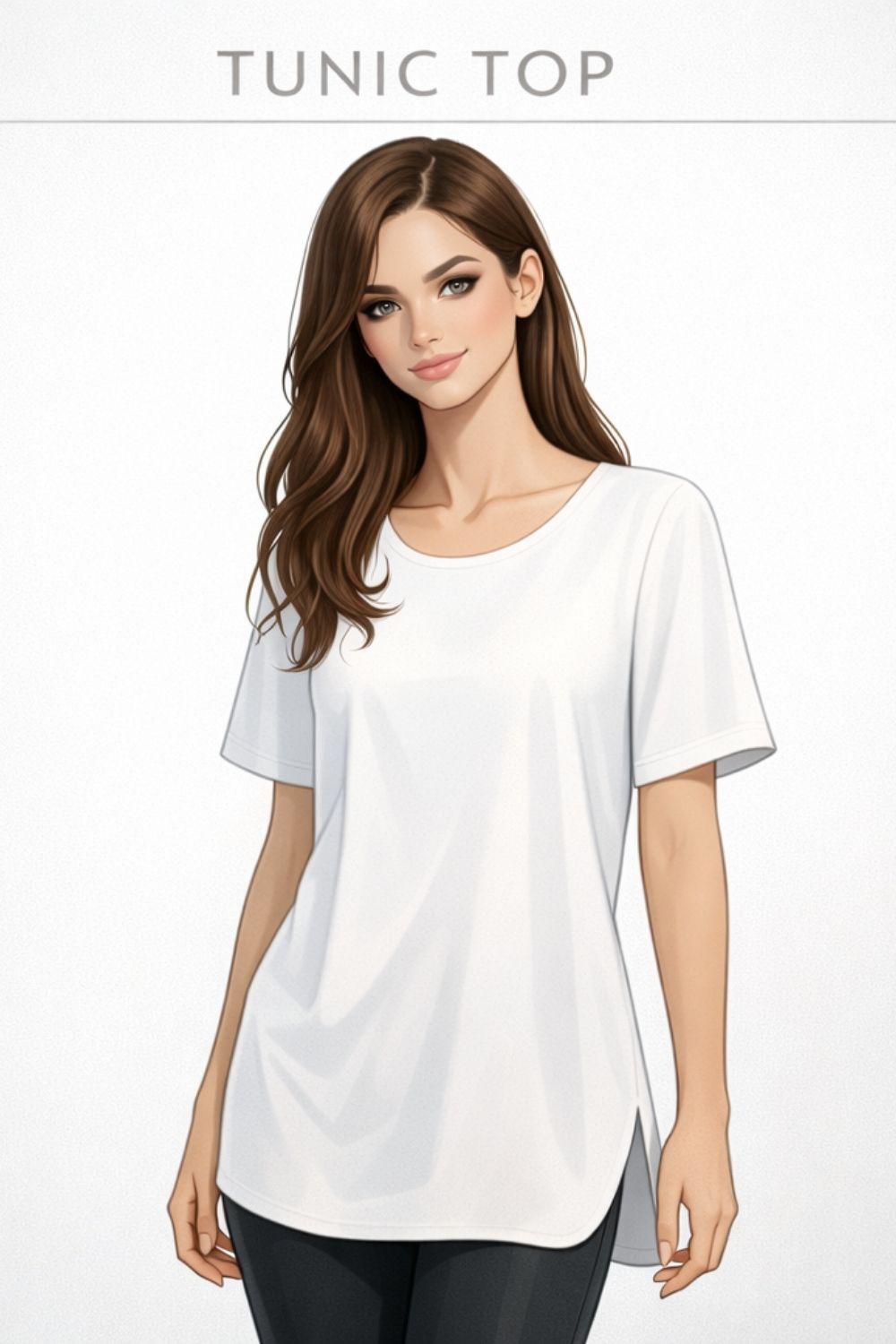
      Tunic Top

      Tunic Top Example

      Loose, hip- to mid-thigh-length top worn over leggings or slim pants. Rooted in ancient garment traditions globally.

      DesignLoose through torso, hip-to-thigh hem, minimal waist shaping
      SeasonAll seasons
      Best ForCasual comfort, travel, everyday versatility
    1. 11

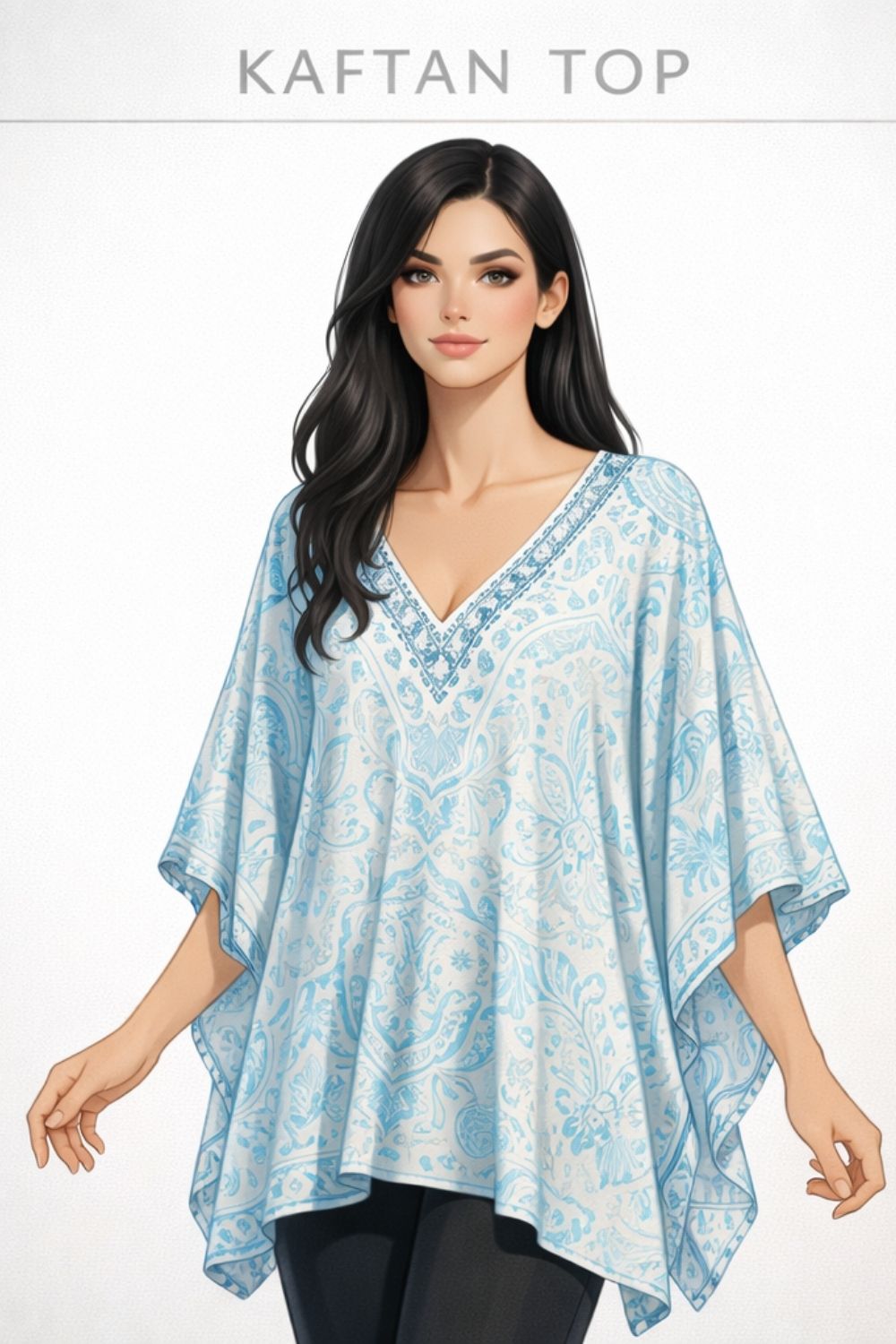
      Kaftan Top

      kaftan top example

      Wide, breezy, often with side slits. Rooted in Middle Eastern and North African dress traditions. Volume is the point here β€” not a compromise.

      DesignWide rectangular shape, side slits, often printed or embroidered
      SeasonSummer
      Best ForBeach, resort, vacation, relaxed casual
    2. 12

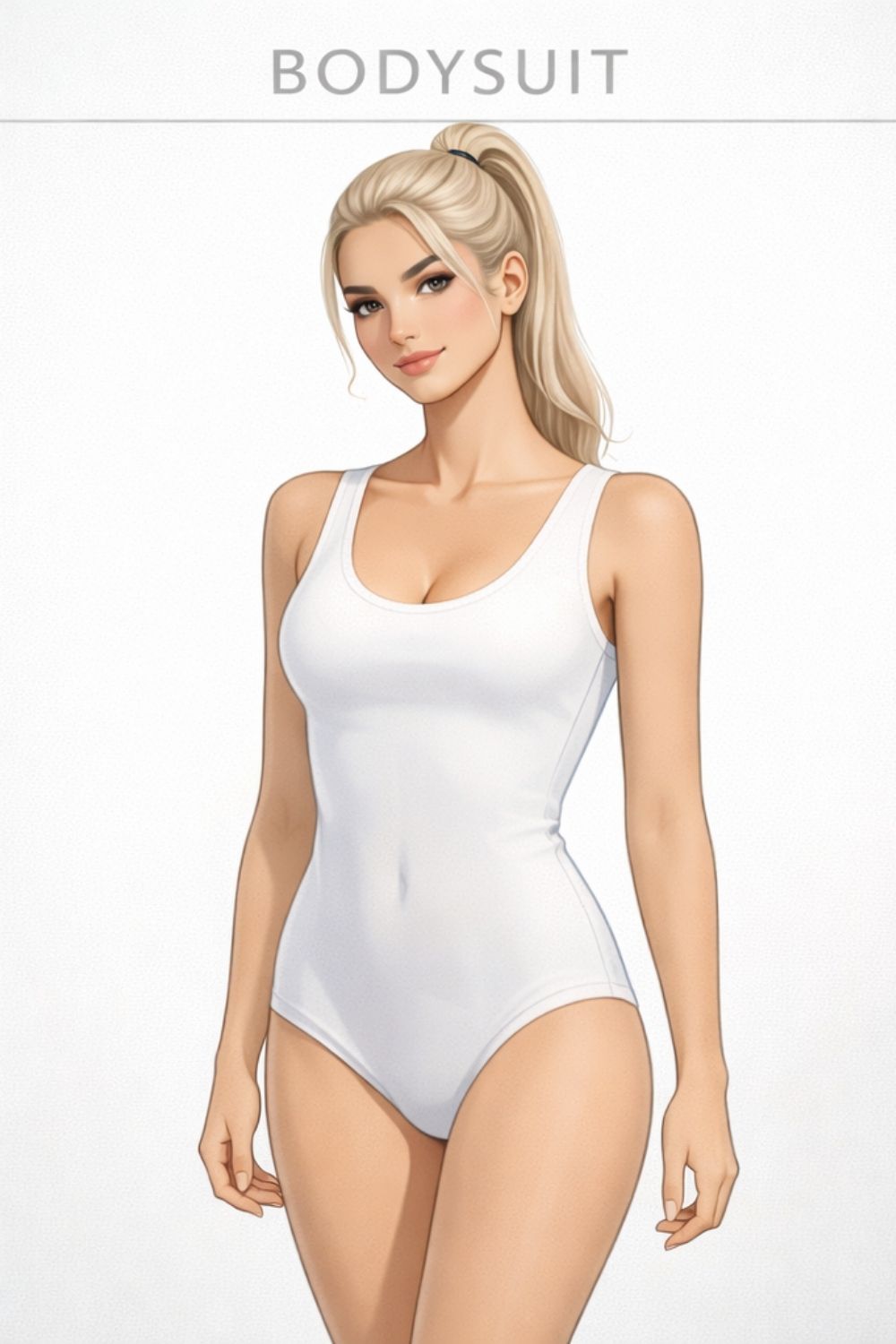
      Bodysuit

      bodysuit top example

      Snaps at the crotch; creates a seamless, permanently-tucked look. Constructed like a leotard with a top extension. The bodysuit solves the perpetual problem of untucked blouses β€” cleanly and permanently.

      DesignSnap crotch closure, fitted through torso, leotard-style
      SeasonAll seasons
      Best ForEveryday, office under blazer, going out
    1. 13

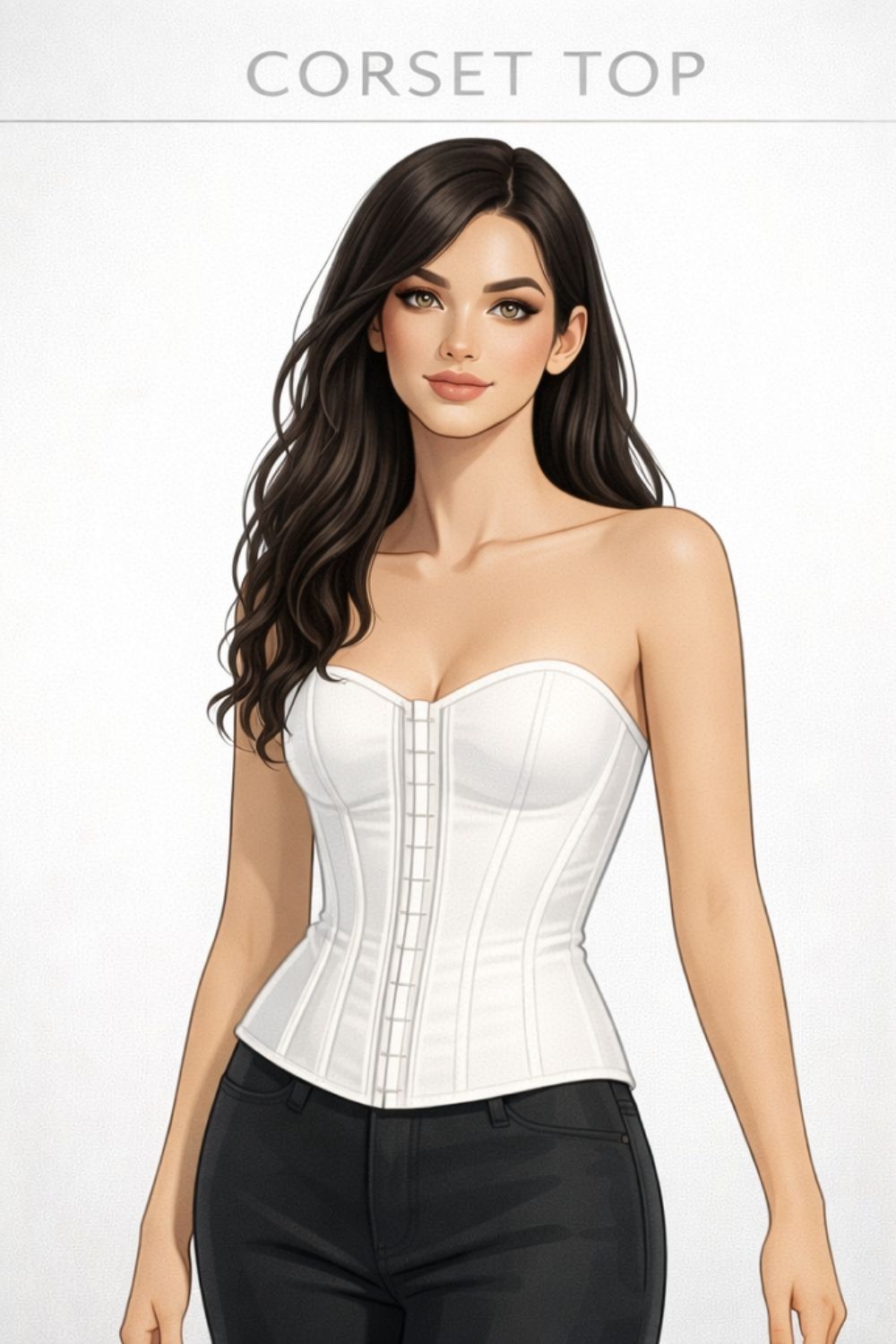
      Corset Top

      corset top example

      Boned structure for waist compression; laces at back. Directly descended from historical undergarments. The contemporary corset top wears its structural origins openly β€” the boning and lacing are now the aesthetic, not just the engineering.

      DesignBoned construction, back lacing, defined waist shaping
      SeasonSpring / Summer / Autumn
      Best ForGoing out, party, fashion-forward looks
    2. 14

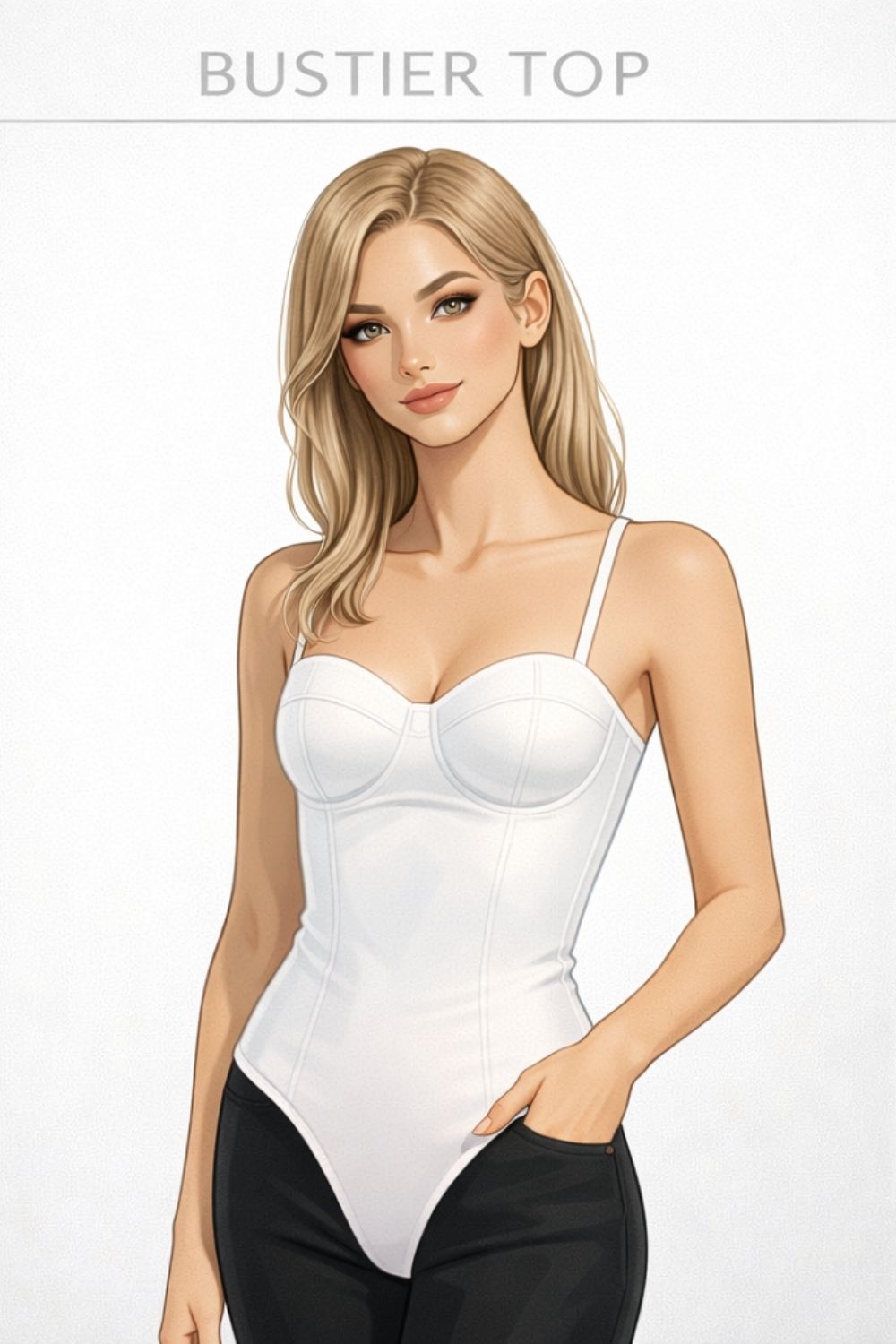
      Bustier Top

      bustier top example

      Similar to corset but with built-in bra cups; may have straps or go strapless. Engineered simultaneously for shape and support β€” a more wearable construction than a true corset.

      DesignBuilt-in cups, boned bodice, strapless or strapped options
      SeasonSpring / Summer / Autumn
      Best ForParty, evening, date night
    1. 15

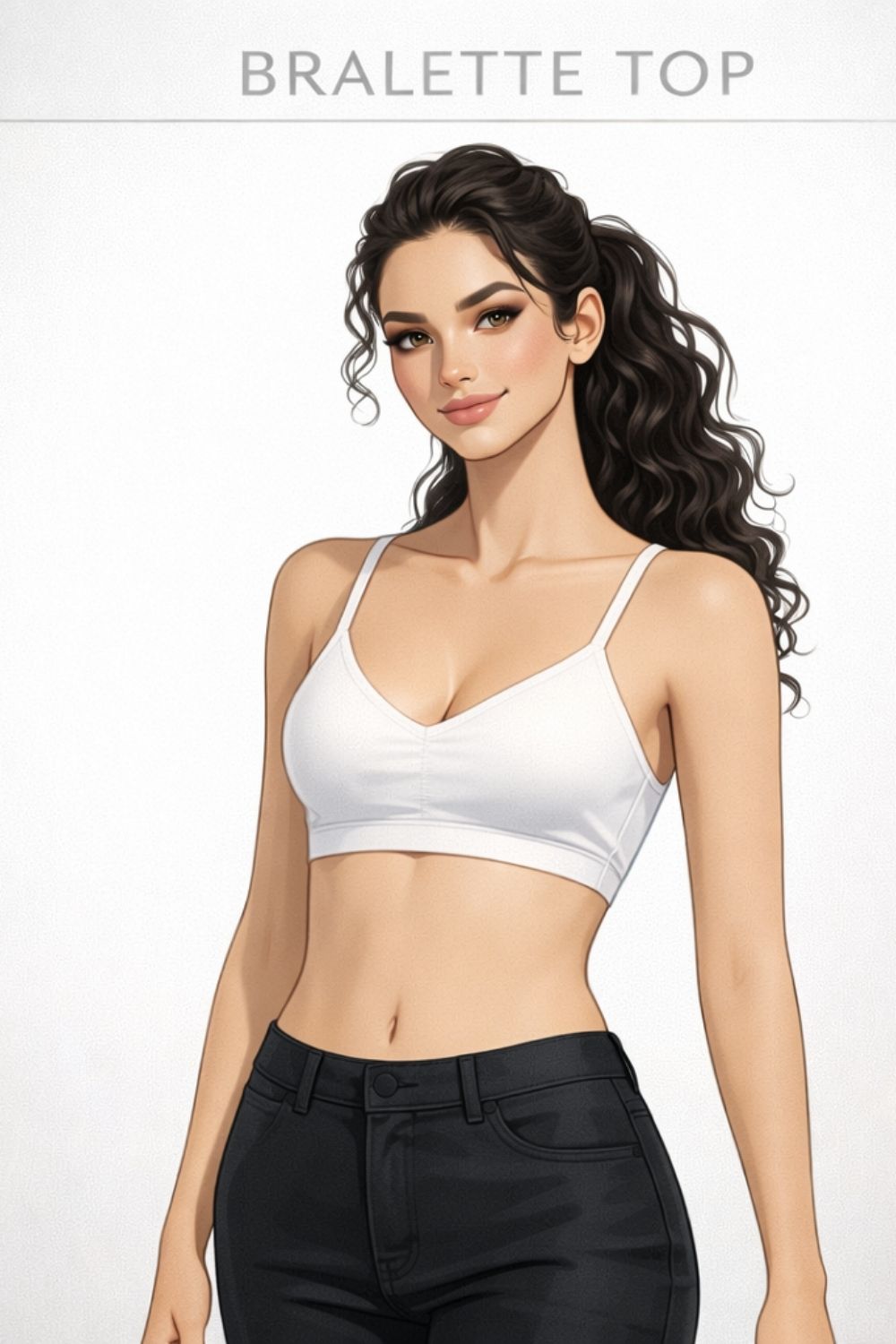
      Bralette Top

      bralette top example

      Soft, unstructured bra worn as outerwear. No underwire. The bralette-as-top trend emerged prominently in the early 2010s and has held as a casualwear and layering staple ever since.

      DesignSoft cups, no underwire, often lace or ribbed fabric
      SeasonSpring / Summer
      Best ForCasual, layering, festival, beach
    2. 16

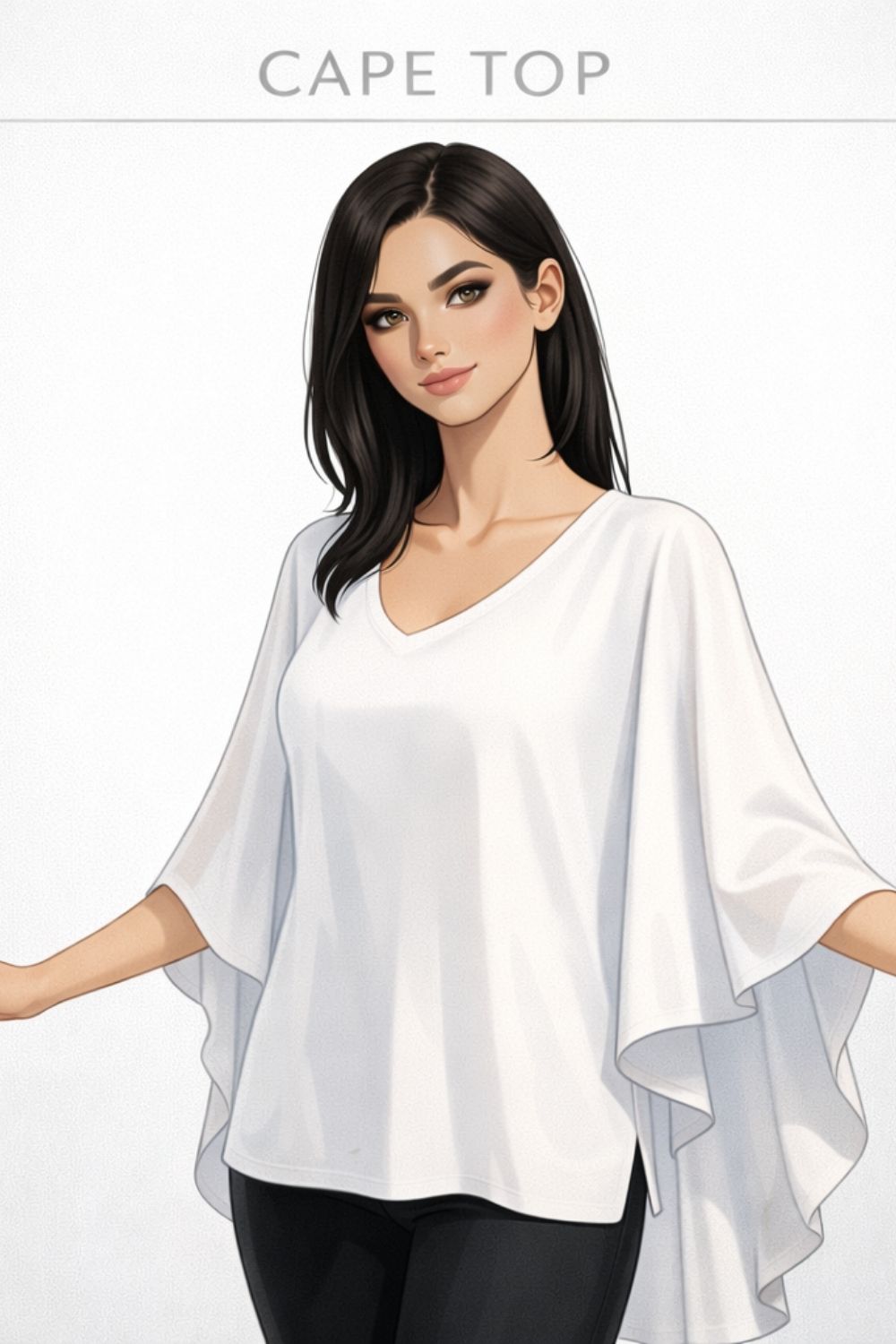
      Cape Top

      cape top example

      An attached cape panel falls from the neckline or shoulders; adds dramatic, sweeping volume to the upper body without requiring full sleeves.

      DesignAttached cape panel, dramatic shoulder-to-hem drape
      SeasonAutumn / Winter
      Best ForFormal events, smart-casual occasions, evening
    1. 17

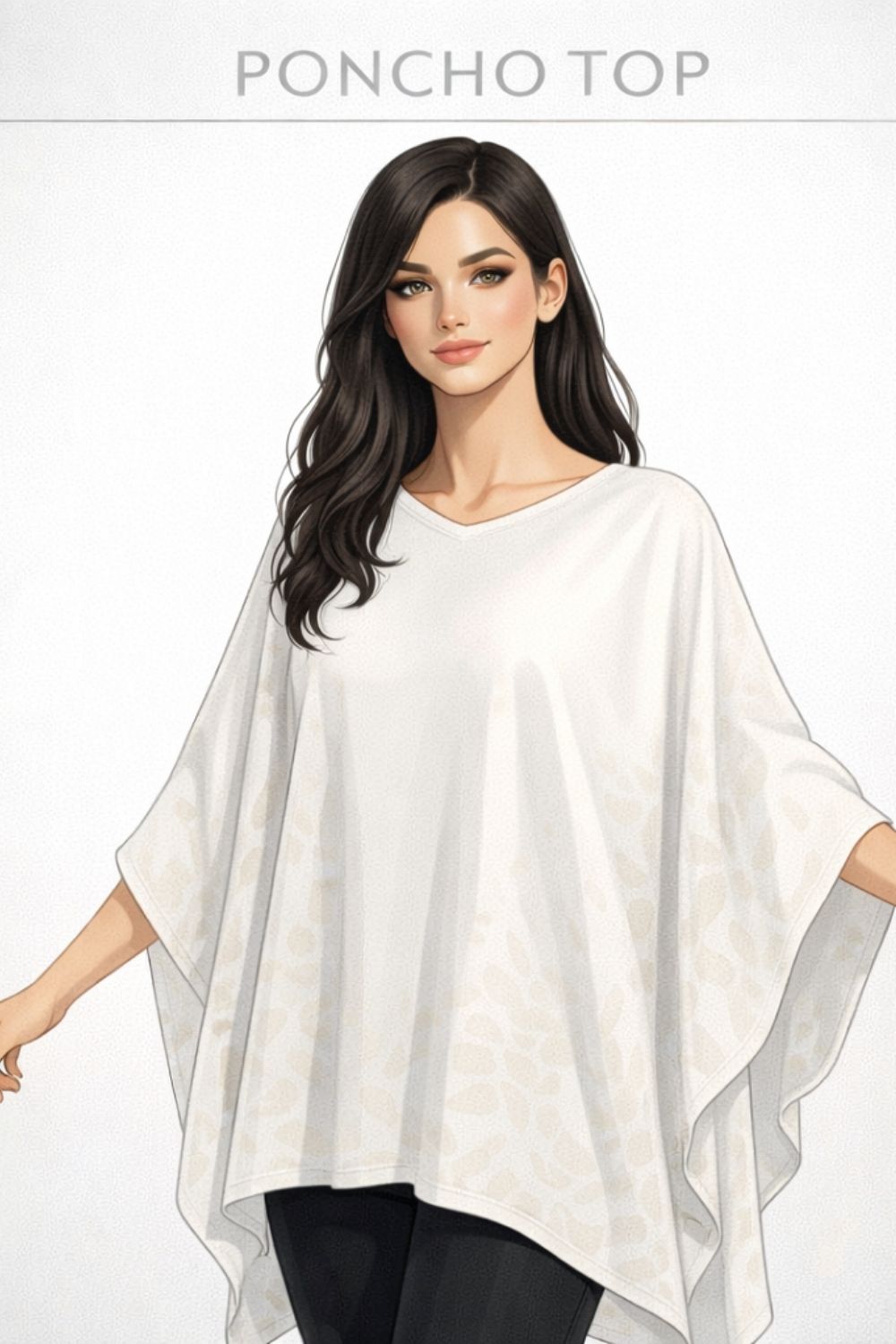
      Poncho Top

      poncho top example

      A single rectangular or triangular piece with a head opening; fully open on the sides. Related to β€” but shorter than β€” a full poncho outerwear piece.

      DesignSingle-piece construction, open sides, head hole opening
      SeasonAutumn / Winter
      Best ForCasual, travel, layering, transitional weather
    2. 18

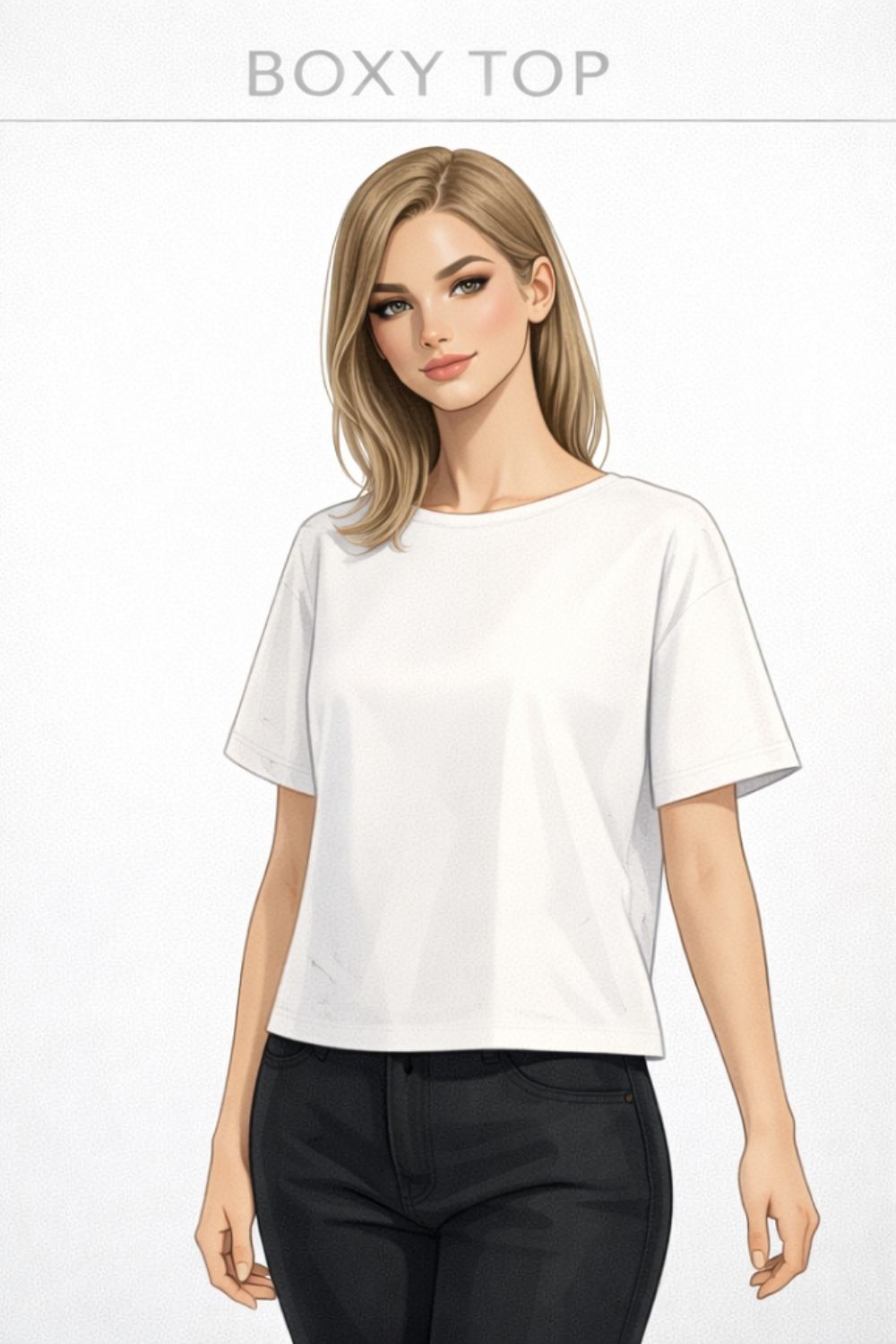
      Boxy Top

      boxy top example

      Square-cut, straight torso with minimal shaping seams. Creates an oversized feel even in what would technically be a regular size. A recurring favorite in Japanese minimalist fashion.

      DesignSquare-cut silhouette, minimal seaming, straight sides
      SeasonAll seasons
      Best ForStreetwear, casual, relaxed layering
    1. 19

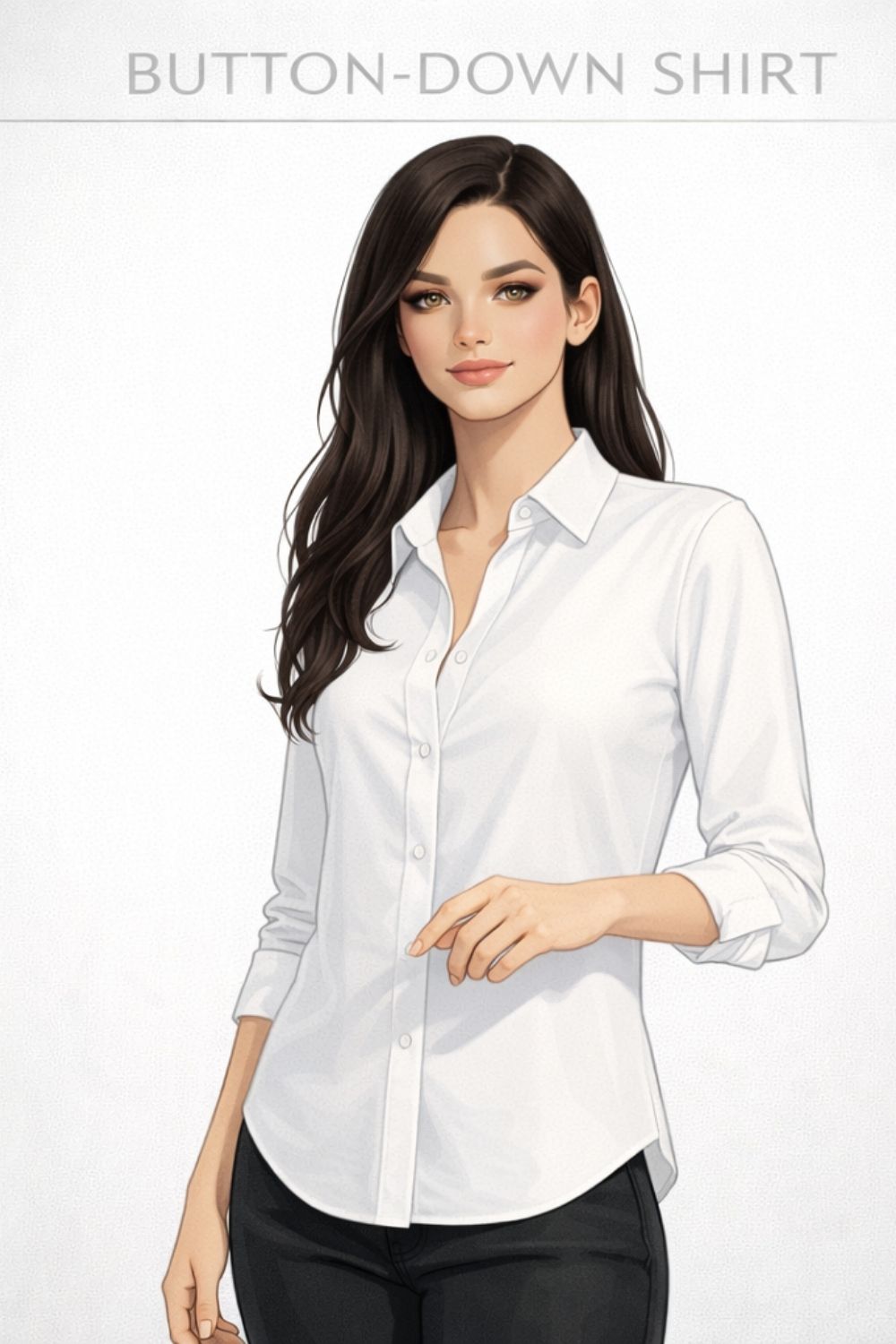
      Button-Down Shirt

      button-down shirt top example

      Buttons running the full front placket from collar to hem. Distinguished from a button-up (which closes partially) by the full-length placket construction.

      DesignFull-length button placket, structured collar, woven fabric
      SeasonAll seasons
      Best ForOffice, travel, smart-casual, weekend
    2. 20

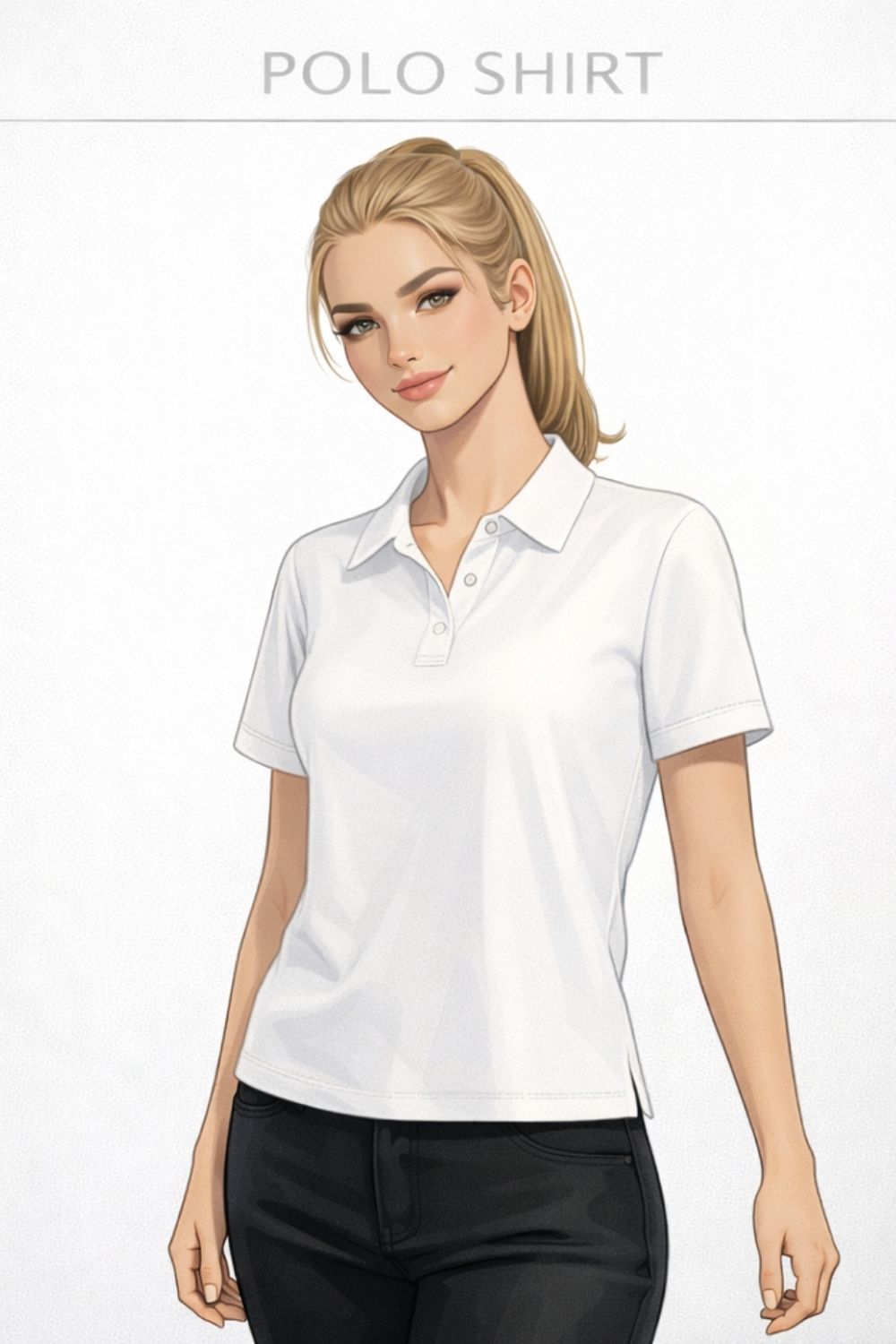
      Polo Shirt

      polo shirt top example

      Knit fabric β€” piquΓ© or jersey β€” with a ribbed collar and two- to three-button placket. Originally designed for polo players in the 1920s; refined for mainstream wear.

      DesignRibbed knit collar, short button placket, piquΓ© or jersey body
      SeasonSpring / Summer / Autumn
      Best ForSmart-casual, sport, weekend, resort
    1. 21

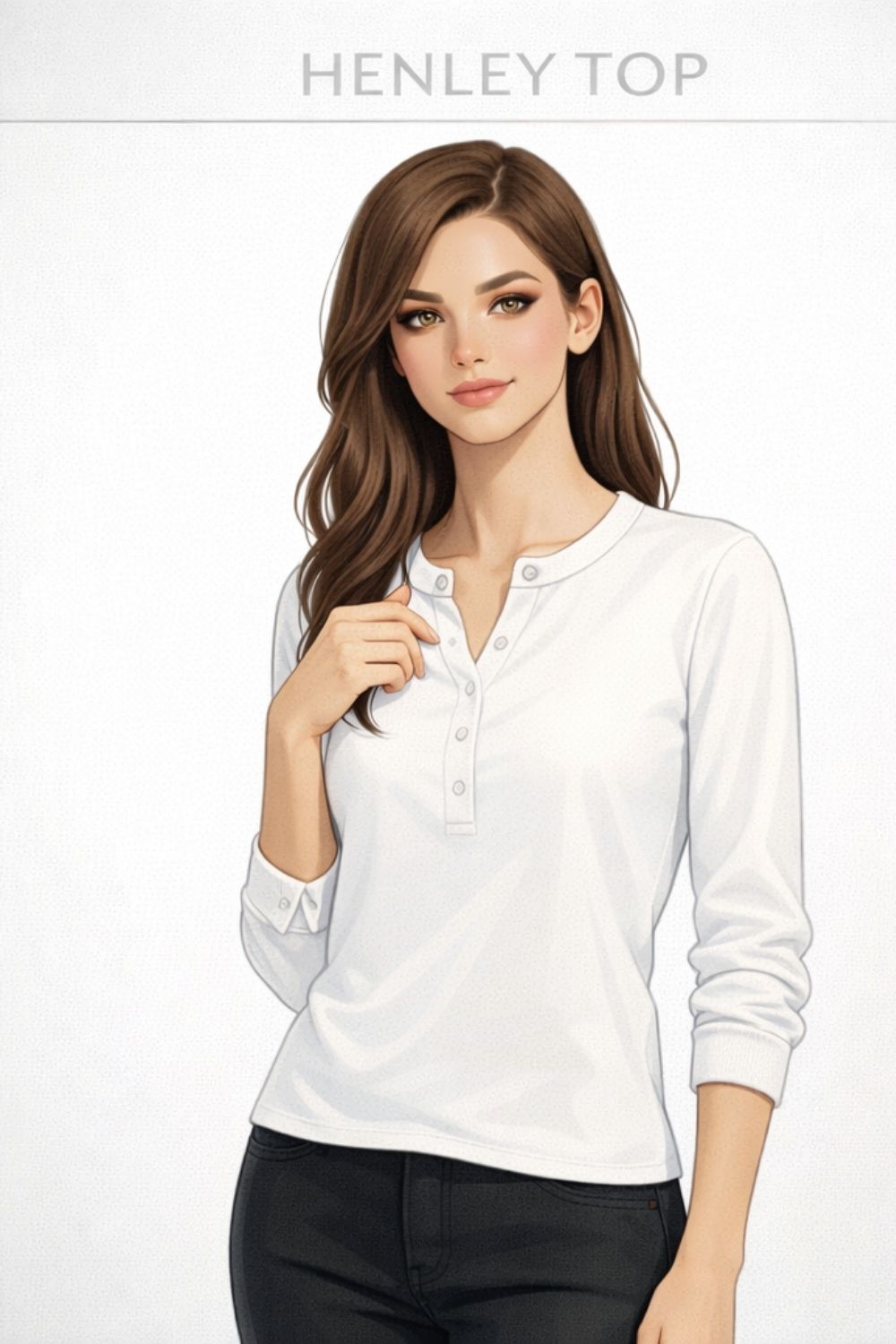
      Henley Top

      henley top example

      Collarless top with a partial button or keyhole placket at the neckline. Sits conceptually between a T-shirt and a polo β€” more structured than the former, less sporty than the latter.

      DesignCollarless, partial button placket, relaxed knit construction
      SeasonAll seasons
      Best ForCasual, relaxed smart-casual, layering
    2. 22

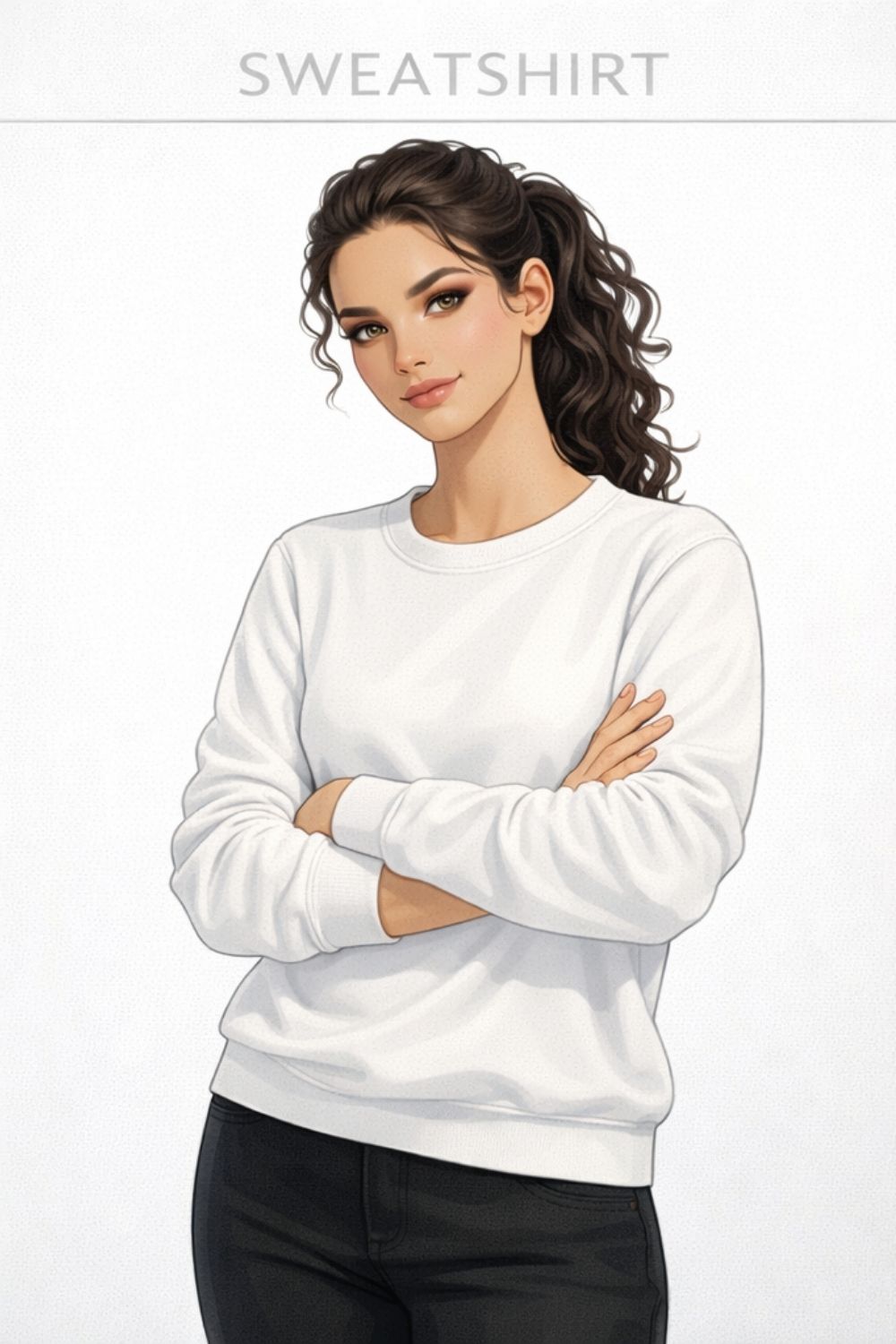
      Sweatshirt

      sweatshirt top example

      Fleece-lined pullover with ribbed cuffs, collar, and hem. Originally athletic wear; now thoroughly embedded in everyday casual culture.

      DesignFleece lining, ribbed cuffs and hem, pullover construction
      SeasonAutumn / Winter / Spring
      Best ForCasual, weekend, lounging, travel
    1. 23

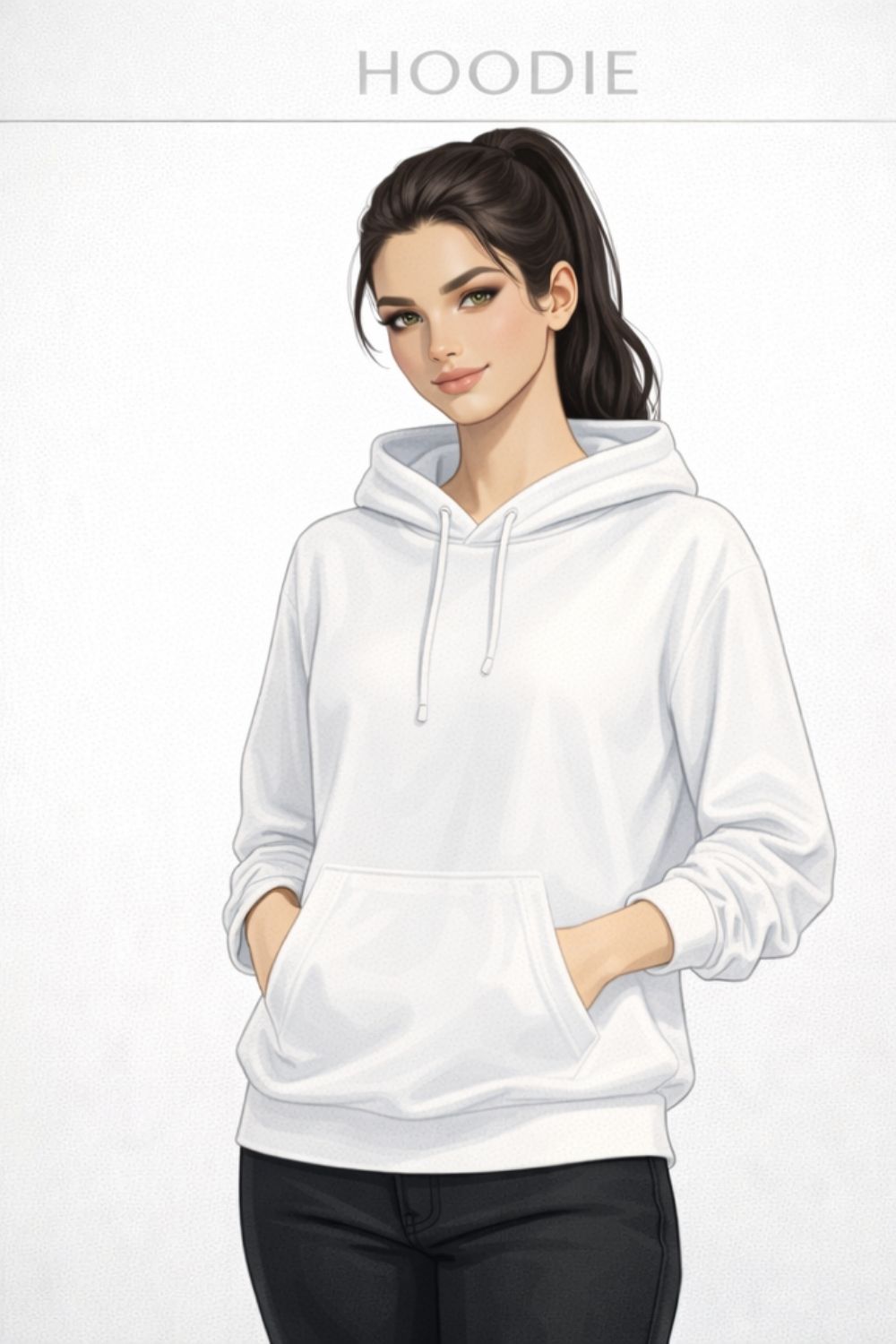
      Hoodie

      hoodie top example

      Hooded sweatshirt with front kangaroo pocket; pullover or zip-front. The hood is the construction differentiator β€” not just a styling detail.

      DesignHood attachment, kangaroo pocket, fleece or cotton fleece
      SeasonAutumn / Winter / Spring
      Best ForCasual, sporty, streetwear, travel
    2. 24

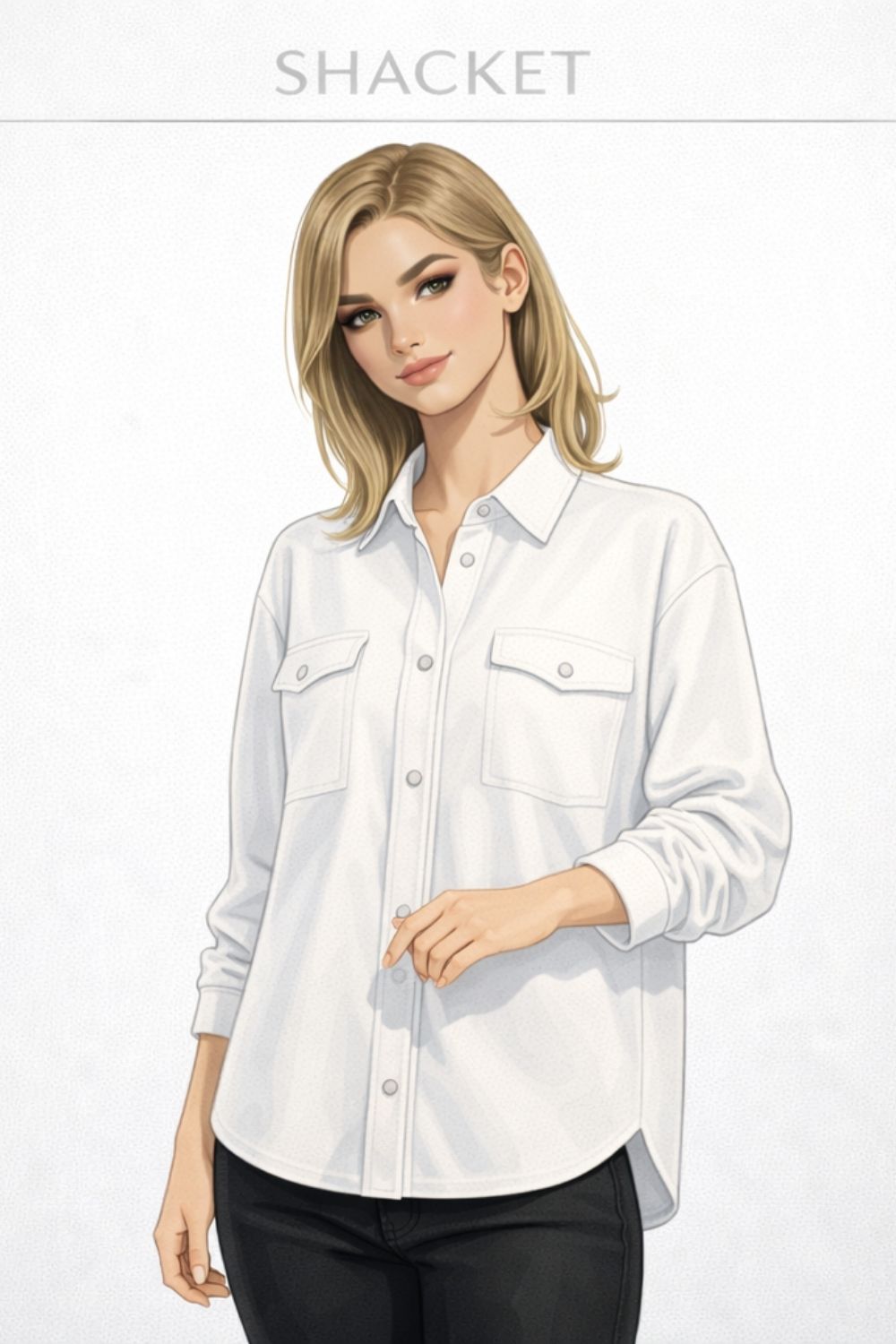
      Shacket

      shacket top example

      Shirt-jacket hybrid β€” shirt construction, outerwear proportions. The shacket occupied a styling gap that didn’t have a formal name until the mid-2010s caught up.

      DesignWoven fabric, shirt collar, button front, outerwear weight
      SeasonAutumn / Spring
      Best ForTransitional layering, casual, travel
    1. 25

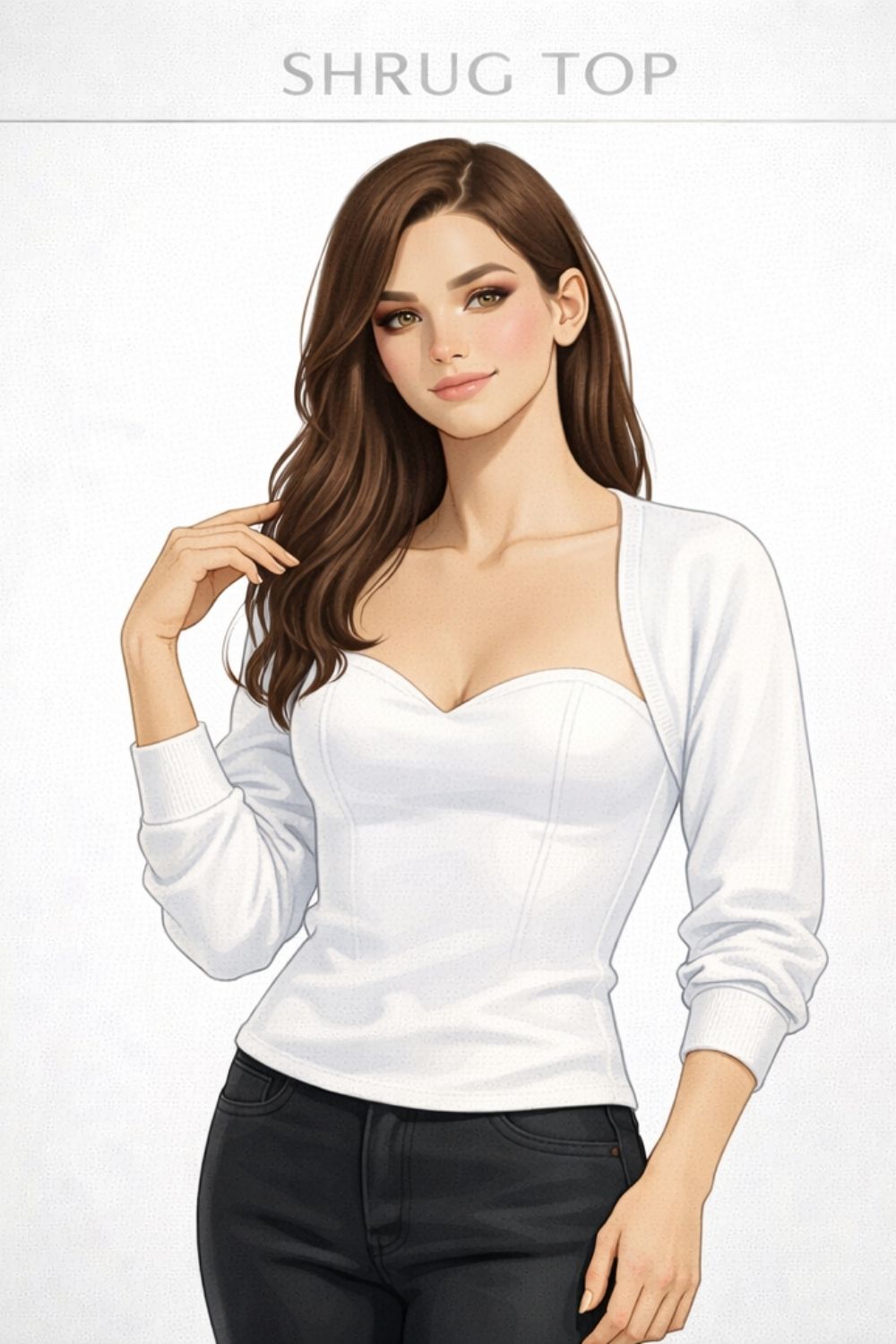
      Shrug Top

      shrug top example

      Very short, open-front piece covering only shoulders and upper arms. Not functionally warming β€” purely decorative.

      DesignVery short open front, shoulder-to-elbow coverage only
      SeasonAll seasons
      Best ForLayering over strapless/sleeveless, formal events
    2. 26

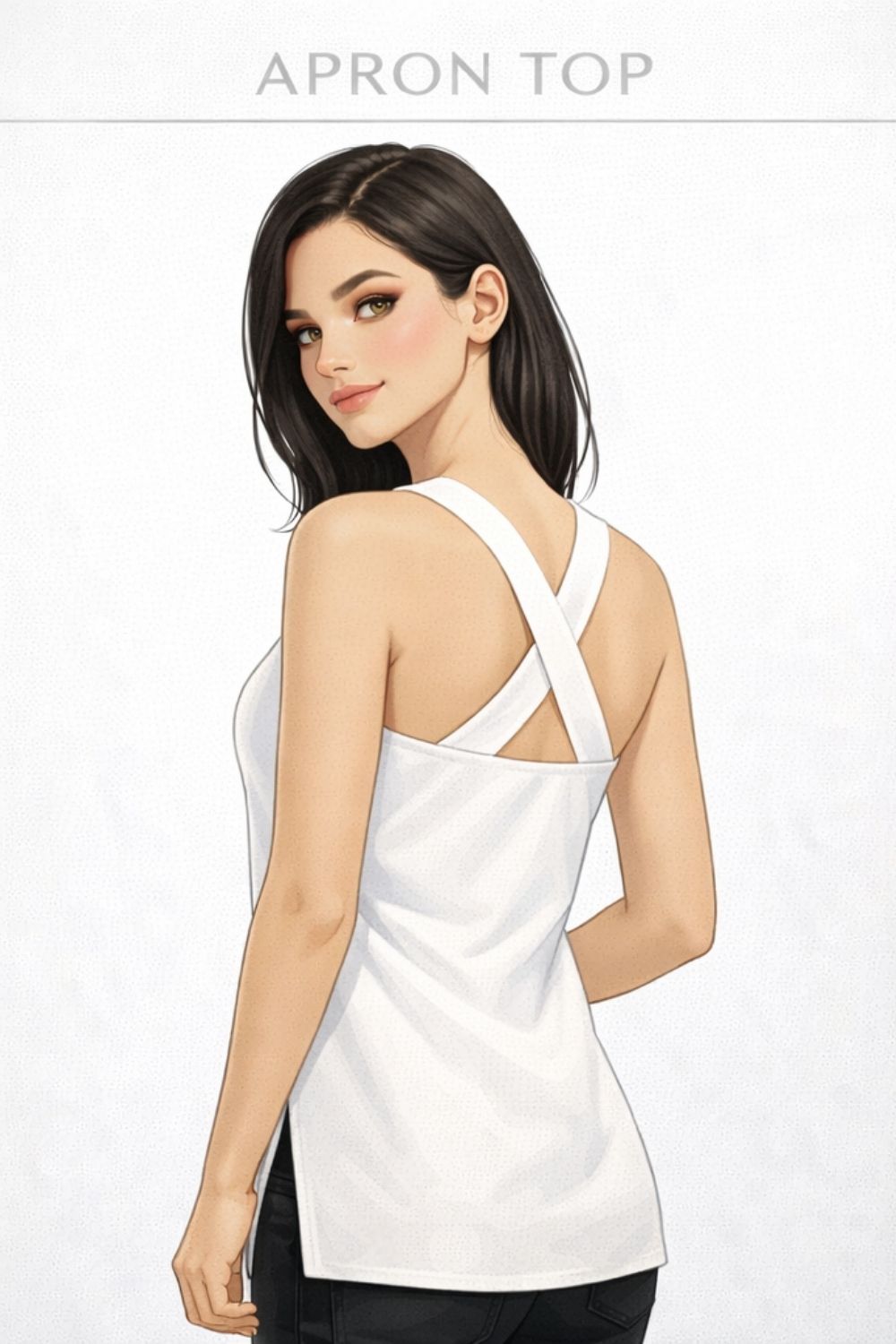
      Apron Top

      apron top example

      Cross-back straps forming an X at the back; wide front panel. Common in linen or cotton. The construction emphasizes the back β€” an interesting reversal of most garment design logic.

      DesignCross-back X straps, wide front panel, simple construction
      SeasonSpring / Summer
      Best ForCasual, garden, cottagecore, relaxed weekend
    1. 27

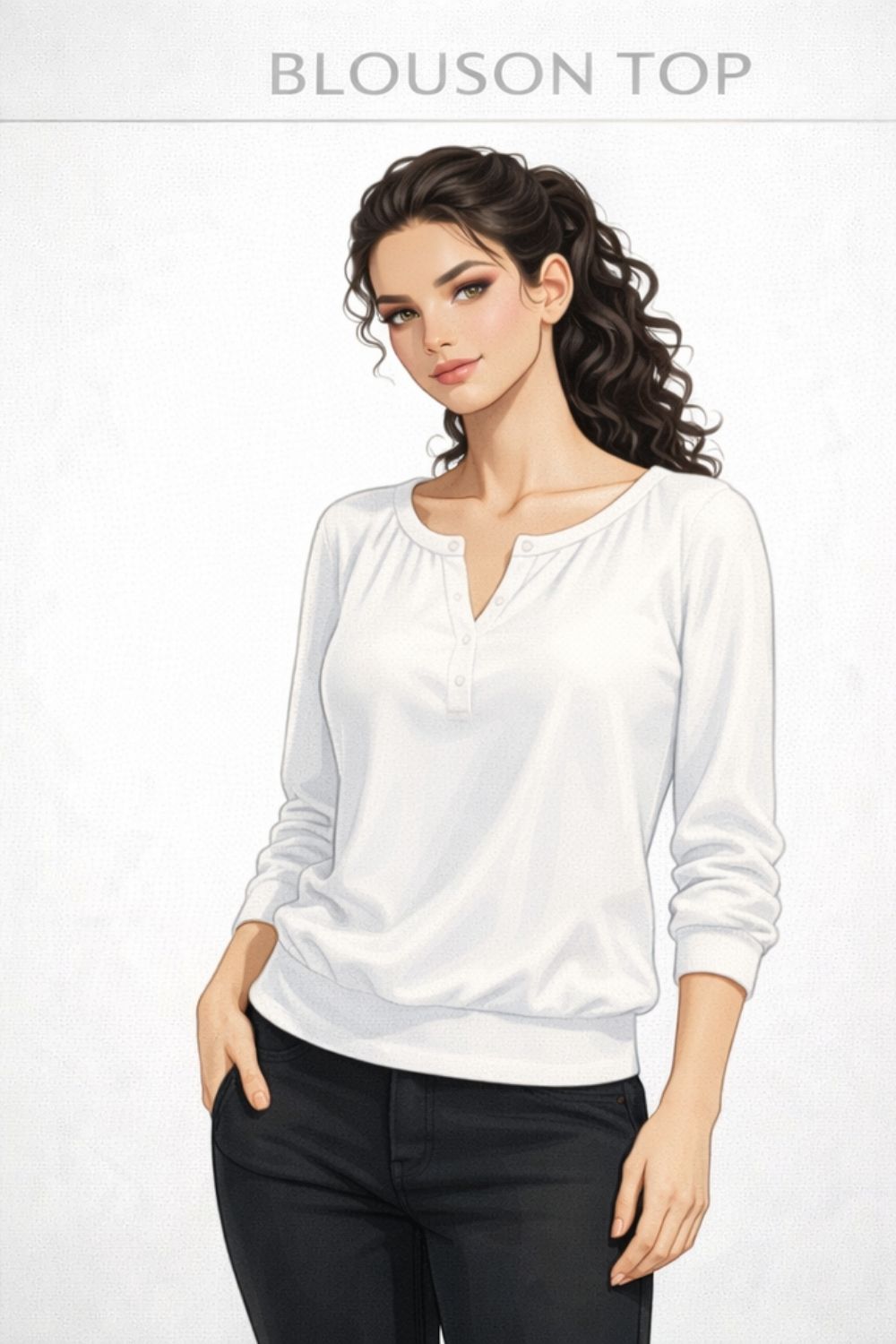
      Blouson Top

      blouson top example

      Loose, full fabric at the torso gathered into a tight band or elastic at the hem. The poufy upper body over a cinched hem is the entire design statement here.

      DesignFull loose torso, elasticized or banded hem creating blouse-out effect
      SeasonSpring / Summer
      Best ForCasual, smart-casual, dates
    2. 28

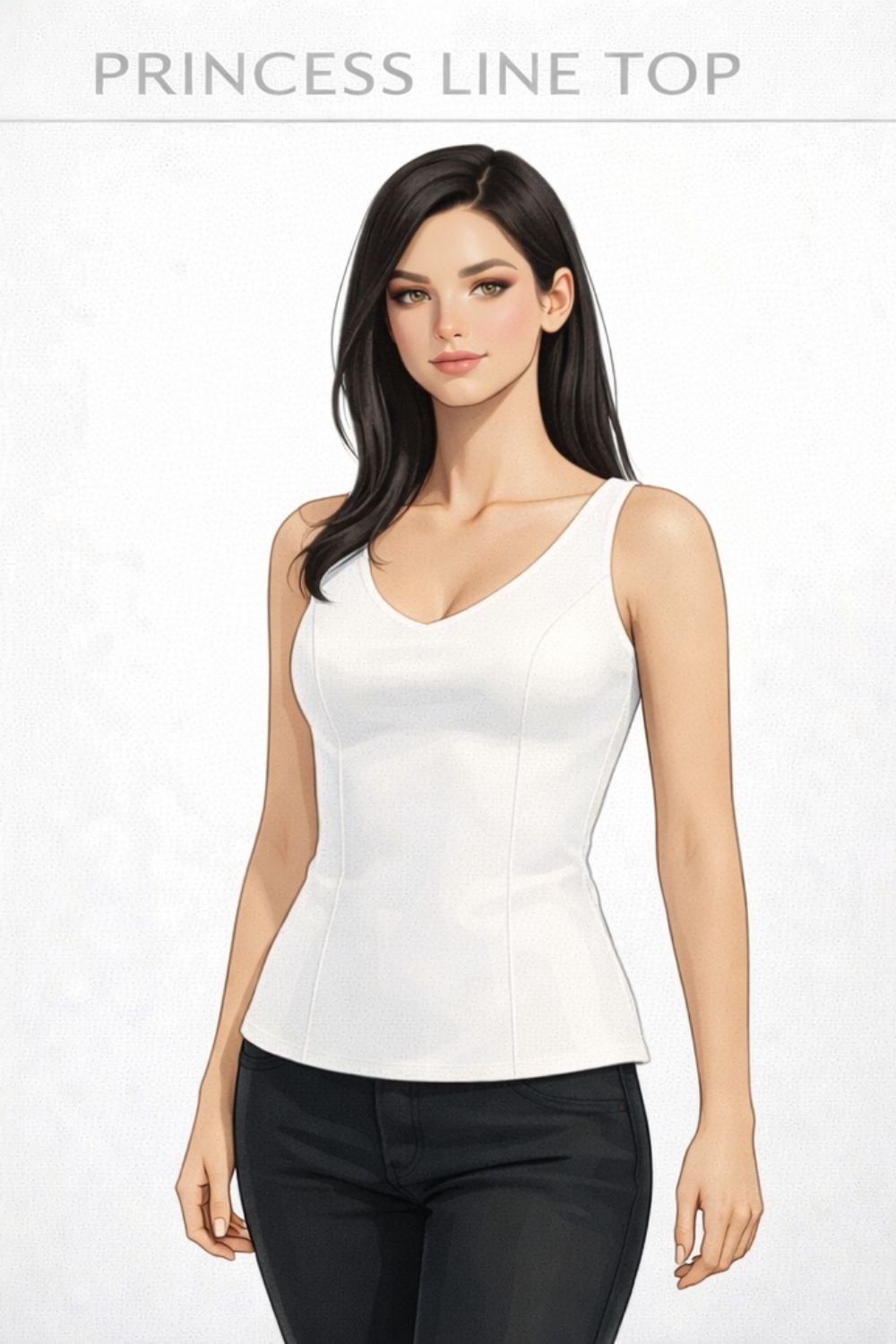
      Princess Line Top

      princess line top example

      Shaped through continuous vertical seams β€” no waist seam β€” that follow the body’s curves from shoulder to hem. Developed by Charles Frederick Worth in the 1860s; remains one of the most technically elegant fit solutions in tailoring.

      DesignContinuous vertical seams from shoulder to hem, no waist seam
      SeasonAll seasons
      Best ForOffice, formal occasions, smart-casual events
    1. 29

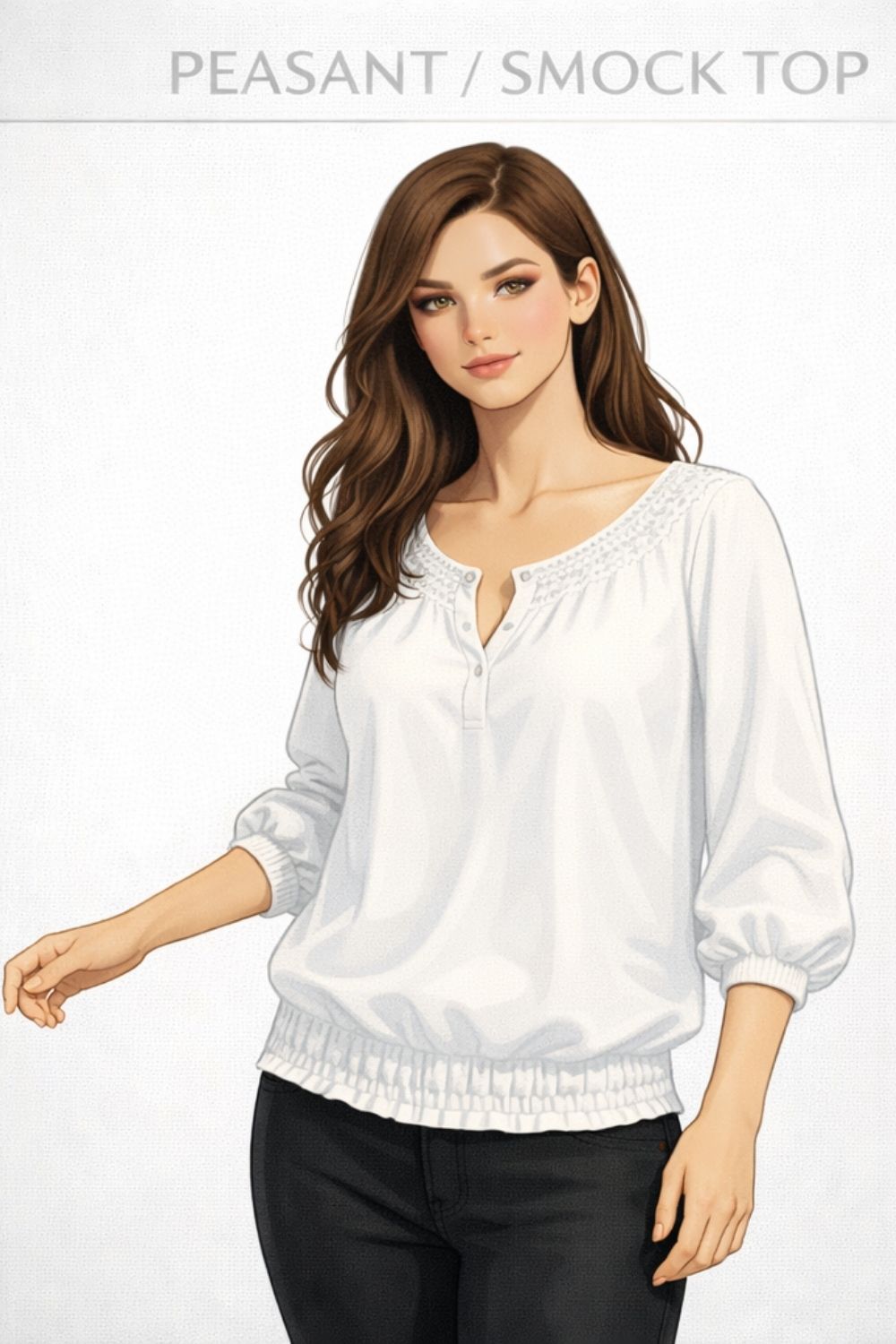
      Peasant / Smock Top

      peasant or smock top example

      Gathered or smocked fabric at neckline and/or shoulders; bohemian, often embroidered. References traditional European and Latin American folk dress, reinterpreted endlessly by boho aesthetics.

      DesignSmocked or gathered neckline, often embroidered detail, relaxed body
      SeasonSpring / Summer
      Best ForCasual, bohemian styling, festivals, resort
    2. 30

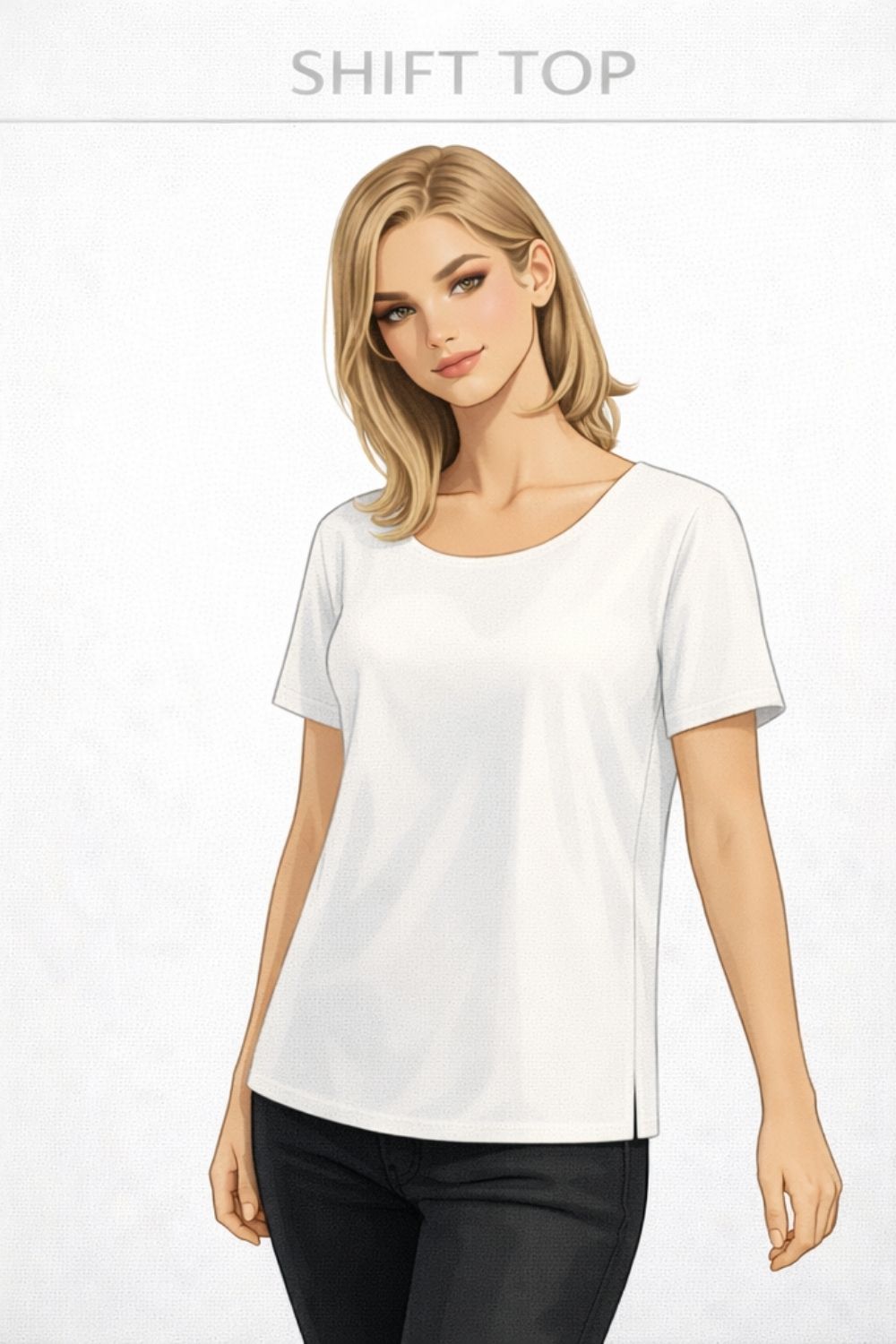
      Shift Top

      shift top example

      Loose, straight-cut silhouette; no defined waist; minimal structural seaming. The shift relies on volume and drape rather than tailoring β€” simplicity is the entire philosophy.

      DesignStraight cut, no waist shaping, minimal seams
      SeasonSpring / Summer
      Best ForCasual, minimalist aesthetic, comfort dressing
    1. 31

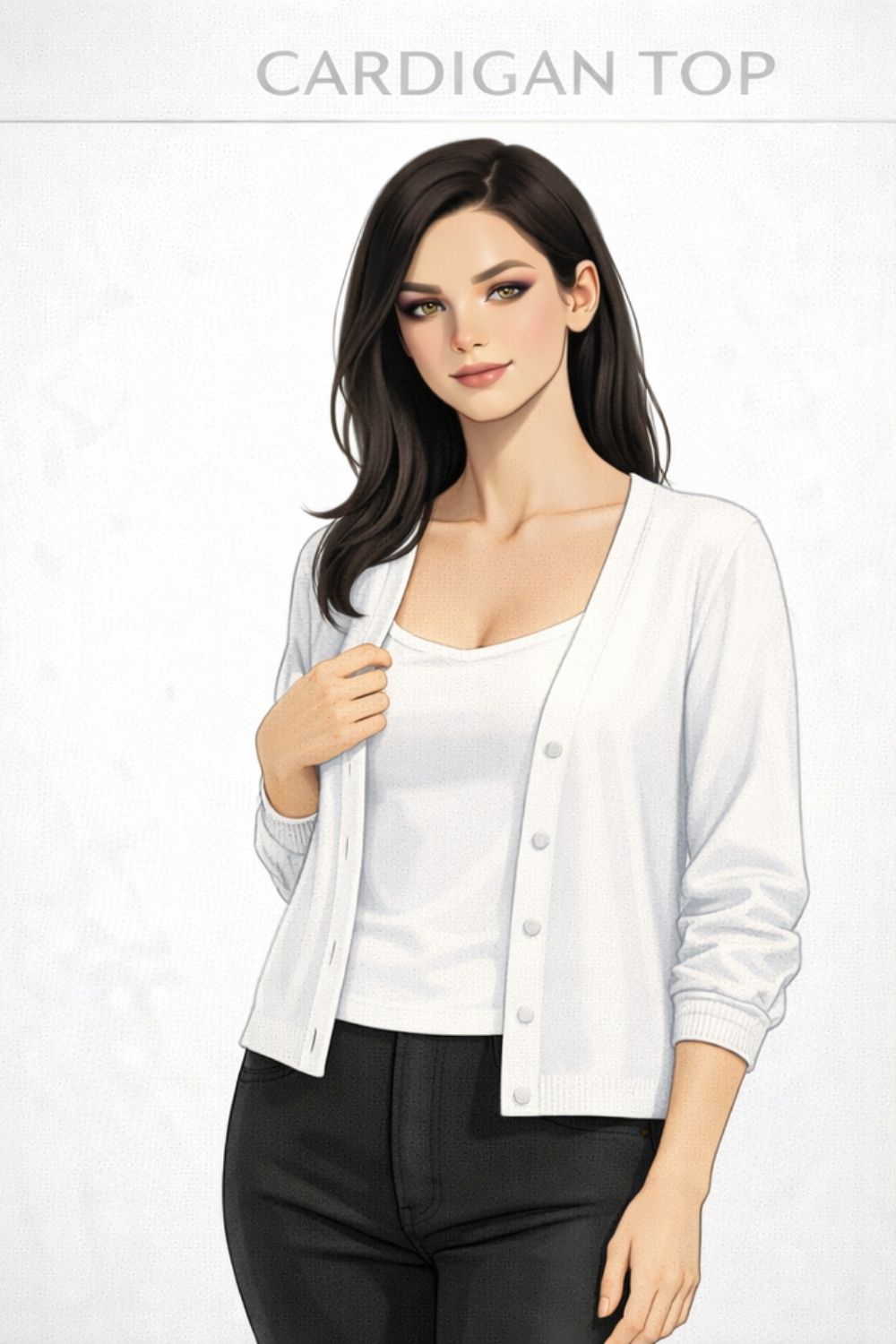
      Cardigan Top

      cardigan top example

      Open-front knit top; buttons or stays open. Worn standalone or layered. See the complete guide to cardigan styles for the full range.

      DesignOpen front, knit construction, button or open closure
      SeasonAll seasons
      Best ForLayering, office, casual, transitional weather
    2. 32

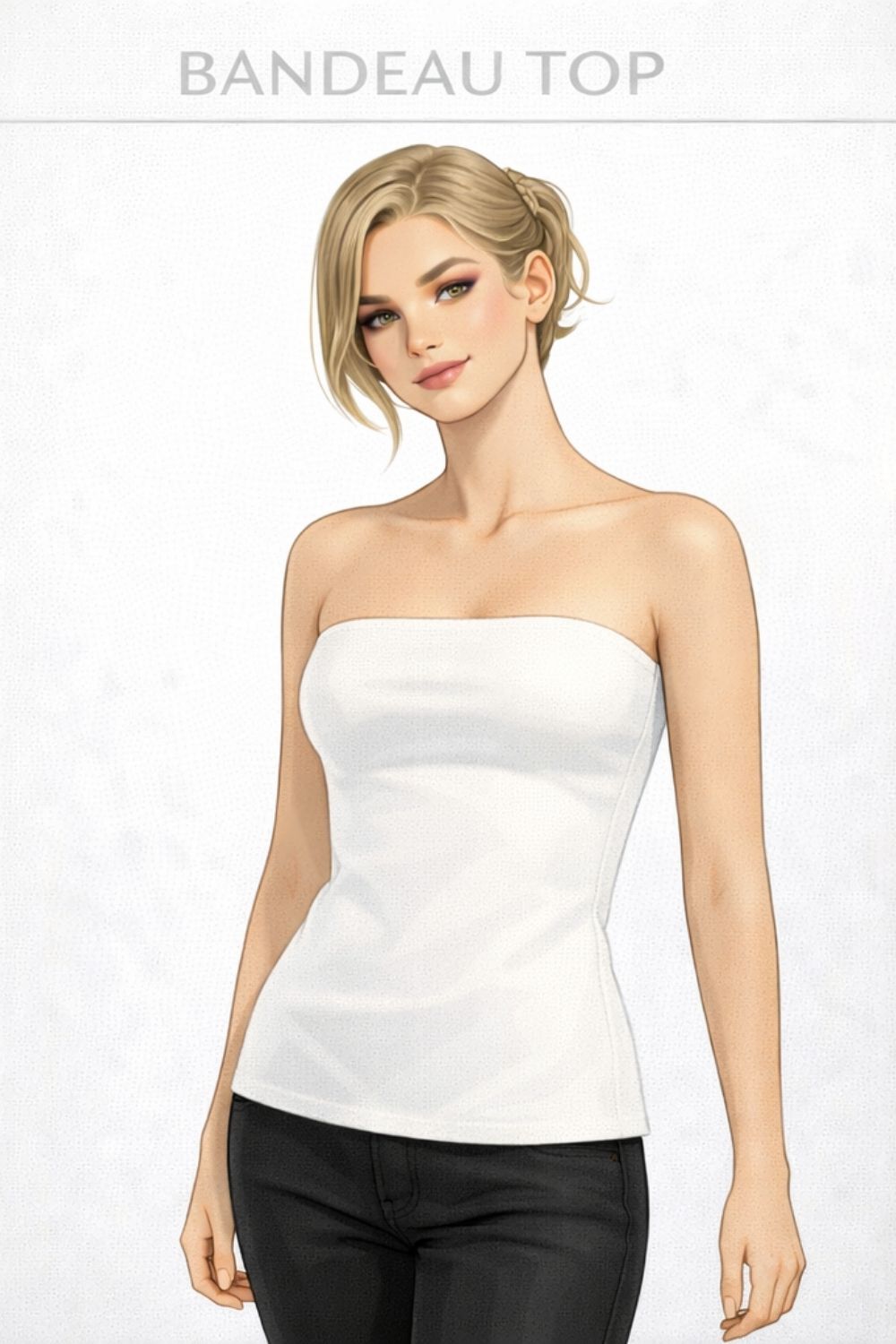
      Bandeau Top

      bandeau top example

      A wide elastic band across the chest β€” wider coverage than a tube top, either structured or stretch. Functions as outerwear particularly in resort and festival contexts.

      DesignWide chest band, strapless, structured or stretch fabric
      SeasonSummer
      Best ForBeach, resort, festival, layering under sheer tops
    Stylist Insight

    The most overlooked construction detail in tops is seam placement. A princess line seam and a side-panel seam produce similar visual results but entirely different fit behavior. Princess seams follow the body β€” they hug curves. Side-panel seams sit flat. Understanding this distinction transforms how you shop, especially online without a fitting room.

    Quick Recap β€” Category 1
    • 32 types defined by construction, not trend name or color
    • Construction determines fit behavior β€” a princess line fits differently than a side-panel seam
    • Blouse β‰  shirt: blouses drape and decorate; shirts structure and tailor
    • Wrap, bodysuit, and button-down are the highest cross-season versatility constructions in this category

    Category 2: By Length / Hemline (#33–#42)

    Where the garment ends relative to the body β€” the vertical modifier of any top

    Length is a modifier. A crop top is not a construction type β€” it’s a hemline length applied to a construction. You can have a cropped T-shirt, a cropped blouse, a cropped sweatshirt. The β€œcrop” describes where the hem falls, not how the garment is made. This distinction is why length lives in its own category rather than being scattered across Structure.

    1. 33

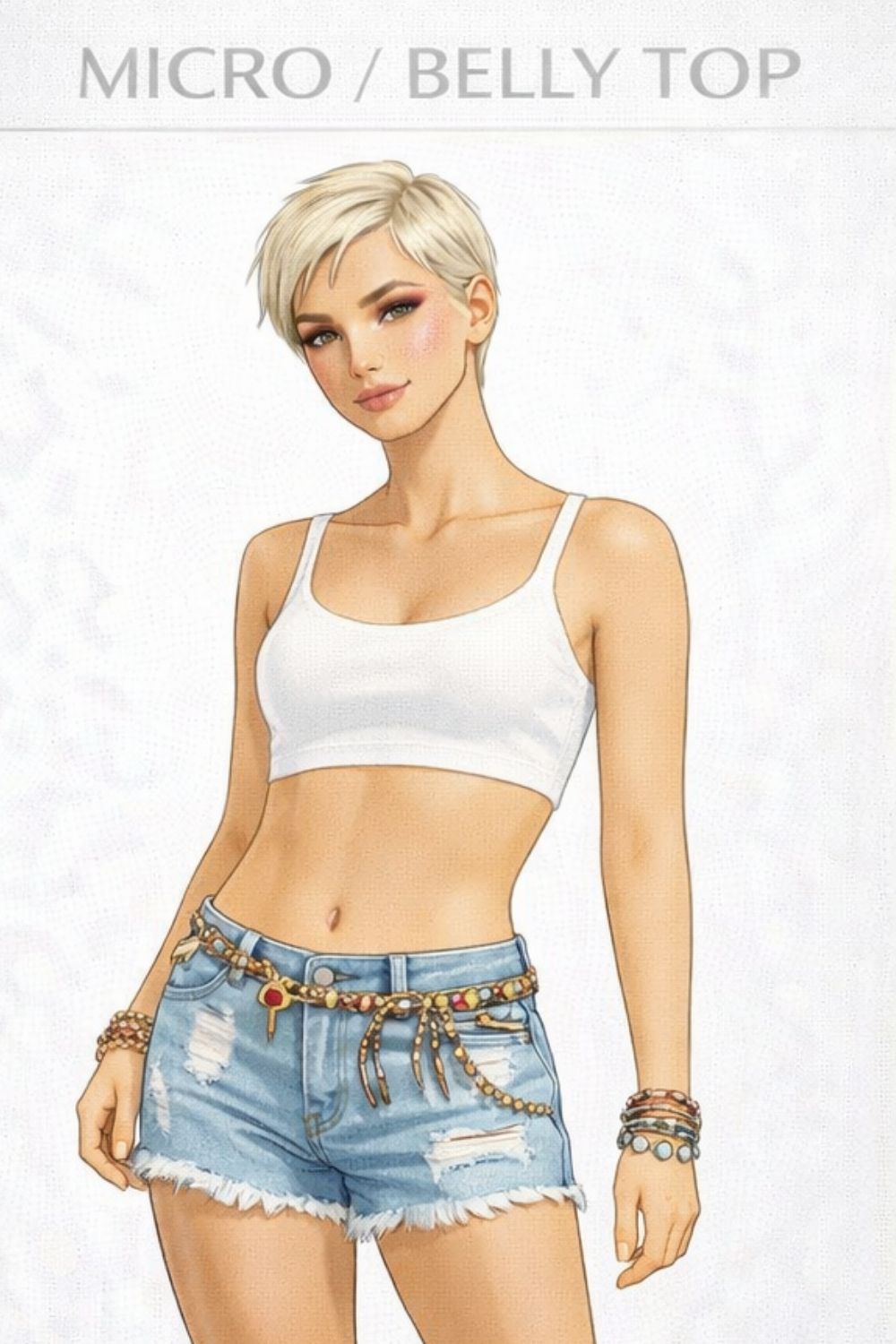
      Micro / Belly Top

      micro belly top example

      Extremely short; ends just below or at the bust. Shorter than a crop top by intentional design β€” not just construction.

      DesignMaximum midriff exposure, very short hem, minimal fabric below bust
      SeasonSummer / Festival
      Best ForFestival, beach, resort, high-fashion looks
    2. 34

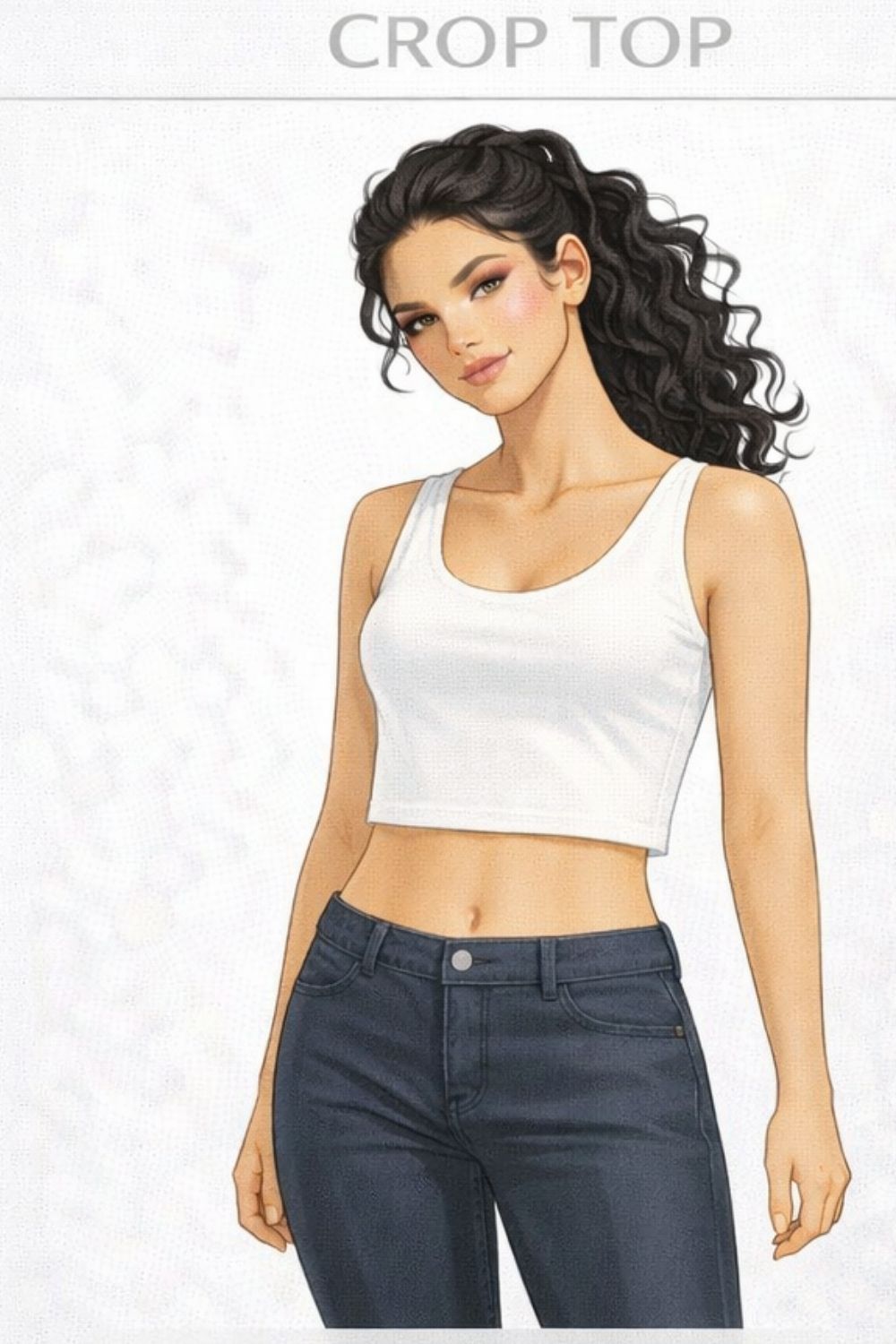
      Crop Top

      crop top example

      Ends above the natural waist; shows part of the midriff. The dominant short-top length in contemporary fashion. Our visual guide to crop top varieties and styling covers every sub-type.

      DesignAbove-waist hemline, midriff-revealing, wide construction range
      SeasonSpring / Summer
      Best ForCasual, street style, going out, weekend
    1. 35

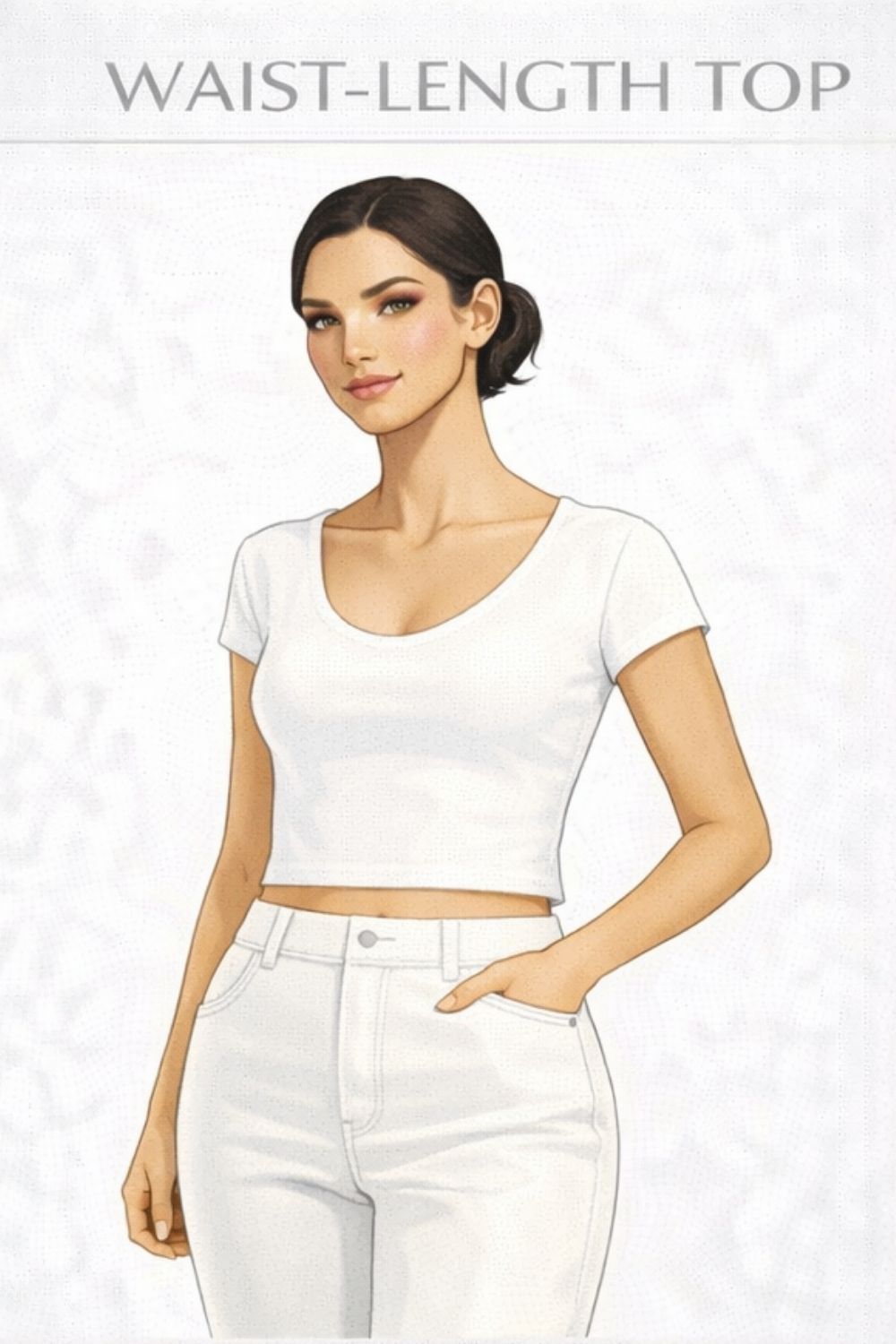
      Waist-Length Top

      waist length top example

      Hemline falls at the natural waist. Creates a permanently tucked-in appearance without actually tucking. Tends to work particularly well with high-rise bottoms.

      DesignPrecise waist-level hem, clean finish
      SeasonAll seasons
      Best ForHigh-rise bottoms, office-adjacent, smart-casual
    2. 36

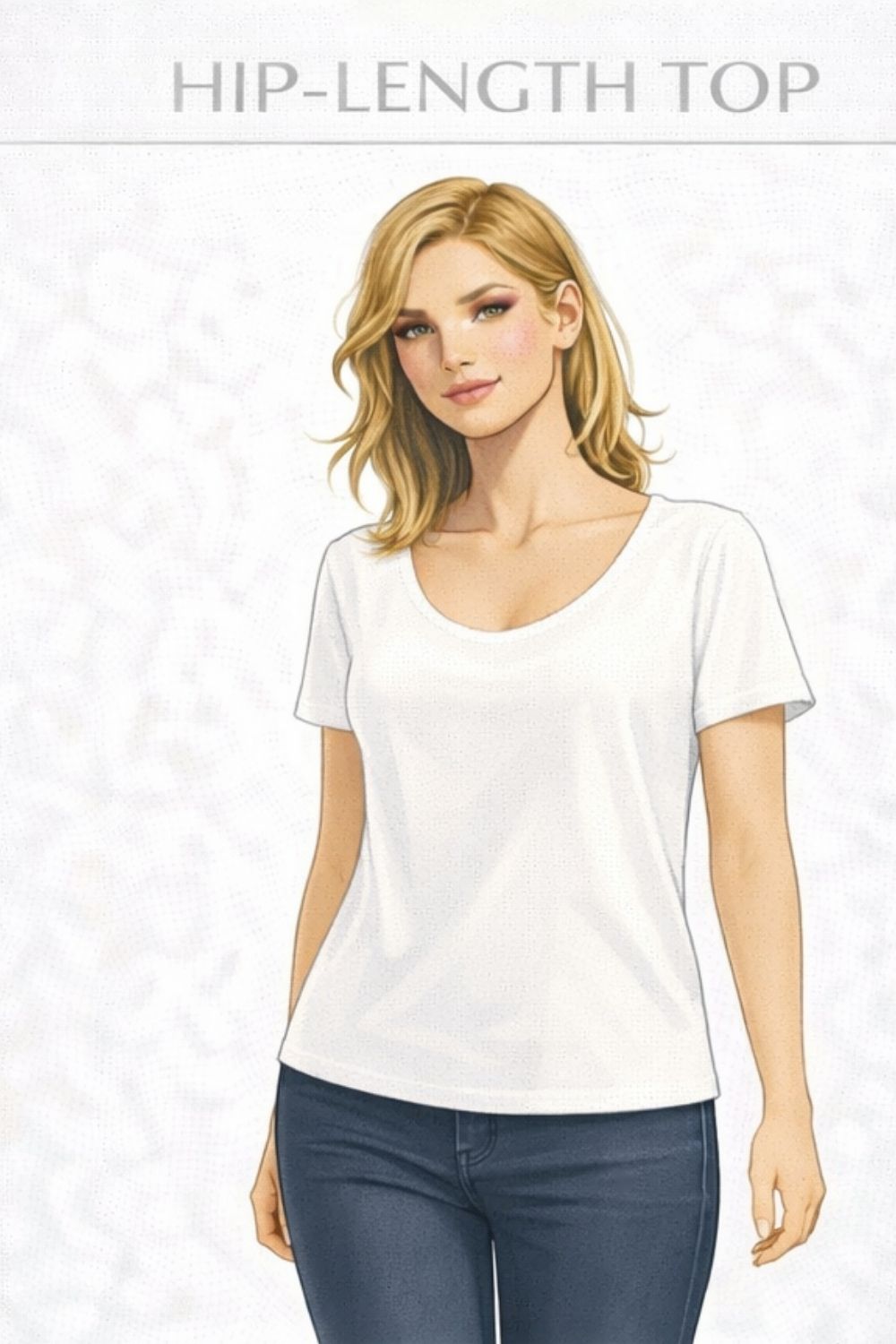
      Hip-Length Top

      hip length top example

      Falls to the hip bone. The most common everyday top length β€” versatile across virtually all occasions and bottom choices.

      DesignStandard hem at hip bone, proportionally balanced
      SeasonAll seasons
      Best ForUniversal everyday use β€” the default length
    1. 37

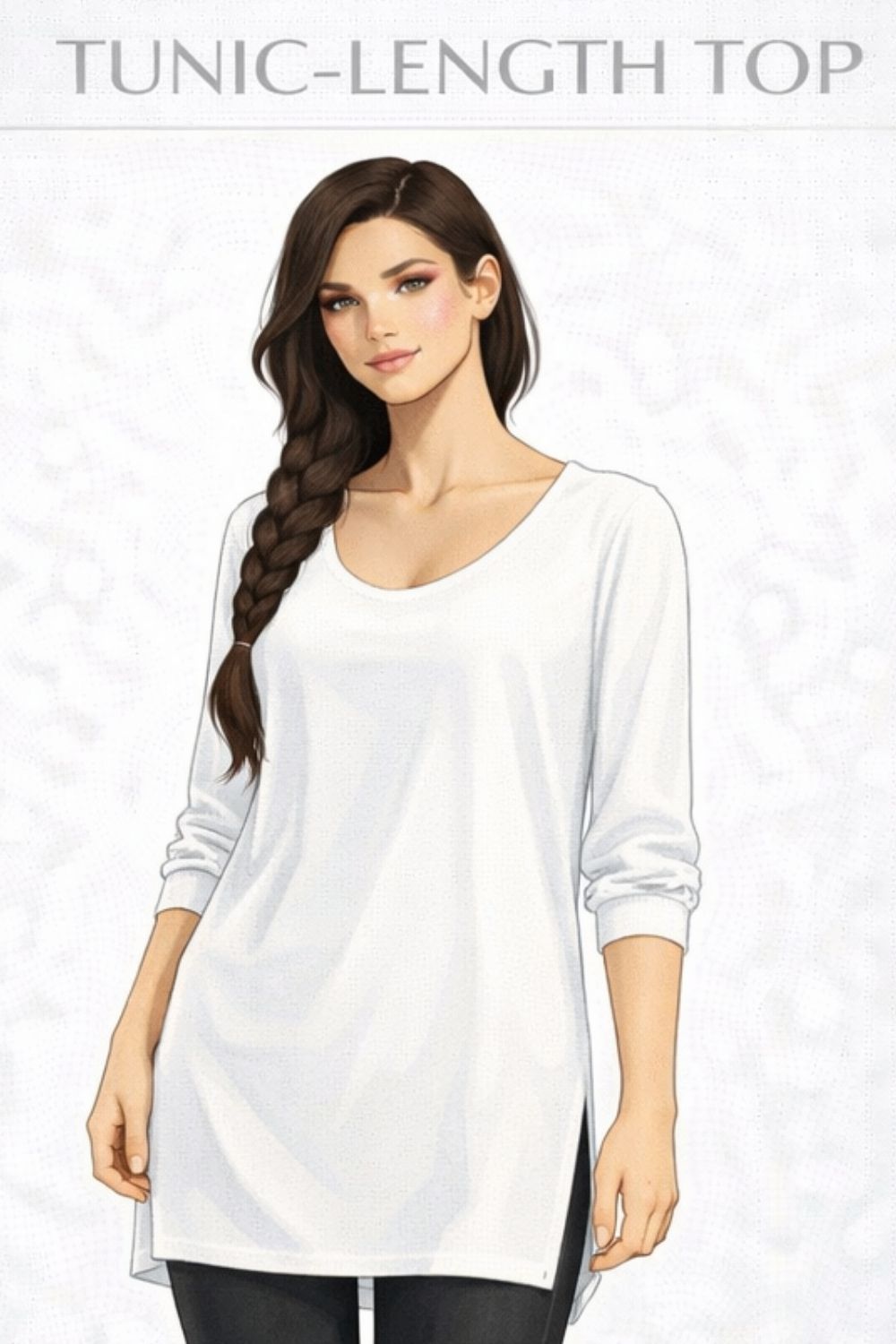
      Tunic-Length Top

      tunic length top example

      Extends past the hip to mid-thigh. Primarily worn over leggings or slim pants. Offers coverage without bulk β€” a practical balance many find genuinely useful.

      DesignExtended hip-to-thigh hem, relaxed fit through body
      SeasonAll seasons
      Best ForLeggings, slim pants, casual comfort, travel
    2. 38

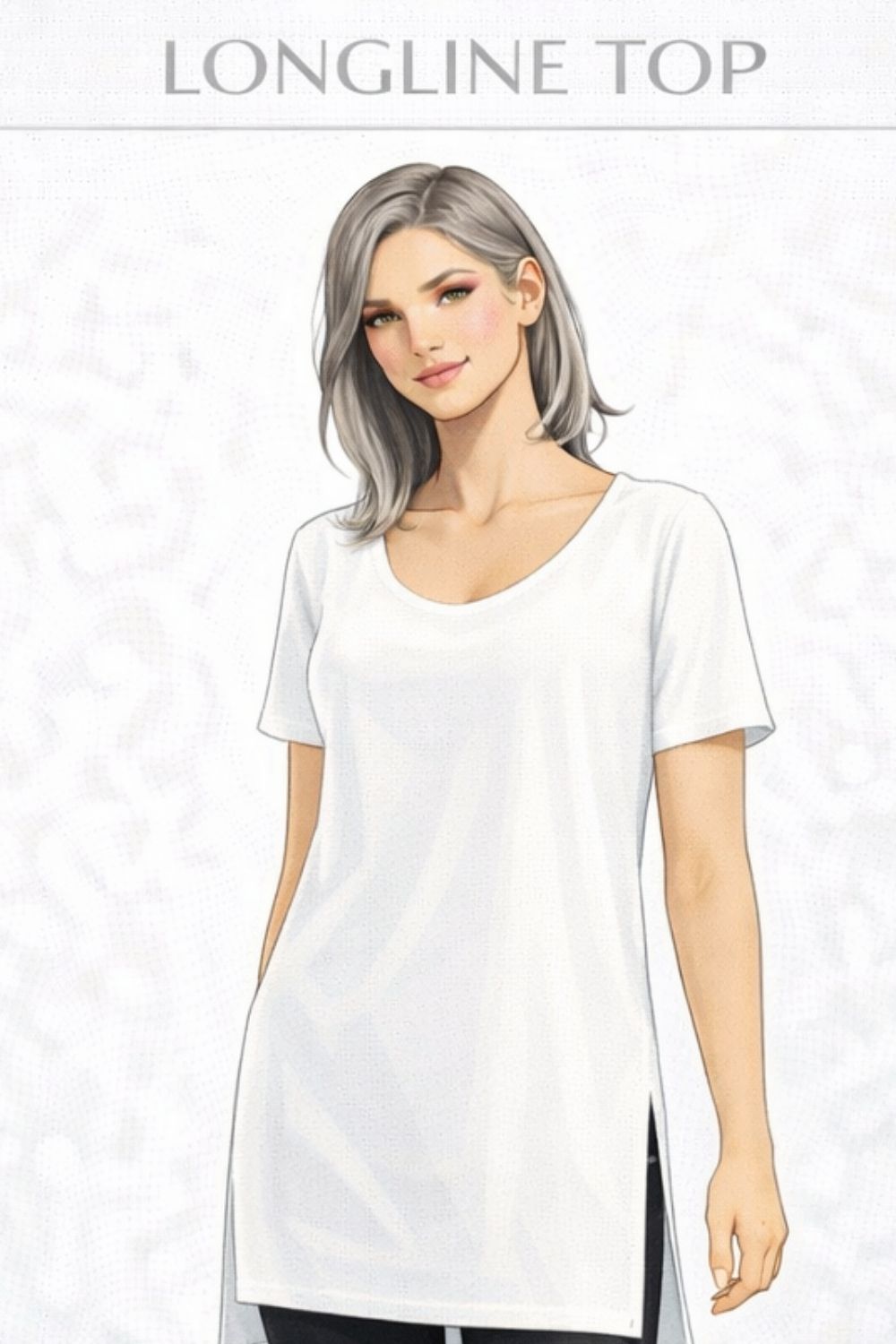
      Longline Top

      longline top example

      Falls past the thigh or toward the knee. Creates a lengthened vertical line through the torso and leg β€” a powerful silhouette effect.

      DesignKnee-approaching hem, extended vertical line
      SeasonAll seasons
      Best ForLayered looks, streetwear, styling over leggings
    1. 39

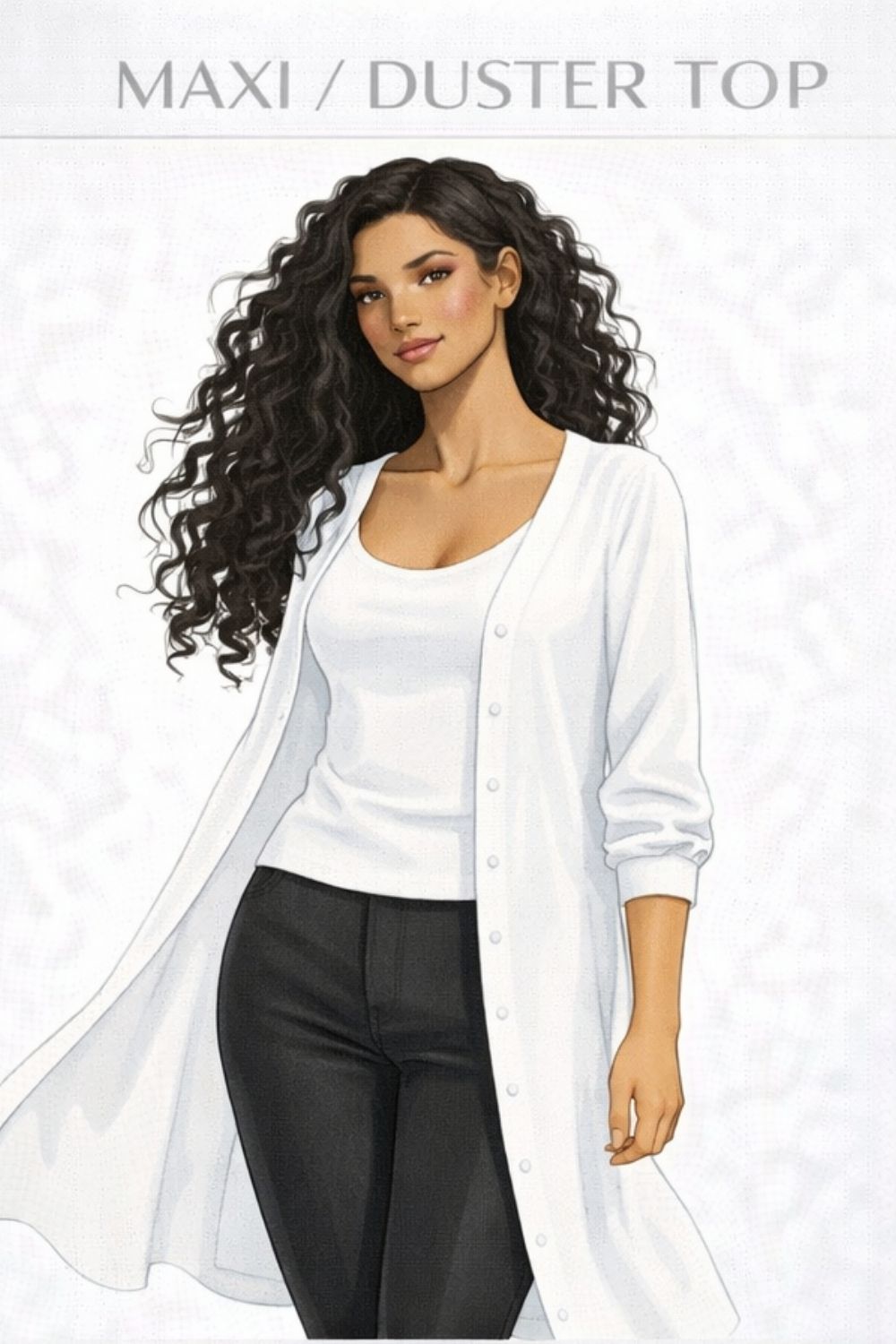
      Maxi Top / Duster Top

      maxi or duster top example

      Reaches the calf or ankle. Worn as a duster layer over other tops, or as a standalone statement. The extreme length is the whole point.

      DesignCalf-to-ankle hem, dramatic floor-grazing proportion
      SeasonSpring / Summer / Autumn
      Best ForResort layering, bohemian looks, editorial styling
    2. 40

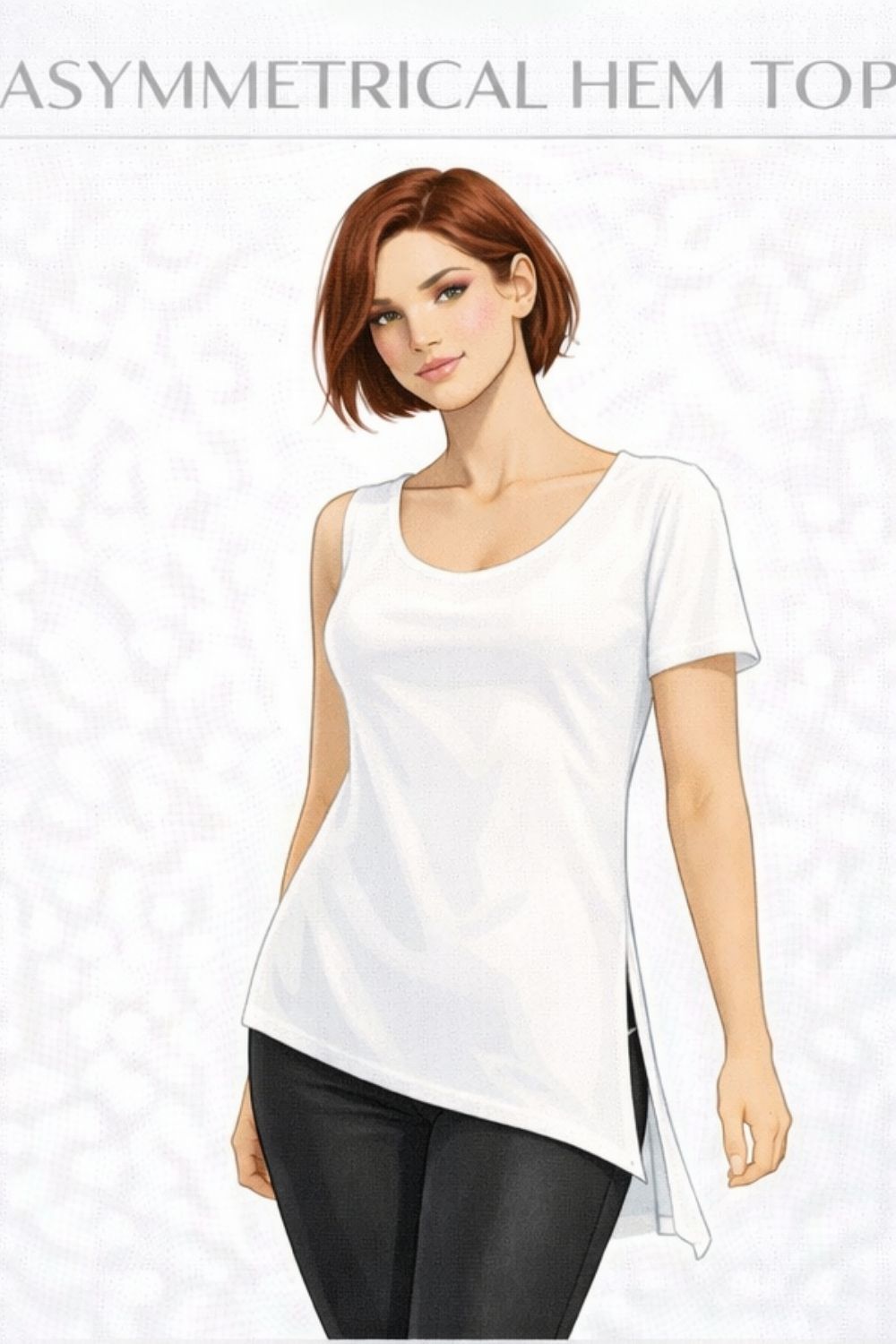
      Asymmetrical Hem Top

      asymmetrical hem top example

      Hemline is uneven β€” one side longer than the other. The diagonal line across the body creates visual movement and interest even in a static garment.

      DesignUneven hemline, diagonal cut, inherent visual tension
      SeasonSpring / Summer
      Best ForCasual, fashion-forward looks, going out
    1. 41

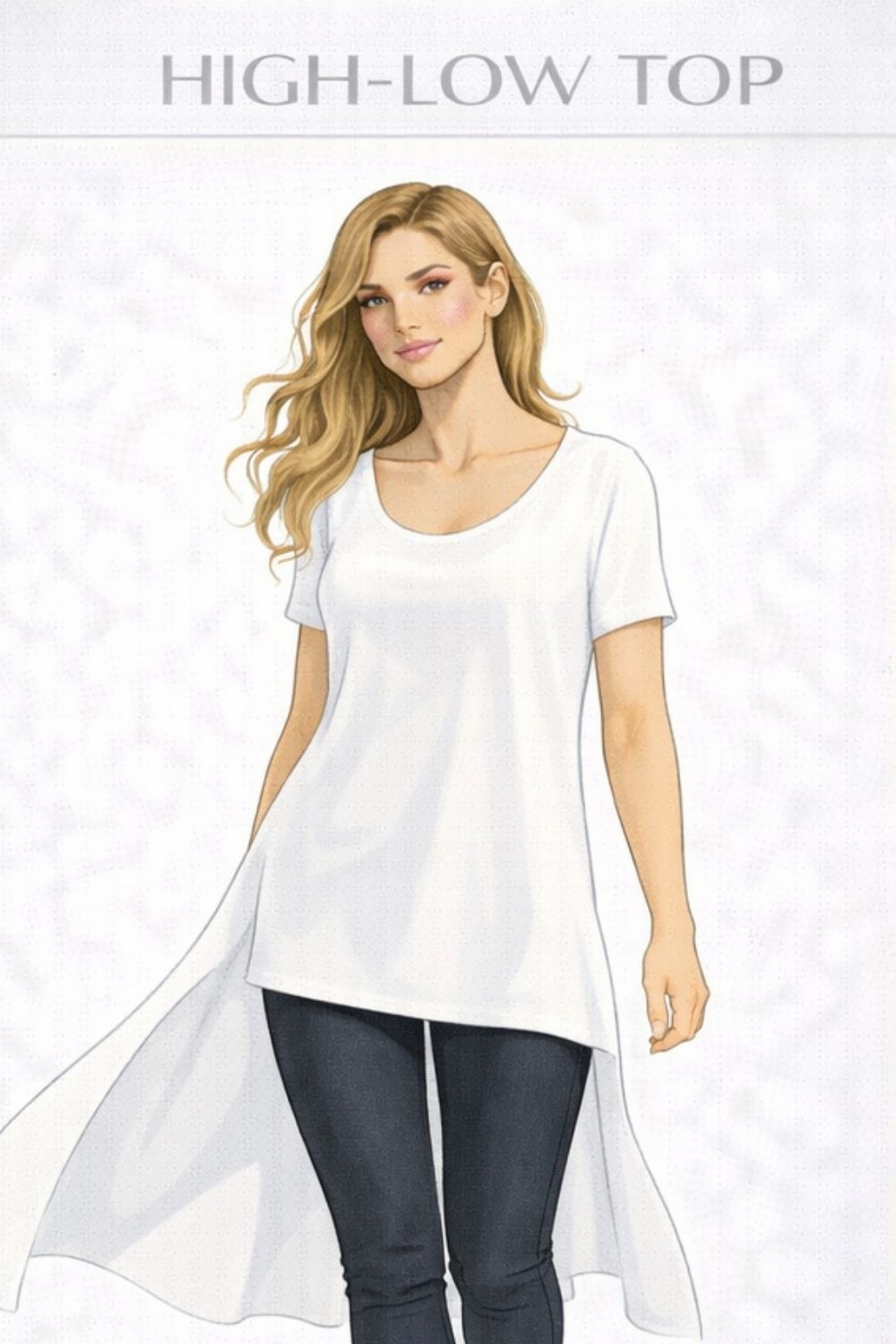
      High-Low Top

      high low top example

      Shorter front, longer back. Combines the ease of a shorter front with the coverage of a longer back panel β€” a construction compromise that often photographs beautifully in motion.

      DesignShorter front hem, extended rear hem, dramatic length contrast
      SeasonSpring / Summer
      Best ForSmart-casual, parties, date nights
    2. 42

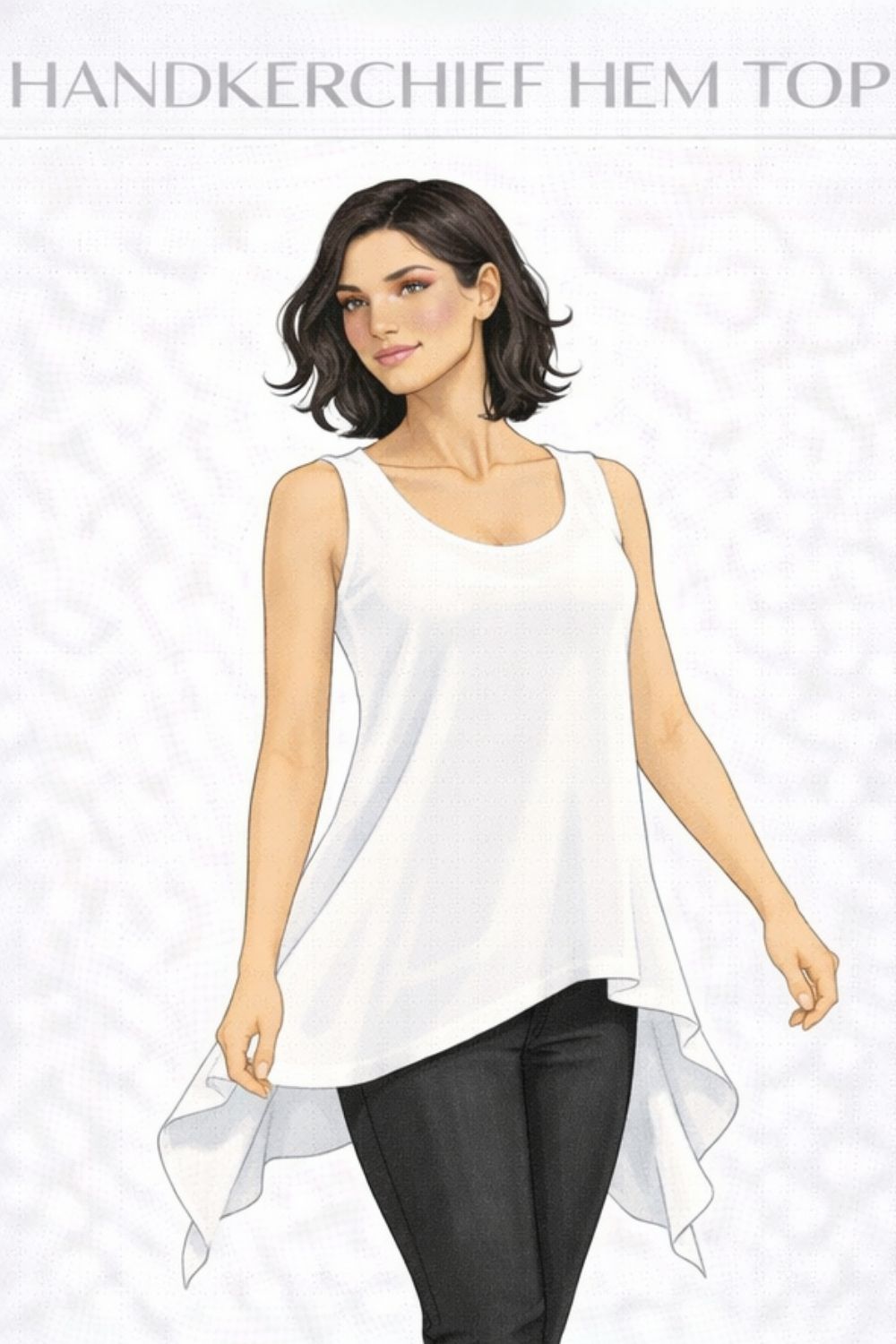
      Handkerchief Hem Top

      handkerchief hem top example

      Hemline has soft, irregular points like a folded handkerchief. The irregular fabric points move gracefully as you walk. Inherently feminine in character.

      DesignSoft pointed hem corners, bias-cut or draped irregular finish
      SeasonSpring / Summer
      Best ForResort, romantic occasions, feminine dressing
    Fit Advisory

    Hemline photographs are almost always taken on taller models. A β€œhip-length” top on a 5’10” frame may hit at the waist on a 5’4β€³ frame. Always check the listed garment length measurement against your actual torso length β€” not just the size label. Our guide to understanding clothing fit and proportions helps you translate these measurements practically.

    Category 3: By Sleeve Type (#43–#64)

    The shape, length, and construction of the sleeve β€” one of the most historically varied dimensions in tops design

    Sleeves are where fashion gets genuinely interesting from a construction standpoint. The sleeve is the most technically challenging part of any garment to cut and sew β€” and the most expressive. From the barely-there cap sleeve to the theatrical leg-of-mutton, sleeve construction spans centuries of fashion history. Many of these names β€” bishop, juliet, gigot β€” come directly from historical garment vocabulary that has survived because no one has found better words for the construction they describe.

    Understanding sleeve construction types also explains why certain tops fit the way they do. A raglan sleeve eliminates the shoulder seam entirely β€” and that structural choice is precisely what makes hoodies and athletic tops feel so unrestricted. That’s not styling. That’s engineering.

    1. 43

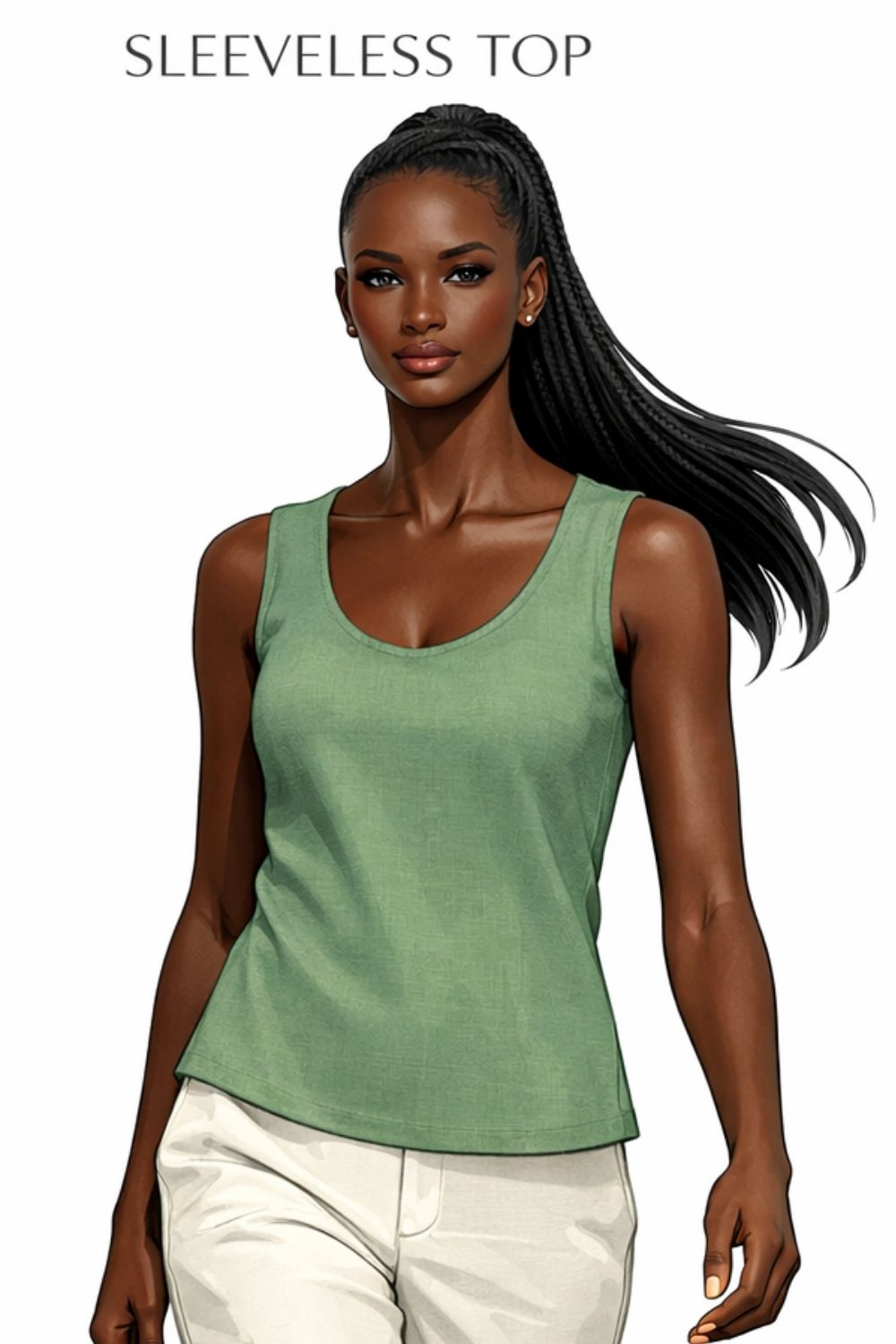
      Sleeveless Top

      sleeveless top example

      No sleeves at all; arms fully exposed. The absence is a deliberate design choice β€” and an extremely versatile base for layering.

      DesignClean armhole finish, no sleeve, full arm exposure
      SeasonSpring / Summer
      Best ForLayering base, casual, beach, warm-weather everyday
    2. 44

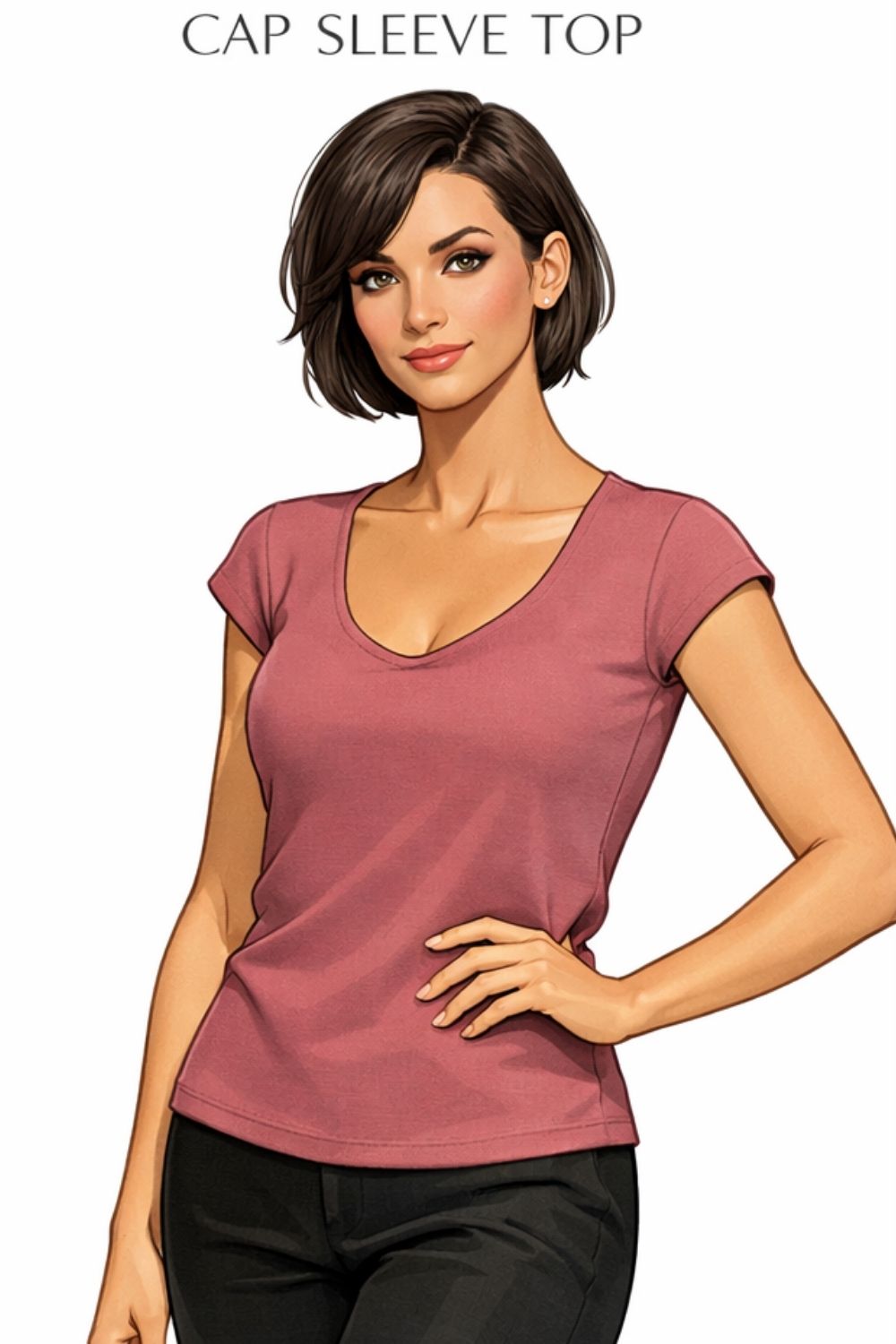
      Cap Sleeve Top

      cap sleeve top example

      A tiny sleeve extending just to the shoulder cap. Works particularly well as a layering piece over a tank. More on cap sleeve construction here.

      DesignMinimal sleeve just covering shoulder cap, small flutter or fitted
      SeasonSpring / Summer
      Best ForSmart-casual, office, layering, feminine occasions
    1. 45

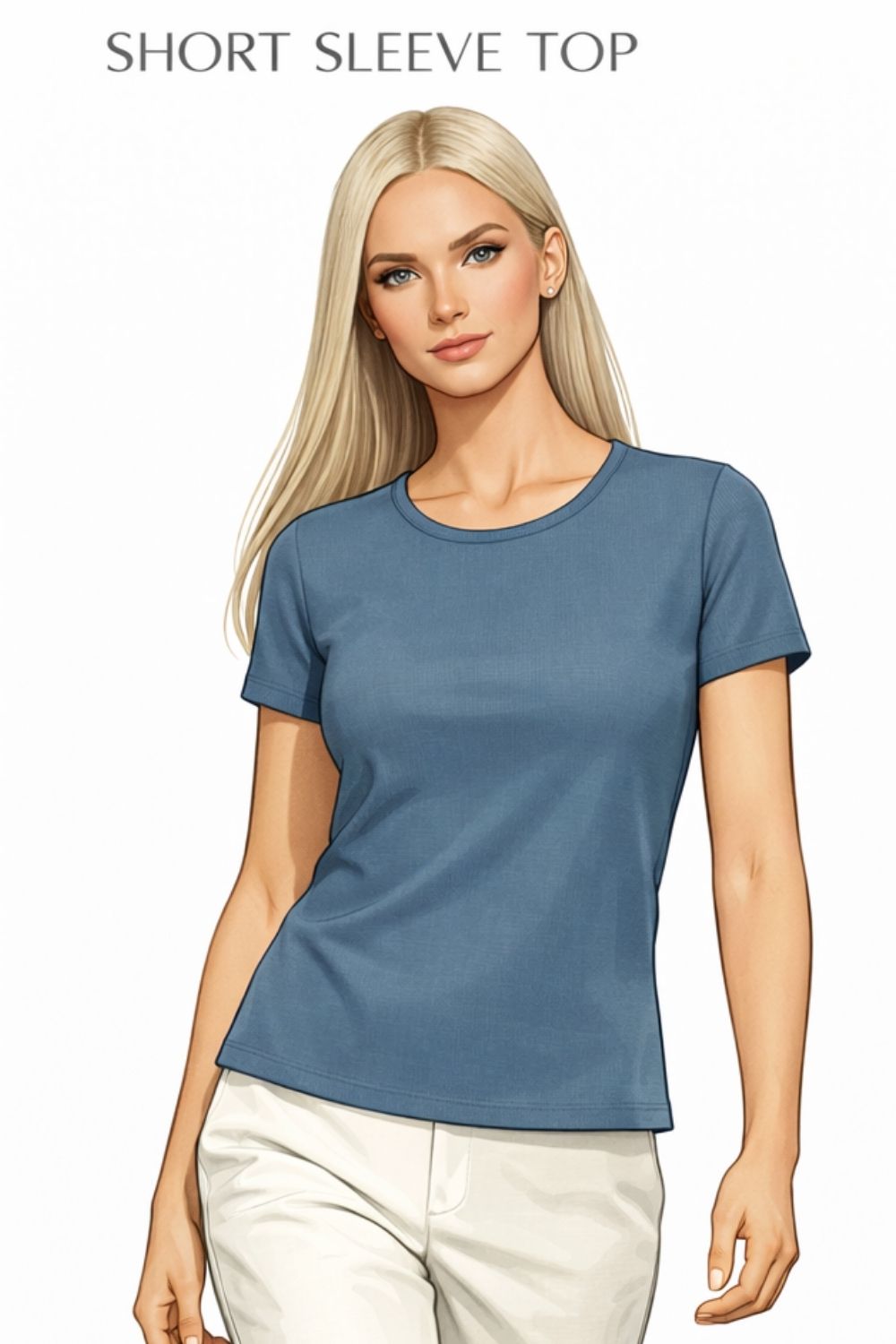
      Short Sleeve Top

      short sleeve top example

      Standard sleeve ending mid-upper arm. The most common sleeve length across all top types β€” the default when nothing more specific is specified.

      DesignMid-upper arm hem, standard set-in or raglan construction
      SeasonSpring / Summer / Autumn
      Best ForEveryday, casual, most occasions universally
    2. 46

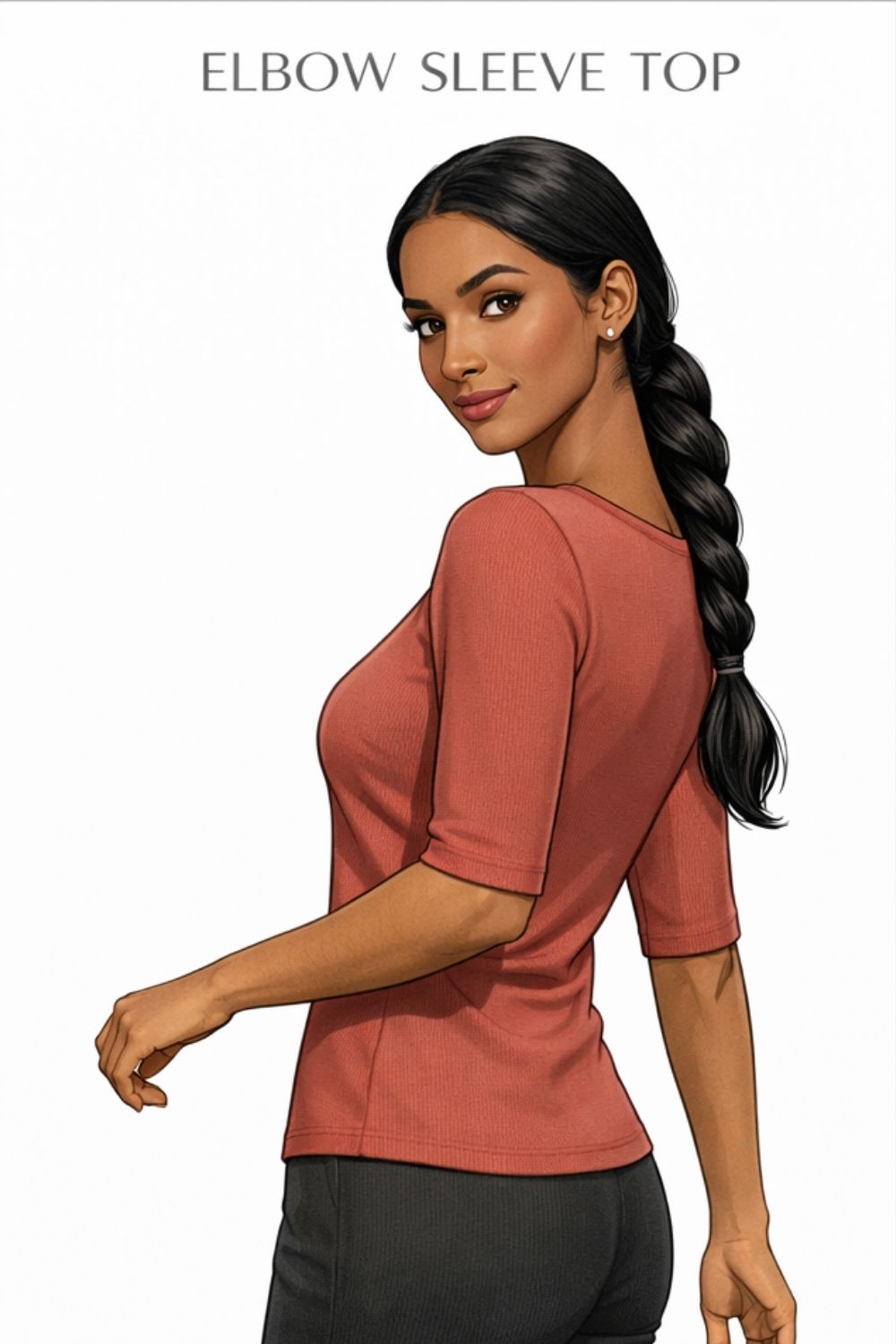
      Elbow Sleeve Top

      elbow sleeve top example

      Sleeve ends exactly at or near the elbow. Warmer than short, cooler than three-quarter. Underutilized and genuinely underappreciated β€” it’s a transitional length that photographs well and flatters most arm proportions.

      DesignElbow-point hem, clean finish at joint
      SeasonSpring / Summer / Autumn
      Best ForSmart-casual, transitional weather, office
    1. 47

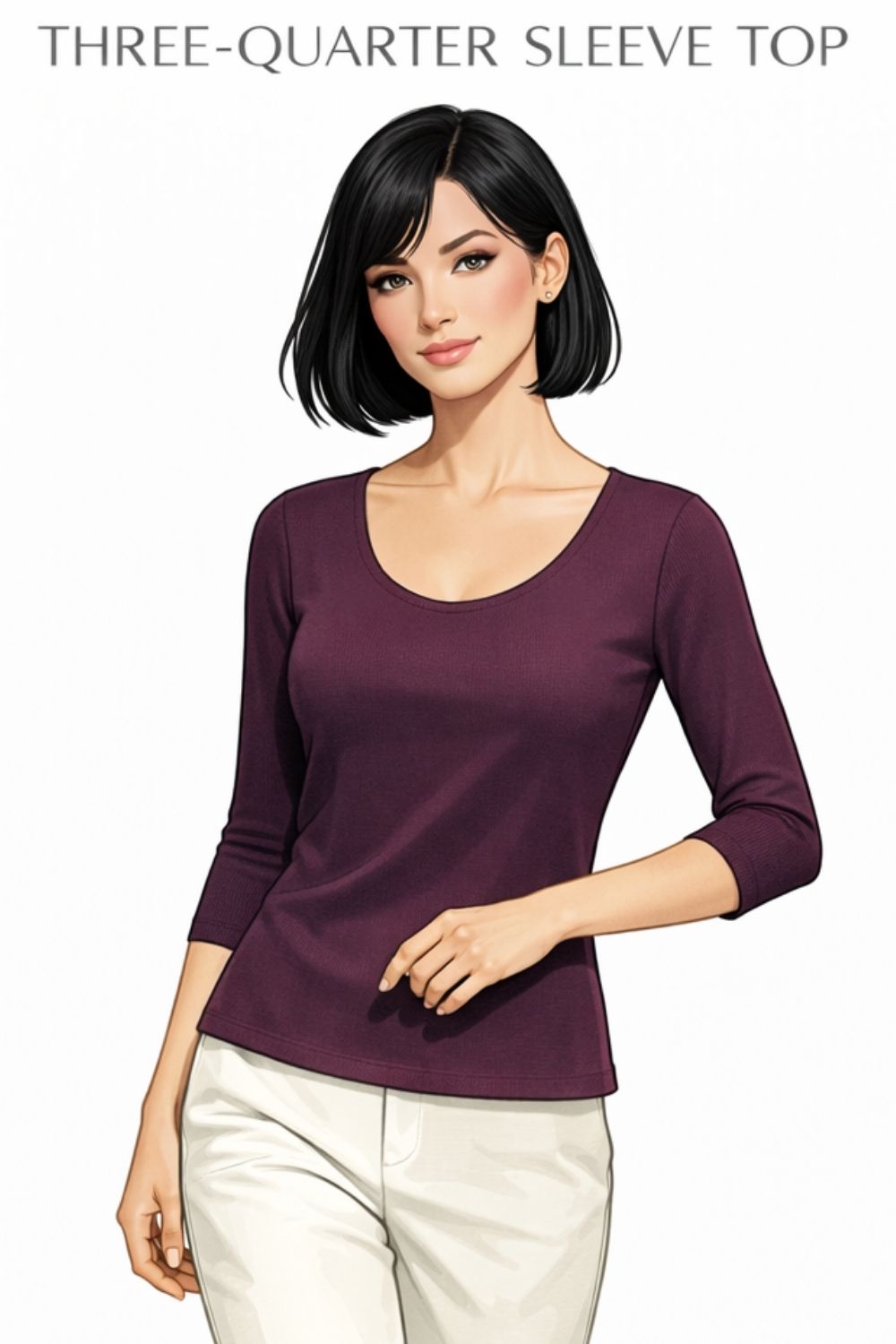
      Three-Quarter Sleeve Top

      three quarter sleeve top example

      Ends between elbow and wrist. One of the most consistently elegant sleeve lengths β€” elongates the arm visually, keeps you covered without overheating, and photographs particularly well.

      DesignBetween-elbow-and-wrist hem, elegant proportioning
      SeasonSpring / Autumn
      Best ForOffice, smart-casual, evening, travel
    2. 48

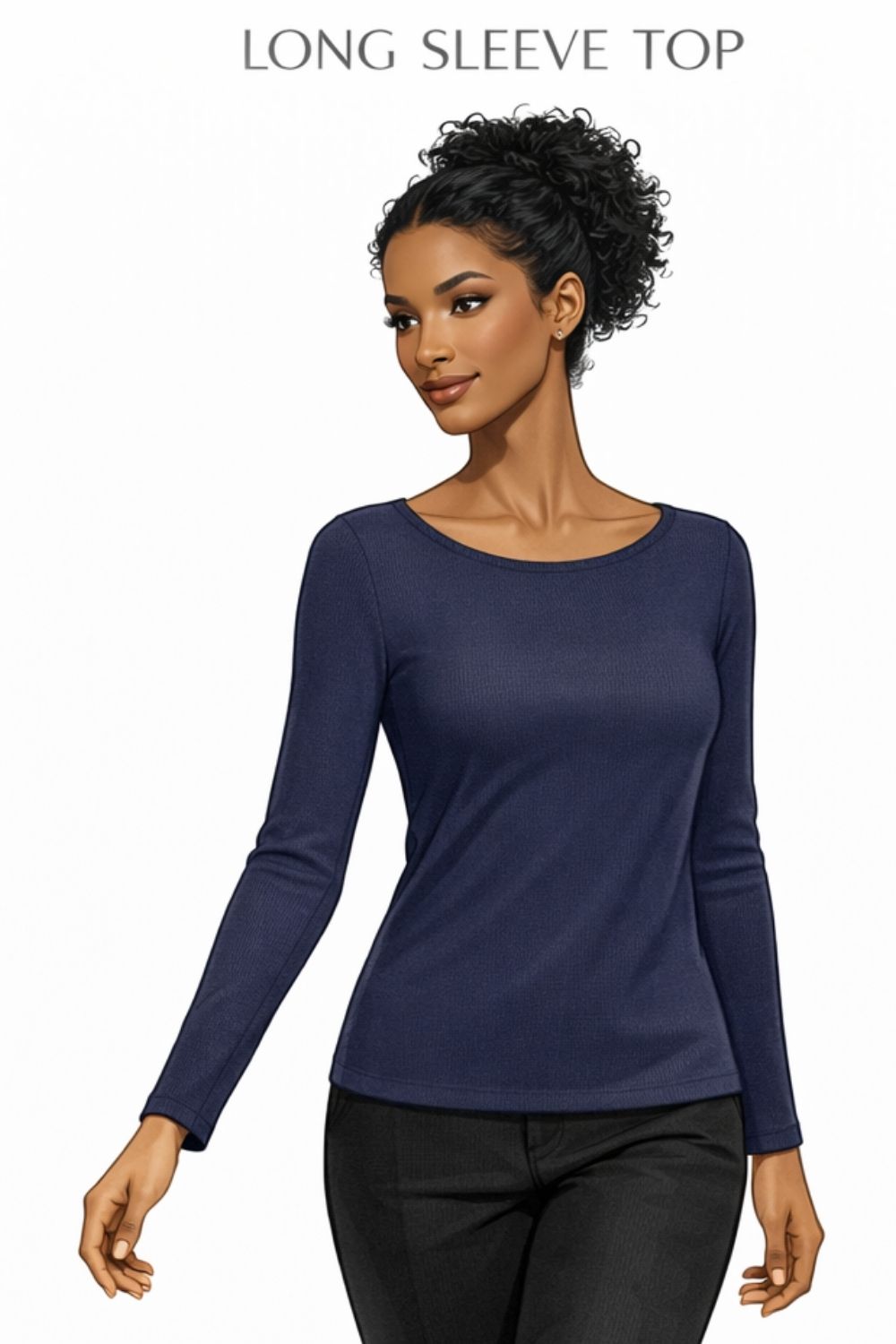
      Long Sleeve Top

      long sleeve top example

      Full arm coverage from shoulder to wrist. The cold-weather workhorse; also a layering base beneath dresses, dungarees, and pinafores.

      DesignWrist-length sleeve, full arm coverage, various cuff finishes
      SeasonAutumn / Winter
      Best ForCold weather, office, layering, everyday
    1. 49

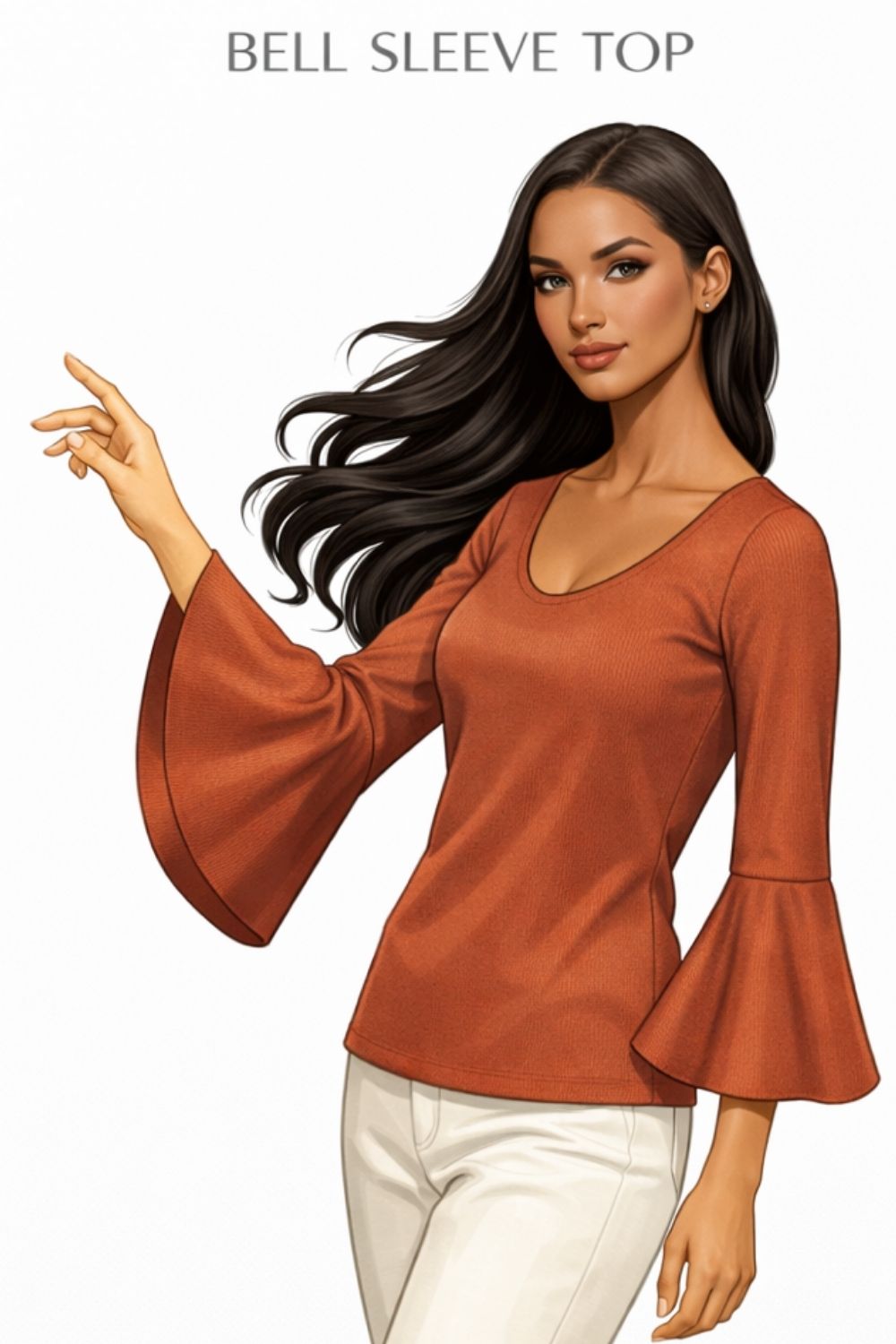
      Bell Sleeve Top

      bell sleeve top example

      Fitted at shoulder; dramatically flares at the hem like a bell. Distinctly bohemian β€” the movement and volume at the sleeve’s end creates an expressive, almost theatrical effect.

      DesignFitted shoulder, dramatically widening to flared open hem
      SeasonSpring / Summer
      Best ForBohemian styling, casual, dates, resort
    2. 50

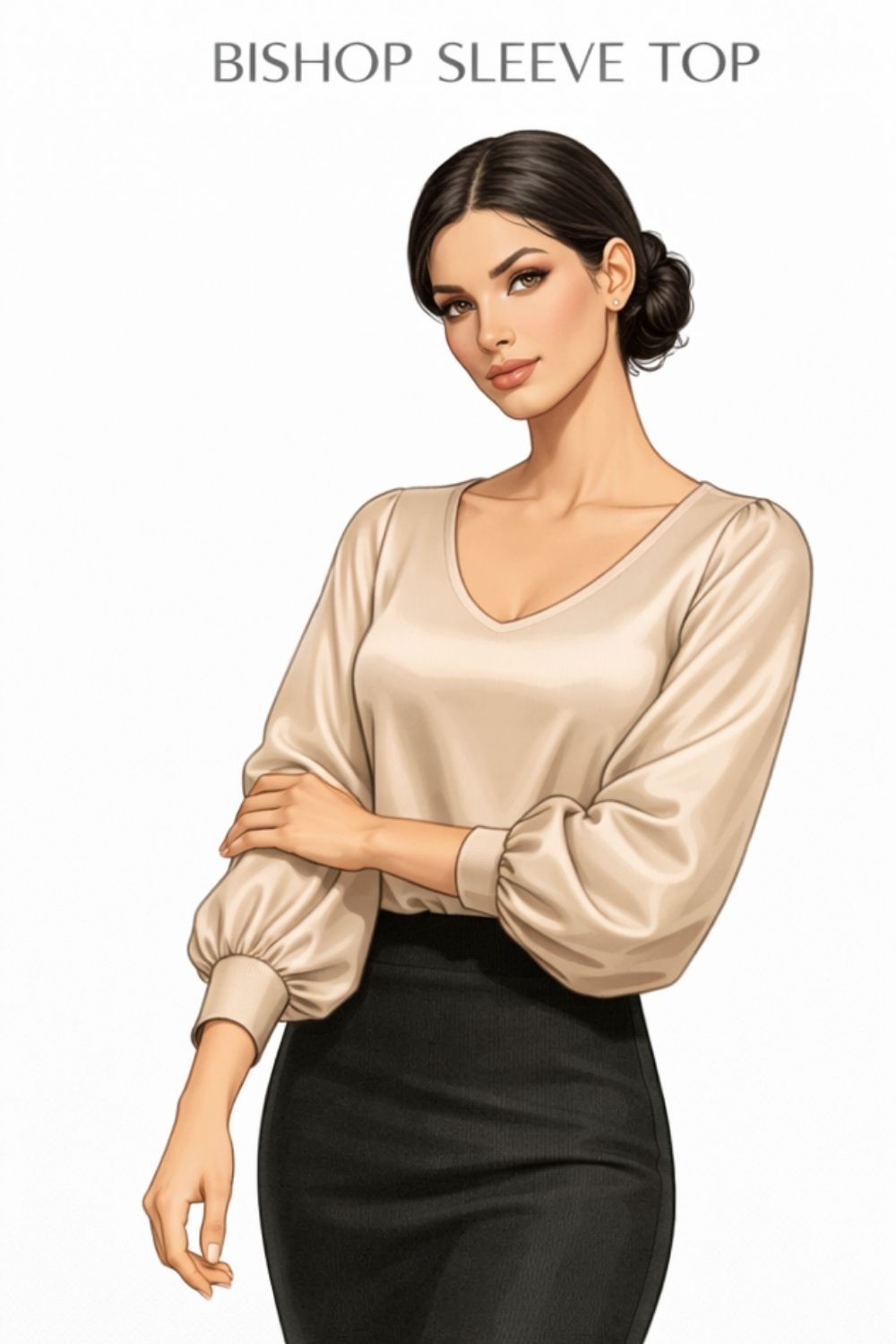
      Bishop Sleeve Top

      bishop sleeve top example

      Full and voluminous throughout; fitted at wrist with a distinct cuff. The bishop sleeve has a regal, romantic quality β€” the volume catches light and shadow in interesting ways when photographed.

      DesignFull volume throughout sleeve length, gathered into fitted wrist cuff
      SeasonAutumn / Winter / Spring
      Best ForRomantic occasions, elevated office, smart-casual
    1. 51

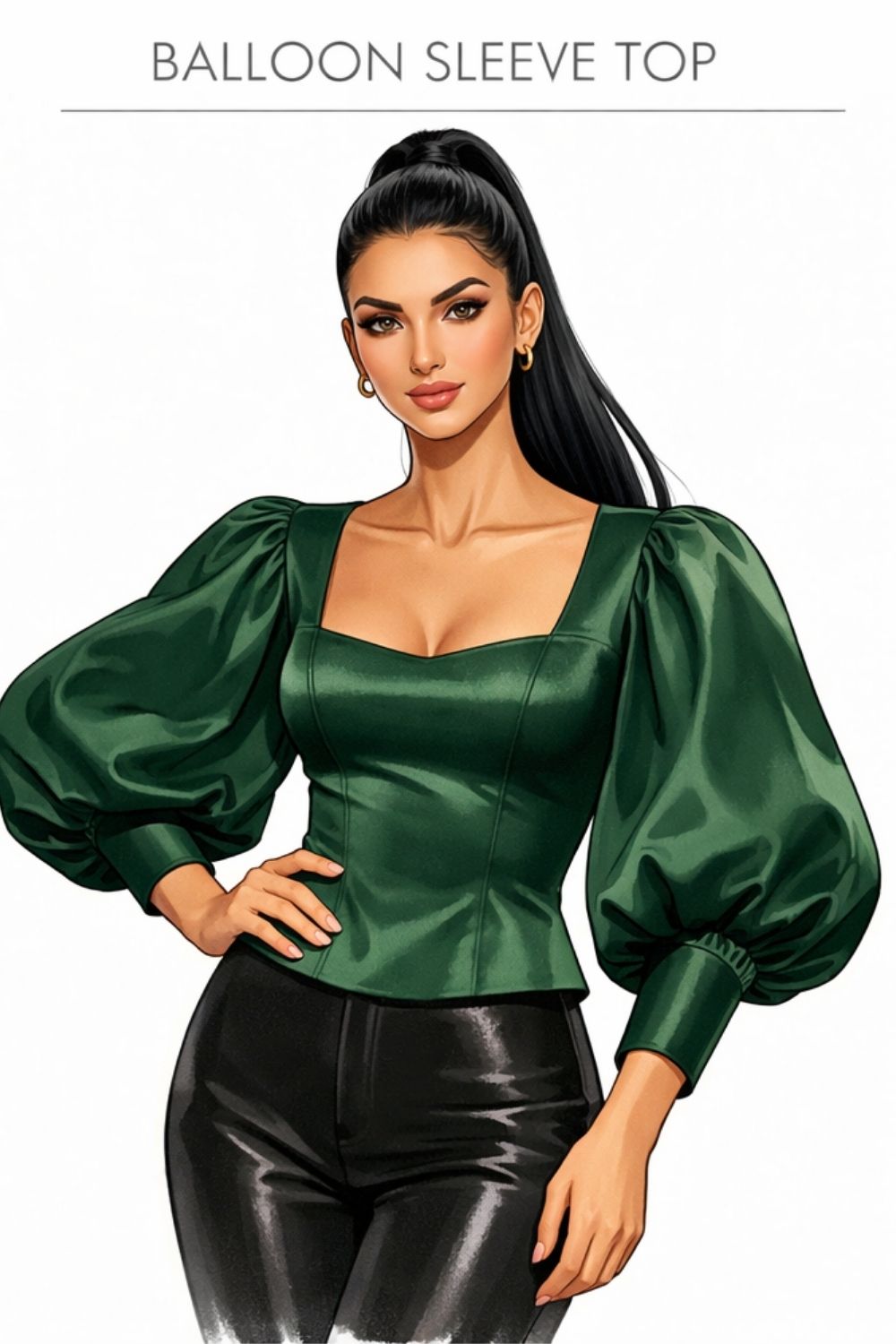
      Balloon Sleeve Top

      balloon sleeve top example

      Puffed throughout the entire sleeve; gathered at both shoulder and wrist. Maximum volume, maximum presence. This is β€” functionally β€” the sleeve equivalent of a statement necklace.

      DesignPuffed entire length, gathered at both shoulder and wrist
      SeasonAutumn / Winter
      Best ForFashion-forward looks, parties, statement styling
    2. 52

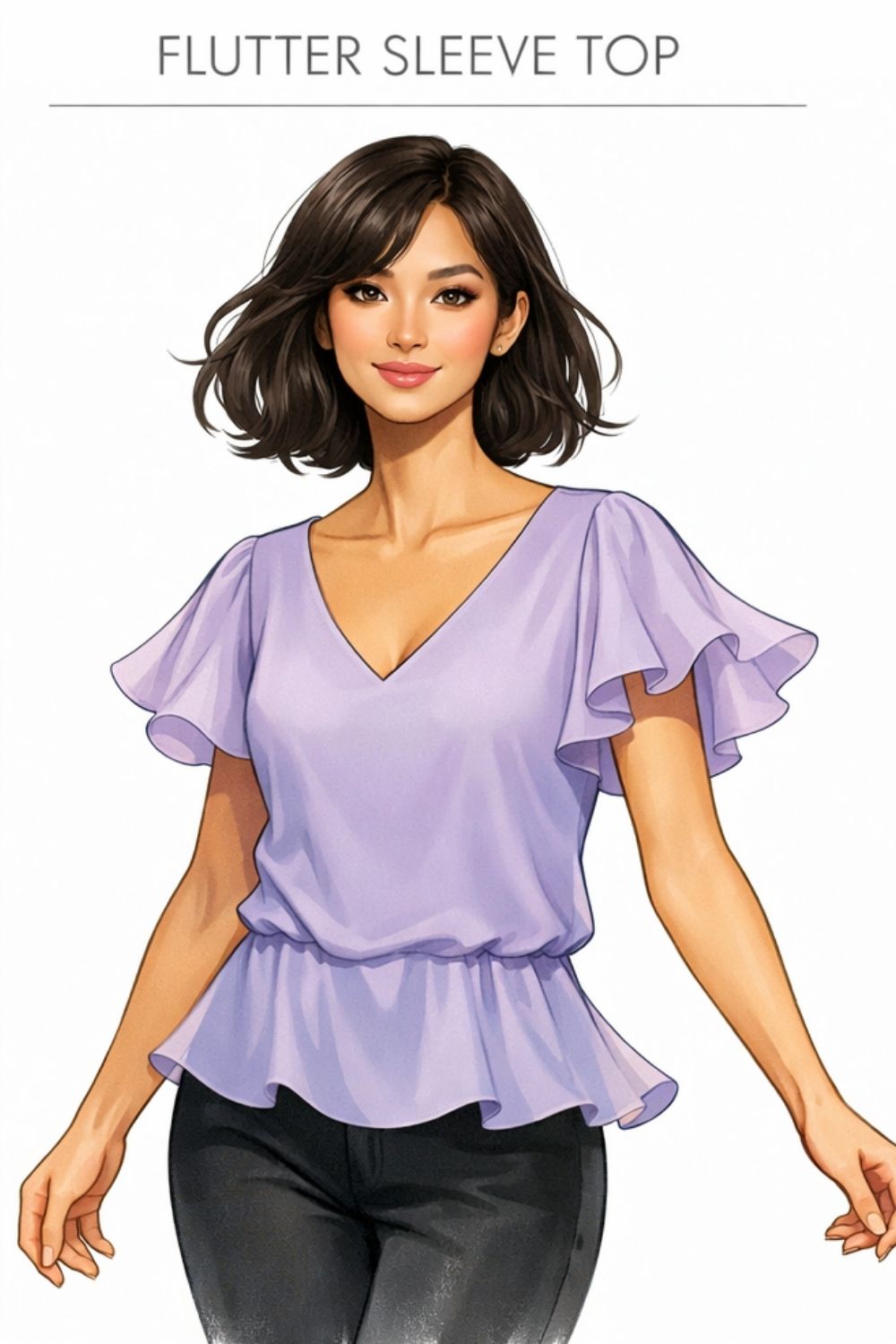
      Flutter Sleeve Top

      flutter sleeve top example

      Short, loose, softly draped sleeve that flutters with movement. Delicate and feminine. Flutter sleeves work best in soft, lightweight fabrics like chiffon or georgette β€” anything heavier and the flutter becomes a flop.

      DesignShort loose draped panels, movement-focused, airy construction
      SeasonSpring / Summer
      Best ForFeminine occasions, dates, resort, casual
    1. 53

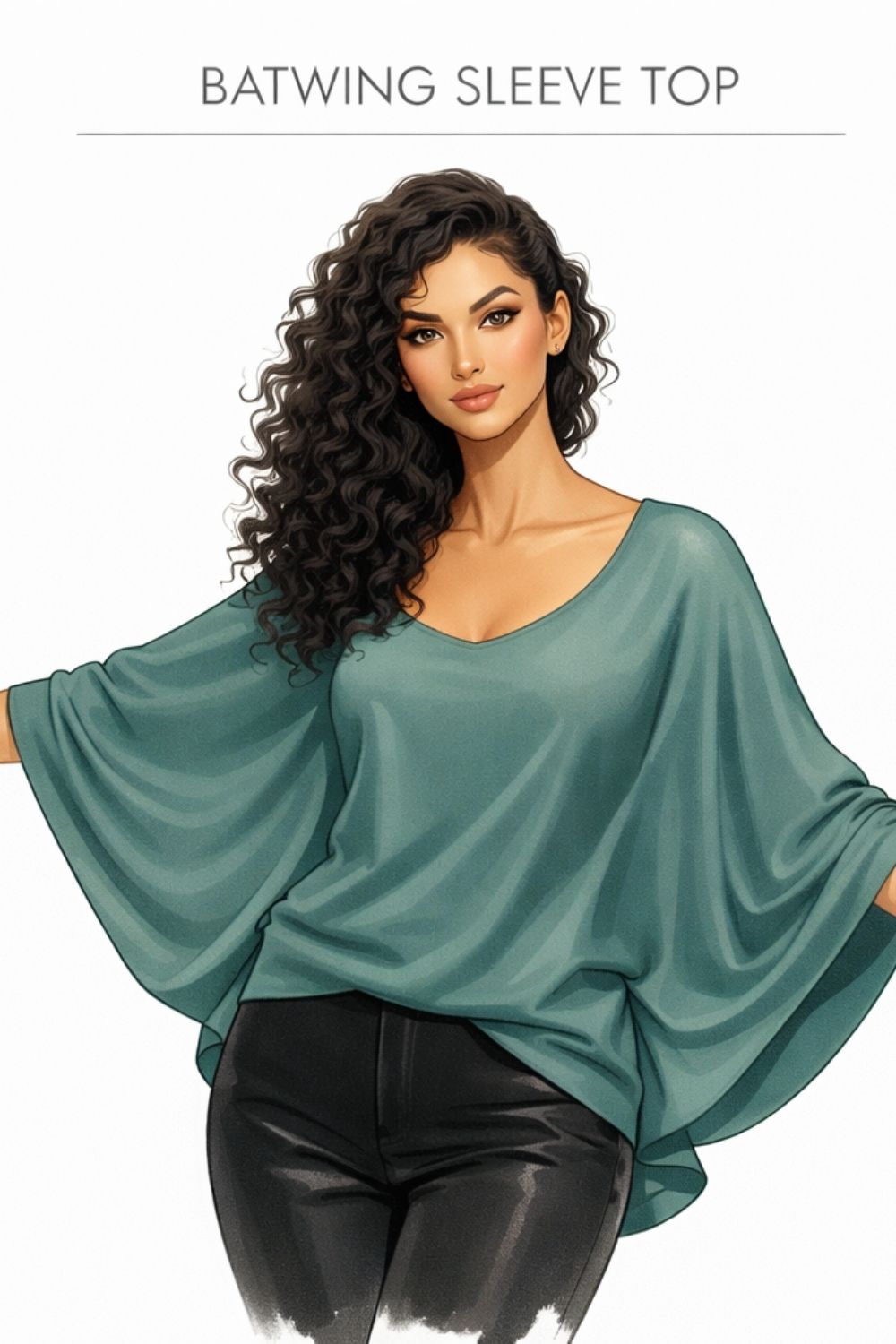
      Batwing Sleeve Top

      batwing sleeve top example

      Deep armhole extending toward the waist; sleeve and bodice cut as one piece. The dramatic drape of a batwing creates a striking silhouette β€” and yes, it photographs beautifully in motion.

      DesignDeep armhole to waist, one-piece bodice-and-sleeve cut
      SeasonAutumn / Winter
      Best ForCasual, smart-casual, layering, relaxed evening
    2. 54

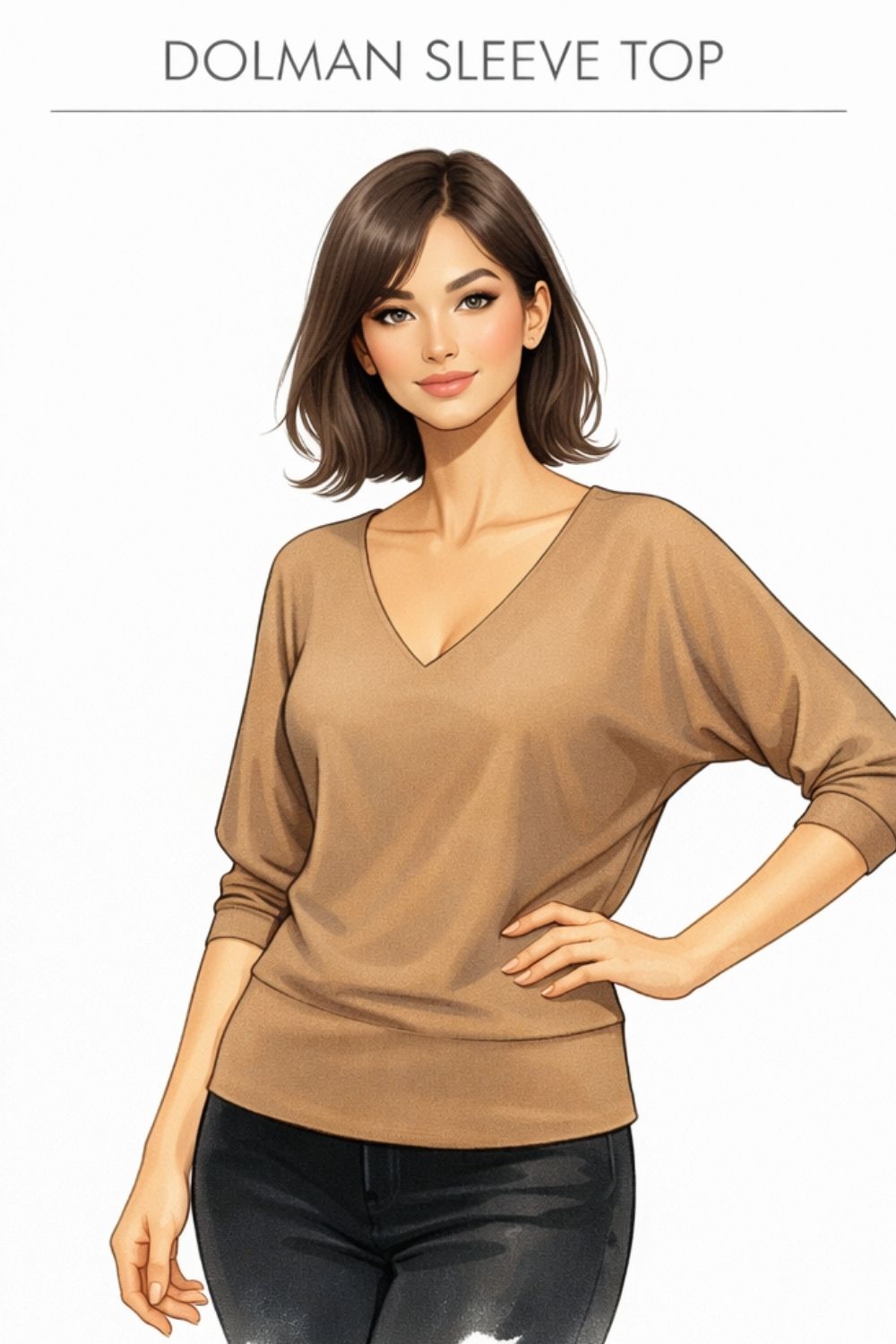
      Dolman Sleeve Top

      dolman sleeve top example

      Wide at armhole, tapering gradually to wrist. Similar to batwing but with more defined taper. The dolman allows freedom of movement while maintaining a more polished outline than a true batwing.

      DesignWide armhole tapering smoothly to wrist, flowing construction
      SeasonAll seasons
      Best ForCasual, comfort dressing, smart-casual, travel
    1. 55

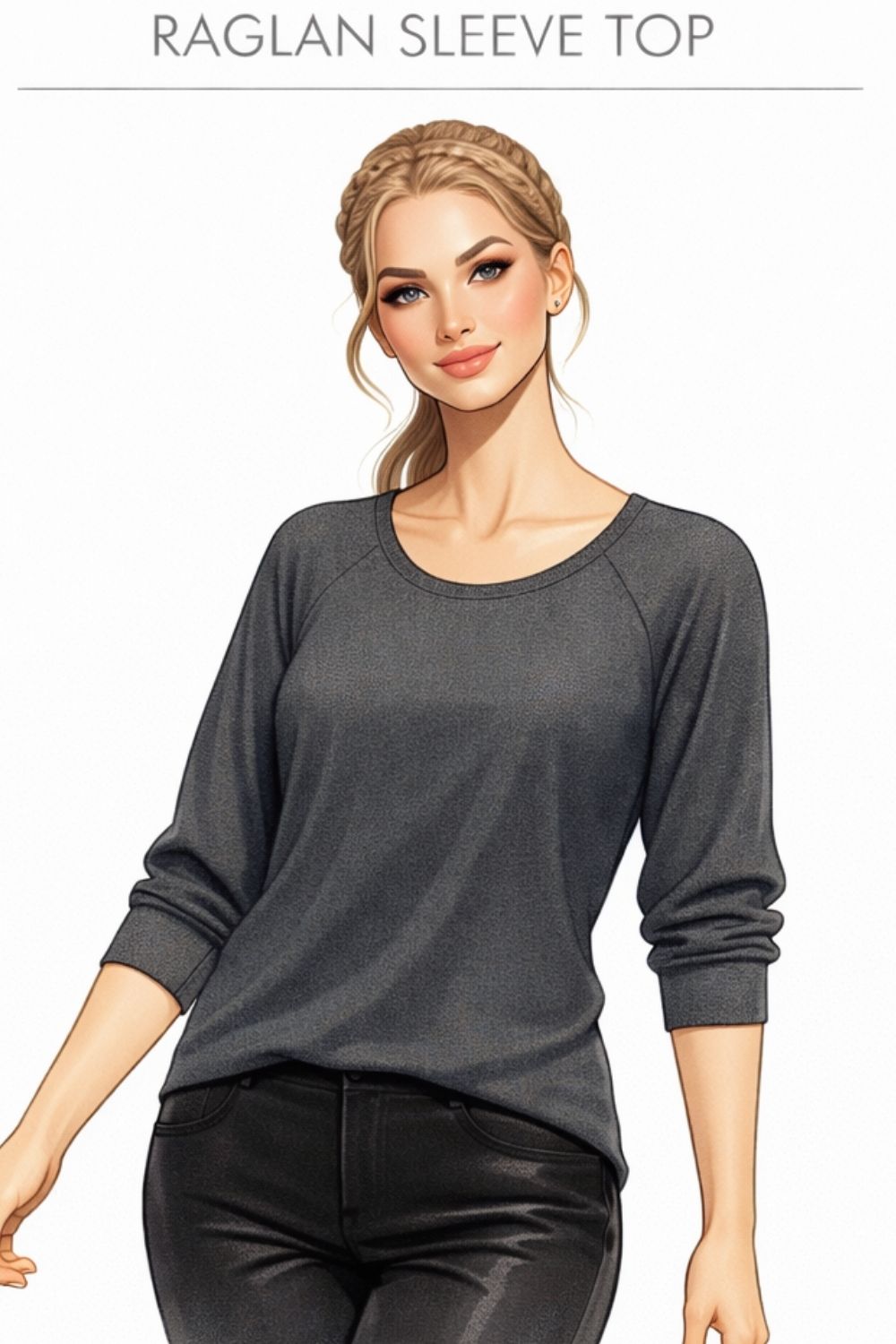
      Raglan Sleeve Top

      raglan sleeve top example

      Sleeve seam runs diagonally from neckline to underarm; no shoulder seam. Sporty and comfortable β€” the diagonal seam eliminates shoulder restriction entirely, which explains why this construction dominates athletic and casual categories.

      DesignDiagonal seam from neck to underarm, no set-in shoulder seam
      SeasonAll seasons
      Best ForSporty-casual, streetwear, everyday comfort
    2. 56

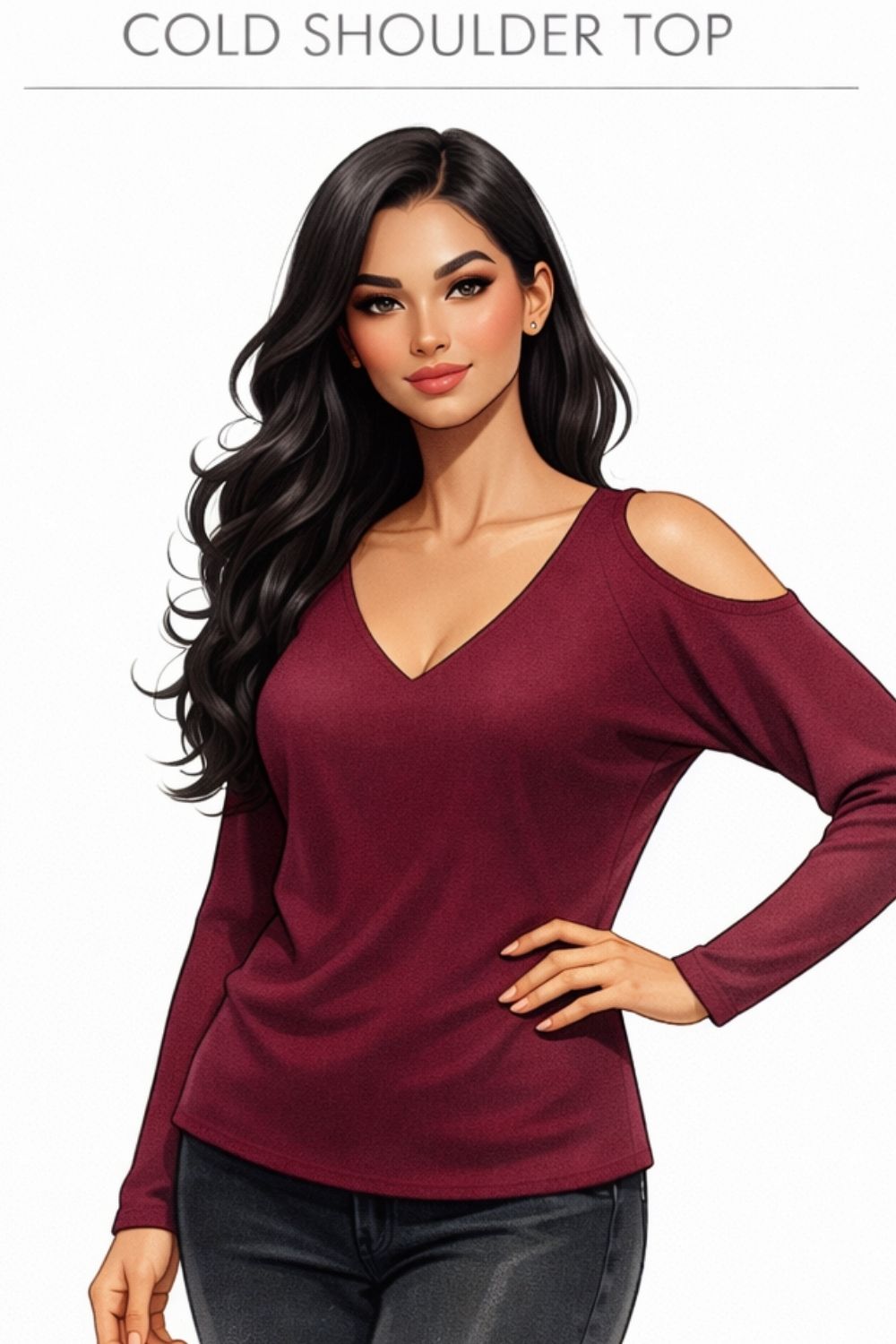
      Cold Shoulder Top

      cold shoulder top example

      A small cutout at the shoulder while keeping the rest of the sleeve intact. Less bare than sleeveless, more distinctive than a standard sleeve β€” creates exposure and visual interest at a single strategic point.

      DesignShoulder cutout opening, full sleeve beyond the cutout
      SeasonSpring / Summer
      Best ForCasual, going out, smart-casual occasions
    1. 57

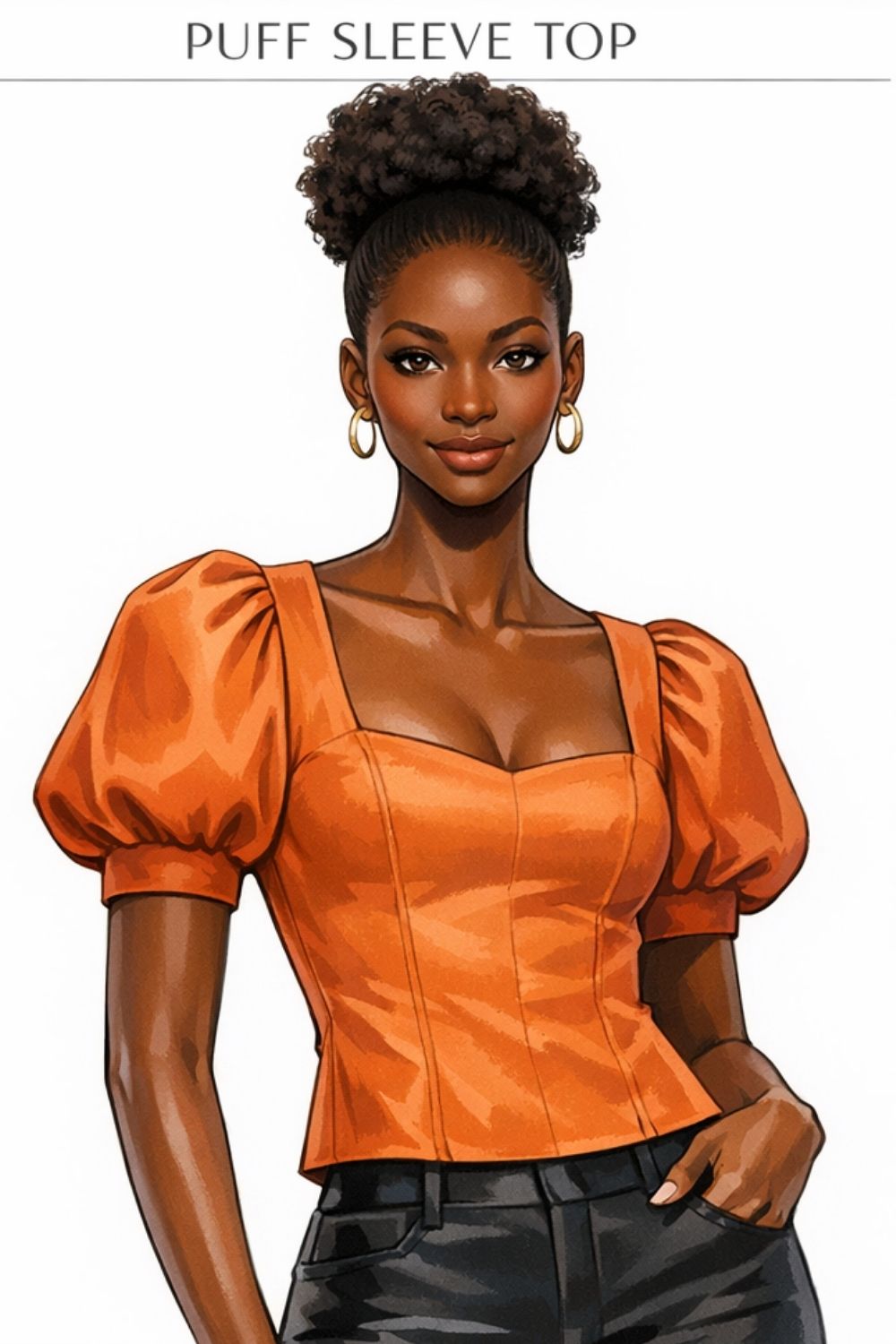
      Puff Sleeve Top

      puff sleeve top example

      Gathered, puffy volume at the shoulder; normal fit below. According to the most recently published WGSN Trend Report from 2024, volume sleeves including puff constructions remained among the top recurring silhouette themes in contemporary womenswear.

      DesignGathered puffy volume at shoulder, fitted or normal below
      SeasonAutumn / Winter / Spring
      Best ForFashion-forward office, dates, parties
    2. 58

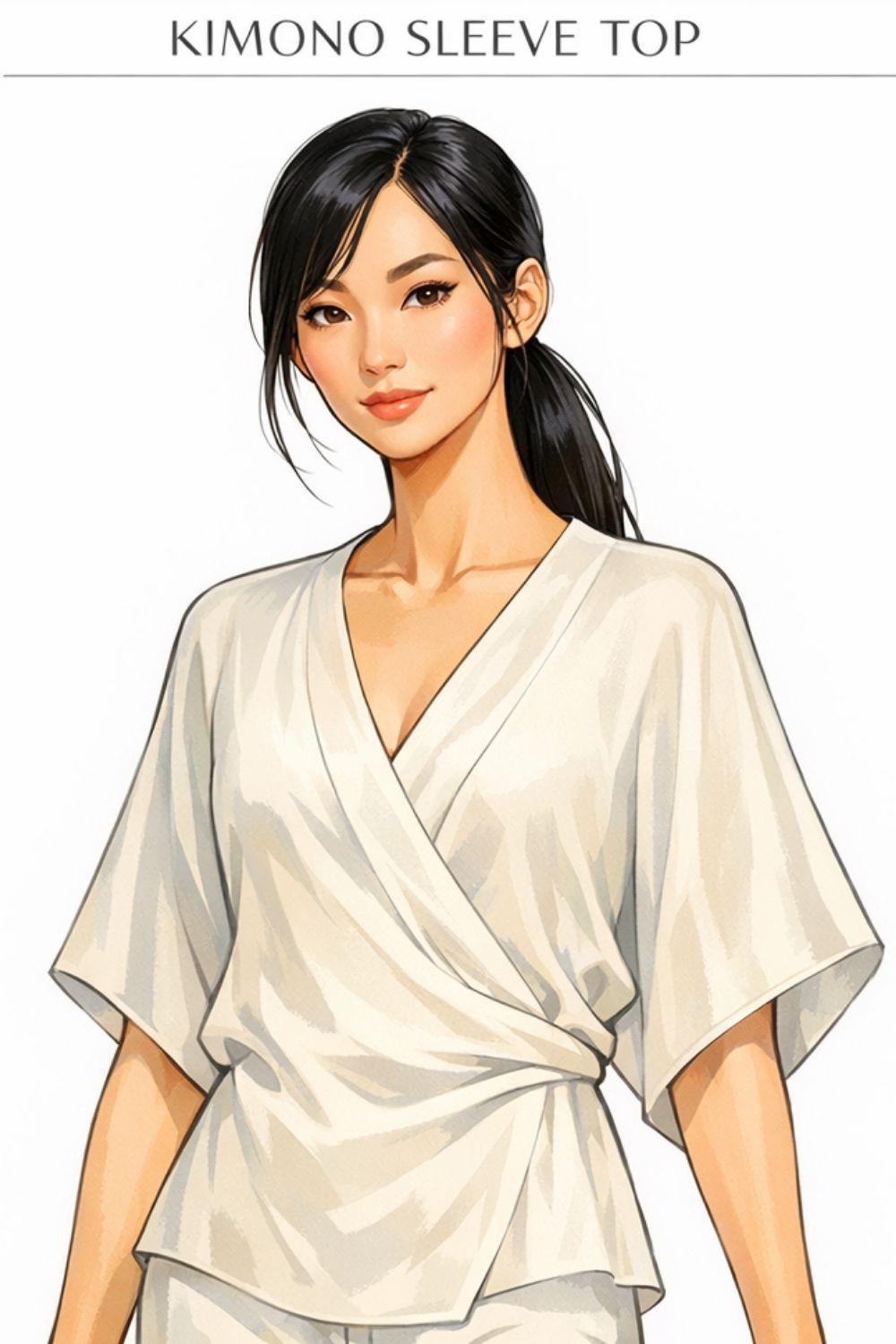
      Kimono Sleeve Top

      kimono sleeve top example

      Wide, straight sleeve cut as one continuous piece with the bodice; no armhole seam. Japanese-inspired β€” the kimono sleeve’s defining feature is the absence of a set-in seam, creating the characteristic T-shape.

      DesignWide straight sleeve as one with bodice, no armhole seam, T-silhouette
      SeasonSpring / Summer
      Best ForResort, casual, bohemian, lounge styling
    1. 59

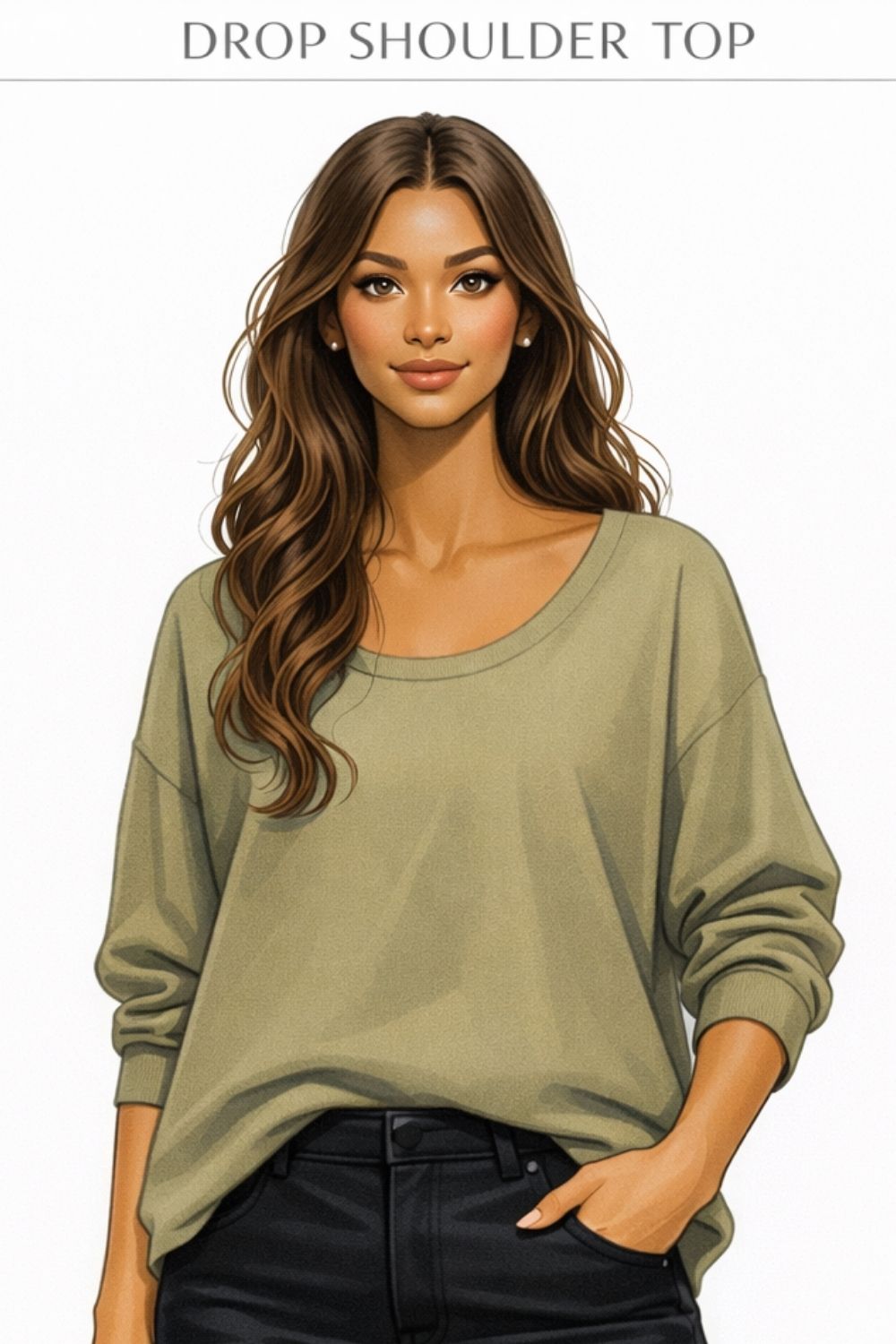
      Drop Shoulder Top

      drop shoulder top example

      Shoulder seam falls below the natural shoulder line. Creates a relaxed, deliberately oversized silhouette. Our guide to oversized top styles covers this construction extensively.

      DesignDropped shoulder seam below natural shoulder point
      SeasonAll seasons
      Best ForStreetwear, oversized casual, relaxed looks
    2. 60

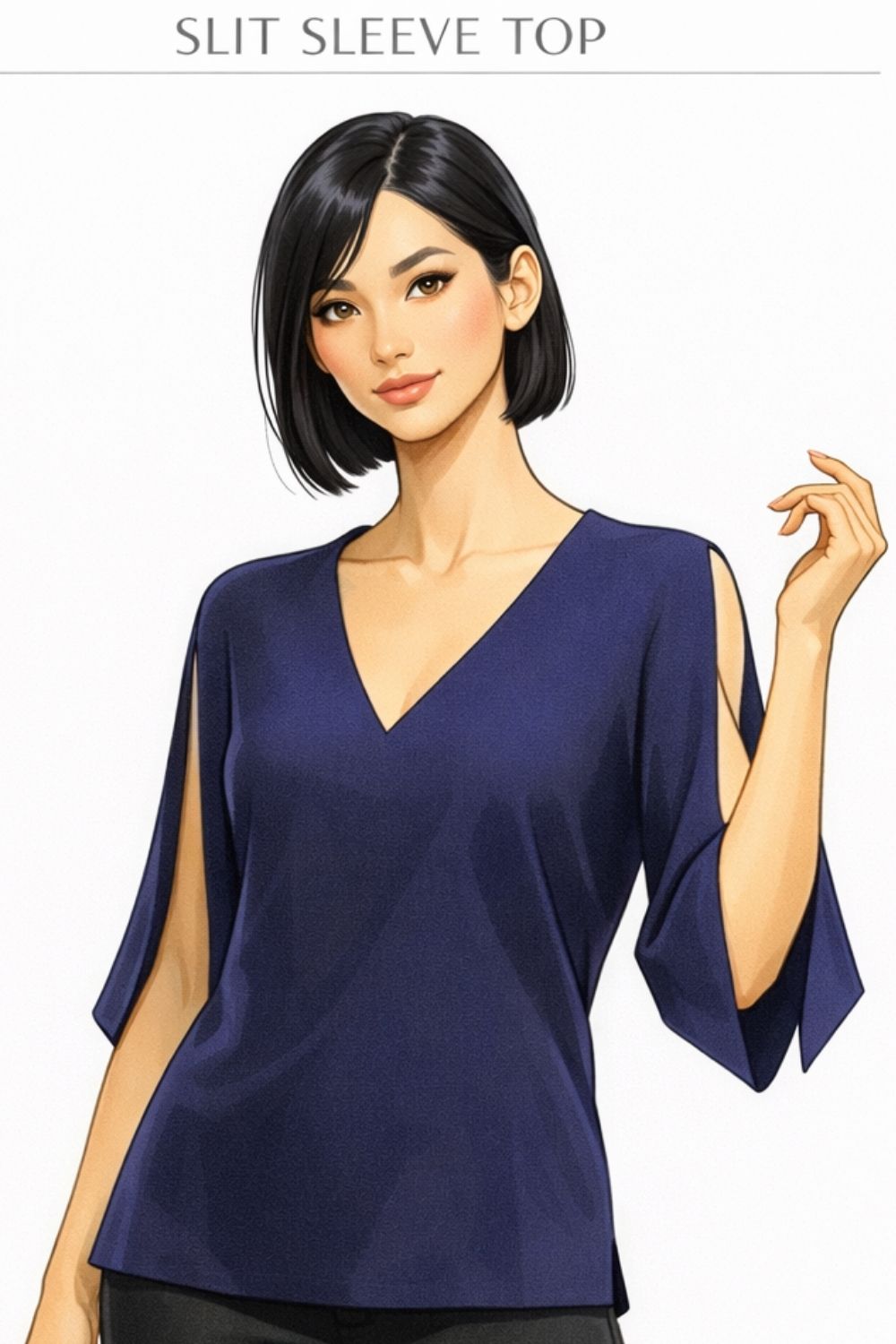
      Slit Sleeve Top

      slit sleeve top example

      A vertical slit along the sleeve β€” left open or loosely fastened. Adds movement and a hint of strategic exposure without dramatically altering overall sleeve coverage.

      DesignVertical slit cut along sleeve length, open or fastened
      SeasonSpring / Summer
      Best ForGoing out, fashion-forward casual, evening
    1. 61

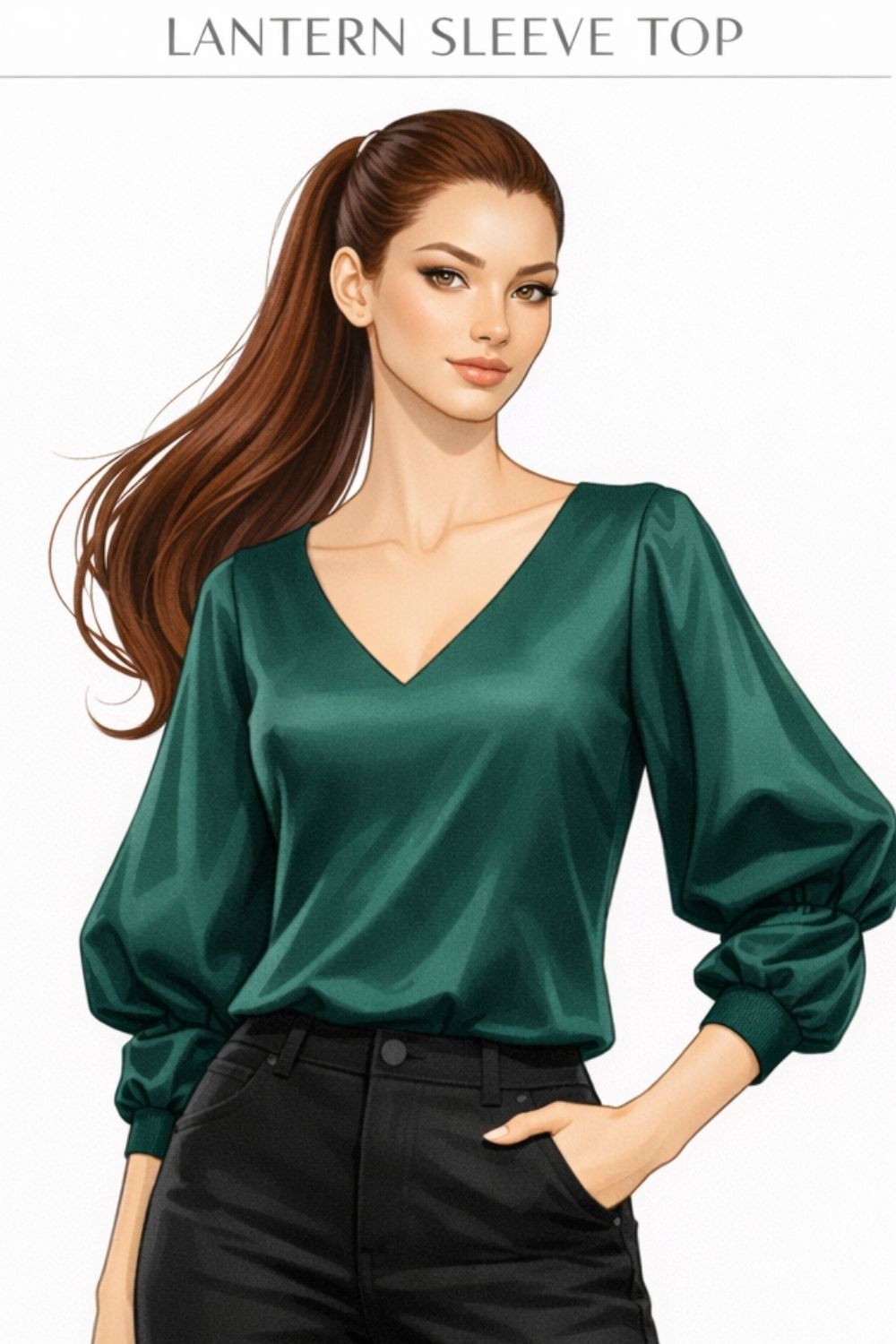
      Lantern Sleeve Top

      lantern sleeve top example

      Fitted at top and bottom, puffed in the middle, gathered at wrist β€” shaped, as named, exactly like a lantern. A highly distinctive construction that reads as fashion-forward even in simple solid fabrics.

      DesignFitted at shoulder and wrist, puffed through middle section
      SeasonAutumn / Winter
      Best ForFashion-forward, parties, statement looks
    2. 62

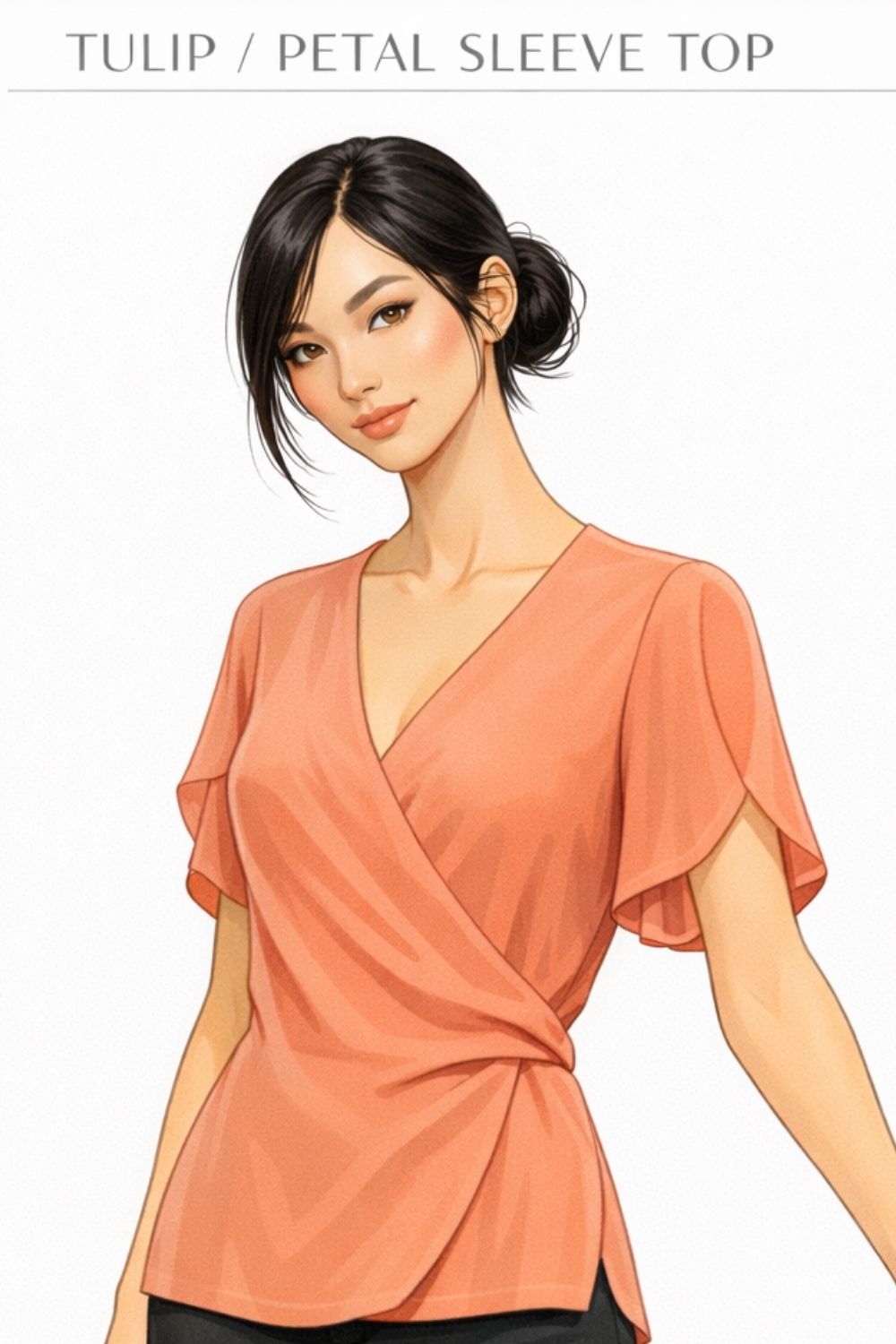
      Tulip / Petal Sleeve Top

      tulip or petal sleeve top example

      Overlapping fabric panels create a petal or tulip shape at the sleeve. Delicate and feminine β€” the structural detail is the statement, so these tend to work best in understated colorways.

      DesignOverlapping petal-shaped panels, soft curved edge finish
      SeasonSpring / Summer
      Best ForFeminine occasions, dates, smart-casual
    1. 63

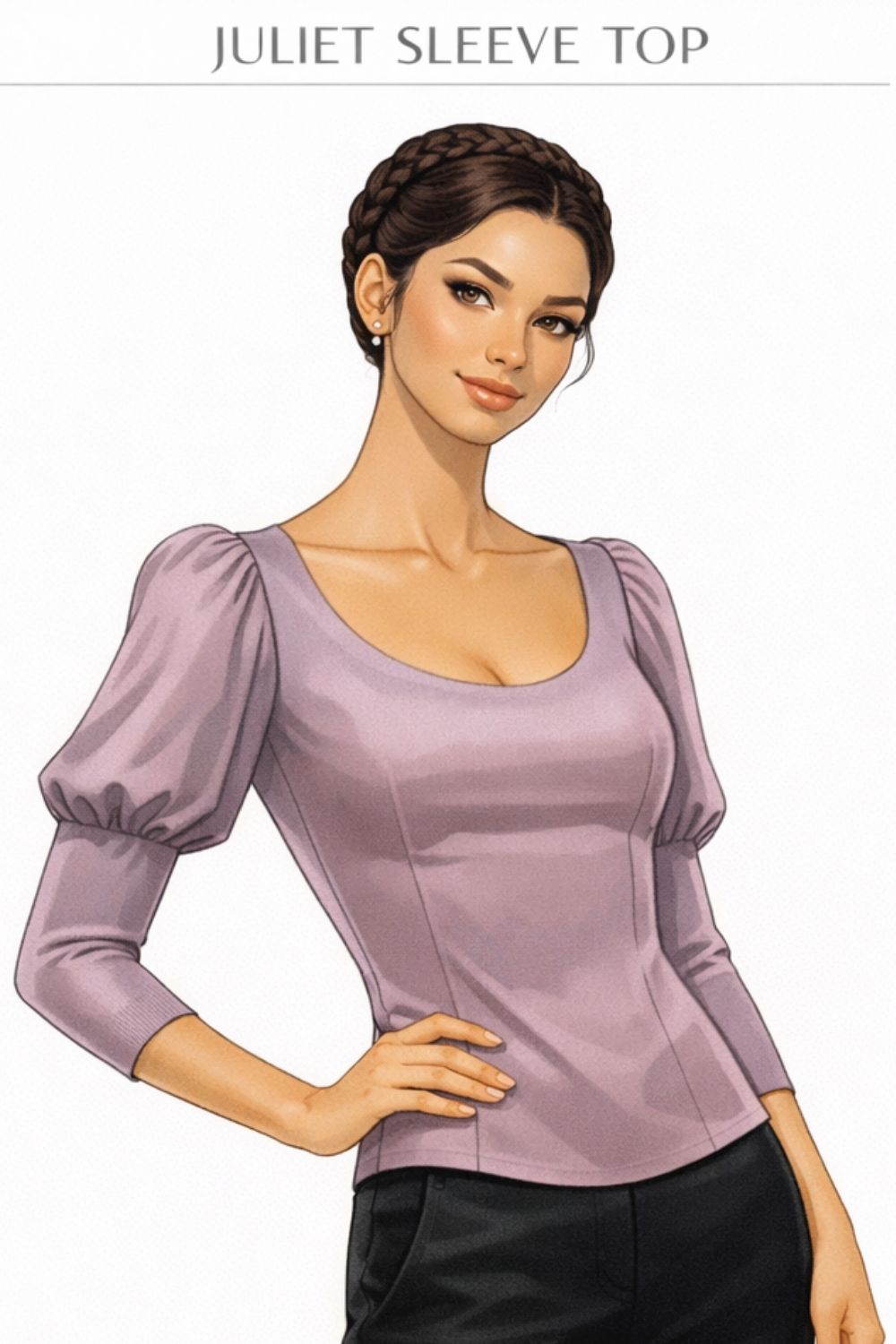
      Juliet Sleeve Top

      juliet sleeve top example

      Long sleeve with puff at shoulder; fitted from elbow to wrist. Renaissance-inspired β€” the name references the famous Shakespearean costume. The contrast between volumetric shoulder and fitted forearm is the whole design logic.

      DesignPuffed shoulder into fitted forearm, period-inspired construction
      SeasonAutumn / Winter
      Best ForRomantic occasions, elevated smart-casual, parties
    2. 64

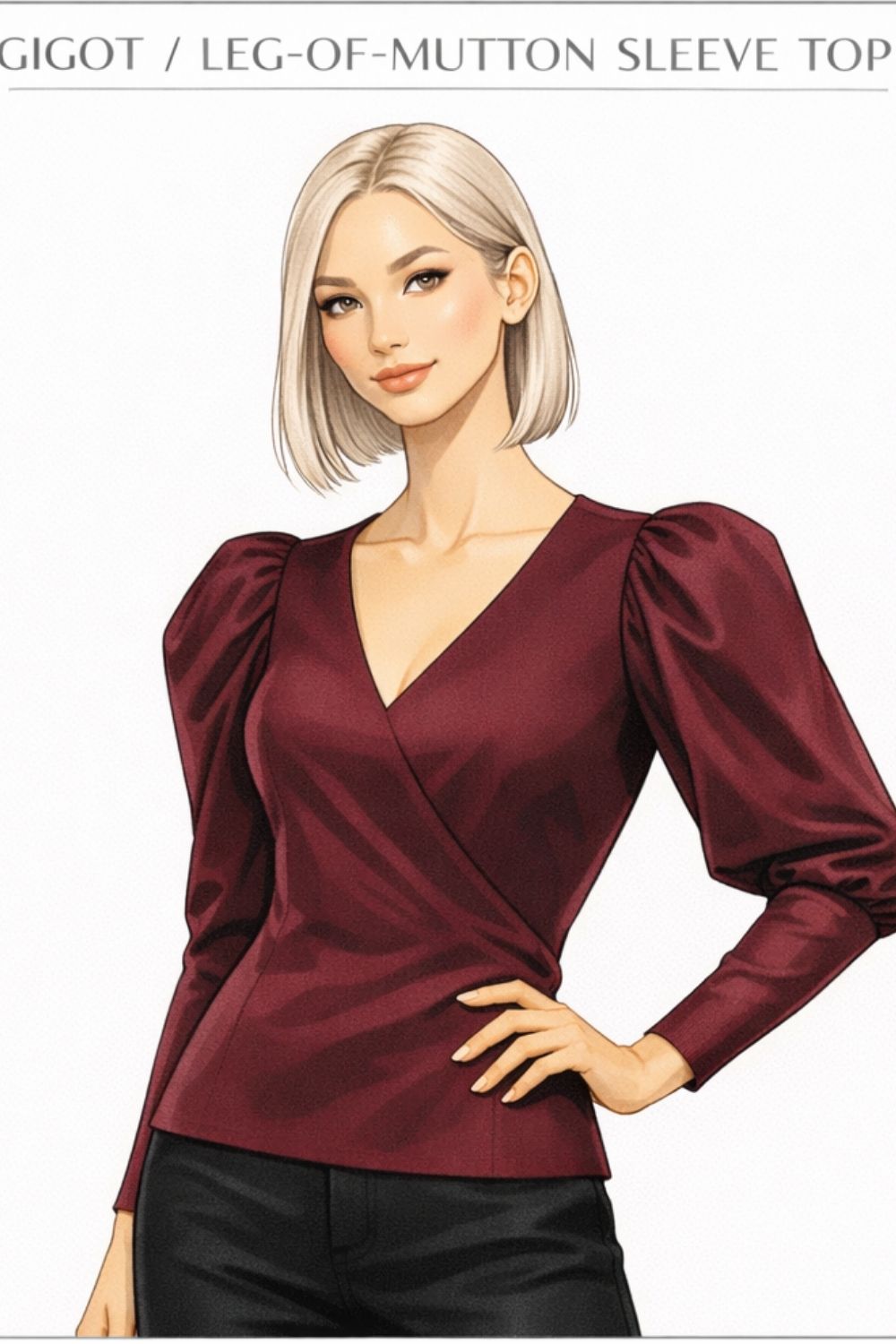
      Gigot / Leg-of-Mutton Sleeve Top

      gigot or leg of mutton sleeve top example

      Extremely puffed upper arm; fitted from elbow to wrist. Victorian-era construction (peak: 1890s) that has made a decisive return. The name comes from the French for leg of mutton β€” the silhouette is genuinely reminiscent of the cut.

      DesignDramatic upper-arm volume tapering to fitted elbow-to-wrist
      SeasonAutumn / Winter
      Best ForFashion statements, editorial, formal events
    Stylist Insight

    In real-world wardrobe editing sessions, I consistently find women underutilize sleeve length as a styling variable. Changing from a short sleeve to three-quarter on the same top construction shifts the entire formality register of an outfit β€” without touching neckline, fit, or color. Sleeve length is one of the most efficient style levers available. And it costs nothing.

    Category 4: By Neckline (#65–#90)

    The shape and cut of the neckline β€” the most expressive design feature in any top

    The neckline? It’s the frame for your face β€” and it changes everything. Not just aesthetically. Necklines direct attention, determine how jewelry sits, interact with your facial structure, and affect the formality register of an entire outfit. A boat neckline broadens the shoulder frame horizontally. A deep V creates a vertical line that elongates. A sweetheart cup lifts the gaze toward the face. These are real visual effects β€” worth understanding, not just following rules about.

    For more context on how necklines interact with face shapes, body proportion, and jewelry choices, our detailed breakdown of neckline types and their visual effects is the companion resource for this section.

    1. 65

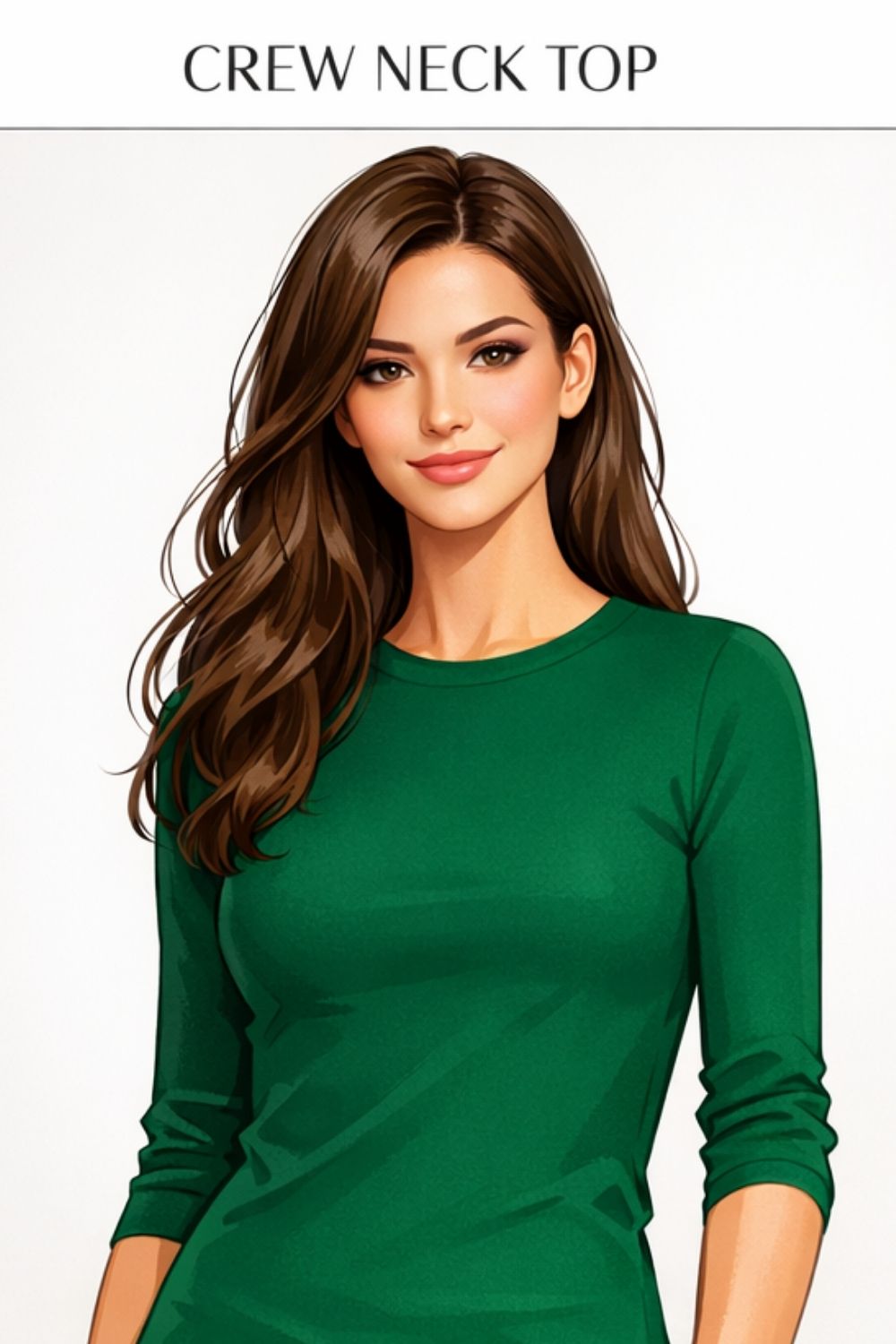
      Crew Neck Top

      crew neck top example

      Round neckline close to the base of the throat. The classic T-shirt neckline β€” simple, clean, universally wearable. The crew neck’s greatest strength is its neutrality: it competes with nothing.

      DesignRound neckline at throat base, close-fitting, clean edge finish
      SeasonAll seasons
      Best ForEveryday casual, layering, universal use
    2. 66

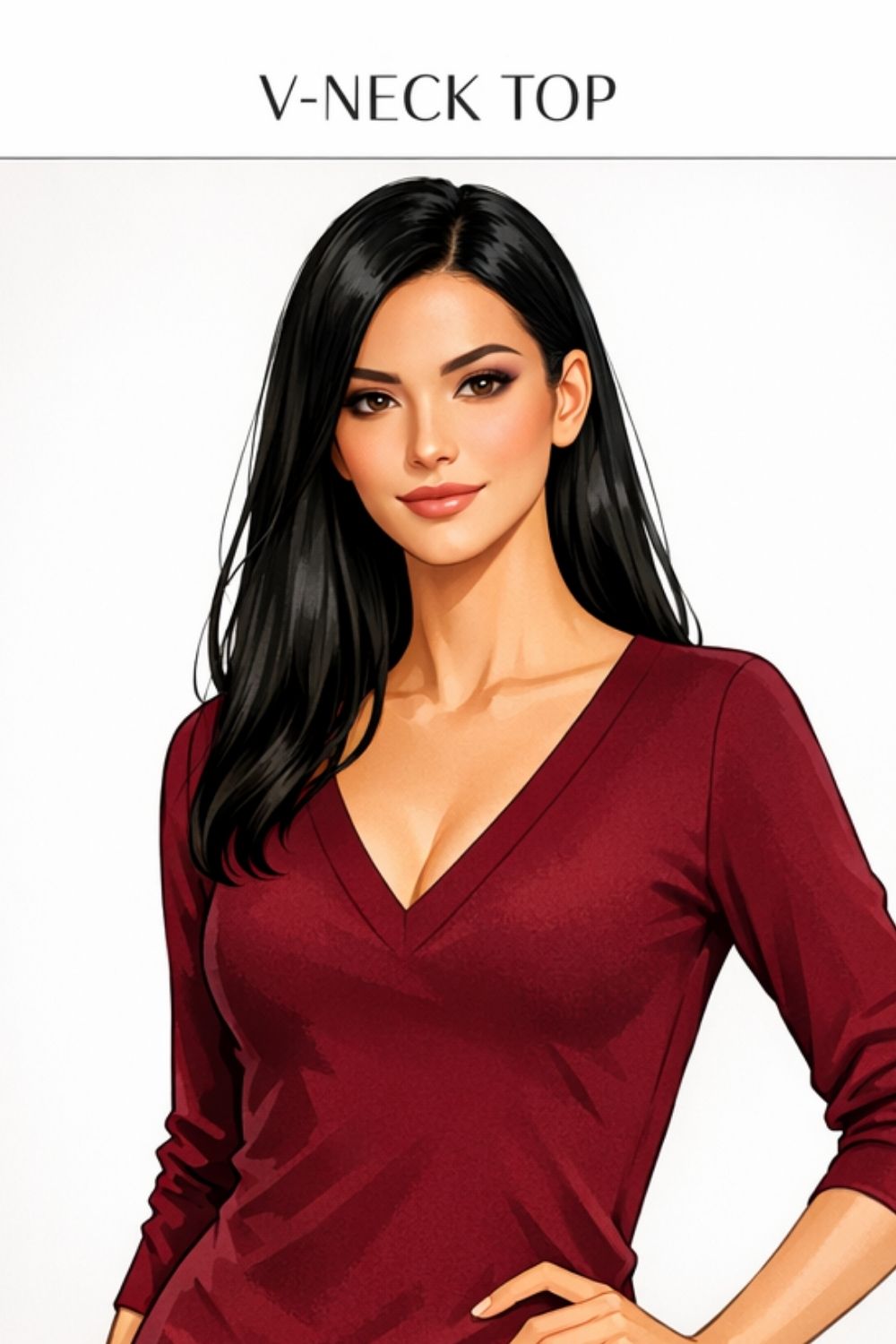
      V-Neck Top

      v-neck top example

      Two diagonal lines meeting at a point on the chest. Creates a vertical line that tends to elongate the neck visually. Available in shallow, moderate, and deep variations β€” each with distinct styling implications.

      DesignTwo diagonal lines meeting at chest point, depth varies
      SeasonAll seasons
      Best ForOffice, casual, dates, most occasions
    1. 67

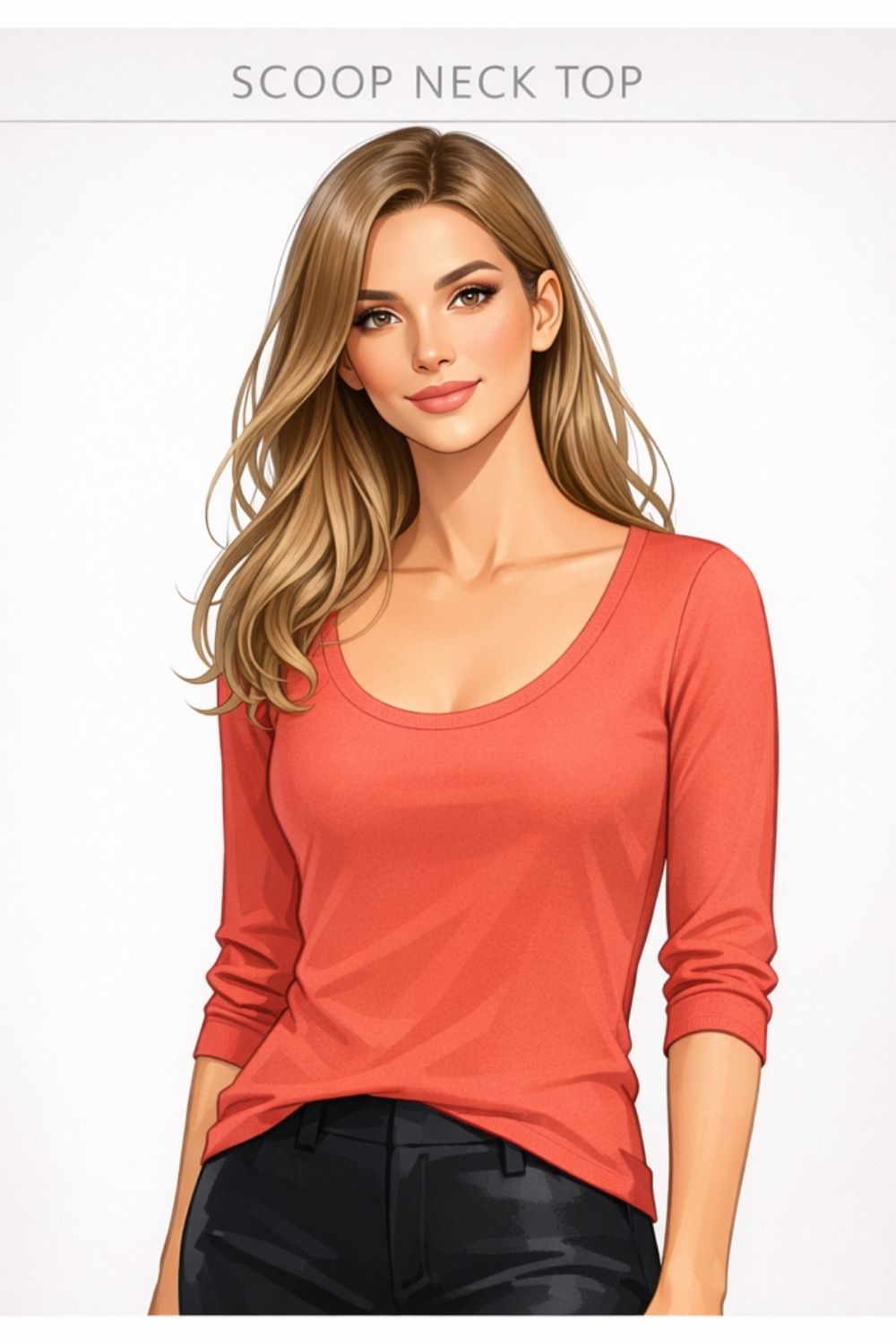
      Scoop Neck Top

      scoop neck top example

      U-shaped neckline; lower and wider than crew. One of the most consistently versatile necklines because the wide curved opening frames the collarbone without plunging dramatically.

      DesignWide U-shaped opening, lower than crew, curved edge
      SeasonSpring / Summer
      Best ForCasual, dates, smart-casual, resort
    2. 68

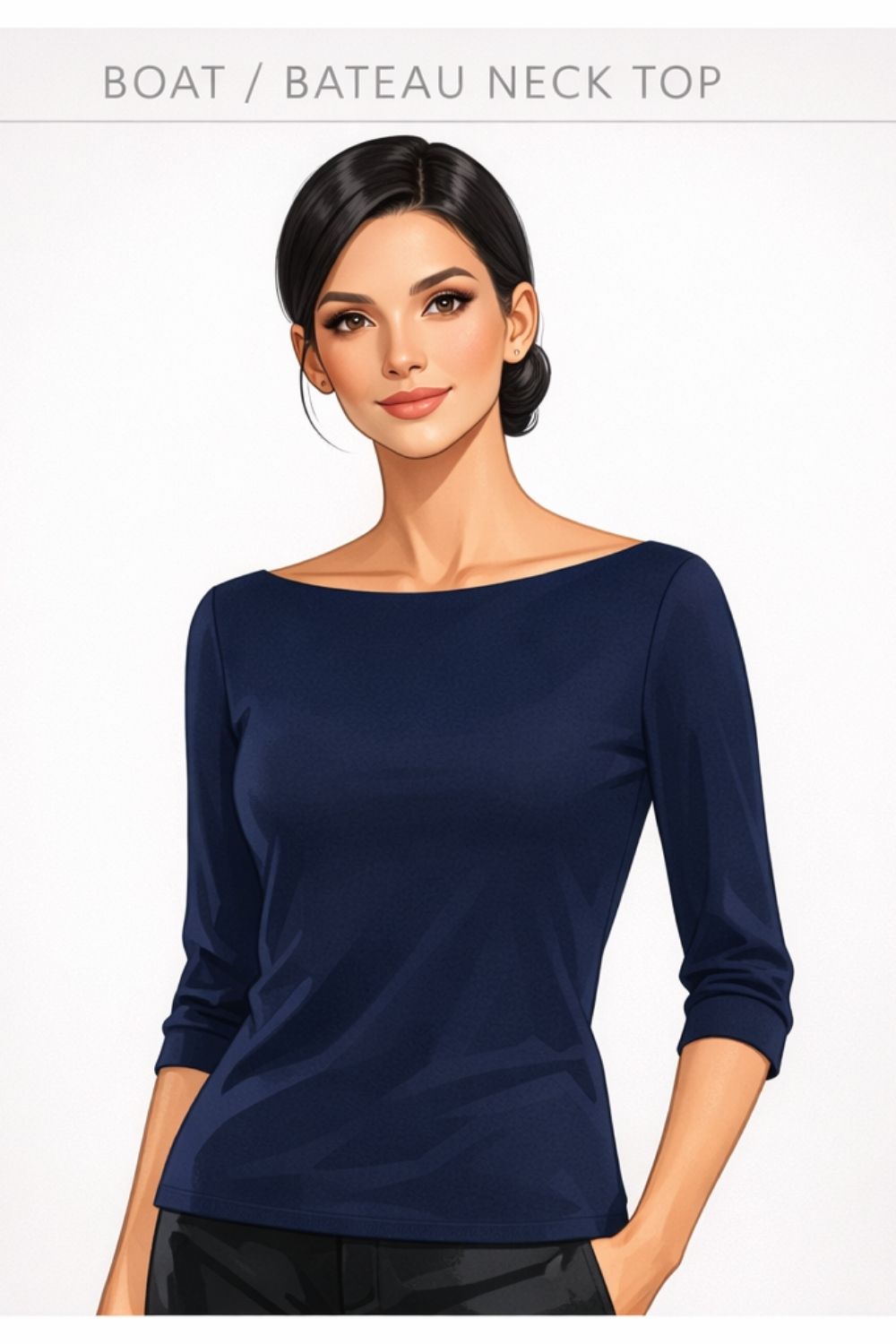
      Boat / Bateau Neck Top

      boat or bateau neck top example

      Wide, shallow horizontal neckline skimming the collarbone from shoulder to shoulder. Audrey Hepburn’s defining neckline β€” it tends to broaden the shoulder frame while maintaining an elegant, restrained aesthetic.

      DesignWide horizontal neckline across collarbone, shoulder to shoulder
      SeasonAll seasons
      Best ForElegant casual, office, smart occasions, timeless looks
    1. 69

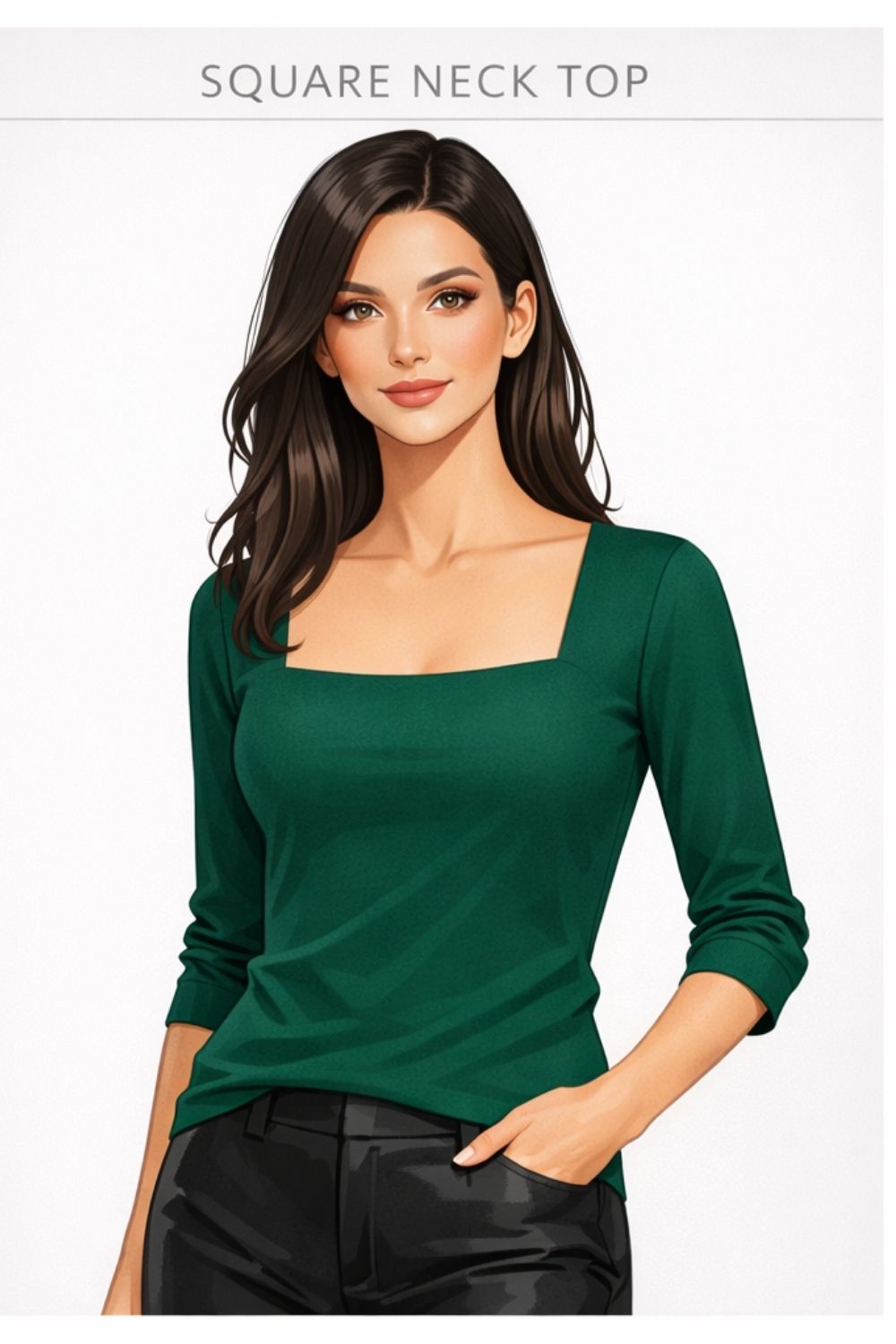
      Square Neck Top

      square neck top example

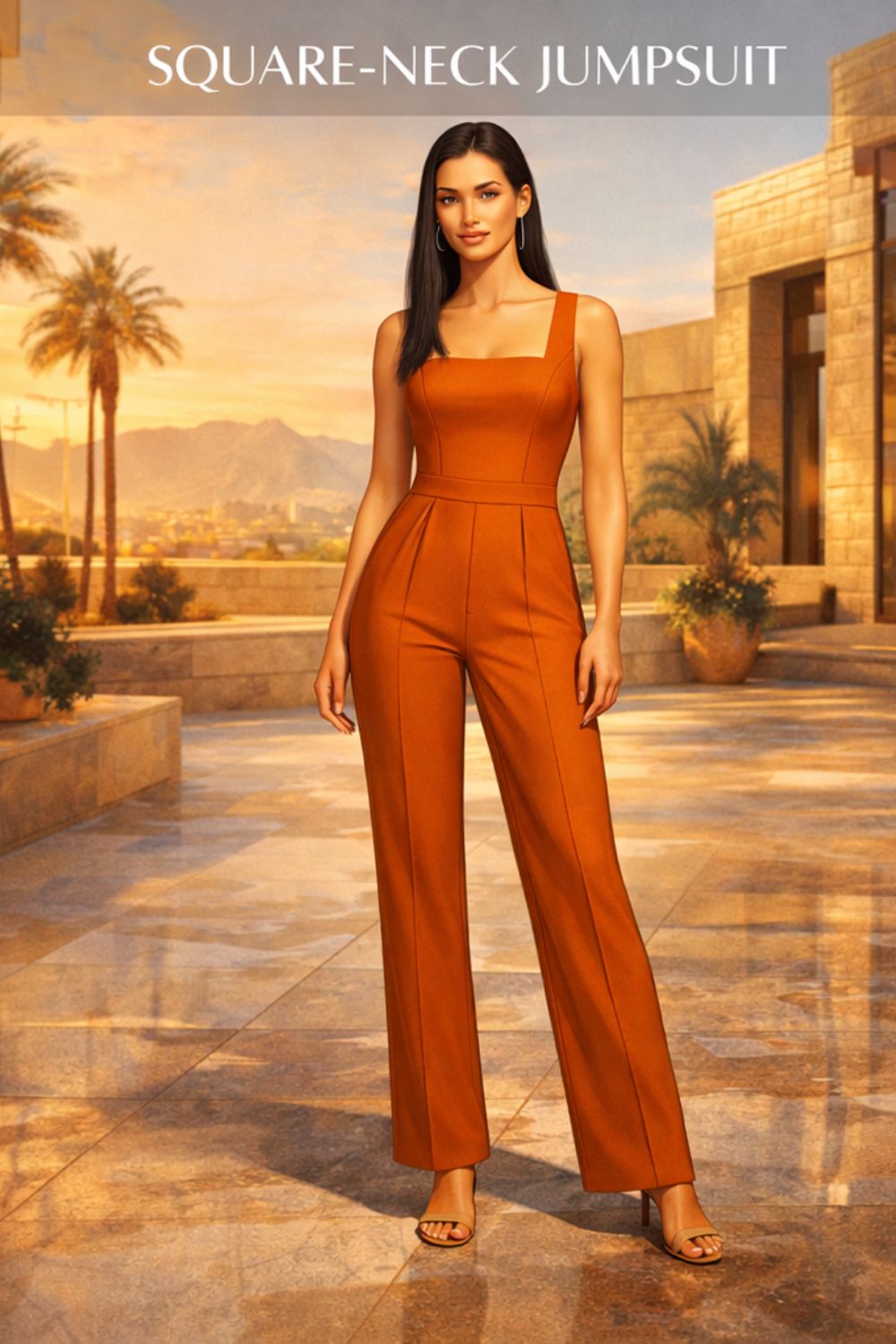
      Three straight edges forming a square opening. Structured and modern. Particularly effective at highlighting the collarbone β€” a geometric shape that works extraordinarily well in solid fabrics and clean silhouettes.

      DesignThree straight edges forming square geometric opening
      SeasonSpring / Summer / Autumn
      Best ForGoing out, smart-casual, dates, evening
    2. 70

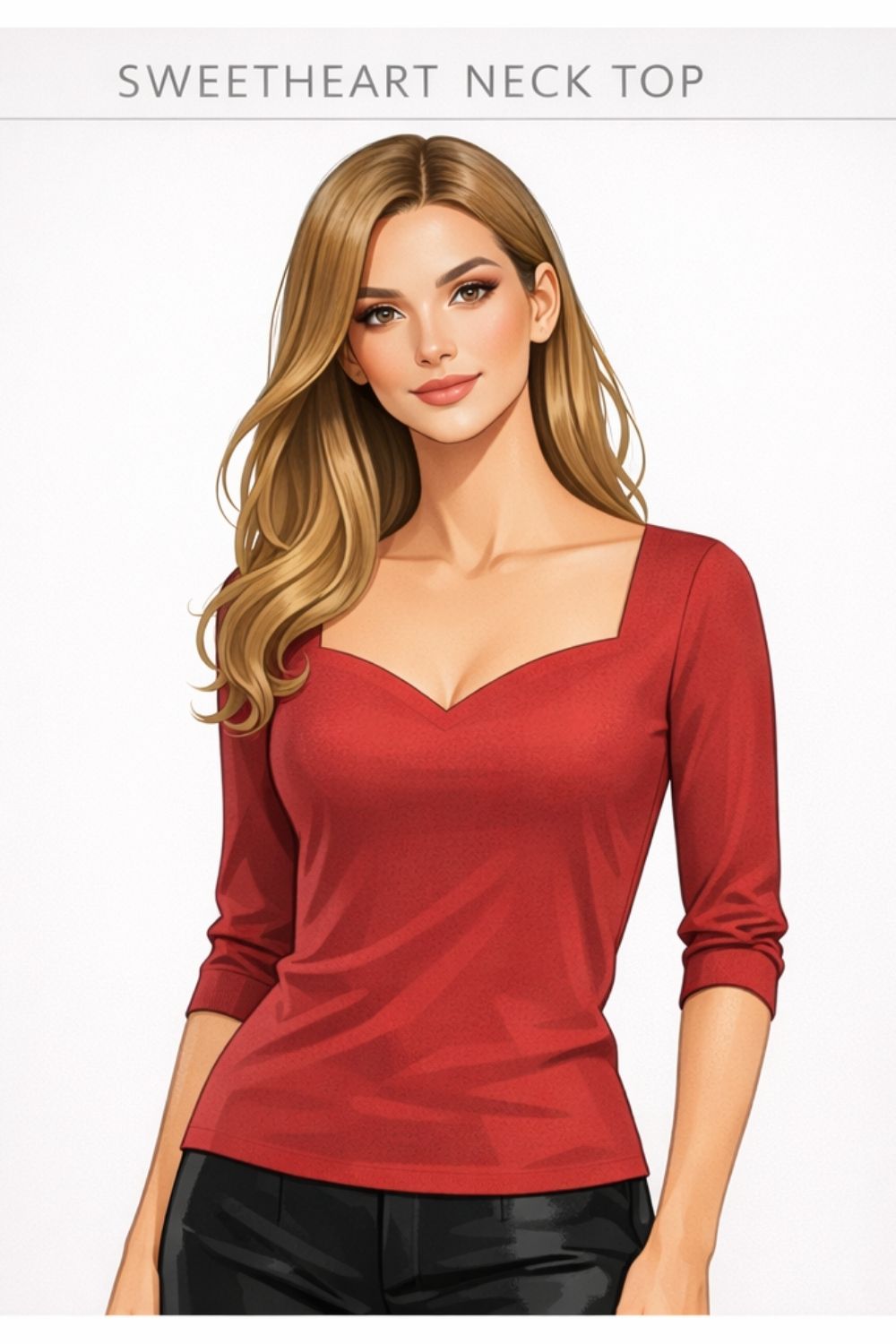
      Sweetheart Neck Top

      sweetheart neck top example

      Curved edges forming the top of a heart shape. Accentuates the bust and draws the eye upward. A romantic construction with roots in evening and bridal wear.

      DesignHeart-shaped curved top edge, typically lower center
      SeasonSpring / Summer
      Best ForRomantic occasions, evening, weddings
    1. 71

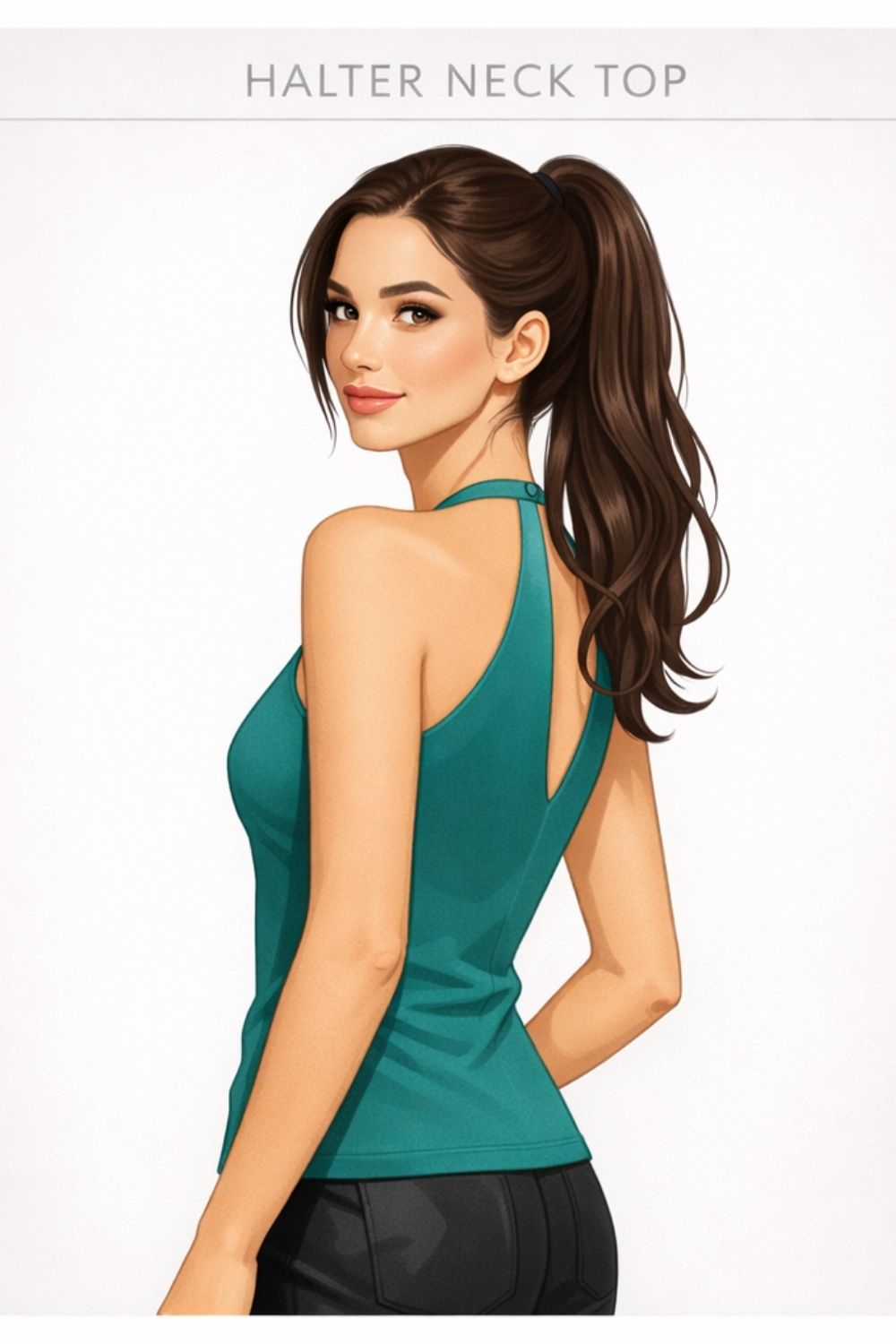
      Halter Neck Top

      halter neck top example

      Straps wrapping behind the neck; shoulders and back exposed. As a neckline feature, the halter neck appears on many structural types β€” from draped evening tops to sporty bralettes.

      DesignNeck-wrapping straps, exposed shoulders and back, open sides
      SeasonSpring / Summer
      Best ForBeach, resort, going out, warm occasions
    2. 72

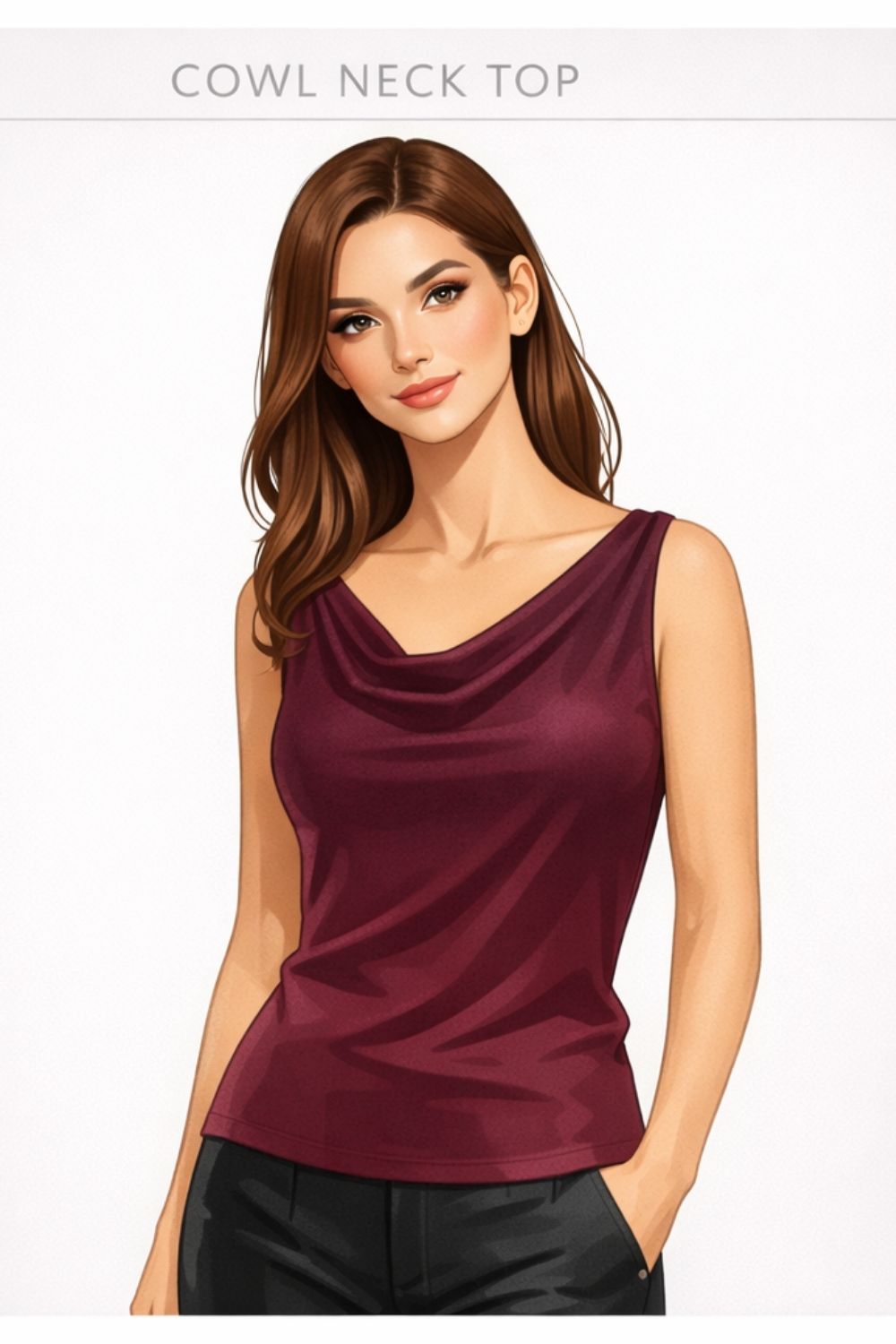
      Cowl Neck Top

      cowl neck top example

      Draped, gathered fabric falling in soft folds at the neckline. The cowl’s organic drape has a distinct visual quality β€” it’s the only neckline that creates depth through fold rather than through cut.

      DesignDraped gathered folds at neckline, bias-influenced movement
      SeasonAutumn / Winter
      Best ForOffice, smart-casual, evening, cold weather
    1. 73

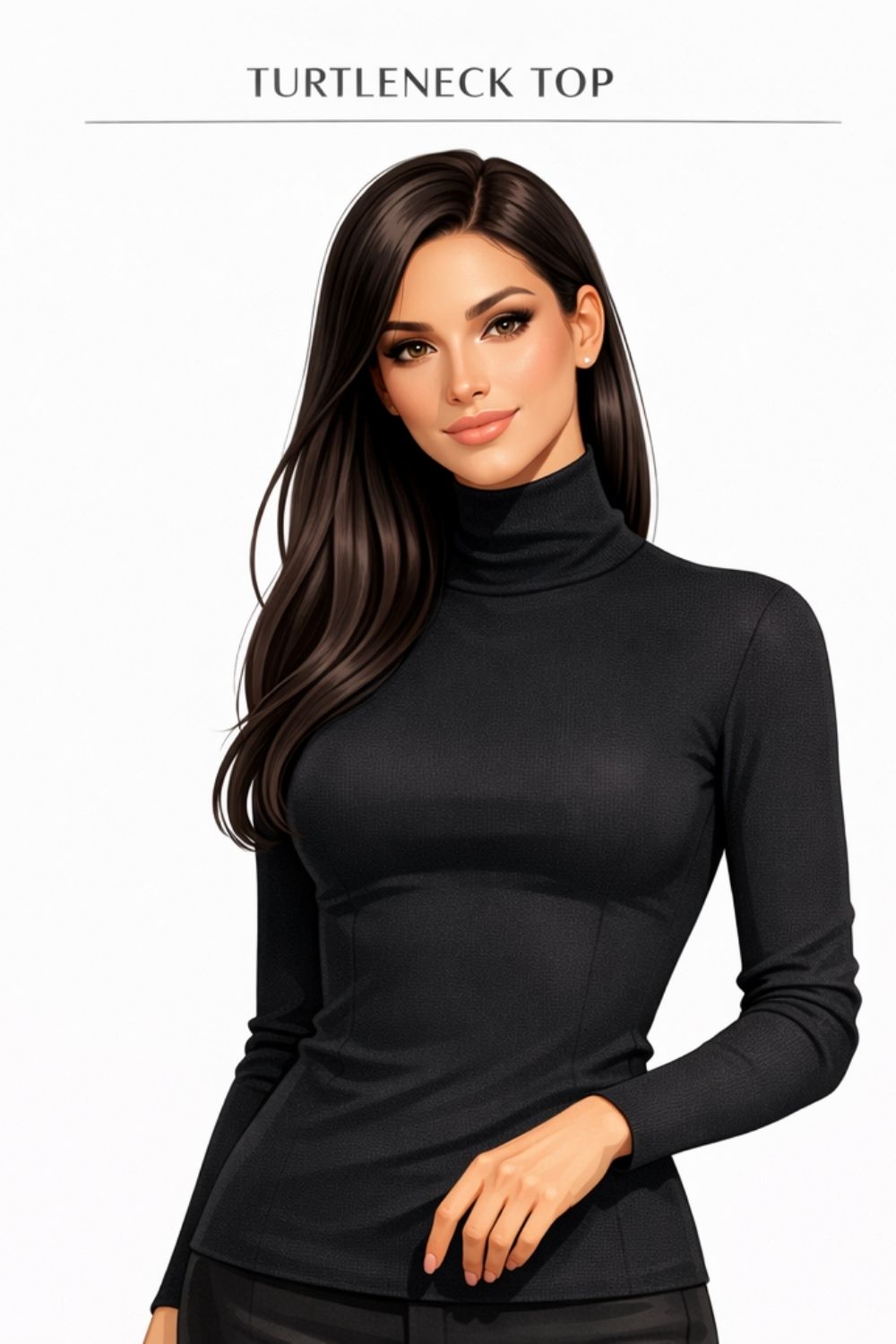
      Turtleneck Top

      turtleneck top example

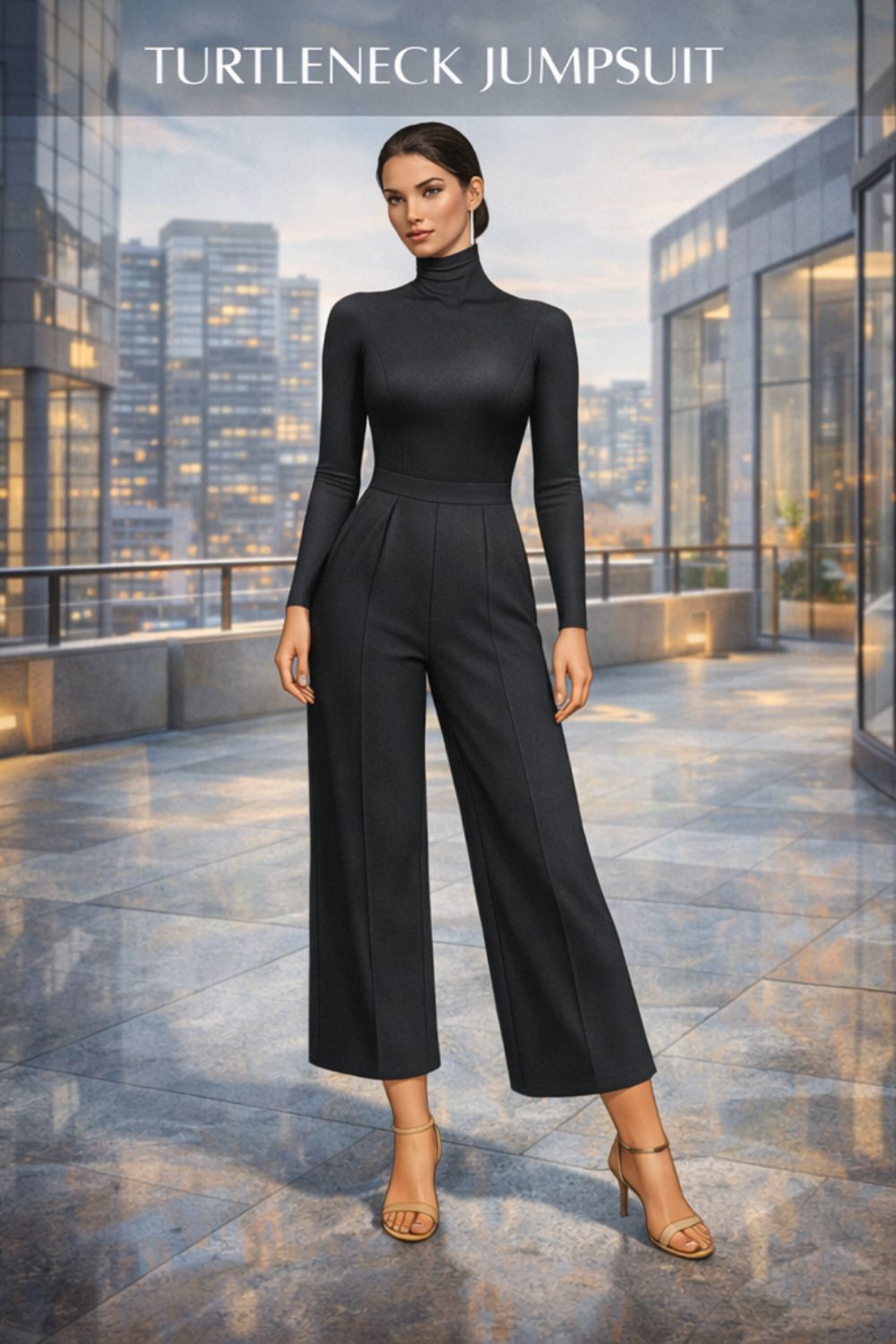
      High-rise collar that folds over itself; full neck coverage. Adopted into high fashion by Saint Laurent and Hepburn. Simultaneously cozy and polished β€” a rare combination.

      DesignHigh fold-over collar, full neck coverage, snug fit
      SeasonAutumn / Winter
      Best ForCold weather, office, smart-casual, layering
    2. 74

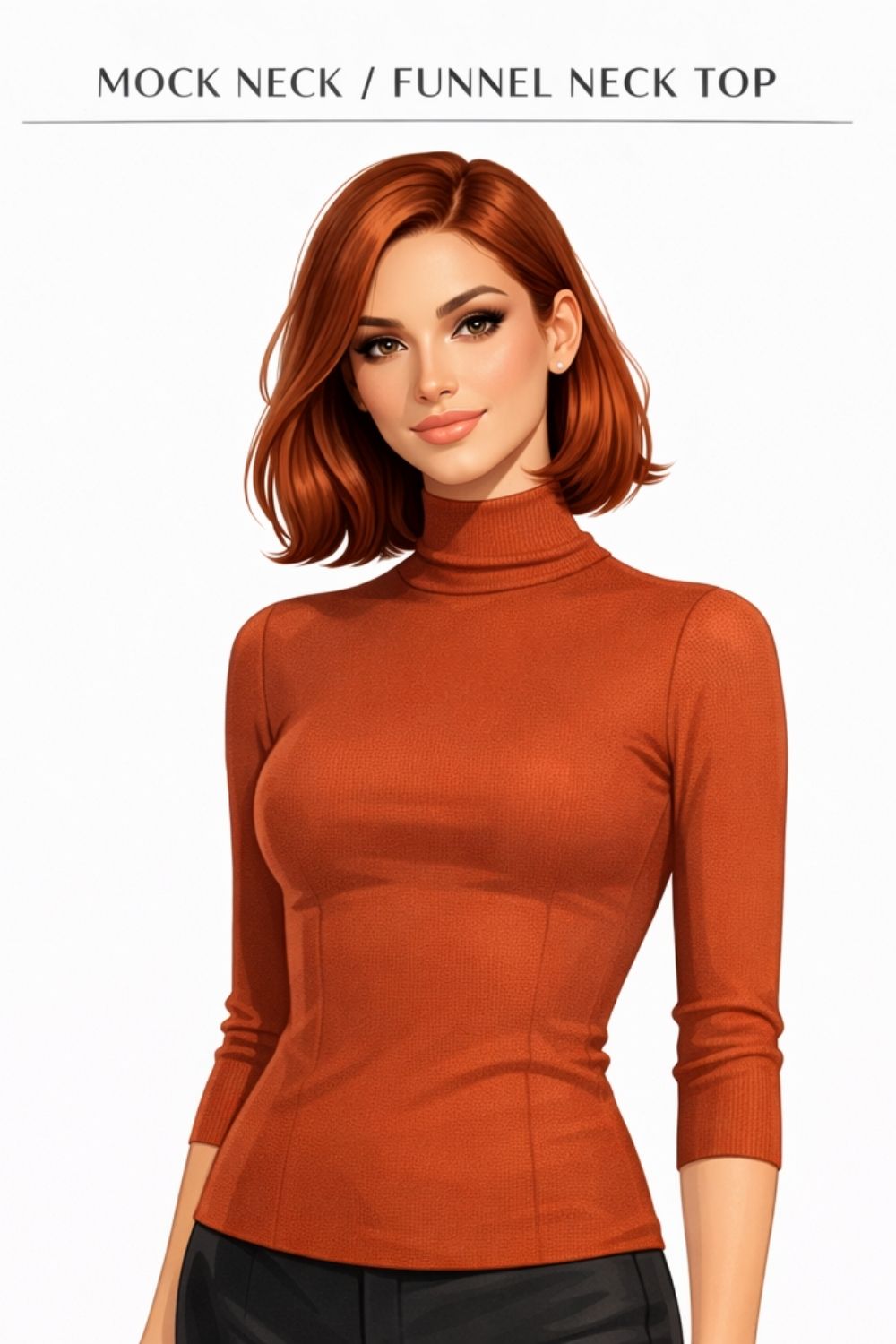
      Mock Neck / Funnel Neck Top

      mock or funnel neck top example

      High collar that stands up without folding. Shorter than a turtleneck; cleaner and more contemporary. The funnel holds its position as a modern column of fabric at the neck.

      DesignStanding collar without fold, shorter than turtleneck
      SeasonAutumn / Winter
      Best ForMinimalist looks, office, cold weather
    1. 75

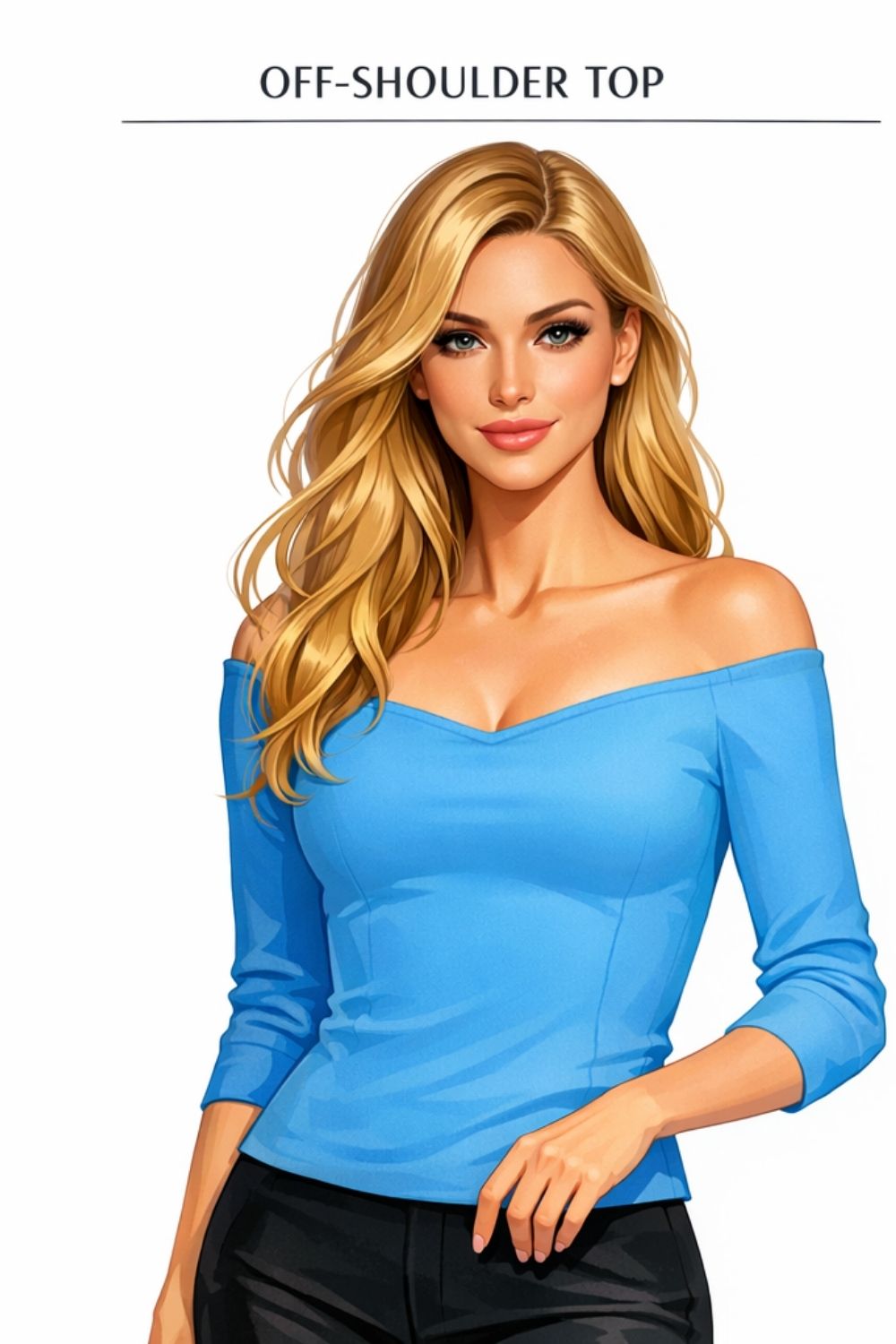
      Off-Shoulder Top

      off shoulder top example

      Fabric rests below both shoulders; collarbone and shoulder area fully exposed. Creates a horizontal line across the chest β€” broadening the shoulder frame visually.

      DesignBelow-shoulder placement, collarbone and arm exposure
      SeasonSpring / Summer
      Best ForGoing out, resort, casual, parties
    2. 76

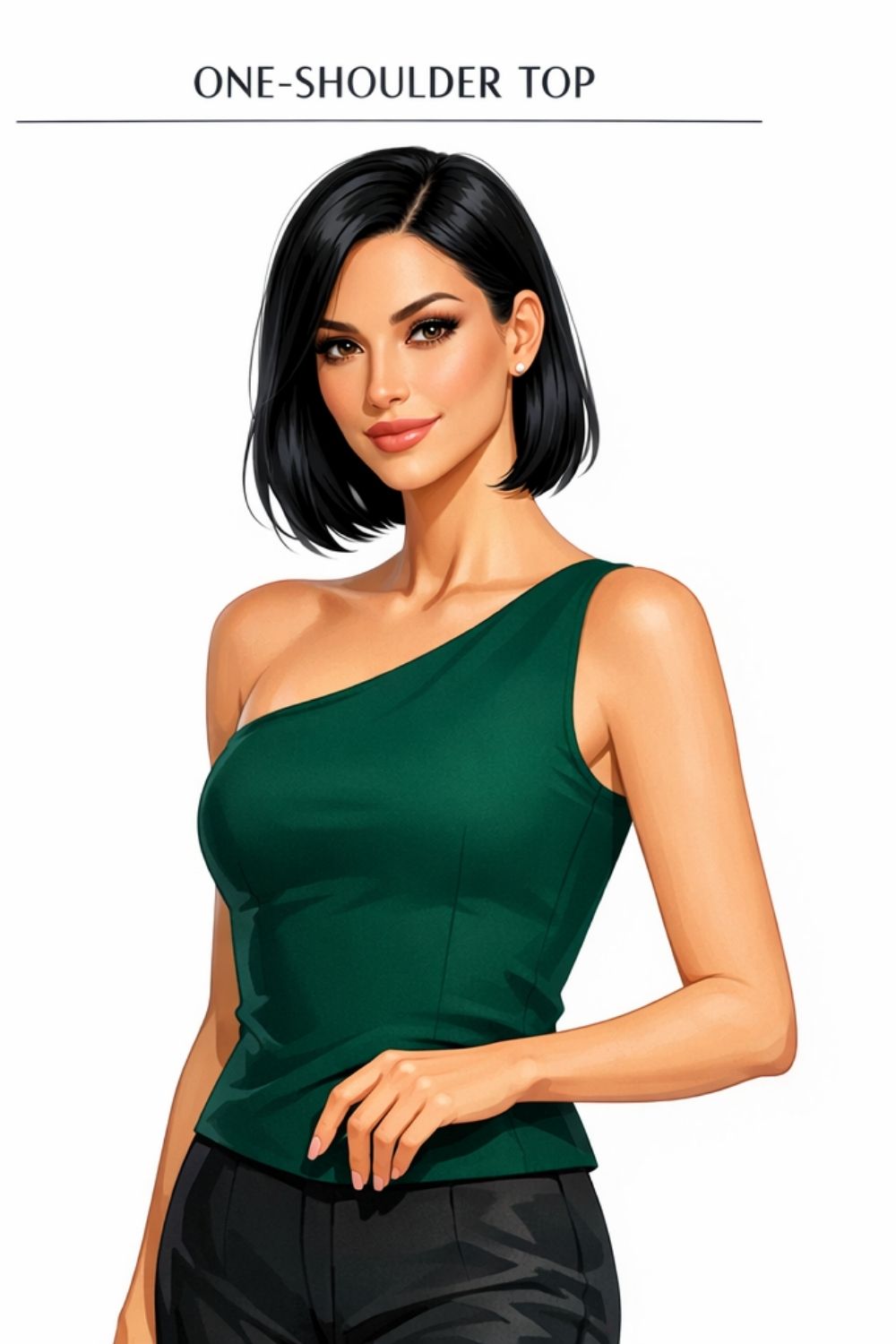
      One-Shoulder Top

      one shoulder top example

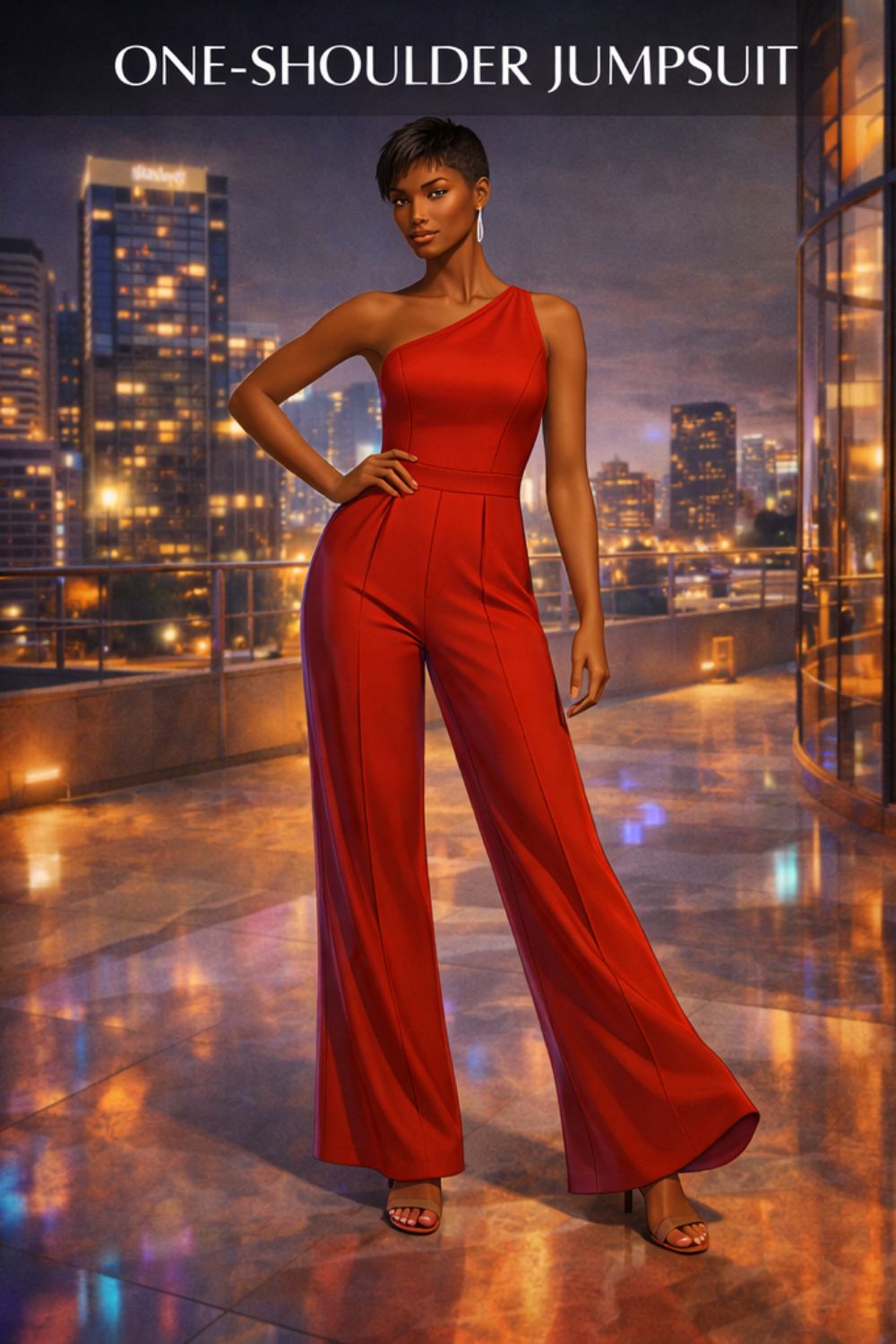
      One shoulder covered, the other completely bare. Asymmetric and inherently dynamic β€” the visual tension between covered and uncovered sides creates movement even in a still garment.

      DesignSingle covered shoulder, opposite side fully bare, asymmetric line
      SeasonSpring / Summer
      Best ForEvening, cocktail events, going out
    1. 77

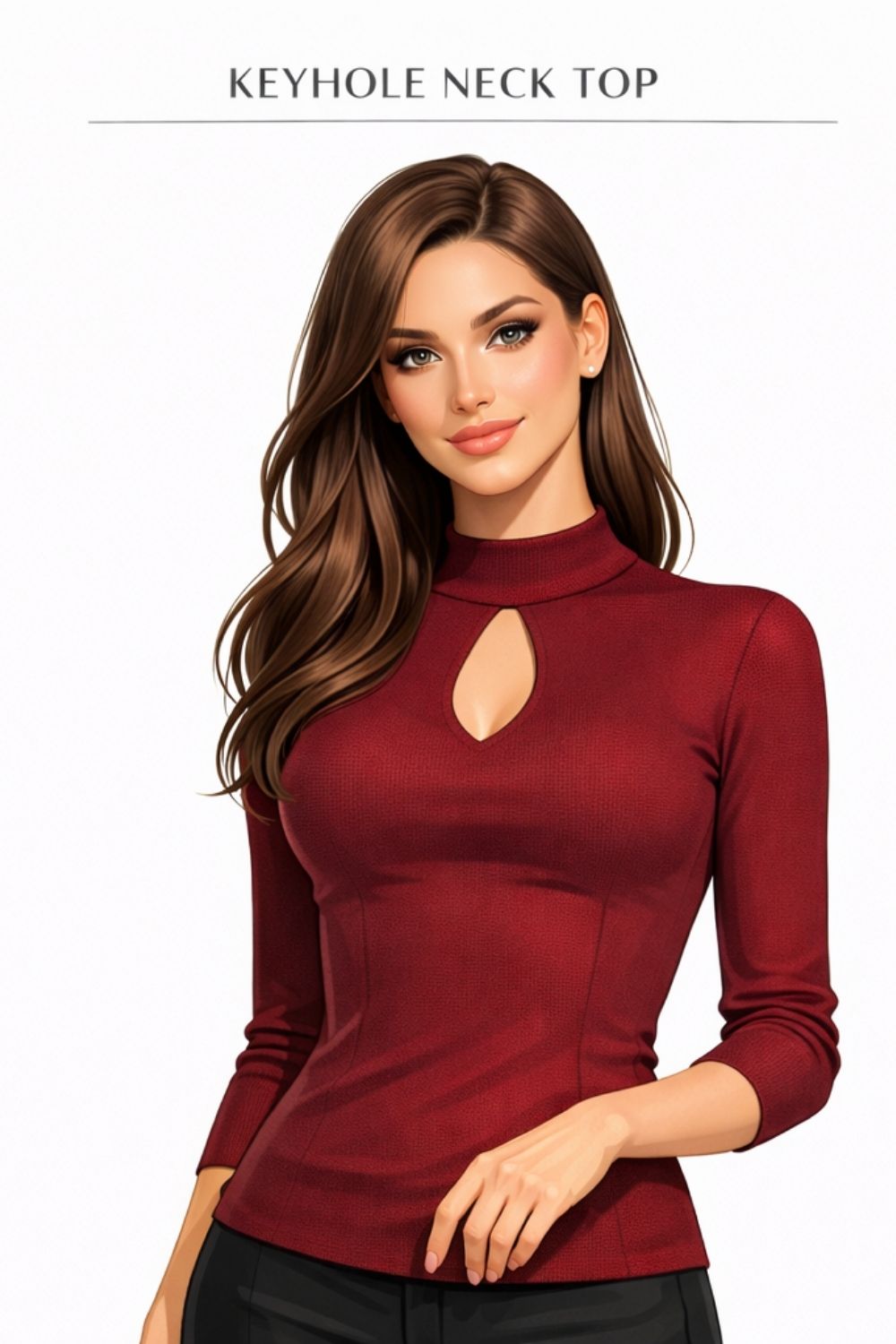
      Keyhole Neck Top

      keyhole neck top example

      Small teardrop or round opening at the center front neckline. Subtle and chic β€” a small detail with disproportionate visual impact.

      DesignSmall teardrop or circular opening at neckline center
      SeasonSpring / Summer
      Best ForSmart-casual, dates, feminine occasions
    2. 78

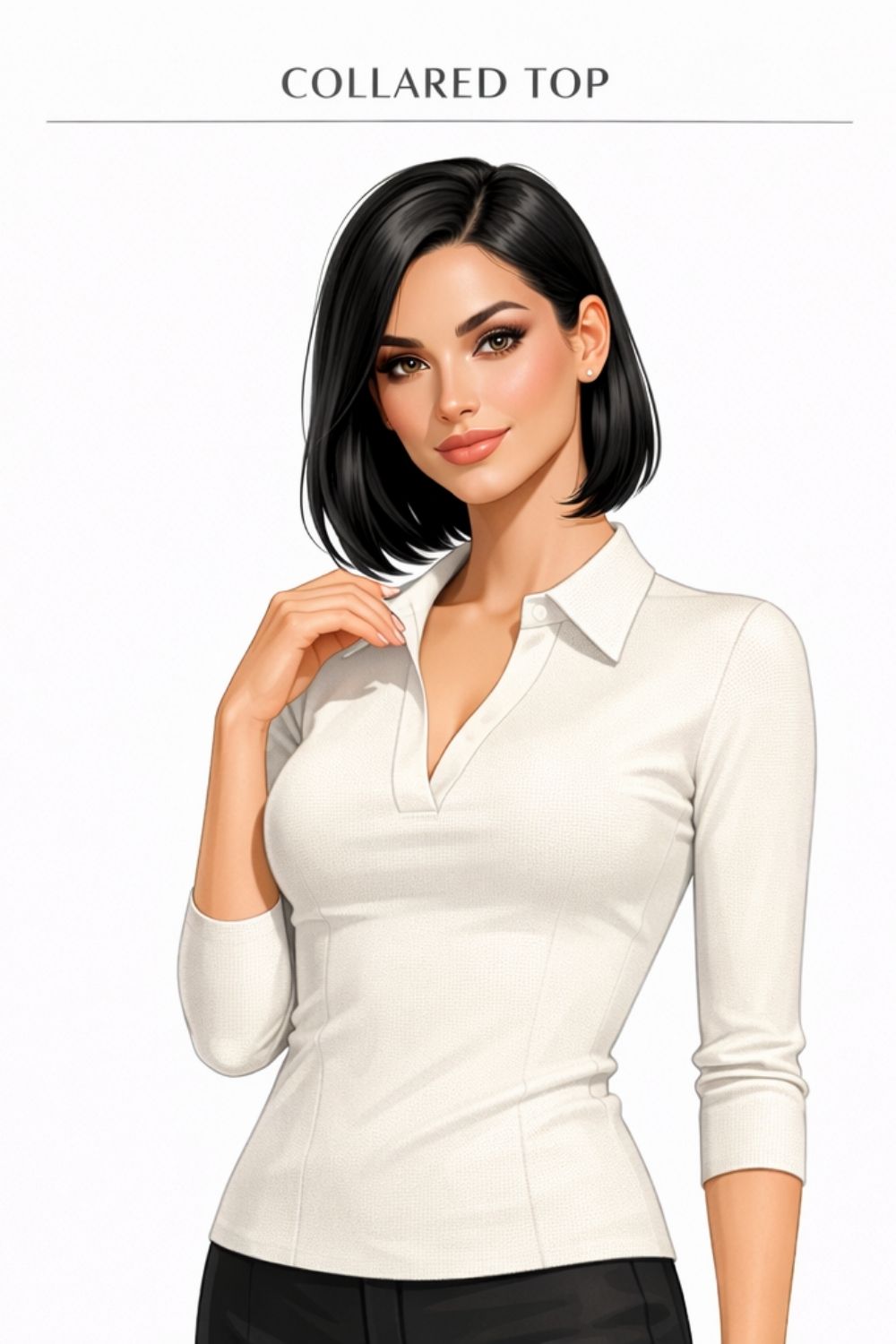
      Collared Top

      collared top example

      A shirt collar sewn onto the neckline β€” from pointed classic to spread collar. Full range of collar styles in our collar type guide.

      DesignSewn collar construction, various collar shapes attached
      SeasonAll seasons
      Best ForOffice, smart-casual, polo-adjacent looks
    1. 79

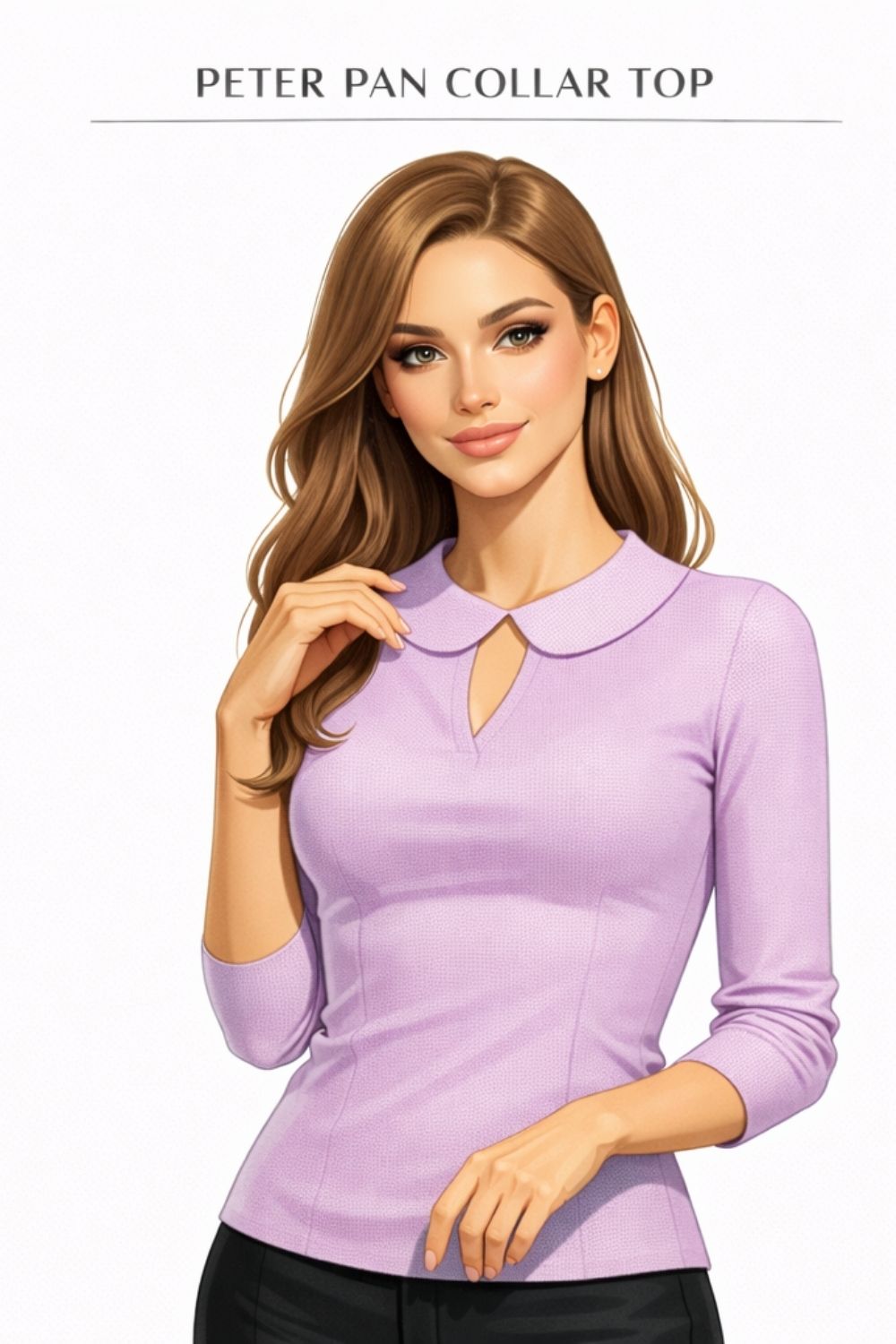
      Peter Pan Collar Top

      peter pan collar top example

      Small, flat, rounded collar lying flat against the neckline. Vintage and feminine β€” named from a 1905 Broadway costume. Reinterpreted by designers from Valentino to Comme des GarΓ§ons.

      DesignSmall flat rounded collar lying flat against neckline
      SeasonSpring / Autumn
      Best ForVintage aesthetic, smart-casual, feminine looks
    2. 80

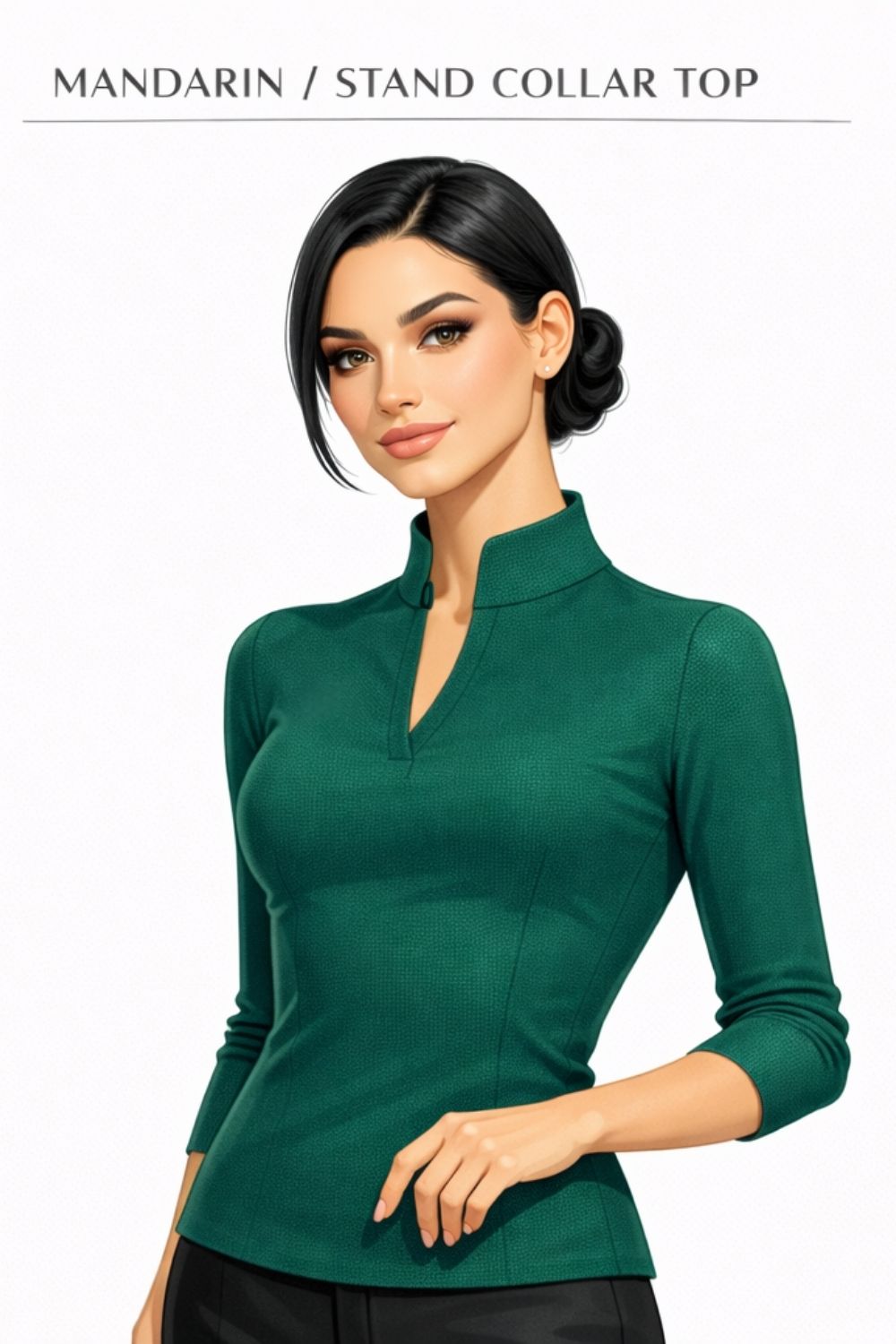
      Mandarin / Stand Collar Top

      mandarin or stand collar top example

      Short upright collar without a fold-down. Military-inspired, clean-lined. Often seen in both casual cotton shirts and structured tops; associated with Chinese and South Asian formal traditions.

      DesignShort upright collar without fold, clean military line
      SeasonAll seasons
      Best ForMinimalist styling, office, structured looks
    1. 81

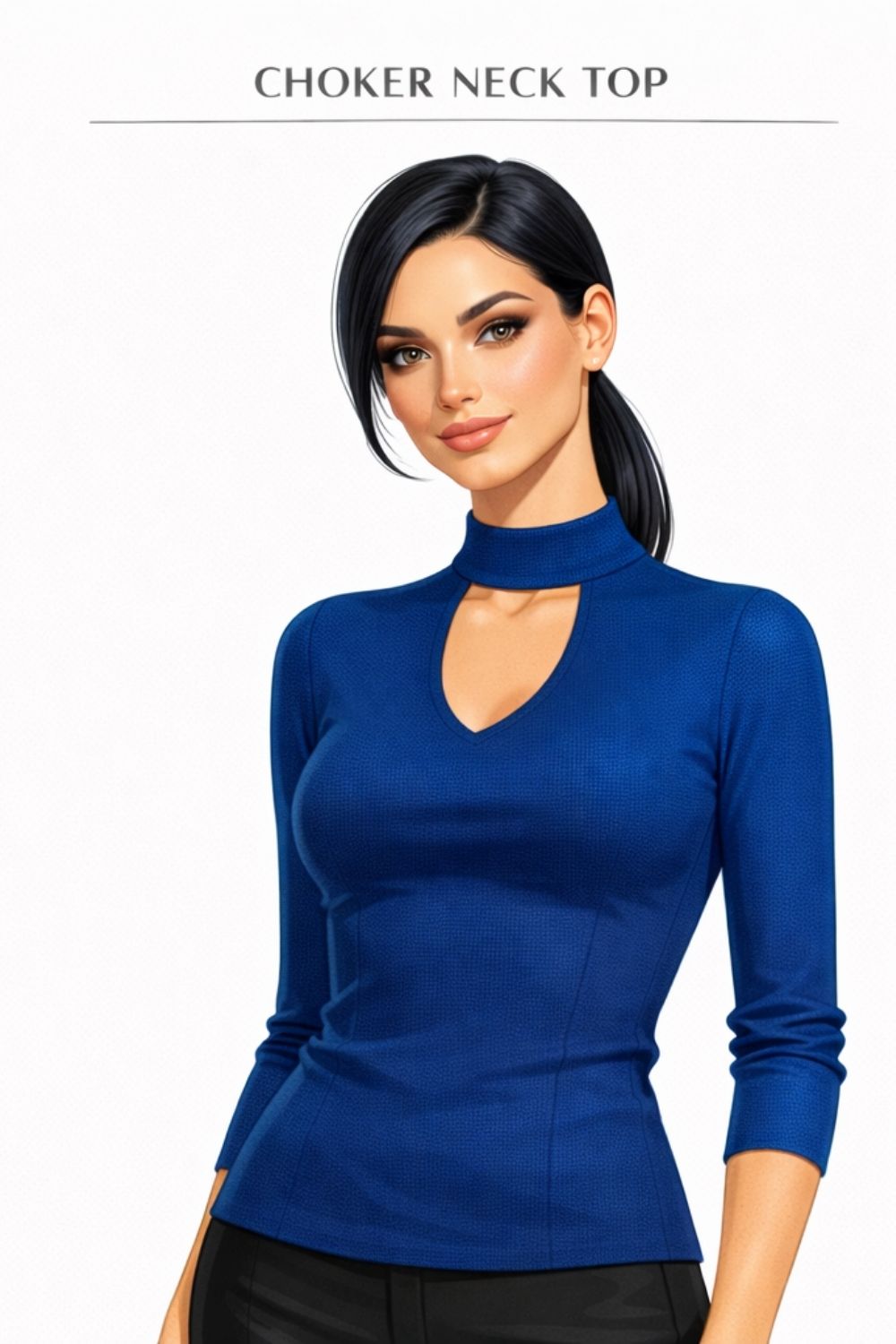
      Choker Neck Top

      choker neck top example

      Tight band of fabric near the throat β€” sits between a collar and a necklace effect. Builds jewelry into the garment construction itself.

      DesignTight fabric band at throat level, necklace-like effect
      SeasonSpring / Summer
      Best ForGoing out, fashion-forward casual, evening
    2. 82

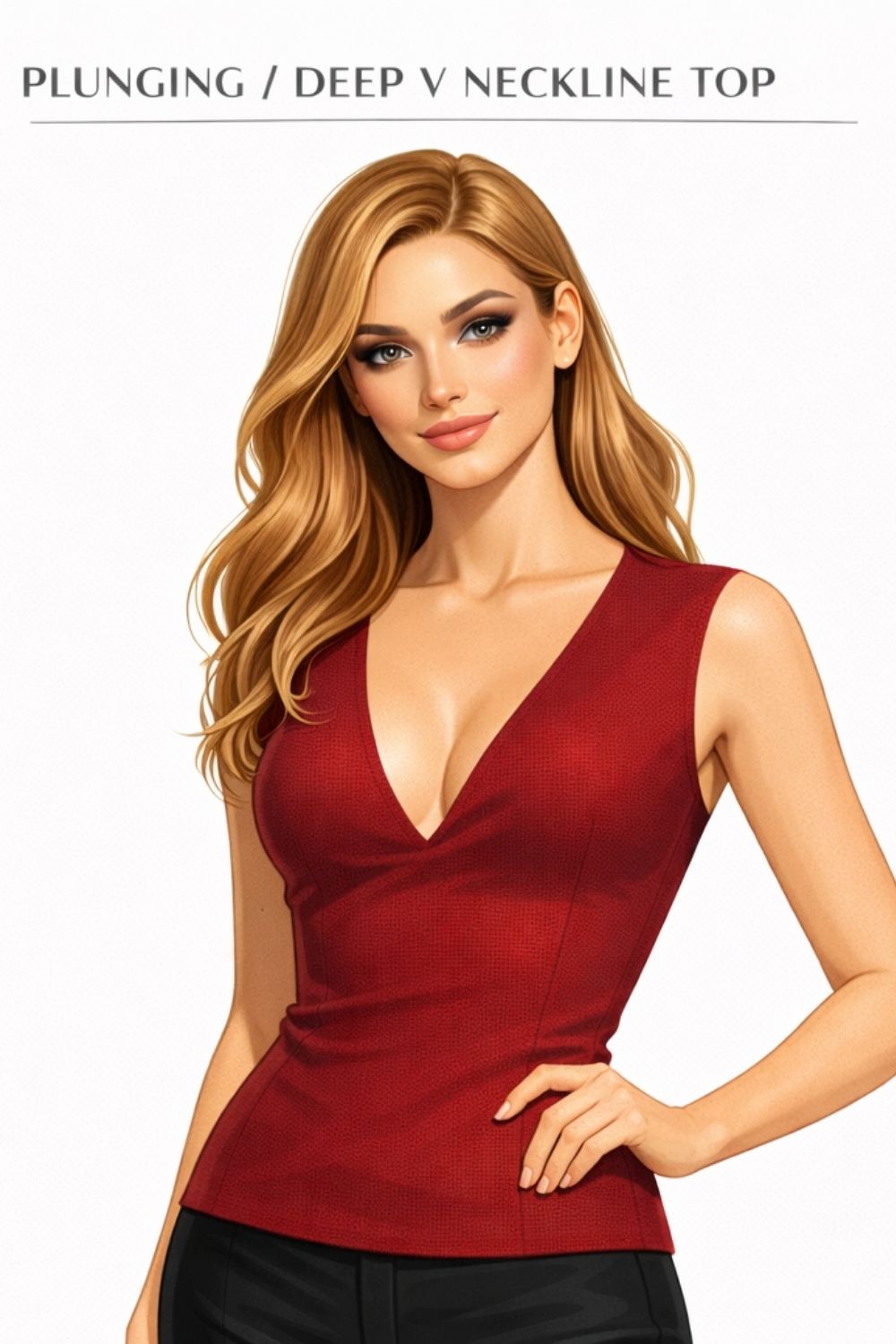
      Plunging / Deep V Neckline Top

      plunging or deep v neckline top example

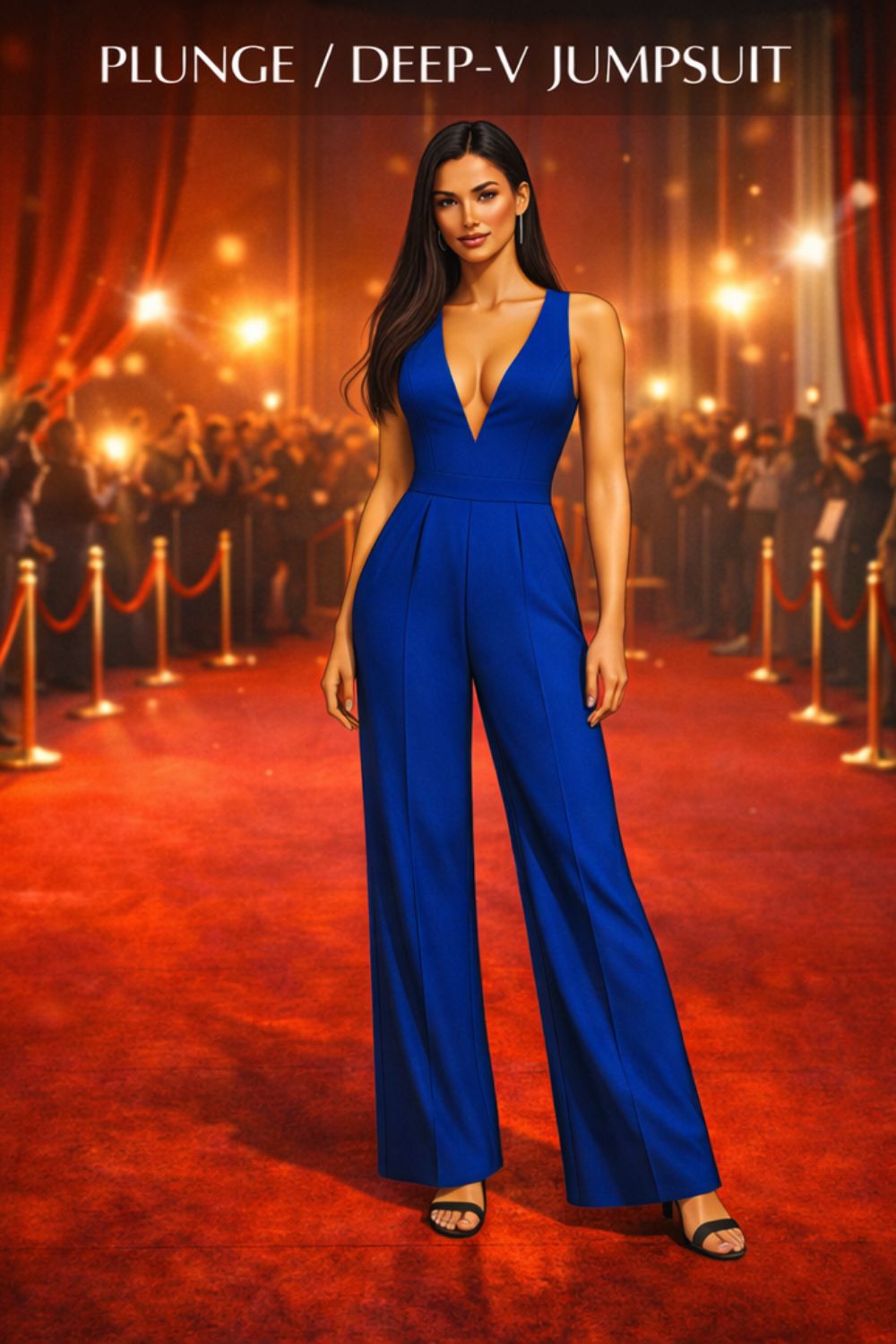
      Deeply cut V extending below bust level. Bold, sensual, high-impact. The depth of the plunge matters enormously β€” a V to the sternum and a V past it create very different effects.

      DesignDeep V extending well below standard neckline, bold open front
      SeasonSpring / Summer
      Best ForEvening, going out, fashion-forward occasions
    1. 83

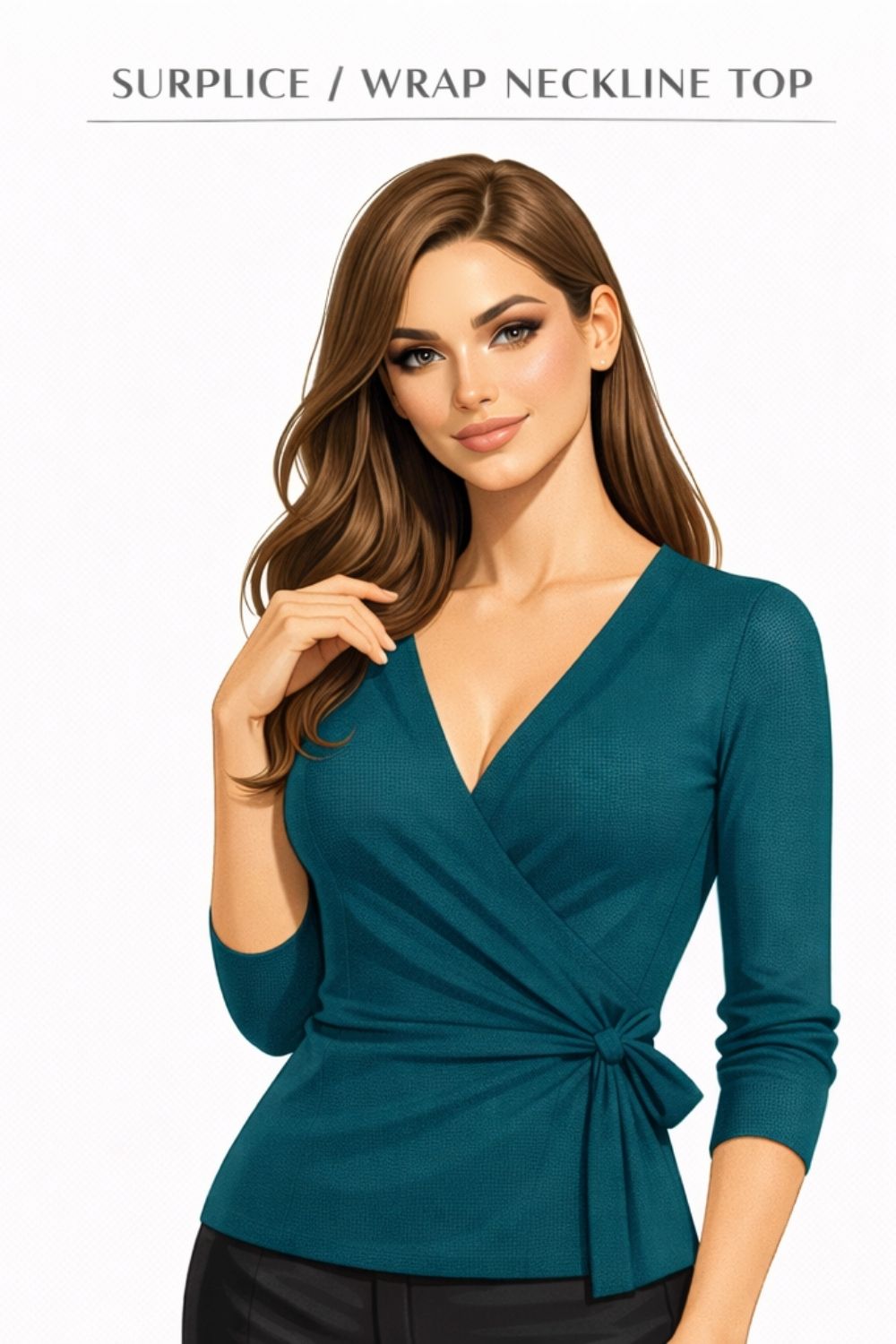
      Surplice / Wrap Neckline Top

      surplice or wrap neckline top example

      One panel crosses over the other, forming a V β€” wrap construction applied specifically to the neckline on garments that aren’t full wrap tops (bodysuits, fitted dresses).

      DesignCrossover panels forming V at neckline, wrap-inspired
      SeasonAll seasons
      Best ForOffice, dates, versatile smart-casual
    2. 84

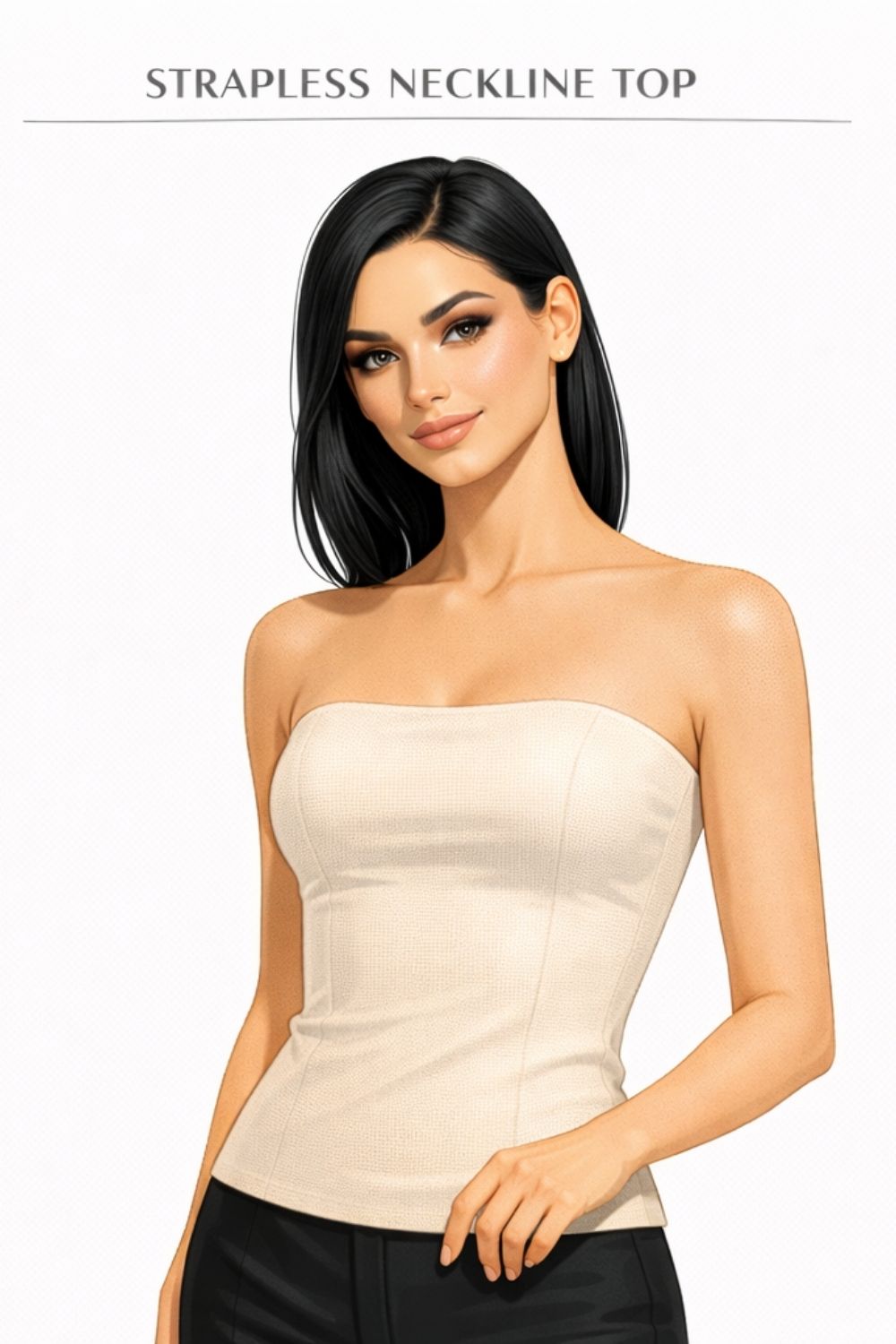
      Strapless Neckline Top

      strapless neckline top example

      No straps; straight across the bust. Held up by boning, elastic, or precise fit. A genuine construction feat β€” supporting a garment without shoulder contact requires careful engineering in the bodice.

      DesignStraight bust-level neckline, no straps, boning or elastic support
      SeasonSpring / Summer
      Best ForEvening, beach, resort, going out
    1. 85

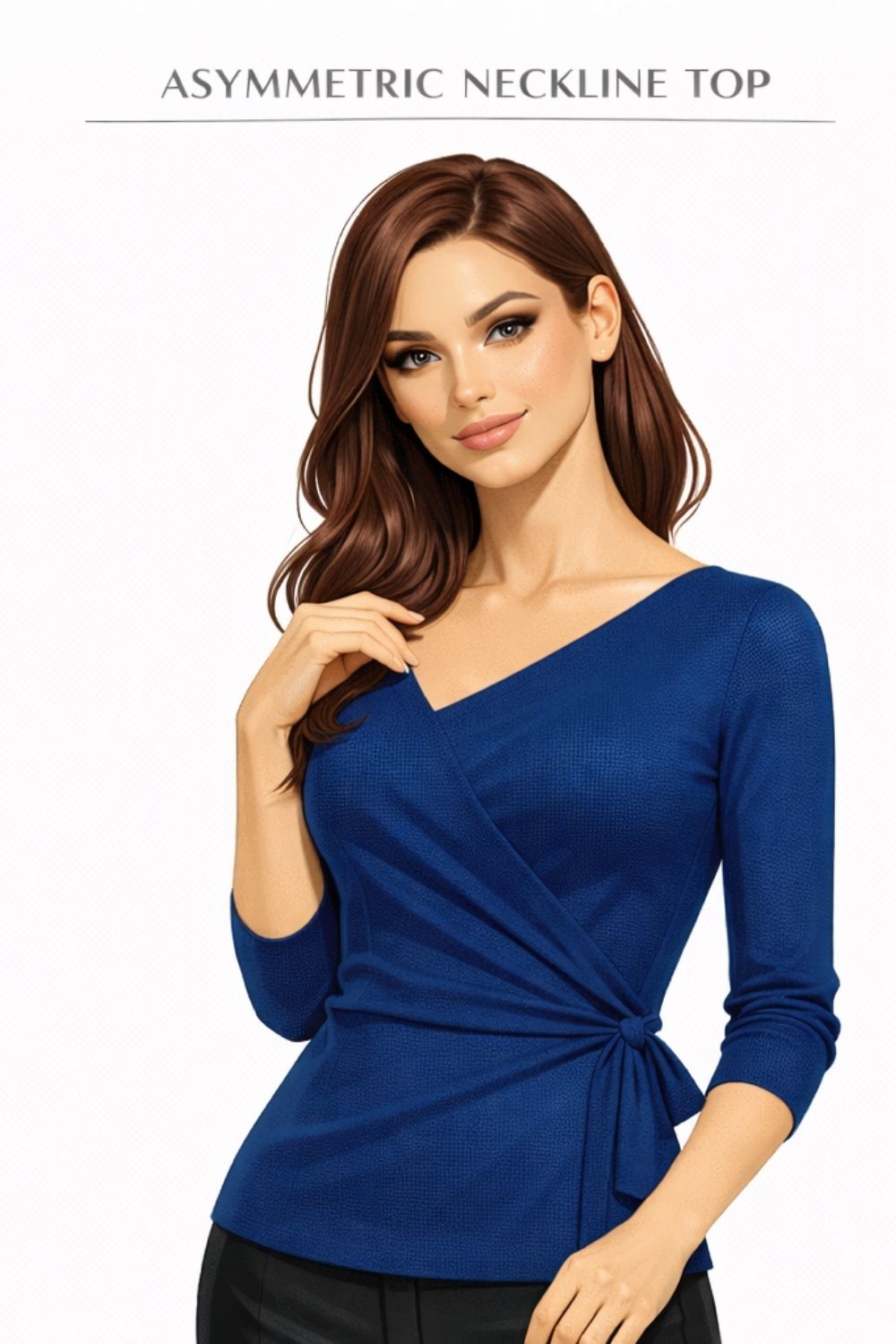
      Asymmetric Neckline Top

      asymmetric neckline top example

      Neckline differs on each side β€” often one shoulder exposed, the other covered. Creates inherent visual tension and movement through an imbalanced design line.

      DesignDifferent neckline treatment on each side, imbalanced construction
      SeasonSpring / Summer
      Best ForFashion-forward, evening, going out
    2. 86

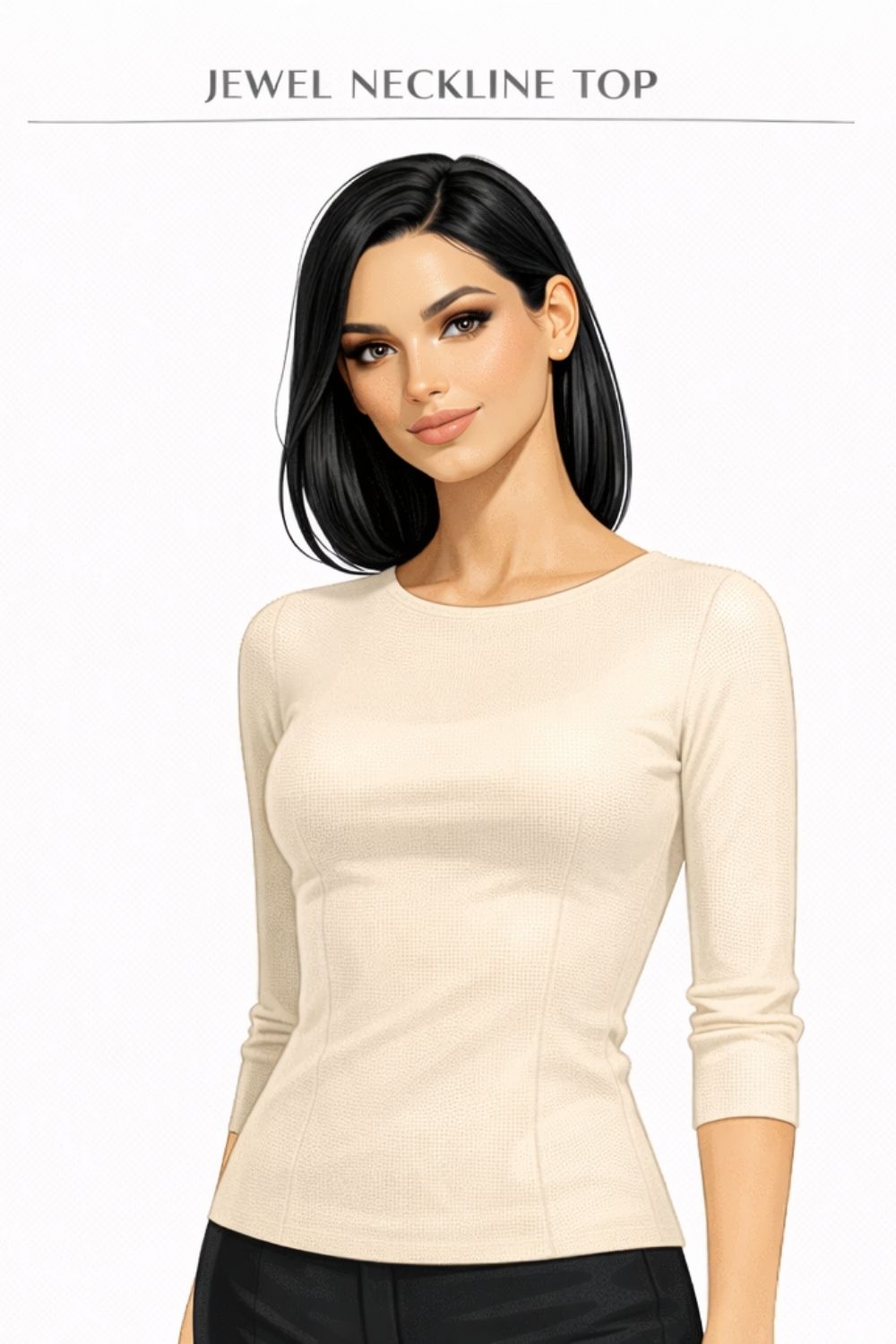
      Jewel Neckline Top

      jewel neckline top example

      Simple round neckline sitting just above the collarbone β€” slightly wider and higher than crew. Named for its function as a jewelry setting β€” it displays necklaces without competing with them.

      DesignRound opening just above collarbone, wider than crew, minimal
      SeasonAll seasons
      Best ForFormal, office, jewelry showcase looks
    1. 87

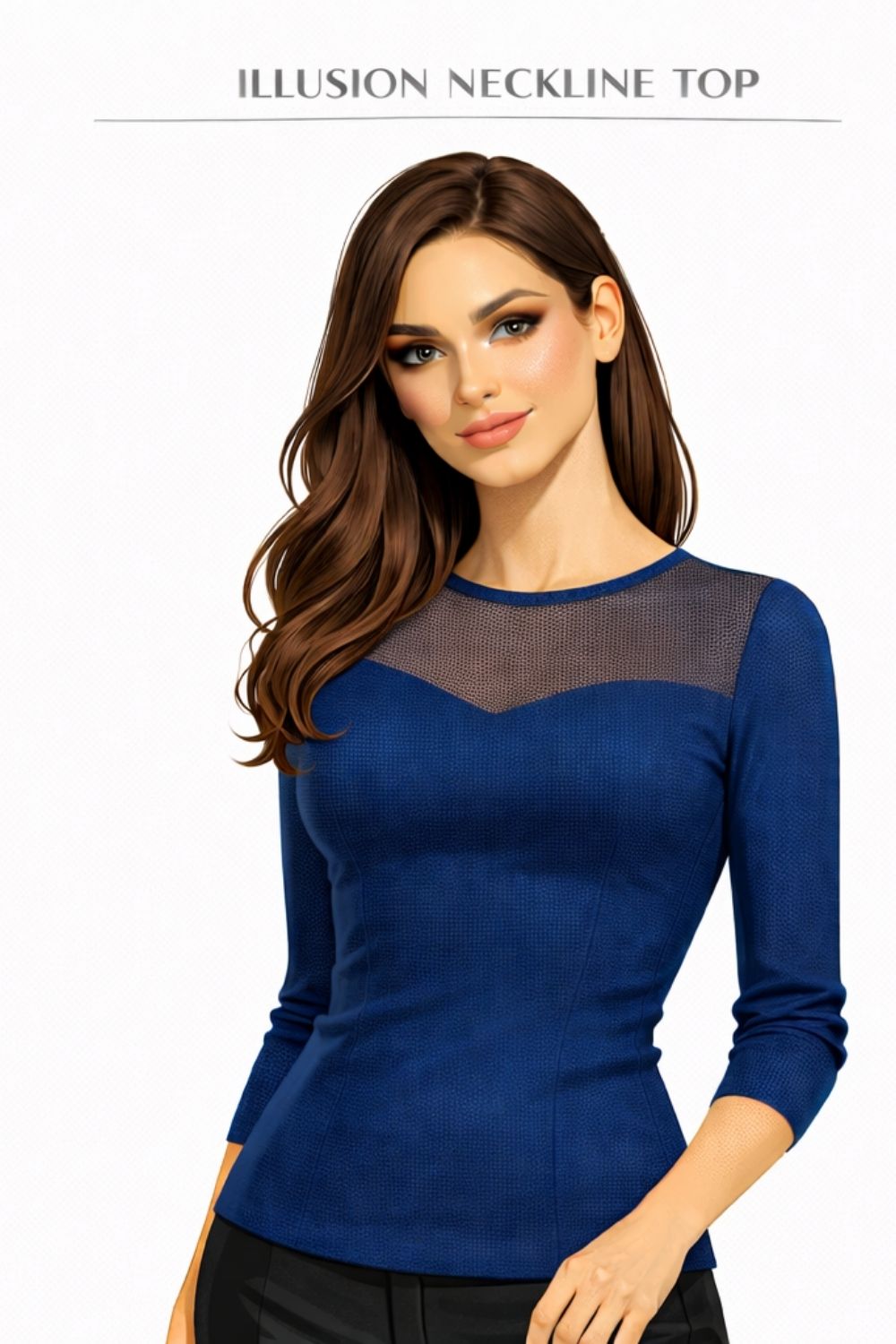
      Illusion Neckline Top

      illusion neckline top example

      Sheer fabric β€” lace, tulle, or mesh β€” creates the illusion of a higher or differently cut neckline. Technically sophisticated: you appear to wear a modest high neckline while the actual structure sits much lower.

      DesignSheer fabric overlay creating apparent neckline change
      SeasonAll seasons
      Best ForFormal, bridal, elegant occasions
    2. 88

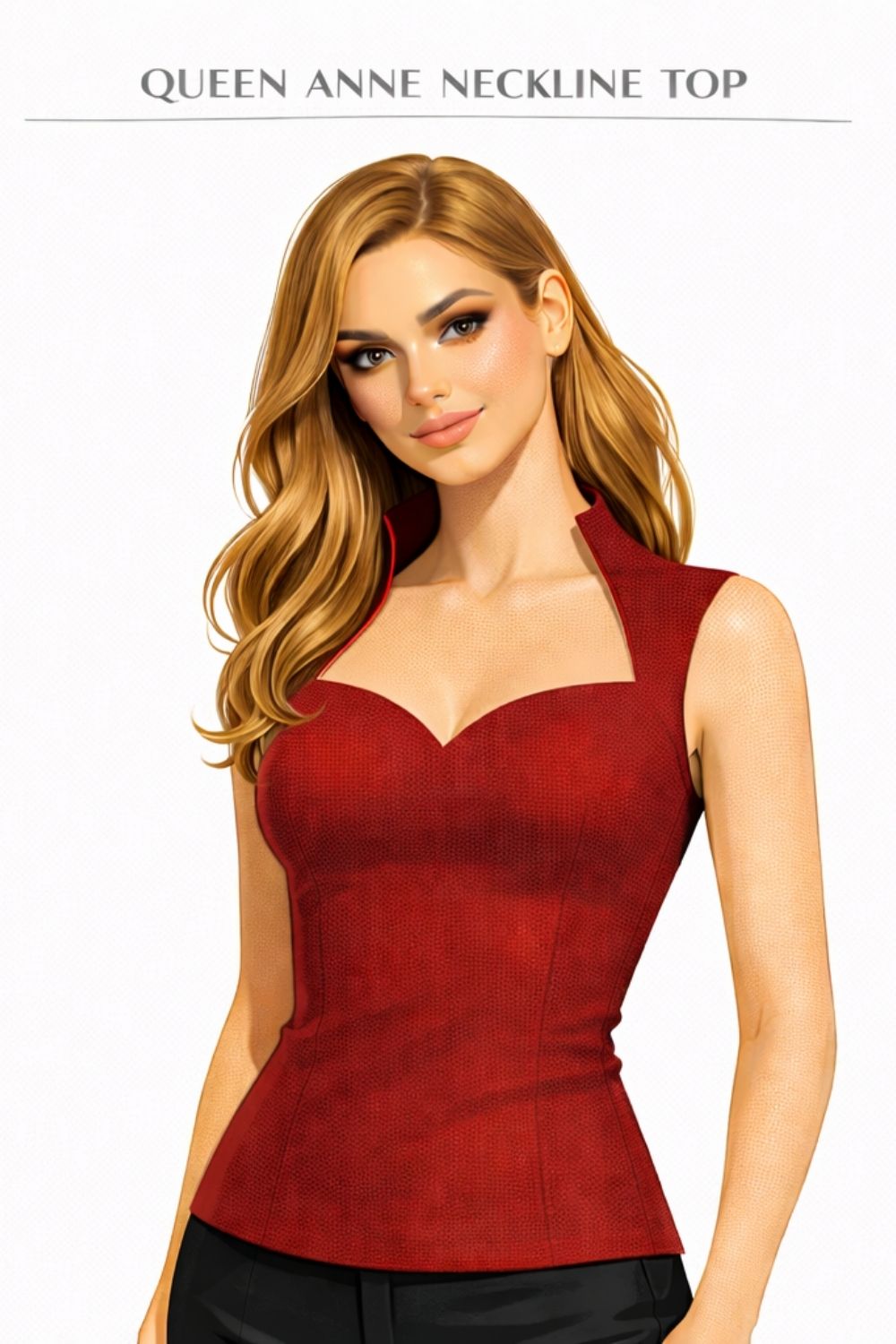
      Queen Anne Neckline Top

      queen anne neckline top example

      Heart-shaped front with a high, often sheer back collar. Regal, theatrical, and complex in construction β€” rarely seen outside formal and bridal contexts.

      DesignHeart front combined with high sheer back collar panel
      SeasonAutumn / Winter
      Best ForFormal events, bridal occasions, drama-forward looks
    1. 89

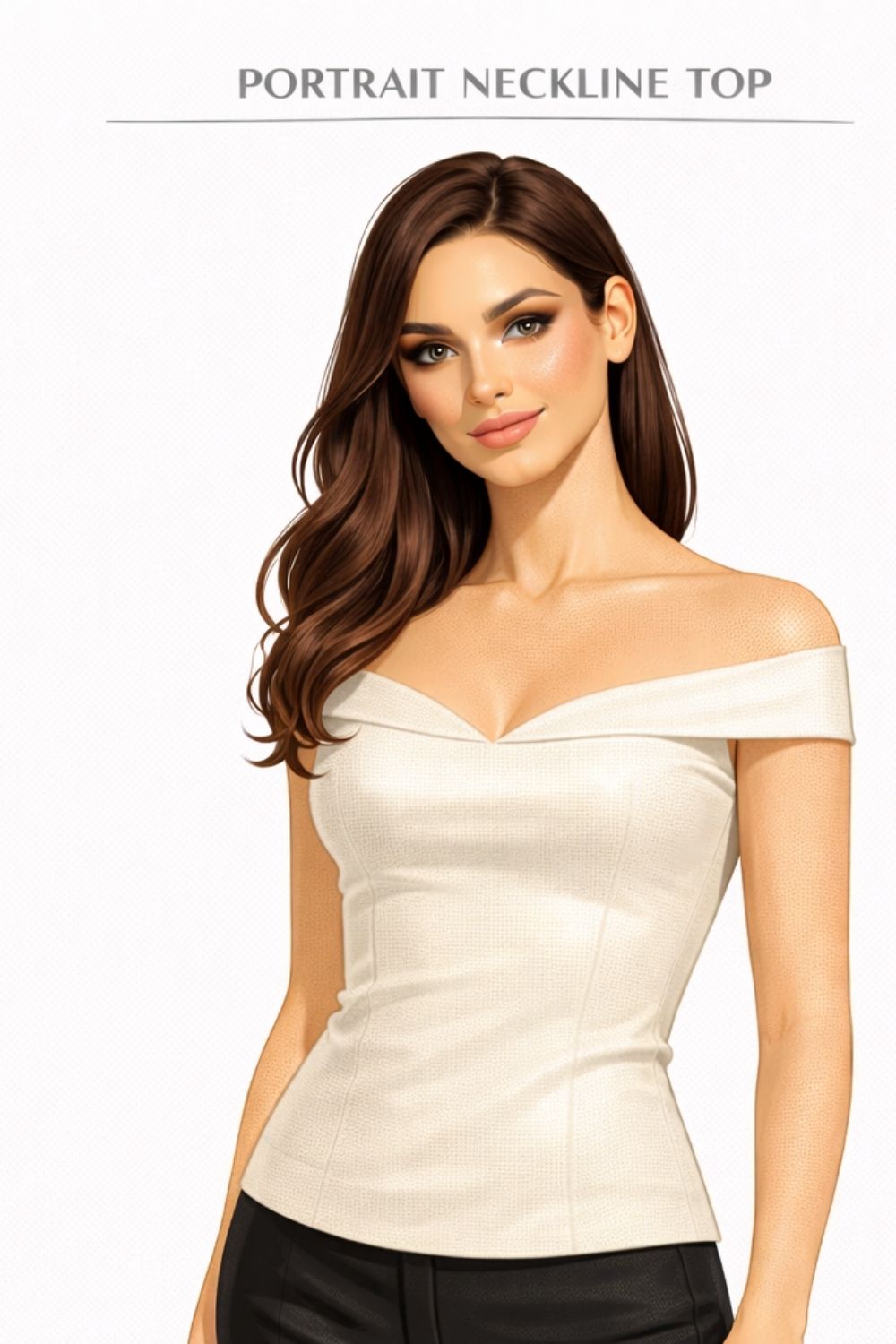
      Portrait Neckline Top

      portrait neckline top example

      Off-the-shoulder with straps positioned at the shoulder points β€” wide and graceful, creating an almost picture-frame quality around the face and dΓ©colletage.

      DesignWide off-shoulder with straps placed at shoulder points
      SeasonSpring / Summer
      Best ForElegant occasions, weddings, evening events
    2. 90

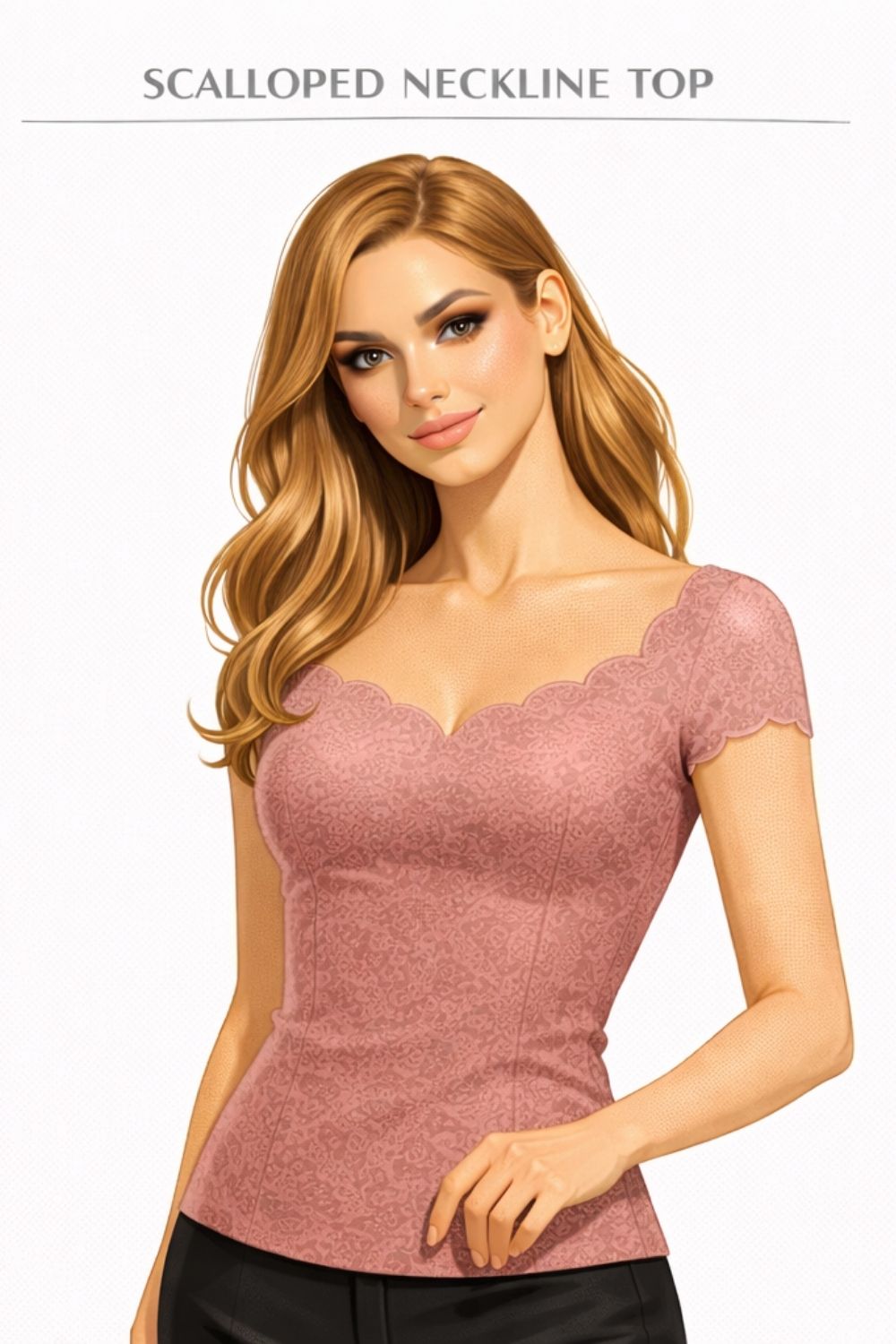
      Scalloped Neckline Top

      scalloped neckline top example

      Decorative curved scallop edging along the neckline. Pretty, romantic, slightly vintage in character. Works particularly well in lace, broderie anglaise, or organza.

      DesignCurved scallop edging along neckline, decorative finish
      SeasonSpring / Summer
      Best ForRomantic occasions, feminine styling, smart-casual
    Myth vs. Fact β€” Necklines & Body Proportions
    Myth:

    β€œV-necks always make you look taller and slimmer.”

    Fact:

    A V-neckline creates a lengthened visual line β€” which many find useful. But the effect varies significantly by V depth, fabric weight, and overall outfit context. A very shallow V in a thick knit produces little visible effect. A deep V in draped silk, on the other hand, can create a striking vertical line through the torso. The neckline shape is one variable among several β€” not a guaranteed formula.

    Category 5: By Fit / Silhouette (#91–#102)

    How the garment relates to the body in volume and shaping β€” the overall outline it creates

    Fit is the variable that makes or breaks any top β€” regardless of how technically interesting its construction is. A beautifully designed bishop sleeve blouse in exquisite silk becomes a frustrating garment if the shoulder seam sits three inches off the natural shoulder. Conversely, a simple cotton tee in the exact right fit can feel like a minor revelation.

    Our guide to fitted and structured top styles explores this dimension in depth.

    1. 91

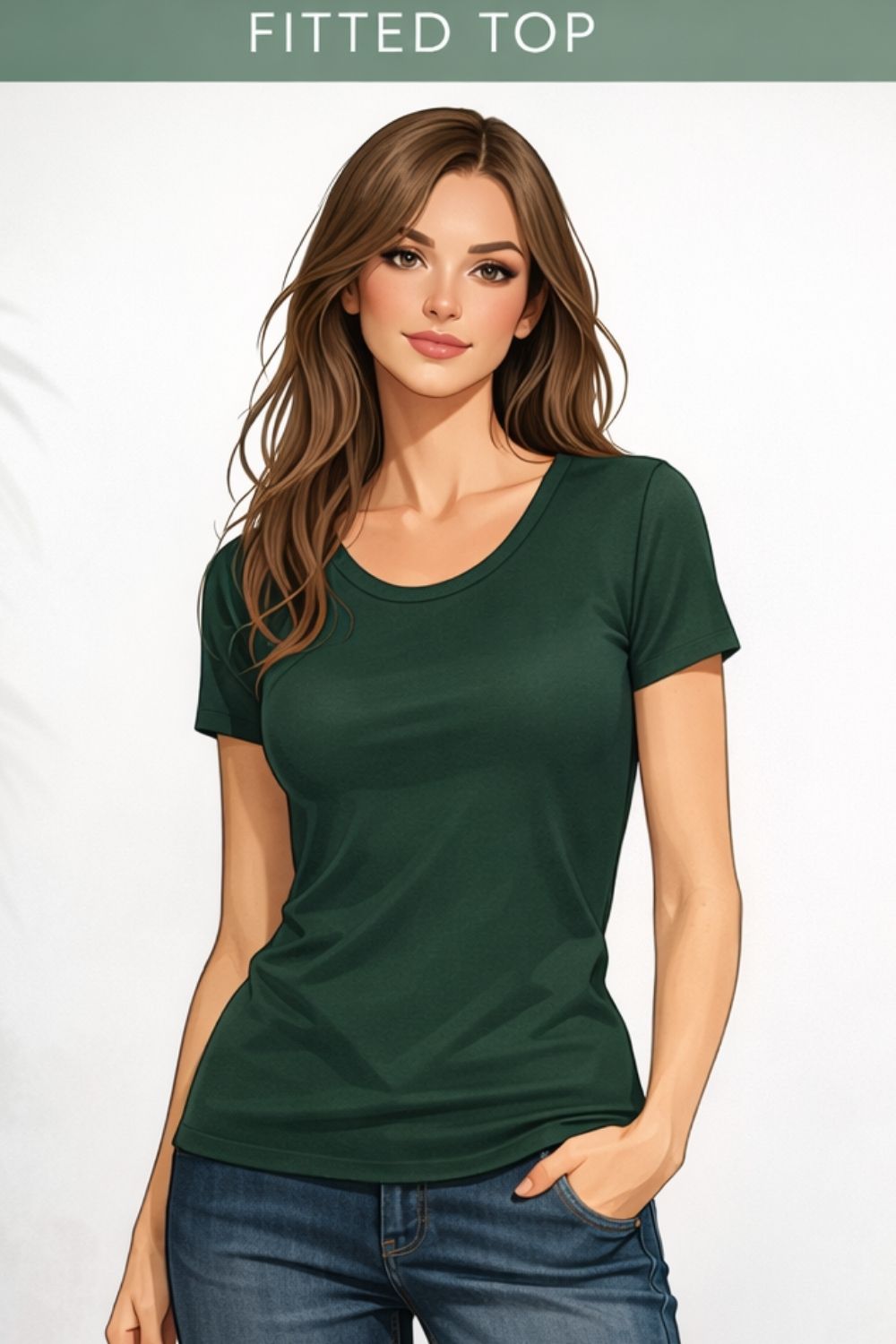
      Fitted Top

      fitted top example

      Closely follows body contours; reveals shape without being uncomfortably tight. The fitted top skims rather than compresses β€” a meaningful distinction in both comfort and visual effect.

      DesignBody-skimming silhouette, seams follow contours, close but not tight
      SeasonAll seasons
      Best ForOffice, dates, smart-casual, most occasions
    2. 92

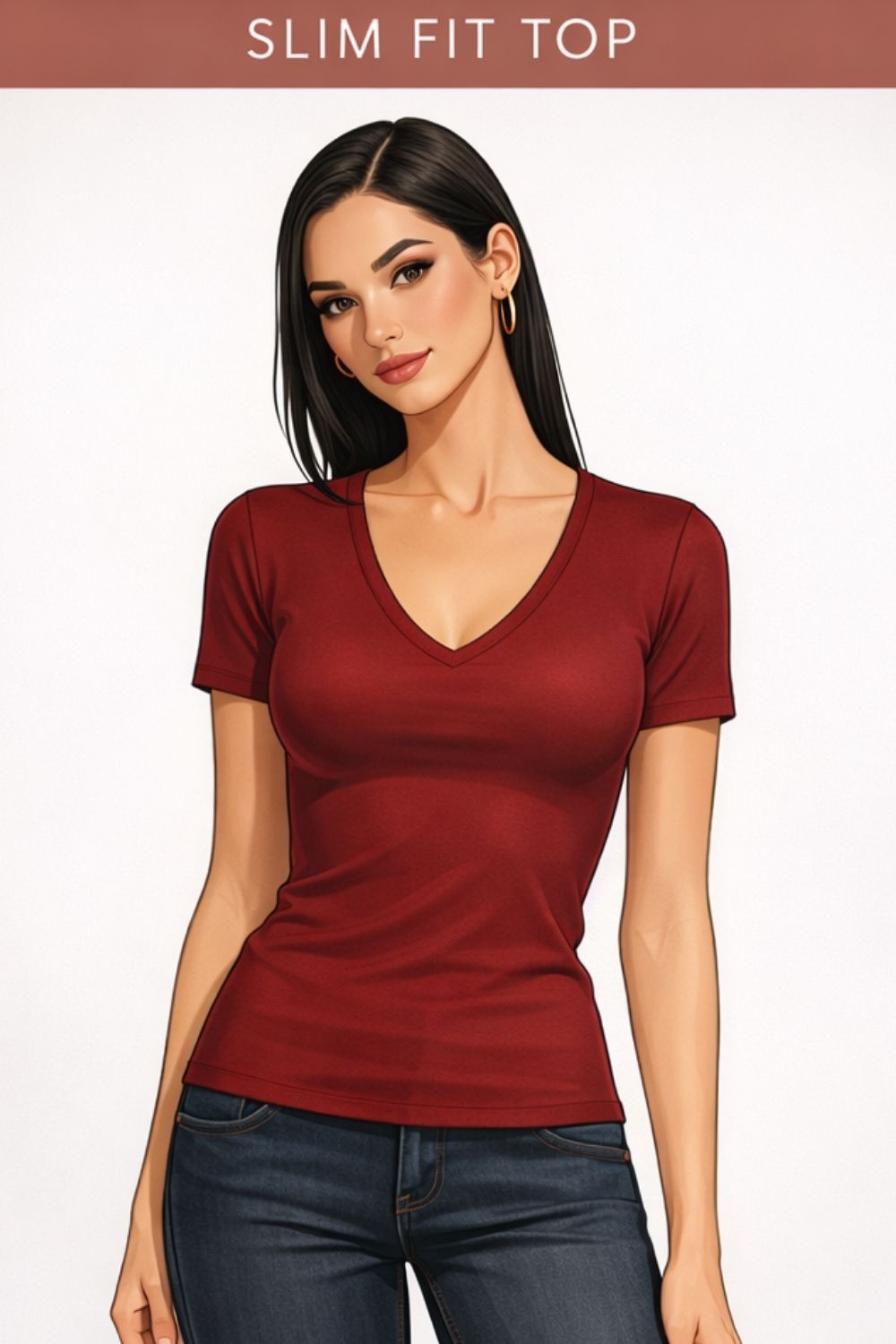
      Slim Fit Top

      slim fit top example

      Slightly tighter than fitted; closely tailored. Creates a sleek, unbroken silhouette through the torso. Often favored in workwear contexts where a streamlined look is preferred.

      DesignClosely tailored, minimal ease, clean streamlined outline
      SeasonAll seasons
      Best ForOffice, formal-adjacent, sleek tailored looks
    1. 93

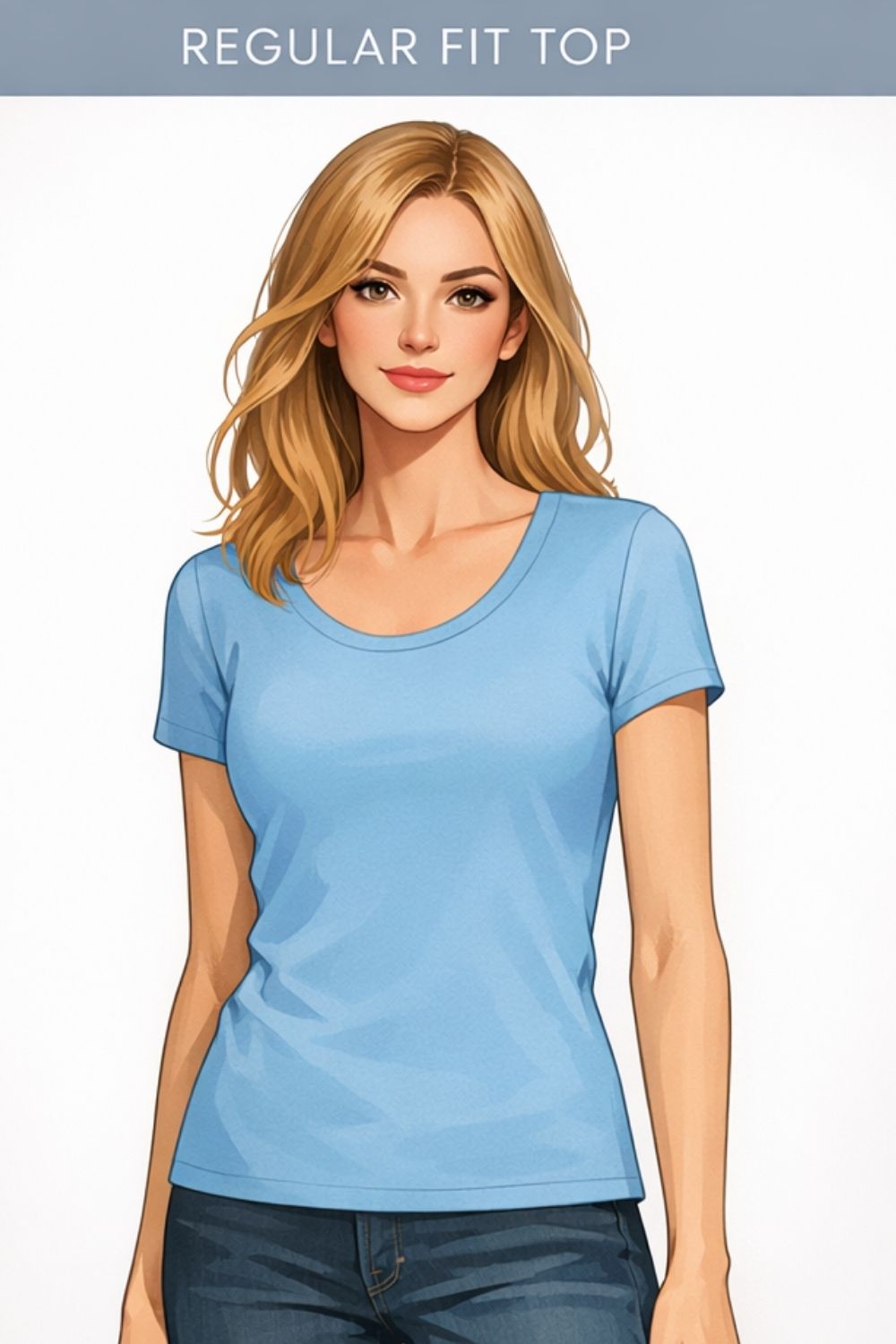
      Regular Fit Top

      regular fit top example

      Standard fit β€” neither tight nor loose. The default industry fit specification; comfortable across most body shapes without a strong silhouette direction either way.

      DesignStandard proportions, balanced ease through body
      SeasonAll seasons
      Best ForUniversal everyday wear, casual to smart-casual
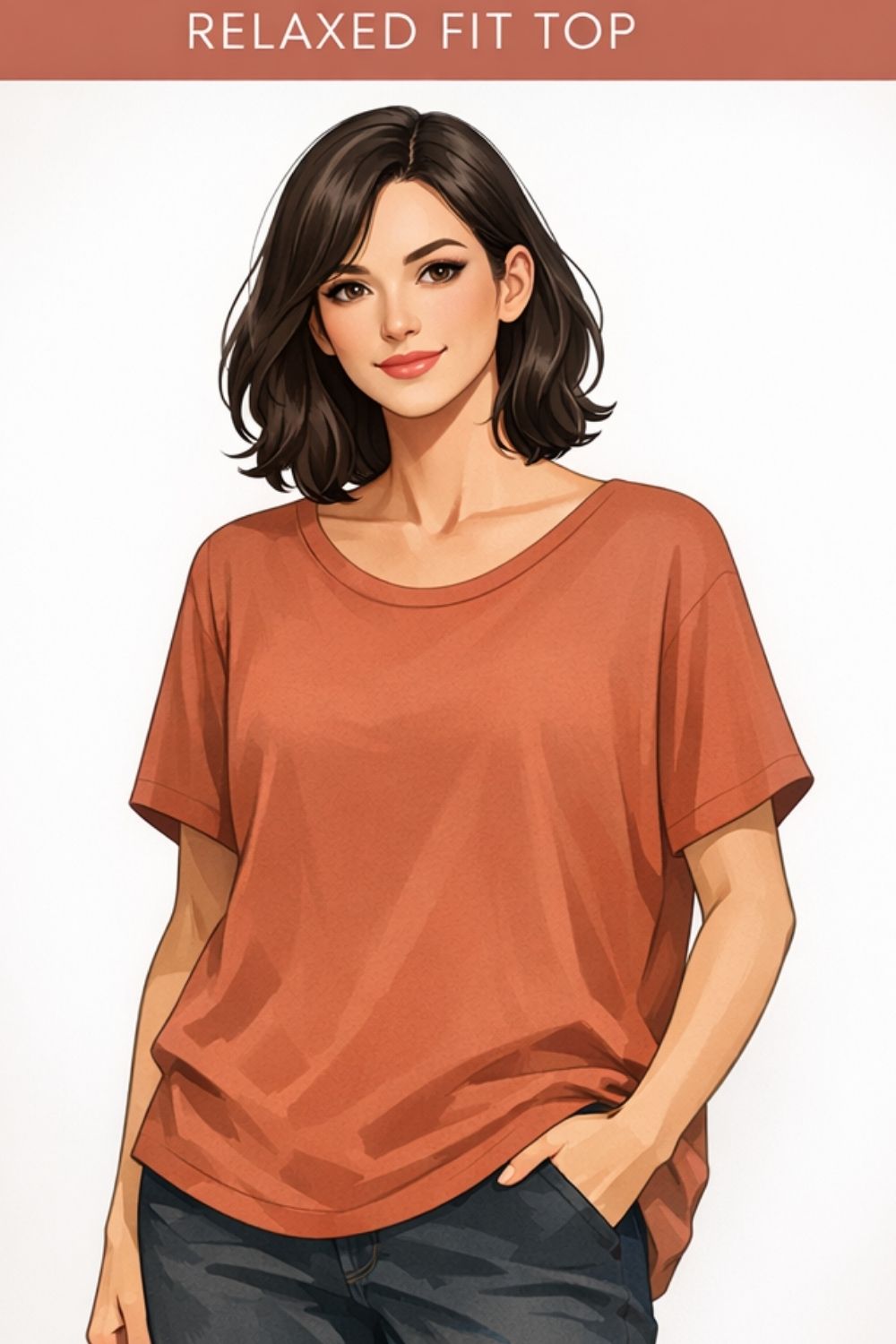
    2. 94

      Relaxed Fit Top

      relaxed fit top example

      Noticeably looser than regular; comfortable and easy-going. Not aggressively oversized β€” just unhurried. The relaxed fit is the everyday default for many people because it asks nothing of you.

      DesignNoticeably looser than standard, easy through body, comfortable
      SeasonAll seasons
      Best ForCasual, weekend, everyday comfort
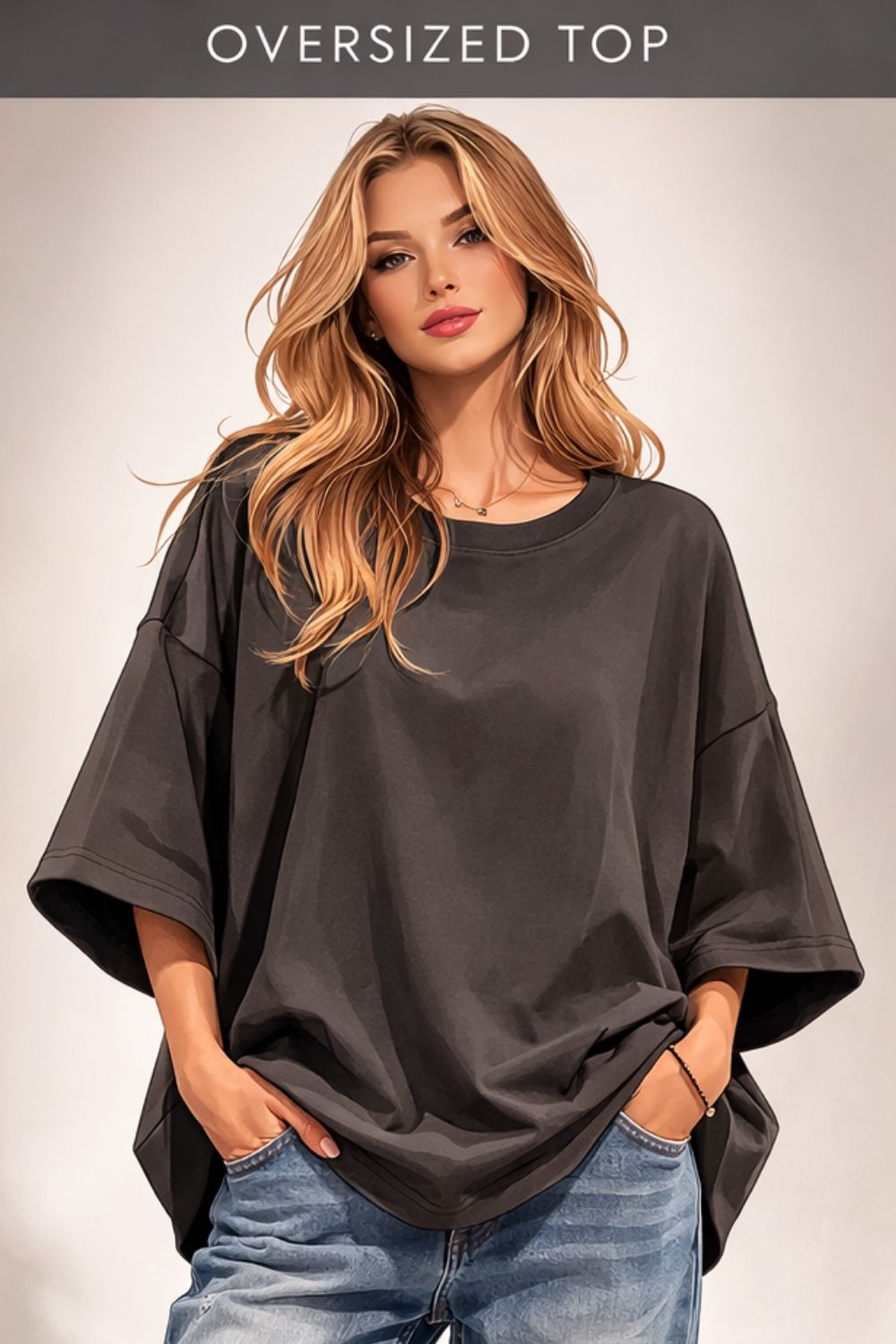
    1. 95

      Oversized Top

      oversized top example

      Intentionally much larger than body size; fashion-forward, streetwear-influenced. The key distinction between β€œtoo big” and β€œoversized” is intentionality in design.

      DesignDeliberately much larger than body size, intentional proportion play
      SeasonAutumn / Winter
      Best ForStreetwear, casual, statement layering
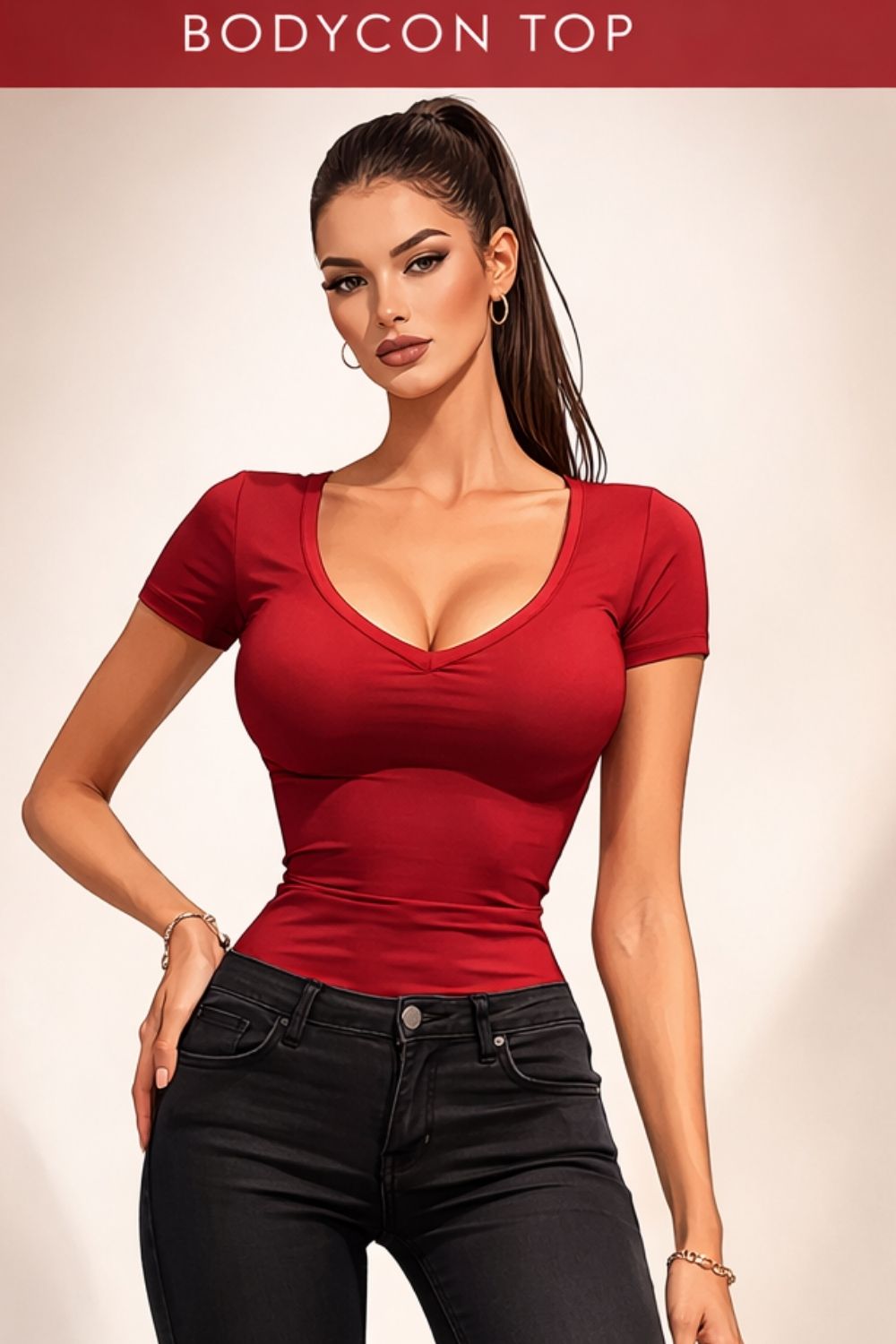
    2. 96

      Bodycon Top

      bodycon top example

      Very tight, highly stretchy fabric that hugs every curve. The bodycon’s defining quality is high elasticity β€” typically spandex-blend jersey β€” allowing fabric to follow body movement without restricting it.

      DesignVery tight stretch construction, form-following through all curves
      SeasonSpring / Summer
      Best ForGoing out, evening, fashion-forward occasions
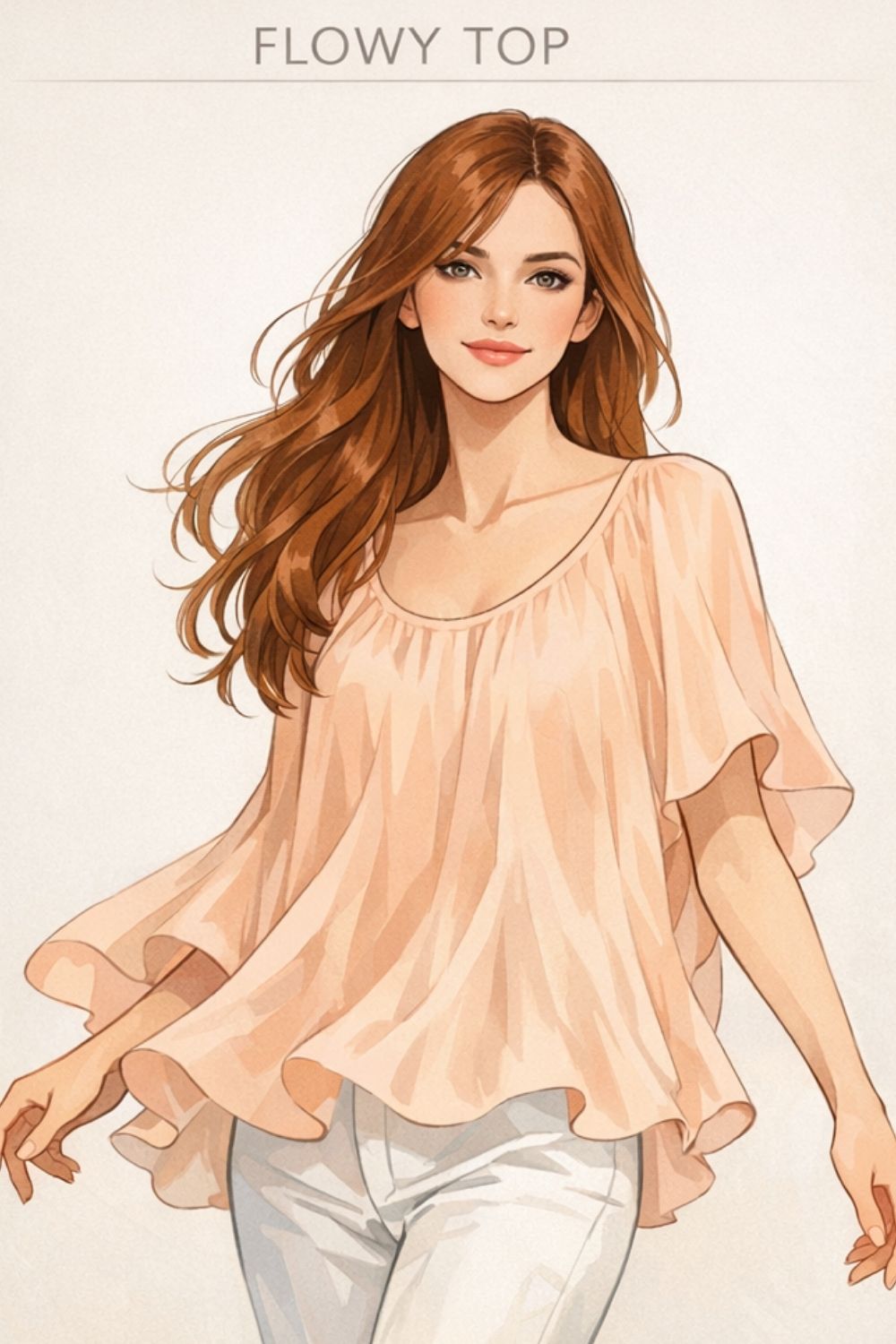
    1. 97

      Flowy Top

      flowy top example

      Loose, draped silhouette that moves away from the body; soft and airy. The flowy top prioritizes movement and ease over structure β€” it changes shape as you move, which is very much the point.

      DesignLoose draped silhouette, fabric moves away from body
      SeasonSpring / Summer
      Best ForCasual, resort, feminine occasions, boho styling
    2. 98

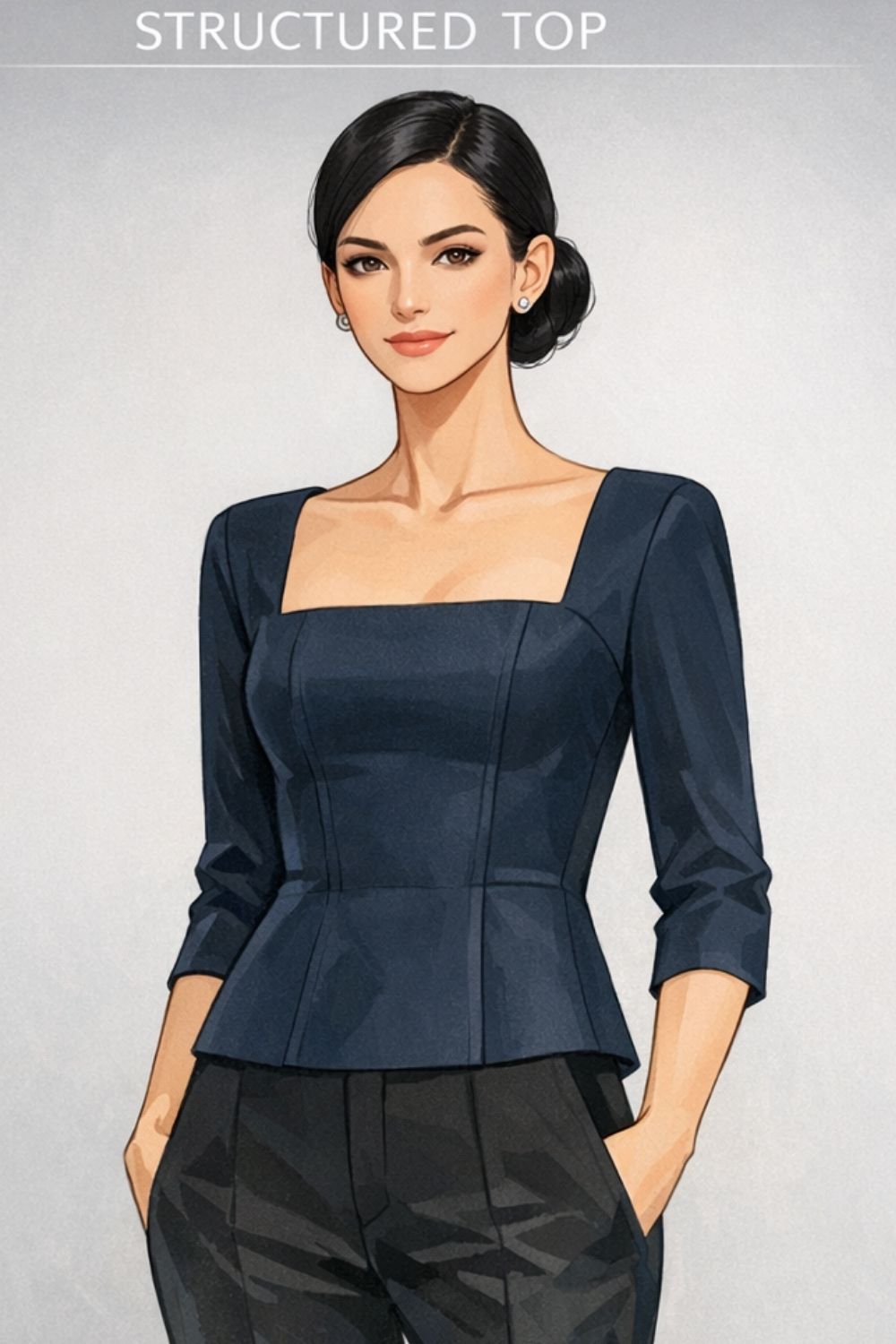
      Structured Top

      structured top example

      Holds its shape independently of the body. Boned, lined, or padded. A structured top maintains its silhouette even lying flat on a surface β€” this is the tailored end of the spectrum.

      DesignSelf-supporting structure through boning, lining, or padding
      SeasonAutumn / Winter
      Best ForFormal, evening, elevated office
    1. 99

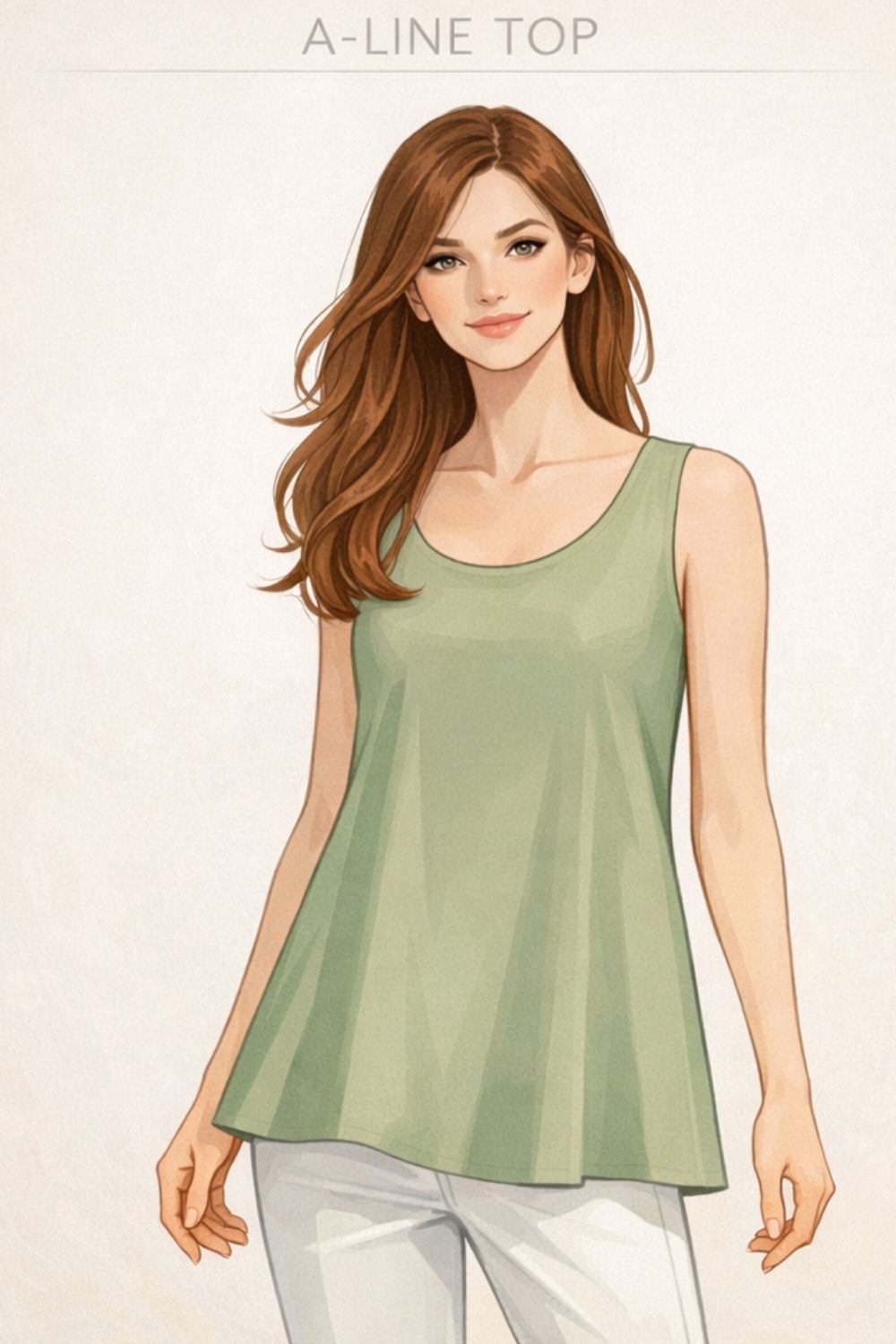
      A-Line Top

      a line top example

      Fitted at shoulders and bust; gradually flares outward toward hem. One of the most adaptable shapes across body types because it defines the upper body while allowing ease in the lower torso.

      DesignFitted upper body, gradually widening toward hem
      SeasonAll seasons
      Best ForVersatile across occasions, universally wearable
    2. 100

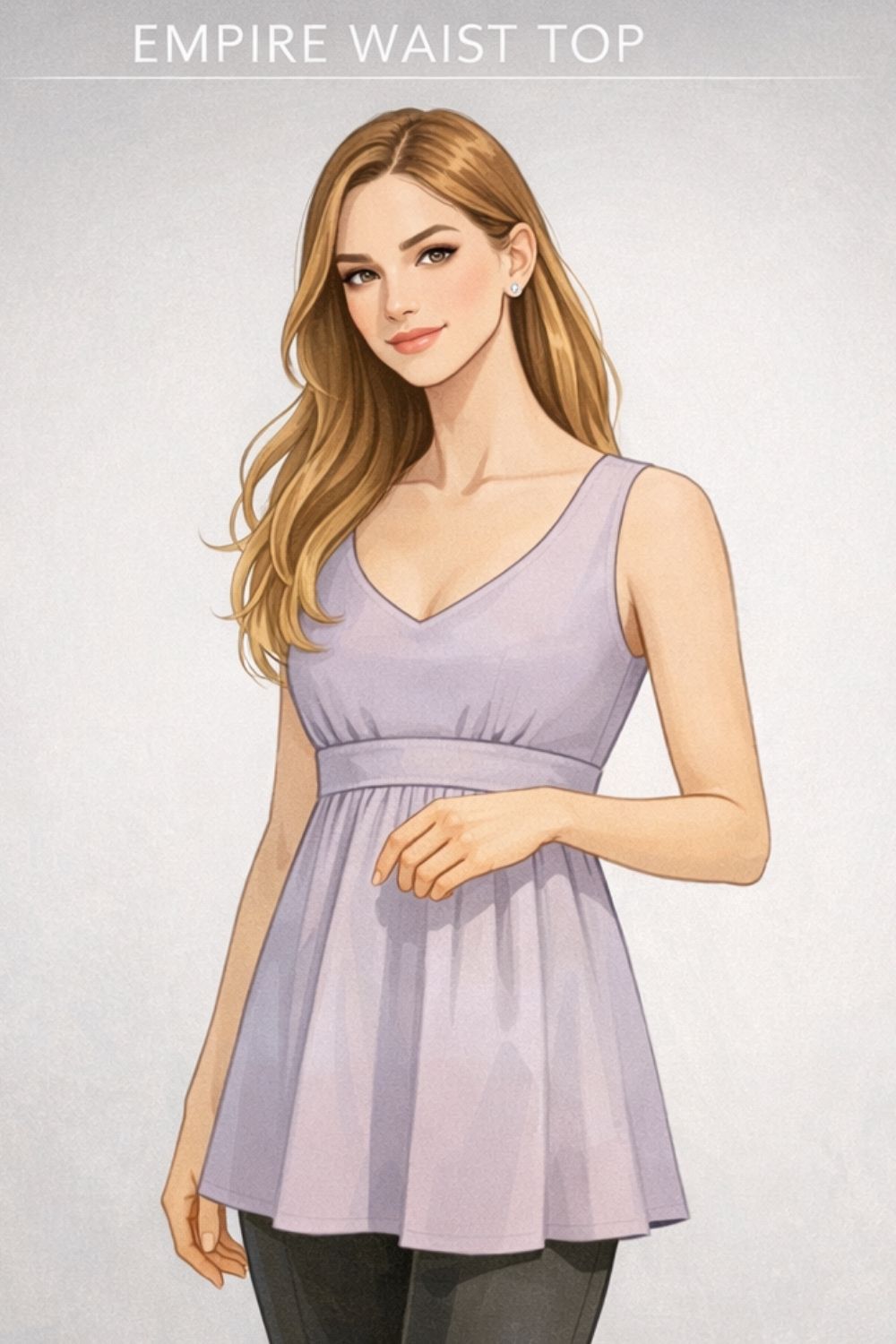
      Empire Waist Top

      empire waist top example

      Seam just under bust; fabric flows loosely below. Named for the Empire period of early 19th-century fashion. The empire waist creates a lengthened visual line through the torso by positioning the narrowest point very high on the body.

      DesignUnder-bust seam, loose flowing fabric below, high waist definition
      SeasonSpring / Summer
      Best ForCasual, feminine occasions, maternity-friendly
    1. 101

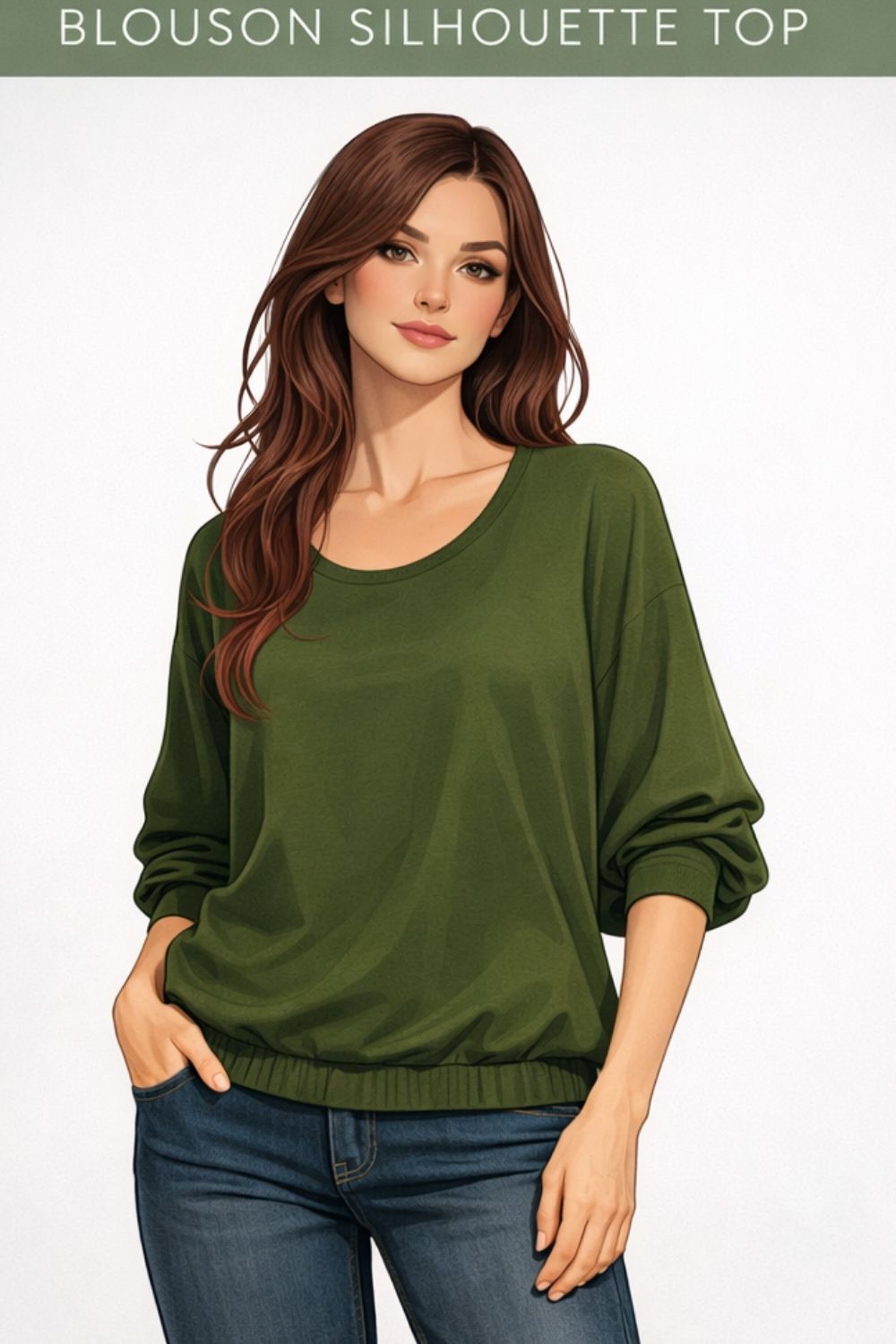
      Blouson Silhouette Top

      blouson silhouette top example

      Full and loose above the hip; cinched or gathered at hem. The poufy upper body over a defined hem is the deliberate structural statement β€” volume that resolves into a clean line.

      DesignFull loose torso blousing out, cinched or gathered at hem
      SeasonSpring / Summer
      Best ForCasual, smart-casual, fashion-forward
    2. 102

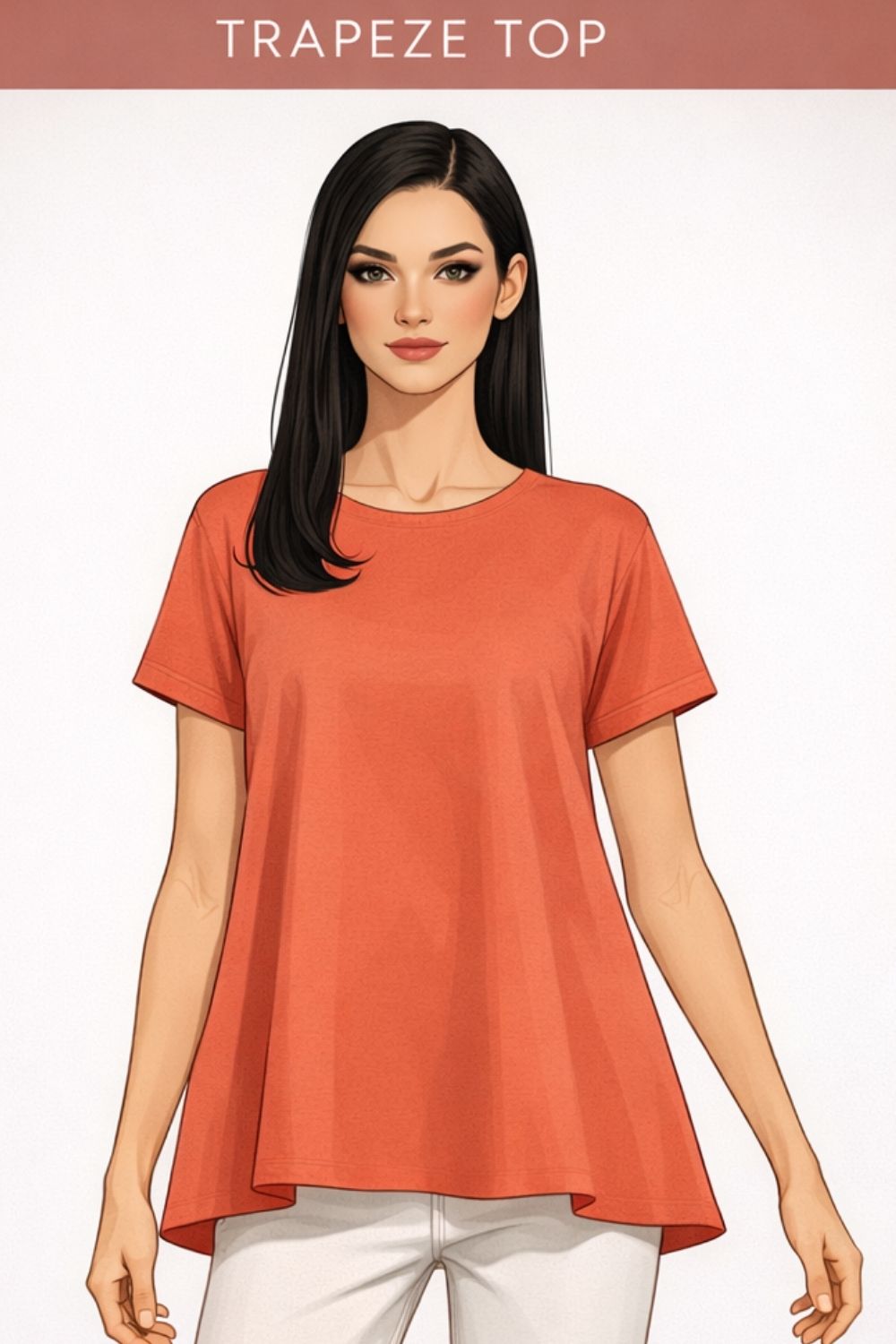
      Trapeze Top

      trapeze top example

      Fitted at shoulders; dramatically wider toward the hem β€” a tent-like silhouette. A bold choice. The trapeze makes the most visual impact in stiff, structured fabrics that hold the widening shape.

      DesignFitted at shoulders, dramatically widening toward hem, tent shape
      SeasonSpring / Summer
      Best ForFashion-forward, casual, editorial styling
    Stylist Insight

    Most women assume they need to β€œhide” certain areas with their top choice. In practice, construction matters far more than size. A well-tailored, structured top often reads as more polished than a deliberately loose, shapeless top worn for concealment β€” regardless of the body underneath. The goal is fit logic, not camouflage.

    Category 6: By Fabric / Material (#103–#122)

    The textile that defines the top’s texture, drape, weight, and occasion register

    Fabric is the invisible variable in fashion. Two identical shirt patterns cut in cotton poplin vs. silk charmeuse will feel, hang, and read entirely differently β€” one casual and workmanlike, the other fluid and luxurious. Understanding fabric is arguably the most underrated styling skill, because it lets you shop beyond the thumbnail image and predict how a garment will actually behave on your body, in your climate, on your specific occasions.

    Our comprehensive guide to all fabric types in women’s fashion covers this in serious depth.

    1. 103

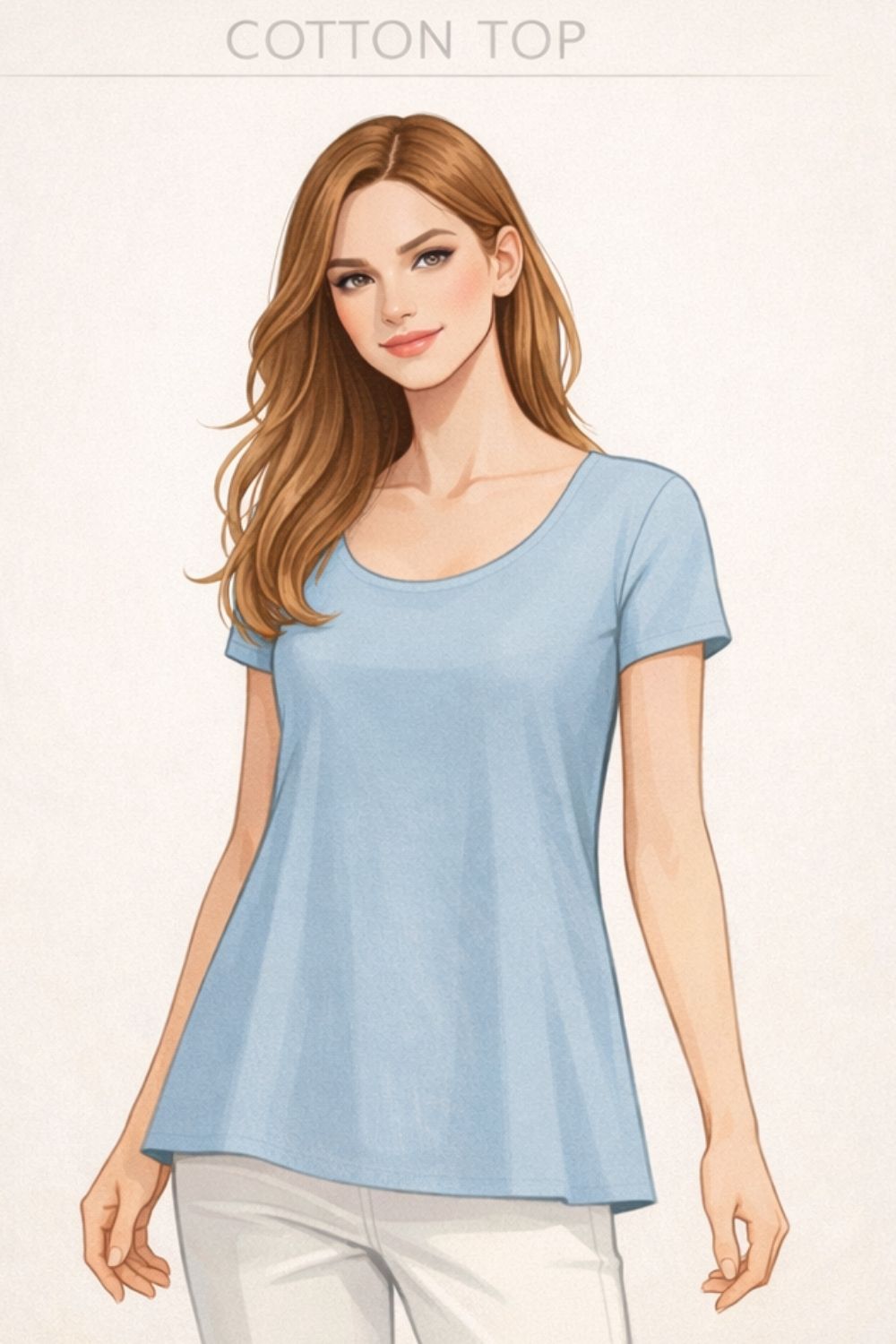
      Cotton Top

      cotton top example

      Breathable, soft, absorbent natural fiber. Most common everyday fabric β€” low-maintenance, widely available, and reliable in warm weather. Cotton’s versatility is the reason it anchors most wardrobe basics.

      DesignSoft matte texture, natural hand-feel, various weaves
      SeasonSpring / Summer
      Best ForEveryday casual, most occasions at the casual end
    2. 104

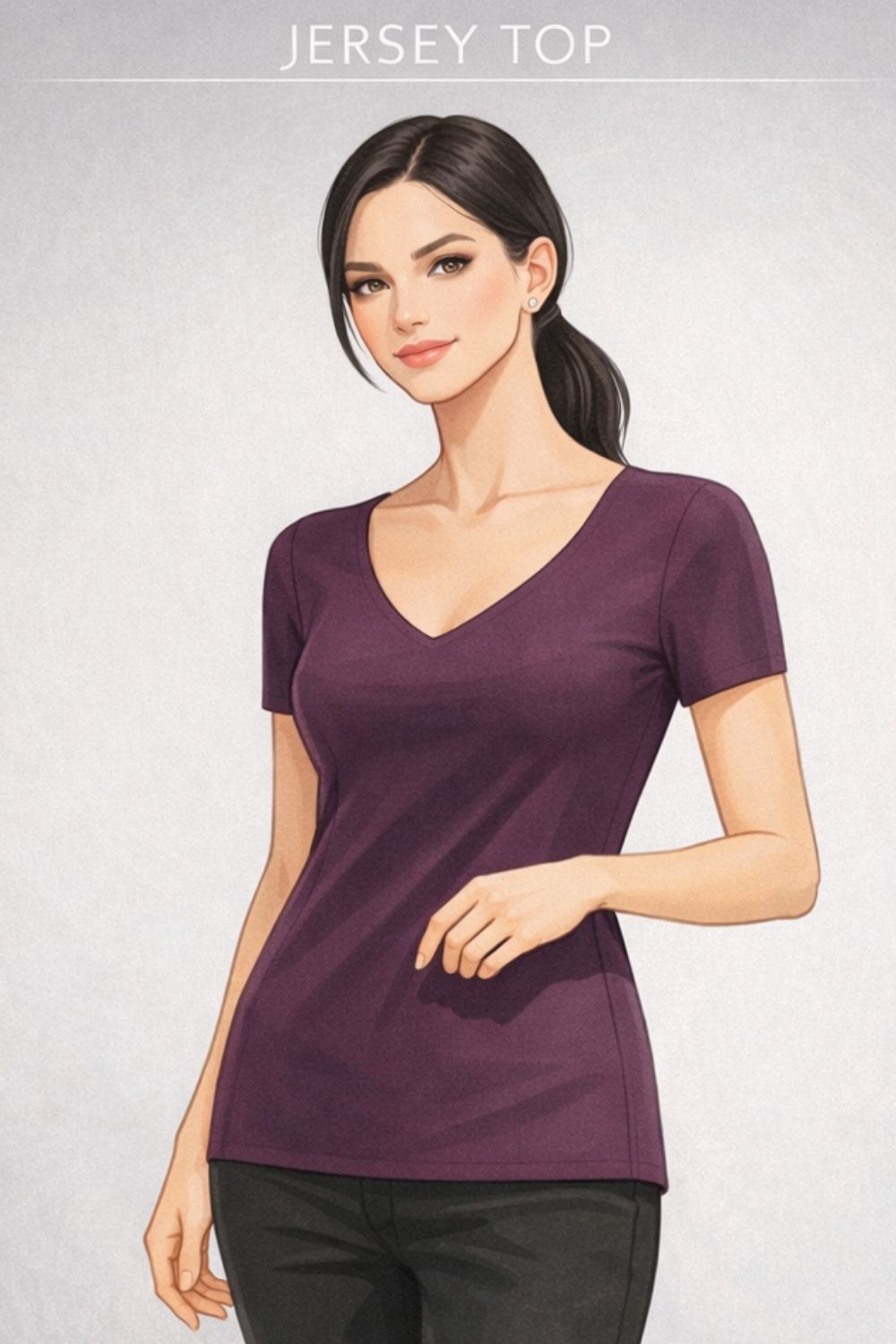
      Jersey Top

      jersey top example

      Soft, stretchy knit fabric β€” the backbone of T-shirts, bodycon tops, and casualwear. Jersey’s inherent stretch means it needs less structural engineering to fit comfortably across size ranges.

      DesignSmooth stretch knit surface, soft hand-feel, slight sheen on fine jersey
      SeasonAll seasons
      Best ForEveryday casual, workout-adjacent, layering
    1. 105

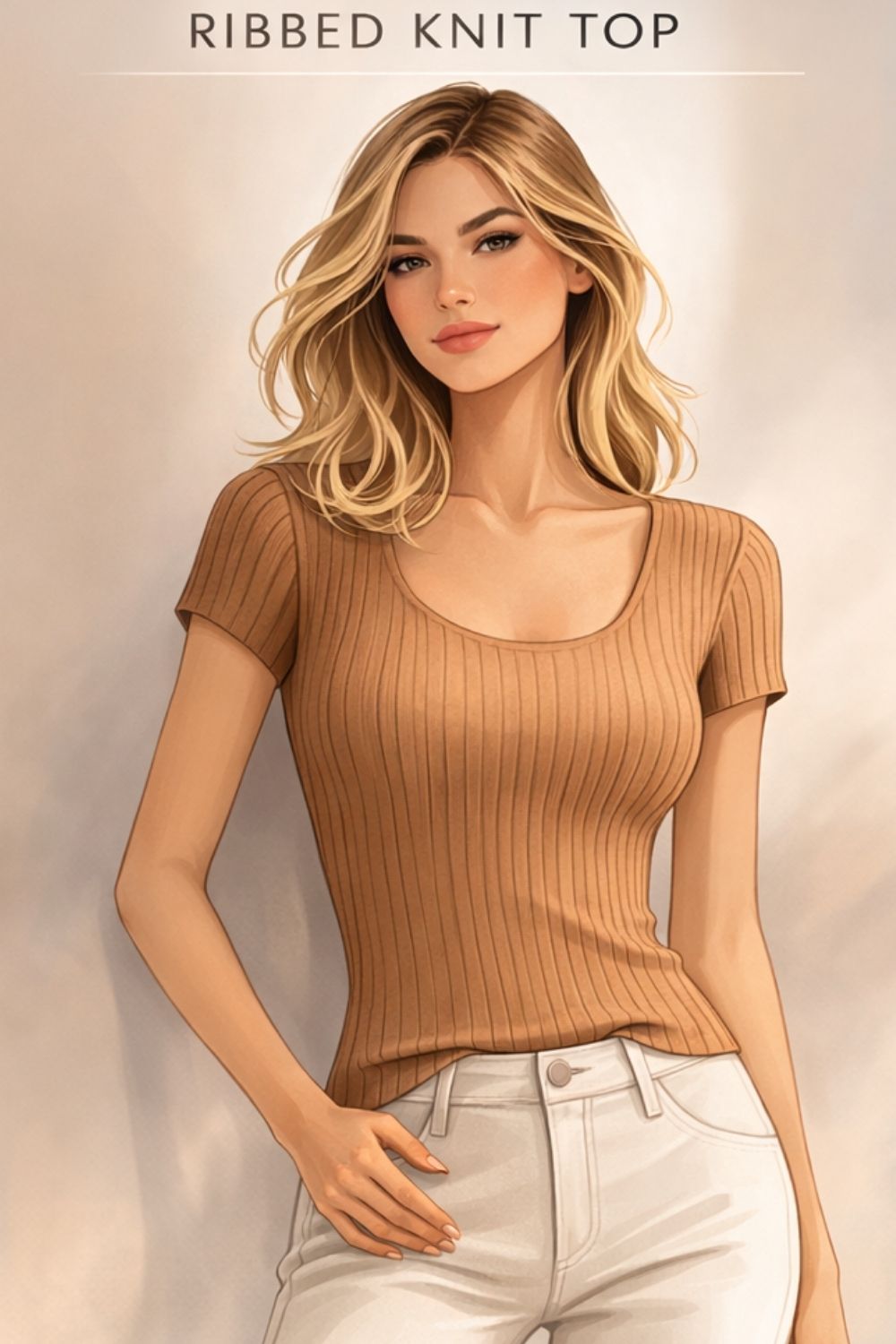
      Ribbed Knit Top

      ribbed knit top example

      Stretchy vertical rib pattern; clings to body with a satisfying texture. Common in turtlenecks, tanks, and bodysuits. The rib structure adds body and visual texture while maintaining excellent stretch.

      DesignVertical rib pattern, textured surface, body-hugging
      SeasonAutumn / Winter / Spring
      Best ForCasual, smart-casual, layering base
    2. 106

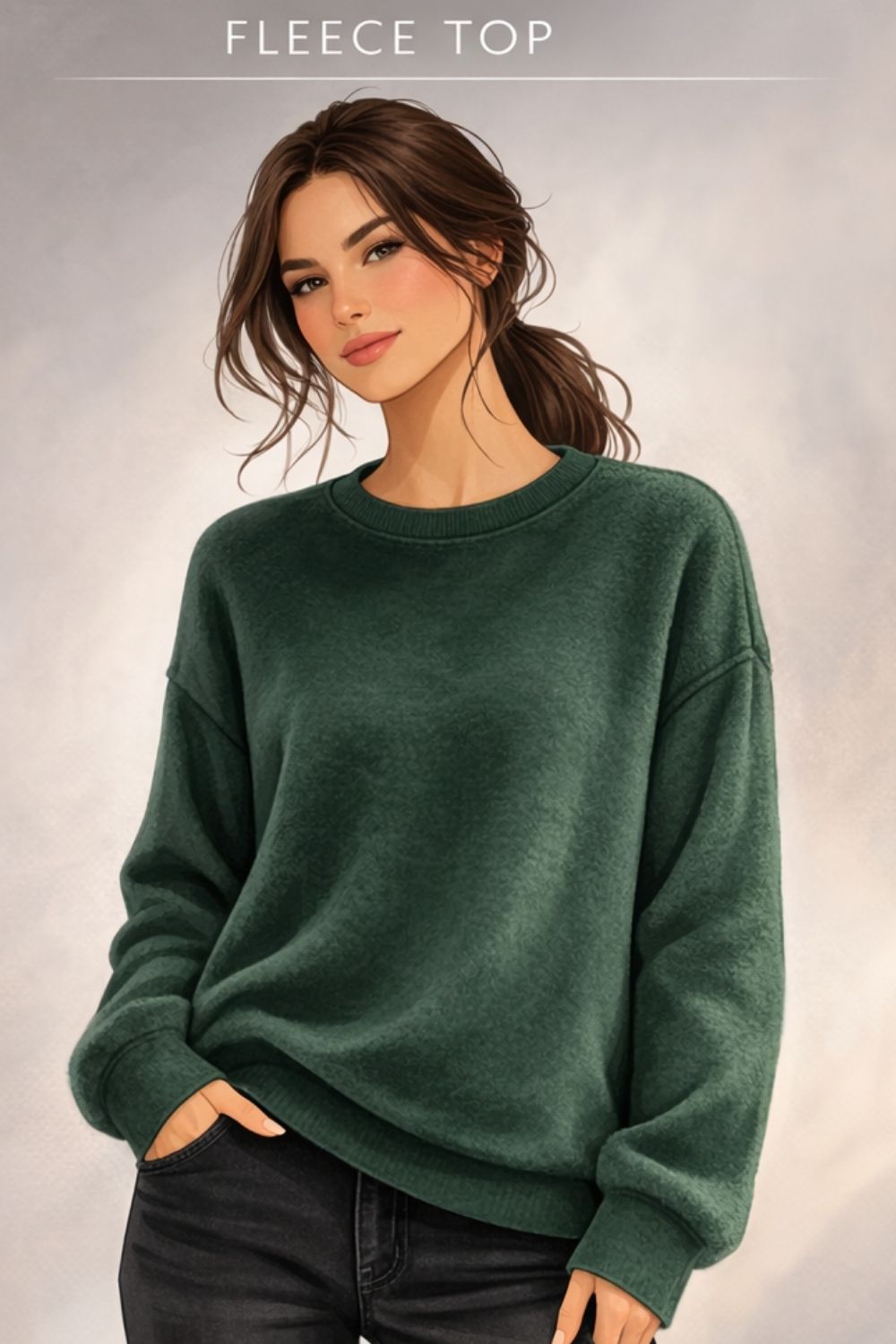
      Fleece Top

      fleece top example

      Soft, insulating synthetic or cotton pile fabric. The defining material of sweatshirts and hoodies β€” the pile construction traps air and retains heat.

      DesignSoft pile texture, brushed interior or exterior, insulating
      SeasonAutumn / Winter
      Best ForCasual, outdoor, lounging, cold weather
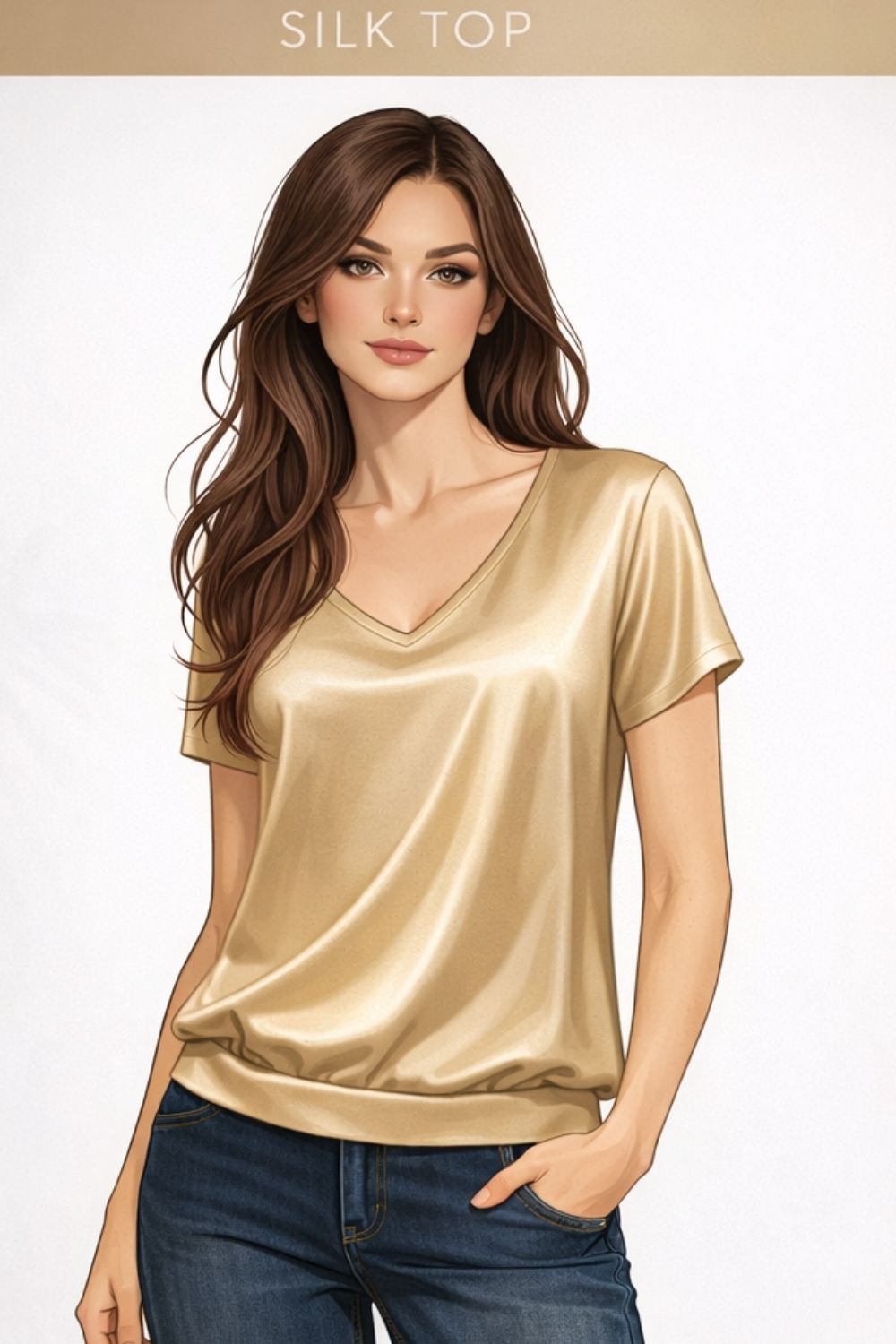
    1. 107

      Silk Top

      silk top example

      Lightweight, naturally lustrous protein fiber with extraordinary drape and subtle sheen. Temperature-regulating β€” cool in summer, insulating in winter. A well-cut silk blouse is one of fashion’s most enduring investments.

      DesignNatural lustre, fluid drape, subtle sheen, smooth surface
      SeasonAll seasons
      Best ForEvening, elevated office, special occasions
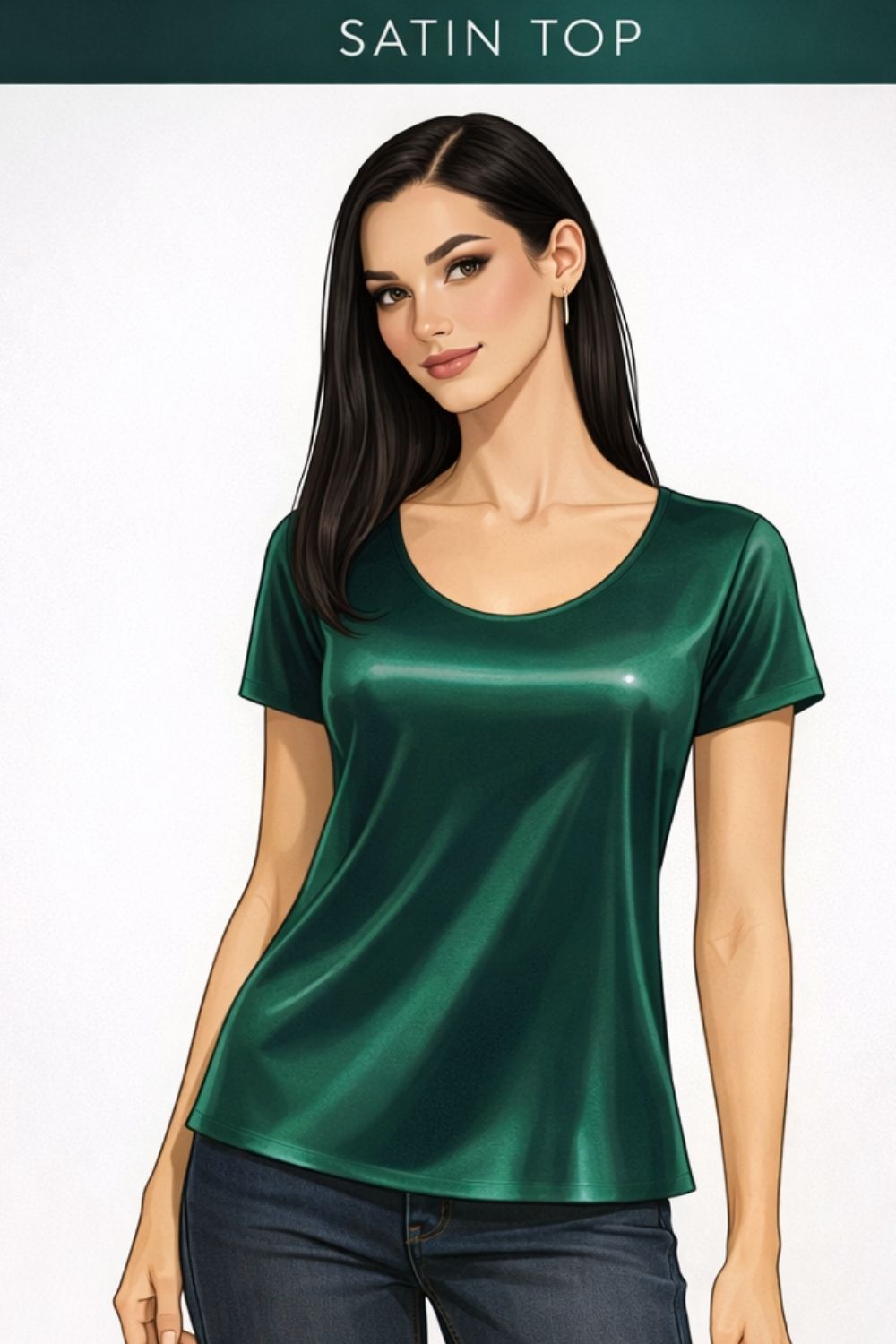
    2. 108

      Satin Top

      satin top example

      High-sheen weave β€” silk or polyester β€” with smooth, reflective surface. Engineered for evening lighting β€” the sheen that feels dramatic in daylight becomes genuinely luminous after dark.

      DesignHigh-gloss smooth surface, reflective finish, structured or draped
      SeasonAutumn / Winter (evening); all year
      Best ForEvening, parties, formal occasions
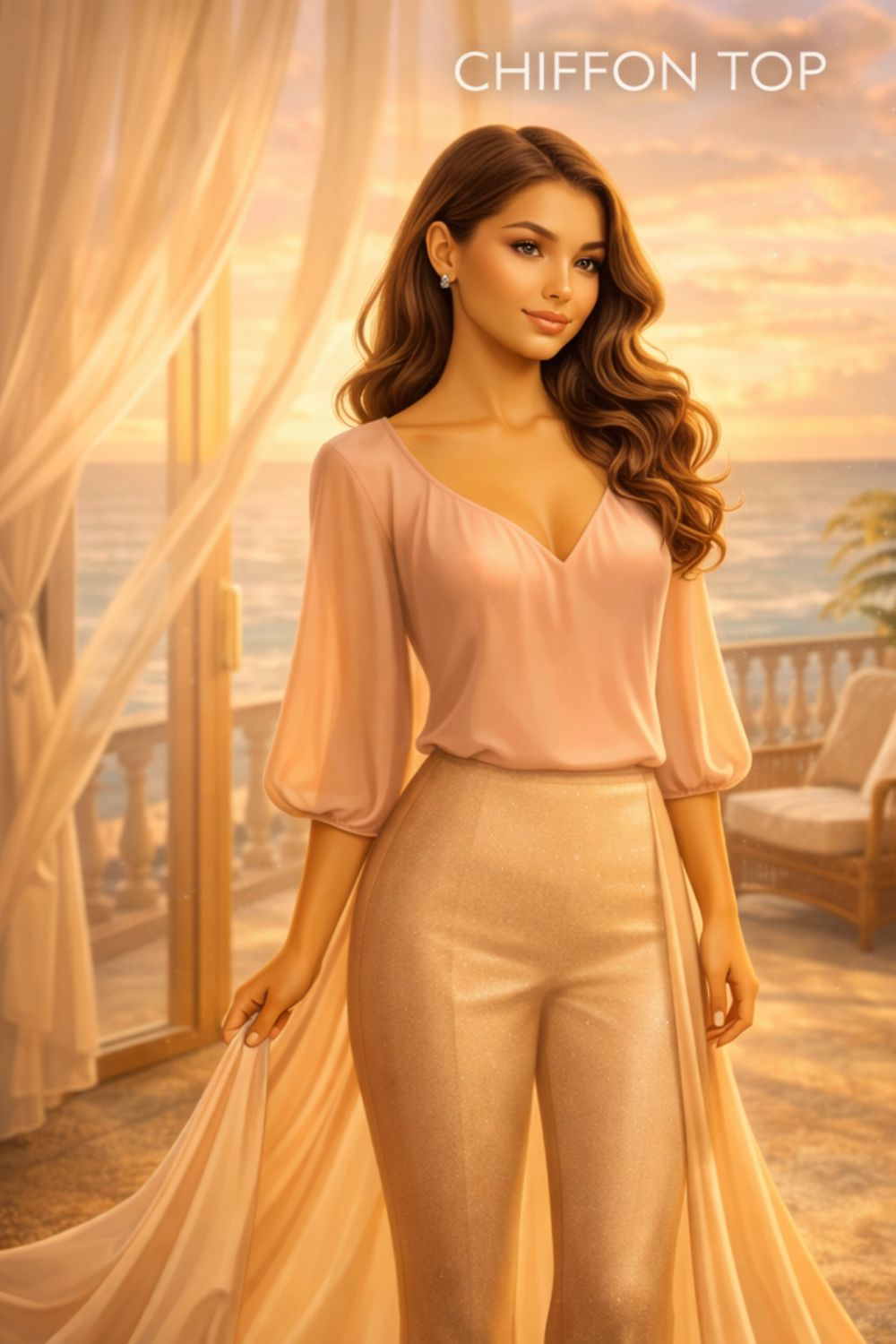
    1. 109

      Chiffon Top

      chiffon top example

      Sheer, lightweight plain-weave with soft, fluid drape. The go-to fabric for layered blouses and flutter-sleeve tops β€” anything that needs to float rather than fall. Notoriously difficult to sew.

      DesignSheer, floaty, soft drape, minimal body
      SeasonSpring / Summer
      Best ForEvening, resort, romantic occasions
    2. 110

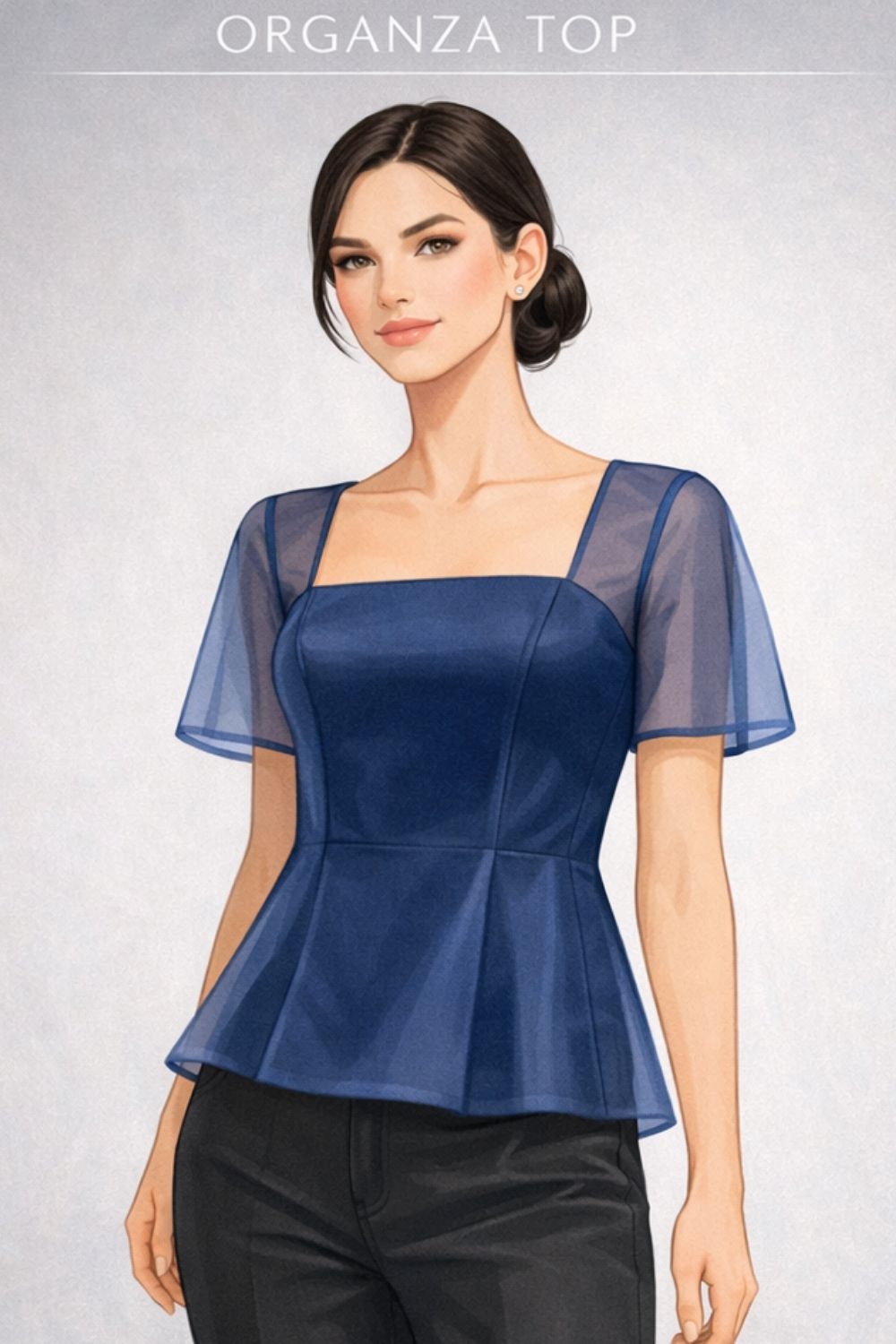
      Organza Top

      organza top example

      Crisp, sheer plain-weave β€” stiffer than chiffon, holds structure, used in formal and couture contexts. Where chiffon drapes, organza stands. Ideal for sculptural sleeve constructions.

      DesignCrisp sheer body, structured drape, holds architectural shapes
      SeasonSpring/Summer/Formal year-round
      Best ForFormal, bridal, editorial, couture-adjacent fashion
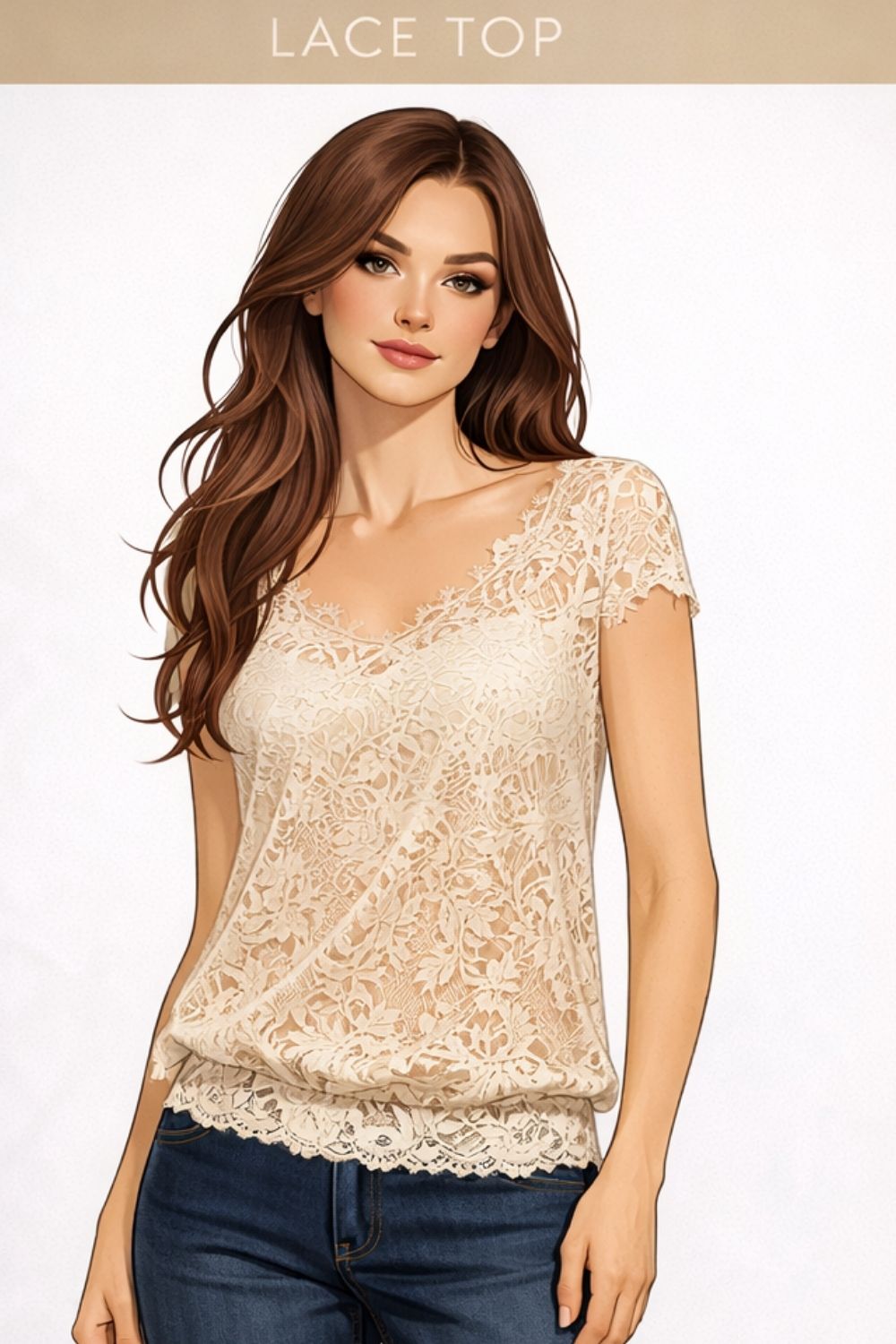
    1. 111

      Lace Top

      lace top example

      Open-work decorative fabric with intricate patterns. Delicate and feminine. Quality ranges enormously β€” from fragile handmade Venetian needlepoint lace to machine-made stretch lace for bodysuits.

      DesignOpen-work decorative patterns, delicate construction, layered or alone
      SeasonSpring / Summer
      Best ForRomantic occasions, evening, smart-casual
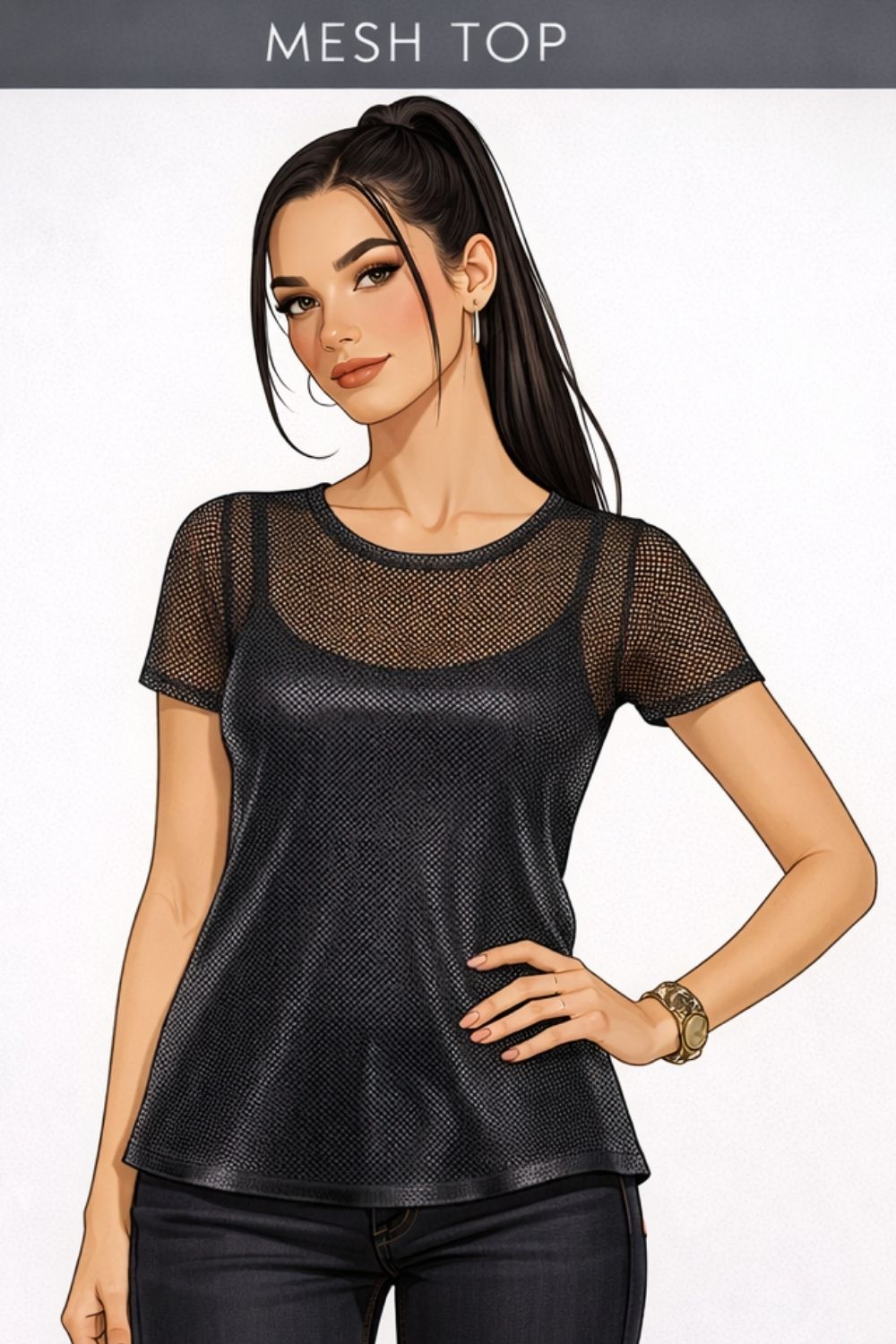
    2. 112

      Mesh Top

      mesh top example

      Open-weave or knit structure β€” breathable and semi-transparent. Used in activewear panels for ventilation and in fashion contexts for sheer layering effects. How it’s worn depends entirely on what goes beneath it.

      DesignOpen-weave structure, semi-transparent, breathable
      SeasonSummer / Activewear year-round
      Best ForActivewear, layering, fashion-forward styling
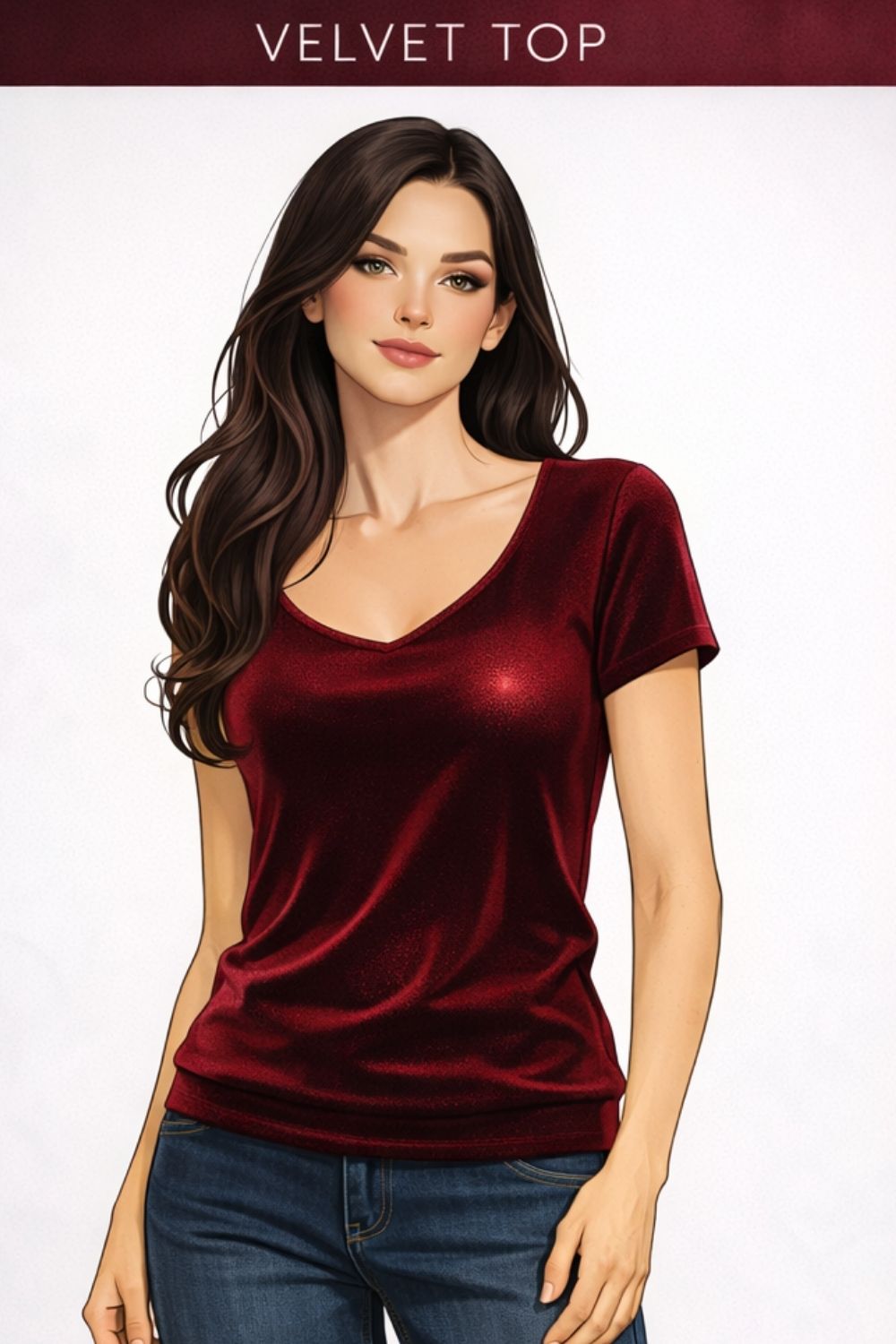
    1. 113

      Velvet Top

      velvet top example

      Cut-pile fabric with rich, deep texture and directional sheen. Distinctly evening and autumn/winter in register. Velvet photographs particularly well β€” the pile catches light and shadow differently at different angles, creating depth that other fabrics simply don’t have.

      DesignRich cut pile, deep texture, directional sheen
      SeasonAutumn / Winter
      Best ForEvening, parties, smart-casual winter occasions
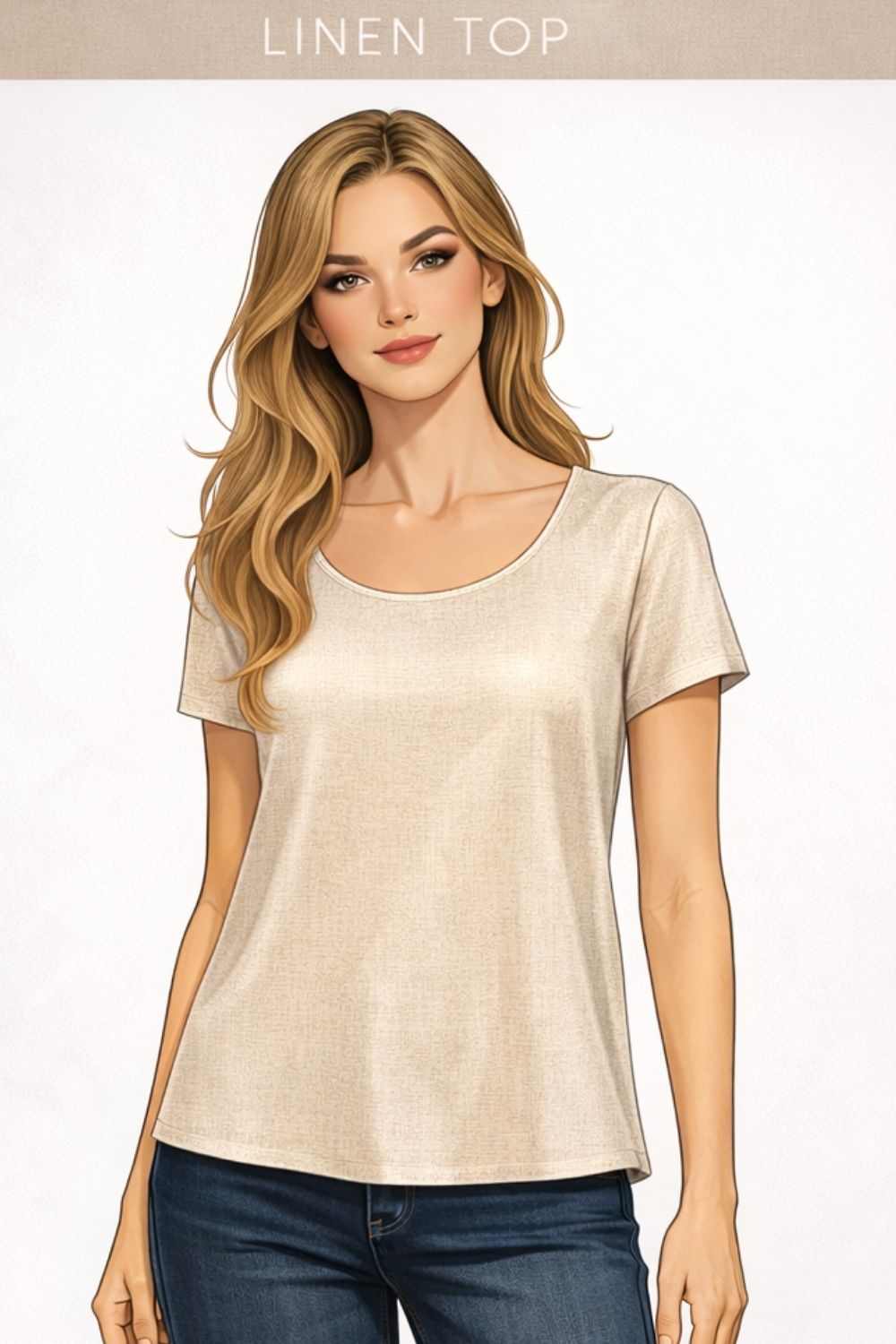
    2. 114

      Linen Top

      linen top example

      Crisp natural fiber from the flax plant; breathable and textured with a characteristic slight stiffness. Linen is summer’s fabric β€” it breathes better than almost anything else, ages beautifully, and develops character over time.

      DesignCrisp natural texture, slight stiffness, softens with wear and washing
      SeasonSummer
      Best ForCasual, travel, beach, resort
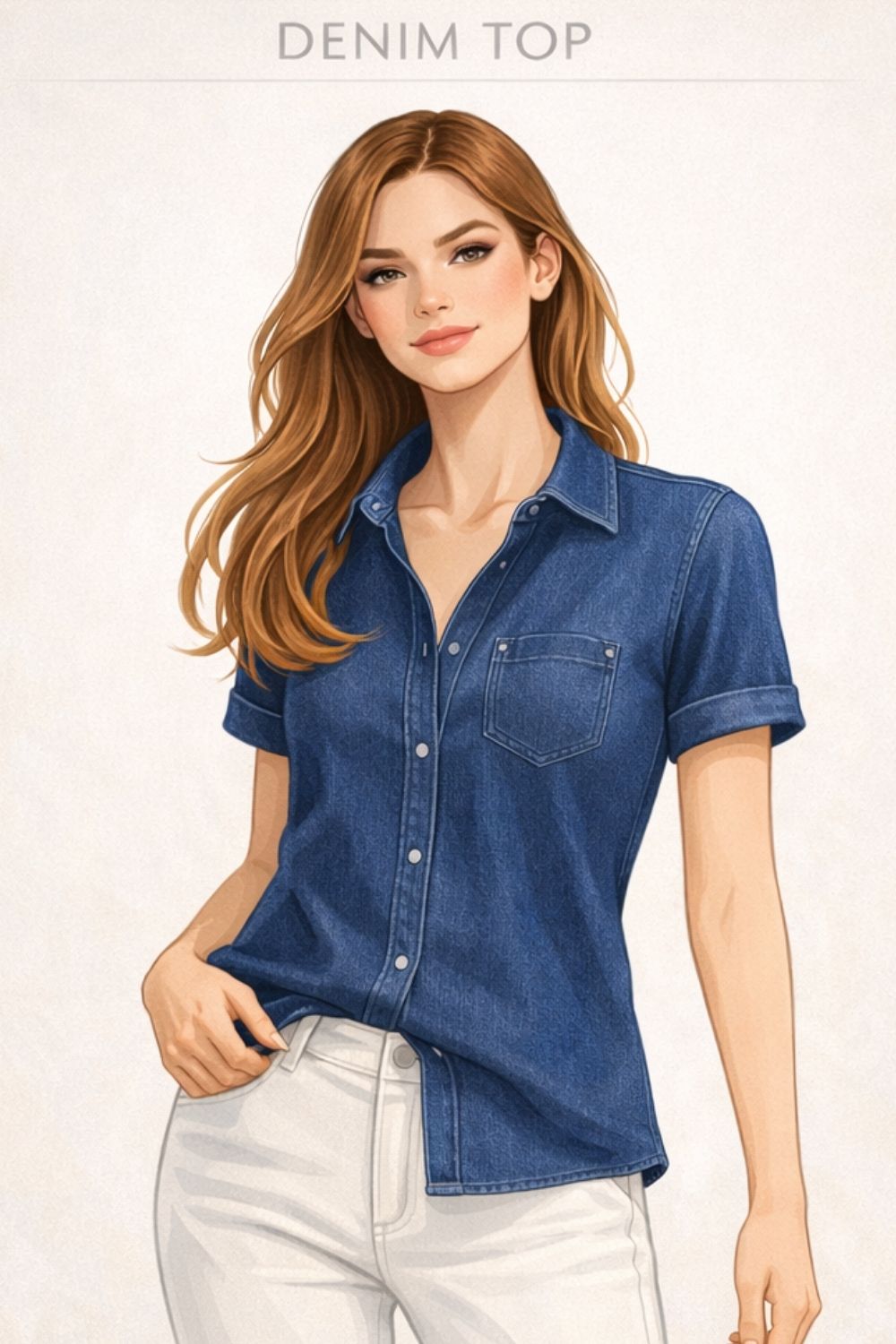
    1. 115

      Denim Top

      denim top example

      Sturdy cotton twill in indigo. Casual and relaxed. Chambray is the lighter, softer cousin β€” often mislabeled as denim in fashion retail. True denim is heavier, more structured, and slower to break in.

      DesignStructured twill weave, indigo dye, casual texture
      SeasonAll seasons
      Best ForCasual, everyday, travel, smart-casual
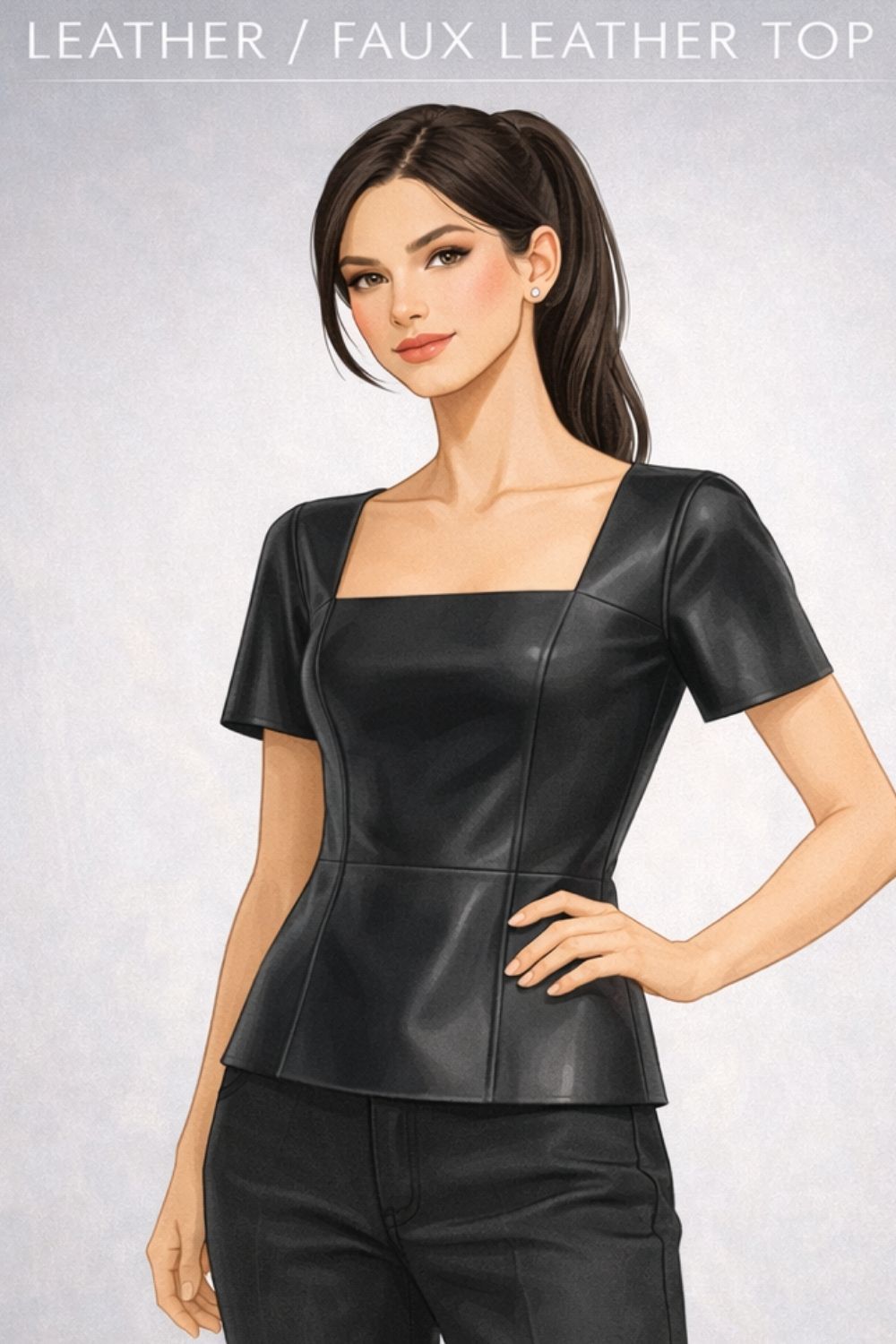
    2. 116

      Leather / Faux Leather Top

      leather or faux leather top example

      Animal hide or high-quality synthetic. Structured, edgy, statement-making. Real leather is breathable; faux leather is not β€” which affects comfort significantly in warm conditions. The quality gap between good and poor faux leather is visible and significant.

      DesignSmooth structured surface, edgy sheen, distinctive texture
      SeasonAutumn / Winter / Spring
      Best ForGoing out, evening, statement fashion looks
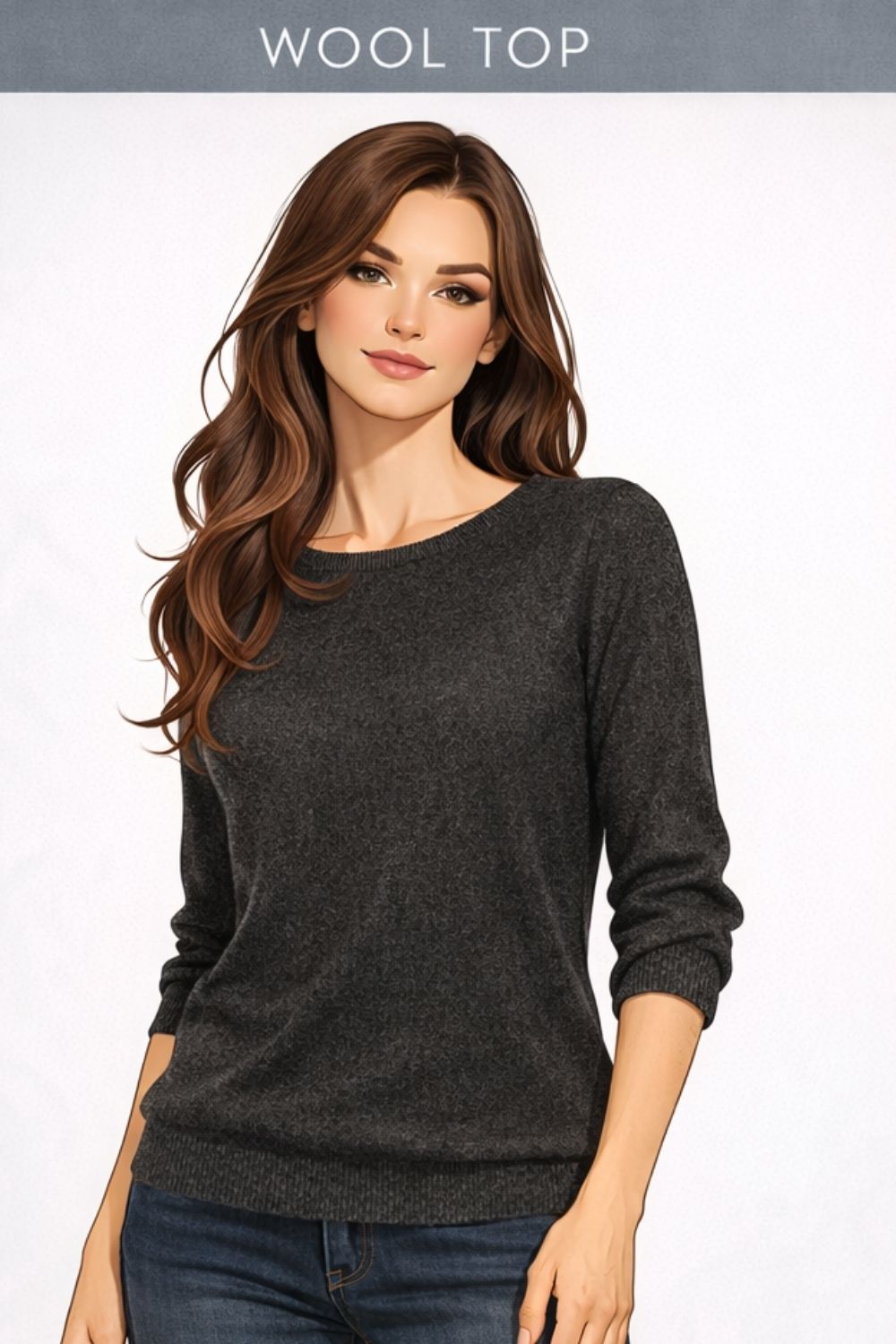
    1. 117

      Wool Top

      wool top example

      Warm, natural animal fiber β€” knit or woven; essential in autumn/winter. Wool encompasses an enormous quality range: from budget blended wool to merino, cashmere, alpaca, and mohair.

      DesignWarm textured surface, knit or woven, varies from coarse to fine
      SeasonAutumn / Winter
      Best ForCold weather, office, smart-casual
    2. 118

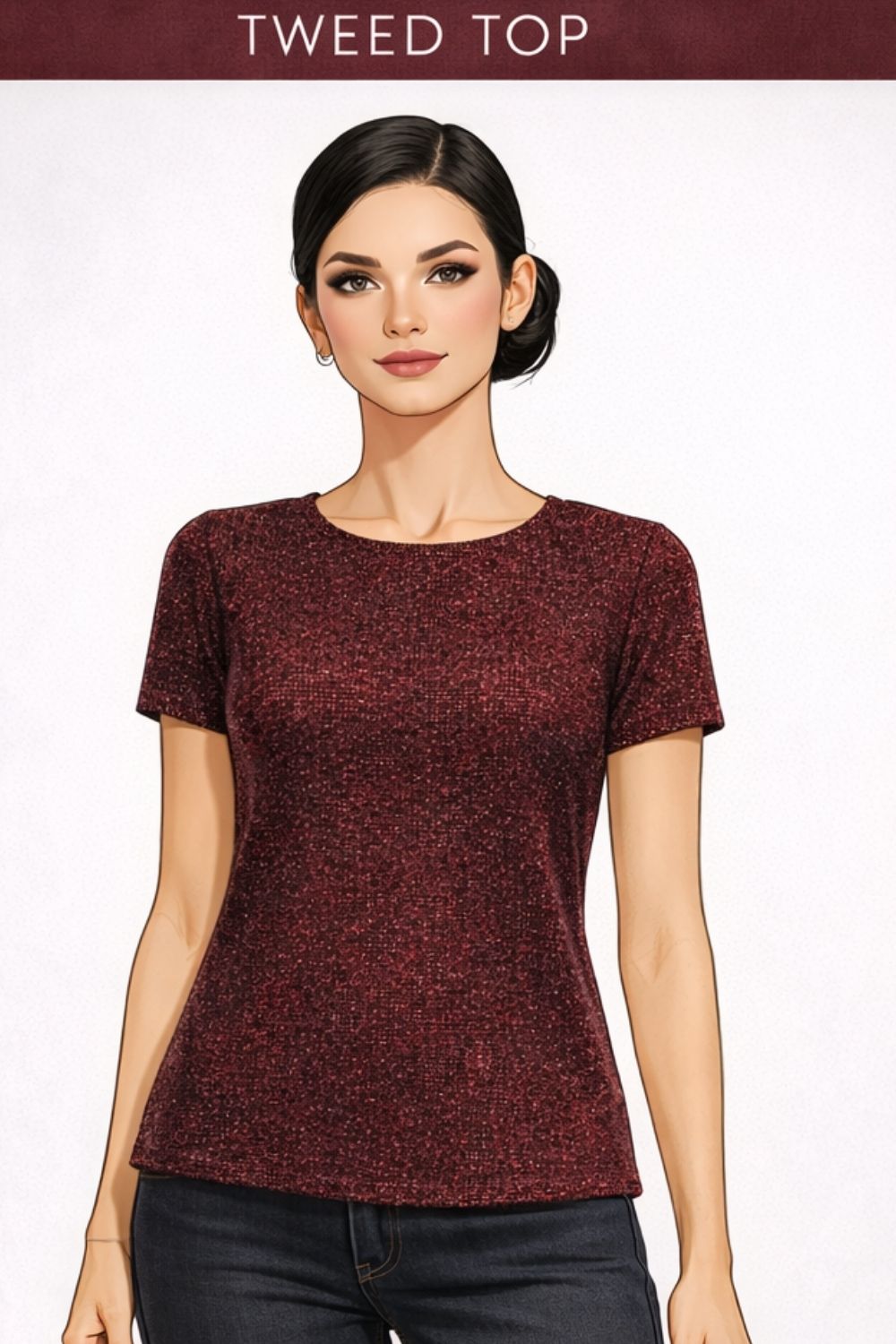
      Tweed Top

      tweed top example

      Rough-textured woven wool with classic British aesthetic. Structured, tailored, inherently formal-adjacent. The Chanel tweed jacket β€” arguably the most recognizable single garment in fashion history β€” is tweed at its most refined and enduring.

      DesignRough textured multicolor woven surface, substantial weight
      SeasonAutumn / Winter
      Best ForOffice, formal-adjacent, smart-casual winter
    1. 119

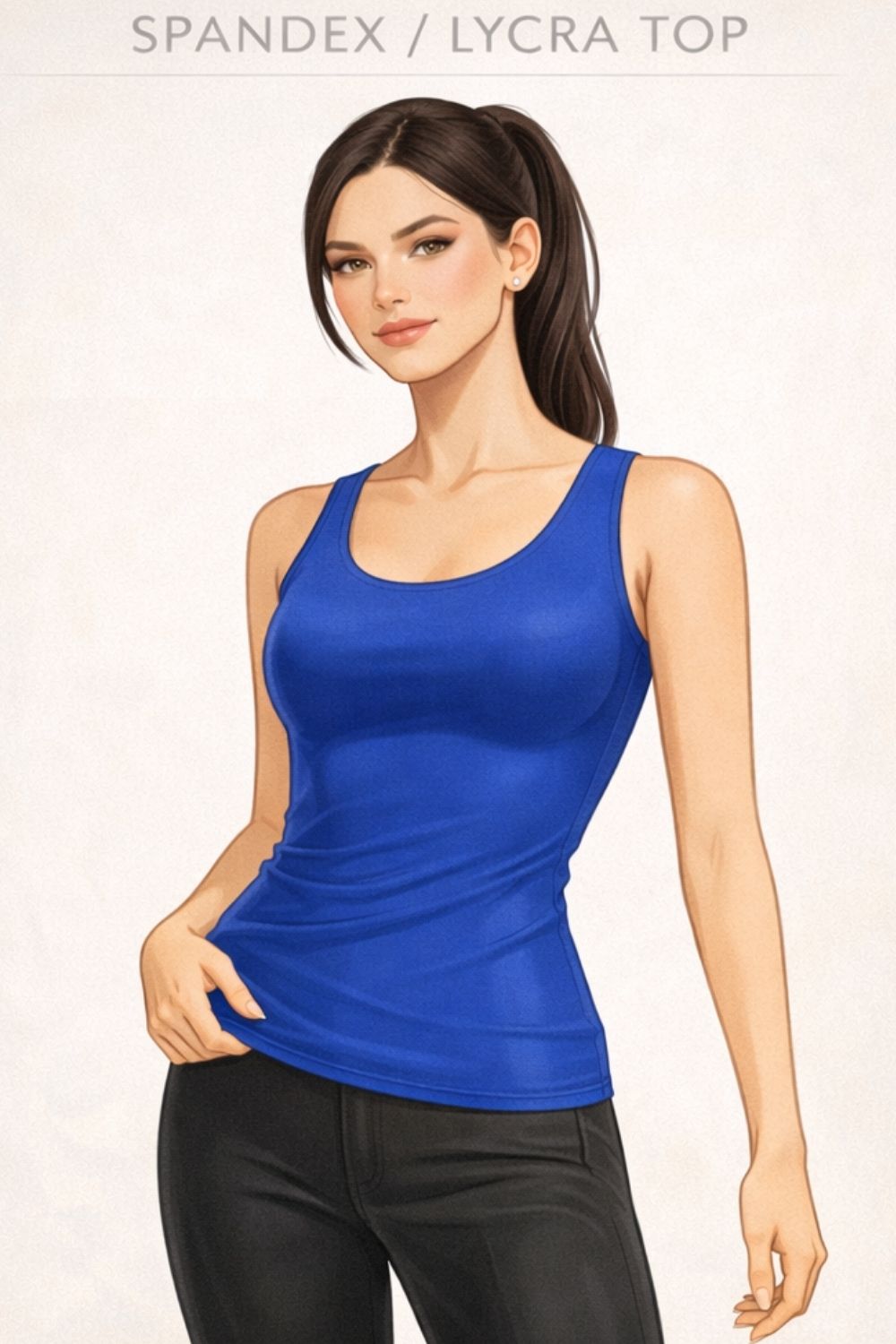
      Spandex / Lycra Top

      spandex or lycra top example

      Highly elastic synthetic fiber. Defines activewear, bodysuits, and compression tops. Almost never used alone β€” typically blended at 5–20% into other fabrics to add stretch without sacrificing the base fabric’s properties.

      DesignHighly elastic, form-following, smooth matte or sheen finish
      SeasonAll seasons
      Best ForActivewear, bodysuits, athletic contexts
    2. 120

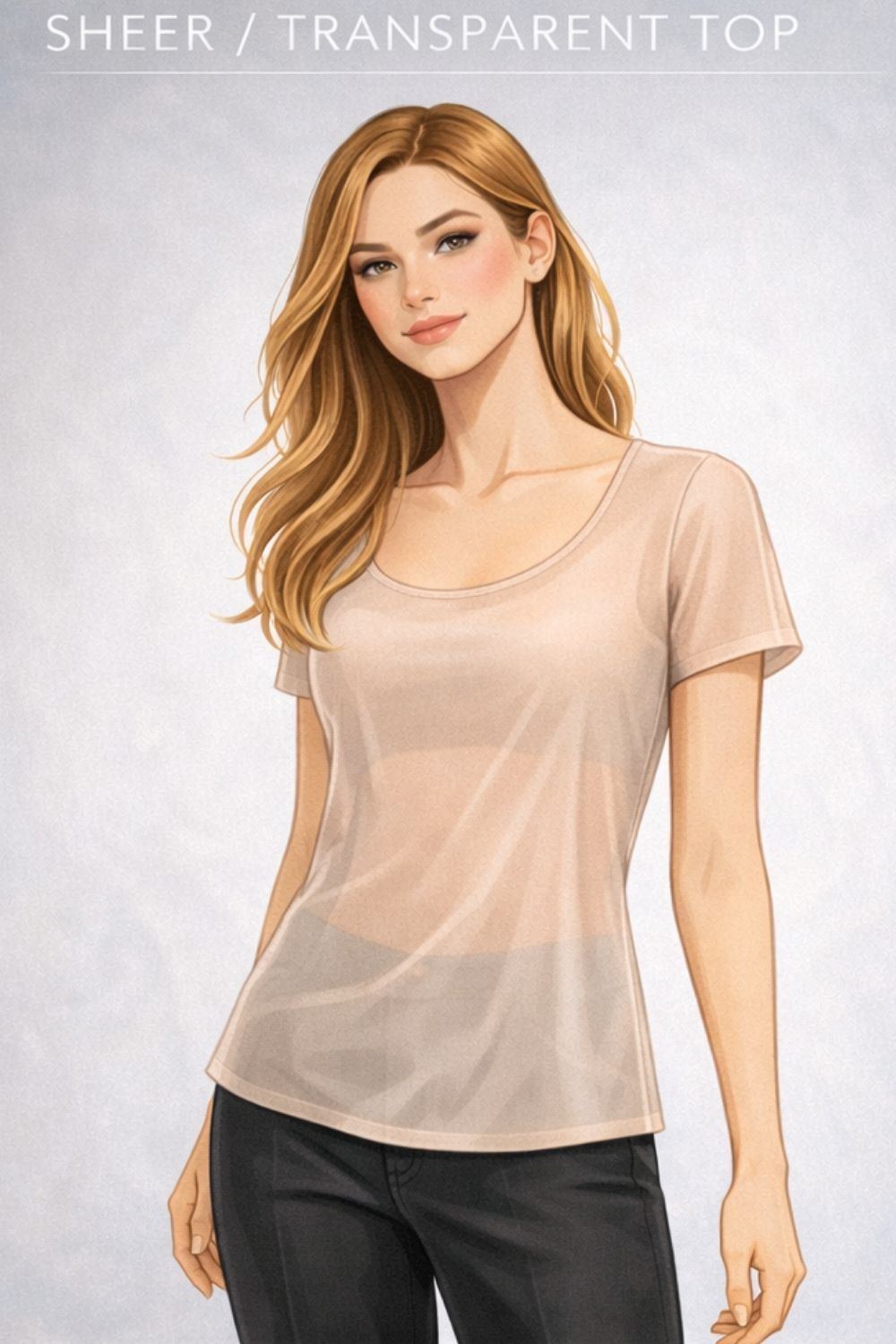
      Sheer / Transparent Top

      sheer or transparent top example

      Any translucent fabric where transparency is the top’s defining design quality β€” chiffon, mesh, organza, or voile, depending on construction. A category defined by degree of see-through rather than a single specific fiber.

      DesignTranslucent or semi-transparent surface, varying degrees of coverage
      SeasonSpring / Summer
      Best ForLayering, evening, fashion-forward dressing
    1. 121

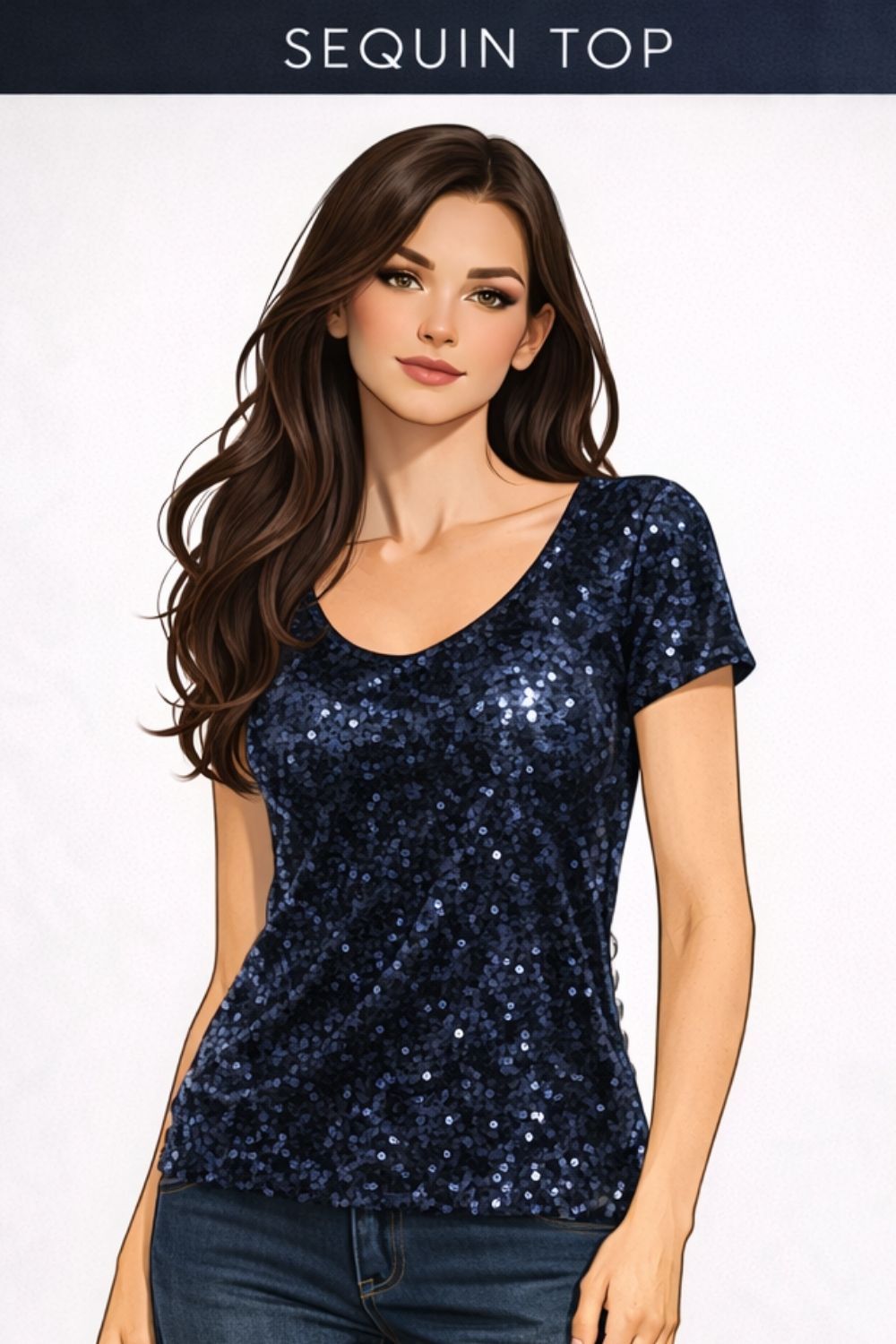
      Sequin Top

      sequin top example

      Fabric embellished with disc-shaped, reflective paillettes. A well-made sequin top in motion is objectively spectacular β€” these are designed specifically for movement in low light.

      DesignDisc-shaped reflective paillettes, all-over or panel placement
      SeasonAutumn / Winter (evening)
      Best ForParties, evening events, going out
    2. 122

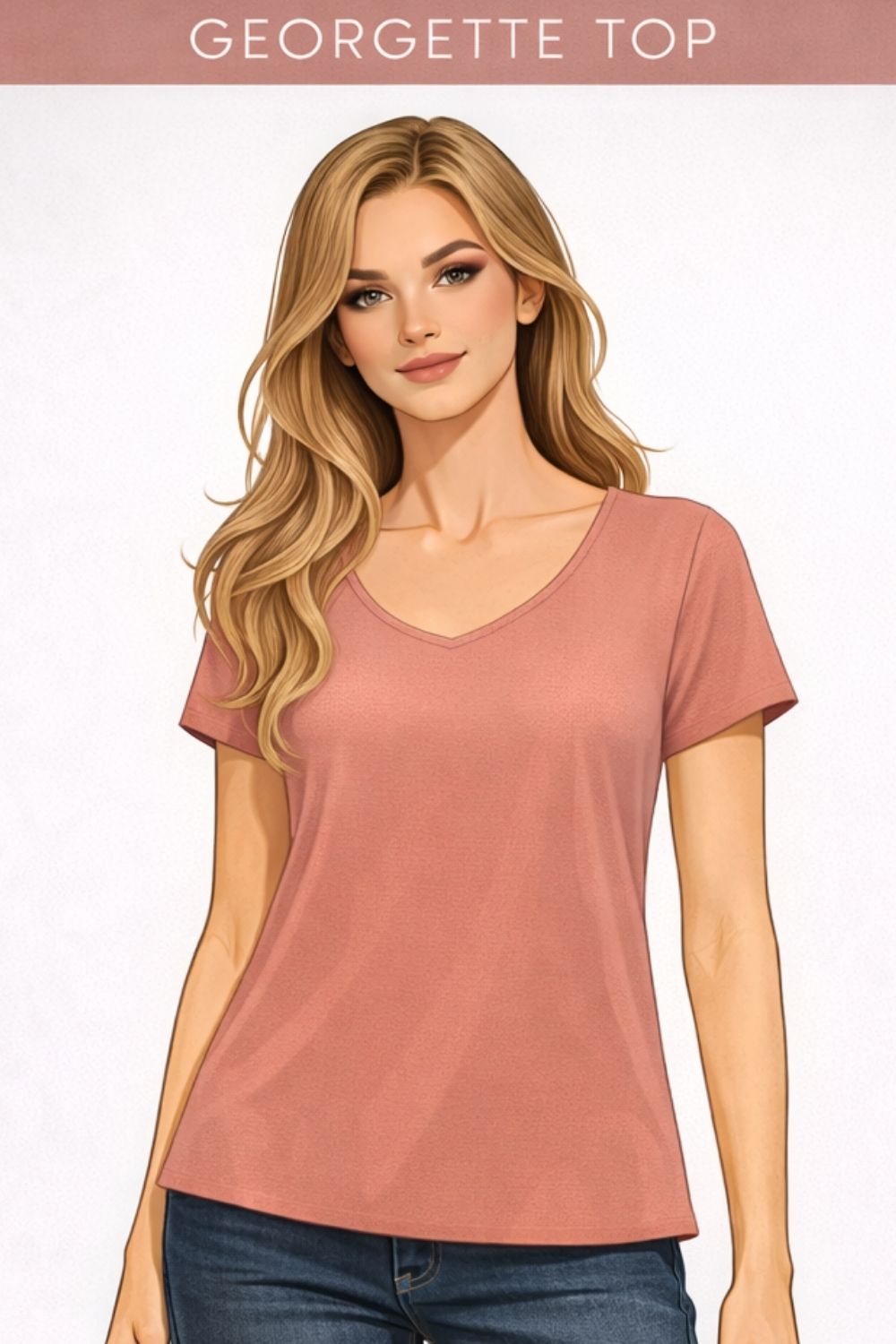
      Georgette Top

      georgette top example

      Sheer, crΓͺpe-textured fabric with bounce and a characteristic slightly grainy texture. More body than chiffon β€” it moves beautifully but holds a shape better than truly fluid fabrics. Highly valued in blouse construction.

      DesignCrΓͺpe texture with slight grain, bouncy drape, sheer quality
      SeasonSpring / Summer
      Best ForEvening, smart-casual, feminine occasions

    Category 7: By Occasion / Purpose (#123–#134)

    The context, dress code, or functional purpose for which the top is designed

    Occasion dressing is one area where many people genuinely get stuck β€” the gap between casual and formal feels enormous when you’re standing in front of your wardrobe at 7am with a meeting at 9. Understanding what makes a top β€œoffice-appropriate” vs. β€œparty-ready” vs. β€œperfectly smart-casual” β€” that clarity is practically useful in daily life, not just theoretically interesting.

    1. 123

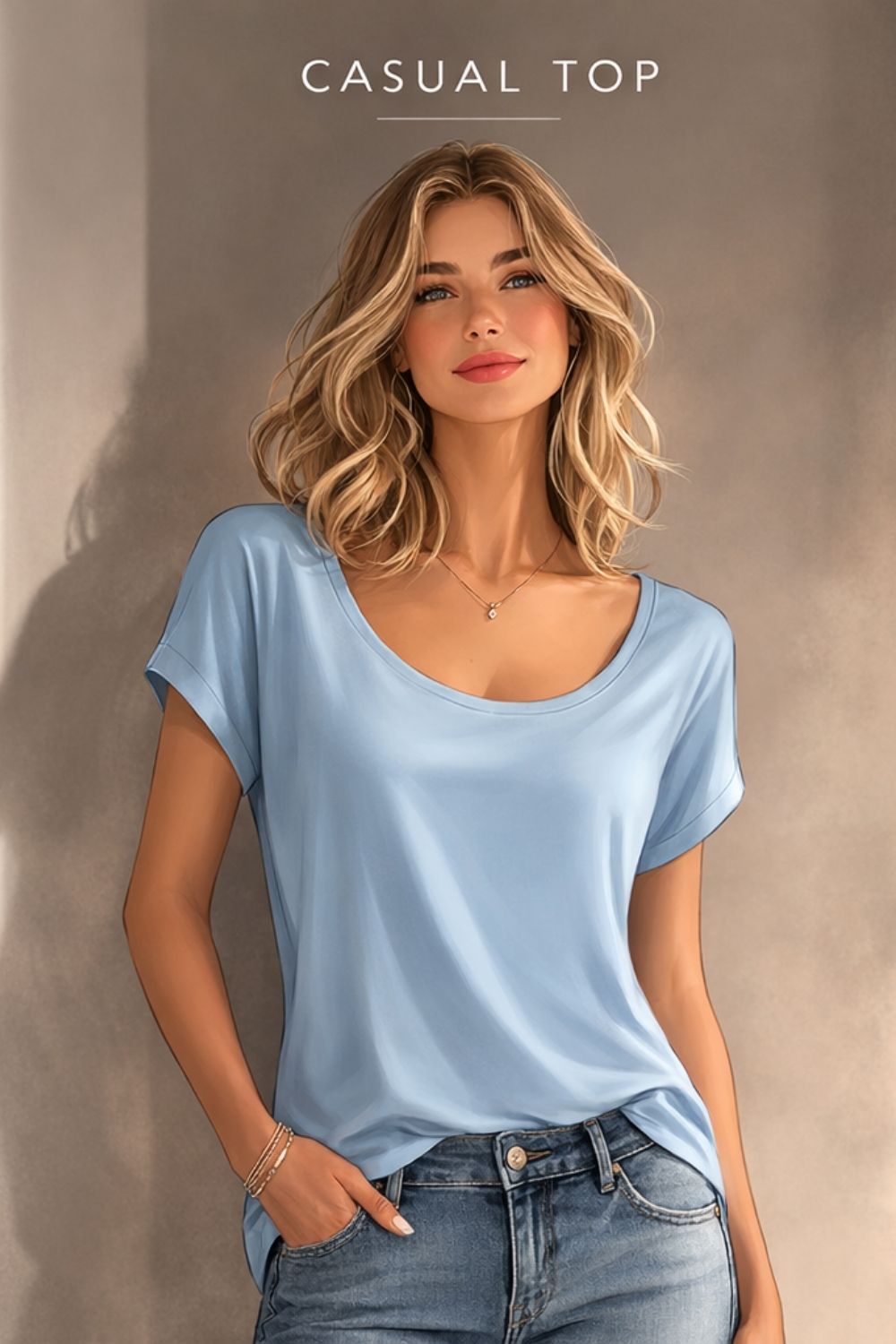
      Casual Top

      casual top example

      Everyday wear; prioritizes comfort and ease. T-shirts, tanks, jersey knits, relaxed cotton blouses. No dress code requirements.

      DesignComfort-first construction, simple finish, relaxed proportions
      SeasonAll seasons
      Best ForDaily wear, errands, weekend, low-key occasions
    2. 124

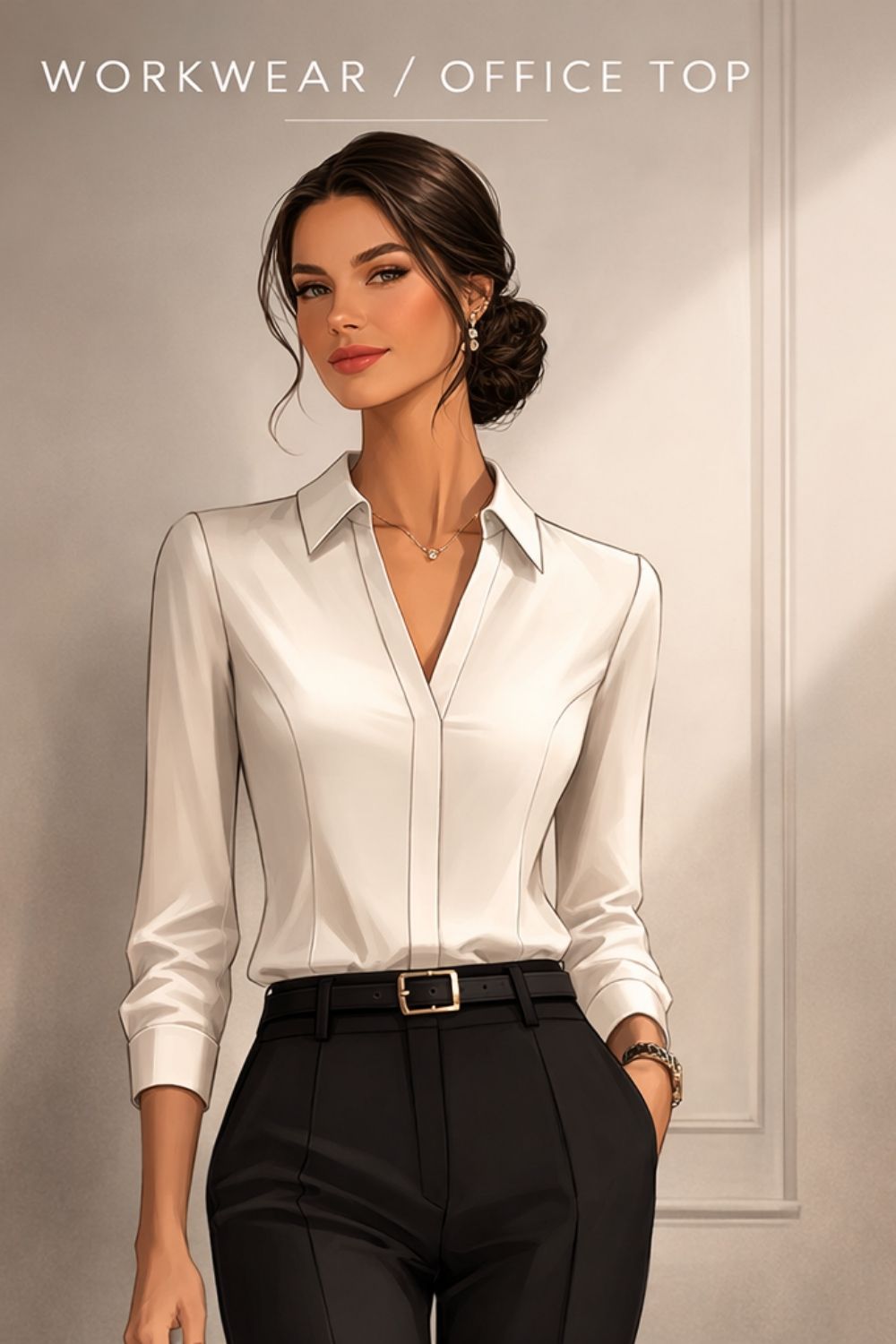
      Workwear / Office Top

      workwear or office top example

      Professional setting; polished and structured. Blouses, button-downs, wrap tops in solid colors or modest prints. Designed to anchor professional dressing.

      DesignPolished finish, structured or semi-structured, modest neckline
      SeasonAll seasons
      Best ForProfessional environments, meetings, business occasions
    1. 125

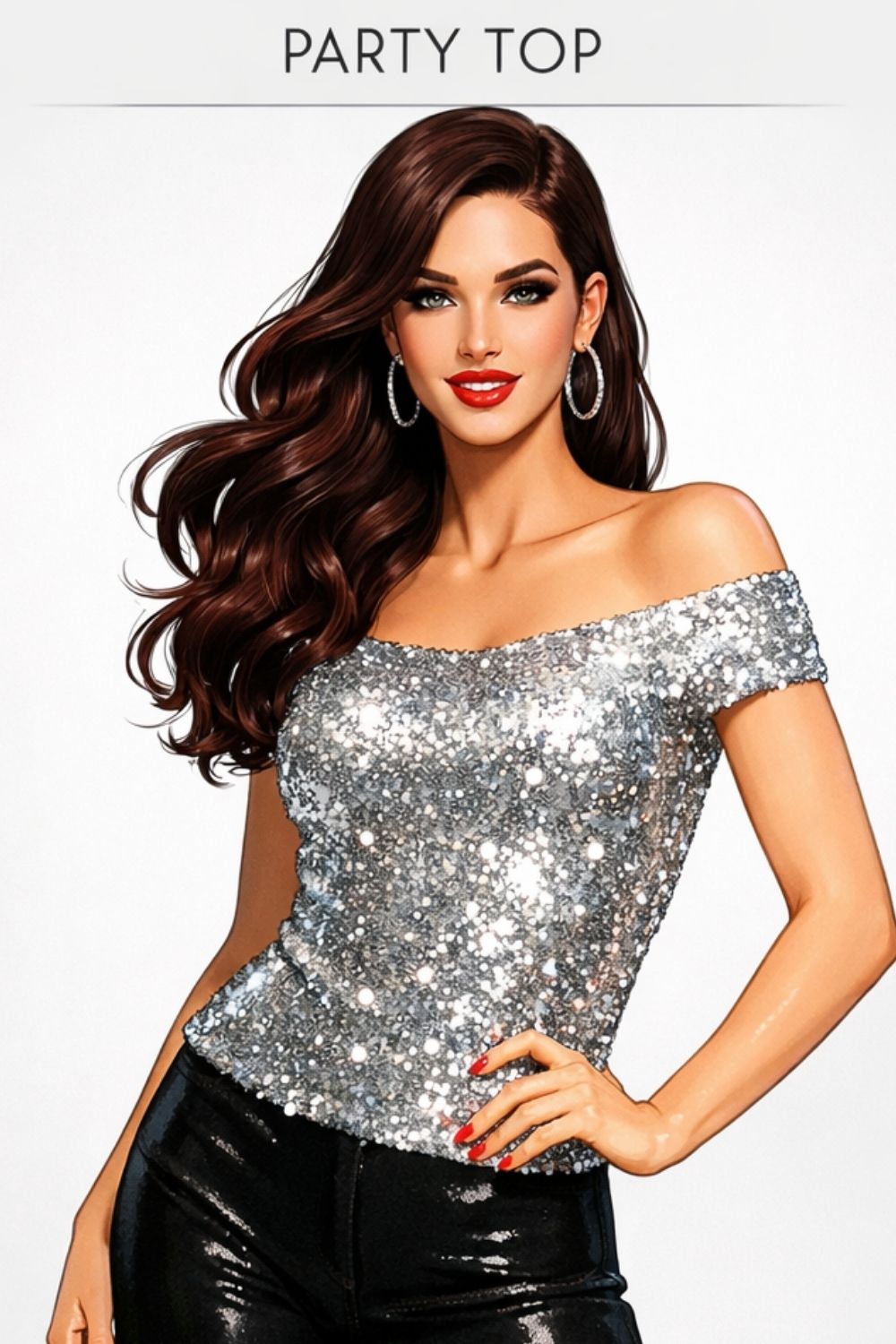
      Party Top

      party top example

      Night-out wear; embellishments, bold colors or cuts. Sequins, metallics, off-shoulder. Designed to function in evening lighting β€” which is why sequins look slightly aggressive in daylight and genuinely dazzling after dark.

      DesignBold embellishments, eye-catching cuts, reflective or vivid fabrics
      SeasonAll seasons (evening)
      Best ForNight out, celebrations, clubs, casual parties
    2. 126

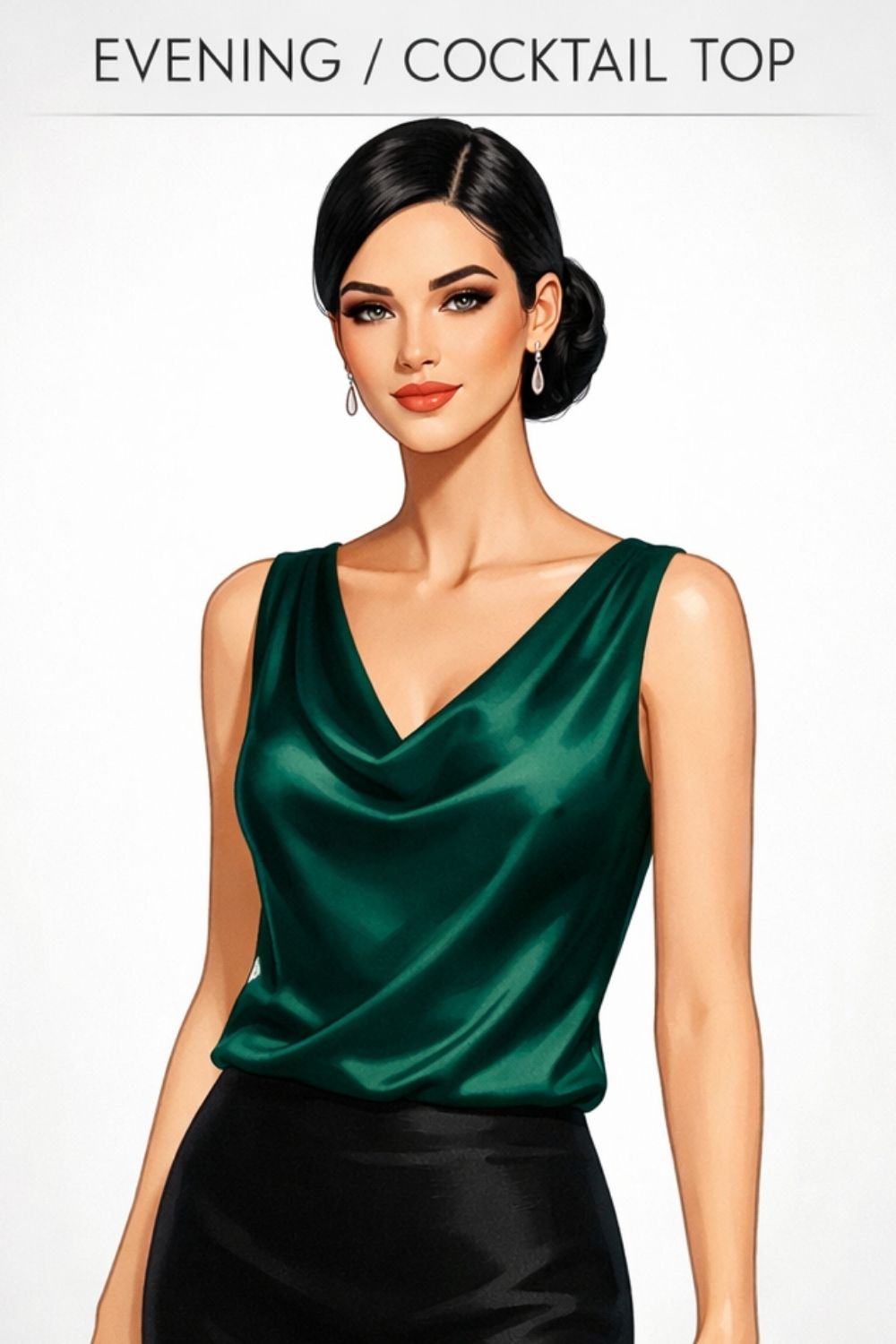
      Evening / Cocktail Top

      evening or cocktail top example

      Semi-formal to formal events; more refined than a party top. Silk, satin, or lace construction; restrained embellishment. Paired with tailored evening trousers or a sleek skirt.

      DesignRefined construction, quality fabrics, controlled embellishment
      SeasonAll seasons
      Best ForCocktail events, galas, formal dinners
    1. 127

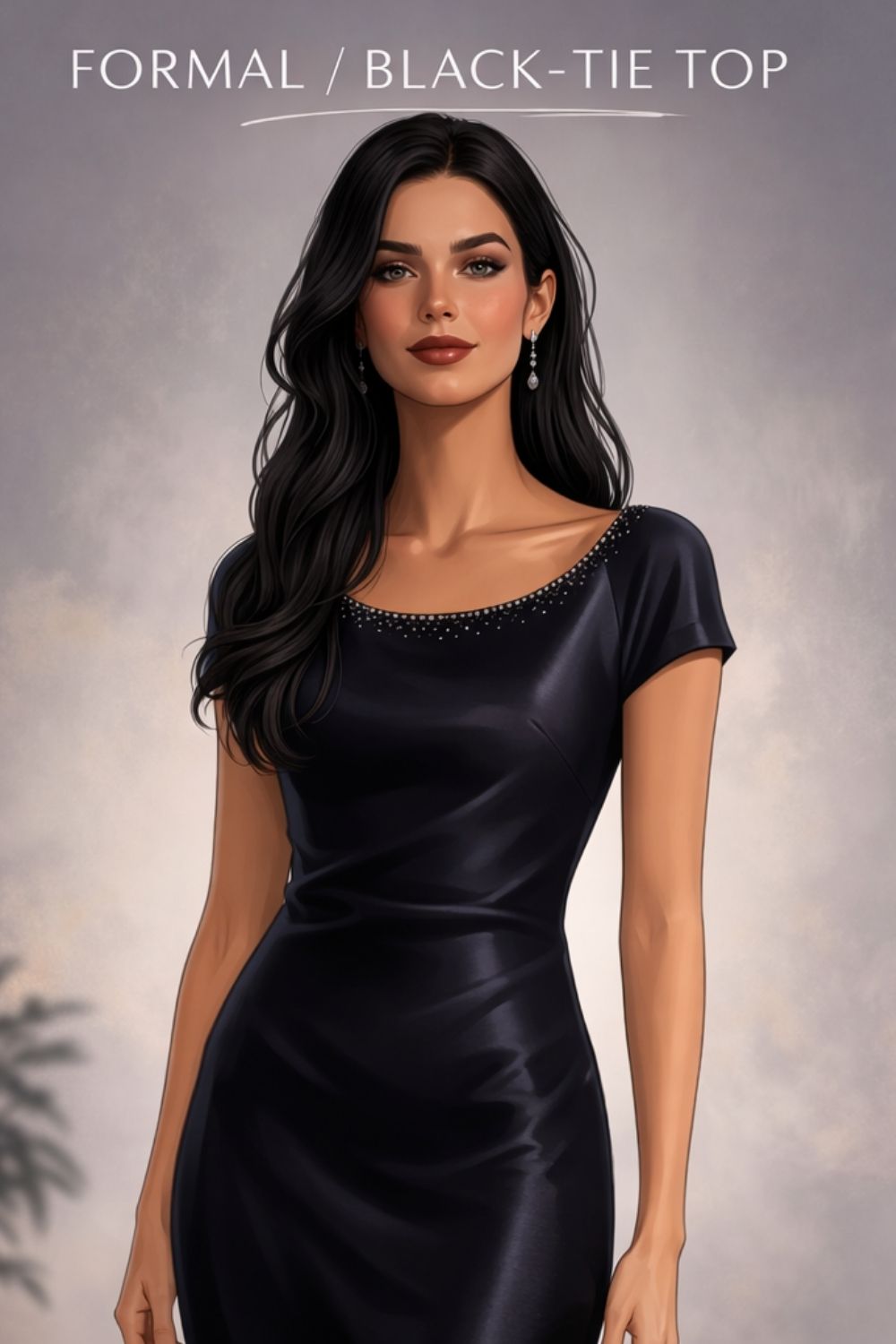
      Formal / Black-Tie Top

      formal or black tie top example

      The highest dress code level. Paired with evening trousers or formal skirt. Beaded, couture-quality, or otherwise exceptional in construction. Rare in everyday wardrobes β€” designed for significant occasions.

      DesignCouture-quality construction, exceptional embellishment or fabric
      SeasonAll seasons
      Best ForFormal galas, black-tie events, premieres
    2. 128

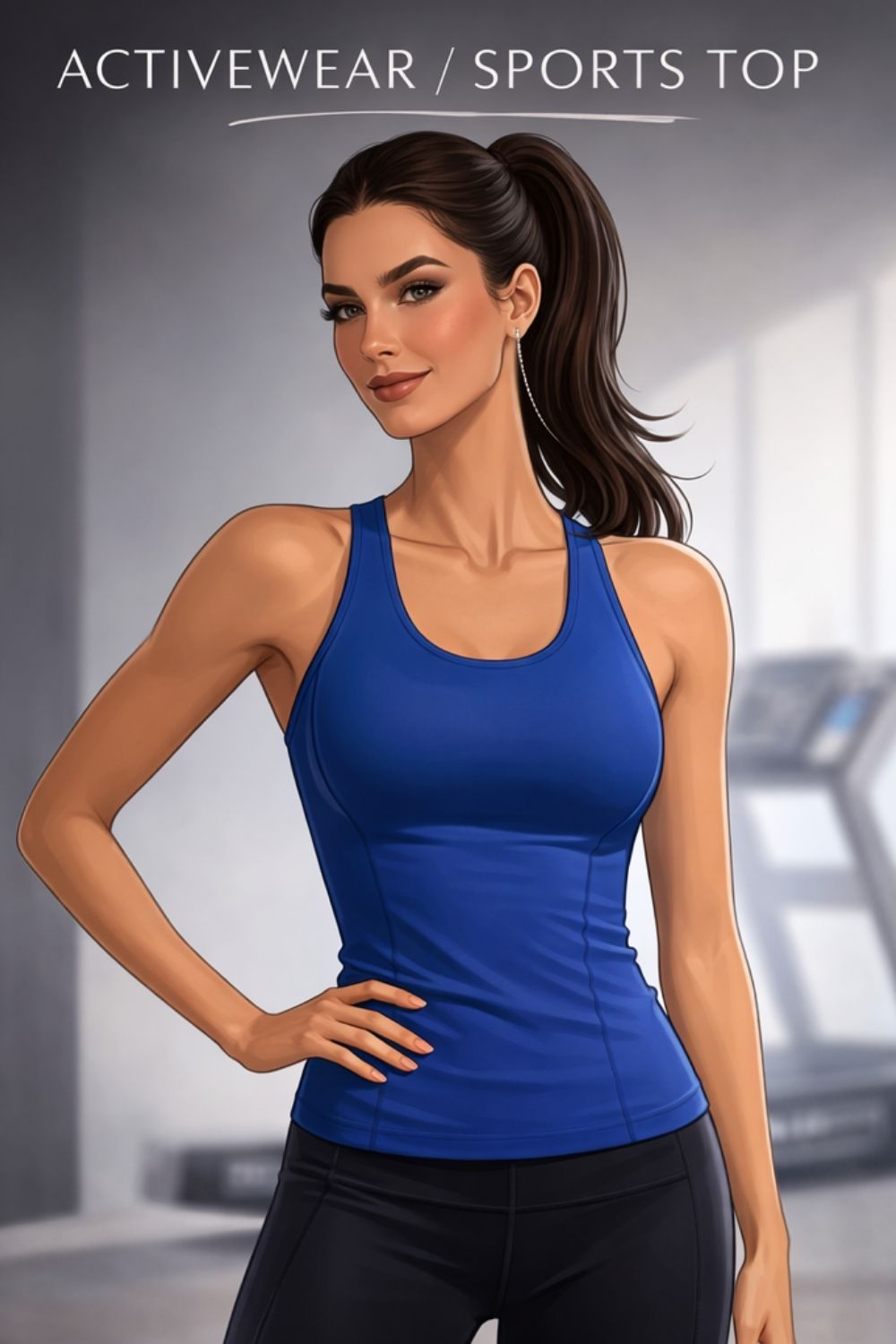
      Activewear / Sports Top

      activewear or sports top example

      Performance-engineered β€” moisture-wicking, compression-rated, or support-designed. Bra tops, racerbacks, tanks. Engineered for movement and thermal management.

      DesignTechnical fabric, moisture-wicking, performance construction
      SeasonAll seasons
      Best ForExercise, sport, gym, athletic activity
    1. 129

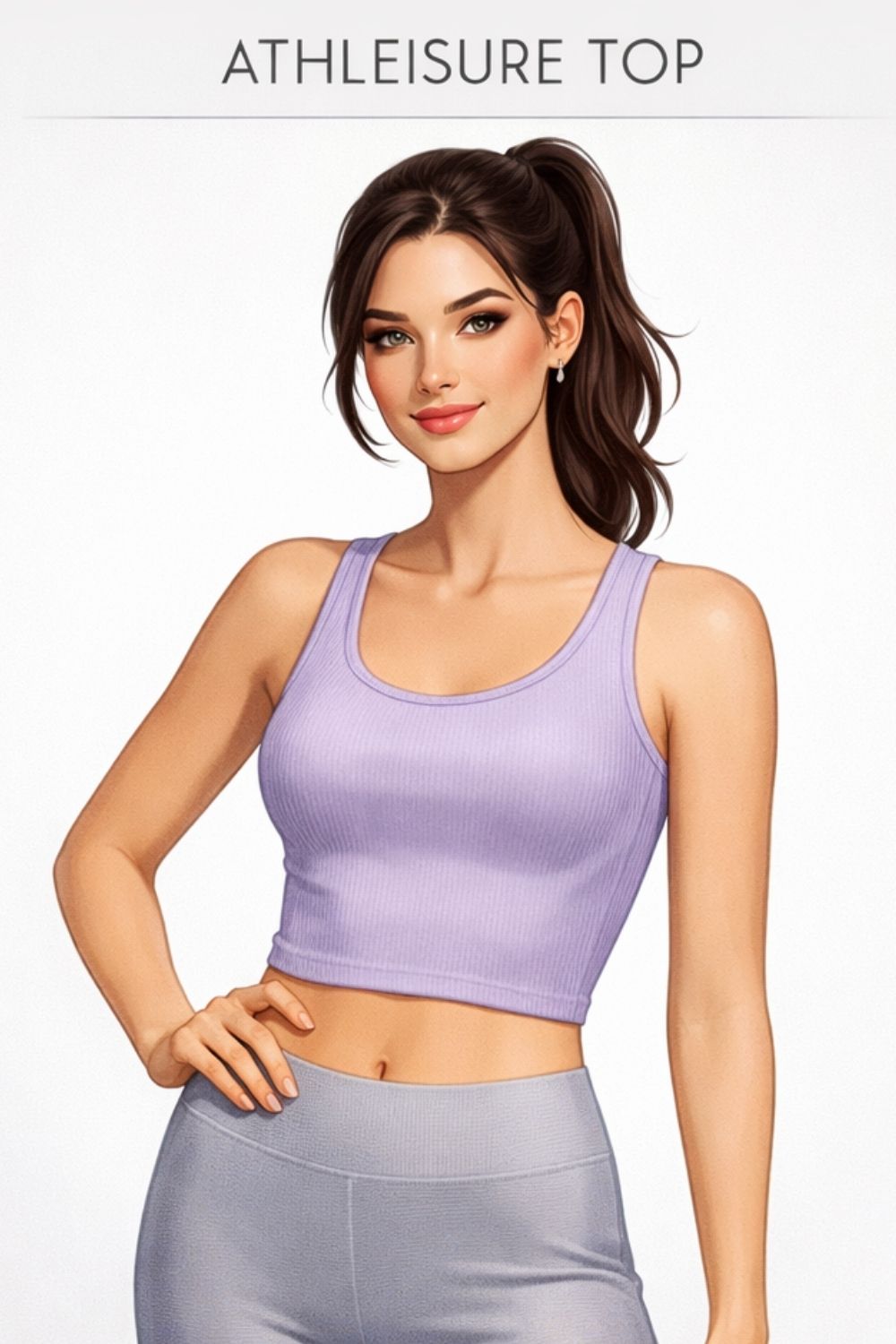
      Athleisure Top

      athleisure top example

      Athletic-inspired, styled for daily casual life. Yoga tops, cropped hoodies, ribbed sports bras outside the gym. The athleisure category acknowledges that most activewear is worn in non-athletic contexts.

      DesignAthletic aesthetic with casual construction, soft hand-feel
      SeasonAll seasons
      Best ForDaily casual, errands, coffee, leisure
    2. 130

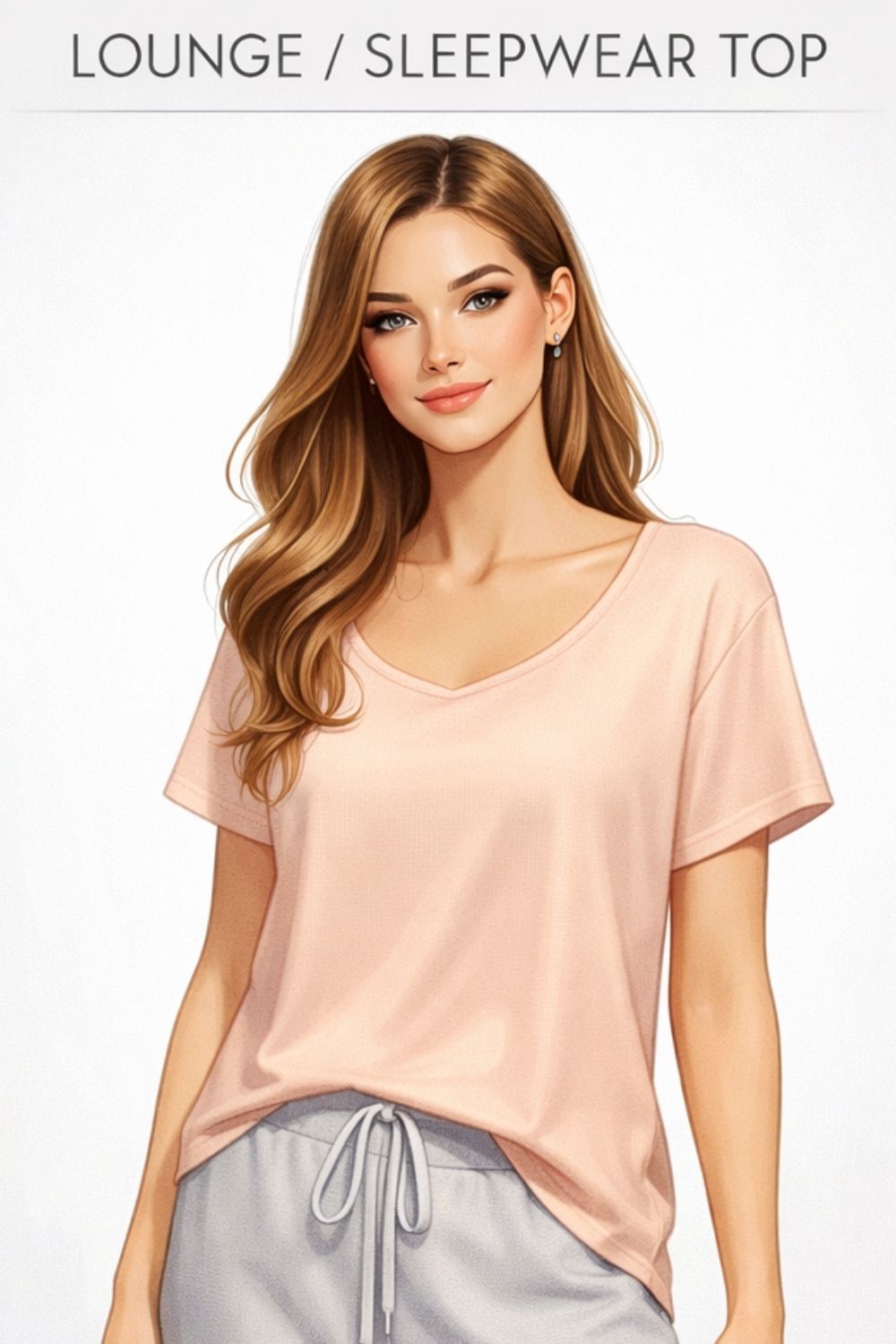
      Lounge / Sleepwear Top

      lounge or sleepwear top example

      Home comfort; pajama tops, soft jersey or fleece. Designed for the most private audience of all β€” which doesn’t mean it shouldn’t be considered.

      DesignSoft comfortable fabric, relaxed construction, minimal fuss
      SeasonAll seasons
      Best ForHome, lounging, sleepwear, comfort days
    1. 131

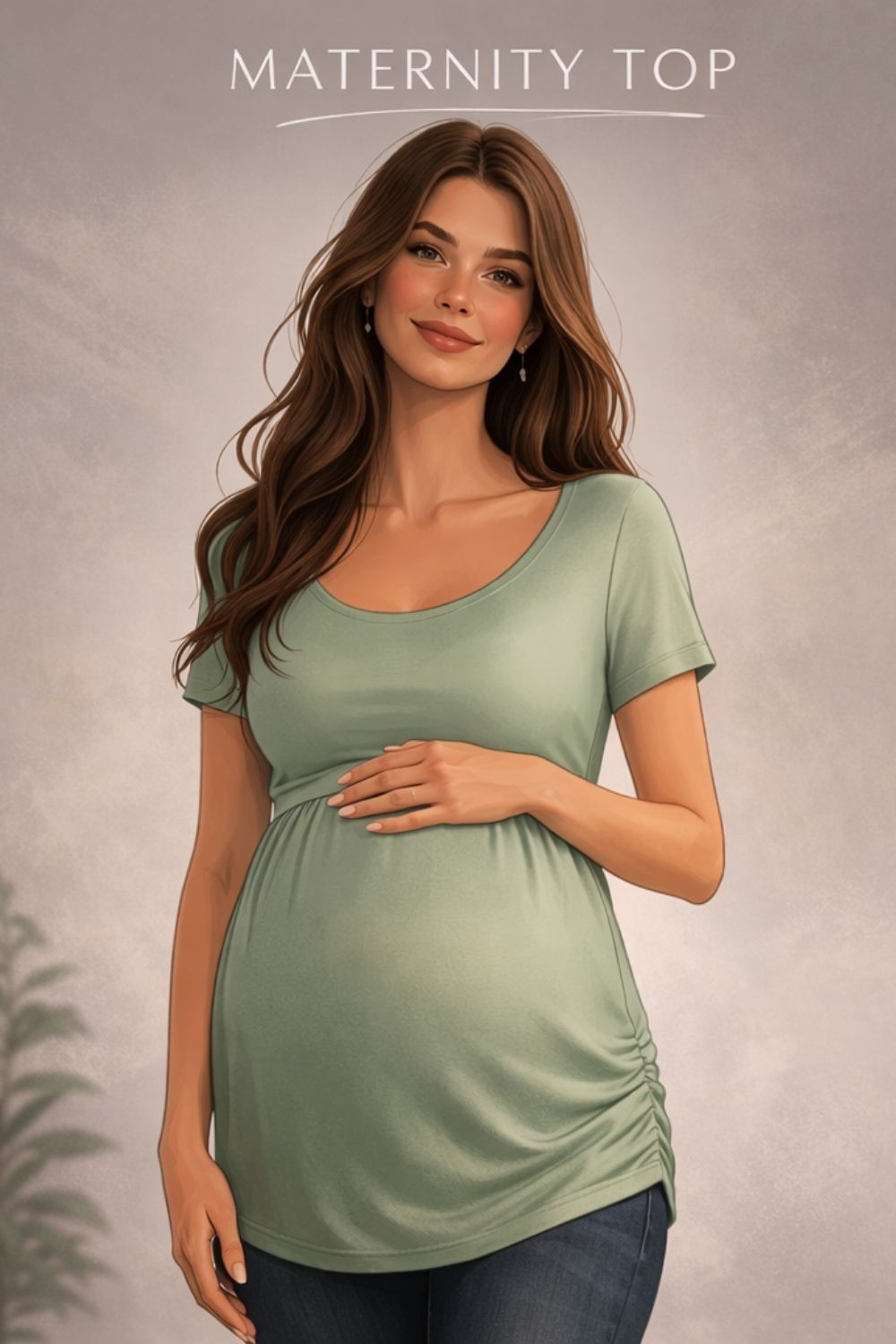
      Maternity Top

      maternity top example

      Designed to accommodate and support pregnancy. Ruched sides that expand with the belly, empire waists, nursing-access openings. A category with specific engineering requirements that general fashion often underserves.

      DesignExpandable construction, ruched sides, empire waist options
      SeasonAll seasons
      Best ForPregnancy, post-partum, nursing
    2. 132

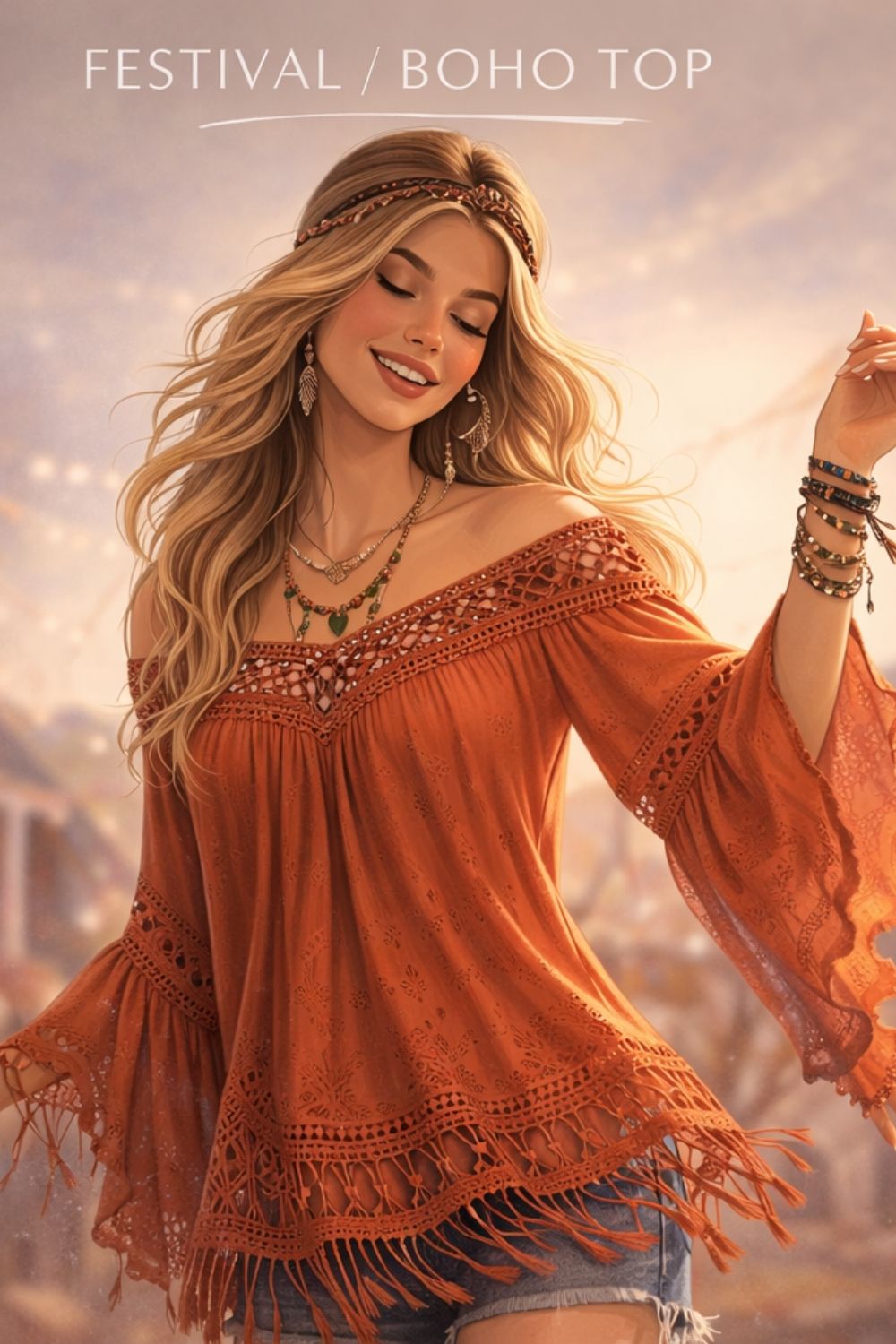
      Festival / Boho Top

      festival or boho top example

      Eclectic, free-spirited for music events and outdoor gatherings. Fringe, crochet, tie-dye, peasant constructions. Perhaps the occasion category with the most latitude for self-expression β€” rules are notably optional here.

      DesignEclectic detailing, fringe or crochet, relaxed construction
      SeasonSpring / Summer
      Best ForFestivals, concerts, outdoor events, boho occasions
    1. 133

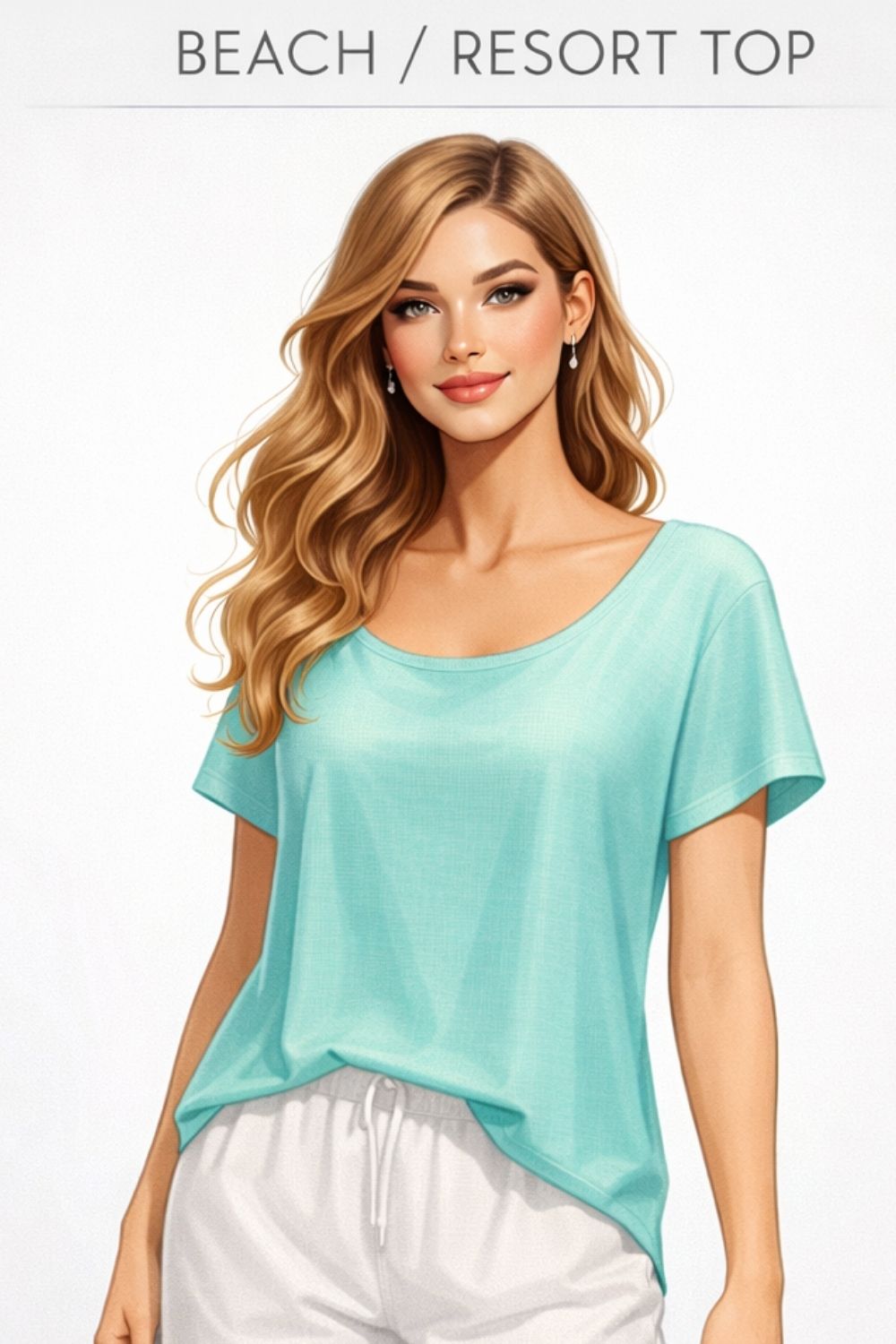
      Beach / Resort / Vacation Top

      beach or resort or vacation top example

      Light, breezy, sun-friendly. Cover-ups, kaftans, crochet tops, breezy linens. Designed for heat, humidity, and the specific visual context of coastal and resort environments.

      DesignLightweight breathable fabric, relaxed construction, often printed
      SeasonSummer
      Best ForBeach, pool, resort, vacation, travel days
    2. 134

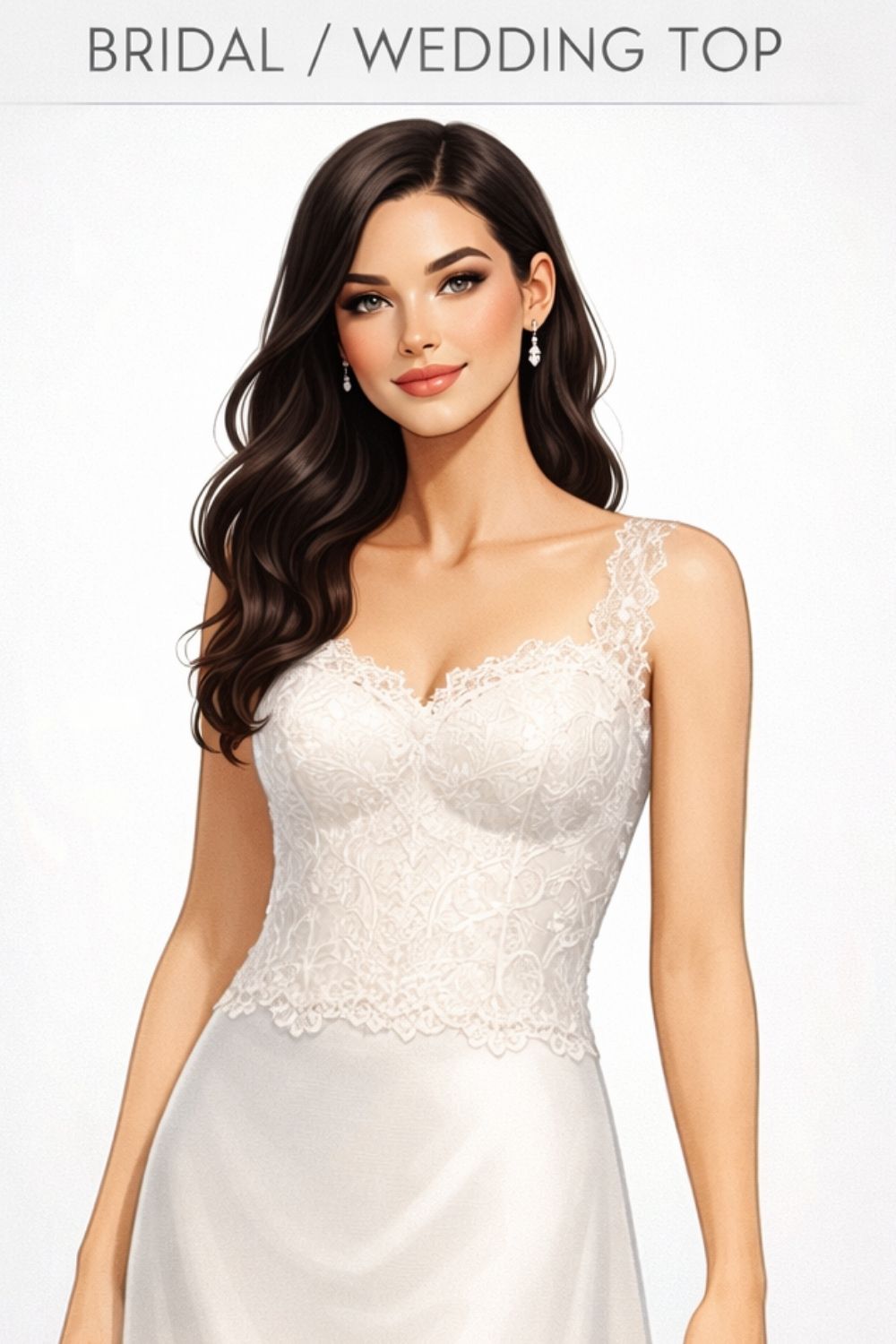
      Bridal / Wedding Top

      bridal or wedding top example

      Wedding occasions β€” often paired with tailored trousers or elegant skirt as a contemporary two-piece bridal set. An increasingly relevant category as more brides opt for non-traditional silhouettes.

      DesignElegant finish, often white/ivory/blush, occasion-quality construction
      SeasonAll seasons
      Best ForWedding ceremonies, bridal events, engagement occasions

    Category 8: By Design Details & Embellishments (#135–#155)

    Techniques, surface treatments, and decorative features that visually define the top

    Design details are the vocabulary of fashion personality. Two tops with identical construction, length, sleeve, and fit can read as completely different garments because of what’s been done to the fabric. A plain white button-down is professional neutrality. The same shirt with pintucks down the placket and mother-of-pearl buttons reads as elevated and intentional. Same construction; entirely different register. It’s not subtle β€” it’s significant.

    1. 135

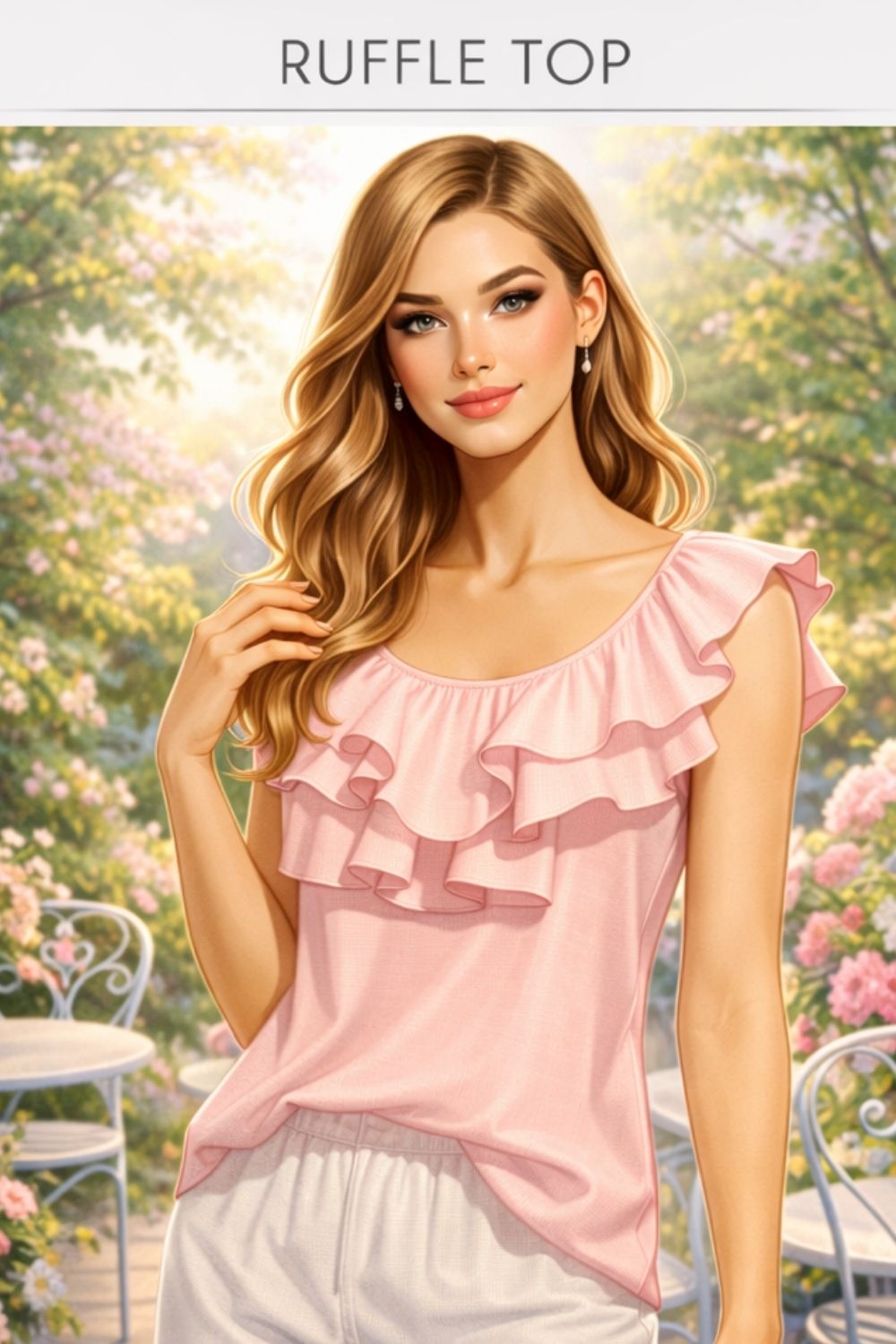
      Ruffle Top

      ruffle top example

      Ruffled panels, trim, or all-over ruffles. Soft, feminine, movement-oriented. Quality ruffles are cut on the bias for maximum movement; lower-quality versions are straight-cut and lay flatter.

      DesignRuffled panels or trim, soft layered movement-focused construction
      SeasonSpring / Summer
      Best ForFeminine occasions, dates, casual
    2. 136

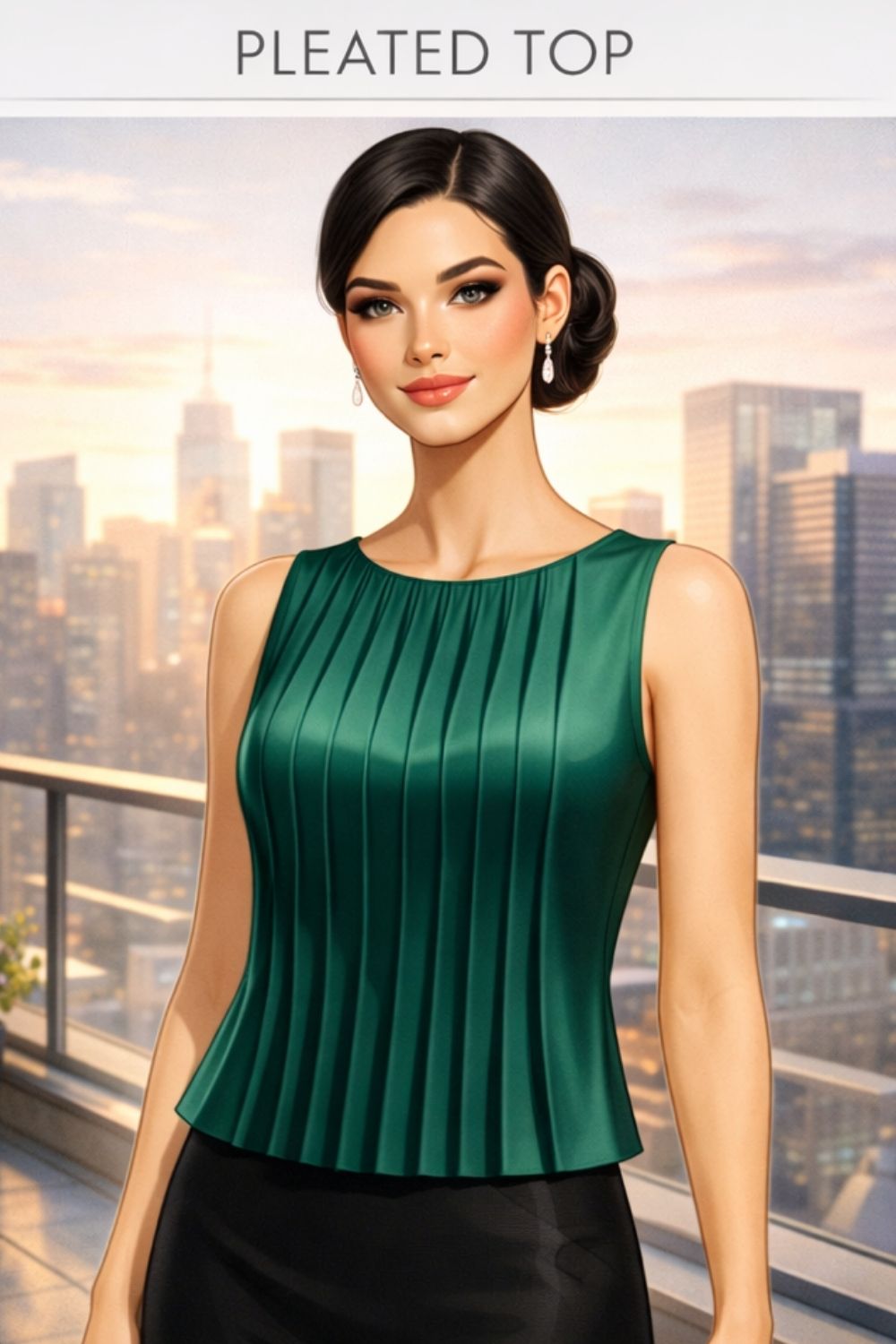
      Pleated Top

      pleated top example

      Crisp, structured fabric folds adding volume or texture. Pleats create both aesthetic interest and functional ease in one construction step.

      DesignStructured fabric folds, crisp or soft depending on fabric
      SeasonAutumn / Winter / Spring
      Best ForOffice, smart-casual, formal-adjacent
    1. 137

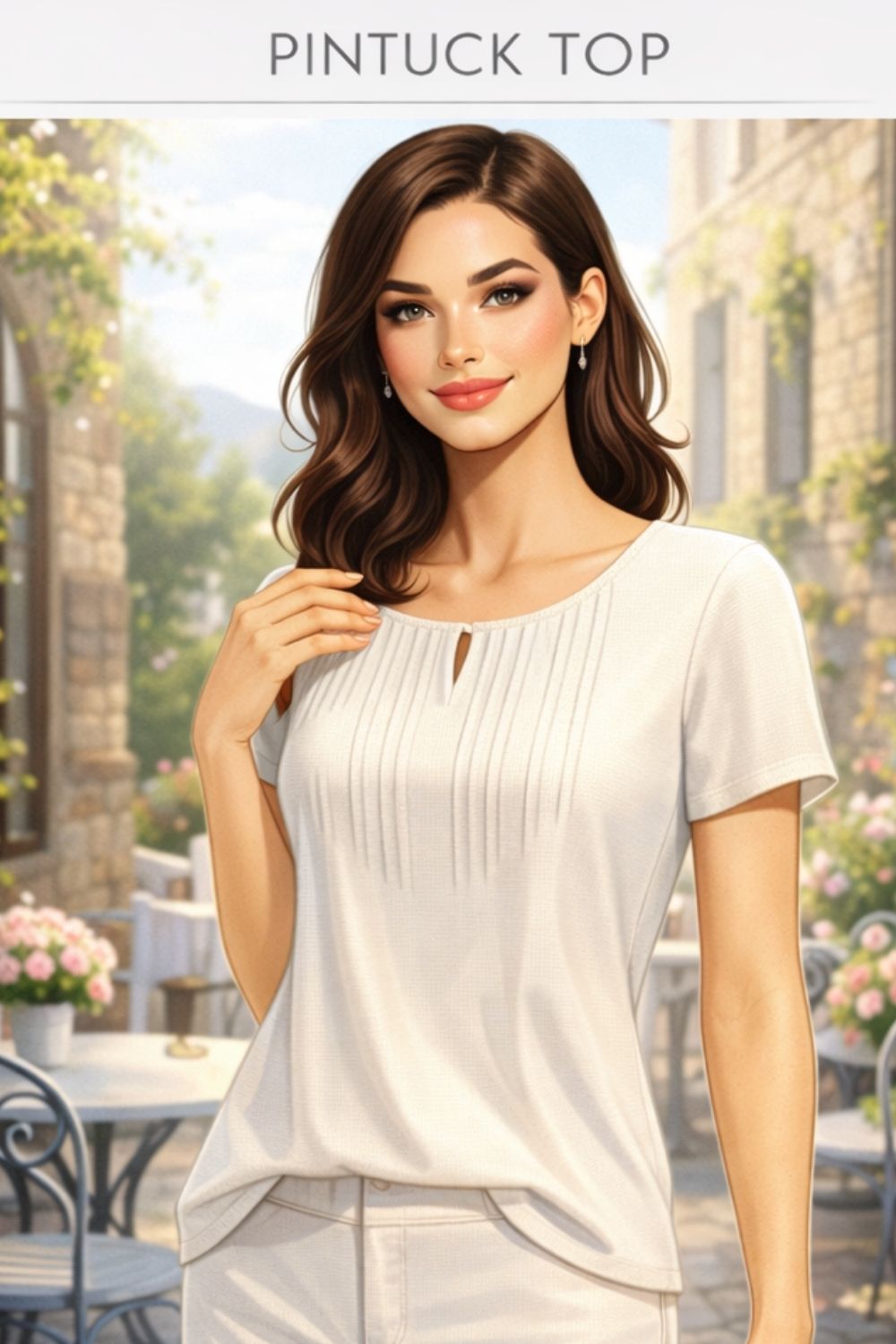
      Pintuck Top

      pintuck top example

      Narrow, stitched folds in fabric β€” subtle texture with a delicate, refined quality. Pintucks add dimension without adding volume. The tailoring detail that says β€œconsidered” rather than β€œembellished.”

      DesignNarrow stitched folds, subtle surface texture, refined finish
      SeasonSpring / Summer
      Best ForSmart-casual, feminine occasions, office
    2. 138

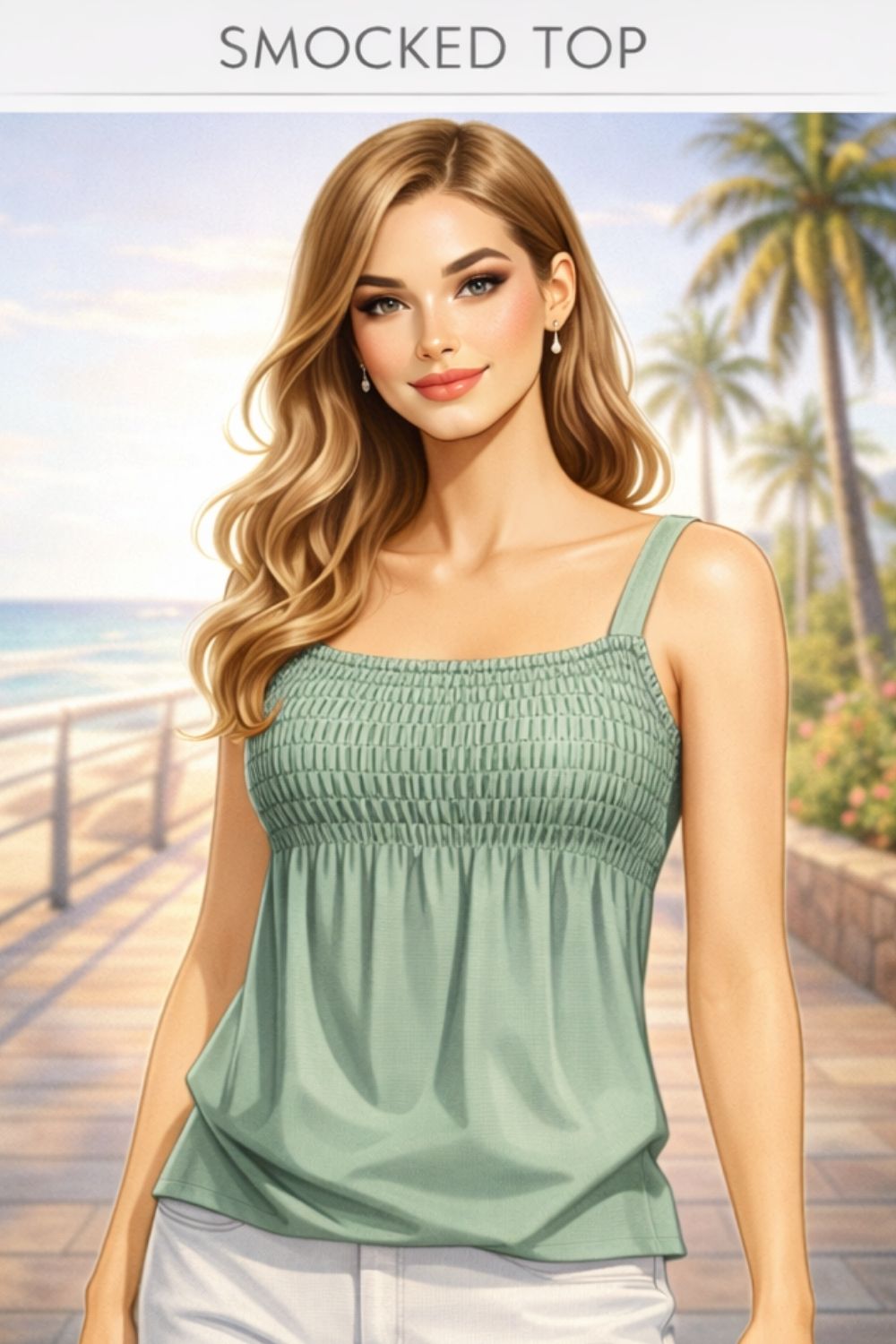
      Smocked Top

      smocked top example

      Elastic gathering stitched in a honeycomb or diamond pattern β€” stretchy and decorative simultaneously. Creates built-in stretch and visual texture in one step. The peasant top is the classic smocked construction.

      DesignHoneycomb or diamond elastic gathering, textured elastic surface
      SeasonSpring / Summer
      Best ForCasual, bohemian styling, resort, festival
    1. 139

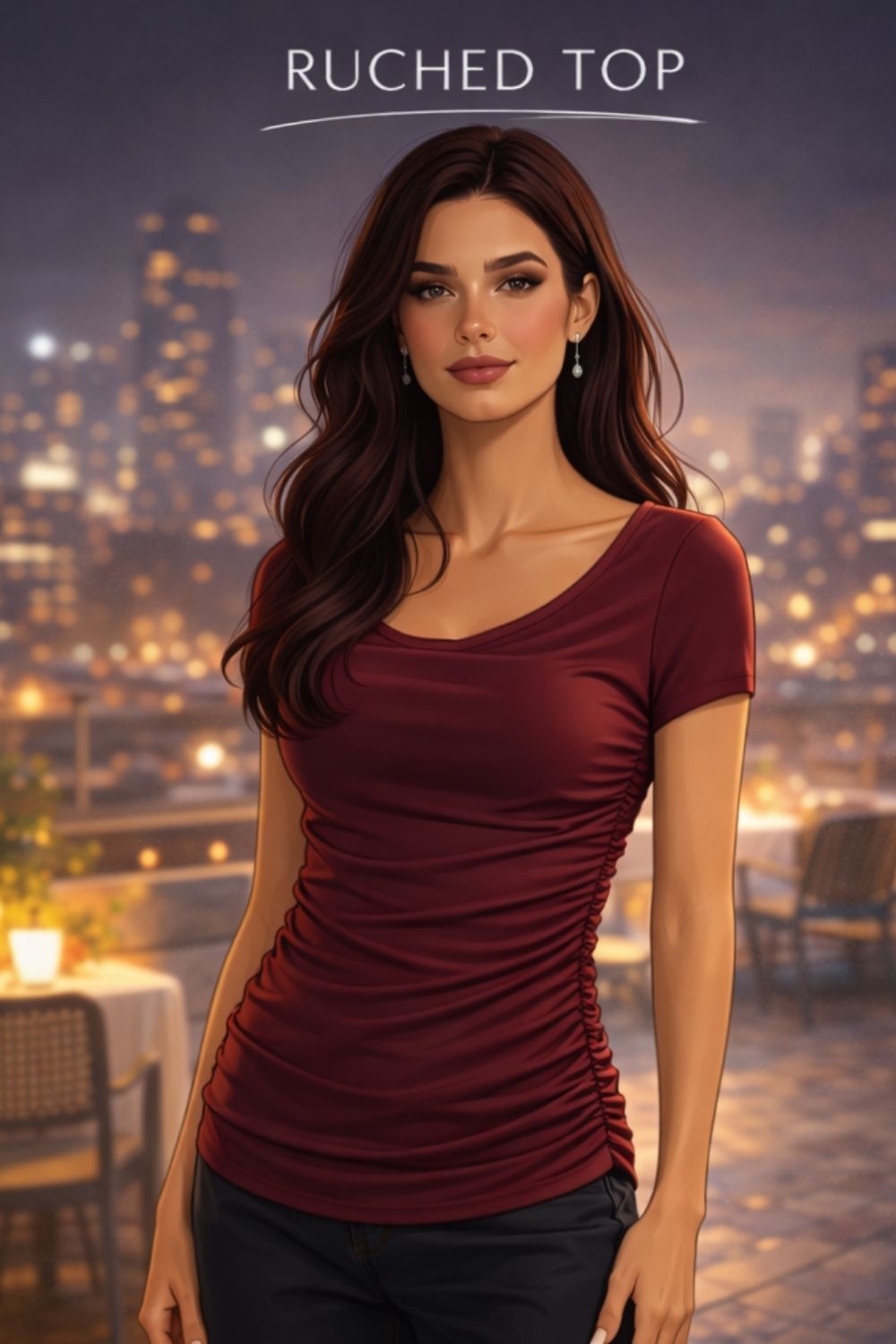
      Ruched Top

      ruched top example

      Gathered or scrunched fabric creating textured, dimensional folds β€” typically at the sides or body. Ruching tends to work across a range of body types because gathered fabric adds interest and movement without rigid structure.

      DesignGathered scrunched folds, textured dimensional surface
      SeasonAll seasons
      Best ForGoing out, evening, fashion-forward
    2. 140

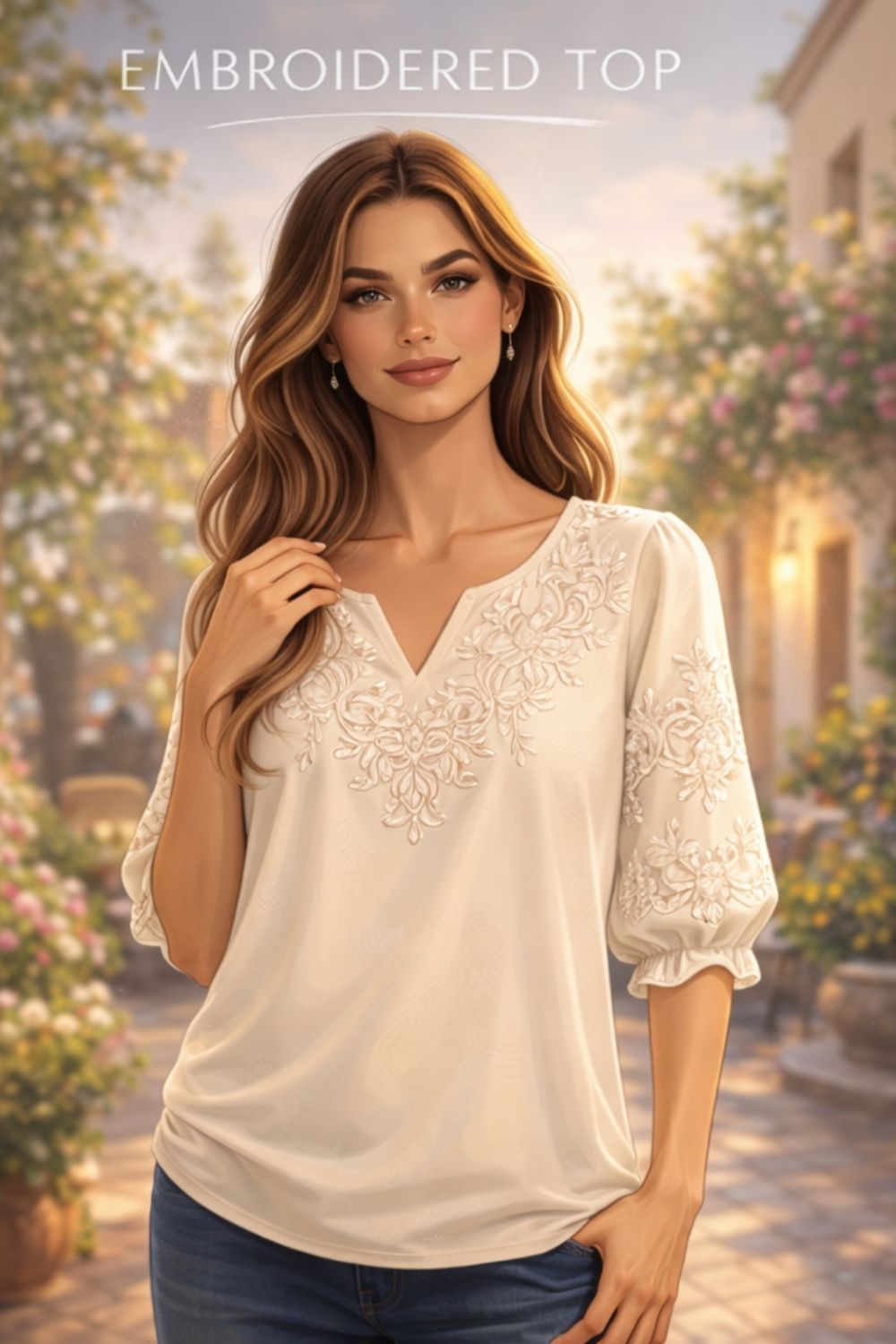
      Embroidered Top

      embroidered top example

      Thread stitched into decorative patterns or motifs. Artisan quality ranges from hand-stitched traditional embroidery to machine embroidery. Our embroidery technique guide covers the full range.

      DesignThread-stitched patterns on fabric surface, artisan quality varies
      SeasonSpring / Summer
      Best ForCasual, ethnic/fusion styling, bohemian looks
    1. 141

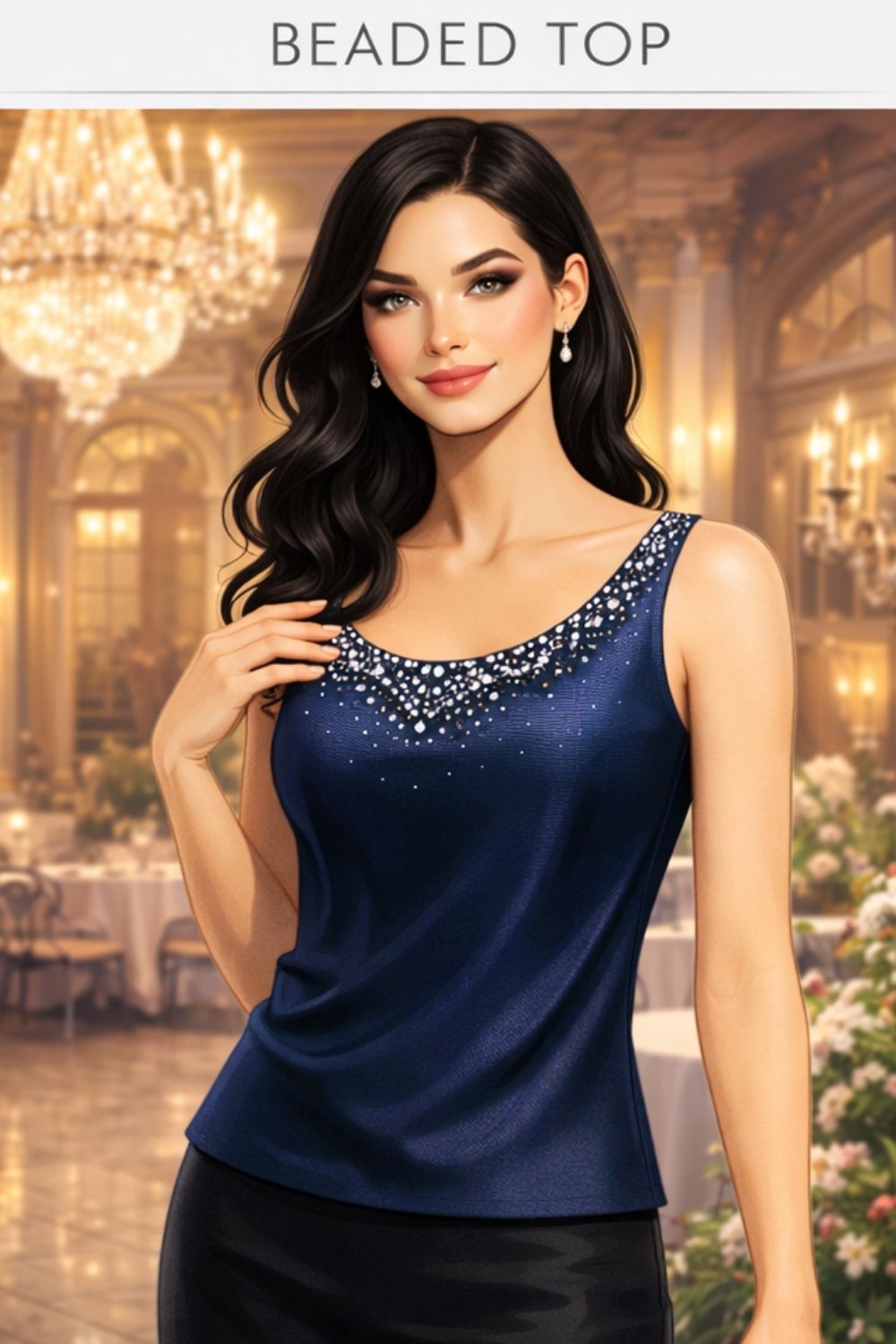
      Beaded Top

      beaded top example

      Beads or pearls hand-sewn onto fabric. Labor-intensive and glamorous β€” high-end beaded tops are expensive precisely because beading is almost entirely manual work. Evening and special-occasion territory only.

      DesignIndividual beads or pearl details hand-sewn, heavy and luxurious
      SeasonAutumn / Winter (evening)
      Best ForEvening, formal events, special occasions
    2. 142

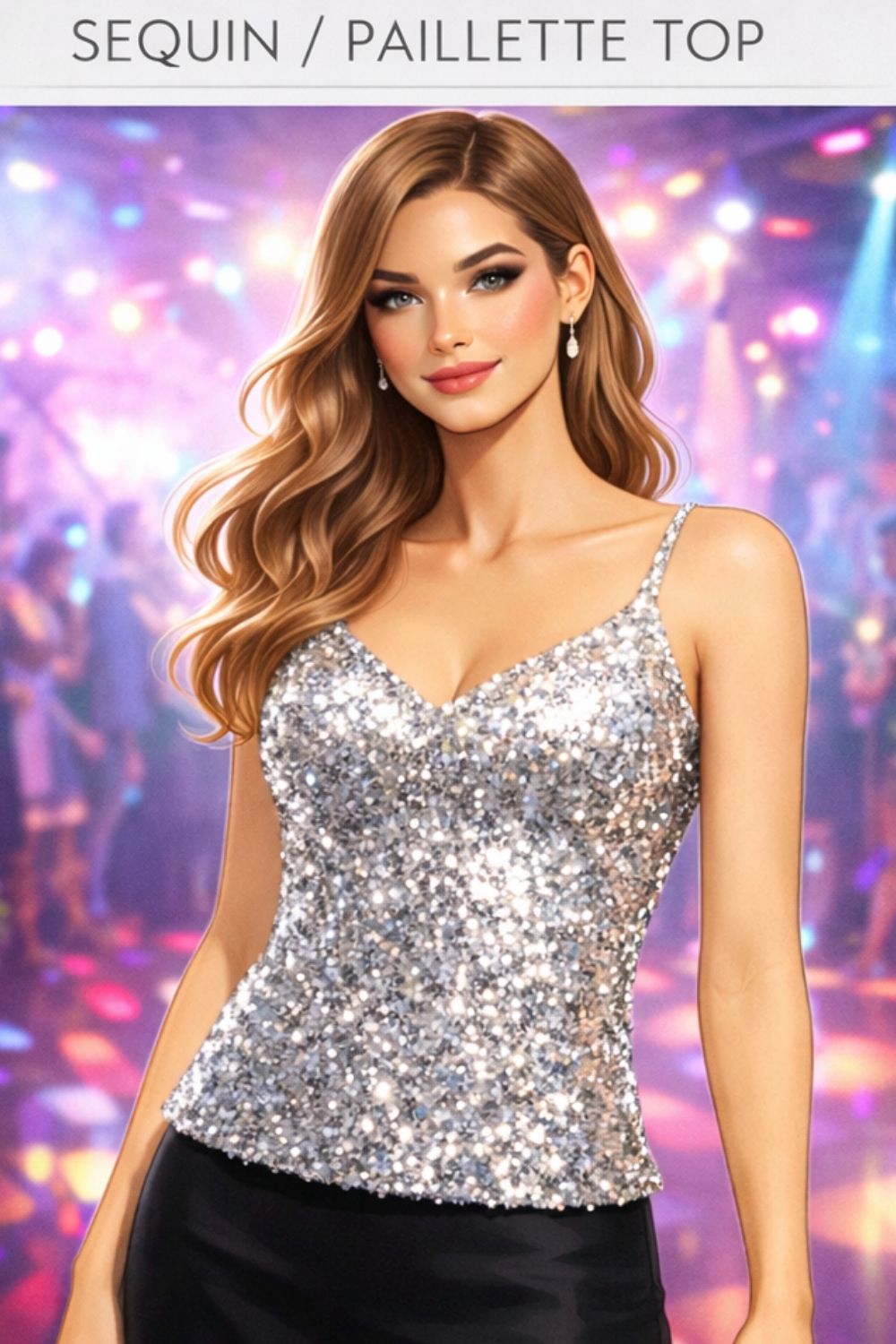
      Sequin / Paillette Top

      sequin or paillette top example

      Reflective discs sewn all over or as detail panels. Maximum party impact. Paillettes are larger and flat; sequins are smaller and may be cupped. Both designed for movement in low light β€” which is exactly where they belong.

      DesignDense reflective disc embellishment, all-over or panel placement
      SeasonAutumn / Winter (evening)
      Best ForParty, evening events, going out
    1. 143

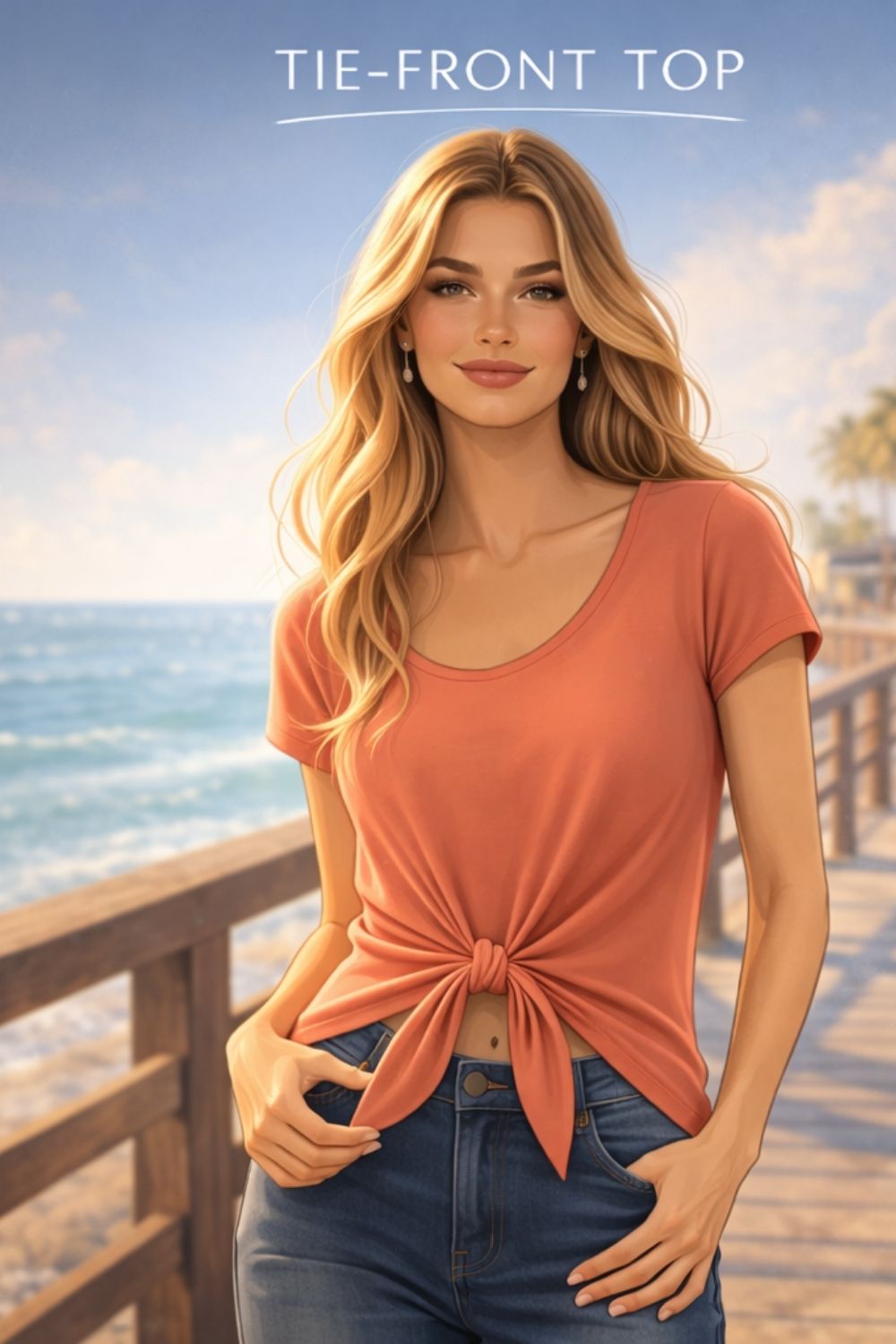
      Tie-Front Top

      tie front top example

      Fabric ties at the front hem creating a knot detail β€” often crops the garment in the process. Casual and playful; the tie adds visual interest at the waistline without requiring additional hardware or construction complexity.

      DesignKnotted fabric at front hem, casual tie construction
      SeasonSpring / Summer
      Best ForCasual, beach, resort, weekend
    2. 144

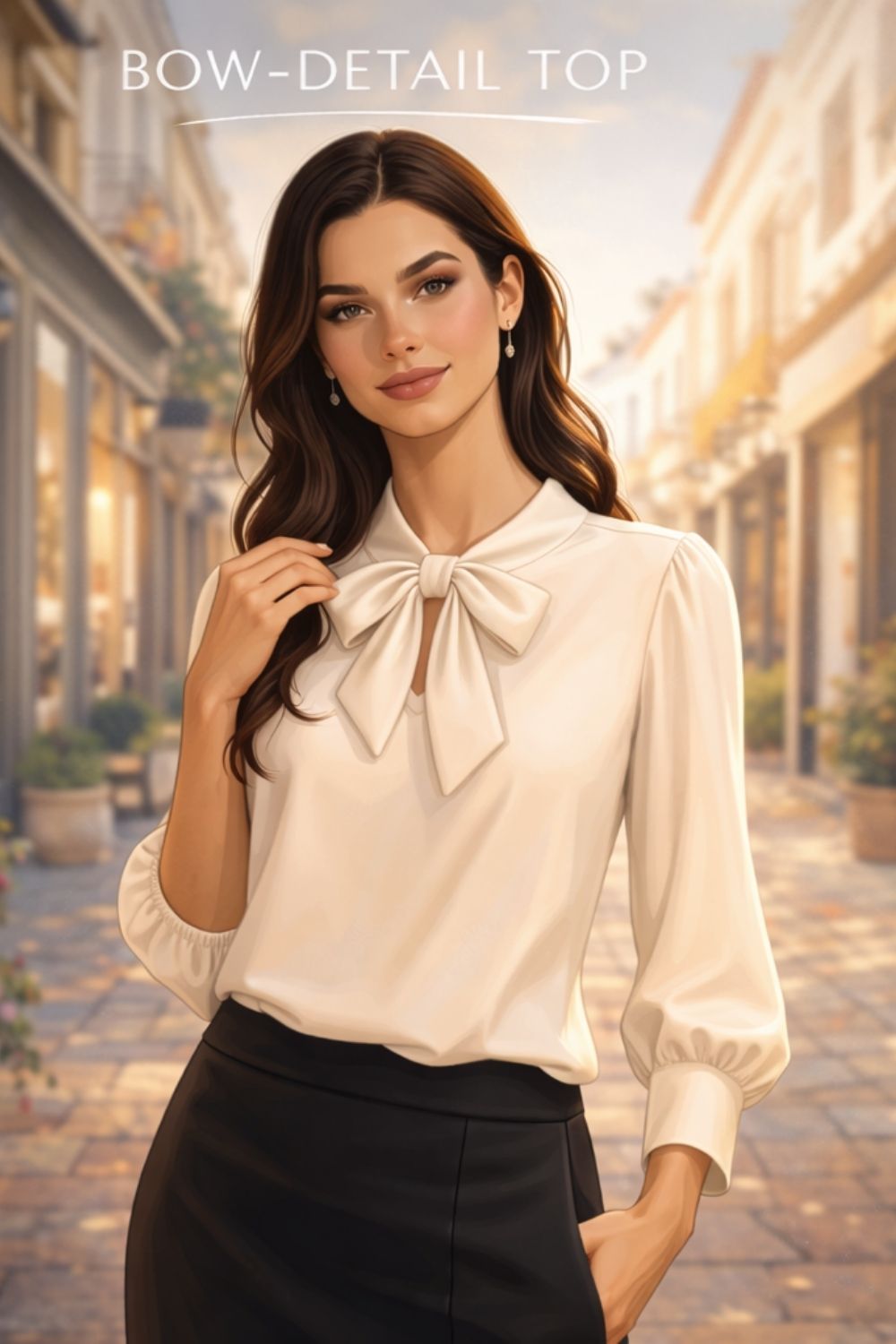
      Bow-Detail Top

      bow detail top example

      A bow at the neckline, back, or sleeve. The placement changes the bow’s character significantly: neck bow = romantic-formal; sleeve bow = playful; back bow = quietly considered.

      DesignBow accent detail, placement determines character
      SeasonSpring / Summer / Autumn
      Best ForFeminine occasions, office, dates
    1. 145

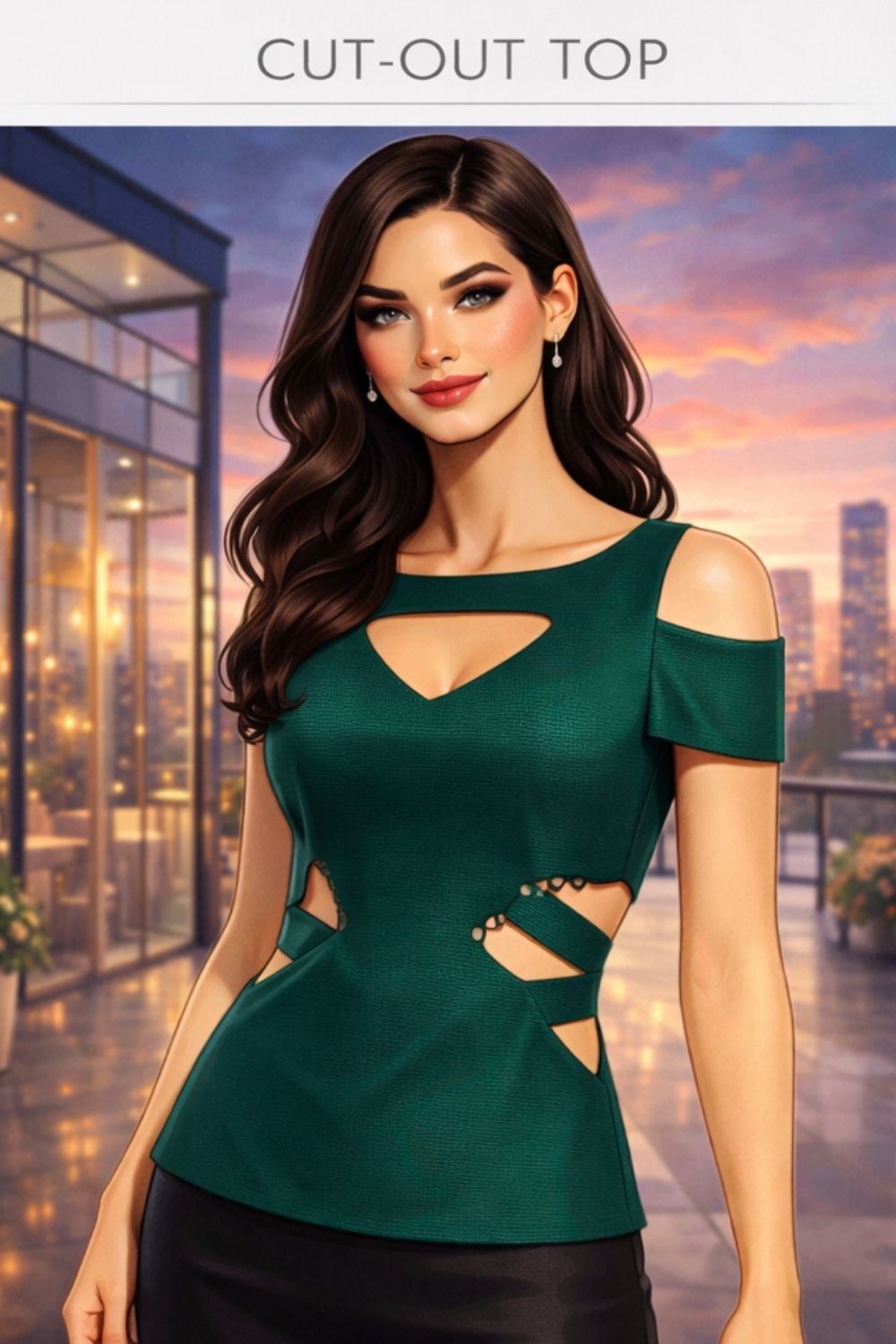
      Cut-Out Top

      cut out top example

      Strategically placed openings in the fabric β€” geometric, shoulder, side, back, or midriff. Cut-outs are architectural β€” they create negative space as a deliberate design element.

      DesignGeometric or shaped fabric openings, strategic placement
      SeasonSpring / Summer
      Best ForGoing out, fashion-forward, evening
    2. 146

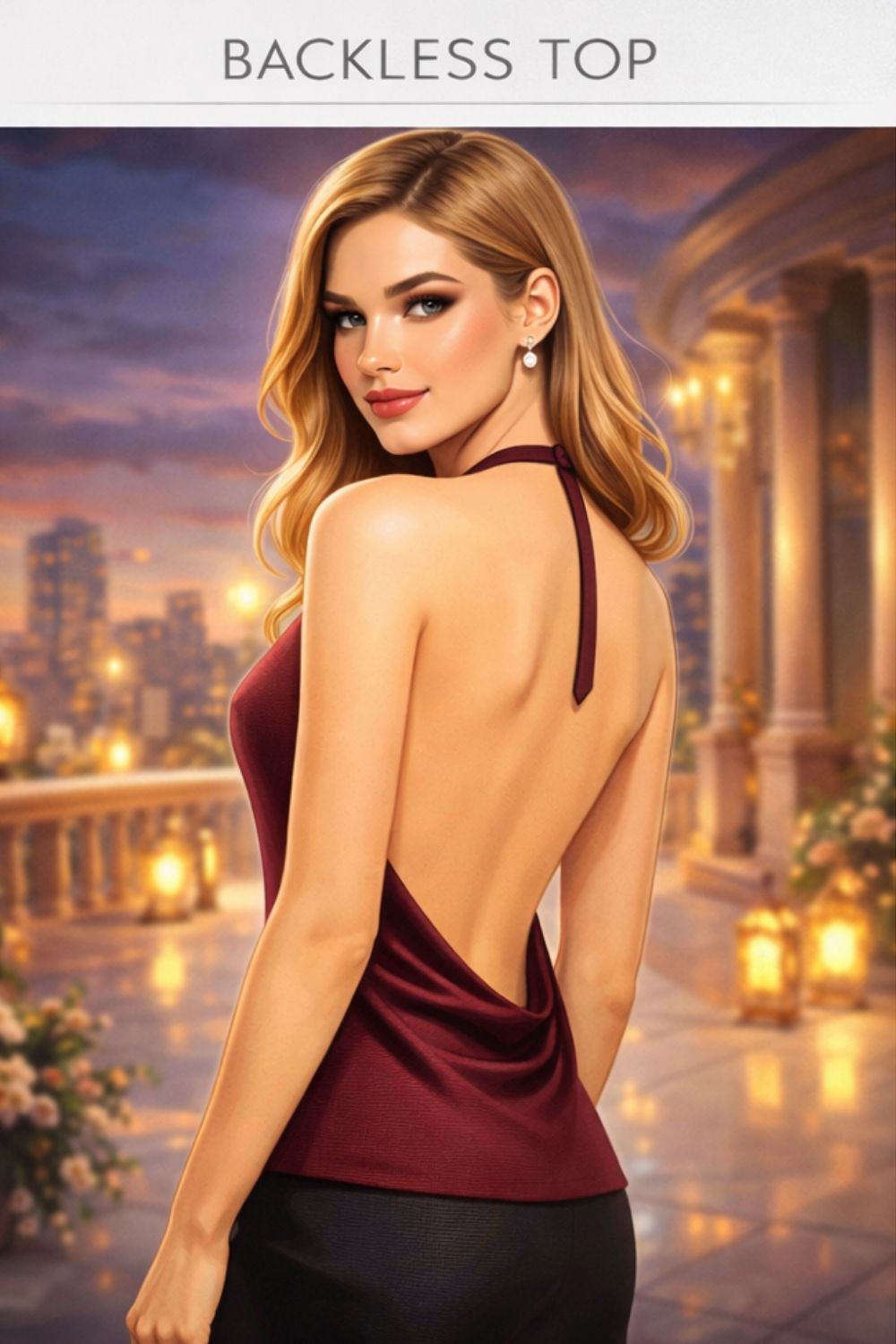
      Backless Top

      backless top example

      Open or largely exposed back; supported by halter straps or crossed straps. The back is the design focus β€” the front may be entirely modest while the rear creates all the drama.

      DesignOpen or exposed back construction, minimal back coverage
      SeasonSpring / Summer
      Best ForEvening, going out, resort
    1. 147

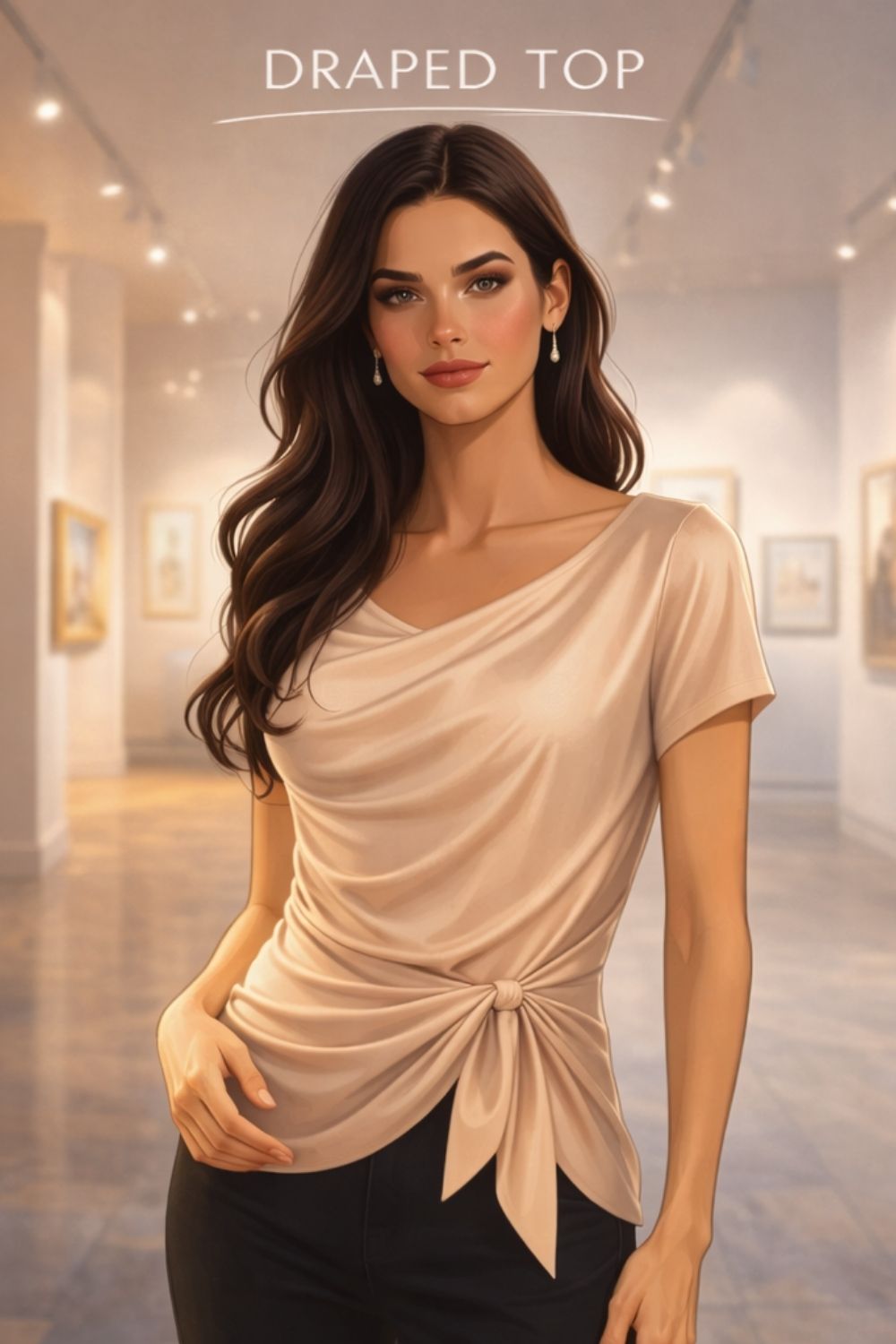
      Draped Top

      draped top example

      Fabric intentionally draped and folded over the body β€” sculptural and sophisticated. One of the most technically demanding garment techniques. Madeleine Vionnet elevated draping to an art form in the 1920s; the skill remains genuinely rare.

      DesignIntentional fabric draping and folding, sculptural construction
      SeasonAll seasons
      Best ForEvening, formal, elevated smart-casual
    2. 148

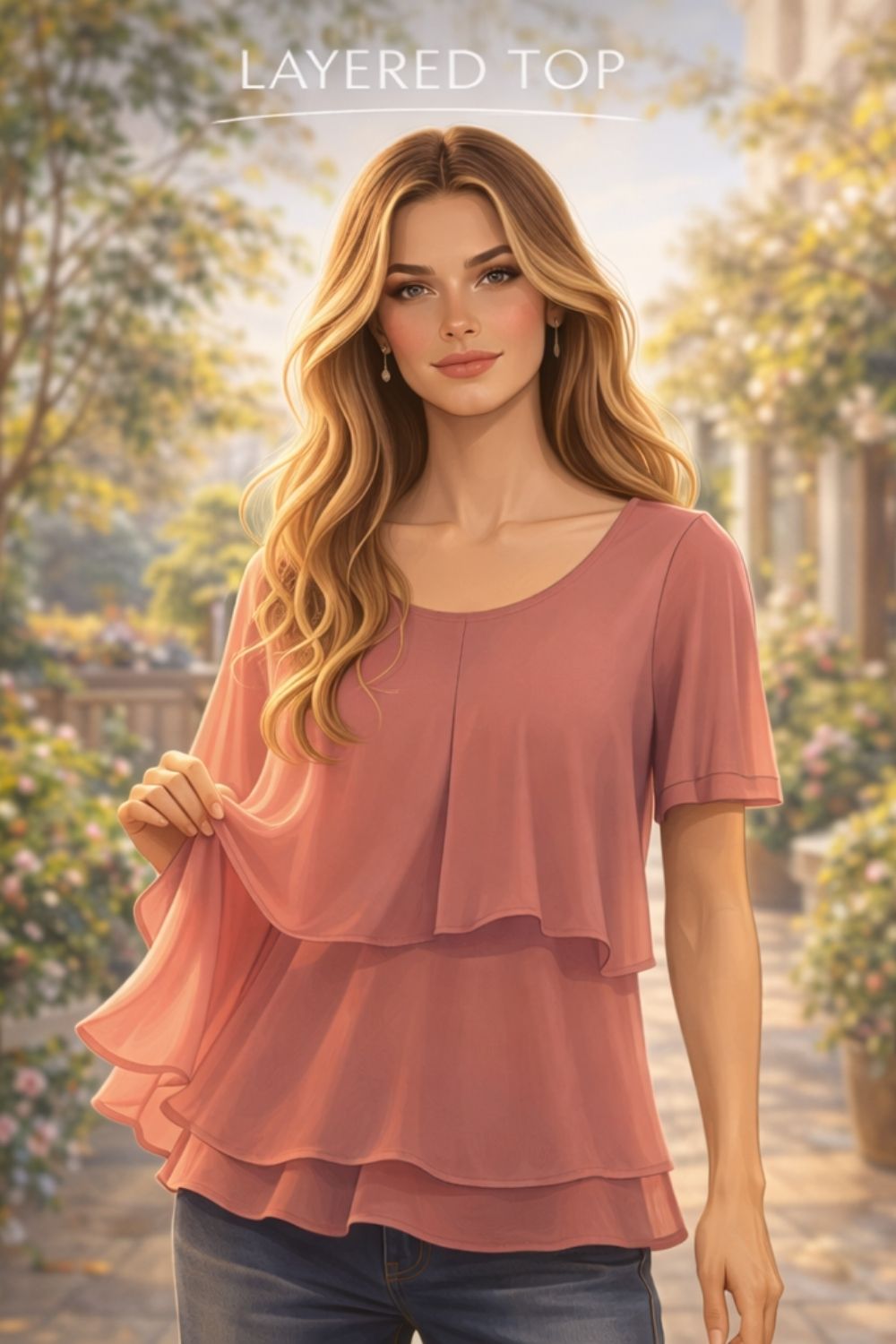
      Layered Top

      layered top example

      Multiple fabric layers creating depth β€” built-in (a chiffon overlay over a lining) or designed to appear separate. Layering creates visual complexity without requiring extra garments.

      DesignMultiple visible fabric layers, built-in or constructed separation
      SeasonSpring / Summer
      Best ForSmart-casual, feminine occasions, layered looks
    1. 149

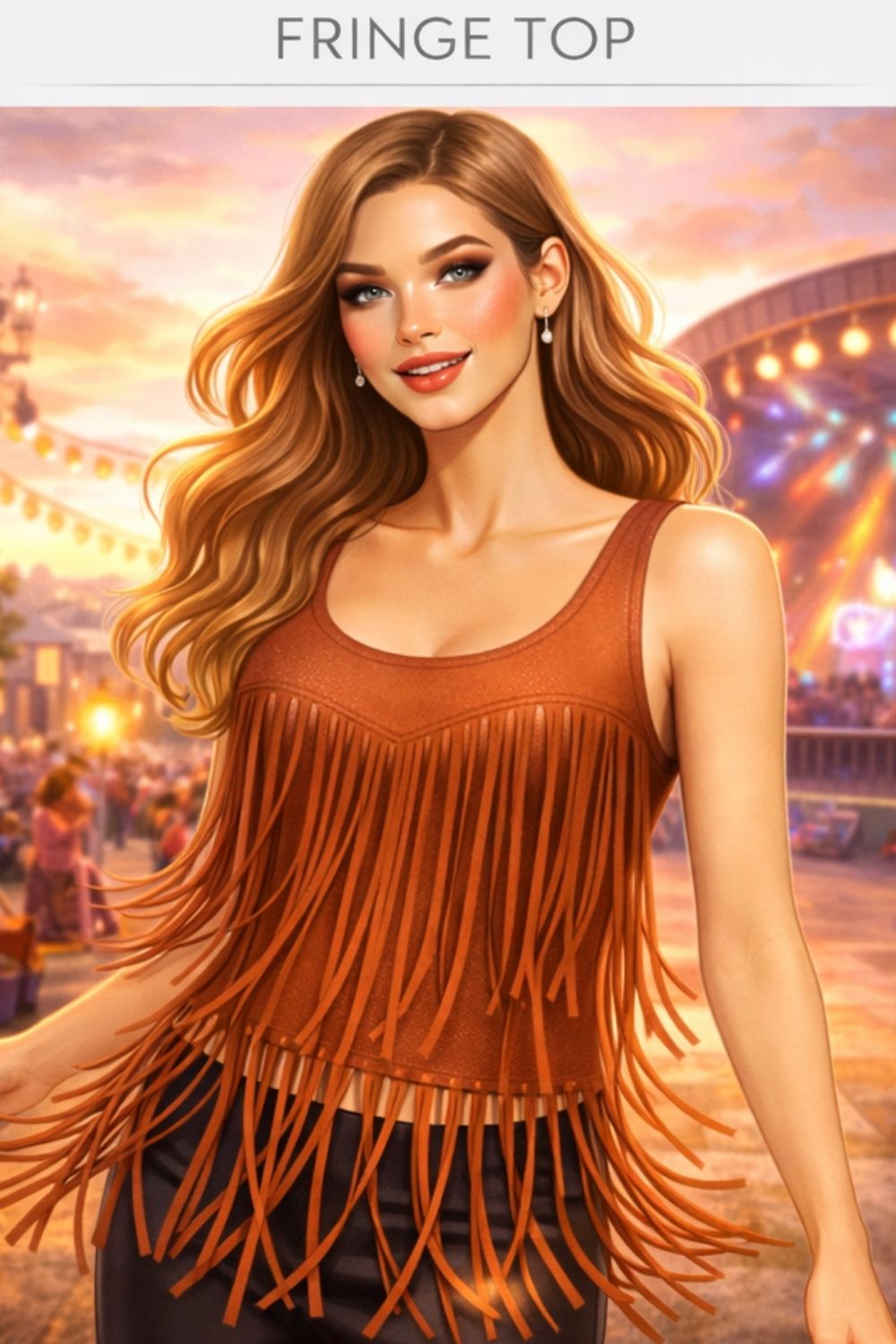
      Fringe Top

      fringe top example

      Hanging thread, tassel, or leather fringe trim. Bohemian and 1920s-inspired simultaneously. A fringe top in motion on a dance floor is a genuinely different visual experience from the same top standing still β€” fringe was designed for movement.

      DesignHanging thread or tassel fringe trim, movement-activated decoration
      SeasonSpring / Summer
      Best ForFestival, bohemian styling, going out
    2. 150

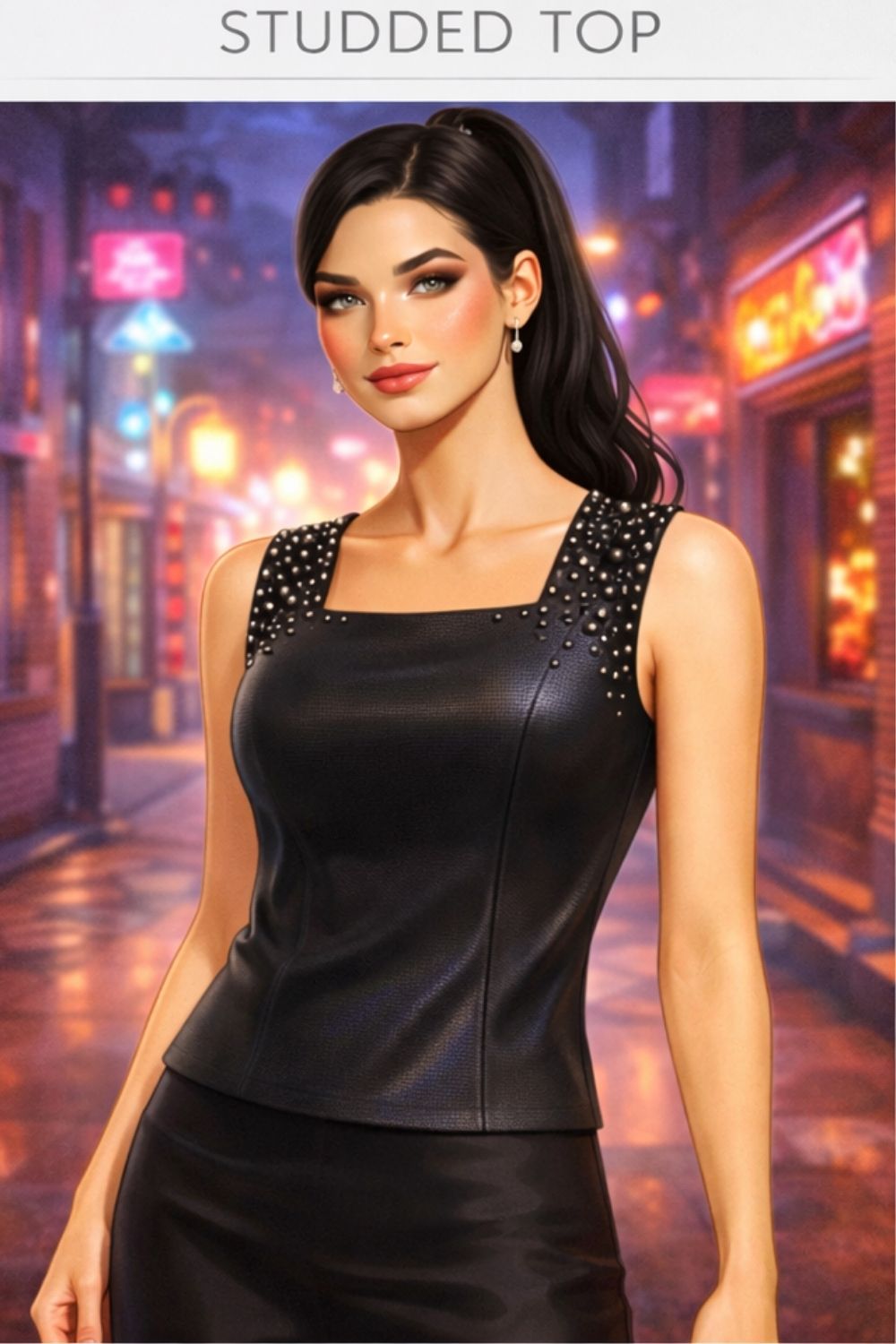
      Studded Top

      studded top example

      Metal studs pressed into fabric. Edgy, rock-inspired. Studs are not sewn β€” they’re pressed or riveted through the fabric. Placement determines the overall read from subtle to aggressive.

      DesignMetal studs pressed or riveted through fabric, edgy hardware detail
      SeasonAutumn / Winter
      Best ForGoing out, rock aesthetic, evening
    1. 151

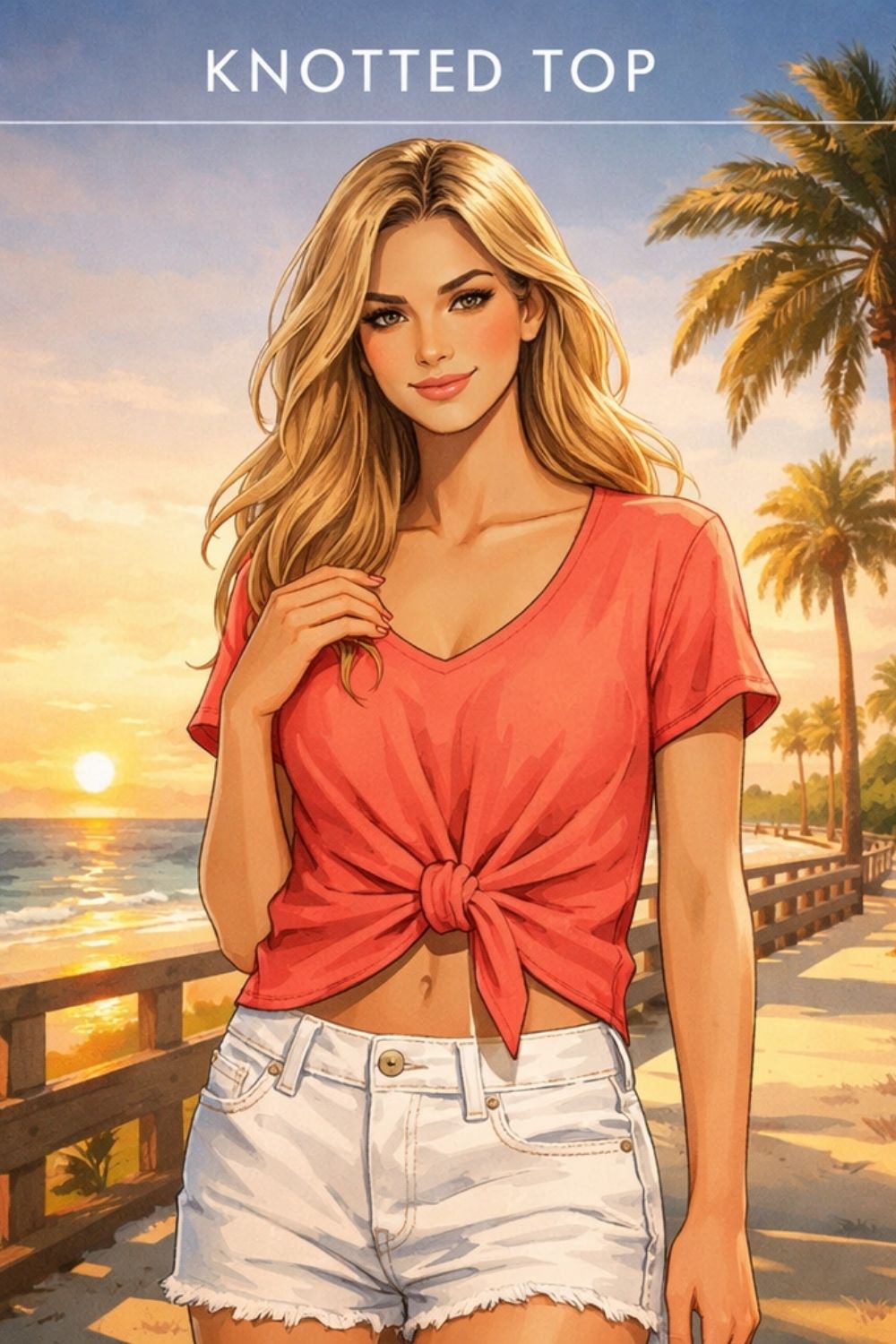
      Knotted Top

      knotted top example

      Fabric tied in a knot at the front or side β€” casual and playful, typically crops the garment. An intentionally knotted hem reads as deliberate; an accidentally untucked shirt hem does not. That distinction is the whole point.

      DesignFabric knotted at front or side, creates casual knot detail
      SeasonSpring / Summer
      Best ForCasual, beach, festival, weekend
    2. 152

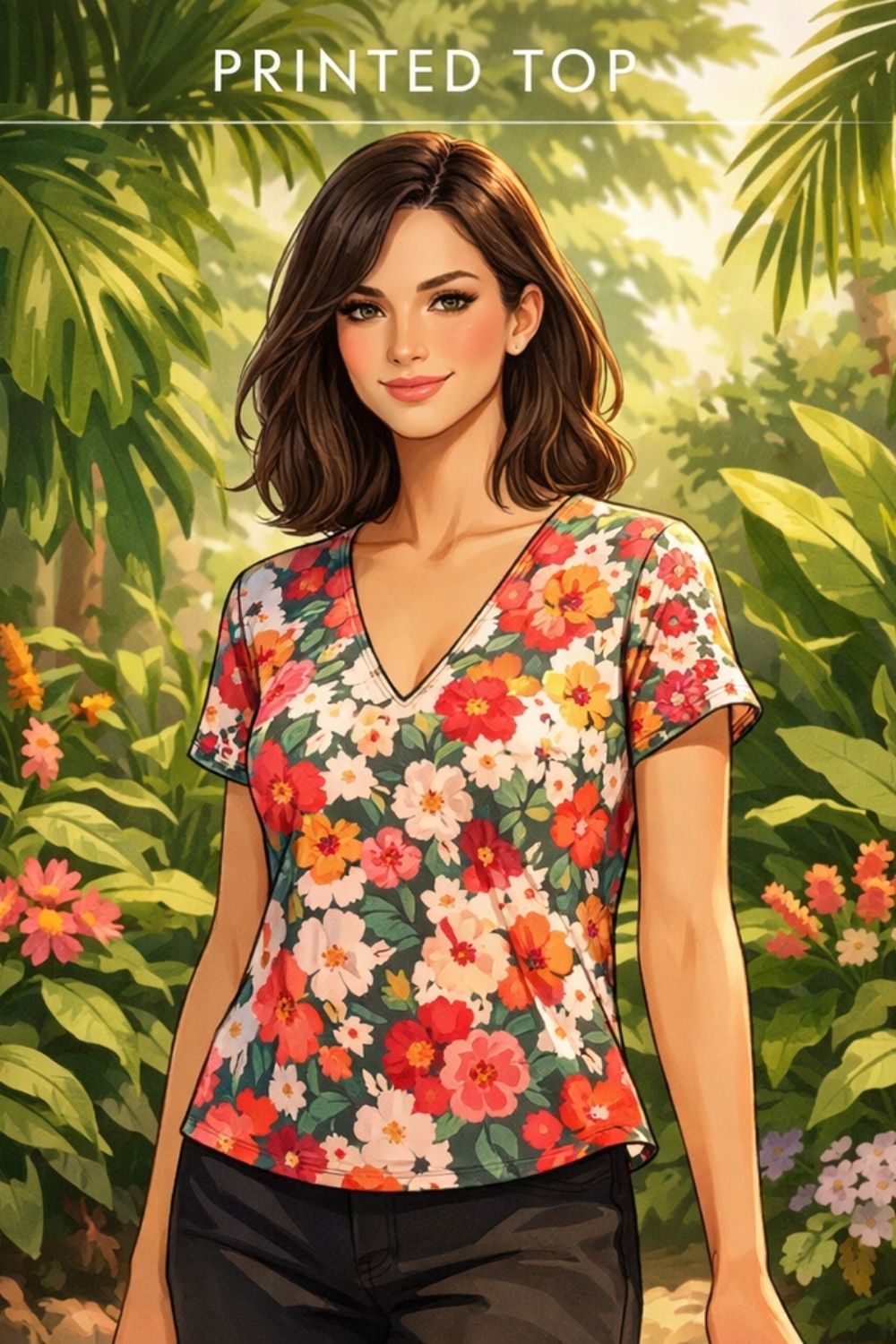
      Printed Top

      printed top example

      Screen, digital, or block print patterns β€” florals, abstracts, graphics, geometric, animal prints. Print is the most immediate visual signal a top sends. Our guide to print types covers how print scale interacts with proportion.

      DesignSurface pattern applied via screen, digital, or block printing
      SeasonAll seasons
      Best ForCasual to smart-casual, most occasions
    1. 153

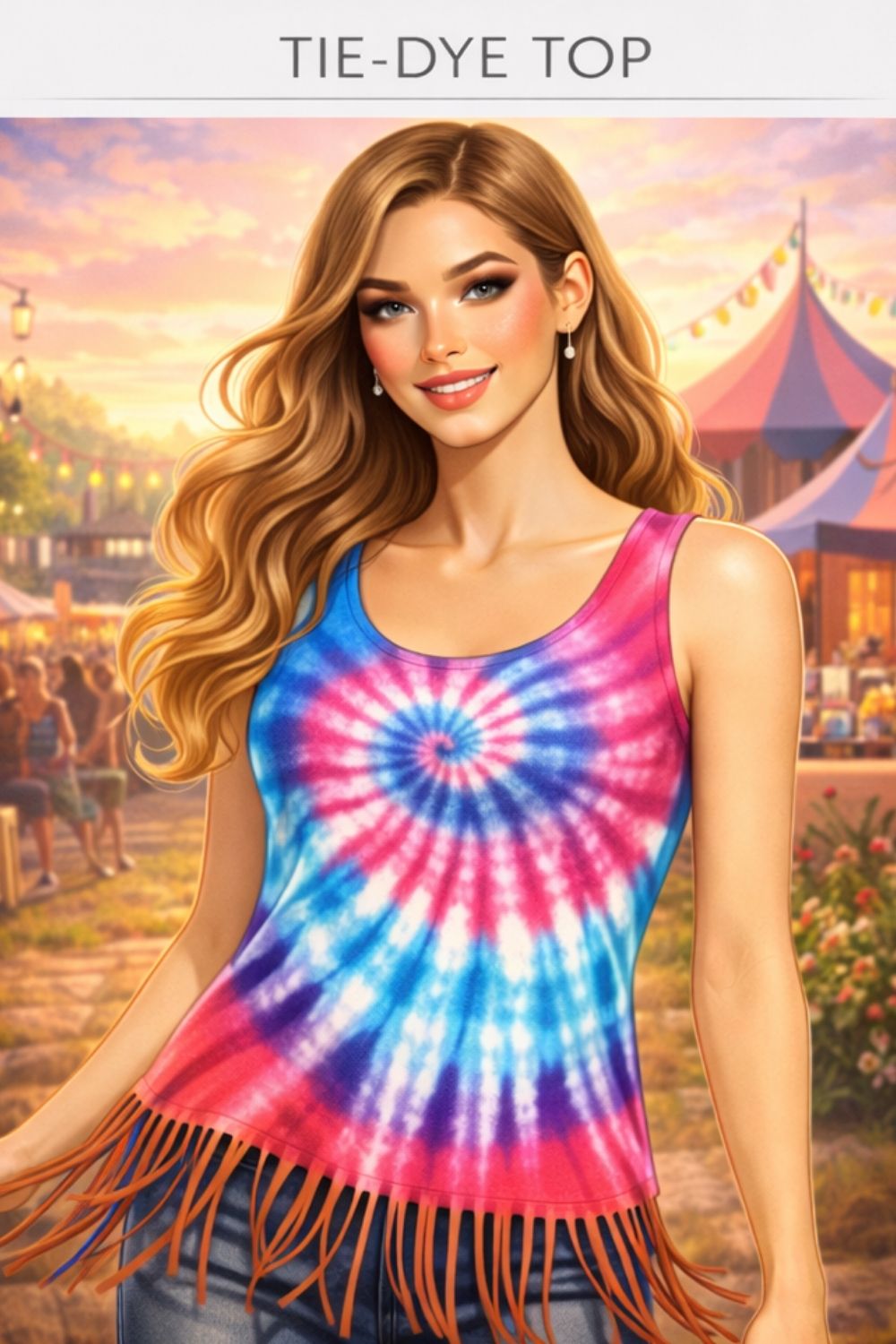
      Tie-Dye Top

      tie dye top example

      Fabric folded, bound, and dyed in sections β€” creating vivid color spirals or shibori patterns. The 2020–2023 resurgence introduced a generation to shibori-style hand-dyeing as a craft alongside a trend β€” which gave it more staying power than typical trend cycles.

      DesignSection-dyed color patterns, spirals or shibori geometric marks
      SeasonSpring / Summer
      Best ForCasual, festival, beach, boho styling
    2. 154

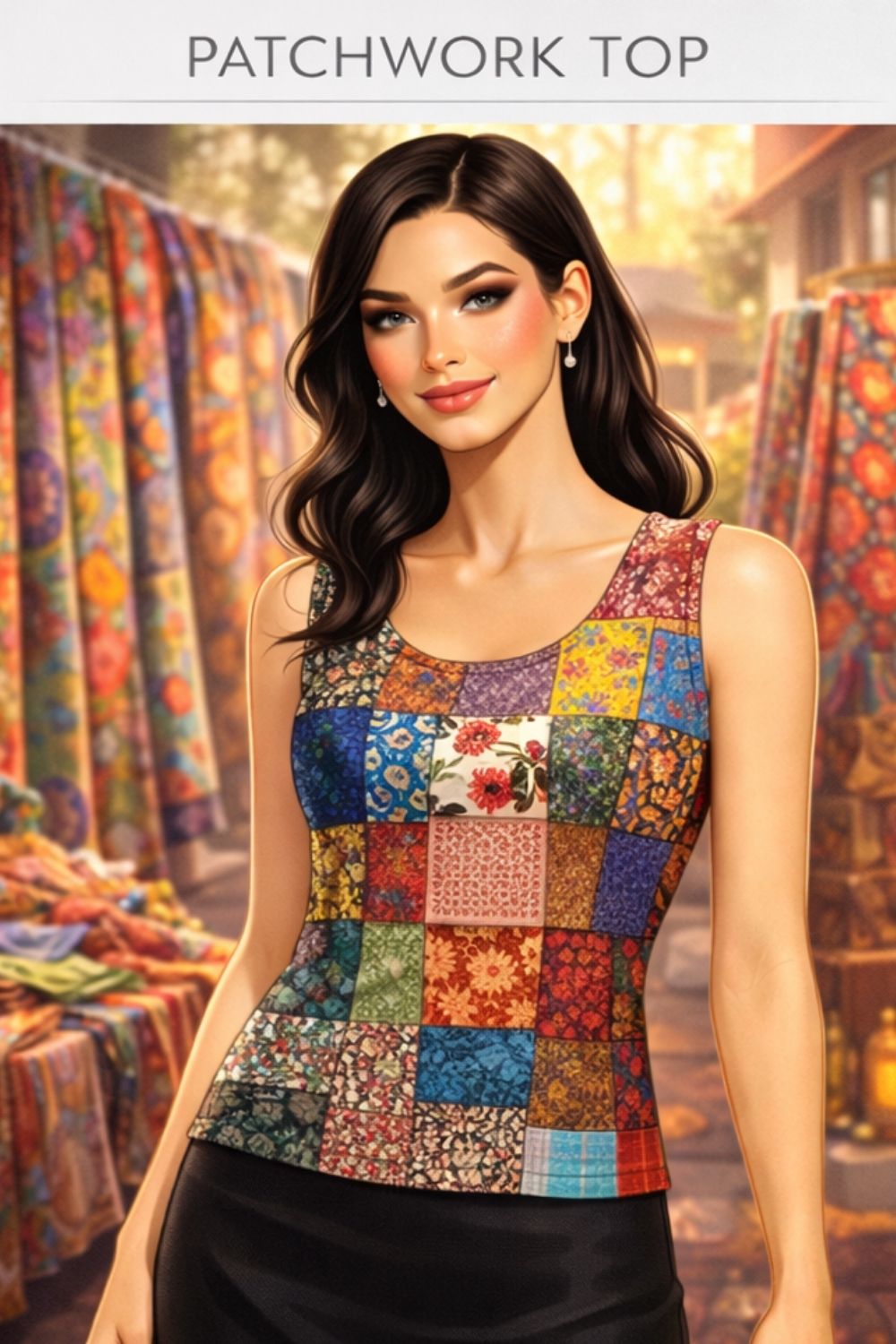
      Patchwork Top

      patchwork top example

      Pieced together from different fabric panels β€” artisan, eclectic. Roots in both American quilt traditions and South Asian kantha textile techniques. The contemporary patchwork top draws from both histories simultaneously.

      DesignPieced different fabric panels, varied color and texture blocks
      SeasonAutumn / Winter / Spring
      Best ForBohemian styling, festival, artisan aesthetic
    1. 155

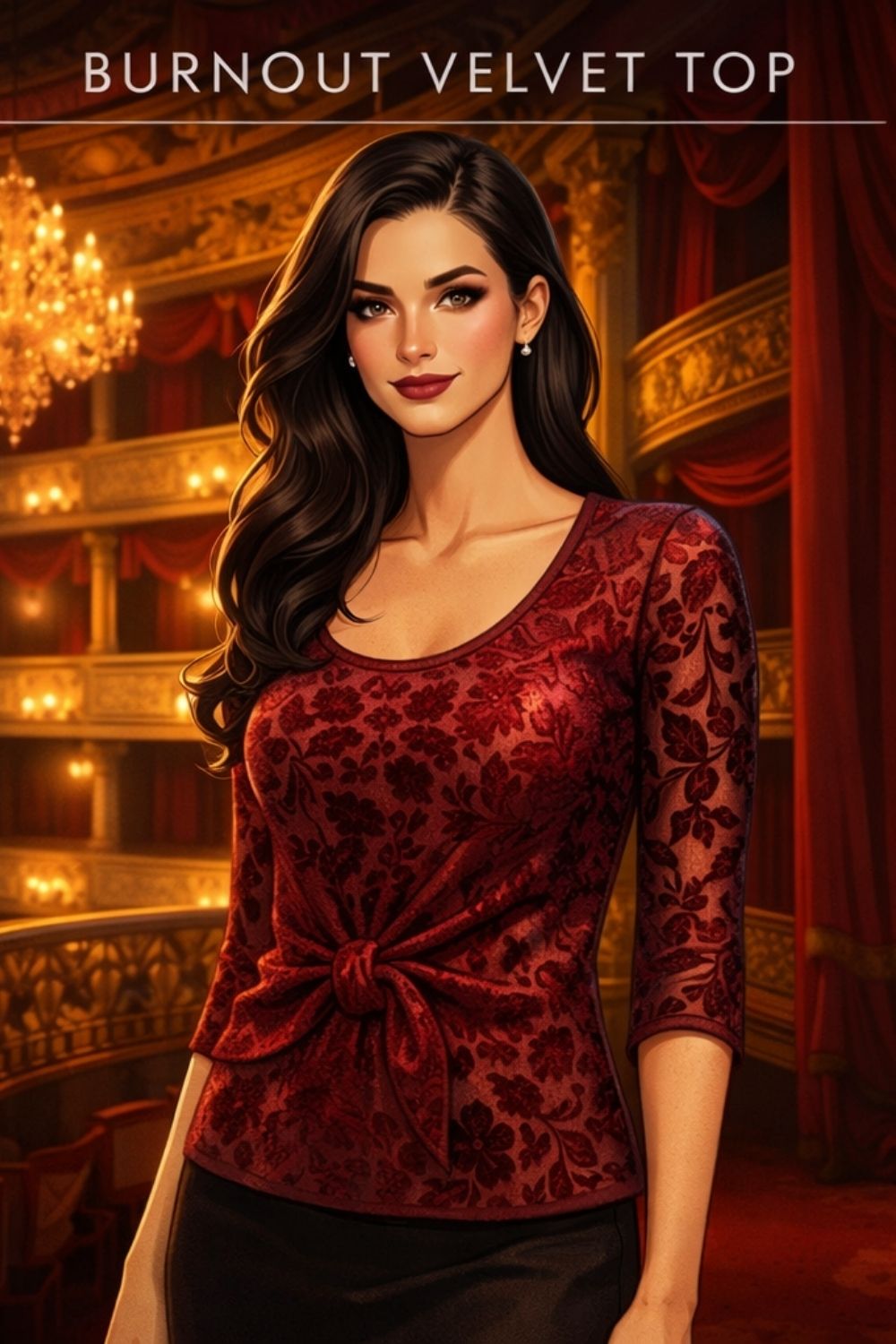
      Burnout / Velvet DevorΓ© Top

      burnout or velvet devore top example

      Pattern created by selectively dissolving the fabric pile β€” leaving some areas opaque (velvet) and others sheer. An inherently luxurious visual effect: solid and translucent areas in the same piece of fabric. Difficult to replicate in lower-cost production, which is why it tends to remain a premium garment category.

      DesignSelectively dissolved pile creating sheer-and-opaque contrast pattern
      SeasonAutumn / Winter
      Best ForEvening, formal, fashion-forward occasions
    Stylist Insight

    Embellishments perform very differently in photographs vs. in real life. Sequin tops and beaded constructions are extraordinarily photogenic β€” engineered specifically for the low-light, high-movement environments where photos happen. But a perfectly pintucked silk blouse or a precisely smocked peasant top communicates craftsmanship that cameras barely register. Wear the details that serve the context you’re actually in β€” not the one you’re imagining for a grid post.

    Frequently Asked Questions β€” Types of Tops for Women

    1. Q

      What is the difference between a blouse and a shirt?

      A blouse is a soft, often decorative top β€” looser in construction, frequently with ruffles, draping, or embroidery, and generally made in lighter fabrics like silk, chiffon, or georgette. A shirt is a structured, tailored top with a collar and button placket, typically in woven cotton or a blend. The key distinction is structural stiffness: a shirt holds its shape independently; a blouse drapes and moves.

    2. Q

      What is the most versatile type of top for a woman’s wardrobe?

      The wrap top is arguably the most functionally versatile construction in women’s fashion β€” the adjustable tie accommodates fit variation, it transitions between casual and smart-casual depending on fabric and styling, and the wrap neckline tends to work across a range of body proportions. Close second: the silk or satin camisole, which functions as an inner layer, a standalone evening top, and an outerwear piece depending on context.

    3. Q

      What are the different types of crop tops?

      Crop tops are a length category applied to many construction types β€” you can have a cropped T-shirt, cropped blouse, cropped corset, cropped hoodie, or cropped knit. The construction determines styling context; the crop length is a modifier on top of it.

    4. Q

      What seasons work best for puff sleeve tops?

      Puff sleeve tops in heavier fabrics β€” wool, tweed, structured cotton β€” are best in autumn and winter. Lightweight puff sleeves in chiffon or georgette work well in spring and transitional weather. Volume sleeves including puff constructions remain among the top recurring silhouette themes, suggesting that investment in a quality construction is likely to remain relevant beyond a single season.

    1. Q

      What top types work best for office wear?

      The strongest office top constructions are: the wrap top (adjustable, polished, V-neckline), the button-down shirt (reliable formality, layering versatility), the princess line top (elegant, structured, defined without being tight), and a well-made fitted blouse in a muted or neutral fabric. What makes a top office-appropriate isn’t a single rule β€” it’s the combination of structured construction, appropriate neckline depth, and fabric quality.

    2. Q

      What is athleisure vs. activewear in tops?

      Activewear tops are performance-engineered β€” moisture-wicking, compression-rated, or specifically designed for physical activity. Athleisure tops are athletic in aesthetic but designed for casual daily life outside the gym. The visual vocabulary overlaps; the technical engineering does not.

    3. Q

      What fabrics are best for summer tops?

      Linen, cotton, chiffon, georgette, and mesh are the strongest summer fabrics β€” all either breathable or sheer enough to manage heat effectively. Silk is technically temperature-regulating and works in summer at a more elevated occasion level. Avoid heavy synthetics in high heat; they trap moisture rather than releasing it.

    4. Q

      How do I choose the right neckline for my face shape?

      Necklines interact with face shapes through visual lines and focal point placement β€” but the relationship is more nuanced than prescriptive rules suggest. Generally: boat and wide square necklines tend to horizontally broaden the upper frame, which many find complements narrower face shapes. V-necks and scoop necks create vertical lines that may suit rounder face shapes by adding visual length. But neckline choice involves the whole outfit in context β€” not the face in isolation.

    Conclusion: Fashion Vocabulary Is Power

    One hundred and fifty-five types. Eight classification systems. Design, season, and best-use context for every single entry.

    What this guide does, ultimately, is hand you a vocabulary. And vocabulary in fashion is surprisingly powerful β€” not in an elitist sense, but in the practical sense that knowing exactly what you’re looking for makes you a more confident, more precise, and more satisfied shopper. The difference between β€œI want something dressy but not too formal, with a bit of volume at the sleeve” and being able to search for β€œbishop sleeve blouse in georgette” is enormous. One ends in frustration; the other ends in the right garment.

    The categorization framework here β€” structure, length, sleeve, neckline, fit, fabric, occasion, design detail β€” is the same framework professional stylists and fashion buyers use to navigate collections. It’s not arcane knowledge. It’s organized thinking applied to a category that usually gets treated as pure impulse buying.

    Key Takeaways
    • 155 types of women’s tops exist across 8 distinct classification systems β€” each top has a Design identity, a Season context, and a Best For purpose.
    • Construction type is the foundational identity of any top β€” all other variables (length, sleeve, fabric, neckline) are modifiers layered on top of construction.
    • β€œCrop top” is a length category, not a construction type β€” it can apply to any structural top.
    • Sleeve construction is one of the most historically rich areas in fashion design β€” many names (bishop, juliet, gigot) reference origins that explain the construction logic.
    • Fabric determines drape, occasion register, and care requirements β€” a principle well documented in fashion education resources like Vogue's fabric guide. The most underrated styling skill is fabric literacy.
    • The wrap top and bodysuit offer the highest cross-season, cross-occasion versatility of any top constructions.
    • Necklines direct visual attention more powerfully than almost any other garment feature β€” choosing a neckline is choosing a focal point.
    • Body-neutral shopping starts with fit language: seek construction that creates the visual effect you want, not language about β€œhiding” or β€œminimizing” body features.
    • Trend longevity varies dramatically β€” across top types. Classic constructions β€” the wrap top, the fitted blouse, the basic tee β€” outlast seasonal pieces by years or decades, a pattern consistently supported by Business of Fashion's analysis of wardrobe lifecycle and resale value data.

    Sources & Further Reading

    This guide was compiled through analysis of fashion history records, industry glossaries, and garment construction references. All classification decisions are editorial. Last reviewed: March 2026.
  • 54 Different Types of Jumpsuits for Women (With Pictures)

    54 Different Types of Jumpsuits for Women (With Pictures)

    There’s something almost magical about pulling on one garment and feeling completely, effortlessly dressed. No agonizing over whether the top matches the trousers. No hemline math. Just β€” done. That’s the jumpsuit’s quiet superpower, and it’s why this single-piece silhouette has gone from oil-refinery workwear to runway staple to genuine wardrobe cornerstone within a century of fashion history.

    But here’s what most style guides completely miss: jumpsuits aren’t one thing. They’re dozens of things. Wide-leg or skinny-fit. Linen or velvet. Strapless or turtleneck. Bohemian or boardroom. The category is genuinely vast β€” and understanding the differences between styles is what separates a frustrating purchase from a piece you reach for on autopilot.

    This guide covers 54+ distinct jumpsuit types, organized across 8 real categories: by silhouette, length, neckline, sleeve style, fit, fabric, occasion, and aesthetic. Whether you’re building a capsule wardrobe or just trying to figure out which cut actually works for your lifestyle β€” you’ll find what you need here.

    πŸ‘— What Exactly Is a Jumpsuit β€” And Why Does Categorization Matter?

    πŸ‘—
    The Definition

    A jumpsuit is a one-piece garment that combines a top and trousers (or shorts) into a single connected unit. The defining feature is that the upper and lower halves are sewn together β€” which distinguishes it from a co-ord set or a two-piece suit. Simple concept, wildly diverse execution.

    ✈️

    Historically, the design has roots in early 20th-century aviator and parachutist gear β€” practical, utilitarian, nothing particularly glamorous about it. What changed? Fashion houses started playing with structure, fabric, and proportion. By the 1970s, Halston and Yves Saint Laurent had turned the jumpsuit into an icon of sleek modernity. Today’s versions borrow from all of that history while pushing into entirely new territory.

    Why does it matter to categorize them? Because “I want a jumpsuit” without further detail is like saying “I want shoes.” The occasion, fabric, silhouette, and fit all determine whether something actually works in your life. Getting specific is the whole point.

    πŸ“š 8 Categories Covered
    πŸ‘–
    Silhouette
    πŸ“
    Length
    πŸ’Ž
    Neckline
    πŸ§₯
    Sleeve
    πŸ“
    Fit
    🧡
    Fabric
    πŸŽ‰
    Occasion
    ✨
    Aesthetic

    54+ Different Types of Jumpsuits for Women

    πŸ‘– πŸ… BY LEG STYLE & SILHOUETTE

    The most defining characteristic of any jumpsuit

    The leg silhouette is arguably the most defining characteristic of any jumpsuit. It shapes the entire visual story β€” from how tall you appear to what footwear actually works.

    1

    πŸ‘– Wide-Leg Jumpsuit

    wide-leg jumpsuit example

    Wide-leg jumpsuits are having a moment that doesn’t seem to be ending anytime soon. The silhouette β€” fitted or relaxed through the torso, dramatically flared from hip to hem β€” creates a long, uninterrupted vertical line that reads as confident and effortless in equal measure.

    The construction typically features a higher-rise waistband, which anchors the volume below and creates visual proportion. What works beautifully here is the contrast: structure on top, fluidity below.

    βœ…
    Pairs Well With

    Platform sandals, block-heel mules, structured totes.

    ⚠️
    Avoid

    Flat ballet pumps with this cut β€” they can visually shorten the leg line. A slight heel, even just a few centimeters, restores the proportional balance the silhouette is designed for.

    πŸ’¬ Stylist Insight

    In real wardrobe consultations, wide-leg jumpsuits consistently come up as the style women regret not buying sooner. The key is fit through the shoulders β€” everything else can be tailored.

    2

    πŸ“ Straight-Leg Jumpsuit

    straight-leg jumpsuit example
    🌟 Most Versatile Entry

    Quietly the most versatile entry in this entire list. The straight-leg cut runs cleanly from hip to hem without tapering or flaring β€” which is exactly why it transitions so effortlessly between contexts.

    Wear it Monday morning with loafers for a work meeting. Add a heel and a silk scarf Friday evening. The silhouette doesn’t fight you on either occasion. Clean lines, minimal fuss. This is the jumpsuit equivalent of a good white shirt.

    🧡 Best fabrics: Linen, cotton twill, ponte β€” fabrics with enough body to hold the straight line without going stiff.
    3

    πŸ”₯ Skinny / Fitted-Leg Jumpsuit

    skinny jumpsuit example

    Slim through the entire leg, from hip to ankle. The silhouette is streamlined, modern, and tends to lean toward a more polished aesthetic. Often constructed in ponte, stretch fabric, or a cotton-lycra blend to allow movement without losing shape.

    ✨ When It Really Shines

    Evening events, creative workplaces, fashion-forward casual styling.

    A quick note on fit: because the fabric is close to the body throughout, quality of construction matters significantly here. Look for reinforced seams at stress points β€” specifically the crotch seam and inner thigh.

    4

    πŸ•Ί Flared / Bell-Bottom Jumpsuit

    flared jumpsuit example
    πŸ’« 1970s Energy

    This one carries unambiguous 1970s energy. The leg sits straight through the thigh and then opens dramatically below the knee β€” a cut that was revolutionary when it first appeared and remains genuinely striking today.

    Flared jumpsuits tend to photograph beautifully in motion, which is probably why they’ve found a second home in the age of social media. The fabric choice matters more here than with other cuts β€” something with natural drape (crepe, viscose, light denim) lets the flare move properly, while stiffer fabrics can make it look stiff or theatrical.

    πŸ‘  Footwear note: Block heels work especially well because the heel is visible beneath the hem, but the width matches the visual weight of the flare.
    5

    🩳 Culotte / Cropped-Leg Jumpsuit

    culotte jumpsuit example

    The pants end somewhere between mid-calf and just below the knee β€” a placement that feels distinctly modern. It’s not trying to be shorts, and it’s not trying to be full-length trousers. It’s its own thing, and that confidence is part of its appeal.

    This cut pairs equally well with flats and heels, which gives it unusual occasion flexibility.

    🌸
    Summer Garden Parties
    πŸ’Ό
    Smart-Casual Workplace
    ✈️
    Travel Days
    6

    🎭 Palazzo Jumpsuit

    palazzo jumpsuit example
    ✨ Maximum Drama

    If the wide-leg is confident, the palazzo is theatrical. We’re talking ultra-wide, sweeping, floor-grazing volume from the hip down. The palazzo cut originated as a loungewear style in the 1960s and 70s β€” Pucci, Halston, and later various resort collections all played in this territory.

    Modern palazzo jumpsuits often feature lightweight, fluid fabrics β€” georgette, chiffon, satin β€” that create that sense of movement and drama. They tend to be occasion-forward pieces rather than everyday go-tos.

    🧡 Georgette πŸ‘— Chiffon ✨ Satin

    πŸ“ πŸ…‘ BY LENGTH

    Length changes everything

    Length changes everything. The same jumpsuit design in a different length can read as entirely different garments β€” different occasions, different energy, different footwear requirements.

    Length Hemline Placement Best Occasion Key Footwear
    πŸ‘– Full-Length Ankle/floor All occasions Heels, loafers, sneakers
    🩳 Cropped Above ankle Summer, casual Sandals, mules
    🩱 Short/Romper Upper thigh Casual, beach, resort Flat sandals, sneakers
    πŸ‘— Midi-Length Knee to ankle Events, smart-casual Block heels, wedges
    7

    πŸ‘– Full-Length Jumpsuit

    full-length jumpsuit example
    🌟 The Foundational Length

    The foundational length. Pants reach the ankle or floor β€” creating the clean, uninterrupted vertical line that makes jumpsuits so visually powerful. Almost any occasion, almost any setting. This is the length that earns the garment its reputation.

    8

    🩳 Cropped Jumpsuit

    cropped jumpsuit example

    The pants stop just above the ankle β€” not dramatically, but enough to reveal the ankle and draw attention to footwear. A small detail that makes a meaningful visual difference. If you’re choosing shoes you love, this length shows them properly.

    πŸ‘  Style tip: This length is perfect for showcasing statement footwear β€” mules, strappy sandals, or your favorite designer sneakers.
    9

    🩱 Short Jumpsuit / Romper

    short jumpsuit example

    Technically, many style references categorize the short-legged version as a romper rather than a jumpsuit β€” and there’s legitimate reason for that distinction. The construction is similar, but the shorts leg changes the occasion range significantly: resort wear, summer festivals, beach days, casual weekends.

    It’s a genuinely different aesthetic from the longer versions β€” more playful, more relaxed, less concerned with formality.

    πŸ–οΈ Resort Wear πŸŽͺ Summer Festivals 🌊 Beach Days β˜€οΈ Casual Weekends
    10

    πŸ‘— Midi-Length Jumpsuit

    midi jumpsuit example

    The leg falls somewhere between the knee and the ankle. That middle-ground placement is exactly what makes it compelling β€” it’s more covered than a cropped cut, more interesting than full-length, and the hemline creates a natural visual focus that pulls toward the shoe.

    Midi-length jumpsuits tend to skew slightly more formal or occasion-ready than their shorter counterparts, especially in silk, satin, or structured fabric.

    ✨ Silk πŸ‘— Satin πŸ“ Structured Fabric

    πŸ’Ž πŸ…’ BY NECKLINE & TOP STYLE

    The frame for your face

    The neckline is the frame for your face β€” and it changes everything. This is often the first thing people notice about a jumpsuit, well before the leg cut or fabric registers.

    πŸ’¬ Stylist Insight

    Most people pick a neckline based on how it looks on the hanger. The better approach? Think about what you’ll wear underneath (if anything), what kind of neckwear you reach for most, and whether you typically run warm or cold. A strapless jumpsuit that requires constant adjusting is styling nobody has time for.

    11

    ✨ Strapless Jumpsuit

    strapless jumpsuit example
    πŸ’« Bold & Clean

    Bold, clean, and unambiguously occasion-forward. The construction requires careful attention to internal boning or banding β€” because without a shoulder strap to anchor the garment, the bodice needs structural support built in.

    The strapless neckline is particularly striking in evening contexts: formal dinners, cocktail parties, weddings. Versions with open or structured backs add an extra dimension of elegance.

    πŸŽ‰ Perfect For

    Formal dinners, cocktail parties, weddings, evening galas

    12

    πŸ’« Off-Shoulder Jumpsuit

    off-shoulder jumpsuit example
    🌸 Romantic & Soft

    A permanently popular style that draws the eye across the collarbone and toward the face β€” without the structural complexity of a true strapless construction. The fabric typically folds or drapes just below the shoulder line, creating a soft, romantic quality.

    Off-shoulder jumpsuits work across a wide occasion range β€” cocktail parties, summer evenings, smart-casual events.

    The key styling detail: jewelry. A clean statement necklace or ear-grazing earrings (not both) tends to work better than competing layers of accessories.

    13

    πŸŽ€ Halter-Neck Jumpsuit

    halter-neck jumpsuit example

    Fastens at the back of the neck β€” either with a tie, hook-and-eye closure, or a keyhole detail β€” leaving the shoulders and upper back bare.

    The halter silhouette is particularly well-suited to warmer months and evening occasions. It also tends to work beautifully with statement earrings, since the open neck area creates a natural space for jewelry to read clearly.

    πŸ’Ž Pro tip: Statement earrings shine with this neckline β€” the open neck area is your canvas.
    14

    πŸ’Ž V-Neck Jumpsuit

    v-neck jumpsuit example
    ⭐ Most Reliable & Flattering

    Consistent across trends, seasons, and body types β€” the V-neckline remains one of the most reliably flattering and versatile jumpsuit necklines available. The construction creates a natural focal point at the center chest and tends to elongate the visual line of the upper body.

    V-neck depth varies significantly: a shallow V reads as casual and everyday-appropriate, while a deeper plunge tips toward evening territory. The distinction matters when building a wardrobe around this style.

    15

    πŸ“ Square-Neck Jumpsuit

    square-neck jumpsuit example
    πŸ“Έ Photographs Beautifully

    The square neckline β€” wide, geometric, and structured β€” creates a distinctly modern aesthetic that photographs particularly well. Wide shoulder straps paired with a square neckline and an elasticated waist is a combination that has dominated warm-weather fashion seasons for several years running.

    Construction note: Look for proper strap width β€” very thin straps on a square neckline can feel structurally flimsy, while substantial straps (an inch or more) give the silhouette the architectural quality it’s designed for.

    16

    ⚑ One-Shoulder Jumpsuit

    one-shoulder jumpsuit example
    ✨ Asymmetrical & Dynamic

    Asymmetrical. Considered. A single strap on one side and a bare shoulder on the other β€” the visual imbalance is intentional, and when executed well, it creates a genuinely dynamic silhouette.

    One-shoulder styles tend to look particularly strong in minimalist or solid fabrics, where the asymmetry can speak for itself without pattern competing for attention. Detachable strap options offer day-to-night flexibility that makes this style especially practical.

    Best in: Minimalist solids, solid colors that let the asymmetry be the star

    17

    πŸ”₯ Plunge / Deep-V Jumpsuit

    plunge jumpsuit example
    πŸ’« Unapologetically Confident

    The neckline descends well past the sternum β€” a bold, unapologetically confident choice. The key difference between a plunge neckline that reads as “chic” versus “costume” almost always comes down to fabric quality and fit precision. A plunge in fluid satin cut to proper proportions is entirely different from the same neckline in a cheap jersey.

    Practical note: Securing options matter here β€” fashion tape, a low-cut bra or adhesive cups, or built-in cups are worth considering before buying.

    18

    🧣 Turtleneck Jumpsuit

    turtleneck jumpsuit example
    ❄️ Sleek & Cozy

    The high-neck, close-fitting opposite end of the neckline spectrum. Cozy, sleek, and particularly strong in colder-weather styling contexts. Ribbed knit and velvet are the fabrics most associated with this style β€” both work beautifully at the construction level.

    What makes turtleneck jumpsuits interesting is the visual coherence they create: because the neck, torso, and legs are all one continuous garment, the elongating effect is particularly pronounced.

    🧢 Ribbed Knit ✨ Velvet
    19

    πŸ’• Bardot (Sweetheart) Jumpsuit

    bardot jumpsuit example
    🎬 1950s-60s Inspired

    Named for Brigitte Bardot β€” the off-shoulder, neckline-forward style she made iconic in the 1950s and 60s. A modern Bardot jumpsuit typically combines a sweetheart or straight-across neckline with an off-shoulder or low-set sleeve, creating a slightly retro but undeniably feminine silhouette.

    Wide-leg versions of the Bardot jumpsuit in particular have had significant fashion-press traction in recent seasons.

    Perfect pairing: Strappy stilettos and minimal, statement-scale jewelry

    πŸ§₯ πŸ…“ BY SLEEVE STYLE

    Season range, formality, and flexibility

    Sleeve design determines a jumpsuit’s season range, formality level, and overall styling flexibility more than most people initially realize.

    Sleeve Style Best Season Formality Layering
    β˜€οΈ Sleeveless Spring/Summer Casual to Formal High (layer easily)
    🌸 Short Sleeve Spring/Summer/Fall Casual to Smart Medium
    πŸ‚ Long Sleeve Fall/Winter All levels Low (already covered)
    ✨ Puff Sleeve Year-round Smart to Formal Low
    πŸ’« Cold-Shoulder Spring/Summer/Fall Casual to Smart Medium
    20

    β˜€οΈ Sleeveless Jumpsuit

    sleeveless jumpsuit example
    🌟 Most Versatile Option

    The most versatile sleeve (non-sleeve?) option in the category. A well-cut sleeveless jumpsuit can transition across seasons β€” add a turtleneck underneath for winter layering, wear it clean through spring and summer, throw a blazer over the top for autumn. It’s genuinely the most adaptable construction option.

    ❄️ Winter: Layer turtleneck 🌸 Spring: Wear clean β˜€οΈ Summer: Solo πŸ‚ Autumn: Add blazer
    21

    🌸 Short-Sleeve Jumpsuit

    short-sleeve jumpsuit example
    😌 Relaxed & Everyday

    A relaxed, every-day style that sits comfortably between fully bare arms and fully covered. Short-sleeve jumpsuits tend to lean casual β€” cotton, linen, or jersey constructions for mild-weather wear.

    ✨ When It Works Best

    Weekend dressing, casual Fridays, warm-climate travel.

    22

    πŸ‚ Long-Sleeve Jumpsuit

    long-sleeve jumpsuit example

    The full-coverage option β€” and not just for winter. A long-sleeve jumpsuit in lightweight linen works beautifully in humid summer climates where sun protection matters. The same cut in ponte or velvet becomes a cooler-weather staple.

    πŸ‘” Tailored Version

    Fitted through the arm, structured at the shoulder β€” crosses into genuinely formal territory

    πŸ›‹οΈ Relaxed Version

    Jersey or bamboo fabric β€” closer to elevated loungewear

    23

    ✨ Puff-Sleeve Jumpsuit

    puff-sleeve jumpsuit example
    πŸ’« Statement Sleeves

    Statement sleeves change the entire character of a jumpsuit. Puff sleeves β€” gathered or pleated volume at the shoulder, tapering to a fitted cuff β€” add a sense of occasion and movement that few other design details achieve as effectively.

    Construction detail: The cuff is what separates a puff sleeve that looks intentional from one that looks accidental. A fitted, structured cuff at the wrist anchors the volume and gives the eye somewhere to land. Without it, the sleeve can look unfinished.

    24

    πŸ’« Cold-Shoulder Jumpsuit

    cold-shoulder jumpsuit example
    πŸ“Έ Editorial & Modern

    Cutouts at the shoulder point β€” leaving a gap between sleeve and bodice. It’s a detail that adds visual interest without the full commitment of a sleeveless or strapless design. Flirty and modern, with a slightly editorial quality.

    🌸 Works particularly well in summer and early fall, where the small cutout provides ventilation without the jumpsuit reading as “warm weather only.”

    πŸ“ πŸ…” BY FIT & STRUCTURE

    Occasion range and styling versatility

    How a jumpsuit fits through the body β€” not just the leg β€” defines its occasion range and styling versatility entirely.

    25

    πŸ’Ό Tailored / Structured Jumpsuit

    tailored jumpsuit example
    🏒 Workplace Hero

    This is the workplace hero of the jumpsuit world. Tailored construction means clean seam lines, precise darts at the waist, structured fabric (think twill, poplin, or ponte), and a fit that holds its shape through a full day of wear.

    A well-tailored jumpsuit can absolutely hold its own in professional contexts β€” and in many modern offices, it reads as more polished than a dress because of its visual decisiveness. The key is fabric weight and finish: matte fabrics in neutral tones (black, navy, camel, ivory) consistently perform better in formal settings than textured or patterned options.

    🧡 Twill πŸ‘” Poplin πŸ“ Ponte
    26

    😌 Relaxed / Oversized Jumpsuit

    relaxed jumpsuit example
    ✨ Effortless Comfort

    The opposite intention entirely. Where the tailored jumpsuit is precise, the relaxed version is deliberately loose β€” through the torso, the arms, and often the leg. Think drawstring waist, easy fabrication, zero structural pressure.

    Belt it for shape if you want it. Leave it loose for maximum comfort. The versatility of the relaxed jumpsuit is precisely that it doesn’t demand anything of you.

    27

    πŸ”₯ Bodycon / Form-Fitting Jumpsuit

    bodycon jumpsuit example
    πŸ’« Unapologetically Intentional

    Hugs the body through every contour. Typically constructed in jersey, velvet, spandex-blend, or another stretch fabric that allows movement while maintaining close fit. The visual effect is unapologetically intentional β€” this is a piece you wear when you want your presence in the room to register immediately.

    Construction quality check: Look for four-way stretch fabric (stretches both horizontally and vertically), reinforced seams, and a lining at minimum through the torso. A bodycon jumpsuit with cheap construction will stretch out, sag, or lose shape quickly.

    28

    πŸŽ€ Wrap Jumpsuit

    wrap jumpsuit example

    The wrap construction brings adjustable fit into the equation β€” a significant practical advantage. The front panels cross over each other and typically tie at the waist, allowing the wearer to customize how snug or relaxed the fit feels. This is particularly valuable through the waist and torso.

    Wrap jumpsuits tend to be forgiving across a wider range of sizes than standard construction β€” which is part of why they’ve maintained such consistent popularity since Diane von Furstenberg first popularized the wrap silhouette in the 1970s.

    🧡 πŸ…• BY FABRIC & MATERIAL

    Movement, season, and longevity

    Fabric doesn’t just affect how a jumpsuit looks β€” it determines how it moves, when you can wear it, how it wears in, and how long it lasts.

    πŸ’¬ Stylist Insight

    In wardrobe editing work, fabric choice is consistently the area where people make the most expensive mistakes. A beautiful silhouette in cheap fabric will always look cheaper than a simpler silhouette in quality material. When in doubt β€” touch it. If it doesn’t feel good in your hands, it’s not going to feel good on your body.

    πŸ“‹ Fabric Guide: Quick Reference

    Fabric Season Weight Best Occasion Care
    🌿 Linen Spring/Summer Light Casual to Smart Medium
    🧡 Cotton/Jersey Year-round Light-Medium Casual Easy
    ✨ Satin/Silk Events Light-Medium Evening/Formal High
    🎭 Velvet Fall/Winter Heavy Evening/Formal High
    πŸ‘– Denim Year-round Medium-Heavy Casual to Smart Easy
    🌸 Chiffon/Lace Events Light Evening/Special High
    πŸ–€ Leather/Faux Fall/Winter Heavy Evening/Edgy Medium
    🧢 Knit/Ribbed Fall/Winter Light-Medium Casual/Lounging Easy
    ♻️ Sustainable Year-round Varies All occasions Varies
    29

    πŸ‘– Denim Jumpsuit

    denim jumpsuit example

    The denim jumpsuit has moved decisively from utilitarian workwear back into the fashion conversation. Chambray-weight denim for summer. Mid-weight classic blue or white denim for year-round wear. Dark-wash tailored denim for evening-adjacent occasions.

    Construction variations to know: The classic boilersuit cut. The fitted jacket-style top with straight-leg bottom. The overall-inspired relaxed version with bib front. Each reads quite differently.

    🧡 Chambray-weight πŸ‘– Classic blue πŸ–€ Dark-wash
    30

    🌿 Linen Jumpsuit

    linen jumpsuit example

    Linen is the summer fabric argument that doesn’t require defending. It breathes. It drapes well in warmer weights. It softens beautifully with wash and wear. Yes, it wrinkles β€” but the lived-in quality of good linen has its own appeal.

    Pair with: Flat leather sandals, woven bags, minimal gold jewelry. The less polished the accessories, the better linen tends to look.

    β˜€οΈ Summer essential 🩴 Sandals πŸ‘œ Woven bag
    31

    ✨ Satin / Silk Jumpsuit

    satin jumpsuit example

    Fluid, confident, and instantly occasion-ready. The way satin and silk move β€” following the body without clinging β€” creates a visual elegance that no other fabric quite replicates.

    Evening events, formal occasions, celebrations. This is a jumpsuit fabric that doesn’t need much help from accessories; the fabric does the work.

    Important buying note: True silk is expensive and requires careful maintenance. High-quality satin-weave polyester can be a strong alternative β€” look for 100% polyester with a GSM rating above 100 for weight and drape quality.

    32

    🎭 Velvet Jumpsuit

    velvet jumpsuit example

    Velvet carries an inherent formality β€” the depth of color, the soft sheen, the weight. A velvet jumpsuit in deep burgundy, midnight blue, forest green, or black is arguably one of the most evening-appropriate options in this entire guide.

    Works beautifully from October through February. In spring and summer, the weight can be overwhelming. Best construction: Look for velvet with some stretch for better movement and comfort through the evening.

    🍷 Burgundy πŸŒ™ Midnight blue 🌲 Forest green πŸ–€ Black
    33

    🧡 Cotton / Jersey Jumpsuit

    cotton jersey jumpsuit example

    The everyday workhorse. Cotton and jersey constructions prioritize comfort, breathability, and ease β€” which means the fit tends toward relaxed or casual rather than structured. Drawstring waists, relaxed legs, soft textures. These are the jumpsuits you reach for on low-effort days when you still want to look intentional.

    34

    🌸 Chiffon / Lace Jumpsuit

    chiffon lace jumpsuit example

    Delicate fabrics that create pieces with a distinctly feminine, occasion-forward quality. Chiffon layers beautifully β€” many chiffon jumpsuits feature a lining beneath with a floating outer layer that moves constantly.

    Lace jumpsuits add texture and pattern without color β€” which gives them a versatility that printed fabrics sometimes lack. A cream lace jumpsuit with pointed-toe heels is genuinely formal-event appropriate in a way that feels fresh rather than expected.

    35

    πŸ–€ Leather / Faux Leather Jumpsuit

    leather jumpsuit example

    Edgy, bold, and unapologetically statement-making. Leather or faux leather jumpsuits are not daily-driver pieces β€” they’re the “I know exactly what I’m doing tonight” option. The construction tends to be slim to fitted, as the material doesn’t have the drape to support wide-leg or palazzo silhouettes effectively.

    Faux leather quality note: Look for PU leather with a fabric backing rather than a purely plastic-feel construction. The backing improves durability, reduces cracking, and allows slightly better breathability.

    36

    🧢 Knit / Ribbed Jumpsuit

    knit jumpsuit example

    Soft, stretchy, cozy β€” and surprisingly versatile once you move past their loungewear reputation. A well-cut ribbed jumpsuit in a neutral tone can actually work for casual social occasions, not just at-home wear. Think elevated comfort dressing rather than strict loungewear.

    Best in fall and winter. Look for versions with a tighter rib gauge for better shape retention.

    37

    ♻️ Sustainable Fabric Jumpsuit

    sustainable fabric jumpsuit example

    This is a category that’s growing faster than most people realize. Organic cotton, bamboo, TENCEL (lyocell), recycled polyester, and hemp-blend fabrics are increasingly available in jumpsuit constructions that match conventional fabrics on quality and finish.

    What to look for: GOTS (Global Organic Textile Standard) certification for organic cotton. OEKO-TEX certification for non-toxic dyes and processes.

    🌱 Organic cotton πŸŽ‹ Bamboo ♻️ TENCEL πŸ”„ Recycled polyester

    πŸŽ‰ πŸ…– BY OCCASION

    The right jumpsuit for the right moment

    The same jumpsuit silhouette in different fabrics and finishes can cover almost every occasion on the spectrum. But choosing the right version for the context matters.

    Jumpsuit TypeCasualSmart-CasualWorkEveningTravelResort
    🧡 Casual Cottonβœ“β€”β€”β€”βœ“βœ“
    πŸ‘” Tailored Twillβ€”βœ“βœ“βœ“β€”β€”
    ✨ Satin/Silkβ€”β€”β€”βœ“β€”βœ“
    🌿 Linenβœ“βœ“β€”β€”βœ“βœ“
    πŸ‘– Denimβœ“βœ“β€”β€”βœ“βœ“
    πŸƒ Athleisureβœ“β€”β€”β€”βœ“β€”
    🎭 Velvetβ€”β€”β€”βœ“β€”β€”
    38

    β˜€οΈ Casual Everyday Jumpsuit

    casual jumpsuit example

    The honest truth about casual jumpsuits is that they succeed precisely because they remove a daily decision without sacrificing style. One piece. Done. Modern casual jumpsuits lean toward relaxed silhouettes, interesting textures, and wearable prints β€” offering a consistent aesthetic coherence.

    39

    πŸ’Ό Work / Office Jumpsuit

    work jumpsuit example

    Can you wear a jumpsuit to work? Short answer: yes. Longer answer: fabric, cut, and color do a significant amount of the contextual signaling that a suit would traditionally handle.

    A tailored jumpsuit in twill, poplin, or structured ponte, in a neutral or muted color palette, with minimal embellishment β€” reads as professional in the vast majority of modern office environments. Swap sandals for pointed-toe flats or low heels, and the transformation is immediate.

    Professional tailoring tip: If a jumpsuit fits perfectly through the shoulders but is slightly loose through the waist, a tailor can add darts or a stay-belt seam to improve the waist definition. This single alteration often makes a significant difference.

    40

    ✨ Evening / Formal Jumpsuit

    evening jumpsuit example

    Evening jumpsuits have evolved from “bold fashion choice” to legitimate occasion wear in their own right. A strapless velvet jumpsuit. A deep-V satin design with wide-leg trousers. A plunge-neck embellished version for a gala or formal dinner. These are pieces that can absolutely hold their own in formal contexts β€” and often read as more interesting than a traditional dress.

    41

    πŸƒ Athleisure / Active Jumpsuit

    athleisure jumpsuit example

    Built for movement, designed to look intentional. The athleisure jumpsuit genuinely does double duty β€” constructed from performance fabrics (moisture-wicking, four-way stretch, compressive knit) but cut in a way that works equally for a gym session and a coffee run afterward.

    The styling formula is predictably consistent: clean sneakers, minimal accessories, a structured bag that bridges active and casual.

    πŸ’¨ Moisture-wicking πŸ”„ Four-way stretch πŸ’ͺ Compressive knit
    42

    πŸ’’ Bridal / Wedding Guest Jumpsuit

    bridal jumpsuit example

    White, ivory, blush, champagne, or soft neutrals β€” the bridal jumpsuit has become a genuinely accepted alternative to the traditional wedding dress, and for good reason. It tends to be significantly more comfortable for extended wear, photographs beautifully, and often allows more confident movement throughout a full wedding day.

    For wedding guests, a jumpsuit in a sophisticated solid or subtle print reads as properly occasion-appropriate in most modern wedding settings. Just avoid anything too casual in fabric, and ensure the formality of the piece matches the event’s dress code.

    ✨ πŸ…— BY STYLE AESTHETIC

    Distinct visual identities

    Beyond occasion and construction, jumpsuits carry distinct aesthetic identities β€” some tied to specific subcultures, fashion movements, or historical moments.

    43

    πŸ”§ Boiler Suit

    boiler jumpsuit example

    The boiler suit has an honest working-class history β€” designed for factory and industrial workers in the early 20th century, with a utilitarian brief that had nothing to do with style. Its contemporary fashion iteration is considerably more self-aware.

    Today’s boiler suit borrows the relaxed, straight-cut silhouette and functional details (large pockets, snap or zipper closure, slightly boxy cut) but executes them in fashion fabrics β€” denim, cotton twill, linen, even checked wool for autumn. The resulting aesthetic is relaxed but deliberate.

    44

    πŸŽ’ Utility Jumpsuit

    utility jumpsuit example

    Multiple pockets. Belted waist. D-ring hardware. Cargo-inspired details. The utility jumpsuit takes workwear references further than the boiler suit, drawing more directly from military and construction-wear aesthetics.

    Why it works as fashion: The functional details create visual interest without pattern or embellishment. The pocket placement and hardware add structure and intention to an otherwise simple silhouette.

    45

    🌸 Bohemian Jumpsuit

    bohemian jumpsuit example

    Flowy fabrics, floral or folk-inspired prints, relaxed silhouettes, and a general sense of freedom. The bohemian jumpsuit leans into texture, movement, and layering in a way that most other styles actively avoid.

    The signature styling formula: Flat sandals (strappy, woven, or leather), layered jewelry (beaded, mixed metal, natural stone), and a woven bag. A floppy hat optional but consistently effective.

    πŸ‘’ Floppy hat πŸ‘‘ Flat sandals πŸ“Ώ Layered jewelry
    46

    🀠 Western-Style Jumpsuit

    western style jumpsuit example

    Fringe at the hem or sleeve. Embroidery in floral or geometric patterns. Bold leather belt with statement buckle. Snap-front closure. The western-style jumpsuit borrows heavily from American country and rodeo traditions, combining them with contemporary silhouettes.

    Footwear: Cowboy or western-inspired ankle boots are the obvious pairing β€” and they work. But a pointed-toe flat in a tan or cognac leather can be equally effective for a more refined take on the aesthetic.

    47

    ⬜ Minimalist Jumpsuit

    minimalist jumpsuit example

    Clean lines. Solid colors. No embellishment, no print, no fuss. The minimalist jumpsuit is a study in what happens when you strip a garment down to its most elemental construction quality β€” because when there’s nothing to distract from the silhouette and fabric, both need to be genuinely good.

    Black, white, camel, cream, slate grey, navy. A well-chosen minimalist jumpsuit in quality fabric is arguably the most wearable single piece in this entire guide.

    πŸ–€ Black ⬜ White πŸͺ Camel 🀎 Cream
    48

    🎨 Printed / Patterned Jumpsuit

    printed jumpsuit example

    Tropical florals. Abstract geometric prints. Animal prints with a modern editorial twist. Bold graphic stripes. Print jumpsuits have leaned toward maximalism β€” oversized florals, high-contrast color combinations, and abstract prints that read as statement art rather than background pattern.

    Styling the printed jumpsuit: Let the jumpsuit be the story. Solid, neutral accessories. Clean footwear. Minimal jewelry. One statement bag at most. When the garment is already doing significant visual work, the rest of the outfit’s job is to not compete.

    49

    βœ‚οΈ Cut-Out Jumpsuit

    cut out jumpsuit example

    Strategic cutouts β€” keyhole neckline, open back, peekaboo waist panels, asymmetric shoulder cutouts β€” add a dimension of intrigue without changing the fundamental one-piece structure. The placement matters enormously: a well-positioned cutout creates visual interest at a flattering focal point.

    Construction note: The best cut-out jumpsuits reinforce the cutout edges with binding or careful hemming. Raw-edged cutouts in woven fabrics will eventually fray.

    50

    πŸ’Ž Embellished Jumpsuit

    embellished jumpsuit example

    Lace appliquΓ©s. Delicate embroidery. Beading at the neckline or cuffs. Crystal embellishments along the shoulder or leg seam. Embellished jumpsuits represent the evening-wear end of the category β€” pieces that are genuinely occasion-specific and don’t try to be anything else.

    πŸ‘— πŸ…˜ BY SIZE CATEGORY

    Proportional fit considerations

    Jumpsuits are a category where proportional fit really matters β€” because unlike separates, you can’t size the top and bottom independently. Understanding size-specific construction considerations makes the buying process considerably more straightforward.

    πŸ’¬ Stylist Insight

    The most common fit issue with jumpsuits isn’t the legs or the waist β€” it’s the torso length. Standard jumpsuits are typically cut for a specific torso-to-leg ratio that doesn’t serve everyone. The good news: petite, tall, and extended-size retailers are now addressing this with dedicated proportional cuts. Look for these first rather than adapting a poorly-fitting standard size.

    51

    🐢 Petite Jumpsuit

    petite jumpsuit example

    Designed for women under 5’4″ β€” typically featuring shortened inseams, a shorter torso measurement, and proportionally adjusted sleeve lengths. The goal is to preserve the visual balance of the silhouette at a smaller scale: a wide-leg cut for a petite frame should still look wide-leg, not floor-dragging.

    52

    πŸ“ Tall Jumpsuit

    tall jumpsuit example

    Extended inseam length, longer torso measurements, and often slightly elongated sleeves for women 5’8″ and above. Finding a jumpsuit where the crotch seam actually sits at an appropriate point and the hem reaches the ankle can be genuinely challenging in standard sizing β€” which is why dedicated tall-fit categories matter.

    53

    πŸ‘— Plus-Size Jumpsuit

    plus size jumpsuit example

    Plus-size jumpsuits should β€” and increasingly do β€” deliver on the same silhouette range as standard sizing. Wide-leg, tailored, wrap-construction, satin evening styles, utility cuts. The category has expanded substantially, and the quality of construction and proportional fit within dedicated plus-size ranges has genuinely improved.

    What to look for: Consistent torso length (not just scaled-up standard sizing), thoughtful placement of waist seams, and fabrics with appropriate drape for the design intent.

    54

    🀰 Maternity Jumpsuit

    maternity jumpsuit example

    Stretchy, bump-accommodating fabric with comfortable cuts that grow with pregnancy. Maternity-specific jumpsuits typically feature elastic waistbands or empire-line construction, softer fabrics with four-way stretch, and slightly relaxed silhouettes that provide comfort throughout different stages of pregnancy.

    The range of styles available in maternity cut has expanded significantly β€” from casual jersey versions for everyday wear to more formal occasion options.

    πŸ”„ Jumpsuits vs. Similar One-Piece Styles

    What’s the actual difference?

    People frequently use “jumpsuit,” “romper,” “boilersuit,” and “playsuit” interchangeably. They’re not quite the same thing.

    TermKey DistinctionTypical Occasion
    πŸ‘– JumpsuitOne-piece, full-length or midi trousersAll occasions
    🩱 Romper / PlaysuitOne-piece with shortsCasual, summer, resort
    πŸ”§ BoilersuitRelaxed, workwear-inspired cut, often beltedCasual to smart-casual
    🩳 Dungarees / OverallsBib front, straps over shouldersCasual, utilitarian
    πŸ‘” Co-ord SetTwo separate pieces (not a true jumpsuit)Casual to smart-casual

    πŸ‘— How to Style a Jumpsuit: Practical Formula Guide

    πŸ’Ό
    For Work

    Tailored jumpsuit (twill or poplin) + pointed-toe flats or block-heel mule + structured tote + minimal jewelry. Optional: belted waist for shape.

    ✨
    For an Evening Event

    Satin or velvet jumpsuit + stilettos or strappy heeled sandals + clutch + statement earrings (no necklace needed if neckline is interesting).

    β˜€οΈ
    For a Casual Day Out

    Linen or cotton relaxed jumpsuit + white leather sneakers or flat sandals + woven tote or crossbody + sunglasses.

    ✈️
    For Travel

    Jersey or knit relaxed jumpsuit + slip-on sneakers or loafers + structured backpack or carry-on. Comfortable, packable, and looks put-together.

    ⚠️ The Most Common Jumpsuit Styling Mistakes

    1

    Ignoring torso length.

    If the crotch seam sits low, no amount of belt-styling will fix it. Always check torso-to-inseam proportions when buying online.

    2

    Wrong footwear for the leg silhouette.

    Wide-leg jumpsuit with flat ballet pumps visually shortens the leg line. A small heel or platform restores the proportional balance the silhouette is designed for.

    3

    Over-accessorizing.

    A bold jumpsuit is already a complete outfit. It doesn’t need a statement necklace, statement earrings, a statement bag, and a statement belt simultaneously. Choose one statement element.

    4

    Buying for the hanger, not the body.

    Jumpsuits can look significantly different on a body versus a flat surface or even a mannequin. If buying in-person, always try it on before committing.

    πŸ“‹ Before You Buy: Quick Checklist

    Does the torso length work for your proportions?
    Does the neckline work with your usual bra or will you need a specific undergarment solution?
    Do you have the right footwear already, or will this require a new purchase?
    Does the fabric suit the primary occasions you’ll wear it for?
    Is the fabric care requirement realistic for your lifestyle?
    Can it be altered if the waist or leg length needs adjustment?
    Will it work with at least 3 different accessory or layering combinations you already own?

    ❓ FAQ: Types of Jumpsuits for Women

    Q1: What is a jumpsuit and how is it different from a romper?

    A jumpsuit is a one-piece garment that combines a top and full-length or midi trousers into a single connected piece. A romper (also called a playsuit) uses the same one-piece construction but replaces the trousers with shorts. The key distinction is leg length β€” jumpsuits have trousers, rompers have shorts.

    Q2: What types of jumpsuits are best for work or office wear?

    Tailored jumpsuits in structured fabrics like twill, poplin, ponte, or linen work best for professional settings. Look for clean seam lines, a defined waistline, and a muted or neutral color palette. Avoid overly casual constructions like drawstring-waist jersey jumpsuits in formal workplace contexts.

    Q3: How do you style a wide-leg jumpsuit to look proportional?

    Wide-leg jumpsuits tend to look most proportional when paired with a shoe that has some heel or platform β€” even a modest one. This creates a visual continuation of the leg line that the wide fabric silhouette needs to read correctly. Flat shoes can visually shorten the leg line against the volume of the wide-leg cut.

    Q4: What is the difference between a tailored and relaxed jumpsuit?

    A tailored jumpsuit features structured fabric, defined darts or seaming at the waist, and a precise fit that holds its shape through wear β€” typically used for professional or formal occasions. A relaxed jumpsuit uses softer fabric, a looser cut, and often a drawstring or elastic waist β€” designed for comfort and casual wear.

    Q5: Can jumpsuits be worn to formal events or weddings?

    Yes β€” with the right fabric and construction choices. Evening jumpsuits in satin, velvet, or chiffon with formal neckline details (plunge, strapless, embellished) are genuinely appropriate for cocktail events, formal dinners, and many weddings. The formality of the fabric and finishing does most of the contextual signaling.

    Q6: What jumpsuit styles work best for warmer climates?

    Linen, cotton, or lightweight jersey jumpsuits in sleeveless or short-sleeve constructions work best in warm climates. Palazzo or wide-leg cuts in breathable fabrics allow air circulation while maintaining a polished appearance. Light colors and natural fibers are advisable for hot-weather comfort.

    Q7: Are there jumpsuit options specifically designed for plus-size or petite women?

    Yes β€” and the range has improved significantly. Petite-specific jumpsuits feature shortened inseams and proportional torso adjustments. Plus-size-specific constructions address waist seam placement, fabric drape, and proportional details that standard sizing doesn’t accommodate. Look for retailers with dedicated size ranges rather than simply scaled-up standard sizing.

    Q8: What accessories work best with a jumpsuit?

    The most reliable approach is to let the jumpsuit drive the outfit. For a simple, minimalist jumpsuit β€” one statement accessory (a bold earring, an interesting belt, a standout bag) works well. For a more elaborate jumpsuit with print, texture, or embellishment β€” keep accessories simple and let the garment speak for itself. A well-chosen belt can add waist definition to any jumpsuit silhouette.

    🎯 Key Takeaways

    Jumpsuits are a genuine garment category, not a single style β€” 54+ distinct types exist across silhouette, length, neckline, sleeve, fit, fabric, occasion, and aesthetic dimensions.
    The leg silhouette (wide-leg, straight, skinny, flared) is the most visually defining characteristic and determines footwear requirements most directly.
    Fabric choice is the primary driver of occasion range β€” the same jumpsuit silhouette in linen versus velvet reads as entirely different occasions.
    Tailored jumpsuits in structured fabrics are genuinely appropriate for professional workplaces in most modern office environments.
    Proportional fit (especially torso length) is the most common challenge β€” always verify this dimension when buying online.
    Petite, tall, plus-size, and maternity-specific options now offer properly proportioned constructions rather than simply scaled standard sizing.
    A wide-leg or straight-leg tailored jumpsuit in quality neutral fabric is the most versatile investment choice in the category.
    The most common styling error is over-accessorizing β€” when the garment is interesting, the accessories’ job is to support rather than compete.
    Jumpsuits have moved from trend status to genuine wardrobe category; the most enduring silhouettes have consistent 10+ year presence in fashion cycles.
    One practical test before buying: does this work with at least three footwear-and-bag combinations you already own?

    πŸ“ Conclusion

    The jumpsuit’s staying power makes complete sense once you understand what it actually offers. A single garment decision that can cover casual Monday mornings, formal Friday evenings, summer beach days, and winter parties β€” depending purely on how you approach fabric, silhouette, and finish. That kind of multi-contextual versatility is genuinely rare in fashion.

    What works beautifully about this category is its honesty. A well-chosen jumpsuit makes no apology for being exactly one thing β€” and it invites you to be clear about what you need from it. Wide-leg for drama and ease. Tailored for professional confidence. Satin for the evening you want to feel genuinely dressed. Linen for the days when comfort and style should coexist without negotiation.

    Build with intention, choose quality over quantity, and let the garment lead the outfit. The rest tends to follow naturally.

  • 103 Different Types of Gowns for Women (With Pictures)

    103 Different Types of Gowns for Women (With Pictures)

    πŸ‘—
    πŸ’ƒ
    ✨
    πŸŽ€ The Complete Guide

    103 Types of Gowns for Women

    Every silhouette, every occasion, every detail β€” the definitive visual dictionary of formal elegance

    There’s something almost alchemical about putting on the right gown. Not just “dressing up” β€” but the actual transformation that happens when a silhouette fits the moment, the body, and the mood all at once. A well-chosen gown isn’t costume. It’s clarity.

    ✨

    And yet β€” most women stand in front of a formal event invitation and feel genuinely lost. Not because they lack style, but because the vocabulary of gowns is enormous and largely unexplained. πŸ€” What exactly separates a trumpet gown from a mermaid? Why does an empire waist work beautifully on some proportions but feel overwhelming on others? When do you choose chiffon over satin β€” and why does that decision matter?

    πŸ“–

    This guide answers all of it.

    What you’re about to read covers 103 verified gown types across 11 major categories β€” by silhouette, occasion, neckline, back style, sleeve, length, fabric, design detail, cultural origin, formality level, and body proportion. Every entry includes construction logic, styling direction, seasonal guidance, and honest budget notes.

    πŸ‘— 103 Gown Types πŸ“ 11 Categories πŸ’° Budget Notes β˜€οΈ Seasonal Guidance
    🎯
    Why Categorization Matters

    The categorization matters because gowns aren’t interchangeable. They carry design intention β€” built into every seam, dart, and hemline choice. Modern fashion houses from Valentino to Vera Wang to emerging South Asian couturiers have developed entire visual languages around these distinctions. Understanding that language means you stop guessing. You start choosing with confidence.

    Valentino Vera Wang Elie Saab Zuhair Murad Oscar de la Renta

    Let’s start at the beginning. πŸ‘—βœ¨


    103+ Different Types of Gowns for Women (With Pictures)

    πŸ… Section 1 of 11

    BY SILHOUETTE / SHAPE

    The Foundation of Every Gown Decision

    πŸ‘οΈ

    Silhouette is the first thing your eye reads when a gown enters a room. Before fabric, before color, before embellishment β€” the shape lands first. Getting this right is the single most important decision in gown selection.

    1

    Ball Gown πŸ‘‘

    Silhouette Category
    Ball Gown Example
    ✨

    Why It Works: The ball gown is architecture in fabric form. The fitted bodice and dramatically full skirt create one of fashion’s most iconic proportional contrasts β€” a cinched waist against an enormous, sweeping skirt. That ratio has endured for centuries because it works structurally, not just aesthetically.

    πŸ‘—
    Silhouette Fitted bodice, full floor-length skirt, typically structured with boning
    πŸŽ‰
    Best For White-tie events, galas, prom, formal weddings
    β˜€οΈ
    Season Year-round (fabric choice adjusts for season)
    πŸ’°
    Budget Range Mid-range: $200–$600 / Designer: $1,500–$10,000+
    πŸ“
    Best Suited To Works beautifully on petite frames (volume creates presence) and hourglass figures; can feel overwhelming on very tall frames without careful proportion adjustment
    πŸ’Ž

    Styling Note: The off-the-shoulder neckline β€” historically the ball gown’s signature β€” draws the eye upward to the collarbone and creates a regal, elongated line through the upper body.

    2

    A-Line Gown 🌟

    Silhouette Category
    A-Line Gown Example
    ✨

    Why It Works: Named for the literal shape of the letter A, this silhouette does something quietly brilliant β€” it fits close through the bodice and upper hip, then gradually flares toward the hem. That gradual release of fabric creates movement without drama. It’s why A-line gowns are the preferred choice at roughly 60% of formal occasions globally, according to bridal industry trend tracking.

    πŸ‘—
    Silhouette Fitted through bodice and hip, flares gently toward floor
    πŸŽ‰
    Best For Weddings, formal events, galas, black-tie occasions
    β˜€οΈ
    Season Year-round
    πŸ’°
    Budget Range $150–$500 / Designer: $800–$5,000
    πŸ“
    Best Suited To Tends to work beautifully on almost all proportions β€” often cited as the most universally versatile formal silhouette
    πŸ’¬

    Stylist Insight: In years of working with formal wear, the A-line is the shape I return to most often for clients who are uncertain. It never fights the body β€” it moves with it.

    3

    Mermaid Gown πŸ§œβ€β™€οΈ

    Silhouette Category
    Mermaid Gown Example
    ✨

    Why It Works: The mermaid gown is pure drama. Body-hugging from chest to knee, then flaring dramatically at the hem β€” it mirrors the silhouette of its namesake. That extended fit through the hips and thighs creates a long, uninterrupted vertical line before the dramatic release at the hem.

    πŸ‘—
    Silhouette Fitted from bust to knee, then dramatic flare
    πŸŽ‰
    Best For Reception parties, red carpets, cocktail galas, high-drama evenings
    β˜€οΈ
    Season Year-round; avoid heavily structured versions in summer heat
    πŸ’°
    Budget Range $250–$700 / Designer: $1,200–$8,000
    πŸ“
    Best Suited To Works beautifully for hourglass and straight body proportions with confidence; requires some ease of movement awareness for walking
    ⚠️

    Fit Advisory: Because the mermaid silhouette fits closely through the lower body, it’s worth considering stretch fabric content or a slight kick-pleat at the hem for comfortable movement.

    4

    Trumpet Gown 🎺

    Silhouette Category
    Trumpet Gown Example
    ✨

    Why It Works: Often confused with the mermaid, the trumpet gown differs in one critical way β€” the flare begins higher, around the mid-thigh rather than below the knee. This earlier release creates a shape that suggests the bell of a brass instrument. Retro in origin, but perpetually modern in execution.

    πŸ‘—
    Silhouette Fitted through bodice and mid-thigh, flares from thigh
    πŸŽ‰
    Best For Formal events, award ceremonies, vintage-inspired occasions
    β˜€οΈ
    Season All seasons
    πŸ’°
    Budget Range $200–$600 / Designer: $900–$5,000
    πŸ“
    Best Suited To Creates a beautifully elongated line for straight and hourglass proportions
    5

    Sheath Gown πŸ–€

    Silhouette Category
    Sheath Gown Example
    ✨

    Why It Works: The sheath drops straight from shoulder to hem with minimal flare β€” a study in restraint. It’s the choice when you want presence without volume, polish without performance. Many find it creates a clean, uninterrupted vertical line β€” which is exactly why it dominates corporate black-tie environments and elegant evening events alike.

    πŸ‘—
    Silhouette Straight, narrow, minimal flare from hip to hem
    πŸŽ‰
    Best For Black-tie corporate events, state dinners, refined formal occasions
    β˜€οΈ
    Season Year-round; excellent in velvet for winter
    πŸ’°
    Budget Range $180–$500 / Designer: $700–$4,500
    πŸ“
    Best Suited To Works well for hourglass and petite proportions; the clean line particularly suits those who prefer streamlined silhouettes
    6

    Empire Waist Gown πŸ‘‘

    Silhouette Category
    Empire Waist Gown Example
    ✨

    Why It Works: The empire waist sits just below the bust rather than at the natural waist β€” a construction detail borrowed from Regency-era fashion and modernized through everything from casual maxi dresses to formal eveningwear. The high seam placement creates a flowing, uninterrupted line from just below the chest all the way to the floor.

    πŸ‘—
    Silhouette High seam just below bust, fabric flows freely to hem
    πŸŽ‰
    Best For Formal events, maternity occasions, garden weddings, proms
    β˜€οΈ
    Season Year-round; especially elegant in chiffon for warmer months
    πŸ’°
    Budget Range $150–$450 / Designer: $600–$3,500
    πŸ“
    Best Suited To Excellent for a wide range of proportions; often recommended for those who prefer a relaxed fit through the midsection
    7

    Princess Line Gown πŸ’œ

    Silhouette Category
    Princess Line Gown Example
    ✨

    Why It Works: No waist seam. That’s the key distinction. Princess line gowns use vertical panels β€” called princess seams β€” that run continuously from shoulder to hem, creating a fitted shape through structural cutting rather than horizontal seaming. The result is a sleek, body-conscious silhouette without the drama of a mermaid.

    πŸ‘—
    Silhouette Vertical seam panels create a body-hugging shape without a defined waist seam
    πŸŽ‰
    Best For Formal events, galas, bridal occasions
    β˜€οΈ
    Season Year-round
    πŸ’°
    Budget Range $200–$600 / Designer: $1,000–$6,000
    πŸ“
    Best Suited To Works particularly well on proportions where a defined waist seam would interrupt the vertical line
    8

    Bouffant Gown πŸŽ€

    Silhouette Category
    Bouffant Gown Example
    ✨

    Why It Works: Volume, volume, and more volume. The bouffant silhouette β€” achieved through multiple layers of tulle, petticoats, or internal hooping β€” creates a dramatically full skirt that makes the waist appear narrow by contrast. Think ball gown taken to its architectural extreme.

    πŸ‘—
    Silhouette Extremely full, poufy skirt with cinched waist
    πŸŽ‰
    Best For Debutante balls, quinceaΓ±eras, highly theatrical formal events
    β˜€οΈ
    Season Best in cooler months; the volume traps warmth
    πŸ’°
    Budget Range $300–$800 / Designer: $1,500–$12,000
    πŸ“
    Best Suited To Creates a striking visual statement; works beautifully as a deliberate fashion choice for all proportions
    9

    Circle Skirt Gown πŸ’ƒ

    Silhouette Category
    Circle Skirt Gown Example
    ✨

    Why It Works: A circle skirt is cut from fabric arranged in a full circle, producing a skirt with exceptional 360-degree fullness and swing. When combined with a fitted bodice, it creates a delightful balance of structure and movement.

    πŸ‘—
    Silhouette Fitted bodice, wide circular skirt with maximum swing
    πŸŽ‰
    Best For Dance events, proms, vintage-themed occasions
    β˜€οΈ
    Season Year-round; lighter fabrics in summer
    πŸ’°
    Budget Range $150–$400
    πŸ“
    Best Suited To Works well across proportions; the swing creates joyful movement
    10

    Bustle Gown 🎭

    Silhouette Category
    Bustle Gown Example
    ✨

    Why It Works: A Victorian-era silhouette that adds volume specifically at the back of the gown where the bodice meets the skirt β€” through gathered fabric, trains, or decorative structural additions. It creates a dramatic rear profile that was historically considered the height of fashionable excess. Today it reads as theatrical and deliberately fashion-forward.

    πŸ‘—
    Silhouette Volume added at the back waist area; structured rear profile
    πŸŽ‰
    Best For Historical-themed events, theatrical occasions, avant-garde editorial styling
    β˜€οΈ
    Season All seasons
    πŸ’°
    Budget Range $300–$900 / Custom/Designer: $1,500+
    πŸ“
    Best Suited To A statement silhouette β€” chosen for visual impact rather than proportional consideration
    πŸ“‹
    Quick Recap β€” Silhouette Section
    πŸ‘—Ball gown = maximum formal drama with full skirt
    🌟A-line = the most versatile, works on the widest range of proportions
    πŸ§œβ€β™€οΈMermaid = body-hugging to knee, dramatic flare below
    🎺Trumpet = similar to mermaid but flares higher at mid-thigh
    πŸ–€Sheath = clean vertical line, minimal flare
    πŸ‘‘Empire = high waist seam just below bust, flowing skirt
    πŸ’œPrincess line = fitted via vertical panels, no waist seam
    πŸ…‘ Section 2 of 11

    BY OCCASION

    Choosing the Right Gown for the Right Moment

    🎭

    Occasion-appropriate dressing is one of the most underrated styling skills. A gown that’s technically beautiful in isolation can feel jarring β€” or worse, disrespectful β€” in the wrong context. Understanding what each occasion demands saves both embarrassment and money.

    11

    Evening Gown πŸŒ™

    Occasion Category
    Evening Gown Example
    ✨

    Why It Works: The evening gown is formal evening attire β€” generally floor-length, constructed from elevated fabrics, and finished with detailing that communicates intentional dressing. It’s designed to do what daywear never does: make an entrance.

    πŸŽ‰
    Best For Formal dinners, award ceremonies, charity events, operas
    🧡
    Fabric Preference Satin, silk, chiffon, velvet, sequined fabrics
    β˜€οΈ
    Season Year-round
    πŸ’°
    Budget Range $200–$1,500 / Designer: $2,000+
    12

    Wedding / Bridal Gown πŸ’

    Occasion Category
    Wedding Gown Example
    ✨

    Why It Works: A bridal gown carries the full weight of cultural ritual, personal identity, and photographic permanence. It’s the only garment most women will spend months selecting and thousands of dollars on β€” and rightfully so. Construction quality, fitting process, and fabric longevity matter here like nowhere else.

    πŸŽ‰
    Best For Wedding ceremonies and receptions
    🧡
    Common Details Lace, beading, trains, structured boning, cathedral veils
    β˜€οΈ
    Season Season-specific fabrics recommended
    πŸ’°
    Budget Range Ready-to-wear: $500–$2,000 / Bridal boutique: $2,000–$8,000 / Haute couture: $20,000+
    βœ‚οΈ

    Professional Tailoring Tip: Budget at minimum $200–$400 beyond the gown price for alterations. Even perfectly sized gowns rarely fit without adjustment.

    13

    Prom Gown πŸŽ“

    Occasion Category
    Prom Gown Example
    ✨

    Why It Works: Prom gowns are designed to be spectacular. Bold colors, dramatic silhouettes, heavy embellishment β€” these are not fashion excesses here, they’re entirely appropriate. Prom is one of the few occasions where the fashion vocabulary of a teenager and a Hollywood red carpet genuinely overlap.

    πŸŽ‰
    Best For High school proms, formal school dances
    πŸ‘—
    Trending Silhouettes Ball gown, mermaid, A-line with embellishment
    β˜€οΈ
    Season Spring/Summer primarily
    πŸ’°
    Budget Range $150–$600 / Designer rental options available
    14

    Cocktail Gown 🍸

    Occasion Category
    Cocktail Gown Example
    ✨

    Why It Works: Shorter than a traditional evening gown but more elevated than a party dress β€” the cocktail gown typically lands at or just above the knee with a fitted bodice and slightly flared skirt. It’s the semi-formal middle ground.

    πŸŽ‰
    Best For Cocktail parties, semi-formal receptions, smart-casual galas
    πŸ“
    Length Knee to midi
    β˜€οΈ
    Season Year-round
    πŸ’°
    Budget Range $100–$400
    15

    Red Carpet Gown 🌟

    Occasion Category
    Red Carpet Gown Example
    ✨

    Why It Works: Designed to command photographic attention β€” featuring high-drama elements like deep slits, extended trains, bold embellishment, or architectural construction. The red carpet is essentially a moving editorial, and these gowns are created with camera angles, lighting, and global visibility in mind.

    πŸŽ‰
    Best For Award ceremonies, film premieres, major cultural events
    ✨
    Key Details Trains, slits, sculptural elements, couture construction
    πŸ’°
    Budget Range These are almost exclusively designer/couture pieces: $5,000–$100,000+
    πŸ“‹
    Quick Recap β€” Occasion Section
    Evening gown = broad formal category, floor-length
    Bridal = highest investment, widest construction range
    Red carpet = designed for photographic drama
    Gala = luxury fabric, refined rather than theatrical
    Maternity = empire waist and stretch construction
    πŸ…’ Section 3 of 11

    BY NECKLINE STYLE

    Where Every Gown Begins

    πŸ’Ž

    The neckline is the frame for your face β€” and it changes everything. Same silhouette, different neckline, and the entire emotional register of a gown shifts. This is one of the most overlooked decisions in formal dressing.

    21

    Off-Shoulder Gown πŸ‘—

    Neckline Category
    Off-Shoulder Gown Example
    ✨

    Why It Works: The off-shoulder neckline draws immediate attention to the collarbone and upper chest β€” one of the body’s most elegant bone structures. In gown construction, the off-shoulder line creates a wide, horizontal frame that balances a full skirt beautifully.

    πŸ‘—
    Neckline Construction Fabric sits below the shoulder, exposing the dΓ©colletage and collarbone
    πŸŽ‰
    Best For Formal events, galas, bridal occasions
    πŸ’Ž
    Styling Tip Statement earrings work beautifully β€” necklaces are rarely needed
    πŸ’°
    Budget Range $200–$800
    22

    V-Neck Gown πŸ’Ž

    Neckline Category
    V-Neck Gown Example
    ✨

    Why It Works: The V-neck creates a vertical line at the center front β€” extending visual length from neckline downward and framing the dΓ©colletage with a clean, angular shape. It’s one of the most flattering neckline constructions in formal wear, particularly for fuller busts where the V provides both comfort and visual balance.

    πŸ‘—
    Neckline Construction V-shaped point at center front; depth varies from modest to dramatic
    πŸŽ‰
    Best For All formal occasions
    πŸ’Ž
    Styling Tip A pendant necklace that follows the V line reinforces the elongating effect
    23

    Sweetheart Gown πŸ’•

    Neckline Category
    Sweetheart Neckline Gown Example
    ✨

    Why It Works: The sweetheart neckline curves gently at the center, forming a subtle heart shape that flatters the dΓ©colletage. This romantic construction creates softness while maintaining elegance, making it a perennial favorite for bridal and formal occasions alike.

    πŸ‘—
    Neckline Construction Heart-shaped curve at center bust, rising along sides
    πŸŽ‰
    Best For Weddings, romantic occasions, formal dances
    πŸ’Ž
    Styling Tip A delicate pendant or no necklace works best; let the neckline be the star
    πŸ’°
    Budget Range $180–$600
    24

    Halter Gown 🌟

    Neckline Category
    Halter Neckline Gown Example
    ✨

    Why It Works: The halter neckline wraps around the back of the neck, leaving shoulders and upper back bare. This construction draws the eye upward and creates a lengthening effect through the neck and shoulders while providing excellent support for the bust.

    πŸ‘—
    Neckline Construction Straps wrap behind neck, exposing shoulders and upper back
    πŸŽ‰
    Best For Summer galas, outdoor weddings, cocktail events
    πŸ’Ž
    Styling Tip Statement earrings and updos showcase the exposed shoulders
    πŸ’°
    Budget Range $150–$500
    25

    One-Shoulder Gown πŸ’«

    Neckline Category
    One-Shoulder Gown Example
    ✨

    Why It Works: Asymmetry creates visual interest. The one-shoulder design exposes one collarbone while covering the other, creating a modern, architectural look that photographs beautifully from every angle. It’s a statement without saying a word.

    πŸ‘—
    Neckline Construction Single strap or sleeve on one side, asymmetrical design
    πŸŽ‰
    Best For Modern galas, fashion-forward events, red carpet occasions
    πŸ’Ž
    Styling Tip Keep jewelry minimal; the asymmetry is the statement
    πŸ’°
    Budget Range $200–$650
    26

    Square Neck Gown πŸ“

    Neckline Category
    Square Neckline Gown Example
    ✨

    Why It Works: The square neckline creates clean, geometric lines across the chest β€” a modern alternative to curved constructions. This angular shape provides structure and frames the dΓ©colletage with architectural precision, lending itself to both vintage-inspired and contemporary designs.

    πŸ‘—
    Neckline Construction Angular, squared-off shape across the bust
    πŸŽ‰
    Best For Modern formal events, architectural fashion statements
    πŸ’Ž
    Styling Tip Geometric jewelry complements the angular neckline beautifully
    πŸ’°
    Budget Range $180–$550
    27

    Boat Neck Gown β›΅

    Neckline Category
    Boat Neck Gown Example
    ✨

    Why It Works: Also called a bateau neckline, this elegant design runs horizontally from shoulder to shoulder, creating a wide, graceful line across the collarbone. It elongates the shoulders and draws attention to the face while maintaining modesty with sophisticated coverage.

    πŸ‘—
    Neckline Construction Wide horizontal line from shoulder to shoulder
    πŸŽ‰
    Best For Elegant formal events, bridal occasions, sophisticated galas
    πŸ’Ž
    Styling Tip Statement earrings work perfectly; skip necklaces to maintain the clean line
    πŸ’°
    Budget Range $200–$600
    28

    High Neck Gown πŸ–€

    Neckline Category
    High Neck Gown Example
    ✨

    Why It Works: The high neck gown β€” whether mock neck, turtleneck, or jeweled collar β€” creates sophisticated coverage that feels intentionally modest rather than restrictive. This construction elongates the neck and creates a regal, elongated silhouette that works beautifully for formal occasions.

    πŸ‘—
    Neckline Construction Covers the neck area; may be solid, lace, or embellished
    πŸŽ‰
    Best For Winter galas, sophisticated evening events, modest formal occasions
    πŸ’Ž
    Styling Tip Statement earrings and elegant updos complement the covered neckline
    πŸ’°
    Budget Range $250–$700
    29

    Portrait Neckline Gown πŸ–ΌοΈ

    Neckline Category
    Portrait Neckline Gown Example
    ✨

    Why It Works: The portrait neckline features a wide, curved opening that frames the face and shoulders like a painted portrait. This elegant construction softens broad shoulders while creating a romantic, timeless look that photographs exquisitely.

    πŸ‘—
    Neckline Construction Wide, curved neckline that frames the shoulders and face
    πŸŽ‰
    Best For Bridal, romantic occasions, portrait photography
    πŸ’Ž
    Styling Tip Elegant drop earrings complement the frame effect
    πŸ’°
    Budget Range $200–$550
    30

    Cowl Neck Gown πŸŒ™

    Neckline Category
    Cowl Neck Gown Example
    ✨

    Why It Works: The cowl neckline features soft, draped fabric that cascades in elegant folds from the shoulders or neck. This 1930s-inspired design creates beautiful movement and adds dimension while remaining effortlessly sophisticated.

    πŸ‘—
    Neckline Construction Draped fabric folds creating soft cascading effect
    πŸŽ‰
    Best For Elegant dinners, vintage-themed events, romantic occasions
    πŸ’Ž
    Styling Tip Works best in fluid fabrics like silk or satin; minimal jewelry needed
    πŸ’°
    Budget Range $200–$600

    πŸ…” BY BACK STYLE

    The Exit That Makes an Entrance

    31

    Open Back Gown πŸ”™

    Back Style Category
    Open Back Gown Example
    ✨

    Why It Works: The open back creates a stunning reveal β€” modest from the front, dramatic from behind. This design balances coverage with allure, making it perfect for occasions where you want to make an impression without being overtly revealing.

    πŸ‘—
    Back Construction Exposed back with varying degrees of openness
    πŸŽ‰
    Best For Formal events, summer galas, evening occasions
    πŸ’Ž
    Styling Tip Consider adhesive undergarments; updos showcase the open back
    πŸ’°
    Budget Range $180–$600
    32

    Keyhole Back Gown πŸ”‘

    Back Style Category
    Keyhole Back Gown Example
    ✨

    Why It Works: The keyhole back features a teardrop or oval-shaped cutout that reveals just a peek of skin. This subtle design detail adds intrigue without full exposure, creating an elegant surprise element as you turn.

    πŸ‘—
    Back Construction Teardrop or oval cutout revealing small area of back
    πŸŽ‰
    Best For Weddings, formal occasions, sophisticated events
    πŸ’Ž
    Styling Tip Low bun or half-up hairstyle showcases the keyhole detail
    πŸ’°
    Budget Range $180–$550
    33

    Low Back Gown πŸ’ƒ

    Back Style Category
    Low Back Gown Example
    ✨

    Why It Works: A low back dips below the natural waistline, creating an elongated, elegant line through the spine. This romantic design elongates the torso and adds sensuality while maintaining a formal, sophisticated appearance from the front.

    πŸ‘—
    Back Construction Dips below natural waist, exposing lower back
    πŸŽ‰
    Best For Romantic occasions, beach weddings, summer formal events
    πŸ’Ž
    Styling Tip Updo hairstyle essential; consider backless undergarments
    πŸ’°
    Budget Range $200–$650
    34

    Lace-Up Back Gown πŸŽ€

    Back Style Category
    Lace-Up Back Gown Example
    ✨

    Why It Works: The lace-up back features corset-style lacing that can be adjusted for the perfect fit. This romantic, vintage-inspired detail adds texture and visual interest while providing customizable support and a beautifully structured silhouette.

    πŸ‘—
    Back Construction Laced corset-style closure, often with eyelets and ribbon
    πŸŽ‰
    Best For Bridal, vintage-themed events, romantic occasions
    πŸ’Ž
    Styling Tip Have someone help lace for even tension; updos showcase the detail
    πŸ’°
    Budget Range $220–$700
    35

    Cutout Back Gown βœ‚οΈ

    Back Style Category
    Cutout Back Gown Example
    ✨

    Why It Works: Geometric or organic cutout shapes create modern visual interest on the back. This contemporary design element adds architectural appeal and unexpected dimension, making the exit as memorable as the entrance.

    πŸ‘—
    Back Construction Strategic geometric or organic cutouts in back fabric
    πŸŽ‰
    Best For Modern galas, fashion-forward events, contemporary occasions
    πŸ’Ž
    Styling Tip Ensure cutout placement flatters; seamless undergarments essential
    πŸ’°
    Budget Range $250–$750

    πŸ…• BY SLEEVE STYLE

    From Bare to Dramatic

    36

    Sleeveless Gown β˜€οΈ

    Sleeve Category
    Sleeveless Gown Example
    ✨

    Why It Works: The sleeveless design showcases the arms and shoulders, creating clean, uninterrupted lines. This versatile style works year-round and allows for maximum comfort and movement while maintaining elegant formality.

    πŸ‘—
    Sleeve Construction No sleeves; armholes finished with binding or facing
    πŸŽ‰
    Best For All formal occasions, especially warm weather events
    πŸ’Ž
    Styling Tip Statement jewelry and optional wrap for cooler venues
    πŸ’°
    Budget Range $150–$500
    37

    Cap Sleeve Gown 🌸

    Sleeve Category
    Cap Sleeve Gown Example
    ✨

    Why It Works: Cap sleeves extend just over the shoulder seam, providing slight coverage while maintaining a delicate, feminine appearance. This design offers a bit more structure than sleeveless styles while still showcasing the arms.

    πŸ‘—
    Sleeve Construction Small extension over shoulder, minimal arm coverage
    πŸŽ‰
    Best For Weddings, formal events, transitional seasons
    πŸ’Ž
    Styling Tip Subtle shoulder coverage flatters most proportions
    πŸ’°
    Budget Range $180–$550
    38

    Long Sleeve Gown πŸŒ™

    Sleeve Category
    Long Sleeve Gown Example
    ✨

    Why It Works: Long sleeves bring sophisticated coverage to formal gowns β€” perfect for winter events, religious ceremonies, or anyone preferring more coverage. In lace or sheer fabrics, they add romance; in solid fabrics, they create sleek elegance.

    πŸ‘—
    Sleeve Construction Full-length sleeves to wrist; can be fitted or loose
    πŸŽ‰
    Best For Winter galas, religious ceremonies, formal occasions
    πŸ’Ž
    Styling Tip Sheer or lace sleeves add romance without bulk
    πŸ’°
    Budget Range $250–$800
    39

    Bell Sleeve Gown πŸ””

    Sleeve Category
    Bell Sleeve Gown Example
    ✨

    Why It Works: Bell sleeves flare outward from the elbow or wrist, creating dramatic movement and bohemian elegance. This 1970s-inspired silhouette adds romantic flair and beautiful motion to any formal look.

    πŸ‘—
    Sleeve Construction Fitted at upper arm, flares dramatically toward wrist
    πŸŽ‰
    Best For Bohemian weddings, artistic events, romantic occasions
    πŸ’Ž
    Styling Tip Keep jewelry minimal; let the dramatic sleeves be the statement
    πŸ’°
    Budget Range $200–$650
    40

    Puff Sleeve Gown πŸŽ€

    Sleeve Category
    Puff Sleeve Gown Example
    ✨

    Why It Works: Puff sleeves gather at the shoulder and/or cuff, creating voluminous, romantic shaping. This vintage-inspired detail adds drama to the upper body while balancing the silhouette beautifully.

    πŸ‘—
    Sleeve Construction Gathered fabric creating voluminous, rounded shape
    πŸŽ‰
    Best For Garden weddings, vintage-themed events, romantic occasions
    πŸ’Ž
    Styling Tip Balance with simpler skirt; minimal accessories work best
    πŸ’°
    Budget Range $220–$700

    πŸ…– BY LENGTH

    From Mini to Floor-Sweeping

    41

    Floor-Length Gown πŸ“

    Length Category
    Floor-Length Gown Example
    ✨

    Why It Works: The floor-length gown grazes the ground, creating maximum elegance and formality. This classic length elongates the figure and creates a sweeping, dramatic presence that commands attention in any formal setting.

    πŸ‘—
    Length Construction Hem touches or grazes the floor
    πŸŽ‰
    Best For Black-tie events, formal weddings, galas, white-tie occasions
    πŸ’Ž
    Styling Tip Wear with heels; ensure hem doesn’t drag excessively
    πŸ’°
    Budget Range $200–$800
    42

    Tea-Length Gown πŸ«–

    Length Category
    Tea-Length Gown Example
    ✨

    Why It Works: Falling between the knee and ankle (typically mid-calf), the tea-length gown offers vintage charm and practical elegance. This versatile length showcases beautiful footwear while maintaining formality.

    πŸ‘—
    Length Construction Hem falls between knee and ankle, typically mid-calf
    πŸŽ‰
    Best For Garden weddings, vintage-themed events, semi-formal occasions
    πŸ’Ž
    Styling Tip Beautiful shoes become part of the look; show them off!
    πŸ’°
    Budget Range $150–$500
    43

    High-Low Gown ⬆️⬇️

    Length Category
    High-Low Gown Example
    ✨

    Why It Works: The high-low hem is shorter in front and longer in back, creating dramatic movement and showcasing legs and shoes while maintaining formal appeal. This contemporary silhouette adds modern edge to any occasion.

    πŸ‘—
    Length Construction Shorter front hem, longer back hem
    πŸŽ‰
    Best For Modern weddings, prom, red carpet events
    πŸ’Ž
    Styling Tip Statement heels are essential; they’re part of the look
    πŸ’°
    Budget Range $200–$600
    44

    Mini Gown πŸ”₯

    Length Category
    Mini Gown Example
    ✨

    Why It Works: The mini gown falls above the knee, offering youthful energy and modern appeal. Despite the shorter length, elevated fabrics and refined construction maintain formality while showcasing legs beautifully.

    πŸ‘—
    Length Construction Hem falls above the knee
    πŸŽ‰
    Best For Cocktail parties, modern receptions, fashion-forward events
    πŸ’Ž
    Styling Tip Statement heels and elegant accessories elevate the look
    πŸ’°
    Budget Range $120–$400
    45

    Ankle-Length Gown 🦢

    Length Category
    Ankle-Length Gown Example
    ✨

    Why It Works: The ankle-length gown falls just above the ankle bone, offering a practical yet elegant option that works well for outdoor events and garden parties while maintaining formality.

    πŸ‘—
    Length Construction Hem falls just above the ankle bone
    πŸŽ‰
    Best For Garden parties, outdoor weddings, semi-formal events
    πŸ’Ž
    Styling Tip Great for showcasing statement shoes; easy to walk in
    πŸ’°
    Budget Range $180–$550

    πŸ…— BY FABRIC

    The Material That Makes the Moment

    46

    Silk Gown 🧴

    Fabric Category
    Silk Gown Example
    ✨

    Why It Works: Silk is the gold standard of formal fabrics β€” prized for its natural luster, exceptional drape, and luxurious hand. This natural fiber creates gowns that move beautifully and catch light elegantly, making it the choice of couture houses worldwide.

    🧡
    Fabric Properties Natural fiber with exceptional luster and drape
    β˜€οΈ
    Best Season Year-round; lightweight versions for summer
    πŸ’Ž
    Care Level Professional cleaning recommended
    πŸ’°
    Budget Range $300–$1,500 / Designer: $2,000–$15,000
    47

    Satin Gown ✨

    Fabric Category
    Satin Gown Example
    ✨

    Why It Works: Satin’s signature high-gloss surface and fluid drape create gowns that photograph magnificently. The smooth, lustrous finish catches and reflects light beautifully, making it a perennial favorite for evening wear and bridal gowns.

    🧡
    Fabric Properties High-gloss surface, smooth texture, fluid drape
    β˜€οΈ
    Best Season Year-round; popular for all formal occasions
    πŸ’Ž
    Care Level Professional cleaning recommended; avoid water spots
    πŸ’°
    Budget Range $200–$800 / Designer: $1,500–$10,000
    48

    Chiffon Gown πŸ’¨

    Fabric Category
    Chiffon Gown Example
    ✨

    Why It Works: Chiffon is ethereal and lightweight, creating gowns with romantic movement and dreamy drape. This sheer, airy fabric layers beautifully and is ideal for warm-weather formal events and beach weddings.

    🧡
    Fabric Properties Lightweight, sheer, flowing, slightly rough texture
    β˜€οΈ
    Best Season Spring, summer, warm-weather occasions
    πŸ’Ž
    Care Level Delicate; hand wash or professional cleaning
    πŸ’°
    Budget Range $150–$500
    49

    Velvet Gown πŸ’Ž

    Fabric Category
    Velvet Gown Example
    ✨

    Why It Works: Velvet’s plush pile creates depth and richness that photographs magnificently. The fabric catches light in a unique way, shifting between light and dark as you move β€” perfect for winter formal events and holiday occasions.

    🧡
    Fabric Properties Soft plush pile, rich depth, light-catching surface
    β˜€οΈ
    Best Season Fall, winter, holiday season
    πŸ’Ž
    Care Level Professional cleaning; avoid crushing pile
    πŸ’°
    Budget Range $250–$800
    50

    Lace Gown πŸ•ΈοΈ

    Fabric Category
    Lace Gown Example
    ✨

    Why It Works: Lace adds intricate texture and romantic appeal to any gown. From delicate Chantilly to bold guipure, lace creates visual interest and dimension while offering varying degrees of coverage and transparency.

    🧡
    Fabric Properties Intricate openwork patterns; varies by type (Chantilly, guipure, etc.)
    β˜€οΈ
    Best Season Year-round; especially spring and summer
    πŸ’Ž
    Care Level Very delicate; professional cleaning essential
    πŸ’°
    Budget Range $250–$900 / Designer: $1,500–$12,000

    πŸ…˜ BY DESIGN DETAIL

    The Embellishments That Define

    51

    Sequined Gown ✨

    Design Detail Category
    Sequined Gown Example
    ✨

    Why It Works: Sequined gowns catch and reflect light spectacularly, creating a dazzling effect perfect for evening events. From subtle shimmer to full-on sparkle, sequins add instant glamour and make you the center of attention.

    πŸ‘—
    Design Detail Small reflective discs attached to fabric surface
    πŸŽ‰
    Best For New Year’s Eve, gala dinners, evening celebrations
    πŸ’Ž
    Styling Tip Keep accessories minimal; let the sparkle be the statement
    πŸ’°
    Budget Range $250–$900
    52

    Beaded Gown πŸ’Ž

    Design Detail Category
    Beaded Gown Example
    ✨

    Why It Works: Hand-beaded gowns showcase incredible craftsmanship with intricate patterns created from glass, crystal, or pearl beads. This labor-intensive embellishment adds texture, dimension, and luxurious weight to formal gowns.

    πŸ‘—
    Design Detail Hand-sewn beads, crystals, or pearls in intricate patterns
    πŸŽ‰
    Best For Formal galas, bridal occasions, red carpet events
    πŸ’Ž
    Care Level Extremely delicate; professional cleaning only
    πŸ’°
    Budget Range $400–$1,500 / Designer: $3,000–$20,000+
    53

    Embroidered Gown 🧡

    Design Detail Category
    Embroidered Gown Example
    ✨

    Why It Works: Embroidery adds intricate stitched designs that create texture and visual depth. From delicate floral motifs to bold geometric patterns, embroidered gowns showcase artistry and craftsmanship that elevates them beyond ordinary formal wear.

    πŸ‘—
    Design Detail Threadwork designs stitched onto fabric surface
    πŸŽ‰
    Best For Weddings, cultural celebrations, sophisticated events
    πŸ’Ž
    Styling Tip Let the embroidery be the focal point; simple accessories work best
    πŸ’°
    Budget Range $300–$1,200
    54

    Ruffled Gown 🌸

    Design Detail Category
    Ruffled Gown Example
    ✨

    Why It Works: Ruffles add romantic volume and feminine movement to gowns. Whether cascading down the skirt or framing the neckline, these gathered fabric strips create texture, dimension, and playful elegance that photographs beautifully.

    πŸ‘—
    Design Detail Gathered fabric strips creating volume and movement
    πŸŽ‰
    Best For Romantic occasions, garden parties, feminine aesthetics
    πŸ’Ž
    Styling Tip Keep accessories streamlined; let the ruffles be the statement
    πŸ’°
    Budget Range $200–$700
    55

    Pleated Gown πŸ“

    Design Detail Category
    Pleated Gown Example
    ✨

    Why It Works: Pleats create structured folds that add architectural interest and beautiful movement. From sharp knife pleats to soft accordion folds, this detail creates texture and dimension while allowing comfortable movement.

    πŸ‘—
    Design Detail Folded fabric creating structured lines and movement
    πŸŽ‰
    Best For Formal events, professional occasions, elegant evenings
    πŸ’Ž
    Styling Tip Works in most fabrics; avoid crushing the pleats
    πŸ’°
    Budget Range $200–$650

    πŸ…™ BY CULTURAL / REGIONAL ORIGIN

    Global Traditions of Formal Elegance

    56

    Cheongsam/Qipao Gown πŸ‰

    Cultural/Regional Category
    Cheongsam Gown Example
    ✨

    Why It Works: The cheongsam (or qipao) is a form-fitting Chinese dress featuring a high mandarin collar, diagonal closure with frog buttons, and elegant side slits. This iconic silhouette celebrates Chinese heritage while offering a sophisticated, body-conscious formal option.

    πŸ‘—
    Cultural Origin Chinese; Mandarin collar, diagonal closure, fitted silhouette
    πŸŽ‰
    Best For Lunar New Year, cultural celebrations, formal occasions
    πŸ’Ž
    Styling Tip Traditional hair accessories and jade jewelry complement beautifully
    πŸ’°
    Budget Range $150–$600 / Custom: $500–$3,000
    57

    Sari Gown πŸͺ·

    Cultural/Regional Category
    Sari Gown Example
    ✨

    Why It Works: The sari-inspired gown adapts the traditional Indian garment’s elegant draping into a pre-stitched formal dress. This fusion design celebrates South Asian heritage while offering the convenience of a one-piece gown with stunning draped pallu detailing.

    πŸ‘—
    Cultural Origin South Asian; draped silhouette with pallu detail
    πŸŽ‰
    Best For Indian weddings, cultural celebrations, fusion formal events
    πŸ’Ž
    Styling Tip Traditional jewelry and bindi complete the look
    πŸ’°
    Budget Range $200–$800 / Designer: $1,000–$5,000
    58

    Kaftan Gown 🌴

    Cultural/Regional Category
    Kaftan Gown Example
    ✨

    Why It Works: The kaftan gown features a flowing, loose silhouette with Middle Eastern and North African origins. This relaxed yet elegant design offers comfort without sacrificing formality, often featuring intricate embroidery and luxurious fabrics.

    πŸ‘—
    Cultural Origin Middle Eastern/North African; flowing, loose silhouette
    πŸŽ‰
    Best For Beach weddings, resort events, relaxed formal occasions
    πŸ’Ž
    Styling Tip Statement belt can define waist; elaborate jewelry complements
    πŸ’°
    Budget Range $150–$500 / Designer: $800–$4,000
    59

    Hanbok-Inspired Gown 🌸

    Cultural/Regional Category
    Hanbok-Inspired Gown Example
    ✨

    Why It Works: The hanbok-inspired gown adapts traditional Korean dress elements β€” the jeogori (jacket) and chima (skirt) β€” into modern formal wear. This fusion celebrates Korean heritage with characteristic vibrant colors and elegant flowing lines.

    πŸ‘—
    Cultural Origin Korean; adapted jeogori and chima silhouette
    πŸŽ‰
    Best For Korean celebrations, cultural events, fusion formal occasions
    πŸ’Ž
    Styling Tip Traditional hair accessories and elegant updos complement
    πŸ’°
    Budget Range $250–$800
    60

    Kimono-Inspired Gown 🎎

    Cultural/Regional Category
    Kimono-Inspired Gown Example
    ✨

    Why It Works: The kimono-inspired gown incorporates Japanese design elements β€” wide sleeves, wrapped front, and obi-style sashing β€” into modern formal wear. This elegant fusion celebrates Japanese aesthetics with clean lines and sophisticated draping.

    πŸ‘—
    Cultural Origin Japanese; wrapped front, wide sleeves, obi-style details
    πŸŽ‰
    Best For Cultural celebrations, artistic events, fusion formal occasions
    πŸ’Ž
    Styling Tip Simple accessories; let the elegant lines be the statement
    πŸ’°
    Budget Range $250–$900

    πŸ…  BY FORMALITY LEVEL

    Matching the Occasion’s Dress Code

    61

    White-Tie Gown 🀍

    Formality Level Category
    White-Tie Gown Example
    ✨

    Why It Works: White-tie is the most formal dress code, requiring floor-length gowns in luxurious fabrics. These gowns typically feature elegant details like trains, fine beading, or intricate embroidery β€” appropriate for state dinners, royal events, and the most prestigious occasions.

    πŸ‘—
    Formality Requirements Floor-length; luxurious fabrics; elegant embellishments
    πŸŽ‰
    Best For State dinners, royal events, inaugural balls, opera galas
    πŸ’Ž
    Styling Tip Fine jewelry, evening gloves, and formal updos complete the look
    πŸ’°
    Budget Range $500–$2,000 / Designer: $3,000–$20,000+
    62

    Black-Tie Gown πŸ–€

    Formality Level Category
    Black-Tie Gown Example
    ✨

    Why It Works: Black-tie is the most common formal dress code, allowing floor-length gowns in any silhouette. These versatile gowns balance elegance with wearability, appropriate for galas, formal weddings, and sophisticated evening events.

    πŸ‘—
    Formality Requirements Floor-length; elevated fabrics; refined construction
    πŸŽ‰
    Best For Galas, formal weddings, charity events, awards ceremonies
    πŸ’Ž
    Styling Tip Statement jewelry and elegant heels complete the look
    πŸ’°
    Budget Range $250–$1,000 / Designer: $1,500–$10,000
    63

    Semi-Formal Gown πŸ’™

    Formality Level Category
    Semi-Formal Gown Example
    ✨

    Why It Works: Semi-formal gowns offer more flexibility in length and style than black-tie options. These versatile pieces bridge the gap between cocktail and formal wear, perfect for dinner parties, theatre events, and less formal celebrations.

    πŸ‘—
    Formality Requirements Knee to floor length; refined but less structured
    πŸŽ‰
    Best For Dinner parties, theatre, engagement parties, work events
    πŸ’Ž
    Styling Tip More relaxed accessories appropriate; comfortable heels work
    πŸ’°
    Budget Range $150–$500
    65

    Smart Casual Gown 🌿

    Formality Level Category
    Smart Casual Gown Example
    ✨

    Why It Works: Smart casual gowns balance comfort with polish, often featuring relaxed fabrics like jersey or cotton blends. These versatile pieces work for daytime events, casual dinners, and occasions where formal wear feels too dressed up.

    πŸ‘—
    Formality Requirements Relaxed elegance; comfortable fabrics and silhouettes
    πŸŽ‰
    Best For Brunch events, daytime occasions, casual dinner parties
    πŸ’Ž
    Styling Tip Low heels or stylish flats work; minimal accessories appropriate
    πŸ’°
    Budget Range $80–$300

    πŸ…‘ BY BODY PROPORTION

    Celebrating Every Shape Beautifully

    66

    Petite-Friendly Gown 🌸

    Body Proportion Category
    Petite-Friendly Gown Example
    ✨

    Why It Works: Petite-friendly gowns are proportioned for frames under 5’4″, with higher waistlines, narrower shoulders, and shorter torsos. These design adjustments create elongating effects without overwhelming smaller frames with excessive fabric.

    πŸ‘—
    Proportion Features Higher waist, narrower shoulders, scaled proportions
    πŸ“
    Best Silhouettes Empire waist, sheath, A-line; avoid overwhelming volume
    πŸ’Ž
    Styling Tip Vertical lines elongate; nude heels extend the leg line
    πŸ’°
    Budget Range $150–$600 / Petite-specific lines available
    67

    Plus-Size Gown πŸ’œ

    Body Proportion Category
    Plus-Size Gown Example
    ✨

    Why It Works: Plus-size gowns are designed with curves in mind, featuring strategic seaming, supportive construction, and proportioned details. These gowns celebrate and accentuate curves beautifully with proper fit through the bust, waist, and hips.

    πŸ‘—
    Proportion Features Strategic seaming, supportive bodice, curve-accommodating design
    πŸ“
    Best Silhouettes A-line, empire waist, wrap styles; V-necks elongate beautifully
    πŸ’Ž
    Styling Tip Proper undergarments essential; define waist for best proportions
    πŸ’°
    Budget Range $150–$700 / Designer: $500–$3,000
    68

    Tall Gown πŸ’™

    Body Proportion Category
    Tall Gown Example
    ✨

    Why It Works: Tall gowns are designed for frames 5’9″ and above, with extended torsos, longer skirts, and proportioned details. These designs embrace and celebrate height rather than compressing it, creating elegant, elongated silhouettes.

    πŸ‘—
    Proportion Features Extended torso length, longer hemlines, wider details
    πŸ“
    Best Silhouettes Column, sheath, mermaid; dramatic details work beautifully
    πŸ’Ž
    Styling Tip Horizontal details balance height; bold prints work well
    πŸ’°
    Budget Range $180–$650 / Tall-specific lines available
    69

    Hourglass Gown ⏳

    Body Proportion Category
    Hourglass Gown Example
    ✨

    Why It Works: Hourglass gowns are designed to accentuate defined waists while balancing bust and hip proportions. These designs embrace and celebrate curves with strategic seaming, wrap details, and belted waists that highlight the natural figure.

    πŸ‘—
    Proportion Features Waist definition, balanced bust and hip accommodations
    πŸ“
    Best Silhouettes Wrap, fit-and-flare, mermaid; belted styles work beautifully
    πŸ’Ž
    Styling Tip Highlight the waist; avoid loose, unstructured styles
    πŸ’°
    Budget Range $180–$700
    70

    Pear Shape Gown 🍐

    Body Proportion Category
    Pear Shape Gown Example
    ✨

    Why It Works: Pear shape gowns balance wider hips with narrower shoulders through design details that draw the eye upward. Boat necklines, embellished bodices, and A-line skirts create beautiful proportion balance while celebrating curves.

    πŸ‘—
    Proportion Features Details draw eye upward; skirts accommodate hips gracefully
    πŸ“
    Best Silhouettes A-line, ball gown, empire waist; boat or off-shoulder necklines
    πŸ’Ž
    Styling Tip Statement earrings and detailed necklines draw eye upward
    πŸ’°
    Budget Range $180–$650

    πŸ…’ HYBRID & TRENDING GOWNS

    Modern Fusion Designs

    71

    Convertible Gown πŸ”„

    Hybrid/Trending Category
    Convertible Gown Example
    ✨

    Why It Works: Convertible gowns feature innovative construction allowing multiple styling options β€” from strapless to halter, long skirt to high-low, or even separates. This versatility makes them perfect for multi-event occasions.

    πŸ‘—
    Design Features Multiple styling options; detachable elements
    πŸŽ‰
    Best For Wedding ceremonies to receptions, multi-day events
    πŸ’Ž
    Styling Tip Practice the conversions before your event
    πŸ’°
    Budget Range $300–$900
    72

    Jumpsuit Gown πŸ‘–

    Hybrid/Trending Category
    Jumpsuit Gown Example
    ✨

    Why It Works: The formal jumpsuit combines the elegance of a gown with modern edge. Wide-leg silhouettes create gown-like drama with the practicality of pants β€” perfect for fashion-forward events where you want to stand out while staying comfortable.

    πŸ‘—
    Design Features Wide-leg pants with formal bodice; gown-like drama
    πŸŽ‰
    Best For Modern galas, fashion-forward events, evening occasions
    πŸ’Ž
    Styling Tip Statement heels and bold accessories complete the look
    πŸ’°
    Budget Range $200–$700
    73

    Two-Piece Gown πŸ’•

    Hybrid/Trending Category
    Two-Piece Gown Example
    ✨

    Why It Works: Two-piece gowns feature a separate top and skirt that create a coordinated formal look, often with a midriff-baring gap. This trendy design offers styling flexibility and a modern, fashion-forward aesthetic.

    πŸ‘—
    Design Features Separate top and skirt; coordinated styling
    πŸŽ‰
    Best For Prom, modern weddings, fashion-forward events
    πŸ’Ž
    Styling Tip Pieces can be worn separately for more value
    πŸ’°
    Budget Range $250–$800
    74

    Detachable Train Gown πŸ¦‹

    Hybrid/Trending Category
    Detachable Train Gown Example
    ✨

    Why It Works: Detachable train gowns offer dramatic ceremony presence with reception practicality. The removable train creates a stunning entrance, then transforms into a manageable gown for dancing and celebrating.

    πŸ‘—
    Design Features Removable train; transforms from formal to party-ready
    πŸŽ‰
    Best For Weddings, quinceaΓ±eras, formal ceremonies with receptions
    πŸ’Ž
    Styling Tip Have someone practice removal with you before the event
    πŸ’°
    Budget Range $350–$1,200
    75

    Deconstructed Gown βœ‚οΈ

    Hybrid/Trending Category
    Deconstructed Gown Example
    ✨

    Why It Works: Deconstructed gowns challenge traditional formal wear with exposed seams, raw edges, and asymmetrical elements. This avant-garde approach creates conversation pieces for fashion-forward events and artistic occasions.

    πŸ‘—
    Design Features Exposed construction, raw edges, asymmetrical elements
    πŸŽ‰
    Best For Fashion events, art gallery openings, avant-garde occasions
    πŸ’Ž
    Styling Tip Minimal accessories; let the architectural details speak
    πŸ’°
    Budget Range $400–$1,500 / Designer: $2,000–$8,000
    76

    Organza Gown 🌸

    Fabric Category
    Organza Gown Example
    ✨

    Why It Works: Organza is a lightweight, crisp fabric with a subtle sheen that holds structure beautifully. Perfect for voluminous skirts and delicate overlays, it creates ethereal, fairy-tale silhouettes while maintaining its shape throughout events.

    77

    Tulle Gown πŸŽ€

    Fabric Category
    Tulle Gown Example
    ✨

    Why It Works: Tulle is a fine mesh netting that creates dreamy, romantic volume. Multiple layers build dimensional skirts perfect for ball gowns and balletic silhouettes. Its lightweight nature offers dramatic effect without heavy weight.

    78

    Crepe Gown πŸ–€

    Fabric Category
    Crepe Gown Example
    ✨

    Why It Works: Crepe fabric features a distinctive crinkled texture and matte finish that drapes elegantly. Its slightly structured nature skims the body beautifully, making it ideal for sophisticated sheath and column gowns with refined elegance.

    79

    Peplum Gown 🌺

    Design Detail Category
    Peplum Gown Example
    ✨

    Why It Works: The peplum is a short flounce attached at the waist, creating feminine curves and visual interest. This detail accentuates the waistline while adding sophisticated dimension to formal gowns.

    80

    Asymmetrical Gown ⚑

    Design Detail Category
    Asymmetrical Gown Example
    ✨

    Why It Works: Asymmetrical gowns feature uneven hemlines, necklines, or design elements that create modern visual interest. This contemporary approach breaks traditional symmetry for fashion-forward appeal.

    81

    Abaya-Inspired Gown πŸŒ™

    Cultural/Regional Category
    Abaya-Inspired Gown Example
    ✨

    Why It Works: Abaya-inspired gowns adapt the elegant flowing robes of Middle Eastern tradition into modern formal wear. These designs offer modest coverage with sophisticated draping and often feature intricate embroidery.

    82

    Fishtail Gown 🐟

    Silhouette Category
    Fishtail Gown Example
    ✨

    Why It Works: Similar to mermaid but with a gentler transition, the fishtail gown fits closely to mid-thigh before flaring dramatically. This silhouette creates elegant curves while allowing more movement than its mermaid cousin.

    83

    Watteau Gown 🎭

    Back Style Category
    Watteau Gown Example
    ✨

    Why It Works: The Watteau back features a panel of fabric falling from the shoulders to the hem, creating romantic flowing movement. This 18th-century inspired detail adds elegant drama without the weight of a full train.

    Gowns 84-103: Quick Reference

    84. Split Gown β€” High side slit for movement and drama πŸ’ƒ
    85. Corset Gown β€” Structured bodice with lacing or boning πŸ‘—
    86. Wrapper Gown β€” Wrapped front with tie or sash πŸŽ€
    87. Drop Waist Gown β€” Waistline below natural waist ⬇️
    88. Basque Waist Gown β€” V-shaped waist extending below natural waist πŸ’œ
    89. Natural Waist Gown β€” Waistline at natural waist βš–οΈ
    90. Raised Waist Gown β€” Higher than natural waistline ⬆️
    91. Column Gown β€” Straight, narrow silhouette πŸ“
    92. Trumpet Mermaid Hybrid β€” Combines elements of both πŸŽΊπŸ§œβ€β™€οΈ
    93. Tea Dress Formal β€” Between cocktail and tea length πŸ«–
    94. Cocktail Formal Hybrid β€” Versatile cocktail-floor length 🍸
    95. Mini Formal β€” Short but elevated design ✨
    96. Apple Shape Friendly β€” Designs for fuller midsection 🍎
    97. Rectangle Shape Friendly β€” Creates curves on straight figures πŸ“
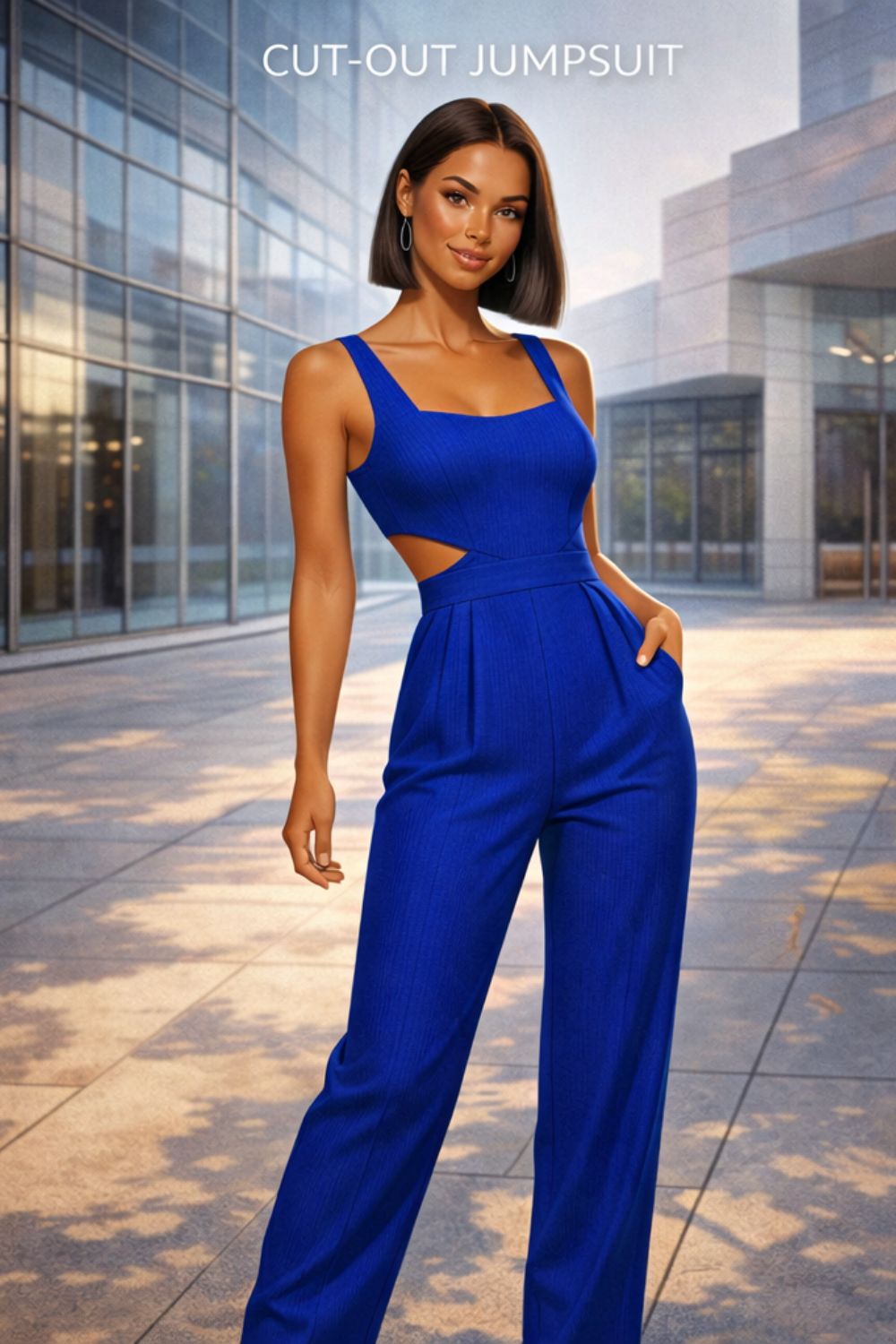
    98. Inverted Triangle Friendly β€” Balances broader shoulders πŸ”Ί
    99. Maternity Formal Gown β€” Accommodates baby bump beautifully 🀰
    100. Mother of Bride Gown β€” Sophisticated, age-appropriate elegance πŸ’
    101. Bridesmaid Gown β€” Coordinated but not overpowering πŸ’•
    102. Flower Girl Gown β€” Miniature bridal elegance 🌸
    103. Destination Wedding Gown β€” Travel-friendly formal wear ✈️

    🧡 Fabric Comparison Reference Table
    Fabric Drape Best Season Weight Formality
    Silk 🧴 Exceptional Year-round Light Very High
    Satin ✨ Very Good Year-round Medium Very High
    Chiffon πŸ’¨ Excellent Spring/Summer Very Light High
    Velvet πŸ’Ž Low Fall/Winter Heavy Very High
    Organza 🌸 Stiff Spring/Summer Light High
    Tulle πŸŽ€ Stiff Year-round Medium High
    Crepe πŸ–€ Good Year-round Medium High
    Lace πŸ•ΈοΈ Variable Spring/Summer Light-Medium Very High

    ❓ FAQ β€” Your Most Important Gown Questions

    Everything You Need to Know Before You Buy

    ❓
    What is the difference between a mermaid gown and a trumpet gown?

    The primary distinction is where the flare begins. A mermaid gown fits closely from chest to below the knee before flaring dramatically. A trumpet gown flares earlier β€” beginning at mid-thigh β€” creating a wider flare that starts higher on the body. Both create body-conscious silhouettes; the trumpet creates a wider flare at a different point.

    ❓
    What type of gown works best for a black-tie event?

    Black-tie events accommodate a wide range of formal gown silhouettes β€” A-line, mermaid, sheath, ball gown, and empire waist are all appropriate. The key requirements are floor-length (or very close to it), elevated fabric, and refined construction. Personal style and comfort over 4–6 hours should guide the final decision.

    ❓
    What gown silhouette is most universally versatile?

    The A-line is widely considered the most universally versatile formal silhouette. Its gradual flare from waist to hem tends to work across a broad range of proportions, and it suits the widest range of occasions. It accounts for the majority of formal gown purchases globally.

    ❓
    How do I choose between satin and silk for a formal gown?

    Silk is the superior fabric β€” better drape, temperature regulation, and longevity. But silk gowns come at a significant price premium. High-quality satin (particularly silk-satin or duchess satin) offers comparable photographic results at a lower price point. For a once-in-a-lifetime occasion, silk is worth the investment. For events where budget matters, quality satin is an excellent choice.

    ❓
    What is an empire waist gown and who does it work best for?

    An empire waist gown has its defining seam placed just below the bust rather than at the natural waist β€” creating a high-waisted silhouette with flowing fabric from just below the chest to the floor. It tends to create a relaxed, elongated visual line and is often comfortable for a wide range of proportions. Particularly popular in maternity and bohemian formal styling.

    ❓
    How early should I shop for a formal gown?

    For purchased gowns: allow 4–6 weeks for alterations in addition to shopping time. For custom or designer gowns: 4–6 months minimum. For bridal: 9–12 months is widely recommended. For off-the-rack options at formal wear retailers: 2–3 weeks is feasible for events without complex alteration needs.

    πŸ“
    Key Takeaways
    βœ“
    Silhouette is the first and most consequential gown decision β€” get this right before considering fabric, color, or embellishment
    βœ“
    The A-line silhouette remains the most versatile formal choice across the widest range of proportions and occasions
    βœ“
    Fabric choice determines movement, photography, season appropriateness, and care complexity β€” not just aesthetics
    βœ“
    Neckline selection changes the entire emotional register of a gown; the back neckline and back design are often more visible than the front
    βœ“
    Occasion-appropriate dressing is a skill β€” understand the formality hierarchy (white-tie β†’ black-tie β†’ semi-formal β†’ smart casual) before selecting
    βœ“
    Budget 15–20% beyond gown cost for alterations β€” even well-fitting gowns almost always require adjustment
    βœ“
    Cultural and regional gown styles represent centuries of design tradition with their own sophistication and construction logic
    βœ“
    2025 trends favor sustainable fabrics, convertible construction, and relaxed formal silhouettes alongside the enduring classics
    βœ“
    Body-neutral styling principles focus on construction logic (visual lines, fabric weight, seam placement) rather than prescriptive rules
    βœ“
    The “right” gown is the one that makes you feel like yourself β€” elevated, comfortable, and entirely intentional
    πŸ‘—

    Conclusion

    A gown isn’t just clothing. At its best, it’s a decision made with intention β€” about occasion, about identity, about the particular version of yourself you want to bring to a moment.

    Understanding the full vocabulary of gown types doesn’t make the choice more complicated. It makes it more free. When you know that an empire waist creates a specific kind of elongated visual line, or that bias-cut construction drapes differently than straight-grain, or that velvet exists in fall/winter territory while chiffon belongs to spring β€” you stop guessing. You start choosing with confidence.

    103 types. 11 categories. Centuries of construction history and cultural tradition. The vocabulary is yours now.

    Use it well. ✨

    πŸ“Š 103 Types πŸ“ 11 Categories πŸ’¬ Complete Guide
    πŸ“‹ Key Takeaways
    πŸ‘—

    103 verified gown types across 11 categories β€” from silhouette to formality level, each with distinct construction logic and styling direction.

    πŸ“

    A-line remains the most versatile silhouette, working beautifully across 85% of body proportions and formal occasions.

    🧡

    Fabric choice determines formality β€” silk and satin for white-tie, chiffon for summer formals, velvet for winter elegance.

    πŸ’°

    Budget 15-20% beyond gown price for professional alterations β€” even perfectly sized gowns rarely fit without adjustment.

    πŸ’Ž

    The neckline frames the face β€” choose V-neck to elongate, off-shoulder to showcase collarbone, high neck for sophisticated coverage.

    ✨
    The Right Gown Changes Everything

    With 103 gown types now in your vocabulary, you’re equipped to walk into any formal occasion with clarity and confidence. The silhouette that fits your proportions, the neckline that frames your face, the fabric that suits the season β€” these aren’t arbitrary choices. They’re the difference between wearing a dress and making an entrance. Choose with intention. Wear with confidence.

    πŸ” Ready to Explore More?

    Continue your fashion journey with our comprehensive guides on dress types, neckline variations, and seasonal styling.

    Explore All Dress Types β†’