
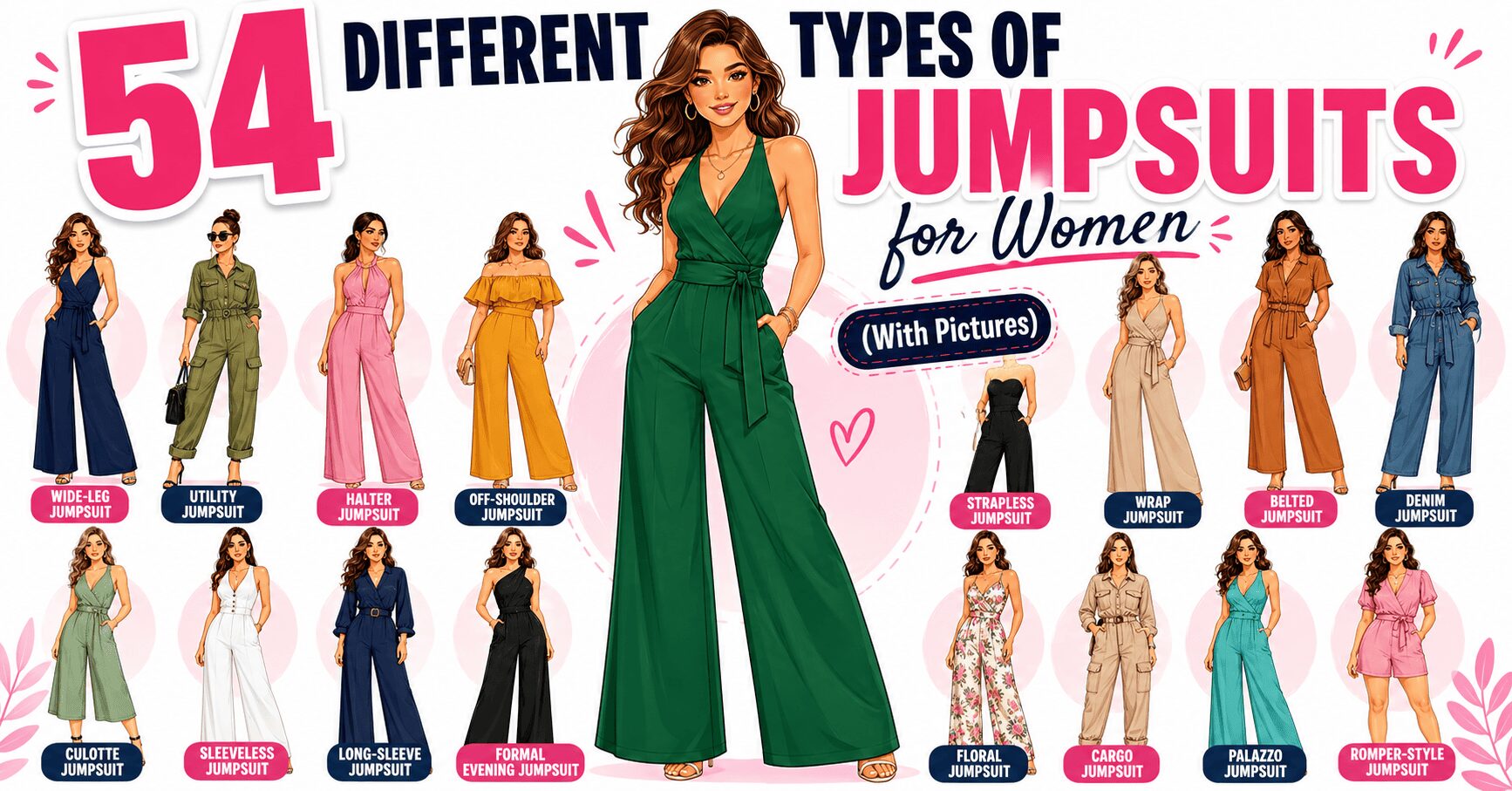
There’s something almost magical about pulling on one garment and feeling completely, effortlessly dressed. No agonizing over whether the top matches the trousers. No hemline math. Just — done. That’s the jumpsuit’s quiet superpower, and it’s why this single-piece silhouette has gone from oil-refinery workwear to runway staple to genuine wardrobe cornerstone within a century of fashion history.
But here’s what most style guides completely miss: jumpsuits aren’t one thing. They’re dozens of things. Wide-leg or skinny-fit. Linen or velvet. Strapless or turtleneck. Bohemian or boardroom. The category is genuinely vast — and understanding the differences between styles is what separates a frustrating purchase from a piece you reach for on autopilot.
This guide covers 54+ distinct jumpsuit types, organized across 8 real categories: by silhouette, length, neckline, sleeve style, fit, fabric, occasion, and aesthetic. Whether you’re building a capsule wardrobe or just trying to figure out which cut actually works for your lifestyle — you’ll find what you need here.
If you’re also exploring how different dress silhouettes compare to jumpsuit cuts, that full comparison is worth bookmarking too.
👗 What Exactly Is a Jumpsuit — And Why Does Categorization Matter?
A jumpsuit is a one-piece garment that combines a top and trousers (or shorts) into a single connected unit. The defining feature is that the upper and lower halves are sewn together — which distinguishes it from a co-ord set or a two-piece suit. Simple concept, wildly diverse execution.
Historically, the design has roots in early 20th-century aviator and parachutist gear — practical, utilitarian, nothing particularly glamorous about it. What changed? Fashion houses started playing with structure, fabric, and proportion. By the 1970s, Halston and Yves Saint Laurent had turned the jumpsuit into an icon of sleek modernity. Today’s versions borrow from all of that history while pushing into entirely new territory.
Why does it matter to categorize them? Because “I want a jumpsuit” without further detail is like saying “I want shoes.” The occasion, fabric, silhouette, and fit all determine whether something actually works in your life. Getting specific is the whole point.
For a broader view of how one-piece styles fit into the modern wardrobe landscape, this breakdown of all women’s top styles and categories offers useful context too.
54+ Different Types of Jumpsuits for Women
👖 🅐 BY LEG STYLE & SILHOUETTE
The most defining characteristic of any jumpsuitThe leg silhouette is arguably the most defining characteristic of any jumpsuit. It shapes the entire visual story — from how tall you appear to what footwear actually works.
Wide-Leg Jumpsuit
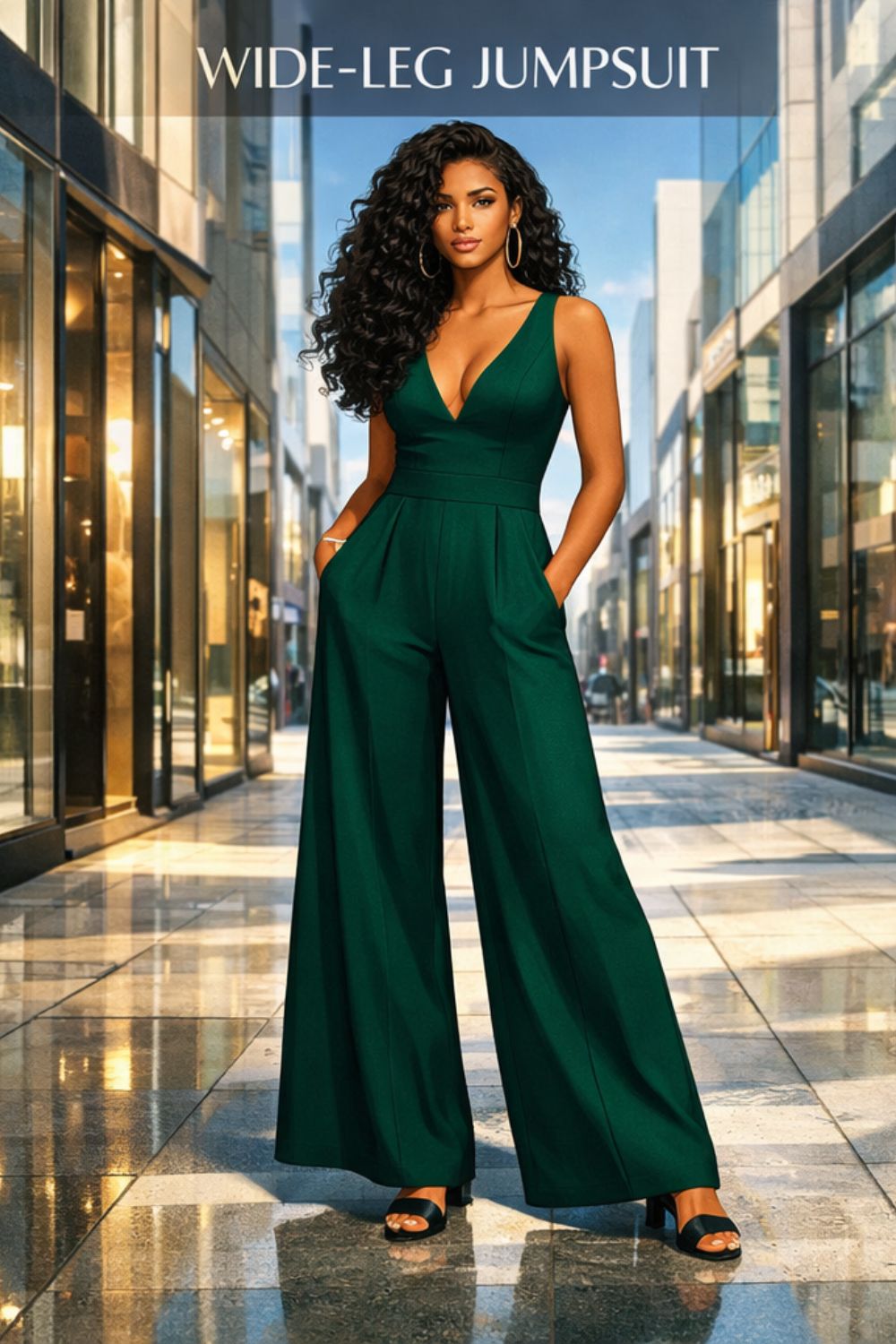
Wide-leg jumpsuits are having a moment that doesn’t seem to be ending anytime soon. The silhouette — fitted or relaxed through the torso, dramatically flared from hip to hem — creates a long, uninterrupted vertical line that reads as confident and effortless in equal measure.
The construction typically features a higher-rise waistband, which anchors the volume below and creates visual proportion. What works beautifully here is the contrast: structure on top, fluidity below.
Platform sandals, block-heel mules, structured totes.
Flat ballet pumps with this cut — they can visually shorten the leg line. A slight heel, even just a few centimeters, restores the proportional balance the silhouette is designed for.
In real wardrobe consultations, wide-leg jumpsuits consistently come up as the style women regret not buying sooner. The key is fit through the shoulders — everything else can be tailored.
If the wide-leg philosophy appeals to you beyond jumpsuits, this complete look at wide-leg trouser styles covers the full spectrum of options.
📏 Straight-Leg Jumpsuit
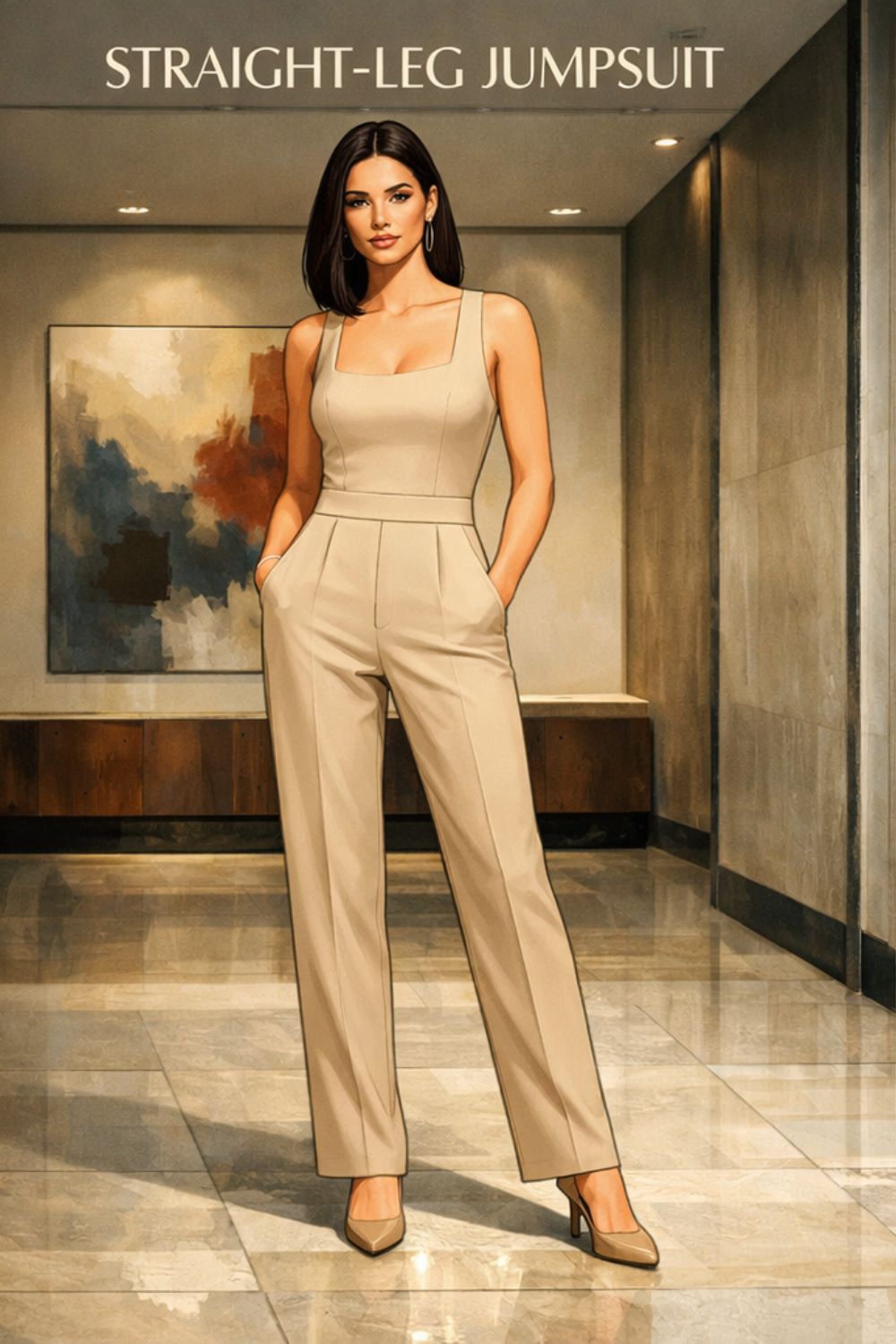
Quietly the most versatile entry in this entire list. The straight-leg cut runs cleanly from hip to hem without tapering or flaring — which is exactly why it transitions so effortlessly between contexts.
Wear it Monday morning with loafers for a work meeting. Add a heel and a silk scarf Friday evening. The silhouette doesn’t fight you on either occasion. Clean lines, minimal fuss. This is the jumpsuit equivalent of a good white shirt.
🔥 Skinny / Fitted-Leg Jumpsuit
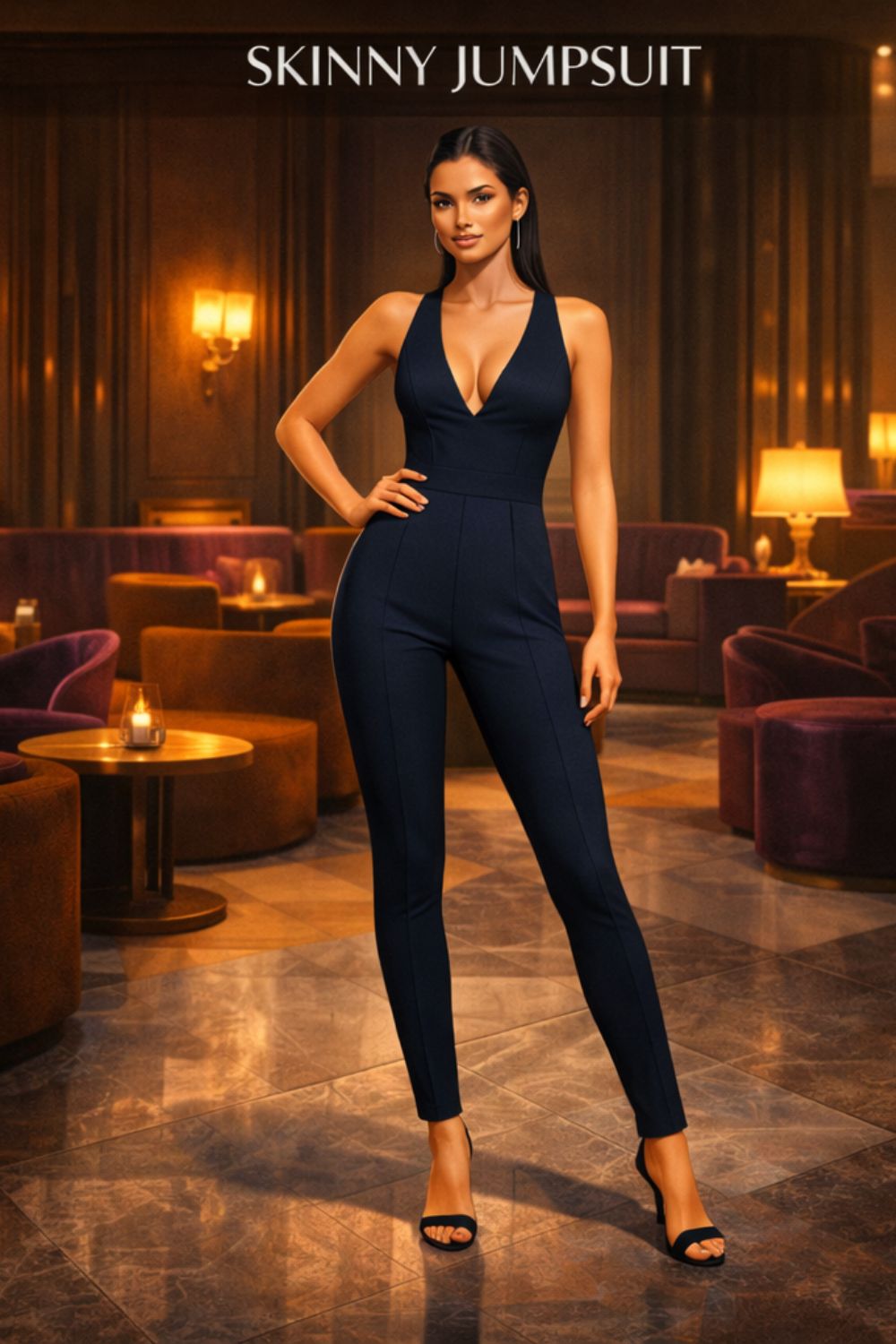
Slim through the entire leg, from hip to ankle. The silhouette is streamlined, modern, and tends to lean toward a more polished aesthetic. Often constructed in ponte, stretch fabric, or a cotton-lycra blend to allow movement without losing shape.
Evening events, creative workplaces, fashion-forward casual styling.
A quick note on fit: because the fabric is close to the body throughout, quality of construction matters significantly here. Look for reinforced seams at stress points — specifically the crotch seam and inner thigh.
🕺 Flared / Bell-Bottom Jumpsuit
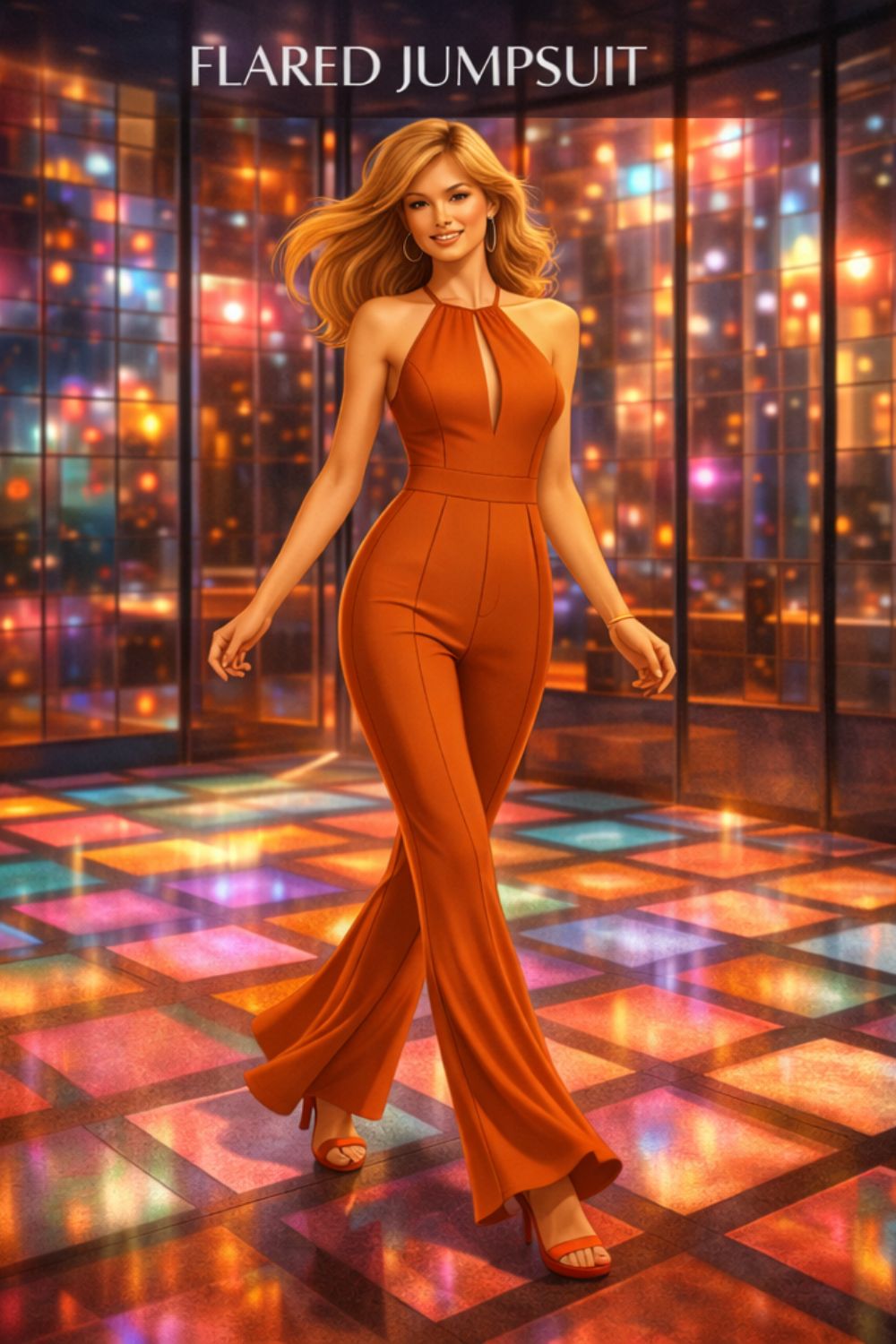
This one carries unambiguous 1970s energy. The leg sits straight through the thigh and then opens dramatically below the knee — a cut that was revolutionary when it first appeared and remains genuinely striking today.
Flared jumpsuits tend to photograph beautifully in motion, which is probably why they’ve found a second home in the age of social media. The fabric choice matters more here than with other cuts — something with natural drape (crepe, viscose, light denim) lets the flare move properly, while stiffer fabrics can make it look stiff or theatrical.
🩳 Culotte / Cropped-Leg Jumpsuit
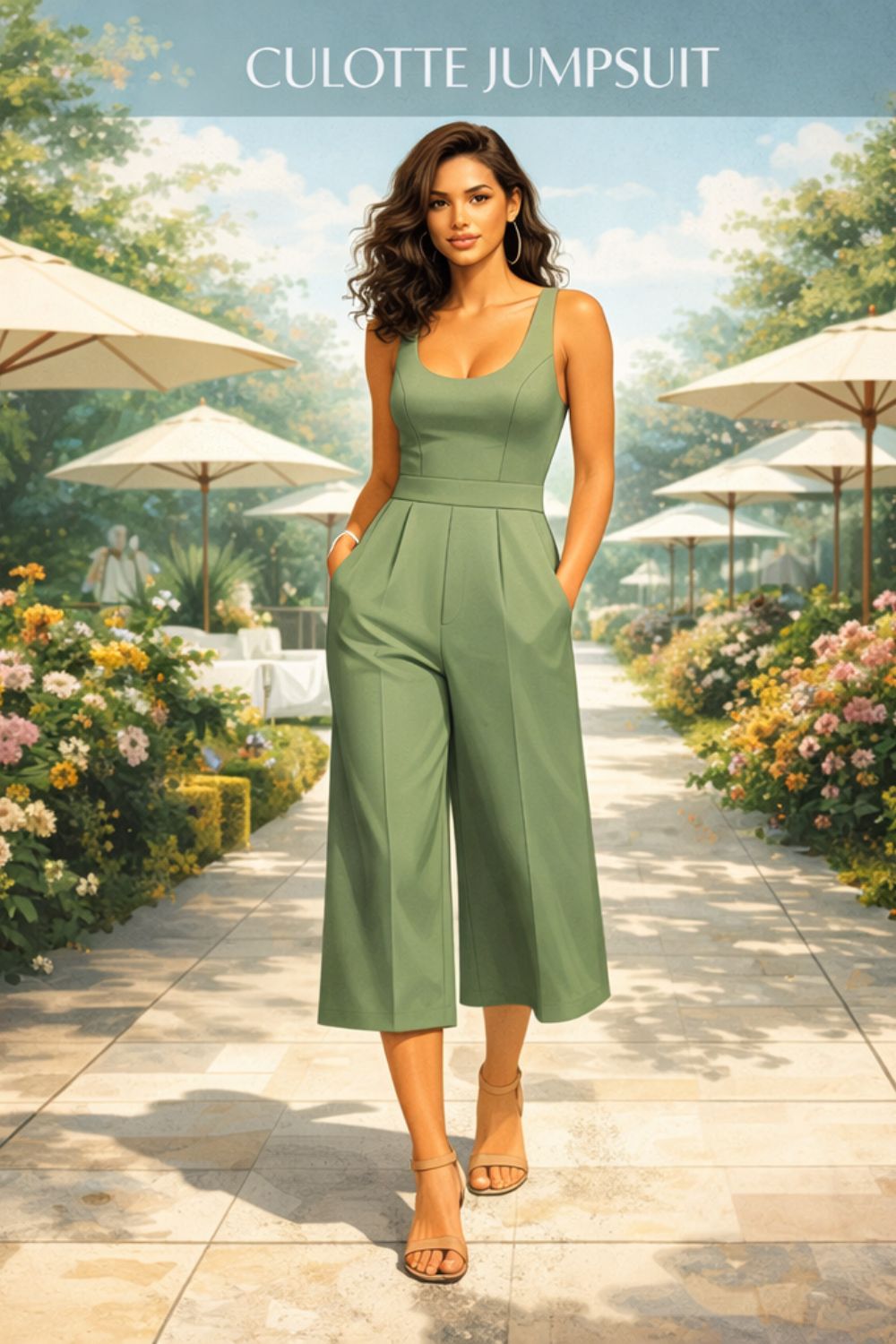
The pants end somewhere between mid-calf and just below the knee — a placement that feels distinctly modern. It’s not trying to be shorts, and it’s not trying to be full-length trousers. It’s its own thing, and that confidence is part of its appeal.
This cut pairs equally well with flats and heels, which gives it unusual occasion flexibility.
🎭 Palazzo Jumpsuit
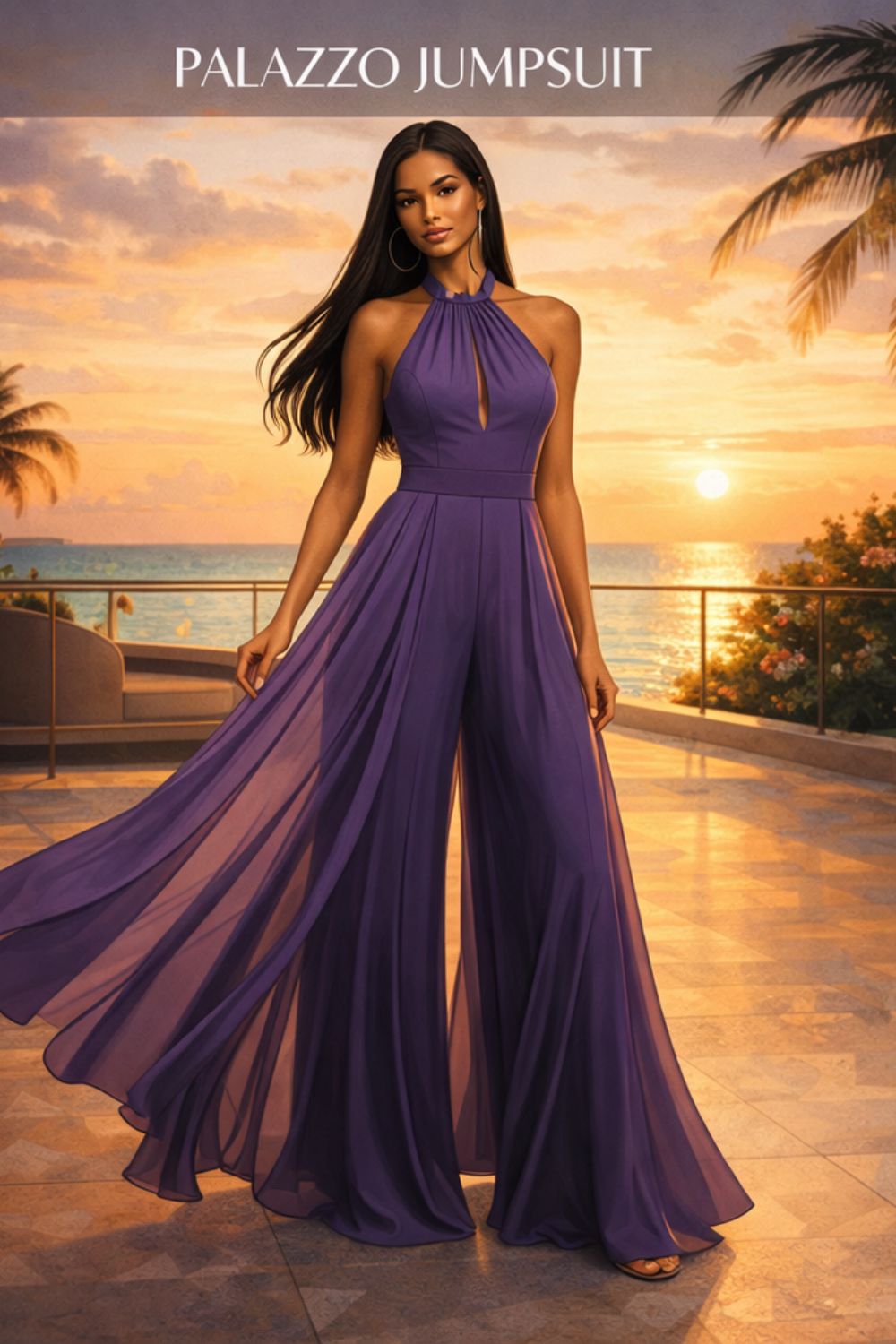
If the wide-leg is confident, the palazzo is theatrical. We’re talking ultra-wide, sweeping, floor-grazing volume from the hip down. The palazzo cut originated as a loungewear style in the 1960s and 70s — Pucci, Halston, and later various resort collections all played in this territory.
Modern palazzo jumpsuits often feature lightweight, fluid fabrics — georgette, chiffon, satin — that create that sense of movement and drama. They tend to be occasion-forward pieces rather than everyday go-tos.
For more on the extended palazzo silhouette family, this guide to palazzo-style trousers and bottoms is worth reading alongside this section.
📏 🅑 BY LENGTH
Length changes everythingLength changes everything. The same jumpsuit design in a different length can read as entirely different garments — different occasions, different energy, different footwear requirements.
👖 Full-Length Jumpsuit
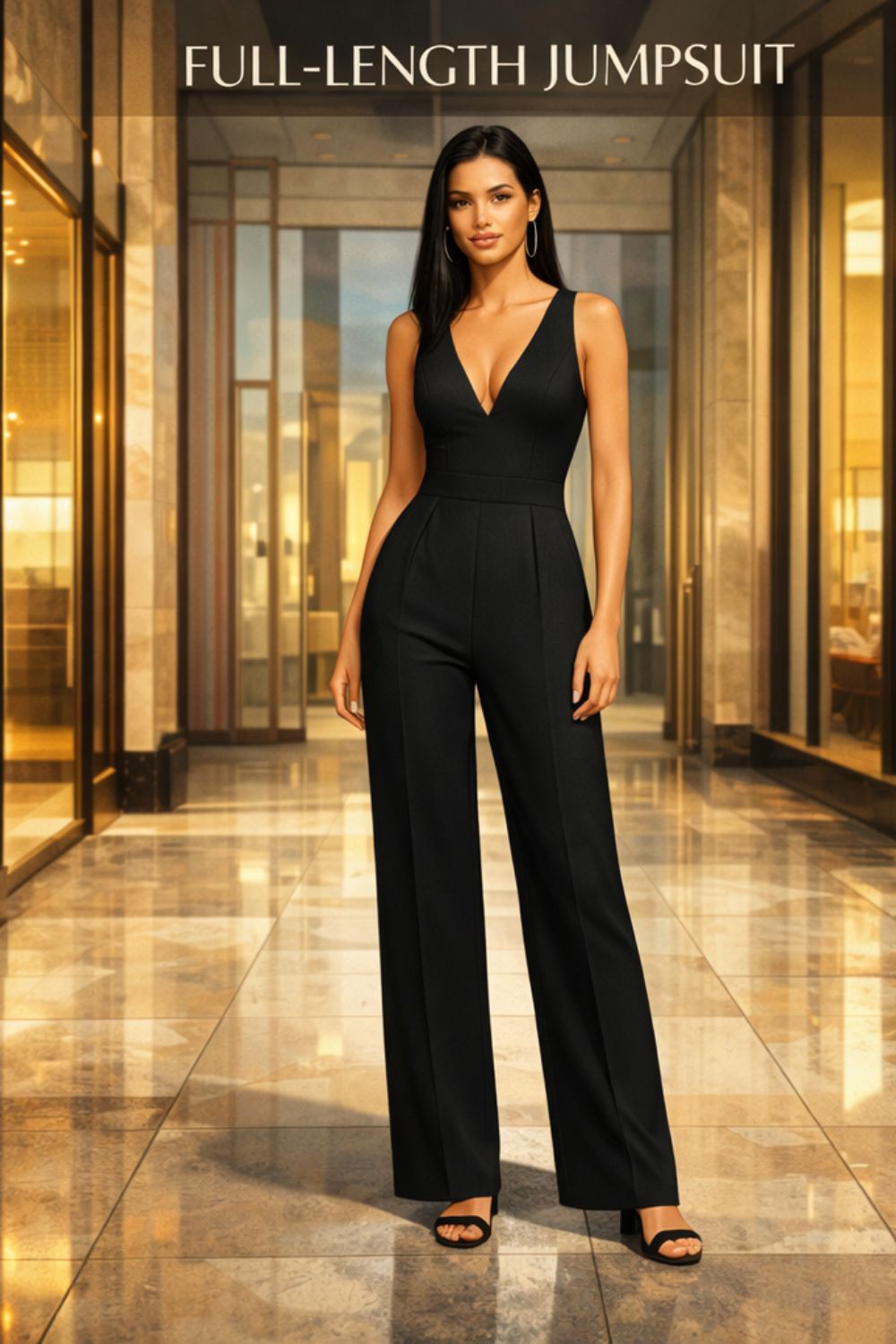
The foundational length. Pants reach the ankle or floor — creating the clean, uninterrupted vertical line that makes jumpsuits so visually powerful. Almost any occasion, almost any setting. This is the length that earns the garment its reputation.
🩳 Cropped Jumpsuit
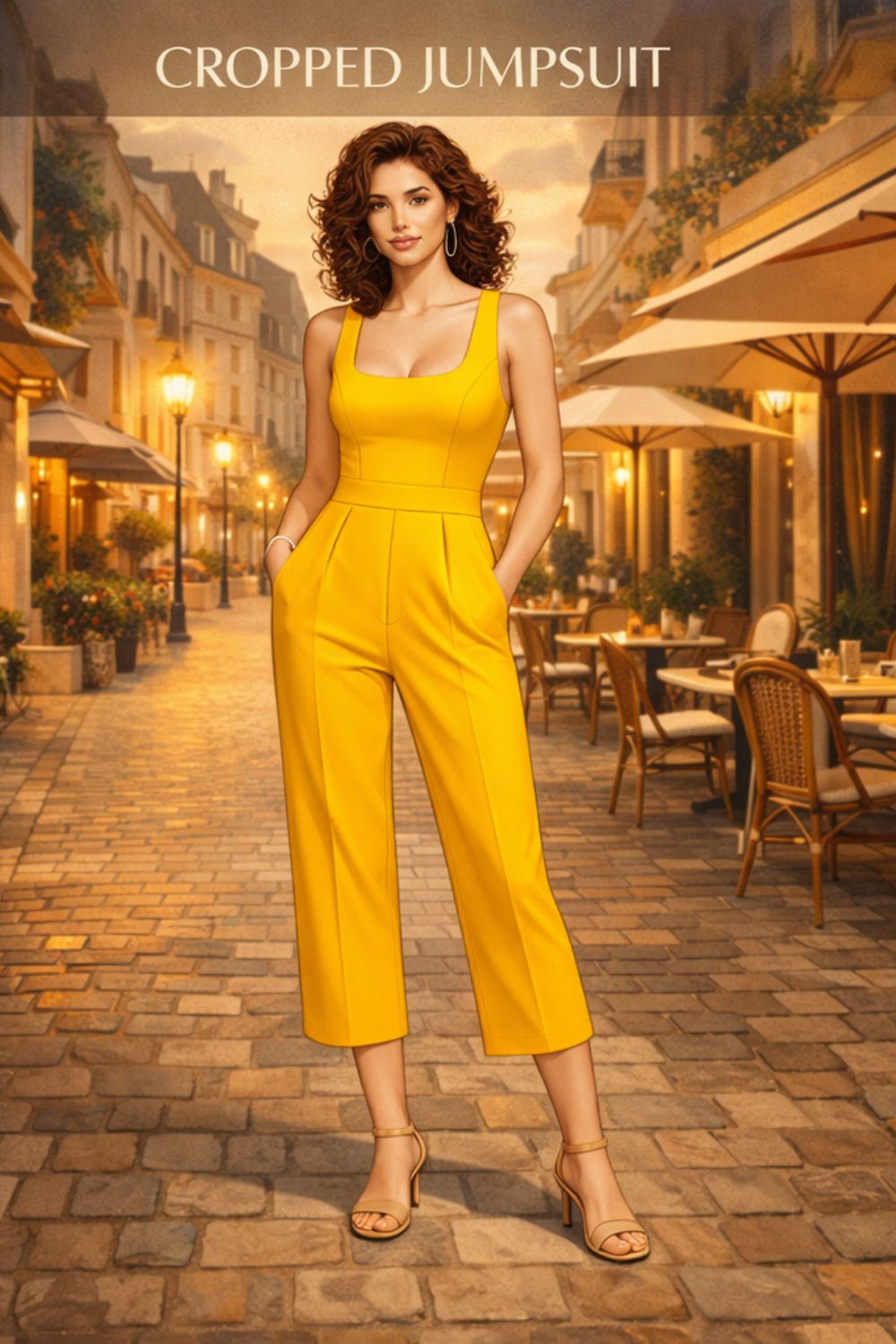
The pants stop just above the ankle — not dramatically, but enough to reveal the ankle and draw attention to footwear. A small detail that makes a meaningful visual difference. If you’re choosing shoes you love, this length shows them properly.
🩱 Short Jumpsuit / Romper
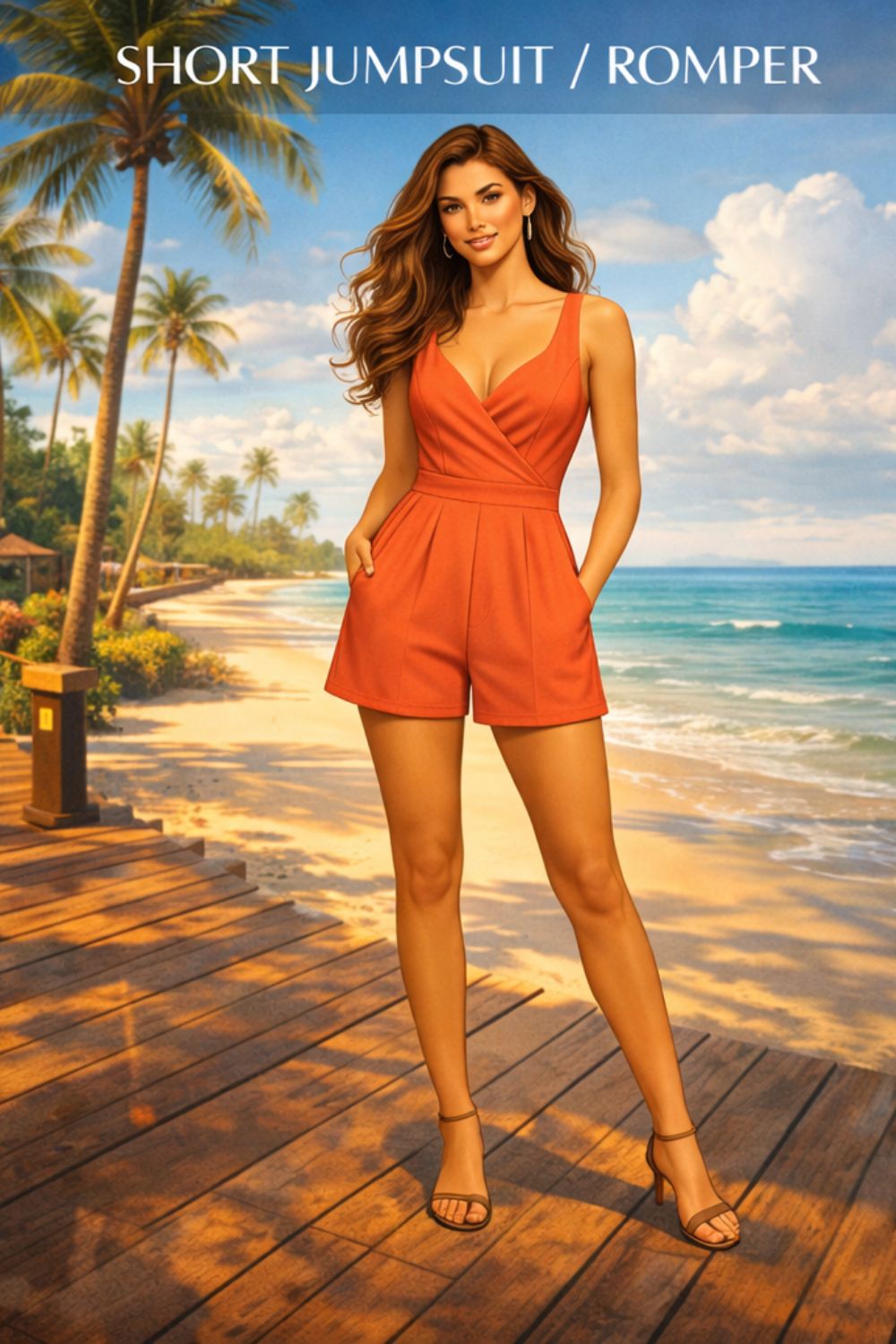
Technically, many style references categorize the short-legged version as a romper rather than a jumpsuit — and there’s legitimate reason for that distinction. The construction is similar, but the shorts leg changes the occasion range significantly: resort wear, summer festivals, beach days, casual weekends.
It’s a genuinely different aesthetic from the longer versions — more playful, more relaxed, less concerned with formality.
For everything in the romper category, our complete overview of romper styles and cuts goes into considerably more depth.
👗 Midi-Length Jumpsuit
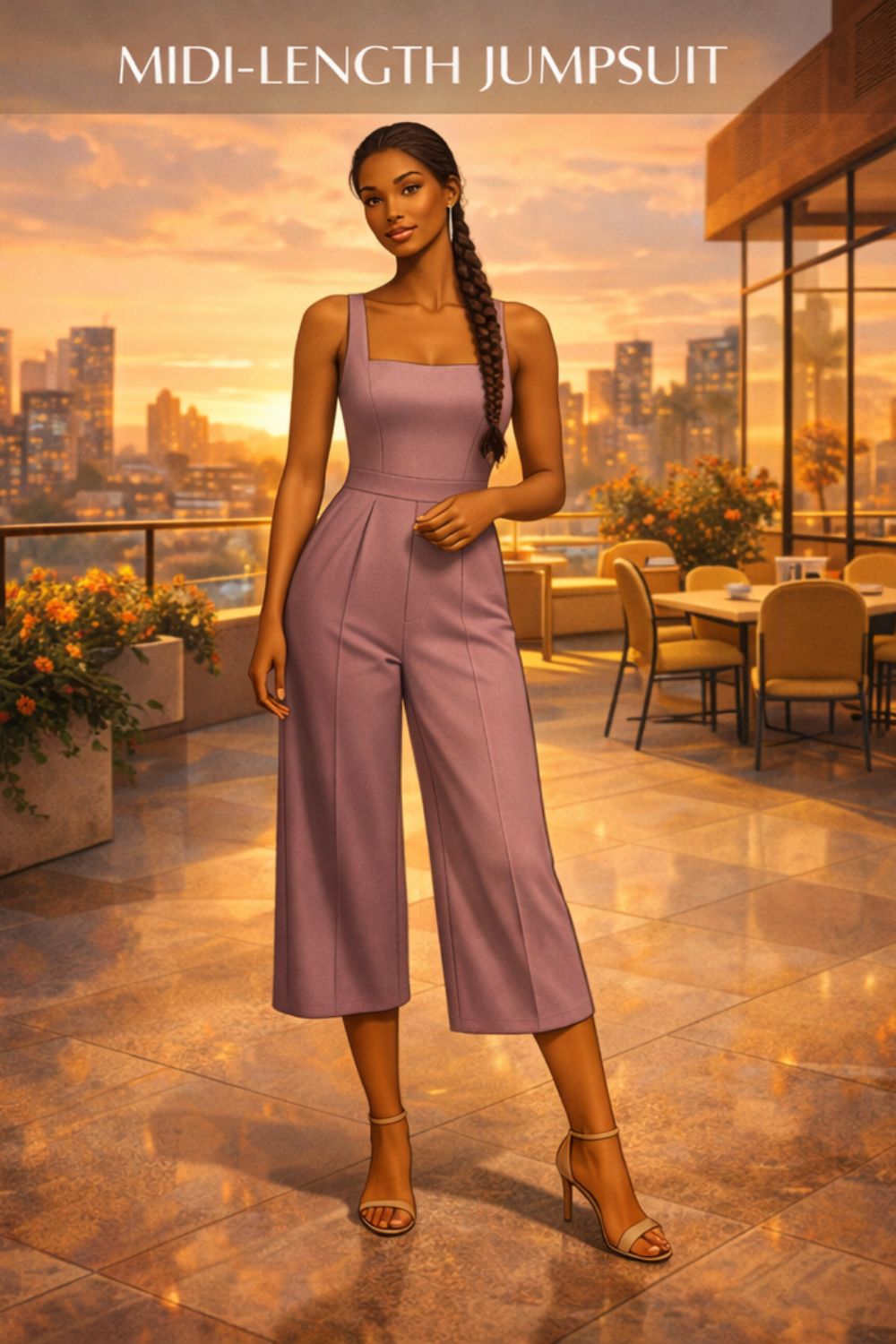
The leg falls somewhere between the knee and the ankle. That middle-ground placement is exactly what makes it compelling — it’s more covered than a cropped cut, more interesting than full-length, and the hemline creates a natural visual focus that pulls toward the shoe.
Midi-length jumpsuits tend to skew slightly more formal or occasion-ready than their shorter counterparts, especially in silk, satin, or structured fabric.
💎 🅒 BY NECKLINE & TOP STYLE
The frame for your faceThe neckline is the frame for your face — and it changes everything. This is often the first thing people notice about a jumpsuit, well before the leg cut or fabric registers.
Most people pick a neckline based on how it looks on the hanger. The better approach? Think about what you’ll wear underneath (if anything), what kind of neckwear you reach for most, and whether you typically run warm or cold. A strapless jumpsuit that requires constant adjusting is styling nobody has time for.
✨ Strapless Jumpsuit
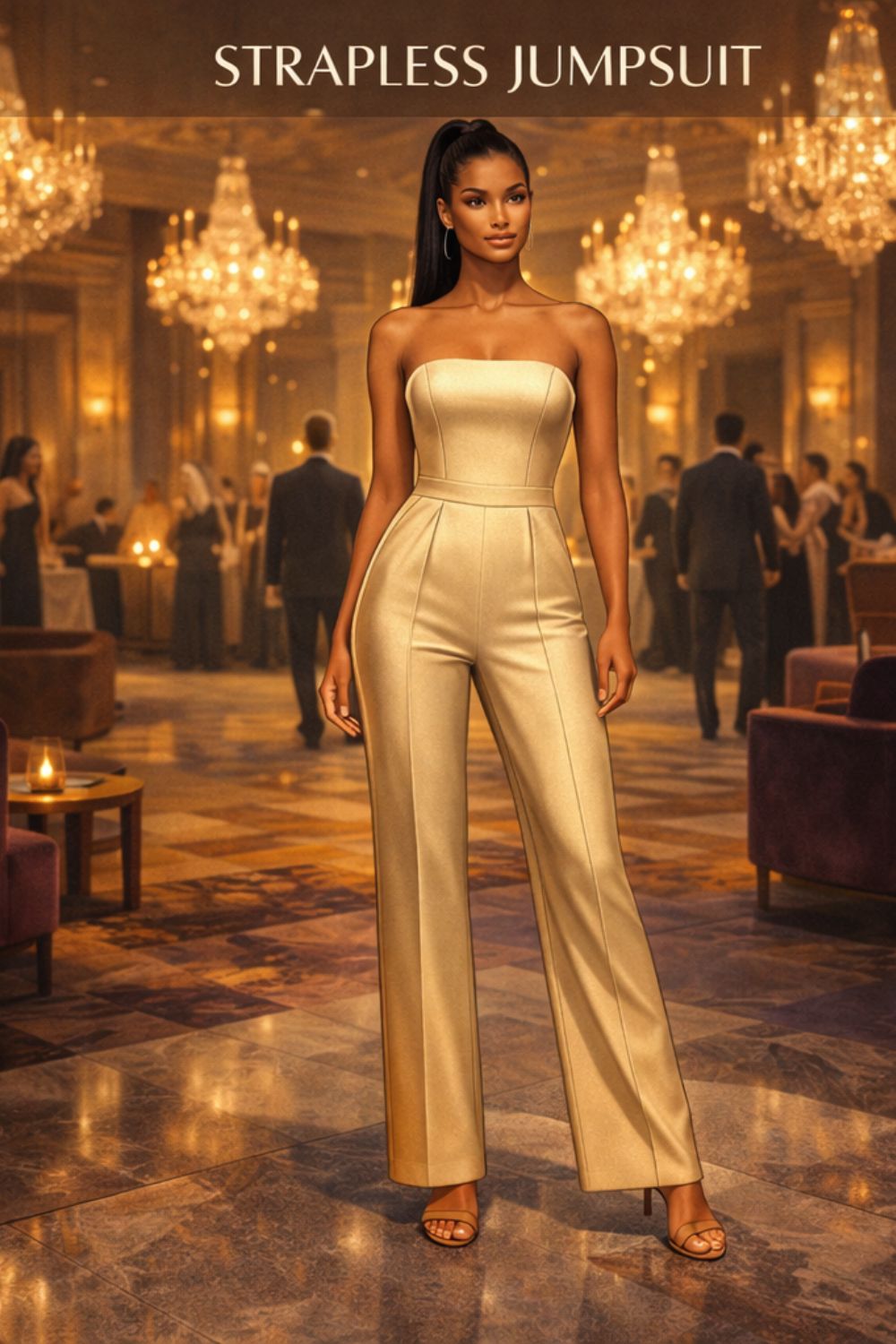
Bold, clean, and unambiguously occasion-forward. The construction requires careful attention to internal boning or banding — because without a shoulder strap to anchor the garment, the bodice needs structural support built in.
The strapless neckline is particularly striking in evening contexts: formal dinners, cocktail parties, weddings. Versions with open or structured backs add an extra dimension of elegance.
Formal dinners, cocktail parties, weddings, evening galas
For broader ideas on how strapless silhouettes work across categories, evening and formal wear styling options here cover the full territory.
💫 Off-Shoulder Jumpsuit
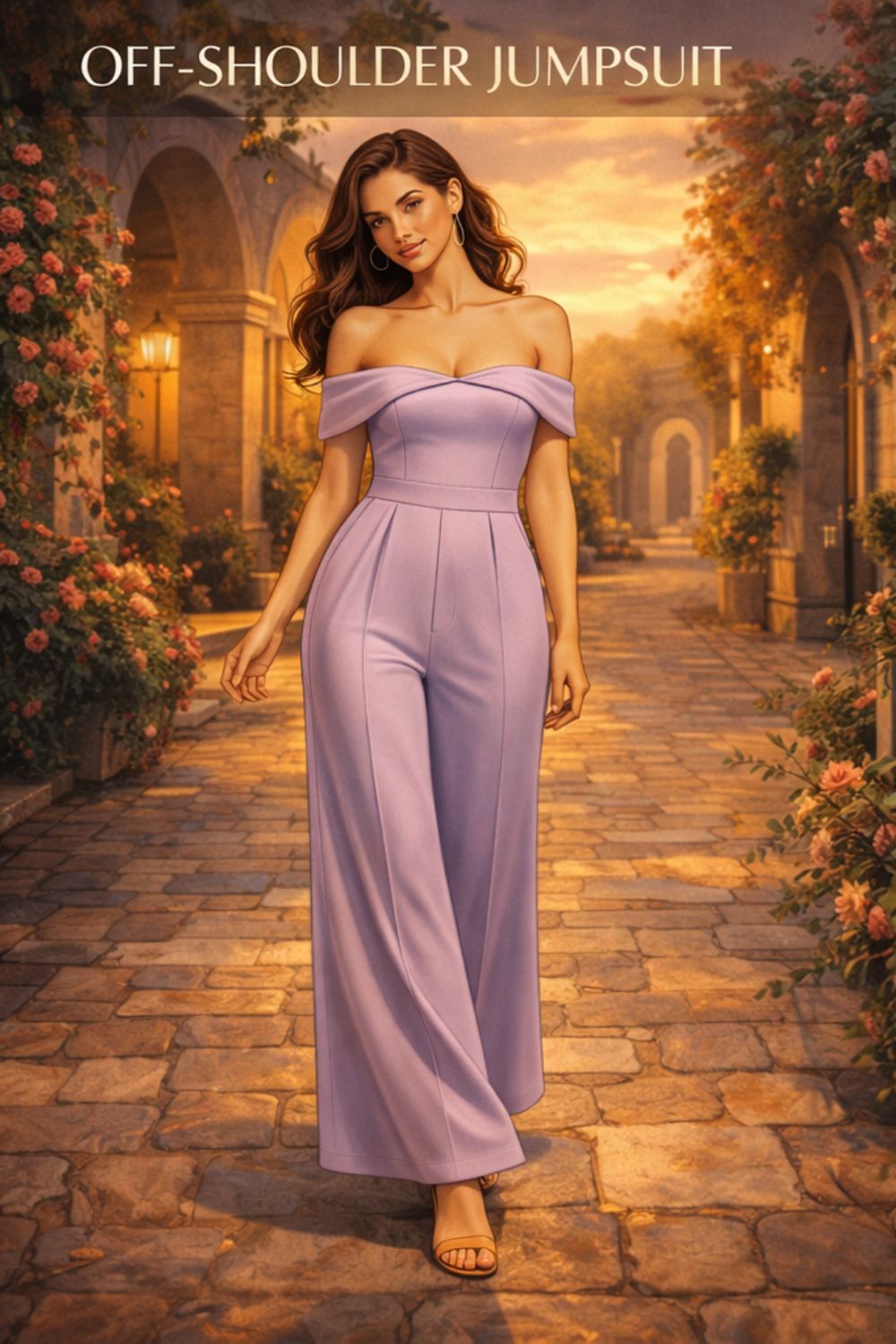
A permanently popular style that draws the eye across the collarbone and toward the face — without the structural complexity of a true strapless construction. The fabric typically folds or drapes just below the shoulder line, creating a soft, romantic quality.
Off-shoulder jumpsuits work across a wide occasion range — cocktail parties, summer evenings, smart-casual events.
The key styling detail: jewelry. A clean statement necklace or ear-grazing earrings (not both) tends to work better than competing layers of accessories.
🎀 Halter-Neck Jumpsuit
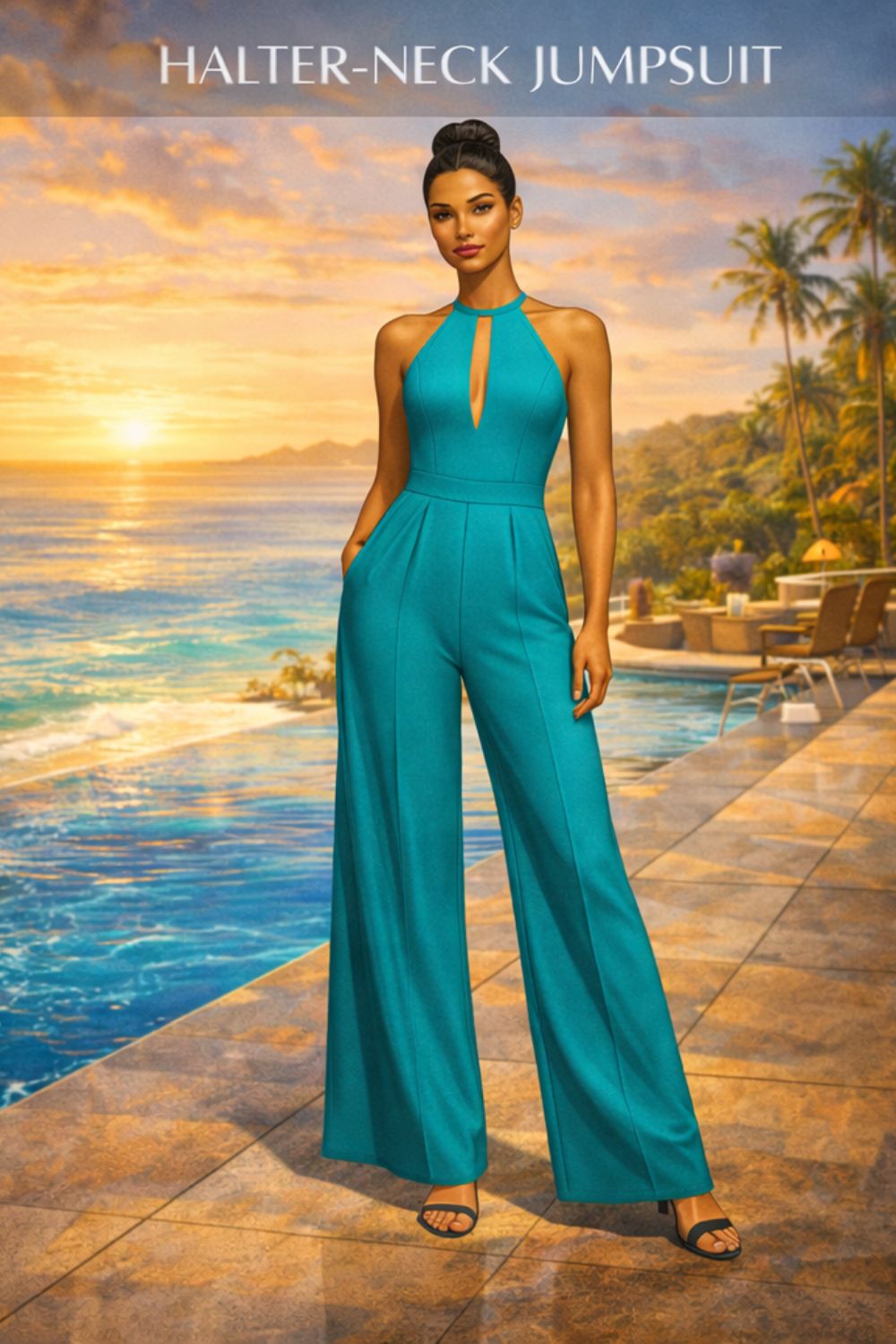
Fastens at the back of the neck — either with a tie, hook-and-eye closure, or a keyhole detail — leaving the shoulders and upper back bare.
The halter silhouette is particularly well-suited to warmer months and evening occasions. It also tends to work beautifully with statement earrings, since the open neck area creates a natural space for jewelry to read clearly.
💎 V-Neck Jumpsuit
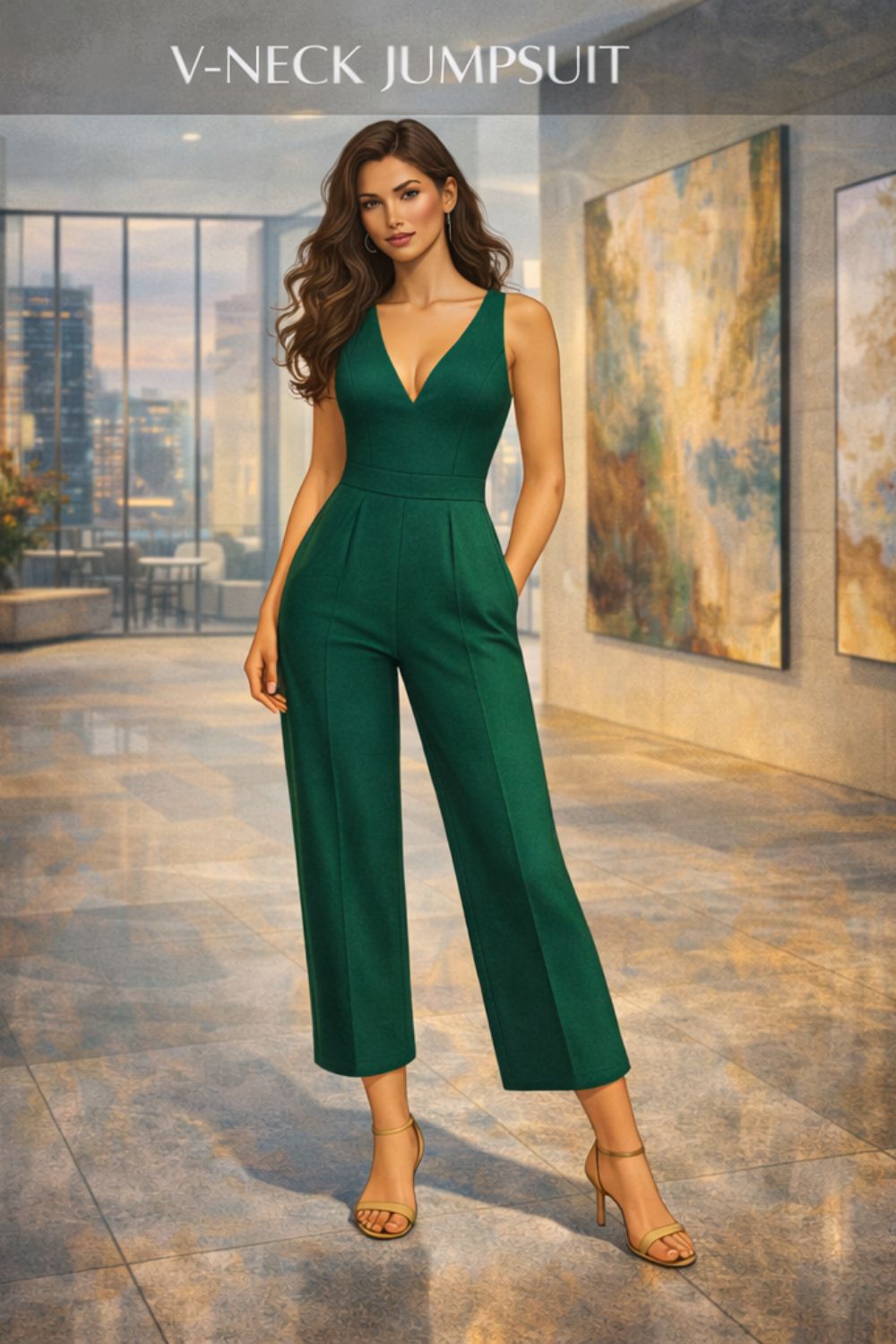
Consistent across trends, seasons, and body types — the V-neckline remains one of the most reliably flattering and versatile jumpsuit necklines available. The construction creates a natural focal point at the center chest and tends to elongate the visual line of the upper body.
V-neck depth varies significantly: a shallow V reads as casual and everyday-appropriate, while a deeper plunge tips toward evening territory. The distinction matters when building a wardrobe around this style.
For reference on how different necklines function across garment types, this complete neckline guide for women’s clothing is a useful companion resource.
📐 Square-Neck Jumpsuit
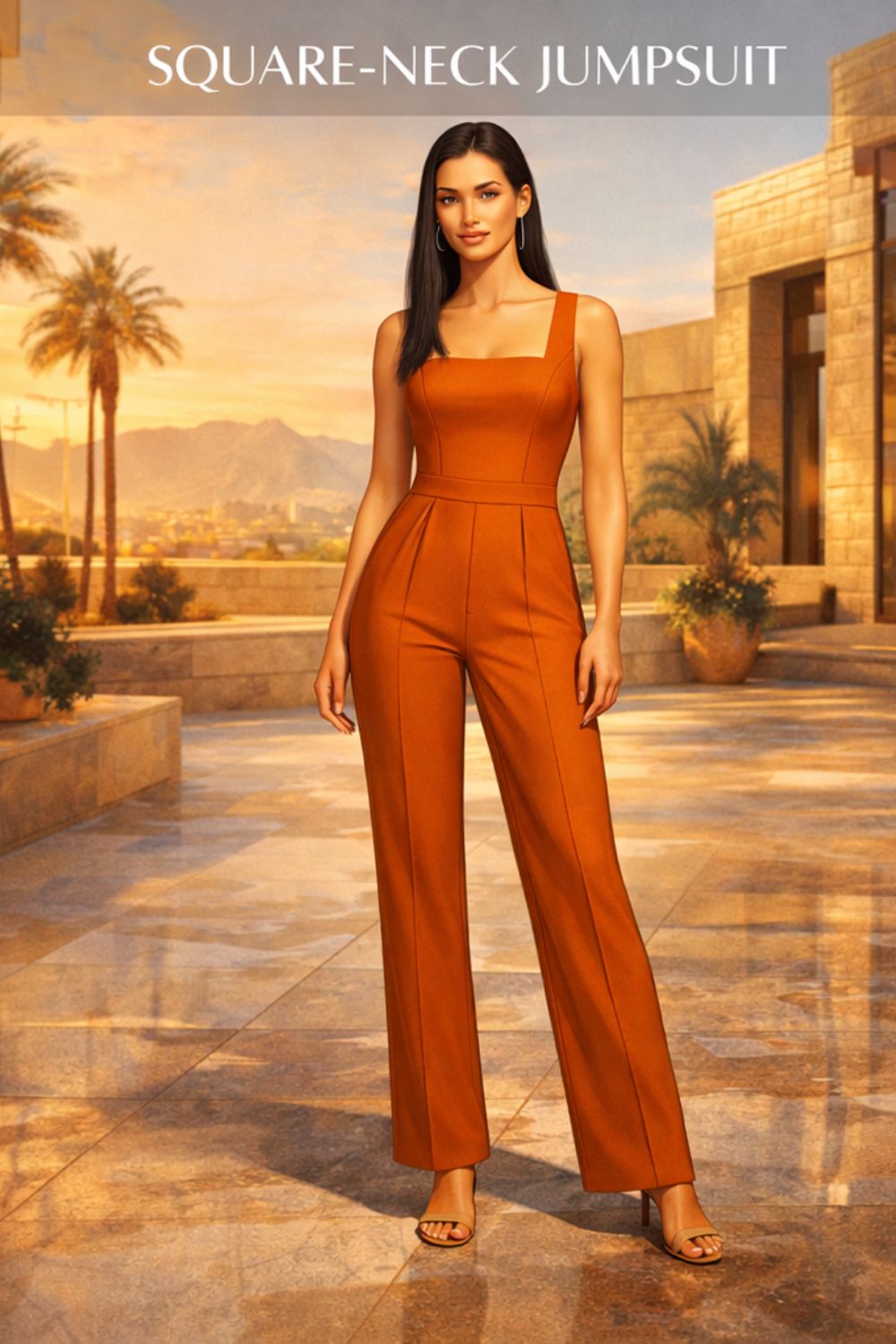
The square neckline — wide, geometric, and structured — creates a distinctly modern aesthetic that photographs particularly well. Wide shoulder straps paired with a square neckline and an elasticated waist is a combination that has dominated warm-weather fashion seasons for several years running.
Construction note: Look for proper strap width — very thin straps on a square neckline can feel structurally flimsy, while substantial straps (an inch or more) give the silhouette the architectural quality it’s designed for.
⚡ One-Shoulder Jumpsuit
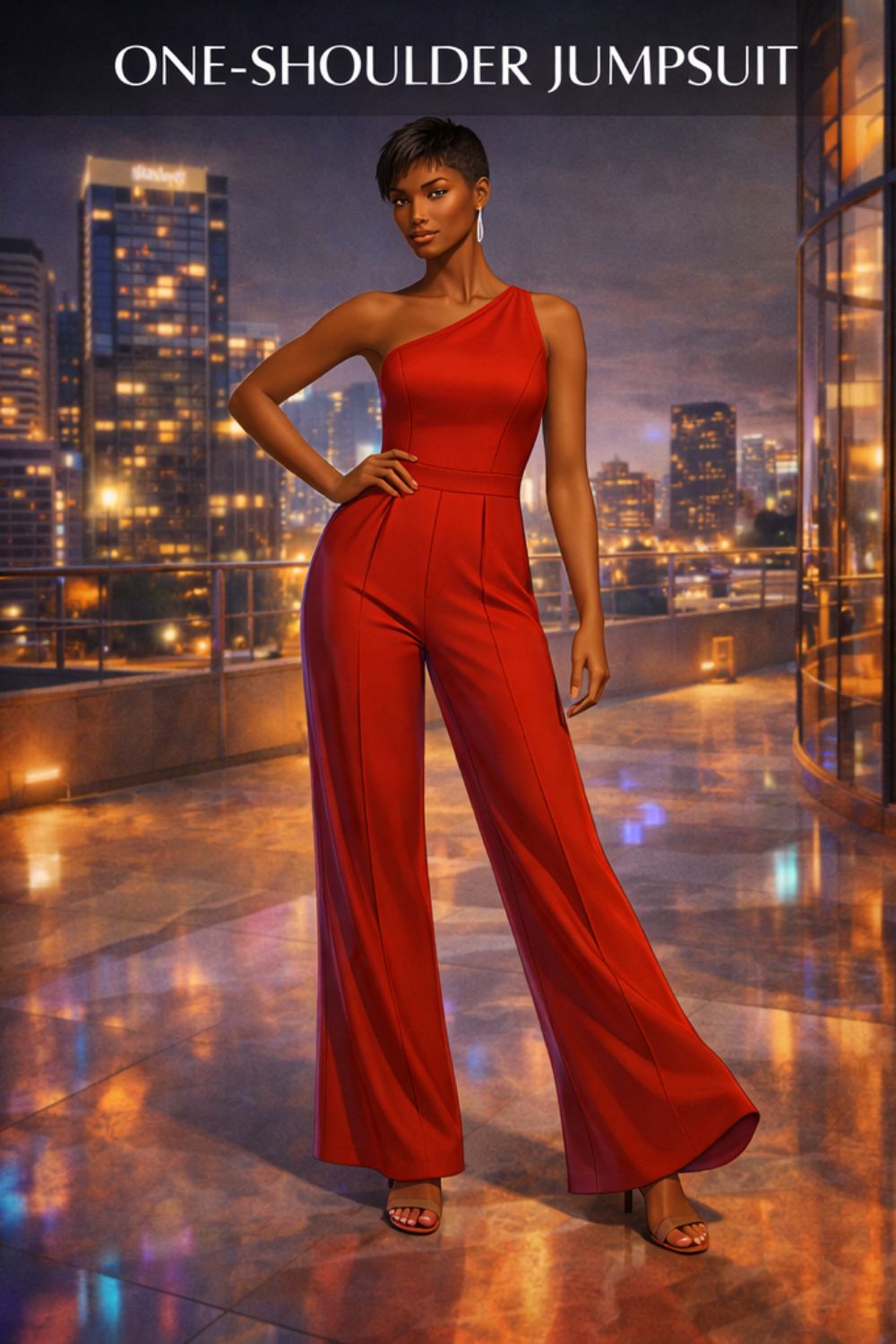
Asymmetrical. Considered. A single strap on one side and a bare shoulder on the other — the visual imbalance is intentional, and when executed well, it creates a genuinely dynamic silhouette.
One-shoulder styles tend to look particularly strong in minimalist or solid fabrics, where the asymmetry can speak for itself without pattern competing for attention. Detachable strap options offer day-to-night flexibility that makes this style especially practical.
Best in: Minimalist solids, solid colors that let the asymmetry be the star
🔥 Plunge / Deep-V Jumpsuit
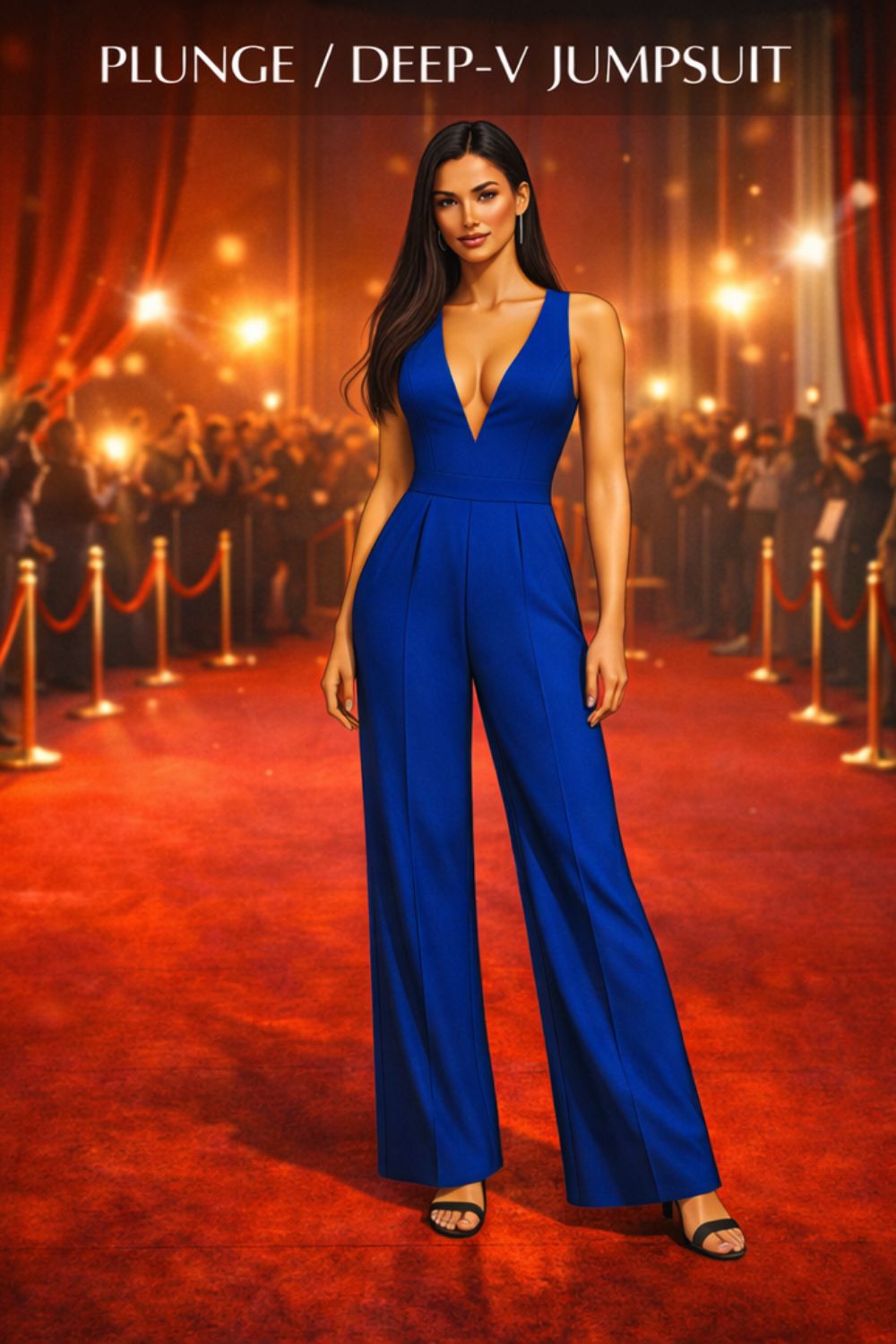
The neckline descends well past the sternum — a bold, unapologetically confident choice. The key difference between a plunge neckline that reads as “chic” versus “costume” almost always comes down to fabric quality and fit precision. A plunge in fluid satin cut to proper proportions is entirely different from the same neckline in a cheap jersey.
Practical note: Securing options matter here — fashion tape, a low-cut bra or adhesive cups, or built-in cups are worth considering before buying.
🧣 Turtleneck Jumpsuit
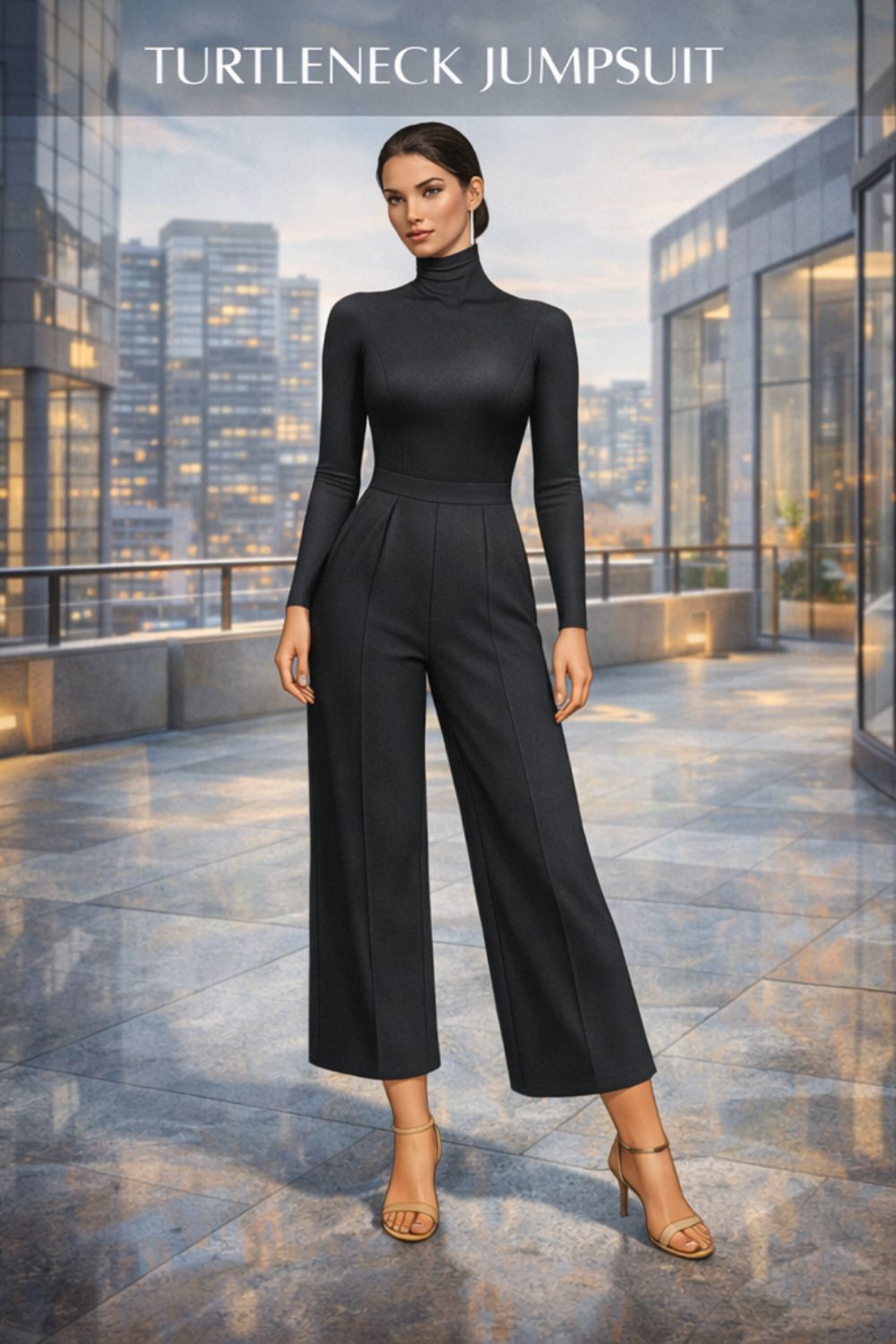
The high-neck, close-fitting opposite end of the neckline spectrum. Cozy, sleek, and particularly strong in colder-weather styling contexts. Ribbed knit and velvet are the fabrics most associated with this style — both work beautifully at the construction level.
What makes turtleneck jumpsuits interesting is the visual coherence they create: because the neck, torso, and legs are all one continuous garment, the elongating effect is particularly pronounced.
💕 Bardot (Sweetheart) Jumpsuit
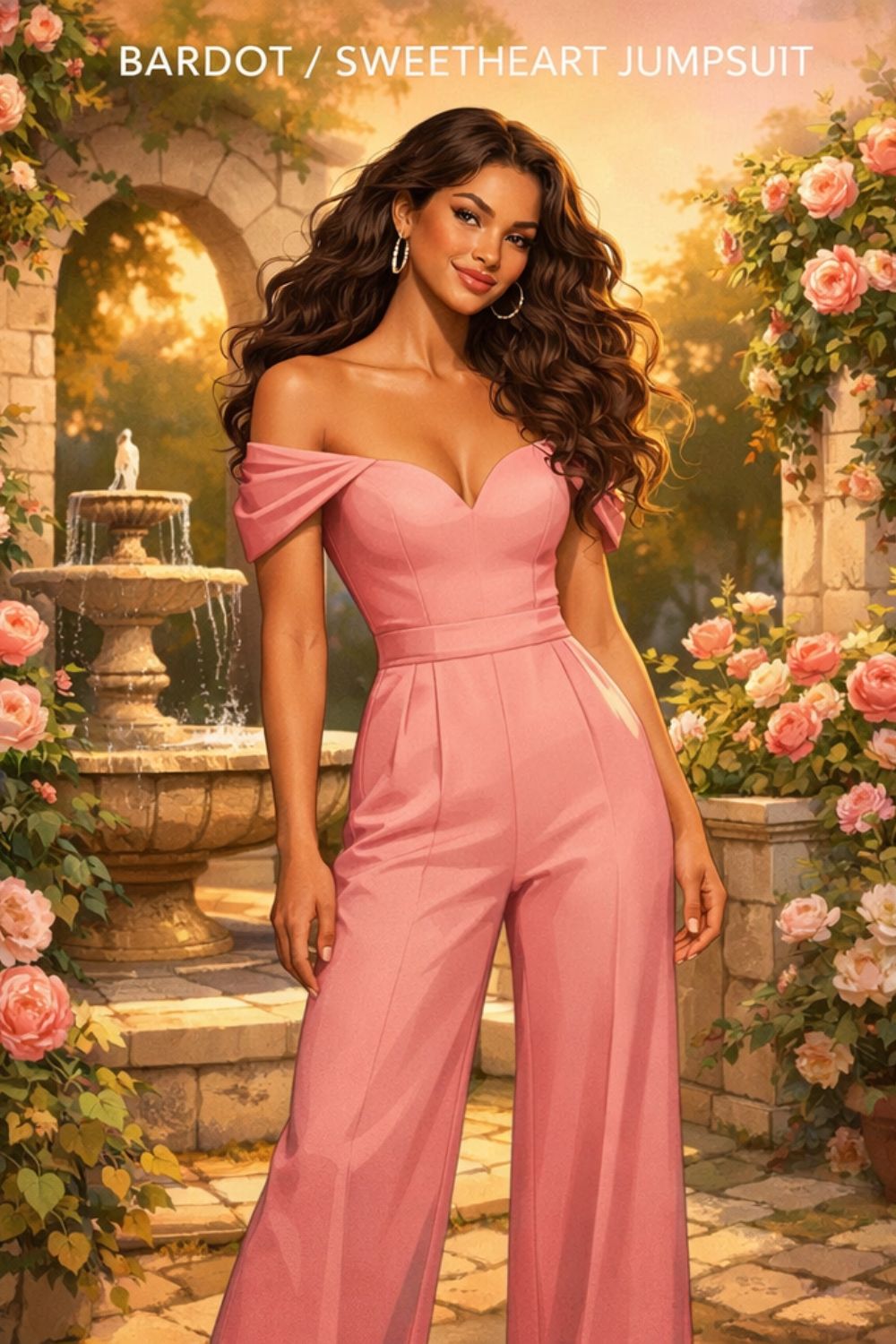
Named for Brigitte Bardot — the off-shoulder, neckline-forward style she made iconic in the 1950s and 60s. A modern Bardot jumpsuit typically combines a sweetheart or straight-across neckline with an off-shoulder or low-set sleeve, creating a slightly retro but undeniably feminine silhouette.
Wide-leg versions of the Bardot jumpsuit in particular have had significant fashion-press traction in recent seasons.
Perfect pairing: Strappy stilettos and minimal, statement-scale jewelry
🧥 🅓 BY SLEEVE STYLE
Season range, formality, and flexibilitySleeve design determines a jumpsuit’s season range, formality level, and overall styling flexibility more than most people initially realize.
☀️ Sleeveless Jumpsuit
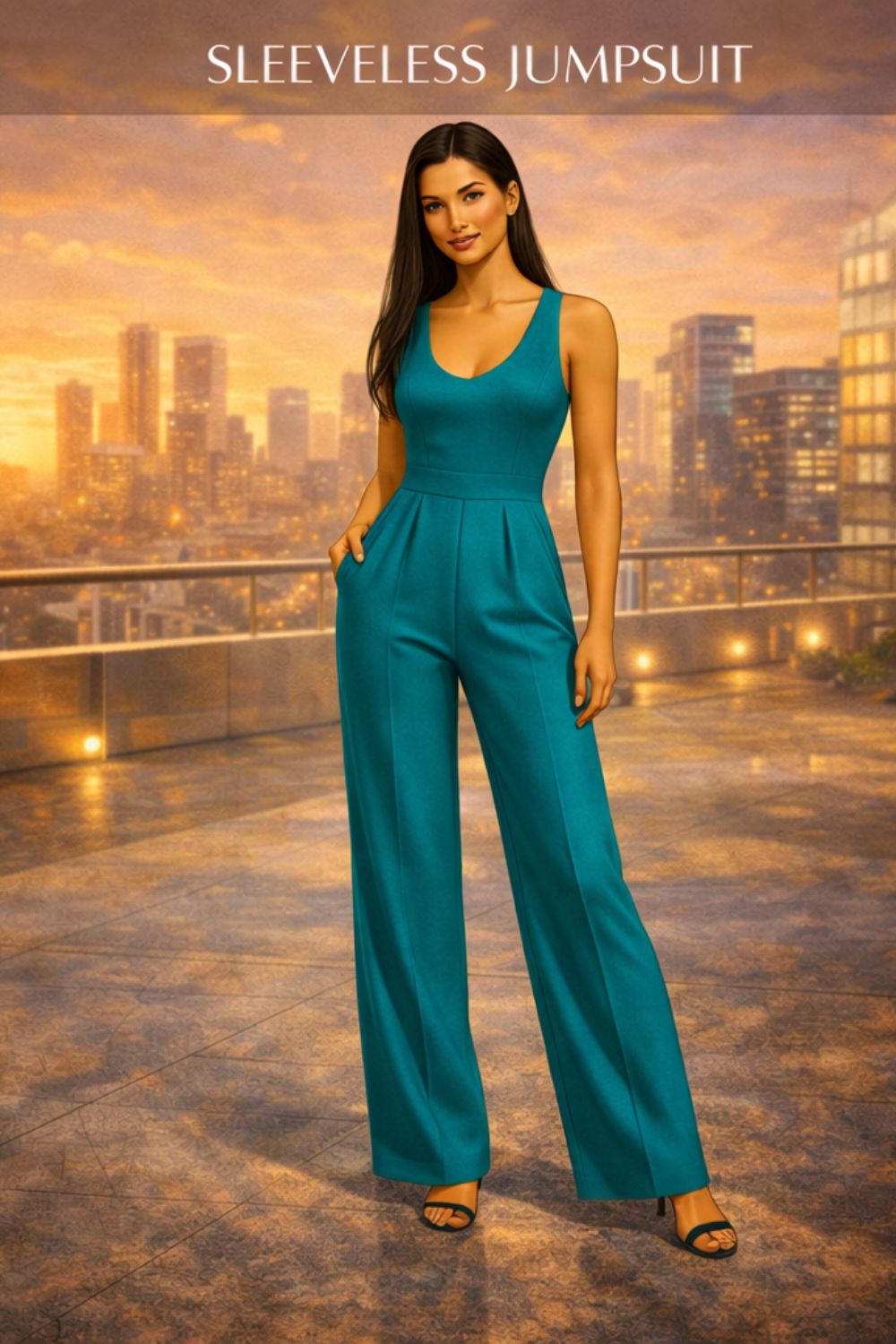
The most versatile sleeve (non-sleeve?) option in the category. A well-cut sleeveless jumpsuit can transition across seasons — add a turtleneck underneath for winter layering, wear it clean through spring and summer, throw a blazer over the top for autumn. It’s genuinely the most adaptable construction option.
For ideas on how to approach layering pieces that work over sleeveless styles, this full guide to cardigans and layering options offers a solid starting point.
🌸 Short-Sleeve Jumpsuit
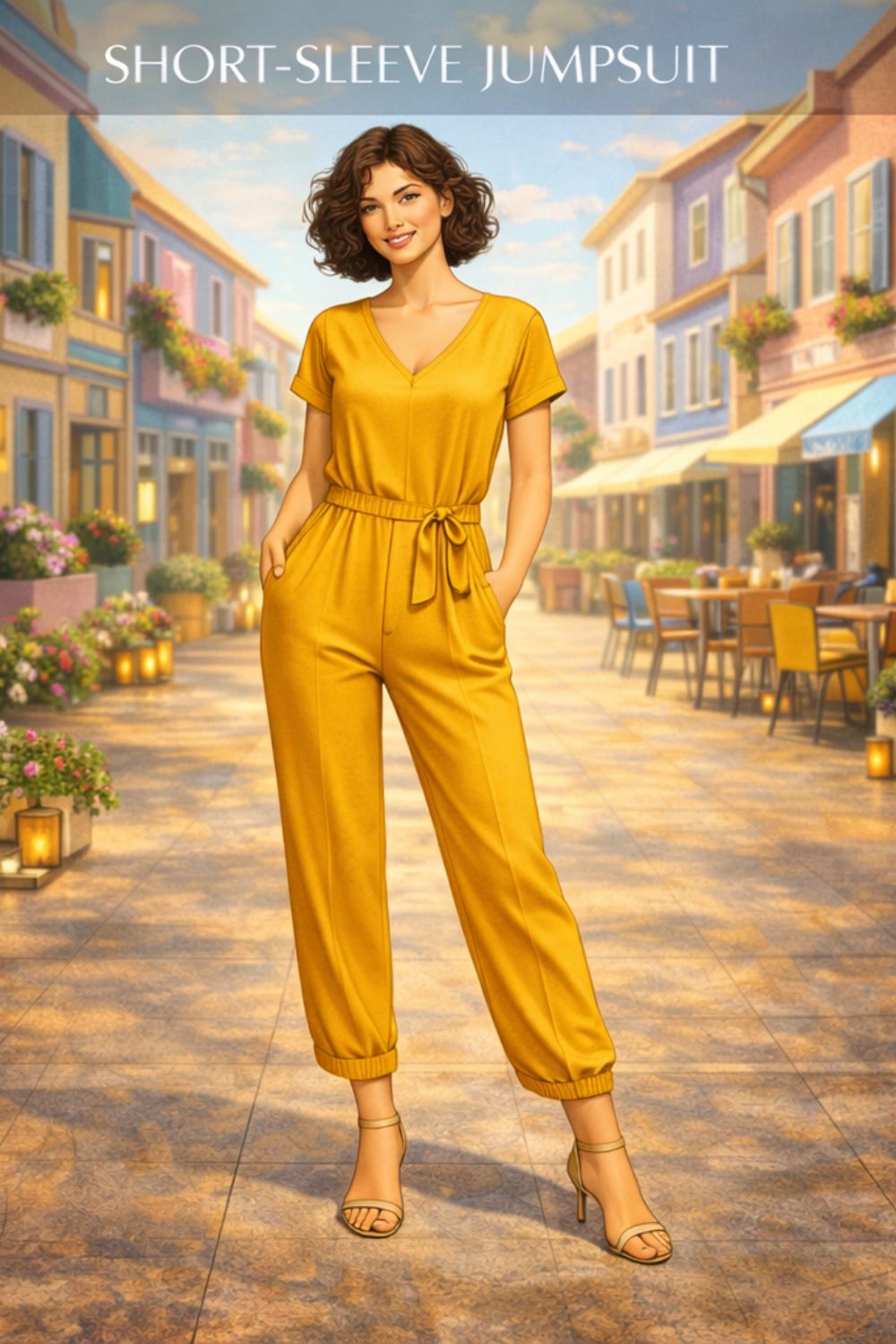
A relaxed, every-day style that sits comfortably between fully bare arms and fully covered. Short-sleeve jumpsuits tend to lean casual — cotton, linen, or jersey constructions for mild-weather wear.
Weekend dressing, casual Fridays, warm-climate travel.
🍂 Long-Sleeve Jumpsuit
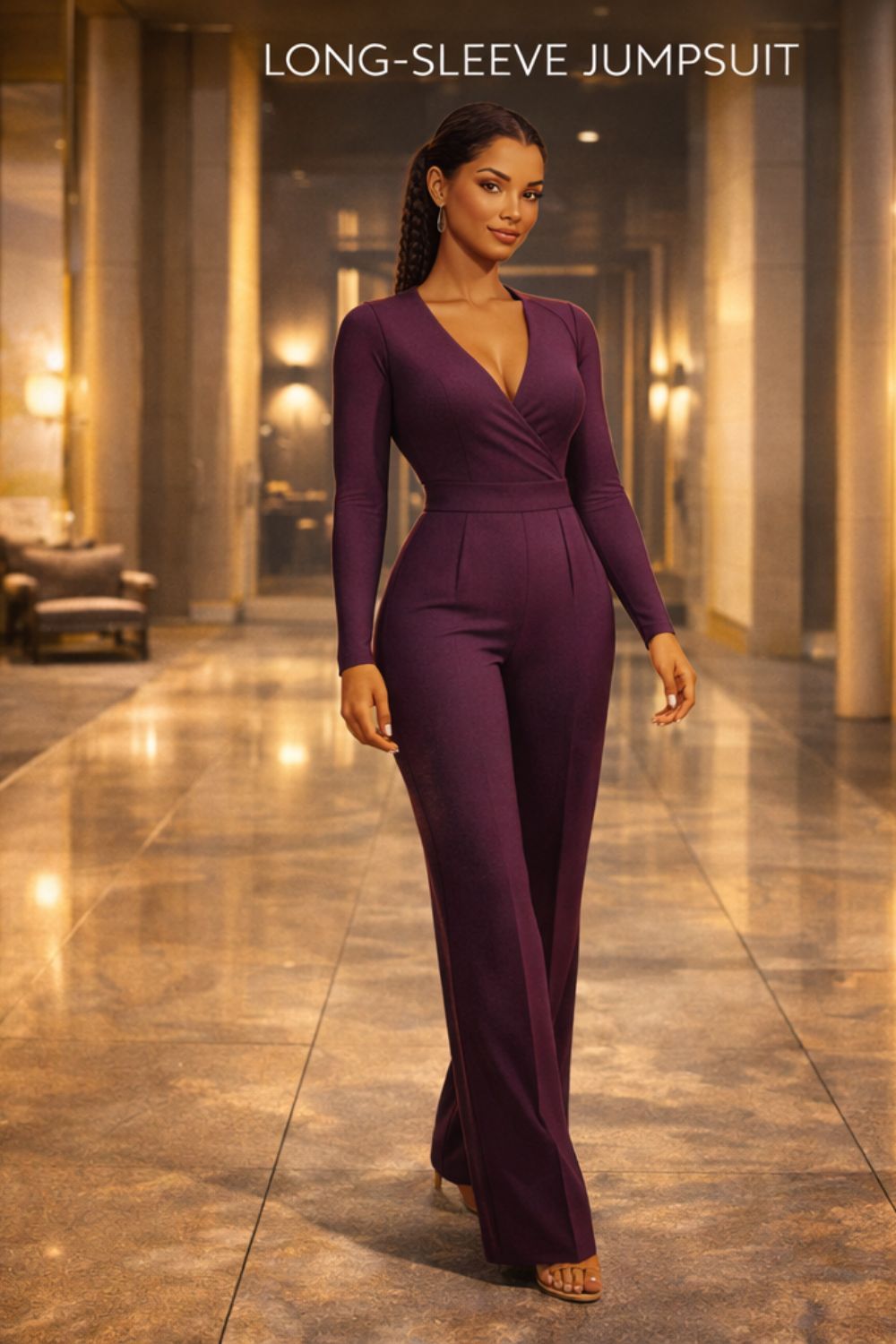
The full-coverage option — and not just for winter. A long-sleeve jumpsuit in lightweight linen works beautifully in humid summer climates where sun protection matters. The same cut in ponte or velvet becomes a cooler-weather staple.
Fitted through the arm, structured at the shoulder — crosses into genuinely formal territory
Jersey or bamboo fabric — closer to elevated loungewear
✨ Puff-Sleeve Jumpsuit
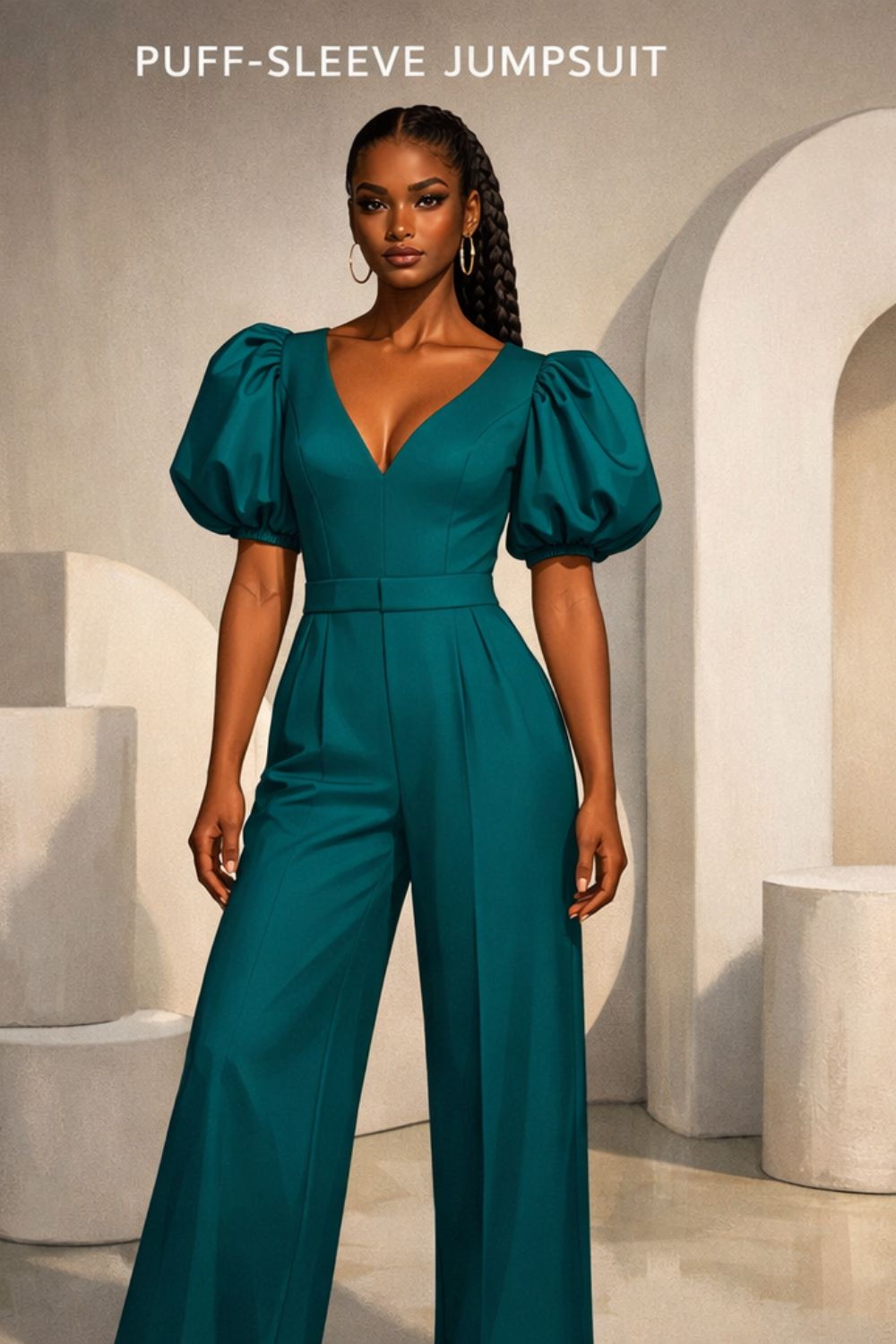
Statement sleeves change the entire character of a jumpsuit. Puff sleeves — gathered or pleated volume at the shoulder, tapering to a fitted cuff — add a sense of occasion and movement that few other design details achieve as effectively.
Construction detail: The cuff is what separates a puff sleeve that looks intentional from one that looks accidental. A fitted, structured cuff at the wrist anchors the volume and gives the eye somewhere to land. Without it, the sleeve can look unfinished.
For the full picture on dramatic sleeve designs, this comprehensive guide to puff sleeve styles covers construction and styling in depth. And for an even broader look at how sleeves shape the overall garment aesthetic, the complete women’s sleeve style reference is worth bookmarking.
💫 Cold-Shoulder Jumpsuit
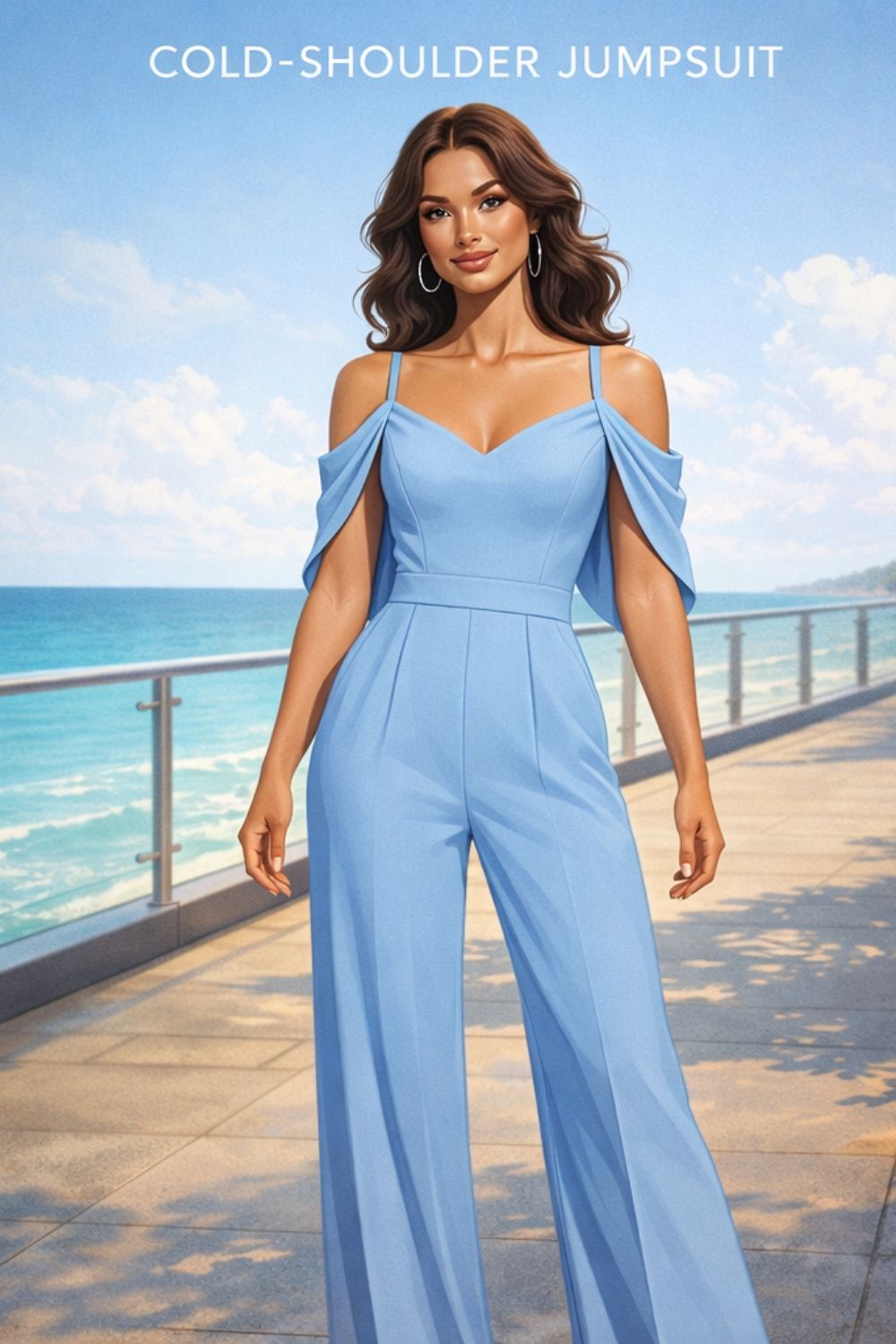
Cutouts at the shoulder point — leaving a gap between sleeve and bodice. It’s a detail that adds visual interest without the full commitment of a sleeveless or strapless design. Flirty and modern, with a slightly editorial quality.
📐 🅔 BY FIT & STRUCTURE
Occasion range and styling versatilityHow a jumpsuit fits through the body — not just the leg — defines its occasion range and styling versatility entirely.
💼 Tailored / Structured Jumpsuit
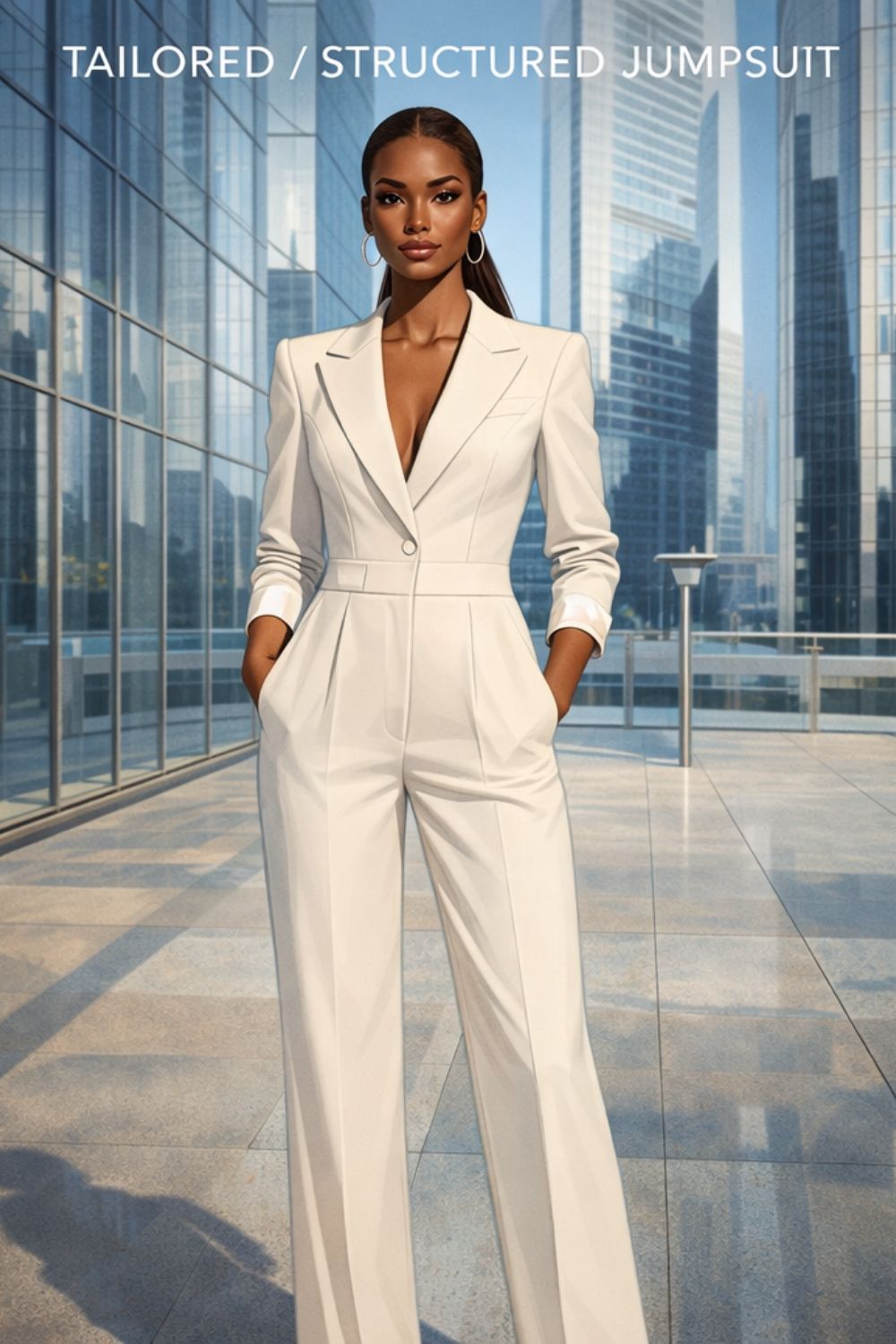
This is the workplace hero of the jumpsuit world. Tailored construction means clean seam lines, precise darts at the waist, structured fabric (think twill, poplin, or ponte), and a fit that holds its shape through a full day of wear.
A well-tailored jumpsuit can absolutely hold its own in professional contexts — and in many modern offices, it reads as more polished than a dress because of its visual decisiveness. The key is fabric weight and finish: matte fabrics in neutral tones (black, navy, camel, ivory) consistently perform better in formal settings than textured or patterned options.
For complete guidance on building a professional wardrobe around pieces like this, this in-depth resource on office outfit formulas is a genuinely useful companion.
😌 Relaxed / Oversized Jumpsuit
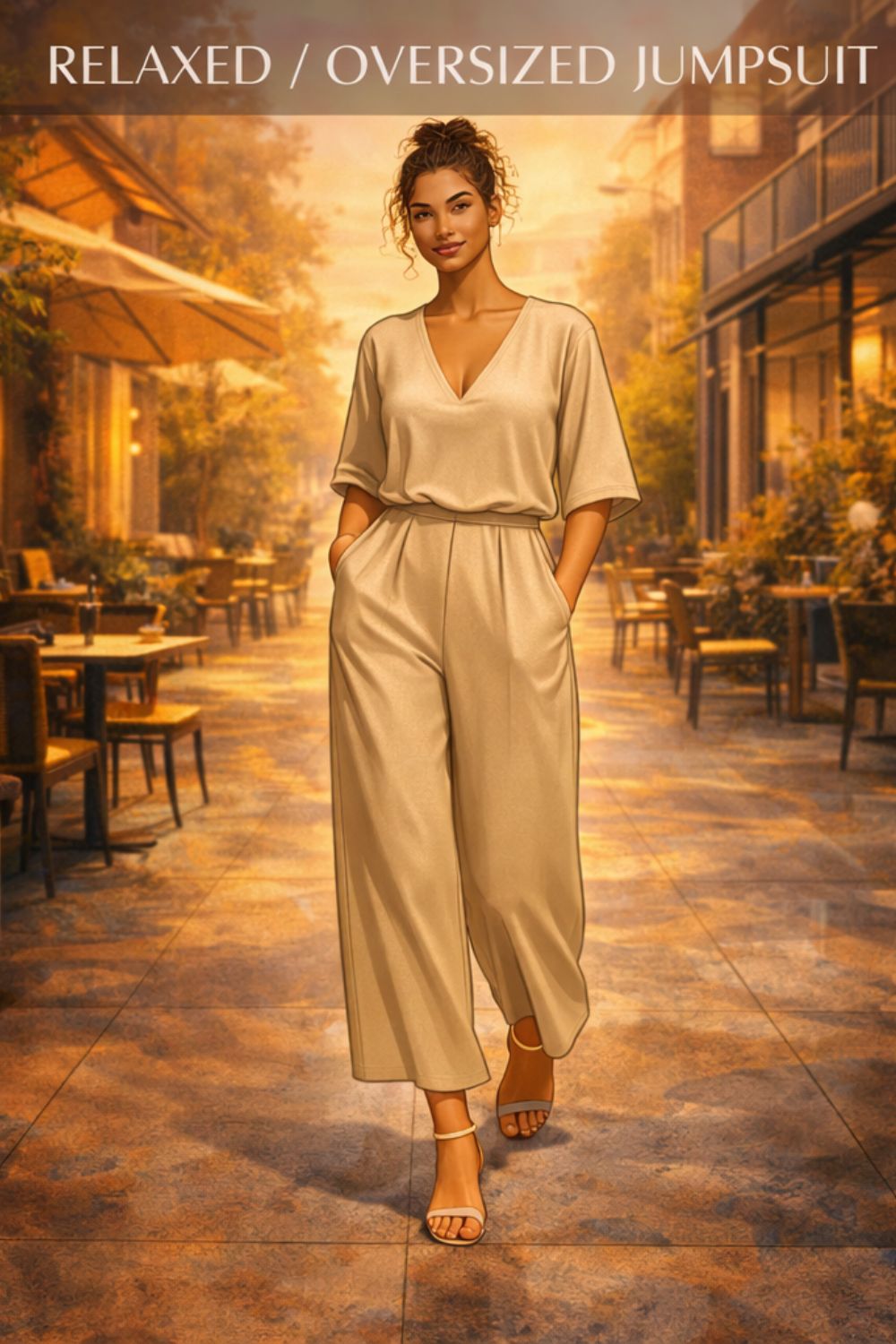
The opposite intention entirely. Where the tailored jumpsuit is precise, the relaxed version is deliberately loose — through the torso, the arms, and often the leg. Think drawstring waist, easy fabrication, zero structural pressure.
Belt it for shape if you want it. Leave it loose for maximum comfort. The versatility of the relaxed jumpsuit is precisely that it doesn’t demand anything of you.
🔥 Bodycon / Form-Fitting Jumpsuit
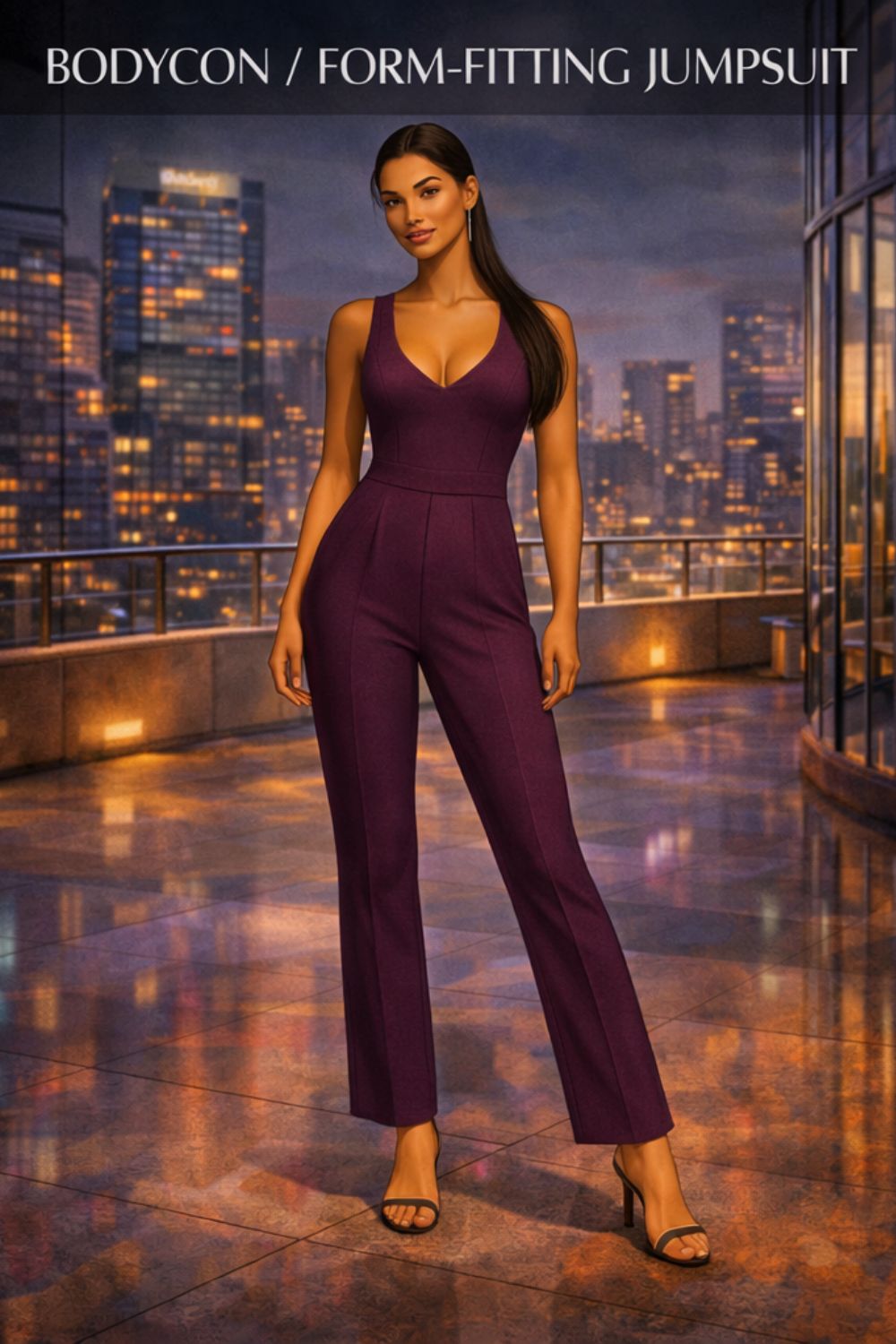
Hugs the body through every contour. Typically constructed in jersey, velvet, spandex-blend, or another stretch fabric that allows movement while maintaining close fit. The visual effect is unapologetically intentional — this is a piece you wear when you want your presence in the room to register immediately.
Construction quality check: Look for four-way stretch fabric (stretches both horizontally and vertically), reinforced seams, and a lining at minimum through the torso. A bodycon jumpsuit with cheap construction will stretch out, sag, or lose shape quickly.
🎀 Wrap Jumpsuit
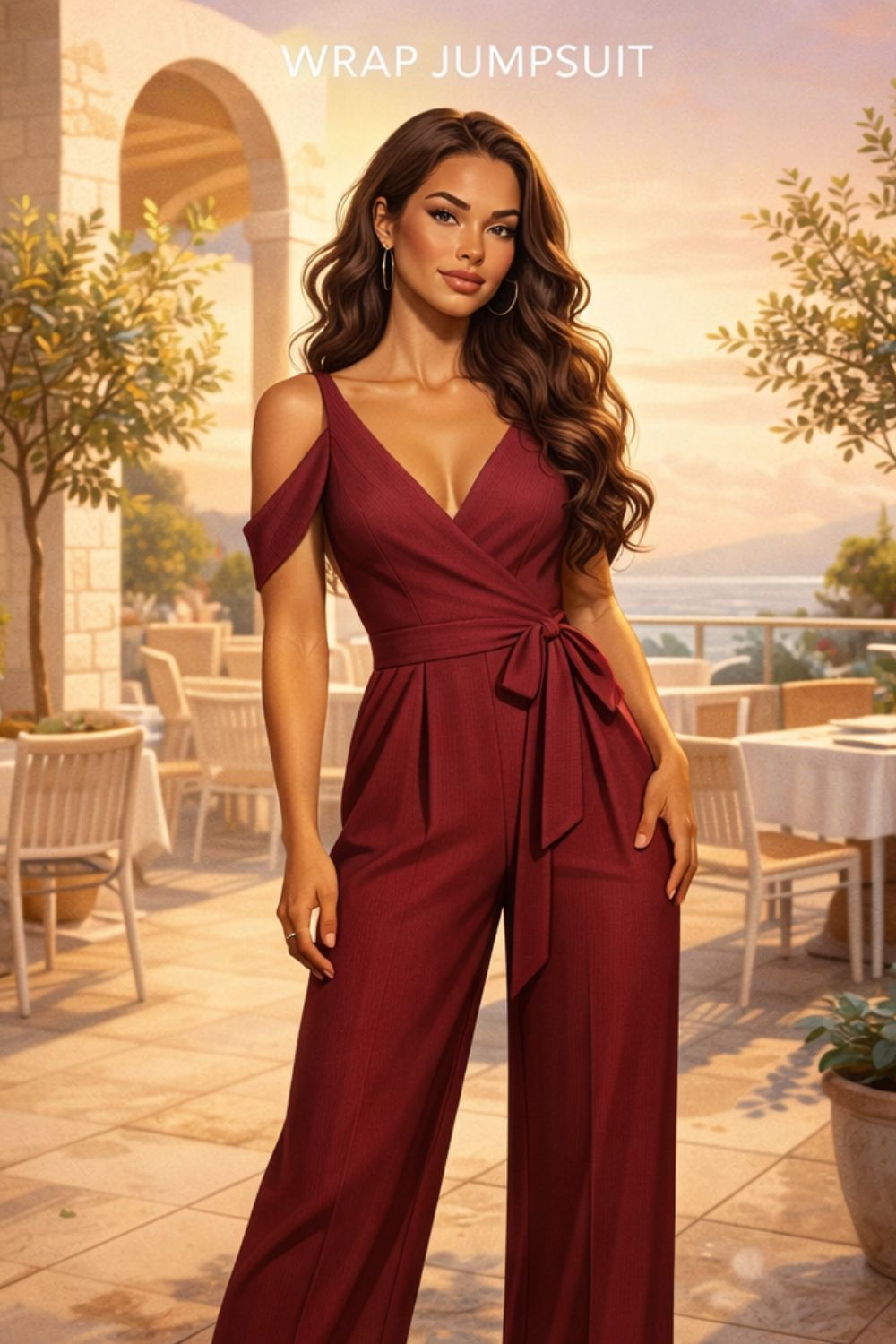
The wrap construction brings adjustable fit into the equation — a significant practical advantage. The front panels cross over each other and typically tie at the waist, allowing the wearer to customize how snug or relaxed the fit feels. This is particularly valuable through the waist and torso.
Wrap jumpsuits tend to be forgiving across a wider range of sizes than standard construction — which is part of why they’ve maintained such consistent popularity since Diane von Furstenberg first popularized the wrap silhouette in the 1970s.
For more on the broader wrap style family, this detailed breakdown of wrap dress variations shows how the construction translates across different garment types.
🧵 🅕 BY FABRIC & MATERIAL
Movement, season, and longevityFabric doesn’t just affect how a jumpsuit looks — it determines how it moves, when you can wear it, how it wears in, and how long it lasts.
In wardrobe editing work, fabric choice is consistently the area where people make the most expensive mistakes. A beautiful silhouette in cheap fabric will always look cheaper than a simpler silhouette in quality material. When in doubt — touch it. If it doesn’t feel good in your hands, it’s not going to feel good on your body.
📋 Fabric Guide: Quick Reference
👖 Denim Jumpsuit
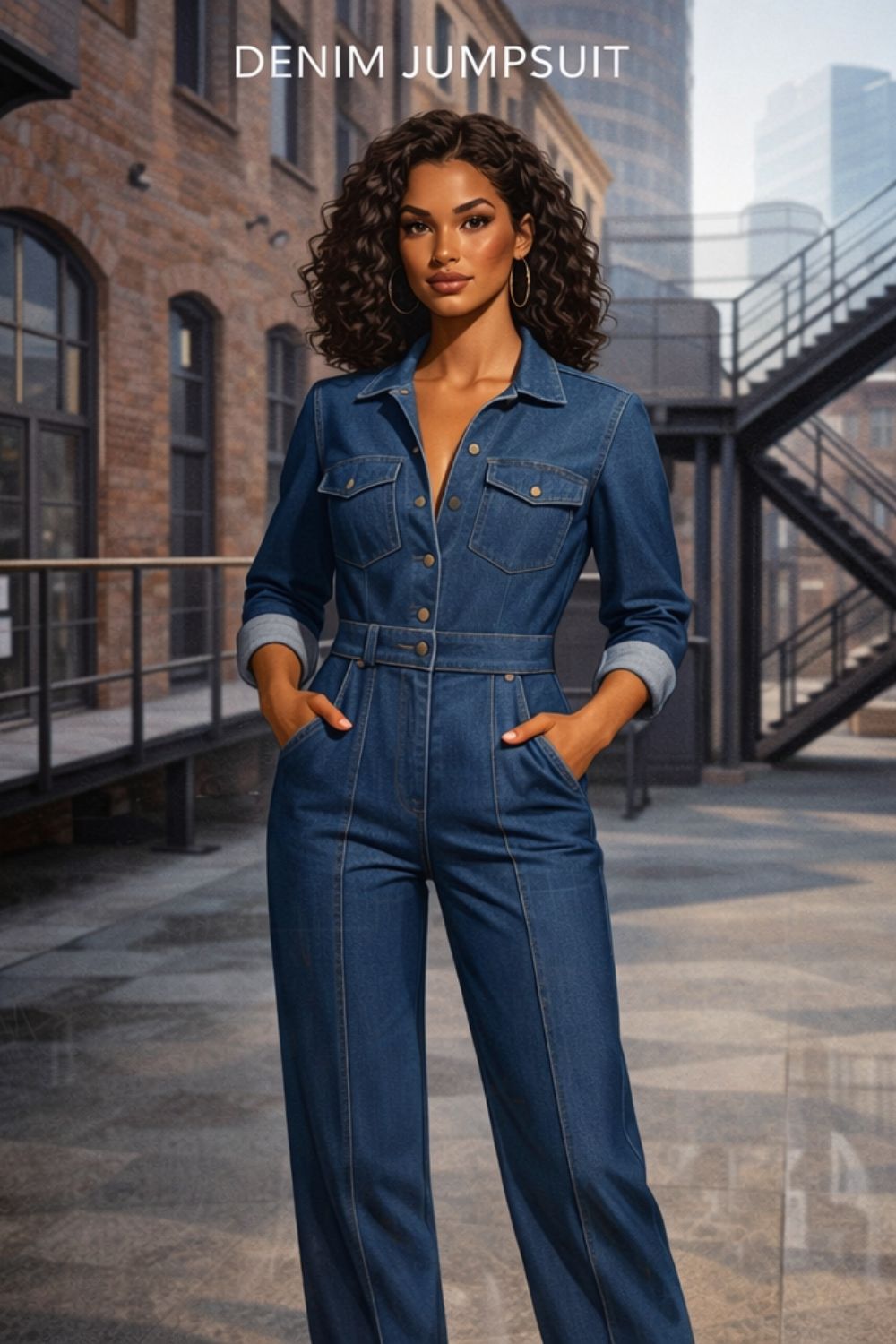
The denim jumpsuit has moved decisively from utilitarian workwear back into the fashion conversation. Chambray-weight denim for summer. Mid-weight classic blue or white denim for year-round wear. Dark-wash tailored denim for evening-adjacent occasions.
Construction variations to know: The classic boilersuit cut. The fitted jacket-style top with straight-leg bottom. The overall-inspired relaxed version with bib front. Each reads quite differently.
🌿 Linen Jumpsuit
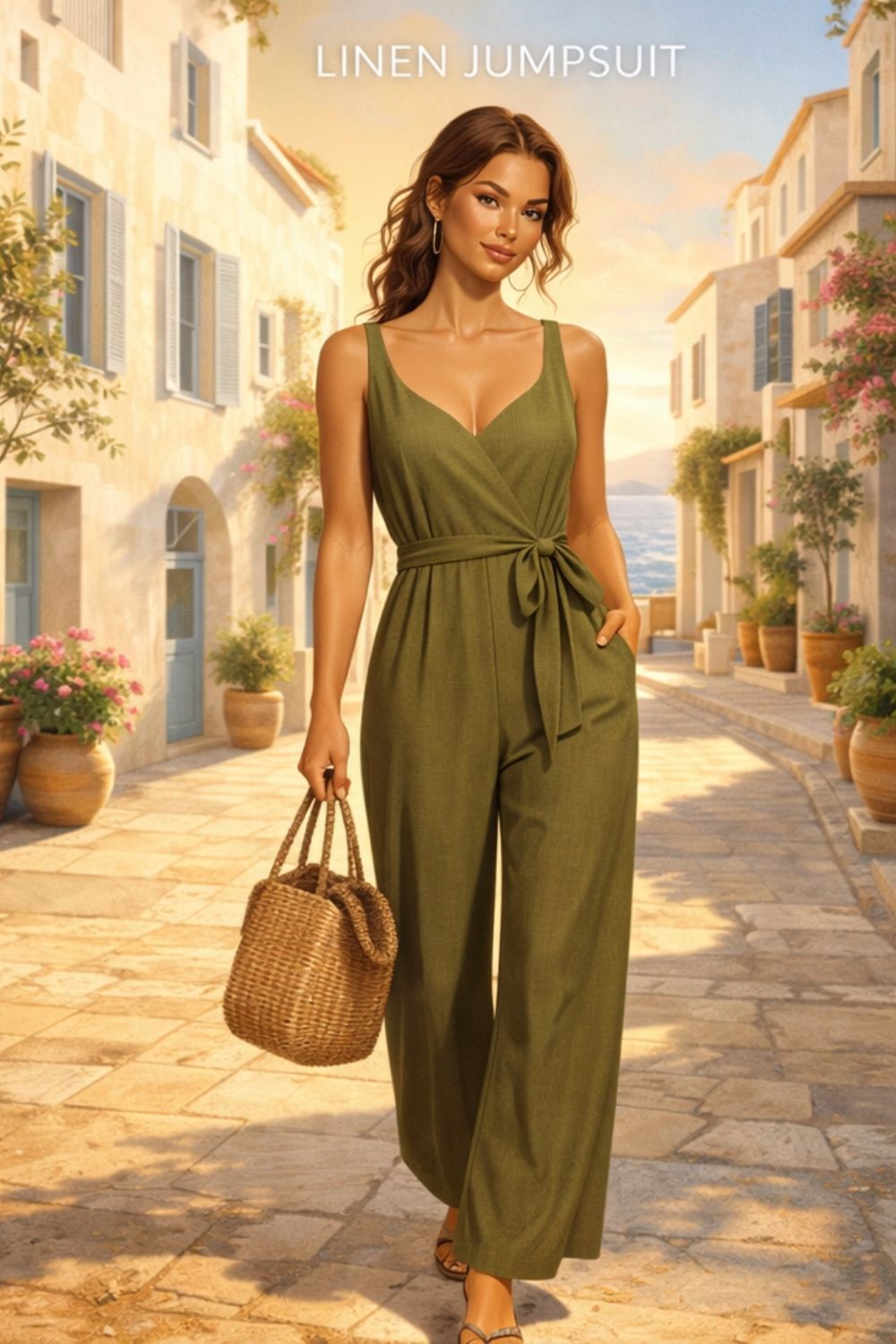
Linen is the summer fabric argument that doesn’t require defending. It breathes. It drapes well in warmer weights. It softens beautifully with wash and wear. Yes, it wrinkles — but the lived-in quality of good linen has its own appeal.
Pair with: Flat leather sandals, woven bags, minimal gold jewelry. The less polished the accessories, the better linen tends to look.
✨ Satin / Silk Jumpsuit
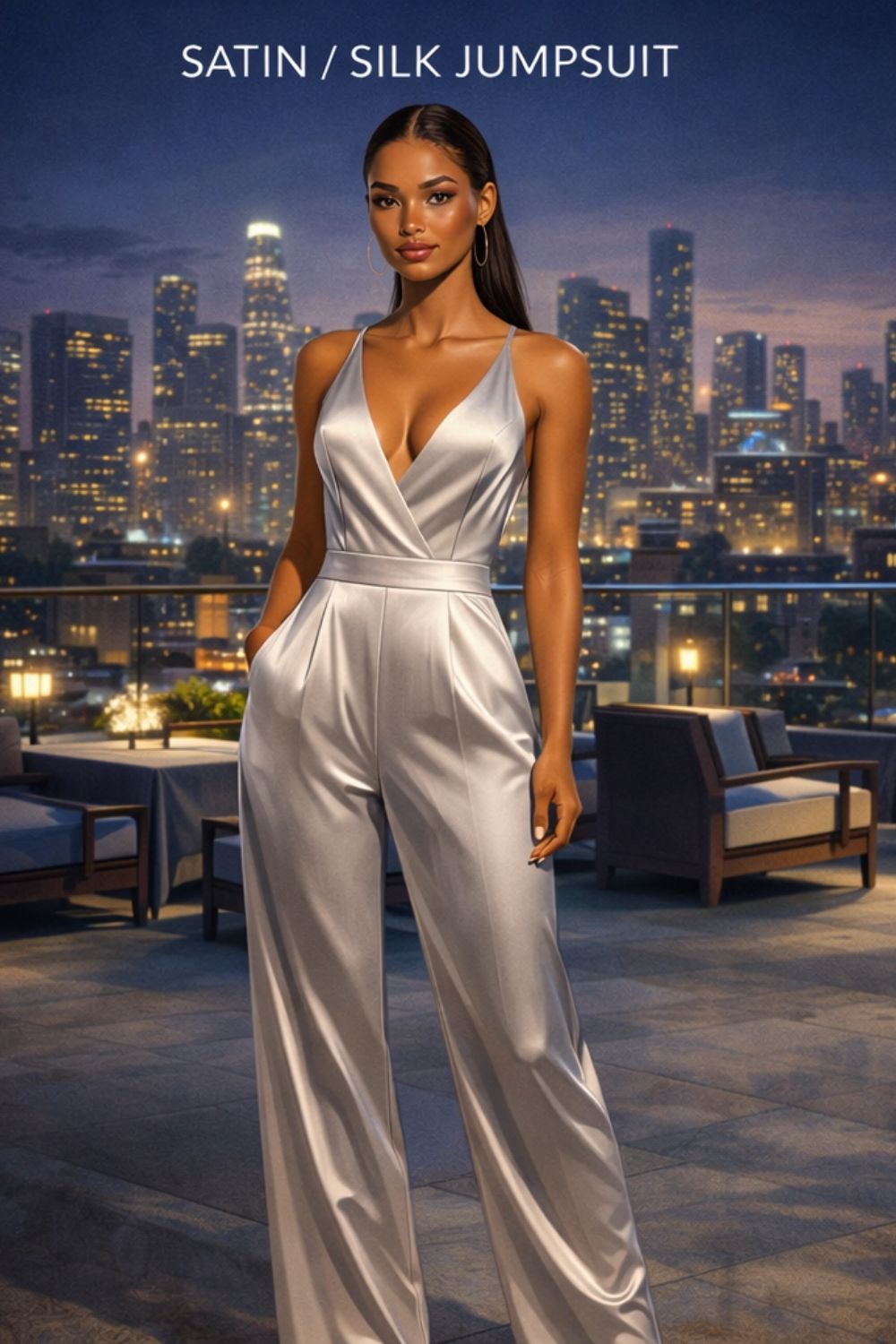
Fluid, confident, and instantly occasion-ready. The way satin and silk move — following the body without clinging — creates a visual elegance that no other fabric quite replicates.
Evening events, formal occasions, celebrations. This is a jumpsuit fabric that doesn’t need much help from accessories; the fabric does the work.
Important buying note: True silk is expensive and requires careful maintenance. High-quality satin-weave polyester can be a strong alternative — look for 100% polyester with a GSM rating above 100 for weight and drape quality.
🎭 Velvet Jumpsuit
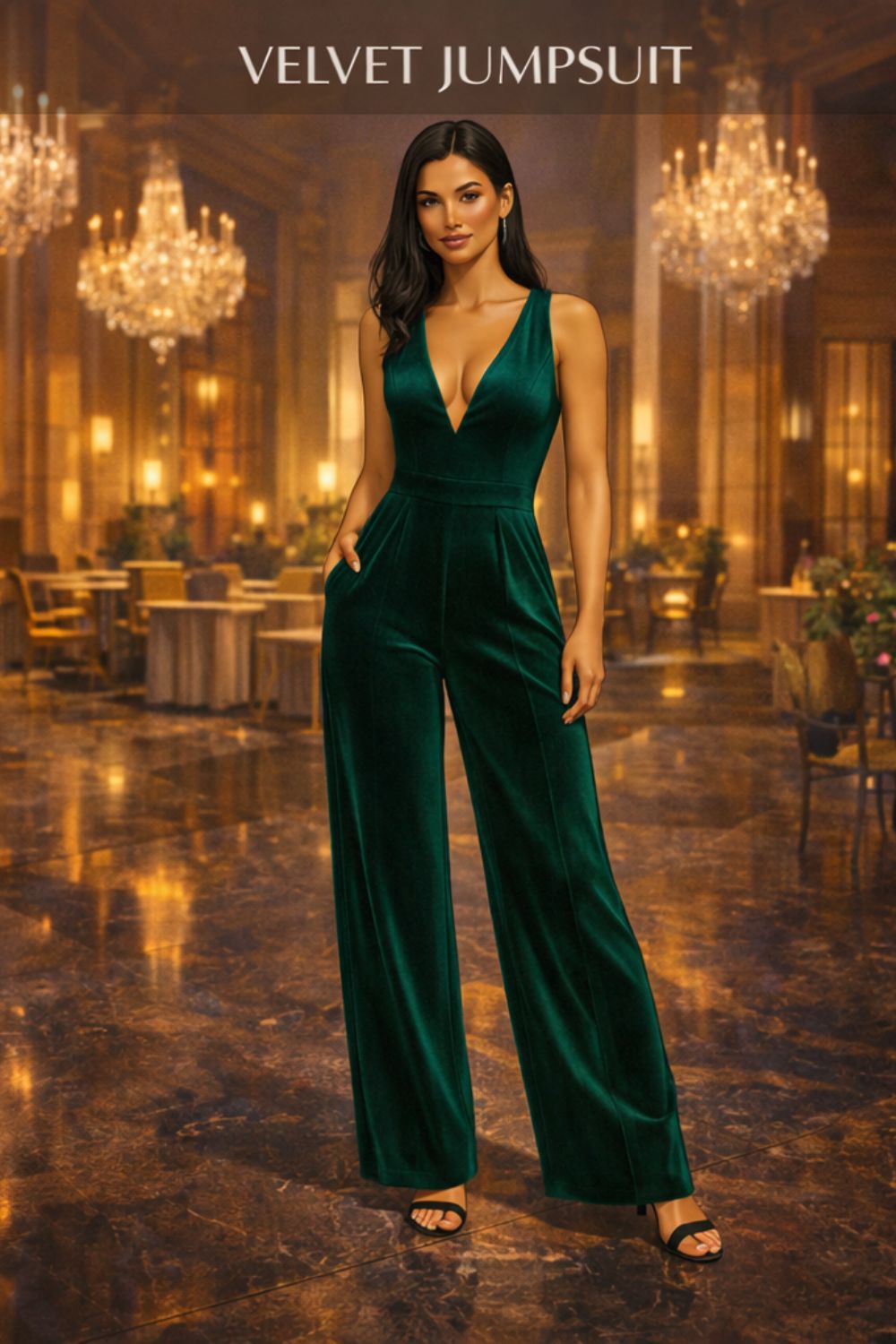
Velvet carries an inherent formality — the depth of color, the soft sheen, the weight. A velvet jumpsuit in deep burgundy, midnight blue, forest green, or black is arguably one of the most evening-appropriate options in this entire guide.
Works beautifully from October through February. In spring and summer, the weight can be overwhelming. Best construction: Look for velvet with some stretch for better movement and comfort through the evening.
🧵 Cotton / Jersey Jumpsuit
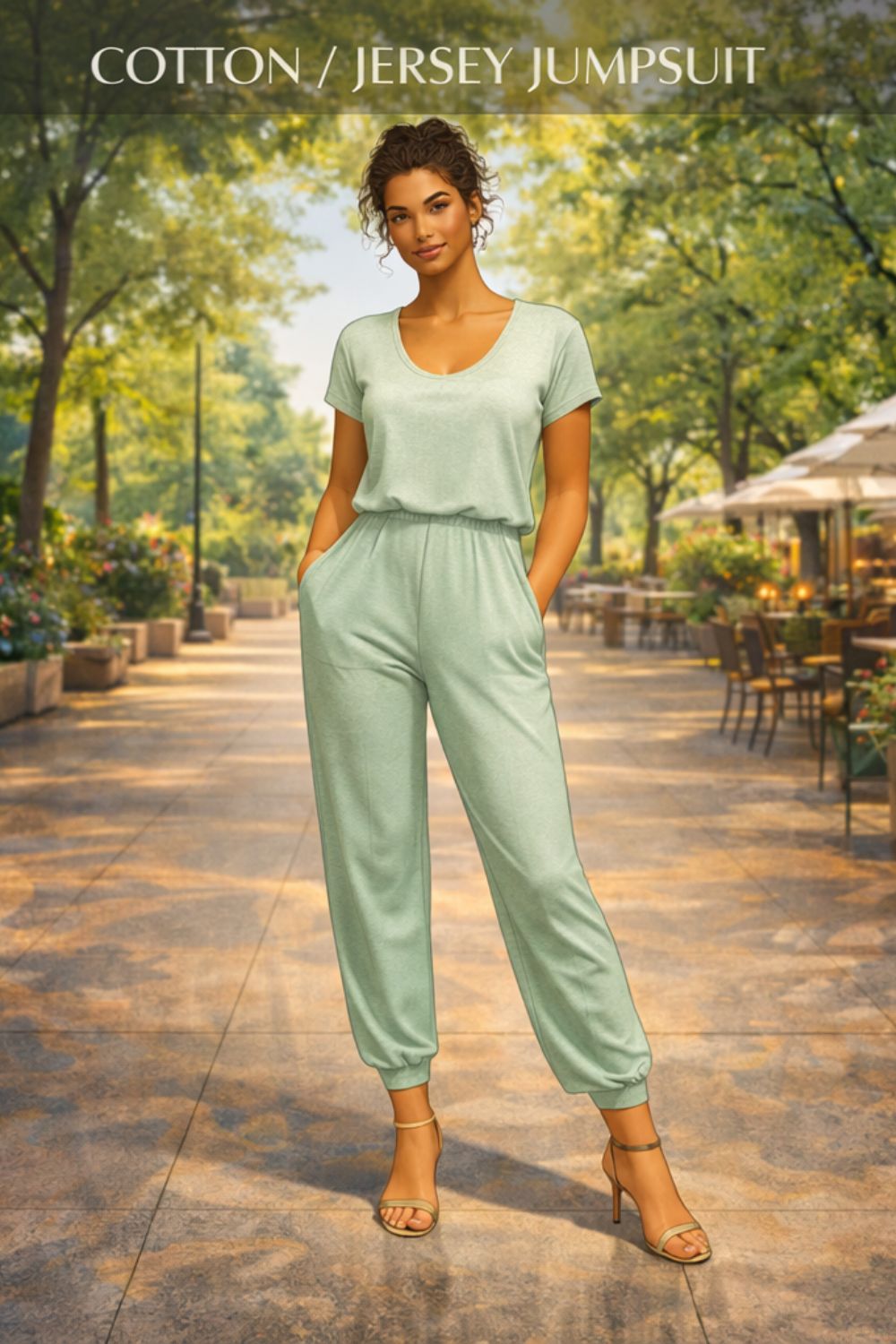
The everyday workhorse. Cotton and jersey constructions prioritize comfort, breathability, and ease — which means the fit tends toward relaxed or casual rather than structured. Drawstring waists, relaxed legs, soft textures. These are the jumpsuits you reach for on low-effort days when you still want to look intentional.
🌸 Chiffon / Lace Jumpsuit
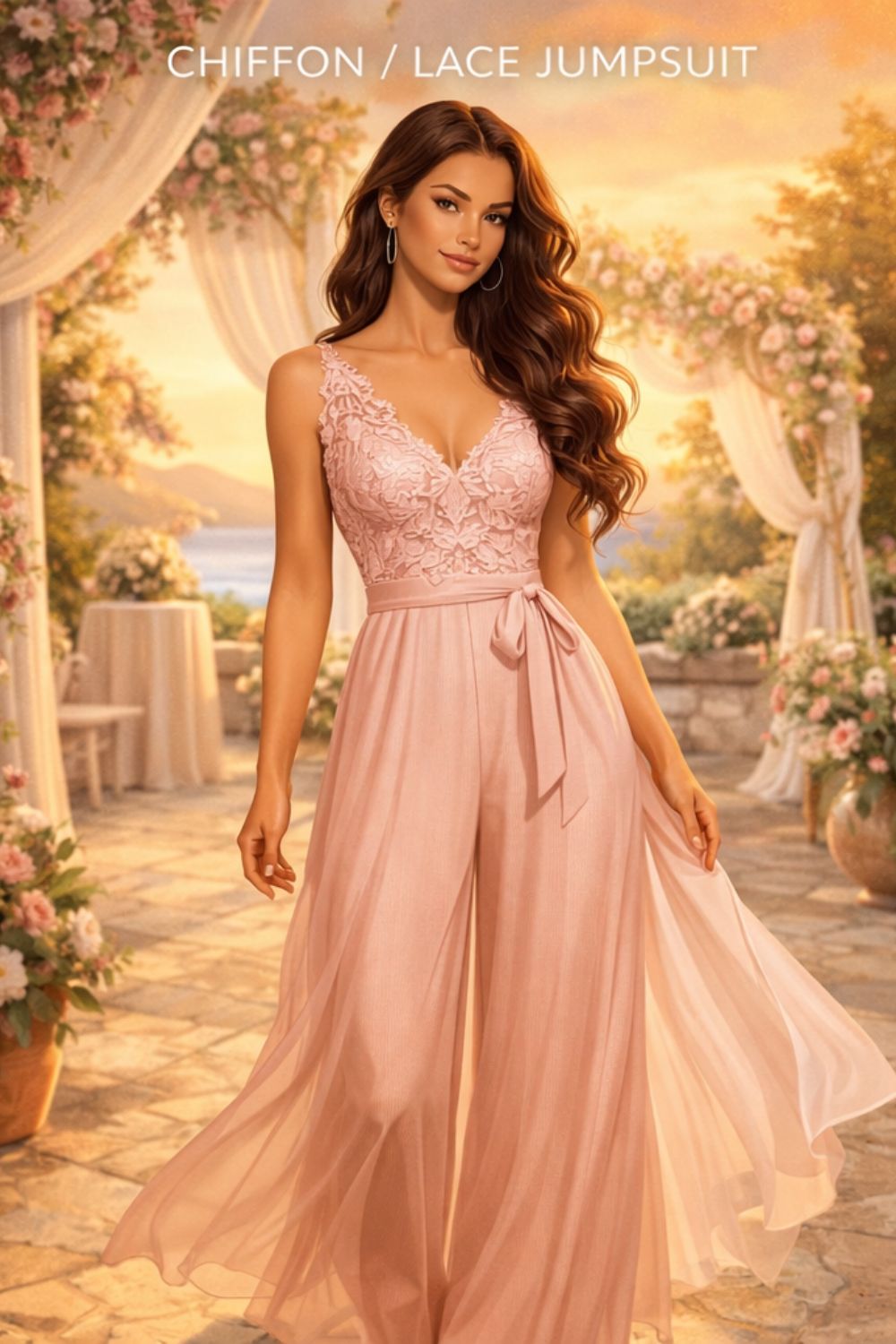
Delicate fabrics that create pieces with a distinctly feminine, occasion-forward quality. Chiffon layers beautifully — many chiffon jumpsuits feature a lining beneath with a floating outer layer that moves constantly.
Lace jumpsuits add texture and pattern without color — which gives them a versatility that printed fabrics sometimes lack. A cream lace jumpsuit with pointed-toe heels is genuinely formal-event appropriate in a way that feels fresh rather than expected.
🖤 Leather / Faux Leather Jumpsuit
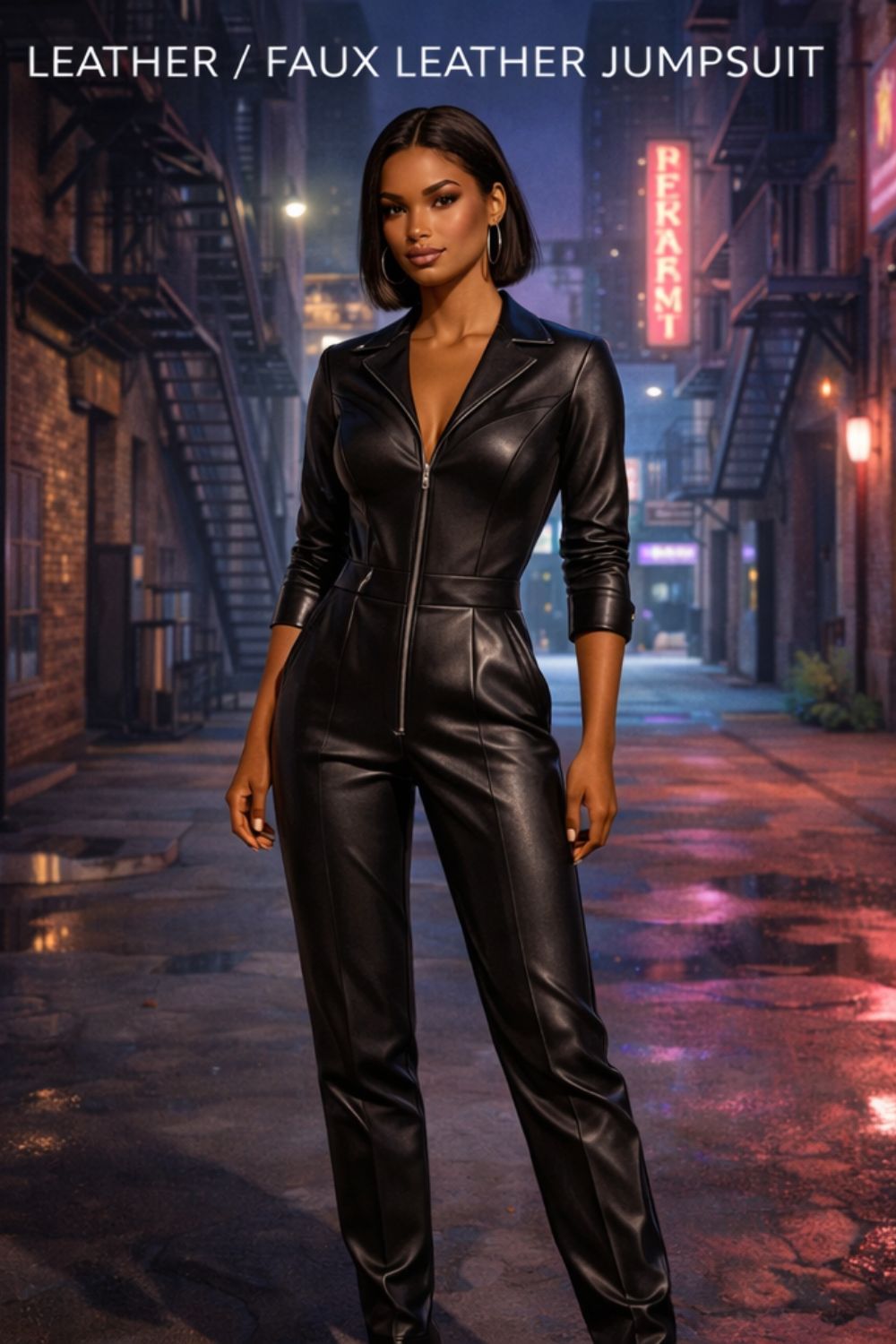
Edgy, bold, and unapologetically statement-making. Leather or faux leather jumpsuits are not daily-driver pieces — they’re the “I know exactly what I’m doing tonight” option. The construction tends to be slim to fitted, as the material doesn’t have the drape to support wide-leg or palazzo silhouettes effectively.
Faux leather quality note: Look for PU leather with a fabric backing rather than a purely plastic-feel construction. The backing improves durability, reduces cracking, and allows slightly better breathability.
🧶 Knit / Ribbed Jumpsuit
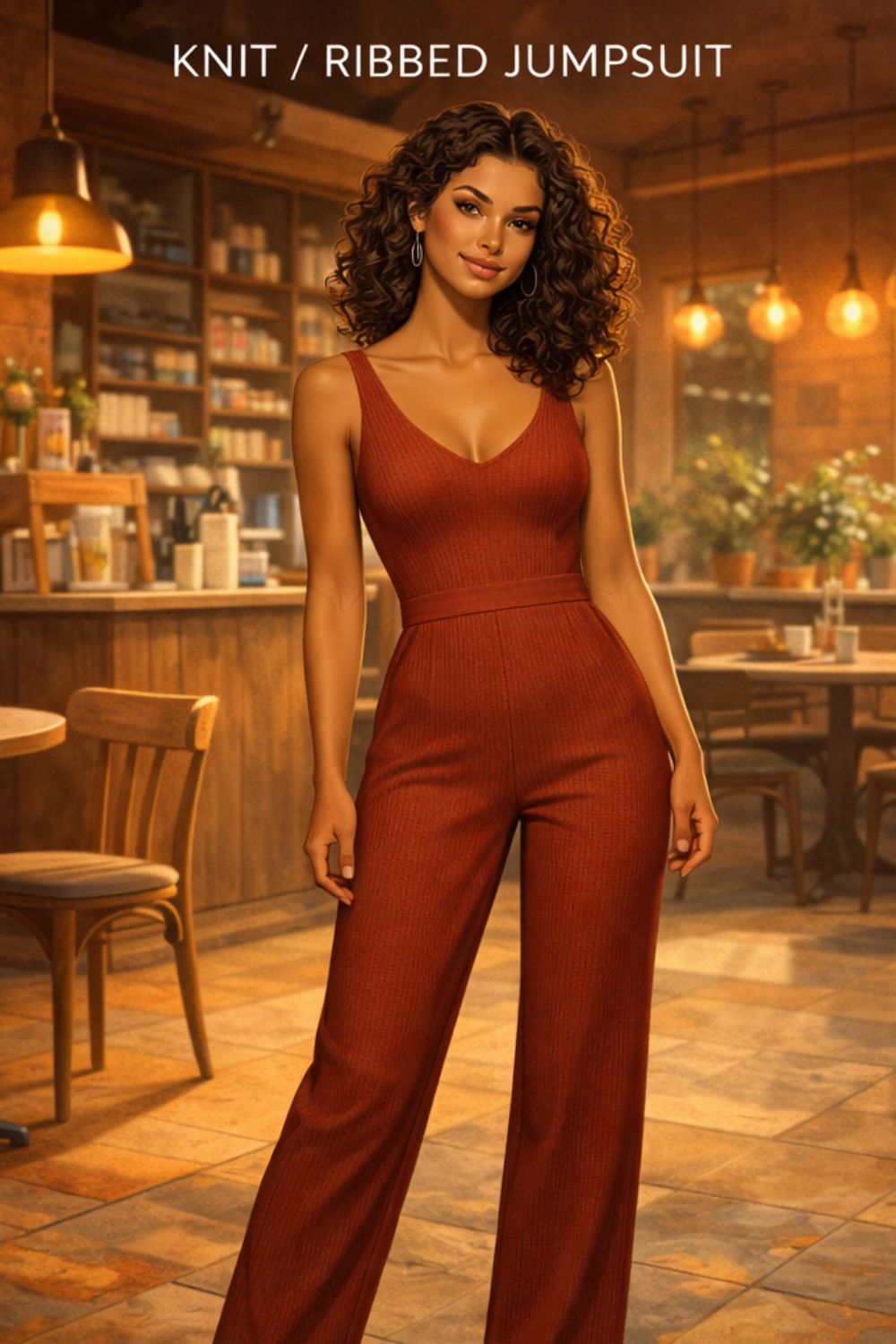
Soft, stretchy, cozy — and surprisingly versatile once you move past their loungewear reputation. A well-cut ribbed jumpsuit in a neutral tone can actually work for casual social occasions, not just at-home wear. Think elevated comfort dressing rather than strict loungewear.
Best in fall and winter. Look for versions with a tighter rib gauge for better shape retention.
♻️ Sustainable Fabric Jumpsuit
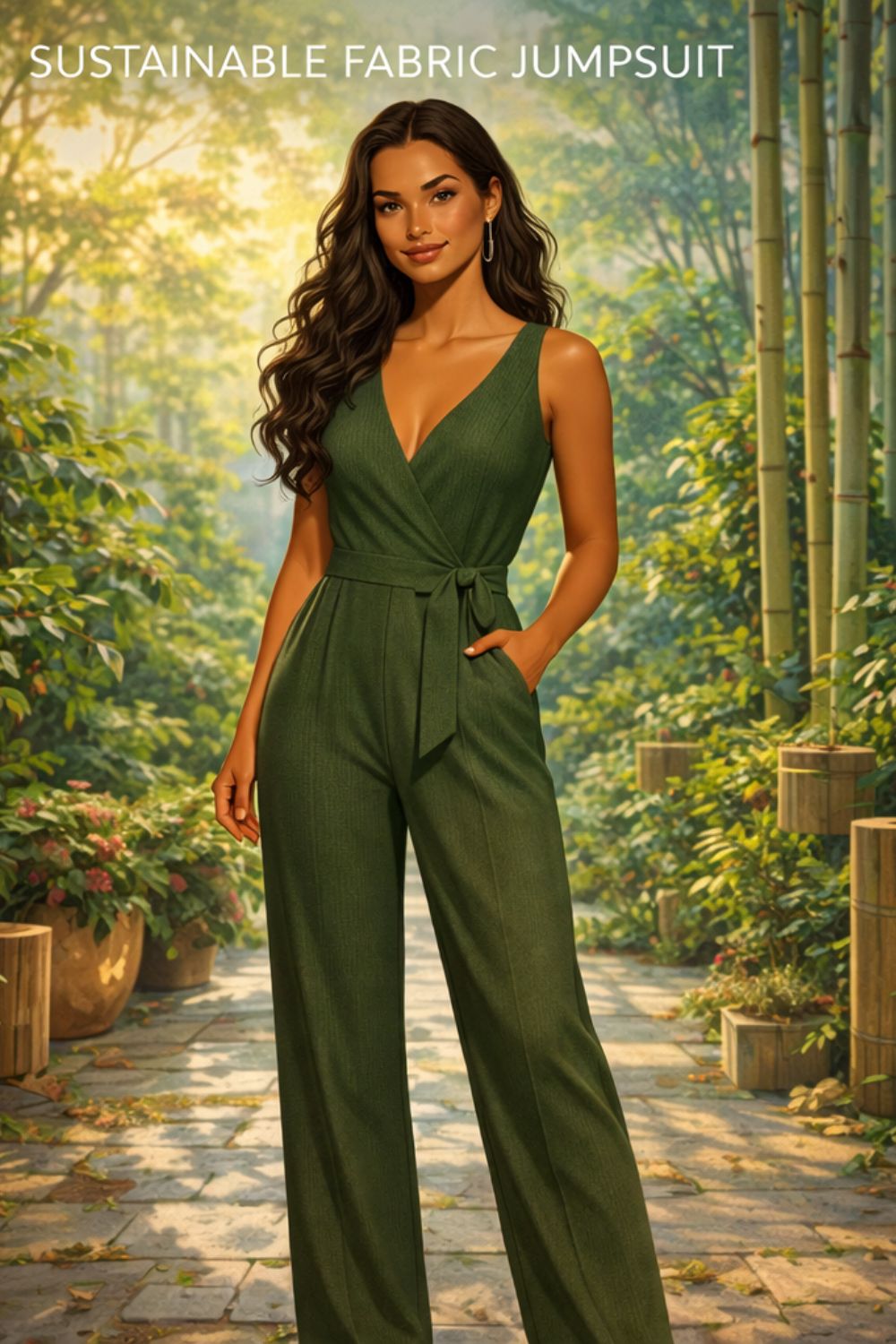
This is a category that’s growing faster than most people realize. Organic cotton, bamboo, TENCEL (lyocell), recycled polyester, and hemp-blend fabrics are increasingly available in jumpsuit constructions that match conventional fabrics on quality and finish.
What to look for: GOTS (Global Organic Textile Standard) certification for organic cotton. OEKO-TEX certification for non-toxic dyes and processes.
🎉 🅖 BY OCCASION
The right jumpsuit for the right momentThe same jumpsuit silhouette in different fabrics and finishes can cover almost every occasion on the spectrum. But choosing the right version for the context matters.
| Jumpsuit Type | Casual | Smart-Casual | Work | Evening | Travel | Resort |
|---|---|---|---|---|---|---|
| 🧵 Casual Cotton | ✓ | — | — | — | ✓ | ✓ |
| 👔 Tailored Twill | — | ✓ | ✓ | ✓ | — | — |
| ✨ Satin/Silk | — | — | — | ✓ | — | ✓ |
| 🌿 Linen | ✓ | ✓ | — | — | ✓ | ✓ |
| 👖 Denim | ✓ | ✓ | — | — | ✓ | ✓ |
| 🏃 Athleisure | ✓ | — | — | — | ✓ | — |
| 🎭 Velvet | — | — | — | ✓ | — | — |
☀️ Casual Everyday Jumpsuit
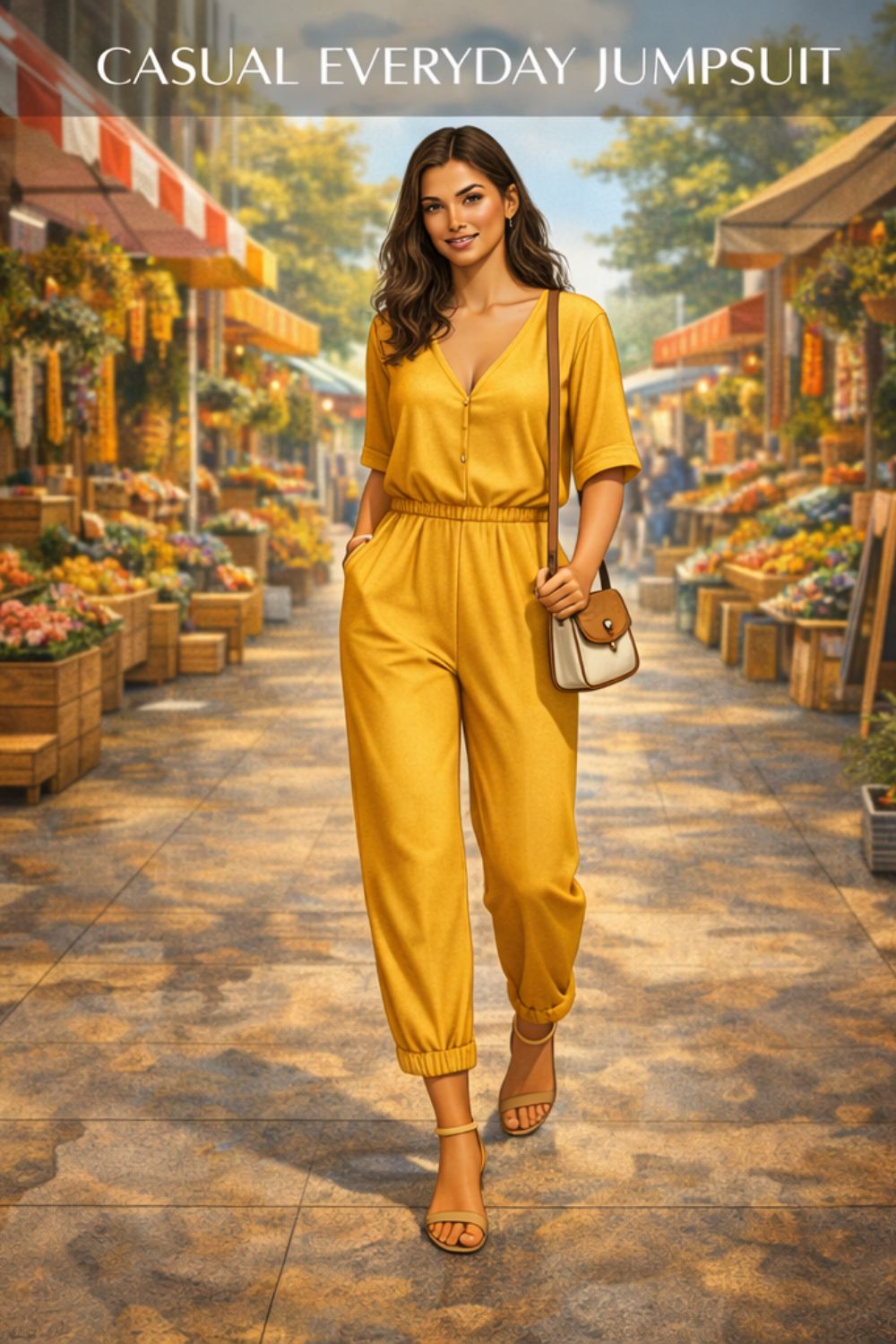
The honest truth about casual jumpsuits is that they succeed precisely because they remove a daily decision without sacrificing style. One piece. Done. Modern casual jumpsuits lean toward relaxed silhouettes, interesting textures, and wearable prints — offering a consistent aesthetic coherence.
💼 Work / Office Jumpsuit
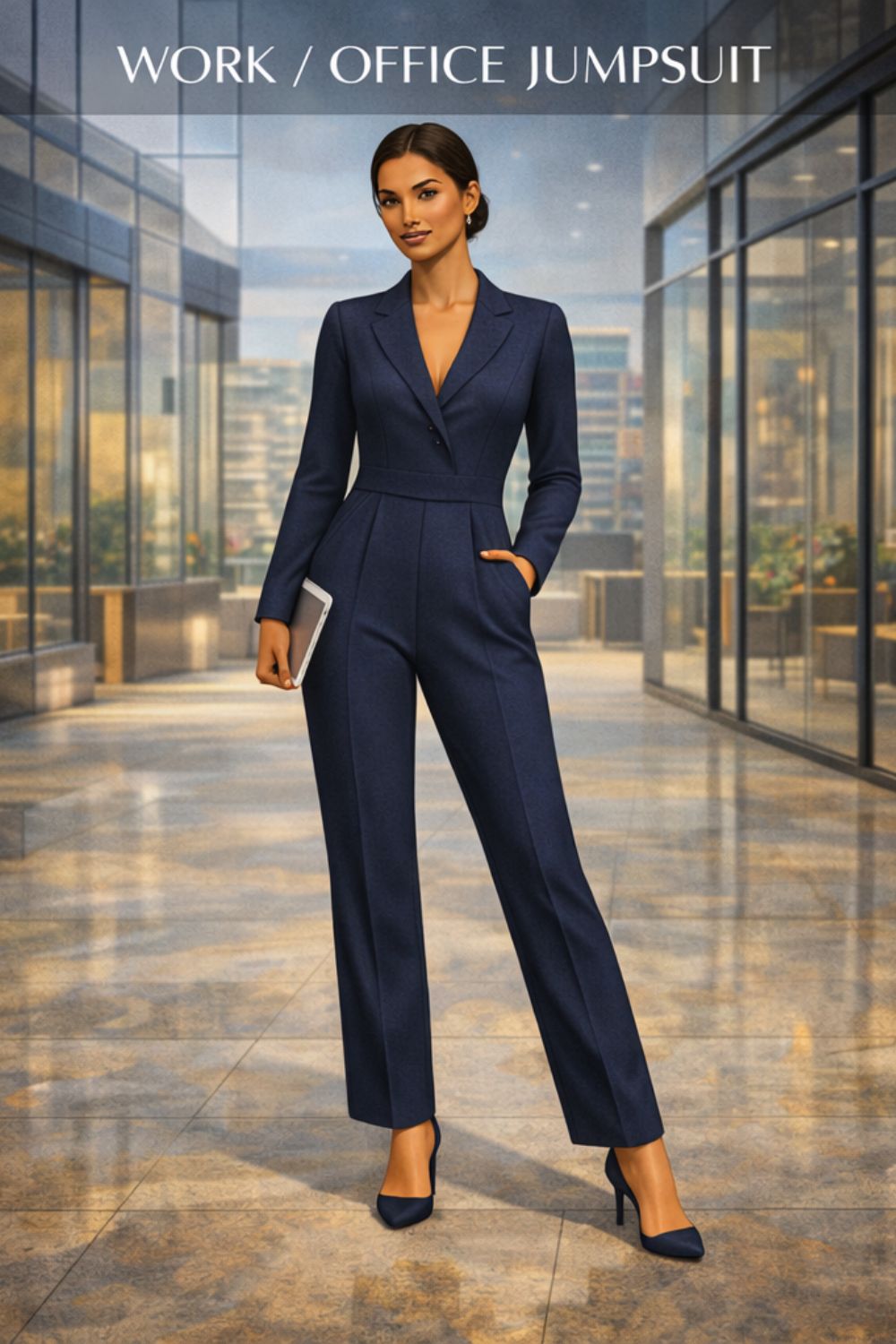
Can you wear a jumpsuit to work? Short answer: yes. Longer answer: fabric, cut, and color do a significant amount of the contextual signaling that a suit would traditionally handle.
A tailored jumpsuit in twill, poplin, or structured ponte, in a neutral or muted color palette, with minimal embellishment — reads as professional in the vast majority of modern office environments. Swap sandals for pointed-toe flats or low heels, and the transformation is immediate.
Professional tailoring tip: If a jumpsuit fits perfectly through the shoulders but is slightly loose through the waist, a tailor can add darts or a stay-belt seam to improve the waist definition. This single alteration often makes a significant difference.
✨ Evening / Formal Jumpsuit
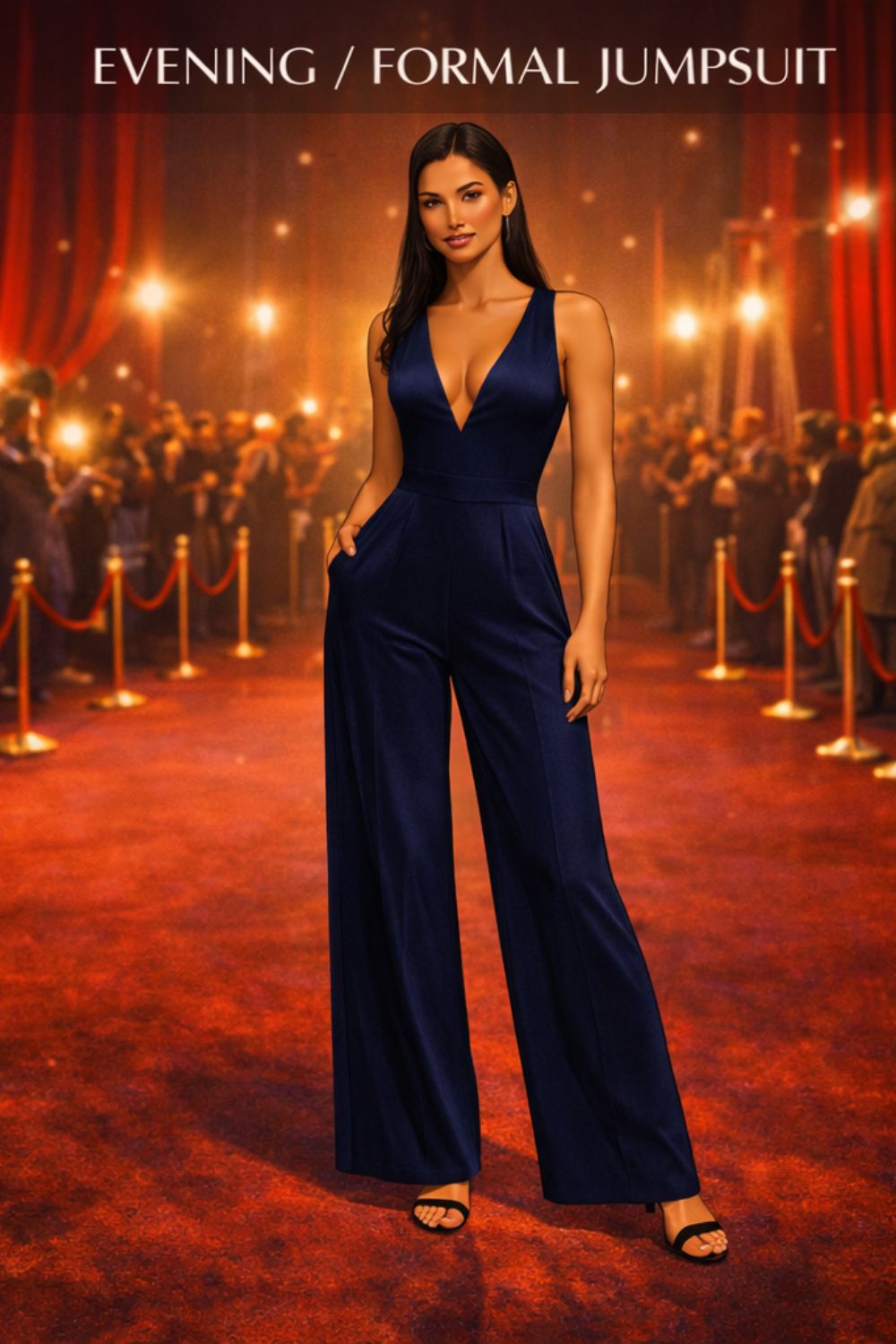
Evening jumpsuits have evolved from “bold fashion choice” to legitimate occasion wear in their own right. A strapless velvet jumpsuit. A deep-V satin design with wide-leg trousers. A plunge-neck embellished version for a gala or formal dinner. These are pieces that can absolutely hold their own in formal contexts — and often read as more interesting than a traditional dress.
🏃 Athleisure / Active Jumpsuit
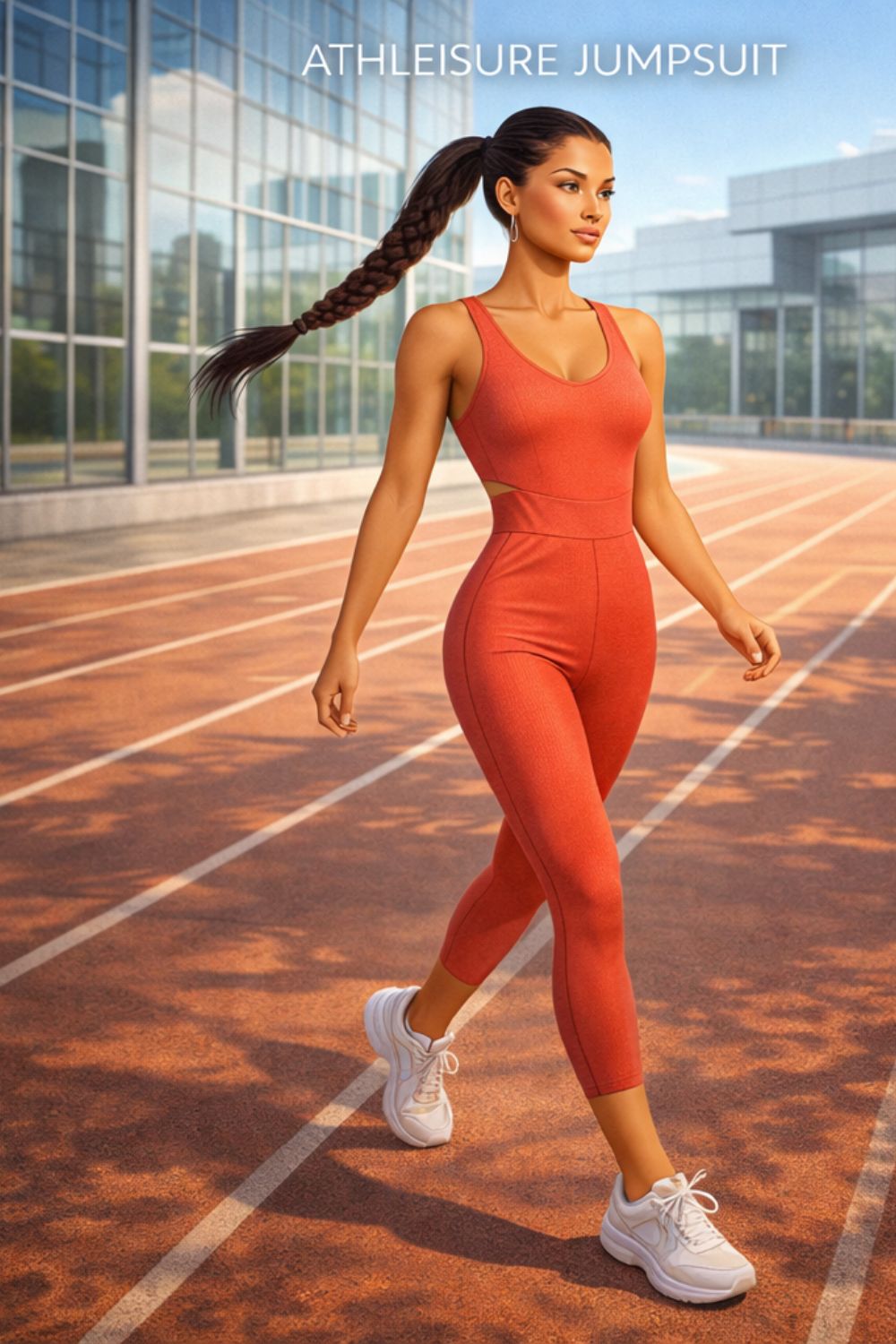
Built for movement, designed to look intentional. The athleisure jumpsuit genuinely does double duty — constructed from performance fabrics (moisture-wicking, four-way stretch, compressive knit) but cut in a way that works equally for a gym session and a coffee run afterward.
The styling formula is predictably consistent: clean sneakers, minimal accessories, a structured bag that bridges active and casual.
💒 Bridal / Wedding Guest Jumpsuit
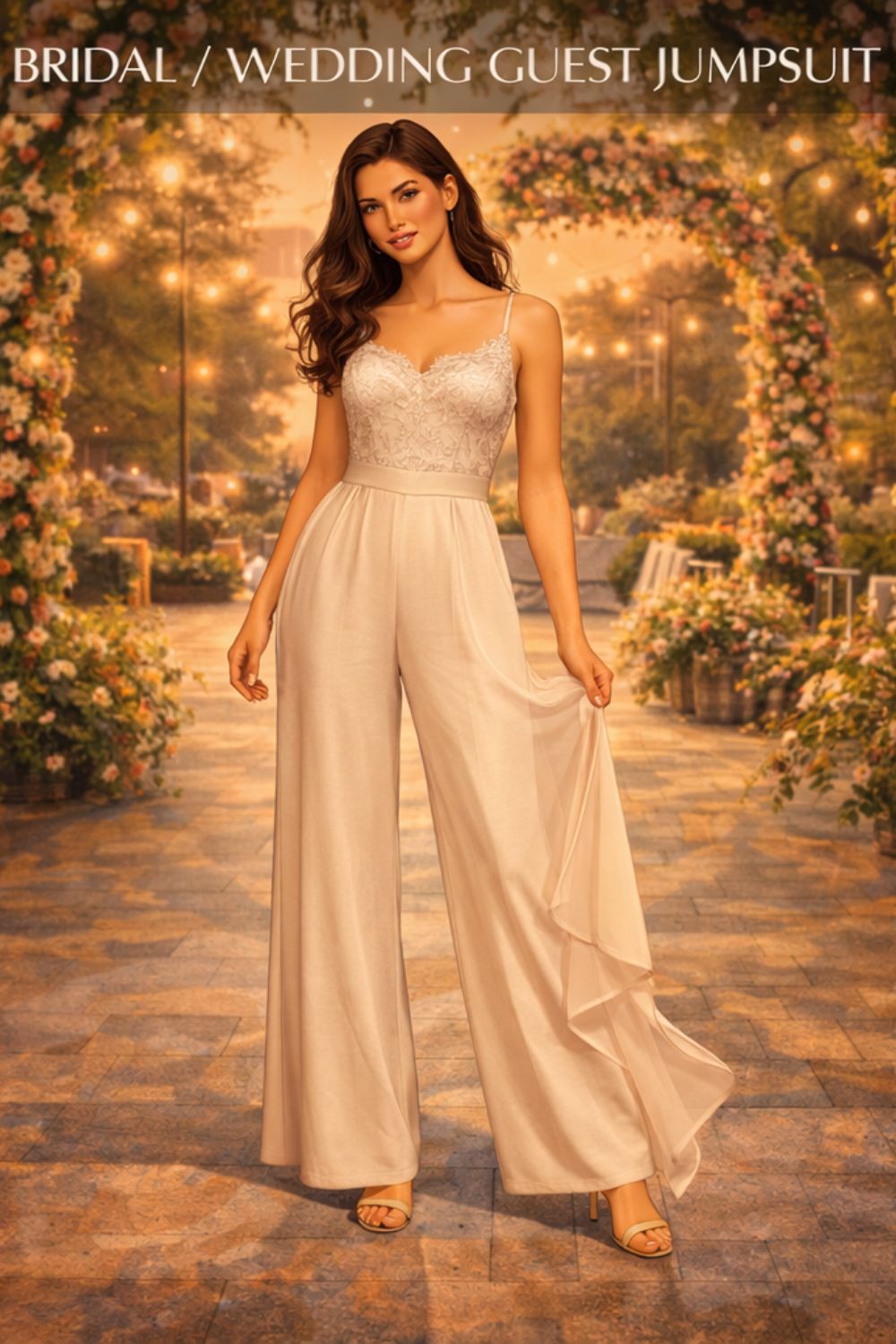
White, ivory, blush, champagne, or soft neutrals — the bridal jumpsuit has become a genuinely accepted alternative to the traditional wedding dress, and for good reason. It tends to be significantly more comfortable for extended wear, photographs beautifully, and often allows more confident movement throughout a full wedding day.
For wedding guests, a jumpsuit in a sophisticated solid or subtle print reads as properly occasion-appropriate in most modern wedding settings. Just avoid anything too casual in fabric, and ensure the formality of the piece matches the event’s dress code.
✨ 🅗 BY STYLE AESTHETIC
Distinct visual identitiesBeyond occasion and construction, jumpsuits carry distinct aesthetic identities — some tied to specific subcultures, fashion movements, or historical moments.
🔧 Boiler Suit
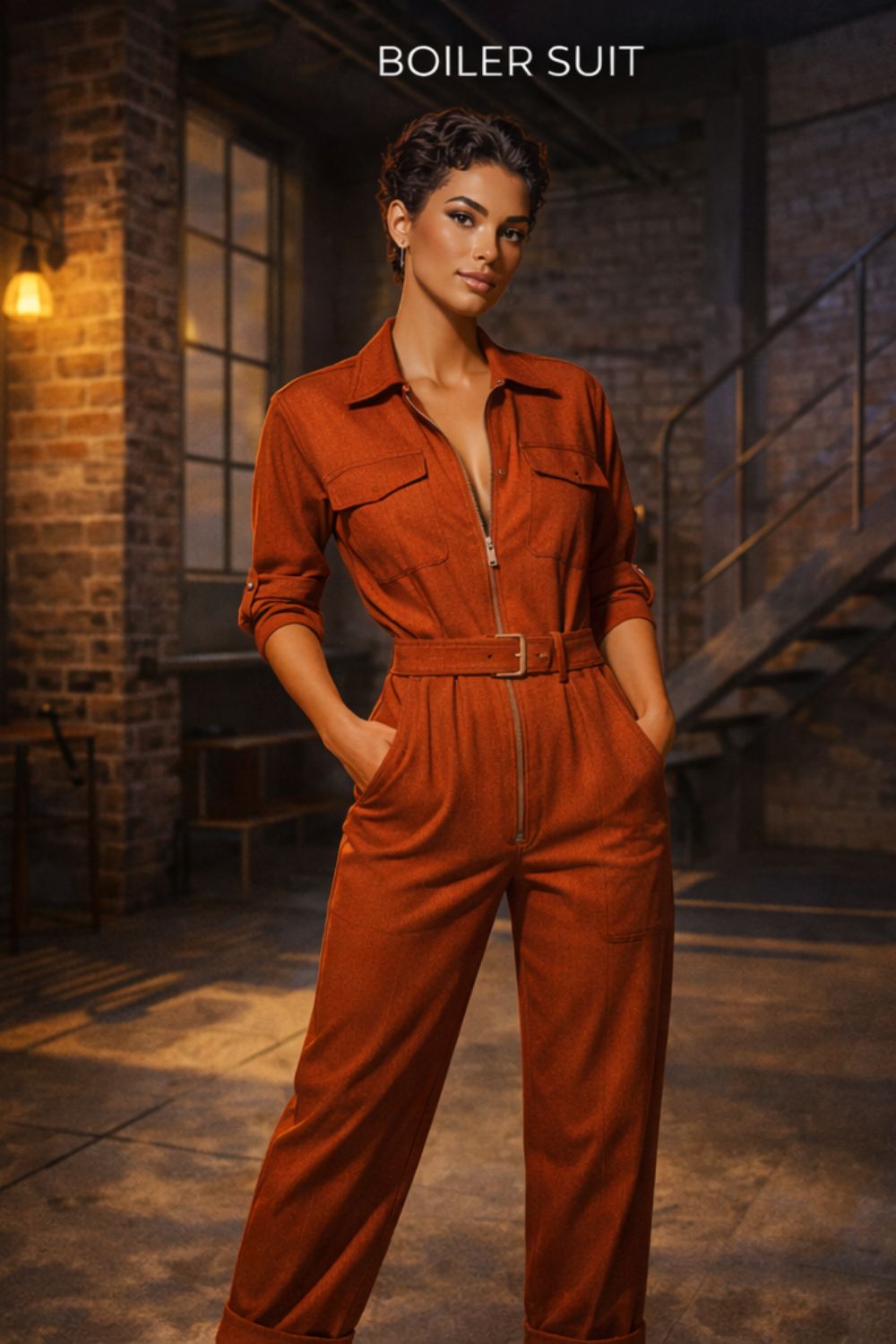
The boiler suit has an honest working-class history — designed for factory and industrial workers in the early 20th century, with a utilitarian brief that had nothing to do with style. Its contemporary fashion iteration is considerably more self-aware.
Today’s boiler suit borrows the relaxed, straight-cut silhouette and functional details (large pockets, snap or zipper closure, slightly boxy cut) but executes them in fashion fabrics — denim, cotton twill, linen, even checked wool for autumn. The resulting aesthetic is relaxed but deliberate.
🎒 Utility Jumpsuit
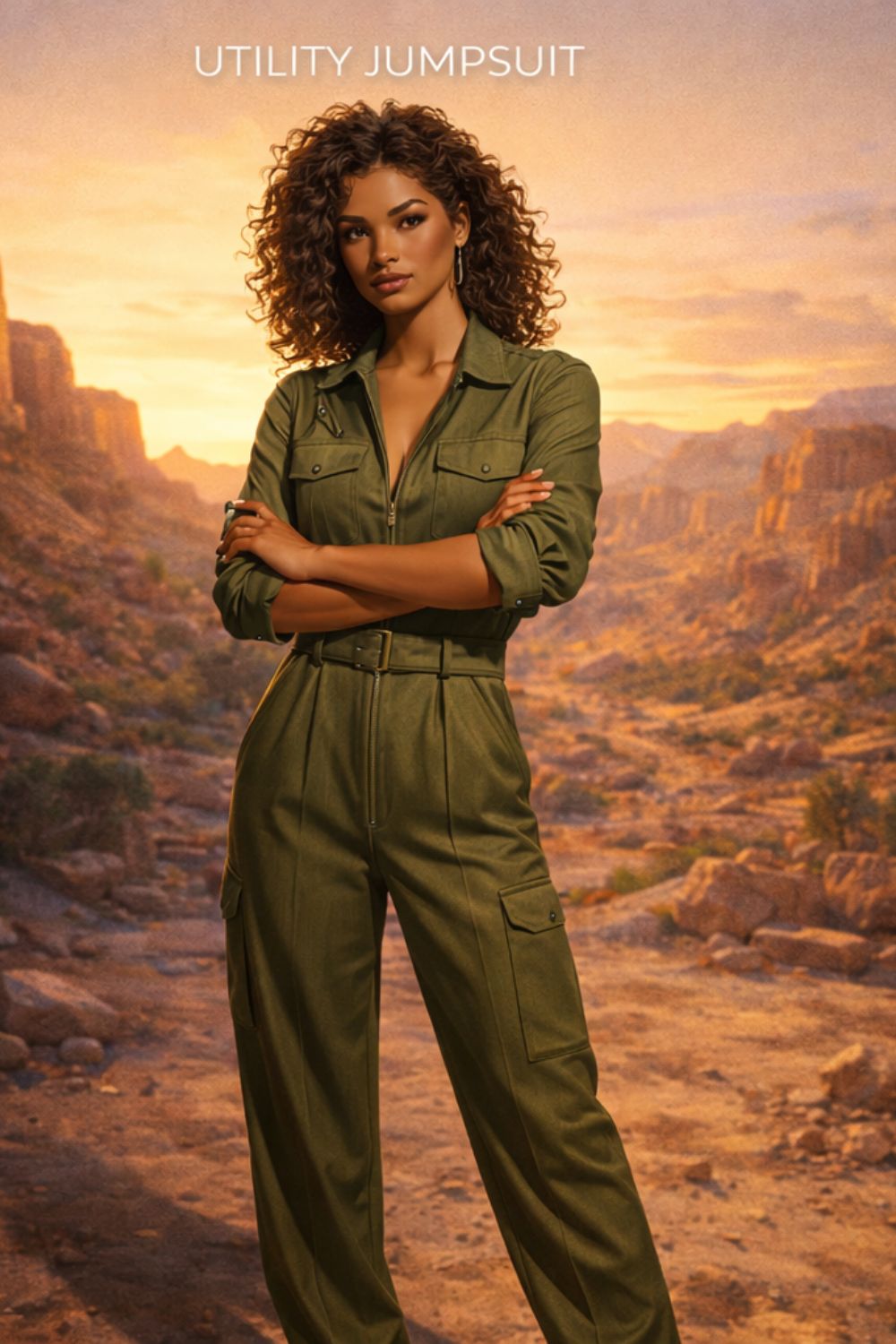
Multiple pockets. Belted waist. D-ring hardware. Cargo-inspired details. The utility jumpsuit takes workwear references further than the boiler suit, drawing more directly from military and construction-wear aesthetics.
Why it works as fashion: The functional details create visual interest without pattern or embellishment. The pocket placement and hardware add structure and intention to an otherwise simple silhouette.
🌸 Bohemian Jumpsuit
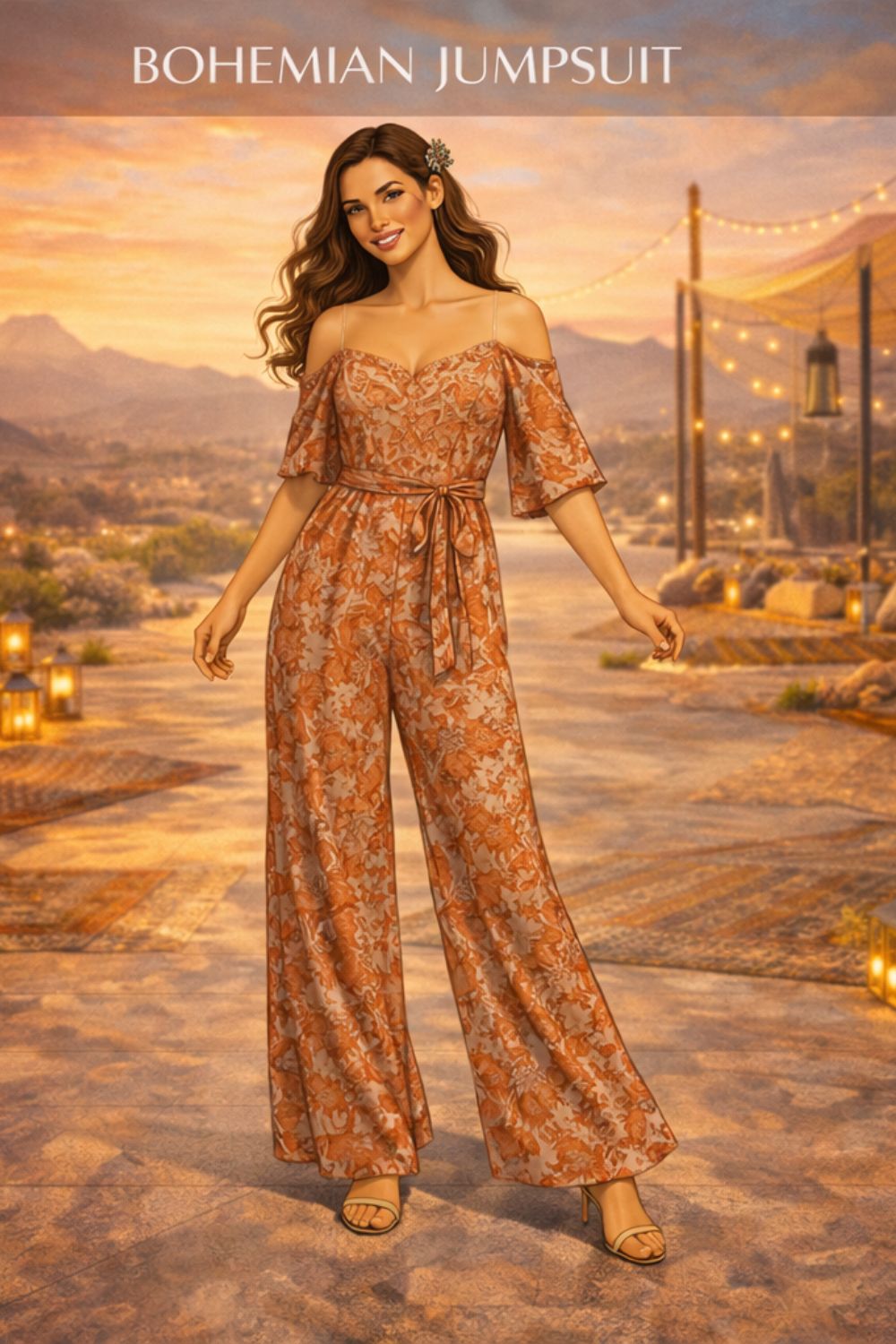
Flowy fabrics, floral or folk-inspired prints, relaxed silhouettes, and a general sense of freedom. The bohemian jumpsuit leans into texture, movement, and layering in a way that most other styles actively avoid.
The signature styling formula: Flat sandals (strappy, woven, or leather), layered jewelry (beaded, mixed metal, natural stone), and a woven bag. A floppy hat optional but consistently effective.
🤠 Western-Style Jumpsuit
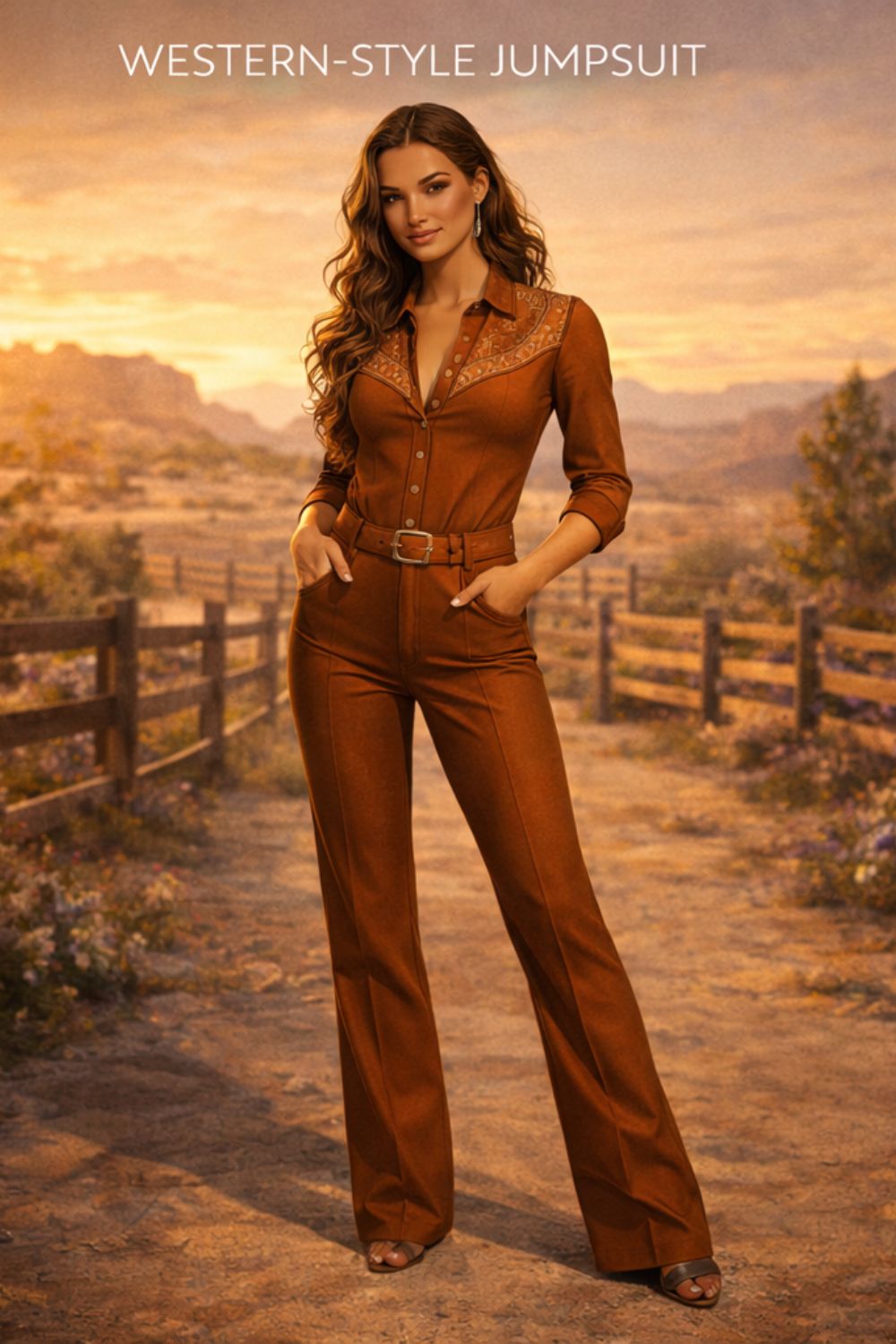
Fringe at the hem or sleeve. Embroidery in floral or geometric patterns. Bold leather belt with statement buckle. Snap-front closure. The western-style jumpsuit borrows heavily from American country and rodeo traditions, combining them with contemporary silhouettes.
Footwear: Cowboy or western-inspired ankle boots are the obvious pairing — and they work. But a pointed-toe flat in a tan or cognac leather can be equally effective for a more refined take on the aesthetic.
⬜ Minimalist Jumpsuit
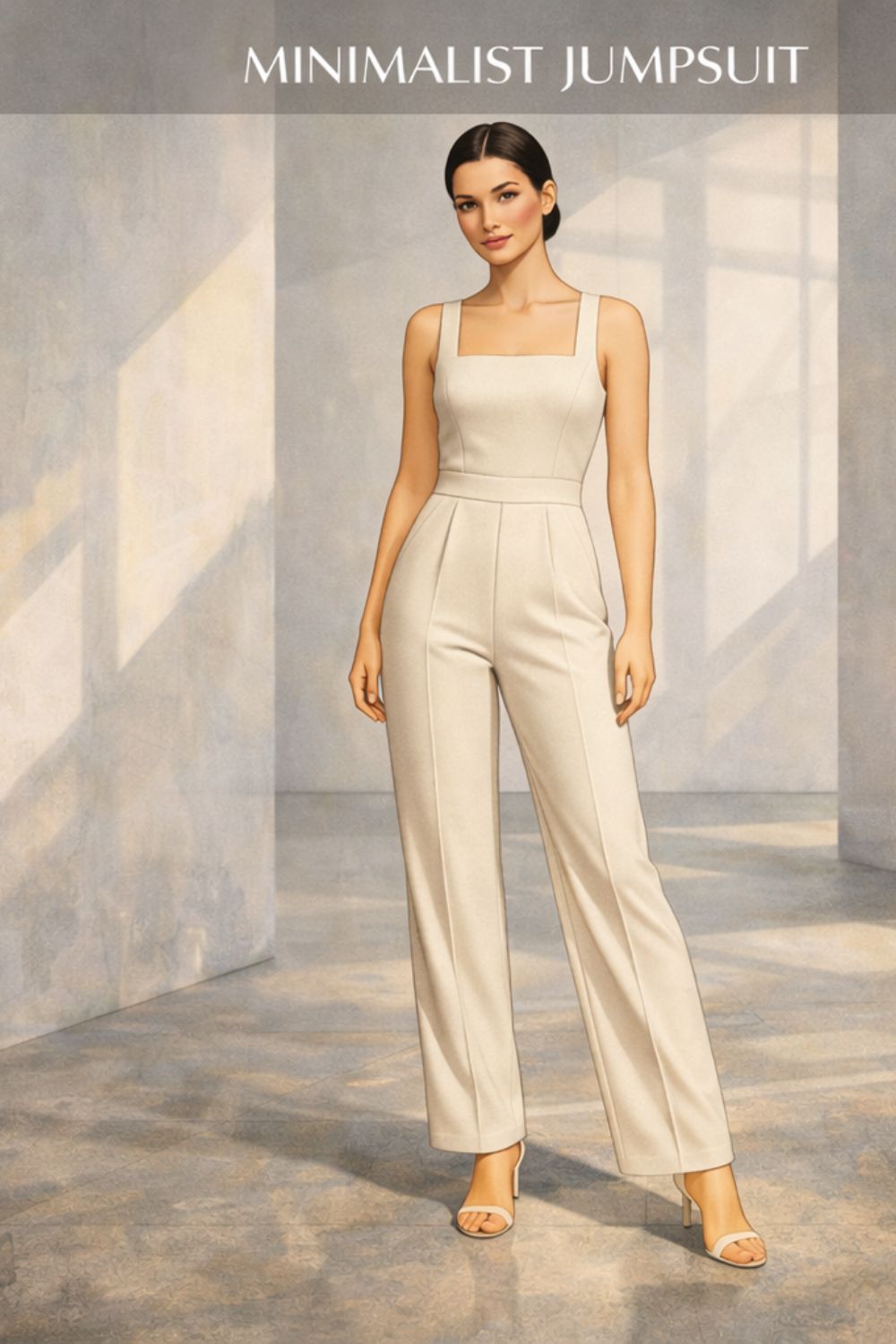
Clean lines. Solid colors. No embellishment, no print, no fuss. The minimalist jumpsuit is a study in what happens when you strip a garment down to its most elemental construction quality — because when there’s nothing to distract from the silhouette and fabric, both need to be genuinely good.
Black, white, camel, cream, slate grey, navy. A well-chosen minimalist jumpsuit in quality fabric is arguably the most wearable single piece in this entire guide.
🎨 Printed / Patterned Jumpsuit
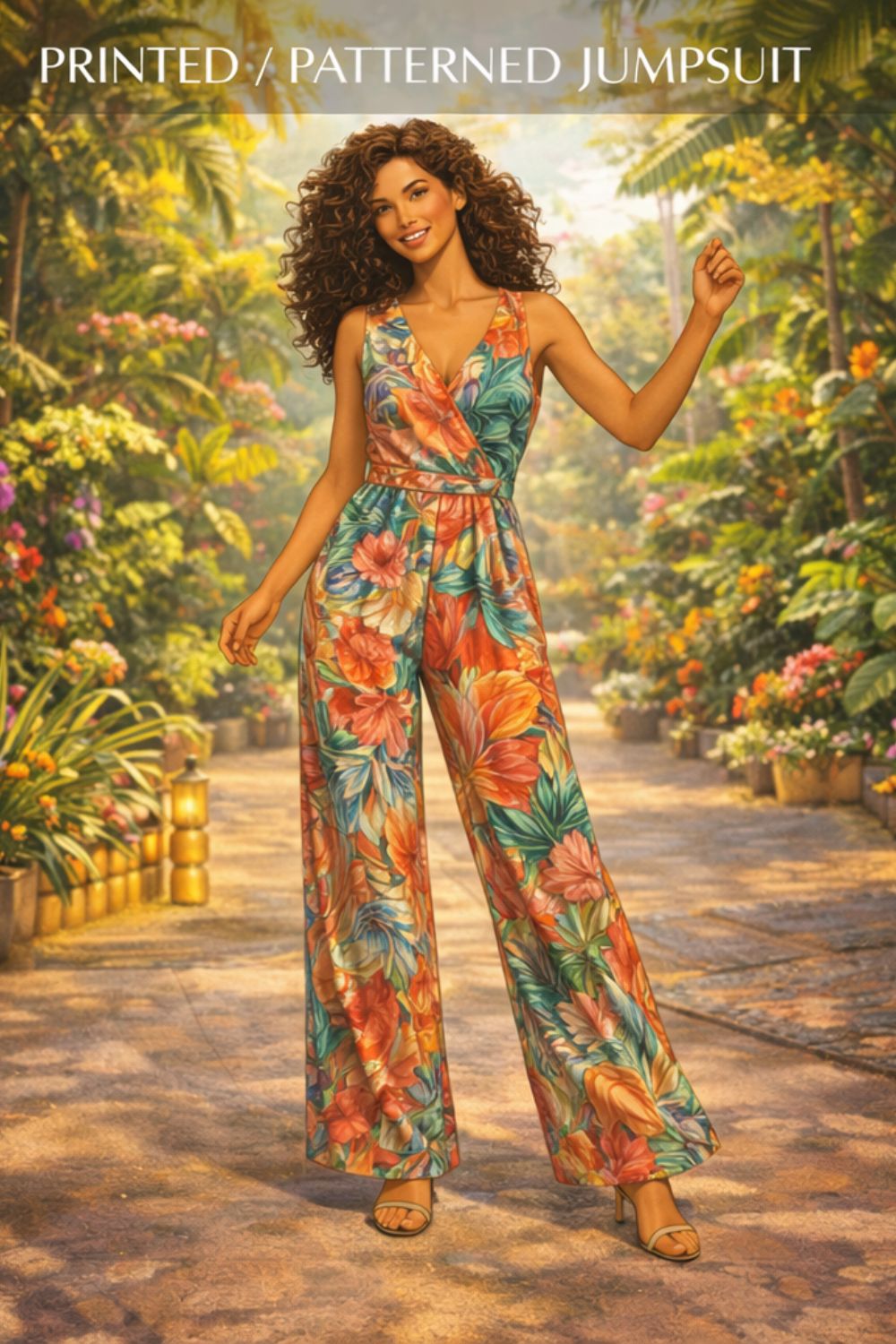
Tropical florals. Abstract geometric prints. Animal prints with a modern editorial twist. Bold graphic stripes. Print jumpsuits have leaned toward maximalism — oversized florals, high-contrast color combinations, and abstract prints that read as statement art rather than background pattern.
Styling the printed jumpsuit: Let the jumpsuit be the story. Solid, neutral accessories. Clean footwear. Minimal jewelry. One statement bag at most. When the garment is already doing significant visual work, the rest of the outfit’s job is to not compete.
✂️ Cut-Out Jumpsuit
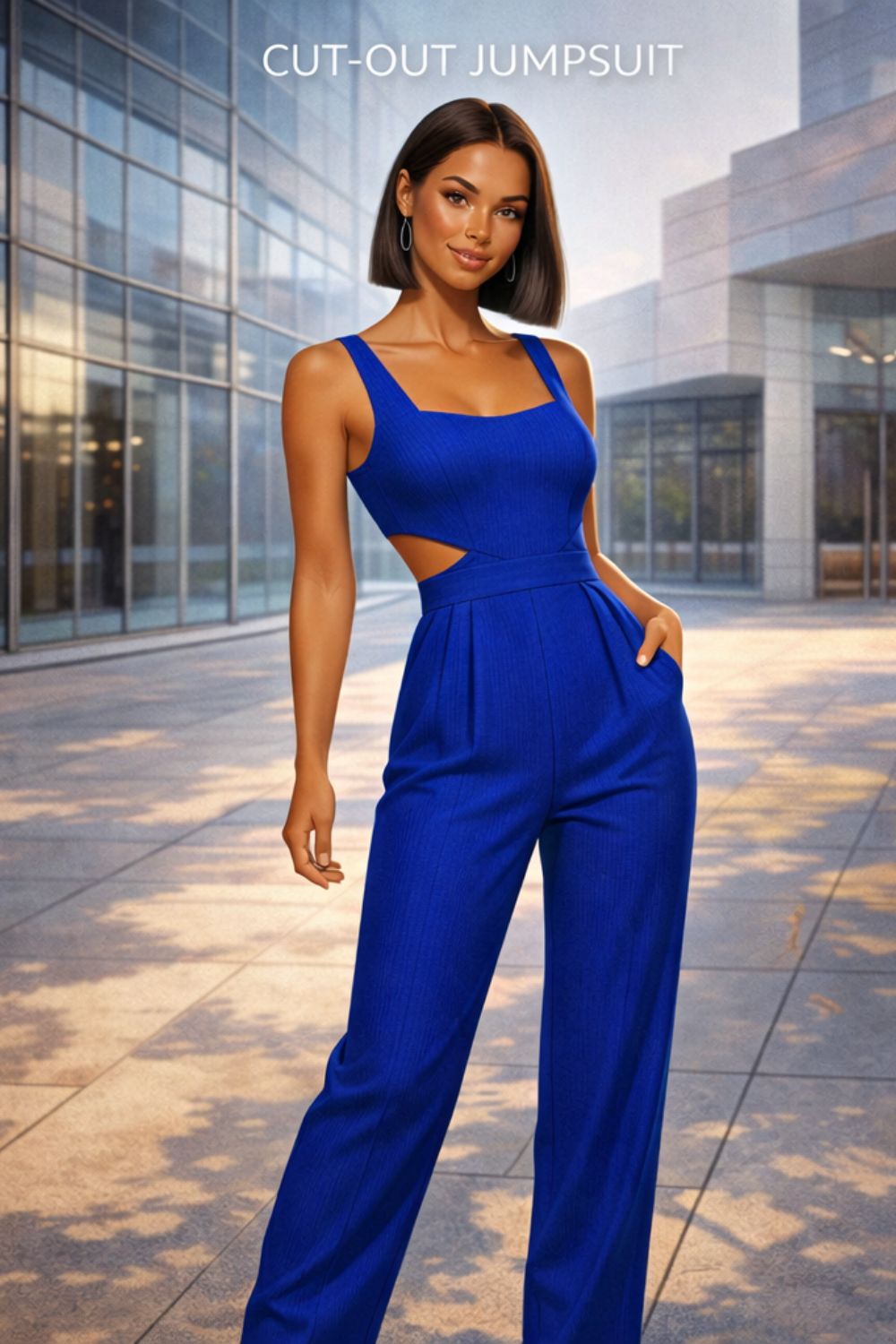
Strategic cutouts — keyhole neckline, open back, peekaboo waist panels, asymmetric shoulder cutouts — add a dimension of intrigue without changing the fundamental one-piece structure. The placement matters enormously: a well-positioned cutout creates visual interest at a flattering focal point.
Construction note: The best cut-out jumpsuits reinforce the cutout edges with binding or careful hemming. Raw-edged cutouts in woven fabrics will eventually fray.
💎 Embellished Jumpsuit
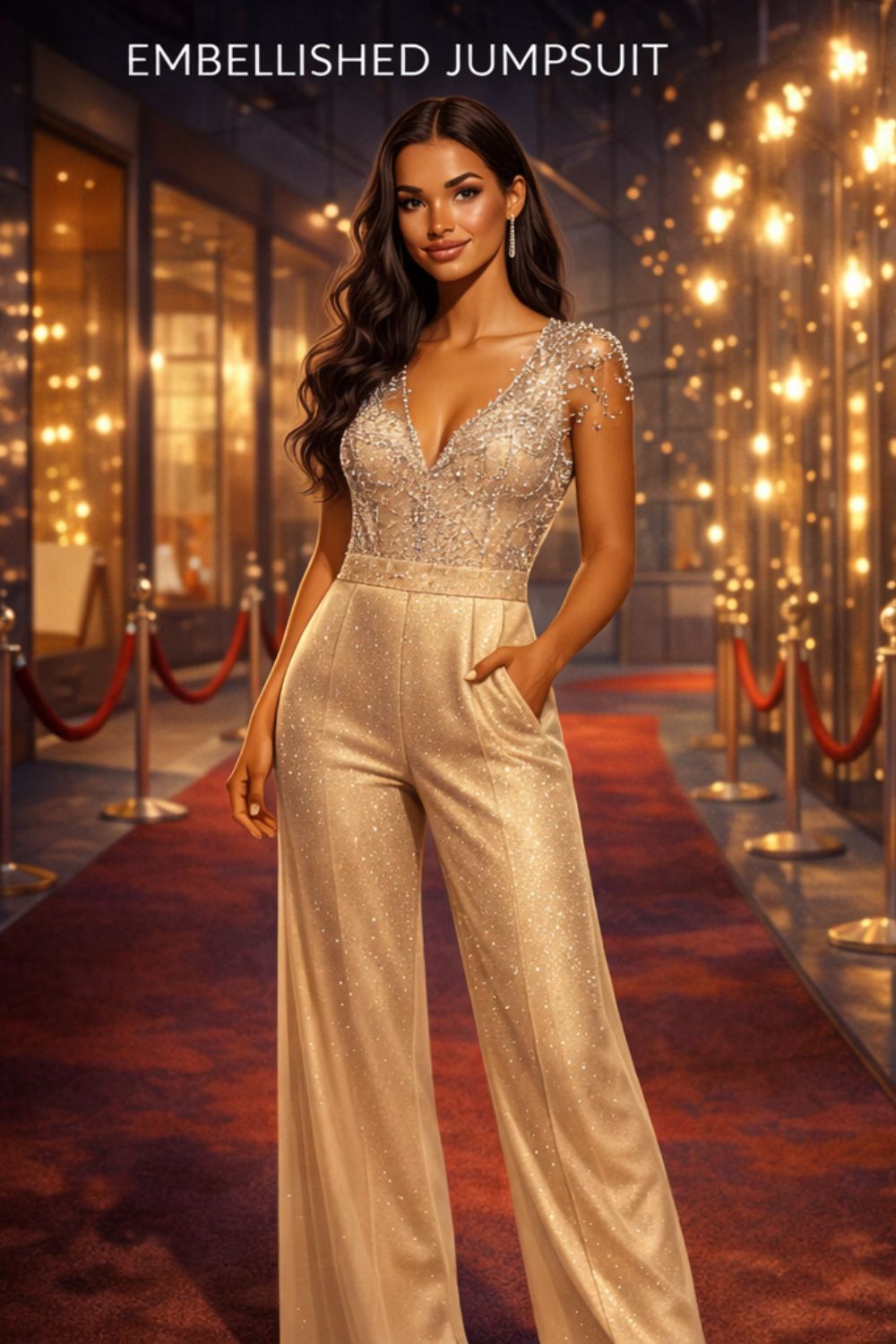
Lace appliqués. Delicate embroidery. Beading at the neckline or cuffs. Crystal embellishments along the shoulder or leg seam. Embellished jumpsuits represent the evening-wear end of the category — pieces that are genuinely occasion-specific and don’t try to be anything else.
👗 🅘 BY SIZE CATEGORY
Proportional fit considerationsJumpsuits are a category where proportional fit really matters — because unlike separates, you can’t size the top and bottom independently. Understanding size-specific construction considerations makes the buying process considerably more straightforward.
The most common fit issue with jumpsuits isn’t the legs or the waist — it’s the torso length. Standard jumpsuits are typically cut for a specific torso-to-leg ratio that doesn’t serve everyone. The good news: petite, tall, and extended-size retailers are now addressing this with dedicated proportional cuts. Look for these first rather than adapting a poorly-fitting standard size.
🐶 Petite Jumpsuit
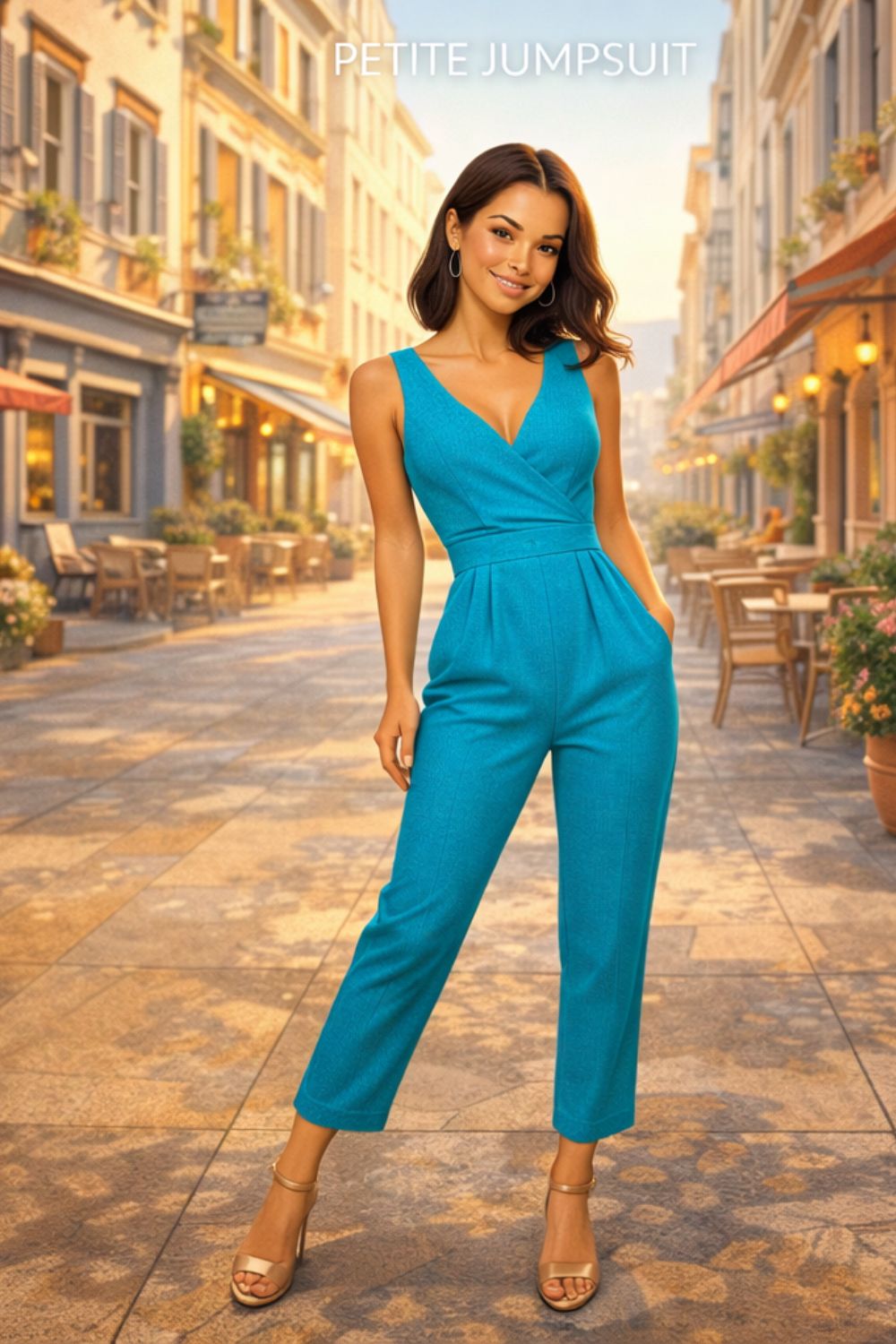
Designed for women under 5’4″ — typically featuring shortened inseams, a shorter torso measurement, and proportionally adjusted sleeve lengths. The goal is to preserve the visual balance of the silhouette at a smaller scale: a wide-leg cut for a petite frame should still look wide-leg, not floor-dragging.
📏 Tall Jumpsuit
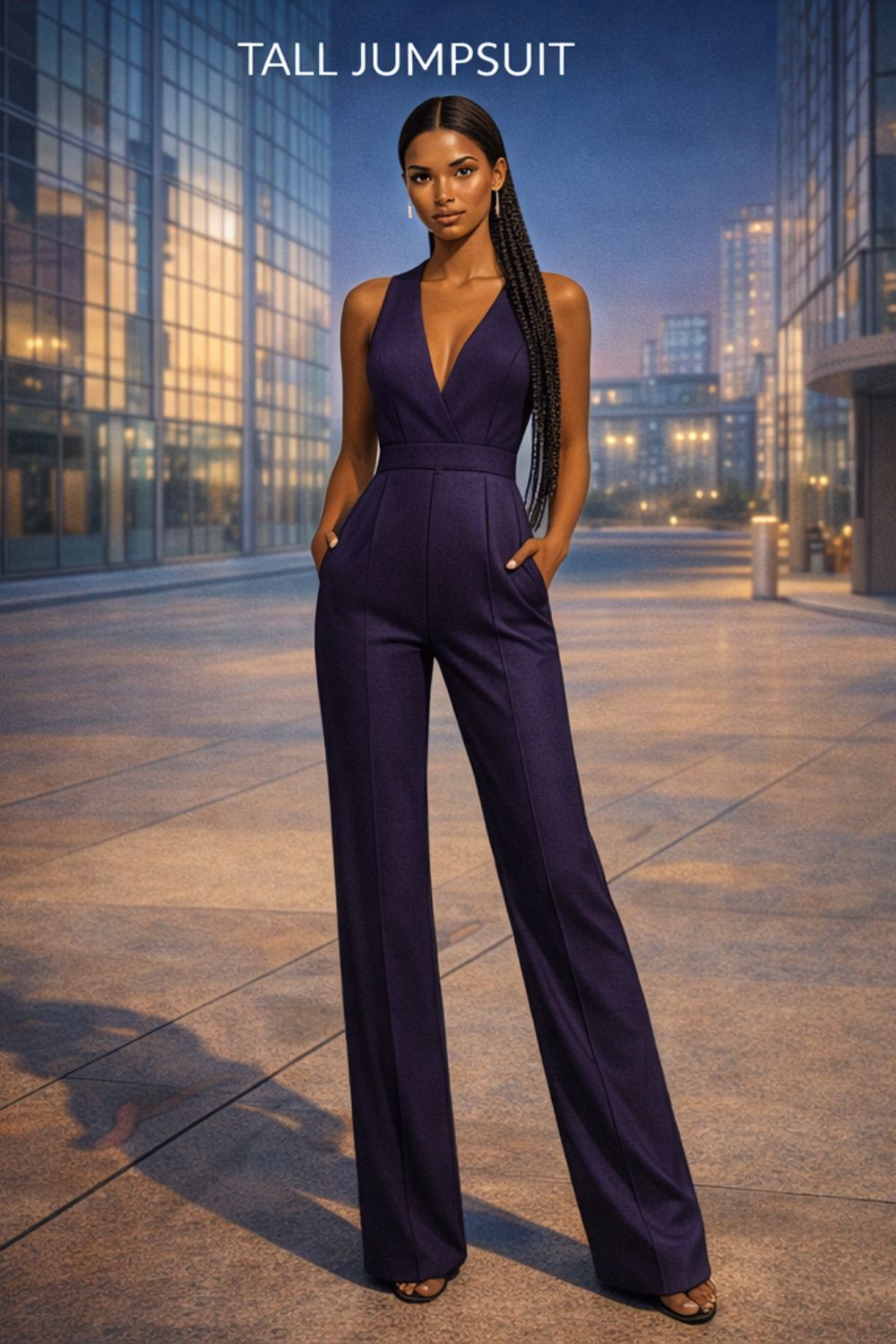
Extended inseam length, longer torso measurements, and often slightly elongated sleeves for women 5’8″ and above. Finding a jumpsuit where the crotch seam actually sits at an appropriate point and the hem reaches the ankle can be genuinely challenging in standard sizing — which is why dedicated tall-fit categories matter.
👗 Plus-Size Jumpsuit
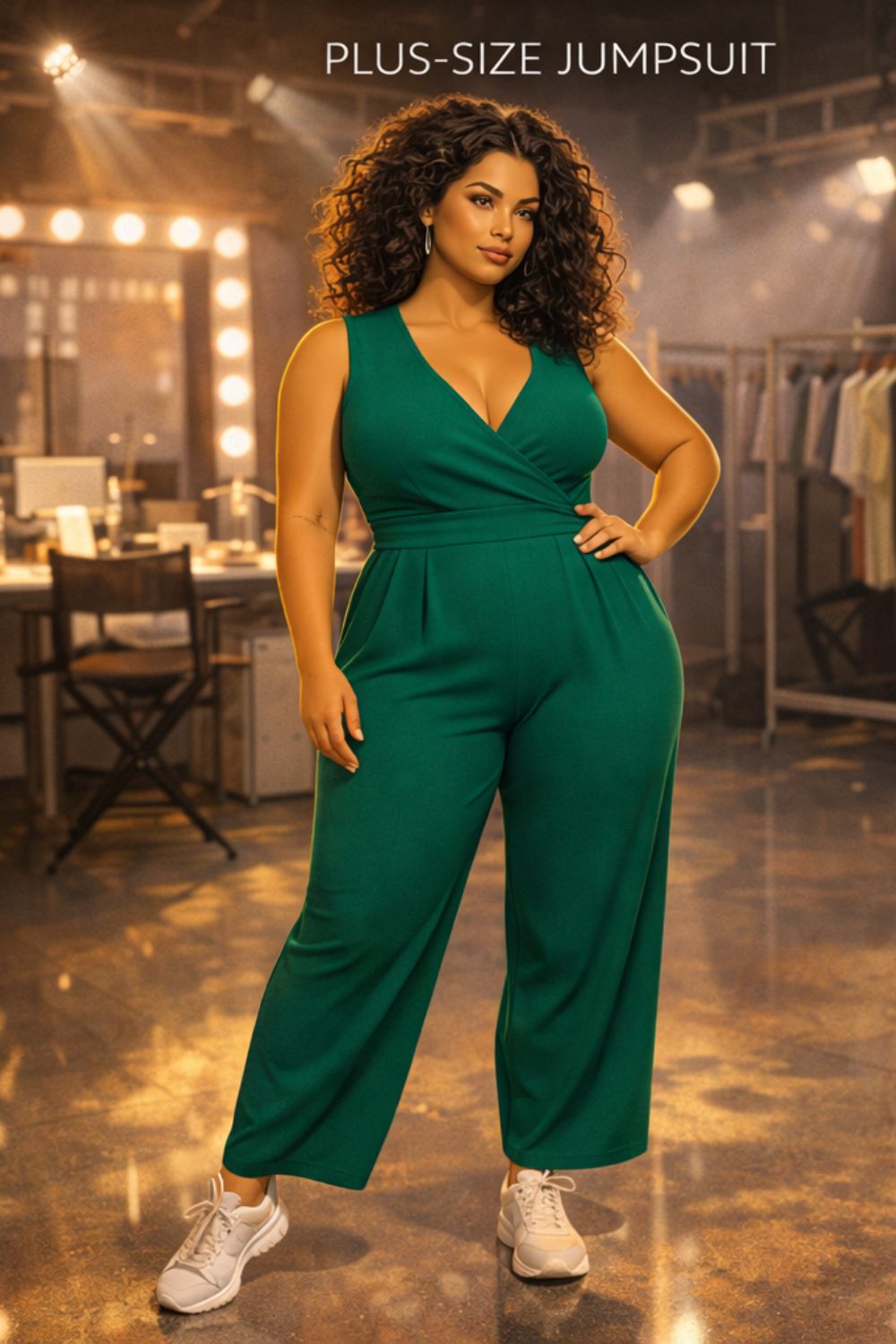
Plus-size jumpsuits should — and increasingly do — deliver on the same silhouette range as standard sizing. Wide-leg, tailored, wrap-construction, satin evening styles, utility cuts. The category has expanded substantially, and the quality of construction and proportional fit within dedicated plus-size ranges has genuinely improved.
What to look for: Consistent torso length (not just scaled-up standard sizing), thoughtful placement of waist seams, and fabrics with appropriate drape for the design intent.
🤰 Maternity Jumpsuit
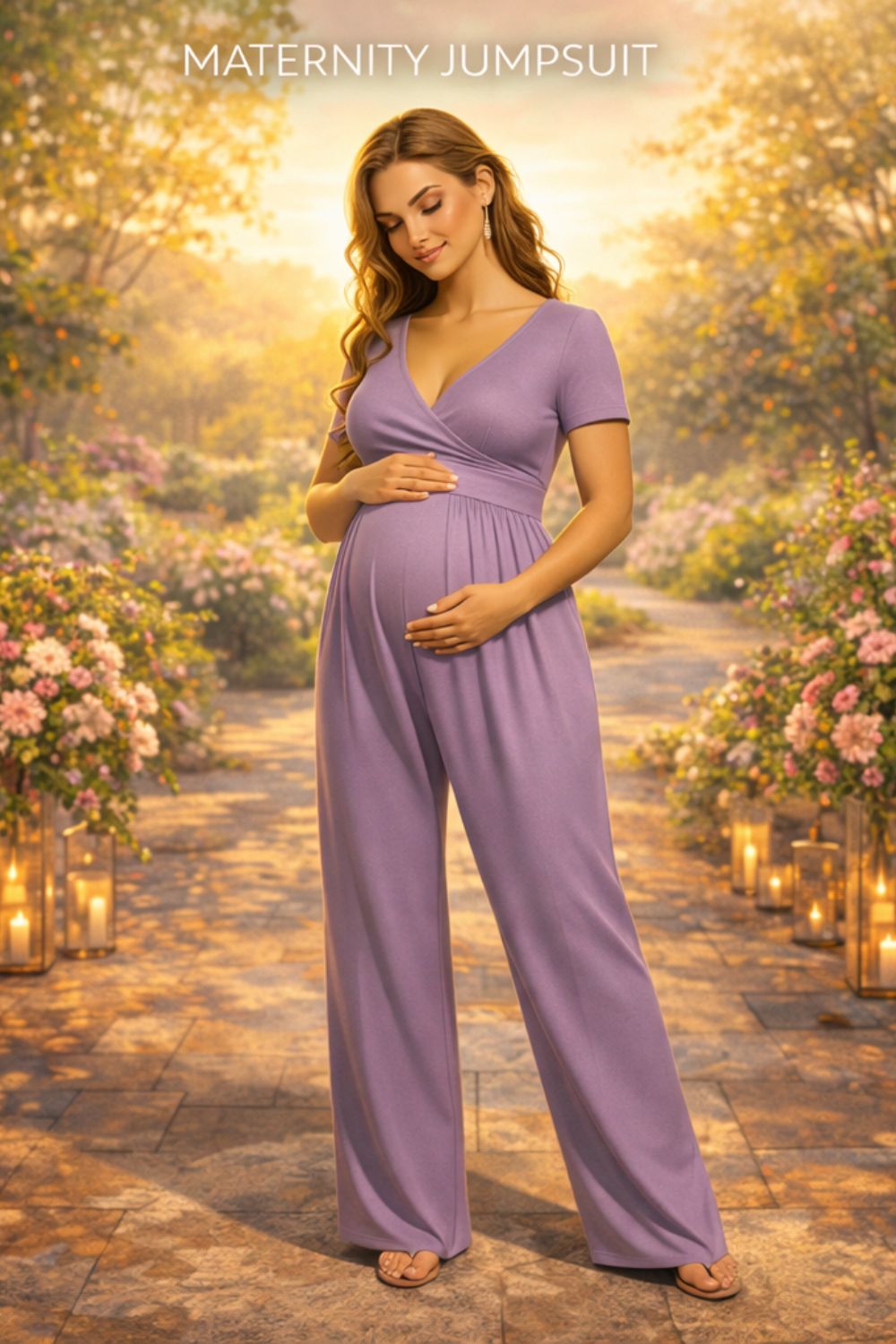
Stretchy, bump-accommodating fabric with comfortable cuts that grow with pregnancy. Maternity-specific jumpsuits typically feature elastic waistbands or empire-line construction, softer fabrics with four-way stretch, and slightly relaxed silhouettes that provide comfort throughout different stages of pregnancy.
The range of styles available in maternity cut has expanded significantly — from casual jersey versions for everyday wear to more formal occasion options.
🔄 Jumpsuits vs. Similar One-Piece Styles
What’s the actual difference?People frequently use “jumpsuit,” “romper,” “boilersuit,” and “playsuit” interchangeably. They’re not quite the same thing.
| Term | Key Distinction | Typical Occasion |
|---|---|---|
| 👖 Jumpsuit | One-piece, full-length or midi trousers | All occasions |
| 🩱 Romper / Playsuit | One-piece with shorts | Casual, summer, resort |
| 🔧 Boilersuit | Relaxed, workwear-inspired cut, often belted | Casual to smart-casual |
| 🩳 Dungarees / Overalls | Bib front, straps over shoulders | Casual, utilitarian |
| 👔 Co-ord Set | Two separate pieces (not a true jumpsuit) | Casual to smart-casual |
👗 How to Style a Jumpsuit: Practical Formula Guide
Tailored jumpsuit (twill or poplin) + pointed-toe flats or block-heel mule + structured tote + minimal jewelry. Optional: belted waist for shape.
Satin or velvet jumpsuit + stilettos or strappy heeled sandals + clutch + statement earrings (no necklace needed if neckline is interesting).
Linen or cotton relaxed jumpsuit + white leather sneakers or flat sandals + woven tote or crossbody + sunglasses.
Jersey or knit relaxed jumpsuit + slip-on sneakers or loafers + structured backpack or carry-on. Comfortable, packable, and looks put-together.
⚠️ The Most Common Jumpsuit Styling Mistakes
Ignoring torso length.
If the crotch seam sits low, no amount of belt-styling will fix it. Always check torso-to-inseam proportions when buying online.
Wrong footwear for the leg silhouette.
Wide-leg jumpsuit with flat ballet pumps visually shortens the leg line. A small heel or platform restores the proportional balance the silhouette is designed for.
Over-accessorizing.
A bold jumpsuit is already a complete outfit. It doesn’t need a statement necklace, statement earrings, a statement bag, and a statement belt simultaneously. Choose one statement element.
Buying for the hanger, not the body.
Jumpsuits can look significantly different on a body versus a flat surface or even a mannequin. If buying in-person, always try it on before committing.
📈 Jumpsuit Trend Longevity: Will This Style Last?
Because jumpsuits aren’t really a trend anymore. They’re a garment category. The specific silhouettes within the category trend and fade (wide-leg is dominant right now; the ultra-cropped romper less so than in 2019–2021) but the core concept of the one-piece garment has been in continuous fashion circulation since the 1970s revival and shows no meaningful sign of departure.
The most enduring silhouettes — straight-leg tailored, classic wide-leg, and wrap-construction — have been consistent throughout multiple trend cycles. Investing in quality versions of these is a reasonable long-term wardrobe strategy.
The more trend-forward versions (heavily embellished, very specific print-and-color combinations, extremely exaggerated proportions) are more seasonal in nature.
📋 Before You Buy: Quick Checklist
❓ FAQ: Types of Jumpsuits for Women
A jumpsuit is a one-piece garment that combines a top and full-length or midi trousers into a single connected piece. A romper (also called a playsuit) uses the same one-piece construction but replaces the trousers with shorts. The key distinction is leg length — jumpsuits have trousers, rompers have shorts.
Tailored jumpsuits in structured fabrics like twill, poplin, ponte, or linen work best for professional settings. Look for clean seam lines, a defined waistline, and a muted or neutral color palette. Avoid overly casual constructions like drawstring-waist jersey jumpsuits in formal workplace contexts.
Wide-leg jumpsuits tend to look most proportional when paired with a shoe that has some heel or platform — even a modest one. This creates a visual continuation of the leg line that the wide fabric silhouette needs to read correctly. Flat shoes can visually shorten the leg line against the volume of the wide-leg cut.
A tailored jumpsuit features structured fabric, defined darts or seaming at the waist, and a precise fit that holds its shape through wear — typically used for professional or formal occasions. A relaxed jumpsuit uses softer fabric, a looser cut, and often a drawstring or elastic waist — designed for comfort and casual wear.
Yes — with the right fabric and construction choices. Evening jumpsuits in satin, velvet, or chiffon with formal neckline details (plunge, strapless, embellished) are genuinely appropriate for cocktail events, formal dinners, and many weddings. The formality of the fabric and finishing does most of the contextual signaling.
Linen, cotton, or lightweight jersey jumpsuits in sleeveless or short-sleeve constructions work best in warm climates. Palazzo or wide-leg cuts in breathable fabrics allow air circulation while maintaining a polished appearance. Light colors and natural fibers are advisable for hot-weather comfort.
Yes — and the range has improved significantly. Petite-specific jumpsuits feature shortened inseams and proportional torso adjustments. Plus-size-specific constructions address waist seam placement, fabric drape, and proportional details that standard sizing doesn’t accommodate. Look for retailers with dedicated size ranges rather than simply scaled-up standard sizing.
The most reliable approach is to let the jumpsuit drive the outfit. For a simple, minimalist jumpsuit — one statement accessory (a bold earring, an interesting belt, a standout bag) works well. For a more elaborate jumpsuit with print, texture, or embellishment — keep accessories simple and let the garment speak for itself. A well-chosen belt can add waist definition to any jumpsuit silhouette.
🎯 Key Takeaways
📝 Conclusion
The jumpsuit’s staying power makes complete sense once you understand what it actually offers. A single garment decision that can cover casual Monday mornings, formal Friday evenings, summer beach days, and winter parties — depending purely on how you approach fabric, silhouette, and finish. That kind of multi-contextual versatility is genuinely rare in fashion.
What works beautifully about this category is its honesty. A well-chosen jumpsuit makes no apology for being exactly one thing — and it invites you to be clear about what you need from it. Wide-leg for drama and ease. Tailored for professional confidence. Satin for the evening you want to feel genuinely dressed. Linen for the days when comfort and style should coexist without negotiation.
Build with intention, choose quality over quantity, and let the garment lead the outfit. The rest tends to follow naturally.

Leave a Reply